


 Claim Ownership
Good Scribes Only
Subscribed: 7Played: 147
Subscribe

© 2026 - Good Scribes Only
Description
Good Scribes Only is a podcast featuring a novelist + venture investor (Daniel Breyer) and a novelist + founder (Jeremy Streich), who share an enthusiasm for literature. From classics to sci-fi, moderns to ancient philosophy, your hosts will ramble and banter about it all—particularly the topics they have no business discussing.
Each episode dives into the craft of writing as well as questions of plot, character, theme, and philosophy in a work.
Each episode dives into the craft of writing as well as questions of plot, character, theme, and philosophy in a work.
166 Episodes
Reverse
About the Book:
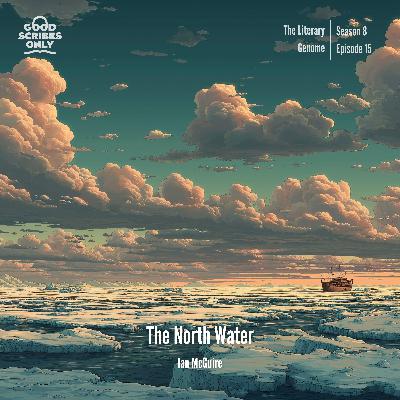
Published in 2016, The North Water is a brutal, atmospheric tale set aboard a 19th-century whaling ship bound for the Arctic. The novel follows Patrick Sumner, a disgraced former army surgeon seeking escape from his past, who signs on as the ship’s doctor. Among the crew is Henry Drax, a harpooner of terrifying violence and amorality—a man who embodies the darkest instincts of survival.
As the voyage pushes further into the frozen, unforgiving north, the boundaries between civilization and savagery begin to dissolve. What unfolds is both a survival story and a descent into moral extremity, where the natural world is as indifferent as the men are dangerous. Unflinching and visceral, The North Water explores themes of brutality, isolation, and the thin line separating man from beast. The novel was widely acclaimed for its intensity and later adapted into a television series.
About the Author:
Ian McGuire is a British novelist and academic known for his stark, literary approach to historical fiction. Born in 1964, McGuire studied at the University of Manchester and later at the University of Virginia, where he also taught. His work often blends meticulous historical detail with psychological depth and a willingness to confront violence head-on.
In addition to The North Water, McGuire is the author of Incredible Bodies (2006), a campus novel, and The Abstainer (2020), a historical thriller set between Ireland and England. His writing is marked by its intensity, philosophical undercurrents, and exploration of human nature under extreme conditions.
WebsiteTikTokInstagramYouTubeNewsletterJeremy's WebsiteDan's Website
About the Book:
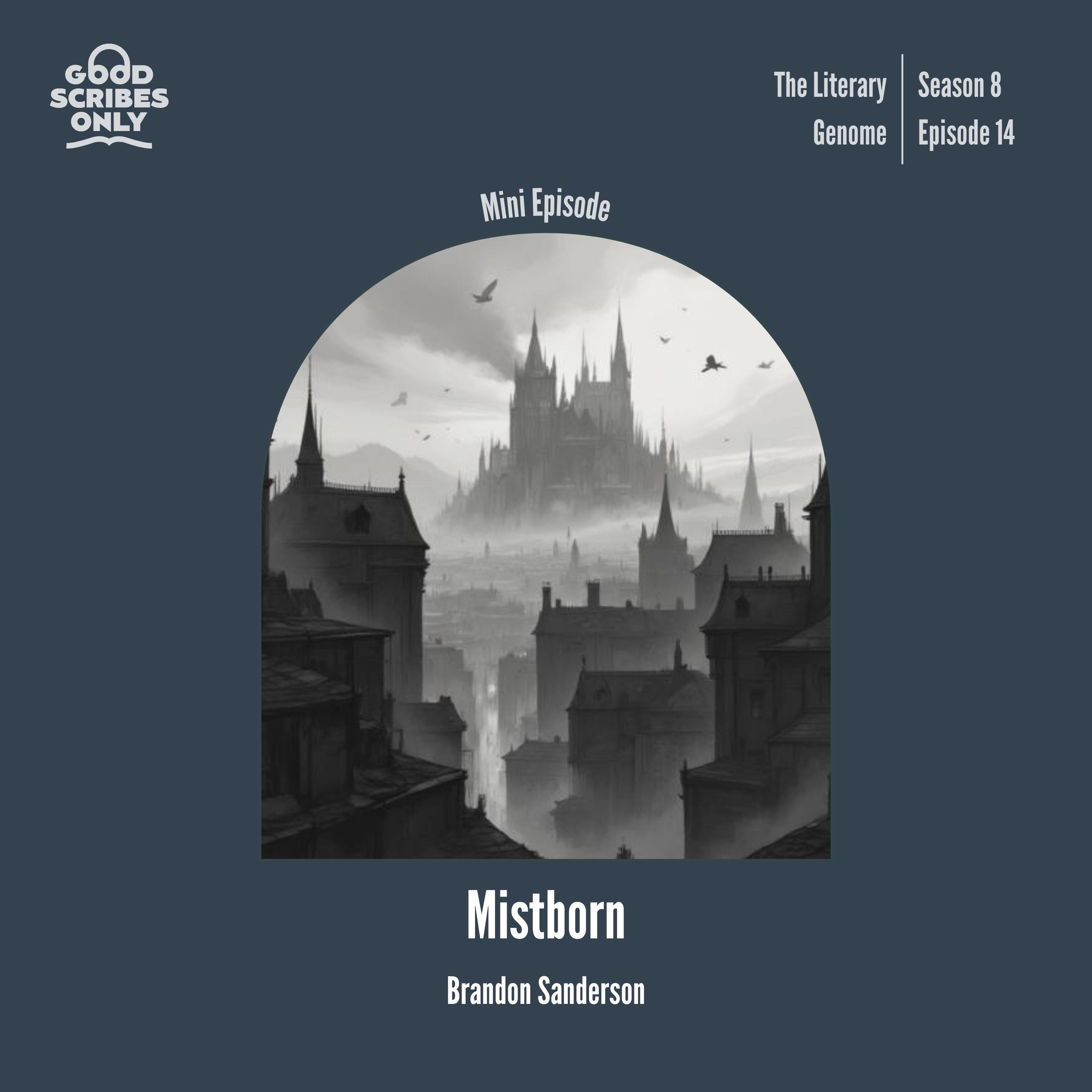
First published in 2006, Mistborn: The Final Empire introduces readers to a bleak world ruled for a thousand years by the immortal Lord Ruler. Ash falls from the sky, mist dominates the night, and the oppressed skaa live under the iron grip of a powerful ruling class. Into this world steps Vin, a street-smart orphan who discovers she possesses a rare magical ability known as Allomancy—the power to ingest and “burn” metals to gain extraordinary abilities.
Guided by the charismatic thief Kelsier and a band of rebels, Vin becomes part of an audacious plan: not merely to steal from the empire, but to overthrow it. Blending intricate magic systems, political intrigue, and high-stakes adventure, Sanderson crafts a fantasy that is as intellectually clever as it is thrilling. At its core, Mistborn is a story about trust, belief, and the possibility that even the most entrenched systems of power can be challenged.
About the Author:
Brandon Sanderson is one of the most influential voices in modern fantasy. Born in 1975, Sanderson is known for building expansive fictional worlds governed by carefully constructed magic systems and intricate lore. His breakthrough came with the Mistborn series, which quickly gained a devoted following for its inventive storytelling and dynamic characters.
Sanderson is also the author of the epic The Stormlight Archive, widely regarded as one of the defining fantasy sagas of the 21st century. In addition, he was chosen to complete The Wheel of Time after the death of its creator, Robert Jordan. Through both his novels and his widely followed lectures on writing, Sanderson has become a central figure in contemporary speculative fiction.
WebsiteTikTokInstagramYouTubeNewsletterJeremy's WebsiteDan's Website
About the Book:
First published in 2006, Mistborn: The Final Empire introduces readers to a bleak world ruled for a thousand years by the immortal Lord Ruler. Ash falls from the sky, mist dominates the night, and the oppressed skaa live under the iron grip of a powerful ruling class. Into this world steps Vin, a street-smart orphan who discovers she possesses a rare magical ability known as Allomancy—the power to ingest and “burn” metals to gain extraordinary abilities.
Guided by the charismatic thief Kelsier and a band of rebels, Vin becomes part of an audacious plan: not merely to steal from the empire, but to overthrow it. Blending intricate magic systems, political intrigue, and high-stakes adventure, Sanderson crafts a fantasy that is as intellectually clever as it is thrilling. At its core, Mistborn is a story about trust, belief, and the possibility that even the most entrenched systems of power can be challenged.
About the Author:
Brandon Sanderson is one of the most influential voices in modern fantasy. Born in 1975, Sanderson is known for building expansive fictional worlds governed by carefully constructed magic systems and intricate lore. His breakthrough came with the Mistborn series, which quickly gained a devoted following for its inventive storytelling and dynamic characters.
Sanderson is also the author of the epic The Stormlight Archive, widely regarded as one of the defining fantasy sagas of the 21st century. In addition, he was chosen to complete The Wheel of Time after the death of its creator, Robert Jordan. Through both his novels and his widely followed lectures on writing, Sanderson has become a central figure in contemporary speculative fiction.
WebsiteTikTokInstagramYouTubeNewsletterJeremy's WebsiteDan's Website
About the Book:
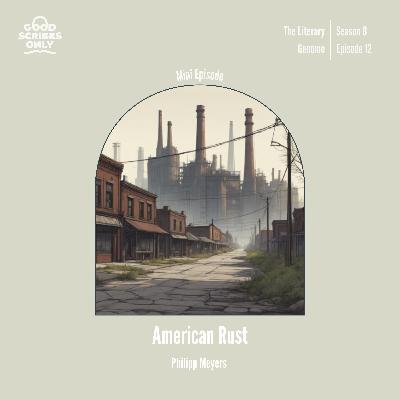
Published in 2009, American Rust is a stark, deeply human portrait of life in a collapsing industrial town in western Pennsylvania. The novel follows Isaac English and Billy Poe, two young men caught between loyalty, anger, and the dwindling promise of a future that once seemed guaranteed. When a violent incident shatters their already-fragile lives, the consequences ripple outward, touching parents, lovers, and an entire community struggling to survive economic ruin.
Gritty yet compassionate, American Rust examines masculinity, class, moral responsibility, and the quiet desperation of people left behind by history. Meyer’s prose is unsentimental but deeply empathetic, revealing how love, shame, and hope persist even in the shadow of decline. The novel was widely praised for its emotional depth and realism and later adapted into a television series, cementing its place as a modern American tragedy.
About the Author:
Philipp Meyer is an American novelist known for his ambitious scope and meticulous realism. Born in New York City, Meyer worked a variety of jobs before turning to fiction, experiences that helped shape his grounded, working-class characters. American Rust was his debut novel and earned critical acclaim for its authenticity and emotional power.
Meyer later published The Son (2013), a multigenerational epic of Texas that won the Pulitzer Prize for Fiction, and The North Water (2016), a brutal historical novel set in the Arctic whaling world. Across his work, Meyer explores violence, inheritance, and the forces—economic, historical, and personal—that shape American identity. His novels are marked by their moral seriousness and refusal to look away from hard truths.
WebsiteTikTokInstagramYouTubeNewsletterJeremy's WebsiteDan's Website
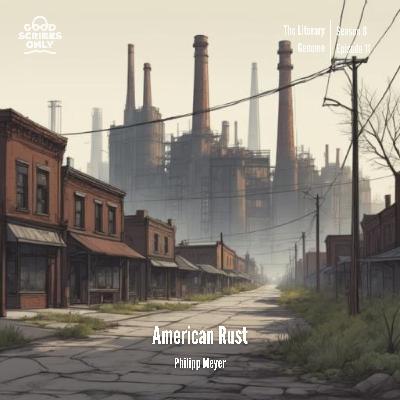
About the Book:Published in 2009, American Rust is a stark, deeply human portrait of life in a collapsing industrial town in western Pennsylvania. The novel follows Isaac English and Billy Poe, two young men caught between loyalty, anger, and the dwindling promise of a future that once seemed guaranteed. When a violent incident shatters their already-fragile lives, the consequences ripple outward, touching parents, lovers, and an entire community struggling to survive economic ruin.Gritty yet compassionate, American Rust examines masculinity, class, moral responsibility, and the quiet desperation of people left behind by history. Meyer’s prose is unsentimental but deeply empathetic, revealing how love, shame, and hope persist even in the shadow of decline. The novel was widely praised for its emotional depth and realism and later adapted into a television series, cementing its place as a modern American tragedy.About the Author:Philipp Meyer is an American novelist known for his ambitious scope and meticulous realism. Born in New York City, Meyer worked a variety of jobs before turning to fiction, experiences that helped shape his grounded, working-class characters. American Rust was his debut novel and earned critical acclaim for its authenticity and emotional power.Meyer later published The Son (2013), a multigenerational epic of Texas that won the Pulitzer Prize for Fiction, and The North Water (2016), a brutal historical novel set in the Arctic whaling world. Across his work, Meyer explores violence, inheritance, and the forces—economic, historical, and personal—that shape American identity. His novels are marked by their moral seriousness and refusal to look away from hard truths.
WebsiteTikTokInstagramYouTubeNewsletterJeremy's WebsiteDan's Website
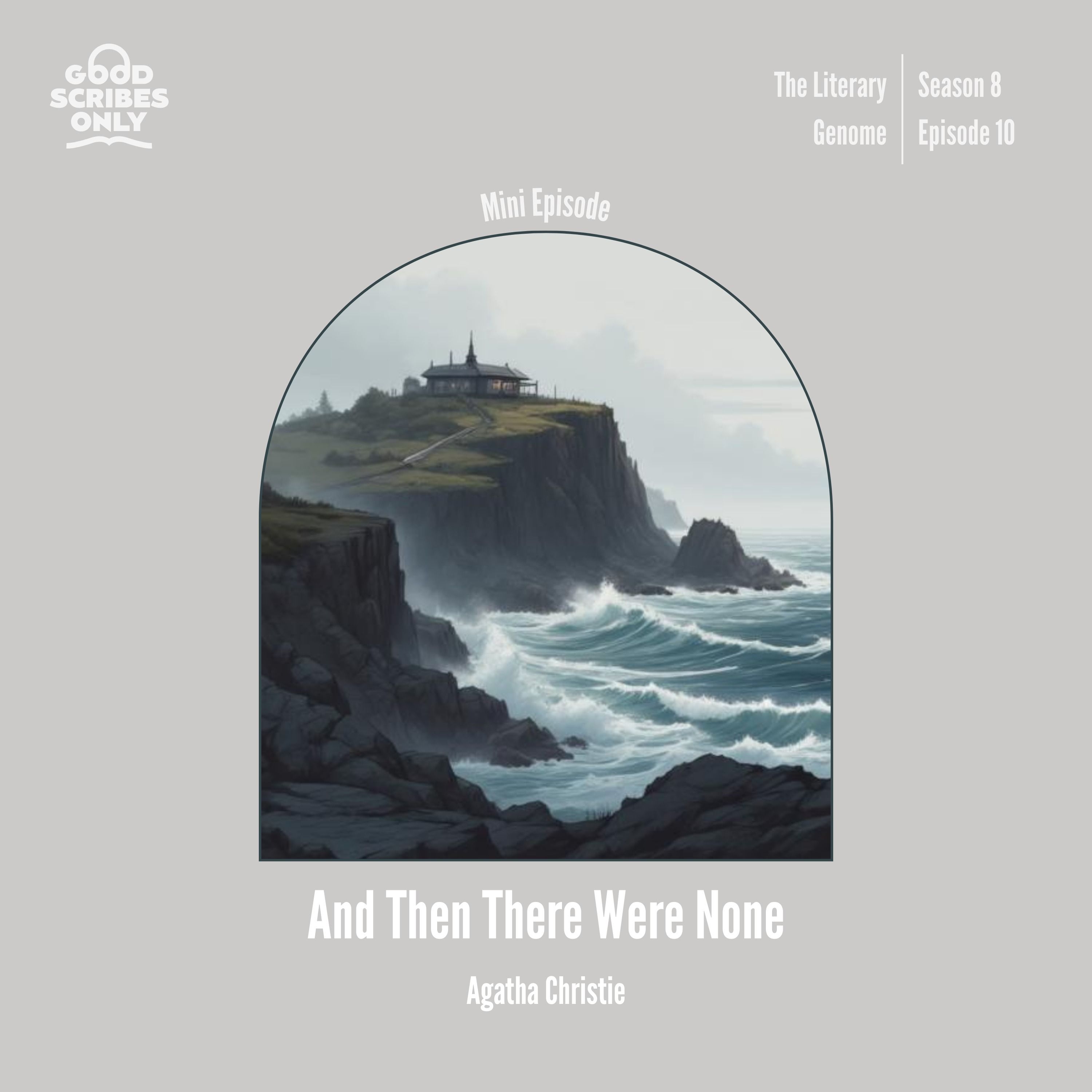
About the Book:First published in 1939, And Then There Were None is Agatha Christie’s most famous—and most relentlessly suspenseful—mystery. Ten strangers, each lured to a remote island off the English coast, arrive to find their unseen host absent and their pasts suddenly on trial. When an ominous recording accuses each guest of a grave wrongdoing, the atmosphere shifts from uneasy to terrifying. One by one, they begin to die—each death echoing the sinister rhythm of a nursery rhyme posted in the house.What makes the novel endure isn’t just its ingenious plotting, but its escalating sense of dread and psychological pressure. As suspicion turns everyone into both detective and potential killer, Christie strips away alibis, social masks, and moral certainty. And Then There Were None is a locked-room mystery expanded to its most ruthless form: justice, guilt, and fear trapped together with nowhere to go.About the Author:Agatha Christie (1890–1976) was an English novelist and playwright and remains one of the most widely read authors in history. Often called the “Queen of Mystery,” she wrote 66 detective novels and numerous short stories, creating iconic characters like Hercule Poirot and Miss Marple. Her work is celebrated for its clean prose, misdirection, and clockwork precision—stories that invite readers to play along, only to pull the rug out at exactly the right moment.Christie’s influence extends far beyond the page. Her play The Mousetrap became the longest-running play in the world, and her novels have been adapted countless times for film, television, and stage. With And Then There Were None, she delivered a masterpiece of suspense that helped define modern crime fiction—and still sets the standard for the genre today.
WebsiteTikTokInstagramYouTubeNewsletterJeremy's WebsiteDan's Website
About the Book:First published in 1939, And Then There Were None is Agatha Christie’s most famous—and most relentlessly suspenseful—mystery. Ten strangers, each lured to a remote island off the English coast, arrive to find their unseen host absent and their pasts suddenly on trial. When an ominous recording accuses each guest of a grave wrongdoing, the atmosphere shifts from uneasy to terrifying. One by one, they begin to die—each death echoing the sinister rhythm of a nursery rhyme posted in the house.What makes the novel endure isn’t just its ingenious plotting, but its escalating sense of dread and psychological pressure. As suspicion turns everyone into both detective and potential killer, Christie strips away alibis, social masks, and moral certainty. And Then There Were None is a locked-room mystery expanded to its most ruthless form: justice, guilt, and fear trapped together with nowhere to go.About the Author:Agatha Christie (1890–1976) was an English novelist and playwright and remains one of the most widely read authors in history. Often called the “Queen of Mystery,” she wrote 66 detective novels and numerous short stories, creating iconic characters like Hercule Poirot and Miss Marple. Her work is celebrated for its clean prose, misdirection, and clockwork precision—stories that invite readers to play along, only to pull the rug out at exactly the right moment.Christie’s influence extends far beyond the page. Her play The Mousetrap became the longest-running play in the world, and her novels have been adapted countless times for film, television, and stage. With And Then There Were None, she delivered a masterpiece of suspense that helped define modern crime fiction—and still sets the standard for the genre today.
WebsiteTikTokInstagramYouTubeNewsletterJeremy's WebsiteDan's Website

About the Book:Published in 2009, Wolf Hall reimagines the rise of Thomas Cromwell, one of the most enigmatic and powerful figures in Tudor England. Set during the reign of Henry VIII, the novel traces Cromwell’s ascent from the son of a blacksmith to the king’s chief minister, moving through a court defined by ambition, betrayal, and shifting loyalties.Hillary Mantel’s bold narrative voice places readers inside Cromwell’s mind, offering an intimate, morally complex portrait of power in motion. Rather than treating history as spectacle, Wolf Hall examines how decisions are made, alliances are forged, and survival depends on perception as much as principle. The novel won the Man Booker Prize and reshaped historical fiction with its psychological depth, stylistic precision, and radical re-centering of a long-maligned figure.About the Author:Hilary Mantel (1952–2022) was an English novelist and critic widely regarded as one of the greatest historical novelists of her generation. Her writing is known for its intelligence, rigor, and emotional restraint, often exploring power, gender, and the forces that shape identity.Mantel achieved international acclaim with the Thomas Cromwell trilogy—Wolf Hall (2009), Bring Up the Bodies (2012), and The Mirror & the Light (2020). She was the first woman to win the Man Booker Prize twice, and later received a Damehood for services to literature. Mantel’s work transformed the historical novel, demonstrating how the past can be rendered with both immediacy and unsettling relevance.
WebsiteTikTokInstagramYouTubeNewsletterJeremy's WebsiteDan's Website

About the Book:Published in 2009, Wolf Hall reimagines the rise of Thomas Cromwell, one of the most enigmatic and powerful figures in Tudor England. Set during the reign of Henry VIII, the novel traces Cromwell’s ascent from the son of a blacksmith to the king’s chief minister, moving through a court defined by ambition, betrayal, and shifting loyalties.Hillary Mantel’s bold narrative voice places readers inside Cromwell’s mind, offering an intimate, morally complex portrait of power in motion. Rather than treating history as spectacle, Wolf Hall examines how decisions are made, alliances are forged, and survival depends on perception as much as principle. The novel won the Man Booker Prize and reshaped historical fiction with its psychological depth, stylistic precision, and radical re-centering of a long-maligned figure.About the Author:Hilary Mantel (1952–2022) was an English novelist and critic widely regarded as one of the greatest historical novelists of her generation. Her writing is known for its intelligence, rigor, and emotional restraint, often exploring power, gender, and the forces that shape identity.Mantel achieved international acclaim with the Thomas Cromwell trilogy—Wolf Hall (2009), Bring Up the Bodies (2012), and The Mirror & the Light (2020). She was the first woman to win the Man Booker Prize twice, and later received a Damehood for services to literature. Mantel’s work transformed the historical novel, demonstrating how the past can be rendered with both immediacy and unsettling relevance.
WebsiteTikTokInstagramYouTubeNewsletterJeremy's WebsiteDan's Website

About the Book:First published in 1843, A Christmas Carol is Charles Dickens’ enduring tale of redemption, memory, and moral awakening. The story follows Ebenezer Scrooge, a miserly old man visited on Christmas Eve by the ghosts of Christmas Past, Present, and Yet to Come. Through these supernatural encounters, Scrooge is forced to confront the life he has lived, the harm he has caused, and the future he is racing toward.Both intimate and expansive, A Christmas Carol blends social critique with warmth, humor, and profound compassion. Dickens’ novella is not simply a holiday story, but a meditation on generosity, responsibility, and the possibility of change. More than 180 years after its publication, its message remains timeless: that it is never too late to choose kindness, connection, and grace.About the Author:Charles Dickens (1812–1870) was an English novelist and social critic whose work helped define Victorian literature. Born into poverty and shaped by his own experiences with child labor and debtors’ prisons, Dickens became one of the most widely read and influential writers of the 19th century. His novels often exposed social injustice while celebrating human resilience and empathy.Dickens wrote some of the most enduring works in the English language, including Great Expectations, Oliver Twist, David Copperfield, and Bleak House. With A Christmas Carol, he created a story that transcended literature to become a cultural touchstone, reshaping how Christmas itself was imagined and celebrated. His legacy endures as a writer who believed deeply in the power of storytelling to awaken conscience and inspire change.
WebsiteTikTokInstagramYouTubeNewsletterJeremy's WebsiteDan's Website
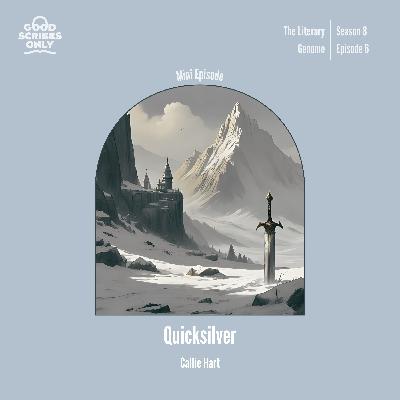
About the Book:Quicksilver is a dark, atmospheric romance by Callie Hart, known for her blend of emotional intensity, sharp suspense, and deeply drawn characters. The story follows Lissa, a young woman living under the shadow of trauma and secrets, and Zeth Mayfair—the dangerous, magnetic figure whose presence upends her world. Drawn together by circumstance and an undeniable pull, the two navigate a web of violence, vulnerability, and trust as they attempt to unravel the mysteries that bind them.Brooding, seductive, and charged with tension, Quicksilver explores the complicated territory between desire and danger, love and survival. Hart’s writing immerses readers in a world of morally gray characters and high-stakes emotion, crafting a romance that feels as raw as it does riveting.About the Author:Callie Hart is a bestselling author of dark romance and romantic suspense whose work is known for its gritty emotional landscapes, complex characters, and fast-paced plotting. Often writing stories that straddle the line between danger and desire, Hart has built a devoted readership drawn to her ability to balance intensity with tenderness.Her novels frequently feature strong, flawed protagonists navigating trauma, love, and redemption, and her series—particularly those involving the enigmatic Zeth Mayfair—have earned her a prominent place in the world of contemporary dark romance. Hart continues to expand her universe with interconnected stories that deliver both heart-pounding suspense and deeply felt emotion.
WebsiteTikTokInstagramYouTubeNewsletterJeremy's WebsiteDan's Website
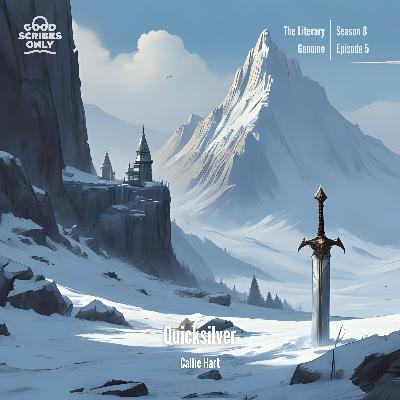
About the Book:Quicksilver is a dark, atmospheric romance by Callie Hart, known for her blend of emotional intensity, sharp suspense, and deeply drawn characters. The story follows Lissa, a young woman living under the shadow of trauma and secrets, and Zeth Mayfair—the dangerous, magnetic figure whose presence upends her world. Drawn together by circumstance and an undeniable pull, the two navigate a web of violence, vulnerability, and trust as they attempt to unravel the mysteries that bind them.Brooding, seductive, and charged with tension, Quicksilver explores the complicated territory between desire and danger, love and survival. Hart’s writing immerses readers in a world of morally gray characters and high-stakes emotion, crafting a romance that feels as raw as it does riveting.About the Author:Callie Hart is a bestselling author of dark romance and romantic suspense whose work is known for its gritty emotional landscapes, complex characters, and fast-paced plotting. Often writing stories that straddle the line between danger and desire, Hart has built a devoted readership drawn to her ability to balance intensity with tenderness.Her novels frequently feature strong, flawed protagonists navigating trauma, love, and redemption, and her series—particularly those involving the enigmatic Zeth Mayfair—have earned her a prominent place in the world of contemporary dark romance. Hart continues to expand her universe with interconnected stories that deliver both heart-pounding suspense and deeply felt emotion.
WebsiteTikTokInstagramYouTubeNewsletterJeremy's WebsiteDan's Website
About the Book:Published in 1972, Augustus by John Williams is a masterful historical novel that chronicles the life and rule of Rome’s first emperor. Told through a series of letters, journal entries, and memoirs, the book captures the political intrigue, personal ambitions, and moral dilemmas that shaped Augustus’ rise to power and his consolidation of the Roman Empire.Williams’ spare, elegant prose strips away the grandeur of history to reveal the human side of leadership—the loneliness, compromise, and resilience required to govern. Augustus explores themes of power, legacy, and the tension between public duty and private desire. The novel won the National Book Award and has been praised for its subtle psychological insight and the timeless relevance of its portrayal of leadership and ambition.About the Author:John Williams (1922–1994) was an American novelist and short story writer celebrated for his precise, restrained prose and deep psychological insight. Born in Fort Worth, Texas, he is best known for Stoner (1965), a quiet but profoundly influential exploration of an ordinary life, and Augustus (1972), which earned the National Book Award.Williams’ fiction often examines the inner lives of his characters against broader historical or social backdrops, highlighting moral complexity, personal resilience, and the tension between individual desires and societal expectations. Though his work was modestly recognized during his lifetime, it has since been acclaimed for its clarity, craft, and enduring human insight.
WebsiteTikTokInstagramYouTubeNewsletterJeremy's WebsiteDan's Website
About the Book:Published in 1972, Augustus by John Williams is a masterful historical novel that chronicles the life and rule of Rome’s first emperor. Told through a series of letters, journal entries, and memoirs, the book captures the political intrigue, personal ambitions, and moral dilemmas that shaped Augustus’ rise to power and his consolidation of the Roman Empire.Williams’ spare, elegant prose strips away the grandeur of history to reveal the human side of leadership—the loneliness, compromise, and resilience required to govern. Augustus explores themes of power, legacy, and the tension between public duty and private desire. The novel won the National Book Award and has been praised for its subtle psychological insight and the timeless relevance of its portrayal of leadership and ambition.About the Author:John Williams (1922–1994) was an American novelist and short story writer celebrated for his precise, restrained prose and deep psychological insight. Born in Fort Worth, Texas, he is best known for Stoner (1965), a quiet but profoundly influential exploration of an ordinary life, and Augustus (1972), which earned the National Book Award.Williams’ fiction often examines the inner lives of his characters against broader historical or social backdrops, highlighting moral complexity, personal resilience, and the tension between individual desires and societal expectations. Though his work was modestly recognized during his lifetime, it has since been acclaimed for its clarity, craft, and enduring human insight.
WebsiteTikTokInstagramYouTubeNewsletterJeremy's WebsiteDan's Website
About the Book:Published in 2005, Never Let Me Go is Kazuo Ishiguro’s haunting meditation on memory, identity, and what it means to be human. The novel follows Kathy H., a young woman reflecting on her years at Hailsham—a seemingly idyllic English boarding school where children are raised apart from the outside world. As Kathy recounts her friendships with Ruth and Tommy, a devastating truth slowly emerges about who they are and the purpose for which they exist.Blending the intimacy of a coming-of-age story with the quiet horror of dystopian science fiction, Ishiguro creates a world that feels both familiar and deeply unsettling. Never Let Me Go is less about the machinery of its imagined future than the emotional landscape of those who live within it—love, loss, and the longing to hold onto something fleetingly human in an inhuman world. The novel was a finalist for the Booker Prize and was later adapted into a celebrated 2010 film.About the Author:Kazuo Ishiguro is a British novelist, screenwriter, and short story writer known for his elegant, restrained prose and exploration of memory, morality, and self-deception. Born in Nagasaki, Japan in 1954, he moved to England as a child and later studied creative writing at the University of East Anglia.Ishiguro’s works include The Remains of the Day (1989), which won the Booker Prize, and Klara and the Sun (2021), among others. His fiction often takes the form of quiet personal reflection that gradually reveals profound emotional truths. In 2017, he was awarded the Nobel Prize in Literature for novels that, in the words of the Swedish Academy, “uncovered the abyss beneath our illusory sense of connection with the world.”
WebsiteTikTokInstagramYouTubeNewsletterJeremy's WebsiteDan's Website
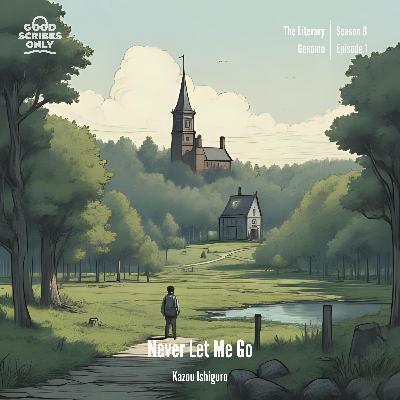
About the Book:Published in 2005, Never Let Me Go is Kazuo Ishiguro’s haunting meditation on memory, identity, and what it means to be human. The novel follows Kathy H., a young woman reflecting on her years at Hailsham—a seemingly idyllic English boarding school where children are raised apart from the outside world. As Kathy recounts her friendships with Ruth and Tommy, a devastating truth slowly emerges about who they are and the purpose for which they exist.Blending the intimacy of a coming-of-age story with the quiet horror of dystopian science fiction, Ishiguro creates a world that feels both familiar and deeply unsettling. Never Let Me Go is less about the machinery of its imagined future than the emotional landscape of those who live within it—love, loss, and the longing to hold onto something fleetingly human in an inhuman world. The novel was a finalist for the Booker Prize and was later adapted into a celebrated 2010 film.About the Author:Kazuo Ishiguro is a British novelist, screenwriter, and short story writer known for his elegant, restrained prose and exploration of memory, morality, and self-deception. Born in Nagasaki, Japan in 1954, he moved to England as a child and later studied creative writing at the University of East Anglia.Ishiguro’s works include The Remains of the Day (1989), which won the Booker Prize, and Klara and the Sun (2021), among others. His fiction often takes the form of quiet personal reflection that gradually reveals profound emotional truths. In 2017, he was awarded the Nobel Prize in Literature for novels that, in the words of the Swedish Academy, “uncovered the abyss beneath our illusory sense of connection with the world.”
WebsiteTikTokInstagramYouTubeNewsletterJeremy's WebsiteDan's Website
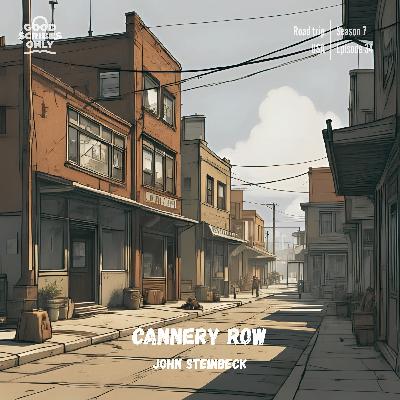
About the Book:Published in 1945, Cannery Row is John Steinbeck’s affectionate portrait of a working-class community on the waterfront of Monterey, California, during the Great Depression. The novel centers on the lives of a cast of misfits—Doc, the gentle marine biologist; Mack and his band of good-hearted troublemakers; Dora and her girls at the local brothel—who make do with little but find meaning in friendship, small joys, and resilience.Rather than a traditional plot, Cannery Row is a series of interconnected sketches that celebrate the humor, hardship, and humanity of ordinary people. Steinbeck blends lyricism with grit, tenderness with satire, capturing both the struggles of poverty and the enduring beauty of community life. At once nostalgic and unsparing, Cannery Row remains one of his most beloved works.About the Author:John Steinbeck (1902–1968) was an American novelist, essayist, and journalist whose works captured the spirit and struggles of 20th-century America. Born in Salinas, California, Steinbeck drew heavily on the landscapes, communities, and migrant workers of his native state. His novels often explored themes of labor, poverty, human dignity, and the bonds of community.Steinbeck’s best-known works include Of Mice and Men (1937), The Grapes of Wrath (1939), which won the Pulitzer Prize, and East of Eden (1952). His clear-eyed yet compassionate storytelling made him one of the most important voices of his generation. In 1962, he was awarded the Nobel Prize in Literature for his “realistic and imaginative writings, combining as they do sympathetic humor and keen social perception.”
WebsiteTikTokInstagramYouTubeNewsletterJeremy's WebsiteDan's Website

About the Book:Published in 1945, Cannery Row is John Steinbeck’s affectionate portrait of a working-class community on the waterfront of Monterey, California, during the Great Depression. The novel centers on the lives of a cast of misfits—Doc, the gentle marine biologist; Mack and his band of good-hearted troublemakers; Dora and her girls at the local brothel—who make do with little but find meaning in friendship, small joys, and resilience.Rather than a traditional plot, Cannery Row is a series of interconnected sketches that celebrate the humor, hardship, and humanity of ordinary people. Steinbeck blends lyricism with grit, tenderness with satire, capturing both the struggles of poverty and the enduring beauty of community life. At once nostalgic and unsparing, Cannery Row remains one of his most beloved works.About the Author:John Steinbeck (1902–1968) was an American novelist, essayist, and journalist whose works captured the spirit and struggles of 20th-century America. Born in Salinas, California, Steinbeck drew heavily on the landscapes, communities, and migrant workers of his native state. His novels often explored themes of labor, poverty, human dignity, and the bonds of community.Steinbeck’s best-known works include Of Mice and Men (1937), The Grapes of Wrath (1939), which won the Pulitzer Prize, and East of Eden (1952). His clear-eyed yet compassionate storytelling made him one of the most important voices of his generation. In 1962, he was awarded the Nobel Prize in Literature for his “realistic and imaginative writings, combining as they do sympathetic humor and keen social perception.”
WebsiteTikTokInstagramYouTubeNewsletterJeremy's WebsiteDan's Website
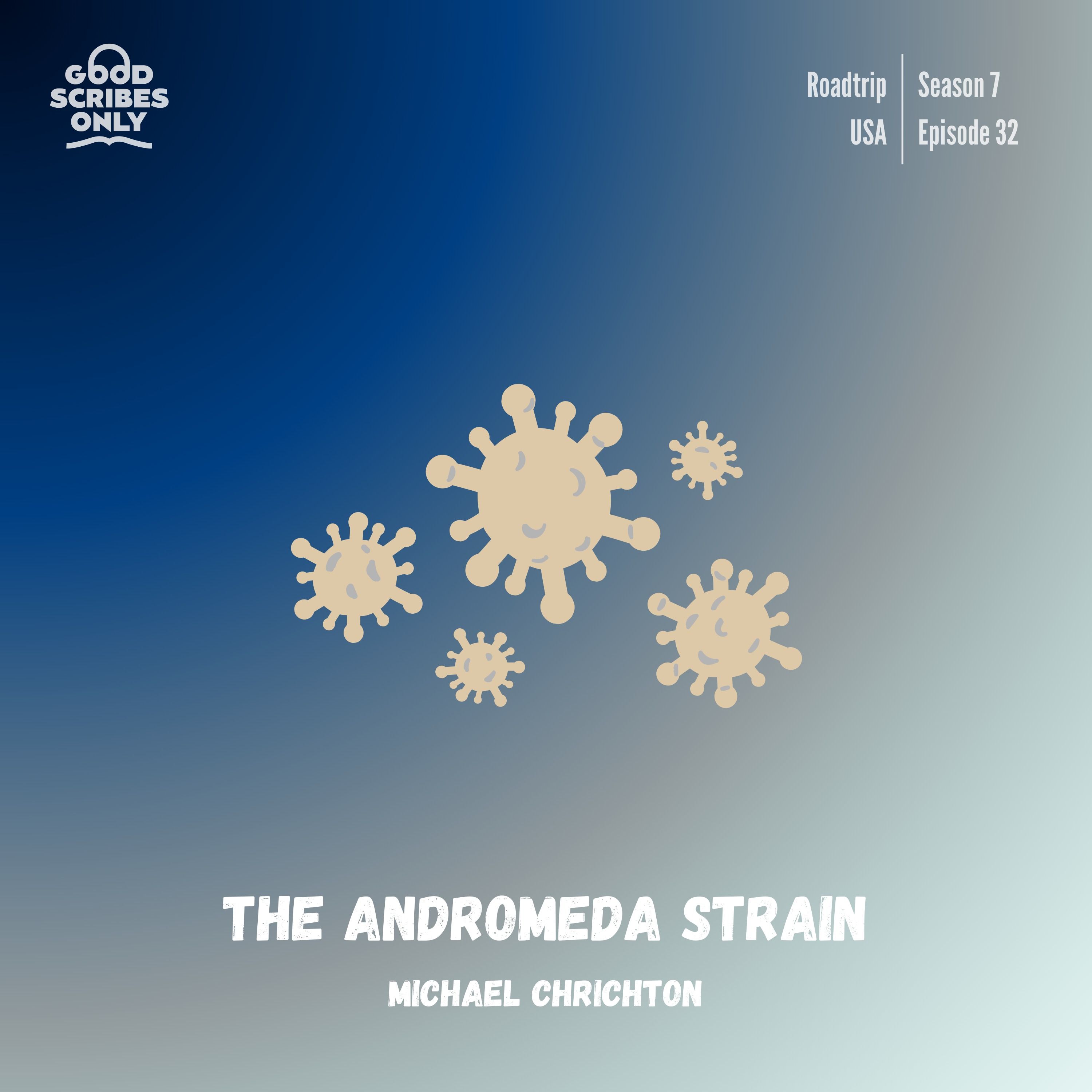
About the Book:First published in 1969, The Andromeda Strain is Michael Crichton’s groundbreaking techno-thriller that launched him into literary stardom. The novel begins when a satellite crashes near a small desert town in Arizona, releasing a deadly extraterrestrial microorganism. A team of top scientists is rushed to a secret underground lab, tasked with identifying, containing, and stopping the microscopic threat before it spreads beyond control.Taut, chilling, and meticulously researched, The Andromeda Strain blends cutting-edge science with page-turning suspense. Its portrayal of crisis management, biohazards, and the limits of human preparedness was ahead of its time, and it remains a cornerstone of the science-fiction thriller genre. The novel was an instant bestseller and later adapted into both film and television, cementing Crichton’s reputation as a master of high-stakes, science-driven storytelling.About the Author:Michael Crichton (1942–2008) was an American author, screenwriter, director, and physician best known for blending science, technology, and suspense in his novels. With works translated into more than 30 languages and over 200 million copies sold worldwide, he was one of the most widely read authors of his time.Crichton wrote a string of blockbuster novels including Jurassic Park (1990), Congo (1980), Sphere (1987), and Timeline (1999). Many were adapted into major motion pictures, most famously Steven Spielberg’s film version of Jurassic Park. In television, he created the hit medical drama ER, which revolutionized the genre and won numerous awards. Trained as a doctor at Harvard Medical School, Crichton brought an unparalleled authenticity to his science-driven plots. His legacy endures as a storyteller who merged imagination with scientific possibility to both entertain and provoke.
WebsiteTikTokInstagramYouTubeNewsletterJeremy's WebsiteDan's Website
About the Book:First published in 1969, The Andromeda Strain is Michael Crichton’s groundbreaking techno-thriller that launched him into literary stardom. The novel begins when a satellite crashes near a small desert town in Arizona, releasing a deadly extraterrestrial microorganism. A team of top scientists is rushed to a secret underground lab, tasked with identifying, containing, and stopping the microscopic threat before it spreads beyond control.Taut, chilling, and meticulously researched, The Andromeda Strain blends cutting-edge science with page-turning suspense. Its portrayal of crisis management, biohazards, and the limits of human preparedness was ahead of its time, and it remains a cornerstone of the science-fiction thriller genre. The novel was an instant bestseller and later adapted into both film and television, cementing Crichton’s reputation as a master of high-stakes, science-driven storytelling.About the Author:Michael Crichton (1942–2008) was an American author, screenwriter, director, and physician best known for blending science, technology, and suspense in his novels. With works translated into more than 30 languages and over 200 million copies sold worldwide, he was one of the most widely read authors of his time.Crichton wrote a string of blockbuster novels including Jurassic Park (1990), Congo (1980), Sphere (1987), and Timeline (1999). Many were adapted into major motion pictures, most famously Steven Spielberg’s film version of Jurassic Park. In television, he created the hit medical drama ER, which revolutionized the genre and won numerous awards. Trained as a doctor at Harvard Medical School, Crichton brought an unparalleled authenticity to his science-driven plots. His legacy endures as a storyteller who merged imagination with scientific possibility to both entertain and provoke.
WebsiteTikTokInstagramYouTubeNewsletterJeremy's WebsiteDan's Website

Comments

Download from Google Play

Download from App Store
 United States