


 Claim Ownership
Masters of Automation - A podcast about the future of work.
Subscribed: 2Played: 12
Subscribe

© Copyrighted 2022
Description
Masters of Automation is a podcast and article series on creative technologists, startup founders, and entrepreneurs who change the future of work and our lives through automation and artificial intelligence. We will cover their personal stories on what led them to innovate and build new products and services.
The automation ecosystem evolves every day with new startups forming and technologies building, and it's best to hear the stories from the true #MastersofAutomation.
26 Episodes
Reverse
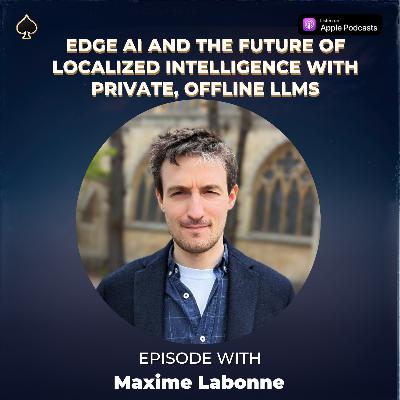
The following is a conversation between Alp Uguray and Maxime Labonne. SummaryIn this episode of the Masters of Automation podcast, host Alp Uguray interviews Maxime Labonne, discussing the challenges and innovations in running large language models (LLMs) on edge devices. They explore the importance of post-training techniques for enhancing small models, the future of local AI models, and the integration of AI into everyday applications. The conversation also touches on the role of context in AI performance, architectural considerations, and the dual paths of AI development. Maxim shares his journey from cybersecurity to AI, the use of AI in spam detection, and the potential of agent-to-agent communication. The episode concludes with insights on the future of AI in gaming and the importance of community in AI development.TakeawaysRunning LLMs on edge devices presents challenges like latency and model quality.Post-training techniques are crucial for enhancing small models' performance.Local AI models can provide privacy and customization for users.Agentic workflows can enhance AI's functionality in applications.Context windows are vital for AI reasoning and performance.Model architecture significantly impacts AI capabilities and efficiency.There are two paths in AI development: AGI and interpretable models.Maxime transitioned from cybersecurity to AI due to the open community.AI can be effectively used in cybersecurity for spam detection.Agent-to-agent communication in AI is still in its infancy.
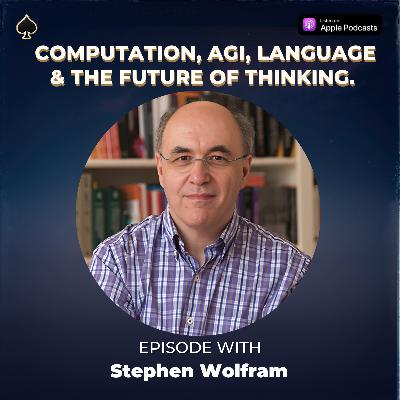
The following is a conversation between Alp Uguray and Stephen Wolfram. SummaryIn this conversation, Alp Uguray hosts Stephen Wolfram to discuss the intersection of computation, AI, and human intelligence. They explore the differences between large language models and formal computation, the concept of the Ruliad, and the limitations of AI in understanding complex mathematical proofs. The discussion also delves into the future of AI, the nature of communication and knowledge transfer among AI systems, and the implications of computational processes in the natural world. In this conversation, Stephen Wolfram discusses the nature of sensory data in AI, the implications of quantum mechanics on human cognition, and the future of education with a focus on computational thinking. He emphasizes the importance of foundational understanding in entrepreneurship and the need for adaptability in business. The discussion highlights the evolving landscape of technology and education, advocating for a shift from specialized skills to a more generalized approach to learning and thinking.TakeawaysComputation allows for a level of understanding beyond unaided human capabilities.Large language models (LLMs) mimic human-like reasoning but lack formal structure.The Ruliad encompasses all possible computations, but LLMs struggle to navigate it.Human mathematics is shaped by our sensory experiences and historical context.AI's ability to reason is fundamentally different from human reasoning.The efficiency of computation contrasts with the inefficiency of pure reasoning.AI could develop a richer language for communication beyond human languages.Understanding the computations in nature is a challenge for both humans and AI.The evolution of AI communication may lead to new forms of knowledge transfer.The future of AI may involve intelligences that are alien to human understanding. The sensory data we receive shapes our understanding of the world.AI's perception differs significantly from human sensory experiences.Quantum mechanics introduces the concept of multiple paths of history.Human cognition seeks definite answers, contrasting with quantum uncertainty.Education should focus on computational thinking rather than just programming skills.The future of programming may resemble the decline of hand trades.Generalized knowledge will be more valuable than specialized skills.Conviction in entrepreneurship stems from a solid foundational understanding.Successful entrepreneurs often pivot their plans based on real-time feedback.Computational thinking enhances our ability to understand and innovate.
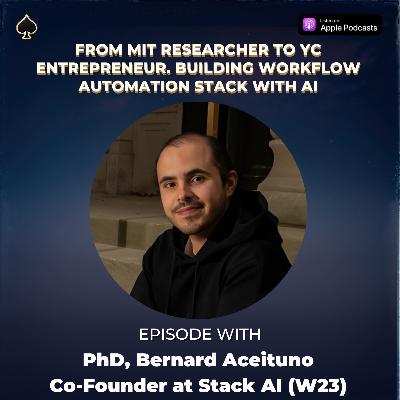
The following is Part I of my conversation with Bernard Aceituno, Co-Founder of Stack AI (YC) and previously PhD at MIT. I will release Part II at another point as we will do the recording again. Here is a snippet of our conversation at MIT CSAIL, where Bernard spent 5 years researching.SummaryIn this engaging conversation, Bernard shares his eclectic journey from Venezuela to becoming a co-founder of Stack AI, detailing his academic background, entrepreneurial spirit, and the challenges faced in the startup world. He discusses the importance of collaboration, the evolution of AI in industry, and the significance of understanding customer needs. The conversation also touches on the dynamics of building a team, the role of research in product development, and the future of AI in enterprise automation.TakeawaysBernard's journey began in Venezuela, where he pursued his passion for science and technology.He transitioned from academia to entrepreneurship, driven by a desire to impact the world with technology.The importance of being in an entrepreneurial environment to stay motivated and focused.Collaboration with Tony led to the creation of Stack AI, focusing on solving real-world problems with AI.Y Combinator provided crucial support and validation for their startup idea.Understanding customer needs is essential for product development and success.The shift towards enterprise automation presents both challenges and opportunities for startups.Building a strong team with shared values is critical for growth and success.Transparency and explainability in AI are vital for building trust with customers.Immigrant founders often face unique challenges but also have access to valuable mentorship opportunities.
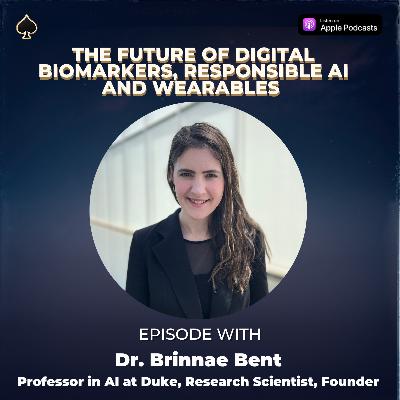
SummaryIn this episode of the Masters Automation Podcast, Dr. Brinnae Bent shares her journey from a childhood filled with diverse experiences to becoming a leader in the intersection of healthcare and artificial intelligence. She discusses her work on digital biomarkers, the evolution of wearable technology, and the importance of responsible AI in healthcare. Dr. Bent also delves into her experiences as an ultra-marathoner, the impact of stress on performance, and the challenges of predictive healthcare models. In this conversation, Brinnae Bent discusses the complexities of AI, particularly in the context of healthcare and neuroscience. She emphasizes the importance of explainability in AI models, especially large language models (LLMs), and how they can be made more interpretable. The discussion also covers the role of education in shaping future technologies, with a focus on student engagement and the integration of AI in teaching. Bent shares insights on how students are approaching problem-solving in AI and the significance of open-ended projects. The conversation concludes with rapid-fire questions that explore personal insights and future aspirations in the field of AI.TakeawaysDr. Bent's journey into healthcare and AI was influenced by her early experiences as a certified nurse assistant.The evolution of wearable technology has democratized health monitoring.Digital biomarkers can transform vast amounts of data into actionable health insights.Open source projects in technology foster collaboration and innovation.Understanding the brain's functioning is crucial for developing effective healthcare solutions.Wearable devices have the potential to predict health conditions before traditional methods.Personal health data can encourage better lifestyle choices and interventions.Stress impacts the body similarly, regardless of its source.Acute stress can enhance performance, while chronic stress can lead to burnout.Interpretable machine learning models are essential for responsible AI in healthcare. Explainability in AI is crucial for trust, especially in healthcare.Neuroscience and AI can inspire each other in understanding complex systems.Students are increasingly interested in responsible AI and its implications.Open-ended projects encourage creativity and innovation in students.AI can be leveraged to personalize education and enhance learning experiences.Understanding the human brain can inform the design of interpretable AI models.The rapid evolution of AI requires continuous adaptation in education.Students are eager to engage in deep discussions about AI ethics and safety.Learning to code is essential for non-technical individuals to engage with AI.Future generations will shape the role of AI in society. success.On the potential of Wearables and Digital Biomarkers:
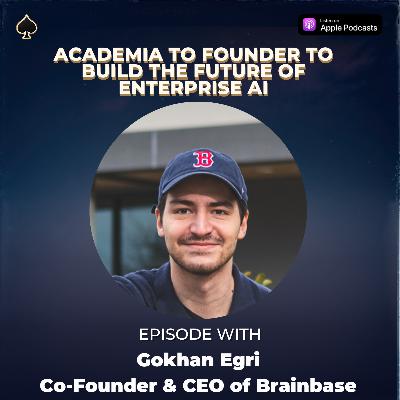
Key TakeawaysGokhan transitioned from academia to entrepreneurship after realizing the potential of AI.His first startup, O'Leo, was born out of a need for automation in education.Brainbase evolved from O'Leo, focusing on enterprise AI solutions.Customer feedback is crucial for shaping product development and messaging.The concept of the 'digital worker' is central to Brainbase's mission.ROI in automation can be measured through clear metrics and pilot programs.The 'black box test' helps identify automation opportunities within organizations.AI can significantly improve the efficiency of enterprise operations.Transparency in automation processes is essential for enterprise adoption.Immigrant founders often possess unique grit and adaptability that contribute to their success.
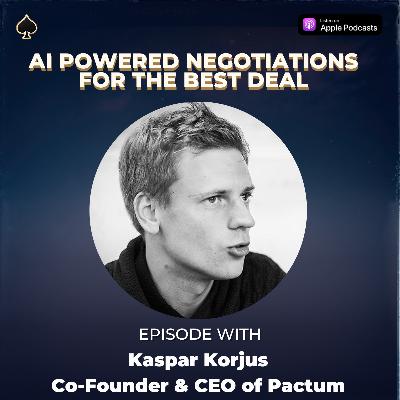
Key TakeawaysNegotiations are happening everywhere in life, from personal relationships to business deals.AI can assist in negotiations by understanding potential terms, their value, and making trade-offs.The future of negotiations involves both parties using AI agents to engage in continuous negotiations.Transparency in AI decisions is important, and interfaces need to be developed to provide clarity and control.Entrepreneurship and participating in an Ironman race require mental resilience, quick decision-making, and the ability to prioritize tasks.In startups, it's important to postpone decisions that can be made later to gather more information and make smarter choices. Government contracts offer long-term and substantial opportunities for AI implementation.AI negotiations can lead to competitive advantages and market dominance.Regulations play a crucial role in ensuring transparency and accountability in AI negotiations.The four-level negotiation intelligence framework categorizes AI negotiation use cases based on complexity and impact.Building a foundation layer for AI in government services can lead to more efficient and innovative public services.Estonia's e-residency program provides time and cost-saving benefits for startups.


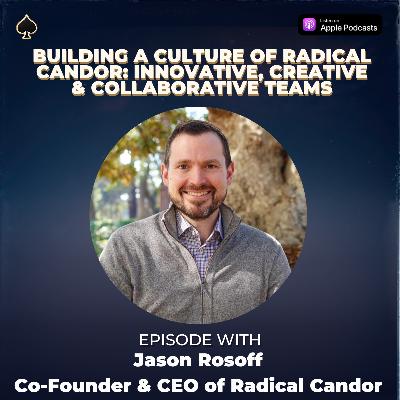
During the interview with Alp Uguray and Jason Rosoff provided several key insights about Large Language Models (LLMs), Artificial Intelligence (AI) and their convergence to help people with coaching. Firstly, Rosoff mentioned that LLMs have the potential to be used as conflict resolution experts, acting as a more neutral intermediary between two parties in conflict. This could be particularly useful when emotions are high and an unbiased perspective is needed. LLMs can detect the content and emotion of what is being said and can provide feedback to the participants based on their analysis. Secondly, we discussed that AI has the potential to provide coaching and access to the knowledge and teachings of experts, making them more accessible to a broader audience. This means that more people can benefit from the expertise of professionals in various fields, regardless of their geographical location or financial constraints. Furthermore, AI can assist individuals in practicing complex social and intersocial skills. By simulating conversations and interactions, AI can help people improve their communication abilities and provide feedback from the audience to aid in their development.This can be particularly valuable for individuals who struggle with social interactions or need to enhance their conversational skills. Additionally, AI can create safe practice spaces for individuals to engage in challenging conversations, such as those involving radical candor. These safe spaces allow individuals to practice and refine their communication techniques without fearing negative consequences or judgment. In conclusion, the key insights provided by Jason Rosoff during the interview with Alp Uguray highlight the potential of LLMs and AI in the coaching realm. LLMs can act as conflict resolution experts, detect content and emotion, and provide feedback. AI can provide coaching and access to expert knowledge, help individuals practice social skills, and create safe practice spaces for difficult conversations. These insights demonstrate the transformative impact of LLMs and AI in coaching and communication that we have yet to explore.
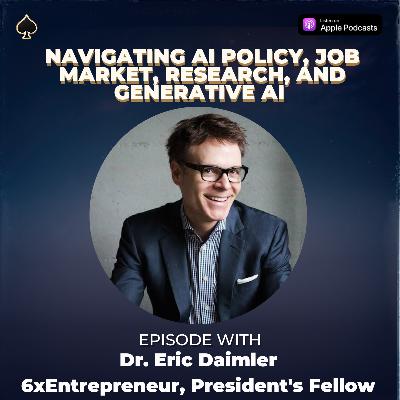
I recently spoke with Dr. Eric Daimler about how we can build on the framework he and his colleagues established during his tenure as a contributor to issues of AI policy in the White House during the Obama administration. Eric is the CEO of the MIT-spinout Conexus.com and holds a PhD in Computer Science from Carnegie Mellon University. Here are the interesting results of my interview with him. His ideas are important as part of the basis for ACM SIGAI Public Policy recommendations.
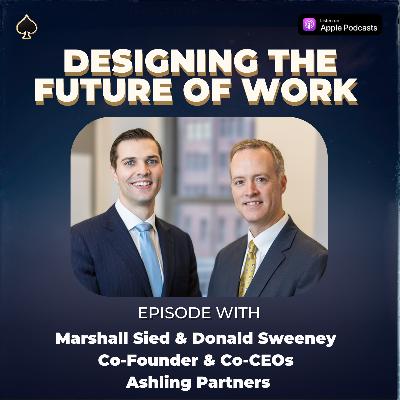
Some questions we discussed:Founding Story of Ashling Partners and defining a manifesto that cultivates talent: Don & Marshall share their unique and inspiring founders’ story that led them to the path of finding Ashling Partners. Even before starting the company, they wrote what is known as the “Ashling Manifesto”, which highlighted the key principles that govern the people at Ashling to continuously improve and become a better version of themselves.Process Mining, creating a frictionless enterprise: Proces Mining by revealing process bottlenecks and efficiencies and allowing to create of an end-to-end process experience is the key component to drive process improvement, optimization, and automation. By getting its own magic-quadrant, it shows a testament to the market that Process Mining is just at the beginning of its growth journey.The impact of automation on businesses: Automation helps businesses increase efficiency, lower costs, and optimize processes. It allows employees to focus on higher-value tasks, leading to improved job satisfaction and productivity.The importance of aligning automation with corporate objectives: There is a strong need to ensure automation projects align with a company's broader goals. This approach helps maximize the value and benefits of automation rather than just focusing on short-term cost savings.The right time to automate: Companies should consider automation when the potential benefits outweigh the costs and risks associated with implementing new technologies. This includes considering the impact on employee engagement and job satisfaction, as well as the overall customer experience.Balancing automation and human touch: We highlighted the importance of preserving human empathy and interaction in customer experiences while implementing automation. Automation should enhance the customer experience rather than solely focusing on cutting costs or reducing human involvement.The role of executive leadership: The responsibility for ensuring a successful automation program falls on executive leadership. Leaders need to have the right perspective and focus on the correct KPIs and metrics, prioritizing long-term value creation and customer satisfaction.The role and promise of Citizen Development Programs:Enhancing employee and customer experience: The ultimate goal of automation should be to improve employee and customer experiences. This means not only saving time but also delivering greater value and fostering positive interactions that lead to increased customer loyalty and satisfaction.
What inspired you to pursue a career in analytics and data science, and how did you get started? You've written several books on the topic of analytics, including "Competing on Analytics" and "The AI Advantage." What led you to focus on these areas, and what insights have you gained from your research and writing? How do you see the field of analytics evolving in the coming years, and what opportunities and challenges do you anticipate? In your opinion, what are some of the most important skills that aspiring data scientists and analytics professionals should cultivate?Many organizations are struggling to effectively leverage their data assets. What advice would you give to leaders who are trying to build a data and AI-driven culture within their organizations?You've also written about the ethics of AI and the potential risks associated with these technologies. What are some of the most pressing ethical concerns related to AI today, and how do you suggest we address them? Finally, what advice would you give to students and young professionals who are just starting their careers in analytics and data science, and what qualities do you think are most important for success in this field?


Some questions we discussed:As a pioneer in your field, how did your journey begin that led you to explore the human-computer interface? What led you to explore this field?As the builders of the future, we are told that what we invest our time in today creates what's next for the children of tomorrow. What is the number 1 thing that today's design thinkers think about differently, and what are some things that may lead to bad experiences?This is more of an open-ended question. As robots and software continue to interact with humans, such as pizza shops that automatically create pizza, restaurants without servers, self-driving cars, and pilots, human-to-human interaction is replaced for efficiency, consistency, and less interactivity. As humanity continues to find ways to boost Customer Experience (CX) with automation, what's the future that's waiting for us? Do people want consistency and efficiency over interactivity at all costs? And how can the young generations shape the future of work for a better experience for all? What are your thoughts? Optimism and honesty lead to positive outcomes. Similarly, the purpose and the design of a product don’t mean that the product, when adopted, will be used for the same reasons that it’s designed for; hence you can point to the many stories revolving around Facebook or cup to filter boiled pasta water, what are some of your strategies to collect constructive feedback?One of the most exciting aspects of predicting the future is that we always think and forecast what will happen but do not focus on what won’t happen. What won’t happen depends on what the innovative and entrepreneurial minds choose not to do in the next few years and where the people do not want change to happen. Given that the world is investing a lot of time and money into the metaverse, it opens new doors for Human and Computer interactivity. New user controls and new ways to experience the world of computers. What are your thoughts on this, particularly around a future where everyone is wearing a helmet and sitting on a couch can be both bright and dark?

Comments

Download from Google Play

Download from App Store
 United States