


 Claim Ownership
Climate Changed
Subscribed: 10Played: 78
Subscribe

© Copyright 2025 All rights reserved.
Description
Climate Changed explores spiritual leadership and imagination in a climate-changed world. Join hosts Rev. Nicole Diroff and Autumn Brown (from the hit podcast How to Survive the End of the World) as they talk with artists, healers, and frontline leaders who deepen the conversation and stir the waters. A project of The BTS Center.
47 Episodes
Reverse
In our previous episode, Autumn spoke with Tory Stephens, a climate fiction editor and co-founder of Imagine 2200 at Grist, about the profound power of storytelling. If you haven't listened to that conversation yet, don't worry—you can dive right into this episode! In fact, hearing this reflection first will give you a completely different lens when you do go back to listen to the interview.
In this episode, co-hosts Autumn Brown and Rev. Nicole Diroff sit down to unpack the incredible themes Tory raised. They explore why the climate movement desperately needs more imagination and how we can practically incorporate that imagination into our spiritual leadership.
In this conversation, Autumn and Nicole discuss:
The Concept of "Thrutopia": Why we need stories that navigate the messy, realistic middle ground between the world we have now and the better world we are trying to build.
Prefigurative Fiction: How dreaming about and writing down the future we want actually serves as the first step to bringing that reality into existence.
Hope as a Daily Practice: Why practicing hope and imagining positive futures needs to be a regular discipline—just like going to church or taking out the compost!
Next Steps: Where Imagination Meets Practice The change we need won't happen alone—it grows in community. Here are two invitations from today’s conversation to carry these ideas into your shared lives:
Creating Your Story of Tomorrow: Visit The BTS Center's Leadership Commons to access Creating Your Story of Tomorrow. This is a beautifully crafted facilitator guide and video developed by renowned environmental artist Eve Moser. Designed for adult education facilitators and congregation leaders, this resource will guide you and your community through a collaborative workshop to envision the future together.
Write Your Own Flash Fiction: Sit down—alone, with a friend, or with a group—and write a piece of "flash fiction" (a very short story with a beginning, middle, and end) about a future you would love to inhabit.
Share Your Visions With Us! We want to hear your flash fiction and find out what you are creating or discovering! Email us at podcast@thebtscenter.org or leave a voice message at 207-200-6986. Your insights might ripple out through future episodes.
Explore More:
Learn more about The BTS Center: https://thebtscenter.org/
Find transcripts, discussion guides, and full-length video episodes at www.climatechangedpodcast.org
Watch this episode on YouTube: https://www.youtube.com/@TheBTSCenter
 1
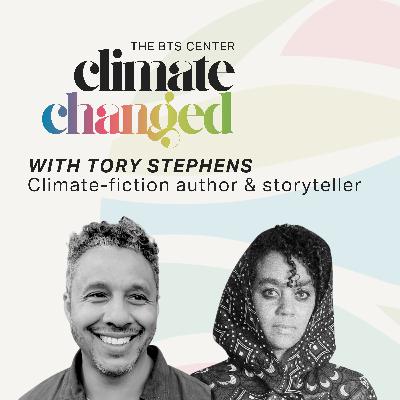
1In the Season Four premiere of the Climate Changed podcast, Autumn Brown engages in a deeply inspiring conversation with Tory Stephens, a storyteller, cultural worker, and climate justice advocate.
They explore the transformative power of climate fiction and its role in helping us envision the future. Tory discusses his groundbreaking work at Grist, where he co-founded Imagine 2200, an initiative that asks a simple yet radical question: What if we wrote stories not about what we fear but about what we hope to create? The discussion dives into how imagination connects with responsibility, how storytelling serves as a profound form of spiritual leadership, and why envisioning a new reality is essential for climate justice.
Link to discussion guide and transcript www.climatechangedpodcast.org
Grounding: To begin the episode, producer Peterson Toscano leads a grounding exercise by sharing a short, speculative story. Modeled on the type of climate fiction discussed in the episode, the story features a message from "Timothy Meadows from the Future" giving a broadcast from the year 2115. Timothy explores the history of how human relationships with pets and animals shifted and adapted in the face of climate change. This strange and wonderful story sets the stage for the episode by letting imagination lead and inviting listeners to envision a workable, adaptable future.
Resources & Concepts Mentioned:
Thrutopia: Coined by philosopher Rupert Read and popularized by author Manda Scott through the Thrutopia Masterclass, a Thrutopian narrative threads the needle between utopia and dystopia. It focuses on writing grounded, plausible, and inspiring route maps that show exactly how we navigate through our current struggles to reach a future we'd be proud to leave behind.
Octavia E. Butler & Bloodchild: Autumn quotes the legendary science fiction author—who was the first African American woman to reach mainstream success in the genre—and her collection Bloodchild and Other Stories, reflecting on how sci-fi stimulates necessary imagination and creativity.
Humans of New York: The iconic photoblog that Tory credits with changing his perspective early in his career, teaching him the unparalleled power of human-centric storytelling over dry statistics.
Visionary Fiction: A framework of world-building and storytelling that Autumn Brown and her sister use in their writing retreats, which actively wrestles with the sacred and reclaims spiritual practices.
Dream Seeds: A term favored by Grist and Imagine 2200 to describe stories that plant concrete, hopeful visions of how society could be organized completely differently.
Eve Moser & Creating Your Story of Tomorrow: An adult education facilitator guide and video created by renowned environmental artist Eve Moser, available on the BTS Center's Leadership Commons.
Guest Bio: Tory Stephens is a storyteller, cultural worker, and climate justice advocate. At Grist, he co-founded Imagine 2200, a climate-fiction powerhouse, and has produced two anthologies of climate fiction: Afterglow and Metamorphosis. He now focuses on publishing climate fiction year-round and building partnerships that connect culture, justice, and climate solutions. In addition to his work at Grist Magazine, Tory is also involved with the Hollywood Climate Summit.
Connect with Tory & Explore His Work:
LinkedIn: www.linkedin.com/in/torystephens
Bluesky: @torystephens.bsky.social
Imagine 2200 (Grist): About Imagine 2200: Climate Fiction
Read the Anthology: Imagine 2200: We Are What We Nurture
Read the Book: Afterglow (The New Press)
More from Tory: Shaping the Future Through Climate Fiction (Podcast Interview)
Thank Yous: We want to extend our deepest gratitude to everyone who made this episode possible:
Tory Stephens, for sharing his incredible vision, imagination, and wisdom with us.
Peterson Toscano, producer of Climate Changed, for producing this episode and for providing the wonderful grounding for this episode.
The BTS Center team, for your ongoing support and for providing the resources and platform that make this podcast possible.
How do we live, love, and practice leadership in a climate-changed world?
Welcome to Season 4 of the Climate Changed podcast, a project from The BTS Center! This season, we are diving deep into spiritual leadership and imagination. Join our hosts—Autumn Brown (artist, theologian, mother, and freedom worker) and Rev. Nicole Diroff (Associate Director at The BTS Center)—as they explore what faithful leadership looks like in times of immense uncertainty.
Throughout this season, we’ll hear from spiritual leaders, artists, and healers who are helping us navigate the overlapping crises of our time with courage, connection, and community.
This season's powerful lineup includes:
Katie Mears on navigating the front lines of disaster response and communicating risk.
Tory Stephens on the power of speculative fiction and imagination as our greatest climate tools.
Norma Wong, Zen master and Native Hawaiian leader, on how we breathe together and reconstitute our humanity through collapse.
Rabbi Ora Nitkin-Kaner on finding holiness in uncertainty and rooting into our values when we lose our ground.
Francis Weller on the necessity of ritual, and how grief and love are two sides of the same bridge.
🎉 You're Invited: Season 4 Massive Launch Event!
Before the first episode drops, we want to celebrate this new chapter with you. Join hosts Nicole and Autumn, along with producers Ben Yosua-Davis and Peterson Toscano, for a live, interactive launch event.
This isn't your average, boring webinar. We'll be diving into a deep conversation about the current pressure points in American society, politics, and justice, and how they intersect with our climate reality.
When: Monday, March 16th, 2026 at 7:30 PM Eastern
Where: Online! Register for free at thebtscenter.org What to expect at the launch party:
Live conversations with several of our Season 4 guests
Exclusive, behind-the-scenes video footage and bloopers
Giveaways throughout the event!
Episode 1 drops Tuesday, March 17th, 2026, featuring a fantastic conversation with Tory Stephens on speculative storytelling and the futures we actually want to build.
Make sure you are subscribed so you don't miss an episode, and find more resources at www.climatechangedpodcast.com.
Keywords and Phrases
Climate change, spiritual leadership, climate resilience, Autumn Brown, Nicole Diroff, The BTS Center, disaster response, speculative fiction, climate storytelling, Zen practice, grief and ritual, climate justice, community building, navigating collapse, podcast launch event
Chapter Markers
00:00 - Exploring Spiritual Leadership & Imagination
00:24 - Meet Your Hosts: Autumn Brown & Nicole Diroff
00:44 - Katie Mears on Disaster Response
01:07 - Tory Stephens on Speculative Fiction
01:34 - Norma Wong on Breathing Through Collapse
02:21 - Rabbi Ora Nitkin-Kaner on Holiness in Uncertainty
02:50 - Francis Weller on Ritual and Grief
03:52 - You're Invited: Season 4 Launch Event!
05:17 - Sneak Peek: Episode 1 with Tory Stephens
In the fourth and final installment of our special storytelling bonus series, hosts Peterson Toscano and Ben Yosua-Davis conclude our journey through the 2025 BTS Center Convocation with a powerful story about the connection between our physical bodies, marginalized communities, and the health of the planet.
We hear from Tawni White, a registered nurse and congregational health leader, who shares her moving journey from experiencing childhood hunger and scarcity to discovering the empowering, healing abundance of the soil. Tawni reminds us that food sovereignty isn’t just about having food; it's about reclaiming dignity, connection, and hope through the simple act of planting a seed.
Then, we mark a major milestone for Climate Changed as we officially pass the mic to our new Season 4 co-hosts: Rev. Nicole Diroff and Autumn Brown! Nicole and Autumn share their vision for the upcoming season—exploring what it means to live, love, and lead in a climate-changed world—and share exclusive audio clips from their upcoming guests.
Finally, we cordially invite you to our Season 4 Live Launch Event happening on Monday, March 16th, 2026, at 7:30 PM Eastern!
Episode Chapters
00:00 - Welcome & Introduction by Peterson Toscano and Ben Yosua-Davis
01:20 - Tawni White's Story: Scarcity, Resilience, and Food Sovereignty
08:40 - Peterson and Ben reflect on the power of storytelling
09:41 - Passing the Mic: Meet Season 4 Hosts Autumn Brown and Rev. Nicole Diroff
13:42 - Season 4 Sneak Peek: Audio clips from upcoming guests
16:27 - Announcement: Season 4 Live Launch Party on March 16th
18:48 - Teaser: Tory Stephens on Speculative Fiction
Meet the Season 4 Guests
Next season, Autumn and Nicole will be talking with artists, theologians, organizers, and scientists who are helping us imagine new ways of living. Here is a sneak peek at some of the incredible voices you will hear:
Katie Mears: A disaster response leader working on the front lines to create accessible risk communication and collective solutions that empower communities.
Tory Stephens: A climate fiction advocate at Grist who believes speculative fiction and imagination are our most powerful tools for dreaming up the climate futures we actually want.
Norma Wong: A Zen master and Native Hawaiian leader who invites us to breathe together through collapse and honors the vital role of indigenous wisdom in a changing world.
Rabbi Ora Nitkin-Kaner: A rabbi and spiritual leader who helps people find grounding, values, and holiness amidst the messy uncertainty of our current times.
Francis Weller: A psychotherapist and author who utilizes the power of ritual to help us safely fall apart, realign, and recognize that grief and love are two sides of the same bridge.
Mentioned in this Episode
The BTS Center: thebtscenter.org
AORTA (Anti-Oppression Resource and Training Alliance): aorta.coop - The cooperative where Autumn Brown spent eight years as a facilitator and political educator.
Reclaim: reclaim.care - A Minnesota-based nonprofit previously led by Autumn Brown that helps queer and trans youth access mental health care and community support.
How to Survive the End of the World podcast - A podcast co-hosted by Autumn Brown and her sister, adrienne maree brown.
Grist: grist.org - The media organization where Tory Stephens works on speculative fiction and climate storytelling.
Join Us for the Season 4 Launch Party!
Get ready for a deep dive conversation about the current pressure points in American society, politics, and justice, and how they intersect with our climate reality. We will feature exclusive video samples, behind-the-scenes footage, bloopers, and giveaways!
Date: Monday, March 16, 2026
Time: 7:30 PM Eastern
Register for free at: thebtscenter.org
Connect with Us
We would love to hear your reflections on these stories! Share how they impacted you or share a story of your own.
Email: podcast@thebtscenter.org
Voicemail: 207-200-6986
Website: climatechangedpodcast.org
In this second bonus episode from Climate Changed, we return to the 2025 BTS Center Convocation, where participants were invited to flip the script—shifting climate conversations away from data and debate and toward lived experience, spiritual insight, and imagination.
Co-hosts Peterson Toscano and Ben Yosua-Davis introduce two deeply personal stories from members of the BTS Center community: Tyler Mark Nelson and David Arfa. Their stories explore mental health, vocation, migration, lineage, wonder, and responsibility in a climate-changed world—offering listeners not solutions, but companionship, honesty, and renewed attention to the wisdom of place.
About This Mini-Series: Convocation Stories
At the 2025 BTS Center Convocation, participants were invited to share climate-centered stories grounded in their own lives—stories shaped by courage, vulnerability, and spiritual practice. Rather than expert lectures or policy analysis, these stories center on imagination, grief, hope, and relationships.
In this mini-series, Peterson Toscano and Ben Yosua-Davis share two of those stories in each episode, offering listeners a glimpse of how ordinary people are integrating climate concern with faith, creativity, and daily life. These episodes are especially suited for seasons when exhaustion, uncertainty, and longing coexist—and when stories can help us breathe again.
How These Stories Were Made: The Story-Making Process
To bring these stories to life with care and craft, The BTS Center partnered with Stellar Story Company. Months before Convocation, community members were invited to submit story “seedlings” connected to the Convocation theme. From more than twenty proposals, seven storytellers were selected.
Each storyteller worked closely with an experienced storytelling coach over several months, meeting multiple times to shape, revise, and rehearse their narratives. The goal was not polished performance for its own sake, but faithful storytelling—stories lovingly and prayerfully crafted for a shared community.
As Associate Director Nicole Diroff explains in the episode, this process was itself an act of “flipping the script”: centering voices from within the community and trusting that lived experience can open pathways to courage and connection.
Stories in This Episode
“Teach Me the Ways of the Loon” – Tyler Mark Nelson
Tyler Mark Nelson begins his story seated on a warm rock along the north shore of Lake Superior—a place he returns to when his mental health falters, and his vocational path feels uncertain. Living with long-term depression and anxiety, Tyler finds himself one year away from graduating from Yale Divinity School and questioning everything.
As he watches loons dive and resurface in the cold inland sea, Tyler recalls another moment years earlier when he stood at this same shoreline after dropping out of college. The loons become unexpected spiritual companions, offering a metaphor for nourishment, patience, and survival beneath the surface.
A simple prayer—“God, teach me the ways of the loon”—marks a turning point. Tyler does not emerge with easy answers or dramatic healing, but with breath, presence, and a renewed commitment to care for his body, spirit, and community. His story reframes vocation not as certainty or ordination, but as learning how to swim alongside others in deep water.
Tyler Mark Nelson
Tyler Mark Nelson is a community educator, ecotheologian, activist, and artist. He currently serves as a Research Associate with the Yale Forum on Religion and Ecology and is involved in projects exploring kinship and public ritual in a time of planetary crisis. Raised in Minnesota, Tyler’s work is deeply shaped by place, contemplative practice, and the more-than-human world.
“What Migrations Have You Been On?” – David Arfa
David Arfa’s story begins with a childhood encounter with a snake in a Detroit backyard—an early moment of exhilaration and curiosity rather than fear.
As David studies ecology, wrestles with family expectations, and searches for spiritual grounding, he finds unexpected resonance in Jewish ritual, prayer, and lineage. A formative experience with monarch butterflies in California—hundreds falling frozen from eucalyptus trees and lifted back into flight by human breath—becomes a moment of awe and ethical clarity.
Weaving together migration stories of butterflies, ancestors leaving Warsaw, and his own vocational journey, David invites listeners to consider what migrations—spiritual, emotional, generational—have made their own lives possible. His story holds wonder and responsibility together, asking what we are creating now that may not come to fruition for generations.
David Arfa coordinates bereavement services and offers grief counseling at Baystate Hospice. A storyteller and educator rooted in Jewish tradition, David’s work weaves together ecological awareness, spiritual lineage, and narrative as tools for meaning-making, wonder, and ethical responsibility.
Reflection and Response
Following both stories, Ben Yosua-Davis and Peterson Toscano reflect on the craft and impact of climate storytelling. They note the power of spaciousness, the refusal to rush toward solutions, and the way sound, image, and silence can carry meaning.
Together, they suggest that climate storytelling works best when it trusts listeners—when it offers images rather than explanations and allows sorrow, humor, holiness, and resilience to coexist.
Next Steps
Share the episode with someone who may need it. Stories create connection, and connection creates courage.
Tell your own story. Consider where land, body, memory, or ritual shape your climate story.
Practice storytelling as spiritual practice. Begin with image, place, or breath rather than argument or data.
Learn more about The BTS Center and upcoming programs at TheBTSCenter.org.
Explore storytelling coaching at StellarStory.com.
Announcing Season Four of Climate Changed!
In Season 4, incoming co-hosts Nicole Diroff and Autumn Brown will explore what it means to live, love, and lead with faith and imagination in a climate-changed world. We are especially honored to welcome Autumn—a visionary artist, theologian, and co-host of the acclaimed podcast How to Survive the End of the World with her sister adrienne maree brown—whose profound expertise in community resilience and speculative fiction brings a rare, transformative perspective to these essential conversations.
Season Four Guests
Francis Weller: francisweller.net (Author of The Wild Edge of Sorrow).
Norma Wong: Institute of Zen Studies (Zen Master and leader).
Rabbi Ora Nitkin-Kaner: Climate Change Chaplain
Tory Stevens: Climate Narrative Project (Climate storyteller).
Katie Mears: Episcopal Relief & Development (Disaster response leader).
In this special bonus mini-series, Climate Changed returns to the 2025 BTS Center Convocation, where participants “flipped the script” and stepped forward to share climate-centered personal stories—not lectures, not data, not policy, but lived experience. Co-hosts Peterson Toscano and Ben Yosua-Davis introduce two powerful stories of walking, vision, and spiritual practice from BTS Center community members June Zellers and the Rev. Sara Hayman.
About This Mini-Series: Convocation Stories
At the 2025 BTS Center Convocation, participants were invited to share climate-centered stories grounded in their own lives—stories shaped by imagination, vulnerability, and courage. In this mini-series, Peterson Toscano and Ben Yosua-Davis share two of those stories in each episode, offering listeners a glimpse of how ordinary people are integrating climate concern with spiritual practice, community, and daily life.
This end-of-year series is designed for a season when many of us are carrying questions about justice, the environment, and the future of our climate-changed world. Reflection, exhaustion, hope, and uncertainty often intermingle. These stories offer a companion for that moment, reminding us that one of the most powerful tools we have is our own voice and our own lived experience.
How These Stories Were Made: The Story-Making Process
To bring these stories to life with care and craft, The BTS Center partnered with Stellar Story Company. Months before Convocation, the BTS Center staff invited participants to propose story “seedlings” connected to the Convocation theme. More than twenty community members responded.
From those proposals, seven storytellers were selected. Each worked with an experienced storytelling coach from Stellar Story Company over several months, meeting in multiple sessions to develop, revise, and rehearse their stories. Together they shaped deeply personal narratives—rooted in faith, place, and embodied experience—designed to be shared in a plenary setting rather than as expert lectures.
As Associate Director Nicole Diroff explains in the episode, the intention was to “flip the script”: to center not headline keynotes, but the voices of people sitting at the tables, taking the leap to tell stories they had “lovingly, prayerfully crafted” for this community. The hope is that these stories will not only move listeners but also spark new stories in all of us.
Stories in This Episode
“When the Earth Sings” – A Vision Quest with June Zellers
Attorney and long-time BTS Center participant June Zellers takes us back 32 years to Eagle Song Camp in western Montana, where she joined 27 women and Indigenous teacher Brooke Medicine Eagle for a three-week physical and spiritual training culminating in a two-day vision quest.
Sitting within a carefully prepared medicine circle on a grassy mountainside, June seeks “soul-level answers” to why her outwardly successful law career feels so soul-crushing. What follows is a night of galloping horses, a mountain lion stalking a fellow participant, and the unsettling choice to break the rules in order to move toward another’s distress.
The second morning, as she wakes, June hears what she can only describe as the earth itself singing—a three-syllable chant carried first by stillness, then by warm rain, and finally by a brook she has crossed many times before. Tone-deaf and unable to reproduce the melody, she nonetheless carries this silent chant as a mantra through decades of difficulty, sorrow, and grief, a reminder that “regardless of my circumstances, the spirit of life is so incredibly joyful. And my soul, our souls, are designed to be radiant.”
“Walking for Peace and Friendship” – A Long Walk with Rev. Sara Hayman
The Rev. Sara Hayman, minister of the Unitarian Universalist Church of Ellsworth, Maine, describes how intentional walking has become a primary way she gets grounded amidst overlapping crises, ministry demands, and the weight of liberal religious leadership. From the Camino de Santiago in Spain (500 miles, no blisters—though bedbugs made an appearance) to the wild coasts of Newfoundland and a sheep-covered Dingle Peninsula in Ireland, walking renews her spirit. It reconnects her to land, ancestors, and gratitude.
When Penobscot spiritual leader and activist Sherri Mitchell invites her to help organize a “Journey for Peace and Friendship”—an 82-mile, eight-day prayer walk from Indian Island (Penobscot Reservation) to the State House in Augusta—Sara says yes without asking her congregation’s permission. Alongside Wabanaki leaders and a diverse group of walkers, she experiences ceremony, risk, hostility from passing traffic, unexpected welcome (church bells, homemade chocolate-zucchini muffins, cold sparkling water), and the daily discipline of simply putting one foot in front of the other.
On the State House steps, exhausted and unprepared with formal remarks, she finds herself moved into a litany of gratitude—for Sherri, for fellow walkers, for the chance to remember that she is “from here,” deeply rooted in relationships that change her from the inside out. Six months later, her life has not been transformed in dramatic ways. She is still overwhelmed, still entangled, still wrestling with the demands of leadership. But every time she laces up her boots and walks the local mountain, 17 minutes from her house, she again touches the soul nourishment and connection that walking makes possible. And no matter what, she always feels “a little bit better when I’m walking.”
Season Four Preview: Welcoming Autumn Brown
This bonus episode also offers listeners a first look at Season Four of Climate Changed. Ben and Peterson announce that there will indeed be a fourth season—and that it will bring something new: writer, musician, and organizer Autumn Brown will join Nicole Diroff as a guest host.
Autumn is the recipient of the 2025 Margaret Brent Award from St. Mary’s College of Maryland and a 2020 Auburn Seminary Lives of Commitment honoree. A graduate of Sarah Lawrence College who continued her theological studies at the General Theological Seminary in New York, Autumn is a speculative fiction and creative nonfiction writer whose work appears in journals, anthologies, and collected volumes. Her band, also named Autumn, released two EPs in 2024, produced by Merrill Garbus of Tune-Yards. Many listeners will also know her as co-host of the podcast How to Survive the End of the World, created with her sister adrienne maree brown.
Season Four will continue to explore what it means to live, love, and lead in a climate-changed world, now with Autumn’s voice and experience adding new depth to the conversation.
Next Steps
Tell your own story. If these stories stirred something in you, consider sharing your reflections with someone in your community, in a sermon, newsletter, social media post, or small group gathering. Your voice matters more than you may think.
Practice climate storytelling as spiritual practice. Try noticing where your own stories begin with land, body, and ritual rather than with data or arguments.
Connect with The BTS Center. Explore upcoming programs, resources, and past events at TheBTSCenter.org.
Learn more about Stellar Story Company. Discover their coaching and storytelling offerings at StellarStory.com.
Meet the Storytellers
June Zellers
June Zellers is an attorney and long-time member of the BTS Center community. An active member of the Unitarian Universalist Community Church of Augusta, she also regularly practices with the Kennebunk River Zen Sangha. June’s story in this episode draws on an earlier chapter of her life, when—newly divorced and a partner in a respected law firm—she traveled to Eagle Song Camp in western Montana seeking “soul-level answers” about work, vocation, and joy. Her ongoing spiritual practice weaves together Earth-based ritual, contemplative listening, and a commitment to keeping the earth’s song alive as a silent chant in daily life.
The Rev. Sara Hayman
The Rev. Sara Hayman has served for over fourteen years as minister of the Unitarian Universalist Church of Ellsworth, Maine. A “justice mover and shaker” in the region, she works at the intersections of faith, public witness, and solidarity with Indigenous communities. Sara was part of the planning team for the “Journey for Peace and Friendship,” an 82-mile, eight-day prayer walk from Indian Island (Penobscot Reservation) to the Maine State House in Augusta, shaped daily by ceremony led by Wabanaki and other spiritual leaders. Long walks, local mountains, and a persistent practice of gratitude nourish her ministry.
What does it mean to take faithful action in a climate-changed world—especially when the problems feel impossibly large? In this final Behind the Scenes episode of the Climate Changed Podcast, host Jessica David sits down with Allen Ewing-Merrill, Executive Director of The BTS Center, and Rev. Nicole Diroff, Associate Director, to explore a defining BTS Center phrase: “small experiments with radical intent.”
Together, they reflect on how this deceptively simple idea invites spiritual leaders and communities to take creative, courageous steps—grounded in curiosity, rooted in discernment, and open to transformation. Through stories of congregations testing new practices, the BTS Center’s own experiment with reading weeks, and even Nicole’s family’s choice to replace disposable napkins with reusable ones, they reveal how small, intentional acts can lead to profound shifts in culture and worldview.
Jessica, Allen, and Nicole discuss what it means to lower the stakes, embrace failure as a learning opportunity, and approach faith work as experimentation rather than perfection. They unpack the “radical” in radical intent—not as extremism, but as a return to our roots—to what nourishes and sustains life. The result is a conversation that reimagines leadership and community as living laboratories for hope, spaciousness, and renewal.
Key Quotes
Allen Ewing-Merrill:
“The root of the word radical is radix, meaning root. What if being radical is really about sinking deeply into our roots—into our essence, our source of life and nourishment and vitality? It takes real discernment to know what that is, but once we do, transformation follows.”
Rev. Nicole Diroff:
“For me, small experiments with radical intent build the muscle of curiosity. They’re manageable but meaningful, and they keep our hearts open in uncertain times. Without curiosity, our hearts can harden—and that’s when transformation stops.”
Allen Ewing-Merrill:
“We’re more likely to act our way into a new way of thinking than to think our way into a new way of acting. A small experiment—taken with radical intent—helps us step toward that new way of being.”
Meet the Guests
Allen Ewing-Merrill
Allen Ewing-Merrill serves as Executive Director of The BTS Center and is a pastor, writer, and father of three daughters. With a background in ministry and community leadership, he brings deep commitment to cultivating spiritual imagination for a climate-changed world. He lives in Portland, Maine, with his family and continues to find joy in the small experiments that keep faith active and alive.
Rev. Nicole Diroff
Rev. Nicole Diroff is Associate Director of The BTS Center and an ordained minister in the United Church of Christ. A mother, an amateur naturalist, and a self-described “pet collector,” Nicole brings warmth and curiosity to every conversation she leads. Her work focuses on developing programs that nurture spiritual leadership, curiosity, and awe as pathways toward ecological and cultural transformation.
Join the Conversation
Have you tried a small experiment with radical intent in your own life or community? What did you learn?
Share your reflections by email at podcast@thebtscenter.org or leave a voicemail at 207-200-6986.
The Climate Changed Podcast is a project of The BTS Center in Portland, Maine. Produced by Peterson Toscano.
Discover more episodes, transcripts, and resources at climatechangedpodcast.org.
What does it mean to approach a climate-changed world with rigorous and reverent curiosity? Inthis special Behind the Scenes Edition of the Climate Changed Podcast, host Jessica David sits down with Ben Yosua-Davis and Rev. Ash Temin of The BTS Center. Together, they explore how curiosity—paired with imagination—can become a spiritual practice, a way of meaning-making, and a pathway toward more faithful responses in a climate-changed world.
From maple sap and chickens to contemplative practices and ecological grief, Ben and Ash share both the practical and the profound ways they cultivate curiosity in their own lives. They also reflect on how The BTS Center’s programs encourage spiritual leaders to slow down, pay attention, and imagine new ways of living and leading.
Key Quotes
Ash Temin: “Curiosity as a quiet, contemplative stance doesn’t make it any less alive. It might not be as visible, but it’s there fomenting the change that comes.”
Ben Yosua-Davis: “If you want to change, you have to slow down. You have to create spaciousness to ask big, open-ended questions that don’t have a one-to-one correspondence with your to-do list.”
Ash Temin: “Taking curiosity with rigor and reverence moves us out of selfishness and into an ecology of relationships, where growth and flourishing become possible.”
Meet the Guests
Ben Yosua-Davis
Ben Yosua-Davis is Director of Applied Research at The BTS Center, where he leads projects rooted in rigorous and reverent curiosity. A graduate of Drew Theological Seminary and Colby College, Ben previously co-planted a missional church and hosted the podcast Reports From the Spiritual Frontier. He lives with his family on Chebeague Island, Maine.
Rev. Ash Temin
Rev. Ash Temin is an ordained minister and Communications Manager at The BTS Center. She also offers spiritual direction in Portland, Maine. A graduate of UVA, Trinity College Dublin, and Harvard Divinity School, Ash brings her passion for ecological theology and grief work into her ministry and writing.
Join the Conversation:
Where do you fall on the hope spectrum? What practices do you use to cultivate hope — or maybe you don't?
Share your reflections via email at podcast@thebtscenter.org or leave a voicemail at 207-200-6986.
Climate Changed Podcast is a project of The BTS Center in Portland, Maine. Produced by Peterson Toscano. Visit climatechangedpodcast.org for more episodes of the Climate Changed podcast.
Grounding:
How do we make space for both sorrow and joy?
In this tender and tactile episode, Jessica David steps out of her hosting role and into practice leadership, guiding listeners through a deeply personal ritual that blends lamentation and gratitude — with help from candles and beans. Drawing inspiration from her love of list-making, Jessica offers a sensory-rich experience for naming griefs and exaltations, helping us hold the complexity of life in a climate-changed world.
Main Practice:
This episode’s practice invites listeners to physically express emotions using small, everyday objects. With humor and heart, Jessica guides us through a sequence of lamentations and exaltations — statements of grief and gratitude — placing one object down for each.
Through this embodied ritual, we’re reminded that:
Grief and joy often coexist
Tactile practices help us stay grounded in the moment
Honoring loss is itself a sacred, healing act
Even impermanent gestures can hold deep meaning
This practice is accessible, creative, and well-suited for individuals, groups, and even children — with plenty of room for improvisation and personalization.
What You’ll Need:
A candle and lighter (optional but recommended)
A flat surface (floor, table, ground)
Two types of small objects (8 of each)
One type represents grief or lamentation
The other represents gratitude or exaltation
(Examples: beans, stones, buttons, leaves, shells)
Next Steps:
Try the practice using what you have on hand: beans, buttons, shells, or stones
Explore it alone or with a group
Consider bringing it to your faith community, youth group, or a climate-related gathering
Share your experience with us:
Email: podcast@thebtscenter.org
Text or Call: 207-200-6986
Revisit the earlier practices in this series, offered by Madeline Bugeau-Heartt, Ash Temin, and Peterson Toscano.
Meet the Guest / Host:
Jessica David is a Harvard Divinity School student and intern at The BTS Center. She is a curious and courageous spiritual leader who finds meaning in honest conversations, tactile rituals, and community-based exploration of climate, faith, and care. She’s also an excellent list-maker and lover of beautiful beans.
Meet the Guest / Host:
Peterson Toscano is the producer of the Climate Changed podcast and a longtime collaborator with The BTS Center. A skilled storyteller, performance artist, and climate communicator, Peterson brings creativity and depth to every episode. Learn more at his website, PetersonToscano.com
This episode concludes our Behind the Scenes mini-series — four practices for spiritual grounding in a climate-changed world.
Learn more at: thebtscenter.org
How do we hold space for what feels unanswerable?
In this episode of the Behind the Scenes Edition, host Jessica David welcomes Madeline Bugeau-Heartt, Program Associate at The BTS Center, to guide us through a contemplative practice. This episode isn’t about solving anything — it’s about embracing what feels impossible.
Main Practice:
Madeline shares a guided meditation that invites listeners to sit with the “impossible questions” — the ones that don’t have tidy answers, especially in the face of climate uncertainty. Born from personal experience and deep spiritual reflection, this practice reframes uncertainty as sacred, not something to be avoided, but something to be honored.
Key themes include:
Holding profound uncertainty with reverence
Embracing not-knowing as a spiritual act
Honoring the questions that shape us
Cultivating bravery, not certainty
Listeners are encouraged to move outside (if possible), settle their bodies, and gently bring their impossible questions into presence, not to “figure them out,” but to tend to them as holy.
Next Steps:
Try this practice again — or share it with a friend.
Reflect on your impossible questions: What are they whispering?
Journal. Walk. Breathe. Notice what unfolds.
Share your experience with us:
Email: podcast@thebtscenter.org
Text or Call: 207-200-6986
Keep journeying with us — the next episode in this series features a practice led by Jessica David.
Meet the Guest:
Madeline Bugeau-Heartt is a Program Associate at The BTS Center. A graduate of Harvard Divinity School and NYU Tisch, she brings her background in experimental theater, farming, and caregiving into her work. Madeline is passionate about creating spaces for radical imagination, deep embodiment, and joyful resistance, especially as we navigate life in a climate-changed world.
Meet Our Host:
Jessica David is a Master of Divinity candidate at Harvard Divinity School, founder of Local Return, and President & CEO of Rhode Island Community Investment Cooperative. With 20 years of experience working at the intersection of people and place, Jessica focuses on the intersection of spirituality and money, supporting community wealth-building and strategic organizational development.
This episode is part of our Behind the Scenes edition — a mini-series offering spiritual and embodied practices from The BTS Center’s team.
Learn more at: thebtscenter.org
Guest: Madeline Bugeau-Heartt
How do we hold space for what feels unanswerable?
In this episode of the Behind the Scenes Edition, host Jessica David welcomes Madeline Bugeau-Heartt, Program Associate at The BTS Center, to guide us through a contemplative practice. This episode isn’t about solving anything — it’s about embracing what feels impossible.
Main Practice:
Madeline shares a guided meditation that invites listeners to sit with the “impossible questions” — the ones that don’t have tidy answers, especially in the face of climate uncertainty.
Born from personal experience and deep spiritual reflection, this practice reframes uncertainty as sacred, not something to be avoided, but something to be honored.
Key themes include:
Holding profound uncertainty with reverence
Embracing not-knowing as a spiritual act
Honoring the questions that shape us
Cultivating bravery, not certainty
Listeners are encouraged to move outside (if possible), settle their bodies, and gently bring their impossible questions into presence, not to “figure them out,” but to tend to them as holy.
Next Steps:
🌀 Try this practice again — or share it with a friend.
💬 Reflect on your impossible questions: What are they whispering?
🪶 Journal. Walk. Breathe. Notice what unfolds.
📲 Share your experience with us:
Email: podcast@thebtscenter.org
Text or Call: 207-200-6986
🧭 Keep journeying with us — the next episode in this series features a practice led by Jessica David.
Meet the Guest:
Madeline Bugeau-Heartt is a Program Associate at The BTS Center. A graduate of Harvard Divinity School and NYU Tisch, she brings her background in experimental theater, farming, and caregiving into her work. Madeline is passionate about creating spaces for radical imagination, deep embodiment, and joyful resistance, especially as we navigate life in a climate-changed world.
This episode is part of our Behind the Scenes edition — a mini-series offering spiritual and embodied practices from The BTS Center’s team.
🌿 Learn more at: thebtscenter.org
Grounding:
How do you stay grounded when facing climate chaos? For many, the journey begins with listening.
This episode opens with Jessica David reflecting on how grounding practices can help us remain present and compassionate in a world shaped by climate disruption. She’s joined by podcast producer and longtime BTS Center collaborator Peterson Toscano, who invites listeners into an immersive sonic experience. Through a guided soundscape meditation, Peterson helps us attune our ears — and our hearts — to the world around us.
Main Practice:
In this practice-based episode, Peterson shares his love of sound and his approach to listening as a grounding ritual. He encourages us to let go of labeling, to listen without judgment, and to experience sound as connection — to place, to others, and ourselves. By tuning in to the textures and rhythms of daily life, we can awaken to the more-than-human world and our role within it.
Key themes include:
Reframing “background noise” as presence and meaning
Listening as an act of compassion and embodied awareness
How recording sound (even casually) heightens attention
Soundscapes as spiritual companions
This episode features a short soundscape, recorded and led by Peterson, to help listeners practice listening deeply. Whether you’re familiar with contemplative practices or new to them, this is an invitation to pause, notice, and reconnect.
For the best experience, we recommend using headphones or earbuds.
Next Steps:
Try your own soundscape meditation — no fancy equipment required. Sit still and listen. Or take a gentle walk with your phone’s voice memo app.
Share your experience with us:
Email: podcast@thebtscenter.org
Text or Call: 207-200-6986
Explore additional grounding practices in the upcoming episodes with Madeline Bugeau-Heartt and Jessica David.
Meet the Guest:
Peterson Toscano is a performance artist, climate communicator, and the producer of the Climate Changed podcast. He brings playfulness, vulnerability, and storytelling to conversations about faith and climate. Through sound, satire, and personal narrative, he helps listeners discover unexpected ways to connect with the climate-changed world. Listen to more experiments with sound on Peterson’s personal podcast, Bubble and Squeak.
This episode is part of our Behind the Scenes edition — a mini-series offering spiritual and embodied practices from The BTS Center’s team.
Learn more at: thebtscenter.org
In this special episode of Climate Changed, we’re delighted to share an episode from Religion & Justice, a podcast produced by our partners at the Wendland-Cook Program in Religion and Justice at Vanderbilt Divinity School.
Hosted by Gabriella Lisi (she/they/he) and George Schmidt (he/him/ours), Religion & Justice explores the intersections of class, religion, labor, and ecology. In this featured episode, titled “Deep Solidarity and Moralizing”, they sit down with theologian Dr. Joerg Rieger to discuss the relationship between economic power structures, ecological devastation, and the role of religion in building alternative systems grounded in deep solidarity.
Dr. Rieger introduces key distinctions between privilege and power, critiques individualistic approaches to climate action, and invites us to imagine economic and spiritual solidarity that moves from the grassroots upward. He explores how worker co-ops, solidarity economies, and faith-rooted organizing might form the foundation of a more just and life-giving future.
🌱 To learn more about the Wendland-Cook Program and their offerings—including their Solidarity Circles for faith leaders—visit: https://www.religionandjustice.org
📖 Read Dr. Rieger’s article “Theology in the Capitalocene”:
https://www.religionandjustice.org/interventions-forum-on-privilege-and-power-in-the-capitalocene
We invite you to reflect on how this conversation resonates with your work in a climate-changed world. Share your thoughts with us by text or voicemail at (207) 200-6986 or by email at podcast@thebtscenter.org.
In this deeply personal episode, Harvard Divinity School student and BTS Center intern Jessica David hosts a heartfelt conversation with BTS Center leaders Rev. Nicole Diroff and Rev. Alison Cornish about lament's essential, uncomfortable, and ultimately connective role in our climate-changed world.
Together, they explore the collective practice of ecological grief — not as something to fix or diagnose, but as a sacred response to real, ongoing loss. They reflect on lament’s roots in ancestral spiritual traditions, its embodied and communal expressions, and its relevance for today’s spiritual leaders navigating climate breakdown.
Guests
Rev. Nicole Diroff is Associate Director of The BTS Center. Ordained in the United Church of Christ, she is a Maine Master Naturalist, a facilitator, and a DEI leader. She brings heart and strategic insight to the Center’s public programming.
Rev. Alison Cornish coordinates The BTS Center’s Chaplaincy Initiative and has long practiced ecological theology and interfaith facilitation. She draws from traditions such as Joanna Macy’s The Work That Reconnects and community grief rituals to support climate spiritual care.
Main Themes
Ecological Grief Is Real and Sacred
Ecological grief encompasses present and anticipated losses from disappearing ice rinks to contaminated farmland. It's not a problem to be fixed, but a response rooted in love.
Lament Is Embodied, Collective, and Ancestral
The guests draw on ancient practices—from ripped cloth and psalms to community rituals—to normalize grief and reclaim lament as a spiritually rich, communal act.
Grief Connects Across Time
Grief opens connection channels: across communities, generations, species, and histories. When practiced communally, it fosters honesty, solidarity, and renewed purpose.
Lament Is an Act of Witness and Turning
The movements of lament include naming harm, expressing sorrow, repenting of complicity, and stepping into something larger — sometimes praise, sometimes action.
"How will your heart break? Will it break into a thousand pieces, or will it break open?" — Shared by Alison, from a rabbi friend
Resources & Reflections
Referenced in the episode:
Words for a Dying World: Stories of Grief and Courage from the Global Church – edited by Hannah Malcolm
Season 1, Episode 6 of Climate Changed featuring Hannah Malcolm
The Work That Reconnects – from Joanna Macy
The Many – “Is This How the World Ends?” (song featured in Lament with Earth)
Lament with Earth – Seasonal online grief gatherings hosted by The BTS Center
Earth Hospice Rites – A twice-monthly global grief space led by Alison Cornish
Teachings from Vincent Harding, Johnson (unclear exact reference; likely Howard Thurman or Luke Powery-adjacent figures)
Elizabeth Kübler-Ross – pioneer in grief studies
“Terraforming” – discussed in context of climate manipulation and river systems, detailed in The Nutmeg’s Curse: Parables for a Planet in Crisis by Amitav Ghosh
Spiritual practices like the psalms, lamentations, public ritual, and intergenerational liturgies
Join the Conversation
How do you practice lament? How does grief show up in your life and leadership?
Email us: podcast@thebtscenter.org
Leave a voice message: 207-200-6986
About the Podcast
Climate Changed is a project of The BTS Center, a spiritual leadership organization based in Portland, Maine.
Produced by Peterson Toscano. Music by EpidemicSound.com.
Find more episodes and transcripts at climatechangedpodcast.org
In this thoughtful second interim episode, host Jessica David talks deeply and candidly with The BTS Center team members Ben Yosua-Davis and Madeline Bugeau-Heartt about hope's complex and nuanced nature in our climate-changed world. They explore what it means to hold hope amidst uncertainty, loss, and the ongoing climate crisis.
Meet the Host and the Guests:
Jessica David is a Master of Divinity candidate at Harvard Divinity School, a community consultant, and an advocate for local investment and social change.
Ben Yosua-Davis is the Director of Applied Research at The BTS Center, shaping their research agenda to support climate-informed spiritual leadership. Ben previously founded innovative spiritual communities and is passionate about building communities and promoting climate resilience.
Madeline Bugeau-Heartt serves as a Program Associate at The BTS Center. With a background in experimental theater and filmmaking, Madeline brings creative imagination and community organizing expertise to exploring how we navigate a radically changing world.
Main Conversation and Themes:
1. Redefining Hope Beyond Quick Solutions
Guests discuss shifting perspectives away from oversimplified solutions towards a deeper understanding of hope.
Ben Yosua-Davis challenges traditional views:
"If by hope you mean am I hopeful that there is a technological or political solution that will fix climate change... the answer is no. But do I believe life can be full of meaning, beauty, and joy regardless? Absolutely."
Madeline Bugeau-Heartt expands the concept:
"Hope isn't an antidote to despair... but I am hopeful that the mystery of the day, spontaneous beauty, and love between people can always be found."
2. Hospicing Endings, Midwifing Beginnings
Ben and Madeline explore embracing change through metaphors of hospice and midwifery, recognizing endings and nurturing new beginnings.
Madeline Bugeau-Heartt articulates the dual practice:
"What are we choosing to hospice, and what are we choosing to midwife into being?... It's about being part of what the world is already doing."
Ben Yosua-Davis reflects on communal acceptance:
"When people hit the point [of hospice], there's peace and joy that leads to hope—focusing on living, enjoying, appreciating those closest to us."
3. Hope as a Communal Practice
The conversation emphasizes hope as fundamentally collective and relational.
Ben Yosua-Davis emphasizes community:
"I don't think you can practice hope individually... humans were not built to be hopeful without community."
Madeline Bugeau-Heartt underscores collective action:
"In community, hope gains muscle… I hope for different things in collective than when I'm by myself, longing for things way beyond myself."
Additional Resources:
The BTS Center's Research Collaborative – Exploring how faith communities can authentically respond to the climate crisis through grounded, applied research.
Reports From the Spiritual Frontier – Ben’s podcast chronicling new forms of spiritual community and innovative leadership.
Join the Conversation:
Where do you fall on the hope spectrum? What practices do you use to cultivate hope—or maybe you don't?
Share your reflections via email at podcast@thebtscenter.org or leave a voicemail at 207-200-6986.
Climate Changed Podcast is a project of The BTS Center in Portland, Maine. Produced by Peterson Toscano. Music comes from EpidemicSound.com. Closing song: Home by Ludlow. Visit climatechangedpodcast.org for more episodes of the Climate Changed podcast.
In this special interim episode, guest host Jessica David sits down with Rev. Dr. Allen Ewing-Merrill, Executive Director of The BTS Center, and Debra Coyman, Chair of The BTS Center's Board of Trustees, to explore what spiritual leadership means in a climate-changed world. Together they unpack critical questions around faith, community action, and ecological responsibility.
Meet Our Guest Host:
Jessica David is a Master of Divinity candidate at Harvard Divinity School, founder of Local Return, and President & CEO of Rhode Island Community Investment Cooperative. With 20 years of experience working at the intersection of people and place, Jessica focuses on the intersection of spirituality and money, supporting community wealth-building and strategic organizational development.
Meet Our Guests:
Rev. Dr. Allen Ewing-Merrill serves as Executive Director of The BTS Center. Ordained in the United Methodist tradition, Allen previously co-pastored HopeGateWay in Portland, Maine, and founded Moral Movement Maine. He has a longstanding commitment to social justice advocacy, faith-based organizing, and progressive Christianity, with extensive experience addressing issues such as climate justice and immigrant solidarity.
Debra Coyman has served on The BTS Center Board since 2017, including roles as Treasurer and Vice Chair. With an extensive background in business strategy and human resources leadership at IDEXX Laboratories, Debra brings significant nonprofit governance experience. She actively volunteers for conservation and animal welfare organizations, serves on multiple boards, and passionately engages in outdoor recreational activities.
Join the Conversation:
What do you think is the most important contribution spiritual leaders can make in responding to climate change?
Share your reflections via email at podcast@thebtscenter.org or leave a voicemail at 207-200-6986.
Climate Changed Podcast is a project of The BTS Center in Portland, Maine. Produced by Peterson Toscano. Visit climatechangedpodcast.org for complete show notes, transcript, and more.
In this episode, Ben Yosua-Davis speaks with Jose Aguto, a passionate advocate for climate action deeply rooted in his Catholic faith. Together, they explore the intersection of moral responsibility, theology, and the Catholic Church’s response to the climate crisis.
Grounding:
This episode begins with a reading from Laudato Si: On Care for Our Common Home, written by Pope Francis, emphasizing the moral imperative to address climate change. The reading, shared by Peterson Toscano and Madeline Bugeau-Heartt, highlights humanity’s collective responsibility to care for creation and the interconnectedness of social, economic, and environmental issues.
Main Conversation:
Jose Aguto discusses his transition from secular policy work to faith-based advocacy for climate action, reflecting on how his Catholic faith provides moral grounding for addressing the climate crisis. He examines the significant influence of Pope Francis’ encyclicals, Laudato Si and Laudate Deum, and their call for ecological conversion and systemic change.
Key themes include:
The role of moral and spiritual leadership in mobilizing communities.
The challenges and opportunities within the American Catholic Church compared to global contexts.
Inspiring stories of dioceses committing to net-zero emissions and engaging diverse stakeholders.
Practical advice for initiating climate conversations that resonate across divides.
Next Steps:
Engage in Lectio Terra: Reflect on scripture and nature through this contemplative spiritual practice. Learn more.
Join the Catholic Climate Covenant: Stay updated with news and resources. Visit their website.
Support Climate Organizations: Explore directories of faith-based and regional climate justice organizations, such as:
Blessed Tomorrow’s Directory (PDF)
Bentley University’s Climate Justice List
Promote Philanthropy: Consider regular donations to local or global climate initiatives.
Additional Resources:
Katharine Hayhoe’s TED Talk: Saving Us
Collective Honesty and Complicated Hope: An Evening with Katharine Hayhoe, an event held by The BTS Center in May 2024
Books: Saving Us by Katharine Hayhoe and Singing the Psalms With My Son by Wilson Dickinson.
Laudato Si and Laudate Deum
Meet the Guest
Jose Aguto is a seasoned advocate for climate action with over two decades of experience in legal and policy positions. Formerly the Associate Director of the Catholic Climate Covenant, he has worked to promote ecological conversion within the Catholic Church. His career includes roles at the Friends Committee on National Legislation and the National Congress of American Indians. Jose’s work emphasizes the integration of faith, social justice, and environmental stewardship.
Connect with the Catholic Climate Covenant
Brief Episode Description:
In this episode, Nicole Diroff and guest co-host Dr. Keisha McKenzie discuss Jewish perspectives on climate change with Joelle Novey, director of Interfaith Power & Light (DC, MD, and Northern VA), and poet Jessica Jacobs. Joelle shares insights into how her Jewish faith informs her climate work and reads from her latest poetry collection, Unalone.
For full show notes, including links and transcript, visit www.climatechangedpodcast.org
Grounding:
The episode begins with a grounding moment from Jessica Jacobs, who reads her poem “Collective Nouns” from her poetry collection Unalone. The poem proposes an alternative view of Noah and the Ark story. Jessica’s evocative language offers a moment of reflection as listeners prepare to engage with the conversation.
Main Conversation:
Joelle Novey shares how her Jewish faith guides her commitment to climate action, drawing from centuries of Jewish wisdom on justice and community. She highlights the importance of religious values in confronting the climate crisis, such as the Jewish principle of "pikuach nefesh" (saving a life), and how it drives her work. Joelle also discusses practical climate solutions through grassroots organizing, offering inspiring stories about her work with faith communities and environmental advocacy.
Dr. Keisha McKenzie and Nicole reflect on the stories of Noah’s Ark, addressing "small boat theology" and how climate action should include everyone, not just a select few. Together, they challenge listeners to consider how they can contribute to building a future of solidarity and collective action in response to climate change.
Next Steps:
Join a Movement: Joelle encourages listeners to join or create a movement within their community that promotes systemic climate action. To connect with others, check out Interfaith Power & Light’s national network.
Community Organizing: Think about ways you can partner with local organizations or faith communities to amplify your climate advocacy. Collective action is powerful!
Start a Conversation: Initiate discussions about climate change within your congregation or community, asking how they can respond with integrity and compassion.
Additional Resources:
(Add BTS Center resources and other resources)
All We Can Save Project
Meet the Guests:
Dr. Keisha E. McKenzie, our guest co-host, s a strategist and thought leader who blends communication, religion, spirituality, and politics as tools for social change. With over sixteen years of experience in nonprofit and educational leadership across the US, Keisha’s work spans leadership facilitation, faith organizing, and development strategy. She holds a PhD in technical communication and rhetoric from Texas Tech University, where her research focused on British governmental communication about weapons of mass destruction. Dr. McKenzie is a co-host of the PRX podcast Moral Repair: A Black Exploration of Tech and is deeply committed to advancing faith-rooted justice and human dignity.
Keisha’s website
Glitch
LinkedIn
Mastodon
Spotify
Joelle Novey is the director of Interfaith Power & Light (DC, MD, and Northern VA), where she mobilizes faith communities to engage in climate action. Joelle has a background in social studies and religion from Harvard and previously worked at Green America. Her work focuses on empowering religious communities to act on their moral obligation to protect the planet.
Interfaith Power & Light
Jessica Jacobs is an award-winning poet and author of Unalone, a collection of poems that engage deeply with the Hebrew Bible. Her work reflects on themes of climate change, spirituality, and justice, using poetic language to draw connections between ancient stories and contemporary crises.
Jessica’s Website
Instagram
In the Season Three premiere of the Climate Changed Podcast, hosts Ben Yosua-Davis and Nicole Diroff engage in a powerful conversation with Brian McLaren, an influential author, activist, and public theologian. They explore the vital role faith communities can play in addressing climate change, drawing on insights from McLaren’s latest book, Life After Doom: Wisdom and Courage for a World Falling Apart. The discussion focuses on navigating and redefining hope, resilience, and meaningful action in the face of our current environmental crises.
Links to discussion guide and transcript
Grounding:
The episode begins with a grounding exercise led by artist and activist Favianna Rodriguez, who reads from her essay “Harnessing Cultural Power” from the anthology All We Can Save: Truth, Courage, and Solutions for the Climate Crisis. Rodriguez emphasizes the transformative power of stories in shaping culture and driving social change, particularly in the climate movement. Her words set the stage for the episode’s exploration of how narratives and rituals can inspire collective action.
Listen to Favianna read the entire essay.
Main Conversation:
Brian McLaren joins the podcast to discuss his new book, Life After Doom: Wisdom and Courage for a World Falling Apart. The conversation touches on the profound sense of "doom" many feel in the face of climate change and how this emotion can be harnessed to foster courage and hope. McLaren explains that his book is not about predicting the end of the world but rather about navigating the complex emotions and challenges of our time. He discusses the importance of confronting our fears and how faith leaders can help guide communities through these uncertain times. The episode also delves into how religious texts, like the Bible, can be reinterpreted as ecological literature offering wisdom for today’s climate crisis.
You are invited to Life After Doom: An Evening with Brian McLaren https://thebtscenter.org/life-after-doom-a-book-study/Wednesday, October 30 • 7.00 - 8.30pm (Eastern) • Online
And Special Book Study
Life After Doom: A Book Study https://thebtscenter.org/life-after-doom-a-book-study/
Tuesdays 4:00pm - 5:15pm (Eastern) • Online
October 15 – November 19, 2024
Next Steps:
Start a Climate Journal: Reflect on your feelings about living in a climate-changed world. Personalize a journal and set aside 20–30 minutes each week to write, draw, or press leaves. Begin by noting your takeaways from this episode.
Share with a Friend: Tell a friend about this episode and discuss Brian McLaren’s book, Life After Doom. Consider why it might be important for others to read and reflect on it.
Engage in Prayer or Meditation: After listening to the conversation, take time to ground yourself. Consider praying or meditating on the insights shared, especially if you feel overwhelmed.
Additional Resources:
Brian McLaren’s Website
All We Can Save Project
Life After Doom: Wisdom and Courage for a World Falling Apart
Life After Doom Playlist
Meet Guest:
Guest bio with social media links + headshot
Brian McLaren is an author, activist, and public theologian known for his pioneering work in progressive Christianity. His latest book, Life After Doom: Wisdom and Courage for a World Falling Apart, provides a roadmap for facing the future with honesty, hope, and courage. McLaren is a core faculty member and the Dean of Faculty at the Center for Action and Contemplation, co-hosts the podcast Learning How to See, and is an Auburn Senior Fellow.
Twitter
Instagram
Favianna Rodriguez is an artist, activist, and cultural organizer based in Oakland, California. She is renowned for her vibrant artwork and advocacy, which focus on social justice issues such as immigration, racial justice, gender equity, and climate change. Rodriguez is the co-founder of The Center for Cultural Power, where she empowers artists to create work that fosters social change. Her essay, Harnessing Cultural Power, featured in the anthology All We Can Save, highlights the importance of storytelling in the climate movement and was a focal point in this episode’s grounding exercise.
Instagram
Twitter
Facebook
Website
THANK YOUS
We want to extend our deepest gratitude to everyone who made this episode possible:
Brian McLaren and Favianna Rodriguez, for sharing their insights and wisdom with us.
Anna Barron, our fantastic podcast production intern, for her work producing the Next Steps segment and contributing to the overall episode production.
Rev. Ash Temin, Communications Manager at The BTS Center, for her vital role in ensuring the smooth communication and promotion of this episode.
Peterson Toscano for his continued excellence in producing the Climate Changed Podcast.
The BTS Center thanks you for your ongoing support and for providing the resources and platform that make this podcast possible.
For discussion guide, transcripts, and more visit www.climatechangedpodcast.org
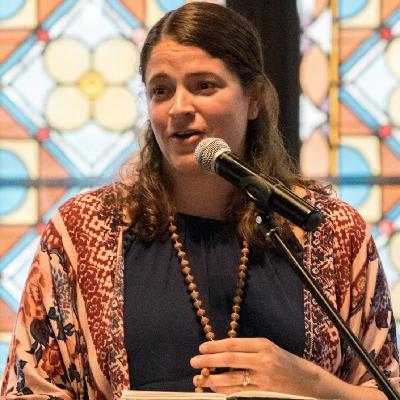
Nicole Diroff shares some of the details for the upcoming third season of Climate Changed podcast. This season we will explore the concept of courage in the face of climate change as we emphasize the need to prioritize collective salvation over individual salvation. We will highlight the interconnectedness of all living things and the importance of caring for the planet as a whole. You will hear various perspectives on the role of faith and spirituality in addressing climate change, and in every episode, we will provide meaningful, tangible Next Steps you can take.
Guests Include Joelle Novey, from the Washington, DC/Maryland/Virginia chapter of Interfaith Power and Light.
Dr. Keisha McKenzie, a strategist who interprets communication, religion, spirituality, and politics as social change technologies.
Author, Elizabeth Rush, and British climate change communicator, Sophia Cheng.
Season Premiere: September 17, 2024 with guests Brian McClaren and Favianna Rodriguez.
Hey there. I'm Nicole Diroff. Ben Yosua-Davis and I are the hosts of the Climate Changed podcast. Throughout the past few months, we've had the pleasure of speaking with incredibly wise and insightful guests. In addition to this, we've reached out to faith leaders to provide us with reflections that will ground us as we confront the difficult truths about the challenges that lie ahead and are here already for so many of us. We've curated practical next steps for anyone looking for ideas on how to play their part in addressing climate change and the many spiritual needs associated with it. Currently, we're in the final stages of preparing season three of Climate Changed. Our focus for this new season is "Courage in a Climate Changed World." We also wonder about the common good as we push for an embrace of collective salvation over individual salvation. In this new season, I will speak with people I have been in conversation with for years, like Joelle Novey.
Joelle Novey
Really thinking about getting through the climate crisis to something better requires contradicting the thinking that got us here, and the way to do that is to ask a question that starts from the sanctity of all that is and saying, how do we all work together to save all that is sacred?
Nicole Diroff
And Dr, Keisha Mackenzie,
Dr. Keisha McKenzie
You go into the woods, you're breathing air that the trees have processed for you, and you didn't charge them any fees for it, and they're not charging you any fees for it. You are part, just by walking into their space, part of something much larger and bigger, something that nourishes you, and you, by breathing are also nourishing them. To just have these moments of experiencing the abstract ecosystem that we often talk about, like, what does that mean? It means we're part of something larger. Yeah, and those kind of revelations, I think those do enliven me.
Nicole Diroff Along with people I speak with for the very first time, such as author Elizabeth Rush,
Elizabeth Rush
Something that feels important that often gets side stepped in climate conversations is I know climate change is a thing. I want it to get better, but I don't know how. Right? We have an idea that you have to, like, go be a climate activist, and that's how you, like, care the people who want to be climate activists should go be climate activists. But like, don't saddle yourself with a set of expectations that are gonna make it hard for you to continue to show up for that thing, choose a thing that's something that you care about.
Nicole Diroff
And Sophia Cheng.
Sophia Cheng
The mentality and thoughts that keep us spinning around this rat race has also been the space that's opened up, and realizing that the climate crisis, and living the climate change world, a bit like the themes that you and Liz were talking about, is not zero sum. This doesn't always have to be a narrative of sacrifice. There is opportunity and there is space for our needs. I think Liz referred to it as our desires, and there is space to create.
As a mother to a 10 year old, having these conversations is incredibly important to me. During times of global uncertainty, we can be tempted to turn against one another in an effort to protect ourselves. However, we must find the skills and practices to turn towards one another in these challenging times, like many others who tune into our show, I'm looking for guidance and motivation. I'm truly thankful for these podcast discussions as they encourage me to embrace generosity in our rapidly changing world. The Climate Change podcast is available wherever you listen to podcasts, or you can visit climate change podcast.org to access the episodes, discussion guides, show notes and transcripts. Season Three will premiere in September 2024. I hope I'm in your earbuds you.

Comments

Download from Google Play

Download from App Store
 United States