


 Claim Ownership
Building the Base
Subscribed: 21Played: 387
Subscribe

© 2022-2024 Building The Base
Description
"Building the Base" - an in-depth series of conversations with top entrepreneurs, innovators, and leaders from tech, financial, industrial, and public sectors.
Our special guests provide their unique perspectives on a broad selection of topics such as: shaping our future national security industrial base, the impact of disruptive technologies, how new startups can increasingly contribute to national security, and practical tips on leadership and personal development whether in government or the private sector.
Building the Base is hosted by Lauren Bedula, is Managing Director and National Security Technology Practice Lead at Beacon Global Strategies, and the Honorable Jim "Hondo" Geurts who retired from performing the duties of the Under Secretary of the Navy and was the former Assistant Secretary of the Navy for Research, Development & Acquisition and Acquisition Executive at United States Special Operations Command.
Our special guests provide their unique perspectives on a broad selection of topics such as: shaping our future national security industrial base, the impact of disruptive technologies, how new startups can increasingly contribute to national security, and practical tips on leadership and personal development whether in government or the private sector.
Building the Base is hosted by Lauren Bedula, is Managing Director and National Security Technology Practice Lead at Beacon Global Strategies, and the Honorable Jim "Hondo" Geurts who retired from performing the duties of the Under Secretary of the Navy and was the former Assistant Secretary of the Navy for Research, Development & Acquisition and Acquisition Executive at United States Special Operations Command.
90 Episodes
Reverse
In this episode of Building the Base, Hondo Geurts and Lauren Bedula sit down with Ken Bedingfield, Chief Financial Officer and President of Missile Solutions at L3Harris. This episode was recorded on December 6, 2025 at the Reagan National Defense Forum in Simi Valley, CA. Ken discusses his journey across the defense industrial base, from leadership at a traditional prime to serving as the 20th employee and CEO at venture-backed counter-UAS startup Epirus, to his current dual role at L3Harris. The conversation explores the fundamental shift from requirements-driven to capacity-driven defense strategy, and examines how L3Harris operates as the "tweener" between traditional primes and startups by making decisions in days rather than weeks.Five key takeaways from today's episode:Defense has shifted from requirements to capacity: The industry is moving away from chasing the last bit of capability or technology toward building production capacity at scale. Capacity itself has become a deterrent, driven by recognition of current conflicts and the real-world depletion of munitions stockpiles.Commercial contracting models benefit traditional primes too: L3Harris already derives 20% of sales through commercial models and strongly supports acquisition reform including eliminating cost accounting standards, reducing requirements, and expanding commerciality definitions; reforms often assumed to benefit only new entrants.Solid rocket motor production faces unique scaling challenges: Aerojet Rocketdyne's Camden, Arkansas facility spans 2,500 acres with 200 buildings and highly specialized regulations around explosive loads, storage, and safety. Scaling production requires understanding these complexities, suggesting new entrants should consider partnerships rather than building parallel capacity.Successful partnerships require mission alignment over technology hype: L3Harris positions itself as "connective tissue" between technology and mission capability. For example, partnering with Palantir to integrate AI into world-class electro-optic sensors rather than trying to build computer vision capabilities in-house. The key question for partnerships is "are we moving fast enough?"Public companies can innovate with the right focus: L3Harris has self-funded R&D in communications for 20 years without charging the government, and is transitioning other product lines to similar commercial models. While managing quarterly earnings and public market expectations isn't easy, publicly traded companies can find creative ways to invest and move at speed.Claude is AI and can make mistakes. Please double-check responses.
In this episode of Building the Base, Hondo Geurts and Lauren Bedula sit down with Paul Kwan, Managing Director at General Catalyst, where he leads the global resilience investment team, recorded live at the Reagan National Defense Forum in Simi Valley. Paul traces his path from reading The Hunt for Red October in sixth grade to becoming one of the original defense tech VCs, and walks through what venture capital actually is and how it differs from private equity. He discusses General Catalyst's 25 years in the space, including backing Anduril early on, and explains how private capital funds R&D for the next generation of defense companies. The conversation covers the economics of VC, common misconceptions about venture capital and technology development, and Paul's reaction to Secretary Hegseth's acquisition reform speech.Five key takeaways from today's episode:Venture capital funds operate on 10-year timeframes compared to private equity's typical 5-7 year windows—a structural difference that allows VCs to take a longer-term approach while defense companies work through the challenges of manufacturing hardware at scale.Private investors fund R&D upfront in the venture model, betting that a small percentage of portfolio companies will become large enough to go public or get acquired, a different approach than traditional models where government funded product development from the start.Re-industrialization requires investment across the entire industrial stack. Beyond defense platforms, success depends on building out manufacturing software, testing infrastructure, electronic supply chains, and energy systems to enable production at the speed and cost needed.Large fundraises reflect market confidence in future contract awards. When VCs invest significant capital, they're anticipating that government contracts will follow. If those contracts don't materialize, it creates challenges for the innovation ecosystem that funded product development.First-of-its-kind defense tech business models represent new market categories. These companies may be valued differently than traditional defense contractors, similar to how technology disruptors in other industries trade at different multiples than legacy incumbents in their sectors.
In this episode of Building the Base, Hondo Geurts and Lauren Bedula sit down with Matthew Steckman, President and Chief Business Officer of Anduril Industries, recorded live at the Reagan National Defense Forum in Simi Valley. Matt discusses his path from being among the first dozen employees at Palantir's DC office to co-founding Anduril, which has grown from operating out of his backyard shed in 2017 to a 7,000-person international company with over 20 product lines. The conversation covers the founding team's decision to enter defense technology when venture capital investment in the sector was effectively prohibited, and examines the operational challenges of scaling both product development and manufacturing.Five key takeaways from today's episode:The defense investment landscape has shifted dramatically since 2017: When Anduril launched, venture capital firms had bylaws explicitly prohibiting defense investments, reflecting a broader belief that major conflicts were unlikely. Those restrictions have since been removed as the strategic environment changed.Successful defense tech requires focus on difficult capability gaps: Matt advises founders to identify problems the government needs solved but cannot source from traditional contractors, maintain discipline around product roadmap, and avoid diluting defense focus by chasing commercial opportunities that compromise technical requirements.Scale in defense requires product portfolio breadth: Unlike enterprise software companies that achieve scale through a few products in large markets, Anduril has expanded to over 20 product lines, reflecting the need to address multiple segments of the defense market to build a substantial business.Manufacturing strategy must account for demand unpredictability: Anduril addresses high-mix, low-rate production challenges by designing products with commercial components, centralizing manufacturing operations at their Ohio facility, and building flexibility across production lines to handle variable government forecasting.Acquisition reform progress is incremental but cumulative: Having observed four cycles of acquisition reform over two decades, Matt notes that while individual reforms don't eliminate all obstacles, each iteration reduces friction and enables program managers to leverage new authorities more effectively.
In this episode recorded live from the December 2025 Reagan National Defense Forum, hosts Lauren Bedula and Hondo Geurts sit down with David Appel, Vice President of Global Government for Amazon Web Services. With 28 years at Raytheon before joining AWS, David brings a unique perspective on the evolution of the defense industrial base and the critical role cloud infrastructure plays in national security.David discusses why the traditional defense mindset of "deliver to the requirement" is giving way to a focus on mission outcomes, how AI dominance requires government to fully embrace cloud infrastructure, and why this moment represents an unprecedented opportunity for acquisition reform and innovation. From the convergence of financial institutions and defense to the global talent challenge, David shares insights on what it takes to transform how government operates in the digital age.Five Key Takeaways:Mission outcomes over requirements: The defense industrial base is shifting from a decades-old model of delivering to specifications toward understanding actual mission needs and innovating around outcomes, enabled by cloud and AI technologies.Not all clouds are created equal: Being a "smart buyer" of cloud services means understanding critical differences in security fabrics, infrastructure construction, and operational experience. True cloud adoption at scale is essential for AI leadership, not on-premise data centers rebranded as "cloud."Infrastructure liberation: Cloud frees organizations from spending resources on undifferentiated infrastructure work, allowing them to focus on mission-specific challenges. For startups and smaller companies especially, this levels the playing field to compete on mission expertise rather than capital resources.Talent through education: The talent challenge for cloud and AI isn't just about hiring, it's about trust and understanding. Investing in education for customers, operators, and the broader public is critical because people won't embrace technologies they don't understand.National security and economic prosperity are converging: The presence of financial institutions like JPMorgan at defense forums signals a fundamental shift; economic stability and market strength are now recognized as inseparable from national security, driving new investment and innovation across sectors.
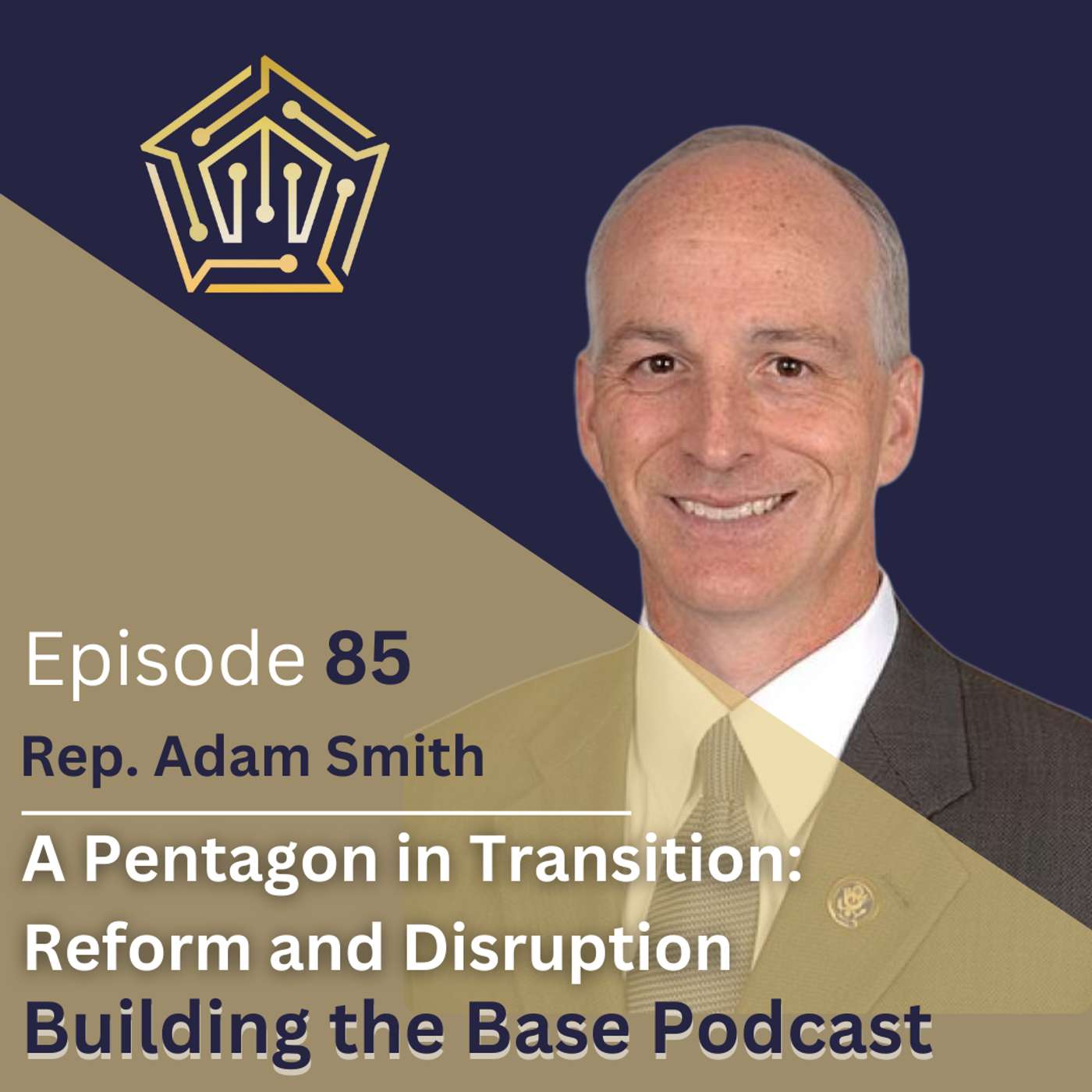
In this episode recorded live from the 2025 Reagan National Defense Forum in Simi Valley, hosts Lauren Bedula and Hondo Geurts welcome back Ranking Member Adam Smith of the House Armed Services Committee for the second year in a row. Following his morning keynote address, Rep. Smith discusses the current state of defense innovation and acquisition reform, which he characterizes as a "good news, bad news situation" with significant progress on technology and industrial base transformation occurring alongside political challenges at the Pentagon. The conversation addresses the growth of the defense startup ecosystem, changes in congressional approach to defense programs, concerns about tariff impacts on supply chains, and differing views on foreign policy realism emerging from the forum's discussions.Five Key Takeaways:The defense startup ecosystem has grown substantially: Companies including Shield AI, Palantir, C3 AI, and various drone manufacturers are now developing capabilities like collaborative combat aircraft with private investment. Rep. Smith notes that approximately two-thirds of the companies sponsoring the Reagan Forum didn't exist when the forum began.Traditional defense contractors are adapting to increased competition: Rep. Smith observes that major defense primes historically preferred long-term, stable contracts with established subcontracting relationships but have demonstrated capacity to innovate when faced with competitive pressure from new entrants in the market.Congressional priorities on defense programs have evolved: Under bipartisan leadership, the House Armed Services Committee has moved away from a focus on district-specific funding toward emphasizing innovation and new technology development.Current tariff policy may complicate supply chain diversification efforts: Rep. Smith expresses concern that tariffs on countries like Vietnam, Malaysia, Thailand, and Mexico could hinder efforts to reduce dependence on Chinese manufacturing. He indicates that some companies reconsidering moves out of China have paused plans due to tariff considerations affecting alternative locations.Debate continues over the definition of foreign policy realism: Rep. Smith distinguishes between what he considers "genuine realism," maintaining commitments to democratic values while making practical compromises, and approaches he views as reverting to great power competition without values-based considerations. He argues the latter approach carries risks based on historical precedents from earlier eras of international relations.
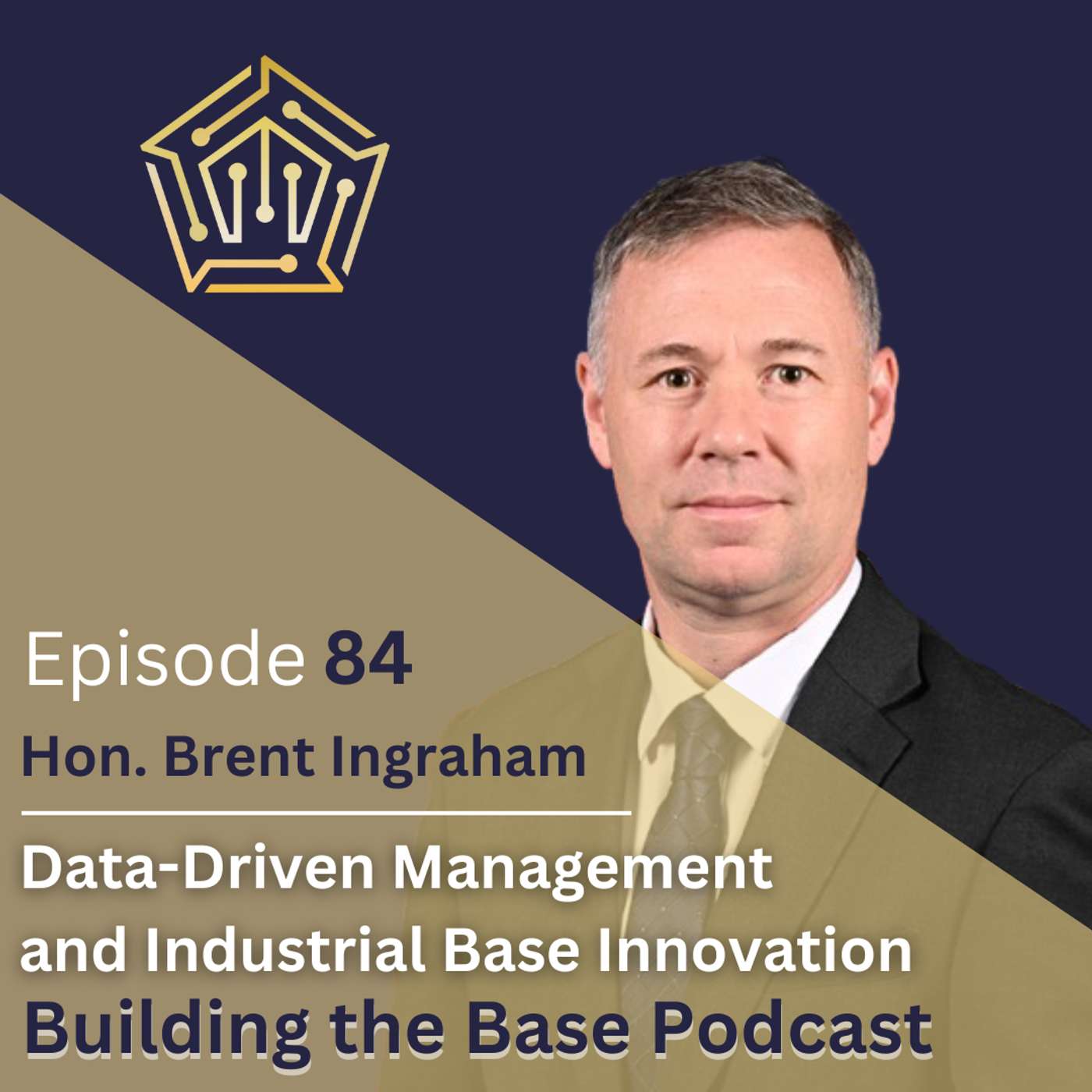
In this episode recorded live from the 2025 Reagan National Defense Forum in Simi Valley, hosts Lauren Bedula and Hondo Geurts sit down with the Honorable Brent Ingraham, Assistant Secretary of the Army for Acquisition, Logistics and Technology. Secretary Ingraham shares his remarkable journey from designing engines at General Motors to answering an unexpected call from the Marine Corps in 2009 to fix the automotive failures of MRAP vehicles, launching a 16-year career passion for getting the right capabilities to warfighters. The conversation explores his revolutionary approach to managing Army programs through live digital dashboards instead of PowerPoint presentations, how entrepreneurs can engage with the Army's acquisition system, and his mission to "unleash" the acquisition workforce by eliminating bureaucratic roadblocks that prevent rapid capability delivery.Five Key Takeaways:Strategic recruiting can transform both careers and national security: Secretary Ingraham's unexpected recruitment from the automotive industry demonstrates how targeted expertise from outside traditional defense channels can solve critical problems, highlighting the importance of creative talent acquisition pathways that bring diverse industrial experience into defense acquisition leadership.The Army is unleashing its workforce to deliver: Secretary Ingraham's core message to his acquisition team is freeing them from excessive staffing requirements and bureaucratic processes, telling them "we want to take the bureaucracy of all of the staffing, of paperwork and processes out" so they can focus on what they were hired to do: designing, developing, delivering, and sustaining capabilities for warfighters.The Army manages programs with live data: In keeping with his position that "I do not want to manage programs by PowerPoint," Secretary Ingraham has begun revolutionizing Army acquisition by implementing real-time digital dashboards that provide instant visibility into cost, schedule, performance, budgets, contracts, and industrial base impacts across all programs, enabling faster decision-making and proactive risk management.Bring your products, not your presentations: Secretary Ingraham emphasizes that companies should bring prototypes directly to soldiers for feedback, stating "I don't care what shape it's in, whether it's a rough prototype or something that's really fine. Let's get it in the hands of users" because soldiers are best positioned to give feedback on products.You don't need a factory to work with the Army: Startups without production capacity should partner with the organic industrial base: Army depots, arsenals, and other manufacturers like Hadrian or Castilian, rather than building brick-and-mortar facilities, reducing time to production while strengthening the broader defense industrial ecosystem.
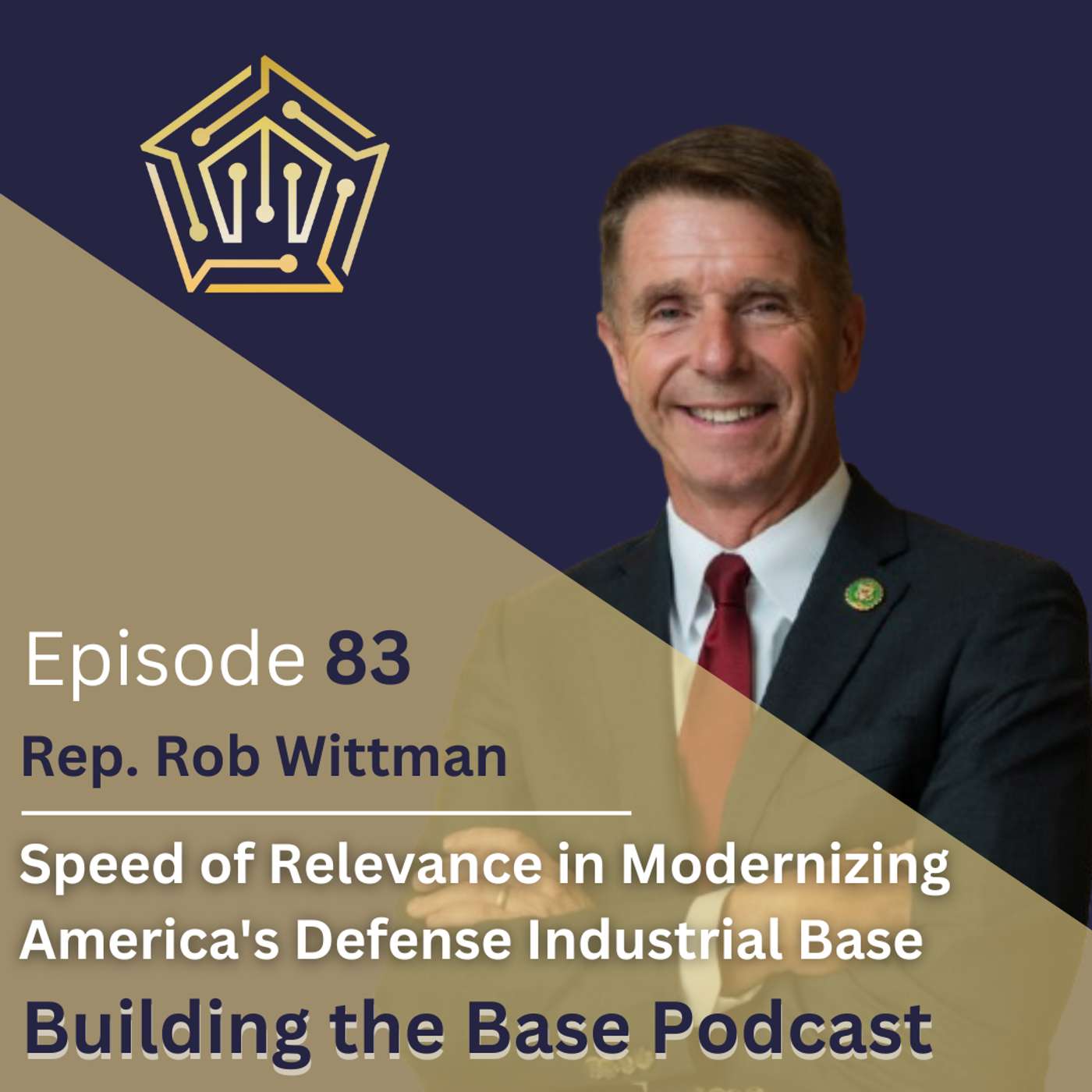
In this episode recorded live from the 2025 Reagan National Defense Forum in Simi Valley, hosts Lauren Bedula and Hondo Geurts sit down with Congressman Rob Wittman, Vice Chairman of the House Armed Services Committee and Co-Chair of the Defense Modernization Caucus. Congressman Wittman shares his journey from reforming a Boy Scout troop in his small Virginia hometown to leading defense modernization efforts in Congress, driven by a passion for connecting good public policy to decision makers who can execute it. The conversation explores his call for Congress to thank people for taking risks and learning from failures, the critical workforce challenges facing shipbuilding, and why the overwhelming presence of non-traditional defense companies at the Reagan Forum signals a transformative shift in the defense industrial base. Wittman emphasizes that modernization must happen "at the speed of relevance," not incrementally, but with the urgency the strategic environment demands.Five Key Takeaways:Congress must thank people for taking risks, not punish failures: Wittman calls for Congress to "thank them for taking the risk" when acquisition officials present failures, then ask what they learned. Using SpaceX's Starship as an example, he argues that controlled failures accelerate progress, and Congress must stop punishing experimentation with a "process-centric mindset."The Navy's Constellation decision was a watershed moment: The Navy's willingness to reassess the Constellation-class frigate, where mission creep turned an 85% complete design into 15%, demonstrates self-assessment and course correction, the kind that should be celebrated even when acknowledging past errors.Shipbuilding faces unprecedented workforce challenges: With companies like Huntington Ingalls hiring 5,000 workers annually, shipyards must invest in quality of life improvements and expand skill sets beyond traditional trades to include software programming, robotics monitoring, and additive manufacturing.Non-traditionals are transforming the defense industrial base: The overwhelming presence of non-traditional companies, private equity firms, and venture capital at the Reagan Forum represents a fundamental shift. These players bring innovative approaches focused not just on platforms but on enabling the manufacturing process itself through software and data analytics.Modernization must happen at the speed of relevance: "We have to do these things, not just say, well, we'll think about it. We'll do a little bit. This has to be done at the speed of relevance." The strategic environment demands urgent transformation, not incremental approaches, across workforce development, manufacturing, and acquisition reform.
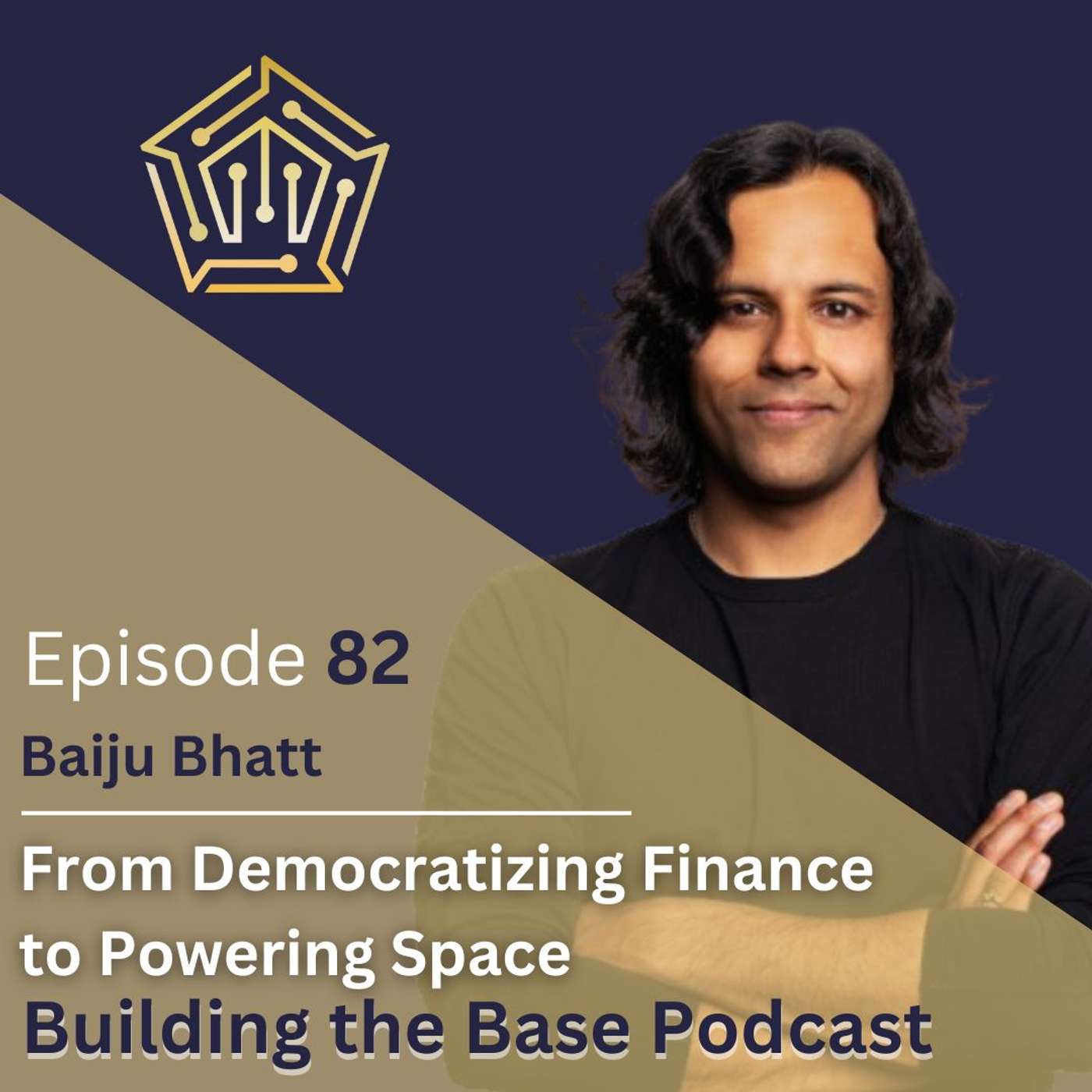
In this episode recorded live from the 2025 Reagan National Defense Forum in Simi Valley, hosts Lauren Bedula and Hondo Geurts sit down with Baiju Bhatt, co-founder of Robinhood and founder and CEO of Aetherflux. Baiju shares his remarkable journey from the son of Indian immigrants, his mother arriving pregnant with two suitcases of pots and pans, to democratizing access to America's financial system with Robinhood, and now building an American power grid in space. The conversation explores why patriotism is back in vogue in Silicon Valley, how constraints breed creativity, and why he couldn't sit out the space race happening in his lifetime without regretting it "as a geezer." Baiju makes the case that America's fundamental advantage is entrepreneurship and capitalism, and that energy is emerging as one of the most critical problems the economy must solve, both on Earth and in low Earth orbit.Five Key Takeaways:America wins through capitalism: The United States' distinct advantage over competitors like China is entrepreneurship and capitalism, not bureaucratic central planning. As Baiju puts it, "we're not going to out centrally plan the Chinese...the times that the United States wins is when we bring to bear capitalism," which drives both rapid execution and diverse approaches to solving hard problems.Fear regret, not failure, and fail fast: Rather than being paralyzed by potential failure, Baiju advocates getting "failures out of the way quickly" and not waiting too long to pressure test ideas. The real risk isn't trying and failing, it's the regret of never trying at all, especially when historic opportunities like the commercialization of space are happening in your lifetime.Energy is the next critical infrastructure for space commerce: Aetherflux is building a power grid in low Earth orbit because energy access hasn't been this critical since World War II or the 1970s oil crisis. The vision is to take energy-hungry applications "above the grid," removing super high-power applications from Earth's strained energy infrastructure by powering them from space.Constraints breed creativity and humility breeds success: Despite his success with Robinhood, Baiju deliberately maintains the constraints and humility that got him there, recognizing that "what we're trying to do is extraordinarily difficult." Coming in with bravado isn't the recipe for success, being diligent, systematic, and constantly testing your assumption is.Silicon Valley's "group hug" with defense is transformative for America: The convergence of entrepreneurship, technology, and national security represents a fundamental shift where economic prosperity and national defense are no longer separate tracks. This alignment, driven by competition and recognition that key technologies from AI to space require both sectors working in concert is "hugely important for America."
In this episode recorded live from the 2025 Reagan National Defense Forum in Simi Valley, hosts Lauren Bedula and Hondo Geurts sit down with the Honorable Michael "Mike" Dodd, Assistant Secretary of War for Critical Technologies and Acting Deputy Director of the Defense Innovation Unit. Secretary Dodd shares his remarkable journey from enlisted Marine amtracker to Mustang infantry officer, through over 25 years advising defense and finance companies, and back to the Pentagon to serve America's warfighters. The conversation explores the newly announced six critical technology areas, how entrepreneurs and innovators can engage with the Department of War, and Secretary Dodd's mission to deliver "an unfair fight" for U.S. service members through technological superiority and asymmetric advantages.Five Key Takeaways:The DoW has narrowed its focus from 14 to six critical technology areas: recognizing that "if everything's critical, nothing is," the department is concentrating resources on areas where the U.S. needs to achieve parity with near-peer competitors or maintain technological supremacy to deter major conflict through asymmetric advantages.The Pentagon is actively creating a "front door" for innovators: Secretary Dodd suggests we engage technologists where they are, encouraging entrepreneurs to present capabilities directly and get to a "no" quickly.Do your homework before engaging DoW: Successful companies come prepared knowing their potential transition partners, understanding the competitive landscape, and having thought through financial capacity and teaming opportunities to scale if they win contracts.You don't need to wear a uniform to serve your country: Secretary Dodd emphasizes that founders and funders bringing technology aligned with national security needs are serving their country in critical ways, whether as entrepreneurs or investors.The Department is prioritizing transition and operational alignment: Success isn't just about fast acquisition; it requires alignment with the combatant commands and service chiefs to ensure warfighters can actually absorb and employ new capabilities at scale for maximum impact downrange.

In this episode of Building the Base, Hondo Geurts and Lauren Bedula sit down with August Cole, strategist, author, and futurist who has spent his career exploring fiction's role in national security strategy. Drawing from his journey from Wall Street Journal journalist covering defense and technology to co-authoring the groundbreaking novel Ghost Fleet with Peter Singer, Cole discusses how fiction can help leaders avoid strategic surprise and failure of imagination. As Ghost Fleet celebrates its 10-year anniversary, Cole reflects on the book's impact on defense thinking, the power of scenario planning through storytelling, and why "useful fiction" has become an essential tool for wargaming future conflicts in an era of exponential technological change.Five key takeaways from today's episode:Fiction serves as a strategic tool to avoid failure of imagination, with Cole noting that "we really can fall victim to failure of imagination with catastrophic consequences, and even more so today when so many technologies are exponential in their impact on warfare."Ghost Fleet combines rigorous research with narrative storytelling, grounded in "30 or so pages of endnotes" from open-source research including doctrine, patents, and scholarship to make the speculative scenario credible and actionable for defense leaders.Strategic fiction gives leaders permission to think differently, as Cole explains that fiction provides "a safe space to explore ideas that might otherwise be dismissed" and helps overcome organizational resistance to uncomfortable futures.The power of story transcends traditional analysis, with Cole emphasizing that narrative allows people to "see problems from someone else's perspective" and makes complex strategic concepts accessible across organizational hierarchies.Invest in skills that make you a better collaborator, as Cole advises the next generation to focus on "the human dimension" including empathy, foreign languages, and technical literacy while resisting pressure to follow conventional career paths.
In this episode of Building the Base, Hondo Geurts and Lauren Bedula sit down with Jamie Jones Miller, CEO of Northeastern University's Arlington campus and Interim Director of the Kostas Research Institute. Drawing from her journey from Capitol Hill legislative work on the House Armed Services Committee to the Pentagon's Office of Legislative Affairs, and now leading national security research in academia, Miller discusses the critical need for "unicorn talent" that bridges policy, technology, and leadership. She explains why universities must align with defense priorities, the importance of matching talent pipelines to technology strategies, and how academia can serve as a vital connector in the national security ecosystem.Five key takeaways from today's episode:Employers want "unicorn talent" who can seamlessly operate across policy, technology, and leadership domains, with Miller noting they "want the people who can figure out how to look into the future and see what's coming."Policy, technology, and security are now inseparable, as Miller reflects that these domains "can't stand on its own anymore" and require integrated approaches to education and problem-solving.Academia must align with defense priorities, with Miller asking "what is the next critical technologies list at DOD gonna look like?" to ensure universities invest where "the investments are going to be made."Talent strategy must match technology strategy, as Miller challenges organizations: "Do you have a talent pipeline plan? How many engineers do you need to hire in the next 12 to 18 months?"Start with real problems, not solutions, emphasizing the need to ask "what are your pain points?" and build trust through delivery rather than rushing to help without understanding actual needs.
In this episode of Building the Base, Hondo Geurts and Lauren Bedula sit down with Zach Beecher, Partner at Scout Ventures, who brings a unique perspective from serving as a paratrooper with the 82nd Airborne Division in Iraq to now leading dual-use technology investments on the front lines of defense innovation. Drawing from his combat experience witnessing "innovation at the speed of battle" during the liberation of Mosul from ISIS, his transition through venture capital in London, and his current role backing breakthrough defense technologies, Beecher discusses the urgent need to bridge Silicon Valley innovation with national security imperatives. He shares his insights on why "innovation at the speed of bureaucracy looks a lot different than innovation at the speed of battle," explains how venture capital can serve as a "player coach" for defense entrepreneurs, and argues that America must grow the industrial base through addition rather than subtraction by incentivizing collaboration between traditional primes and non-traditional startups.Five key takeaways from today's episode:Combat experience reveals innovation potential, as Beecher describes how deploying to Iraq in 2017 exposed him to soldiers thinking on their feet to solve dynamic battlefield challenges, from integrating off-the-shelf drones for Iraqi forces to creating software solutions for logistics, showing him that "innovation at the speed of battle" could be transformative if scaled properly.The dual-use investment landscape has dramatically evolved, Beecher notes, from being called a "warmonger" on a panel just two years ago for suggesting quantum companies focus on national security applications, to today's environment where "the capital ladder" from early stage through scaled production is "fully formed in a way that it's never been before."Contracts are the only validation that matters, Beecher emphasizes, because "contracts signify demand and contracts ultimately indicate what the government has identified as a priority," warning that without real customer validation through actual purchases, even well-funded startups risk "building a bridge to nowhere."Success requires mastering four core pillars, Beecher explains entrepreneurs must understand the problems they're solving, the people responsible for solving them, the processes required to navigate solutions, and how their products integrate across all three, with companies like Tern AI demonstrating this by addressing alternative navigation needs for both military operations and commercial autonomous vehicles.Collaboration beats competition in defense innovation, as Beecher advocates for "leading through addition rather than subtraction," pointing to examples like NASA's commercial orbital program that sparked competition between traditional primes and companies like SpaceX, ultimately transforming entire industries through incentivized partnership rather than zero-sum thinking.

In this episode of Building the Base, Hondo Geurts and Lauren Bedula sit down with Congressman Pat Harrigan (NC-10), who brings a rare combination of Special Forces experience, defense entrepreneurship, and fresh congressional perspective to America's national security challenges. Drawing from his service in 3rd Special Forces Group, his journey building a weapons and munitions manufacturing company, and his current role on the House Armed Services Committee, Congressman Harrigan discusses the urgent need to revolutionize America's defense industrial base. He shares his candid assessment of government as "a terrible customer," explains his groundbreaking Sky Foundry initiative to build America's first million-drone manufacturing capability, and warns that the nature of warfare has fundamentally changed from the Global War on Terror era. The conversation explores why America must shift from producing "high cost problems to our enemies' low cost solutions" to creating affordable, scalable technologies that can match the pace of modern conflict.Five key takeaways from today's episode:Personal inspiration drives public service, as Rep. Harrigan reveals how his grandfather's vivid memories of D-Day and the Battle of the Bulge, details he could recite perfectly even with dementia, showed him "what a formative part of his life he made a huge difference for the trajectory of the world," inspiring his own call to serve when he witnessed leadership failures during Afghanistan's fall.The nature of warfare has fundamentally changed, Congressman Harrigan explains, comparing the shift from the Global War on Terror to today's drone-dominated battlefield as the difference between "basketball and baseball" with 80% of casualties in Ukraine now caused by small, inexpensive FPV drones rather than traditional weapons systems.America currently sits at "effectively zero" drone manufacturing capability while being wholly dependent on Chinese supply chains, Rep. Harrigan warns, as adversaries like Russia and Ukraine produce millions of drones annually at costs dramatically lower than America's $20,000-30,000 per unit.The Sky Foundry initiative represents a revolutionary approach to defense manufacturing, combining government-owned facilities with private contractor intellectual property through a royalty-based system that incentivizes innovation while maintaining competition and driving costs down to $500 per drone.Success requires unwavering persistence, Rep. Harrigan emphasizes, sharing his philosophy of "never give up, never give in" when fighting for his daughters Reagan and McKinley's future, because "there is no substitute for victory" and breakthrough solutions will eventually succeed if you believe in them and keep working regardless of initial resistance.
In this episode of Building the Base, Hondo Geurts and Lauren Bedula sit down with Ranking Member Jim Himes (D-CT), who serves on both the House Permanent Select Committee on Intelligence and the House Financial Services Committee. Drawing from his unique background spanning Wall Street and public service, Congressman Himes discusses the critical intersection of technology innovation, national security, and America's industrial base. He shares candid insights on the challenges of government innovation, the evolving threat landscape from China, and why immigration remains America's secret weapon in the global competition for technological supremacy. The conversation also explores the cultural shifts needed within both Congress and the defense establishment to embrace the iterative, failure-tolerant approach essential for modern software development and emerging technologies.Five key takeaways from today's episode:The shift from hardware to software has fundamentally changed defense acquisition, Rep. Himes explains, requiring iterative development through failure and constant end-user contact—a capability traditional defense primes weren't prepared for, though progress is being made through innovative programs like DIU and Kessel Run.America's two greatest advantages over China in innovation, according to Rep. Himes, are immigration and a chaotic entrepreneurial ecosystem that treats failure as graduate-level education for the next venture, advantages that must be preserved and leveraged.Congressional culture remains risk-averse toward failure, Rep. Himes notes, with members more focused on finding the next "Solyndra" to investigate rather than creating the psychological safety necessary for breakthrough innovation.Supply chain vulnerabilities exposed by COVID-19 and the Ukraine conflict have created new appreciation for defense industrial base resilience, but Rep. Himes argues the tension between economic efficiency and strategic security requires nuanced thinking.Emerging threats like biosynthesis and quantum computing pose existential risks that require both cutting-edge research investment and a return to shared empirical truth, Rep. Himes warns, making the intersection of technology policy and national security more critical than ever.

In this episode of Building the Base, Hondo Geurts and Lauren Bedula reconnect with Cameron McCord, Co-Founder and CEO of Nominal, two years after his first appearance on the show (linked here). Drawing from his unique journey from submarine officer (484 days underwater) to defense tech entrepreneur, McCord discusses building software to accelerate testing and validation of mission-critical systems. He shares insights from his time at Anduril, Applied Intuition, and Saildrone, and how these experiences shaped Nominal's approach to modernizing test and evaluation processes. The episode concludes with exciting news that Nominal recently announced a $75 million Series B led by Sequoia Capital and co-led by Lightspeed Venture Partners.Five key takeaways from today's episode:Entrepreneurial success, according to McCord, requires falling in love with the process itself rather than just the initial idea, as markets, technology, and competition will force constant adaptation and iteration throughout the journey.Testing and validation software in defense hasn't been meaningfully innovated in decades, McCord explains, creating massive opportunities to modernize from "2002 to 2019" standards using basic automation and data practices before advancing to AI capabilities.The most valuable customer conversations, McCord notes, evolve from incremental efficiency gains at the engineer level to strategic business impact discussions about reducing 24-month test campaigns to 18-20 months for major defense programs.Rather than leading with confidence, McCord advises asking genuine questions to allow customers to reveal what's truly valuable to them, while learning when to say "not right now" instead of forcing poor fits often leads to higher revisit rates.Cross-functional experience across military service, government, startups, and venture capital has provided McCord with invaluable perspective for navigating complex stakeholder environments and understanding what success looks like from multiple viewpoints.
In this episode of Building the Base, Hondo Geurts and Lauren Bedula are joined by James Parker and Chris Lay, co-founding partners of Leonid Capital Partners, a private credit fund supporting the US national security ecosystem. Drawing from their unique backgrounds in astrophysics and neuroscience, Parker and Lay discuss how their innovative lending approach fills a critical gap in defense tech financing, offering credit facilities based on government contracts rather than traditional equity investments.Five key takeaways from today's episode:Traditional banks won't lend against government contracts due to 30-day cancellation clauses, creating a significant financing gap that specialized credit funds like Leonid can fill by lending 50-60% of contract values at set interest rates rather than taking equity stakes.Trusted capital is essential for national security, with clean funding sources becoming increasingly important as private investment surges into defense tech, requiring deliberate vetting to avoid potential foreign influence or undue investor pressure.Mission-driven business models can accelerate growth, with Leonid's commitment to donate 50% of profits creating competitive advantages through stronger relationships, advisory connections, and credibility with service-disabled veteran-owned businesses.Policy changes could unlock more private investment in national security, particularly through preferential tax treatment for investors in critical defense initiatives while potentially removing tax advantages for investments in adversarial economies.Cross-sector talent recruitment requires both patriotic appeal and economic incentives, with successful defense tech companies like Palantir and Anduril demonstrating that technical talent will engage with national security missions when there's potential for both meaningful impact and financial success.

In this episode of Building the Base, Hondo Geurts and Lauren Bedula are joined by Becca Wasser and Philip Sheers from the Center for New American Security (CNAS) to discuss their recent report, "From Production Lines to Front Lines." Drawing from extensive industry research and stakeholder interviews, Wasser and Sheers offer a comprehensive look at the critical challenges and opportunities facing America's defense industrial base in an era of great power competition.Five key takeaways from today's episode:Workforce remains the greatest limitation to manufacturing growth, with Wasser emphasizing "it's the workforce, stupid" as a core barrier that requires creative solutions like expanding AmeriCorps to include defense industrial base career paths.The defense industrial base has experienced decades of consolidation and lacks responsiveness to changing battlefield needs, demonstrated by challenges in ramping up production for Ukraine despite Herculean efforts from senior leaders.Structural vulnerabilities include outsourced supply chains to adversary-controlled regions and over-reliance on single-source sub-tier suppliers, creating critical bottlenecks that threaten both capacity and responsiveness in future conflicts.Small but actionable policy changes could yield significant improvements, such as allowing multi-year procurement of critical components like solid rocket motors without requiring an end item, providing immediate flexibility for production scaling.International partnerships with allies are essential for both learning from advanced manufacturing capabilities and creating resilient co-production arrangements, with countries like Japan and South Korea offering critical shipbuilding expertise that could augment America's defense industrial capacity.
In this episode of Building the Base, Hondo Geurts and Lauren Bedula sit down with John Maslin, Co-founder and CEO of Vulcan Elements, for an insightful conversation about the critical importance of rare earth magnets to U.S. national security. Drawing from his background as a Navy Supply Corps officer and his entrepreneurial journey, Maslin offers a candid look into the challenges and opportunities in rebuilding America's rare earth magnet manufacturing capabilities.Five key takeaways from today's episode:Rare earth magnets are essential "invisible building blocks" of our economy, found in virtually all electronic devices from smartphones to MRIs, as well as critical defense applications - yet China currently manufactures over 90% of the global supply while the U.S. produces less than 1%.The rare earth challenge isn't primarily about access to raw materials but rather about processing and manufacturing capabilities, with China having made a strategic decades-long investment that has given them near-complete control of this critical supply chain.Transitioning from government service to entrepreneurship, Maslin emphasizes the importance of mission-driven leadership when tackling strategic manufacturing challenges that are "too important to fail."Scaling domestic manufacturing of critical components requires addressing three fundamental challenges: developing skilled technical workforces, streamlining permitting processes, and creating manufacturing champions who can build complete ecosystems.For maintaining resilience as a founder in the challenging manufacturing space, Maslin recommends focusing on first principles, expectation management with stakeholders, and surrounding yourself with mission-driven team members who understand the strategic importance of the work.
Today's episode of Building the Base is part two of our "Founders in Focus" series, recorded at Manifest: Demo Day where 34 companies from across the defense industrial base demoed their disruptive tech.Hosts Hondo and Lauren caught up with some of the most dynamic founders: Tyler Sweatt from Second Front, Josh Lospinoso from Shift5, and Troy Demmer from Gecko Robotics, asking them everything from "Are founders born or made?" to "What would you like to tell DoD leadership today?" Please enjoy this rapid fire format, packed with learnings from real experiences.0:00 Introduction0:25 Tyler Sweatt, Second Front10:27 Josh Lospinoso, Shift527:06 Troy Demmer, Gecko Robotics

Today's episode of Building the Base is part one of our "Founders in Focus" series, recorded at Manifest: Demo Day where 34 companies from across the defense industrial base demoed their disruptive tech. Hosts Hondo and Lauren caught up with some of the most dynamic founders: Jeff Cole from Hidden Level, Doug Bernauer from Radiant, and Topher Haddad from Albedo, asking them everything from "Are founders born or made?" to "What would you like to tell DoD leadership today?" Please enjoy this rapid fire format, packed with learnings from real experiences.0:00 Introduction 0:56 Jeff Cole, Hidden Level09:20 Doug Bernauer, Radiant18:01 Topher Haddad, Albedo

Comments

Download from Google Play

Download from App Store
 United States