


 Claim Ownership
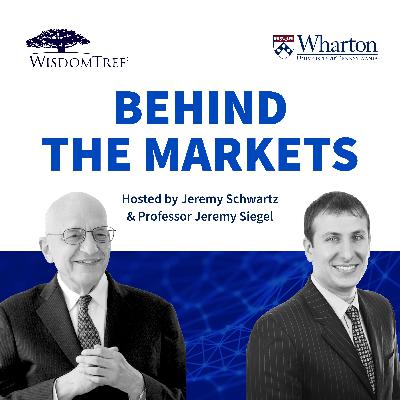
Behind the Markets Podcast
Subscribed: 759Played: 23,455
Subscribe

© All rights reserved
Description
Jeremy Schwartz, Global Chief Investment Officer at WisdomTree and Jeremy Siegel, professor of finance at Wharton and author of Stocks for the Long Run, host this long-running podcast that dives into the how and why of market performance with leading economists and market strategists to inform you what’s ahead for the economy and your portfolio.
Regularly joining the two Jeremys is the Deep Rooted Macro Team that decodes the forces shaping markets and portfolios worldwide.
Chris Gannatti, CFA, Global Head of Research, offers an analytical and thematic edge—bridging macro trends with on-the-ground technology and innovation. Whether unpacking the infrastructure powering the AI age or latest biotech breakthroughs, Chris translates complexity into conviction.
Jeff Weniger, CFA, Head of Equity Strategy, injects the pulse of behavioral markets and valuation discipline. With sharp macro instincts, Jeff dissects cycles, sentiment, and structural change with trademark clarity and wit.
Sam Rines, Macro Strategist for Model Portfolios, ties the threads together—linking policy, politics, and portfolio construction. His pragmatic macro lens captures how geopolitics, industrial policy, and energy dynamics flow into real-world GeoAlpha.
Together, the Deep Rooted Macro squad creates a fusion of rigorous research, accessible insights, and genuine debate.
Behind the Markets provides a regular masterclass in how the world really works beneath the surface of prices, data, and headlines. Tune in to hear where the Deep Rooted Macro team sees the next big shifts taking root.
Regularly joining the two Jeremys is the Deep Rooted Macro Team that decodes the forces shaping markets and portfolios worldwide.
Chris Gannatti, CFA, Global Head of Research, offers an analytical and thematic edge—bridging macro trends with on-the-ground technology and innovation. Whether unpacking the infrastructure powering the AI age or latest biotech breakthroughs, Chris translates complexity into conviction.
Jeff Weniger, CFA, Head of Equity Strategy, injects the pulse of behavioral markets and valuation discipline. With sharp macro instincts, Jeff dissects cycles, sentiment, and structural change with trademark clarity and wit.
Sam Rines, Macro Strategist for Model Portfolios, ties the threads together—linking policy, politics, and portfolio construction. His pragmatic macro lens captures how geopolitics, industrial policy, and energy dynamics flow into real-world GeoAlpha.
Together, the Deep Rooted Macro squad creates a fusion of rigorous research, accessible insights, and genuine debate.
Behind the Markets provides a regular masterclass in how the world really works beneath the surface of prices, data, and headlines. Tune in to hear where the Deep Rooted Macro team sees the next big shifts taking root.
470 Episodes
Reverse
Show from 11/28/25
Host Jeremy Schwartz and Professor Siegel opened this week’s episode reflecting on the changing nature of Black Friday, ongoing consumer strength, and the outlook for interest rate cuts amid mixed economic data. The Professor discussed Kevin Hassett’s emergence as a top Fed Chair candidate, tech sector volatility, and competition in the AI space. (10:39) Jeremy continues with Sam Rines and Chris Gannatti for a special Thanksgiving episode, joined by their children to explore youth shopping trends. The group covers holiday consumer behavior, competition among AI models and chipmakers, and potential market overreactions to recent shifts in sentiment. They also discuss the implications of energy inventory dynamics and underappreciated tech plays like Amazon and Apple, rounding out with a preview of AI’s future impact on education, investing, and consumer preferences.
Emma Shine Spotify: https://open.spotify.com/artist/6wUgQ9GHl0eKFwqw3Mqk2p?si=G1N5Uz__RxKgk12Wmd4-HA
Emma Shine Youtube: https://www.youtube.com/@EmmaShine-singg/shorts
WisdomTree: https://www.wisdomtree.com/investments
Show from 11/21/25
Host Jeremy Schwartz and Professor Siegel unpack the week's key market themes, focusing on Nvidia’s earnings volatility, jobless claims trends, and potential monetary policy shifts. The Professor highlights creeping continuing claims, waning private credit enthusiasm, and questions surrounding AI investment’s return on capital. (16:07) Jeremy continues with Sam and Jeff to assess Nvidia’s post-earnings dip, Google's AI strides with Gemini 3, and shifting tech leadership. The group explores value stocks’ evolving makeup, consumer strength as seen in Walmart's earnings, and potential geopolitical shifts in Venezuela’s oil market. They wrap with views on holiday spending, U.S. housing dynamics, and retail sector resilience.
WisdomTree: https://www.wisdomtree.com/investments
Show from 11/14/25
Host Jeremy Schwartz and Professor Siegel discuss the market reaction to the government shutdown, the Fed's hawkish stance, and AI-driven market surges. The Professor critiques the Fed’s focus on inflation drivers like insurance rates, revisits debates on equity-risk premiums at a recent CFA Society event, and addresses the long-term outlook for stocks versus bonds. (15:18) Jeremy is joined by Jeff, Chris, and Sam for a wide-ranging discussion on the AI-driven tech buildout and compute shortages, including concerns about capital expenditure sustainability. They explore new affordability strategies like the proposed 50-year mortgage, assess policy developments from the Trump administration, and evaluate international market dynamics between China and India. The episode closes with insights on quality factor rotation and concerns around the sustainability of current tech valuations.
WisdomTree: https://www.wisdomtree.com/investments
Show from 11/07/25
Host Jeremy Schwartz and Professor Siegel discuss conflicting jobs data amid the government shutdown, political fallout from the recent elections, and the implications of potential Supreme Court rulings on tariffs. The Professor warns about the possible economic drag from the shutdown during the holiday season and offers his market perspective, noting AI investment strength and skepticism around market bubble fears. (15:00) Jeremy continues with guests Jeff Weniger, Chris Gannatti, and Sam Rines to unpack the Supreme Court's tariff case, recent AI market volatility, and the implications of energy constraints on future data center development. They explore earnings season surprises, Japan's market volatility tied to SoftBank, and Warren Buffett's continued investment activity. The conversation closes with in-depth views on India's economic trajectory, gambling markets' impact on traditional betting operators, and the risks and hype cycles in crypto and equity speculation.
WisdomTree: https://www.wisdomtree.com/investments
Show from 10/31/25
Jeremy is joined by Sam Rines, Jeff Weniger, and Chris Gannatti, who analyze big tech earnings from Amazon, Meta, and others, emphasizing the early stages of the AI investment boom. The group discusses the infrastructure demands of data centers, energy policy challenges, and geopolitical developments following Trump’s Asia tour. They close by exploring how companies beyond tech are benefiting from AI, implications of potential government shutdowns, and the resilience of consumer spending ahead of the holidays. (31:34) Jeremy continues with Professor Siegel who discusses the Fed’s unclear stance on rate cuts, with Siegel noting stronger-than-expected economic data and robust market performance. They analyze Powell’s cautious comments and anticipate the importance of upcoming holiday spending data, while also touching on market resilience, QT ending, and how the current environment differs from past bubbles
WisdomTree: https://www.wisdomtree.com/investments
Are We Too Optimistic? by Behind the Markets
Show from 10/17/25
Host Jeremy Schwartz and Professor Siegel discussed recent signs of credit stress and how markets are reacting to pressures in private credit. Professor Siegel emphasized that while some private credit deals may go bad, there is no broader systemic risk, citing strong earnings from major banks as evidence. He maintained that the bull market remains intact and projected a 25-basis point Fed rate cut as a near certainty, while dismissing Bitcoin’s current performance as a failure in short-term diversification. He also commented on geopolitical developments, inflation data delays, and anticipated gold’s continued rise amid growing interest in blockchain-based assets. (12:06) Jeremy continues the conversation with Sam Rines, Jeff Weniger, and Chris Gannatti, beginning with takeaways from strong earnings by American Express and Snap-On, signaling ongoing strength in consumer and industrial spending. The group discusses stress in regional banks and private equity, rising investor focus on gold as part of a “60/20/20” portfolio, and narratives surrounding currency debasement. Chris dives into developments in autonomous vehicles, with Waymo’s expansion into London and Houston, and provides updates on OpenAI’s monetization and user growth strategies, suggesting it may evolve into a “super app.”
They also explore international themes, including Japanese market opportunities tied to political shifts and valuation gaps, with Sam and Jeremy highlighting investor apathy and potential upside. Jeff discusses the divergence between surging precious metals and falling oil prices, raising questions about the macroeconomic outlook and its implications for Fed rate cuts. Sam adds that U.S.-China trade talks are likely to yield minor but positive outcomes, such as soybean purchases, which could help stabilize markets. The show closes with Jeff contrasting consumer spending forecasts from MasterCard and Deloitte, raising skepticism about survey-based holiday retail projections. Chris and Sam then reflect on investor behavior, particularly among younger generations holding excessive cash allocations. Finally, the team touches on biotech and quantum computing, emphasizing the long timelines and high uncertainty around commercializing innovations in these sectors, despite strong investor interest.
WisdomTree: https://www.wisdomtree.com/investments
Show from 10/10/25
Host Jeremy Schwartz and Professor Siegel discuss the market’s resilience amid a continued government shutdown, emphasizing the positive momentum driven by AI and the broader economic environment. Professor Siegel warns about the potential for negative consumer sentiment if the shutdown lingers and points to recent data and global central bank comparisons to support the case for U.S. rate cuts. He also addresses the state of private credit markets, gold and bitcoin trends, and implications of current tariff levels, while noting AI remains a strong market driver. (13:55) Jeremy continues the conversation with Jeff Weniger and Sam Rines before welcoming guest Jim Bianco. Sam shares insights from a recent trip to Mexico, noting optimism from local investors and a surprising lack of concern about U.S. tariffs. He also discusses geopolitical tensions and Chinese EV penetration in Mexico. Jeff offers analysis of stress in private credit markets, highlighting the case of First Brands and broader implications for underwriting standards. The episode then transitions to an in-depth discussion with Jim Bianco, who outlines how a stalled flow of immigration could be reshaping the labor market and the Fed's rate path. He explores how AI is already influencing GDP through data center and energy build-outs, compares its trajectory to the internet’s evolution, and discusses long-term inflation expectations shaped by remote work and global segmentation. Jim also reflects on Fed governance and independence, challenges in interpreting the yield curve, and his fixed income index strategy that leverages ETFs to express macro views. He closes by reaffirming his “4-5-6” return framework and how AI-driven equity gains are masking broader market underperformance.
Jim Bianco on X: https://x.com/biancoresearch
Website: https://www.biancoresearch.com/visitor-home/
WisdomTree: https://www.wisdomtree.com/investments
Show from 10/03/25
Host Jeremy Schwartz and Professor Siegel discuss the latest market conditions, highlighting the weakness in the ADP jobs report, stable jobless claims, and a slight decline in consumer confidence. Professor Siegel emphasizes that while the economic data points to some softening, there is no indication of a sharp downturn. He points to this quarter as a critical test for consumer spending amid new tariffs and holiday pressures, observing that inflation in housing and rents remains muted. Siegel also discusses monetary policy and comments on the growing importance of AI, the performance of major tech stocks like Tesla, and the continued divergence between large-cap growth and value stocks. Jeremy continues the show with WisdomTree colleagues Chris Gannatti, Sam Rines, and Jeff Weniger, with Chris diving into recent insights from top voices in the semiconductor and AI space, noting the massive CapEx going into data centers and compute infrastructure. Sam expands on the potential productivity boost from AI agents and the broader ecosystem investments benefiting industrials like Caterpillar. Jeff provides a macro take on central bank policy, expressing skepticism about the timing of rate cuts amid rising equity and commodity markets, and debates the real impact of tariffs.
(32:12) In the second half, Jeremy presents a special segment recorded live from the Jacobs-Levy Quant Conference with Professor Bob Korajczyk of Northwestern University. Korajczyk shares research on intangible assets and their role in asset pricing, detailing how adjusted earnings that account for R&D and SG&A provide a more predictive measure of long-term profitability. He explains how this adjustment enhances factor models, offers downside protection characteristics, and discusses implications for accounting standards, portfolio construction, and international investing.
Guest: Robert A. Korajczyk is Senior Associate Dean, Faculty and Research and the Harry G. Guthmann Professor of Finance and co-director of the Center for Financial Institutions and Markets. At Kellogg, Korajczyk has previously served as Senior Associate Dean: Curriculum and Teaching, Chair of the Department of Finance, Director of Graduate Studies for the Department of Finance, and Director of the Zell Center for Risk Research. He has held visiting faculty appointments at the University of Chicago, the Vienna University of Economics and Business, the University of Melbourne, the University of Vienna, and the Hong Kong University of Science and Technology. Professor Korajczyk received his BA, MBA, and PhD degrees from the University of Chicago.
Robert on LinkedIn: https://www.linkedin.com/in/robert-korajczyk-b1565714/
WisdomTree: https://www.wisdomtree.com/investments
Show from 09/26/25
Jeremy Schwartz and Professor Siegel review the week’s key economic developments, focusing first on inflation metrics with the PCE deflator and personal income/spending data matching expectations. Professor Siegel emphasizes the significance of stronger-than-expected durable goods orders and a narrowed trade deficit, which have led to upgraded Q3 GDP forecasts from major banks. He also comments on recent remarks from Fed Governor Myron regarding a lower neutral interest rate, citing demographic trends and productivity considerations. The Professor maintains a cautious outlook on the potential impact of tariffs, especially heading into the critical holiday season, and flags the upcoming government shutdown as a potential disruptor to next week’s jobs report. They’re joined by Chris Gannatti, Jeff Weniger, and Sam Rines for a robust discussion that spans trade, technology, and market positioning. They unpack new proposed tariffs from the Trump campaign, assess the durability of corporate strategies for mitigating trade friction, and analyze the AI infrastructure boom—highlighting NVIDIA, OpenAI, and hyperscaler investment cycles. The team debates whether current AI valuations are sustainable, comparing them to past tech cycles, and explore quantum computing as an emerging, though still speculative, theme. The conversation turns to government industrial policy and its role in revitalizing domestic semiconductor manufacturing, particularly around Intel. Finally, they discuss overlooked opportunities in small and mid-cap U.S. equities, noting how rate cuts and strong consumer data, like Costco’s same-store sales, could fuel upside for cyclicals heading into year-end.
WisdomTree: https://www.wisdomtree.com/investments
Show from 09/19/25
Host Jeremy Schwartz is joined live from Mallorca by Pierre Debru, Head of Research at WisdomTree Europe, to explore shifting investor sentiment across the continent. Pierre discusses how European investors are reallocating away from the US and toward domestic equities and thematics like defense, nuclear, and rare earths, fueled in part by a weaker dollar. He outlines the renewed interest in defense investing spurred by NATO's 5% GDP spending target, as well as the long-term outlook for Europe’s political and fiscal stability across markets like Greece, Poland, and Italy. The conversation covers capital efficiency, the need for diversification through gold and crypto, and the rise of thematic exposure to quantum computing and AI-related infrastructure. (30:17) Professor Siegel and Kevin Flanagan join to analyze the Fed’s latest 25 basis point rate cut. Professor Siegel emphasizes the strength of the consumer, upward revisions to GDP forecasts, and unity within the Fed despite differing views reflected in the dot plots. He critiques the current path of policy, pointing to lingering inflation concerns from tariffs and the need for further rate cuts amid signs of softening in the labor market. Siegel also discusses falling mortgage premiums, the resilience of housing and business investment, and how investment incentives and AI are likely to benefit small-cap firms over time.
Pierre Debru on LinkedIn: https://www.linkedin.com/in/pierre-debru/
Kevin Flanagan on LinkedIn: https://www.linkedin.com/in/kevin-flanagan-wt/
WisdomTree: https://www.wisdomtree.com/investments
Show from 09/12/25
Host Jeremy Schwartz and Professor Siegel analyze the recent inflation data, highlighting the implications for next week’s pivotal Fed meeting. The Professor suggests a 25-basis-point rate cut is likely, but notes that a weak retail sales report could justify a 50-basis-point move. He emphasizes the importance of the September dot plot in gauging Fed sentiment and explores the limited current impact of tariffs on inflation metrics, despite market anticipation. Siegel also points to diverging signals in the CPI and PPI reports and the potential for dissenting votes within the Fed as signs of growing internal debate. (9:28) Jeremy is joined by Sam Rines, Jeff Weniger, and Chris Gannatti for a dynamic discussion covering Fed expectations, political volatility, and macroeconomic developments. The team examines Oracle’s massive AI-linked bookings and its potential to reshape the software sector, discusses how manufacturers are navigating tariffs with pricing power, and reflects on potential Supreme Court developments that could spark a surprise fiscal stimulus. They dive into early innings of AI adoption, exploring how government policy, private innovation, and breakthroughs in biotech and quantum computing may drive future productivity. The group discusses European defense spending as a de-risked investment theme and the rising significance of Asian defense budgets, particularly in Japan, India, and South Korea. They close with commentary on under-owned trades like gold and Japanese equities, the challenge of disrupting entrenched players in healthcare, and optimism around innovation driving long-term growth despite short-term valuation concerns.
WisdomTree: https://www.wisdomtree.com/investments
Show from 09/05/25
Host Jeremy Schwartz and Professor Siegel discuss the latest job report, which showed weaker-than-expected numbers, particularly in manufacturing and healthcare. The Professor highlights that while the household survey showed a gain, it's too volatile to weigh heavily. He emphasizes that the labor market is softening, which aligns with the bond market's pricing-in of rate cuts at upcoming Fed meetings. Siegel also notes productivity data remains unimpressive despite a recent bounce and reiterates his belief that equity markets remain in a bull phase, supported by anticipated rate cuts and broader AI optimism. (11:51) Jeremy is then joined by Sam Rines and Jeff Weniger, who analyze consumer behavior through companies like Costco and Lululemon, noting that middle- and upper-income consumers remain resilient. They dive into the struggles of traditional staples like Kraft-Heinz and Pepsi, which are facing breakup speculation and activist investor pressure, while also discussing historical examples of value creation through corporate spin-offs. The conversation expands to gold and gold miners, which are benefiting from central bank buying, falling interest rates, and improved operational efficiencies. In the second half of the episode, Blake Heimann and Chris Gannatti join to unpack insights from a tech conference, highlighting AI infrastructure trends, chip supply dynamics, and the rising relevance of companies like NVIDIA, Broadcom, and SoftBank. They also explore pressures in the software sector from private competitors and ongoing leadership transitions. The group discusses how firms are building agentic AI workflows atop specialized datasets, creating opportunities and risks as Big Tech integrates AI across platforms. The show closes with a detailed conversation on AI compute economics, GPU payback cycles, and the sustainability of massive CapEx spending in AI infrastructure.
Blake Heimann on LinkedIn: https://www.linkedin.com/in/blakeheimann/?originalSubdomain=uk
WisdomTree: https://www.wisdomtree.com/investments
Show from 09/01/25
Host Jeremy Schwartz travels across Indiana with Brandon Zick, CIO of Ceres Partners, as they explore farmland investments following WisdomTree’s acquisition announcement of Ceres. Brandon and Jeremy dive into the fundamentals of farmland investing, including its inflation-hedging characteristics, active property sourcing strategies, and the portfolio's strong historical returns. They also discuss the optionality in farmland from uses like solar, wind, and data centers, the role of dairy and biodiesel, and the impact of tariffs, labor dynamics, and energy policies on farm operations and profitability.
Guest: Brandon Zick is responsible for managing all investments at Ceres Partners, including Ceres Farms flagship farmland fund and Ceres Food & Agriculture private equity strategies. In this role he supervises valuation analysis, acquisition/investment due diligence, portfolio and tenant management, and acquisition negotiations and execution. Prior to joining Ceres in 2010, Mr. Zick served as Vice President of Strategic Acquisitions at Morgan Stanley Investment Management where he performed due diligence, valuation analysis, deal negotiation and execution of strategic business transactions. Previously, he worked as a senior associate of investor relations at Morgan Stanley, and Brandon began his career as a finance associate at Lehman Brothers.Brandon currently serves on the Federal Reserve Bank of Chicago Advisory Council and the Small Business, Agriculture & Labor sub-council. Mr. Zick is a graduate of the University of Notre Dame with a B.B.A. in finance and a Japanese concentration and is a Chartered Alternative Investment Analyst. Mr. Zick grew up on a family dairy and crop farm in Northeastern Pennsylvania.
Brandon Zick: https://www.linkedin.com/in/brandon-zick-394a5310
WisdomTree: https://www.wisdomtree.com/investments
Show from 08/29/25
Host Jeremy Schwartz and Professor Siegel discuss the PCE inflation data coming in exactly as expected, a surprising widening in the July trade deficit, and the implications of upcoming employment data on the Fed's decision-making. The Prof suggests a 25 basis point cut is likely unless job numbers are unexpectedly weak. (14:22) Jeremy is joined by Sean Avory, CIO of Avory Co, who shares his constructive view on markets, discusses opportunities in small and mid-cap equities, and outlines his firm's high-conviction investment strategies across public and private markets. The conversation highlights themes such as AI infrastructure, data-driven investing, and identity verification as a key growth sector. Sean also offers insight on valuation dislocations caused by passive investing trends and the role active ETFs may play going forward.
Wisdom Tree: https://www.wisdomtree.com/investments
Show from 08/22/25
Host Jeremy Schwartz and Professor Siegel react to Powell’s dovish shift in tone, with the Professor characterizing it as a clear pivot towards rate cuts. Siegel emphasizes that inflationary pressures driven by tariffs are likely to be treated as one-time increases and ignored by the Fed, while the labor market becomes the primary focus going forward. He outlines a forecast of 75 basis points of cuts by early next year, contingent on labor conditions, and notes that falling long-term yields could significantly ease mortgage rates, supporting continued strength in equities. (28:36) Jeremy continues with Samuel Rines live from Margate, where they examine how corporate earnings, particularly from Walmart and Ross stores, reveal that consumers remain active despite rising prices. However, they caution that tariff impacts are starting to show up in margins, especially for small caps, which have already been under pressure from high interest rates. The conversation turns to sector positioning, including renewed strength in defense stocks amid European geopolitical developments, and optimism around Japan’s equity markets driven by favorable global policies and undervaluation. They also discuss the role of government involvement in strategic industries like semiconductors, the equity premium in Japan versus the U.S., and how policy changes are reshaping investment flows. Sam concludes that managing margins, not revenues, will be the critical driver of equity performance over the next 6 to 12 months, especially as companies navigate cost pressures without triggering political backlash.
Wisdom Tree: https://www.wisdomtree.com/investments
Show from 08/15/25
Host Jeremy Schwartz and Professor Siegel unpacked a busy week of economic news, starting with an analysis of the CPI and PPI data. The Professor highlighted how headline inflation may appear elevated due to one-off components like portfolio management fees but emphasized that key metrics feeding into the Fed’s preferred PCE deflator remained tame. He also reiterated his longstanding view that the Fed should not react to tariff-induced inflation and spotlighted next week's Jackson Hole speech from Jerome Powell as a pivotal moment for monetary policy. (12:17) Jeremy continued the show with Sam Rines and the Wisdom Tree team, exploring the implications of the Trump-Putin summit, the enduring global defense spending cycle, and the long-term impact of defense innovation on technology. They analyzed inflation indicators, alternative shelter metrics, and sector reactions, including defense, AI, housing, and chipmakers. The conversation closed with reflections on earning season surprises, small-cap sensitivity to Fed policy, and geopolitical dynamics shaping tech and energy infrastructure.
Wisdom Tree: https://www.wisdomtree.com/investments
Show from 08/08/25
Host Chris Gannatti and Professor Siegel discuss Trump’s recent Fed nominations, labor market weakness, and the likelihood of a September rate cut. The Professor notes seasonal market risks in late August, continued strength in AI-driven tech earnings, and trade tensions impacting India, which he views as a potential buying opportunity. He also highlights his new article on the challenges of conducting monetary policy under the current interest-on-reserves system. (12:18) Chris continues with Samuel Rines, and Jeff Wenninger, exploring India’s oil trade dynamics with Russia, Trump’s geopolitical tactics, and the broader implications for markets. The conversation shifts to the Fed’s outsized influence, the economics of premium credit cards, and potential competition from stablecoins. They close with thoughts on airline travel trends, the energy demands of AI infrastructure, and big tech’s strategies in AI deployment and monetization.
Wisdom Tree: https://www.wisdomtree.com/investments
Show from 08/01/25
Host Jeremy Schwartz and Professor Siegel dive into market sentiment following Powell's recent remarks. The Professor discusses the Fed's hawkish stance, Powell's views on the neutral rate, and the implications of inflation driven by tariffs. He emphasizes concern over potential delays in Fed action and critiques Powell's consistency in messaging. (29:20) Jeremy continues the show with Sam Rines, Jeff Weniger, and Chris Gannatti to break down the August jobs report, implications of the two FOMC dissents, and the Fed’s hesitancy to pivot despite softening labor data. They discuss WisdomTree’s acquisition of Series Partners and the strategic importance of farmland investment. The team also reviews earnings from major tech firms and the role of AI in driving productivity. Lastly, they assess global trade dynamics and the geopolitical implications of new tariffs, alongside potential impacts of evolving AI technologies.
Wisdom Tree: https://www.wisdomtree.com/investments
Show from 07/25/25
Host Jeremy Schwartz and Professor Siegel discussed the Japan tariff deal, market optimism surrounding its announcement, and how it contributed to Japan’s stock market breakout. They analyzed the ambiguity of the deal’s financial terms and its potential geopolitical ripple effects. (27:08) Jeremy is joined by WisdomTree’s Ryan Louvar and Dovile Silenskyte for a deep dive into crypto developments. The conversation covers the Genius Act and Clarity Act’s implications for U.S. crypto regulation, the growing U.S. adoption of stablecoins, and the potential impact on blockchain infrastructure. They also explore parallels between the ETF and digital asset ecosystems, stablecoin usage in retail, and evolving European regulatory dynamics.
Guest: Ryan Louvar has over 25 years of legal and business experience with deep expertise in ETFs, digital assets, tokenization, and financial innovation. He currently serves as Chief Legal Officer and Head of Business and Legal Affairs, Digital Assets at WisdomTree, where he oversees legal, risk, and compliance functions and helps drive the firm’s leadership in tokenized real-world assets through its WisdomTree Prime® mobile app and WisdomTree Connect™ web platform. Mr. Louvar also leads WisdomTree’s regulatory and legislative policy advocacy, supporting its mission to innovate within financial services and asset management.
Dovile Silenskyte is a director of digital assets research at WisdomTree. Before joining WisdomTree in May 2024, Dovile worked as an index equity product strategist at BlackRock. Currently, she is responsible for conducting analyses for in-house digital assets publications and assisting the sales team with client queries about products and markets. Dovile holds an MSc in Finance from Texas A&M University – Commerce, and she is also a chartered financial analyst (CFA).
Ryan Louvar on LinkedIn: https://www.linkedin.com/in/ryanlouvar/
Dovile Silenskyte on LinkedIn: https://www.linkedin.com/in/dovilesilenskyte/
Wisdom Tree: https://www.wisdomtree.com/investments


Download from Google Play

Download from App Store
 United States
pls stop using the "x'-word references. it's annoying.
Siegel should just shut up and listen and learn.
let's count how many times Jeremy asks 'who went to Wharton'.
first time i ever heard someone say they wish they got the Nobel prize.
seigel is clearly a trump suppoter
jeremy siegel is often painful to listen to. never seems to have any real and actionable insights.
I love counting how many times Jeremy and guests can say the word "Wharton". Holy ivy bro-fest. It's like this almost every episode. Enough already!