


 Claim Ownership
Skipped History
Subscribed: 11Played: 28
Subscribe

© Ben Tumin
Description
Interviews with top historians about their latest work. Mainly educational, often funny. Conveniently, most of the jokes are about people too far underground to punch back.
Hosted by Ben Tumin, creator of the NYT-profiled Skipped History web series.
skippedhistory.substack.com
125 Episodes
Reverse
This is a free preview of a paid episode. To hear more, visit skippedhistory.substack.comToday, writer and critic Vicky Osterweil explains how Disney didn't just make movies — it built the intellectual property regime that now shapes our economy, our culture, and, as it turns out, global vaccine access.In The Extended Universe: How Disney Killed the Movies and Took Over the World, Osterweil argues that Disney's business has never really been about movies. It's been about owning them and using the power of the state to protect that ownership at any cost. The animator who drew Mickey Mouse worked behind a literal curtain. The actress who voiced Snow White was informally blacklisted and never worked again. In 1976, Disney lobbied Congress to extend copyright law for everyone, slamming the door on the public domain that had given them Snow White, Cinderella, and The Three Little Pigs in the first place. Her argument? That IP protection (not magic, not imagination) is what Disney actually sells. And that it now shapes the entire economy. “I think we need to want more for ourselves,” she concludes.Vicky Osterweil is a Philadelphia-based writer, agitator, and worker, and the author of In Defense of Looting.
This is a free preview of a paid episode. To hear more, visit skippedhistory.substack.comToday, historian Dylan Gottlieb explains how yuppies conquered New York, and why that conquest still shapes everything from your rent to our national politics.In Yuppies: The Bankers, Lawyers, Joggers, and Gourmands Who Conquered New York, Gottlieb traces how Wall Street went from employing 3% of Ivy League graduates in the 1970s to 35% by the end of the ‘80s. Landlords burned down buildings to clear space for them. The New York City Marathon (which I’ve long been a hater of—come for me!) was invented to market the city to them. And Democratic politicians, beginning with Gary Hart, quietly replaced their working-class base with them. Gottlieb helps explain how we got here—that is, when we’re not both losing our minds talking about the Knicks leading the NBA Finals.Dylan Gottlieb is an assistant professor of history at Bentley University.
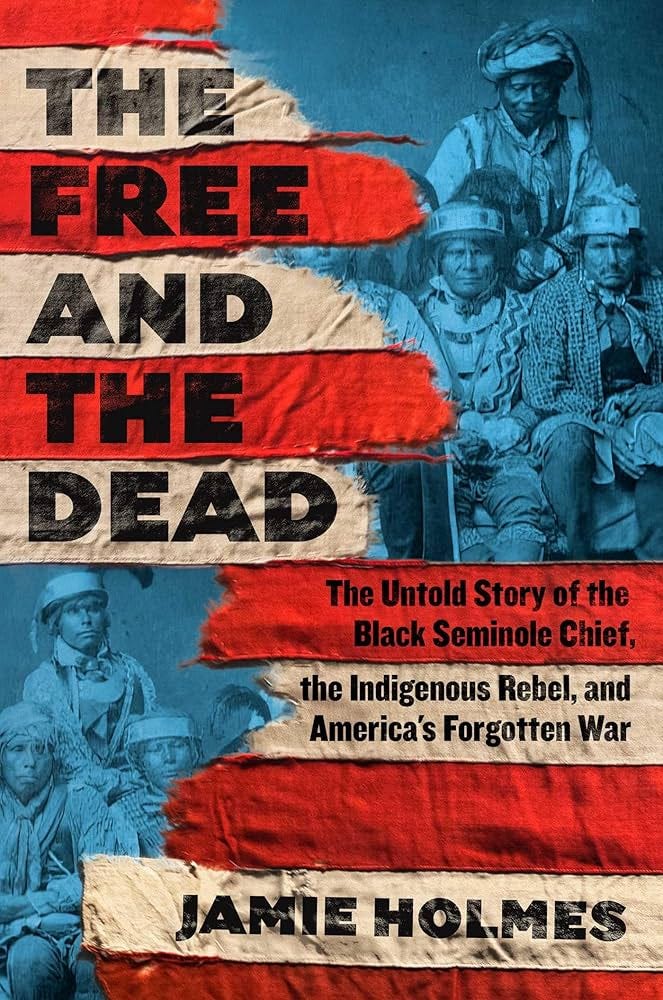
Today, Jamie Holmes explains how Andrew Jackson launched America’s longest war before Vietnam—with almost no understanding of what he was getting into.In The Free and the Dead: The Untold Story of the Black Seminole Chief, the Indigenous Rebel, and America’s Forgotten War, Holmes traces the Second Seminole War (1835-1842). Jackson invaded Florida knowing Black Seminoles were free and armed. When war broke out, he kept saying: why isn’t it over? What’s the problem? The war ended up costing up to $40 million (over $1 billion today), killing more soldiers from disease than combat, and could have been avoided entirely. Holmes sees a pattern echoing today: leaders imposing their will by force alone, denying realities they can’t defend on paper, while the media shapes our understanding of wars in real time.Jamie Holmes is a writer whose work has appeared in The New York Times, The New Yorker, The Atlantic, and elsewhere. This is a public episode. If you'd like to discuss this with other subscribers or get access to bonus episodes, visit skippedhistory.substack.com/subscribe

Today, Dr. Ibram X. Kendi explains how great replacement theory is an update on Nazi ideology—and why the struggle today is between anti-racist democracy and racist dictatorship.In Chain of Ideas: The Origins of Our Authoritarian Age, Dr. Kendi argues that what we call “neo-Nazism” isn’t new at all—it’s a renovation of Nazi theory with the same bones, just updated for 2026. Instead of Jews as replacers, it’s Muslims or Black people. Instead of “international Jewry,” it’s “globalists.” The book also introduces a distinction between privilege and power. In Dr. Kendi’s view, most people in positions of privilege are, whether they know it or not, dominated by oligarchs who provide those privileges in exchange for submission.Dr. Ibram X. Kendi is Professor of History and founding director of the Howard University Institute for Advanced Study. He is the author of Stamped from the Beginning, which won the National Book Award, and How to Be an Antiracist. This is a public episode. If you'd like to discuss this with other subscribers or get access to bonus episodes, visit skippedhistory.substack.com/subscribe
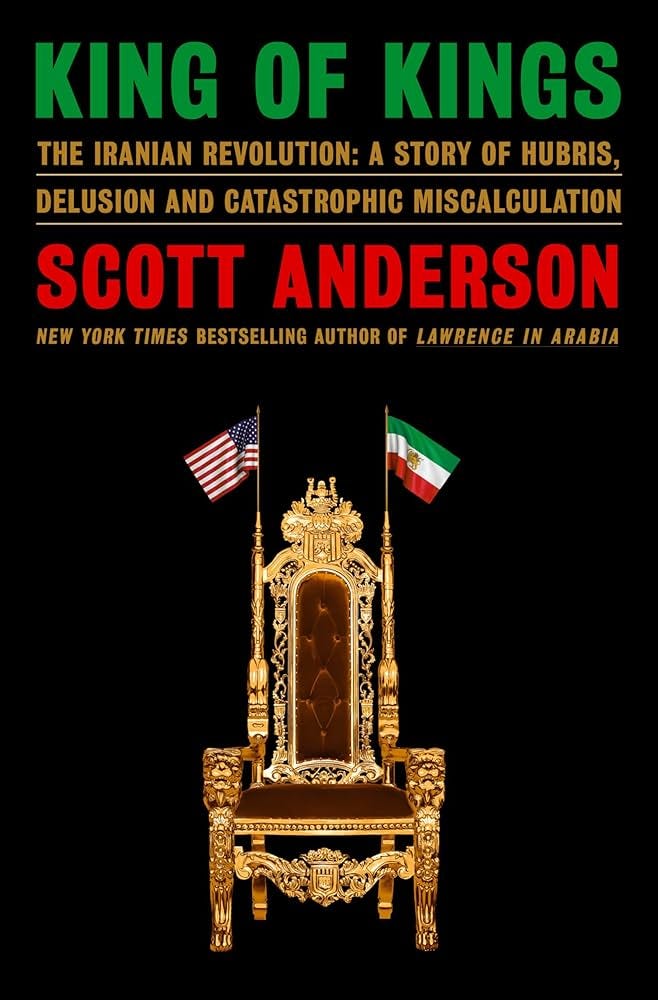
Today, Scott Anderson explains how Eisenhower got addicted to regime change—and why Trump is following the same pattern.In a recent New York Times Magazine piece, Anderson traces how two early Cold War coups created a dangerous template. In 1953, the CIA overthrew Iran’s Prime Minister Mosaddegh by basically renting a mob. The following year, a ragtag mercenary army and a fake radio broadcast toppled Guatemala’s president. Two victories by bluff, costing little money and no American lives. Then Eisenhower tried the same playbook in various other countries—catastrophic failures nearly across the board. As Anderson shows, regime change becomes addictive: each intervention produces the crisis that justifies the next. And now Trump, having grabbed Maduro in Venezuela, has his sights on Iran and Cuba. Anderson also discusses his book King of Kings, about the 1978-79 Iranian Revolution that swept the Shah from power—a direct consequence of that 1953 American coup.Scott Anderson is a veteran war correspondent and contributing writer for The New York Times Magazine. King of Kings: The Iranian Revolution, A Story of Hubris, Delusion, and Catastrophic Miscalculation won the 2025 Kirkus Prize for nonfiction. This is a public episode. If you'd like to discuss this with other subscribers or get access to bonus episodes, visit skippedhistory.substack.com/subscribe

Comments

Download from Google Play

Download from App Store
 United States