



 Claim Ownership
Solve for X: Innovations to Change the World
Subscribed: 45Played: 426
Subscribe

© 2022
Description
Solve for X uncovers what’s next. Join journalist Manjula Selvarajah as she dives into the latest tech innovations shaping our world. How are satellites revolutionizing the fight against climate change? Could music be the medicine we need? What will it take for Canada to lead the global tech scene and achieve a zero-emission future? Discover the answers to these questions and more in the next season of Solve for X.
39 Episodes
Reverse

Brain-computer interfaces (BCIs) have been allowing humans to control objects with their minds for nearly half a century. But in recent years, thanks partly to advances in AI, the technology has evolved dramatically; wearable and implantable devices are now being used to restore speech and movement to stroke survivors, alleviate depression and treat pain. While companies like Elon Musk’s Neuralink grab headlines, a somewhat quieter revolution is happening in Canada, where researchers are using BCI to help a historically underserved population: disabled children. In this episode, we explore BCI’s potential to transform medicine, the knotty ethical questions at its core and how the tech might just bring us closer together.
Featured in this episode:
Dr. Adam Kirton is a professor of pediatrics, radiology and clinical neurosciences at the University of Calgary, where he’s also the director of the BCI4Kids program. He is also the director of the Calgary Pediatric Stroke Program and is a practicing pediatric neurologist at the Alberta Children’s Hospital. He co-founded, and is the CMO, of Possibility Neurotechnologies
Anne Vanhoestenberghe is a professor of active implantable medical devices at King’s College London and director of MAISi, a facility for the manufacture of active implants and surgical instruments, housed at St. Thomas’ Hospital in London, England.
Dion Kelly is a clinical neuroscientist and the co-founder and CEO of Possibility Technologies. Dion and Adam launched the company in 2022 to commercialize their brain-controlled technology, which transforms thoughts into actions.
Stephanie Sonnenberg and her daughter, Claire, live outside of Calgary, Alberta. Claire was one of the first users of Possibility Technologies’ BCI device, Think2Switch.
Further reading:
The past, present and future of brain-computer interfaces
We’ve been connecting brains to computers longer than you’d expect. These three companies are leading the way
Adam Kirton’s Lindenlauer lecture, Columbia University, November, 2024
Altman’s Merge raises $252 million to link brains and computers
What it’s like to have a brain implant for five years
Solve for X is brought to you by MaRS, North America’s largest urban innovation hub and a registered charity. MaRS supports startups and accelerates the adoption of high-impact solutions to some of the world’s biggest challenges. For more information, visit marsdd.com.

The fashion industry has its fair share of dirty secrets, but one of the lesser-known is how much it pollutes our waterways. Every year, garment factories use as much as 2 trillion gallons of water to dye clothes, and most of that water, now filled with harmful chemicals, flows untreated into rivers, streams and lakes. Those pollutants can turn rivers black, harm marine life and cause cancer. Macarena Cataldo, a chemical engineer based in Vancouver, has come up with an ingenious way to remove these contaminants before they even reach the water. In this episode, Cataldo talks to Manjula Selvarajah about the global water crisis, how her technology works and efforts to get major fashion brands to change their ways.
Featured in this episode:
Macarena Cataldo is the CEO and CTO of Viridis Research, which she co-founded in 2019 to solve various global water challenges by eliminating pollutants from water sources. She has a PhD in chemical engineering, and has spent more than 15 years applying electrochemistry to drinking and wastewater treatment working with the European Space Agency, the Metropolitan Water Company of Turin and others.
Further reading:
Asian rivers are turning black. And our colourful closets are to blame
Why colouring clothes has a big environmental impact
World enters era of “global water bankruptcy”
Water crisis in Chile: Are we close to day zero?
Subscribe to Solve for X: Innovations to Change the World here. And below, find a transcript to “Colour block.”
Solve for X is brought to you by MaRS, North America’s largest urban innovation hub and a registered charity. MaRS supports startups and accelerates the adoption of high-impact solutions to some of the world’s biggest challenges. For more information, visit marsdd.com.
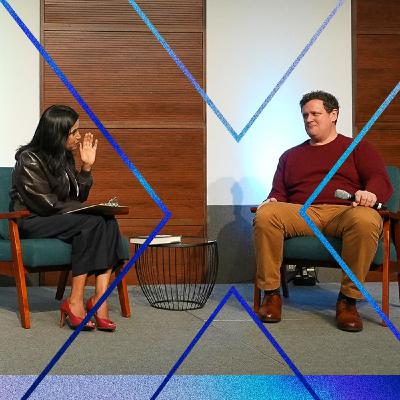
There’s no denying that technology plays — and will continue to play — a critical role in addressing the climate crisis. But could super-intelligent AI actually solve the problem for us, as several tech billionaires claim? Or is this over-reliance on speculative technology simply a way to distract us from tackling big, real-world problems. Manjula Selvarajah sits down with astrophysicist and author Adam Becker to separate the hype from reality. Featured in this episode: Adam Becker is an astrophysicist, journalist and the author of More Everything Forever, a book that examines the futuristic ideologies of Silicon Valley’s tech titans. He is a former science journalism fellow at the Santa Fe Institute and was also a science communicator in residence at the Simons Institute for the Theory of Computing at UC Berkeley.Marcius Extavour is a scientist, creative technologist and communicator who develops solutions for climate change and clean energy. As a partner at Ode, a technology and creative design firm specializing in geospatial AI. He previously built the energy, climate and carbon removal practice at XPRIZE.Further reading: Silicon Valley is at an inflection pointTech oligarchs are gambling our future on a fantasy Travelling to Mars and beating death: The futurist creed of tech’s apostles More Everything Forever Subscribe to Solve for X: Innovations to Change the World here. And below, find a transcript to “Infinity quest.”
Solve for X is brought to you by MaRS, North America’s largest urban innovation hub and a registered charity. MaRS supports startups and accelerates the adoption of high-impact solutions to some of the world’s biggest challenges. For more information, visit marsdd.com.
Our energy grid is something most of us only think about when it isn’t working. But growing demand for electricity is placing an even greater strain on a system that’s already facing increased pressure from extreme weather events. Can we build a more sustainable and dependable grid? In this episode, which originally aired September 2022, we explore how when it comes to climate change the challenge of greening the grid is as much an issue of complex engineering as it is about policy and equity. Featured in this episode:Josh Wong is the former CEO of Opus One Solutions, which was acquired by General Electric. In 2024, Josh founded a new company called ThinkLabsAI and is developing software that will help utilities to integrate renewable sources of energy and improve grid resilience.Destenie Nock is an assistant professor at Carnegie Mellon University who specializes in public policy, civil and environmental engineering. She’s an expert on how our changing climate is impacting the grid, and what that means for the future. Focusing on energy equity, Destenie explains what’s important to consider in our transition to clean energy.Dana Tizya-Tramm is the former chief of the Vuntut Gwitchin First Nation in Old Crow, Yukon. Dana helped establish the Old Crow Solar Project — shifting the northern remote community off diesel to renewables. Through his efforts, Old Crow is making inroads toward energy sovereignty. He is now the director of Nadlii and is working on developing a framework for Indigenous data sovereignty and ethical AI.Further reading: 2021 placed exceptional demands on electricity markets around the worldRenewable Energy Is Great—but the Grid Can Slow It DownGlobal heat waves are so bad that utilities are paying their customers to use less energy“Nation-building” investments in electricity grid needed to reach net-zero, experts sayHow Old Crow’s solar farm is changing green energy projects in Yukon | CBC NewsSubscribe to Solve for X: Innovations to Change the World here
Solve for X is brought to you by MaRS, North America’s largest urban innovation hub and a registered charity. MaRS supports startups and accelerates the adoption of high-impact solutions to some of the world’s biggest challenges. For more information, visit marsdd.com.

As you may have heard, solar energy is having a moment. Thanks to several technological breakthroughs, it’s now the cheapest form of energy generation in most places on Earth. This past summer, for the first time ever, it became the EU’s main source of electricity, and many other parts of the world — Pakistan, Nigeria and most famously, China — are likewise in the midst of a solar boom of astonishing speed and scale. In this episode, experts weigh in on the social, political and economic implications of this revolutionary energy shift — and the complicated way that Canada fits into it all.Featured in this episode:Sara Hastings-Simon is an associate professor in the department of Earth, Energy and Environment and an assistant professor in the School of Public Policy. Her work focuses on understanding how low-carbon energy transitions happen within different sectors of the economy, constrained by existing infrastructure and business models, and how policy response can improve outcomes. She also hosts, alongside David Keith and Ed Whittingham, the live webinar and podcast Energy vs Climate.Mike Andrade is the chairman and CEO of Morgan Solar, a Toronto company whose products improve the performance of solar projects and the energy efficiency of buildings. A former executive at IBM and a founding member of Celestica, he’s also an investor and advisor to several other companies, a member of the Council of Canadian Innovators and a board member of the Next Generation Manufacturing Supercluster.Chris Caners is general manager at SolarShare, a renewable energy co-op in Ontario. He’s also a consultant who advises organizations on climate, energy efficiency and sustainability.Thomas Timmins leads the Canadian energy sector practice at Gowling WLG in Toronto. He specializes in helping clients navigate opportunities in the global energy transition.Deb Chachra is a professor of engineering at Olin College and the author of How Infrastructure Works: Inside the Systems That Shape our World. Further reading:• Seizing the moment of opportunity• Free electricity. Like, at no cost. For everyone. Now.• Pakistan’s solar boom• There’s a race to power the future. China is pulling away• What if Canada invested in solar energy?• The solar rushSubscribe to Solve for X: Innovations to Change the World here. And below, find a transcript to “Power to the People.”
Solve for X is brought to you by MaRS, North America’s largest urban innovation hub and a registered charity. MaRS supports startups and accelerates the adoption of high-impact solutions to some of the world’s biggest challenges. For more information, visit marsdd.com.

Get ready for Solve for X season four! Join journalist Manjula Selvarajah as she goes behind the hype and headlines to make sense of how new technologies are reshaping our world. This season we learn about the solar revolution, robot dexterity, a device that zaps forever chemicals and more. Subscribe and listen beginning November 27. Solve for X is brought to you by MaRS, North America’s largest urban
innovation hub and a registered charity. MaRS supports startups and
accelerates the adoption of high-impact solutions to some of the world’s
biggest challenges. For more information, visit marsdd.com.
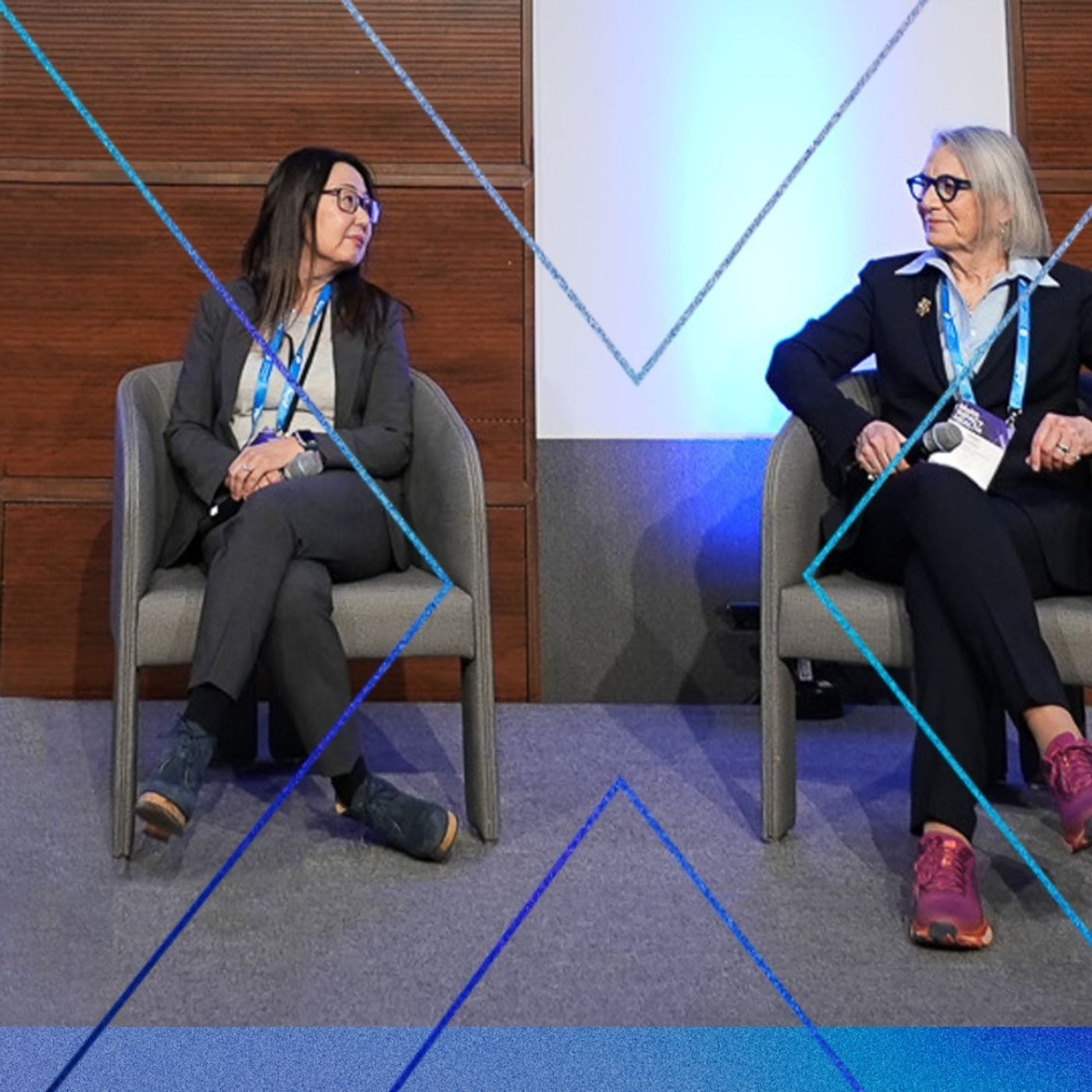
By uncovering critical sex-based differences related to brain and metabolic health, researchers Gillian Einstein and Minna Woo are making the case that tailored interventions are key to improving health outcomes for women — and everyone else. Through their work exploring how conditions from Alzheimer’s to kidney disease can have varied effects depending on a patient’s sex, they underscore what the medical community as a whole can learn from experts in women’s health: Things aren’t as simple as we want to believe. In this bonus episode, recorded live on May 8, 2025, at the MaRS Impact Health Conference, Einstein and Woo discuss the complexity of biology, the challenges of funding and why they’re optimistic that things are changing.Featured in this episode:Gillian Einstein is the Wilfred and Joyce Posluns Chair in Women’s Brain Health and Aging and a psychology professor of psychology at the University of Toronto. She’s also an adjunct scientist at Baycrest and Women’s College Hospitals, and an honorary doctor of medicine at Linköping University, Sweden. Her lab’s current focus is on estradiol loss as well as how stigma and immigration affect memory and cognition in diverse populations of women.Minna Woo is currently the director of the Banting and Best Diabetes Centre at the University of Toronto and recently completed a 10-year term as division director of endocrinology and metabolism at the Toronto General Hospital, University Health Network (UHN). She now holds the Ajmera Chair in Molecular Diabetes Research at the Toronto General Hospital Research Institute and is a clinician scientist and a staff endocrinologist providing diabetes and endocrine care at UHN. Her laboratory focuses on molecular mechanisms that determine the pathogenesis of insulin resistance and related diseases. She has published more than 100 research articles and her research is internationally recognized as a member elect of the American Society of Clinical Investigation.Katherine Ward is an award-winning journalist currently working with Global News in Toronto. She joined the team in 2018 and has covered a wide range of stories taking her all over Ontario. This year, Ward was also part of an investigative team that exposed the prevalence of lead contamination in drinking water. “Tainted Water” went on to win a national award with Canada’s Radio Television Digital News Association.Further reading: • From body to brain: Understanding how sex and gender contribute to brain health as we age• More women get Alzheimer’s than men. It may not just be because they live longer• Sleep quality and the menstrual cycle• Breaking down sex and gender barriers in search of precision medicine• Canada accelerates diabetes researchSubscribe to Solve for X: Innovations to Change the World here.
Solve for X is brought to you by MaRS, North America’s largest urban innovation hub and a registered charity. MaRS supports startups and accelerates the adoption of high-impact solutions to some of the world’s biggest challenges. For more information, visit marsdd.com.

The hotter it gets outside, the more we use air conditioning, and the more we use air conditioning, the hotter it gets. AC units and refrigeration combined adds up to 10 percent of global greenhouse gas emissions. But how can we solve this cooling paradox? Building on last episode’s conversation with the UN’s global chief heat officer, host Manjula Selvarajah meets the experts harnessing novel innovations to keep cities and people cool — from massive infrastructure projects using ice-cold lake water to microscopic solutions to get rid of that sticky, sweltering humidity. David MacMillan is a manager in the City of Toronto’s Environment, Climate and Forestry division. He and his team are focused on planning for low-carbon development and energy systems, which includes implementing the Toronto Green Standard, which aims for net-zero new buildings by 2028, and renewable energy programs such as SolarTO and Wastewater Energy. Cameron Leitch is the director of solutions and innovations at Enwave Energy Corporation, which oversees the largest deep lake water cooling (DLWC) project in the world. Pulling near-freezing water from the depths of Lake Ontario, this massive infrastructure system provides alternative cooling to more than 100 buildings in downtown Toronto, including arenas, condos, offices, data centres and hospitals — a clean energy initiative that has been recognized by the United Nations. Evelyn Allen is the co-founder of Evercloak, a Waterloo-based company that has developed graphene oxide membranes that helps to dehumidify air before it reaches AC and HVAC units, significantly reducing the energy and refrigerants needed to cool a space. The company is currently part of the Mission from MaRS: Better Buildings Adoption Accelerator program. Daniel A. Barber is a professor of architecture and the environment at Eindhoven University of Technology in the Netherlands. Barber’s research and work focuses on how changing temperatures have altered our built environment, and how architects can help adapt to the climate crisis. At architecture symposium Biennale Venice, his interactive installation, “Terms and Conditions,” allowed participants to experience the stifling effects of the waste heat that air conditioning units produce. Further reading: Air conditioning poses a climate conundrumToronto company using lake water to cool buildings expands systemToronto is home to the world’s largest lake-powered cooling system. Here’s how it works.Air conditioners fuel the climate crisis. Can nature help?How to build an AC that will get the world through hotter summersA rebuke to Modernism: the Venice Architecture Biennale imagines new ways of building to cope with climate changeSubscribe to Solve for X: Innovations to Change the World here..
Solve for X is brought to you by MaRS, North America’s largest urban innovation hub and a registered charity. MaRS supports startups and accelerates the adoption of high-impact solutions to some of the world’s biggest challenges. For more information, visit marsdd.com.

Extreme heat waves are anything but normal, but they’re quickly becoming the new reality. The 10 hottest years on record have all happened in the last decade. And because temperatures in urban centres can be 10 to 15 degrees Celsius higher than surrounding areas, cities can be dangerous places to be when the mercury rises — particularly for the elderly, those with pre-exisiting health conditions as well as poorer populations who lack access to air conditioning. “Heat has a way of going through the city and finding those who are the weakest,” says Eleni Myrivili, the United Nations’ global heat officer. “It’s a very unfair climate condition.” In this episode, we explore the growing risk posed by heat and what could help us adapt to a hotter world. Eleni Myrivili is the United Nation’s first-ever global chief heat officer. An anthropologist by training, Myrivili understands how heat waves discriminate against older, less-wealthy and under-served demographics. Before being named to her UN post in 2022, Myrivili was Athens’ heat officer, where she coordinated the capital’s response to heat waves and helped renovate an ancient Roman aqueduct to bring water into the city.Further reading: What will it take to save our cities from a scorching futureEarth’s 10 hottest years on record are the last 10Extreme heat is deadlier than hurricanes, floods and tornadoes combinedHeat inequality ‘causing thousands of unreported deaths in poor countries’The heat crisis is a housing crisisAncient civilizations countered extreme heat. Here’s what cities borrow from historyToronto's getting hotter. Experts say a chief heat officer could help the city adaptArchitects turning to India’s lattice-building designs to keep buildings cool without air conditioning How India’s lattice buildings cool without air conditioningAthen’s answer to a water supply crunch: an ancient aqueduct
Solve for X is brought to you by MaRS, North America’s largest urban innovation hub and a registered charity. MaRS supports startups and accelerates the adoption of high-impact solutions to some of the world’s biggest challenges. For more information, visit marsdd.com.

A quarter of Canada’s trees are at risk, and upwards of a million species around the world face extinction in the decades to come. Restoring nature is essential to survival — it can make communities more resilient to climate change, it can regrow areas destroyed by increasingly intense wildfires and it can help reduce atmospheric carbon. But repairing ecosystems is not as simple as planting seeds. In this special episode, experts weigh in on restoration efforts, the global seed storage and why there’s such a thing as planting too many trees. Featured in this episode: Martina Albert is a technician with the National Tree Seed Centre, based in Fredericton, N. B. The NTSC’s library holds more than 13,000 seed collections, with the purpose of protecting them from invasive pests, disease and climate change. Albert works on the Centre’s Indigenous Seed Collection Program, working with First Nations communities to collect and preserve tree seeds for generations to come. Blaine Pearson is the CEO of Seedark, a climate tech venture that is working to modernize the global supply chain of seeds. Its app, Squirrel, connects growers and reforestation experts with seed collectors, while digitally tracking where seeds are coming from. Pearson has more than 20 years of entrepreneurial experience, focusing on harmonizing the application of technology with environmental protection, and is currently part of the RBC Women in Cleantech Accelerator. Faisal Moola is an associate professor in the department of geography, environment and geomatics at the University of Guelph. Moola oversees research on the ecology and ethnoecology of cultural keystone species with Indigenous Peoples here in Canada and around the world. Jim Robb is the general manager of the Friends of the Rouge Watershed. The organization partners with communities and volunteers to protect and restore ecosystems, with a focus on Rouge National Urban Park. Robb helps organize nature walks, community planting events and educational programming to inspire the next generation of ecological stewards. D’Amour Walker is the assistant project coordinator at Friends of the Rouge Watershed, where she ensures trees, shrubs and plants are in healthy condition as part of the reforestation and ecosystem restoration efforts. Further reading: Saving nature: WWF study highlights the best places for ecological restoration in CanadaWanted: tree seeds. National seed centre in Fredericton collecting samplesIndigenous Seed Collection Program begins cross-country journey in FrederictonWe need native seeds in order to respond to climate change, but there aren’t enoughWhy Indigenous peoples are raising the alarm on carbon trading at UN climate summitGrasslands store tons of carbon — and there’s a movement to protect themBiodiversity or bust? Here’s what happened at COP16What you need to know about nature-based solutions to climate changeSubscribe to Solve for X: Innovations to Change the World here.
Solve for X is brought to you by MaRS, North America’s largest urban innovation hub and a registered charity. MaRS supports startups and accelerates the adoption of high-impact solutions to some of the world’s biggest challenges. For more information, visit marsdd.com.

Experts are calling antimicrobial resistance the silent pandemic: Each year, AMR is responsible for more than a million deaths around the world. It’s a threat to our health that’s been exacerbated by the very medications used to treat it. This problem has been growing for decades, and healthcare practitioners have responded by developing new antibiotics. “And then,” says Dr. Scott Weese, a global expert in antimicrobial resistance, “we started running out of antibiotics.” To address the rise of drug-resistant pathogens, we need to examine how we use these medications to treat disease in both humans and animals, says Weese. The question is, how can we safeguard the life-saving drugs we have — while also protecting the health of all creatures on this planet?Featured in this episode: Dr. Scott Weese is a veterinary internal medicine specialist, chief of infection control and director of the Centre for Public Health and Zoonoses at the University of Guelph’s Ontario Veterinary College. Weese is a member of the Global Leaders Group on antimicrobial resistance and has helped craft antimicrobial use guidelines for veterinarians in Canada. Further reading: The global threat of antibiotic resistanceAt the UN, world leaders are negotiating the biggest health issue you’ve never heard ofThree million child deaths linked to drug resistance, study showsDo I need that antibiotic?Veterinary medicine is key to overcoming antimicrobial resistanceThe link between pets, people and antimicrobial resistanceCanada introduces new guidelines to tackle antimicrobial resistance
Solve for X is brought to you by MaRS, North America’s largest urban innovation hub and a registered charity. MaRS supports startups and accelerates the adoption of high-impact solutions to some of the world’s biggest challenges. For more information, visit marsdd.com.

Modern medicine has a dirty secret. While plastics have revolutionized healthcare, research increasingly shows that they’re also making us sick. Items such as PPE, syringes, gowns, IV bags and protective wrappings have allowed for a higher standard of sanitary patient care that vastly reduces the risk of cross-contamination. But all that plastic is adding up. Nearly a third of healthcare waste is plastics, and a report on 110 Canadian hospitals revealed the combined waste adds up to 87,000 tons of waste each year. These items break down into microplastics, which accumulate in our bodies and contribute to neurodegenerative, reproductive and overarching health problems. But what will it take to reimagine healthcare without plastic?Featured in this episode: Journalist Susan Freinkel is the author of Plastics: Toxic A Love Story, a book that traces the history of plastics through eight different objects, from the Frisbee to the IV bag, and examines how plastic negatively affects our lives.Dr. Ted Schettler is a physician and expert on the health risks of plastics and phthalates. He’s the scientific advisor at Health Care Without Harm, an organization that has dedicated more than 30 years to reducing healthcare’s environmental impact, including the removal of mercury from medical devices.An anesthesiologist for more than 20 years, Dr. Lyndia Dernis has seen first-hand the amount of plastic waste operating rooms produce. Currently practicing at St. Mary’s Hospital Centre in Montreal, Dernis has spearheaded the Anesthesia and Environment Committee, which has drastically reduced and recycled the hospital’s plastic waste since being implemented in 2020.Rashmi Prakash is the CEO of Aruna Revolution, a Halifax-based startup producing sustainable menstrual products. She’s also an adjunct professor at UBC, where she teaches a course on the impact of biomedical engineering on society, sustainability and environmental stewardship. As a biomedical engineer, Prakash has seen the surplus use of single-use plastic medical devices wrapped in single-use plastics, the layers of which she likens to a Russian doll.Aditi Sitolay is a masters student of medical device design and entrepreneurship at Imperial College London. She’s also the founder of Synoro Med, a Vancouver-based startup that specializes in designing sterile, reusable medical devices, including an early-prototype IV bag.Further reading: Solving healthcare’s emissions problemYour brain could have a spoon’s worth of microplastics. Here’s what to do about itWe tested our blood for microplastics. This is what we foundMicroplastics: Are we facing a new health crisis — and what can be done about it?Prescription for plastic medical waste: How hospitals, medical suppliers are aiming to be greener
Solve for X is brought to you by MaRS, North America’s largest urban innovation hub and a registered charity. MaRS supports startups and accelerates the adoption of high-impact solutions to some of the world’s biggest challenges. For more information, visit marsdd.com.

The wildfire that devastated Fort McMurray in 2016 burned more than 579,000 hectares of land, drove 88,000 people from their homes and caused nearly $10 billion in damages. It’s often seen as an outlier, a freak natural disaster. But extreme wildfires, like those that tore through Los Angeles earlier this year, are becoming more intense and harder to control. “We all saw the smoke, and too many of us have seen the fire,” says John Vaillant, author of Fire Weather: The Making of a Beast. “Weather is different now, and fire is different now.” Hotter, drier weather is turning our forests into kindling, and emergency responders are struggling to handle our new reality: intense, unpredictable fires fuelled by a changing climate. In this special episode, host Manjula Selvarajah sits down with Vaillant to better understand how we got here and to see if there is any way out.Featured in this episode: John Vaillant is a Vancouver-based author and freelance journalist. His latest work, the Pulitzer Prize–nominated Fire Weather: The Making of a Beast, chronicles how the 2016 Fort McMurray wildfire turned entire neighbourhoods into firebombs and destroyed 2,400 homes and businesses. Further reading: Forged by fire: Fort McMurray 5 years after the disasterCanada needs to get ready for a future fraught with fire: How can the forest sector respond?FACT SHEET: Climate change and wildfiresCanada’s 2023 wildfires emitted more carbon than most countriesLandscapes turned into hellscapes, shock and the ongoing fight against wildfires in Los AngelesLos Angeles wildfires magnify California’s “insurance crisis” as homeowners face billions in lossesSubscribe to Solve for X: Innovations to Change the World here. And below, find a transcript to “Fire alarm: Rethinking innovation in an increasingly volatile world.” This interview was recorded at MaRS Climate Impact on December 4, 2024.
Solve for X is brought to you by MaRS, North America’s largest urban innovation hub and a registered charity. MaRS supports startups and accelerates the adoption of high-impact solutions to some of the world’s biggest challenges. For more information, visit marsdd.com.

Can AI unravel the mysteries of human biology? Could it help design specialty treatments and cures for disease? Geoffrey von Maltzahn and his team at Generate:Biomedicines are bullish on both counts. AI has greatly accelerated progress in genome engineering, bioengineering and nanotechnology and they are getting closer to developing tailored therapeutics. “Six years ago, this was a crazy idea,” he says. “We’re now convinced that 100 percent of protein therapeutics are going to get created this way.” In this special episode of Solve for X, host Manula Selvarajah sits down with von Maltzahn to talk about where the science is now and where it is headed. Featured in this episode: Geoffrey von Maltzahn, general partner of Flagship Pioneering, is an inventor and entrepreneur who works at the intersection of biology and artificial intelligence, a specialization that makes him a world-renowned leader in generative biology. Further reading: How generative biology can wipe out our most devastating diseases — for goodHow technology is tackling questions that confound modern medicineHow we can deliver a better tomorrow through generative biologyThe frontiers of generative biology | MaRS Impact Health 2024Subscribe to Solve for X: Innovations to Change the World here. And below, find a transcript to “Cracking the code: How generative biology could transform medicine.” This interview was recorded at MaRS Impact Health in June 2024.
Solve for X is brought to you by MaRS, North America’s largest urban innovation hub and a registered charity. MaRS supports startups and accelerates the adoption of high-impact solutions to some of the world’s biggest challenges. For more information, visit marsdd.com.

For many in Canada’s tech sector, 2024 was a challenging year. At times, it seemed as if the only constant — whether it was the economy, geopolitical relations or health of the planet — was uncertainty. To take stock of the past year and look ahead to 2025, we reached out to members in the innovation community to hear what’s on their minds. Can tech help fix Canada’s productivity crisis? What will it take to foster real change? In the first call-in episode of the MaRS podcast, Solve for X, MaRS CEO Alison Nankivell answers their questions and shares her perspective on what it will take for Canadian startups to scale, improve inclusion and prepare for a rapidly changing world. Featured in this episode: Alison Nankivell has spent more than 25 years moving Canada’s economic needle forward. Before being named CEO of MaRS in early 2024, Alison held pivotal roles at the Business Development Bank of Canada (BDC), the Ontario Teachers’ Pension Plan and Export Development Canada (EDC). At MaRS, she brings an experienced playbook to support startups working in climate, health and emerging technology. Kris Bennatti is the CEO and co-founder of Hudson Labs, a Toronto-based startup that builds specialized financial software to help improve corporate accountability in capital markets. Lise Birikundavyi is the co-founder and managing partner of BKR Capital, Canada’s first Black-led, institutionally-backed VC fund. Birikundavyi is a finance specialist who has worked with several international institutions, including the Jacobs Foundation where she managed its edtech impact investment strategy. Corey Ellis is the co-founder and CEO of Growcer. The Ottawa-based startup develops commercial hydroponic systems that help communities grow indoor produce, year-round in any climate. Charles Plant is a serial entrepreneur, innovation economist, fractional CFO and founder of The Narwhal Project, which helps tech startups raise capital and scale business. Further reading: Welcome to the $100-million clubUndervalued and ignored: Why young Canadian firms are looking to foreign investors and buyers Evolving ESG reporting regulations call for co-ordinated executive action in CanadaDEI in Canadian workplaces is hitting a wall, subscriber survey showsNorth American outlook: Uncertain political environment adds to business, consumer fatigueClimate adaptation is as important as climate mitigationSubscribe to Solve for X: Innovations to Change the World here. And below, find a transcript to “Innovation hotline: Answering the tech sector’s burning questions.” This interview was recorded October 17 in the MaRS Studio.
Solve for X is brought to you by MaRS, North America’s largest urban innovation hub and a registered charity. MaRS supports startups and accelerates the adoption of high-impact solutions to some of the world’s biggest challenges. For more information, visit marsdd.com.

As the effects of climate change trigger record-breaking rainfall and flooding, cities from Montreal to Mumbai are re-thinking how urban design can keep inhabitants safe from natural disasters. Kongjian Yu, a landscape architect based in Beijing, has a counterintuitive idea. Instead of fighting water by building more dams, sewers and pipes, he proposes we let it in, designing nature-based infrastructure that can absorb run-off. His principles have been adopted by the Chinese government and implemented in hundreds of municipalities. Could this nature-based approach help us adapt to a changing climate? Featured in this episode: Kongjian Yu is a Beijing-based landscape architect and founder of Peking University’s College of Architecture and Landscape. His concept of sponge cities — designing cities to absorb water — is being applied in urban areas across the globe. Further reading:Landscape architect Kongjian Yu, pioneer of the “sponge city" concept, wins the 2023 Oberlander PrizeHow letting water be water can lead to better climate resilienceKongjian Yu has a plan for urban flooding: “Sponge cities”Treading water — Toronto is spending billions on flood protection, but experts say it needs to spend billions moreWill a $1-billion flooding bill finally make the GTA take stormwater seriously?Toronto’s Don River floods offer urgent planning lessons for climate-challenged cities
Solve for X is brought to you by MaRS, North America’s largest urban innovation hub and a registered charity. MaRS supports startups and accelerates the adoption of high-impact solutions to some of the world’s biggest challenges. For more information, visit marsdd.com.

Music makes us feel better — for most of us, this is an intuitive truth. But scientists are only now beginning to understand the remarkable ways that music affects our brains. With the help of innovation, researchers are working to assess and codify the whats, whys and hows that could help us harness this power as a therapeutic tool to treat people grappling with everything from mood disorders to Parkinson’s disease. Their data is helping prove that music could be one of our most vital, valuable and accessible forms of medicine. Featured in this episode:Dan Levitin is a best-selling author, music producer, renowned neuroscientist and professor emeritus in psychology at McGill University. His latest book, I Heard There Was a Secret Chord: Music as Medicine was released in August. Frank Russo is a cognitive neuroscientist and psychologist who serves as the chief science officer at LUCID, a Toronto-based company that uses AI to create personalized music therapy to help people with mental health challenges. He’s also a professor of psychology at Toronto Metropolitan University, where he heads up the Science of Music Auditory Research and Technology (SMART) lab. Jessica Grahn is a neuroscientist and a professor at Western University. She studies how the brain processes music and its power to activate music in people with mobility issues brought on by neurodegenerative diseases like Parkinson’s. Charlotte Cumberbirch is a professional choral singer who leads an online vocal health group for older adults at the Cummings Centre in Montreal. Many of her participants are recovering from strokes or dealing with brain diseases, such as Parkinson’s. Further reading:The sound of science: How music can transform our brainsAI to benefit humanity: Innovations in senior careThe big idea: could we use music like medicine?AI is unlocking the human brain’s secretsHow does music affect your brain? This is your brain. This is your brain on music
Solve for X is brought to you by MaRS, North America’s largest urban innovation hub and a registered charity. MaRS supports startups and accelerates the adoption of high-impact solutions to some of the world’s biggest challenges. For more information, visit marsdd.com.
In season 3 of Solve for X, we meet the innovators and entrepreneurs solving for climate change, economic disparity, diseases and more. Subscribe and listen beginning September 26.
Solve for X is brought to you by MaRS, North America’s largest urban innovation hub and a registered charity. MaRS supports startups and accelerates the adoption of high-impact solutions to some of the world’s biggest challenges. For more information, visit marsdd.com.

With more than 80 times the short-term warming power of carbon dioxide, methane is a significant climate threat. But finding and fixing methane leaks is no small feat and ground-based detection methods struggle to pinpoint this colourless, odourless gas. In this episode of Solve for X, host Manjula Selvarajah sits down with Stéphane Germain to discuss how his company’s fleet of microsatellites is transforming methane detection. By capturing data from orbit, this satellite technology offers new insights into methane sources, reshaping how we monitor and reduce emissions for a cleaner future.Featured in this episode:Stéphane Germain is the CEO and founder of GHGSat, a global leader in satellite-based methane monitoring. With a background in aerospace engineering, he leads the development of microsatellites that detect greenhouse gas emissions from space, delivering critical data for climate action.Further reading: UN climate summit host Azerbaijan’s gas flaring hits decade-high, study showsHow MethaneSAT Will Track an Invisible Climate Menace From SpaceGlobal methane emissions rising at fastest rate in decades, scientists warnMethane emissions from gas flaring being hidden from satellite monitorsNew satellite will detect and share CO2 data from individual facilities
Solve for X is brought to you by MaRS, North America’s largest urban innovation hub and a registered charity. MaRS supports startups and accelerates the adoption of high-impact solutions to some of the world’s biggest challenges. For more information, visit marsdd.com.

We’re facing a global ecosystem crisis. Within the last 50 years alone, wildlife populations across the world have declined by a shocking 69 percent. But technology, with help from citizen science, is emerging as one of wildlife’s greatest allies. In this episode of Solve for X, we explore how remote sensing, robot boats and DNA analysis could revolutionize wildlife preservation, offering hope for everything from insects to whales.Featured in this episode: James Snider is the vice president of science, knowledge and innovation at World Wildlife Fund Canada. Elizabeth Clare is an associate professor of biology at York University in Canada. Her research studies biodiversity at all levels, developing novel genetic methods that address some of the biggest challenges in biodiversity science.Peter Fretwell is a scientist at the British Antarctic Survey. He’s the principal investigator of the Wildlife From Space Program, studying wildlife using satellite imagery.Madeleine Bouvier-Brown is a marine project scientist at Open Ocean Robotics. She handles the deployment of robot boats, retrieving data and analyzing it to deepen our understanding of the oceans.Further reading:Loss of sea ice causes catastrophic breeding failure for emperor penguinsAdventure on high seas inspired ocean droneGlobal wildlife populations have declined by 69 percent since 1970, WWF report findsScientists can suck animal DNA literally out of thin airCaribou are vanishing at an alarming rate. Is it too late to save them?
Solve for X is brought to you by MaRS, North America’s largest urban innovation hub and a registered charity. MaRS supports startups and accelerates the adoption of high-impact solutions to some of the world’s biggest challenges. For more information, visit marsdd.com.

Comments

Download from Google Play

Download from App Store
 United States