


 Claim Ownership
The Learner-Centered Collaborative Podcast
Subscribed: 7Played: 82
Subscribe

© Learner-Centered Collaborative
Description
The future of education is now because today’s learners can’t wait!
Join Katie Martin, educator, author, mom and Learner-Centered Collaborative CIO, as she explores the challenges and possibilities in education today through thought-provoking conversations with practitioners working to put learners at the center. Tap into her vast experience supporting hundreds of schools and districts to turn their vision for learning into actions that best serve learners.
Join Katie Martin, educator, author, mom and Learner-Centered Collaborative CIO, as she explores the challenges and possibilities in education today through thought-provoking conversations with practitioners working to put learners at the center. Tap into her vast experience supporting hundreds of schools and districts to turn their vision for learning into actions that best serve learners.
56 Episodes
Reverse
In this episode of the Learner-Centered Collaborative Podcast, host Katie Martin dives deep with Dr. Cesar Morales, an inspiring leader in learner-centered education. Dr. Morales shares his personal journey from overcoming a 1.87 high school GPA to earning his Ed.D., opening a pioneering high school, and working with schools nationwide to transform education. Together, they discuss strategies for fostering collective efficacy, designing learner-centered systems, and empowering communities to create meaningful change.
In this episode, Dr. Katie Martin sits down with Ruby and Everest, two inspiring students from Clark Street Community School, live at the Aurora Institute Symposium 2024 in New Orleans. Ruby and Everest were excited to share how learner-centered education has fueled their growth, allowing them to pursue passions through self-directed projects, community engagement, and real-world experiences. From restoration projects inspired by local history to an adventurous road trip studying Great Lakes fishing culture, these students illustrate the impact of Clark Street’s mastery-based approach. This uplifting conversation showcases what’s possible when schools prioritize learner agency, offering fresh insight for educators and leaders dedicated to transformative, student-centered education.
In this episode of the Learner-Centered Collaborative Podcast, host Katie Martin speaks with Dr. Jill Siler, Deputy Executive Director for Professional Learning at the Texas Association of School Administrators (TASA). Dr. Siler reflects on her leadership journey, sharing how thoughtful design fosters belonging and drives meaningful impact in schools and communities.
Drawing from her experience as a superintendent and author of Thrive Through Five, she discusses the importance of creating supportive environments for educators and students, addressing challenges head-on, and building cultures where everyone can thrive—not just survive. Join us to explore strategies for designing learning spaces that uplift and inspire.
In this episode of the Learner-Centered Collaborative Podcast, host Katie Martin sits down with Sandy Cima, Director of People and Business Operations at Learner-Centered Collaborative and mom of two. Sandy shares her unique perspective as a parent navigating the education system, the importance of fostering curiosity in children, and her hopes for the future of education. They also explore the challenges of balancing personal growth, career fulfillment, and parenting. Tune in for an insightful conversation about raising happy, engaged, and confident kids in today’s world.
In this episode, Katie Martin sits down with Greg Behr, executive director of the Grable Foundation, to explore how intentional design can transform learning environments and foster meaningful community connections. They discuss lessons from Fred Rogers and the impact of Remake Learning in shaping education for the future.
Greg Behr is the executive director of the Grable Foundation and co-author of When You Wonder, You're Learning, inspired by the legacy of Fred Rogers.
In this episode of the Learner-Centered Collaborative podcast, host Katie Martin speaks with Dr. Lilia Náñez, Associate Superintendent of Ector County ISD in Odessa, Texas. Dr. Nanez shares her 30-year journey in education, emphasizing the importance of creating a sense of belonging for every student and educator.
Topics discussed include the impact of teacher-student connections, the role of joy in leadership, fostering a collaborative environment between curriculum and technology teams, and innovative initiatives like new teacher development programs and opportunity culture in Ector County.
In this episode, Katie talks with Dr. Rebecca Kim about creating coherence across school systems and aligning strategic priorities to support all students. They delve into the importance of co-constructing educational goals with the community, the role of mentorship in developing strong leadership, and how being an impact-driven leader can transform school culture and student outcomes. Join the conversation as they share practical strategies for fostering collaboration and driving positive change in education.
Meg Parry and Miguel Gonzalez, former leaders at Embark, a learner-centered micro-school embedded in a small business in North Denver, share their experiences and insights into creating learning environments grounded in trust, authentic challenges, and the development of learner agency.
Meg and Miguel discuss their personal journeys into education. Meg was motivated by her father's work as a teacher and her own realization of education as a lever for social change. Miguel was motivated by his love of working with youth, which began with a high school job at a YMCA program. Both share how experiences in small school communities that put relationships first shaped their educational philosophies.
They dive into the key elements of Embark's model, including how the school is physically embedded in a coffee and bicycle shop, how learning experiences are designed around solving real business challenges, and how they hold learners to professional standards for their work.
Key topics covered include:
- Flipping the script on trust, with learners managing their own schedules and learning to handle that responsibility
- Shifting from content-focused teaching to competency-based learning
- The importance of a community-embedded model and concentric circles of authentic challenge for learners
- How to support educators in shifting to learner-centered mindsets and practices
- Meg and Miguel's visions for education systems that foster learner agency and brilliance
George Couros, an innovative teaching, learning, and leadership expert, shares his insights on what makes a great principal. The discussion revolves around the five key pillars outlined in his book "What Makes a Great Principal," co-authored with Allyson Apsey.
The conversation delves into the following topics:
👥 Relationship Builder: George emphasizes the importance of building meaningful connections with students, staff, and the community. He shares personal experiences and lessons learned from his parents on the value of relationships.
🌱 Continuous Learner: George stresses the significance of principals being continuous learners themselves, modeling the behavior they expect from their staff and students. He discusses the impact of learning by example.
🌟 Talent Cultivator: George explores the idea of recognizing and nurturing individual strengths, rather than focusing solely on weaknesses. He emphasizes the importance of helping everyone find their unique talents and supporting them in their growth.
🔀 Resource Maximizer: George highlights the often-overlooked aspect of resource management, which is crucial for bringing visions to fruition. He shares strategies for maximizing available resources and leveraging the diverse talents within a school community.
🔭 Visionary: George discusses the importance of cultivating a shared vision for the school, one that involves the entire community. He emphasizes the need for principals to facilitate a collaborative process, rather than imposing their personal vision.
Throughout the episode, George draws upon personal experiences, anecdotes, and research to illustrate the significance of these pillars in shaping an effective and impactful principalship. He encourages principals to embrace a learner-centered approach, foster a culture of continuous growth, and empower their staff and students to reach their full potential.
Bryanna Hanson, Learner-Centered Collaborative’s Director of Learning Design, delves into her educational journey and her commitment to transforming assessment and grading practices. Bryanna’s teaching career began with enthusiasm but soon encountered the constraints of conventional grading and curriculum standards.
With a foundation rooted in a genuine passion for learning and an early realization of the limitations of traditional assessment methods, Bryanna’s path took a transformative turn when she found herself teaching Spanish at a competency-based micro-school. This experience steered her towards a learner-centered approach that emphasizes authentic learning experiences over teaching to the test.
During this episode, Bryanna and Katie discuss:
🇪🇸 Bryanna’s “aha” moment when studying abroad in Spain and seeing how acing Spanish class did not translate to real-world use.
⛓️ The limitations and inequities traditional grading and assessment create.
🌮 Lessons learned when doing competency-based assessment within the context of a student-run food truck.
🎯 Distinguishing between traditional, standards-based, and competency-based assessment practices.
🕓 The power of measuring growth over time and how competency-based assessment honors this goal.
Throughout the conversation, Bryanna reflects on the challenges and opportunities within the current educational landscape, advocating for a future where education is more aligned with fostering holistic development and preparing students for the complexities of the world they live in every day.
A.J. Juliani, author, speaker, and educator, shares his insights and experiences on creating meaningful and relevant learning experiences for young people. And, how doing so is evolving in the age of AI.
Key topics covered include:
🏈 Drawing parallels between effective coaching practices and effective teaching practices, such as focusing on skill development and nurturing a love for the process rather than solely on winning. As A.J. put it, "first downs over touchdowns."
🤖 Realistic perspectives on the opportunities and challenges presented by AI in education, including the need to move beyond using AI as a classroom management tool and towards harnessing its potential to support meaningful learning and teaching.
💻 Practical strategies for using AI tools like SchoolAI to provide timely feedback and facilitate teacher-student conferencing.
📖 Insights from his upcoming book Meaningful and Relevant on addressing student distraction by prioritizing purposeful and contextualized learning experiences.
🎯 His hope for the future of education to move beyond narrow academic achievement measures and embrace a more holistic view of student success, potentially leveraging AI to support data-driven approaches to well-being and competency development.
Dr. Stephanie Buelow, Associate Professor of Literacy Education at the University of Hawaii, shares her experiences and insights as an educator aimed at putting learners at the center through literacy instruction and teacher development.
Stephanie discusses key moments that shaped her teaching philosophy, including the power of student conversation and letting students take the lead with technology integration. She also reflects on how being a parent has influenced her view of honoring students as whole people.
Key topics covered include:
📚 Moving beyond novel studies to provide authentic reading experiences
🏫 The need for extended clinical experiences in teacher preparation programs
🗣️ Developing a literacy clinic for teacher candidates to apply their learning
👥 Envisioning fluid, collaborative models of co-teaching for novice educators
✍️ Stephanie's own journey to developing an identity as a reader after college
Stephanie shares her vision for education that empowers both teachers and students through autonomy, collaboration, and investing in people over programs.
Sonn Sam, National Director of Partnerships at Big Picture Learning, discusses his experiences and insights on creating learner-centered education systems.
Sonn shares how his experiences as a refugee from Cambodia shaped his educational journey and how he did not feel seen or supported in traditional school environments. He found mentors and purpose through community programs focused on his interests, like dance.
Later, transformative educators helped Sonn discover his passion for empowering youth by asking him questions no one had asked before about what he cared about. This led him into education and working with Big Picture Learning.
Key topics covered include:
The importance of knowing students' interests and passions to drive relevant learning
Small group advisory structures for relationship building- Connecting students with mentors and internships in the community
Developing competency-based systems and authentic assessments
Moving from theory to action by starting small and evolving practice over time
Sonn emphasizes the need to build ecosystems that honor the brilliance in every student, not just those who fit traditional measures of success. His vision is for an education system where every child feels seen, heard, and loved.
Nerel Winter, CEO of Bostonia Global in Cajon Valley, CA shares his experiences and insights on creating a learner-centered high school within a traditional district system.
Nerel discusses his background as a musician who fell into education and became disillusioned by the conventional school system's focus on college admissions over personal purpose and relationships. This led him to envision a TK-12 school aimed at personalizing education around each student's interests, strengths and aspirations.
Key topics covered in our conversation include:
🤝 Advisory structures to build trust and understand each student deeply
🗺️ Exposure to diverse careers and mentorships tailored to student passions
📜 Competency-based transcripts showing mastery and growth over time
🧠 The difficulty of shifting educators' mindsets away from standardized measures
🎓 Nerel's hope for schools to focus on supporting meaningful life paths over college admissions
In this episode, host Katie Martin talks with Melissa Agudelo, the co-principal of Lincoln High School in San Diego, about her experiences and insights as an educator and leader aimed at putting students at the center of learning.
Melissa shares how she got into education through Teach for America in the 1990s and the impact of seeing disaggregated student data under No Child Left Behind, which made her question traditional approaches to teaching focused heavily on curriculum coverage versus relationships and relevance.
She discusses her transformative experience teaching at High Tech High with project-based learning, but also her realization that those approaches weren't reaching all students, prompting her move to lead schools focused explicitly on serving learners who are furthest from opportunity.
Key topics covered include:
- Implementing restorative practices rather than zero-tolerance discipline
- The importance of advisory structures to build relationships
- Collaborative teacher development of projects and portfolio assessments
- Iteratively developing a learner-centered culture and portrait of a graduate focused on broader competencies rather than content mastery
- Melissa's vision for an education system that privileges authentic learning over grades and curriculum
Whether you're an educator looking for insights on learner-centered strategies or simply interested in progressive approaches to transforming secondary schools, this discussion provides valuable perspectives.
In the latest episode of The Learner-Centered Collaborative Podcast, Marlon Styles takes a seat in the hosting chair to interview Dr. Cory Steiner, Superintendent of Northern Cass School District in North Dakota.
Together, they explore the district's last decade of work transforming to a learner-centered, competency-based education system.
Cory explains the impetus for change, shifting mindsets around what success looks like, and key strategies the district employed to create a culture that lives out their vision, mission, and values.
He highlights learner experiences across grade bands - from elementary school archaeological digs to middle school studio courses shaped by student input to high school internships.
Steiner also discusses lessons he learned, the importance of community partnerships, the role of the adults and collective commitments, and what the district is ready to tackle next.
Throughout, Steiner stresses the why behind it all - the obligation to meet every learner where they are and give them experiences to be ready for their next chapter, whether career, college, or military. He shares openly about mistakes made, embracing vulnerability, and believing in the promise and potential of every student.
Principal Tina Meglich shares the journey of Conway Academy of Expeditionary Learning to create an authentic learner-centered environment. Learn how they built a shared vision that honors student voice, cultivates learner agency, embraces an expeditionary learning model, and designs authentic assessments.
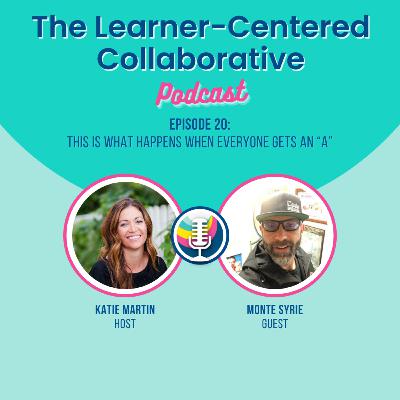
In this episode, high school English teacher Monte Syrie shares his experience and perspective on assessing student learning without traditional grading. Syrie discusses how he started "Project 180," where he gave every student an A at the beginning of the school year. He found that removing grades allowed him to focus on authentic learning and feedback. Students were motivated to learn for growth rather than a grade.
Syrie also opens up about feeling disillusioned with the education system. He explains how he continues to iterate on his teaching practice to create meaningful learning experiences, even when it means going against the status quo. Syrie believes relationships, relevance, and growth matter most. He challenges traditional notions of assessment and compliance. Overall, Syrie provides an insightful look into his journey to "teach better" every day.
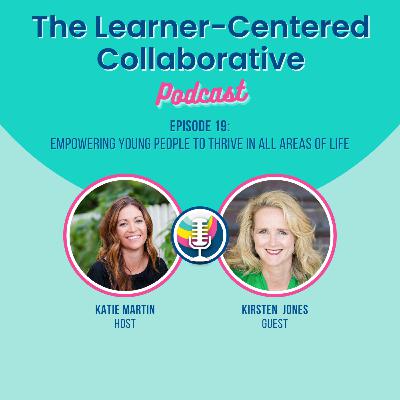
Kirsten Jones, author of Raising Empowered Athletes, joins The Learner-Centered Collaborative Podcast to share her perspective on how youth sports culture has changed over time and what parents can do to ensure their young athletes can develop lifelong knowledge and skills on the field, while avoiding burnout and remembering we play sports because it's fun.
She emphasizes moving away from the constant drive to win, instead focusing on progress, effort, and enjoyment. The conversation covers tips for parenting in a way that empowers kids through autonomy, struggle, and a growth mindset. The goal is developing happy, confident kids who can thrive on and off the field.
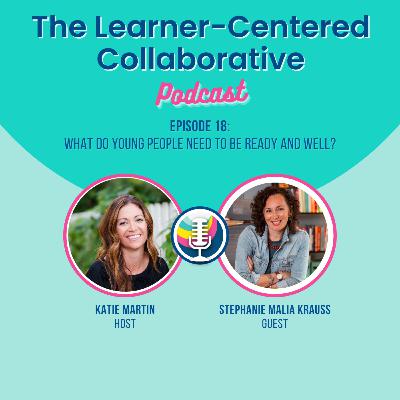
From high school dropout to teacher and social worker to published author and founder of First Quarter Strategies, Stephanie Malia Krauss knows a thing or two about the good, the bad, and the possibility of education and learning.
Listen in as Dr. Katie Martin explores Krauss's latest thinking found in her book, Whole Child, Whole Life, which explores the core question: What do young people need to be ready and well?
If you like what you hear and want to learn more from Krauss, be sure to take advantage of the 20% discount Krauss is providing The Learner-Centered Collaborative Podcast's audience.
Simply go to bit.ly/SAVEWCWL and use promo code SAVE20 at checkout.

Comments

Download from Google Play

Download from App Store
 United States