DiscoverRear Vision — How History Shaped Today
Rear Vision — How History Shaped Today
Claim Ownership

Rear Vision — How History Shaped Today

Author: ABC

Subscribed: 6,007Played: 118,931
Share

Description

Move beyond the headlines to see how the past defines our world.
451 Episodes
Reverse
Since the 1970s central banks around the world have increasingly become “independent” of government. They’ve developed that way over time to ensure that monetary policy isn’t impacted by partisan political motives. But there are those who now seek to turn the clock back and to rein in that independence. The current US president is at the front of the pack.Guests:Cristina Bodea – Professor of political science, Michigan State UniversityJohn Hawkins – Head of the Canberra School of Government, University of Canberra https://Dr Isaac GrossIsaac Gross - Senior lecturer in Economics, Monash UniversityLinks:David Marr's Late Night Live interview with biographer RICHARD VAGUE about the US banker Thomas Willing
Bangladesh is having its first free and fair election in over 18 years.Rear Vision looks back at the tumultuous history of this young nation.
Only a few decades ago China was known as the land of the bicycle – today it’s an automotive goliath. The PRC is now the world’s biggest car manufacturer and exporter. It also has the largest domestic car market. We explore how it achieved such a dramatic turnaround in only a few short decades. And what role European and American car makers inadvertently played in creating a super rival. Guests: Ilaria Mazzocco – Chinese business and economic expert, Center for Strategic and International Studies Dr Tessa Thorniley – freelance business journalist Zeyi Yang – technology journalist and senior writer, WIRED Mike Colias – Us Autos Editor, Reuters 
Since the start of the 20th century, oil has been the lifeblood of global development. Today, the story behind oil — and the politics of supplying oil and denying oil.
From sanctions to tariffs to seizing oil fields — it feels like we've entered a new age of economic warfare. But experts say we're really just returning to the past. To the time before the rules-based international order was established at the end of the Second World War.Gunboat diplomacy it seems is once again de rigueur.GuestsWilliam Alan Reinsch — Senior advisor, Center for Strategic and International StudiesSaadia Zahidid — Economist and Managing Director of the World Economic ForumMarkus Jaeger — Adjunct professor, International and Public Affairs, Columbia SIPAAbraham Newman — Professor of Government, Georgetown University. Author of Underground Empire: How America Weaponized the World Economy (Holt/Penguin 2023)Hugo Slim — Senior Research Fellow, Institute for Ethics, Law and Armed Conflict, University of Oxford
For just over three weeks huge street protests have swept across Iran and threatened to topple The Islamic Republic regime of Iran. The regime has responded with a brutal crackdown on dissent and imposing a total internet blackout. President Donald Trump has urges Iranians to keep protesting and has promised that 'help is on its way'.So how should we understand what’s happening in Iran and why does President Trump care so much. In this podcast extra we trace the story of Iran from the 1953 CIA coup that overthrow the democratically elected government of Mohammad Mosaddegh and ushered in the rule of the Shah through to the events that lead to the 1979 Iranian Revolution that ousted the Shah and the return of the Ayatollah, and finally, Iran post 1979 and the role that Iranian women have played in resisting the rule of the Ayatollahs.
Is the liberal international rules-based order – that has underpinned international relations for the past 80 years - about to collapse. The United States once its greatest champion is withdrawing funding from hundreds of international organisations, and at the same time unending the global economy by imposing of tariffs across the board. What might this mean for global security, and the global economy and can we blame Donald Trump and his wrecking ball or are there deeper forces at play?
President Trump not only want to make America great, he also wants to make it bigger and incorporating Canada as the 51st state would certainly do that – except for the fact that Canada is a sovereign nation. The story of Canada and the United States and why President Trump wants to turn Canada into the 51st States of the Union.
President Trump wants to buy or take control of Greenland from Denmark. But Denmark has made very clear, they don’t have the right to sell Greenland because Greenland is owned by the people of Greenland. Donald Trump is not the first US president to try and buy Greenland. The story of Greenland and America’s many attempts to gain control of the largest island on the planet.
As the world becomes an increasingly dangerous and uncertain place – how prepared are we in Australia to face these new challenges?  This week on Rear Vision the story of one nation that take security and preparedness very seriously – Finland
This year, the Australian Labor government changed the country's superannuation rules — and reduced the 15% tax concession on balances over 3 million dollarsIs this enough? And is our retirement system serving its purpose?
Back in 1996 Pauline Hanson – rocked Australian politics when she was elected to the House of Representative in the seat of Oxley espousing anti-Asian and anti-Aboriginal views. But her time in Canberra didn’t last. Two years later she lost her seat.Over the next two decades Hanson stood for re-election 8 time, failing at each attempt. She looked like a spent force in Australian politics. But that was wrong – today she is back in federal parliament, and her Party’s numbers are surging. How has Pauline Hanson been able to make such an incredible political comeback.
Rear Vision traces the story of the World Trade Organization from its origins as The GATT - and asks whether the WTO can still play a meaningful role in managing the trade realities of the 21st century?
Australian universities are confronting a firestorm, the loss of foreign students, the lay-off of academics, the underpayment of staff and radical changes to domestic university fees.Why is our university sector in so much trouble?Guests Raewyn Connell, professor emerita at the University of SydneyProfessor Glyn Davis, The Australian idea of a universityHannah Forsyth, historian of education and associate Professor at the University of New EnglandJames Waghorne, Senior Research Fellow in the faculty of Education at the University of MelbournePresenter and producer Annabelle Quince
Sudan is engulfed in a civil war. We know little about it, but we should. Sudan sits at the crossroad between Africa and the Middle East, and many of its neighbours, the UAE, Egypt, Russia, and Saudia Arabia – are directly or indirectly involved in this conflict.In this second part of our series on Sudan - Sudan’s deeper history and the regional factors that are shaping the current conflict.
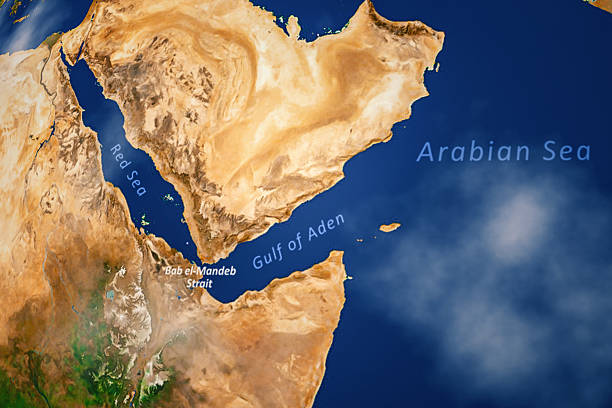
The history of the current conflict in Sudan is complex and long, but it's a history that matters. Sudan sits at the crossroad between Africa and the Middle East, it controls a strategic trading port on the red Sea, Port Sudan, it has large gold reserves and is the point where the Blue and the White Nile meet before flowing into Egypt. All of which make it important in the region.
Rear Vision puts contemporary events in their historical context.
The six countries of the Persian Gulf. From their rapid arrival on the world stage to their influence in Middle East politics today.
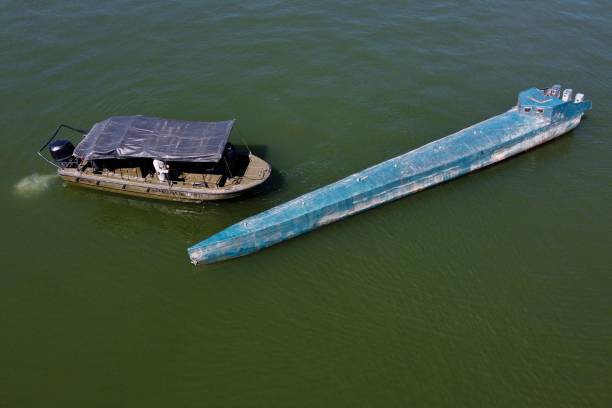
Venezuela  -  the latest country on US President Donald Trump's radar in his fight against drugs.
loading
Comments (5)

Kathy Simpson

vaccines introduces the disease.

Jan 13th
Reply

Lis Stanger

excellent podcast 5⭐

Jan 13th
Reply

Vernon Shoemaker

The Berlin Wall divided economies of luxury and subsistence. Globalization cheapened subsistence but didn't bridge the gap with luxury. When gaps in luxury leave housing, education, and healthcare as luxury goods, the zeitgeist is wall-building.

Nov 8th
Reply

Lis Stanger

another excellent podcast

May 22nd
Reply

Dilys Hoser

I found this very interesting. looking forward to the next 2 episodes.

Nov 4th
Reply