


 Claim Ownership
The Smart Community Podcast
Subscribed: 199Played: 4,929
Subscribe

© Zoe Eather
Description
"Making Smart Communities that are Accessible, Liveable and Sustainable for All"
The Smart Community Podcast is a hub where Smart and exciting people from all around the world come to discuss all things Smart City, Smart Town, Smart Region - anything that makes a place more liveable. Together we can create the Smart Community Collective.
Disclaimer: All content is representative of personal opinion only and is not associated with any company, organisation or government agency.
The Smart Community Podcast is a hub where Smart and exciting people from all around the world come to discuss all things Smart City, Smart Town, Smart Region - anything that makes a place more liveable. Together we can create the Smart Community Collective.
Disclaimer: All content is representative of personal opinion only and is not associated with any company, organisation or government agency.
380 Episodes
Reverse
Hi #SmartCommunity friends. Welcome back to this very special series here on the Smart Community Podcast, all about data storytelling as part of my PhD research.In this episode of the Smart Community podcast I have a fantastic chat with Kelly Henderson.Kelly is Team Leader of Digital Innovation at Wellington City Council in New Zealand. With a background in architecture, urban development, and major transport and infrastructure projects, Kelly now brings a digital lens to local government innovation. In this episode Kelly tells us about how Wellington City Council uses data visualisation and storytelling both internally for decision-making and externally for community engagement. Kelly and I discuss the challenges of creating consistent, accessible data dashboards across a large organisation, and the power of digital twins to make complex climate and urban data engaging for the public.We talk about the importance of testing assumptions about audiences, the tension between transparency and accessibility in data sharing, and the need for future scenario planning in urban development. We finish our chat discussing Kelly's advice about keeping data storytelling simple while embracing depth in data communication. As always, we hope you enjoy listening to this episode as much as we enjoyed making it.Connect with me via email: hello@mysmart.communityConnect with My Smart Community via LinkedIn and watch on YouTubePodcast Production by Perk DigitalThis podcast is recorded on the traditional lands of the Kabi Kabi peoples and edited on the lands of the Gaibal peoples. I pay my respects to traditional owners of country and their elders past and present. I also extend that respect to all Aboriginal and Torres Strait Islander peoples listening today. Here on the Smart Community Podcast, we talk about data, technology, communities and the future. First Nations peoples have been sharing knowledge, caring for country, and telling stories for tens of thousands of years. I honour that deep connection of storytelling and community connection as we continue our conversation together here today.DisclaimerThe views, opinions, and perspectives expressed by guests on The Smart Community Podcast are solely those of the individual speakers. They do not necessarily reflect the views, opinions, or positions of the host, Zoe Eather, or of The Smart Community Podcast as a whole.Any discussion of ideas, products, organisations, or services by podcast guests does not constitute endorsement or recommendation by the host or the podcast. Listeners are encouraged to form their own opinions and seek professional advice where appropriate.
Hi #SmartCommunity friends. Welcome back to this very special series here on the Smart Community Podcast, all about data storytelling as part of my PhD research.In this episode of the Smart Community podcast I have a brilliant discussion with Dr Dietmar Offenhuber.Dietmar is a professor at Northeastern University in Boston and chair of the Art and Design Department. With a background originally in architecture, Dietmar has spent decades exploring information visualisation.In this episode Dietmar tells us about his expanded concept of visualisation beyond traditional data mapping, and his theory of "autographic design" - which is a method for visualising the emergence of data rather than just its final representation. We talk about the importance of understanding context over generalising visualisation principles and lessons learned from bottom-up citizen data collection efforts.Dietmar and I discuss about accountability technologies, the challenges of assuming theories of change in data visualisation, and why physical traces can sometimes be more powerful than sophisticated data displays. We finish our chat discussing Dietmar's advice about keeping data storytelling simple while embracing its speculative and playful aspects. As always, we hope you enjoy listening to this episode as much as we enjoyed making it.Connect with me via email: hello@mysmart.communityConnect with The Smart Community Podcast via LinkedIn and watch on YouTubePodcast Production by Perk DigitalThis podcast is recorded on the traditional lands of the Kabi Kabi peoples and edited on the lands of the Gaibal peoples. I pay my respects to traditional owners of country and their elders past and present. I also extend that respect to all Aboriginal and Torres Strait Islander peoples listening today. Here on the Smart Community Podcast, we talk about data, technology, communities and the future. First Nations peoples have been sharing knowledge, caring for country, and telling stories for tens of thousands of years. I honour that deep connection of storytelling and community connection as we continue our conversation together here today.DisclaimerThe views, opinions, and perspectives expressed by guests on The Smart Community Podcast are solely those of the individual speakers. They do not necessarily reflect the views, opinions, or positions of the host, Zoe Eather, or of The Smart Community Podcast as a whole.Any discussion of ideas, products, organisations, or services by podcast guests does not constitute endorsement or recommendation by the host or the podcast. Listeners are encouraged to form their own opinions and seek professional advice where appropriate.
Hi #SmartCommunity friends. Welcome back to this very special series here on the Smart Community Podcast, all about data storytelling, which is part of my PhD researchIn this episode of the Smart Community podcast I have a brilliant discussion with Dr Zina O'Leary.Zina is a sociologist, methodological expert and research communication specialist bridging statistics and qualitative research, data and stories. Zina helps organisations transform data into impactful, implementable change.In this episode Zina tells us about the communication gap between research and real-world implementation and how living in an age of information abundance has implications for data storytelling. Zina and I discuss the importance of audience-focused objectives and moving beyond "what do I want to say" to "what do I want the audience to do”, plus why traditional academic writing formats fail to engage audiences.We talk about practical tools like multi-criteria analysis and scenario planning for decision-making. We finish our chat discussing Zina's advice for overcoming the biggest challenge in data visualisation - creating what works for your audience rather than what works for you. As always, we hope you enjoy listening to this episode as much as we enjoyed making it.Connect:Connect with Dr. Zina O’Leary on LinkedInConnect with me via email: hello@mysmart.communityConnect with My Smart Community via LinkedIn and watch on YouTubePodcast Production by Perk DigitalThis podcast is recorded on the traditional lands of the Kabi Kabi peoples and edited on the lands of the Gaibal peoples. I pay my respects to traditional owners of country and their elders past and present. I also extend that respect to all Aboriginal and Torres Strait Islander peoples listening today. Here on the Smart Community Podcast, we talk about data, technology, communities and the future. First Nations peoples have been sharing knowledge, caring for country, and telling stories for tens of thousands of years. I honour that deep connection of storytelling and community connection as we continue our conversation together here today.DisclaimerThe views, opinions, and perspectives expressed by guests on The Smart Community Podcast are solely those of the individual speakers. They do not necessarily reflect the views, opinions, or positions of the host, Zoe Eather, or of The Smart Community Podcast as a whole.Any discussion of ideas, products, organisations, or services by podcast guests does not constitute endorsement or recommendation by the host or the podcast. Listeners are encouraged to form their own opinions and seek professional advice where appropriate.
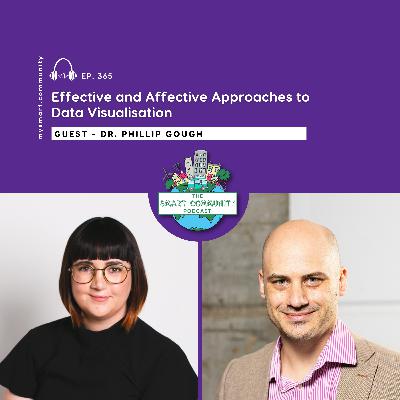
Hi #SmartCommunity friends. Welcome back to this very special series here on the Smart Community Podcast, all about data storytelling, As part of my PhD research, I’m speaking with experts from all over the world who are using data visualisations and storytelling in real world projects to support decision making and advocacy.In this episode of the Smart Community podcast I have a fantastic chat with Dr Phillip Gough.Phillip is a senior lecturer at the University of Sydney in the School of Architecture Design and Planning, specialising in human-centred design and interaction design. As a designer and researcher, he focuses on building and evaluating interactive systems, with particular expertise in biomaterials for a sustainable circular economy. In this episode Phillip tells us about his work with clinicians at Westmead Hospital developing decision support tools for emergency department triage, and his collaboration with agricultural companies using satellite data to optimise cattle movement across Australia. Phillip and I discuss the importance of understanding user workflows, the difference between effective or functional and affective or emotional data visualisation, and the challenges of working within existing technical constraints such as the software or platforms available to a particular organisation or situation.We talk about the way data visualisations can be both playful or creative, and purposeful and meaningful, plus the way data can be art, or the concept of data physicalisation. We finish our chat discussing Phillip's perspective on making invisible information visible through visualisation and his advice for exploring personal data through creative practice. As always, we hope you enjoy listening to this episode as much as we enjoyed making it.Connect with me via email: hello@mysmart.communityConnect with My Smart Community via LinkedIn and watch on YouTubePodcast Production by Perk DigitalThis podcast is recorded on the traditional lands of the Kabi Kabi peoples and edited on the lands of the Gaibal peoples. I pay my respects to traditional owners of country and their elders past and present. I also extend that respect to all Aboriginal and Torres Strait Islander peoples listening today. Here on the Smart Community Podcast, we talk about data, technology, communities and the future. First Nations peoples have been sharing knowledge, caring for country, and telling stories for tens of thousands of years. I honour that deep connection of storytelling and community connection as we continue our conversation together here today.DisclaimerThe views, opinions, and perspectives expressed by guests on The Smart Community Podcast are solely those of the individual speakers. They do not necessarily reflect the views, opinions, or positions of the host, Zoe Eather, or of The Smart Community Podcast as a whole.Any discussion of ideas, products, organisations, or services by podcast guests does not constitute endorsement or recommendation by the host or the podcast. Listeners are encouraged to form their own opinions and seek professional advice where appropriate.
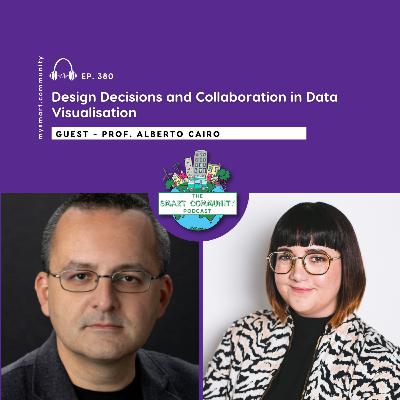
Hi #SmartCommunity friends, in this episode of the Smart Community podcast I have an incredible conversation with Prof. Alberto Cairo. Alberto is the Knight Chair in Visual Journalism at the School of Communication of the University of Miami and Director of Visualization at the Frost Institute for Data Science and Computing, plus author of several influential books including The Functional Art, The Truthful Art, How Charts Lie, and The Art of Insight.In this episode Alberto tells us about his work with the National Hurricane Center designing graphics to convey hurricane risks to Miami's diverse multilingual population. We discuss why visualisation design needs decision-making processes rather than rigid rules, and why those decisions should be subjective but never arbitrary. We talk about collaboration being essential since designers acknowledge they often know nothing about the data and must ask experts tons of questions.We finish our chat discussing the gap between expert designers and general public readers, encouraging everyone to just get started making graphics when they wish a story or spreadsheet was clearer. As always, we hope you enjoy listening to this episode as much as we enjoyed making it.Connect with me via email: hello@mysmart.communityConnect with My Smart Community via LinkedIn and watch on YouTubePodcast Production by Perk DigitalThis podcast is recorded on the traditional lands of the Kabi Kabi peoples and edited on the lands of the Gaibal peoples. I pay my respects to traditional owners of country and their elders past and present. I also extend that respect to all Aboriginal and Torres Strait Islander peoples listening today. Here on the Smart Community Podcast, we talk about data, technology, communities and the future. First Nations peoples have been sharing knowledge, caring for country, and telling stories for tens of thousands of years. I honour that deep connection of storytelling and community connection as we continue our conversation together here today.DisclaimerThe views, opinions, and perspectives expressed by guests on The Smart Community Podcast are solely those of the individual speakers. They do not necessarily reflect the views, opinions, or positions of the host, Zoe Eather, or of The Smart Community Podcast as a whole.Any discussion of ideas, products, organisations, or services by podcast guests does not constitute endorsement or recommendation by the host or the podcast. Listeners are encouraged to form their own opinions and seek professional advice where appropriate.
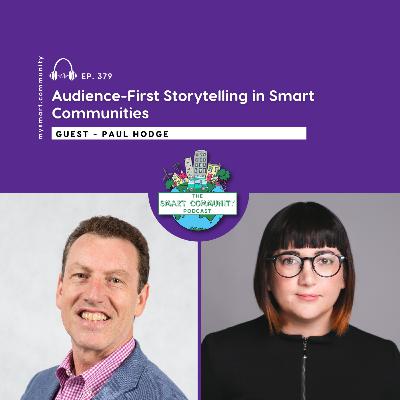
Hi #SmartCommunity friends, in this episode of the Smart Community podcast I have a brilliant discussion with Paul Hodge, also known as The Data Vis Guy. Paul is an independent consultant specialising in education and mentoring around data visualisation and storytelling, working with global organisations and state and federal government agencies.In this episode Paul tells us about the three core principles of his training: engaging and holding audience attention, delivering insights rather than just data, and bringing it all together through design thinking. We discuss the importance of defining specific audiences rather than being too general, including a detailed case study of a data asset portfolio that used a heat map to identify high-risk assets. We talk about Randy Olson's ABT structure (And, But, Therefore) as the simplest form of storytelling.We finish our chat discussing impactful visualisations like the 9/11 Memorial's algorithmically determined name placement and the Periscopic gun deaths visualisation showing lost years to society. As always, we hope you enjoy listening to this episode as much as we enjoyed making it.Connect with me via email: hello@mysmart.communityConnect with My Smart Community via LinkedIn and watch on YouTubePodcast Production by Perk DigitalThis podcast is recorded on the traditional lands of the Kabi Kabi peoples and edited on the lands of the Gaibal peoples. I pay my respects to traditional owners of country and their elders past and present. I also extend that respect to all Aboriginal and Torres Strait Islander peoples listening today. Here on the Smart Community Podcast, we talk about data, technology, communities and the future. First Nations peoples have been sharing knowledge, caring for country, and telling stories for tens of thousands of years. I honour that deep connection of storytelling and community connection as we continue our conversation together here today.DisclaimerThe views, opinions, and perspectives expressed by guests on The Smart Community Podcast are solely those of the individual speakers. They do not necessarily reflect the views, opinions, or positions of the host, Zoe Eather, or of The Smart Community Podcast as a whole.Any discussion of ideas, products, organisations, or services by podcast guests does not constitute endorsement or recommendation by the host or the podcast. Listeners are encouraged to form their own opinions and seek professional advice where appropriate.
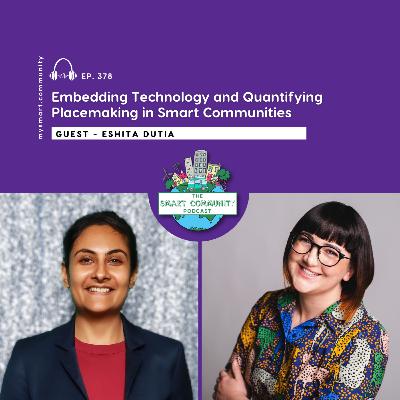
Hi #SmartCommunity friends, in this episode of the Smart Community podcast I have a wonderful conversation with Eshita Dutia. Eshita is the Principal Smart Places Officer at Cumberland City Council, bringing her background as an architect, planner, and urban designer to the smart city space with a focus on putting community first.In this episode Eshita tells us about actioning Cumberland's Smart Places Strategy and Action Plan, embedding smart technology into placemaking projects to collect data and show impact. We discuss the Guilford Laneway project as part of Transport for NSW's Safer Cities Her Way program, including how the team moved from ad hoc data collection to a streamlined Data for Places methodology. We talk about combining qualitative feedback like perception of safety surveys with quantitative data including footfall, dwell time, and economic spend.We finish our chat discussing the power of simplified data and how small-scale interventions can have significant impact when documented through data storytelling. As always, we hope you enjoy listening to this episode as much as we enjoyed making it.Connect with me via email: hello@mysmart.communityConnect with My Smart Community via LinkedIn and watch on YouTubePodcast Production by Perk DigitalThis podcast is recorded on the traditional lands of the Kabi Kabi peoples and edited on the lands of the Gaibal peoples. I pay my respects to traditional owners of country and their elders past and present. I also extend that respect to all Aboriginal and Torres Strait Islander peoples listening today. Here on the Smart Community Podcast, we talk about data, technology, communities and the future. First Nations peoples have been sharing knowledge, caring for country, and telling stories for tens of thousands of years. I honour that deep connection of storytelling and community connection as we continue our conversation together here today.DisclaimerThe views, opinions, and perspectives expressed by guests on The Smart Community Podcast are solely those of the individual speakers. They do not necessarily reflect the views, opinions, or positions of the host, Zoe Eather, or of The Smart Community Podcast as a whole.Any discussion of ideas, products, organisations, or services by podcast guests does not constitute endorsement or recommendation by the host or the podcast. Listeners are encouraged to form their own opinions and seek professional advice where appropriate.

Hi #SmartCommunity friends, in this episode of the Smart Community podcast I have a great conversation with Dr. Jessamyn Fairfield. Jessamyn is a lecturer in natural sciences at the University of Galway in Ireland. Jessamyn’s work specialises in art-science collaboration with a focus on performing arts and thinking differently about how people can engage with science, technology, and research.In this episode Jessamyn tells us about Bright Club Ireland, a research comedy variety night where she trained 300+ academics to do standup about their research. We discuss We Built the City on Rock and Coal, an improvised climate change show touring rural Ireland, including how improv creates co-created experiences with audiences and removes perceived power dynamics. We talk about using dance theater to explore concepts like particle-wave duality and local ecologies.We finish our chat discussing the perception that changing data from graphs and equations is "dumbing it down" and the importance of listening to audiences to discover if your message is actually getting across. As always, we hope you enjoy listening to this episode as much as we enjoyed making it.Oh also a little heads up that we’ll be taking a few weeks break over the Christmas/New Year season but we will be back in January with more episodes in this PhD series of The Smart Community Podcast! Connect with me via email: hello@mysmart.communityConnect with My Smart Community via LinkedIn and watch on YouTubePodcast Production by Perk DigitalThis podcast is recorded on the traditional lands of the Kabi Kabi peoples and edited on the lands of the Gaibal peoples. I pay my respects to traditional owners of country and their elders past and present. I also extend that respect to all Aboriginal and Torres Strait Islander peoples listening today. Here on the Smart Community Podcast, we talk about data, technology, communities and the future. First Nations peoples have been sharing knowledge, caring for country, and telling stories for tens of thousands of years. I honour that deep connection of storytelling and community connection as we continue our conversation together here today.
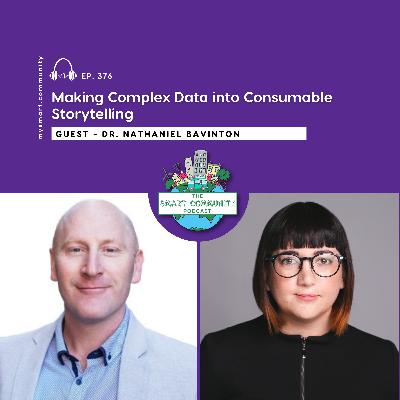
Hi #SmartCommunity friends, in this episode of the Smart Community podcast I have a great conversation with Dr. Nathaniel Bavinton, who you may remember from way back in Episode 183. Nathaniel is an urban sociologist and Associate Director at Urbis, working in their Smart and Sustainable Places team. In this episode Nathaniel tells us about data visualization as an essential tool for making complex information accessible and about COVID-era advocacy work combining data with local stories. We discuss the City Intelligence platform and designing for business communities, including lessons about simplifying map-based visualizations. We talk about creative applications of data through AR/VR experiences for Indigenous dual naming projects.We finish our chat discussing the collision of skillsets needed for effective data storytelling and the importance of thinking about narrative structure when working with data. As always, we hope you enjoyed listening to this episode as much as we enjoyed making it.Connect with me via email: hello@mysmart.communityConnect with My Smart Community via LinkedIn and watch on YouTubePodcast Production by Perk DigitalThis podcast is recorded on the traditional lands of the Kabi Kabi peoples and edited on the lands of the Gaibal peoples. I pay my respects to traditional owners of country and their elders past and present. I also extend that respect to all Aboriginal and Torres Strait Islander peoples listening today. Here on the Smart Community Podcast, we talk about data, technology, communities and the future. First Nations peoples have been sharing knowledge, caring for country, and telling stories for tens of thousands of years. I honour that deep connection of storytelling and community connection as we continue our conversation together here today.DisclaimerThe views, opinions, and perspectives expressed by guests on The Smart Community Podcast are solely those of the individual speakers. They do not necessarily reflect the views, opinions, or positions of the host, Zoe Eather, or of The Smart Community Podcast as a whole.Any discussion of ideas, products, organisations, or services by podcast guests does not constitute endorsement or recommendation by the host or the podcast. Listeners are encouraged to form their own opinions and seek professional advice where appropriate.
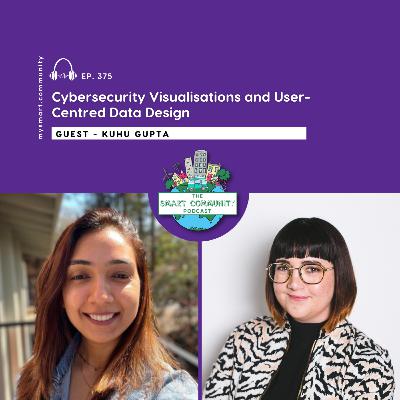
Hi #SmartCommunity friends, in this episode of the Smart Community podcast I have a brilliant discussion with Kuhu Gupta. Kuhu is a data visualisation engineer at Illumio, working at the intersection of cybersecurity data, storytelling and design.In this episode Kuhu tells us about network flow visualisations and zero trust segmentation in cybersecurity. We discuss the difference between exploratory and explanatory visualisations, including how hybrid visualisations combine network diagrams with hierarchical structures. We talk about designing for diverse user personas and the importance of personalisation in data tools.We finish our chat discussing the lessons learned from choosing parallel coordinates over Sankey diagrams and the critical importance of talking to users early and often. As always, we hope you enjoy listening to this episode as much as we enjoyed making it.Connect with me via email: hello@mysmart.communityConnect with My Smart Community via LinkedIn and watch on YouTubePodcast Production by Perk DigitalThis podcast is recorded on the traditional lands of the Kabi Kabi peoples and edited on the lands of the Gaibal peoples. I pay my respects to traditional owners of country and their elders past and present. I also extend that respect to all Aboriginal and Torres Strait Islander peoples listening today. Here on the Smart Community Podcast, we talk about data, technology, communities and the future. First Nations peoples have been sharing knowledge, caring for country, and telling stories for tens of thousands of years. I honour that deep connection of storytelling and community connection as we continue our conversation together here today.DisclaimerThe views, opinions, and perspectives expressed by guests on The Smart Community Podcast are solely those of the individual speakers. They do not necessarily reflect the views, opinions, or positions of the host, Zoe Eather, or of The Smart Community Podcast as a whole.Any discussion of ideas, products, organisations, or services by podcast guests does not constitute endorsement or recommendation by the host or the podcast. Listeners are encouraged to form their own opinions and seek professional advice where appropriate.
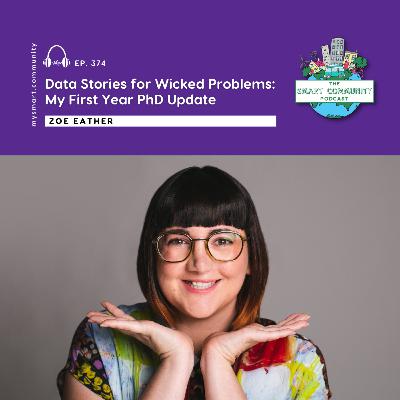
Hi #SmartCommunity friends, in this special episode of the Smart Community podcast, I'm sharing an update on my first year of PhD research at the University of Technology Sydney's Transdisciplinary School.In this episode I tell you about my research focus shift from AI to persuasive data storytelling and how we can use data stories to engage communities in addressing complex societal challenges. As always, we hope you enjoyed listening to this episode as much as we enjoyed making it.Connect with me via email: hello@mysmart.communityConnect with My Smart Community via LinkedIn or Twitter and watch on YouTubePodcast Production by Perk DigitalThis podcast is recorded on the traditional lands of the Kabi Kabi peoples and edited on the lands of the Gaibal peoples. I pay my respects to traditional owners of country and their elders past and present. I also extend that respect to all Aboriginal and Torres Strait Islander peoples listening today. Here on the Smart Community Podcast, we talk about data, technology, communities and the future. First Nations peoples have been sharing knowledge, caring for country, and telling stories for tens of thousands of years. I honour that deep connection of storytelling and community connection as we continue our conversation together here today.
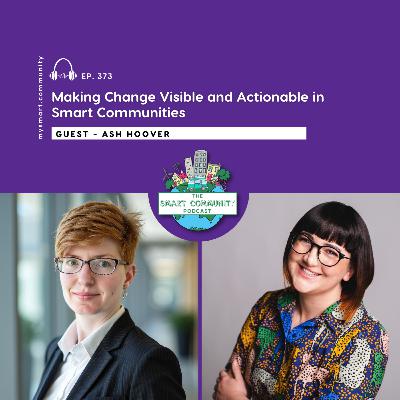
Hi #SmartCommunity friends, in this episode of the Smart Community podcast I have a brilliant discussion with Ash Hoover. Ash is a scientist turned technologist and AI R&D Lead at Planet Labs, an earth imaging company. They work at the intersection of artificial intelligence and earth observation, analysing millions of satellite images to understand how our planet is changing over time.In this episode Ash tells us about using data visualisation and storytelling to make planetary change visible and actionable. We discuss the power of video maps and animated visualisations, including how time has become a critical dimension in their work.We talk about cognitive bias in data interpretation, the importance of including diverse voices and perspectives in data storytelling, and the human stories behind the data, from wildfire trauma to the limitations of viewing Earth from space.We finish our discussion with the evolving relationship between AI and data visualisation, the importance of human-in-the-loop decision making, and how collective humanity has tremendous power when we tell stories that are accessible and actionable. As always, we hope you enjoy listening to this episode as much as we enjoyed making it.The views and opinions expressed by Ash in this episode are their own and do not represent those of their employer or any organisation they are affiliated with. All discussions are shared in a personal capacity.Connect with me via email: hello@mysmart.communityConnect with My Smart Community via LinkedIn or Twitter and watch on YouTubePodcast Production by Perk Digital This podcast is recorded on the traditional lands of the Kabi Kabi peoples and edited on the lands of the Gaibal peoples. I pay my respects to traditional owners of country and their elders past and present. I also extend that respect to all Aboriginal and Torres Strait Islander peoples listening today. Here on the Smart Community Podcast, we talk about data, technology, communities and the future. First Nations peoples have been sharing knowledge, caring for country, and telling stories for tens of thousands of years. I honour that deep connection of storytelling and community connection as we continue our conversation together here today.

Hi #SmartCommunity friends, in this episode of the Smart Community podcast I have a brilliant discussion with Professor Nicole Kalms.Nicole is a professor at Monash University and describes herself as a practice-based researcher interested in doing things in the real world. Trained as an architect, she leads the XYX Lab at Monash University, which focuses on gender-sensitive design with a specific focus on public places. Her work examines women's experiences and the experiences of LGBTQIA+ communities, thinking about how we can make change through design interventions in urban spaces.In this episode Nicole tells us about mobilising the power of data to intersect with storytelling, particularly around gendered violence and minoritised people's experiences in cities. Nicole and I discuss the HyperSext City exhibition that uses beautiful graphic design to present confronting data about urban safety, and the YourGround crowdsourcing project mapping safe and unsafe experiences across Victoria and New South Wales.We talk about the importance of making data persuasive and publicly available, the challenge of balancing aesthetic appeal with difficult content, and the role of design in both data collection and communication. We finish our chat discussing Nicole's advice about breaking data out of conventions and counting what matters. As always, we hope you enjoy listening to this episode as much as we enjoyed making it.Connect with me via email: hello@mysmart.communityConnect with My Smart Community via LinkedIn and watch on YouTubePodcast Production by Perk DigitalThis podcast is recorded on the land of the Kabi Kabi peoples and edited on Gaibal country. I pay my respects to traditional owners of country and their elders past and present. I also extend that respect to all Aboriginal and Torres Strait Islander peoples listening today. Here on the Smart Community Podcast, we talk about data, technology, communities and the future. First Nations peoples have been sharing knowledge, caring for country, and telling stories for tens of thousands of years. I honour that deep connection of storytelling and community connection as we continue our conversation together here today.DisclaimerThe views, opinions, and perspectives expressed by guests on The Smart Community Podcast are solely those of the individual speakers. They do not necessarily reflect the views, opinions, or positions of the host, Zoe Eather, or of The Smart Community Podcast as a whole.Any discussion of ideas, products, organisations, or services by podcast guests does not constitute endorsement or recommendation by the host or the podcast. Listeners are encouraged to form their own opinions and seek professional advice where appropriate.
Hi #SmartCommunity friends, in this episode of the Smart Community podcast I have a brilliant discussion with Dr. Nina Valkanova. Nina is a design strategist with 20 years experience in digital innovation across consultancies, labs and applied research. In this episode Nina tells us about her research on civic data visualisations in public spaces and how they can shift urban technologies from purely efficiency-driven environments to participation and reflection-based learning settings. Nina and I discuss the different approaches needed for diverse audiences - from passive public audiences to commercial stakeholders to students in educational settings.We talk about the role of aesthetics and emotion in creating curiosity and engagement, the ethical implications of displaying public data, and the challenges of balancing meaning with aesthetic appeal. We finish our chat discussing Nina's advice about embracing data storytelling for interpretation rather than just comprehension and the importance of making the unspoken visible. As always, we hope you enjoy listening to this episode as much as we enjoyed making it.Connect with me via email: hello@mysmart.communityConnect with My Smart Community via LinkedIn and watch on YouTubePodcast Production by Perk DigitalThis podcast is recorded on the land of the Kabi Kabi peoples and edited on Gaibal country. DisclaimerThe views, opinions, and perspectives expressed by guests on The Smart Community Podcast are solely those of the individual speakers. They do not necessarily reflect the views, opinions, or positions of the host, Zoe Eather, or of The Smart Community Podcast as a whole.Any discussion of ideas, products, organisations, or services by podcast guests does not constitute endorsement or recommendation by the host or the podcast. Listeners are encouraged to form their own opinions and seek professional advice where appropriate.
Hi #SmartCommunity friends. Welcome back to this very special series here on the Smart Community Podcast, all about data storytelling, As part of my PhD research, I've been speaking with experts from all over the world who are using data visualisations and storytelling in real world projects to support decision making and advocacy.In this episode of the Smart Community podcast I have a great conversation with friend of the podcast, Prof Marcus Foth. Marcus has been on the show twice before, in Episode 230 and also way back in Episode 4!Marcus is a Professor in urban informatics and strategic design at the QUT School of Design at Queensland University of Technology in Brisbane. With extensive experience at the intersection of people, place, and technology, he leads research into smart city infrastructure adoption, sustainability approaches, and data governance issues.In this episode Marcus tells us about his recent work analysing the Brisbane 2032 Olympics stadium controversy and how a community group used data from other stadiums to reveal that the narrative presented for the proposed stadium may not be telling the whole story. We talk about the role of sophisticated data visualisation consultancies in creating narratives that serve corporate lobbying interests over community needs and the how increasing accessibility of AI tools may help democratise data visualisation and address the skills, knowledge and resources gap for grassroots advocacy groups.We talk about some impactful data visualisation examples from ABC's investigative journalism that combat misinformation, as well as data governance challenges and lack of data literacy in the community. We finish our chat discussing Marcus' perspective on the need for critical thinking when using new data tools and the importance of civic engagement in our democracy. As always, we hope you enjoy listening to this episode as much as we enjoyed making it.Connect with me via email: hello@mysmart.communityConnect with My Smart Community via LinkedIn and watch on YouTubePodcast Production by Perk DigitalThis podcast is recorded on the traditional lands of the Kabi Kabi peoples and edited on the lands of the Gaibal peoples. I pay my respects to traditional owners of country and their elders past and present. I also extend that respect to all Aboriginal and Torres Strait Islander peoples listening today. Here on the Smart Community Podcast, we talk about data, technology, communities and the future. First Nations peoples have been sharing knowledge, caring for country, and telling stories for tens of thousands of years. I honour that deep connection of storytelling and community connection as we continue our conversation together here today.DisclaimerThe views, opinions, and perspectives expressed by guests on The Smart Community Podcast are solely those of the individual speakers. They do not necessarily reflect the views, opinions, or positions of the host, Zoe Eather, or of The Smart Community Podcast as a whole.Any discussion of ideas, products, organisations, or services by podcast guests does not constitute endorsement or recommendation by the host or the podcast. Listeners are encouraged to form their own opinions and seek professional advice where appropriate.
Hi #SmartCommunity friends, in this episode of the Smart Community podcast I have a fantastic chat with Jack Zhao.Jack is a designer and maker of data visualisation with over 15 years of experience in research and industry. He co-founded Small Multiples with his partner Andrea Lau, where they help clients across all industries and sectors make data useful. Their recent focus has been on environment and sustainability projects, recognising the urgent need for attention in this space given the ongoing climate situation globally.In this episode Jack tells us about Small Multiples' work on environmental projects including helping councils measure recycling accessibility through spatial data visualisation and tracking litter across New South Wales for the Environmental Protection Agency. Jack and I discuss their design process from initial client conversations through to deployment, emphasising the importance of understanding audience needs and iterating based on feedback.We talk about memorable examples including Periscopic’s powerful US gun deaths visualisation and Small Multiples' own Census Explorer project spanning three Australian censuses. We finish our chat discussing Jack's advice about leveraging AI to break capacity bottlenecks while focusing on specific audiences rather than designing for generic users. As always, we hope you enjoy listening to this episode as much as we enjoyed making it.Connect with Jack Zhao on LinkedIn Connect with me via email: hello@mysmart.communityConnect with My Smart Community via LinkedIn and watch on YouTubePodcast Production by Perk DigitalThis podcast is recorded on the traditional lands of the Kabi Kabi peoples and edited on the lands of the Gaibal peoples. I pay my respects to traditional owners of country and their elders past and present. I also extend that respect to all Aboriginal and Torres Strait Islander peoples listening today. Here on the Smart Community Podcast, we talk about data, technology, communities and the future. First Nations peoples have been sharing knowledge, caring for country, and telling stories for tens of thousands of years. I honour that deep connection of storytelling and community connection as we continue our conversation together here today.DisclaimerThe views, opinions, and perspectives expressed by guests on The Smart Community Podcast are solely those of the individual speakers. They do not necessarily reflect the views, opinions, or positions of the host, Zoe Eather, or of The Smart Community Podcast as a whole.Any discussion of ideas, products, organisations, or services by podcast guests does not constitute endorsement or recommendation by the host or the podcast. Listeners are encouraged to form their own opinions and seek professional advice where appropriate.
Hi #SmartCommunity friends. Welcome back to this very special series here on the Smart Community Podcast, all about data storytelling. As part of my PhD research, I've been speaking with experts from all over the world who are using data visualisations and storytelling in real world projects to support decision making and advocacy.In today's episode of the Smart Community Podcast, I'm speaking with Rocio Rodriguez Almaraz. I actually met Rocio on the Homeward Bound leadership program, and we spent some time in Antarctica together. Rocio is a campaign strategist, documentary producer and project manager focused on climate change campaigns and projects, based in Argentina.Rocio and I discuss the role and importance of data visualisation and storytelling in advocacy, strategies to use data to engage audiences and create impact, as well as the challenges faced by NGOs and small organisations in communicating effectively due to limited resources. We talk about the need to tailor communication and data visualisations to different audiences and contexts, and the ways digital tools can be used in direct community engagement. Rocio shares some examples of impactful data visualisations and their influences on decision-making and public awareness, and reflects on the complexities of measuring impact and attributing change to specific communication efforts.We finish our chat with Rocio's advice about using data visualisation to prioritise what's most important to communicate. As always, we hope you enjoy listening to this episode as much as we enjoyed making it.Connect with Rocio on LinkedIn Connect with me via email: hello@mysmart.communityConnect with My Smart Community via LinkedIn and watch on YouTubePodcast Production by Perk DigitalThis podcast is recorded on the traditional lands of the Kabi Kabi peoples and edited on the lands of the Gaibal peoples. I pay my respects to traditional owners of country and their elders past and present. I also extend that respect to all Aboriginal and Torres Strait Islander peoples listening today. Here on the Smart Community Podcast, we talk about data, technology, communities and the future. First Nations peoples have been sharing knowledge, caring for country, and telling stories for tens of thousands of years. I honour that deep connection of storytelling and community connection as we continue our conversation together here today.DisclaimerThe views, opinions, and perspectives expressed by guests on The Smart Community Podcast are solely those of the individual speakers. They do not necessarily reflect the views, opinions, or positions of the host, Zoe Eather, or of The Smart Community Podcast as a whole.Any discussion of ideas, products, organisations, or services by podcast guests does not constitute endorsement or recommendation by the host or the podcast. Listeners are encouraged to form their own opinions and seek professional advice where appropriate.
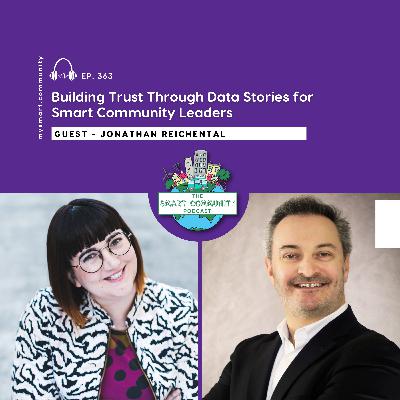
Hi #SmartCommunity friends! Welcome to a very special series here on the Smart Community Podcast, all about data storytelling. As part of my PhD research, I've been speaking with experts from all over the world who are using data visualisations and storytelling in real world projects to support decision making and advocacy.This work is deeply aligned with the smart community ethos, bringing people on the journey as we use data to communicate ideas, share insights, and ultimately make better, more informed decisions together. In this episode of the #SmartCommunity Podcast, we are kicking off the series with friend of the pod and repeat guest, Jonathan Reichental. He’s been on the show 3 times before, in Episodes 77, 251 and 275. I’ll pop links to those in the show notes if you want to go and listen. Jonathan is a technologist, educator, author and entrepreneur whose career spans media, city government, business and education, so he brings a wealth of insight and experience to this conversation. Jonathan and I discuss the role of data visualisation in technology and business, the key components of effective data storytelling, and the importance of understanding and considering your audience. We explore some of the challenges and issues with data visualisation, such as lack of training and tools, incorrect or outdated data, information overload, and data misuse. Jonathan tells us the elements that make data visualisations impactful and shares some examples to check out, too. We finish our chat discussing Jonathan’s advice and recommendations for effective data storytelling. As always, we hope you enjoy listening to this episode as much as we enjoyed making it.Connect with me via email: hello@mysmart.communityConnect with My Smart Community via LinkedIn and watch on YouTubePodcast Production by Perk DigitalThis podcast is recorded on the traditional lands of the Kabi Kabi peoples and edited on the lands of the Gaibal peoples. I pay my respects to traditional owners of country and their elders past and present. I also extend that respect to all Aboriginal and Torres Strait Islander peoples listening today. Here on the Smart Community Podcast, we talk about data, technology, communities and the future. First Nations peoples have been sharing knowledge, caring for country, and telling stories for tens of thousands of years. I honour that deep connection of storytelling and community connection as we continue our conversation together here today.DisclaimerThe views, opinions, and perspectives expressed by guests on The Smart Community Podcast are solely those of the individual speakers. They do not necessarily reflect the views, opinions, or positions of the host, Zoe Eather, or of The Smart Community Podcast as a whole.Any discussion of ideas, products, organisations, or services by podcast guests does not constitute endorsement or recommendation by the host or the podcast. Listeners are encouraged to form their own opinions and seek professional advice where appropriate.

Hi #SmartCommunity friends! I sat down with my podcast producer Ellen to record another update episode. This time we chatted about my Antarctic adventure through the Homeward Bound leadership program, what I learned about myself and community building in the process, and what's next for the Smart Community Podcast as I embark upon my Ph.D this year.As always, we hope you enjoy listening to this episode as much as we enjoyed making it. Talk to you soon!Find the full show notes at https://zoeeather.com/podcast/ Connect with me via email: hello@mysmart.communityConnect with My Smart Community via LinkedIn or Twitter and watch on YouTubePodcast Production by Perk Digital
Hi #SmartCommunity friends! I sat down with my podcast producer Ellen to record another update episode. 2024 was a very big year personally and professionally, so we chat about that and what’s coming up in the next 12 months.
Talk to you soon!
Find the full show notes at https://zoeeather.com/podcast/
Connect with me via email: hello@mysmart.community
Connect with My Smart Community via LinkedIn or Twitter and watch on YouTube
Podcast Production by Perk Digital

Comments

Download from Google Play

Download from App Store
 United States