DiscoverThe Cove Podcast
The Cove Podcast
Claim Ownership

The Cove Podcast

Author: The Cove

Subscribed: 59Played: 1,595
Share

Description

The Cove Podcast brings you candid, unfiltered conversations with the leaders, soldiers, and scholars shaping the Australian Army today. Each week, our host CAPT Todd Lempa sits down with uniformed officers and soldiers leading the change in the Australian Army as well as academics and international partners to unpack what modern warfare demands.


From redefining leadership and resilience in the modern Army to exploring lessons from combat operations, command culture, human performance, and the future of land power, The Cove Podcast reveals how the Australian Army thinks, learns, and fights. Whether it’s a Regimental Sergeant Major reflecting on combat, a general discussing Warrior Culture, or a psychologist unpacking mental readiness—each episode delivers a grounded look at the people and ideas driving the Australian Army forward.


Insightful, grounded, and authentic — this is where the Australian Army thinks out loud.

180 Episodes
Reverse
“One foot in the snow, here we go.” In this week’s episode, the host sits down with WO2 Will McGovern (2/14 Light Horse Regiment) and SGT Nathan Groen (1st Battalion, the Royal Australian Regiment) to explore their recent deployment to Alaska as Observer-Trainers with the 11th Airborne Division’s “Arctic Angels.” SGT Groen is the Direct Fire Support Weapon’s Platoon Sergeant at 1 RAR and WO2 Will McGovern is a Squadron Sergeant Major at 2/14 LHR. In January 2025, they supported the 11th Airborne Division’s rotation through the U.S. Army’s newest Arctic combat training centre, Joint Pacific Multinational Readiness Center (JPMRC), designed to test war-fighting capability in one of the harshest environments on Earth. H-hour was at 0001 on 23 January 2025 with a large-scale airborne insertion: paratroopers from the 2nd Infantry Brigade Combat Team (Airborne) jumped from C-130s and C-17s into Army Allen Airfield and Drop Zone Buffalo. Their mission: seize and secure the airfield, establish a foothold against not just an opposing force but one of the most unforgiving climates imaginable. Temperatures plunged below –35 °C as soldiers fought to gain positions, build defensive works, and operate under deep snow and arctic winds. WO2 McGovern and SGT Groen explain how they were selected for this rotation, how they integrated with an allied formation and contributed as Observer-Trainers, and where they as the two Australian on the exercise tried to add insight in the joint, multinational context. They reflect on the logistical challenge of sustaining operations in sub-zero conditions, the physical and mental strain on troops, and the adjustments required in tactics, movement, and sustainment to remain effective when the environment is as lethal as the enemy. Beyond the drop and snow-covered patrols, we dive into what Arctic warfare demands: from cold-weather equipment and sleep systems, through mobility on snow and skis/ahkios, to the scale of U.S warfighting. JPMRC 25-02 isn’t just a rotation — it’s part of a broader push by the U.S. Army and its allies to re-learn Arctic warfighting skills lost in two decades focused on counterinsurgency. This episode offers a rare window into modern Arctic combat training — combining parachute assaults, joint multinational forces, and the brutal test of sub-zero environments. For planners and leaders in Australia’s Army, it’s a prompt to ask: are we ready to fight in the world’s harshest environments? ————————————————————————— Subscribe to The Cove Podcast to make sure you do not miss out on any of the heavy-hitting content we have planned.
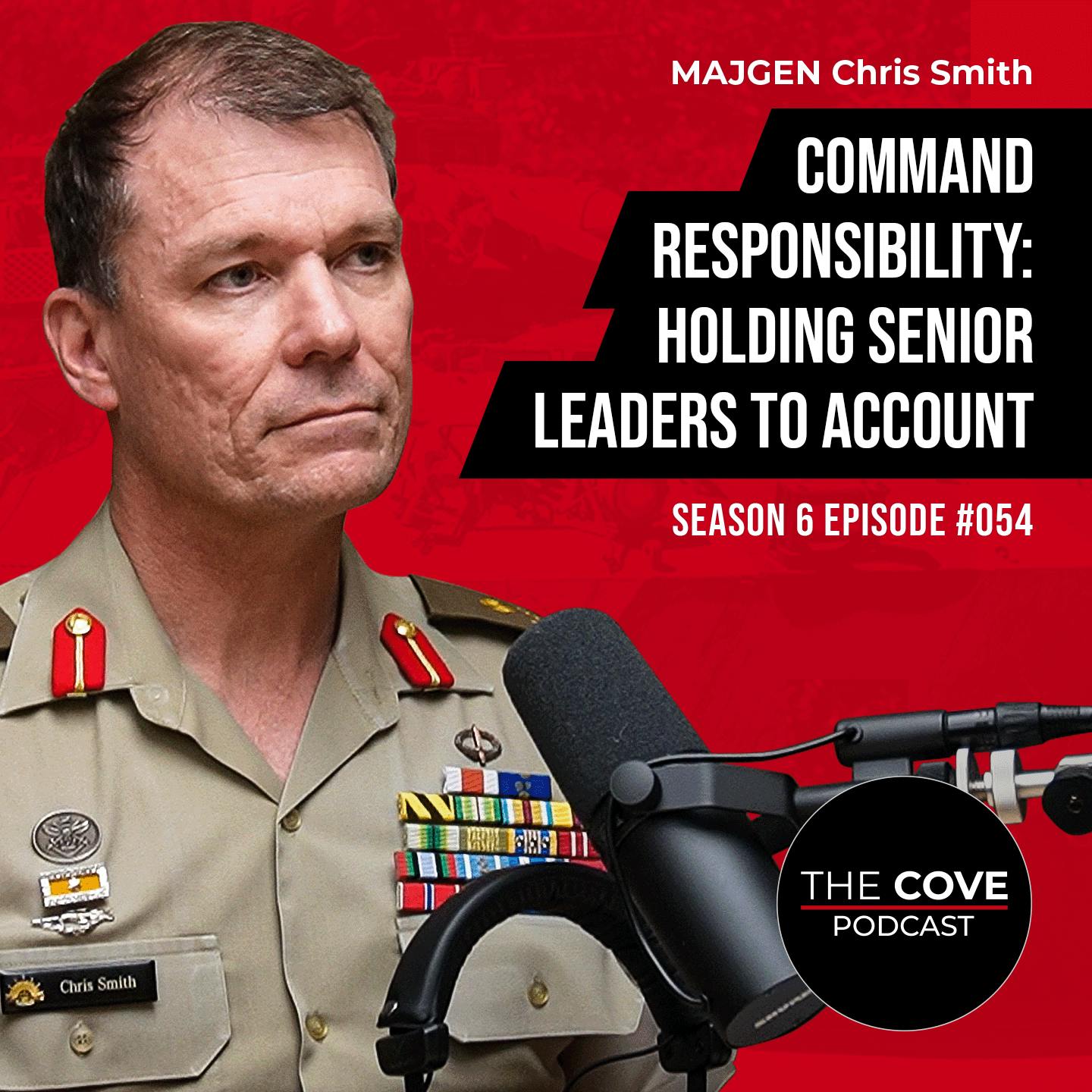
‘[W]hat we're trying to do is restore what has been a loss of trust for a number of reasons over the recent decade or so between generals and rank and file to be frank ...’ In this week’s episode, CAPT Todd Lempa sits down with Major General Chris Smith, the Deputy Chief of the Australian Army, to discuss command responsibility and the uncomfortable question of how armies — including our own — hold senior leaders to account. Building on his earlier episode on Warrior Culture, MAJGEN Smith reflects on the Australian Army’s struggle, common across many militaries, to recognise and act on professional failure or a lack of success at senior levels. Drawing inspiration from Thomas Ricks’ The Generals, he explores how accountability in command has eroded over time and what that means for trust and confidence in the profession of arms. We examine the 2012 Camp Bastion attack in Helmand Province, where Taliban fighters infiltrated the perimeter, killing two US Marines, wounding several others, and destroying or damaging eight USMC AV-8B Harrier aircraft — one of the most significant single-day losses of American airpower since Vietnam. The breach occurred after elements of the UK-led security force thinned out perimeter manning to support operations elsewhere. While no British officers were held to account, the United States Marine Corps relieved two generals of command following the attack. MAJGEN Smith uses this event to frame a discussion on vicarious responsibility, arguing that senior leaders sometimes need to step aside — not because of personal culpability, but to restore trust and confidence in their institution. He acknowledges that the Brereton Inquiry put a lot of attention on the NCOs and troops, but that no senior leaders were held to account. In his view, this reveals a broader failure to uphold the principles of command responsibility that underpin the trust soldiers place in their leaders. Across the episode, MAJGEN Smith challenges senior leaders to confront a hard truth: that leadership accountability cannot stop at the tactical level if the profession is to maintain legitimacy, trust, and moral authority. ————————————————————————— Subscribe to The Cove Podcast to make sure you do not miss out on any of the heavy hitting content we have planned.
‘If an adversary is operating in a highly enabled headquarters and we’re not, we will fall behind instantly ...’ In this week’s episode, the host sits down with MAJ Tom Berry, a Signals Officer posted to Headquarters Joint Operations Command (HQJOC), to unpack the realities of jamming, machine learning, and the future of command-and-control on the modern battlefield. Building on a recent episode titled Tactical Communications with CAPT Jack Virtue, this conversation shifts from line-of-sight and beyond-line-of-sight communications to the complex world of electronic warfare, adaptation, and decision-making advantage. We break down the assumptions many of us still hold about jamming — including the belief that enemy EW will simply “switch off” our command posts and force us back to maps and talcs. MAJ Berry explains why jamming rarely works like that, how most systems retain offline data even when real-time feeds are denied, and why jamming is a double-edged sword that exposes the emitter as much as the target. From GPS and SATCOM spoofing to tactical-level EW effects and A2/AD systems, he outlines the conditions, power requirements, and vulnerabilities that determine how and when jamming is actually effective. The episode then explores mesh networks, distributed architectures, and what resilient, reconfigurable communications webs can offer a formation — and their limits. We discuss why mesh networks reduce bandwidth stress on BLOS communications, how they support tempo, and why even the best mesh still depends on a reliable BLOS hop. Finally, we dive into machine learning and its role in enabling commanders and staff. MAJ Berry explains how ML helps find “needles in haystacks,” reduces the staff effort required to decypher useful information, and gives command post staff and commanders the space to create shock, surprise, and decision advantage. We also examine the tension between a commander’s information requirements and the creeping “1000-mile screwdriver” — what leaders need to see versus what they want to see. This episode challenges long-held assumptions about jamming and machine learning — and argues that if we consistently drop to map-and-compass we will be left behind by those armies embracing machine learning to accelerate their decision-making speed. ————————————————————————— Subscribe to The Cove Podcast to make sure that you do not miss out on any of the heavy hitting content we have planned.
‘'[T]here were .50 cal rounds coming off of Technicals that were ripping through the accommodation buildings…’ In this week’s episode, CAPT Todd Lempa sits down with Warrant Officer Class One Chris Sharp, Regimental Sergeant Major of the 1st Armoured Regiment, to talk about Operation ASLAN, getting selected as the RSM of the Army’s first Combat Experimentation regiment and training soldiers in Africa to transforming an armoured regiment at home, WO1 Sharp’s story is one of challenge, adaptation, and belief in people over platforms. He reflects on his deployment to South Sudan on Operation ASLAN, where he served as a Training Warrant Officer embedded with the United States military, navigating the complexities of operating alongside multinational partners in one of the most demanding environments on Earth. Returning to Australia, he learned he’d been selected as the RSM of the 1st Armoured Regiment — a proud moment quickly tempered by peers questioning whether he was going to a “real armoured combat regiment.” What followed was an exciting and fast paced change. He began 2025 watching every armoured vehicle in the compound loaded onto trucks and driven away, leaving behind an empty regiment compound. But by the end of the year, his soldiers had delivered one of the standout performances of Exercise Talisman Sabre 25, using uncrewed aerial systems, armed First Person View (FPV) drones, and automated M113s to outmanoeuvre and outthink the enemy party. The result was not just tactical success — it was a cultural one, with soldiers begging to stay in the unit they had helped reinvent. This episode captures what leadership looks like when tradition meets transformation — how an RSM can build pride, purpose, and lethality in an era where the definition of “armoured” is changing fast. ————————————————————————— Subscribe to The Cove Podcast to make sure that you do not miss out on any of the heavy hitting content we have planned.
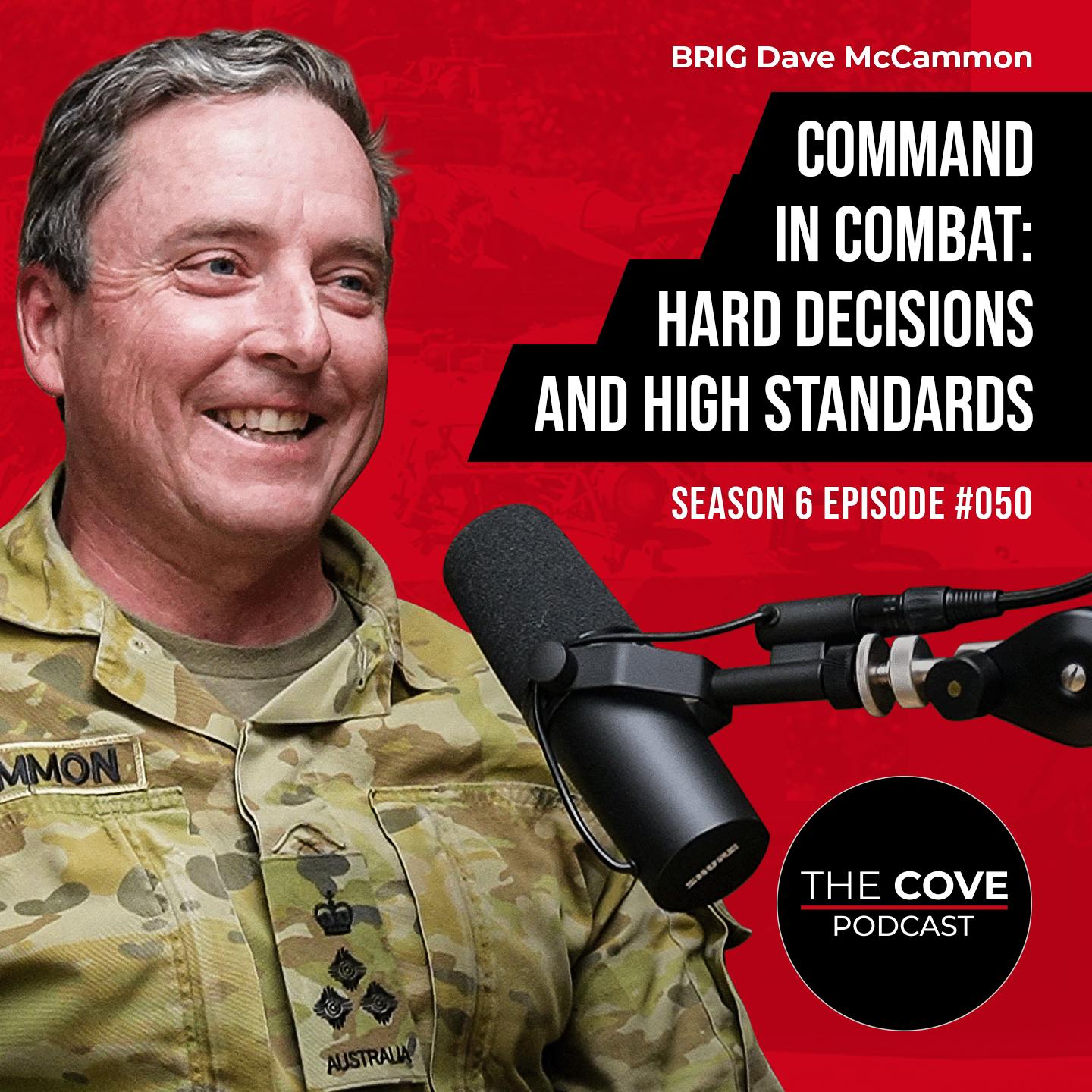
‘Nothing narrows the focus more than being properly shot at ...’ In this week’s episode, the host sits down with Brigadier David McCammon, the Commander of the Australian Army Cadets and Head of Corps – Infantry, to explore what it truly means to prepare for combat, be in combat, and return from it. Few senior officers have deployed so frequently at the tactical level. From commanding platoons and companies to leading a battalion and a brigade on operations, BRIG McCammon’s operational experience stretches from East Timor and Kosovo to Afghanistan, Iraq, and the Middle East. He reflects on the lessons forged through over two decades of command: the importance of preparation, discipline, and maintaining standards even when they’re unpopular; the leadership required to make hard calls under pressure; and the enduring truth that combat exposes character—it doesn’t create it. We unpack the “70% solution,” why morale isn’t about keeping people happy but giving them something to fight for, and what it means to be the “first adult in the room” when chaos breaks out. Drawing on his experiences commanding Australia’s first Operational Mentor and Liaison Team in Afghanistan, Task Group Taji, and most recently JTF 1118 during Operation Beech, BRIG McCammon discusses accountability, resilience, and the moral courage required of leaders in war. He offers blunt advice on why he prefers to reign in a stallion as appose to flogging a donkey and what Australia’s next generation of soldiers and officers must do to be ready for the wars ahead, even if there is no obvious deployment date. ————————————————————————— Subscribe to The Cove Podcast to make sure you do not miss out on any of the heavy-hitting content we have planned.
“It would be so much easier to say, ‘hey, I was riding on my white horse on the road to Damascus and I got struck down by lightning... but that’s definitely not what occurred.’” In this week’s episode, the host sits down with Chaplain Gav Keating, whose journey through the Australian Army spans from the 2nd Battalion, the Royal Australian Regiment, to the Special Air Service Regiment, to commanding the 3rd Battalion, the Royal Australian Regiment and leading Task Group Taji 6 as a Colonel on Operation OKRA—before making the shift to study theology and become an Army Chaplain. Now serving as the padre at 5/7 Battalion, the Royal Australian Regiment, Chaplain Keating reflects on the link between leadership, purpose, and what he calls spiritual toughness. We explore how spirituality—defined not as religion, but as the search for meaning, purpose, and identity—underpins resilience and fighting spirit in soldiers. Drawing on his experience leading troops in combat and counselling them in peace, Chaplain Keating discusses the “big three” questions posed by Rabbi Jonathan Sacks: Who am I? Why am I here? How then shall I live? He uses case studies from his own operational experience and Senator John McCain’s time as a prisoner of war in Vietnam to explore what keeps people going when others are deliberately trying to break them. From the moral component of fighting power to the power of reflection, we unpack how spiritual strength becomes a force multiplier in the profession of arms. Chaplain Keating introduces his concept of a Spiritual Appreciation—turning the Military Appreciation Process inward—and explains what happens when institutions fail to live up to the trust their people place in them. He closes with a challenge: to take the time to write a personal mission statement and define what truly matters in your life. In a world of relentless tempo and external noise, he argues that clarity of purpose is not something that comes easy—but that it’s the foundation of resilience, leadership, and a strong fighting spirit. ————————————————————————— Subscribe to The Cove Podcast to make sure you do not miss out on any of the heavy-hitting content we have planned.
'These people aren’t ghosts, as much as they attempt to be or seem like it ...’ In this week’s episode, we sit down with MAJ Paul Patty, an Intelligence Officer in the Australian Army, to unpack counterintelligence (CI) in modern conflict. MAJ Patty is an expert in counterintelligence, and his skills have been relied upon in both the private and government sectors. We open with two stark contrasts: a contemporary case study on Ukraine’s operational planning and the consequences when CI is poorly conducted, set against the UK’s Double-Cross system in the Second World War—a successful approach to turn Axis spies to report bogus information back to Germany. We also examine how Russian services seeded spies inside Ukraine and across other post-Soviet states to run grey-zone deception operations, leaking operational plans back to Moscow and distorting Ukrainian decision cycles before contact. We also confront a hard truth at home: Australians are not immune to recruitment by Foreign Intelligence Services. The classic levers of MICE—money, ideology, coercion, and ego—remain timeless vulnerabilities. Understanding how these levers are pulled, and recognising them early in ourselves and our teams, is essential to preventing insiders from becoming access points into our operations. From there, MAJ Patty lays out what CI is (and isn’t): not just security compliance, but a campaign to degrade, deny, and manipulate an adversary’s understanding of our intent, capabilities, and movements. We explore how offensive and defensive CI intersect—neutralising hostile HUMINT networks, protecting sensitive capabilities, countering technical collection, and planning for counter-sabotage and partner-force integrity—and why CI effects must be integrated into operations from the start, not bolted on at the end. Whether you’re a junior leader looking for practical CI habits or a planner figuring out how to wire CI into targeting, deception, and signature management, this conversation offers a clear, hard-edged primer on how to fight for decision advantage when it matters most. ————————————————————————— Subscribe to The Cove Podcast to make sure that you do not miss out on any of the heavy hitting content we have planned
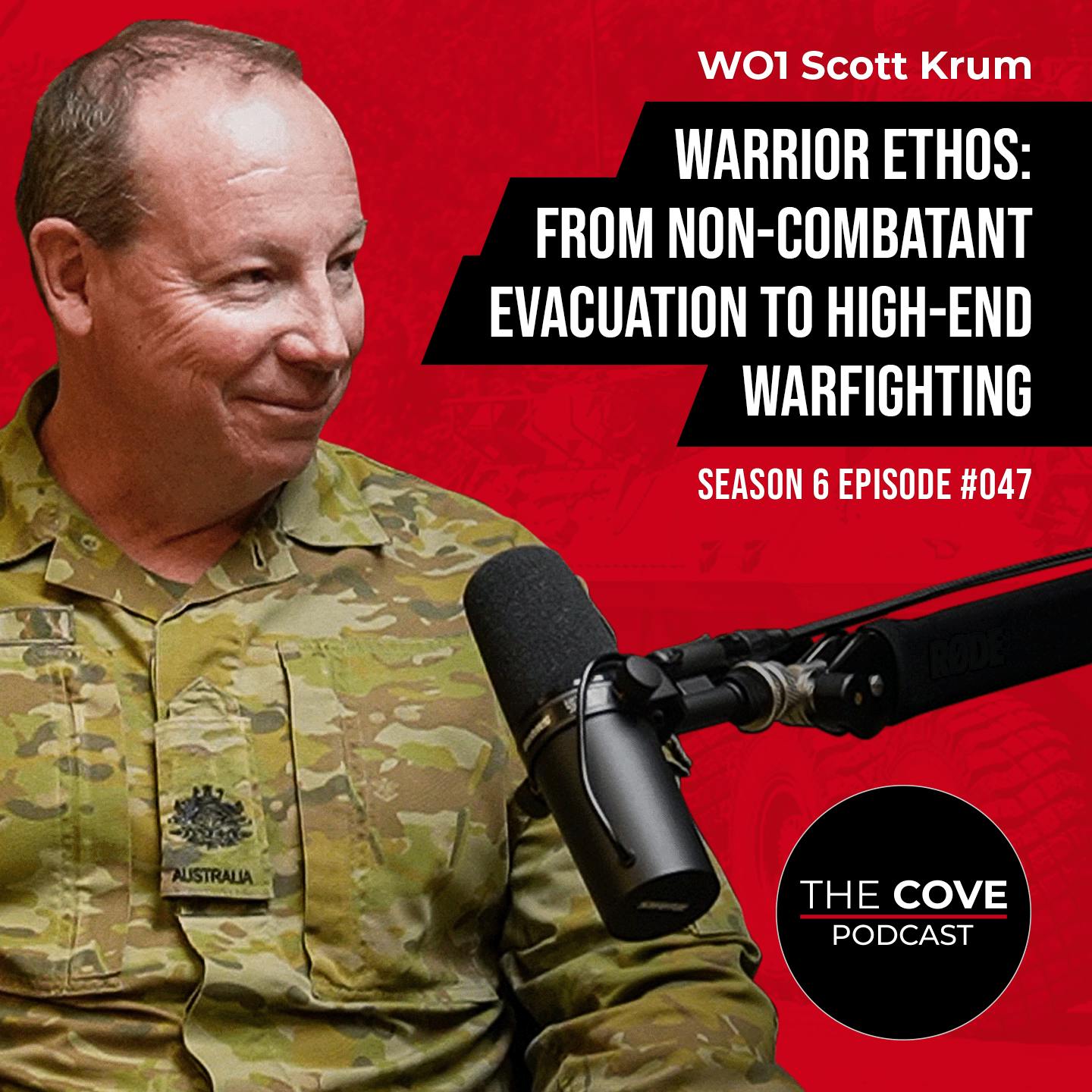
‘Everyone wants the view, but nobody wants the climb.’ In this week’s episode, we sit down with WO1 Scott Krum, the Regimental Sergeant Major of the Royal Australian Infantry Corps, to revisit the Australian Defence Force’s contribution to the Kabul Non-Combatant Evacuation Operation (NEO) and to ask, plainly, what we demand of soldiers and officers in 2025 and beyond. From 14–30 August 2021, a US-led, coalition-supported NEO moved approximately 124,000 civilians through Hamid Karzai International Airport; Australia evacuated over 4,200 people on 32 flights. WO1 Krum takes us onto the ground with the Ready Battle Group—through the North Gate and Abbey Gate—to unpack readiness under pressure, ethical restraint amidst chaos, and how discipline and purpose hold when the stakes are highest. We then pivot to Warrior Culture: what readiness really means (your equipment, your skills, and the reality that sometimes you’re going without), why purpose must be understood and owned at every level, and how healthy competition—especially at a section level—sharpens a unit. We tackle Australia’s tall-poppy syndrome, why a fear of failure (and a candid Black Box Review) is a feature not a bug, and how resilience is built in hard times. We then turn our sights to unit identity and death symbology before WO1 Krum sets a clear standard for behaviour, restraint, and fighting spirit. We close with WO1 Krum’s challenge to the listeners: if you want to win in Army you must get FILTHY — forget what others think you can do, find intrinsic motivation, take the little wins, remember that what we do is tough, build good habits, and remember that only you can do it. This episode is recorded from the Australian Army Infantry Museum in Singleton NSW with one of Australia’s most senior and respected soldiers. ————————————————————————— Subscribe to The Cove Podcast to make sure that you do not miss out on any of the heavy-hitting content we have planned.
‘The problem is if society becomes accustomed to or reliant on using the army to solve problems or to address failures of civilian capacity.’ In this week’s episode, we sit down with Dr Risa Brooks PhD, a Professor of Political Science at Marquette University and a leading scholar on civil-military relations, to unpack the enduring tension between military effectiveness and democratic control. Drawing on Peter Feaver’s concept of the “problematique,” Dr Brooks examines how this dilemma plays out in democracies like Australia and the United States today. We explore the public face of the military — why trust, transparency, and perception matter, and why uniformed leaders must tread carefully when engaging publicly. Dr Brooks discusses the risks of politicisation, the responsibilities of senior leaders, and the limits of professional dissent in systems that prize both loyalty and independence. The conversation also turns to the paradox of trust: how high public confidence in the military can lead to its overuse in civilian roles, and what that means for long-term legitimacy. We ask whether silence is always the right response to criticism, whether the expectation of apolitical conduct can itself be a trap, and how accountability should be exercised by senior leaders in difficult times. Finally, Dr Brooks highlights what healthy civil-military relations look like in practice, points to international models worth learning from, and offers practical advice for Australia’s emerging leaders on how to strengthen civil-military trust for the future. —————————————————————————   Subscribe to The Cove Podcast to make sure that you do not miss out on any of the heavy hitting content we have planned.
‘Our boss at the time [was] very experienced in [Air Mobile Operations] and really raised us... [to be] tuned into the detail in terms of planning chalks and serials and bump plans ...’ On this episode of The Cove Podcast, we sit down with CAPT Jimmy Wilson, a Small Group Instructor at the Royal Military College – Duntroon (RMC-D), to unpack the Australian Defence Force’s new Decision Making and Planning Process (DMPP). An Infantry Officer with service in the 3rd Battalion, Royal Australian Regiment; the Combat Training Centre; and the 8/9th Battalion, Royal Australian Regiment, CAPT Wilson now teaches the Army’s newest officers how to plan and make effective decisions. The DMPP replaced the Military Appreciation Process (MAP) which was made up of the Combat Military Appreciation Process (CMAP), Individual Military Appreciation Process (IMAP), and the Staff Military Appreciation Process (SMAP). The DMPP now includes two processes, the Immediate Decision-Making Process (IDMP) and the Deliberate Military Appreciation Process (DMAP). At its core, the DMPP puts the commander back at the centre of planning—driving the process through timely, intuitive decision-making. As CAPT Wilson explains, this isn’t about reinventing the wheel, but codifying practices already being applied on major exercises and operations and allowing more flexibility and intuition. Whether you’re a junior leader grappling with planning for the first time, or part of a formation headquarters staff transitioning from the MAP to the DMPP in your formation, this episode provides practical insight into how RMC-D is rolling out the new training package—and what it means for leaders across the Army. ————————————————————————— Subscribe to The Cove Podcast to make sure that you do not miss out on any of the heavy hitting content we have planned.
‘Again, you’re talking to someone who used to shave and drink out of the same cup ...’ In this week’s episode, we welcome back LTCOL Gordon Wing MBBS, the Senior Medical Officer in the Directorate of Army Health. An infantry Combat Team Commander turned Medical Doctor, LTCOL Wing brings his expertise in military medicine and prevention. His first appearance on the podcast covered the Military Employment Classification System; this time, we explore a topic with immediate, practical consequences for every soldier — field hygiene. From the campaigns at Milne Bay and the Huon Peninsula to the more recent deployment of Australian forces to INTEFET in East Timor, history reminds us that disease and poor sanitation can cripple armies just as easily as the enemy. General Douglas MacArthur is famously quoted as saying ‘[t]his will be a long war if, for every division I have facing the enemy, I must count on a second division in hospital with malaria and a third division convalescing from this debilitating disease.’ In this conversation, LTCOL Wing explains why hygiene remains a commander’s responsibility, and how discipline in the basics — cleanliness, waste management, water control, and illness prevention — is a combat multiplier. He breaks down what good hygiene looks like in austere environments, from simple routines every soldier can maintain without showers, to wider practices like dipping cams and medication. We discuss common illnesses in the field, how quickly poor hygiene can degrade operational effectiveness, and what leaders at every level can do to prevent infections before they spread, particular by enforcing strict routines and checks. Drawing on his medical expertise combined with his time in command in-the-field, LTCOL Wing offers practical, evidence-based advice: how antimicrobial wipes stack up against soap and water, how bacteria is passed through the urinary tract, and the role of medications like doxycycline in prevention. He also shares some essential hygiene rules every soldier should follow during high-tempo operations to remain healthy and combat effective. This episode is a timely reminder that maintaining health in the field is as much about discipline and leadership as it is about medicine — prevention against illness or injury in our potential operating environment will sustain a large fighting force to win. ————————————————————————— Subscribe to The Cove Podcast to make sure that you do not miss out on any of the heavy hitting content we have planned. Leading source: The Battle Lab’s article on Field Hygiene published on The Cove.
‘We are at the cutting edge of making what we have work.’ In this week’s episode, we sit down with BRIG Nick Wilson, Commander of the Australian Army’s newest brigade, the 10th Fires Brigade. Having just returned from Exercise Talisman Sabre 2025, BRIG Wilson talks us through putting his brigade through the ultimate test providing short-range, ground-based air defence, long-range multi-domain strike and specialist targeting effects to the 1st Division, the 2nd Division and the Headquarters Joint Operations Command (HQJOC). We start by discussing the current state of play in Army Fires and the role his brigade plays within the Australian Army and the wider ADF, seeing the introduction of High Mobility Artillery Rocket System (HIMARS), the National Advanced Surface to Air Missile System (NASAMS) and the vast array of munitions that can be fired from each to enable the joint fight. The brigade now comprises of the 54th Siege Battery (soon to become the 14th Regiment), the 16th Regiment and the 9th Regiment and is enabled by the 1st Intelligence Battalion and the 7th Signals Regiment. We explore the brigade’s unique command and control relationships, the sensor-to-shooter link that underpins its effectiveness, and the way the 10th Fires Brigade integrates both offensive strike and air defence effects across Australia and abroad. BRIG Wilson also highlights what the brigade achieved on Exercise Talisman Sabre 2025, including the first-ever Australian Precision Strike Missile (PrSM) launch from a HIMARS from Mount Bundey Training Area to Bradshaw Training Area, a Guided Multiple Launch Rocket System (GMLRS) launch in Shoalwater Bay and a simulated HIMARS Rapid Infiltration (HIRAIN) mission onto Christmas Island with coalition partners. This is joint targeting and how the Australian Army’s fires enable the combined joint fight. ————————————————————————— Subscribe to The Cove Podcast to make sure that you do not miss out on any of the heavy hitting content we have planned
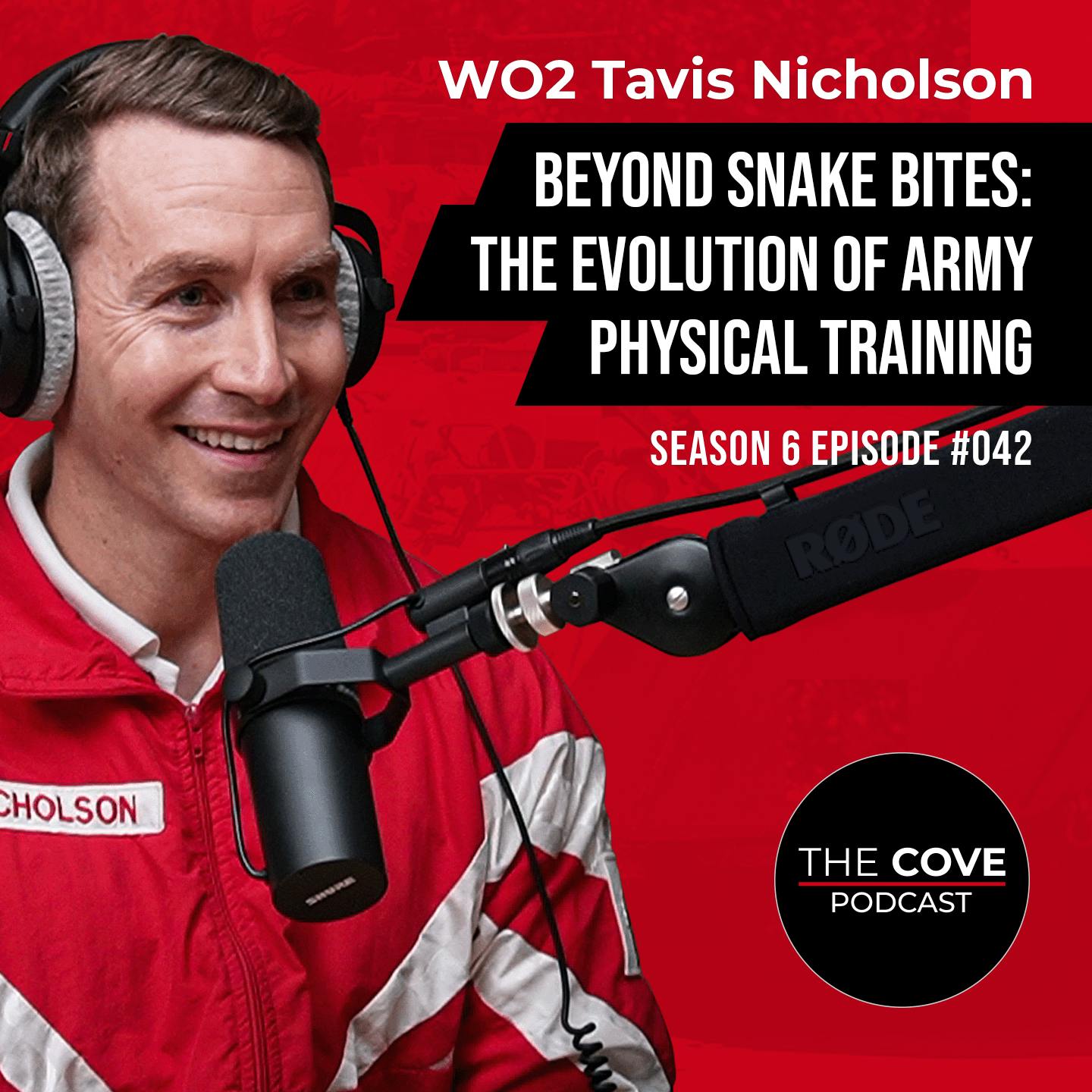
‘[W]e're not like a professional sporting team that our whole week is designed around that gameday on Saturday, [our] people are required to do their job day in, day out ...’ In this week’s episode, we sit down with WO2 Tavis Nicholson, the Warrant Officer Physical Training Instructor (WOPTI) at the Royal Military College – Duntroon, to explore how physical preparation underpins preparing for and winning wars in the Australian Army. Drawing on his experience training across conventional units and with Special Forces candidates, WO2 Nicholson outlines how physical fitness translates directly into a soldiers’ resilience, availability, and durability on combat and in war. He discusses his philosophy of programming — know the demands, know the baseline, train the gap — and how this approach ensures soldiers are fit for purpose rather than following passing fitness fads. Drawing lessons from his time with elite sporting teams, he highlights how careful programming, minimum effective dose training, and a focus on longevity can help extend soldiers’ careers and minimise injury. At the same time, he cautions against lowering standards to match societal norms, arguing instead for holding the line on the physical requirements that military service demands. This conversation is a deep dive into the art and science of physical training, balancing strength, endurance, and recovery with the unique occupational requirements of Army. Every physical training session must be balanced against the high physical demands of our day-to-day jobs. It’s about being intentional, adaptable, and consistent — ensuring every soldier is combat effective when it counts and to prevent injury. ————————————————————————— Subscribe to The Cove Podcast to make sure that you do not miss out on any of the heavy hitting content we have planned and WO2 Nicholson’s second episode on the practical elements of becoming and staying fighting fit.
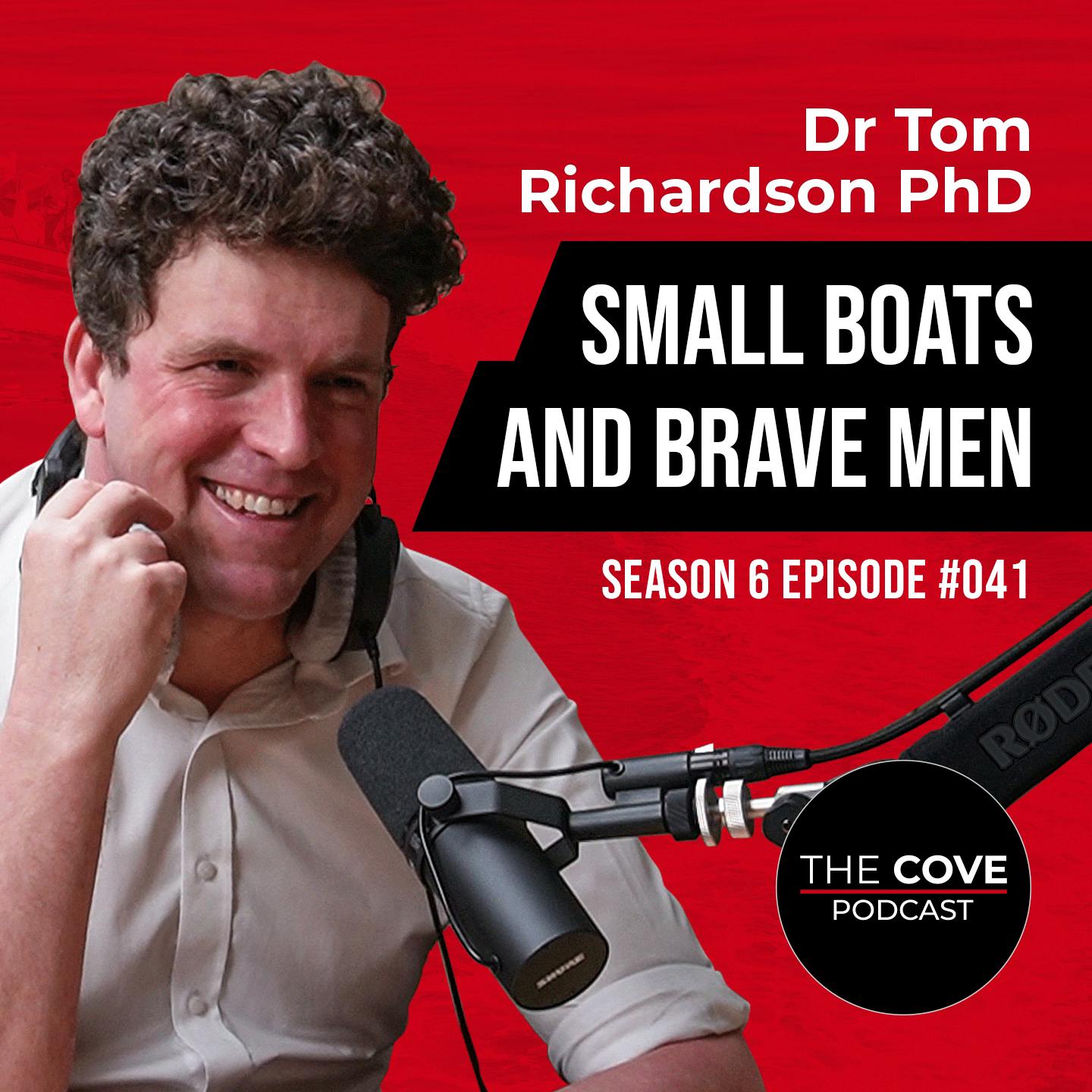
‘[T]hat’s a brigade-sized amphibious operation planned and executed in a week …’ In this week’s episode, we dive into the Huon Peninsula Campaign of 1943–44 and examine how the Australian 9th Division used littoral operations to outpace and outfight the Japanese. Our guest this week – Dr Tom Richardson PhD – is a Senior Lecturer at the University of New South Wales – Canberra. He specialises in military history and amongst his many publications is an article called Small Boats and Brave Men, published in the Australian Army Journal. Following the fall of Lae in September 1943, the Australians turned their focus to securing Finschhafen, a vital harbour on the Huon Peninsula. Using small landing craft to bring tanks, artillery, and supplies forward along the coast, the 9th Division overcame difficult jungle terrain and fierce resistance to seize the town. From there, the campaign culminated in the dramatic combined-arms assault on Sattelberg Ridge, where infantry, armour, artillery, and engineers worked together to dislodge entrenched Japanese defenders. These actions highlight how littoral mobility and a coalition force enabled the Australians to fight heavy and manoeuvre decisively in some of the most demanding conditions of the Second World War. ————————————————————————— Subscribe to The Cove Podcast to make sure that you do not miss out on any of the heavy hitting content we have planned Leading Sources: Richardson, T. (2023). Small Boats and Brave Men: The 9th Division and the use of the Littoral in the Huon Peninsula Campaign, September 1943 – January 1944. Australian Army Journal, Vol. 19, No. 2. Available at: Army Research Centre Dean, P. J. (Ed.). (2013). Australia 1943: The Liberation of New Guinea. Cambridge University Press.
‘[T]he best piece of advice I've had in years past is that if it hurts a little ... there's probably a fair element of truth to it...’ In this week’s episode, we explore how to seek feedback and turn it into actionable advice for commanders. Our guest, WOFF Ken Robertson, the Senior Enlisted Advisor to the Chief of the Defence Force (SEAC), is the Australian Defence Force’s most senior enlisted leader. As the first person appointed to the role, he has advised GEN Angus Campbell and ADM David Johnston while representing the soldiers, sailors, and aviators of the ADF. WOFF Robertson shares his journey from being a fiercely competitive junior aviator and sportsman to recognising the power of deliberate reflection and embracing honest feedback over decades of personal growth. He outlines his approach to gathering insights from tens of thousands of ADF members, uncovering the real value in spending time with those he represents. He also explains how he distils this feedback into clear, meaningful advice for the CDF and senior leaders. Today, he actively seeks feedback from people who challenge his perspective, a habit that has helped him become confident in his identity as both a leader and a person. He deliberately immerses himself in the ADF squadrons, ships, and battalions to witness and celebrate their achievements firsthand. In doing so, he strengthens trust, stays connected to the lived experiences of the force, and ensures the advice he provides to the nation’s top commanders is grounded in the reality of those achieving amazing things for our organisation. ————————————————————— Subscribe to The Cove Podcast to make sure that you do not miss out on any of the heavy hitting content we have planned
‘The scale of Talisman Sabre from a geographic perspective is difficult to comprehend and, in some cases, it can be quite difficult to describe.’ In this week’s episode, we talk through all things Exercise Talisman Sabre 2025, the largest Australian Defence Force Exercise this year. Our guest this week – SQNLDR Zac Smit – is an Operations Officer in the Exercise Control on Exercise Talisman Sabre 2025 and has lived and breathed this exercise since January this year. We record on-the-road from the Combined Joint Information Bureau at Gallipoli Barracks in South-East Queensland.   Exercise Talisman Sabre 2025 included 43,000 participants in an area spanning 5,300km, 24 warships including 2 carrier strike groups, 270+ aircraft flying 2,000 sorties for the duration of the exercise, the 1st (Australian) Division employed together as the Army’s unit of action, multiple combined joint forcible entry operations via air and amphibious insertion methods, the first live firing of Defence Australia’s HIMARS and Precision Strike Missile, the largest ADF medical effect since the Vietnam War, and the full-activation of Joint Logistics Command Australia’s theatre logistics system. In this episode, SQNLDR Smit talks about how much different this Talisman Sabre was to Exercise Talisman Sabre 2023, what we set out to achieve in terms of exercise objectives, the impact that global issues can have on the entire exercise and then finally the lessons learnt or takeaways from his perspective in the hot-seat of the Exercise Control Current Operations. Teams of ADF, our partner nations and civilians worked tirelessly 24/7 to achieve some huge successes on one of the largest exercises ever conducted by the ADF. ————————————————————————— Subscribe to The Cove Podcast to make sure that you do not miss out on any of the heavy hitting content we have planned
‘The way that we designed the Battle Group was on platform and systems of uncrewed and crewed variants that are theoretically attainable within the next two years ...’ In this week’s episode, we talk through combat experimentation in the Australian Army, getting after emerging technology, learning fast and developing the latest TTPs. Our guest this week – LTCOL Jake Penley – is the Commanding Officer of the 1st Armoured Regiment in Adelaide SA and has been tasked with shifting the unit from an Armoured Cavalry Regiment to the Army’s combat experimentation unit. From participating in Project Convergence Capstone 5, a large-scale experiment without the constraints of training levels that allows the US Military, its allies and Defence industry to have at it testing future concepts and the newest war fighting technology to participating in the North Queensland War Fighter, this is the cutting edge of future land warfare. From running Lavarack Barracks out of maps to enable a huge analytical wargame ran by the Defence Science and Technology Group (DSTG) to receiving pallets of brand-new equipment with little instructions, 1st Armoured Regiment is balancing emerging technology and learning with our traditional understanding of tactics and control measures. Tactics and control measures, LTCOL Penley argues, which only become more important with the innovation and leading-edge technology. Working with industry, both Primes and small manufacturers, as well as DSTG mean that any failures are fast, and lessons are learnt quickly to enable the unit to solve the problems of future land warfare. ————————————————————————— Subscribe to The Cove Podcast to make sure that you do not miss out on any of the heavy hitting content we have planned
‘[On] basic para-course… you must be consciously competent … because you're the only person who is going to pull the reserve handle if there is a malfunction at that stage.’ This week’s episode is centred on how we can improve the training that we deliver in units, making the most of the resource that we have to develop creative training from the individual to the collective. Our guests this week are WO1 Brad Doyle and WO1 Mick Reyne. WO1 Brad Doyle is the Command Sergeant Major (CSM) of Forces Command and WO1 Mick Reyne is the Training Warrant Officer - Army. The Systems Approach to Defence Learning (SADL) is a tool that anyone designing or delivering training can use to ensure that the training that they deliver achieves the right outcomes and encourages continuous evaluation. It includes the ADDIE Cycle, which includes five steps: (1) analyse, (2) design, (3) develop, (4) implement, and (5) evaluate. Taking a skill from unskilled through to competent is done under supervision with the end goal of that individual being able to employ that skill safely in the workplace. This marks the transition point from individual to collective, where that skill must be practiced as part of a collective to proficient and then expert. ————————————————————————— Subscribe to The Cove Podcast to make sure that you do not miss out on any of the heavy hitting content we have planned.
'Watching those aircraft take off ... and knowing that you are part of that success, part of that story, there's not many better feelings.’ In this week’s episode, we talk about the challenges and opportunities of keeping the CH47 Chinook and AH-64 Apache helicopters in the air. Our guests are CAPT Shannon McGee and FSGT Jason Smart from the Army’s new 16 Aviation Support Battalion in Townsville, Queensland. CAPT Shannon McGee is a Mechanical and Aerospace Engineer on the CH47 Chinook and FSGT Jason Smart is an Aircraft Technician who has seen the introduction-into-service of the MRH90 Taipan and has deployed supporting Army helicopters multiple times, including in the first days of INTERFET in Dili and later from a patrol base in Balibo, both in Timor-Leste.  The 16 Aviation Support Battalion is tasked with keeping the fleet of CH47 Chinooks in the air to meet Army’s need for rotary wing lift while preparing for the introduction-into-service of the Australian Army’s newest helicopter, the AH-64 Apache combat helicopter. Both 1 Aviation Regiment and 5 Aviation Regiment will fly out of Townsville, operating from Hamel Lines at RAAF Townsville. The Apache is replacing the Eurocopter Tiger Armed Reconnaissance Helicopter and will become the 1 Aviation Regiment’s attack aviation platform. The first AH-64 Apaches are scheduled to commence flying operations in the next six months and many of the aircrew and support staff have already commenced training in the United States to prepare to be thrown the keys.  The team that supports Army flying operations include maintainers, Aviation Ground Crew, Life-support Fitters, and engineers. The come from the Army, RAAF and civilian contractors that have maintained helicopters at Hamel Lines for decades, conducting everything from routine to deep maintenance. They will be joined by Maintenance Augmentation Teams provided by the United States Army and field service representatives from Boeing to enable the introduction-into-service. Army aviation is at the start of exciting times and these are the people that get to create history.    —————————————————————————   Subscribe to The Cove Podcast to make sure that you do not miss out on any of the heavy hitting content we have planned.
‘We are never going to be combat ineffective because of atmospherics... we can work in the rain, we can work in the mud, and we can work in the jungle.’ In this week’s episode, we talk all things infantry reconnaissance and how reconnaissance patrols enable the fight. Our guest this week - CPL Andrew Noseda - is currently the acting Platoon Sergeant for the Reconnaissance Platoon at the 1st Battalion, the Royal Australian Regiment. He was the Section Commander for the battalion’s Duke of Gloucester Cup team and his team took out second place out of all the teams submitted by the regular infantry battalions. He has been in reconnaissance for the last four years, two as a digger and two as a Patrol Commander, and he talks us through the purpose of dismounted infantry recon and what a recon patrol can offer commanders.    Observation Posts (OP) and Point Target Reconnaissance (PTR) are the primary means by which infantry recon will answer their Commander’s Critical Information Requirements, ranging from questions about the terrain/weather to the enemy disposition and pattern of life. Recon patrols are prime targets for enemy engagement and are inherently vulnerable. They operate in isolation, with limited communications and they often carry all the stores and equipment necessary for their task on-foot. They can be inserted via vehicle, boat, helicopter or on-foot to set the preconditions for the main force.    Infantry recon can be supplemented with engineer recon, armoured recon and Joint Fires Observers to enhance mobility, endurance, to answer more of the commander’s questions and to target the enemy with Offensive Support. The Basic Reconnaissance Course is the first course in the continuum and can be completed by both infantry and other corps. The Patrol Commander is responsible for briefing the commander that they are attached to on what they can achieve. The earlier in planning that the Patrol Commander is included, the more refined the specified tasks their patrol is allocated in orders to better enable the commander’s intent.    —————————————————————————   Subscribe to The Cove Podcast to make sure that you do not miss out on any of the heavy hitting content we have planned.
loading
Comments