


 Claim Ownership
Richardson's Rubicon
Subscribed: 4Played: 29
Subscribe

© John Richardson
Description
Richardson’s Rubicon explores the craft and chaos of speculative fiction. Each episode dives into worldbuilding, strange ideas, creative failures, surprising successes, and the deeper questions behind imagined worlds. Writers, worldbuilders, and curious listeners will find honest conversation, dark humour, and thoughtful insight into how stories take shape. Season Five focuses on the art of speculative storytelling and the minds that create it.
61 Episodes
Reverse
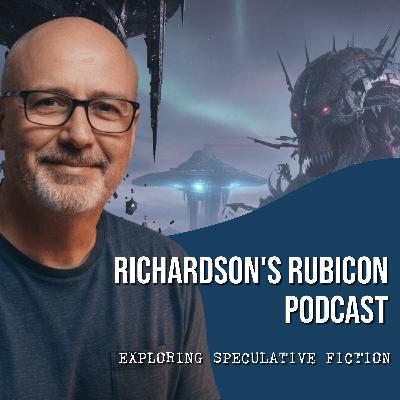
This week’s episode of Richardson’s Rubicon is one you won’t want to miss.I’m joined by Dr. Larry Smith, author of 2084: The Neuroxone Conspiracy, a dystopian medical thriller set in a near-future where addiction has been “solved” by mandate. The catch: recovery becomes compliance, and choice starts to look like a risk.We talk about how you build a world like that so it feels real rather than cartoonish: the rules, the enforcement, the incentives, and the everyday pressures that make ordinary people go along with something they’re not fully comfortable with.If you’re a writer, we also get into practical craft: shaping high-stakes conflict, creating characters who feel human under pressure, and why writing the ending first can make plotting a lot less painful.For more on Dr. Smith and his books, head to https://www.drlarrysmithauthor.com/ For more detail, and other episodes, head to richardsonsrubicon.com.For craft discussion: https://richardsonsrubicon.com/community/season-5-speculative-fiction-where-worlds-meet/does-worldbuilding-need-familiar-power-structures-to-feel-real/#DystopianFiction #SpeculativeFiction #Worldbuilding #WritingCraft #AuthorInterview
What happens when the universe sends… cats… to nudge humanity in a better direction, one “paw biscuit” at a time? 🐾In this episode I’m joined by Momoko Uno, author of the sci-fi comedy Hello Humans, where an Intergalactic Committee debates whether Earth deserves an invitation to the cosmic family, and a parade of species (Feline Federation included) get far too involved in our messy little sandpit.We talk behaviour-first worldbuilding: how to make alien species feel genuinely distinct (not just different costumes), why her “one species per chapter” structure matters, and how comedy can smuggle in sharp social commentary without turning into a lecture. Expect Greys, octopus hybrids, weird cosmic ethics, and at least one moment where you’ll think, “I can’t believe she played that straight.” (Especially when I went all HP Lovecraft)If you like speculative fiction craft, big themes delivered with a grin, and the occasional roast of humanity, this one’s for you.Momoko's website: http://momokowrites.com/This episodes website page: https://richardsonsrubicon.com/momoko-uno-hello-humans-behaviour-first-worldbuilding-make-factions-clash-not-just-look-different/This episodes discussion page: https://richardsonsrubicon.com/community/season-5-speculative-fiction-where-worlds-meet/can-comedy-tackle-serious-themes-in-speculative-fiction/#SciFiComedy #WorldBuilding #SpeculativeFiction #WritingCraft
✨ Four Horsemen. Romance. A peace treaty between humans, angels, and demons. It works better than it has any right to.In this episode of Richardson’s Rubicon, I’m joined by J.F. Monroe, author of The Legendary Guardians trilogy. We talk about flipping the Four Horsemen from the apocalypse omens into world protectors, and why “power has a price” is only interesting when it actually forces ugly choices.If you’re writing fantasy, there are a couple of useful craft hooks here:making power feel like a burden, not a giftletting constraints create the plot (sometimes the “right” choice still costs lives)using an Earth-adjacent world and dividing it into territories, then letting patterns emerge and tightening them laterListen now, and if you want more episodes like this, the full catalogue and notes are on my site.#amwritingfantasy #amwritingscifi #fantasywriting #worldbuildingForum Discussion: https://richardsonsrubicon.com/community/season-5-speculative-fiction-where-worlds-meet/when-magic-has-consequences-plot-gets-teeth-context/Episode page on my website: https://richardsonsrubicon.com/j-f-monroe-the-legendary-guardians-power-has-a-price-when-magic-costs-lives/JF Monroe's website: https://www.jfmonroebookshelf.com/
What happens when a retired schoolteacher finds himself transformed into his game avatar, chased by wolves, and trapped in a fantasy world? Well, that’s just the beginning of the adventure with New Rock series author Richard Sparks! 🎮📚As the third book is now out, New Rock New Rules, we introduce you to the first book of the series New Rock New Role.In this episode, I chat with Richard, who’s not only a brilliant fantasy writer but also has a history with iconic TV comedies like Not the Nine O’Clock News. We unpack the art (and challenge) of world-building in speculative fiction - from crafting believable magic systems and consistent rules to the balancing act of comedy and adventure. Trust me, there’s a lot to learn from his take on structure, reader trust, and his inventive set-up/payoff strategies!Tune in and stick around for some great insights on writing that keeps audiences surprised and hooked. Don’t forget to visit his website for book excerpts and more info on Richard's work! https://richardsparks.com/Episode link: https://richardsonsrubicon.com/richard-sparks-new-rock-new-role-worldbuilding-reader-trust-and-payoffs/Forum discussion on magic: https://richardsonsrubicon.com/community/season-5-speculative-fiction-where-worlds-meet/the-rules-of-magic-how-much-is-too-much/#WritingFantasy #SpecFic #WorldBuilding #WritingCraft #AuthorInterview
B Marcus Walker joins me, John Richardson, to talk about building cultures and societies in fantasy without drowning the reader in lore. We dig into Brian’s “less is more” approach, why outsider viewpoints can be the cleanest way to immerse an audience, and how cultural interplay can create pressure without turning every interaction into a culture-war subplot.We also unpack Brian’s novel Spirit of the Plain (The Unnamed trilogy): the Forest Plain that resists settlement and armies, the Yurbo nomadic clans and their spirit talkers, a prophecy-driven attempt to “break” the Plain, and a magic system built around naming (with a surprisingly useful programming-language analogy). Plus: trade, geopolitics, gunpowder and firearms, and why the Lyken work better as displaced people than as generic monsters.LinksEpisode: https://richardsonsrubicon.com/b-marcus-walker-spirit-of-the-plain-worldbuilding-cultures-and-clans/Discussion: https://richardsonsrubicon.com/community/season-5-speculative-fiction-where-worlds-meet/creating-conflict-without-colonisation-worldbuilding-in-speculative-fiction/Book: https://www.amazon.com/Spirit-Plain-Unnamed-Book-1-ebook/dp/B0DTSQM437/Brian online: https://nairbful.com/
I sat down with Sarah Marshall, author of Playa Dust in My Soul, former Silicon Valley operative, and longtime Burning Man attendee, to talk about turning an uncategorisable real-world experience into a novel that feels like a fully realised world.We unpack what Burning Man actually is (Black Rock Desert, Nevada, dust storms and all), why Sarah says ten people will give ten different versions of the same event, and how the festival’s principles function like world rules. Two big ones: gifting and participation.We also dig into Sarah’s craft choices, including a smart structural move: seven perspectives, each arriving at different stages as the city builds from empty desert to a thriving temporary metropolis. The result is worldbuilding-by-experience, not encyclopaedia-by-info-dump.Under the spectacle, the real theme is human: belonging, identity, and what happens when a place forces you to confront the stories you tell about yourself.Discussion here: https://richardsonsrubicon.com/community/season-5-speculative-fiction-where-worlds-meet/writing-a-real-place-like-a-speculative-world-rules-constraints-and-point-of-view/Episode page: https://richardsonsrubicon.com/sarah-marshall-playa-dust-in-my-soul-worldbuilding-burning-man/Sarah's site: https://www.playadustinmysoul.com/
I sat down with Diana Colleen to talk about her award-winning novel They Could Be Saviors, a near-future speculative story with a wild premise: what if the only way to tackle the climate crisis is to kidnap the billionaires fueling it, then force them into rehabilitation?Diana is a Canadian author now living in the United States, and she shared how the book came together after a big life pivot. We get into the moral problem at the heart of the story, how she kept the tech believable without turning it into hard sci-fi, and why she calls it “sci-fi light”.A big part of the book is psychedelic-assisted therapy, and Diana’s experience here is not theoretical. She talked about her own therapy journey, how it influenced the novel, and how “set and setting” complicates the idea of forced treatment. We also dug into character work, including why the billionaires aren’t written as cartoon villains, and why she wanted readers arguing with each other, not being handed easy answers.If you like speculative fiction that stays close to the real world, asks uncomfortable questions, and uses worldbuilding with restraint and purpose, this one’s for you.Her site: https://www.dianacolleenauthor.com/ You can find more detail at Richardson's Rubicon: https://richardsonsrubicon.com/save-the-world-break-the-rules/Discuss issues raised here: https://richardsonsrubicon.com/community/season-5-speculative-fiction-where-worlds-meet/should-speculative-fiction-push-moral-boundaries-in-worldbuilding/
In this episode I sat down with Russell Van Brocklen, a New York–based, state-funded dyslexia researcher with strong opinions about writing, world-building, and why so many Hollywood films collapse under the weight of their own unfinished scripts.Russell works with highly intelligent dyslexic students who are often written off early. His methods are bluntly effective. In one year, students struggling with basic literacy were producing graduate-level analytical writing. Russell wanted to explore these two points: 1. Worldbuilding for readability — how to keep complexity while still keeping the reader with you. 2. The “logic stress-test” — a practical way to catch plot holes and broken rules before the audience does. Central to his thinking is the idea of universal themes. Not vague ones, but precise, distilled ideas uncovered by relentlessly asking “why” until the real story shows itself. It’s tiring work, and that’s the point.We talked through character-driven world-building, using Star Wars as a reference point, and why a world should emerge from a protagonist’s needs rather than decorative lore. We also dug into antagonists, not as moustache-twirling villains, but as conceptual opposition to the hero’s goal. Get that wrong and the story leaks logic everywhere.Russell also uses AI extensively. Not to write for him, but to do the heavy lifting he’d rather not. Definitions, logic checks, thematic narrowing, idea pressure-testing. He treats AI like a lab assistant, not an author. His view is simple: if you can’t improve on what AI gives you, that’s not an AI problem. Oops.We wrapped up talking about craft, accessibility, and why structure isn’t the enemy of creativity. Russell’s perspective is shaped by his own experience with dyslexia and late fluency, and it shows. This is a practical, sometimes uncomfortable conversation about writing with intent, and why most stories fail long before page one.If you care about world-building, theme, or simply finishing what you start, this one is worth your time, even if I do say so myself.Episode page: https://richardsonsrubicon.com/breaking-scripts-building-worlds/Discussion: https://richardsonsrubicon.com/community/season-5-speculative-fiction-where-worlds-meet/is-ai-a-cheat-code-for-better-worldbuilding/
Christian Hurst joins Richardson’s Rubicon to talk about the Lily Starling space opera series, starting with Lily Starling and the Voyage of the Salamander. We dig into a familiar sci-fi opener, waking up with amnesia, and why it works when the reader discovers the world at the same pace as the protagonist.Christian explains how he builds stories from character and theme first, then lets worldbuilding arrive when it is needed, rather than dumping lore on page one. We also explore tone: why so much modern sci-fi feels either relentlessly grim or aggressively camp, and how he aims for a more human mix of seriousness, humour, and hope.The conversation moves into belief systems, ritual, and symbolism as part of lived-in worlds, plus the role of identity, loneliness, and connection in Lily’s arc across the series. Christian shares how his background in art, communication, and marketing shaped a more emotional approach to storytelling, and why he cares about how a reader feels, not just how neatly a plot clicks into place.If you like character-driven space opera with heart and a little mischief, this one is for you.Christian's Website: https://www.churstpublishing.com/Find more on my site: https://richardsonsrubicon.com/rug-pulls-not-plot-holes/
Dead Kings, Living Stories: Richard H Moon on To Conquer DeathWelcome back to Richardson's Rubicon! In this episode, I have the pleasure of sitting down with Richard H. Moon, screenwriter, producer, and now, fascinating author of the historical fantasy novel To Conquer Death. Richard takes us behind the scenes of his creative journey, from navigating the trenches of indie film production to the challenges of transitioning from writing screenplays to crafting novels.We dive deep into his world-building process, where he blends meticulous historical research with creative fantasy to bring to life the mysterious and turbulent era of the Bronze Age collapse. We’ll explore how he tackled the unique challenges of crafting authentic yet accessible language, developed rich cultural and religious backdrops, and even incorporated a chilling take on zombies inspired by ancient myths.Whether you’re an aspiring writer, a fan of historical fantasy, or just curious about the creative process behind an ambitious project like this, there’s something here for you. So sit back, relax, and get ready for an inspiring and eye-opening conversation with Richard H. Moon! Jump in now.Richard H Moon's website can be found here: https://richardmoonbooks.com/Episode page here: https://rubipod.link/deadkings
In this season opener, John strips the podcast back to its core purpose. The show drops the scattered topics and shifts hard toward speculative fiction, worldbuilding, and the craft behind imagined futures. John explains why the old format was unfocused, why this reset is necessary, and why writers must confront their own blind spots if they want their stories to work. He outlines the new plan for the season, including interviews with speculative fiction writers, honest discussions about his own writing process, and live call in sessions for anyone building worlds or wrestling with ideas. This episode sets the tone for a sharper, more deliberate, and far more demanding season.
In this episode of Richardson’s Rubicon, I had a fascinating and often funny conversation with Bill Pautler, author of the book Awakening to Ourselves, The Practical Art of Building A Spiritually Aware Life. Bill’s had quite an adventurous life, he’s done everything from hot-air ballooning and motorcycling to scuba diving, along with raising a family (twice!). But what stood out most was his unexpected spiritual journey, especially a quirky experience he shared: Liberally cussing and then spending two full days in uncontrollable tears. Turns out this reaction is considered a "gift of tears," something Bill now fully embraces, even if it means crying at awkward times.We spoke at length about spirituality, as we are both at opposite ends of the spectrum it was an interesting, respectful, and at times a hilarious discussion!We also dipped into a bit of quantum physics banter, discussing the gap between real quantum computers (cold, precise lab devices) and more speculative theories suggesting the brain itself might have quantum properties. We joked (or did we?) about whether quantum computing could someday give rise to true machine consciousness. We've all seen the films, dude!Ultimately, Bill’s key message resonated clearly: beneath our fears and conditioned habits, we're all incredibly powerful beings. By letting go of trauma and showing compassion through simple actions, we can uncover joy, creativity, and community strength. I think listeners will find his unique stories both entertaining and deeply thought-provoking.Visit Bill Pautler's site to learn about his book: Awakening to Ourselves, The Practical Art of Building A Spiritually Aware LifeVisit Richardson's Rubicon to see how you can subscribe, listen, watch and even take part! Buy John a Ko-Fihttps://ko-fi.com/richardsonsrubiconp.s. My video feed was awful, sorry!
In this week’s Richardson’s Rubicon, I sat down with Hannah Ashwell mental health whizz, PTSD specialist, and all-round change-maker to tackle two of the sneakiest modern addictions: porn and gambling. Trust me, these things fly under the radar far more than booze or smack, and Hannah’s got the stats to prove it.We kicked off by digging into her story. She’s not just another talking head, she’s a counsellor, psychologist and entrepreneur who helps people flip their lives around. But the real eye-opener was when she told me more folks in the UK wrestle with porn and gambling habits than with alcohol and drugs. Mind-blowing, right?Then we got into what over-consuming porn really does. It’s not just a cheeky pastime, Hannah showed me how it can wreck your wallet, your headspace, your relationships, even your plumbing downstairs (hello, porn-induced ED). And the kicker? Viagra is Pornhub’s biggest client. Industry solves the problem it creates, classic.Next up: smartphones. We’re glued to these damn things, yet somehow we're lonelier than ever. Bullying, FOMO, shallow chatter, our pockets have become playgrounds for misery. My daughter’s brush with online nastiness only underlined how toxic it can get. Hannah’s fix? Apps like OurPact for the kids, plus clever habit-pairing, boil the kettle, do your physio; open the back door, take your meds. Small tweaks, big wins.Of course, the conversation got darker when we talked human trafficking and illegal content, Hannah dropped some sobering stats about child-abuse material being the fastest-growing crime here. Grim stuff, but if we don’t talk it through, how will anything change?Thankfully, she shared glimmers of hope, stories of folks who’ve clawed their way back, and how confession (think Sex Addicts Anonymous) can be the first leap toward recovery. We wrapped up by ripping into social media fakery, Hannah’s sworn off it for now, and I don’t blame her, and lamenting how stretched our mental-health services are.Bottom line: if you want to laugh, cry, and learn how to wrestle your own demons, and maybe even ditch your phone for a night, this one’s for you.Quit Porn - Hannah Ashwellhttps://quit-porn.comThe Balance Phonehttps://www.thebalancephone.com/Our Pacthttps://www.ourpact.com/Buy John a Ko-Fihttps://ko-fi.com/richardsonsrubiconVisit the show!https://richardsonsrubicon.com/
Welcome to this episode of Richardson's Rubicon, where I dive into a topic that might not be on your radar, but will certainly grab your attention. Today, we're welcoming John Forbes from the Freeport Campaign Group, which is part of Salvo. John joins us for an eye-opening discussion about Freeports and Special Economic Zones (SEZs) in Scotland. Despite their promising names, these zones come with complexities and concerns that many are unaware of, including secretive dealings, potential for deregulation, and impacts on local communities and economies. We explore these facets, shedding light on the roles that both the UK and Scottish governments play in these zones, as well as the influence of private companies. Join us as we dissect the potential risks and realities of Freeports and SEZs, and learn about what can be done to raise awareness and provoke action. Stay tuned, as this conversation could change the way you view economic development and regional planning. Facebook. /www.facebook.com/share/g/1EnH1ihusL/?mibextid=wwXIfrInstagram. https://www.instagram.com/freeport_sez_community_group?igsh=b2F3MXM4ZGtic2Jt&utm_source=qrBluesky.https://bsky.app/profile/freeports.bsky.socialX.@SalvoFreeportsEmail addressfreeports@salvo.scot
In this episode of Richardson’s Rubicon, John Richardson talks with Colette Walker, leader of the Independence for Scotland Party, about the launch of Liberate Scotland and how it all links in with the UN decolonisation case. Colette shares how she has always felt Scottish rather than British and how class divisions in period dramas first sparked her distaste for the Union. She explains the founding of ISP in 2020 as a way to capture regional list seats under the D’Hondt system and boost pro-independence representation in Holyrood.Visit https://richardsonsrubicon.com/the-path-to-independence/ for more info! They explore how the strategy of contesting both constituency and list seats backfired in 2021. Colette describes how unionist parties gained extra seats on list votes because pro-independence voters split their support. ISP’s plan is to stand under the Liberate Scotland banner on the list and in constituencies stand as ISP, ensuring a clear “indy party one” and “indy party two” ballot. This approach aims to build a super-majority of cross-party MSPs ready to claim a democratic mandate for independence.John raises concerns about candidates who arrive in Parliament with only one issue, independence. Colette defends the approach with a tease that more details will come. Pointing to policies in their manifesto like universal basic income, she insists these are somel examples of what a sovereign Scotland could do. Real decision making would follow a Swiss-style model of direct democracy. Citizens would propose and veto laws via binding referenda, with MSPs serving as accountable representatives rather than distant rulers with a take it or leave it attitude.They also discuss local government. Colette highlights how freeport schemes in England and privatisation of services shrink public spending and reduce Scotland’s block grant. She notes that seventy per cent of Edinburgh lies within a freeport zone and that council investments there have already jumped five-fold. Both agree that smaller, more transparent local bodies and local referenda could rein in unresponsive authorities.On identity, Colette sides with Nicola Sturgeon’s civic definition: anyone who lives in Scotland and contributes is Scottish. No ethnic or birth criteria apply. She wants a broad inclusive nation built on shared values. John is relieved! Looking ahead to Holyrood 2026, Colette promises a big launch of Liberate Scotland once logistics, crowdfunding, candidate selection and other details are set. She urges listeners to get involved with door-knocking, stalls and social media. Her call to action is clear: seize the moment to declare independence, or risk losing Scotland’s resources and services for good.
In this solo episode of Richardson’s Rubicon, I navigate a chaotic evening after my guest cancels last minute. Probably not my best episode, sorry! I reflect on the previous week's well-received interview with Alex Thorburn of Liberation Scotland and Salvo and share listener feedback.I go into current affairs, questioning the BBC's framing of Scotland's performance, have a go at John Swinney's vague 2050 independence vision, and unpack the failure of wealth tax proposals. I also lays into the government’s approach to energy pricing and windfall payments to gas companies, all while urging listeners to call in (spoiler: they don’t). 😢This candid and slightly chaotic episode touches on sovereignty, media bias, wealth inequality, and government energy policy.
This week, we're discussing Scottish independence with researcher Alex Thorburn from Salvo and Liberation Scotland, two civic movements developing their own strategy without waiting for approval from Westminster.We explore Scotland's claim to nationhood through the Claim of Right, the Treaty of Union, and their significance in the 21st century. Alex walks us through a potential route to the UN via the Decolonisation Committee (C24), and makes the case that Scotland could assert its sovereignty.We recall times when Scotland asserted its democratic power, such as the canceled fracking plans, the nuclear waste that was kept away from Ayrshire, and when 97% of Strathclyde opposed water privatisation. These aren’t just footnotes - they’re great examples of what happens when civic Scotland gets its boots on.Whether you're pro-indy, undecided, or just here for the constitutional gossip, this episode offers a thoughtful look at the routes ahead, not instead of political leadership, but alongside it.
Welcome to another episode of Richardson's Rubicon, where we dive into the absurd, tackle the unpredictable, and poke fun at the political circus! This time around, I'm kicking off with the sport you never knew existed - underwater rugby. Flippers and salty balls! But that's not all! We'll swim out of the pool and into the political kiddie pool where Nigel Farage is making waves by not showing up - classic Farage. And as if politics couldn't get crazier, we've got Elon Musk throwing Twitter grenades at his former bestie Donald Trump. There's more drama than a soap opera, and we're here for every juicy detail.To top it all off, we'll take a peek into our listener confessions - more accurately, we don't for good reason - and dissect the nerve-wracking Hamilton by-election results that should have the SNP breaking into a cold sweat, if they know what's good for them.More info: https://richardsonsrubicon.com/rugby-goals-and-political-holes/
In this episode of Richardson’s Rubicon, we dive head-first into the idea of a UK wealth tax on the super rich. Inspired by campaigners like Gary Stevenson and supported by groups like Tax Justice UK, we explore why this idea is gaining momentum – and why some people still think it won’t work. Also, we’re diving into why this might be the key for Labour to outdo Reform UK. It’s all about rethinking the social contract and coming up with a way to tax the super-rich to make it work. It's a no-brainer.We look at:What a 2% wealth tax could raiseHow it compares to other countriesWhat went wrong in places like France and SwedenWhy the UK might actually make it workWhat millionaires themselves are saying about itJoin the conversation, and if you think the super-rich should pay their fair share, sign the petition here:👉 https://you.38degrees.org.uk/petitions/tax-the-super-rich-to-stop-cuts-to-public-services-1https://richardsonsrubicon.com/can-we-fix-britain-by-taxing-billionaires/
In this episode, I talk about Keir Starmer’s new deal with the EU and what it really means for the UK, especially for fishing, food exports, and everyday workers.I start with fishing. For years, we were told that leaving the EU would give us back full control of our waters. But the truth is, a lot of our fishing rights are still in foreign hands. Over half of England’s quota is owned by companies from places like the Netherlands, Spain, and Iceland. These firms often run UK-registered boats, but the profits go abroad. Meanwhile, small local fishers, especially those with smaller boats, get very little of the catch.Nigel Farage has slammed the new deal, saying we’ve given in to the EU. I look at it differently. Yes, EU boats will still be allowed in our waters until 2038, but in return, we’re getting less red tape when selling food to Europe. That’s important. Since Brexit, a lot of UK seafood businesses have struggled with delays and paperwork when trying to export things like langoustines and oysters. This deal could help fix that and bring some of the money back.I also explain how fishing rights work. They’re not just handed out evenly. Over the years, they’ve been bought and sold like stocks. One Dutch company owns around 20 percent of England’s fishing rights. And five wealthy UK families own nearly a third of the UK’s total quota. That’s left many smaller boats and local communities out in the cold.The deal could also help with labour shortages. It opens the door for more young people to work across the UK and EU, which might help farming and fishing businesses that are crying out for workers.Towards the end, I talk about the politics behind it. Some people worry this means we’re still tied to EU rules. Others say it’s just common sense if we want to trade smoothly and avoid more damage. I don’t pretend to have all the answers, but I do think we need less shouting and more talking.We also touch briefly on defence and how working with the EU could open up new chances for British companies, especially as Europe increases spending on security.As always, I invite you to call in and share your views. This isn’t just about fish or trade deals. It’s about how we look after our own industries and whether we’re being honest with ourselves about what we really got from Brexit.Be part of the show and call in! https://richardsonsrubicon.com/be-on-the-show/

Comments

Download from Google Play

Download from App Store
 United States