


Pep Talk Podcast for SLPs
Subscribed: 10Played: 118
Subscribe

© Michelle Andrews M.S CCC-SLP
Description
Listen along to my interviews with expert SLPs around the world! Learn up to date research and information related to speech language pathology. To earn SLP CEUs or PDHs credit, buy a quiz for just $8 and earn your certificate of completion that you can submit to ASHA. Each episode course has been approved for 1 clock hour of continuing education credit by the Texas Speech-Language-Hearing Association (TSHA). TSHA CEUs can be used as professional development hours (PDHs) for the maintenance of your ASHA certificate of clinical competence (CCC).
31 Episodes
Reverse
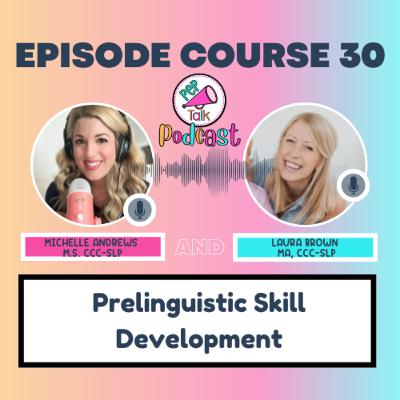
Earn CE credit here. This program has been approved for 1 clock hour of continuing education credit by the Texas Speech-Language-Hearing Association (TSHA) and counts as a PDH for ASHA (keep certificate for your records). Listen, buy quiz (just $9), earn your speech pathology CE certificate of completion!Join Laura's free resource library HERE!Description:In this episode of the Pep Talk Podcast, host Michelle Andrews and guest Laura Brown discuss the importance of pre-linguistic skill development in young children. They explore the 4I model, which includes interaction, intent, input, and imitation as foundational pillars for effective communication. Laura emphasizes the need to shift the focus from spoken words to broader communication strategies, highlighting the role of caregivers in supporting their child's communication journey. The conversation also covers practical strategies for enhancing engagement and interaction during therapy sessions, making it a valuable resource for speech-language pathologists and parents alike. Chapters00:00Introduction to Pre-Linguistic Skills03:59Shifting Focus: From Words to Communication07:31The 4I Model: Foundations of Pre-Linguistic Skills10:27Exploring the Four Pillars of Communication14:01Imitation: Building Blocks of Communication18:08Targeting Interventions: Understanding Individual Needs20:32Engaging Parents: The Role of Caregivers in Communication21:57Strategies for Interaction: Becoming a Play Partner29:31Creating Engaging Environments for Young Learners32:20Creating Effective Communication Environments33:20Understanding Intent in Early Communication41:55The Importance of Input in Language Development48:12The Role of Imitation in Language Acquisition53:30Strength-Based and Relationship-Based ApproachesAs a result of this presentation the participant will be able to: 1. Will state the four prelinguistic skill areas for identifying support needs and selecting evidence-based interventions.2. Will name 4 evidence-based strategies for supporting emerging communicators.3. Will identify three components of a strengths-based approach for supporting young emerging communicators.Course presenters: Laura Brown MA, CCC-SLP, @earlyandbrightslpandMichelle Andrews M.S., CCC-SLP @peptalkforslpsFinancial disclosures:Michelle Andrews' financial disclosers include: She has a Teachers pay Teachers and Boom Learning store under Pep Talk LLC. She is also the founder and manager of the Pep Talk Podcast. Michelle Andrews' non-financial disclosures include: Speech Arcade is an in-kind sponsor for this podcast.Laura's financial disclosures: she is the owner and founder of Early and Bright LLC, doing business as Early and Bright Online Learning .Profits from the sale of all Early & Bright courses and paid resourcesLaura's non-financial disclosures: None.If you need any additional accommodations please email info@peptalkpodcastforslps.comDisclaimer: Pep Talk LLC does not imply endorsement of course content, specific products, or clinical procedures.
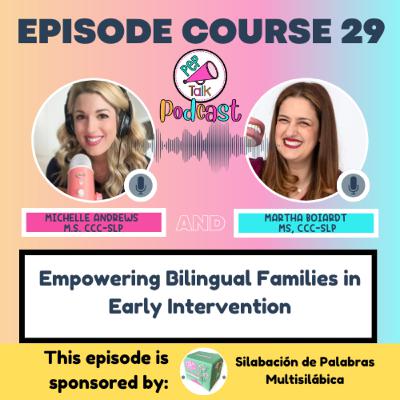
Earn CE credit here. This program has been approved for 1 clock hour of continuing education credit by the Texas Speech-Language-Hearing Association (TSHA) and counts as a PDH for ASHA.Listen, buy quiz (just $9), earn your speech pathology CE certificate of completion!This episode is sponsored by: Martha's Spanish Multisyllabic Words deck with Bjorem Speech. Get it HEREDescription: In this episode of the Pep Talk Podcast, host Michelle Andrews and guest Martha Boiardt discuss the importance of empowering bilingual families in early intervention. They explore misconceptions about bilingualism and language delays, the significance of cultural responsiveness in therapy, and the whole child approach that considers sensory awareness and collaboration with other professionals. Martha shares insights on oral motor therapy and practical strategies for supporting bilingual children, emphasizing the need for therapists to educate families and advocate for their children's needs. The conversation also touches on future projects aimed at addressing dialectal influences in speech assessments.Chapters00:00Introduction to the Pep Talk Podcast02:04 Empowering Bilingual Families in Early Intervention08:30 Debunking Myths About Bilingualism and Language Delays16:08 The Whole Child Approach in Pediatric Speech Therapy26:14 Personal Experiences and Insights on Myofunctional Therapy 27:05 Understanding Common Misconceptions in Child Development29:40 The Importance of a Whole Child Approach29:56 Sensory Integration in Therapy33:52 Cultural Sensitivity in Therapy43:46 Oral Motor Therapy and Early Intervention49:35 Empowering Bilingual Families in Language DevelopmentAs a result of this presentation the participant will be able to: •1.Identify 3 key components of a whole-child approach in pediatric speech therapy.•2.Describe how oral motor therapy can be integrated into early intervention •3.Explain one thing you can tell a bilingual family to empower their bilingual earlylanguage journey.Course presenters: Martha Boiardt MS, CCC-SLP, @miamispeechtherapyandMichelle Andrews M.S., CCC-SLP @peptalkforslpsFinancial disclosures:Michelle Andrews' financial disclosers include: She has a Teachers pay Teachers and Boom Learning store under Pep Talk LLC. She is also the founder and manager of the Pep Talk Podcast. Michelle Andrews' non-financial disclosures include: Speech Arcade is an in-kind sponsor for this podcast.Martha's financial disclosures: she is the owner of Miami Speech Therapy, LLC, a pediatric private practice that conducts bilingual speech, language, and feeding therapy in Miami, FL. I also earn compensation for Spanish language consultations and a percentage of the sales of her products with Bjorem Speech Publications. I am in the process of developing a course centered around empowering parents to take charge of their child's care and will be presenting on this topic at FLASHA 2025.Martha's non-financial disclosures: None.If you need any additional accommodations please email info@peptalkpodcastforslps.comDisclaimer: Pep Talk LLC does not imply endorsement of course content, specific products, or clinical procedures.
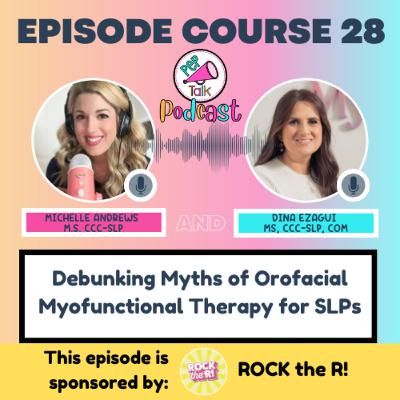
Earn CE credit here. This program has been approved for 1 clock hour of continuing education credit by the Texas Speech-Language-Hearing Association (TSHA) and counts as a PDH for ASHA.Listen, buy quiz (just $9), earn your speech pathology CE certificate of completion!This episode is sponsored by ROCK the R Get courses, worksheets, and all sorts of R tools! Use code PEPTALK for a 10% off discount! (Affiliate link)Make sure you check out Lindsey Hockel's Instagram @RocktheRspeechDescription: This episode of the Pep Talk podcast is all about debunking myths of oral facial myofunctional therapy for SLPs. The guest, Dina Izaguirre, is a certified speech language pathologist and oral facial myologist with extensive experience in the field. The conversation covers the basics of oral facial myofunctional health, the importance of tongue resting posture, and the symptoms of sleep disordered breathing. Dina emphasizes the need for a holistic approach to therapy, working collaboratively with other professionals to address the root causes of myofunctional disorders. Myofunctional therapy is more than just oral motor therapy. It focuses on reeducating the muscles for optimal breathing, chewing, and swallowing. Nasal breathing is important for health and well-being, while mouth breathing can lead to shallow breathing and increased susceptibility to infection. It's important for SLPs to consider underlying issues like sleep-disordered breathing when treating speech and articulation difficulties.Chapters00:00 Introduction and Financial Disclosures02:28 Understanding Oral Facial Myofunctional Health04:35 What is Myofunctional Therapy?07:12 Debunking Myths of Myofunctional Therapy10:14 The Importance of Tongue Resting Posture26:00 Exercises for Muscle Function and Retraining40:06 The Importance of Tongue Rest Posture and Nasal Breathing42:15 Beyond Oral Motor Therapy: The Goals of Myofunctional Therapy44:13 The Impact of Soft Diets and Oral Habits on Growth and Development47:37 The Role of Myofunctional Therapy in Articulation55:14 Recognizing Symptoms of Sleep-Disordered BreathingAs a result of this presentation the participant will be able to: 1. Define orofacial myofunctional health2. Define why tongue resting posture affects carryover for articulation.3. List 3 symptoms of sleep disordered breathing.Course presenters: View Dina Ezagui MS, CCC-SLP, COMⓇ QOMⓇ @BrooklynMyoandMichelle Andrews M.S., CCC-SLP @peptalkforslpsFinancial disclosures:Michelle Andrews' financial disclosers include: She has a Teachers pay Teachers and Boom Learning store under Pep Talk LLC. She is also the founder and manager of the Pep Talk Podcast. Michelle Andrews' non-financial disclosures include: Speech Arcade is an in-kind sponsor for this podcast.Dina's financial disclosures: Owner of Brooklyn MyoDina's non-financial disclosures: None.If you need any additional accommodations please email info@peptalkpodcastforslps.comDisclaimer: Pep Talk LLC does not imply endorsement of course content, specific products, or clinical procedures.
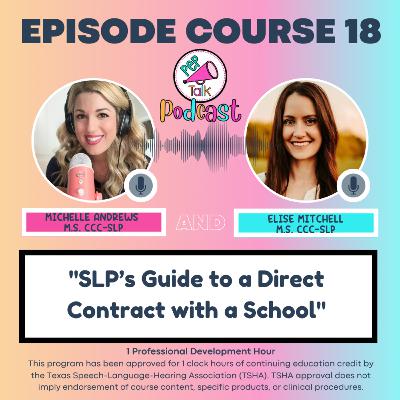
Earn CE credit here. This program has been approved for 1 clock hour.Check out Elise's school contract training and packet HERE.Use code: MICHELLE for 5% off.Listen, buy quiz (just $9), earn your speech pathology CE certificate of completion!Description: This course explains how you can direct contract with schools as an SLP. This is different than being hired by the school district or working at a school through a staffing company. Direct contracting offers ability to set your caseload size, specialty niche (if you want), choose your rate, and much more! You will learn the steps you need to take to make this dream a reality in this episode course! Earn 1 clock hour of continuing education credit (Introductory Level, Professional Area).As a result of this presentation the participant will be able to: 1. List at least 3 ways direct contracting with a school is beneficial for SLPs.2. List 5 legal documents you will need to contract with a school.3. List 2 actionable steps to get started contracting with a school.Course presenters:Elise Mitchell M.S., CCC-SLP @thetherapistsupportnetworkMichelle Andrews M.S., CCC-SLP. @peptalkforslpsFinancial disclosures:Michelle Andrews' financial disclosers include: She has a Teachers pay Teachers, Boom Learning, and Teach with Medley store under Pep Talk LLC. She is also the founder and manager of the Pep Talk Podcast. Michelle Andrews' non-financial disclosures include: Speech Arcade is an in-kind sponsor for this podcast.Elise's financial disclosures: Founder and owner of The Therapist Support Network. Elise's non-financial disclosures: No non-financial disclosures.Agenda:5 min: Introduction, bio, disclosures, learner objectives10 min: Direct contract benefits and limitations 10 min: What do you need to have in order first?10 min: First action steps (finding openings, selling to schools)10 min: Setting your caseload (In person and teletherapy options)10 min: Sending your contract 5 min: Summary, closing pointsReferences and resources: click hereA transcript is available for this podcast course. Click here to read the transcript. If you need any additional accommodations please email info@peptalkpodcastforslps.comDisclaimer: Pep Talk LLC does not imply endorsement of course content, specific products, or clinical procedures.
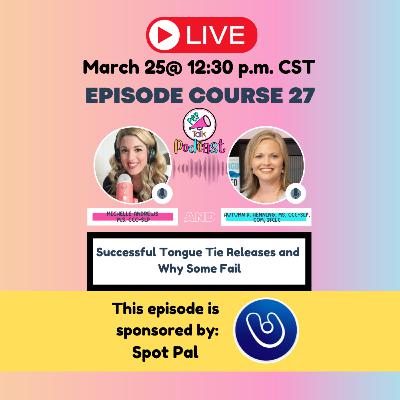
Earn CE credit here. This program has been approved for 1 clock hour of continuing education credit by the Texas Speech-Language-Hearing Association (TSHA) and counts as a PDH for ASHA.Listen, buy quiz (just $9), earn your speech pathology CE certificate of completion!This episode is sponsored by Spot Pal.Recieve $10 off your purchase at Spot Pal with code: PEPTALKDescription: In this episode of the Pep Talk Podcast, host Michelle Andrews and guest Autumn Henning discuss the complexities of tongue tie releases, including how to identify failed frenectomies, the importance of a collaborative care team, and the factors that contribute to poor outcomes. They explore the timeline of a frenectomy procedure, key questions to ask when evaluating past procedures, and the significance of therapeutic readiness in achieving successful results. The conversation emphasizes the need for a multidisciplinary approach to care and the importance of understanding the individual needs of each patient.00:00 Introduction to Tongue Tie Releases03:12 Understanding Failed Frenectomies11:26 Timeline of a Frenectomy Procedure14:56 Key Questions for Evaluating Past Procedures20:30 The Importance of Collaborative Care29:23 Building a Professional Team for Tongue Tie Cases36:50 Building Collaborative Relationships in Therapy38:45 Understanding Frenectomy Outcomes42:10 Factors Influencing Healing and Aftercare44:03 Navigating Failed Frenectomies52:11 The Impact of Tongue Ties on Speech DevelopmentAs a result of this presentation the participant will be able to: 1. list 3 questions to ask after a frenectomy has been deemed to have failed.2. list 3 professionals that should be involved in tongue tie cases for collaborative care.3. list 3 factors that contribute to poor frenectomy outcomes.Course presenters: Autumn Henning M.S. CCC-SLP, COM, IBCLC @chrysalisorofacial1andMichelle Andrews M.S., CCC-SLP @peptalkforslpsFinancial disclosures:Michelle Andrews' financial disclosers include: She has a Teachers pay Teachers and Boom Learning store under Pep Talk LLC. She is also the founder and manager of the Pep Talk Podcast. Michelle Andrews' non-financial disclosures include: Speech Arcade is an in-kind sponsor for this podcast.Autumn's financial disclosures: Owner of Chysalis Orofacial. Creator of TOTs and STONES courses. Affiliate for mentioned products.Autumn's non-financial disclosures: University of KentuckyIf you need any additional accommodations please email info@peptalkpodcastforslps.comDisclaimer: Pep Talk LLC does not imply endorsement of course content, specific products, or clinical procedures.
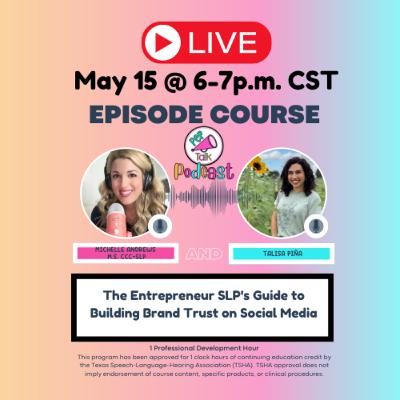
Earn CE credit here. This program has been approved for 1 clock hour of continuing education.Check out Talisa's Insta-EZ Refresh + 30-Day Post Planner GPT Bundle HERE.Listen, buy quiz (just $9), earn your speech pathology CE certificate of completion!This episode is sponsored by Marcia Church, Speech Stars Branding! Get 25% off her single stock photos and her private practice starter kit using code PEPTALK25. Check out her amazing branding materials HERE.In this episode, Michelle and Talisa discuss building brand trust on social media, specifically on Instagram. They focus on optimizing the Instagram bio and story highlights to create a strong first impression and engage the target audience. Talisa provides tips on creating a clear and compelling bio, including using a clear profile picture, using keywords in the name and title, and adding personal tidbits. She also emphasizes the importance of having strategic story highlights that showcase the brand's services and offers. The episode provides practical advice for SLP entrepreneurs looking to grow their brand on Instagram. In this conversation, Talisa provides valuable insights and strategies for optimizing Instagram profiles for therapists. She emphasizes the importance of creating a connection with the audience through authentic and relatable content. Talisa discusses the key elements of a compelling Instagram bio, including a clear and concise description, a call to action, and the use of emojis. She also highlights the significance of using highlights to showcase services, sharing valuable content, and providing a behind-the-scenes glimpse. Talisa emphasizes the importance of aesthetics and consistency in creating a cohesive brand identity. She suggests using a brand vibe, look, and style to attract and engage the target audience. Talisa also provides tips for creating purposeful and bingeable content, including identifying content pillars, providing edutainment, and using different content types. Lastly, she discusses the importance of writing captivating captions and creating saveable carousels to keep visitors engaged and increase brand trust.Watch the complete video and slide show HERE.Description: This course is for SLP entrepreneurs. It describes ways to optimize your instagram bio for your brand, defines how to narrow your target audience, and lists the things you should be posting about for your specific audience. Earn 1 clock hour of continuing education credit (Introductory Level, Professional Area).As a result of this presentation the participant will be able to: 1. Describe 3 ways to optimize your instagram bio for your brand2. Define how to narrow your target audience.3. List 3 things you should be posting about for your specific audience.Course presenters: Talisa Piña @Socially.EZMichelle Andrews M.S., CCC-SLP.Financial disclosures:Michelle Andrews' financial disclosers include: She has a Teachers pay Teachers, Boom Learning, and Teach with Medley store under Pep Talk LLC. She is also the founder and manager of the Pep Talk Podcast. Michelle Andrews' non-financial disclosures include: Speech Arcade is an in-kind sponsor for this podcast.Talisa's financial disclosures: She is the owner of Socially EZTalisa's non-financial disclosures: none.Agenda:5 min: Introduction, bio, disclosures, learner objectives5 min: Why social media is important for SLP entrepreneurs15 min: Optimizing Instagram bio10 min: Narrow down your audience 10 min: What to post for your audience10 min: Q&A discussion5 min: Summary and closingReferences and resources: click hereIf you need any additional accommodations please email info@peptalkpodcastforslps.comDisclaimer: Pep Talk LLC does not imply endorsement of course content, specific products, or clinical procedures.
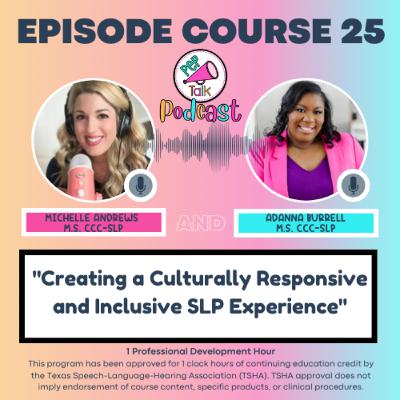
Earn CE credit here. This program has been approved for 1 clock hour of continuing education credit by the Texas Speech-Language-Hearing Association (TSHA).
Listen, buy quiz (just $8), earn your speech pathology CE certificate of completion!
This episode is sponsored by The Type B SLP! Get 20% off amazing SLP resources using code PEPTALK or by clicking here!
In this episode, Michelle and Adana discuss the importance of creating a culturally responsive and inclusive SLP experience. They emphasize the significance of diversity, equity, and inclusion in the field and highlight the need for cultural competence and humility. They also discuss the concepts of cultural responsiveness and intersectionality, emphasizing the need to recognize and respect cultural differences and tailor services to meet the needs of diverse populations. In this conversation, Adanna Burrell emphasizes the need for SLPs to understand and respect the cultural backgrounds of their clients and provides strategies for creating culturally responsive assessment and treatment plans. Adanna also discusses the importance of intersectionality and the power dynamics that exist within society. She provides resources and recommendations for hiring practices that promote diversity and inclusion. Overall, the conversation highlights the need for SLPs to continually educate themselves, engage in inclusive conversations, and advocate for change.
Watch the complete video and slide show HERE.
Description:
This session will offer ideas, suggestions, strategies, and engage you in a thoughtful discussion on what must be done to create a culturally responsive SLP experience for creating an inclusive environment for the SLP. We will gain an understanding of the importance of cultural responsiveness in SLP practices. We will then focus on acquiring practical strategies for fostering cultural inclusivity in SLP assessments and interventions. Lastly, we will discuss ways of creating a truly inclusive workplace culture and create a personalized plan for implementing cultural responsiveness in their own SLP practices.
As a result of this presentation the participant will be able to:
1. Define the significance of promoting diversity, equity, inclusion as it pertains to creating a culturally responsive professional practice.
2. Describe the importance of cultural responsiveness in Speech-Language Pathology practices.
3. List 3 strategies for fostering cultural inclusivity inSLP assessments and interventions.
4. Define a personalized plan for implementing cultural responsiveness in their own SLP practices.
Course presenters: Adanna Burrell M.S. CCC-SLP
Michelle Andrews M.S., CCC-SLP.
Financial disclosures:
Michelle Andrews' financial disclosers include: She has a Teachers pay Teachers, Boom Learning, and Teach with Medley store under Pep Talk LLC. She is also the founder and manager of the Pep Talk Podcast.
Michelle Andrews' non-financial disclosures include: Speech Arcade is an in-kind sponsor for this podcast.
Adanna's financial disclosures: She is the owner of Speak It Therapy
Adanna's non-financial disclosures:
Agenda:
5 min: Introduction, bio, disclosures, learner objectives
10 min: Promoting diversity, equity, and inclusion
10 min: The importance of culturally responsive SLP practices
10 min: Strategies for fostering cultural inclusivity in assessments
15 min: Making a plan for implementing cultural responsiveness in your own SLP practice
5 min: Q&A discussion
5 min: Summary and closing
References and resources: click here
A transcript is available for this podcast course on the course page here If you need any additional accommodations please email info@peptalkpodcastforslps.com
Disclaimer: Pep Talk LLC does not imply endorsement of course content, specific products, or clinical procedures.
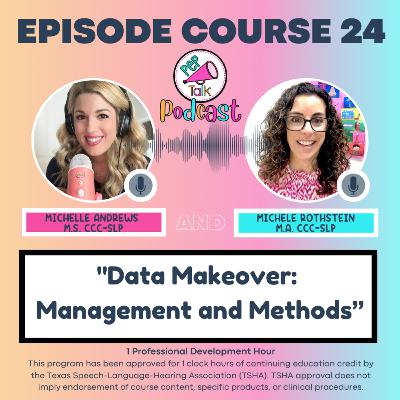
Earn CE credit here. This program has been approved for 1 clock hour of continuing education credit by the Texas Speech-Language-Hearing Association (TSHA). TSHA approval does not imply endorsement of course content, specific products, or clinical procedures. TSHA CEU hours can be used as professional development hours for the maintenance of your ASHA certificate of clinical competence (CCC).
Listen, buy quiz (just $8), earn your speech pathology CE certificate of completion!
In this episode, Michelle Andrews interviews Michelle Rothstein, a school-based SLP and owner of SLP Madness, about data collection and management in speech therapy. They discuss the importance of data collection, the difference between therapy charting and data probes, best practices for data collection, the role of data in the IEP process, and implementing effective data collection systems. In this conversation, Michele Rothstein discusses the benefits of using digital data sheets for tracking student progress. She provides a sample of a digital data sheet and explains how it can be customized to track different goals. Michele also shares the advantages of using digital data sheets, such as easy access and organization of information.
Watch the complete video with captions and slide show HERE.
Description:
This course reviews data taking management and methods for a smoother and efficient process. Data doesn't have to be this hard! Taking data should improve your paperwork, not cause more stress. Give your data taking skills a makeover. Earn 1 clock hour of continuing education credit (Introductory Level, Professional Area).
As a result of this presentation the participant will be able to:
1. Understand the difference between using data collection probes and therapy charting.2. Identify 5 places data probes get reported in the lEP process.3. State 3 ways digital data sheets will save time on IEP paperwork.4. Explain why using data collection probes are legally defensible.
Course presenters: Michele Rothstein M.A. CCC-SLP
Michelle Andrews M.S., CCC-SLP.
Financial disclosures:
Michelle Andrews' financial disclosers include: She has a Teachers pay Teachers, Boom Learning, and Teach with Medley store under Pep Talk LLC. She is also the founder and manager of the Pep Talk Podcast.
Michelle Andrews' non-financial disclosures include: Speech Arcade is an in-kind sponsor for this podcast.
Michele's financial disclosures: She is the owner of SLP Madness.
Michele's non-financial disclosures: no non-financial disclosures
Agenda:
5 min: Introduction, bio, disclosures, learner objectives10 min: Data collection vs therapy charting10 min: Where data is reported on IEPs10 min: Digital Data sheets10min: Data collection probes are illegally defensible 10 min: live Q&A5 min: Summary and closing
References and resources: click here
Michele's Free IEP Goal Bank and Data Collection System
A transcript is available for this podcast course. Click here to read the transcript. If you need any additional accommodations please email info@peptalkpodcastforslps.com
Disclaimer: Pep Talk LLC does not imply endorsement of course content, specific products, or clinical procedures.
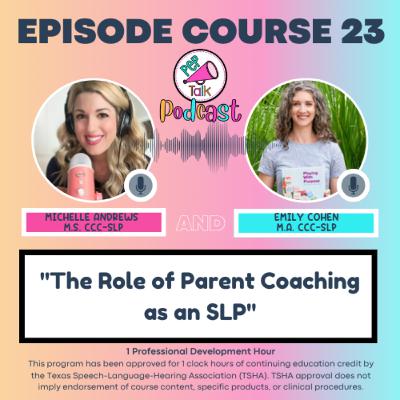
Earn CE credit here. This program has been approved for 1 clock hour of continuing education credit by the Texas Speech-Language-Hearing Association (TSHA). TSHA approval does not imply endorsement of course content, specific products, or clinical procedures. TSHA CEU hours can be used as professional development hours for the maintenance of your ASHA certificate of clinical competence (CCC).
Listen, buy quiz (just $8), earn your speech pathology CE certificate of completion!
Description:
This course explains how to offer parent coaching services as a speech-language pathologist. It distinguishes the difference between parent coaching, parent education, and a speech therapy session. We will describe examples of parent coaching with early intervention language skills. Learn how you can start parent coaching in your area. Earn 1 clock hour of continuing education credit (Introductory Level, Professional Area).
As a result of this presentation the participant will be able to:
1. Define parent coaching vs parent education.2. List 3 differences between parent coaching and a speech therapy session.3. Identify 3 examples of parent coaching for early language skills.4. Explain 3 ways to offer parent coaching as a service.
Course presenters:Emily Cohen M.A. CCC-SLP
Michelle Andrews M.S., CCC-SLP.
Financial disclosures:
Michelle Andrews' financial disclosers include: She has a Teachers pay Teachers, Boom Learning, and Teach with Medley store under Pep Talk LLC. She is also the founder and manager of the Pep Talk Podcast.
Michelle Andrews' non-financial disclosures include: Speech Arcade is an in-kind sponsor for this podcast.
Emily's financial disclosures: She is the creator of the Playing with Purpose framework and receives compensation for any books, products, and materials published under that name.
Emily's non-financial disclosures: no non-financial disclosures
Agenda:
5 min: Introduction, bio, disclosures, learner objectives
10 min: What is parent coaching
10 min: How to offer parent coaching to parents
15 min: How parent coaching is different than therapy
10min: Examples of parent coaching with early language skills
10 min: Summary, ”take away” points, closing
References and resources: click here
A transcript is available for this podcast course. Click here to read the transcript. If you need any additional accommodations please email info@peptalkpodcastforslps.com
Disclaimer: Pep Talk LLC does not imply endorsement of course content, specific products, or clinical procedures.
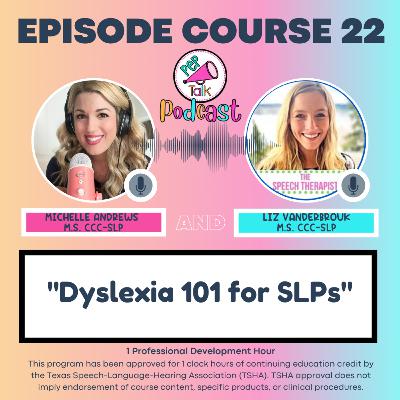
Earn CE credit here. This program has been approved for 1 clock hour of continuing education credit by the Texas Speech-Language-Hearing Association (TSHA). TSHA approval does not imply endorsement of course content, specific products, or clinical procedures. TSHA CEU hours can be used as professional development hours for the maintenance of your ASHA certificate of clinical competence (CCC).
Listen, buy quiz (just $8), earn your speech pathology CE certificate of completion!
Description:
This course defines signs of dyslexia, the SLPs role when it comes to dyslexia identification and intervention, and discusses ways to work on speech and language goals with kids with dyslexia. Earn 1 clock hour of continuing education credit (Introductory Level, Professional Area).
As a result of this presentation the participant will be able to:
1. List 5 overarching signs of dyslexia2. List 3 comorbid diagnoses with dyslexia3. Define the SLPs role when it comes to dyslexia identification and intervention4. Describe 5 strategies to use when working on speech therapy goals with kids with dyslexia
Course presenters:
Liz Vanderbrouk M.S. CCC-SLP
Michelle Andrews M.S., CCC-SLP.
Financial disclosures:
Michelle Andrews' financial disclosers include: She has a Teachers pay Teachers, Boom Learning, and Teach with Medley store under Pep Talk LLC. She is also the founder and manager of the Pep Talk Podcast.
Michelle Andrews' non-financial disclosures include: Speech Arcade is an in-kind sponsor for this podcast.
Liz's financial disclosures: She has a T P T store as well as her own website, the speech therapist.ch, where she sells her activities.
Liz's non-financial disclosures: She is the founder of the speech therapist ch in Switzerland.
Agenda:
5 min: Introduction, bio, disclosures, learner objectives
15 min: Signs of Dyslexia
10 min: Comorbid diagnoses
15 min: SLPs role when it comes to Dyslexia
10 min: Strategies for speech therapy
5 min: Summary, closing points
References and resources: click here
A transcript is available for this podcast course. Click here to read the transcript. If you need any additional accommodations please email info@peptalkpodcastforslps.com
Disclaimer: Pep Talk LLC does not imply endorsement of course content, specific products, or clinical procedures.
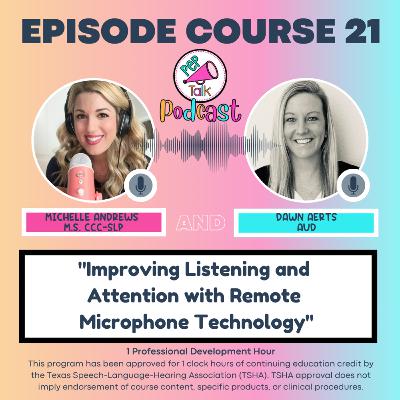
Earn CE credit here. This program has been approved for 1 clock hour of continuing education credit by the Texas Speech-Language-Hearing Association (TSHA). TSHA approval does not imply endorsement of course content, specific products, or clinical procedures. TSHA CEU hours can be used as professional development hours for the maintenance of your ASHA certificate of clinical competence (CCC).
Listen, buy quiz (just $8), earn your speech pathology CE certificate of completion!
Description:
This course reviews what speech language pathologists should know about remote microphone systems. This course describes who benefits from them and why. Also how SLPs can be involved in the process of remote microphone systems. Earn 1 clock hour of continuing education credit (Introductory Level, Professional Area).
As a result of this presentation the participant will be able to:
1. Participants will be able to define what a remote microphone system is.2. Participants will be able to list at least 3 populations that can benefit from using a remote microphone system.3. Participants will be able to summarize the role of a speech language pathologist to support the use of remote microphone technology.
Course presenters:
Dawn Aerts AUD
Michelle Andrews M.S., CCC-SLP.
Financial disclosures:
Michelle Andrews' financial disclosers include: She has a Teachers pay Teachers, Boom Learning, and Teach with Medley store under Pep Talk LLC. She is also the founder and manager of the Pep Talk Podcast.
Michelle Andrews' non-financial disclosures include: Speech Arcade is an in-kind sponsor for this podcast.
Dawn's financial disclosures: No financial disclosues.
Dawn's non-financial disclosures: No non-financial disclosures.
Agenda:
5 min: Introduction, bio, disclosures, learner objectives15 min: remote microphone systems10 min: who can benefit from this technology15 min: The role of the SLP10min: How to advocate for a RMT device for your client10 min: Summary, closing
References and resources: click here
A transcript is available for this podcast course. Click here to read the transcript. If you need any additional accommodations please email info@peptalkpodcastforslps.com
Disclaimer: Pep Talk LLC does not imply endorsement of course content, specific products, or clinical procedures.

Earn CE credit here. This program has been approved for 1 clock hour of continuing education credit by the Texas Speech-Language-Hearing Association (TSHA). TSHA approval does not imply endorsement of course content, specific products, or clinical procedures. TSHA CEU hours can be used as professional development hours for the maintenance of your ASHA certificate of clinical competence (CCC).
Listen, buy quiz (just $8), earn your speech pathology CE certificate of completion!
Description:
This course explains how you can provide speech therapy via teletherapy in the schools. It talks about direct and indirect services, scheduling sessions, and implementing engaging speech therapy sessions virtually. After this course you will have foundational knowledge to get started providing teletherapy in the schools. Earn 1 clock hour of continuing education credit (Introductory Level, Professional Area).
As a result of this presentation the participant will be able to:
1.Define direct and indirect virtual speech therapy.2. Explain how to schedule speech therapy sessions virtually.3. Give 3 examples of how to engage children in teletherapy.Agenda
Course presenters:
Erica Cappellini M.S., CCC-SLP
Michelle Andrews M.S., CCC-SLP.
Financial disclosures:
Michelle Andrews' financial disclosers include: She has a Teachers pay Teachers, Boom Learning, and Teach with Medley store under Pep Talk LLC. She is also the founder and manager of the Pep Talk Podcast.
Michelle Andrews' non-financial disclosures include: Speech Arcade is an in-kind sponsor for this podcast.
Erica's financial disclosures: She works for a teletherapy company, PDS.
Erica's non-financial disclosures: No non-financial disclosures.
Agenda:
5 min: Introduction, bio, disclosures, learner objectives
15 min: Day in the life of a school tele therapist SLP
10 min: how to schedule virtual speech sessions
15 min: tips on how to give speech therapy virtually
10 min: engaging speech therapy ideas
5 min: Summary, closing points
References and resources: click here
A transcript is available for this podcast course. Click here to read the transcript. If you need any additional accommodations please email info@peptalkpodcastforslps.com
Disclaimer: Pep Talk LLC does not imply endorsement of course content, specific products, or clinical procedures.
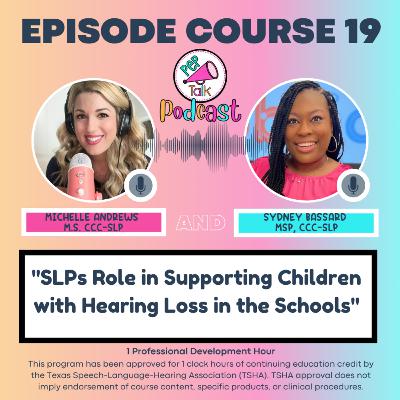
Earn CE credit here. This program has been approved for 1 clock hour of continuing education credit by the Texas Speech-Language-Hearing Association (TSHA). TSHA approval does not imply endorsement of course content, specific products, or clinical procedures. TSHA CEU hours can be used as professional development hours for the maintenance of your ASHA certificate of clinical competence (CCC).
Listen, buy quiz (just $8), earn your speech pathology CE certificate of completion!
Description:
This course explains the SLPs role when it comes to working with children with hearing loss in the school system. You will learn about the auditory hierarchy of listening, classroom modifications, goals, and collaborating with teachers. Earn 1 clock hour of continuing education credit (Introductory Level, Professional Area).
As a result of this presentation the participant will be able to:
1. Define the auditory hierarchy of listening
2. Identify 1 classroom modifications for the hearing loss population
3. Explain 2 ways to implement speech and language therapy goals for children with hearing loss in the schools
Course presenters:
Sydney Bassard MSP, CCC-SLP
Michelle Andrews M.S., CCC-SLP.
Financial disclosures:
Michelle Andrews' financial disclosers include: She has a Teachers pay Teachers, Boom Learning, and Teach with Medley store under Pep Talk LLC. She is also the founder and manager of the Pep Talk Podcast.
Michelle Andrews' non-financial disclosures include: Speech Arcade is an in-kind sponsor for this podcast.
Sydney's financial disclosures: She is a part-time employee
of The informed SLP and she is the owner of The Listening SLP. She also receives compensation for her work with Boys Town National Research Hospital.
Sydney's non-financial disclosures: No non-financial disclosures.
Agenda:
5 min: Introduction, bio, disclosures, learner objectives10 min: SLPs role in the schools for hearing loss
10 min: Auditory hierarchy of listening
10 min: Classroom modifications and collaborations 10 min: Scheduling types
10 min: Hearing loss goals and activities in the school
5 min: Summary and closing
References and resources: click here
A transcript is available for this podcast course. Click here to read the transcript. If you need any additional accommodations please email info@peptalkpodcastforslps.com
Disclaimer: Pep Talk LLC does not imply endorsement of course content, specific products, or clinical procedures.
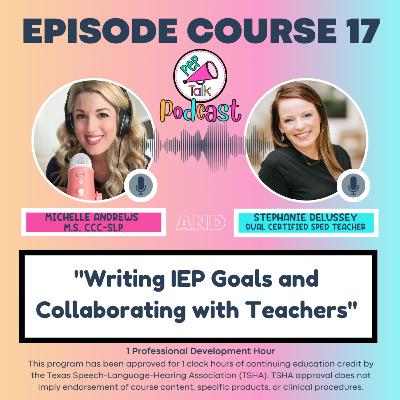
Earn CE credit here. This program has been approved for 1 clock hour of continuing education credit by the Texas Speech-Language-Hearing Association (TSHA). TSHA approval does not imply endorsement of course content, specific products, or clinical procedures. TSHA CEU hours can be used as professional development hours for the maintenance of your ASHA certificate of clinical competence (CCC).
Listen, buy quiz (just $8), earn your speech pathology CE certificate of completion!
Description:
This course explains how to write appropriate goals for IEPs that not only are appropriate and measurable but help connect them to the real world. This course also explains how to work as a team with other professionals when developing IEPs in the school setting. Earn 1 clock hour of continuing education credit (Introductory Level, Professional Area).
As a result of this presentation the participant will be able to:
1. Define and recognize how to write appropriate, measurable IEP goals2. Define the difference between IEP goals and objectives3. List at least 2 ways to co-develop IEP goals with other professionals
Course presenters:
Stephanie DeLussey Dual Certified SPED Teacher
Michelle Andrews M.S., CCC-SLP.
Financial disclosures:
Michelle Andrews' financial disclosers include: She has a Teachers pay Teachers, Boom Learning, and Teach with Medley store under Pep Talk LLC. She is also the founder and manager of the Pep Talk Podcast.
Michelle Andrews' non-financial disclosures include: Speech Arcade is an in-kind sponsor for this podcast.
Darla's financial disclosures: Owner of Mrs. D's Corner and the Intentional IEP.
Darla's non-financial disclosures: No non-financial disclosures.
Agenda:
5 min: Introduction, bio, disclosures, learner objectives10 min: Overview of IEP10 min: Writing IEP goals15 min: Collaborating with teachers
10min: Goals vs objectives10 min: Summary, closing points
References and resources: click here
A transcript is available for this podcast course. Click here to read the transcript. If you need any additional accommodations please email info@peptalkpodcastforslps.com
Disclaimer: Pep Talk LLC does not imply endorsement of course content, specific products, or clinical procedures.
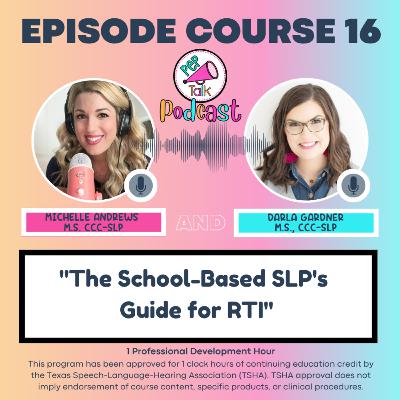
Earn CE credit here. This program has been approved for 1 clock hour of continuing education credit by the Texas Speech-Language-Hearing Association (TSHA). TSHA approval does not imply endorsement of course content, specific products, or clinical procedures. TSHA CEU hours can be used as professional development hours for the maintenance of your ASHA certificate of clinical competence (CCC).
Listen, buy quiz (just $8), earn your speech pathology CE certificate of completion!
Description:
This course explains the SLP’s role in RTI in the school system. It outlines the RTI tiers and gives examples of each. This course gives real life tips on how to make time in your busy schedule for RTI and how to get other professionals on board. RTI won’t sound so overwhelming and confusing after this course. Earn 1 clock hour of continuing education credit (Introductory Level, Professional Area).
As a result of this presentation the participant will be able to:
1. List a reason why we do pre-referral interventions
2. Give an example of tier 1 RTI
3. Give an example of tier 2 RTI
Course presenters:
Darla Gardner M.S., CCC-SLP
Michelle Andrews M.S., CCC-SLP.
Financial disclosures:
Michelle Andrews' financial disclosers include: She has a Teachers pay Teachers, Boom Learning, and Teach with Medley store under Pep Talk LLC. She is also the founder and manager of the Pep Talk Podcast.
Michelle Andrews' non-financial disclosures include: Speech Arcade is an in-kind sponsor for this podcast.
Darla's financial disclosures: Owner, author, and creator of Ms Gardenia's Speech Room, she is an early childhood SLP at Ennis ISD, and uses some affiliate links in handouts. Darla's non-financial disclosures: Owner of some Facebook groups mentioned. Mentions books by Leslie Sullivan.
Agenda:
5 min: Introduction, bio, disclosures, learner objectives10 min: What is RTI, the tiers, why do we do RTI10 min: What SLPs should and shouldn’t do10 min: Making time for RTI, meetings, and support15min: Tier 1 examples, tier 2 examples, tier 3 examples and afterwards10 min: Summary, closing points
References and resources: click here
A transcript is available for this podcast course. Click here to read the transcript. If you need any additional accommodations please email info@peptalkpodcastforslps.com
Disclaimer: Pep Talk LLC does not imply endorsement of course content, specific products, or clinical procedures.
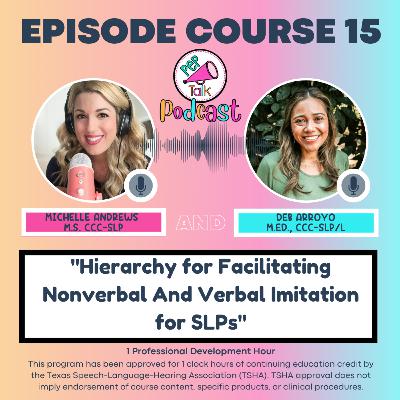
Earn CE credit here. This program has been approved for 1 clock hour of continuing education credit by the Texas Speech-Language-Hearing Association (TSHA). TSHA approval does not imply endorsement of course content, specific products, or clinical procedures. TSHA CEU hours can be used as professional development hours for the maintenance of your ASHA certificate of clinical competence (CCC).
Listen, buy quiz (just $8), earn your speech pathology CE certificate of completion!
Description:
This course explains the hierarchy of nonverbal imitation skills and verbal imitation skills for SLPs to work on during therapy to increase communication in children. It will discus real examples and go over a couple of approaches to use to facilitate imitation skills. Earn 1 clock hour of continuing education credit (Introductory Level, Professional Area).
As a result of this presentation the participant will be able to:
1. List 3 levels of nonverbal imitation
2. List 4 levels of verbal imitation
3. Describe two approaches for facilitating imitation
Course presenters:
Deb Arroyo M.Ed., CCC-SLP/L
Michelle Andrews M.S., CCC-SLP.
Financial disclosures:
Michelle Andrews' financial disclosers include: She has a Teachers pay Teachers, Boom Learning, and Teach with Medley store under Pep Talk LLC. She is also the founder and manager of the Pep Talk Podcast.
Michelle Andrews' non-financial disclosures include: Speech Arcade is an in-kind sponsor for this podcast.
Deb's financial disclosers include: no financial disclosures.
Deb's non financial disclosers include: no non financial disclosures.
Agenda:
5 min: Introduction, bio, disclosures, learner objectives
5 min: why imitation skills are important
15 min: nonverbal imitation skills
15 min: verbal imitation skills
5 min: naturalistic approach
5 min: reciprocal imitation approach
5 min: informal assessment
5 min: Summary, closing points
References and resources: click here
A transcript is available for this podcast course. Click here to read the transcript. If you need any additional accommodations please email info@peptalkpodcastforslps.com
Disclaimer: Pep Talk LLC does not imply endorsement of course content, specific products, or clinical procedures.
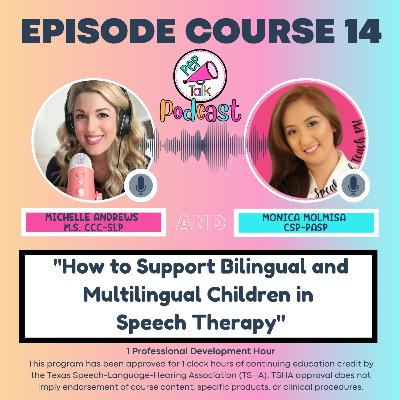
Earn CE credit here. This program has been approved for 1 clock hour of continuing education credit by the Texas Speech-Language-Hearing Association (TSHA). TSHA approval does not imply endorsement of course content, specific products, or clinical procedures. TSHA CEU hours can be used as professional development hours for the maintenance of your ASHA certificate of clinical competence (CCC).
Listen, buy quiz (just $8), earn your speech pathology CE certificate of completion!
Description:
This course explains how to support bilingual and multilingual language development. It goes over myths and defines ways that multilingual learners develop language. This course gives examples of how we can support bilingualism and multilingualism in speech therapy. Earn 1 clock hour of continuing education credit (Introductory Level, Professional Area).
As a result of this presentation the participant will be able to:
1. List 2 common myths of bilingualism/multilingualism2. Define code-mixing and code switching and state why it happens3. Give an example of how we can support bilingualism
Course presenters:
Monica Shiena Sagad-Molmisa, CSP-PASP
Michelle Andrews M.S., CCC-SLP.
Financial disclosures:
Michelle Andrews' financial disclosers include: She has a Teachers pay Teachers, Boom Learning, and Teach with Medley store under Pep Talk LLC. She is also the founder and manager of the Pep Talk Podcast.
Michelle Andrews' non-financial disclosures include: Speech Arcade is an in-kind sponsor for this podcast.
Monica's financial disclosers include: Owner of Speak and Teach PH
Monica's non financial disclosers include: Boom Learning Advisory Board for 2022 to 2023. Admin of Speech Therapy Support and Tips for Filipino Families Facebook Group.
Agenda:
5 min: Introduction, bio, disclosures, learner objectives
10 min: myths of bilingual and multilingual language development
10 min: code mixing and code switching
10 min: ways we can support children with language delays and disorders
15 min: language support for bilingualism
10 min: Summary, closing points
References and resources: click here
A transcript is available for this podcast course. Click here to read the transcript. If you need any additional accommodations please email info@peptalkpodcastforslps.com
Disclaimer: Pep Talk LLC does not imply endorsement of course content, specific products, or clinical procedures.
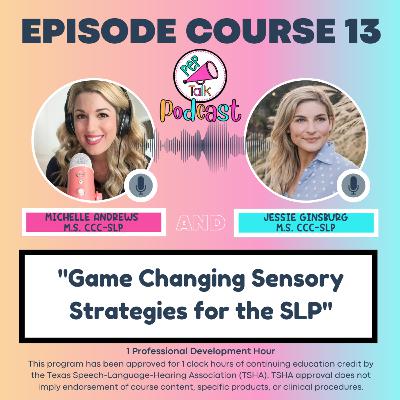
Earn CE credit here. This program has been approved for 1 clock hour of continuing education credit by the Texas Speech-Language-Hearing Association (TSHA). TSHA approval does not imply endorsement of course content, specific products, or clinical procedures. TSHA CEU hours can be used as professional development hours for the maintenance of your ASHA certificate of clinical competence (CCC).
Listen, buy quiz (just $8), earn your speech pathology CE certificate of completion!
Description:
This course explains why SLPs need to
understand sensory processing and what their role is. This course will discuss
sensory strategies to have more effective
speech therapy sessions. Review regulation vs dysregulation and what
that will look like for children and how we can enter their optimal learning
zone. Earn 1 clock hour of continuing education credit (Introductory Level, Professional Area).
As a result of this presentation the participant will be able to:
1.Explain why regulation is essential to building communication.
2.Describe key characteristics of the regulated child.
3.Describe 3 sensory activities that can be implemented in sessions in order to improve regulation.
Course presenters:
Jessie Ginsburg M.S., CCC-SLP
Michelle Andrews M.S., CCC-SLP.
Financial disclosures:
Michelle Andrews' financial disclosers include: She has a Teachers pay Teachers, Boom Learning, and Teach with Medley store under Pep Talk LLC. She is also the founder and manager of the Pep Talk Podcast.
Michelle Andrews' non-financial disclosures include: Speech Arcade is an in-kind sponsor for this podcast.
Jessie financial disclosers include: Owner of Pediatric Therapy
Playhouse and the creator of the Inside Out Sensory Programs
Jessie’s non financial disclosers include: no non-financial
disclosures.
Agenda:
5 min: Introduction, bio, disclosures, learner objectives
10 min: Why SLPs need to understand sensory processing
10 min: The SLPs role in sensory processing
15 min: The optimal learning zone
10min: strategies for bringing clients into their optimal learning zone
10 min: Summary and closing points
References and resources: click here
A transcript is available for this podcast course. Click here to read the transcript. If you need any additional accommodations please email info@peptalkpodcastforslps.com
Disclaimer: Pep Talk LLC does not imply endorsement of course content, specific products, or clinical procedures.

Earn CE credit here. This program has been approved for 1 clock hour of continuing education credit by the Texas Speech-Language-Hearing Association (TSHA). TSHA approval does not imply endorsement of course content, specific products, or clinical procedures. TSHA CEU hours can be used as professional development hours for the maintenance of your ASHA certificate of clinical competence (CCC).
Listen, buy quiz (just $8), earn your speech pathology CE certificate of completion!
Description: This episode course focuses on
how to properly assess the speech mechanism for underlying
structural/functional deficits that could impede progress in therapy and
provide practical strategies to help SLPs elicit non-lateralized target
phonemes using phonetic shaping and cognitive reframing. Considerations for
target selection and strategies to promote generalization will also be
addressed. Earn 1 clock hour of continuing education credit (Introductory Level, Professional Area).
As a result of this presentation the participant will be able to:
1. Describe how phonetic shaping is used to elicit non lateral speech sounds.
2. Describe how cognitive reframing can make it easier to produce correct production of
target phonemes.
3. Describe how complexity theory can be used for target selection to simplify speech
therapy intervention.
Course presenters:
Amy Graham M.S., CCC-SLP
Michelle Andrews M.S., CCC-SLP.
Financial disclosures:
Michelle Andrews' financial disclosers include: She has a Teachers pay Teachers, Boom Learning, and Teach with Medley store under Pep Talk LLC. She is also the founder and manager of the Pep Talk Podcast.
Michelle Andrews' non-financial disclosures include: Speech Arcade is an in-kind sponsor for this podcast.
Amy’s financial disclosures: Amy is owner of Graham Speech therapy and
the creator of the Graham Speech Therapy Oral-Facial Exam and the Bjorem Speech Sound Cues
Decks for Lateralization and Phonology Targets for Cycles.
Amy’s non-financial disclosures: no non-financial disclosures.
Agenda:
5 min: Introduction, bio, disclosures, learner objectives
10 min: structural/functional deficits of lateralized sounds
15 min: phonetic shaping
15 min: cognitive reframing
15min: complexity theory
5 min: Summary, closing points
References and resources: click here
A transcript is available for this podcast course. Click here to read the transcript. If you need any additional accommodations please email info@peptalkpodcastforslps.com
Disclaimer: Pep Talk LLC does not imply endorsement of course content, specific products, or clinical procedures.

Earn CE credit here. This program has been approved for 1 clock hour of continuing education credit by the Texas Speech-Language-Hearing Association (TSHA). TSHA approval does not imply endorsement of course content, specific products, or clinical procedures. TSHA CEU hours can be used as professional development hours for the maintenance of your ASHA certificate of clinical competence (CCC).
Listen, buy quiz (just $8), earn your speech pathology CE certificate of completion!
Description: This course reviews basic safety knowledge and why it is so important with children who have speech and language disorders. It explains how to incorporate safety knowledge during speech therapy (Introductory Level, Professional Area).
As a result of this presentation the participant will be able to:
1. identify basic safety knowledge for children.
2. identify reasons why basic safety knowledge is important to a child’s well being especially children with speech and language disorders.
3. describe how to incorporate basic safety knowledge into speech therapy goals.
Course presenters:
Kat Watson Autism Education Specialist
Michelle Andrews M.S. CCC-SLP.
Financial disclosures:
Michelle Andrews' financial disclosers include: She has a Teachers pay Teachers, Boom Learning, and Teach with Medley store under Pep Talk LLC. She is also the founder and manager of the Pep Talk Podcast.
Michelle Andrews' non-financial disclosures include: Speech Arcade is an in-kind sponsor for this podcast.
Kat Watson's financial disclosers include: No financial disclosures.
Kat Watson's non-financial disclosers include: No non-financial disclosures.
Agenda:
10 min: Introduction, bio, disclosures, learner objectives
15 min: understanding basic safety knowledge
15 min: Why basic safety instruction is important
10 min: ways we can teach safety skills
5 min: incorporating safety into speech therapy goals
5 min: summary, closing points
References and resources: click here
A transcript is available for this podcast course. Click here to read the transcript. If you need any additional accommodations please email info@peptalkpodcastforslps.com
Disclaimer: Pep Talk LLC does not imply endorsement of course content, specific products, or clinical procedures.

Comments

Download from Google Play

Download from App Store
 United States