


 Claim Ownership
Talking Real Money - Investing Talk
Subscribed: 1,093Played: 202,053
Subscribe

© 2022
Description
Financial talk radio veteran, Don McDonald and former host of Serious Money on PBS, Tom Cock, join forces to talk about real money issues. In each episode, they solve real money problems, dole out real investing (not speculating) advice, and really explain the financial issues that effect all of us. Plus, it's actually fun! Talking Real Money is a podcast designed to provide the real help we all need to enjoy a really great future. Call in with your questions anytime at 855-935-TALK (8255).
1849 Episodes
Reverse
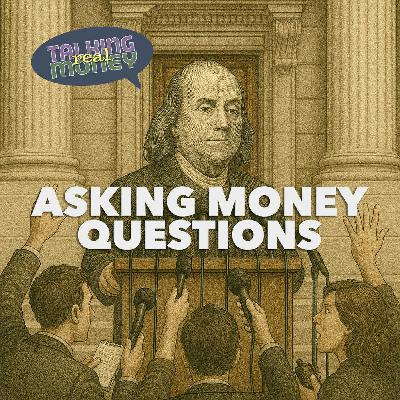
In this Friday Q&A episode, Don answers four listener questions covering fund recommendations, special-needs financial planning, retirement withdrawal strategy, and tax-efficient health savings. First, he addresses whether Talking Real Money receives commissions for mentioning Avantis and Dimensional funds (they do not) and explains why those firms’ evidence-based strategies stand out. A second caller asks about planning for a child with a lifelong disability, prompting Don to stress the importance of working with a specialist attorney to establish structures such as special-needs trusts and ABLE accounts. Another listener questions whether all-in-one funds complicate retirement withdrawals, but Don argues that simple portfolio withdrawals beat complex optimization strategies. The episode closes with a teacher nearing retirement asking whether drawing from a 457 plan to keep funding an HSA is worthwhile, which Don notes can create a powerful tax advantage similar to a Roth conversion.
0:05 Friday Q&A intro and reminder to submit voice questions at TalkingRealMoney.com
0:50 Listener asks whether Don and Tom receive commissions for recommending Avantis or Dimensional funds
1:33 Don explains the evidence-based origins of Dimensional and Avantis and confirms there are no commissions or compensation
4:15 Caller asks how to financially plan for a child with a lifelong neurological disability
5:15 Don stresses the importance of working with a special-needs attorney and explains tools like ABLE accounts and special-needs trusts
7:09 Listener asks whether all-in-one funds like VT or AVGE create problems when withdrawing money in retirement
8:27 Don argues simplicity is better than optimization and recommends withdrawing from the portfolio as a whole rather than trying to pick winners
10:49 Teacher retiring at 54 asks whether it makes sense to withdraw from a 457 plan to continue maximizing HSA contributions
12:38 Don explains how using taxable withdrawals to fund an HSA can effectively create a Roth-like tax benefit
Learn more about your ad choices. Visit megaphone.fm/adchoices

A debate over jelly bean flavors quickly pivots into a takedown of a flashy Inc. Magazine article claiming people shouldn’t save for retirement. Don and Tom dissect the “cash-flow over investing” pitch from entrepreneur Joseph Drups, exposing the realities of running small businesses, the risks behind claims of passive income, and the likelihood that the real money comes from selling the system rather than executing it. The conversation then turns to listener questions, including the differences between Avantis ETFs AVGE and AVTM and a thoughtful inquiry about whether factor investing from firms like Avantis and Dimensional justifies higher fees compared with traditional cap-weighted index funds.
0:04 Jelly bean debate returns: Costco Jelly Belly flavors, jalapeño surprises, and the “Pepto-Bismol” mystery bean
1:58 Inc. article claims you shouldn’t save for retirement
2:45 Entrepreneur Joseph Drups’ “cash-flow over investing” strategy
4:08 The myth of passive income from small businesses
5:46 Valuing a business vs. claiming low net worth
7:17 Reality check: most small businesses fail
10:06 Drups Ventures model and e-commerce brand acquisitions
11:10 The $100/month “Fast FI Club” and selling the system
13:55 Entrepreneurship vs. unrealistic promises of passive income
15:28 Impatience and the risks of chasing quick financial independence
16:44 Listener question: Avantis AVTM vs. AVGE
19:11 What actually defines a “true” index fund
23:06 Bogleheads critique of smart beta and factor strategies
24:08 Evidence for small-cap and value premiums since 1926
27:18 Fees vs. expected factor premiums
28:00 Recency bias and long periods when factors underperform
30:53 Raisin Bran bag conspiracy theory and aging complaints
Learn more about your ad choices. Visit megaphone.fm/adchoices

Broadcast from RetireMeet 2026 in Bellevue, Don and Tom reflect on the evolution of retirement planning—from a narrow focus on investments to a broader conversation about purpose, relationships, and life after work. They interview Paul Merriman, who discusses portfolio construction, the role of small-cap value stocks, risk tolerance, and long-term investing discipline. The conversation also explores withdrawal strategies, market history, and how investor behavior during downturns often determines success more than asset allocation itself. The episode closes with a major announcement: the Talking Real Money radio show will end in April and transition fully to a podcast format with five weekly episodes.
0:27 Reflections on the event and praise for speakers like Christine Benz and Paul Merriman.
1:54 Growing focus on purpose and lifestyle in retirement, not just money.
3:11 Audience turnout and attendees traveling from across the country for RetireMeet.
3:51 The importance of a holistic approach to retirement planning including relationships and lifestyle.
5:25 Estate planning conversation and the uncomfortable reality of thinking about life after we’re gone.
6:01 How to listen to the podcast and transition from radio listening to podcast apps.
6:41 Introduction of Paul Merriman and discussion of portfolio construction and asset classes.
8:15 Understanding risk tolerance and balancing portfolios for different ages.
9:41 Investor behavior during crises like 2008 and the tech crash of 2000–2002.
10:32 Cap-weighted vs equal-weighted S&P 500 and tax implications.
11:48 Why investors should document how they feel during market highs and lows.
12:06 Using nearly 100 years of market data to understand future volatility.
14:42 The evolution of financial planning from investment management to comprehensive planning.
16:19 Financial education gaps and rising bankruptcy rates among retirees.
18:00 Debate over whether 401(k)s replaced pensions successfully.
20:52 Merriman explains small-cap value investing and why unpopular stocks can outperform.
23:12 Why most investors don’t hold small-cap value despite historical advantages.
26:11 Long-term investing and the importance of patience through underperformance cycles.
28:24 Withdrawal strategy research showing dramatic compounding over long periods.
30:05 Whether future market returns can resemble historical returns.
31:41 The danger of reacting to news headlines and wars when investing.
33:52 Talking Real Money radio show ends in April and shifts to a podcast-only format with five episodes weekly.
Learn more about your ad choices. Visit megaphone.fm/adchoices
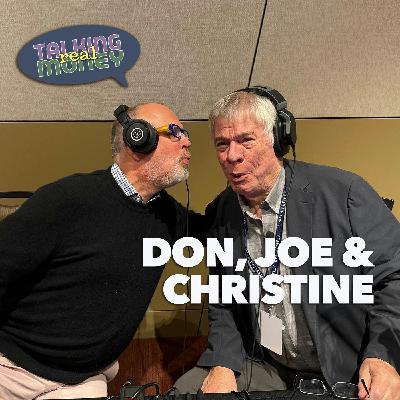
Broadcast live from RetireMeet in Bellevue, Don announces that after nearly four decades of Saturday radio shows, Talking Real Money will end its live radio run on March 28 and continue exclusively as a podcast. The episode features conversations with Joe Saul-Sehy of Stacking Benjamins and Morningstar’s Christine Benz about how people should approach retirement. The central theme is flipping the traditional process: design the life first and the money second. Guests emphasize “play-testing” retirement activities before leaving work, gradually transitioning into retirement rather than stopping abruptly, maintaining strong social connections, and keeping purposeful work or learning in later life. The discussion closes with Benz’s practical financial steps for retirement planning, including tracking spending, accounting for Social Security and pensions, and using flexible withdrawal strategies supported by fiduciary advice.
0:04 Live broadcast from RetireMeet in Bellevue and show introduction
2:58 Don announces the end of the Saturday live radio show after nearly 40 years
3:59 Transition to a podcast-only format beginning in April
4:43 How listeners can switch to listening via podcast apps or the website
6:41 Introduction of Stacking Benjamins host Joe Saul-Sehy
8:09 Discussion of Stacking Benjamins community meetup groups
9:25 Trivia detour about the $500 bill featuring William McKinley
9:36 Joe’s retirement philosophy: design the life first, then the financial plan
10:56 “Begin with the end in mind” when planning retirement
11:23 The concept of “play-testing” retirement activities before retiring
13:51 Warning about AI impersonation podcasts and fake financial shows
15:20 Joe Saul-Sehy’s career change after selling his advisory firm
16:37 Discovering a passion for teaching about money through media
17:33 Continuing meaningful work rather than fully retiring
18:07 Humor about a future podcast called “Two Old White Guys Waiting to Die”
18:48 Core message: experiment with retirement interests now
19:38 Christine Benz of Morningstar joins the conversation
21:04 Retirement as more than leisure—importance of purpose
21:59 Gradually transitioning into retirement during your 50s
22:58 Shaping work to emphasize what you enjoy most
24:21 Christine’s approach to scaling back work travel
26:22 Lifelong learning through podcasting and interviews
27:49 Whether it’s okay not to retire if you enjoy your work
28:27 Relationships and social connection as the key to retirement happiness
29:40 Introverts and maintaining meaningful friendships
30:05 Research on aging, happiness, and social environments
31:28 Discussion about the future of retirement communities
33:56 Christine’s three key financial steps before retirement
34:42 Calculating retirement spending and non-portfolio income
35:22 Safe withdrawal rates: 3.9% fixed vs flexible strategies near ~5.7%
36:09 The value of fiduciary financial advisors in retirement planning
Learn more about your ad choices. Visit megaphone.fm/adchoices

Don and Tom start with the classic “jelly beans in a jar” experiment to explain the wisdom of crowds and why large groups often produce surprisingly accurate predictions. That idea leads to a discussion of modern prediction markets like Kalshi and Polymarket, which sometimes outperform professional economists when forecasting things like GDP, inflation, or Federal Reserve decisions. But the hosts emphasize that these predictions ultimately don’t matter to investors, pointing instead to the long-term evidence that active fund managers consistently fail to beat the market. They highlight massive investor flows away from active funds toward index and rules-based strategies and remind listeners that successful investing is far simpler than many believe: save regularly, diversify broadly, keep costs low, and avoid emotional decisions. Listener questions cover tax-efficient asset location across account types, retirement withdrawal strategies including the 5% variable rule, and why short-term differences between funds like AVUV and DFAS are largely irrelevant.
0:04 Jelly beans and the “wisdom of crowds” analogy
2:24 Prediction markets and why crowds sometimes beat expert forecasts
3:29 Research showing prediction markets rival or outperform professional economists
6:01 Why gamblers may make better predictions than professional forecasters
7:04 Betting on prediction markets themselves and recession/interest-rate predictions
8:08 Why economic predictions ultimately don’t matter for investors
8:19 $1 trillion outflow from active mutual funds and the shift to passive investing
9:39 SPIVA data showing 98% of active funds underperform over 10 years
10:46 Index funds vs “rules-based” or evidence-based funds
11:43 The dramatic shift from active to index investing over the past decades
12:41 Why investors don’t need forecasts to succeed
14:28 Listener question: Asset allocation across taxable, IRA, and Roth accounts
17:14 Listener question: RMD timing and the 5% variable withdrawal strategy
20:36 How the 5% variable withdrawal approach works in retirement
22:36 Listener question: AVUV vs DFAS performance differences
24:48 Why short-term performance comparisons are largely meaningless
26:15 Market timing losses despite a strong 2025 market
27:10 Final reminder: No one can predict the future, not even brokers
Learn more about your ad choices. Visit megaphone.fm/adchoices

This Friday Q&A episode tackles several thoughtful listener questions covering 401(k) investment choices, Roth conversion strategies, bond market fears, inherited IRA planning, and investment club mechanics. Don explains why opaque collective investment trusts and “cycle” funds often hide market-timing strategies, cautions against making large Roth conversions based on predictions about future tax rates, and reassures investors worried about inflation and national debt that markets already incorporate widely known risks. The episode closes with a practical endorsement of a listener’s strategy to gradually withdraw from an inherited IRA to fund Roth contributions, emphasizing simplicity, discipline, and avoiding emotionally driven portfolio decisions.
0:04 Don realizes the intro still says “radio” even though the show is now mostly a podcast.
0:26 Friday Q&A format explained and reminder to submit questions at TalkingRealMoney.com.
1:00 Question 1: 33-year-old with $330k in a 401(k) invested in opaque “intermediate cycle” and wealth-preservation funds.
2:26 Don explains collective investment trusts (CITs) and why their lack of transparency is problematic.
5:25 Market-timing strategies disguised as “cycle” funds and why simple equity funds may be better.
6:47 Question 2: Listener corrects earlier discussion about transferring securities from investment clubs.
8:37 How in-kind transfers can avoid capital gains when leaving an investment club—depending on club rules and brokerage policies.
10:31 Question 3: Complex Roth conversion strategy involving IRMAA tiers and future tax assumptions.
14:31 Don warns against making large conversions based on predictions about future tax rates.
16:07 Why gradual conversions preserve flexibility compared with large upfront tax bets.
17:28 Question 4: Concern about national debt and whether to replace BND with VTIP (TIPS).
18:56 Don argues markets already price known risks like debt and inflation expectations.
20:11 How TIPS work and when they actually help investors.
21:46 Reminder that emotional reactions to economic fears often lead to bad portfolio decisions.
22:10 Question 5: Using withdrawals from an inherited IRA to fund Roth IRA contributions.
22:52 Strategy: withdraw gradually to fund Roth contributions while staying within tax brackets.
24:15 Don endorses the plan as simple, tax-efficient, and compliant with the 10-year inherited IRA rule.
25:09 Closing comments and reminder to submit questions.
Learn more about your ad choices. Visit megaphone.fm/adchoices

AI hype is colliding with financial reality. Don and Tom examine Elon Musk’s suggestion that artificial intelligence could create such abundance that retirement savings might become unnecessary. They unpack the economics behind universal basic income, including the staggering cost—even a modest payment would require trillions in new revenue—and explain why most Americans aren’t betting their futures on Silicon Valley promises. The episode also answers listener questions about confusing target-date fund holdings, what to do with an overfunded 529 plan, and how to reduce taxable investment distributions by placing assets in the right accounts. Along the way they revisit lessons from past technological revolutions, discuss the importance of work beyond income, and continue their campaign against the scourge of gas-powered leaf blowers.
0:04 AI panic and Elon Musk’s claim that AI could make retirement savings unnecessary.
1:52 Musk’s vision of AI-driven abundance and universal income replacing traditional retirement planning.
3:36 The practical question: who actually pays for universal income checks?
5:30 Historical tax rates in the 1960s vs. today’s marginal tax structure.
6:21 Survey shows 94% of readers still plan to save despite AI predictions.
7:17 Boston College researchers warn Musk’s comments send a dangerous retirement message.
8:23 Why universal basic income would require major government policy and taxes.
8:45 Past technology revolutions didn’t distribute wealth evenly.
9:27 Why humans need work for purpose, not just income.
10:33 The math problem: even $1,000/month UBI would require about $3.1 trillion annually.
11:54 Historical comparison to the Luddite era and displaced workers.
13:18 Listener question: What “short-term debt and net other assets” mean in a Fidelity target-date fund.
17:38 Listener question: Overfunding a 529 plan and potential Roth rollover strategies.
20:45 Listener question: Using Vanguard Tax-Managed Balanced Fund to reduce taxable distributions.
23:28 Asset location strategy: placing bonds in IRAs and stocks in taxable accounts.
24:49 Where to easily find mutual fund returns using Morningstar.
25:46 Tom’s Scottsdale advisory meetings announcement.
26:45 The crusade against gas-powered leaf blowers.
Learn more about your ad choices. Visit megaphone.fm/adchoices

Financial education is expanding nationwide—but much of it is still teaching speculation instead of investing. Don and Tom critique stock-picking contests, flawed risk frameworks, and misleading “active vs. passive” framing, while arguing for evidence-based investing and early Roth contributions as the true foundations of financial literacy. They break down the compounding power of a 529-to-Roth strategy, address custodial transaction fees when selling mutual funds, caution against performance chasing in emerging markets after a major rally, and help a caller navigate moving an elderly parent’s CD out of a low-yield bank account. The through-line: education is powerful—but only if it’s grounded in reality.
0:04 Financial education expanding nationwide—but stock-picking contests still dominate curricula.
2:14 Why stock games teach trading, not investing. Own the market instead.
3:32 Federal Reserve curriculum critique—risk scales and “active vs passive” framing.
6:10 Teach teenagers Roth IRAs early. Time is the superpower.
7:36 Questionable risk ratings—growth stocks equated with collectibles.
9:17 Efficient Market Hypothesis in plain English—luck vs insider info.
10:45 529 plans and Roth rollovers—$35K opportunity.
11:37 Compounding example—$35K to nearly $2M tax-free over 40+ years.
15:43 Withdrawing from a Vanguard target-date fund—costs and custodian fees.
20:07 Performance chasing—emerging markets surge after tariff ruling.
23:13 South Korea’s role and Avantis outperformance.
28:40 Helping an elderly parent move a $200K CD—avoid automatic rollovers.
Learn more about your ad choices. Visit megaphone.fm/adchoices

 1
1Don and Tom revisit the eternal temptation to beat the market, dismantling the appeal of equal-weight indexes and active management claims by highlighting implementation costs, tax drag, and decades of underperformance data. They explain why diversification isn’t about bragging rights but smoother returns and disciplined risk management. Callers tackle portfolio rebalancing for a multimillion-dollar account (with a strong case made for elegant simplicity), sibling stock-picking rivalries, and small-business 401(k) options
0:04 Beating the market. Four decades of “sure things” that weren’t.
2:44 Equal-weight vs. cap-weight. Smart idea… until costs show up.
4:58 Why diversify beyond the S&P 500. Smooth ride over bragging rights.
6:03 Theory vs. reality. Execution costs ruin beautiful strategies.
7:30 Active managers as “teammates.” The SPIVA reality check.
15:43 Small-business 401(k)s. More options, Vanguard pricing breakdown.
20:59 Caller Dan: Rebalancing a $3M portfolio. Simplicity wins.
28:33 Caller Glenn: “My brother beats the market.” Luck vs. skill.
33:56 Caller Dale: Virtual access and post-event recordings.
Learn more about your ad choices. Visit megaphone.fm/adchoices

This episode dives into the surprisingly emotional world of fixed income investing, exploring whether traditional bond funds like BND still make sense or if newer laddered bond ETFs offer a psychological edge by returning principal at a set maturity date. Don and Tom unpack how these ETFs compare to CD ladders, why capital gains should never be expected from bonds, and how investor psychology often drives the preference for “certainty.” They also congratulate Dimensional Fund Advisors on reaching $1 trillion in assets, discuss whether laddering target-date funds makes planning easier or just more complicated, and answer listener questions about transferring accounts from Morgan Stanley to Vanguard and managing tax consequences along the way.
0:04 Bonds vs. crypto — why fixed income feels boring but matters
1:02 Why bonds exist in portfolios (stability, income, not growth)
2:18 Introduction to laddered bond ETFs (Invesco, iShares, Vanguard)
3:51 Bond returns in 2025 and the “don’t expect capital gains” rule
5:03 The psychological problem with bond funds (they never mature)
6:54 How target-maturity bond ETFs differ from traditional bond funds
11:28 Yield comparisons across laddered maturities vs. BND
13:14 When laddered ETFs might make sense (income timing, certainty)
15:09 Dimensional Fund Advisors reaches $1 trillion in assets
19:57 Listener: Laddering target-date funds instead of bonds
23:19 Listener: Transferring IRA and taxable accounts to Vanguard
Learn more about your ad choices. Visit megaphone.fm/adchoices

On this Friday Q&A episode, Don answers listener questions on international stock overweighting inside a Seattle city retirement plan, whether a Vanguard target-date fund might be a smarter emotional guardrail than self-managing allocations, how much term life insurance a family really needs (hint: it’s about replacing income, not funding Ivy League dreams), whether an aggressively small-value–tilted Avantis portfolio is too risky for a disabled early retiree, and how to evaluate a $36,000 pension annuity versus a $500,000 lump sum using withdrawal math instead of Monte Carlo optimism. The recurring theme: feelings aren’t an edge, discipline beats prediction, and structure matters more than conviction.
0:09 Fewer recorded questions lately and how to submit them
1:41 Seattle city employee overweighted in international stocks
3:36 Why “historic pivots” and gut feelings aren’t an investing edge
4:50 Target-date fund vs. self-built allocation
7:27 Using small-cap/value funds alongside a target-date fund
9:15 Risk tolerance vs. emotional market timing
10:53 How much term life insurance is enough?
12:35 Replacing income vs. funding lifestyle extras
12:44 Aggressive Avantis (AVGV/AVGE/AVNV/DFAW) portfolio review
15:50 What happens if your portfolio drops 50%?
17:10 Pension choice: $36k annuity vs. $500k lump sum
21:29 The 41-year math on the lump-sum difference
22:52 Why lump sum often makes you the “insurance company”
Learn more about your ad choices. Visit megaphone.fm/adchoices

Vanguard slashes fees again, pushing its average expense ratio down to six basis points. Don and Tom contrast that with outrageously expensive ETFs charging 2% to 14% annually, walk through why evidence-based factor funds cost a bit more than pure index funds, answer listener questions about international tilts and fund-of-funds rebalancing, and clarify why diversification across assets still matters more than fee-chasing alone.
0:04 Vanguard cuts fees again — average expense ratio now 0.06%
3:43 What expense ratios really are (and how many investors unknowingly overpay)
5:00 The shockers: ETFs charging 2% to 14% annually
11:13 Comparing Vanguard index costs vs. Avantis and Dimensional factor funds
14:41 Why anything above ~0.35% for passive/rules-based investing is likely too much
16:03 The “Militia” ETF: 14% fee, poker background, no real track record
19:46 Listener: Increasing international exposure inside IRA/Roth
21:35 Clarifying fund-of-funds vs. multiple funds for rebalancing
23:18 Why Avantis and Dimensional include mid-cap, REITs, and bonds
27:25 Evidence-based investing isn’t just about returns — it’s about correlation and volatility control
Learn more about your ad choices. Visit megaphone.fm/adchoices

This episode focuses on smart portfolio construction across multiple accounts, using AVGV to complement limited 401(k) options, and why allocation should be viewed holistically. A caller debates stretching into a later target-date fund, prompting a discussion about risk versus actual retirement need. Crypto is challenged as speculation rather than investment. Dividend strategies and bond placement inside Roth IRAs are examined. A muni bond question reinforces the value of patience. The show closes with a humorous but pointed critique of the UFO ETF and broader thematic fund hype.
0:04 AVGE vs. AVGV — why adding global value can offset a 401(k)’s large-cap bias
5:02 Think one portfolio — asset allocation should span every account
8:18 2045 vs. 2060 target-date funds — only take the risk you actually need
11:20 Crypto challenge — utility, politics, and “I’m up” aren’t investment theses
14:48 SCHD in a Roth — dividend chasing and why bonds usually don’t belong there
18:54 Roth contribution ideas — avoid overlap, consider value exposure
20:11 Selling an individual muni — bid/ask spreads and the case for just holding
26:50 The UFO ETF — defense stocks wrapped in alien hype
31:01 $800B in thematic ETFs — headlines aren’t a strategy
Learn more about your ad choices. Visit megaphone.fm/adchoices

This episode moves from the origin of “rule of thumb” to why most investing rules of thumb don’t work for real people. Tom and Don explore a Yale professor’s personalized allocation model, walk through tax-smart strategies for funding a child’s car while managing Roth conversions and capital gains, warn about liquidity risks in private credit after restrictions at Blue Owl Capital, explain how to structure IRA withdrawals through disciplined rebalancing, and close by addressing market-timing anxiety for retirees sitting heavily in cash. The through-line: simple rules are comforting, but thoughtful planning beats shortcuts every time.
0:04 What “rule of thumb” really means and why investing is full of them
2:17 60/40, 100-minus-age, and why simple formulas fall short
3:16 Yale professor James Choi’s personalized allocation formula
4:35 Why a 25-year-old probably should be nearly 100% in stocks
6:25 Spreadsheets vs. real-world investors
9:39 Portugal caller: funding a daughter’s car purchase tax-efficiently
13:28 Roth conversions, 12% bracket strategy, and zero capital gains planning
16:46 Rebalancing opportunity: selling VTI vs. Schwab Intelligent Portfolio
19:16 Private credit warning: liquidity restrictions at Blue Owl Capital
23:45 The illusion of “safe” high returns in private lending
26:53 IRA withdrawal strategy: sell winners when rebalancing
29:35 Annual vs. monthly withdrawal discipline
31:34 60/40 vs. 70/30 — how much difference really matters
33:32 Retirement income simplification: fewer funds, easier rebalancing
34:48 Seattle caller: $1.45M in money market and market-timing temptation
36:18 Why market timing fails and when an advisor earns their keep
Learn more about your ad choices. Visit megaphone.fm/adchoices

Don and Tom examine Kiplinger’s list of top retirement side gigs and separate practical ideas from pipe dreams, questioning whether executive coaching, IT consulting, online reselling, and landlord life truly offer “passive” or realistic income. They highlight more viable options like tutoring, handyman work, and tour guiding while emphasizing purpose over paycheck. Listener questions cover the risks of private credit and alternative investments, plus smart strategies for consolidating multiple 401(k) accounts without triggering unintended tax consequences.
0:04 Old guys still podcasting intro
1:38 Kiplinger’s retiree side-gig list
3:26 Executive coaching reality check
4:40 AI and tech consulting skepticism
6:32 Consulting and client ego problems
7:53 AI vs. content writers
9:06 Bookkeeping for small businesses
9:29 Online selling isn’t easy money
11:19 Tutoring as a steady option
12:17 Handyman work pays well
13:44 Tour guide opportunities
14:17 Landlord myth of “passive” income
16:00 Where to find side gigs
16:47 Bridge jobs for healthcare
17:08 Purpose-driven retirement
19:14 Private credit and alternative risks
23:46 Consolidating multiple 401(k)s
Learn more about your ad choices. Visit megaphone.fm/adchoices

After a bump in crypto-fueled listener calls, Don tackles a mix of practical and philosophical money questions: why Fidelity’s new “stablecoin” isn’t an investment at all, whether a heavily conditioned city 401k match is worth the risk versus a flexible Roth 457, how to safely reposition an 85-year-old’s idle savings without sacrificing liquidity, and why actively managed mutual funds can generate painful surprise tax bills. The episode closes with the return of Bitcoin Bob, sparking a spirited debate over whether Bitcoin is a currency, a commodity, or a “store of wealth” — and whether something that swings 50% qualifies for that title.
0:04 Crypto episode follow-up, listener call surge, and AI voice processing update
1:52 Fidelity’s new stablecoin FIDD — why it’s pointless for investors
3:41 City retirement plan dilemma: conditional 401k match vs. Roth 457 flexibility
8:24 When complicated employer matches aren’t worth the hoops
9:31 Helping an 85-year-old move idle savings — high-yield savings vs. brokerage
11:40 Janus mid-cap fund capital gains surprise and ETF tax efficiency
13:11 Why mid-cap alone isn’t diversification — broader ETF alternatives
15:19 Bitcoin Bob returns: currency vs. commodity vs. “store of wealth”
19:53 Volatility reality check — why Bitcoin fails the store-of-wealth test
Learn more about your ad choices. Visit megaphone.fm/adchoices

Vanguard lowers fees yet again, pushing its average expense ratio down to just six basis points — a move that underscores how dramatically fund costs have fallen over time. Don and Tom contrast this with shockingly expensive ETFs charging double-digit annual fees and explain why those costs are nearly impossible to overcome. They unpack the difference between pure index funds and factor-based funds like Avantis and Dimensional, clarify common confusion around rebalancing and fund-of-funds strategies, answer listener questions about increasing international exposure, and explain why evidence-based investing includes diversification across bonds and real estate — not just stocks. The episode reinforces a core message: fees matter far more than most investors realize, especially the ones they never see.
0:04 Vanguard cuts fees again — average expense ratio now just 0.06%
1:23 Brief detour into model aircraft before returning to money talk
3:43 Fund expense ratios explained — what investors are really paying
5:00 The shock factor: ETFs charging 12%–14% annually
10:08 Why ultra-high expense ratios are nearly impossible to justify
11:13 Vanguard vs. factor funds — why Avantis and Dimensional cost more
14:41 The invisible cost problem — how expense ratios quietly drain returns
16:03 Militia Long Short ETF (ORR) — high fees, no track record
21:02 Listener question: Increasing international exposure inside IRAs
23:03 One fund vs. multiple funds in taxable accounts — rebalancing clarification
24:09 Why Dimensional and Avantis offer mid-cap, REIT, and bond funds
25:51 Evidence-based diversification beyond equities
Learn more about your ad choices. Visit megaphone.fm/adchoices
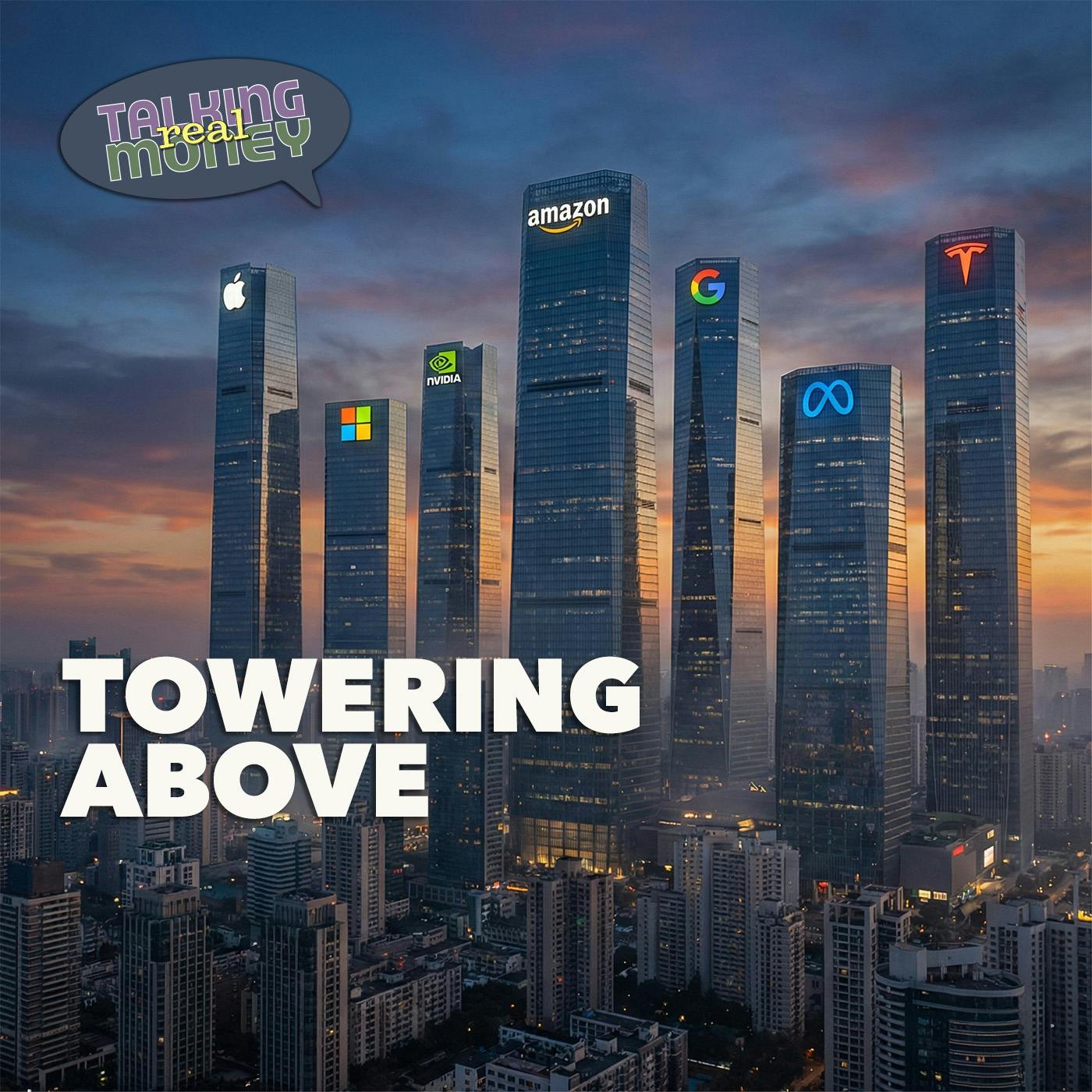
Don and Tom tackle S&P 500 concentration risk and the dominance of the Magnificent Seven, explaining why diversification still matters despite compelling active management narratives. They clarify the difference between currency and investment in a pointed Bitcoin vs. U.S. dollar discussion, then pivot to fixed income strategy—highlighting why low-cost, large-scale bond funds like BND often outperform higher-fee “active” alternatives that quietly take more credit risk. Listener calls cover 401(k) catch-up contributions, bond ETF selection for retirement income planning, and whether using excess RMD funds for Roth conversions really adds value after taxes and IRMAA considerations. As always, the theme is disciplined investing over storytelling.
0:04 Technical chaos intro and why better investing still matters
1:32 S&P 500 concentration risk and the “Magnificent Seven” problem
2:40 The dangerous “but” in diversification pitches
3:43 Small, value, and momentum factors explained briefly
5:33 Active management as narrative creation
9:57 Bitcoin vs. U.S. dollar as currency vs. investment
13:29 What actually makes something an investment
15:08 Bond ETFs for retirement years 5–8: BND vs. Avantis
17:42 Why bond fund size and expenses matter
21:36 Active bond ETFs, credit risk, and hidden tradeoffs
25:38 401(k) catch-up contributions clarified
30:21 Roth conversions, RMD strategy, and tax math realities
34:09 IRMAA considerations and Medicare premium surprises
Learn more about your ad choices. Visit megaphone.fm/adchoices
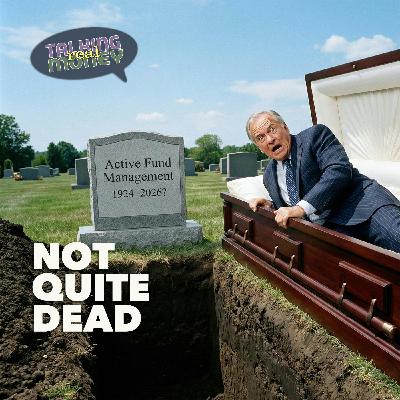
Don and Tom dissect a Morningstar article naming the “best core stock funds” for 2026, noting the sharp decline in recommended actively managed funds and the dominance of low-cost index funds. While they applaud the shift away from expensive stock pickers, they argue Morningstar’s “core” approach still leads to unnecessary complexity and heavy large-cap (especially S&P 500) concentration, with little exposure to small-cap, value, and emerging markets. They advocate instead for simple, globally diversified, factor-tilted funds like DFAW, AVGE, or AVGV. Listener questions cover switching from AVGE to AVGV inside an IRA (risk tolerance matters), improving a 32-year-old’s 401(k) allocation (use a Roth IRA to add small/value exposure), and a sharp analogy comparing passive investing to driving with traffic rather than weaving aggressively for no gain.
0:04 Investing in a “wonderful world” by ignoring noise
1:14 AI audio tools that may replace editors (and shorten meetings)
5:06 Morningstar’s 2026 “Best Core Funds” list shifts toward indexing
6:39 Why “core” still means large-cap heavy and incomplete diversification
9:50 The problem with piling into multiple S&P 500 funds
12:14 Why Dimensional and Avantis are missing from the list
13:26 One-fund global solutions: DFAW, AVGE, AVGV
17:44 Listener analogy: aggressive driving vs. active investing
19:08 IRA question: Switching from AVGE to AVGV and risk tolerance
20:34 32-year-old’s 401(k) allocation and using a Roth IRA to add small/value
28:40 Retirement workshop plug and who should attend
30:21 Free fiduciary advice vs. actually hiring an advisor
Learn more about your ad choices. Visit megaphone.fm/adchoices

In this Friday Q&A episode, Don introduces a new AI audio enhancement tool that dramatically improves the sound quality of listener questions, then dives into a series of practical retirement issues. He tackles whether converting a $2 million term life policy to whole life after a disability makes sense (and what must be guaranteed in writing), explains how to properly freeze a deceased parent’s credit and handle inherited POD accounts and IRAs under the 10-year rule, pushes back on the increasingly discussed “bond trough” retirement strategy by emphasizing emotional risk over theoretical logic, and closes with reassurance for listeners considering retiring part-time in Mexico, explaining how U.S. retirement accounts, tax treaties, and global banking make the process far simpler than many assume.
0:04 Friday intro and new AI tool that dramatically improves caller audio quality
2:01 Whole life conversion offer after disability — “free” premiums and what to demand in writing
5:57 How to submit spoken questions and call-in info
6:22 After a parent’s death: credit freezes, deceased alerts, and final credit reports
7:41 Inheriting POD accounts and an IRA — step-up in basis and the 10-year IRA rule
9:57 AVGE vs. AVGV fake-out and real question: bond “trough” strategy in retirement
11:24 Logical vs. emotional risk tolerance — why most retirees can’t handle 50% drawdowns
13:40 Retiring internationally (Mexico example) — IRAs abroad, tax treaties, and practical
Learn more about your ad choices. Visit megaphone.fm/adchoices


Download from Google Play

Download from App Store
 United States
Enjoy your show. Thank you for answering my question on air about finding a Financial Planner. Still looking and your message made me look deeper in the weeds to determine if they are a true fiduciary. Anyway, my question, or clarification is not about a financial planner. On your show on 11/20/23, you talked about taxes. You mentioned that in order to take a Health related deduction, you need to have medical expenses at or above 7.5% of adjusted gross income. All true. What I did not hear, or maybe it was inferred, is that if you don't itemize, you cannot take any health deduction. Like I said, maybe that part was inferred, but probably should have stated that when talking about separately. Keep up the good work. Rick from Omaha!!
This show has absolutely THE most annoying ads anywhere in podcasting. If ever there was a show that I hope will be cancelled, it’s this one.
I used to respect Swedroe, now he's just a dottering old virtue signaling social justice Warrior
Great Podcast. Financial education paired with entertainment.
No audio is playing for me. Except the sliced in ads?