Discover
The Fifth Question
The Fifth Question
Author: Daniel Levine
Subscribed: 1Played: 430Subscribe
Share
© Daniel Levine
Description
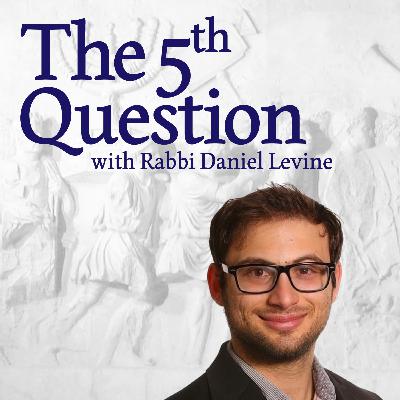
My name is Daniel Levine and I am a Rabbi and Jewish History Lecturer at UC Irvine!
I have conversations about the most pressing issues facing the Jewish community with professors, Rabbis, and politicians with a wide range of views.
Hope you enjoy :)
I have conversations about the most pressing issues facing the Jewish community with professors, Rabbis, and politicians with a wide range of views.
Hope you enjoy :)
168 Episodes
Reverse
For my last conversation with Sam see here: https://youtu.be/Q06L7Uxq4PY?si=su6O18LIw3fF_JKfRabbi Sam Stern returns to The Fifth Question for a wide-ranging conversation on Reform Judaism, Zionism, anti-Zionism, and the future of American Jewish institutions. We start with Stern’s recent op-ed—“Reform Judaism chose Zionism. That was not a mistake.”—and trace the Reform movement’s historical arc from the 1885 Pittsburgh Platform to the 1937 Columbus Platform, and into today’s post–October 7 landscape. Along the way, we tackle one of the central fault lines shaping liberal Jewish life right now: the tension between universalism vs. Jewish peoplehood/particularism, and what happens when Jewish identity is reduced to general ethics or political activism.This episode also digs into the question so many young Jews have inherited: why is Israel always framed as “complicated”? Stern argues that “nuance poisoning” and institutional risk-aversion have pushed Jewish education to start with critique instead of values—leaving students without the language, confidence, or backbone to stand up for themselves and for the Jewish community. We also discuss the role of Jewish institutions, the need to set an Overton window for communal boundaries, and whether the Reform movement can remain a big tent with real guardrails—including how it speaks (or fails to speak) to Sephardic/Mizrahi realities and political diversity in the American Jewish community.Topics & keywords: Reform Judaism and Zionism, Reform movement platforms, anti-Zionism, Jewish peoplehood, universalism vs particularism, Jewish institutional leadership, Jewish Overton window, Jewish education and Israel, campus antisemitism, post–October 7 American Jewish life, HUC, Reconstructionist movement, Hillel vs Chabad, Sephardic and Mizrahi American Jews.Chapters (video time):0:00 Intro + the op-ed: “Reform Judaism chose Zionism”0:23 Reform history: Pittsburgh (1885) to Columbus (1937)3:26 Institutions failing Jews + the need for new leadership5:25 Cycles of idealism: liberal universalism vs Zionist “pessimism”8:02 Universalism vs particularism in Reform Judaism10:04 If Judaism = universal ethics, why be Jewish?13:22 Peoplehood as a target of modern “universalism”16:02 Being “outflanked” + boundaries in a big-tent movement17:28 Survey language: who counts as a Zionist?21:13 “Israel is complicated” and how education frames values26:55 “Nuance poisoning” and starting with critique vs meaning38:28 The Jewish Overton window and communal boundaries40:26 Reform institutions and partisan politics44:27 Refocusing on Jews, Jewish education, and peoplehood53:54 ClosingIf you have thoughts on this episode—especially whether Reform conference food is fully kosher—drop a comment. I’m genuinely curious.#reformjudaism #zionisme #jewishpeople #americanpolitics #israel #adl #jewishidentity Jewish History, Politics, Israel, Antisemitism, and Zionism - I cover it all.Politics: https://www.youtube.com/watch?v=x6QupJZ1HLY&list=PLQ3aQmFcYiCqqL-GSNw6NhSZWOvzaDdIKJewish History: https://youtu.be/1u4jHoZ8stM?si=0jZP4uhXlVEg2NOTAntisemitism: https://www.youtube.com/watch?v=RCgnEZ1d24Q&list=PLQ3aQmFcYiCqkU_aPIJGbE1xTKEbkh8euFacebook: https://www.facebook.com/daniel.levine.31/Instagram: https://www.instagram.com/rabbidaniellevine/#Israel #Rabbi #Jewish #WhatisZionism #DoJews?
Welcome back to the Fifth Question Podcast — I’m your host, Rabbi Daniel Levine.In this episode, I sit down with Professor Mike Wirth (Queens University of Charlotte): artist, educator, and futurist. We start with a deceptively simple question—what is a futurist?—and end up in a wide-ranging conversation on Jewish futurism, story-space, Chassidic imagination, and what it means to “shape the future” by being fully present.Mike shares how Jewish time itself is a kind of futurist technology: Shabbat as a “time tunnel,” holidays that loop us back into ancestral memory, and the ritual language that always points forward—toward where we’re headed. From there, we explore how art can become a portal into Torah: inhabiting biblical narratives as lived worlds, and turning characters into avatars for communal creativity.Then we pivot to the modern world: AI and art. Mike breaks down the difference between art vs. design, why intention matters, and how AI can function as an ethical tool for ideation without replacing human authorship. We talk about what changes when you don’t know something was written by AI until after it moves you—and what that reveals about value, authenticity, and experience.Finally, we dive into Jewish framing: telos (“to what end?”) as a futurist discipline, the Golem of Prague as an AI parable, and a mystical counter-image: the Sar Torah—an “oracle” model for outsourced knowledge that raises a timeless question about what we gain…and what we risk losing.If you’re interested in modern Jewish thought, creativity, Jewish storytelling, education, futurism, AI, and the boundary between meaning and mechanism, this one is for you.Chapters / Key MomentsWhat a “futurist” actually isJewish futurism: time, ritual, and responsibilityTorah as immersive story-space (Noach, avatars, and imagination)Martin Buber and revaluing Chassidic spiritualityAI, authorship, and the difference between art vs. designTelos: “to what end?” and the ethics of shaping futuresThe Golem of Prague, truth, and the kill-switch problemNFTs, value, and why markets love storiesFollow / SubscribeIf you enjoyed this conversation, subscribe for more long-form interviews on Jewish ideas, culture, and the questions underneath the questions.#FifthQuestion #futurism #ai #MikeWirth #aiandfaith #aiandart #judaism #religion #chatgpt
he second part of my conversation with @DavidWilberBlog about why Jews Do Not Accept Jesus.In this episode of The Fifth Question, we dive into one of the most sensitive and fascinating topics in Jewish–Christian dialogue: Jews for Jesus, Messianic Judaism, and why these movements are generally not accepted as part of the Jewish community.I sit down with Christian author and teacher David Wilber for a thoughtful, respectful conversation about:What Messianic Judaism claims and how the Jewish community draws its boundariesWhether Jews for Jesus represents Judaism or ChristianityPaul, the early Jesus movement, and the “parting of the ways”How Jews historically understood Messiah vs. how Christians understand JesusWhether the New Testament’s resurrection claims hold historical weightIf Isaiah’s “light to the nations” prophecy fits JesusThe philosophical question: What counts as evidence for the Messiah?We finish with a 30-minute debate on whether there is compelling evidence—in the Bible or in broader philosophy—for accepting Jesus, followed by my own 5-minute reflection on why Jewish-Christian conversations often feel asymmetrical and how centuries of history still shape interfaith dynamics today.If you care about theology, history, philosophy, or Jewish-Christian dialogue, this is an episode you won’t want to miss.#jesus #jewsforjesus #messianicjudaism #jesuschrist #jewishthought
Welcome back to The Fifth Question Podcast — I’m your host, Daniel Levine. In today’s wildly unexpected episode, I sit down with @DavidWilberBlog — a popular Christian writer, teacher, and theologian — who makes a provocative case: Christians should be keeping Jewish (biblical/Mosaic) law.This is Part 1 of a longer conversation, and it focuses on David’s framework as a Christian who practices Torah observance through Messianic Judaism — what he describes as a “Jewish form of Christianity” rooted in first-century practice.✅ What We Cover in Part 1In this episode, we unpack:🔹 Torah & ChristianityWhy David believes Jesus and the apostles affirmed the Torah rather than abolishing itWhat “pronomian” theology is (pro-law) and why he argues “antinomian” Christianity (anti-law) misreads Scripture🔹 The Practical Questions Everyone AsksWhat does “keeping biblical law” actually mean day-to-day?Sabbath: how do you define “rest” without the Talmud?Kashrut (kosher laws): how do Messianic Christians decide what counts as kosher?Can you eat a cheeseburger if the Torah only says “don’t boil a calf in its mother’s milk”?🔹 Paul: Did He Reject Jewish Law?We go deep into the biggest controversy:The classic Protestant/Lutheran reading of Paul vs. newer scholarshipThe “New Perspective on Paul” (including E.P. Sanders)“Paul within Judaism” and scholars like Mark Nanos and Matthew ThiessenActs 21, James, and whether Paul’s practice was actually Torah-observant🔹 Anti-Jewish Theology & Church HistoryDavid’s experience being called a “Judaizer”Early Christian hostility to Torah practice (Justin Martyr, John Chrysostom)Why he argues many modern Christians are “not Protestant enough” — if Protestantism means returning to original roots🔹 Messiah, Law, and the End of DaysWe explore a fascinating philosophical/theological tension:If the Messiah has come (Jesus), why would the law still be necessary?Jewish mystical theories of law changing in the messianic age (Gershom Scholem, Kabbalistic thought)David’s argument from the prophets (Ezekiel 36; Torah “written on the heart”) and Matthew 5 (“not one jot or tittle…”)🎧 Part 2 Coming SoonBecause this conversation ran long, Part 2 will drop in a couple of days — and that’s where we flip the script and get into:Jews for JesusWhy Jews don’t accept JesusA 45-minute debate on “evidence” for Jesus as Messiah (Bible + philosophy + epistemology)➡️ Subscribe so Part 2 shows up automatically when it drops.👍 Support the ChannelIf you enjoyed this conversation, please like, comment, and subscribe — it genuinely helps the show reach more people.Now, here’s Part 1 with David Wilber.#christain #jesus #jewishthought #jewishlaw #rabbi
I recently appeared on the Rabbi Avi Show to unpack my views on a variety of hot topics including:Zionism, intermarriage, antisemitism, campus life, American politics, and much more!#interfaithlove #campus #trump #gaza #interfaith Please Like, comment, and subscribe :)
Andrew Pessin joins me again to trace the 19th-century ideas that made political Zionism feel almost inevitable—emancipation, nationalism, Marxism, Darwinism, and the rise of modern racial antisemitism. From there we unpack The Protocols of the Elders of Zion: what it claimed, where it came from, why it spread, and how conspiratorial antisemitism still echoes in the way Israel and Jews are talked about today.We also discuss why it was so hard for many Jews to “see the writing on the wall” in real time, how antisemitism shifts forms across eras, and Andrew’s new project: the Institute for the Critical Study of Anti-Zionism.Topics include:Why the 1800s set the stage for ZionismEnlightenment-era “emancipation” and its limitsNationalism and the “state within a state” fearDarwinism, “scientific racism,” and modern antisemitismThe origins and influence of ProtocolsHow conspiracy thinking mutates and survivesAndrew’s Institute for the Critical Study of Anti-Zionism#zionisme #rabbi #herzl #israel #palestine #gaza #holocaustremembrance #trump
In this wide-ranging conversation, I’m joined by former Congressman Reid Ribble (Wisconsin’s 8th District) to unpack the biggest political questions shaping America right now: the rise of antisemitism across the political spectrum, Trump’s political impact (and contradictions), Israel/Ukraine and U.S. foreign policy, the national debt, entitlement reform, immigration, and why Congress feels increasingly broken.We begin with headlines and lived realities—from antisemitic violence and campus controversies to the broader cultural currents driving polarization—then zoom out to examine populism, institutional leadership, free speech vs. protection of Jewish students, and the politics of outrage in the social media era. Ribble also reflects on why he left Congress, how internal House rules changed lawmaking, and what it would take to restore bipartisan problem-solving.Topics include:Antisemitism and populism (right + left)Political leadership and institutional accountabilityTrump, Israel, and the “playing both sides” dynamicThe Antisemitism Awareness Act + IHRA definition debateFree speech vs. protecting students from intimidation/violenceWhy Ribble retired from CongressCongress, closed rules, and the concentration of powerNational debt: modern monetary theory vs. “borrowing from ourselves”Ukraine, Israel, and American support for alliesImmigration, workforce needs, and declining birth rates2028 presidential candidates and party realignment
I recently appeared on the Don't Know Much About podcast with Naya Lekht to discuss my philosophy of Israel and Jewish Education.To listen to the last episode I did with Naya see here: https://youtu.be/bsodVJMFX-U?si=0PpJzK31WNX9Kb1V#holocaustremembrance #israel #orthodoxjudaism #reformjudaism #jewishidentity Jewish History, Politics, Israel, Antisemitism, and Zionism - I cover it all.If you appreciate these episodes please like, comment, and subscribe!Facebook: https://www.facebook.com/daniel.levine.31/Instagram: https://www.instagram.com/rabbidaniellevine/#israel #rabbi #jewish #WhatisZionism #dojews ?
Martin Luther King Jr. Day is often used to project modern political causes onto a man who can no longer speak for himself. In this episode, I take a closer look at how MLK’s legacy—particularly his clear support for the Jewish community and Zionism—has been reinterpreted, distorted, and in some cases erased by today’s activist movements.We talk about the growing trend of folding anti-Israel ideology into social justice spaces, the attempt to cast MLK as an anti-Zionist figure despite his own words, and why that framing collapses under even minimal historical scrutiny. From post-1967 geopolitics to campus activism, from media narratives to selective memory, this episode asks a simple question: why are people so determined to remake MLK in their own image?MLK was explicit about where he stood. Ignoring that isn’t progress—it’s revisionism.If you find this conversation valuable, don’t forget to like, comment, and subscribe to help keep these discussions going.#mlk #blacklivematter #zionisme #israel #progressive #ice #abolishthepolice
For my first conversation with Rabbi Tarlan see here: https://youtu.be/g3Nnmh85gRg?si=VLydkG2nV6GuV8EcThere’s been a major communications blackout in Iran — and while most people in the West barely saw it on the front page (if at all), people on the ground and their families abroad are living it in real time.Rabbi Tarlan Rabizadeh joins me to talk about what she’s hearing from friends and community members, how people are getting information out (VPNs, Starlink, scraps of footage), and why the story is so hard to cover — and so easy to ignore.We also get into the bigger picture: why the outrage machine that dominated social media for years seems… oddly quiet now, how authoritarian regimes use scapegoats (yes, including “Zionists”) as a default playbook, and what it means when the most basic human-rights crisis doesn’t fit neatly into a viral narrative.And at the end, Rabbi Tarlan says something that genuinely stuck with me: she doesn’t think she’d have the guts to do what people in Iran are doing right now — and honestly, I probably wouldn't either.Chapters / Topics:Internet blackouts + what families are hearingStarlink and why tech suddenly becomes “life or death”Why this isn’t leading the news cycleThe double standard in human-rights coverageIran, proxies, and the propaganda ecosystemWhat people can actually do: amplify, share, don’t look away#iran #iranrevolution #iranprotests #palestine #gaza #columbia ______________________________Jewish History, Politics, Israel, Antisemitism, and Zionism - I cover it all.Politics: https://www.youtube.com/watch?v=x6QupJZ1HLY&list=PLQ3aQmFcYiCqqL-GSNw6NhSZWOvzaDdIKJewish History: https://youtu.be/1u4jHoZ8stM?si=0jZP4uhXlVEg2NOTAntisemitism: https://www.youtube.com/watch?v=RCgnEZ1d24Q&list=PLQ3aQmFcYiCqkU_aPIJGbE1xTKEbkh8euFacebook: https://www.facebook.com/daniel.levine.31/Instagram: https://www.instagram.com/rabbidaniellevine/#israel #rabbi #jewish # WhatisZionism #dojews ?
In this episode, I’m joined by Daniel Buchierz — a Republican congressional candidate with an extraordinary, hard-earned perspective on the criminal justice system, homelessness, addiction, and public safety.Daniel shares a visceral story from 1991: how a minor marijuana charge escalated into a jury trial and years in maximum security, despite having no prior record — and how he spent decades fighting what he says was a due process failure and a conviction that never should have stood. He talks about what he lost when he came home, how addiction and homelessness followed, and the moment in prison that he describes as a spiritual awakening that changed the trajectory of his life.From there, we zoom out to policy:Legalizing marijuana (and why Daniel supports it from a libertarian-leaning perspective)The real drivers of homelessness, including drug addiction, mental illness, and money managementWhy “housing first” fails if treatment and accountability aren’t part of the planDaniel’s proposal for a structured, supervised program that pairs detox + work + savings + long-term stabilityThe tension between personal freedom vs. public order, and where government responsibility begins and endsWe also discuss the fentanyl crisis, border realities, and the ways policymakers (especially in blue states) can misunderstand what the epidemic looks like on the ground. Daniel shares what he’s seen near the border, and why he believes enforcement without follow-through is a revolving door.Finally, we pivot to Israel and antisemitism in American politics. Daniel speaks directly about standing with Israel, the rise of antisemitic rhetoric online, and what it’s like to take public heat for being explicit about those views.Follow Daniel: “Buchierz for Congress” (spelled like “Buttress,” but with a B and one R)Chapters (rough):00:00 Intro + Daniel’s story00:45 False accusation, trial, and prison time04:10 Release, loss, addiction, homelessness05:10 Faith and rebuilding06:00 Homelessness: causes and solutions11:00 Freedom vs enforcement + accountability20:30 Fentanyl, border gaps, and policy disconnects31:00 Israel, antisemitism, and political realignment44:20 ClosingIf you found this conversation interesting, please like, comment, and subscribe — it helps a lot.#israel #criminaljustice #homelessness #fentanyl #addictionrecovery #bordersecurity
In this episode, I sit down with former U.S. Congressman and former NYPD detective Anthony D’Esposito, who is also a Trump-appointed nominee for Inspector General of the U.S. Department of Labor. We cover the intersection of crime, policing, immigration, antisemitism (including on the right), congressional bipartisanship, and what he believes comes next for the Republican Party after Donald Trump.We begin with New York’s shifting political landscape and the policing debate—from cashless bail and discovery laws to public trust, crime reporting, and the political consequences playing out in and around NYC. We also discuss the role of federal coordination (including task forces and the National Guard debate), and how D’Esposito thinks about border security vs. immigration policy.Later, we pivot to Congress: bipartisanship in practice, the George Santos saga, and why D’Esposito says accountability has to start within your own party. We also talk about antisemitism across the political spectrum, including what he’d say to disaffected young men drawn toward extremist figures online.Finally, we explore how his Catholic faith shaped his support for Israel and the Jewish community—and his view of what defines the GOP’s future.If you enjoyed this conversation, please like, comment, and subscribe—it helps a lot.Chapters00:00 Intro00:40 Crime, policing, and NYC politics04:00 Cashless bail, discovery laws, and “crime vs reporting”09:40 Federal involvement + National Guard debate14:30 Immigration vs border security (and crime narratives)17:40 Bipartisanship in Congress23:10 George Santos: accountability and expulsion24:45 Antisemitism on the right + online radicalization31:40 Faith, Israel, and pilgrimages36:20 The future of the Republican Party after Trump42:30 Rep. Juan Ciscomani story + closingTopics we discussNYPD, crime trends, and criminal justice reformCashless bail, discovery rules, and judicial discretionFederal-local coordination: task forces and intelligence sharingImmigration vs border security (and political messaging)Bipartisanship and governing with slim majoritiesGeorge Santos and intra-party accountabilityAntisemitism on the left and rightOnline extremism and disaffected young menFaith, Israel, and political convictionPost-Trump Republican Party identity#politics #newyork #crime #congress #immigration #Antisemitism #israel #podcast #mamdani #republicanparty
In this episode, Adam Louis Klein explains why anti-Zionism is not simply criticism of Israel, but a modern ideological movement shaping campus activism, academia, and contemporary antisemitism.We explore how anti-Jewish hatred has evolved across history—from medieval anti-Judaism, to 19th-century racial antisemitism, to today’s anti-Zionism as a full-scale social and moral ideology. Adam argues that many debates within the Jewish community are fundamentally misframed, and that treating anti-Zionism as “just criticism of Israel” obscures its real function: stigmatization, moral inversion, and social coercion.This episode examines:Why the question “Is anti-Zionism antisemitism?” misses the pointAnti-Zionism as an ideology with its own genealogy, language, and tacticsHow Holocaust inversion, apartheid rhetoric, and settler-colonial frameworks function as modern libelsWhy traditional Jewish advocacy strategies fail against anti-Zionist movementsThe role of academia, post-colonial theory, and activist scholarship in mainstreaming these narrativesWhy anti-Zionism cannot be debated like a good-faith political position—and how to respond insteadThe psychological and sociological pressures leading some Jews to internalize anti-Zionist claimsHow Palestinian suffering is often exploited rather than alleviated by anti-Zionist ideologyRather than defending Israel point-by-point, this conversation makes the case for turning the lens outward—analyzing anti-Zionism itself as a historical, ideological, and moral phenomenon.This episode is essential listening for anyone grappling with campus activism, media narratives, Jewish identity, or the future of Jewish advocacy in the West.Timestamps / Chapters00:00 – What anti-Zionism actually is07:30 – Why “Is anti-Zionism antisemitism?” is the wrong question14:00 – Anti-Zionism as ideology, not debate23:40 – Holocaust inversion & modern libels35:00 – Academia, settler-colonial theory, and ideological capture44:30 – Why traditional Jewish advocacy fails55:00 – Internal Jewish conflict & moral confusion#israel #palestine #rabbi #jewishidentity #jewishthought
Rabbi Ysoscher Katz on Open Orthodoxy, Satmar Roots, Queer Inclusion, Mysticism vs. Maimonides, and the Haredi IDF Draft Crisis.In this episode, Daniel sits down with Rabbi Ysoscher Katz — a leading voice in Open Orthodoxy with deep Satmar Hasidic roots — to explore the future of Orthodox Judaism in the 21st century. They discuss why Rabbi Katz sees contemporary Orthodoxy as being in crisis, the obsession with labels (“ultra-Orthodox,” “modern Orthodox,” “open Orthodox”), and how to build a Judaism that feels spiritually exciting, morally serious, and genuinely inclusive.Rabbi Katz shares his journey from growing up in Williamsburg’s Satmar community — with no secular education and an intensely anti-Zionist worldview — to becoming a passionate, liberal Zionist who still treasures the gifts of his Hasidic upbringing. He reflects on living with the tension between egalitarian modern values and halakhic hierarchy, and why he believes we must make observant life so meaningful that people are willing to live with its unresolved dissonances.The conversation dives into halakhic change and halakhic evolution, including Rabbi Katz’s responsa on women’s participation in the synagogue, LGBTQ / queer inclusion, and how close re-readings of classic sources can reveal possibilities earlier poskim never needed to see. From nursing in shul to bris and pidyon haben in same-sex families, he shows how fidelity to halakha can coexist with radical hospitality.Daniel and Rabbi Katz also contrast Maimonides’ rationalism with Kabbalah and Hasidut, asking whether a purely rational Judaism “sucks out” too much of the mysticism and passion that biblical and rabbinic Judaism took for granted — and why a mystical, non-Maimonidean frame might better serve modern religious seekers.Finally, they tackle the explosive debate over Haredi exemption from the IDF draft, the social and spiritual cost of non-participation in Israel’s defense, and how religious anti-Zionism collides with the lived reality of soldiers — including Rabbi Katz’s own children — serving in Gaza.If you’re interested in Orthodox sociology, Jewish theology, Kabbalah, Zionism, or the future of halakhic communities, this wide-ranging conversation is for you.#RabbiYsoscherKatz #lgbtq #orthodoxjudaism #OpenOrthodoxy #ModernOrthodox #halakha #QueerInclusion #JewishMysticism #maimonides #kabbalah #hasidut #Zionism #haredi #idf #jewishthought #jewishpodcast #jewishtradition
In this episode, I sit down with Izabella Tabarovsky — senior scholar of Soviet and contemporary antisemitism and author of Be a Refusenik: A Jewish Student Survival Guide — for one of the most important conversations about Jewish identity, Zionism, and campus life after October 7.We cover:Why American Jews feel afraid and disoriented in the current climateHow antisemitism from the far left, far right, and Islamist movements has converged into a single narrativeWhat today’s students can learn from the Soviet Jewry / Refusenik movementThe tension between working inside institutions vs. grassroots activismWhy traditional “fight antisemitism” programs don’t work, and what doesHow to build thick Jewish identity, resilience, and peoplehoodWhat parents and students need to know before choosing a collegeWhether Jews actually have true allies in American politicsWhy anti-Zionist Jews today differ from historical Jewish movements like the BundIf you're a Jewish student, parent, educator, or campus professional, this conversation offers the historical framework, language, and mindset to navigate this moment with strength—not fear.📘 Order Isabella Tabarovsky’s book: Be a Refusenik: A Jewish Student Survival Guide (Amazon)🎧 Subscribe for more episodes on Jewish history, Zionism, campus culture, and contemporary antisemitism.⏱️ Timestamps00:00 Intro00:15 Why American Jews feel fear today03:00 Antisemitism from left, right & Islamists07:20 Inside vs. outside strategy on campus12:00 What the Refusenik movement teaches us18:00 Rebuilding Jewish identity & peoplehood29:00 Anti-Zionist Jews: then vs. now45:00 Do Jews have allies in America?51:00 Advice for parents & Jewish students54:30 How to move forward strategically#IsabellaTabarovsky #BeARefusenik #jewishstudents #CampusAntisemitism #zionisme #jewishidentity #Americanjew #sovietunion #israel #AntiZionism #jewishpodcast #isalmic
What’s going on inside the American right when open antisemitism, Holocaust revisionism, and “Groyper” culture are suddenly on center stage?In this episode, I sit down with Kimo Gandall — former chair of the California College Republicans and a Harvard Law–trained attorney active in GOP politics — to unpack the Nick Fuentes / Tucker Carlson moment, the Heritage Foundation backlash, and why some Republican leaders (like JD Vance and Trump) seem so reluctant to clearly draw red lines.We dig into the deeper questions underneath the headlines: economic precarity for young men, the rise of incel and “America First” subcultures, the limits of classical conservatism, and whether liberal pluralism still offers Jews (and everyone else) the safest framework for living with deep differences.In this conversation, we discuss:Why Nick Fuentes and the Groypers are resonating with young right-wing men online and on campusThe Tucker Carlson–Fuentes interview and the Heritage Foundation controversyJD Vance, Trump, and why GOP elites are so hesitant to forcefully condemn explicit antisemitismHow “everyone is Hitler” rhetoric on the left helped normalize Nazi talk on the rightIncels, masculinity, and the economic + social anxieties of Gen Z menLiberalism vs. particularism: can strong religious identities and pluralism coexist?What Jews should (and shouldn’t) learn from rising antisemitism on the rightWhy censorship backfires, and what a healthier “marketplace of ideas” might look likeAbout my guest:Kimo Gandall is the former chairman of the California College Republicans, a recent graduate of Harvard Law School, and an attorney based in Texas who works closely with college Republican organizations and GOP campaigns.To read the article we referenced: https://www.chronicle.com/article/the-far-rights-college-crusade🔔 Enjoyed the episode? Hit subscribe, leave a comment, and share this with someone trying to make sense of the new right.#tuckercarlson #tuckercarlsontonight #gop #maga #conservativepolitics #jewishpodcast #israelusrelations #freespeech #republican
In this episode, I sit down with Zahava Feldstein, creator of Rabbi’s Daughter Rebellion, who describes herself as a “reformed anti-Zionist Jew.” We trace her journey from growing up as a rabbi’s kid in the American South and thriving in feminist Jewish day school, to becoming a staunch anti-Zionist at Scripps College through SJP/JVP organizing, critical race theory and ethnic studies — and then the moment it all began to crack when she sat down with her dad and the Encyclopedia Judaica and re-encountered Jewish history on its own terms.Along the way, we dig into why so many Jewish students are pulled into anti-Zionist spaces, why Hillel and Chabad feel so different on campus, how critical race theory gets mis-applied to Jews and Israel, and what it might look like to create psychologically safe spaces for Jewish students who are questioning Zionism without losing their Judaism.In this conversation, we discuss:Zahava’s story: rabbi’s daughter, feminist day school kid, then SJP/JVP organizerHow Palestinian ethnography, ethnic studies, and critical race theory shaped her anti-ZionismThe moment she realized her professors’ frameworks didn’t know or care about JewsWhy she now calls herself a “reformed anti-Zionist” rather than a simple Zionist or anti-ZionistThe California ethnic studies mandate, CRT, and where Jews fit (or don’t)How anti-Zionist spaces use “anti-normalization” to shun Hillel and campus rabbisWhy Chabad often feels “apolitical” and safe for radical left anti-Zionist JewsThe difference between criticizing Israel and erasing Jewish history and peoplehood“Right to exist” vs “need to exist” — reframing the core question about IsraelHow Jewish education often fails students on Israel, power, race, and empireWhy so many Jewish studies departments are unequipped to answer ethnic-studies-style attacks on JewsAdvice for rabbis, parents, and educators trying to support Jewish students on campus todayIf you’re a Jewish high school or college student, a parent, rabbi, educator, Hillel/Chabad professional, or just someone trying to understand anti-Zionism, Zionism, and critical race theory in the post–October 7 campus world, this episode is for you.➡️ See More From Zahava FeldsteinIf you want to dive deeper into Zahava’s work, writing, and research, check out the links below:🔗 LinkedIn ProfileZahava Feldstein — PhD Student in Antisemitism Studies (Gratz College), MA Stanford, MA University of ChicagoConnect with her professional updates here: / zahava-feldstein ✍️ Substack: “Rabbi’s Daughter Rebellion”Her long-form audio-essays on identity, ideology, antisemitism, and Jewish life:https://zahavafeldstein.substack.com/🔥 Related Post: “What the f** is campus antisemitism?”*A highly relevant piece if you enjoyed today’s conversation:https://zahavafeldstein.substack.com/...#palestine #israel #sjp #JewishStudents #campus #criticalracetheory
Dalia Al-Aqidi — Baghdad-born journalist, activist, and current challenger to Rep. Ilhan Omar — joins me to discuss her extraordinary life: growing up under Saddam Hussein, fleeing Iraq, decades reporting from war zones, and why she distinguishes Islam from Islamism. We dive into her fight against anti-Semitism, her views on immigration and U.S. foreign policy, and her perspective on Ilhan Omar, Al Jazeera, and the future of the Middle East.#Chapters0:00 Welcome & who is Dalia Al-Aqidi0:41 Baghdad upbringing; parents in Iraqi theater1:20 Fleeing Iraq (1988) & joining the opposition1:44 Radio Free Iraq and activism1:52 Chris Stevens’ influence & immigrating to the U.S.2:33 Life in America; 37 years in journalism3:00 Covering wars from Iraq to Afghanistan4:04 Cultural vs. religious Islam; women under dictatorship7:02 Anti-Jewish indoctrination in the Middle East9:00 Why progressives avoid criticizing radical Islam11:26 Islam vs. Islamism & the “Islamophobia” label14:12 Muslim Brotherhood’s influence in the West16:09 Why some immigrants import illiberal politics18:18 Risks for Muslim dissidents; community pressures21:05 Immigration, liberal ideals & “ideological tests”24:12 Borders vs. legal immigration28:07 On nation-states, borders, and sovereignty30:26 Community ties across faiths31:32 Concerns about Ilhan Omar, CAIR, and Turkey34:12 Al Jazeera Arabic vs. English38:05 Minneapolis issues: safety, economy, campus anti-Semitism40:13 Voting by issues; thoughts on Trump & Biden42:25 The Abraham Accords & Middle East peace46:02 Dalia’s post-Oct 7 trip to Israel49:01 Misconceptions about Jews & Israel in Arab media52:24 Advice for Israel & American Jews combating hate57:19 Where American Jews fit politically now59:20 Building a centrist “decency coalition”1:00:02 Pro-life vs. pro-choice nuance1:01:23 Can she win a deep-blue district?1:02:10 Closing remarksKey topics: Iraq, Saddam Hussein, Ilhan Omar, Islam vs. Islamism, Muslim Brotherhood, Al Jazeera, anti-Semitism, immigration policy, Chris Stevens, Qatar, Hamas, October 7, Abraham Accords, Israel, centrism.#islam #islamism #iraq #ilhanomar #zohranmamdani #israel #muslim 🎙 Guest: Dalia Al-Aqidi 🎙 Host: Rabbi Daniel Levine If you enjoyed this conversation, please like, subscribe, and share to support the show.💬 Comment with questions for a follow-up episode.
Rep. Don Bacon: Conservatism vs. Populism, Israel, Anti-Semitism, Immigration & the GOP’s FutureFormer Air Force Brigadier General and five-term Congressman Don Bacon (NE-02) joins us to talk candid conservatism: calling out Trump and the populist right, defending liberal-democratic norms, Israel and anti-Semitism on campus, immigration policy, faith in public life, and what’s next for the Republican Party.If you value nuanced, good-faith conversations, hit Like and Subscribe—it helps us bring on high-caliber guests like Rep. Bacon.Guest: Rep. Don Bacon — 30 years USAF; member of Congress, Nebraska’s 2nd District.Chapters00:32 Who is Don Bacon? Air Force → Congress; NE-0201:01 Why he critiques Trump & the populist right02:05 Values over tribalism: January 6, Ukraine, tariffs03:11 Faith, Constitution, and old-school conservatism05:00 Congress, Article I, and executive overreach07:00 Early connections to Jews & Israel; Genesis 12:309:05 First trip to Israel, Yad Vashem, and “never again”11:15 Missile defense cooperation & deterrence12:17 Why support for Israel is fraying (left & right)15:18 Conservatives vs. national populists20:07 Policy tells: free markets, trade, Ukraine, Israel21:28 Post–Oct 7: bipartisan support & where it slipped23:18 The real value of U.S.–Israel ties (intel, tech, industry)30:00 Faith in public life & pluralism33:22 Anti-Semitism Awareness Act & speech on campus37:36 Immigration: stop illegal inflow, expand legal pathways40:24 Why he’s retiring from Congress (and what’s next)42:48 The GOP after Trump: the coming contest43:41 Final thoughts: issue-by-issue integrityKey topics & SEODon Bacon interview, conservative vs populist right, Trump criticism, January 6, Ukraine aid, Israel support, Iron Dome, anti-Semitism on campus, free speech, Anti-Semitism Awareness Act, immigration reform, evangelical faith and politics, future of GOP, liberal democracySupport the show• Subscribe + comment with your biggest takeaway• Share this episode with a friend who follows U.S.–Israel policy#tuckercarlson #stevebannon #maga #conservatism #israel #antisemitism #immigration #gop #politics #liberaldemocracy
Chabad, Zionism & the Sixth Rebbe: Rabbi David Eliezrie with Rabbi Daniel LevineWelcome back! I share a quick update on the podcast’s fast growth and my Los Angeles Jewish Journal feature, then dive into a wide-ranging conversation with Rabbi David Eliezrie Chabad/Lubavitch about his new book Undaunted—the gripping story of the Sixth Lubavitcher Rebbe Rabbi Yosef Yitzchak Schneersohn, the “Frierdiker Rebbe” who defied Czarist Russia, Soviet communism, and Nazism, built clandestine yeshivot across the USSR, and helped reimagine American Judaism.We unpack Chabad history and philosophy, women’s learning, the “Rebbe-as-Moshiach” debate, Chabad’s nuanced stance on Zionism/State of Israel & IDF, and how outreach reshaped the American Jewish landscape.Next week’s guest: Rep. Don Bacon—on bipartisan support for Jews and Israel.⏱️ Chapters00:00 Intro & Jewish Journal shout-out00:33 Next week: Congressman Don Bacon00:59 Guest intro: Rabbi David Eliezrie & Undaunted02:45 What is Chabad? Origins, Baal Shem Tov → Alter Rebbe (Chabad = Chochmah-Binah-Da’at)07:50 Russia 1880s–1930s: pogroms, revolution, Soviet crackdown on religion14:10 Underground yeshiva network & the “covenant of mesirut nefesh”21:00 America 1940: “America is nisht andersh”—changing U.S. Judaism25:10 Outreach vs. “fortress Judaism”29:20 Women’s Torah/Talmud learning in Chabad35:10 Zionism then & now: Religious Zionists, Haredi separation, Chabad’s middle path46:05 Army/service, apolitical posture, security red lines53:40 Moshiach question—myth vs. mainstream Chabad belief57:20 Why no successor after the 7th Rebbe? Ideas - personality cult1:04:50 Modern challenges, engagement without assimilation1:10:40 Key legacy of the Sixth Rebbe & today’s relevance🔑 Key Topics & TakeawaysSixth Rebbe’s resistance: clandestine Torah education under Soviet rule; survival and global rebuilding.Chabad philosophy: intellectual Hasidut; personal responsibility; outreach as a religious imperative.Women & learning: Chabad’s support for advanced study for women, including Talmud & Chassidus.Zionism & Israel: non-partisan engagement, national security emphasis, robust participation in IDF/community life.American Jewish renaissance: day schools, youth outreach, and why Chabad became a primary gateway for Jewish return.📚 ResourcesUndaunted by Rabbi David Eliezrie on AmazonLA Jewish Journal feature: “Rabbi Daniel Levine Wants to Have a Civil Dialogue.”👤 Guests & HostGuest: Rabbi David Eliezrie — Chabad rabbi, author, lecturer.Host: Rabbi Daniel Levine.👍 If you found this valuableLike, subscribe, and share with a friend.Drop your questions for Rep. Don Bacon in the comments for next week’s episode.🔎 SEO Keywords (stuffed naturally above, listed here for discovery)Chabad, Lubavitch, Sixth Lubavitcher Rebbe, Frierdiker Rebbe, Rabbi Yosef Yitzchak Schneersohn, Rabbi David Eliezrie, Undaunted book, Soviet Jews, underground yeshiva, Hasidic philosophy, Tanya, women learning Talmud, Chabad and Zionism, Religious Zionism, Haredi, IDF, Israel security, American Judaism, Jewish outreach, kiruv, Los Angeles Jewish Journal, Rabbi Daniel Lavine podcast.#Hashtags#chabad #lubavitch #jewishhistory #Zionism #israel #SovietJews #Hasidut #womenactivists #moshiach #jewishpodcast #undaunted #RabbiDanielLavine #RabbiDavidEliezrieJewish History, Politics, Israel, Antisemitism, and Zionism - I cover it all.Politics: https://www.youtube.com/watch?v=x6QupJZ1HLY&list=PLQ3aQmFcYiCqqL-GSNw6NhSZWOvzaDdIKJewish History: https://youtu.be/1u4jHoZ8stM?si=0jZP4uhXlVEg2NOTAntisemitism: https://www.youtube.com/watch?v=RCgnEZ1d24Q&list=PLQ3aQmFcYiCqkU_aPIJGbE1xTKEbkh8euFacebook: https://www.facebook.com/daniel.levine.31/Instagram: https://www.instagram.com/rabbidaniellevine/#Israel #Rabbi #Jewish #WhatisZionism #DoJews?