


 Claim Ownership
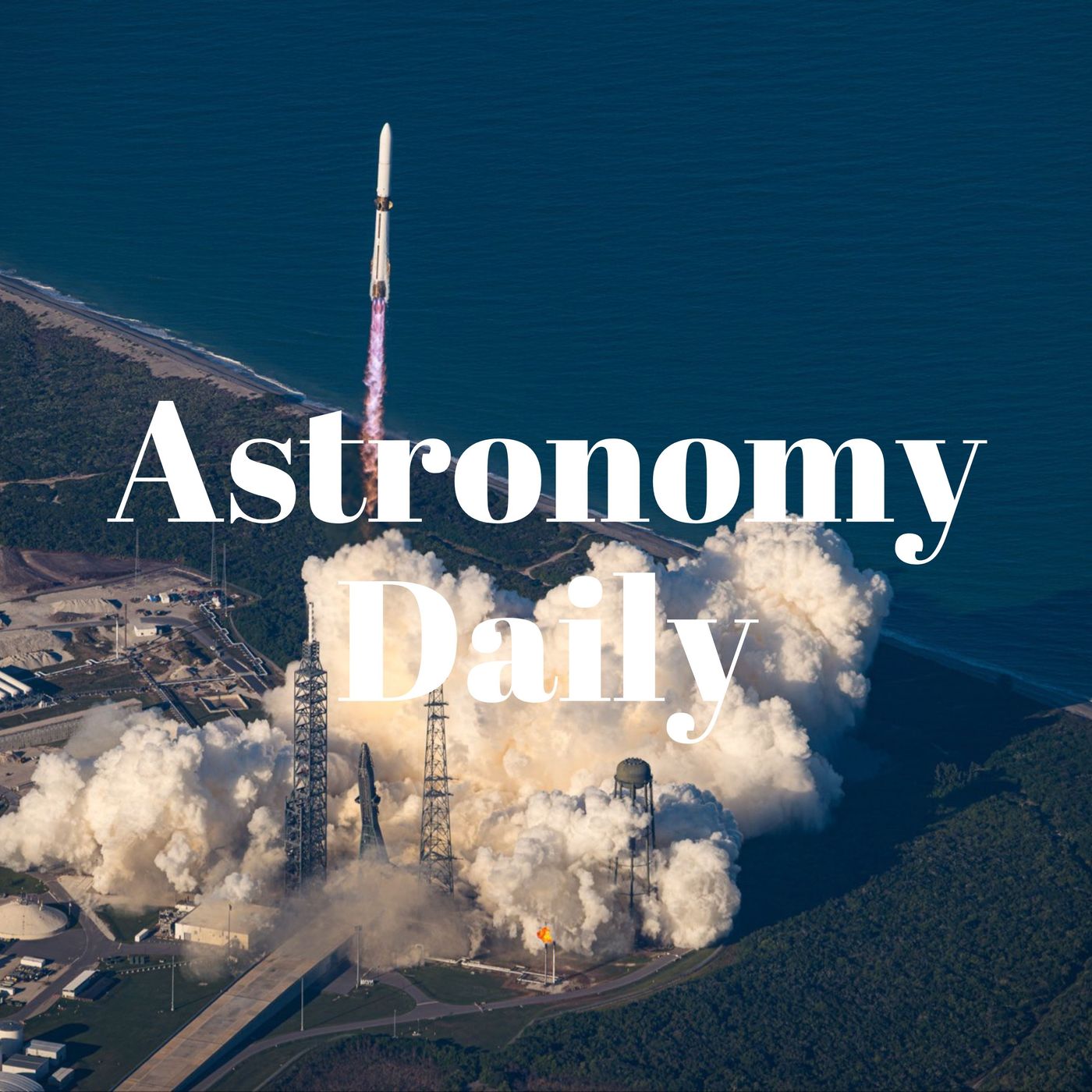
Astronomy Daily: Space News Updates
Subscribed: 113Played: 19,131
Subscribe

© Copyright bitesz.com
Description
Join hosts Anna & Avery for daily Space & Astronomy news, insights, and discoveries.
Give us 10 minutes and we'll give you the Universe!
For more visit, our website and sign up for the free daily newsletter and check out our continually updated newsfeed. www.astronomydaily.io.
Follow us on X (formerly Twitter), Facebook, YouTube and TikTok ...just search for AstroDailyPod. Enjoy!
Become a supporter of this podcast: https://www.spreaker.com/podcast/astronomy-daily-space-news-updates--5648921/support.
Give us 10 minutes and we'll give you the Universe!
For more visit, our website and sign up for the free daily newsletter and check out our continually updated newsfeed. www.astronomydaily.io.
Follow us on X (formerly Twitter), Facebook, YouTube and TikTok ...just search for AstroDailyPod. Enjoy!
Become a supporter of this podcast: https://www.spreaker.com/podcast/astronomy-daily-space-news-updates--5648921/support.
685 Episodes
Reverse
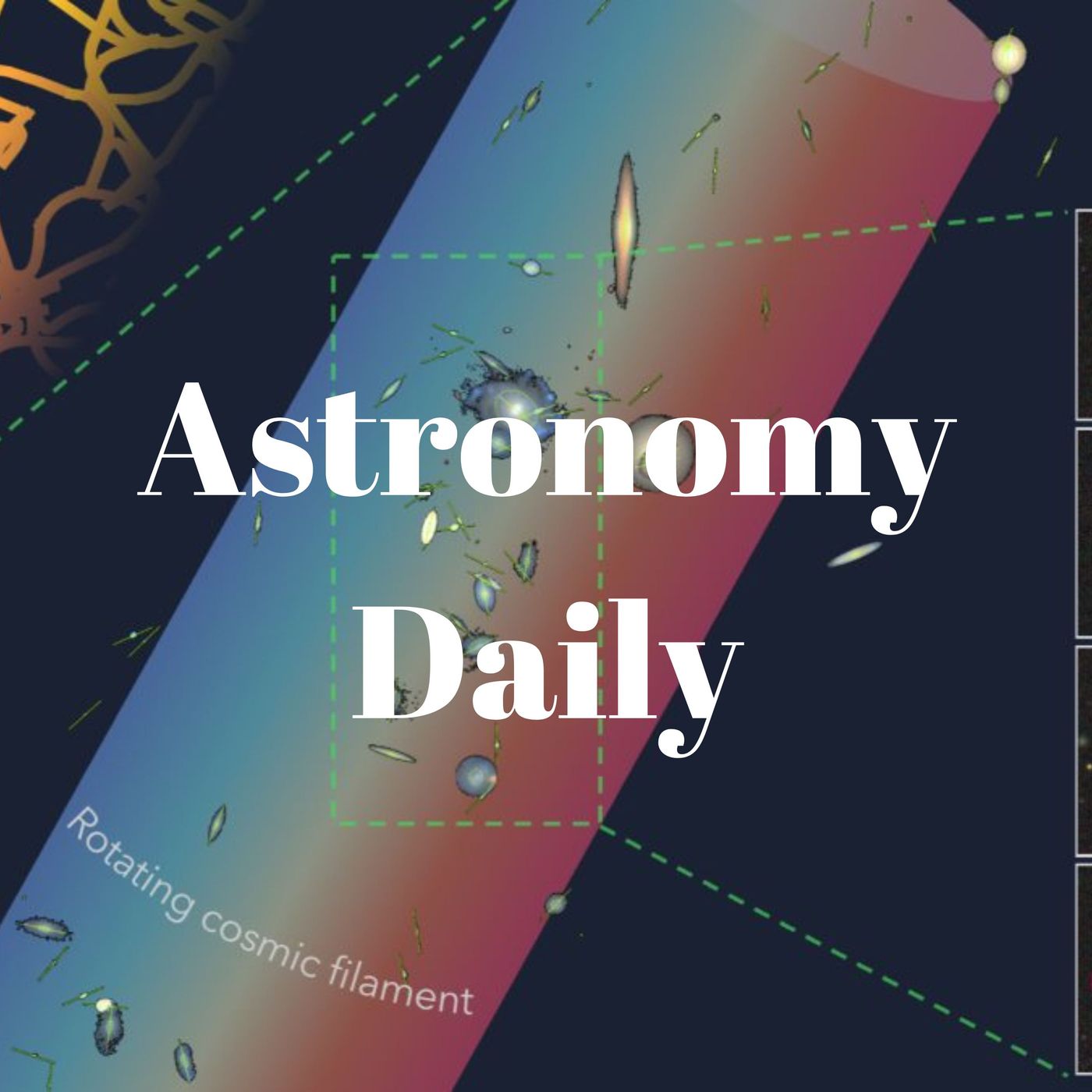
Discovery of a Cosmic Filament: Astronomers have uncovered a remarkable string of 14 galaxies spinning in unison within a colossal cosmic filament, a structure that is about 50 million light years long and rotates at an astounding 110 kilometers per second. This discovery reveals the profound influence of cosmic structures on galaxy formation.China's Earth 2.0 Initiative: The China National Space Agency has unveiled ambitious plans for their upcoming missions aimed at exploring Earth-like planets. These missions include a radio astronomy experiment on the Moon's far side, a solar observatory, a space telescope for studying black holes, and an exoplanet-hunting satellite, positioning China at the forefront of space exploration.International Space Station Leadership Change: Expedition 73 is transitioning to Expedition 74, with veteran cosmonaut Sergey Rysakov handing over command to NASA's Mike Finke. This change comes as the crew prepares for their return to Earth, while scientific research aboard the ISS continues unabated.Mayonnaise Research in Space: Scientists are studying mayonnaise aboard the ISS to understand soft matter dynamics in microgravity. This research could reshape our understanding of materials and their applications on Earth, revealing that gravity significantly impacts the internal structures of these substances.NASA's Punch Mission and Comet Swann: NASA's Punch mission has released a breathtaking 40-day timelapse of Comet Swann, showcasing its stunning bluish-green coma and glowing tail. The footage also features an unexpected appearance by the interstellar visitor 3i Atlas, making for a spectacular cosmic event.NASA's Emmy Win: NASA has been awarded an Emmy for their production of the total solar eclipse broadcast from April 8, 2024. This monumental effort garnered nearly 40 million views and was recognized for its excellence in production technology, showcasing the agency's commitment to bringing celestial wonders to the public.For more cosmic updates, visit our website at astronomydaily.io. Join our community on social media by searching for #AstroDailyPod on Facebook, X, YouTubeMusic, TikTok, and our new Instagram account! Don’t forget to subscribe to the podcast on Apple Podcasts, Spotify, iHeartRadio, or wherever you get your podcasts.Thank you for tuning in. This is Avery and Anna signing off. Until next time, keep looking up and exploring the wonders of our universe.✍️ Episode ReferencesCosmic Filament Discovery[NASA](https://www.nasa.gov/)China's Earth 2.0 Plans[China National Space Agency](http://www.cnsa.gov.cn/)ISS Expedition Updates[NASA TV](https://www.nasa.gov/mission_pages/station/main/index.html)Soft Matter Research[Scientific Reports](https://www.nature.com/srep/)Comet Swann Timelapse[NASA Punch Mission](https://www.nasa.gov/punch)NASA Emmy Award[Academy of Television Arts and Sciences](https://www.emmys.com/)Become a supporter of this podcast: https://www.spreaker.com/podcast/astronomy-daily-space-news-updates--5648921/support.Sponsor Details:Ensure your online privacy by using NordVPN. To get our special listener deal and save a lot of money, visit www.bitesz.com/nordvpn. You'll be glad you did!Sponsor Details:Ensure your online privacy by using NordVPN. To get our special listener deal and save a lot of money, visit www.bitesz.com/nordvpn. You'll be glad you did!Become a supporter of Astronomy Daily by joining our Supporters Club. Commercial free episodes daily are only a click way... Click HereThis episode includes AI-generated content.

Nancy Chris Roman Space Telescope Assembly Complete: NASA has successfully assembled the Nancy Chris Roman Space Telescope, a major milestone that brings us closer to its anticipated launch in May 2027. This powerful telescope, equipped with a 288-megapixel camera, promises to gather data hundreds of times faster than Hubble, potentially unveiling over 100,000 new exoplanets and billions of galaxies.Russian Soyuz Rocket Launch Damage: Following a successful launch to the International Space Station, damage was discovered at the Baikonur Cosmodrome, attributed to vibrations and heat from the launch. Repairs are expected to take around three months, but there’s no immediate threat to future crewed missions.Satellite Mega Constellations and Light Pollution: A new forecast reveals that satellite mega constellations could severely impact astronomical observations, with projections showing that 1/3 of Hubble's images may be contaminated with satellite trails by the 2030s. Solutions are being explored to mitigate this growing issue.Geological Differences Between Earth and Venus: Recent research sheds light on the geological differences between Earth and Venus, highlighting that Venus operates under a 'squishy lid' regime, which affects its volcanism and tectonic activity. This new framework helps explain the presence of active volcanoes on the otherwise stagnant planet.James Webb Space Telescope's Stunning New Image: The James Webb Space Telescope captures a breathtaking image of two colliding dwarf galaxies, NGC 4490 and NGC 4485, revealing a bridge of gas and new stars formed from their gravitational interaction, showcasing the dynamic nature of the universe.Rare High-Definition Sunspot Images: Astronomers have captured rare high-definition images of sunspots just before they erupted in a powerful solar flare. These images provide critical insights into the sun's magnetic activity and could improve our ability to predict solar events that impact technology on Earth.For more cosmic updates, visit our website at astronomydaily.io. Join our community on social media by searching for #AstroDailyPod on Facebook, X, YouTubeMusic, TikTok, and our new Instagram account! Don’t forget to subscribe to the podcast on Apple Podcasts, Spotify, iHeartRadio, or wherever you get your podcasts.Thank you for tuning in. This is Avery and Anna signing off. Until next time, keep looking up and exploring the wonders of our universe.✍️ Episode ReferencesNancy Chris Roman Space Telescope[NASA](https://www.nasa.gov/)Soyuz Launch Damage Report[Roscosmos](https://www.roscosmos.ru/)Satellite Constellation Forecast[Hubble Space Telescope](https://hubblesite.org/)Venus Geological Research[Planetary Science Journal](https://www.planetarysciencejournal.com/)James Webb Space Telescope Image[NASA Webb](https://webb.nasa.gov/)Sunspot Observations[Gregor Solar Telescope](https://www.gregorsolar.telescope/)Become a supporter of this podcast: https://www.spreaker.com/podcast/astronomy-daily-space-news-updates--5648921/support.Sponsor Details:Ensure your online privacy by using NordVPN. To get our special listener deal and save a lot of money, visit www.bitesz.com/nordvpn. You'll be glad you did!Sponsor Details:Ensure your online privacy by using NordVPN. To get our special listener deal and save a lot of money, visit www.bitesz.com/nordvpn. You'll be glad you did!Become a supporter of Astronomy Daily by joining our Supporters Club. Commercial free episodes daily are only a click way... Click HereThis episode includes AI-generated content.
China's Zhuqi 3 Rocket Launch: Landspace has successfully launched its Zhuqi 3 rocket, marking a significant milestone in the reusable rocket race. Although the first stage booster experienced a mishap during its landing attempt, the successful reach of orbit demonstrates the progress in China's commercial space industry.WASP 107B's Atmospheric Loss: The James Webb Space Telescope has captured stunning images of the gas giant WASP 107B, which is actively losing its atmosphere due to intense stellar radiation. This phenomenon provides valuable insights into planetary evolution and the life cycles of exoplanets.Asteroid Bennu's Life Ingredients: NASA's Osiris Rex mission has returned samples from Asteroid Bennu, revealing essential sugars like ribose and glucose. These findings support the theory that asteroids could have delivered the building blocks of life to early Earth, with a fascinating discovery of a complex organic material playfully dubbed "Spacegum."December's Celestial Events: Sky watchers can look forward to a spectacular full moon, known as the Cold Moon, that will coincide with a supermoon and a major lunar standstill, making it a rare and beautiful sight in the winter sky.Hataku Matu R's Stunning Imagery: Despite the crash landing of the Japanese lunar lander Hataku Matu R, it captured breathtaking images of Earth during a total solar eclipse, showcasing the beauty of our planet from a unique perspective.Cosmic Ray and JetBlue Emergency Landing: A fascinating theory suggests that a cosmic ray may have caused a JetBlue airliner to experience a sudden altitude drop, highlighting the potential effects of high-energy particles from deep space on modern avionics.For more cosmic updates, visit our website at astronomydaily.io. Join our community on social media by searching for #AstroDailyPod on Facebook, X, YouTubeMusic, TikTok, and our new Instagram account! Don’t forget to subscribe to the podcast on Apple Podcasts, Spotify, iHeartRadio, or wherever you get your podcasts.Thank you for tuning in. This is Avery and Anna signing off. Until next time, keep looking up and exploring the wonders of our universe.✍️ Episode ReferencesZhuqi 3 Rocket Launch[Landspace](https://www.landspace.com/)WASP 107B Observations[NASA](https://www.nasa.gov/)Osiris Rex Mission Findings[NASA Osiris Rex](https://www.nasa.gov/osiris-rex)Lunar Events Details[Astronomy Magazine](https://www.astronomy.com/)Hataku Matu R Imagery[Japan Aerospace Exploration Agency](https://www.jaxa.jp/)Cosmic Ray Theory[JetBlue Airways](https://www.jetblue.com/)Become a supporter of this podcast: https://www.spreaker.com/podcast/astronomy-daily-space-news-updates--5648921/support.Sponsor Details:Ensure your online privacy by using NordVPN. To get our special listener deal and save a lot of money, visit www.bitesz.com/nordvpn. You'll be glad you did!Sponsor Details:Ensure your online privacy by using NordVPN. To get our special listener deal and save a lot of money, visit www.bitesz.com/nordvpn. You'll be glad you did!Become a supporter of Astronomy Daily by joining our Supporters Club. Commercial free episodes daily are only a click way... Click HereThis episode includes AI-generated content.

Threat to the Atacama Desert: Scientists are raising alarms over a massive renewable energy project near Chile’s Atacama Desert, home to the Paranal Observatory. Concerns include potential light pollution, dust interference, and atmospheric heating that could compromise the region's exceptional astronomical conditions. The scientific community is advocating for solutions to minimize these impacts while balancing sustainable energy needs.Blue Origin's New Innovations: Blue Origin has unveiled exciting new hardware, including the Blue Moon Mark One robotic lander set to fly by 2026, a more powerful version of the New Glenn rocket, and Blue Ring, a space tug designed to support logistics in Earth orbit. These advancements highlight the company's commitment to building a sustainable space infrastructure.Starquakes and Cosmic Mysteries: NASA's TESS has detected unusual starquakes from a red giant orbiting the black hole Gaia BH2. The star's rapid spin and curious chemical composition suggest it may be the result of a merger between two stars, showcasing the power of astroseismology in uncovering cosmic histories.Time on Mars: A fascinating revelation indicates that time moves slightly faster on Mars compared to Earth due to its weaker gravity and slower orbit. This difference, while minuscule, poses significant implications for future Martian missions, necessitating a standardized time system for coordinated operations.Innovative Martian Construction: Researchers propose a groundbreaking method for building on Mars using local resources. By combining Martian soil with Earth bacteria, scientists aim to create bioconcrete for construction, while also producing oxygen, offering a dual solution for habitat creation and life support in the harsh Martian environment.For more cosmic updates, visit our website at astronomydaily.io. Join our community on social media by searching for #AstroDailyPod on Facebook, X, YouTubeMusic, TikTok, and our new Instagram account! Don’t forget to subscribe to the podcast on Apple Podcasts, Spotify, iHeartRadio, or wherever you get your podcasts.Thank you for tuning in. This is Avery and Anna signing off. Until next time, keep looking up and exploring the wonders of our universe.✍️ Episode ReferencesThreat to the Atacama Desert[Astronomy Journal](https://www.astronomy.com/)Blue Origin Innovations[Blue Origin](https://www.blueorigin.com/)Starquakes Research[NASA TV](https://www.nasa.gov/tess)Time on Mars Studies[Physics Today](https://www.physicstoday.org/)Martian Construction Research[NASA Mars](https://mars.nasa.gov/)Become a supporter of this podcast: https://www.spreaker.com/podcast/astronomy-daily-space-news-updates--5648921/support.Sponsor Details:Ensure your online privacy by using NordVPN. To get our special listener deal and save a lot of money, visit www.bitesz.com/nordvpn. You'll be glad you did!Become a supporter of Astronomy Daily by joining our Supporters Club. Commercial free episodes daily are only a click way... Click HereThis episode includes AI-generated content.

Emergency Return of Shenzhou 20: China's Shenzhou 20 spacecraft is making an uncrewed emergency return to Earth after sustaining damage from a micrometeoroid, which caused a crack in its window. The crew safely returned on a different vessel, marking a significant first for China's space program.Galactic Neighborhoods Matter: The Deep Extragalactic Visible Legacy Survey (DEVELS) reveals that a galaxy's local environment significantly influences its evolution. Galaxies in crowded clusters exhibit slower star formation rates compared to isolated ones, providing crucial insights into cosmic evolution.Launch Week Extravaganza: This week sees 10 scheduled orbital launches, including five Starlink missions by SpaceX, South Korea's COMSAT 7 satellite launch by Arianespace, and Japan's H3 rocket carrying a critical GPS satellite, highlighting the rapid advancements in the global space industry.Ancient Mars Rivers: A new study identifies 16 massive ancient river drainage systems on Mars, suggesting a much wetter past. These findings offer promising locations for searching for signs of past Martian life, utilizing high-resolution data from Mars orbiters.Solar Activity Alert: The sun has unleashed a powerful X 1.9 class solar flare, causing radio blackouts and raising concerns about future solar activity. Forecasters are closely monitoring a larger sunspot region that could impact Earth with potential geomagnetic disturbances.Sustainable Space Practices: Experts advocate for a circular space economy to combat space debris, emphasizing the importance of designing durable, repairable satellites and creating multi-purpose space stations to ensure sustainable operations in orbit for future generations.For more cosmic updates, visit our website at astronomydaily.io. Join our community on social media by searching for #AstroDailyPod on Facebook, X, YouTubeMusic, TikTok, and our new Instagram account! Don’t forget to subscribe to the podcast on Apple Podcasts, Spotify, iHeartRadio, or wherever you get your podcasts.Thank you for tuning in. This is Avery and Anna signing off. Until next time, keep looking up and exploring the wonders of our universe.✍️ Episode ReferencesShenzhou 20 Emergency Return[China National Space Administration](http://www.cnsa.gov.cn/)DEVELS Survey Findings[Astronomy Journal](https://www.astronomy.com/)Launch Week Highlights[NASA Launch Schedule](https://www.nasa.gov/launchschedule)Mars River Systems Study[Mars Reconnaissance Orbiter](https://mars.nasa.gov/mro/)Solar Activity Reports[NOAA Space Weather Prediction Center](https://www.swpc.noaa.gov/)Circular Space Economy Initiatives[Astroscale](https://astroscale.com/)Become a supporter of this podcast: https://www.spreaker.com/podcast/astronomy-daily-space-news-updates--5648921/support.Sponsor Details:Ensure your online privacy by using NordVPN. To get our special listener deal and save a lot of money, visit www.bitesz.com/nordvpn. You'll be glad you did!Sponsor Details:Ensure your online privacy by using NordVPN. To get our special listener deal and save a lot of money, visit www.bitesz.com/nordvpn. You'll be glad you did!Become a supporter of Astronomy Daily by joining our Supporters Club. Commercial free episodes daily are only a click way... Click HereThis episode includes AI-generated content.

ESA's European Launcher Challenge: The European Space Agency is taking significant steps towards enhancing its commercial launch market, with member states committing over 900 million euros to the European Launcher Challenge. This initiative will see ESA acting as an anchor client, co-funding upgrades for private companies and stimulating competition and innovation in space launch services.Starquakes and Black Holes: Scientists are uncovering the mysteries of dormant black holes through the study of starquakes, or asteroseismology. Two systems, Gaia BH2 and Gaia BH3, reveal intriguing contradictions in the ages and compositions of their red giant stars, prompting a reevaluation of our understanding of stellar behavior and black hole interactions.Redefining Time: A philosophical exploration into the nature of time sheds light on the distinction between existence and occurrence. By clarifying the concept of time, researchers challenge long-standing beliefs and offer a new perspective on Einstein's spacetime, suggesting that time should be viewed as a map of events rather than a physical entity.Hidden Stars and SETI: A new study proposes that the search for extraterrestrial intelligence can be improved by considering previously overlooked stars. By utilizing the Besanc Galactic model, scientists can predict hidden stars in the field of view of telescopes, expanding the search for technosignatures without the need for additional observations.Wessen Lunar Monitoring Mission: A new mission from Hong Kong, named Wessen, aims to provide continuous monitoring of meteoroid impacts on the Moon. Set to launch by 2028, this lunar orbiter will track the bright flashes caused by impacts, crucial for ensuring the safety of future lunar infrastructure and astronauts as nations plan for lunar bases.For more cosmic updates, visit our website at astronomydaily.io. Join our community on social media by searching for #AstroDailyPod on Facebook, X, YouTubeMusic, TikTok, and our new Instagram account! Don’t forget to subscribe to the podcast on Apple Podcasts, Spotify, iHeartRadio, or wherever you get your podcasts.Thank you for tuning in. This is Anna and Avery signing off. Until next time, keep looking up and exploring the wonders of our universe.✍️ Episode ReferencesESA's European Launcher Challenge[European Space Agency](https://www.esa.int/)Starquakes and Black Holes Research[NASA](https://www.nasa.gov/)Philosophical Insights on Time[Physics Today](https://www.physicstoday.org/)SETI and Hidden Stars Study[SETI Institute](https://www.seti.org/)Wessen Lunar Mission Details[Hong Kong Space Research](https://www.hksr.org/)Become a supporter of this podcast: https://www.spreaker.com/podcast/astronomy-daily-space-news-updates--5648921/support.Sponsor Details:Ensure your online privacy by using NordVPN. To get our special listener deal and save a lot of money, visit www.bitesz.com/nordvpn. You'll be glad you did!Sponsor Details:Ensure your online privacy by using NordVPN. To get our special listener deal and save a lot of money, visit www.bitesz.com/nordvpn. You'll be glad you did!Become a supporter of Astronomy Daily by joining our Supporters Club. Commercial free episodes daily are only a click way... Click HereThis episode includes AI-generated content.

Launch of the Mauve Telescope: A groundbreaking new space telescope named Mauve, about the size of a mini fridge, has successfully launched aboard a SpaceX transporter mission. Owned by Blue Skies Space, this private telescope will operate on a subscription model, offering unique ultraviolet data that could revolutionize astronomical research by providing dedicated access to space-based observations.Roscosmos Launch Pad Trouble: Following the successful launch of the Soyuz MS.28 crew to the ISS, Roscosmos has reported significant damage to its only active crewed launch pad at Baikonur Cosmodrome. A maintenance cabin collapsed during a post-launch inspection, potentially impacting future missions for up to two years.James Webb Observes Sagittarius A: The James Webb Space Telescope has made remarkable observations of flares from the Milky Way's supermassive black hole, Sagittarius A, in mid-infrared light. These observations provide critical insights into the magnetic field around the black hole and help scientists understand the processes that generate these energetic flares.ESA's Hydro GNSS Mission: The European Space Agency has launched its first scout mission, Hydro GNSS, consisting of twin satellites designed to study Earth's water cycle using GNSS reflectometry. This innovative approach will provide valuable data on soil moisture, flooding, and biomass, enhancing our understanding of environmental dynamics.Osiris Apex's Earth Flyby: NASA's Osiris Apex spacecraft has successfully performed a gravity assist flyby of Earth, capturing stunning images of our planet and the Moon. This maneuver sets the stage for its upcoming mission to the asteroid Apophis, which presents a unique opportunity to study how an asteroid is affected by a close planetary encounter.For more cosmic updates, visit our website at astronomydaily.io. Join our community on social media by searching for #AstroDailyPod on Facebook, X, YouTubeMusic, TikTok, and our new Instagram account! Don’t forget to subscribe to the podcast on Apple Podcasts, Spotify, iHeartRadio, or wherever you get your podcasts.Thank you for tuning in. This is Anna and Avery signing off. Until next time, keep looking up and exploring the wonders of our universe.✍️ Episode ReferencesMauve Telescope Launch[Blue Skies Space](https://www.blueskiesspace.com/)Roscosmos Launch Pad Damage[Roscosmos](https://www.roscosmos.ru/)James Webb Observations[NASA](https://www.nasa.gov/mission_pages/webb/main/index.html)Hydro GNSS Mission[European Space Agency](https://www.esa.int/)Osiris Apex Mission Details[NASA](https://www.nasa.gov/mission_pages/osiris-rex/overview/index.html)Become a supporter of this podcast: https://www.spreaker.com/podcast/astronomy-daily-space-news-updates--5648921/support.Sponsor Details:Ensure your online privacy by using NordVPN. To get our special listener deal and save a lot of money, visit www.bitesz.com/nordvpn. You'll be glad you did!Become a supporter of Astronomy Daily by joining our Supporters Club. Commercial free episodes daily are only a click way... Click HereThis episode includes AI-generated content.
Lightning on Mars: NASA's Perseverance rover has potentially captured the first direct evidence of lightning on Mars. Using its super-sensitive microphone, the rover recorded distinct crackling sounds, suggesting that electrical discharges may be caused by the planet's notorious dust storms. This discovery indicates that Mars has a more dynamic atmosphere than previously thought, raising excitement for future crewed missions.Thanksgiving Crew Launch: A crew of three, including one NASA astronaut and two Russian cosmonauts, successfully launched to the International Space Station aboard a Soyuz rocket. Their eight-month mission will involve overseeing a variety of scientific experiments and performing maintenance tasks, showcasing continued international cooperation in space.ESA's Space Rider Announcement: The European Space Agency has announced the inaugural flight of its Space Rider vehicle, set for 2028. This reusable space plane will serve as an uncrewed robotic laboratory, conducting experiments in orbit and returning to Earth for refurbishment, marking a significant advancement in European space capabilities.New Cosmic Discovery: The James Webb Space Telescope has detected a series of tiny red dots in deep space, leading to the hypothesis of a new class of objects dubbed "black hole stars." These entities would contain supermassive black holes at their cores, surrounded by dense gas, challenging our understanding of the early universe.Understanding Venusian Winds: New research has uncovered that the extreme winds on Venus, which rotate 60 times faster than the planet itself, may be driven by a massive atmospheric tide caused by solar heating. This insight could enhance our understanding of the climate on Venus and tidally locked exoplanets.For more cosmic updates, visit our website at astronomydaily.io. Join our community on social media by searching for #AstroDailyPod on Facebook, X, YouTubeMusic, TikTok, and our new Instagram account! Don’t forget to subscribe to the podcast on Apple Podcasts, Spotify, iHeartRadio, or wherever you get your podcasts.Thank you for tuning in. This is Anna and Avery signing off. Until next time, keep looking up and exploring the wonders of our universe.✍️ Episode ReferencesPerseverance Rover Lightning Detection[NASA](https://www.nasa.gov/)International Space Station Crew Launch[NASA](https://www.nasa.gov/)ESA's Space Rider Details[European Space Agency](https://www.esa.int/)James Webb Space Telescope Discoveries[NASA](https://www.nasa.gov/)Venus Atmospheric Research[NASA](https://www.nasa.gov/)Become a supporter of this podcast: https://www.spreaker.com/podcast/astronomy-daily-space-news-updates--5648921/support.Sponsor Details:Ensure your online privacy by using NordVPN. To get our special listener deal and save a lot of money, visit www.bitesz.com/nordvpn. You'll be glad you did!Become a supporter of Astronomy Daily by joining our Supporters Club. Commercial free episodes daily are only a click away... Click HereSponsor Details:Ensure your online privacy by using NordVPN. To get our special listener deal and save a lot of money, visit www.bitesz.com/nordvpn. You'll be glad you did!Become a supporter of Astronomy Daily by joining our Supporters Club. Commercial free episodes daily are only a click way... Click HereThis episode includes AI-generated content.

(00:00:00) Astronomy Daily podcast features the latest news from across the cosmos
(00:00:35) SpaceX scrubbed the launch of their Transporter 15 mission on Wednesday
(00:02:45) SpaceX scrubbed its B1062 booster due to unspecified issue
(00:04:26) Scientists used data from a spacecraft orbiting Mars to predict comet's path
(00:05:42) Improved trajectory means telescopes and other spacecraft can track comet with greater accuracy
(00:07:57) NASA's Nancy Grace Roman Space Telescope is scheduled for launch in 2027
(00:10:14) NASA astronaut Chris Williams and two cosmonauts set for Thanksgiving mission
(00:11:09) South Korea's homegrown Nuri rocket successfully launched on November 26th
(00:12:13) Astronomy Daily features the best of what's happening in space today
In this episode of Astronomy Daily, hosts Avery and Anna bring you the latest cosmic news, including a last-minute launch scrub for SpaceX's Transporter 15 mission, innovative tracking of interstellar visitors using Mars data, and exciting updates about NASA's upcoming Roman telescope. They also discuss a Thanksgiving Day launch to the International Space Station and a successful flight of South Korea's Nuri rocket. Tune in for an insightful journey through the universe!Become a supporter of this podcast: https://www.spreaker.com/podcast/astronomy-daily-space-news-updates--5648921/support.Sponsor Details:Ensure your online privacy by using NordVPN. To get our special listener deal and save a lot of money, visit www.bitesz.com/nordvpn. You'll be glad you did!Become a supporter of Astronomy Daily by joining our Supporters Club. Commercial free episodes daily are only a click way... Click HereThis episode includes AI-generated content.

Breakthrough in Dark Matter Research: A potential game-changing discovery has emerged in the search for dark matter. An astronomer from the University of Tokyo has detected high-energy gamma rays that align with theoretical predictions for dark matter particle collisions. This intriguing signal could provide the first direct evidence of dark matter, specifically linked to the hypothesized WIMPs (weakly interacting massive particles), marking a monumental step in understanding one of the universe's greatest mysteries.Busy Week for Rocket Launches: This week is set to be a thrilling one for space enthusiasts, with a total of seven launches from five different rockets worldwide. SpaceX leads the way with three Falcon 9 missions, while a Russian Soyuz rocket will carry new crew members to the ISS. Additionally, military payloads and satellite launches from South Korea and French Guiana round out this international showcase of space exploration.Perseverance Rover's Curious Find: The Perseverance rover has discovered a sculpted rock on Mars, nicknamed Phi Staxhla, which is composed of iron and nickel—indicative of a meteorite. If confirmed, this would be the first meteorite identified by Perseverance since its landing in February 2021, offering a fascinating glimpse into the planet's history.Osiris Apophis Explorer's Earth Philip: The Osiris Apophis Explorer spacecraft, previously known for its sample return from asteroid Bennu, recently completed a gravity assist flyby of Earth. Flying within 2,100 miles of our planet, the spacecraft successfully calibrated its instruments, capturing stunning images of Earth as it prepares for its new mission targeting asteroid Apophis.Escapade Mission's First Selfies: NASA's Escapade mission, featuring twin spacecraft, has sent back its first selfies, confirming that its camera system is functioning properly. This reassuring image marks a significant milestone as the spacecraft embark on their long journey, ready to explore the mysteries of our solar system.Boiling Oceans on Icy Moons: A groundbreaking study suggests that even small icy moons, previously thought to be frozen solid, might host boiling oceans. Tidal forces could generate enough heat in their cores to keep water in a liquid state, potentially creating environments suitable for life, even in total darkness. This discovery expands the search for habitable worlds beyond traditional boundaries.For more cosmic updates, visit our website at astronomydaily.io. Join our community on social media by searching for #AstroDailyPod on Facebook, X, YouTubeMusic, TikTok, and our new Instagram account! Don’t forget to subscribe to the podcast on Apple Podcasts, Spotify, iHeartRadio, or wherever you get your podcasts.Thank you for tuning in. This is Anna and Avery signing off. Until next time, keep looking up and exploring the wonders of our universe.✍️ Episode ReferencesDark Matter Discovery[NASA](https://www.nasa.gov/)Rocket Launch Schedule[SpaceX](https://www.spacex.com/)Perseverance Rover Findings[NASA](https://www.nasa.gov/mission_pages/mars-rovers/perseverance/overview.html)Osiris Apophis Explorer Mission[NASA](https://www.nasa.gov/mission_pages/osiris-rex/overview/index.html)Escapade Mission Updates[NASA](https://www.nasa.gov/escapade)Boiling Oceans Research[Science Journal](https://www.science.org/)Become a supporter of this podcast: https://www.spreaker.com/podcast/astronomy-daily-space-news-updates--5648921/support.Sponsor Details:Ensure your online privacy by using NordVPN. To get our special listener deal and save a lot of money, visit www.bitesz.com/nordvpn. You'll be glad you did!Sponsor Details:Ensure your online privacy by using NordVPN. To get our special listener deal and save a lot of money, visit www.bitesz.com/nordvpn. You'll be glad you did!Become a supporter of Astronomy Daily by joining our Supporters Club. Commercial free episodes daily are only a click way... Click HereThis episode includes AI-generated content.

Boeing's Starliner Mission Shift: A significant change has been announced for Boeing's Starliner 1 mission, now transitioning to a cargo-only mission to the ISS, scheduled for no earlier than April 2026. This decision follows a challenging crew flight test earlier this year, emphasizing safety and the need for further analysis and fixes related to thruster issues. The number of required flights for Boeing has also been reduced from six to four, reflecting the success of SpaceX's Crew Dragon.China's Shenzhou 22 Lifeboat Launch: In a remarkable display of operational maturity, China successfully launched the uncrewed Shenzhou 22 mission to its Tiangong Space Station as a lifeboat for the crew aboard Shenzhou 20, which sustained damage. This swift response showcases China's capability to handle emergencies, marking a significant milestone in their human spaceflight program.International Space Station's Busy Schedule: The ISS is a hive of activity as a Soyuz rocket prepares for a Thanksgiving Day launch carrying three new crew members. The station's crew is engaged in logistical operations, including moving the Cygnus XL cargo spacecraft and offloading supplies from the Japanese HTV X1 spacecraft, all while conducting vital science experiments.Mysterious Cosmic Sphere: Astronomers have discovered a strange red sphere, cataloged as CY J1249, racing through the Milky Way at over 1 million miles per hour. This extraordinary speed raises questions about its origin, with two theories suggesting it could be a fragment of a white dwarf or a failed star, necessitating further observations to uncover its true nature.ESA Student Internship Opportunity: The European Space Agency has issued a final call for applications for its 2026 student internship program, with a deadline of November 30th. This program offers students hands-on experience in various fields, contributing to real missions alongside top space experts, making it an excellent opportunity for aspiring space professionals. https://www.esa.int/About_Us/Careers_at_ESA/Final_call_to_apply_for_ESA_Internships_2026For more cosmic updates, visit our website at astronomydaily.io. Join our community on social media by searching for #AstroDailyPod on Facebook, X, YouTubeMusic, TikTok, and our new Instagram account! Don’t forget to subscribe to the podcast on Apple Podcasts, Spotify, iHeartRadio, or wherever you get your podcasts.Thank you for tuning in. This is Anna and Avery signing off. Until next time, keep looking up and exploring the wonders of our universe.✍️ Episode ReferencesBoeing's Starliner Updates[NASA](https://www.nasa.gov/)Shenzhou 22 Mission Details[China National Space Administration](http://www.cnsa.gov.cn/)International Space Station Operations[NASA](https://www.nasa.gov/)CY J1249 Discovery[NASA](https://www.nasa.gov/)ESA Internship Program Information[European Space Agency] https://www.esa.int/About_Us/Careers_at_ESA/Final_call_to_apply_for_ESA_Internships_2026Become a supporter of this podcast: https://www.spreaker.com/podcast/astronomy-daily-space-news-updates--5648921/support.Sponsor Details:Ensure your online privacy by using NordVPN. To get our special listener deal and save a lot of money, visit www.bitesz.com/nordvpn. You'll be glad you did!Sponsor Details:Ensure your online privacy by using NordVPN. To get our special listener deal and save a lot of money, visit www.bitesz.com/nordvpn. You'll be glad you did!Become a supporter of Astronomy Daily by joining our Supporters Club. Commercial free episodes daily are only a click way... Click HereThis episode includes AI-generated content.

Hawking and Einstein Confirmed: In a groundbreaking cosmic event, the collision of two black holes has validated predictions made by both Stephen Hawking and Albert Einstein. Observations from gravitational wave observatories confirmed Hawking's area theorem, showing that the surface area of the resulting black hole increased, and matched Einstein's predictions regarding the black hole's ring down, revealing a new Kerr black hole.Moss Survives in Space: Astonishingly, moss spores exposed to the harsh conditions of space on the International Space Station for nine months were able to germinate upon their return to Earth. This remarkable resilience of extremophiles supports theories like panspermia, suggesting that life's building blocks could survive interplanetary journeys.Balloon-Based Astronomy: The Excalibur mission is revolutionizing observational astronomy by utilizing a telescope suspended from a high-altitude balloon. Operating above 99% of Earth's atmosphere, it measures high-energy X-ray polarization from cosmic objects like the Crab Nebula and Cygnus X1, providing unprecedented insights into their magnetic fields and structures.Mystery of the Misaligned Exoplanet: Astronomers are puzzled by TOI 3884, a super Neptune with a bizarrely tilted orbit of 62 degrees. Lacking any nearby massive objects to explain its unusual trajectory, scientists are left with unconventional theories about its formation, highlighting the chaotic nature of planetary systems.Is the Universe Infinite? The question of whether the universe is infinite remains unresolved. While measurements of the cosmic microwave background suggest a flat geometry, which implies infinity, our observable horizon limits our ability to confirm this. The potential for a finite universe with complex topology adds further complexity to this profound inquiry.For more cosmic updates, visit our website at astronomydaily.io. Join our community on social media by searching for #AstroDailyPod on Facebook, X, YouTubeMusic, TikTok, and our new Instagram account! Don’t forget to subscribe to the podcast on Apple Podcasts, Spotify, iHeartRadio, or wherever you get your podcasts.Thank you for tuning in. This is Anna and Avery signing off. Until next time, keep looking up and exploring the wonders of our universe.✍️ Episode ReferencesBlack Hole Collision Insights[NASA](https://www.nasa.gov/)Moss in Space Study[International Space Station](https://www.nasa.gov/mission_pages/station/main/index.html)Excalibur Mission Overview[NASA](https://www.nasa.gov/)TOI 3884 Exoplanet Research[NASA Exoplanet Archive](https://exoplanetarchive.ipac.caltech.edu/)Cosmic Microwave Background Studies[NASA](https://www.nasa.gov/)Become a supporter of this podcast: https://www.spreaker.com/podcast/astronomy-daily-space-news-updates--5648921/support.Sponsor Details:Ensure your online privacy by using NordVPN. To get our special listener deal and save a lot of money, visit www.bitesz.com/nordvpn. You'll be glad you did!Sponsor Details:Ensure your online privacy by using NordVPN. To get our special listener deal and save a lot of money, visit www.bitesz.com/nordvpn. You'll be glad you did!Become a supporter of Astronomy Daily by joining our Supporters Club. Commercial free episodes daily are only a click way... Click HereThis episode includes AI-generated content.

SpaceX's Starship Booster Anomaly: SpaceX faces a significant setback as Booster 18 of its next-generation Starship program suffers a catastrophic rupture during a routine gas system pressure test. The failure of a composite overwrapped pressure vessel has left the company with no completed flight-ready boosters, prompting a shift in focus to Booster 19. Fortunately, this incident occurred during ground testing, allowing for necessary improvements before future flights.Stealth Solar Storm Strikes Earth: On November 20, a stealth solar storm arrived unexpectedly, creating stunning auroras at lower latitudes. Unlike typical coronal mass ejections, this event was difficult to predict, highlighting challenges in space weather forecasting as scientists work to better understand these quiet yet impactful phenomena.Innovative Balloon-Assisted Rocket Launch: Welsh startup B2Space successfully tested its unique launch system, combining a high-altitude balloon with a solid fuel rocket. This innovative approach allows for significant fuel savings by launching the rocket from a high altitude, with plans to scale up for operational missions targeting small satellite deployments.New Insights into Ancient Mars: Research from New York University, Abu Dhabi, reveals that ancient Mars may have been habitable for longer than previously thought. Evidence from the Curiosity rover suggests that groundwater interactions with sand dunes in Gale Crater could have supported life, extending the timeline for liquid water on the planet.BepiColombo's Journey to Mercury: The BepiColombo mission is just one year away from reaching Mercury after a seven-year journey. With multiple flybys completed, the mission is set to provide unprecedented insights into Mercury's magnetic environment and surface features through the collaboration of two spacecraft studying the planet simultaneously.For more cosmic updates, visit our website at astronomydaily.io. Join our community on social media by searching for #AstroDailyPod on Facebook, X, YouTubeMusic, TikTok, and our new Instagram account! Don’t forget to subscribe to the podcast on Apple Podcasts, Spotify, iHeartRadio, or wherever you get your podcasts.Thank you for tuning in. This is Anna and Avery signing off. Until next time, keep looking up and exploring the wonders of our universe.✍️ Episode ReferencesSpaceX Booster Anomaly Details[SpaceX](https://www.spacex.com/)Stealth Solar Storm Insights[NOAA](https://www.noaa.gov/)B2Space Launch System Updates[B2Space](https://b2space.co.uk/)Mars Research Findings[NYU Abu Dhabi](https://nyuad.nyu.edu/en.html)BepiColombo Mission Overview[ESA](https://www.esa.int/)Become a supporter of this podcast: https://www.spreaker.com/podcast/astronomy-daily-space-news-updates--5648921/support.Sponsor Details:Ensure your online privacy by using NordVPN. To get our special listener deal and save a lot of money, visit www.bitesz.com/nordvpn. You'll be glad you did!Sponsor Details:Ensure your online privacy by using NordVPN. To get our special listener deal and save a lot of money, visit www.bitesz.com/nordvpn. You'll be glad you did!Become a supporter of Astronomy Daily by joining our Supporters Club. Commercial free episodes daily are only a click way... Click HereThis episode includes AI-generated content.

Historic Launch Milestone at Cape Canaveral: This week, SpaceX's Falcon 9 rocket is set to achieve a remarkable milestone as it becomes the 100th launch from the Cape Canaveral and Kennedy Space Center area in a single year. This achievement highlights the incredible advancements in reusable rocket technology, which has transformed the economics of spaceflight.China's Senzhou Spacecraft Drama: A replacement uncrewed Senzhou spacecraft is launching soon to replace the damaged module that caused the crew of Shenzhou 20 to return to Earth in a different spacecraft. This highlights the challenges of space travel while ensuring the safety of astronauts.International Astronaut at Tiangong Station: In a significant milestone, China plans to host its first international astronaut at the Tiangong Space Station in 2026, marking a step towards international cooperation in space.Challenges for China's Commercial Launch Companies: Many of China’s commercial launch companies are facing delays with their maiden flights, underscoring the complexities of developing reliable rocket technology.Rust Discovered in Lunar Samples: Analysis of lunar samples from the Chang' e 6 mission reveals unexpected signs of rust, suggesting that oxygen and water may have been present on the moon’s surface, leading to complex chemical processes.Blue Origin's New Glenn Upgrades: Blue Origin is enhancing its New Glenn rocket with significant upgrades to propulsion and reusability, alongside plans for a super heavy version capable of lifting 70 metric tons to low Earth orbit, positioning itself for future large-scale space missions.AI Tool Life Tracer in Mars Exploration: A new AI tool called Life Tracer is set to revolutionize the search for life on Mars by analyzing the entire chemical inventory of samples rather than just specific biomarkers, offering a more comprehensive approach to detecting potential life.New Insights into the Moon's Origin: Recent research suggests that Theia, the Mars-sized object believed to have collided with Earth to form the moon, may have originated from the inner solar system, challenging previous notions about the moon's formation and the early solar system's dynamics.For more cosmic updates, visit our website at astronomydaily.io. Join our community on social media by searching for #AstroDailyPod on Facebook, X, YouTubeMusic, TikTok, and our new Instagram account! Don’t forget to subscribe to the podcast on Apple Podcasts, Spotify, iHeartRadio, or wherever you get your podcasts.Thank you for tuning in. This is Anna and Avery signing off. Until next time, keep looking up and exploring the wonders of our universe.✍️ Episode ReferencesLaunch Milestone Details[SpaceX](https://www.spacex.com/)Senzhou Spacecraft Updates[China National Space Administration](http://www.cnsa.gov.cn/)Tiangong Station Announcement[China National Space Administration](http://www.cnsa.gov.cn/)Lunar Sample Analysis[Chinese Academy of Sciences](http://www.cas.cn/)Blue Origin Developments[Blue Origin](https://www.blueorigin.com/)Life Tracer AI Tool Overview[NASA](https://www.nasa.gov/)Moon Formation Research[Astrophysical Journal](https://iopscience.iop.org/journal/1538-3881)Become a supporter of this podcast: https://www.spreaker.com/podcast/astronomy-daily-space-news-updates--5648921/support.Sponsor Details:Ensure your online privacy by using NordVPN. To get our special listener deal and save a lot of money, visit www.bitesz.com/nordvpn. You'll be glad you did!Sponsor Details:Ensure your online privacy by using NordVPN. To get our special listener deal and save a lot of money, visit www.bitesz.com/nordvpn. You'll be glad you did!Become a supporter of Astronomy Daily by joining our Supporters Club. Commercial free episodes daily are only a click way... Click HereThis episode includes AI-generated content.

Interstellar Comet 3I Atlas: NASA has unveiled new images and data of the interstellar comet 3I Atlas, the third confirmed visitor from beyond our solar system. This comet, rich in carbon dioxide and water ice, offers a unique opportunity to study ancient material from a distant solar system, challenging previous assumptions about interstellar objects.Enceladus' Organic Compounds: Exciting findings from NASA's Cassini mission reveal previously undetected organic compounds in the plumes of Saturn's moon Enceladus. These complex molecules suggest potential for life, as they may serve as precursors to amino acids, highlighting Enceladus as a prime candidate in the search for extraterrestrial life.Nasa's Swift Observatory Rescue Mission: NASA has partnered with Catalyst Space Technologies for a groundbreaking robotic mission to rescue the Neil Girls Swift Observatory. Scheduled for June 2026, this mission aims to extend the observatory's life by boosting it back to a stable orbit, marking a historic first for private commercial space efforts.New Lunar Crater Discovery: NASA's Lunar Reconnaissance Orbiter has discovered a small, fresh crater on the moon, nicknamed "freckle." This 72-foot crater, formed between 2009 and 2012, provides valuable data on impact rates, crucial for planning future lunar missions, including Artemis.James Webb Telescope's Early Universe Discoveries: Astronomers using the James Webb Space Telescope have identified a puzzling young galaxy, Knucks LRD Z8.6, with a supermassive black hole that appears to have formed much faster than expected. This challenges existing theories of black hole and galaxy co-evolution, prompting a reevaluation of cosmic formation models.For more cosmic updates, visit our website at astronomydaily.io. Join our community on social media by searching for #AstroDailyPod on Facebook, X, YouTubeMusic, TikTok, and our new Instagram account! Don’t forget to subscribe to the podcast on Apple Podcasts, Spotify, iHeartRadio, or wherever you get your podcasts.Thank you for tuning in. This is Anna and Avery signing off. Until next time, keep looking up and exploring the wonders of our universe.✍️ Episode ReferencesInterstellar Comet 3I Atlas Insights[NASA](https://www.nasa.gov/)Enceladus Organic Compounds Study[NASA](https://www.nasa.gov/)Swift Observatory Rescue Mission Details[NASA](https://www.nasa.gov/)Lunar Crater Discovery Robert[NASA](https://www.nasa.gov/)James Webb Telescope Findings[NASA](https://www.nasa.gov/)Become a supporter of this podcast: https://www.spreaker.com/podcast/astronomy-daily-space-news-updates--5648921/support.Sponsor Details:Ensure your online privacy by using NordVPN. To get our special listener deal and save a lot of money, visit www.bitesz.com/nordvpn. You'll be glad you did!Sponsor Details:Ensure your online privacy by using NordVPN. To get our special listener deal and save a lot of money, visit www.bitesz.com/nordvpn. You'll be glad you did!Become a supporter of Astronomy Daily by joining our Supporters Club. Commercial free episodes daily are only a click way... Click HereThis episode includes AI-generated content.
Euclid Space Telescope's Groundbreaking Findings: The European Space Agency's Euclid mission is revolutionizing our understanding of galaxy evolution just a year into its operations. With the capability to observe over 1.2 million galaxies, Euclid is addressing fundamental questions about galaxy shapes and their formation history, paving the way for a modern galactic tuning fork diagram.The Spectacular Geminid Meteor Shower: The Geminid meteor shower is set to peak on December 13th and 14th, promising a dazzling display of bright and colorful meteors. With a waning crescent moon providing optimal viewing conditions, it's the perfect opportunity to witness this annual celestial event.Near Earth Asteroids Close Approaches: This week, several near-Earth asteroids will make close passes to our planet, including 2025 VP1, a bus-sized asteroid, and the larger 3361 Orpheus, which is about 1,400 feet wide. While classified as potentially hazardous, their trajectories are closely monitored, ensuring no immediate threat to Earth.Runaway Stars and the Large Magellanic Cloud: New research utilizing hypervelocity stars sheds light on the history of the Large Magellanic Cloud. By tracing the paths of stars ejected by a supermassive black hole, scientists gather evidence that could confirm its existence and provide insights into the galaxy's past.Andromeda's Satellite Galaxies: A study from Durham University reveals how Andromeda's satellite galaxies are quenched, revealing that many lose their star-forming capabilities long before they even approach Andromeda. This highlights the complex interactions within our cosmic neighborhood.For more cosmic updates, visit our website at astronomydaily.io. Join our community on social media by searching for #AstroDailyPod on Facebook, X, YouTubeMusic, TikTok, and our new Instagram account! Don’t forget to subscribe to the podcast on Apple Podcasts, Spotify, iHeartRadio, or wherever you get your podcasts.Thank you for tuning in. This is Anna and Avery signing off. Until next time, keep looking up and exploring the wonders of our universe.✍️ Episode ReferencesEuclid Mission Insights[European Space Agency](https://www.esa.int/)Geminid Meteor Shower Details[NASA](https://www.nasa.gov/)Near Earth Asteroids Overview[NASA](https://www.nasa.gov/near-earth-objects)Runaway Stars Research[Harvard Center for Astrophysics](https://www.cfa.harvard.edu/)Andromeda Satellite Galaxies Study[Durham University](https://www.dur.ac.uk/)Become a supporter of this podcast: https://www.spreaker.com/podcast/astronomy-daily-space-news-updates--5648921/support.Sponsor Details:Ensure your online privacy by using NordVPN. To get our special listener deal and save a lot of money, visit www.bitesz.com/nordvpn. You'll be glad you did!Sponsor Details:Ensure your online privacy by using NordVPN. To get our special listener deal and save a lot of money, visit www.bitesz.com/nordvpn. You'll be glad you did!Become a supporter of Astronomy Daily by joining our Supporters Club. Commercial free episodes daily are only a click way... Click HereThis episode includes AI-generated content.
NASA's Artemis 3 Mission Delays: A new report indicates that NASA's Artemis 3 mission, aimed at landing astronauts on the moon, is now projected to occur in 2028 instead of the previously planned 2026. This delay is primarily due to the ongoing development challenges faced by SpaceX's Starship, which is key to the mission's success.Launch Week Extravaganza: It's a busy week for space launches, with SpaceX planning five Falcon 9 missions, including four for their Starlink Internet Constellation and a rideshare mission. China is also active, with three launches, including the critical Shenzhou 22 spacecraft heading to the Tiangong Space Station.Sentinel 6B Satellite Launch: The recent launch of the Sentinel 6B satellite marks a significant advancement in ocean monitoring. This satellite will provide vital data on sea level rise, wind speeds, and wave heights, crucial for climate understanding and disaster preparedness.Discovery of Galaxy Y1: Astronomers have discovered a galaxy nicknamed Y1, existing just 800 million years after the Big Bang. This galaxy is a "star factory," producing stars at a rate 180 times faster than the Milky Way, shedding light on early galaxy formation and dust accumulation.Tiangong Space Station Rescue Mission: The Shenzhou 22 mission is set to rescue astronauts stranded on the Tiangong Space Station after their original spacecraft was damaged by space debris. With a rapid response from Chinese authorities, this mission aims to ensure the crew's safe return while providing essential supplies.For more cosmic updates, visit our website at astronomydaily.io. Join our community on social media by searching for #AstroDailyPod on Facebook, X, YouTubeMusic, TikTok, and our new Instagram account! Don’t forget to subscribe to the podcast on Apple Podcasts, Spotify, iHeartRadio, or wherever you get your podcasts.Thank you for tuning in. This is Anna and Avery signing off. Until next time, keep looking up and exploring the wonders of our universe.✍️ Episode ReferencesNASA Artemis 3 Update[NASA](https://www.nasa.gov/)SpaceX Launch Schedule[SpaceX](https://www.spacex.com/)Sentinel 6B Mission Details[NASA](https://www.nasa.gov/)Galaxy Y1 Discovery[Astrophysical Journal](https://iopscience.iop.org/journal/1538-3881)Tiangong Space Station Update[CMSA](http://www.cmse.gov.cn/)Become a supporter of this podcast: https://www.spreaker.com/podcast/astronomy-daily-space-news-updates--5648921/support.Sponsor Details:Ensure your online privacy by using NordVPN. To get our special listener deal and save a lot of money, visit www.bitesz.com/nordvpn. You'll be glad you did!Sponsor Details:Ensure your online privacy by using NordVPN. To get our special listener deal and save a lot of money, visit www.bitesz.com/nordvpn. You'll be glad you did!Become a supporter of Astronomy Daily by joining our Supporters Club. Commercial free episodes daily are only a click way... Click HereThis episode includes AI-generated content.
Solar System's Surprising Speed: A groundbreaking study reveals that our solar system is moving through space much faster than current cosmological models predict. Observations of distant radio galaxies show a lopsided distribution, suggesting we are rushing towards them, leading to questions about the validity of the cosmological principle itself.Amazon's Project Kuiper Rebranded: Amazon has officially rebranded its satellite internet initiative from Project Kuiper to simply "LEO," signaling a strategic shift towards larger commercial contracts rather than individual home connections. This move positions Amazon to compete directly with SpaceX's Starlink in the lucrative satellite data market.Drama at Tiangong Space Station: Tensions rise aboard China's Tiangong Space Station as the Shenzhou 20 crew returns home in a replacement spacecraft after their original ship was damaged by orbital debris. The new crew now faces a precarious situation, lacking an emergency escape vehicle while awaiting the launch of Shenzhou 22.European Space Agency's New Spacesuit: The ESA is set to unveil a new intra-vehicular activity spacesuit designed for quick use during critical mission phases. This suit aims to enhance European independence in human space exploration by reducing reliance on existing technologies from NASA and Roscosmos.Milky Way Simulation Breakthrough: Scientists have achieved a monumental feat by simulating the entire Milky Way galaxy, tracking the evolution of over 100 billion stars. Utilizing AI and the powerful Fugaku supercomputer, this simulation will revolutionize our understanding of galactic dynamics and the formation of stars.For more cosmic updates, visit our website at astronomydaily.io. Join our community on social media by searching for #AstroDailyPod on Facebook, X, YouTubeMusic, TikTok, and our new Instagram account! Don’t forget to subscribe to the podcast on Apple Podcasts, Spotify, iHeartRadio, or wherever you get your podcasts.Thank you for tuning in. This is Anna and Avery signing off. Until next time, keep looking up and exploring the wonders of our universe.✍️ Episode ReferencesSolar System Speed Study[Astrophysical Journal](https://iopscience.iop.org/journal/1538-3881)Amazon's LEO Rebranding[Amazon News](https://www.amazon.com/news)Tiangong Space Station Update[CMSA](http://www.cmse.gov.cn)ESA Spacesuit Development[European Space Agency](https://www.esa.int)Milky Way Simulation Insights[Science Advances](https://www.science.org/journal/sciadv)Become a supporter of this podcast: https://www.spreaker.com/podcast/astronomy-daily-space-news-updates--5648921/support.Sponsor Details:Ensure your online privacy by using NordVPN. To get our special listener deal and save a lot of money, visit www.bitesz.com/nordvpn. You'll be glad you did!Sponsor Details:Ensure your online privacy by using NordVPN. To get our special listener deal and save a lot of money, visit www.bitesz.com/nordvpn. You'll be glad you did!Become a supporter of Astronomy Daily by joining our Supporters Club. Commercial free episodes daily are only a click way... Click HereThis episode includes AI-generated content.
Tiangong Space Station's Stranded Crew: The Shenzhou 21 crew aboard the Tiangong Space Station faces a precarious situation after the Shenzhou 20 mission astronauts returned home using their capsule, which was damaged by space debris. With no immediate escape vehicle, the crew awaits the uncrewed launch of Shenzhou 22, highlighting the risks posed by space debris in low Earth orbit.NASA's Scenic Route to Mars: NASA's Escapade mission has launched twin probes, Blue and Gold, that will take an innovative detour to Mars. Instead of heading directly, they will first travel to the second Lagrange point (L2) to study space weather for a year before using Earth's gravity to assist their journey to Mars in 2027, providing a unique 3D view of the Martian atmosphere.Upcoming Leonid Meteor Shower: The Leonid meteor shower is set to peak on November 18, but this year’s display may be underwhelming, with only five to ten meteors expected per hour. Earth is passing through a sparse debris stream from the parent comet Tempel-Tuttle, leading to a quieter show than in previous years.Discovery of a New Super Earth: Astronomers have discovered a new super Earth, GJ251C, located just 18 light years away. Positioned in its star's habitable zone, this rocky planet is a prime candidate for future observation with next-generation telescopes, which may help to identify biosignatures in its atmosphere and advance our search for extraterrestrial life.For more cosmic updates, visit our website at astronomydaily.io. Join our community on social media by searching for #AstroDailyPod on Facebook, X, YouTubeMusic, TikTok, and our new Instagram account! Don’t forget to subscribe to the podcast on Apple Podcasts, Spotify, iHeartRadio, or wherever you get your podcasts.Thank you for tuning in. This is Anna and Avery signing off. Until next time, keep looking up and exploring the wonders of our universe.✍️ Episode ReferencesTiangong Space Station Update[CMSA](http://www.cmse.gov.cn/)NASA Escapade Mission[NASA](https://www.nasa.gov/)Leonid Meteor Shower Predictions[Meteor Society](https://www.meteorshowers.org/)GJ251C Discovery[Astronomical Journal](https://iopscience.iop.org/journal/1538-3881)Become a supporter of this podcast: https://www.spreaker.com/podcast/astronomy-daily-space-news-updates--5648921/support.Sponsor Details:Ensure your online privacy by using NordVPN. To get our special listener deal and save a lot of money, visit www.bitesz.com/nordvpn. You'll be glad you did!Sponsor Details:Ensure your online privacy by using NordVPN. To get our special listener deal and save a lot of money, visit www.bitesz.com/nordvpn. You'll be glad you did!Become a supporter of Astronomy Daily by joining our Supporters Club. Commercial free episodes daily are only a click way... Click HereThis episode includes AI-generated content.
Blue Origin's New Glenn Rocket Success: Blue Origin celebrated a significant milestone with the successful launch of its New Glenn rocket, deploying a NASA science mission destined for Mars. The highlight was the first successful landing of the rocket's first stage on an autonomous drone ship, showcasing advanced engineering and precision technology crucial for future missions.Chinese Astronauts' Safe Return: Three astronauts aboard the Tiangong Space Station faced a tense situation when cracks were discovered in their Shenzhou 20 spacecraft's window due to micrometeoroid impacts. Fortunately, they were able to transfer to the newly arrived Shenzhou 21 spacecraft for a safe return to Earth, turning a potential disaster into a valuable research opportunity.Comet C 2025 K1 Atlas Breaks Apart: Comet C 2025 K1, also known as Atlas, put on a spectacular show as it fragmented after a close encounter with the sun. Astronomers captured footage of the comet breaking into at least three pieces, providing a rare chance to study its pristine material and gain insights into the early solar system.Discovery of the Jinlin Crater: Geologists in southern China have discovered the Jinlin Crater, a nearly one-kilometer-wide impact site formed within the last 11,700 years. This finding is significant as it is the largest crater from this time period and enhances our understanding of asteroid impacts on Earth, aiding in planetary defense efforts.For more cosmic updates, visit our website at astronomydaily.io. Join our community on social media by searching for #AstroDailyPod on Facebook, X, YouTubeMusic, TikTok, and our new Instagram account! Don’t forget to subscribe to the podcast on Apple Podcasts, Spotify, iHeartRadio, or wherever you get your podcasts.Thank you for tuning in. This is Anna and Avery signing off. Until next time, keep looking up and exploring the wonders of our universe.✍️ Episode ReferencesBlue Origin Launch Success[Blue Origin](https://www.blueorigin.com/)Tiangong Space Station Update[CMSA](http://www.cmse.gov.cn/)Comet C 2025 K1 Atlas Fragmentation[NASA](https://www.nasa.gov/)Jinlin Crater Discovery[Geological Society](https://www.geosociety.org/)Become a supporter of this podcast: https://www.spreaker.com/podcast/astronomy-daily-space-news-updates--5648921/support.Sponsor Details:Ensure your online privacy by using NordVPN. To get our special listener deal and save a lot of money, visit www.bitesz.com/nordvpn. You'll be glad you did!Sponsor Details:Ensure your online privacy by using NordVPN. To get our special listener deal and save a lot of money, visit www.bitesz.com/nordvpn. You'll be glad you did!Become a supporter of Astronomy Daily by joining our Supporters Club. Commercial free episodes daily are only a click way... Click HereThis episode includes AI-generated content.

Comments

Download from Google Play

Download from App Store
 United States