


 Claim Ownership
Liv Label Free | Neurodivergent Eating Disorder Recovery
Subscribed: 21Played: 967
Subscribe

© 2025 Liv Label Free
Description
Want to understand the link between neurodivergence and eating disorders? The Liv Label Free Podcast provides you with insights and strategies for recovery through meaningful conversations and stories of lived experience. Your host, Livia Sara, is an autistic ED warrior that now guides other neurodivergent individuals and their loved ones to a life of freedom. Learn more about Livia on her website livlabelfree.com and follow her on Instagram @livlabelfree!
199 Episodes
Reverse
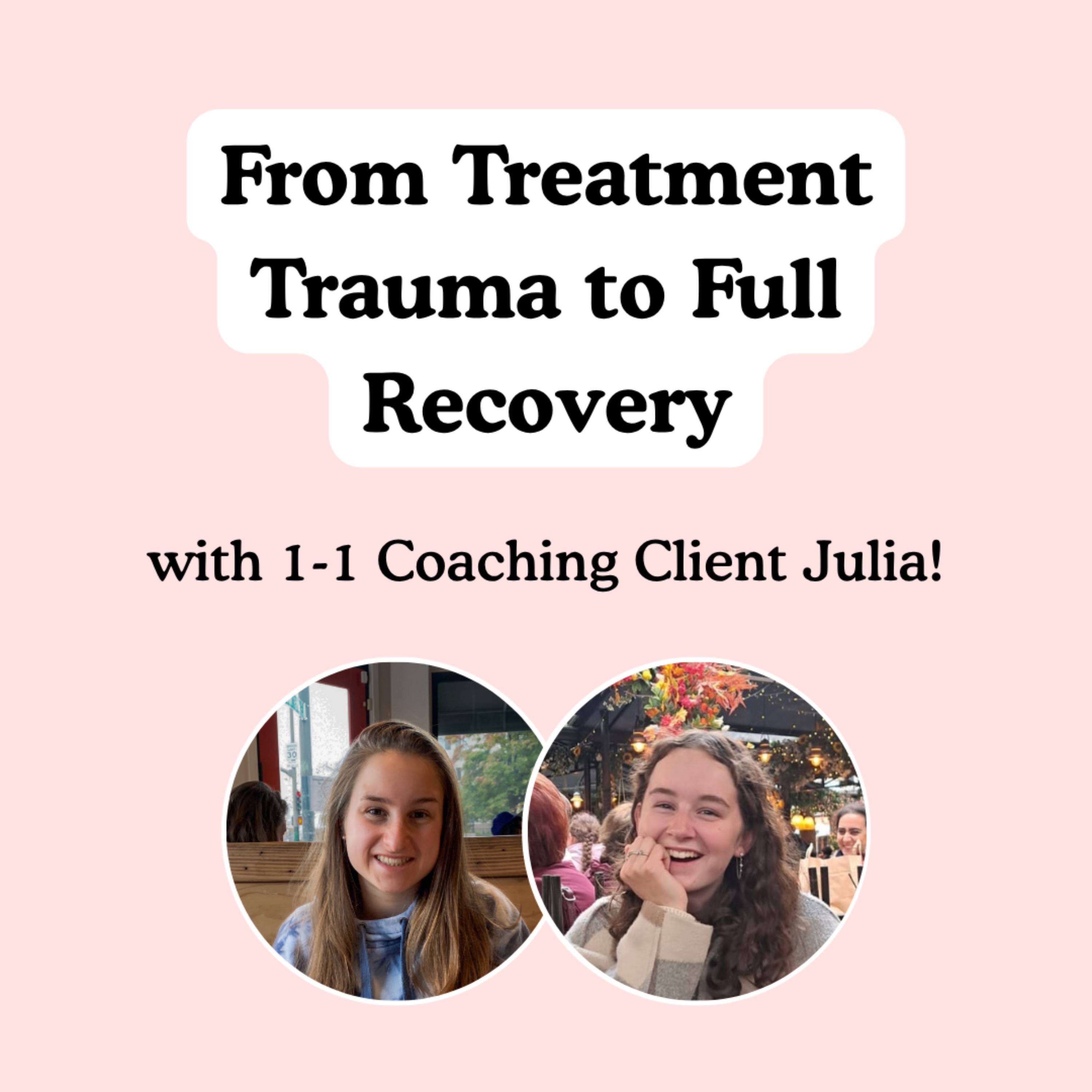
Today I’m joined by Julia, my former 1-1 coaching client and now my right-hand person behind the scenes at Liv Label Free! In this episode, Julia shares her story for the first time: from feeling misunderstood and struggling within the healthcare system to finding clarity, self-understanding, and a completely different way of relating to herself. Together, we talk about eating disorder treatment, neurodivergence, and what actually creates lasting change.
Key Topics Discussed:
Julia’s journey and how she and Livia ended up working together
Why traditional treatment often doesn’t work for neurodivergent people
What MFT (Multi Family Therapy) is, and why it felt traumatizing for Julia
The moment Julia discovered she’s autistic
Why autonomy is so important for neurodivergent people in eating disorder recovery
How 1-1 coaching with Livia changed everything for Julia
🫶 Work with Livia: https://www.livlabelfree.com/coaching
📚 Buy Livia’s books: https://livlabelfreebooks.com/
💗 Find us on Instagram: https://www.instagram.com/livlabelfree/ and https://www.instagram.com/juuls_healingjourney/
Most eating disorder professionals overlook autism. Yet even if they do recognize it, there’s a gap in understanding the nuances of just how autistic traits intertwine with eating disorder behaviors. For this reason, many autistic people are invalidated, traumatized, and stamped with countless labels including “hopeless,” “manipulative,” and “too complex” while trying to get help for their eating disorder(s). Just like me, they’re often told they’re never going to get better and that they’ll just have to “manage” an ED for the rest of their life.
If you or someone you care for is currently struggling with food, exercise, and their body, I’m here to tell you from the start that full recovery is 100% possible for ANYONE. But here’s the catch: you have to want it. In this episode, I share my story growing up undiagnosed autistic, how this led to the development of an eating disorder, and what I did to tip the scales (no pun intended) from being terrified of recovery to actually WANTING to do whatever it took to find freedom from my eating disorder.
It goes without saying that there’s only so much I can cover in a podcast episode, so if you want to dive even deeper into the complex connection between autism and eating disorders, be sure to grab a copy of my book Rainbow Girl: https://www.livlabelfree.com/rainbowgirl
Want to discover your unique version of neurodiversity-affirming freedom? Save your seat in the Autistically ED-Free Academy: https://www.livlabelfree.com/group
Blog post of this episode: https://www.livlabelfree.com/blog/autism-and-anorexia-my-ed-recovery-story
In this episode of the Liv Label Free Podcast, Livia discusses demand avoidance in autism and how it can influence eating behaviors and eating disorder recovery. She explains what Pathological Demand Avoidance (PDA) is, why basic needs like eating can sometimes feel like overwhelming demands, and how this can lead to avoidance around food and eating disorder treatment.
Livia also explores the shift from viewing PDA as “pathological” to understanding it as a Pervasive Drive for Autonomy, highlighting why language and perspective matter. Finally, she shares practical strategies for caregivers and individuals to support recovery in ways that respect autonomy, reduce pressure, and foster collaboration.
🌈 The Autistically ED-Free Academy is open! Save your seat here: www.livlabelfree.com/group📚 Rainbow Girl: A Memoir of Autism and Anorexia: www.livlabelfree.com/rainbowgirl
Family-Based Therapy (FBT) is often hailed as the “evidence based” and “gold standard” treatment approach for anorexia patients. However, FBT can be severely traumatic for autistic individuals. In today’s episode of the Liv Label Free Podcast, Livia explores the harm of FBT, including theft of autonomy (especially harmful for individuals with PDA!) and the danger of prioritizing weight gain above all other aspects of eating disorder recovery.
Livia also discusses how the core principles of FBT can unintentionally increase distress for neurodivergent individuals, whose eating disorders are often tied to needs for predictability, safety, and autonomy. Through both lived experience and insights from working with families, she highlights why one-size-fits-all treatment models may fall short and why more neurodiversity-affirming approaches are needed.
🌈 The Autistically ED-Free Academy is open! Save your seat here: www.livlabelfree.com/group📚 Rainbow Girl: A Memoir of Autism and Anorexia: www.livlabelfree.com/rainbowgirl
Season 3 of the Autistically ED-Free Academy is OPEN! 🎉 In this special group podcast, previous Academy participants share their experiences, including:
Why traditional eating disorder treatments can be traumatizing
How respecting autistic traits transformed parent-child relationships and saved lives
What it looks like to unmask and discover who you are beyond the eating disorder identity
How reframing eating disorders as “adaptations” creates compassion instead of shame
The power of authentic connection with people who truly understand you and your loved ones
If you’re ready for an approach that helps you rebuild trust by honoring neurodivergence, save your seat in the Academy today 👉 www.livlabelfree.com/group
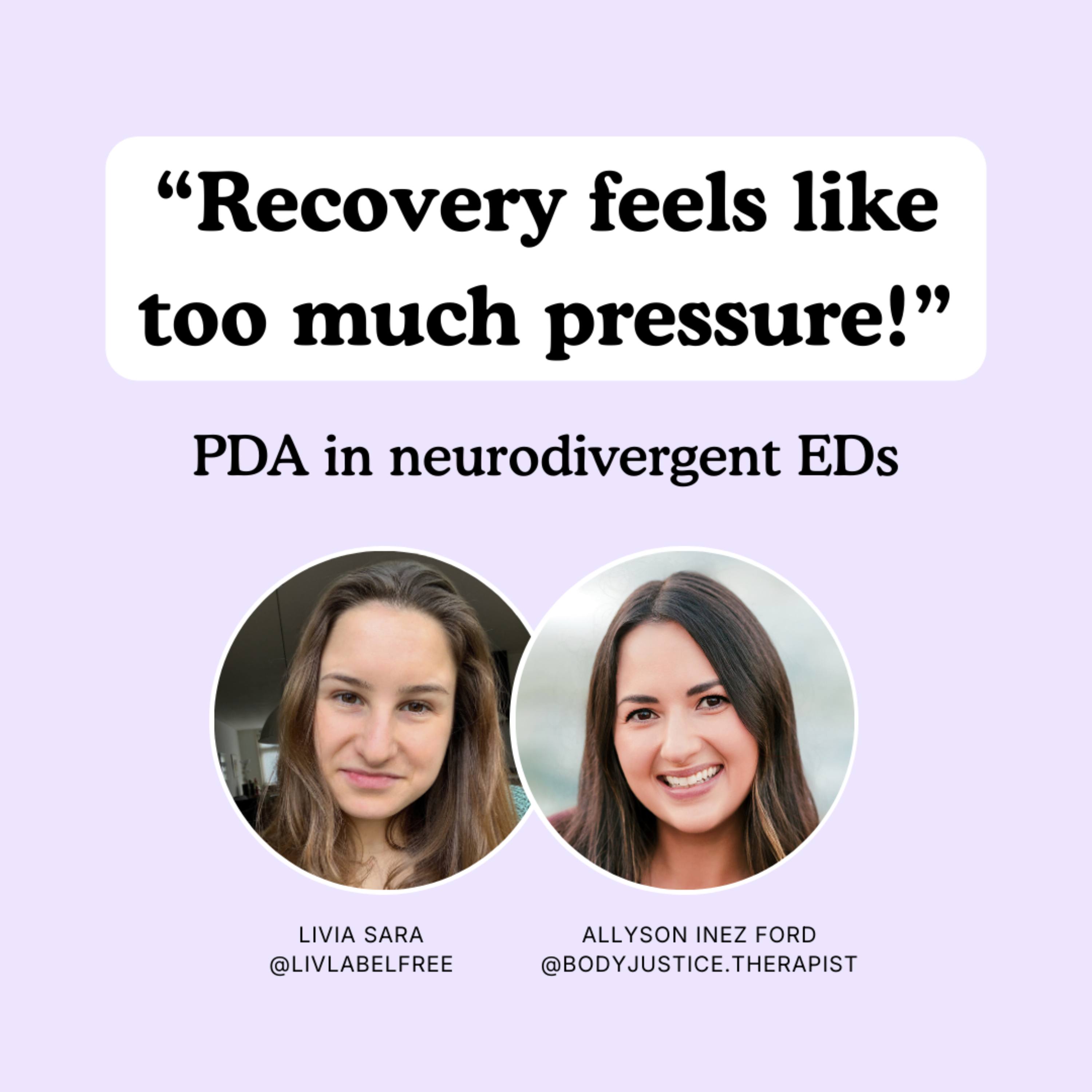
This is one of my favorite conversations on PDA to date! Livia Sara and Allyson Inez Ford sit down to discuss the connection between demand avoidance and eating disorders in neurodivergent folks, highlighting the importance of autonomy and purpose on the discovery journey.
Key Topics Discussed:
Why traditional eating disorder treatment fails people with PDA
The need for meaning and purpose beyond abstract recovery goals like “food freedom”
How eating disorders create boundaries in a boundless world and serve as distractions from existential overwhelm
Why shifting “recovery” to “discovery” helps remove the pressure that healing has to look a certain way
How the “why” for discovery must be self-defined, not externally imposed
📚 Read my books! https://livlabelfreebooks.com💗 Work with Livia: https://www.livlabelfree.com/coaching🌿 Work with Allyson: https://www.eatingdisorderocdtherapy.com/
In this vulnerable episode, Liv opens up about how her OCD has resurfaced since moving back home. Liv and Sharon also discuss how traditional treatments for OCD and eating disorders fail neurodivergent people when the approach isn’t person-centered.
📚 Read my books! https://livlabelfreebooks.com💌 Sign up for my newsletter! https://livlabelfree.com/join👯 Liv Label Free Membership: https://livlabelfree.com/membership
My episode on Sharon’s podcast: https://www.youtube.com/watch?v=4CUp3I6AqyQ
Connect with Livia: https://www.livlabelfree.com/contactConnect with Sharon: https://www.instagram.com/unmaskingsocial1/
How much of your existence is shrouded in resistance?
Something a lot of us gifted autistics feel resistance towards is the needs of the human body.
Food, water, sleep, bathroom…
Every bodily demand feels like an interruption, a violation of autonomy. As Kathi shared in today’s group podcast, her father literally says “I want to decide when I want to eat. I don't want my body to tell me when to eat!”
If you have PDA (officially “Pathological Demand Avoidance” but I prefer the term “Pervasive Drive for Autonomy”), rejecting bodily needs is an attempt to preserve autonomy.
Through this lens, the eating disorder – the ultimate rejection of bodily needs – can almost be seen as an extreme manifestation of PDA.
Of course, the paradox is that the ED itself is a violation of autonomy…because when your every next move is decided by the ED force, well you ain’t so much “in control” anymore, eh?
In today’s episode of the Liv Label Free Podcast, we dive DEEP into eating disorders and PDA, as well as:
How diagnoses help validate our struggles
Intergenerational patterns of resisting bodily needs
Why mental hunger is a legitimate hunger signal (Kathi shares a great metaphor!)
Franz Kafka’s “A Hunger Artist” and existential loneliness
Why recovery requires surrender before proof
I know how “claustrophobic” it can feel to be an infinite soul contained in a human body costume. But as I’ve been reminding myself lately, suffering is amplified by resisting what is.
XO Liv
P.S. Want to join these live group calls and connect with other neurodivergent beings on this discovery journey? The Liv Label Free Membership includes 3x monthly group calls, 24/7 WhatsApp support, my extreme hunger course, continued access to the Autistically ED-Free Academy, and hours of previously recorded coaching calls. 🌈 Join the Autistically ED-Free Membership: https://www.livlabelfree.com/membership
🎙️ Listen to my free audiotraining on Autism and Eating Disorders https://www.livlabelfree.com/free-audiotraining
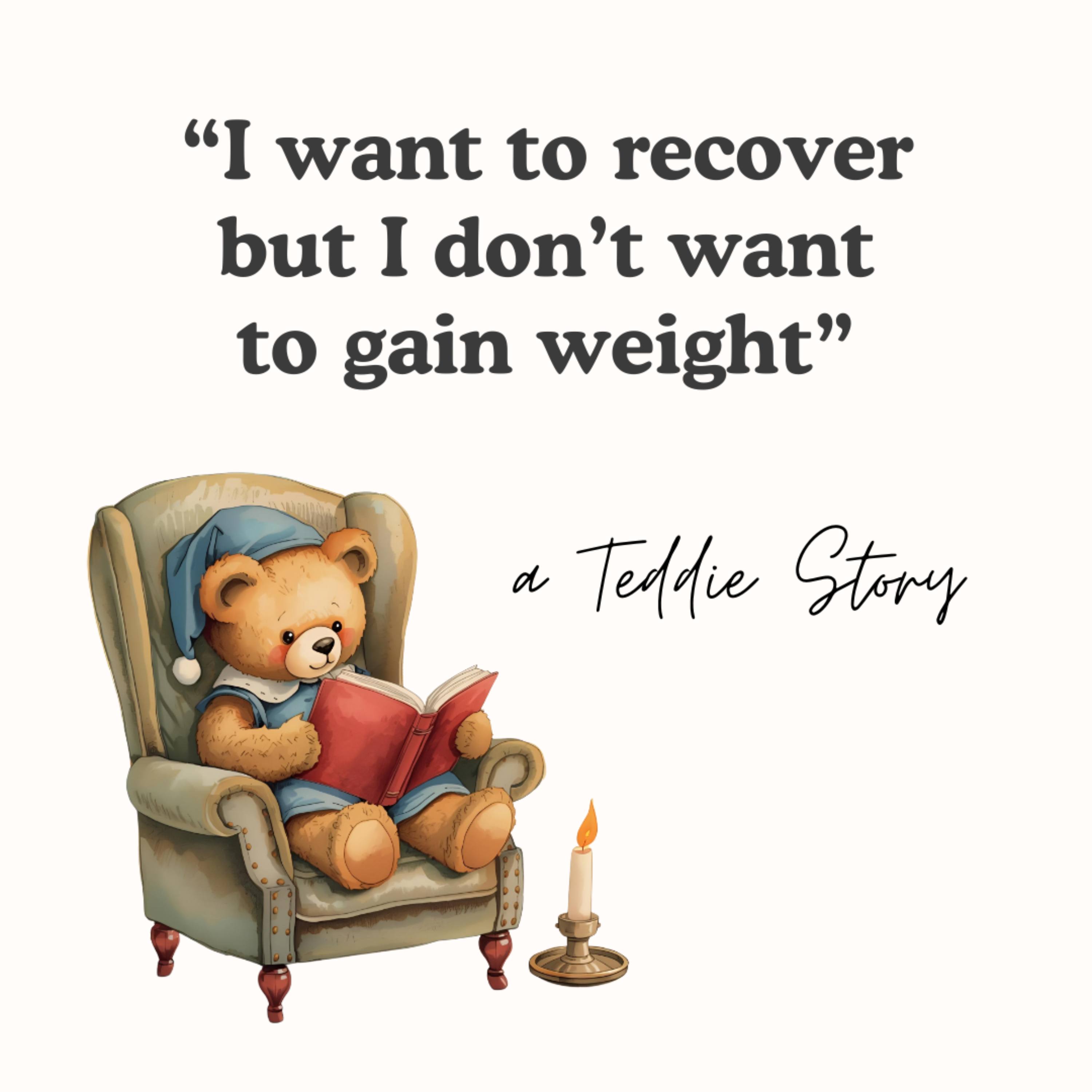
Teddie is finally on the podcast! As promised in last week’s episode, I’m reading the short story I wrote about wanting to recover but not gain weight.
💌 Sign up for my newsletter! https://livlabelfree.com/join👯 Liv Label Free Membership: https://livlabelfree.com/membership📚 Read my books! https://livlabelfreebooks.com🧸Read the blog post of this episode: https://www.livlabelfree.com/blog/i-want-to-recover-but-i-don-t-want-to-gain-weight-a-teddie-story
This might be the most vulnerable episode I’ve EVER recorded! Just me, a camera, and whatever came out. Watch for a behind-the-scenes peek of my two massive writing projects, why I’m done polishing the podcast, and what “unmasking around yourself” really means. Also: Teddie the autistic alien is coming to the podcast!! 👽🔥🌈
💌 Sign up for my newsletter! https://livlabelfree.com/join
👯 Liv Label Free Membership: https://livlabelfree.com/membership
📚 Read my books! https://livlabelfreebooks.com
💗 1-1 Coaching: https://livlabelfree.com/coaching
You know what’s been missing from the podcast space? A GROUP podcast where neurodivergent aliens with ED lived experience come together to share their struggles & insights. Because let’s be real, there’s nothing more validating than hearing from others that have the EXACT same thoughts as you…
Which is why I’m beyond excited to share that myself and past Autistically ED-Free Academy participants have launched that group podcast! In this first episode, we discuss why eating disorders are distractions from our creative potential, the fear of emptiness in quasi recovery, and how we’re one quantum system in different bodies communicating through a collective unconscious energy field 😍
Want to join our live group calls AND get access to a shit ton of other neurodiversity-affirming resources? Everything is now part of the Liv Label Free Membership! When you join, you’ll get instant access to:
✅ 3x monthly live group coaching calls (including 1x monthly pod!)
✅ Private WhatsApp group for 24/7 support
✅ Full access to my extreme hunger course
✅ Full access to hours of recorded coaching calls (including Academy group calls!)
The membership is the most affordable way to get access to me and my community! And if you sign up for the annual plan, you get a FREE 1-1 coaching session with yours truly 🥰
Sign up here: https://livlabelfree.com/membership
I’ve been pretty tired of existing lately, but authentic CONNECTION is what makes life worth suffering for 💗🌈✨
With love always,
XO Liv
💌 Sign up for Liv Label Free emails! https://livlabelfree.com/join
📚 Read my books! https://livlabelfreebooks.com
Happy 2026 my friends! It’s been a while since I recorded a solo episode, but it feels ✨aligned✨ again, so here we are! In today’s podcast, I share 5 things I’ve left behind in 2025 so that I can step more fully into my BEING.
💌 Sign up for my newsletter! https://livlabelfree.com/join👯 Liv Label Free Membership: https://www.livlabelfree.com/membership📚 Read my books! https://livlabelfreebooks.com💗 1-1 Coaching: https://www.livlabelfree.com/coaching
Autistic Burnout and Energy Q&A: https://www.livlabelfree.com/podcasts/liv-label-free-neurodivergent-eating-disorder-recovery/episodes/2148905858Neurodiversity-affirming meditations: https://youtube.com/playlist?list=PLPe4yiySjHmHZt_BU0YFpDZO92JBVhyqt&si=z70HW_uPxftU5QY5

In this first episode of the Liv and Kathi coalescence, we let the conversation flow where our souls guide us! We chat about breaking free from past identities, following your intuition, how reality is a collective dream, and so much more. Ready to discover your authentic self with others who genuinely understand the neurodivergent experience of eating adaptations? Join us in 51 Days to Freedom! https://livlabelfree.com/freedom
Sign up for Liv Label Free emails! https://livlabelfree.com/join
Livia shares a powerful metaphor to help you take the first step to breaking free from quasi recovery. If you’re ready to take the next step, join us in 51 Days to Freedom! https://livlabelfree.com/freedom
Sign up for Liv Label Free emails! https://livlabelfree.com/join
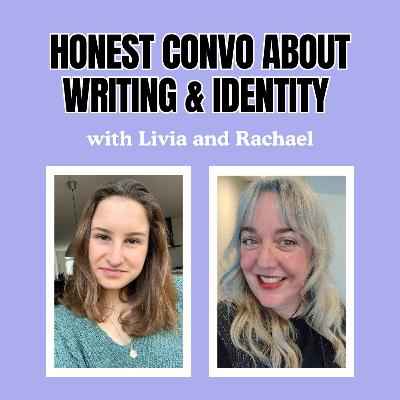
Livia Sara chats with Rachael Herron about creativity, art, and how words will always fail. If you or your loved one are terrified of letting go of the eating disorder identity, this conversation is going to inspire and empower you to become the person you were born to be!
Sign up for Liv Label Free emails: www.livlabelfree.com/join
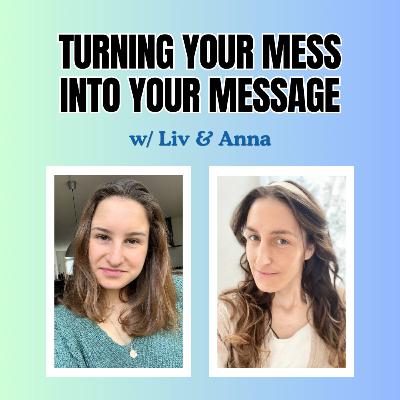
Livia chats with Anna, who discovered me through my book Rainbow Girl, participated in the Autistically ED-Free Academy, and is on her own journey to discovering what freedom looks like after an eating disorder.
This episode is the start of a new podcast era in which I leave behind excessive preparation and scripted episodes. Instead, I’m fully leaning into what my soul has been craving most – authentic, raw, & live connection 🫶
Anna and I talk about SO much, including how our evolving stories do NOT have “fairy tale endings,” why “discovery” is a much more powerful term than “recovery,” and why leaving conformity behind is the key to real freedom.
👯 Liv Label Free Membership: https://www.livlabelfree.com/membership📚 Read my books! https://livlabelfreebooks.com
Go on a walk with me as I record another spontaneous voice memo! In this episode, I share my evolving relationship with the podcast format, explaining how I’m craving more live, soul-to-soul connections rather than speaking into the void.
I discuss feeling claustrophobic as I try to externally match my internal vastness through words, and how authentic connections through 1-1 Coaching, the Autistically ED-Free Academy, and the Existential Autistic Membership have become infinitely more meaningful than solo recordings.
This episode covers my shift away from social media and AI-generated content to focusing on my books and my desire to preserve my speaking energy for live connections rather than scripted episodes.
All in all, I’m embracing change and adaptation, moving toward a podcast format featuring guests and genuine energy exchange while being transparent about the everyday struggle of existing as an autistic person beyond the facade of “life is perfect” after an eating disorder.
✨ Existential Autistic Membership: https://www.livlabelfree.com/membership🌈 Autistically ED-Free Academy: https://www.livlabelfree.com/group📚 Read my books! https://livlabelfreebooks.com💗 1-1 Coaching: https://www.livlabelfree.com/coaching
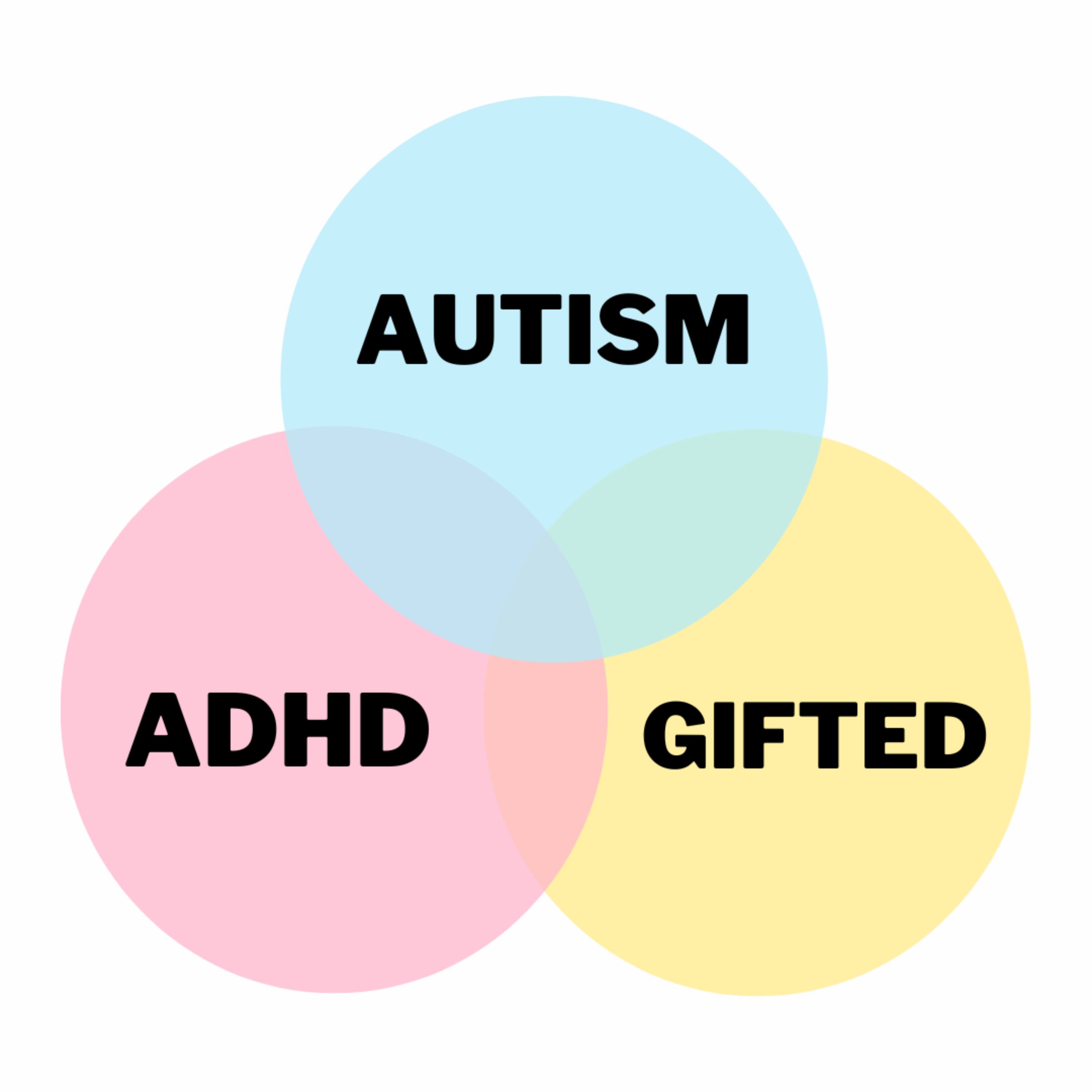
In today's episode, I’m pulling back the curtain on my everyday experience being AuDHD (Autistic and ADHD). I share how trapped I feel in this body, how overwhelmed I am by my own mind, and how masking & giftedness play a role in it all.
Discovery resources for you:🎙️ Free audiotraining: https://www.livlabelfree.com/free-audiotraining✨ Existential Autistic Membership: https://www.livlabelfree.com/membership💗 1-1 Coaching: https://www.livlabelfree.com/coaching📚 Neurodiversity-Affirming Books: https://livlabelfreebooks.com
Mentioned episodes:Second Puberty & Feeling Trapped in a Body https://youtu.be/xKygJ1lExJgAre Eating Disorders a Form of Autistic Masking? https://youtu.be/6uvYhhN3BzkExistential Nausea (go on a walk with me!) https://youtu.be/cSbmVDWHHQs
Episode transcript:Hello my friend and welcome back to the next installment of the Dopamine Diaries, AKA we’re continuing our conversation on ADHD! Because if you listened to the previous motherfucker of an episode on the relationship between autism, ADHD, and anorexia, you know that I’m all about being comprehensive. Because I am a DEEP learner. When I learn, I LEARN. I want to know everything there is to know about the topic I’m interested in. Which is of course why school was so hard for me, why I was quietly dying inside with my perfect grades and constant studying but struggling to keep up with it all because there was never enough time to truly go deep into the material.
And while I had SO many questions, a huge part of masking for me was hiding my curiosity. I was SO afraid of not being liked and of people thinking I was not smart enough, that I didn’t ask questions and just tried to figure everything out on my own. Of course, this can make you feel very lonely, because you’re constantly trying to suppress everything that you are. And while I feel like I’m just going off on a tangent here in sharing how I’m a deep & independent learner and how I grew up masking my curious self, I actually do feel this is super relevant to today’s topic. Because in the last episode I was really focused on the restrictive eating disorder manifestation of ADHD traits, but today I want to pull back the curtain on my personal life and talk about my everyday experience of being an AuDHDer, which is of course the combination of Autism and ADHD. I’ve got SOOO much to say so this is enough of an intro, time to dive in!
Okay so where shall we start? Let’s just start at the beginning, I mean that just makes sense, right?
But you don’t look like you have ADHD!
Well for any of you that know my story and perhaps have read my memoir Rainbow Girl, you know I was the “good girl.” I was the star athlete in all my sports, I got good grades, I was one of the favorite students of all my teachers, and well, from the outside, my life was quite perfect! My middle sister Mae, by contrast, was the troublemaker. She was always losing her homework, going to the principal’s office for not listening to the teacher, and she would make us late for everything. The apparent contrast between me and her could not have been greater.
This is why, when I started exploring ADHD for myself after being in the neurodivergent community for a few years after my autism discovery in 2020, my whole family said I *couldn’t* have ADHD. Because whereas my sister would start school assignments past midnight on the due date, I would start 3 weeks in advance to give myself a “buffer” because you know, just in case anything goes wrong. I never misplaced things and I got straight A’s, so how could I claim I had difficulty focusing? Well, I hope you realize I’m being sarcastic because these are precisely the myths that often cause ADHD people to go undiagnosed, especially when autism is also present. Because the thing is that ADHD will present differently in an AuDHD person.
For me personally – and it’s actually funny saying this out loud because we often talk about masking in the context of hiding our autism – but I believe that my autism masks my ADHD. And the most prominent way in which this shows up in my life is that my autism has routines that make up for my ADHD challenges. To give a concrete example, there’s the stereotype of ADHD people always losing their keys. Well for me, it’s not that I’ve never lost my keys or always lose my keys or in the grand scheme of things can never find anything, it’s that my autism has routines to always put everything back in the same place. Or to get even more specific, my autism is really good at finding patterns. So if I notice I’ve lost my keys three times in a week, my pattern-seeking-brain will go “Oh no, this has happened three times already! We better create a routine around the keys to prevent further mishaps.”
This is why autistic traits are inherently adaptive; because in this example, it’s not that we’re being “rigid” about where we’re placing something, it’s that it probably makes us anxious to do something different every time because then you naturally increase the chances that something could go wrong AGAIN! Speaking of anxiety, nothing makes me more anxious than time pressure. When I was growing up, my family was always rushing, and we were always late to everything (and just to be fair to Mae, this wasn’t only because of her. My mother and father are also ADHD). I despised this so much because I was always ready to go way in advance, and in retrospect, even this seemingly insignificant aspect of our family dynamics could have been part of my feeling like I had no control, which is of course where the eating disorder so conveniently came in. I couldn’t control what people thought of me and I couldn’t control whether we’d be on time, but I could control what I ate and how I moved. Going back to not being able to handle time pressure, this is again where my autism is super adaptive. Because I don’t want to rush, my autism ensures I always have a buffer to be way on time, or as we say it in Dutch, “ruim op tijd” which literally translates to “roomily on time” (yes, I totally just made up the word “roomily” for the sake of a precise translation!).
From this perspective, I have often wondered whether someone who presents as autistic and ADHD can even be labeled with the simple amalgamation “AuDHD” – because our experience goes way beyond “pure autism” plus “pure ADHD.” I don’t solely resonate with either label, meaning I feel like it’s almost a unique condition, or rather, a unique way of being. And maybe it’s just me, but don’t you feel that merging two existing conditions – or again, two ways of being – misses the point entirely? Because the point is to represent a unique human being? Anyways, here I go again with my semantic rabbit holes and this is why I always come back to liv label free. Because the truth is, no matter what we call anything, words can never even begin to encompass the complexity of the energy that has coalesced to create the unique human that is you.
And as I’ve said before on this podcast and in my books, I’m not against labels. It’s all about the intention behind the label. For example, the label “anorexic” or “disordered” is not helpful because you’re essentially intertwining someone’s identity with something that is not a core part of their being. However, when I use the terms autism, ADHD, and AuDHD to explain my experience so I can connect with you, well now the labels are serving a really important function, right? That being said, this is actually a perfect transition into the next thing I want to discuss which is what I like to call the autism vs ADHD battle.
The Autism vs ADHD Battle
For as long as I can remember, I’ve felt an internal tug-of-war. My autism craves safety, predictability, routines, and stillness. But my ADHD constantly wants the complete opposite. My ADHD is constantly chasing movement. It wants novelty, which, for me, looks like NEVER being satisfied with what I’m doing. When I’m walking, I want to be writing. When I’m writing, I want to be biking. When I’m biking, I want to be eating. But when I’m eating, I want to be writing! For me, this is where the existential claustrophobia comes in – which, on previous podcasts, I defined as the acute awareness of being a boundless creative that’s confined by the limitations of physical reality.
Because I want to do so much and I want to do it all at once, realizing that I can’t actually do multiple things at once AND that this body I inhabit has limits to how much it can do at all causes me to feel really claustrophobic in this human body costume. I literally cannot handle being bored because in moments of stillness, my soul feels like it’s pressing against my physical skin which is obviously so painful. But I think the most painful realization for me is the innate sense of my soul being pure energy – so the concept, dream, vision, soul experience, whatever we’re gonna call it – of being able to create and move and flow all at the same time does not match the physical laws. I know that’s kind of abstract, so what I mean by this, is that in my dreams (or rather, in my soul sense, if you know what I mean, like the part of me that is not bound by physical constraints) that part of me is most creative and writes best when I am running at the speed of light. My most creative ideas come when I’m working out, which has so often made me want to have the ability to write and be exercising at the same time. But of course, this is not physically possible! (And by the way, no, a walking pad or stationary bike is not the same. I literally feel like I need to be sprinting or doing something intense as fuck AND be creating my art at my most intense capacity.) So, I think that is precisely why I always want to be doing something different; it’s because in my soul, I do possess the ability to be doing everything at once. Or if we’re getting real spiritual, I am everything at once!
And wow I honestly don’t know how I went from talking about ADHD to my soul being everything, but I guess it makes a lo
In this first installment of Dopamine Diaries, Livia Sara unravels the overlooked connection between autism, ADHD, and anorexia. You’ll learn how dopamine differences create a neurodivergent vulnerability for engaging in anorexia behaviors, including restriction, compulsive exercise, ADHD hyperfocus, and constantly thinking about food!
Further resources:📚 Neurodiversity-Affirming Books: https://livlabelfreebooks.com✨ Existential Autistic Membership: https://www.livlabelfree.com/membership💗 1-1 Coaching: https://www.livlabelfree.com/coaching📖 Free Extreme Hunger Guide: https://www.livlabelfree.com/extreme-hunger-guide🎙️ Free Autism and Eating Disorders Training: https://www.livlabelfree.com/free-audiotraining
Mentioned episodes:Autism and Binge Eating: https://youtu.be/V1Ut5spEVHsBut Restriction Helps Me Focus! https://youtu.be/_MHB8y9qackBlack & White Thinking in Autism and Anorexia https://youtu.be/TpDAEncit2YAutism, Anorexia, and Metabolism https://youtu.be/xsOBtfY9CcAIs it harder for an autistic person to recover? https://youtu.be/jh7kYLOpUcM
Episode transcript:Ok my friends, we need to talk about something that I literally have never heard anyone talk about but (at this point) it comes up with almost every one of my clients, because almost every one of my clients isn’t only autistic but is also ADHD. So what we’re gonna be talking about today is the connection between ADHD and anorexia.
And I’m super excited to finally be diving deep into this connection because most of the information on neurodivergence and eating disorders is still quite binary. Supposedly, autism is linked to anorexia and ARFID (Avoidant-Restrictive Food Intake Disorder), while ADHD is linked to binge eating and compulsive overeating. While, of course, these links are valid and true, where’s the nuance? Why is no one talking about how autistic people struggle with binge eating or how ADHDers struggle with restrictive eating disorders?
Well, I’ve already done a whole series on autism and binge eating on this podcast, so now I’m starting a series on how those of us who are autistic and ADHD interact with food and movement. In this first episode specifically, I’m unpacking the overlooked connection between autism, ADHD, and anorexia through both scientific research and lived experience as an AuDHDer with a history of anorexia nervosa. We’ll explore how core anorexia symptoms like restriction, compulsive exercise, and mental hunger can be better understood through the ADHD lens, and what this understanding means for more effective approaches to recovery – or should I say, discovery? Whatever term you prefer to use on your unique journey, let’s get to discovering!
Busting the Dopamine Myth: Wanting vs. Liking
Before we get to any of the specific ADHD and anorexia overlaps, we need to bust a common myth about dopamine. Many people believe that dopamine floods our brain when we engage in rewarding activities. I mean, this is why ADHD people are constantly seeking stimulation, right? Because they constantly want to experience reward? Well, not quite.
In reality, dopamine isn’t primarily responsible for pleasure or satisfaction. Rather, it’s at the foundation of anticipation and motivation. What this means is that a dopamine surge happens not when we experience the reward itself, but during the anticipation phase right before we obtain it. This “wanting” versus “liking” distinction is critical to understanding both ADHD and eating disorders.
In ADHD brains – and autistic brains too – dopamine is lower when compared to neurotypical brains, which obviously creates a specific vulnerability. Us AuDHD folks experience intensified “wanting,” but a diminished “liking” of the actual reward, which creates a perpetual cycle of seeking satisfaction without ever feeling satisfied. This is why so many ADHD people do experience binge eating and compulsive overeating – in these cases you’re constantly wanting the food to stimulate you in a way that your brain and nervous system are never satisfied with.
So that’s the binge eating angle. But again, why is no one talking about the dopamine high – the euphoria – that you get from engaging with anorexia or bulimia? Why is no one talking about how addictive restriction is, how the anorexia is never satisfied, and so you keep setting new “precedents” around food and exercise? Because I don’t know about you, but for me, the eating disorder made me feel superhuman. I was able to numb out everything that didn’t directly support the eating disorder, including the existential questions, my relationships, and, well, everything else that makes life meaningful. So I’m going to elaborate on all of this later in today’s episode, because right now I really want to emphasize this concept of numbing and how it applies to the full spectrum of disordered eating behaviors, which I have termed The Adaptive Eating Spectrum (TAES).
So even though anorexia nervosa and binge eating disorder seem like the epitome of contradiction, the underlying mechanisms – especially in neurodivergent people – aren’t actually different. Whether someone restricts food or eats too much of it, the root of the behavior is to numb and escape. It’s an escape from sitting with the discomfort of being a soul so infinite, so vast, and so boundless that being in a human body feels like being trapped in a cage. The eating disorder – or as I like to call it, eating adaptation – is a way to numb yourself from the existential thoughts, the fear of being wrong in this world, and the perpetual anxiety that arises as a direct result of navigating a world that wasn’t built for your neurodivergent nervous system.
How My Autism Manifested as Anorexia Nervosa
If you’ve been around for a while, you know that I’ve talked plenty about how I believe my autism manifested as an eating disorder, or again, eating adaptation.
My need for predictability turned into strict eating schedules and rigid exercise routines.
My sensory overwhelm turned into fear of weight gain.
My fear of being healthy – and, more specifically, being healthy in a female body (we’re talking boobs, butts, and periods) – manifested as trying to stay as small as possible.
It hasn’t been until more recently – due to, ya know, being a lifelong learner, being relentlessly curious, and constantly asking WHY – that I’ve started reflecting on eating disorder behaviors through an ADHD lens. (And major shoutout to all my clients right now, because none of these insights I’m sharing would have occurred to me without the meaningful conversations I’ve had, and continue to have, with other neurodivergent beings.)
It’s worth disclaiming here that my personal experience of anorexia in relation to both ADHD and autism will always be skewed because I’m not purely ADHD or purely autistic. I’m AuDHD, which means the autism and ADHD are interlinked, and it’s this interlinking that creates the unique conditions for my unique experience of, well, everything! Including my history of disordered eating. And I am planning on recording a dedicated episode about how my autism and ADHD are constantly battling each other, which obviously creates its own set of difficulties, eating disorders aside. But obviously that’s a story for another day, so back to the main topic of today which is ADHD and anorexia. In fact, now it’s time to get juicy because we’re starting off with the infamous claim “but restriction helps me focus!”?
But Restriction Helps Me Focus!
The reason I’m starting with this restriction and focus aspect of the ADHD-Anorexia connection is because I’ve done an entire episode and blog post with this title on the Liv Label Free Podcast before, so I definitely encourage you to listen to that episode if this is a topic you resonate with. But what exactly do autistic and ADHD people with eating adaptations mean when they say restriction helps them focus? How can this even be true? Doesn’t everyone say that eating more and recovering will improve your focus?
Well to answer all those questions, we need to start by debunking the belief that this statement is used to “lie” or “manipulate.” Because I’m sure we’re all familiar with the idea that weight gain is a top priority when someone is malnourished because a malnourished brain equals a brain that cannot think clearly, right? This understanding lies at the root of why so many people with anorexia who aren’t autistic may display autistic traits. Not because their anorexia has caused autism or they are now becoming autistic, but because the brain simply does not have enough energy to process information that it doesn’t deem necessary for survival. (And I do explain this energy trade-off in my book How to Beat Extreme Hunger and in my episode on Black & White Thinking, so do go check those out if you haven’t already!)
Because the brain does not have adequate energy to consider a vast array of options, it narrows its focus to what can be easily grasped. Enter the ability to hyperfocus on meal plans, calorie counts, exercise routines, and watching What I Eat in a Day videos, but getting a full-blown panic attack when your mom can’t read your mind of how many almonds you always put on your oatmeal when you test her to make sure she still loves you (because hello codependency, which is a whole nother topic, and if you want to read more about my experience with this, go do yourself a favor and grab a copy of my book Rainbow Girl!).
It’s worth clarifying that just because a malnourished brain mimics an autistic brain in many ways, this obviously does not mean that an autistic brain is inherently a malnourished one (and yes, I am well aware that many health “experts” have their own theories about how diet causes autism and ADHD and other bullshit like that, but we’re not even going to get into that here for obvious reasons.). Well, to be fair, nutrition can help improve the more disabling aspects of neurodivergence – such as anxiety and depression, which have everything to do with the gut-bra
Welcome to this Liv Label Free meditation! I’m Livia Sara, an autistic eating disorder recovery coach that’s here to help you turn your MESS into your MESSage.
Today, I’m delighted to guide you through this meditation designed for autistic people struggling with eating disorders. It’s a connection that’s hugely misunderstood, which is beyond unfortunate because of how common autism and eating disorders are!
My promise to you with this mediation is that you will feel validated and that you will walk away with at least a teensy tiny bit of hope. Because you are absolutely not alone, my friend.
Freedom from disordered eating is already out in the Universe waiting for you. Your unique version of a healthy relationship with food is already swirling through the cosmos, waiting for your powerful neurodivergent essence to collide with it!
But of course, that can be difficult to imagine, let alone to trust, when you feel stuck. When you feel like food is your only coping mechanism. When you feel that food and exercise are your only way of numbing from this overwhelming world not built for you.
So that’s what we’re going to explore together today. Through your breathing and intention, and my guidance, we’re going to regulate your nervous system together, and we’re going to create the space for YOU to create a life you don’t need to escape from. Which is a life of safety. Because when you feel safe, there’s no numbing necessary.
💗 1-1 Coaching: https://www.livlabelfree.com/coaching
✨ Existential Autistic Membership: https://www.livlabelfree.com/membership
🎙️ Free Audiotraining: https://www.livlabelfree.com/free-audiotraining

Comments

Download from Google Play

Download from App Store
 United States