


 Claim Ownership
Tradition Podcast
Subscribed: 35Played: 778
Subscribe

© 2024 Tradition Online
Description
Tradition: A Journal of Orthodox Jewish Thought is a quarterly Orthodox Jewish peer-reviewed academic journal published by the Rabbinical Council of America. It covers a range of topics including philosophy and theology, history, law, and ethics.
62 Episodes
Reverse
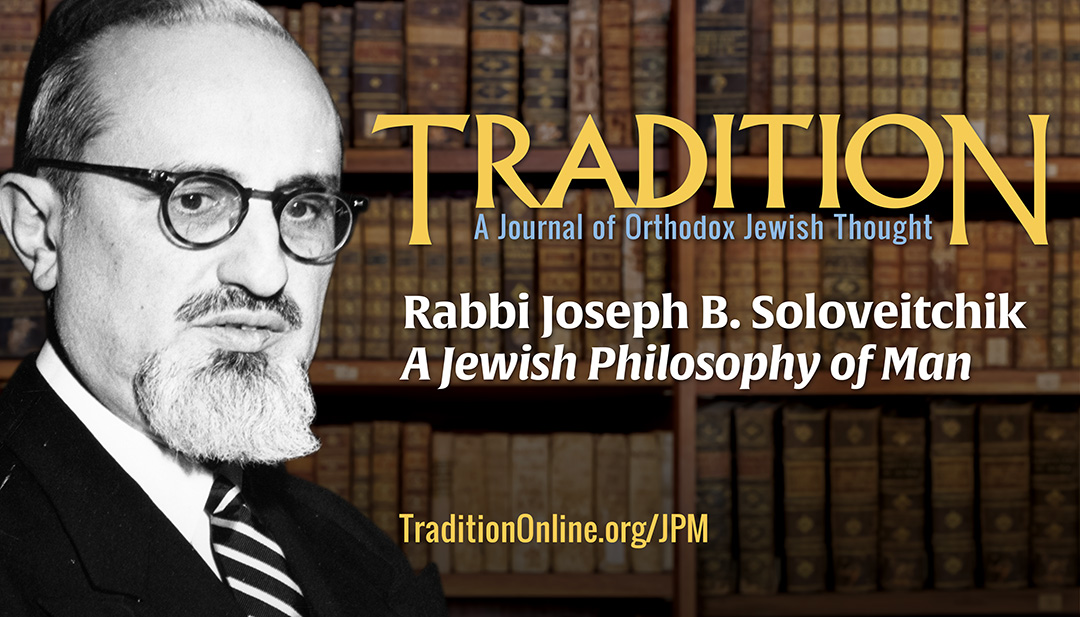
A Jewish Philosophy of Man:
A Lecture Series by Rabbi Joseph B. Soloveitchik
Lecture 1: Delivered November 6, 1958
Judaism, and religion in general, is a cognitive venture, seeking to intellectually grasp the world, and is not merely an emotional or ethical gesture. Unlike the scientist, who, until recently, was mostly interested in knowing the outside world, and unlike other Western religions, which focused their attention on theology, Judaism is concerned mainly with Man. It stresses a religious anthropology, a religious doctrine of Man. Although Judaism is theocentric, it is “anthropo-oriented.” God remains a Deus-absconditus, hidden and unknowable. Our experience of God is antithetical, because we experience Him both as infinitely distant and intimately close. Christianity deals with this dichotomy by dividing between an unapproachable God-father and an accessible God-son. Judaism deals with the same dichotomy by dividing between our intellectual and emotional religious experiences of God. Judaism has no theology because intellectually God is an enigma, and all statements about God are understood not interpretively but normatively, as attributes for us to imitate. Therefore, Judaism’s primary question is about Man, not God. Judaism’s doctrine of man is guided by a series of questions, including, the problem of Man’s dichotomy as being both part of and above the animal world, the question of what trait is Man’s unique endowment, and, whether this unique characteristic is inborn or must be earned. Further questions include the relationship between solitary and communal existence, the problem of the dichotomy of mind and soul, and the question if Man is primarily a creature of intellect or of will. The lecture ends with responses to questions from the audience that include critiques of Buber, Kierkegaard, and Mordecai Kaplan’s Reconstructionist Judaism.
Jump to:
00:02:42 Not presenting a definitive philosophy of Judaism, but a subjective reflection
00:08:07 Religion as a cognitive gesture
00:21:30 Judaism’s unique focus on understanding Man
00:33:32 Christian vs. Jewish approaches to the dichotomy of the Man-God experience
00:54:06 A list of the questions about Man that concern Judaism
01:04:56 Questions from the audience and responses
Access lecture summaries and course materials at www.TraditionOnline.org/JPM
The post JPM Lecture 1: Introduction to the Jewish Philosophy of Man first appeared on Tradition Online.
Eli Rubin’s Kabbalah and the Rupture of Modernity (Stanford University Press) presents a groundbreaking study of Chabad Hasidism. Through close readings of primary texts, historical analysis, and engagement with modern philosophy, Rubin, a scholar and Chabad insider, traces the historical evolution of the movement’s theology. The result is an indispensable work for anyone wanting to better understand Chabad’s intellectual and historical trajectory.
Todd Berman, author of a recent TRADITION review of Rubin’s book, conducted an in-depth interview with the author at Yeshivat Eretz HaTzvi. The discussion examined Rubin’s argument that modernity, viewed through the Kabbalistic lens of tzimtzum and cosmic “rupture,” profoundly reshaped modern thought in addition to the inner intellectual life of Chabad-Lubavitch and its spiritual vision. A key focus of the conversation was how Rubin’s ideas speak to the challenges faced by young Modern Orthodox students and how mystical and existential thought can enrich their search for meaning, faith, and identity in the modern world.
Rabbi Eli Rubin is a contributing editor at Chabad.org. He received his Ph.D from University College London.
Rabbi Todd Berman is the Director of Institutional Advancement at Yeshivat Eretz HaTzvi where he teaches Jewish Thought and Halakha.
The conversation was recorded live at Jerusalem’s Yeshivat Eretz HaTzvi on December 4, 2025, and contains questions from students in the audience.The post Kabbalah and the Rupture of Modernity first appeared on Tradition Online.

This week we’ll celebrate Shabbat, Rosh Hodesh, Hanukka—and all readers of TRADITION know what that means: Its Mrs. Cooperman’s Shabbat and a chance to check in with our distinguished editor emeritus, Rabbi Emanuel Feldman.
30 years ago, R. Feldman published one of our journal’s most memorable essays, “God and Mrs. Cooperman” (Winter 1995). Like other memes that have emerged from our pages—Adam I and Adam 2, Majesty and Humility, Rupture and Reconstruction—the concept of a “Mrs. Cooperman Shabbat” is now a handy heuristic to help us organize a way of thinking about contemporary religious life and what’s been lost, and what’s been gained, as Orthodoxy has flourished since the original Mrs. C sat in the pews of R. Feldman’s father’s Baltimore shul over 80 years ago.
R. Feldman joined our current editor, Jeffrey Saks, to discuss how his perspective on these issues have evolved over his long life.The post Mrs. Cooperman’s Shabbat first appeared on Tradition Online.
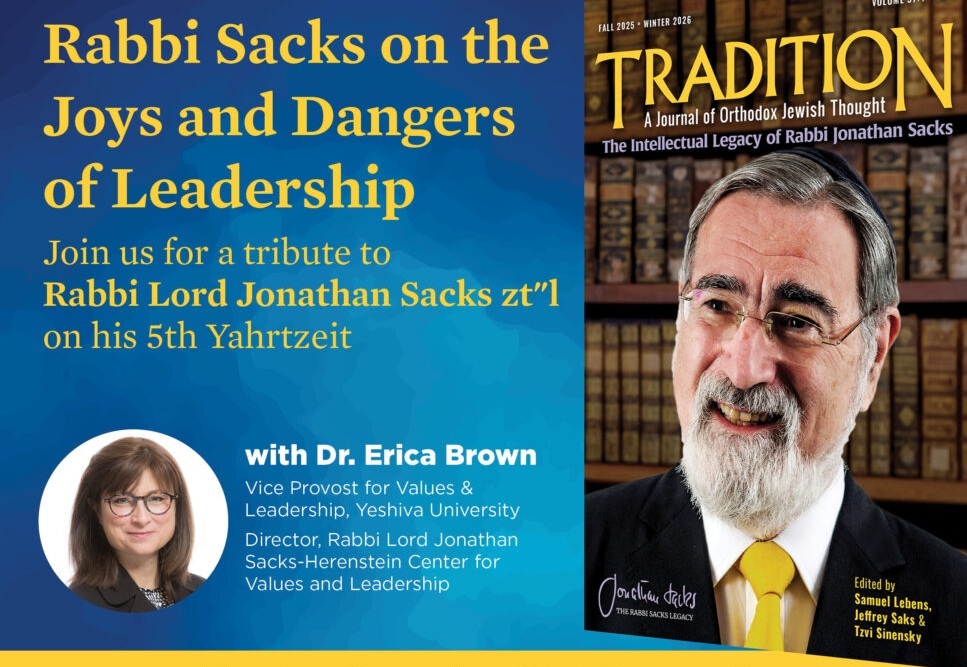
TRADITION is pleased to share this recording of a talk by Dr. Erica Brown delivered through Yeshiva University’s Sacks-Herenstein Center for Values and Leadership, commemorating the recent 5th yahrzeit of Rabbi Jonathan Sacks. Brown speaks about her contribution to TRADITION’s special issue on the Intellectual Legacy of Rabbi Sacks, titled “Staying Alive: The Dangers of Leadership” (open access at TraditionOnline.org).
The essay examines the theme of leadership in a variety of R. Sacks’ works, exploring both his methodology and how to situate his thinking within the broader academic discipline of leadership. R. Sacks focused on how to inspire and motivate lay and professional leaders within the Jewish community. To that end, he distilled his wisdom into seven principles of leadership, which reflected the leadership dilemmas and crises he faced and during his own tenure as Chief Rabbi.
Dr. Erica Brown, consulting editor at TRADITION, serves as a Vice Provost at Yeshiva University and is the founding director of its Rabbi Lord Jonathan Sacks-Herenstein Center for Values and Leadership.
Watch a video recording of this session.
Learn more about the special issue dedicated to Rabbi Sacks’ Intellectual Legacy, and order your copy (print or for Kindle).The post Rabbi Sacks on the Joys and Dangers of Leadership first appeared on Tradition Online.
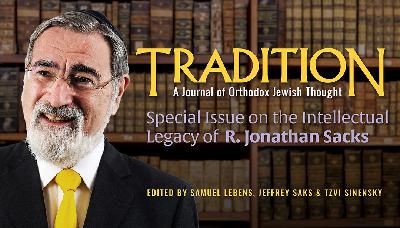
Rabbi Jonathan Sacks believed that, out of the science of positive psychology, and in conversation with cognitive behavioral therapy, a new Musar movement could be established. In this episode of the Tradition Podcast, Tamra Wright and Mordechai Schiffman begin to unpack what this might mean in light of their co-authored essay “Radical Resilience: Hope, Agency and Community,” from TRADITION’s recent special issue on the intellectual legacy of Rabbi Jonathan Sacks. They are joined for the conversation by that volume’s co-editor, Samuel Lebens.
Together, our three guests explore the relationship between hope, agency, and community; they consider whether Rabbi Sacks was unduly harsh on optimists; and discuss why he placed more faith upon philosophically inspired psychology than upon the main contemporary schools of academic philosophy. What does it mean for Torah to be in conversation with a science like psychology? What does it mean for students of a rabbi to turn their critical gaze towards their late teacher, who now becomes an object of their ongoing research?
Watch a video recording of this conversation.
See details of the special double-issue of TRADITION and order your copy.
Rabbi Dr. Mordechai Schiffman is an assistant professor at Yeshiva University’s Azrieli Graduate School and the associate rabbi at Kingsway Jewish Center.
Dr. Tamra Wright is a Senior Research Fellow at the London School of Jewish Studies.
Rabbi Dr. Samuel Lebens is an associate professor of philosophy at the University of Haifa.
The post Radical Resilience: Hope, Agency and Community first appeared on Tradition Online.
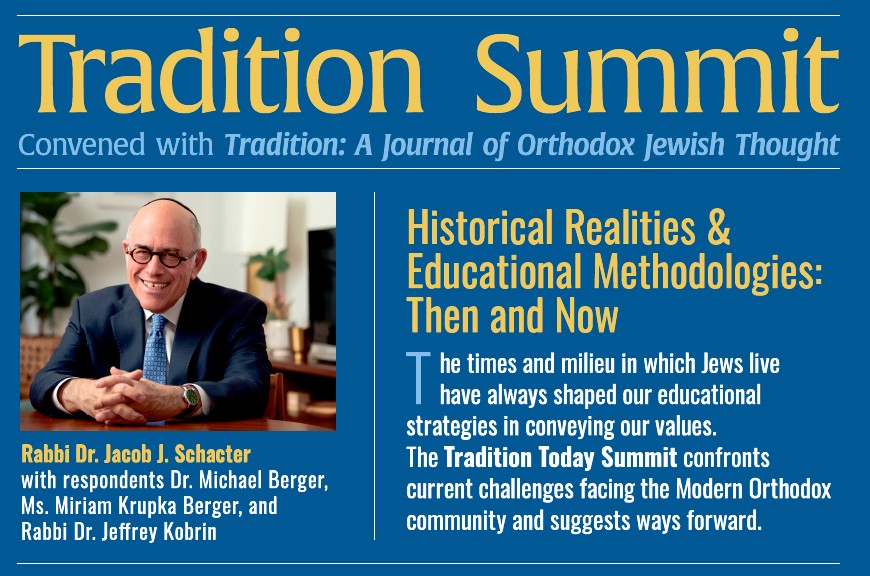
As part of the Tradition Today Summit, held on November 9, 2025, convened by Yeshiva University’s Azrieli Graduate School of Jewish Studies and TRADITION’s publisher the Rabbinical Council of America, we hosted a community wide public Keynote Address by Rabbi Dr. Jacob J. Schacter on “Historical Realities and Educational Methodologies: Then and Now.” This was the capstone to a daylong closed conference exploring “Educating Our Children to Be Ovdei Hashem in a Modern World: Challenges and Opportunities.”
Evening Keynote Address Program
Greetings: R. Jeffrey Saks, Editor, TRADITION
R. Chaim Strauchler, Rinat Yisrael & TRADITION
R. Menachem Penner, Executive Vice-President, RCA
Lecture: R. Dr. Jacob J. Schacter, Yeshiva University
Respondents: R. Dr. Michael Berger, Dean, Azrieli Graduate School
Ms. Miriam Krupka Berger, Associate Principal, Ramaz Upper School
Rabbi Dr. Jeffrey Kobrin, Rosh Yeshiva & Head of School, North Shore Hebrew Academy
View the lecture’s accompanying source packet.
The Tradition Today Summit was hosted at Congregation Rinat Yisrael, in Teaneck, NJ, and supported by Henry and Golda Reena Rothman
The post Historical Realities and Educational Methodologies first appeared on Tradition Online.

On Sunday, November 9th, 75 Jewish educators, rabbis, lay-leaders, and thought leaders gathered for the second Tradition Today Summit, convened together with Yeshiva University’s Azrieli Graduate School of Jewish Education and TRADITION’s publisher, the Rabbinical Council of America, on “Educating Our Children to Be Ovdei Hashem in a Modern World: Challenges and Opportunities.”
Together we considered what we can do as a community to educate the next generation of committed Ovdei Hashem? How can students be guided to engage deeply with Jewish life and learning while navigating the challenges of a rapidly changing world? Questions such as these define the landscape of contemporary Jewish education. This second Tradition Today Summit explored how we confront these issues in different contexts: from the New York area to so-called “out-of-town” communities; from American gap-year programs in Israel to local schools and synagogues. Classical Jewish sources, Hasidic thought, and ideas from general educational teachings provide valuable perspectives for addressing these concerns. Central issues to be considered include the role of technology in the classroom and students’ lives more broadly, strategies for supporting different types of students, and models for fostering genuine spirituality. The discussion will highlight the range of approaches within Modern Orthodoxy and the broader challenges facing Jewish education today.
View the program schedule. The conference proceedings will appear in an upcoming special issue of TRADITION.
Listen to the opening remarks of the assembly with Rabbi Jeffrey Saks (Editor of TRADITION), Rabbi Etan Tokayer (President, RCA), and Rabbi Dr. Ari Berman (President, Yeshiva University).The post Tradition Today Summit first appeared on Tradition Online.
In this episode of our podcast, Tzvi Sinensky, co-editor of TRADITION’s special issue on the intellectual legacy of Rabbi Jonathan Sacks, speaks with author Alex Israel about his essay in the volume, “Not by Might: Aversion to Power in Rabbi Sacks’ Writings.” They begin with Rabbi Sacks’ 2016 debate with Rabbi Shlomo Riskin on the pages of The Jewish Review of Books about Judaism’s complicated relationship with power. From there, the conversation turns to Rabbi Sacks’ reading of Genesis as a rejection of myth and his vision of “Divine Image” as a moral counterweight to power. They discuss how Rabbi Sacks imagined a covenantal society bound by a shared narrative, and how he might have responded in the wake of October 7th.
Watch a video recording of this conversation.
See details of the special double-issue of TRADITION and order your copy.
Rabbi Alex Israel, author, podcaster and international lecturer, teaches at Midreshet Lindenbaum, Yeshivat Eretz Hatzvi, and the Rabbi Sacks Legacy.
Rabbi Dr. Tzvi Sinensky is Director of the Lamm Legacy Project, and Director of Judaic Studies at Main Line Classical Academy.The post Not By Might first appeared on Tradition Online.
Listen to the recording of our online event marking the publication of TRADITION‘s special volume, published in partnership with the Rabbi Sacks Legacy, exploring the intellectual legacy of Rabbi Jonathan Sacks z”l (November 2, 2025).
Host: Jeffrey Saks, with greetings from Menachem Penner and Gila Sacks. Editors Samuel Lebens and Tzvi Sinensky in conversation with authors Dov Lerner, Raphael Zarum, and Malka Z. Simkovich.
Learn more about this volume or order a copy.
Watch the video recording of the event.The post The Intellectual Legacy of Rabbi Sacks first appeared on Tradition Online.

December 16th will mark the 250th birthday of the renowned English novelist Jane Austen, and “Janeites” (as her fans call themselves) are aflutter worldwide. In this episode of the TRADITION Podcast Mali Brofsky chats with Yaffa Aranoff about her recent essay “The Perils of Gentle Selfishness: Jane Austen’s Emma and Halakhic Morality,” TRADITION 57:1 (Winter 2025).
Brofsky and Aranoff are both avid lovers of Austen’s writing, and in this conversation they discuss how her novel Emma interacts with Aranoff’s reading of Hazal’s understanding of the principle to not “put a stumbling block before the blind,” revealing the depths of Austen’s wisdom and Hazal’s ethical sensitivity. The conversation concludes with a few words about Austen’s literary skill as it is conveyed through Mansfield Park, which was Brofsky’s pick for our 2025 Summer Book Endorsements. They also consider Austen’s philosophy of virtue and the ways it is conveyed in her writing. Altogether, this episode serves as a demonstration of engagement with “the best” in literature, showing how it can redound to our growth as thinking religious beings.
Yaffa Aranoff teaches at Midreshet Lindenbaum’s Darcheynu program and at other institutions in Jerusalem. Mali Brofsky, a member of TRADITION’s editorial board, is a senior faculty member at MMY and a social worker in private practice.
Watch a video recording of this conversation.The post Jane Austen and Halakhic Morality first appeared on Tradition Online.
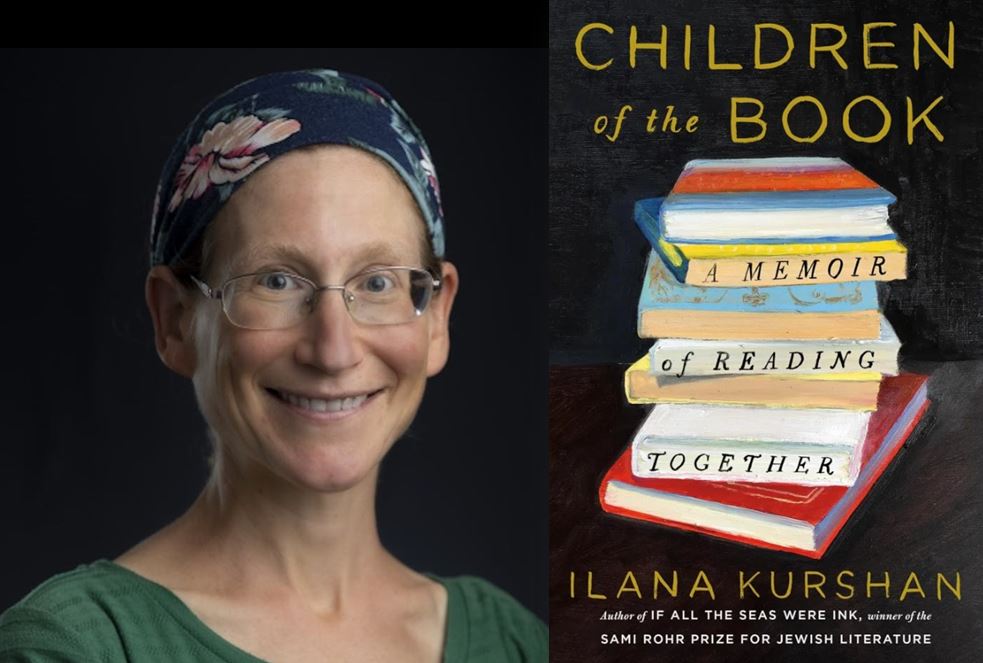
For many mothers, especially literary-minded ones, raising young children may feel like an intellectual regression. In this episode of the TRADITION Podcast, Ilana Kurshan and Sarah Rindner Blum discuss how the time spent reading books with our children can also yield profound intellectual and spiritual insights, not to mention deeper and more enjoyable relationships. Kurshan’s new book, Children of the Book: A Memoir of Reading Together (St. Martin’s Press), explores the ways in which reading books and learning Torah in the context of family life can be uplifting and transformative. In their conversation, Ilana and Sarah compare repeatedly reading the same children’s books to prayer, and the rejection of screens in favor of books to the Biblical transition from idolatry to monotheism. They also delve into the unique challenges of raising enthusiastic English language readers in Israel.
Sarah Rindner Blum, a teacher and writer living in Israel, reviewed Children of the Book in TRADITION’s recent Summer 2025 issue. Ilana Kurshan’s first memoir, If All the Seas Were Ink, won the Sami Rohr Prize in Jewish Literature.
Watch a video recording of this conversation.
The post PODCAST: Children of the Book first appeared on Tradition Online.

In this episode of the Tradition Podcast we update our listeners on some happenings over on our website, TraditionOnline.org.
Check out the Tradition Summer Book Endorsements: Our yearly tradition of turning to our esteemed editorial board for endorsements for summer reading. Some may be amused to think of a seaside read with the 29 tomes our team chose, but that’s what you get from TRADITION’s thought leaders: sometimes surprising suggestions, but always reading worthy of your attention.
Readers of TraditionOnline have been following our pair of biweekly columns which appear on Thursdays. We catch up with those authors to summarize what’s been accomplished online and to look ahead.
TRADITION’s associate editor, Chaim Strauchler, the Rabbi of Rinat in Teaneck, has been offering us “Tradition Questions” prodding us to think about an array of issues facing religious life. That column is now going off on hiatus and will be replaced in the Fall with the return of his very popular “The Best” series – we spoke with Chaim about the answers and insights he found in the course of “Tradition Questions.”
Moshe Kurtz, has presented 30 installments in his “Unpacking the Iggerot” series, exploring the background and reception history of R. Moshe Feinstein’s most consequential response in the Iggerot Moshe. It’s a fascinating guided reading of those teshuvot. We catch up with Moshe to survey what’s been accomplished in that series as it goes off on summer break while he settles into his new position as the rabbi of Cong. Sons of Israel in Allentown, PA. Fear not – he’ll return to TraditionOnline with new essays in the Fall.
We’re also glad to let you know that Yitzchak Blau, no stranger to our readers, will be filling in over the Summer with an encore series of his “Alt+Shift” column—that’s the keyboard shortcut allowing us quick transition between input languages on our keyboards. For many readers of TRADITION that’s the move from Hebrew to English (and back again). The series will appear every Thursday until September, offering an insider’s look into trends, ideas, and writings in the Israeli Religious Zionist world and helping readers from the Anglo-sphere gain insight into worthwhile material available only in Hebrew.The post Catching Up with TraditionOnline first appeared on Tradition Online.
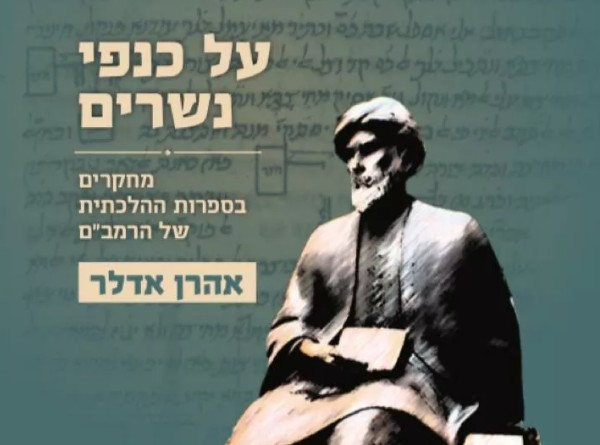
This episode of the Tradition Podcast features an engaging conversation about current scholarship on Maimonides—the “Great Eagle.” TRADITION’s Winter 2025 issue presented a review essay by Marc Herman on Prof. Mordechai Akiva Friedman’s Ha-Rambam u-Genizat Kahir [Maimonides and the Cairo Geniza] (Israel Academy of Sciences and Humanities), and Rabbi Dr. Aaron Adler’s Al Kanfei Nesharim: Mehkarim be-Sifrut ha-Hilkhatit shel ha-Rambam (Tevunot Press at Herzog College).
In this podcast, reviewer meets his subject as Herman and Ahron Adler discuss aspects of their common work on Maimonides. Among other topics, they consider differences in approach to Maimonidean research carried out by pure academicians as opposed to a rabbinic educator who dabbles in academia and benefits from its methods, and how R. Adler synthesized traditional “yeshiva style” learning with academic tools in his book. They also speculate about whether or not and how the academic approach, utilizing the vast manuscript material available today, could or should make its way into traditional study in batei midrash.
Read Marc Herman, “Maimonides in Panoramic View: New Studies of the Great Eagle,” TRADITION (Winter 2025).
R. Dr. Aaron Adler is a veteran communal leader, educator, and scholar. He is rabbi emeritus of Ohel Nechama in Jerusalem, and founding Rosh Yeshiva at Yeshivat Bnei Akiva Ner Tamid in Hashmona’im.
Dr. Marc Herman is an assistant professor at York University in Toronto. His first book, After Revelation: The Rabbinic Past in the Medieval Islamic World (University of Pennsylvania Press), will be published in the coming weeks.The post Rambam in the Yeshiva and the University first appeared on Tradition Online.
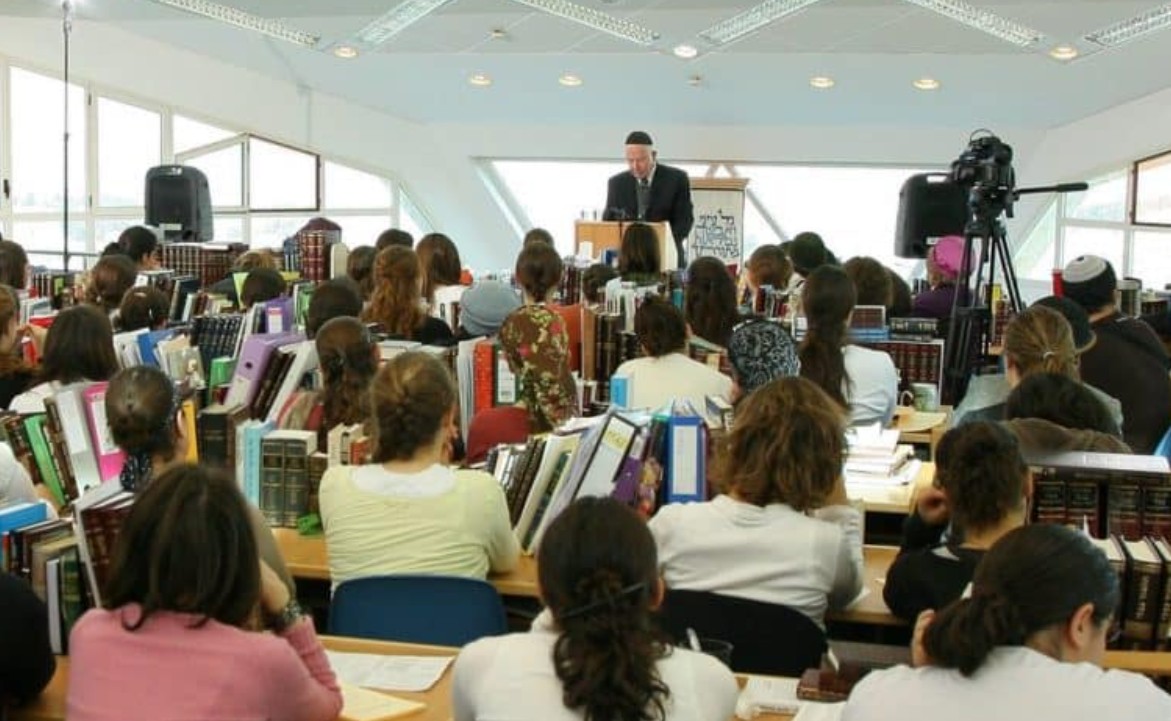
TRADITION’s subscribers have already received our special Spring 2025 issue, containing content commemorating R. Aharon Lichtenstein zt”l, timed with his 10th yahrzeit marked this month. Five years ago we were pleased to publish Rabbanit Tonya Mittelman’s essay, “Women in the Torah World in the Thought of Rabbi Lichtenstein” (Summer 2020). Toni, a distinguished educator, is a daughter of R. Lichtenstein.
In this episode of our podcast, Mali Brofsky talks with Mittelman, who shares insights from her father’s career, as well as her own experiences as an educator, regarding women’s participation in high-level Jewish learning and religious practice. She emphasizes that her father’s endorsement of women’s learning was rooted in his deep trust in both Torah and in women, explaining that he believed women and men have similar spiritual needs in this regard. The conversation explores the challenges and opportunities in providing comprehensive Jewish education for women, as well as their practice of mitzvot, with Toni emphasizing that her biggest challenge as an educator is transforming her students from passive to active participants in halakhic education and practice.
Regarding religious practice, Mittelman notes that women should maximize participation wherever possible. On the question of the frustration often experienced by women in these areas, she asserts that there remains a difference between men and women in some religious contexts, that this reality should be openly discussed, and that women should trust the system, pointing out that these challenges are part of a broader set of life demands experienced by men and women alike. The discussion concludes by encouraging further progress in women’s religious participation while acknowledging the ongoing tensions within the traditional religious framework.
Watch a video recording of the conversation.
Tonya Mittelman is the Principal of Ulpanat Tzvia Sdot Negev. Mali Brofsky, a member of TRADITION’s editorial board, is a senior faculty member at MMY and a social worker in private practice.The post R. Lichtenstein on Women’s Torah Study first appeared on Tradition Online.

This episode of the Tradition Podcast is being released on Rosh Hodesh Iyar, the tenth yahrzeit of Rav Aharon Lichtenstein zt”l. In eulogizing his father-in-law, Rabbi Soloveitchik, R. Lichtenstein observed that the Rav was a “sui generis sage—he bestrode American Orthodoxy like a colossus, transcending many of its internal fissures.” Such could be said about R. Lichtenstein himself, expanding the width of the colossus’ stance to include religious life in Israel as well, where he made his home as Rosh Yeshiva of Yeshivat Har Etzion for over 40 years.
TRADITION’s recently released Spring 2025 contains a section of essays exploring R. Lichtenstein’s teachings and thought – and is a complement to our special enlarged winter 2014 issue dedicated to R. Lichtenstein as well (a volume planned as a tribute but whose timing very shortly before his passing meant it was received by our readers as a memorial volume). That issue, guest edited by Yitzchak Blau, Alan Jotkowitz, and Reuven Ziegler, is available in our open-access archives.
Now, a decade later, we bring you a never-before published essay by R. Lichtenstein, “Relevance and Reverence” (open access), exploring some of the challenges in Jewish education at the time he first delivered the ideas as a talk in 1984 – and analyzed by Michael S. Berger, Dean of Yeshiva University’s Azrieli Graduate School of Education, who writes on the ongoing relevance of “Relevance and Reverence.” In this episode, we talk with Berger about the topics raised in the two essays. Later in the episode we hear from Shlomo Zuckier about his contribution to the volume, revisiting R. Lichtenstein’s classic essay, “Does Jewish Tradition Recognize an Ethic Independent of Halakha?” Zuckier, a research associate at the Institute for Advanced Study at Princeton and consulting editor at TRADITION, penned an impressive and sweeping survey of the impact and reception of “Ethic Independent,” which originally appeared 50 years ago.
Watch a video version of the recording.
Subscribers can access all the content in this new issue at TraditionOnline.org or enjoy the print copy which should be arriving in post boxes in the coming days. In our open-access archives you can find all of R. Lichtenstein’s many contributions to TRADITION over the years.The post Rav Lichtenstein’s Legacy first appeared on Tradition Online.
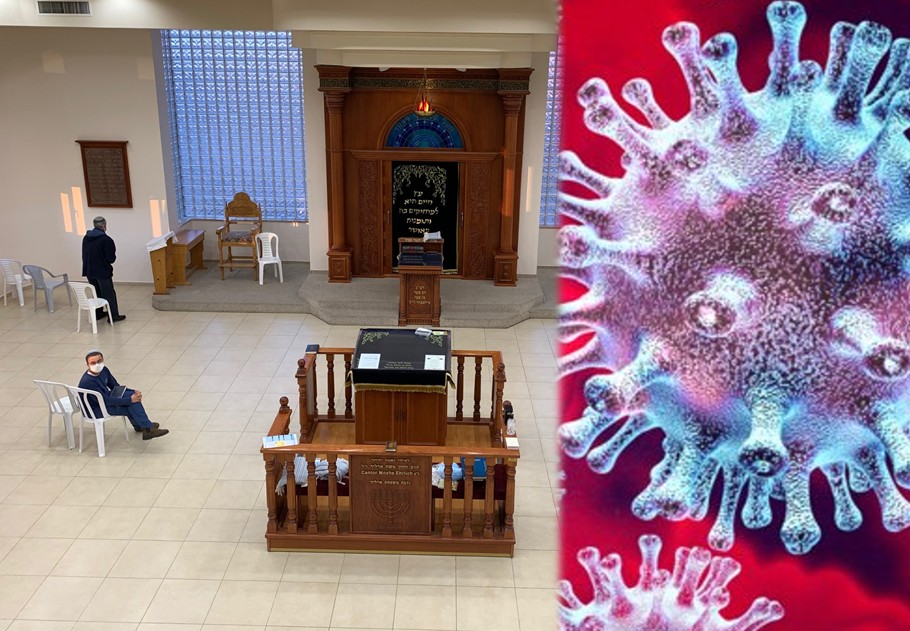
Readers of TraditionOnline.org have been following our week-long series COVID+5,where we’ve been exploring the lasting impact of the pandemic on Jewish education, communal life, and spirituality. Through the insights and reflections of a diverse group of authors we’ve considered how COVID reshaped our synagogues, our communal celebrations, our Yeshiva high school and elementary schools, and our relationship with God and each other. In this episode of our podcast, the guest editor of that series, R. Yehuda Halpert, conducts a reflective conversation on the changes that have occurred in this past half-decade in our religious and educational institutions, communal trust, as well as the emotional and spiritual struggles experienced by individuals during the pandemic. He talks with the six authors in the series, all of whom draw on their experiences as mental health professionals, educators, administrators, and spiritual leaders to look back on the Spring of 2020, and to consider where we’re holding now.
Read the series introduction and all the columns here.
In the first segment of this episode we hear from Gila Muskin Block, executive director and co-founder Yesh Tikva, an organization dedicated to working with couples navigating the challenges of infertility, and Dr. Carl Hochhauser a pediatric psychologist who is also on the counselling and teaching staff at Yeshivat HaKotel. Together they focus on the emotional and spiritual struggles experienced by individuals during the pandemic.
The episode then transitions from the individual to the communal, focusing on our schools, synagogues, and the broader Jewish community, as we’re joined by Rabbis Josh Kahn (Torah Academy of Bergen County), Daniel Korobkin (BAYT, Toronto), Leonard Matanky (Congregation K.I.N.S. of West Rogers Park, and Dean of Ida Crown Jewish Academy) and Larry Rothwachs (Beth Aaron, Teaneck). The participants revisit aspects of the COVID pandemic and its post-pandemic consequences all the while challenging and sharpening each other’s formulations and conclusions.
Watch a video recording of the conversations.
TRADITION thanks Yehuda Halpert for initiating this project. Explore more on these themes in his recent book, Speaking to an Empty Shul: Timeless Lessons from Unprecedented Times, a rabbinic diary describing his time leading Cong. Ahavat Shalom in Teaneck throughout the pandemic years.The post COVID+5 Panel Discussion first appeared on Tradition Online.

With Passover around the corner our minds are on the many preparations required to join our families around the Seder Table—and yet, who can forget the events of five years ago, when so many of us were isolated, locked-down, sheltering in place during that COVID Pesach of 2020.
We’re pleased to share this episode of R. Moshe Kurtz’s “Shu”t First, Ask Questions Later” podcast, examining the COVID Zoom Seder controversy. Kurtz is joined by R. Yehuda Halpert, who takes us back to the pandemic halakhic literature, identifies important topics that the Jewish world wrestled with during those unprecedented days, and shows how those questions are still resonant for Jewish practice in 2025.
Readers of TraditionOnline.org know Moshe Kurtz as the author of our “Unpacking the Iggerot” series, exploring the responsa of R. Moshe Feinstein zt”l. His “Shu”t First, Ask Questions Later” podcast can be found at Spotify and all other platforms—search it out and subscribe now. It’s an engaging weekly discussion about response literature and fascinating halakhic curiosities; it has also hosted many of TRADITION’s regular authors.
Stay tuned! Yehuda Halpert will be returning to TraditionOnline right after Pesach as the guest editor of a series on COVID+5, in which rabbis, educators, mental health professionals, and communal leaders will be sharing with us their takes on how the landscape has changed in the half-decade since the pandemic, what we got right and what we got wrong, and some of the enduring lessons and challenges of that time on the Jewish world.
Yehuda Halpert is Rabbi of Congregation Ahavat Shalom in Teaneck, NJ, and is an attorney and tax counsel at Debevoise & Plimpton, LLP.
Moshe Kurtz serves as the Assistant Rabbi of Agudath Sholom in Stamford, CT, and is the author of Challenging Assumptions.The post The COVID Seder first appeared on Tradition Online.
In this episode of the Tradition Podcast, our associate editor Yitzchak Blau interviews author, researcher, and Makor Rishon columnist Yair Sheleg about his recent Hebrew book HaHut HaMeshulash, whose English title might be offered as The Triple Chord: A Short History of Religious Zionism (Kinneret-Zmora, 2024).
Rav Kook believed that Religious Zionism combines elements of religion, nationalism, and liberalism. In HaHut HaMeshulash Sheleg asks if contemporary Religious Zionism has remained loyal to this triple mission. If not, why not—and where has it fallen short? Blau and Sheleg also discuss the relationship between American Modern Orthodoxy and Israeli Religious Zionism—how do they overlap and how do they differ?
Sheleg’s had published an essay at TraditionOnline before the book appeared that outlined his basic thesis; Blau had reviewed Sheleg’s book when it was published a few months ago as part of his fascinating Alt+Shift series (he also reviewed Sheleg’s earlier work on Hardalim, or Ultra-Orthodox Zionism).The post Religious Zionism’s Triple Cord first appeared on Tradition Online.
In this episode of the TRADITION Podcast, Mali Brofsky and Mark Smilowitz discuss the central thesis of his recent essay, “Esther and the Spies: A Bible-Based Symbolic Meaning of Walled Cities from the Time of Joshua” which appeared in our Fall 2024 issue and is now open access at TraditonOnline.org.
Smilowitz explains how, through an analysis of the textual connection between the walled cities in the time of Joshua and those in the Purim story, he has uncovered a message about how the Jewish nation is enjoined to move from fear to courage through our connection to faith during times of crisis.
The two discuss the importance of reading halakhic and traditional texts with an eye toward understanding their deeper philosophical, theological, and ethical messages, and also consider the significance of Smilowitz’s message regarding faith and meaning, how we see this experience reflected in our own time, and how it can serve as a source of support during the great challenges facing us today.
Mali Brofsky, MSW, a member of TRADITION’s editorial board, is a senior faculty member at MMY and a social worker in private practice; Rabbi Mark Smilowitz, a veteran educator in Israel and the United States, recently completed a doctorate on the thought of Rabbi Joseph B. Soloveitchik at Hebrew University.
Read “Esther and the Spies” at TraditionOnline.org.
Halakha mandates a separate date for Purim for cities that had walls during the era of Joshua. Commentators have been puzzled by the selection of the era of Joshua in particular, as opposed to other, more obvious choices (such as the period of the Purim story itself). The Talmud points to a source which seems to rely on a mere technicality without providing a satisfying thematic connection between Joshua and Esther. Smilowitz’s essay probes the broader context of source through an exploration of the early chapters of Deuteronomy alongside the story of the sin of the spies in order to demonstrate a thematic parallel between the development of the faith of Esther and the development of the faith of the Jewish people over time, from the sin of the spies through the conquering of walled cities in Canaan under Joshua’s leadership. The article argues that the halakha about walled cities in the time of Joshua is meant to point to this particular message about the dynamism of faith as illustrated by those two stories.
Watch a video recording of the conversation.
The post Esther, the Spies & Faith first appeared on Tradition Online.
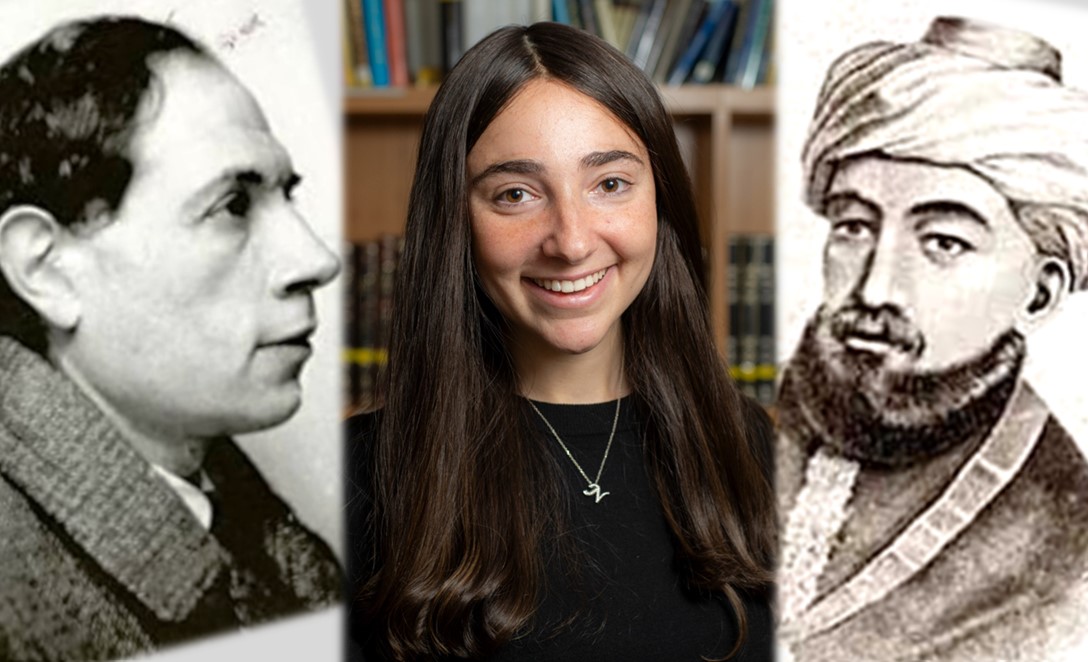
What is the purpose of forgiveness? How necessary is it to maintain working social order – within the body politic or within the smaller circles of religious community or family? Is forgiveness the work and responsibility of the offender (to seek it) or the offended party (to willfully grant it)? We live with these issues daily, often struggling with them in the messiness and complexity of human relationships, and while we’re aware of the halakhic and philosophical writings that circle the topic, how often do we let them penetrate our actual behavior?
In a remarkable new essay appearing in TRADITION (Fall 2024), Neti Penstein explores the interplay of halakhic sources in the writings of Maimonides, Rabbi Joseph B. Soloveitchik, and others, and brings her analysis of that wisdom to bear in puzzling out and offering a solution to a particular 50-year-old paradox first presented by the philosopher Aurel Kolnai (1900-1973). Penstein’s work reminds us of the Rav’s closing remark in “The Halakhic Mind”: “Out of the sources of Halakhah, a new worldview awaits formulation,” and her essay collapses the barrier between halakhic sources and philosophical insights.
Read “Forgiveness: A Philosophical Analysis of the Halakhic Sources” TRADITION (Fall 2024).
Neti Penstein is a graduate of Princeton University, where she studied philosophy. She is currently completing an MA in Jewish Philosophy at Yeshiva University’s Bernard Revel Graduate School and is studying in its Graduate Program in Advanced Talmud Studies. In this episode of the Tradition Podcast she joins TRADITION’s editor, Jeffrey Saks, to discuss her work, her assessment of philosophical thinking in today’s Modern Orthodox community, and why, if done correctly, there’s nothing more practical than philosophical thinking for our actual lived experience.The post The Halakhic Philosophy of Forgiveness first appeared on Tradition Online.

Comments

Download from Google Play

Download from App Store
 United States