


 Claim Ownership
Number One With A Bullard
Subscribed: 2Played: 0
Subscribe

© Gabe Bullard
Description
Notes on a nostalgic time. Pop culture anxieties. Occasional jokes. Weird sounds.
gabebullard.substack.com
gabebullard.substack.com
47 Episodes
Reverse

In late summer last year, young people across the German-speaking world met by the dozens in parks and public squares. At a designated time, they took out small cups of pudding and plastic forks, then used the latter to eat the former. They did it because someone posted to TikTok that it would be a fun thing to do. This is a public episode. If you'd like to discuss this with other subscribers or get access to bonus episodes, visit gabebullard.substack.com/subscribe

Over the holiday break, I had a piece published in the New York Times Magazine about my snail obsession and how it helped me adjust to life in Switzerland. You can read it here. This post is kind of a cousin or sibling to that one. Let me know if you like this kind of writing, or if you’d rather have the typical hand-wringing analysis of minor records or trends or whatever else it is I do here. For a short period of time in my late 20s, I was, according to a handful of friends, “Louisville famous.” This meant that within the Louisville, Kentucky, Metropolitan Area, people who listened to a lot of public radio or who attended live storytelling events (this is probably a redundant list) knew who I was.“Famous” is a stretch. Fame for local journalists went to hosts of radio shows, newspaper columnists whose photos ran next to their bylines, and anyone who was on TV. I was less notable than most of my on-air colleagues. Still, I would occasionally be recognized. In a restaurant, someone might say “aren’t you on the radio?” The question left me flattered but made me worry that I was talking too loudly. Once when I was playing tennis in the park, a man stood outside the chain link fence watching me. During a break in play, he said, “You’re Gabe. ” I said yes. “I liked your article about pens,” he said, and walked away. On a Saturday afternoon, a stranger outside a cigar store yelled out “Moth man!” a reference to my co-hosting the live Moth events in the city. The rewards of this fame were having a local food truck name a hamburger after me for a night (it was good) and forming a lasting friendship with the guy who called me Moth man.Still, even this limited recognition made me nervous. It wasn’t because I might be spotted doing something embarrassing. I didn’t worry about reputational damage. I wasn’t comfortable having a reputation at all.I’m shy. I liked the anonymity of being on the radio or existing only as a byline in print. Once, the station ran a photo of me to promote the news blog I wrote. I was thrilled when a local lawmaker said “hey who is that in the ad for your blog?” unaware it was a photo taken a year prior.After Louisville, we moved to Boston, then to D.C. I worked behind-the-scenes in newsrooms, only occasionally writing or putting my voice on-air. I wasn’t a little fish, I was a plankton. Unknown except to those who I wanted to know me (friends, mostly, as well as the staff at the restaurants and coffee shops I frequented).Now I’m in Switzerland and I think I’m getting a reputation again, but not for work.Every morning, I jog along a set path, usually at the same time each day. This means I see the same people. The custom here is to greet someone with a Grüezi as you pass, which I do, even when I’m out of breath pushing for a better mile kilometer time. They return the greeting, even if they’re speeding by on a bike or tying up a dog waste bag. With some of these strangers, the greeting has expanded into a miniature conversation in passing. They’ll comment on the weather, maybe, or say something about how I’m still at it. One group of dog walkers who I often pass always throws me for a loop, shouting phrases in German that force me to match my physical exertion with mental. I worry about being rude, so I usually smile, nod, and agree to whatever it is they’ve said with the word for “yes” or “exactly” or “one more day.”The other day, a guy who lives at the top of our hill was on the sidewalk talking to a man from a tree-cutting service. He said something beyond my comprehension, so I sped up to give myself plausible deniability for a snub. Before I got out of earshot, I heard something I could translate: Er ist jeden Tag hier. “He’s here every day.”Self-consciousness over my pace and appearance aside, I don’t mind this kind of recognition. It’s neighborly. In Boston and Washington, there were people who lived in our apartment building who didn’t say hello. In Louisville, people were friendly but sometimes the encounters carried some kind of expectation; people asked for my take on a big local news story, for gossip about NPR personalities, or for a recommendation letter for a young relative who was applying for jobs “and would just be thrilled if you could do something.”I like having the neighbors as part of my day, and I like thinking that I’m part of theirs. If I don’t see someone for a while, I ask myself if they’re on vacation or maybe feeling sick. I hope their dog is still healthy enough for a morning walk. I wonder if they do the same for me. When I’m out of town, do they ask “what happened to that bald guy with the funny accent?”In a way, I feel less like a person people interact with and more like part of the scenery here—the jogger in the green cap who never goes any faster, never gets any thinner, and appears along the road to Schönenbuch on weekday mornings. Really, I suppose I’ve become part of a routine. Walk the dog, see that guy, go home. I like it. The only expectation is a friendly word or two and the unspoken promise of being back at it tomorrow. This is a public episode. If you'd like to discuss this with other subscribers or get access to bonus episodes, visit gabebullard.substack.com/subscribe
So many Christmas songs are sad. That's just right for the season. This is a public episode. If you'd like to discuss this with other subscribers or get access to bonus episodes, visit gabebullard.substack.com/subscribe
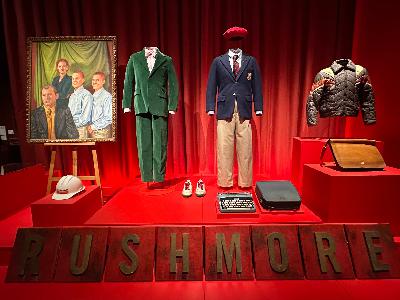
Who taught you what a director does?This is one of those pieces of knowledge that used to come through cultural osmosis—some assembly required.Based on conversations with peers (and the discussion on the latest Blank Check series), I learned about directors the same way a lot of kids who grew up in the ‘90s learned.First there was Tim Burton. Batman was everywhere, and when I saw Edward Scissorhands on hotel cable during a family trip, I could understand that the same person made both movies. Twin Peaks was on TV, too, and I knew to associate David Lynch with an eeriness and imagery I didn’t understand. This is how I learned about the director as an artist.The only Spike Lee productions I had seen as a kid were Nike ads, but he was about as famous as a director could be, especially during the marketing of Malcom X. Stephen Spielberg was on Animaniacs and he made Jurassic Park and E.T. This is how I learned about how directors existed as artists in the public eye.When Fargo came out, adults around me sprinkled their conversations with Minnesota nice—“you betcha” and “ohh yah?” especially—and so the Coen Brothers entered my cultural lexicon. My oldest brother had posters for The Doors and Dazed and Confused in his room, and he talked about Boogie Nights and Casino, so I knew the names Stone, Linklater, Anderson, and Scorsese. My mom had previously rented 2001 for me, and I picked up on Kubrick references on The Simpsons. This is how I learned about directors and audience taste.Around the time TV ads hyped The Big Lebowski as coming from “the guys who brought you Fargo,” I latched on to a director for myself. The TV spots for Rushmore had funny jokes and my favorite song (The Who’s “A Quick One While He’s Away”).My brother said he had seen the director’s first movie, Bottle Rocket, and liked it. I fixated on seeing Rushmore the way a thirteen year old fixates on anything that seems to be part of a slightly more grown-up world. When it finally landed on cable, I studied it, trying to figure out what made the movie the work of that particular director. The music? The visuals? The editing?A couple years later, my mom came home with the just-released DVD of The Royal Tenenbaums. Now I understood what a director did.By college, I had seen enough movies, watched enough Siskel & Ebert, and read enough newspaper critics’ columns to understand directors (and to have a loose opinion on auteur theory, which my proximity to film majors soon solidified). Sophomore year, my school got a sneak preview of The Life Aquatic. The screening was packed. The giveaway promotional red stocking caps were prized possessions on campus.Walking out, I was among the disappointed. The general consensus from my friends was that the movie was too heavy on style and too light on substance. Classmates used terms like real and raw to describe what they liked about the earlier Anderson movies, and they used the word twee to describe The Life Aquatic. The red caps were no longer cool. Like Richie Tenenbaum’s red-white-and-blue headband, they were the mark of a style-over-substance hipster instead of a true aesthete.A few months later, I watched The Life Aquatic again on DVD with friends and saw all the realness and rawness of the movie’s broken heart. I understood how Anderson’s style might appear to hold certain ideas and emotions at a distance, when in fact the emotion is right there in front of us.I’m a solid Anderson defender now. The accusations of twee are constant, though. And I see the point. His movies have become so stylish and singular, it’s overwhelming to follow what’s on the screen. At the same time, the movies have taken on deeper, heavier, more existential topics.(I wrote about the shallow accusations of “quirk” at Together Alone.)On a trip to London last week, Linda and I saw The Wes Anderson Archives at the Design Museum. It was beautiful. (As she wrote, one of our early relationship highlights was seeing shooting locations of Rushmore while visiting her parents in Houston.)The exhibit opens with handwritten script pages and on-set Polaroids. It moves into the Sundance posters for Bottle Rocket (then a short film) before exploding into color with the Rushmore costumes. Walking through, you see how Anderson used greater and greater budgets to realize the most meticulous details of his visions. You see scouting photos of the Tenenbaum’s house, costume sketches for the Zissou crew, the prop books made for Moonrise Kingdom, and the precisely detailed miniatures for The Fantastic Mr. Fox. The placards describe how Anderson worked with designers, prop specialists, and a seeming army of collaborators to make every frame exactly how he imagined it. I spent a good fifteen minutes studying the editorial board from The French Dispatch, which appears on screen for a few seconds and isn’t even readable then.While I was studying the wale of Mr. Fox’s corduroy suit, I overheard another visitor. “I appreciate the design, but it’s just too much fluff,” he said. “Give me something real.”I’ve been turning that over for a while. My main criticism of Anderson’s latest movies is what I mentioned earlier—they’re overwhelming in their detail. This and the brisk plots makes repeat viewings necessary to take it all in, and it can be hard to know what to focus on in the moment. But as a problem to have, that’s pretty minor.What could be more real than this? We’re in a gallery hall full of ideas made manifest. No production still showed even a hint of green screen. I never saw the letters CGI in their all-caps succession. Yes it’s incredibly fussy, but isn’t this perfect for the age of streaming, when you can pause and study each frame? Isn’t this exactly what’s lacking from so many movies today?This month, the wrong files for Mad Men were uploaded to HBO’s servers, and special effects shots were missing. A Starbucks cup appeared in Game of Thrones. These are understandable if embarrassing mistakes, but given how often these things happen (there are hundreds of thousands of words dedicated to “bloopers” like this on IMDB), isn’t a carefully constructed screen world something we should celebrate? Or is “good enough” ok, and reality is judged by how little attention an artist can appear to pay?Look at the examples of directors I mentioned in the opening. Notice how each one is still a notable name today. They were artists who millions of people knew, who a kid growing up in a tiny rural town could aspire to learn about, to sharpen his taste against. They were artists who made mainstream works that became part of popular culture. I’ll take an indelible but obviously constructed world over whatever seems real on streaming today. This is a public episode. If you'd like to discuss this with other subscribers or get access to bonus episodes, visit gabebullard.substack.com/subscribe
Are we past the age of must-have Christmas gifts? This is a public episode. If you'd like to discuss this with other subscribers or get access to bonus episodes, visit gabebullard.substack.com/subscribe
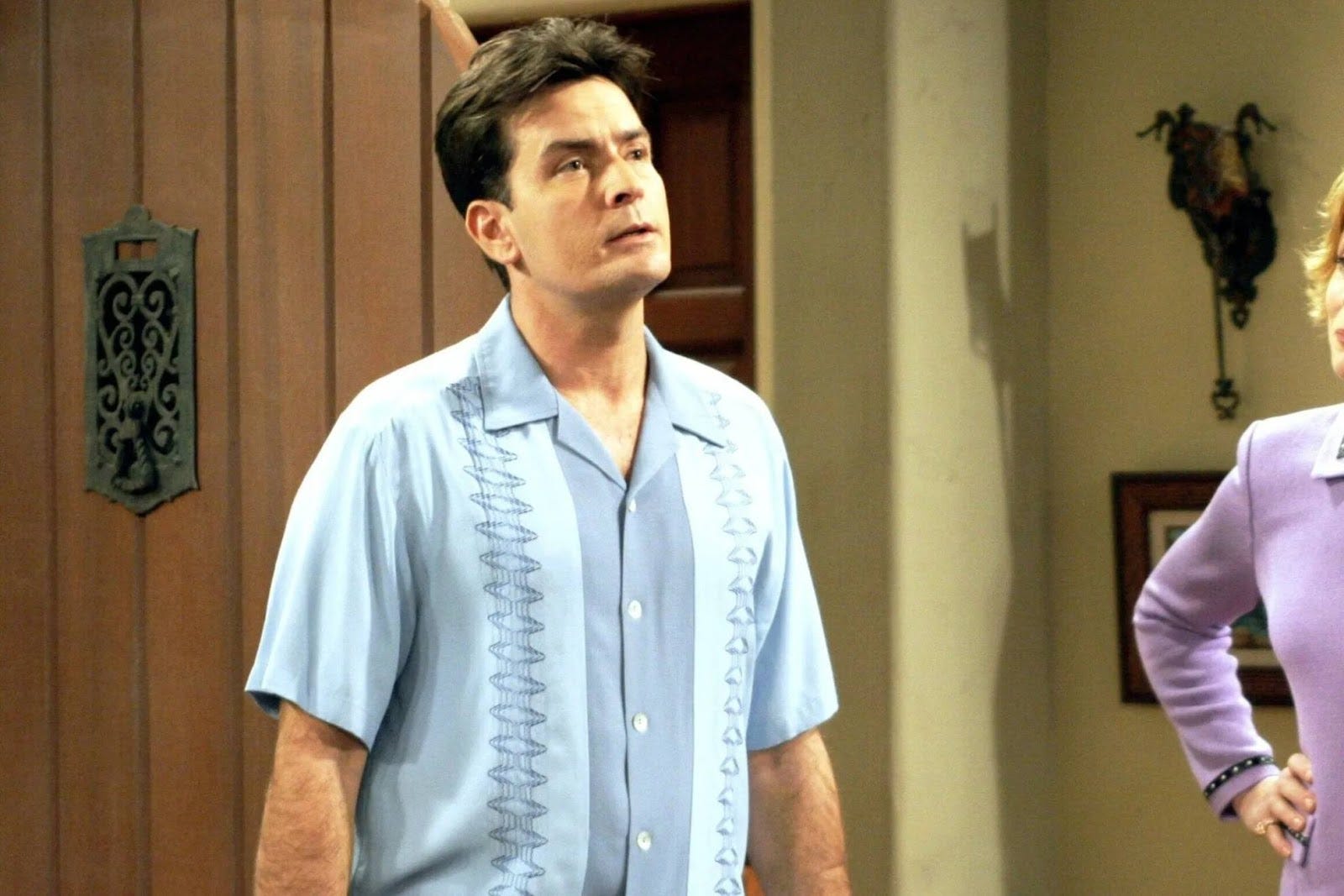
This is the final installment of my notes on the cultural history of the bowling shirt. You don’t need to have read part one or part two, but you might like them. WinningIn the twenty-first century, nostalgia piled on top of itself until it collapsed into a heap of meaningless.The swing revival ended on January 31, 1999, when Big Bad Voodoo Daddy played the Super Bowl halftime show, along with Stevie Wonder and Gloria Estefan. Twenty years later, critic Rob Sheffield told the Ringer this particular halftime show did to ‘90s culture what Altamont did to ‘60s culture. Things were about to get very weird in the new century. But the change wasn’t immediate.Whatever ideas became outdated after Altamont didn’t vanish entirely. Many elements of the 1960s broke from their larger context and spread across culture (Deadhead stickers on Cadillacs and whatnot). Likewise, as the swing revival faded, elements of the culture that had launched it spread.In the fall of 2003. Two and a Half Men premiered, with Charlie Sheen starring as a lascivious songwriter who was almost always clad in camp-collar shirts with block patterns. They were his character’s signature.Sheen’s shirts weren’t found in the back of a parent’s closet or Salvation Army counters. They were new, made of silk and linen. Sheen’s character was a perpetually horny sleazeball, but the upmarket shirts gave him the touch of elegance that money can bestow on even the most inveterate louche. The bowling style made him seem irreverent and casual. The bowling shirt was no longer associated with bowling at all. It wasn’t ironic, subversive, or suburban. It was the uniform of the moneyed, comfortable, Californian, broadcast into the homes of millions of Americans every week. Casual triumphed over formal. Nostalgia inspired the new. Types of GuyThree years after Two and a Half Men debuted, America met a restaurateur from California who had entered a competition to star on Food Network: Guy Fieri.In promo photos for his first show, Guy’s Big Bite, Fieri is in an upmarket camp collar shirt similar to Sheen’s. With his tattoos, piercings, goatee, penchant for flip-flops, and spiky hair so bright it might be radioactive, Fieri looked like a living cartoon among his Food Network peers. But to millions of viewers, he was a stock character. The same type of guy could be found at car shows or cheering on a classic rock cover band at the state fair. He was the new American man of leisure.The set on Guy’s Big Bite was pure space-age bachelor pad: chrome lamps, Googie wallpaper, a tall red bar stocked with martini shakers and decorated with trophies—perhaps bowling trophies. It looked like a set from the “Walkin’ on the Sun” video. And indeed, Fieri and Smash Mouth’s singer Steve Harwell were often mistaken for each other.After a year of Guy’s Big Bite, Fieri took his show on the road. Driving a classic convertible (though not one with fins), he visited the types of businesses that had sprung up across the American suburbs and exurbs with screaming Googie architecture. They were what the show was named for: Diners, Drive-Ins and Dives.Even though he wore bowling shirts on Guy’s Big Bite, Fieri told the Wall Street Journal that their presence on his new show was happenstance. I get a call to do “Diners, Drive-Ins and Dives,” and they said, “Bring a short-sleeved collared shirt.” I’m pretty much a T-shirt-and-jeans guy. Shorts. Flip-flops. I’m not a real fashion icon. I had this one Dickies work shirt that was gray on the sides and had a dark gray panel in the center. When the show got picked up, that’s what I had worn in the pilot. They go, “That’s the wardrobe.” The essential part of this story is that Fieri had a bowling-style shirt. What’s more, it was ostensibly a shirt made by a workwear company for some type of physical labor. The shirt was double-duty Americana—a bowling pattern on a laborer’s uniform.It made sense that Fieri had this shirt. It made sense that he would be on TV in a groovy apartment with vinyl and formica and hubcaps on the wall. It made sense that people would mistake him for the singer of Smash Mouth. It made sense because these guys had evolved out of the postwar American experiment. They were Gen Xers who quoted Swingers and loved old cars and diner food. As they got older and made more money, they went for brand new recreations of the clothes their peers had found at thrift stores. Nothing about anything Fieri did seemed anomalous to anyone who was familiar with the malls and middle-class white suburbs of the 1990s. It just made sense. Don’t Forget the FoodThe food Fieri championed was American, too. It wasn’t always just monster burgers or piles of fried onions. It wasn’t unusual to see Fieri scarf down a dish that infused flavors from Asian or Mexican cuisine. Infused is the key word. Fieri wasn’t a traditionalist. But the new flavors he brought to the televised palate were usually attached to a more domestic dish—a spice rub on pork chops or toppings on a pizza. One of the restaurants Fieri founded is called Tex Wasabi’s. The menu of another one of his restaurants, named Guy’s American Kitchen, includes pastrami egg rolls and cajun chicken alfredo. The country Fieri traveled on TV was one where everything blended together into something that was distinctly America-shaped. None of This is RealEver taken a road trip across the USA? How often did you encounter a genuine diner, drive-in, or dive? The businesses that once dominated the nation’s roadsides gave way to identical outlets of chains at interstate exits. Those that remain are tourist attractions. In a way, Fieri helps these businesses by giving them attention. The restaurant industry is tough. Publicity can make or break a business. In another way, Fieri provides a limited view of what these restaurants can be, and pushes them to a familiar set of expectations that work well for his tastes and the TV’s presentation. He celebrates a world that no longer exists and creates a false version of it that endures. He builds the simulation on top of the ruins of the original. He creates a new type of chain, united by a uniformity of offerings rather than corporate ownership. Irony, Melting like American Cheese In 2012, Pete Wells’s New York Times review of the Times Square branch of Guy’s American went viral. The piece was a list of questions aimed at Fieri. Why is one of the few things on your menu that can be eaten without fear or regret — a lunch-only sandwich of chopped soy-glazed pork with coleslaw and cucumbers — called a Roasted Pork Bahn Mi, when it resembles that item about as much as you resemble Emily Dickinson?…Has anyone ever told you that your high-wattage passion for no-collar American food makes you television’s answer to Calvin Trillin, if Mr. Trillin bleached his hair, drove a Camaro and drank Boozy Creamsicles? When you cruise around the country for your show “Diners, Drive-Ins and Dives,” rasping out slangy odes to the unfancy places where Americans like to get down and greasy, do you really mean it?Or is it all an act? Is that why the kind of cooking you celebrate on television is treated with so little respect at Guy’s American Kitchen & Bar?Nearing his conclusion, Wells asks: “Is the entire restaurant a very expensive piece of conceptual art?”I’ve thought about this line a lot. Fieri is not joking. He’s a business man. He’s a brand. The way he packages his product and presents his brand is simultaneously authentic (he’s a type of guy that exists in the world) and completely contrived (the type of guy that he is evolved through so many layers of irony and adoption, through cynicism and sincerity, that there is no way it could be natural).Fieri reminds me of Jesse Thorn’s description of Evel Knievel in his manifesto on the New Sincerity, a post-ironic aesthetic/way-of-life that’s always had a slippery definition. Let’s be frank. There’s no way to appreciate Evel Knievel literally. Evel is the kind of man who defies even fiction, because the reality is too over the top. Here is a man in a red-white-and-blue leather jumpsuit, driving some kind of rocket car. A man who achieved fame and fortune jumping over things. Here is a real man who feels at home as Spidey on the cover of a comic book. Simply put, Evel Knievel boggles the mind.But by the same token, he isn’t to be taken ironically, either. The fact of the matter is that Evel is, in a word, awesome. His jumpsuit looks great. His stunts were amazing. As he once said of his own life: “I’ve had every airplane, every ship, every yacht, every racehorse, every diamond, and probably, with the exception of two or three, every woman I wanted in my lifetime. I’ve lived a better life than any king or prince or president.” And as patently ridiculous as those words are, they’re pretty much true.The New Sincerity, as Thorn describes it, is “more Hedwig than Rocky Horror.” It’s an earnest way of approaching something that someone might otherwise approach ironically. In his book Say Hello to Metamodernism, Greg Dember calls this kind of idea “Ironesty.”Ironesty is irony/sarcasm/sardonicness/snark employed in the service of making an earnest point or expressing a heart-felt emotion. It’s kind of a way of saying, “Hey I get that what I’m about to say is kind of corny, but…” and then truly caring about the thing that comes after the “but.” Or it’s a way of delivering a humorous, clever ironic message, but softening it with a “Don’t worry … we’re not too cool for you, we have sincere feelings just like you.”I quoted Thorn in a review of dueling Evel Knievel documentaries I wrote for Salon a few years ago. One of the docs featured Guy Fieri as a talking head. Which, like everything he does, made perfect sense and no sense. Fieri’s presence is particularly surprising, but also oddly perfect. Here is a man who also glorifies an America that isn’t really sustainable and perhaps never really existed—a showman draped in a form of realness that is both unreal

This is part two of a series of notes on the bowling shirt and the culture around it. Part one is here, but you don’t need to have read it to enjoy this one.There Is No Twenty-Year CycleI bowled on a computer before I bowled in real life. I spent hours on our Macintosh Performa playing “Alley 19,” a bowling simulator with a ‘50s motif—horn rimmed glasses on bowlers, a neon martini sign above the virtual lounge that held high scores, and of course, bowling shirts. Later, when I went to a bowling alley for the first time, it was the Bel-Air Bowl in Belleville, Illinois, an alley that matched the video game’s Googie aesthetic. When I started going to my hometown’s bowling alley, I fell in love with the Brunswick-made ball return, which was as Googie as the fins on a vintage Cadillac. The alleys were the genuine article, while the video game was part of a particular flavor of ‘50s nostalgia that was sweeping the country in the 1990s. A typical conversation about nostalgia in the ‘90s focuses on the ‘70s revival that rolled in over the first half of the decade. Even though Dazed and Confused wasn’t meant as a nostalgic movie, it signaled a new appreciation for the era that Gen-X had been children in. The rock music of the ‘90s hearkened more to the punk and hard rock sounds of the ‘70s than the hair-metal glam of the ‘80s. Old TV shows remained popular in reruns, and in music videos from the Beastie Boys and ODB. But while the ‘70s were cool again, there was a palpable ‘50s nostalgia at the time as well. There’s a pervasive idea that nostalgia moves in regular cycles, particularly cycles of about twenty years. There was a wave of ’50s nostalgia in the ‘70s. Angst over Watergate, disillusionment with ‘60s flower-power idealism, and the rise of Americana that presaged the Bicentennial brought about Grease, American Graffiti, and the song “American Pie.” This would explain any ‘50s nostalgia in the ‘90s as something dredged up when the ‘70s returned. It’s like Weezer’s “Buddy Holly” video—a ‘90s band placed into a ‘70s show that was set in the ‘50s (directed by Spike Jonze, who’d also directed the “Sabotage” video).But nostalgia doesn’t cycle as much as it stacks up. A generation entering adulthood looks back to childhood. A generation entering middle age longs for a time before they faced the responsibilities of career and family. The generation becoming empty nesters has warm memories of the era when their children were young. This is called the reminiscence bump. Each group has a different target of their nostalgia and each group has a different level of accuracy of the memory. Each group also has a different level of influence on popular culture. These overlapping nostalgias lead to a melange of misplaced memories. The popular image of the past becomes increasingly imprecise. Nostalgia for the ‘50s didn’t go away after the ‘70s, it just evolved and took on different meanings. It stuck around in the ‘80s, in Back to the Future (which paints the ‘50s as sex-crazed and violent) and the campaigns of Ronald Reagan (which paint the ‘50s as wholesome). There were a few different visions of the ‘50s in the culture of the mid-‘90s. One vision drew on the exotica, bowling alley, martini lounge side of the decade. In the video for Harvey Danger’s 1997 song “Flagpole Sitta,” the first subculture the band uncomfortably passes through is a bunch of martini-drinking neo-beatniks under Googie light fixtures. It’s an exaggeration, but as someone who was always looking for fashion cues at the time, I can safely say there really were people who looked and acted like this—mixing Kerouac with kitsch. In another corner, “Elvis” was a type of guy you’d regularly encounter on TV. Quentin Tarantino, Nic Cage, Rob Schneider, John Stamos—they were all popular men of varying levels of cool who took aesthetic cues from Elvis (all of them played Elvis in some way, too—Tarantino in an episode of Golden Girls, Cage as “Tiny Elvis” on Saturday Night Live, Schneider in musical tributes, Stamos on Full House). The ‘90s were the decade of the Elvis stamp war (written about here). Elvis in a white jumpsuit in Las Vegas stood next to Elvis in an Aloha shirt in Blue Hawaii. On top of that, Tarantino’s films brought back various aesthetics from the past, from surf (Dick Dale’s Miserlou in Pulp Fiction) to ‘70s cool (Jackie Brown). It all went into the same cultural stew. The camp/bowling/guayabera shirt was part of this mixed-up ‘50s style in the ‘90s, often worn with a wry, ironic distance—again, think of Jon Waters on The Simpsons and Ethan Hawke in Reality Bites. Too Many ShirtsThe bowling shirt was an easy emblem of the past in large part because there were tons of them around. A league bowler might change uniforms every season. The shirts were built for performance—to be worn hard and washed hot. They lasted. They piled up in Goodwill. “Men and businesses come and go, but the bowling shirt lives on,” a columnist wrote in the Buffalo News in 1982.The bowling shirt, specifically one meant for bowling, fit the irony of the ‘90s perfectly. A bowling shirt was a uniform for leisure, a mix of official garb and goof-off attire. Often, the shirts had the bowler’s name embroidered on the front and a local business that sponsored a long-ago league team on the back. For a person who loved irony and hated commercialism, what could be cooler than to wear an advertisement for an unknown business with someone else’s name sewn on the front? Plus, the shirts represented an era just before the ‘60s that Baby Boomers were becoming increasingly nostalgic for. Wearing a ‘50s-style bowling shirt was a way of indulging in nostalgia that countered the previous generation’s nostalgia. It’s So MoneyNothing cool can stay that way. Anything with both appeal and edge will slowly have the edge sanded down until it appeals to the widest possible audience. As ‘90s hipsterdom went mainstream, the old nostalgic symbols took on a new meaning. In TV and movies, the camp collar short-sleeve shirt became a sign that a character was slightly off from the mainstream. To me, the exemplar of this style is David Anthony Higgins’ character Joe on the Ellen sitcom. He’s a nerd who works at a coffee shop/bookstore well into his ‘30s. Joe had ‘50s throwback glasses and often wore loudly patterned camp shirts. It fit his character—a slacker with more wit than ambition and a deep knowledge of popular culture (I wonder why he inspired me so). The movie Swingers brought the cocktail-sipping, Vegas-hopping lounge lizard to a wider audience (Las Vegas being a hub of the postmodernist Googie-style architecture). But the movie’s version of ‘50s nostalgia was blurry. This is clearest in the music. Swingers was essential to one of the strangest eras in modern popular culture, and the peak of the decade’s muddled nostalgia: the swing revival. Swingers helped break the band Big Bad Voodoo Daddy, an act that played music from the ‘40s, dressed like they were from the ‘20s, and had a name that evoked the exotica era of the ‘50s. Big Bad Voodoo Daddy had roots in the ‘80s Southern California punk scene, and punk had long had an aesthetic connection to various ‘50s and ‘60s subcultures. The Ramones nodded to girl groups and bubblegum. The Clash veered into rockabilly. The Stray Cats camped out in it. In the ‘90s, Stray Cats leader Brian Setzer started a Louis Prima-inspired group and became central to swing revivalism. It’s Setzer whose song was in the Gap’s “Khakis Swing” ad.The Gap used nostalgia freely in ads in the ‘90s. The brand ran an ad in 1993 saying “Kerouac wore khakis.” The year after “Khakis Swing,” Gap ads featured music from Donovan (“Mellow Yellow”) and Queen (“Crazy Little Thing Called Love,” as performed by Dwight Yoakam). Meanwhile, punk acts inspired by the Clash (among others) brought in horn sections and joined the third wave of ska. None of this music sounded like anything from the ‘50s or the ‘30s. None of it was particularly good. But it was played and enjoyed by guys who wanted to have a retro look. Anything retro would do. It wasn’t uncommon in these years to go to the mall and see dudes in bowling shirts, fedoras, and checkerboard Vans.It was a mess of vibes with no singular historical precedent; nostalgia, separated from its origins and reveling in an evocation of the generalized past. And the fact that it was now mass-market and mainstream meant it was no longer ironically cool, or even authentically cool. It was just popular. It was the post-modern aesthetics of the Las Vegas strip manifested in white suburban teenagers’ closets. It All Happens at OnceI’m all over the place with the timeline. Swingers was 1996. “Flagpole Sitta” was 1997. Ellen debuted in 1994. It’s easy to imagine that Ethan Hawke’s character in 1995’s Before Sunrise would find Ethan Hawke’s character from 1994’s Reality Bites to be a pretentious jerk. Elvis guys and the bowling shirt crowd co-existed. Today, the path from outré to on trend to cringe takes only minutes to traverse. But people have always moved at their own pace, often slowly, through culture. Every Nostalgia Thread in One Video1997. Smash Mouth releases “Walkin’ on the Sun,” their first major single. The video features the following:* All four band members in bowling shirts* A beach party scene with tiki statues* A brief homage to Petticoat Junction* A ‘50s style hot rod race* A performance scene shot in a vinyl and chrome lounge that wouldn’t seem out of place in a suburban bowling alley.Smash Mouth’s sound borrowed from ‘60s pop and exotica, like a more mainstream version of Stereolab (the thriving indie scene and counterculture of the ‘90s meant there was always a cooler alternative/antecedent to whatever was popular). “Walkin’ on the Sun” sounds similar to “Swan’s Splashdown,” from J.J. Perrey and Gershon Kingsley’s 1966 album The In Sound from Way A cutting-edge bachelor pad would’ve had this record in rotation (it’s easy to imagine it pl
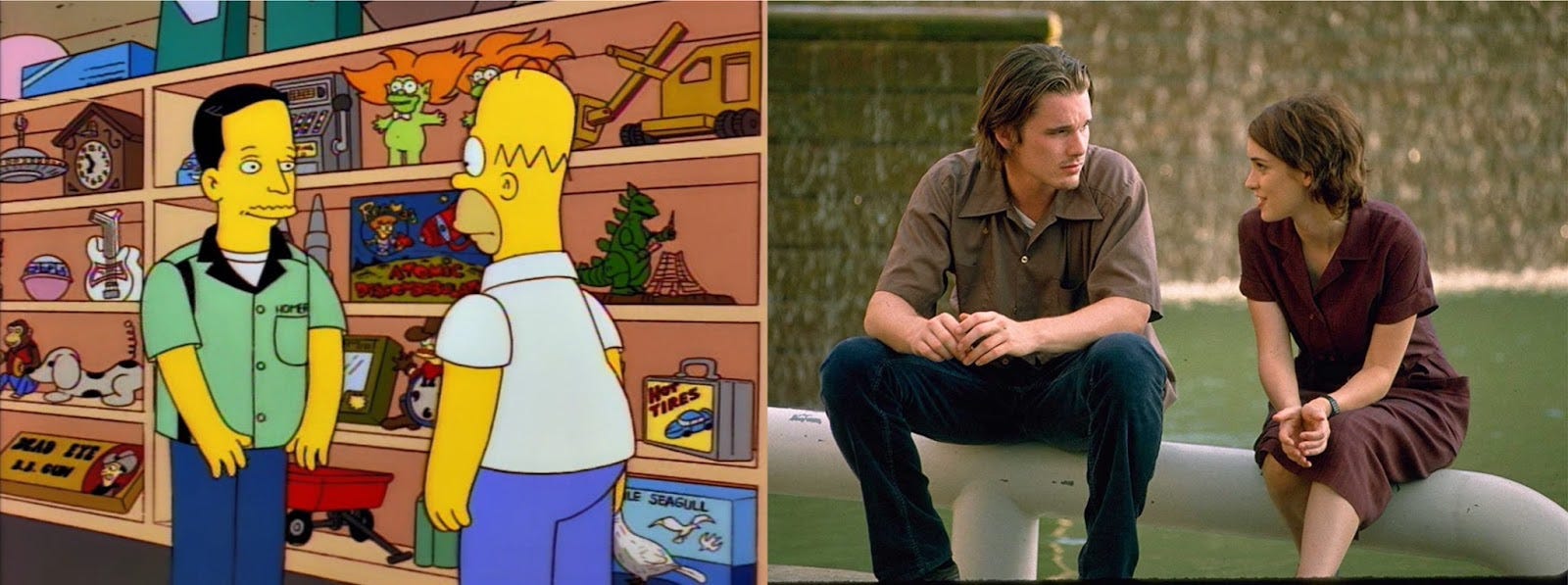
This is going to get weirdLet me explain. When I was sorting through my clothes before moving two years ago, I found an old bowling shirt I used to wear in high school. It was a gift from a friend who got it from her dad. At the time, it was cool—ironic, vintage, unique. I wore it until sometime in college when I saw someone wearing a bowling shirt and one of those visors with fake hair on it. Squeezing myself back into the shirt, I wondered where the design came from, and why it stopped being cool. So I started researching. The research led to this short article for Smithsonian magazine. But this wasn’t the end of my interest. Reporting the piece left me with dozens of documents and pages of notes that center around ideas I write about here—nostalgia, history, popular culture. What follows is essentially a version of my notes. I’m going to spread this out over three installments. Don’t worry—each piece works on its own as something to read, so don’t feel like you’re committing to every installment by reading this one. The Uniform of Space-Age Bachelor Pad ExoticaGuy Fieri doesn’t own a bowling shirt.Interviewing the TV chef for The Wall Street Journal in 2024, Lane Florsheim asked Fieri outright how many of the garments he has. “I don’t think I even own one,” Fieri said. Fieri has also distanced himself from the flame-patterned bowling-style shirt that he’s been long-associated with, saying it was the uniform at one of his restaurants, not a personal fashion choice. When you look at the picture of Fieri in the shirt, there’s a clear insignia for his restaurant Johnny Garlic’s on the right breast. In terms of gossip tonnage for interview bombshells, Fieri’s comment on the bowling shirt barely ranks. But it’s interesting that the Wall Street Journal asked him about this particular item. And this was the second mention of bowling shirts in the piece. The lede describes Fieri as an "Emmy-nominated host and restaurateur [who] has established himself as a greasy-spoon connoisseur with a wardrobe full of bowling shirts and a crown of frosted tips.”The bowling shirt’s image is so firmly associated with hot-rod dad culture that when high-end designers put bowling-inspired garments in their lineups a few years ago, Vogue suggested careful styling to avoid “looking like someone’s creepy uncle.”Thirty years ago, a bowling shirt was a signifier of an obsession with kitsch or an addiction to irony. The vintage-shop owner played by John Waters in a 1997 Simpsons episode wears multiple bowling shirts. Ethan Hawke’s character wears one in Reality Bites. In less than a decade, the bowling shirt changed from the uniform of alt hipsterdom to the button-up equivalent of a bleached-blond soul patch. A Flair Hair visor for the torso. Now its image is something like Fieri—derided in some corners for absurdity and tastelessness and appreciated in others for earnestness. It’s simultaneously steeped in irony but too sincere to dismiss as frivolous. Fieri’s influence on the shirt’s image is notable, but it’s just one part of a decades-long nostalgia cycle that has left the shirt a little more faded with each turn.Three Precursors to the Bowling ShirtThere’s a long history of clothes with origins in athletics becoming everyday wear: polo shirts; sport coats; tennis shoes; baseball caps; and most recently joggers (pants with elastic waists and cuffs—basically a way to wear sweatpants in public, heaven help us). While that’s certainly the case with the name of the bowling shirt, it’s not so clear that the shirt itself was designed for the sport.Generally defined, a bowling shirt fits a few criteria:* Short sleeves* Button-front* Open collar* Full, boxy cut* Squared hemThese criteria weren’t unique to the bowling shirt. In the middle of the twentieth century, before anything was called a “bowling shirt,” there were three other garments with a similar design in men’s wardrobes. First was the camp shirt. These took off in the ‘30s as casual warm-weather shirts intended for camping or other outdoor activities in a time when wearing just a t-shirt would be like going out in underwear. In its cut and khaki color, the camp shirt is similar to military uniforms (the armed services, like sports, are a major influence on clothing design). Next is the Guayabera shirt, a lightweight camp-collar design notable for having four pockets in the front (two at the breast, two at the hip) and pleats. The shirt is most closely associated with Cuba, though there’s some debate over whether it might have originated in the Philippines and spread between Spanish colonies. Short-sleeved versions of this shirt became common under various names in the U.S. As a kid shopping in thrift stores, I knew them as “barber shirts,” presumably because the pockets were handy for holding combs or scissors. And indeed, here’s a photo of barbers in the ‘40s in Wisconsin wearing what look like variations on the basic design. The other type of shirt with these features that grew in popularity in the ‘30s was the Aloha shirt—likely first made in Hawai’i using colorful cloth imported from Asia. This shirt spread to the U.S. in droves as servicemen returned from duty in the South Pacific and as Hawai’i became a tourist destination for Americans who were getting rich in the post-war boom years. The Bowling BoomTropical travel was just one way to spend the excess time and money many Americans had in the postwar years. Bowling was another. The sport grew in popularity in the late ‘40s, and exploded in the 1950s with the invention of automatic pinsetters, which made the game faster and more convenient. Bowling was popular on early television, which only drove more Americans to the lanes themselves. Bowling alleys were staple amenities in the growing American suburbs. The American Planning Association estimated that 20,000 new lanes opened across the U.S. in the first twelve years after the end of the war. Some alleys offered child care so stay-at-home moms could compete in leagues during the day. By 1960, the New York Times was reporting that bowling rivaled baseball in popularity. In the same article, the Times reported on the launch of a new line of clothing from the bowling company Brunswick that was “a far cry from the utilitarian shirt-and-pants-look so long associated with bowling.” As bowling spread, it wasn’t always clear what one would wear to participate in the nation’s new pastime. Pre-war illustrations show men and women in the traditional garments of the time—shirts and ties, dresses or skirts with blouses. As dress codes relaxed after the war, bowlers went to the alley in the shirts they wore for leisure, and clothing manufacturers tried to cash in on the trend. They made boxier shirts in long and short sleeves, some with collars that would hold a man’s necktie. Over time, as dress codes kept relaxing and as the AC kept blasting in bowling alleys, these designs evolved into the bowling shirt we know today—close cousin to the camp, Aloha, and Guayabera.But that’s just the shape of the shirt. The bowling shirt has other features that set it off from a standard camp shirt—color-block stripes, contrast piping…some even had epaulets. These were practical adjustments. Bowling shirts were athletic uniforms. Most bowling was done in leagues, where teams needed to match each other. They also needed to match their surroundings. With robotic machines setting pins and a mass culture obsessed with splitting atom and the space race, many new bowling alleys took on what we now think of as a classic ‘50s architectural style—usually called Googie, after a diner that demonstrated this style. It’s a distinctly American look. It’s the kitschy, futuristic contemporary to the more European-inspired midcentury modern. But while Googie aspires to space and jets, it’s modeled on trains and built for cars. The chrome and tile diners that embody Googie evolved from train cafe cars. And the neon lights and swooping boomerang awnings were meant to draw in passing motorists. Bowling alleys were social hubs. The American Planning Association called them “the poor man’s country club,” and implied this nickname was commonly used at the time. Alleys not only had lanes, they had lounges and restaurants. A driver passing by didn’t need to be in a league to stop in and have some fun. For those who did compete, the new bowling shirts were loose enough to wear during competition, but styled to be chic during a post-game cocktail at the alley bar. Briefly: Short Sleeves for EveryoneThroughout the ‘50s, many men had taken to wearing what were called sport shirts. These were slightly more casual versions of dress shirts, usually distinguished by their louder patterns or softer details and fabrics (some traditional menswear stores list Oxford shirts among the sports shirts). The growing counterculture in the ‘50s and ‘60s loosened fashion rules for everyone. In 1966, in an effort to promote the Aloha shirt, an industry group celebrated “Aloha Friday.” Soon, offices across the U.S. let their workers leave the ties at home under the day’s new name, Causal Friday. The Aesthetic of an EthosIf you’re imagining a soundtrack to the late ‘50s bowling bonanza, you might be thinking of rock and roll. It’s the music associated with the Googie diners and drive-ins. But adults in the ‘50s were too old for Elvis. They went for jazz. And among the newly moneyed leisure class, there was a new type of jazz to enjoy—exotica. Exotica is hard to describe, but you know it when you hear it, or when you see it. It’s a little like the bowling shirt—a blend of cultural influences shaped for the comfort of white middle class Americans. It evokes the South Pacific and the Caribbean while borrowing heavily from Latin Jazz. The records in this genre sometimes included animal sounds among the beats. The covers featured sexy women dressed to look “exotic”—that is, foreign. It’s music for young people who just got back from the war, who have dispos

Are you getting too much Content? This is a public episode. If you'd like to discuss this with other subscribers or get access to bonus episodes, visit gabebullard.substack.com/subscribe
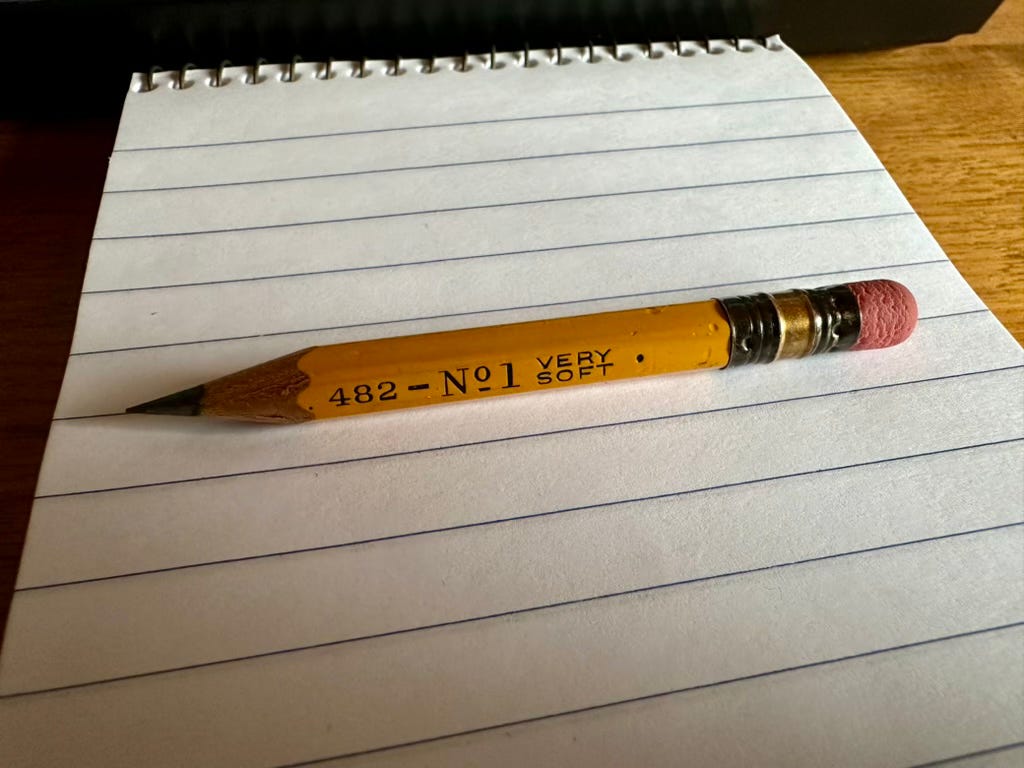
This is the start of an occasional series I’m going to do about craft. I’ll have another installment in a few weeks, after I send a few other newsletters. As with any series I do, you don’t have to read each part. I know that simply subscribing to a newsletter is all the commitment some people can handle. I never leave home without two pencils. Why pencils? Because they don’t spill ink if they break, go dry from disuse, run in the heat, or freeze in the cold. Why two? One might break or get dull. Why do this at all? Because I learned it in school.I don’t know where I learned it. Was it in William Zinsser’s On Writing Well, which was assigned in my introduction to journalism class? Was it from the professor of that class, a gruff newspaperman whose mustache was striped with a permanent nicotine stain? Was it from my beloved advisor whose lessons and advice went beyond journalism and into all parts of life? (She taught me how to pick out gifts for people, how to navigate bureaucracy, and how to effectively cut a VOSOT on a tight deadline.) These teachers, even the ones like Zinsser who I only knew through prose, took my enthusiasm for writing and gave it form. I came to them with jars of Play-Doh and they showed me the press that squeezes it into different shapes. They taught me how to turn the unruly globs of ideas and information into something another person can recognize and understand. This is craft.I am not an artist. “The least talented talk about Art,” Janet Malcolm wrote of the motivations of journalists. I’m a crafstman. And I love craft. I love thinking about craft. Practicing it. Reading about it. Fine-tuning it. Unlearning it. Relearning it. There is no amount of study that makes craft easier. Studying and practicing make the end result better, but they don’t make the work less taxing. There is no best with craft. There is only better. There’s no perfect form.With journalism, a work is done when it runs. Its quality can be judged in any number of ways—clicks, compliments, complaints, et cetera. What’s consistent is that the work could always be a little better, at least to the person who wrote it. It’s finished, but the craft can be honed. I use the word expansively. Craft, for me, covers all the ways of doing the work.On one side are best practices—the inverted pyramid, five Ws, and ways not to get yourself sued. These rest on immutable facts like the meaning of words, the rules of grammar, and local laws.The text is free, but the audio edition is available as a podcast at any level. If you upgrade, you get audio, archives, and the warm feeling of supporting my work. On the other side, nestled around the nearly invisible line that separates standards from superstition are the habits of the trade. These are the personal tics that have calcified into codes. They sound sage to outsiders and newcomers, they inspire aspirants and imitators. These are ideas like “Carry two pencils” and “put 30 at the end of your story when you file.” These are passed down by bosses, cool colleagues, professors, and other idols. I once saw a reporter in a documentary using a tall, thin reporter’s notebook with the wires pointed down. I realized he was flipping it over with each page. The advantage is that the notebook could later be laid flat on a desk with two pages visible to a writer typing up their notes. The next day, I started flipping my notebooks like this. Seeing former interns do this gives me the same sort of pride I feel when I see them make big career moves or win awards. The best legacy of craft is to see it deployed by a new talent—for it to be adapted and spread without your name attached. Craft is not about fame. It’s about making the work better.Craft shouldn’t be confused with imitation. Over and over in newsrooms, after seeing someone lose their temper at a colleague, trot out an outdated phrase, or otherwise hurt or humiliate, I’ve thought, “I bet an editor of his did it that way.” Craft isn’t as rigid as it can seem. Craft gives rules to break. It gives limits to test under an editor’s conservative eye. One day, the editor won’t be there. The teachers aren’t around. You’re the editor. You’re the supervisor, the role model, the instructor. The title won’t fit. It won’t hang comfortably on your ego. You will feel alone. This is where you need craft. It’s where you assemble the best pieces of inspiration into your own way of doing things. Craft is the cornerstone you build on and around. And you build something better. You will make mistakes, but they will be your own mistakes, not mistakes of the past you carry forward to a new generation. You’ll get better, make the work better, make the craft itself better.The best craft advice I’ve ever learned is simple. Avoid cliches. Don’t write them. Don’t become one. This is a public episode. If you'd like to discuss this with other subscribers or get access to bonus episodes, visit gabebullard.substack.com/subscribe
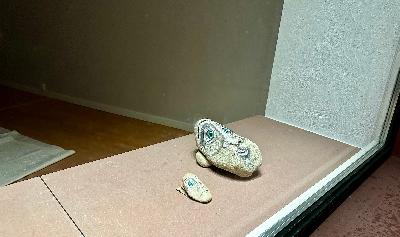
The audio edition of the newsletter is back. A fresh episode every two weeks. Become a paid subscriber at any level to get future installments. I first noticed the stone on a Monday. I jog on a route along the edge of the woods. I’ve been advised to run in the woods, but I can’t. I tried it once, during a visit years ago. I felt lost. Not physically lost, but spiritually. Or maybe chronologically. My synthetic mesh shorts and space-age rubberized shoe soles seemed like a futuristic intrusion among the trees and moss. It’s not that the woods seem old, though they are. They seem timeless. The plasticized present has no place here. Neither does the commodified, gamified self of running apps. The little voice in my headphones telling me how fast I was going pushed me to go even faster, while the nature around me beckoned to slow down. When we moved here, I chose a path to run that abuts the woods but never goes in. I also turned off the little voice. It never actually made me go faster. For a portion of the run, farmers’ fields stand between me and the woods. Every day, I monitor the progress of the crops. The winter wheat grows green then almost blue before drying to amber. The canola grows tall and green then explodes into sun-bright flowers. The sugar beets grow leafy stalks before the tractors rip them up and set them in giant piles, fifteen feet high, waiting to be hauled away and refined to crystals. After each rotation, the birds feast on the bugs and worms turned up in the till. Storks, crows, and the occasional heron stalk the fields and peck all morning. Someone looking down from the right distance could see striations of time, man, and nature. To my right is the road with cars and buses. To my left is the freshly-turned field where the birds, people, and plants work to their own goals. Past the fields is the canopy of the trees that no one could see through from above. It was while I was watching the birds clean up after a sugar beet harvest that I saw the stone. It was about the size of a sugar beet, just a shade darker, and it sat at the edge of the field, a few feet from a pile of beets and just inches from my footfall. Years ago, in a class on landscape architecture, the professor said Maine was once the leading producer of potatoes in the United States. The horse-pulled digging machines that came along in the late 1800s made the job faster, but raised a new problem. The Maine soil was full of rocks, which the machines dug up just as indiscriminately as they dug up everything else. The time the machines saved in digging went toward sorting potatoes from rocks. The professor then showed a slide with an old photo of a Maine farming family at work. To one side was a large pile of potatoes. To the other was a pile of potato-shaped rocks. In the middle was a pile of potatoes and rocks, waiting to be sorted by the smallest child in the family, who looked directly at the camera, nearly crying. I thought about this photo when I ran past the stone. Was the soil here less rocky? Surely someone had invented a way to sort tubers from rocks in the last century. I thought about the farm equipment I grew up around—harvesters that could pick up dozens of corn stalks at a time, pick the ears, and strip off the kernels in seconds. One day, the fields around town were tall with drying stalks. Then a cloud of dust kicked up. When it settled, the horizon went on again for miles, low and flat, strewn with naked cobs. The stone had slashes in it, like it had been cut by the blade of the tractor. They were dark red. I assumed this might be rust, a sign of iron in the stone exposed by a thresher blade. I don’t know if this is how rocks or rust really work, but it seems like a nice story.Over the next two weeks, the stone became a kind of landmark. I knew I was just over halfway done with my run—just a mile and a half left until I’m home. I locked onto it as I approached and stared at it as I passed. Later in the morning, I would take a break from work and look up details on the geology of Switzerland, reading about the Jura Fold and how, even though we’re not near the Alps, their formation shaped the strata beneath us. Anything that big has ripple effects.Then, one Friday, I decided to pick up the stone. Over the last few days, it had rolled into the path. Cyclists swerved to avoid it. I jumped over it. It was in the way and it needed to go somewhere. I couldn’t put it back into the field. I didn’t want to set it in the median grass, either. Work crews had been out mowing paths where they would dig to place pipes. Clearly the rock could stand up to steel, but I pitied whoever had the misfortune of dragging a weed-eater over a sugar beet-sized hunk of mineral. Not knowing where to drop the rock, I kept on running. I don’t know why. I have no use for a stone, but neither did the farmer or the road crew or the commuters who passed it.It’s not easy running with a big rock in your hands. It weighs you down. At first I kept it under my right arm like a football, until my hip started to ache. I moved it to the left and my knee flared up. I carried it in front, but this wore out my arms. I briefly ran a short distance holding it over my head, but I stopped because I probably looked like a maniac. Eventually, I settled on holding it like a football but alternating arms whenever I felt the weight in my step. I passed about a half-dozen people on the way home. I gave them the traditional greeting of Grüezi and they said it back, nodding. A couple glanced at the stone. Nobody asked about it, for obvious reasons. We don’t usually make conversation with a greeting, I was jogging in the opposite direction, and, really, what would you even ask someone? What’s with the rock? I was glad, because I don’t have enough German to explain. I don’t have enough English, either.I set the stone next to a pile of other stones outside our apartment. I looked at it every so often. It’s easy to identify from the scratches. After a few big rains and shortly after I turned forty, I carried it upstairs and put it in my office. I needed something to look at that was older than me. It’s not really doing anything here, just sitting in a corner needing the occasional dusting or sometimes being employed as a doorstop. When I look at it, I think about the potato farmers in Maine, about wearing high-tech fiber shorts in the woods, and the way my body ached carrying a rock from a field to a spot just underneath a wi-fi connected laser printer. Those red lines almost glow sometimes. A reminder that no matter how sharp a new technology gets, there’s always going to be a rock in the dirt. This is a public episode. If you'd like to discuss this with other subscribers or get access to bonus episodes, visit gabebullard.substack.com/subscribe
Think of the last time you went out. Were most people you passed wearing headphones, earbuds, or something similar? This is a public episode. If you'd like to discuss this with other subscribers or get access to bonus episodes, visit gabebullard.substack.com/subscribe
So many Christmas songs are deeply sad. That's just right for the season. This is a public episode. If you'd like to discuss this with other subscribers or get access to bonus episodes, visit gabebullard.substack.com/subscribe
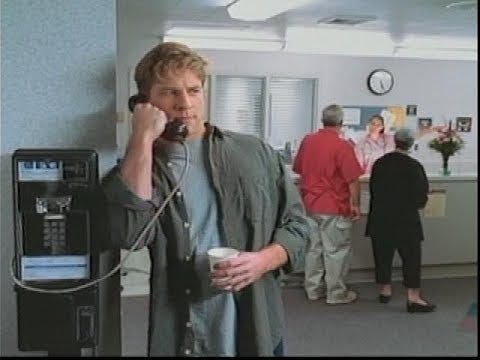
I wrote an essay for Together, Alone about how Instagram has been feeding me a lot of clips from Married with Children and Modern Family, which means I’ve seen a lot of Ed O’Neill. It made me think of his time as a collect call spokesman, which made me think of this piece. I decided to rerun it because I’m not yet ready to speculate whether the Internet is demanding a Dutch remake. This is a public episode. If you'd like to discuss this with other subscribers or get access to bonus episodes, visit gabebullard.substack.com/subscribe

1. August 2015, Washington, D.C.We’re in a new apartment in a new city and I go to the local library to find a book that isn’t still in a stack of boxes. On a shelf of novels, I see a title I can’t resist: The Dud Avocado. I’ve never heard of it or the author, Elaine Dundy, but it’s part of the New York Review of Books Classics series, which is always a good sign. On the back cover, I find all the major details: debut novel from 1958, about a naive American in Paris, beloved by Groucho Marx. I check it out. I read it. I love it. I return it.2. May 2023, Boston, MassachusettsI’m visiting for work and spending the evening hours reporting a story on the Elvis postage stamp wars for 99% Invisible. One night, I join a video call with Paul and Joan Gansky. We spend almost two hours talking about their love of Elvis and their work advocating for the stamp in the ‘90s. They’re charming. They’re also very patient with my questions.I always become fixated on whatever topic I’m writing a feature about, but the Elvis stamp has become an obsession. I’m listening to Elvis records, browsing old stamp collector magazines, and reading about the culture and politics of the early ‘90s. At each turn, I find some connection to an old memory or a past fascination. It’s like the story I’m writing was always there, and I’m just now seeing it.As we wrap up our call, Joan mentions that she and Paul know a lot of people who have written about Elvis, and she mentions one of these writers: Elaine Dundy. More than twenty years after The Dud Avocado, Dundy had an assignment to write an article about gospel music. Her research took her to Elvis, and her article turned into something larger. “She said ‘I fell in love with him,” Joan told me. “She said ‘I decided I'm going to have to write his biography.” The result was Elvis and Gladys. I couldn’t find a copy of it in time to read before my deadline.3. August 2023, Mascoutah, IllinoisI’m making my final preparations to move to Switzerland. This mostly comes down to stockpiling things that will be hard to buy in Basel, like English-language books. I see there’s a sale on NYRB editions, and I load up my cart with titles I’d been meaning to read. I see The Dud Avocado is available, too, and I buy it. I figure the story of an American moving to Europe will be fun to read if I get homesick.4. August 2024, Nancy, FranceWe’re taking a long weekend and I need something to read on the train. I have a bad habit of giving myself homework on trips like this, and I grab some books that I think I should read as research or inspiration for my own writing. One is Dwight Macdonald’s Masscult and Midcult, which I bought in the same NYRB sale where I picked up The Dud Avocado. It stays in the bottom of my bag and I spend the train trips watching movies.5. September 2024, somewhere outside Schönenbuch, SwitzerlandI’m on a jog and I’m desperate for a podcast to listen to that isn’t about the news. I open Overcast and look at the playlist I keep of shows I’ve been meaning to get around to. I see the nine installments of Not All Propaganda is Art, a miniseries inside Benjamin Walker’s Theory of Everything. I put it on and keep running.In the first episode, Walker says that the series will be focused, in part, on Dwight Macdonald. Later, Walker covers a contemporary of Macdonald, the critic Kenneth Tynan, and Walker mentions Tynan’s wife…Elaine Dundy.I didn’t know Dundy and Tynan were married, mainly because I didn’t read the afterword of The Dud Avocado, in which Dundy says Tynan was resentful of her success, despite encouraging her to write a novel (they later divorced). Walker plays some recordings of Dundy from the ‘50s and ‘60s. I’ve never heard her voice. I’ve never seen a photo of her, beyond the tiny one on the back of The Dud Avocado. Even Dundy’s Wikipedia picture is a painting.6. Now, HereI just finished rereading The Dud Avocado. It was funnier the second time around; I recognized the European references, and understood the lines written in French. In one scene, a character jokes about how Americans lose their mind when they encounter a public restroom with a hole in the floor instead of a toilet. I’ve encountered this plumbing exactly once, in Nancy, France, a month ago.After I finished The Dud Avocado, I picked up an old copy of the Times Literary Supplement. I opened to a review in which the reviewer quoted Macdonald.All of these coincidences have, at times, felt like a sign. What are the odds that I would come across the same small group of people in such short time?Maybe the odds aren’t all that slim. Finding The Dud Avocado in the library was happenstance, but the rest seems like a natural progression. Lots of people have written stories about Elvis, and the Ganskys were in one of the largest Elvis fan clubs in the country. Macdonald’s book is very widely read, especially by the type of people who are prone to give a book a chance because it’s on the NYRB imprint. I suspect a lot of those readers might also be the type to subscribe to the TLS and be drawn to a podcast like Benjamin Walker’s Theory of Everything. I suspect I’m exactly that type of person.I started Masscult and Midcult. It’s on my nightstand. When I woke up, I noticed a familiar name on the back cover. There’s a blurb from a review written by Larry McMurtry, the author I’ve read the most this year, taking in both The Last Picture Show and Lonesome Dove. His essay collection Walter Benjamin at the Dairy Queen is next on my reading list, right after Macdonald. Odd. This is a public episode. If you'd like to discuss this with other subscribers or get access to bonus episodes, visit gabebullard.substack.com/subscribe
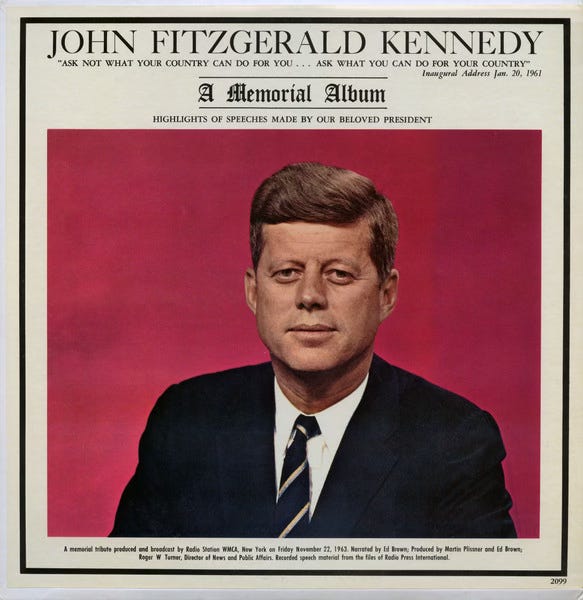
Note: Every so often, I write about records that belong to a category called “nonmusic.” This is part of that series. You don’t have to have read the last one to get this one, but if you want to read it, it’s here.John F. Kennedy is our vinyl president. His administration’s nickname comes from a record—Jackie Kennedy once told an interviewer the president listened to the cast album of the musical Camelot before bed. Frank Sinatra re-recorded his hit “High Hopes” for the campaign. The Grammy award for Album of Year in 1963 went to The First Family, a comedy record by spot-on JFK impersonator Vaughn Meader. The record, and Meader, all but vanished after November 22.Meader called the assassination “the day I died.” Soon, the space on the shelves that had belonged to Meader belonged to Kennedy himself. John Fitzgerald Kennedy: A Memorial Album sold more than six million copies in December of 1963. It’s an hourlong program that aired the night of the assassination on WMCA in New York. Ed Brown recounts the major events of the Kennedy administration between long excerpts of the former president’s speeches.Other remembrance records followed. John Fitzgerald Kennedy: The Presidential Years is a collection of Kennedy’s speeches, plus Lyndon Johnson’s remarks from the day of the assassination. The United Auto Workers—whose record-pressing division issued collections of rousing speeches and worker anthems—put out Last Words to Labor, a record of Kennedy’s remarks at the AFL-CIO convention, backed with his 1961 inaugural address ("Ask not what your country can do for you – ask what you can do for your country”). In 1964, The Longines Symphonette Society produced a box set with two discs of Secretary of State Dean Rusk introducing Kennedy’s speeches and one of reporter Chet Huntley’s coverage of major events between 1961 and ’63. The Assassination of a President: The Four Black Days is a mishmash that includes eyewitness accounts of the assassination, audio of the murder of Lee Harvey Oswald, a description of Kennedy’s funeral, and a track called “Interview with Famed Writer, Stephen Laurent, who Predicted the Assassination.” It’s on a label called Living History Records, which doesn’t seem to have issued any other albums.Are these records cash-ins, conspiracies, or earnest memorials to a beloved president? Yes. Then, as now, there were timely hucksters who put out whatever product might make a quick dollar and conspiracy theorists who crammed every tragedy into their worldview. But there were also journalists and historians who were using the technology of their time to document the very recent past. And there were millions of Americans who were seeking solace wherever they could get it, including from their home hi-fis.Reading about the days after the assassination, it’s surprising how fast everything happened. Oswald killed Kennedy on Friday. Ruby killed Oswald on Sunday. Kennedy’s funeral was Monday. The TV networks went back to regular programming Tuesday. Thanksgiving was Thursday.Should I go to work? Is my dentist appointment still on? Are the grocery stores open? We ask ourselves all kinds of mundane questions after a tragedy. It’s like we can’t contemplate anything being the same as it was, or anything working like it should. Those are the signs that time is moving forward, and we just want it to stop for a minute so we can get our bearings.But that doesn’t happen. The world changes and life goes on. In November, 1963, the radio reports and TV broadcasts floated into space. The newspapers piled up in the bins. Time passed.Then the records showed up. They were pieces of frozen time. A person in 1963 might remember a Kennedy speech they saw on TV. They might have the words printed in a book. But there was no way to hear it again. The records offered a way to be in the past—to be with Kennedy again, in a country where he was still president. The State Democratic Executive Committee of Texas put out a record called His Last 24 Hours, which was meant for everyone who was supposed to attend a dinner with the president on the night of the 22nd. The album collects the speeches Kennedy gave in Texas, plus the 1961 inaugural address. It’s consolation. The next best thing to being there.Soon, records appeared that featured the funeral, or at least portions of it. This isn’t as strange as it may seem. Albums of major news events were common in the old days; they were essentially the audio version of history books (we’ll get into these news records in another installment). Funeral records were their own genre, too. Before he recorded Elvis, Johnny Cash, or Roy Orbison, Sam Phillips used his equipment to make discs of funerals for grieving families.Death inspires people to try to freeze time, and we use whatever technology is at hand. In the early years of photography, many families took pictures of their dead loved ones before they were buried. We make our memories into something tangible, something we can keep on a shelf in a place of prominence or file along with our other collections and only revisit when we’re in the mood to reminisce. The country went through this together after Kennedy’s assassination. And a growing record industry was happy to feed the public need for pieces of time.Kennedy was our vinyl president, but he was also our most-replayed president. While the speeches repeated on records, Congressmen and conspiracy theorists watched the Zapruder film frame by frame. These two activities are both about controlling time, but they have different goals. The film watchers were trying to figure out what had happened. The mourners already knew, and they were doing what they could to stop it. On vinyl, the eulogies weren’t as popular as Kennedy’s speeches. Record after record hypes that it includes the ’61 inaugural. These records run chronologically and cover the thirty-four months from January 20, 1961, through November 21, 1963. When the needle reaches the last side of the last disc, we know what’s going to happen next, but there’s a brief moment in the near-silence of the speakers’ hum, when there’s still some hope that maybe it won’t happen at all. This is a public episode. If you'd like to discuss this with other subscribers or get access to bonus episodes, visit gabebullard.substack.com/subscribe
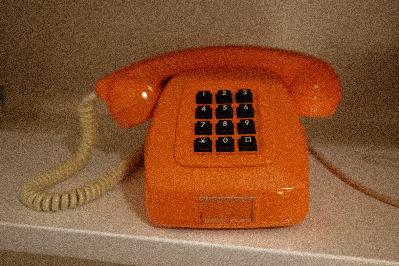
First, some thoughts about tote bags…As an expression of personality and taste, tote bags have ascended to the level of t-shirts. On a city bus, in the park on a sunny day, or in line at the grocery store, you’ll see canvas carryalls that tell you what a person reads, where they shop, what they listen to, and which charities they support.The longtime public radio reporter in me smiles whenever I see a tote. For years, NPR and its member stations had the lock on giveaway bags. They turned a tool for hauling ice into a sign of urbanity. In the last decade, The New Yorker seized the canvas crown, flooding the streets of upscale neighborhoods with totes that came free with a discounted trial subscriptionTote bags aren’t costly to make, they don’t require variations in sizing like t-shirts, and they’re imminently useful. For NPR in the ‘70s, ‘80s, and ‘90s, the canvas tote was an easy enticement for listeners who were likely ahead of the curve on bringing their own bags to the grocery store. For magazines looking to boost subscriber numbers (and ad rates) in the 2010s, it made sense to offer an accessory to farmer’s markets, boutiques, and other places where rosé, baguettes, and artisan cheese can be found.Now the tote bag is the default way businesses and nonprofits say “thank you.” The hook on my kitchen door is weighed down with reusable bags. There’s the luxe, multipocket numbers that come each year from Monocle, the wry Joan Didion tote from Literary Hub, at least one each for The New Yorker, New York, The New York Review of Books, The London Review of Books, The Paris Review, and bags for libraries, bookstores, and museums that we’ve lived near. On the tram around Basel, I see bags for Parisian bookseller Shakespeare and Company, for local plant stores, and, surprisingly, for online bedding retailer Brooklinen (I say “surprisingly” because international shipping is expensive and bedding is different sizes in Europe.)Each bag advertises a business. Each bag advertises a personality.Now, about phones…The criteria for a good giveaway—cheap to make, generally useful, easily branded, one-size-fits-all—don’t just apply to tote bags. Gym bags and fanny packs were once popular. Time magazine gave away digital watches, radios, and desk clocks. I’ve seen binoculars, multitools, pencils, and notebooks with now-defunct magazine titles on them.But the most iconic giveaway from the pre-tote-bag era is also one of the strangest: the Sports Illustrated football phone.The football phone is exactly what it sounds like—a phone shaped like a football. It’s origins aren’t so simple.Sports Illustrated first rolled out the football phone in 1987. At the time, the concept of a novelty phone was still pretty new. For many Americans, the concept of owning a phone at all was new. Until the government broke up the Bell Telephone monopoly in 1982, people in most states leased their phones from the phone company. When a new type of phone came along, customers had to get it from the phone company and pay a monthly fee for it. In some states, customers could buy a phone outright, but they had to buy it from Bell. Here’s an article from 1975 in the Philadelphia Daily News taking Bell to task for obscuring the option to buy a princess phone and instead charging customers a monthly fee for the handset. In this ad from 1960, a store offers to arrange for Bell to put a new phone in the house of anyone who buys a new camera. If the customer also buys a projector, the store will pay rent on the phone for a year.Novelty phones weren’t entirely unheard of in the early ‘80s. The Federal Communications Commission cleared the way for independent phone manufacturers in the late ‘70s, and stores like Radio Shack sold phones shaped like Mickey Mouse, phones made of clear plastic, and phones built into alarm clocks. “People want to have the phone as part of the decor,” a Southern Bell spokesperson told The Charlotte Observer in 1980. But this was still a niche market. Novelty phones cost hundreds of dollars, and only one out of every twenty-nine phone customers bothered with them. The Bell breakup blew the novelty phone market wide open.Sports Illustrated wasn’t the first to make a football-shaped phone. The Charlotte Observer article mentions one. And Doritos gave one away in 1985. But Sports Illustrated was the first to run ads for the product endlessly on cable. This gave the phone exposure and indelibly linked the phone to the magazine.In the ads for the football phone and the sneaker-shaped phone that came later, Sports Illustrated makes it clear that the devices work like regular phones—you press buttons and make calls. Customers are delighted at this and shocked at the novelty of the phone. It’s easy to look at these ads and think of the past as a simpler time, but at the time, the phone as an expression of taste or personality was a new concept. For most adults, a phone was a thing a technician put in your house and a big company charged you to have. Phones looked like phones. Now they looked like balls and shoes.SI also capitalized on another growing home technology—the VHS tape—and offered subscribers videos of sports highlights and goofs (we never had a football phone, but I watched our copy of Dazzling Dunks and Basketball Bloopers so many times I could recite it from memory in first grade). But it was the football phone that became part of pop culture. Rolling Stone credits it with moving millions of subscriptions in the late ‘80s and early ‘90s. (Speaking of Rolling Stone, for years I carried around a CD wallet that came with a subscription to the magazine.) The phone was everywhere.If you grew up with a landline phone, chances are you have a strong memory of it—the way it looked, the way it sounded, the way the receiver felt in your hand. These were devices we spent hours on. They were central and vital fixtures in the home. This made the novelty phone all the more powerful. It was a statement to have fun with something so important to the functions of daily life, to have your connection to the outside world look like a cartoon character or athletic equipment.The last gasp of the novelty phone in pop culture was in the 2007 movie Juno. The title character talks on a phone shaped like a hamburger. Fox Searchlight even made branded phones to cash in on the movie’s (and the prop’s) popularity.2007 was also the beginning of the end of the landline. The iPhone launched that summer. The phone remained the center of our lives, but the wacky shapes and endless variety vanished, as every phone—whether it was made by Apple or not—began to look the same, like a glass rectangle. The customization is in the software you put on the phone, not the shape of the device. There’s nothing to project, except maybe in your choice of a case (or the tote bag you carry your phone in).Good luck using a novelty phone if you have one. Phone companies are ending their traditional land line service in favor of Internet-based service. There are some vocal holdouts who point out that land line service is still more reliable than cellular and web-based calling. But we’ve reached a point where keeping a home phone is considered quaint, or maybe quirky. The most novel phone you can have anymore is a landline. This is a public episode. If you'd like to discuss this with other subscribers or get access to bonus episodes, visit gabebullard.substack.com/subscribe

On secondhand clothes and getting lost in the woods This is a public episode. If you'd like to discuss this with other subscribers or get access to bonus episodes, visit gabebullard.substack.com/subscribe

“Has this happened before?”This question, a digression on old newspapers, and a story about Mark Twain being troubled by nineteenth century influencers. This is a public episode. If you'd like to discuss this with other subscribers or get access to bonus episodes, visit gabebullard.substack.com/subscribe

Last Friday, jetlagged and surprisingly ahead on a few assignments, I decided to spend the workday cleaning my desk.I meant to do this before I left town. That is, I meant to do it every day for the last six months. When I first set up my desk, I neatly arranged everything—I even organized pencils by their lead numbers. Within a week, my headphone and microphone cables were twisted around themselves. Paper press kits were stacked on top of research books with guitar picks and paperclips layered in-between. Number two pencils were in a mug with pens. The piles even spilled over to the seating. I always wanted an office with a couch in it. I had one here for a few days, but then I had an office with a couch-shaped stack of papers and books.Some of the clutter has no clear origin. While looking for a notebook last month, I found a baseball and a harmonica.Digging through the striations of mess is a behind-the-scenes tour of my portfolio, conducted by a therapist. Each layer is the fossil record of a story I spent hours on, a hobby I became obsessed with, or a diversion that was a little too diverting. The mess is me.I’m not normally a messy person. I try to keep the house in order. I know where everything is in the kitchen. My albums are alphabetized. My books are organized by subject and author. When I need something, I know where to find it.Except at work.I’ve always worked this way. When I was a reporter in a newsroom, my desk would pile with papers that I pushed into the deepest drawer every month. When the drawer filled up, I got a bankers box from the supply room. At some point, I set my computer wallpaper to a picture of Al Gore that ran in Time Magazine in 2007.Later, I changed it to a picture of Sofia Coppola’s office that Bruce Weber took for Vogue.In my downtime, I would sometimes study these pictures to see if I could tell what made up the messes. The details were always just out of focus or too pixelated on my small monitor.Last month, on assignment for a story, I saw the preserved office of Charles and Ray Eames, transported from California to Weil-am-Rhein, Germany. I looked at it for a while, hoping its orderliness was the result of tidying for public display.I love looking at other people’s workspaces. Writing is a solitary job. When you spend so much time alone, it’s easy to wonder if you’re doing it right. You can compare your final result with someone else’s, but that’s a limited view'; it’s the scoreboard at the end of the match when what you really need to is the play-by-play. Looking at a person’s desk doesn’t show you what they did, it gives you an idea of how they did it.Just like someone else’s work can inspire your own creativity, so can using the same tools, whether that’s the same model notebook, the same software, or the same saxophone. Did learning that Joan Didion and I apparently use similar desk chairs make me think I could write like her? No. Did it make me want to sit at my desk and try? Yes.And that’s why I love seeing messy desks. Some days, I walk into my office and wonder how I could ever get anything done. I barely have enough room to move my mouse. But if others can do it, so can I. They’re living proof that the idea of “messy desk, messy mind” is bunk. There’s no virtue in mess, but a clean work surface isn’t something to brag about, either. There’s science that backs me up, too. Messy desks inspire novel thinking, researchers say. I wonder what their desks look like.After a few cups of coffee (one of which I forgot about and left half-filled on my desk until I found it the next day), I finished cleaning. There were no surprises, other than the sight of the wood grain on my desk’s surface.When I sat down Monday, my desk was clean and I set about work. My first task, spreading a few pencils and paperclips around. You know, to get my mind going.Note: I made the audio edition free for everyone this week. If you like it, please consider becoming a paid subscriber. This is a public episode. If you'd like to discuss this with other subscribers or get access to bonus episodes, visit gabebullard.substack.com/subscribe

Comments

Download from Google Play

Download from App Store
 United States