


 Claim Ownership
The Visible Voices
Subscribed: 4Played: 57
Subscribe

© Copyright 2026 All Rights Reserved
Description
The Visible Voices Podcast is a podcast dedicated to the voices of change makers in healthcare. We amplify the people and stories in the healthcare, equity, and innovation spaces. This weekly podcast is hosted by Dr. Resa E Lewiss—emergency physician, lifestyle medicine physician, healthcare designer, and social scientist—amplifying the voices shaping the future of healthcare.
Through conversations with innovators, researchers, and leaders, the show explores healthcare equity, medical innovation, leadership, and the trends redefining health. Expect smart, human-centered dialogue and unexpected insights from the front lines of healthcare. New episodes weekly.
Website: https://www.thevisiblevoicespodcast.com/
236 Episodes
Reverse
In this episode, I sit down with Dr. William Li — internal medicine physician, vascular biologist, and founder of the Angiogenesis Foundation — to talk about something we were never really taught in medical school: how specific foods work at a molecular level to prevent and even fight disease.
We get into the science behind everyday foods like black coffee, soy, eggs, and oats — cutting through the myths and the fear-based messaging that has, frankly, done a lot of harm. Will walks us through why soy does not cause breast cancer (and may actually protect against it), why egg quality matters more than cholesterol fear, and what his lab's recent research on oats and wound healing reveals about the untapped potential of whole foods.
00:00 Introduction to Dr. William Li and Angiogenesis
01:06 The Role of Food in Health and Disease
02:36 Debunking Myths: Soy and Breast Cancer
07:30 The Importance of Nutrition Education in Medicine
09:58 The Truth About Eggs and Their Health Benefits
13:21 Recent Discoveries: Oats and Their Bioactive Properties
15:29 Innovative Wound Healing with Avananthramide
17:10 The Role of Diet in Cancer Treatment
17:56 Communicating Science to the Public
21:53 Empowering Patients Through Knowledge
24:00 Exploring Everyday Remedies: Coffee and Wound Healing
25:45 OuttroVVP.mp3
26:22 NEWCHAPTER
Wish to help the show?
Click 👍🏻 on YouTube
Leave ⭐⭐⭐⭐⭐ on Apple.
Subscribe here and send it to a friend.
In this episode of Visible Voices, host Dr. Resa E. Lewiss sits down with sleep medicine physician and circadian rhythm expert Dr. Katie Sharkey — inaugural director of the Center for Sleep and Circadian Rhythms at Wake Forest University School of Medicine — to break down the science of sleep health, insomnia treatment, and women's sleep across the lifespan. They cover why alcohol disrupts sleep quality and worsens sleep apnea, how circadian rhythms regulate mood and mental health, the truth about naps and melatonin, perimenopause and sleep disturbances, cognitive behavioral therapy for insomnia (CBT-I) and digital CBT-I apps, wearables like the Oura Ring and the risk of orthosomnia, the glymphatic system's role in brain detox during sleep, AI-powered sleep scoring, and the perinatal sleep crisis driving maternal morbidity. Dr. Sharkey closes with three actionable microskills: keeping a sleep diary, maximizing daytime light exposure, and practicing self-compassion around sleep variability.
Wish to help the show?
Click 👍🏻 on YouTube
Leave ⭐⭐⭐⭐⭐ on Apple.
Subscribe here and send it to a friend.
In this episode of the Visible Voices Podcast, I'm in conversation with Graham Walker MD — emergency physician, healthcare AI thought leader and co-founder of Off Call.
Originally released as an audio episode in 2024, we are re-releasing the conversationas an audio and video episode as OffCall is on a mission is to dramatically reverse burnout by improving the wealth and wellbeing of physicians. We talk about why 71,000 physicians left medicine in 2021–2022, the corporatization of healthcare, and what Off Call is doing to restore transparency and value to physician careers.
Graham is the creator of MDCalc, used by roughly two-thirds of U.S. doctors, and theNNT.com — two free tools born from his conviction that physicians deserve better instruments to practice safer, evidence-based medicine.
We trace the full arc of his story: growing up in a psychiatry household in suburban Kansas City, studying social policy at Northwestern, coding websites on the side to pay the bills, and arriving at Stanford med school where inefficiency got under his skin enough to build MDCalc.
Sign up for OffCall
Listen to How I Doctor podcast
Wish to help the show?
Click 👍🏻 on YouTube
Leave ⭐⭐⭐⭐⭐ on Apple.
Subscribe here and send it to a friend.

Prescribing Music: Why Melodies Work When Medicine Fails.
Dr. Melanie Ambler is a physician and cellist who founded "Musical Rounds," a program dedicated to integrating music into patient care. In this episode, Melanie reveals her journey into playing cello on hospital rounds during her medical student rotations at Stanford School of Medicine. We explore the science into how music accesses the brain's "backdoor" to treat neurodegenerative diseases and discuss the preliminary findings of her Musical Rounds research study.
Wish to help the show?
Click 👍🏻 on YouTube
Leave ⭐⭐⭐⭐⭐ on Apple.
Subscribe here and send it to a friend.

In this episode I speak with emergency medicine physician and medical educator Anand 'Swami' Swaminathan MD MPH. We explore how humility, vulnerability, and effective communication drive better medical education, knowledge translation, and professional growth. Swami shares his journey from singing acapella to shaping emergency medicine education, emphasizing the importance of reaching broader audiences and embracing uncertainty.
Swami is a known and visible voices for RebelEM — a free open-access medical education platform, EM:RAP a premium emergency medicine education podcast and YouTube channel and his own Instagram — Sharing quick videos and insights.
If you enjoy the show, please click 👍🏻 like on YouTube.and leave ⭐⭐⭐⭐⭐ on Apple. Share the podcast and Website with a friend.
Former US Attorney Joyce Vance joins Dr Resa Lewiss to discuss her New York Times bestseller Giving Up is Unforgivable A Manual for Keeping a Democracy and why civic health matters now more than ever.
As the U.S. Attorney for the Northern District of Alabama from 2009 to 2017, nominated by President Barack Obama and unanimously confirmed by the Senate, Joyce brought together communities to solve problems.
In 2017, she received the University of Alabama at Birmingham School of Public Health's Lou Wooster Public Health Hero Award for her leadership in creating a community-engaged initiative that brought together law enforcement, the medical and business communities, and educators to address the heroin and opioid epidemic in northern Alabama.
Today, she's a professor at the University of Alabama and a legal analyst for MSNow She's also a podcaster, co-hosting #SistersInLaw the new Sisters Sidebar, and the CAFE Insider podcast with Preet Bharara.
Three MicroSkills Joyce offers to listeners: 1. register to vote, 2. stay registered by checking your status 60 days before elections, and 3. make a voting plan with the goal of bringing others with you.
Book Giving Up is Unforgivable
Podcast Sisters in LawPodcast CAFE Insider Podcast
Newsletter Civil Discourse
If you enjoy the show, please leave ⭐⭐⭐⭐⭐ on Apple, subscribe 👍🏻 on YouTube and subscribe via the Website and send to a friend.
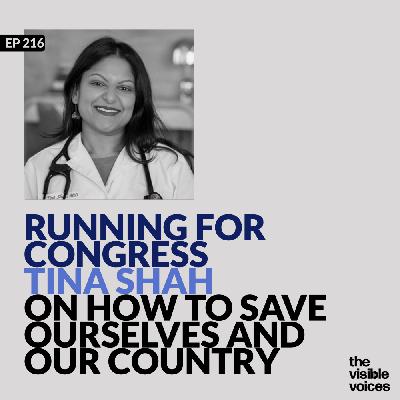
In this episode I meet up with Tina Shah MD MPH, a triple board-certified physician in internal medicine, pulmonary medicine, and critical care who is running for Congress in New Jersey's seventh district.
We dive deep into Tina's journey from White House Fellow, to working with Surgeon General Vivek Murthy to ICU doctor to congressional candidate, exploring how physician burnout, healthcare affordability, and insurance company barriers to care drove her to pursue systemic change at the policy level.
Tina shares powerful patient stories—including her own mother's cardiac care denial and a diabetic patient's life-threatening hospitalization due to medication rationing—that illustrate why doctors need a seat at the table in Congress. We discuss civic health, the misinformation epidemic, healthcare workforce crisis, and how she successfully led a grassroots movement that defeated the insurance lobby in New Jersey to protect patients from prior authorization denials.
Website: https://www.drtinashahforcongress.com/
If you enjoy the show, please leave ⭐⭐⭐⭐⭐ on Apple, subscribe 👍🏻 on YouTube and subscribe via the Website and send to a friend.

In this episode of the Visible Voices podcast, I speak with the former mayor of Stockton, California, and 2026 candidate for the Lt. Governor of California Michael Tubbs. Michael currently serves as a special adviser for economic mobility and opportunity for Governor Gavin Newsom.
He shares his journey as a first-generation college student at Stanford to a leader across the state and in Stockton Ca. He emphasizes the importance of education, community empowerment, and addressing poverty through innovative programs. We talk about the The Stockton Scholars, and The EPIC (Ending Poverty in California) program.
Michael's memoir is the 2021 The Deeper the Roots: A Memoir of Hope and Home. Watch to learn more on HBO Stockton on My Mind documentary.
Website: https://michaeltubbsforca.com/
If you enjoy the show, please leave ⭐⭐⭐⭐⭐ on Apple, subscribe 👍🏻 on YouTube and sign up via the Website. Forward to a friend today!
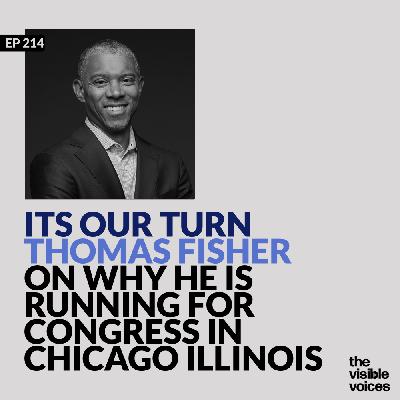
In this episode I speak with Dr. Thomas Fisher, an emergency medicine physician and Chicago Illinois congressional candidate. We discuss the profound impact of the pandemic on healthcare, the intimate relationships formed in emergency medicine, and the motivations behind Dr. Fisher's run for Congress. The conversation delves into the importance of moral leadership, social determinants of health, and the role of physicians in civic engagement. Dr. Fisher emphasizes the need for active participation in shaping healthcare policies. Conversation highlightsThe writing of his 2022 book The Emergency as a cathartic process during the pandemic.
Emergency medicine provides a unique perspective on humanity and vulnerability.
Social determinants of health are crucial for understanding patient care: the healthcare system often penalizes poverty.
Hope can be found in collective action and community support: it's important to take risks and step out of comfort zones for change.
If you enjoy the show, please leave ⭐⭐⭐⭐⭐ on Apple, subscribe 👍🏻 on YouTube and sign up via the Website. Forward to a friend today!

Dr. Resa E. Lewiss has spent over 25 years educating, speaking, and writing about healthcare, equity, and innovation. She is an emergency medicine and lifestyle medicine physician, a TEDMED speaker, healthcare designer, and award-winning author. In The Visible Voices Podcast, Resa shares smart, sharp, and insightful conversations with subject matter experts and interesting people—people who are really making a difference, have something to say, and a story to share.
Resa doesn't do surface-level healthcare conversations here. She examines the architecture—power structures, equity gaps, and the distance between evidence and practice—to help you choose health and healthier behaviors in all aspects of life. She connects ideas most people keep in separate boxes. Since 2020, Resa has been here weekly with new episodes every Wednesday.
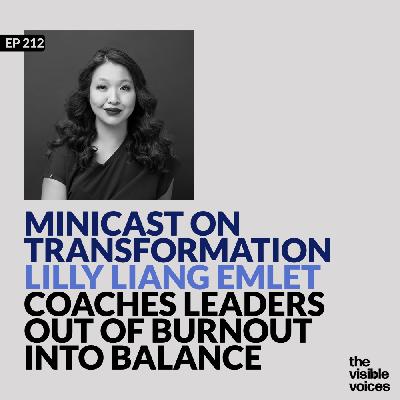
Dr. Lillian Liang Emlet is a Professor of Critical Care Medicine at the University of Pittsburgh, dually trained in Emergency Medicine and Critical Care. She's also a certified energy leadership coach and the CEO founder of Transforming Healthcare Coaching. She also hosts a podcast by the same name.
We talk about a common phenomenon in healthcare: clinicians who are exceptional at their work getting promoted into leadership roles without the skills or support to succeed. Lillian shares how she helps healthcare leaders at all levels—physicians, nurses, NPs, PAs, pharmacists, executives—develop as whole people first before tackling the complexities of leading teams and systems.
Lillian explains what energy leadership coaching actually means, and why healthcare will always need guides for its leaders even as we work to transform the culture.
If you enjoy the show, please leave a ⭐⭐⭐⭐⭐ rating on Apple or a 👍🏻 on YouTube. Subscribe via the Website. Forward to a friend today!
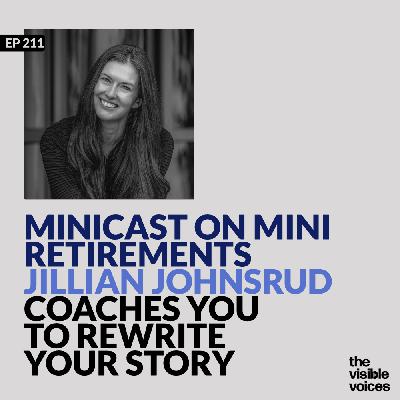
In this episode, Dr. Resa E. Lewiss speaks with Jillian Johnsrud, author of Retire Often and mini-retirement coach, about taking intentional career breaks to combat burnout and realign with what matters most.
Jillian defines mini-retirements as breaks of a month or longer where professionals step away from their primary career to focus on recovery, adventure, or family time. She works primarily with high-achieving professionals who have over-indexed on career advancement while under-indexing on lifestyle and wellbeing.
The conversation explores the unique challenges facing healthcare professionals, including a dangerous cultural narrative instilled during medical training that physicians must suffer, lack agency, and simply endure. This programming makes it extraordinarily difficult for doctors to prioritize their own health and take necessary breaks.
Website: https://retireoften.com/
Book Purchasing Link: https://lnk.to/retireoften
Free Opt-In Worksheets:Planning: https://retireoften.com/mini/
Negotiating: https://retireoften.com/onemonth/
If you enjoy the show, please leave a ⭐⭐⭐⭐⭐ rating on Apple or a 👍🏻 on YouTube. Subscribe via the Website. Forward to a friend today!
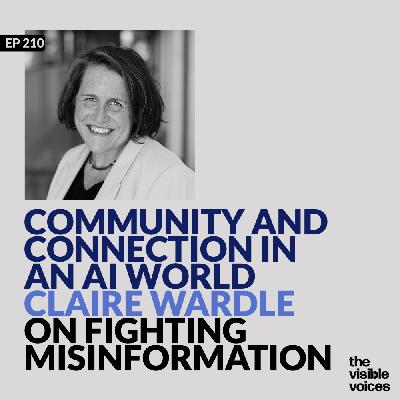
In this episode of Visible Voices, Dr. Resa E. Lewiss is in conversation with Dr. Claire Wardle, a leading expert on misinformation, media literacy, and public trust in science. Claire is an associate professor at Cornell and co-founder of the Information Futures Lab at Brown University's School of Public Health. She shares her decades of experience working across academia, international news organizations like the BBC, and the United Nations and in community non profits.
The conversation explores the intersection of misinformation and public health, from vaccine hesitancy to the rise of AI chatbots and their impact on mental health. Dr. Wardle emphasizes that trust is local and everyone has an emotional relationship to information, explaining why human-centered design and community engagement are essential to combating false narratives. She offers practical advice for healthcare professionals considering social media storytelling, discusses the importance of media literacy education, and reveals what keeps her up at night about the absence of regulatory oversight in the age of personalized AI.
The discussion highlights how communities, authentic storytelling, and cross-sector collaboration can help transform the internet into a place of trust while protecting public health and democracy.
Follow Claire's work via her website and LinkedIn.
If you enjoy the show, please leave a ⭐⭐⭐⭐⭐ rating on Apple or a 👍🏻 on YouTube. Subscribe via the Website. Forward to a friend today!

In today's conversation Bremond Berry MacDougall and Lisa Endo Cooper, the duo behind Quite Literally Books talk about their heritage press republishing forgotten works by women authors.
Lisa and Bremond share their journey of starting a heritage press without prior business experience. They describe the steep learning curve of navigating production, marketing, and sales.
The physical design of their books reflects meticulous attention to detail. They use premium Munken paper milled in Europe, custom typography by designer Louise Fili, and lay-flat dispersion binding that allows one-handed reading without breaking the spine. Some book covers feature work by artist Anthony Russo.
Their literary mission centers on republishing works that reveal how little has changed in over a century regarding issues of gender, race, and sexuality. They navigate the complex legacies of authors, acknowledging that women can be both progressive and flawed. Their first three releases explored the theme of home. The November release includes Herland by Charlotte Perkins Gilman, a cookbook from the 1890s, and all examining themes of home and domestic power.
If you enjoy the show, please leave a ⭐⭐⭐⭐⭐ rating on Apple or a 👍🏻 on YouTube. Subscribe via the Website. Forward to a friend today!
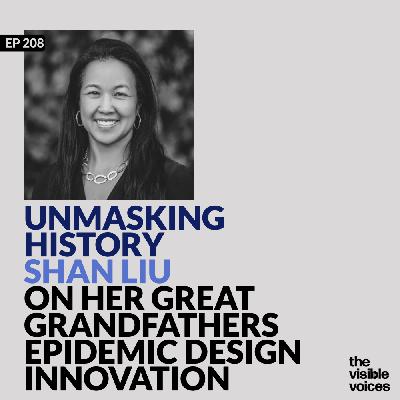
What happens when an emergency medicine physician knows that the N95 mask she's wearing every day during the COVID-19 pandemic was invented by her great-grandfather over a century ago? Dr. Shan Liu joins me for a conversation that weaves together family legacy, innovation from the margins, and the power of storytelling to fight racism.
Shan is an emergency medicine physician at Mass General Hospital, an associate professor at Harvard Medical School, and a children's book author. Her award-winning book, Masked Hero: How Wu Lien-teh Invented the Mask That Ended an Epidemic, tells the remarkable story of her great-grandfather who created the first respiratory mask during the 1910 Manchurian plague outbreak. Wu Lien-teh was the first Chinese Malaysian to study medicine at Cambridge, faced relentless racism throughout his career, and became the first Chinese person nominated for a Nobel Prize in medicine.
Website: shanwuliu.com
If you enjoy the show, please leave a ⭐⭐⭐⭐⭐ rating on Apple or a 👍🏻 on YouTube. Subscribe via the Website. Forward to a friend today!
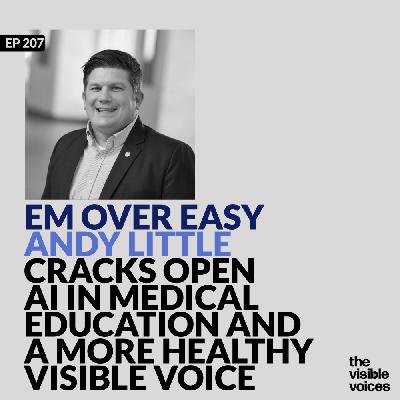
Andy Little DO, co-founder and host of EM Over Easy podcast, shares how the show was born in a Columbus OH diner during post-night shift breakfasts—mental health check-ins that evolved into conversations about leadership skills they weren't learning in residency. As a first-generation physician from small-town Montana, Andy never had "the playbook" for navigating medicine, relying on college counselors and ED mentors who gave him opportunities and trusted him to run with them.
We discuss the closing MD/DO perception gap, his teaching philosophy of calculated trust (the "10-second countdown" for critical patients), and how the emergency department teaches perspective through patient stories. Andy explains AI's current "confidently incompetent intern" phase in medical education and his mission: Mentor everyone including those navigating medicine without a roadmap.
Instagram: @AndyGLittle
If you enjoy the show, please leave a ⭐⭐⭐⭐⭐ rating on Apple or a 👍🏻 on YouTube. Subscribe via the Website. Forward to a friend today!
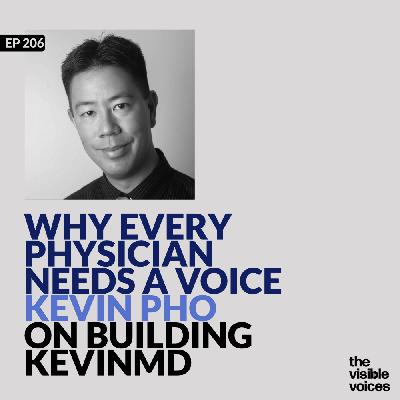
In this episode of the Visible Voices Podcast, Dr. Resa E. Lewiss sits down with Dr. Kevin Pho, the founder of KevinMD.com and host of The Podcast by KevinMD. Since 2004, Dr. Pho has built one of healthcare's most influential platforms, receiving over 3 million monthly page views and amplifying the voices of thousands of clinicians.
Dr. Pho shares his journey from primary care physician to media entrepreneur, discussing why every physician needs a voice beyond the exam room. He opens up about the joy he still finds in his clinical practice after 23 years, the importance of combating misinformation, and why physicians can no longer afford to stay silent in today's politicized healthcare landscape.
Kevin Pho MD is a board-certified internal medicine physician practicing primary care in Nashua, New Hampshire. Dr. Pho is the host of The Podcast by KevinMD, co-author of Establishing, Managing, and Protecting Your Online Reputation: A Social Media Guide for Physicians and Medical Practices, and an acclaimed keynote speaker. He has been featured on major outlets including CBS Evening News, CNN, The New York Times, and The Washington Post.
Website: https://kevinmd.com/Podcast: https://kevinmd.com/podcast
If you enjoy the show, please leave a ⭐⭐⭐⭐⭐ rating on Apple or a 👍🏻 on YouTube. Subscribe via the Website. Forward to a friend today!
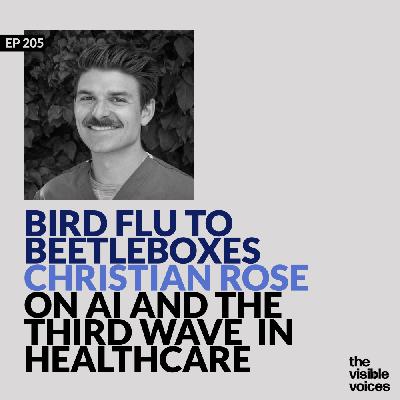
In this episode we speak with Dr. Christian Rose. Christian is an emergency physician and clinical informaticist at Stanford University specializing in the intersection of clinical medicine, information systems and innovation - specifically in machine learning, decision support, user-centered design and global health.
We discuss the transformative potential of AI, particularly generative AI, in patient care and emergency medicine. The conversation explores the evolution of AI in medicine, the challenges of accuracy in generative AI, and the historical context of AI development. We also address the implications of AI for global health equity and the future of medical training, emphasizing the importance of finding one's voice in the medical field.
Some highlightsThe evolution of AI in medicine has gone through distinct historical phases.
Generative AI's accuracy is a significant concern in medical applications.
Medical education needs to adapt to the changing landscape of healthcare and technology.
Read more about Christian on his website.
If you enjoy the show, please leave a ⭐⭐⭐⭐⭐ rating on Apple or a 👍🏻 on YouTube. Subscribe via the Website. Forward to a friend today!
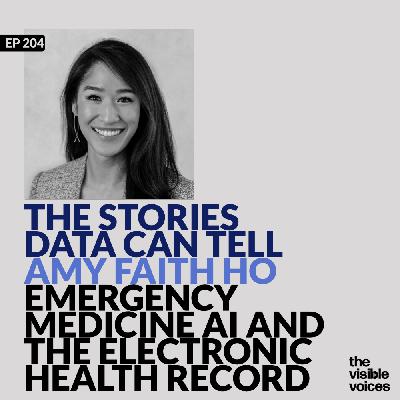
Todays's guest is Dr. Amy Faith Ho -an Emergency Medicine Physician, Chief Systems and Informatics Officer, and TEDx Speaker
Dr. Amy Faith Ho discusses her journey from high school debater to emergency medicine physician and informatics leader. Born to Taiwanese immigrants and motivated by concerns about the insurance industry, Amy shares insights on AI in healthcare—from scribing platforms to billing—and confesses to being a "ghost scanner" with point-of-care ultrasound. The conversation explores liability, consent, HIPAA's relevance in the AI era, and why storytelling connects everything in medicine.
Key TopicsFinding voice through high school debate despite
Becoming passionate about healthcare after researching the insurance industry
AI scribing: ambient listening technology, liability, and recording retention
AI-assisted billing and coding in emergency medicine and surgery
Point-of-care ultrasound documentation challenges and workflow issues
Patient consent and transparency about AI use
HIPAA in the age of massive datasets and de-identified training data
Storytelling as the foundation of patient care and data analysis
Connect with Dr. Amy HoTwitter: @AmyFaithHo
Website: AmyFaithHo.com
If you enjoy the show, please leave a ⭐⭐⭐⭐⭐ rating on Apple or a 👍🏻 on YouTube. Subscribe via the Website. Forward to a friend today!
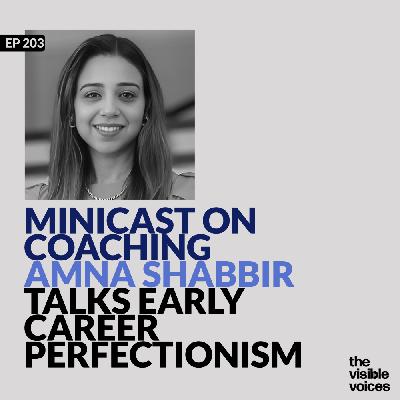
In this episode, we speak with Dr. Amna Shabbir about the pervasive impact of perfectionism on physicians and high achievers.
Dr. Shabbir, who is dual board-certified in internal medicine and geriatric medicine with advanced training in integrative wellbeing and behavior change, hosts the Success Reimagined podcast and recently delivered a TEDx talk on this topic. She explains the three types of perfectionism that particularly affect physicians: self-oriented ("I must be perfect"), other-oriented ("others must be perfect"), and socially prescribed ("the world demands perfection from me").
The conversation explores Dr. Shabbir's coaching philosophy, which focuses on moving from perfectionism to what she calls "excellence-ism" and making success sustainable without sacrificing wellbeing.
Content Warning: This episode discusses mental health crises among healthcare workers, postpartum depression, and perfectionism. If you or someone you know is struggling, please reach out. The National Suicide Prevention Lifeline is 988.
If you enjoy the show, please leave a ⭐⭐⭐⭐⭐ rating on Apple or a 👍🏻 on YouTube. Subscribe via the Website. Forward to a friend today!

Comments

Download from Google Play

Download from App Store
 United States