


 Claim Ownership
The Paws and Reflect podcast
Subscribed: 1Played: 2
Subscribe

© Haley Young
Description
Haley and Sean reflect on life with our delightful (and delightfully weird) blue heeler Scout. Since adopting her in 2019, we’ve trained through fear-based dog reactivity, fostered multiple shelter dogs, dealt with idiopathic epilepsy, and navigated so many ups and downs in between. In January 2023 we hit the road for full-time van life! We hope our blunders and realizations can encourage fellow dog lovers. Find us at pawsandreflect.blog and @paws.andreflect on Instagram.
www.pawsandreflect.blog
www.pawsandreflect.blog
33 Episodes
Reverse
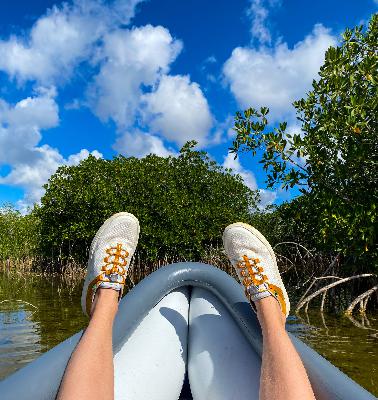
First drafted in Everglades National Park, after a week of mesmerizing nature experiences.Paddling a designated mangrove trail, I cringe as our inflatable kayak rubs the bottom of the pond. “We’re stirring up the mud,” I worry aloud. “How many organisms call this mud home?” Sean shakes his head.We turn around shortly after. By this point we’ve already seen five alligators (one swimming parallel to us, disquieting agility on full display) and a dozen birds and too many fish to count. I’m in awe that this has been our Monday morning activity.I’m also wondering if it should have been.So often close creature encounters fill us with wonder—they allow us to more fully appreciate our fellow animals. But they are also, so often, one sided. What does the cardinal get from me peering closely except a modicum of discomfort? The Florida tree snails are dormant for the winter so my photography (in theory) doesn’t stir their slumber, but still—I am here, in their world, leaning in. And I am clumsy and species-centric and unable to coexist without inadvertent harm.“Oh no, you scared him,” Sean said of the small toad I tried so carefully to step around on yesterday’s trail. “Shoot, she ran away,” I echoed about the anole I paused too long to observe.How much of these reactions is normal? Creatures move toward and away from each other all the time. Perhaps I am not adding to their stress (the alligators certainly seem unbothered by my presence in their swamp); perhaps it’s self-aggrandizing to think so. But perhaps I am. Perhaps I am layering harm upon small harm, weaving fear deeper into their nervous systems, making their already fraught existence harder, all out of a desire to love them.Love can hurt. Especially when it comes from a person.Little Me developed so much respect for the natural world by engaging with the natural world. That’s the justification for practices—some worse than others, certainly—at organizations from SeaWorld to the tiny elephant sanctuary I called home after graduating college. Where do we draw the line? On our guided night hike in the Everglades, I was thrilled to see a nightjar illuminated by the ranger’s flashlight—but guilt pinged within me, too, at the creature’s small form huddled in the beam. Would we, me and Sean and five middle-aged couples, have felt less inspired if we hadn’t gotten to see up close? Would the bird have felt less scared?Whose experience is more important, and do they have to interfere with each other, and how can we ever understand costs and benefits?These questions are top of mind thanks in part to Nerdy About Nature’s recent post on whether outdoor recreation is a form of resource extraction. He thinks it is, and I largely agree. I also agree with the article’s top comment: “outdoor recreation is a gateway to caring about the planet,” writes Nick Costelloe. “The more people engage with natural spaces, the more they’ll care about them—and the more willing they’ll be to advocate for climate solutions.”I’m just not sure what, exactly, ethical engagement with nature spaces ought to look like.This past fall we drove up a steep, bumpy road to the most beautiful dispersed campsite we’ve ever seen overlooking the Great Tetons. We carefully followed every National Forest Service guideline. No campfires. Don’t stay more than five nights. Drive on previously used roads. Pack in what you pack out; leave no trace.I grinned almost every minute we were there. I threw wide my arms and teared up at the sunrise and leashed Scout the second we saw another animal or person. But afterward, despite being a perfect stickler for the rules, I still had to ask: Is it truly possible to leave no trace?One morning a fox trotted along the edge of our site. They paused, head raised, before darting away down the mountain. Neither we nor our dog pursued this breathtaking creature—but the canid knew, unmistakably, that we were there. Every living thing nearby knew we were there. How much of my own joy (and make no mistake: I experienced bright, bursting, overwhelming joy) is worth native flora and fauna’s discomfort? How much do NFS restrictions, even when meticulously observed, actually mitigate human impact?How much could I love that mountain—that view, those creatures—if I hadn’t breathed their same air?I don’t know. It’s easy to preach platitudes about respecting the environment. (Pick up trash, be bear aware, don’t bend the rules, do what the organizations in charge tell you to.) It’s harder to trust that these actions are good enough. And everything is exacerbated by the crisis facing American public lands under our current administration, worsening, it seems, by the day: staffing cuts, hiring freezes, harrowing sound bites to “drill, baby, drill”.Never has holding great wonder—the kind that inspires us to care, that doesn’t allow us not to give a damn—about natural spaces been more important. Never has asking how we skew the ratio toward much more awe than harm. This is a public episode. If you'd like to discuss this with other subscribers or get access to bonus episodes, visit www.pawsandreflect.blog/subscribe
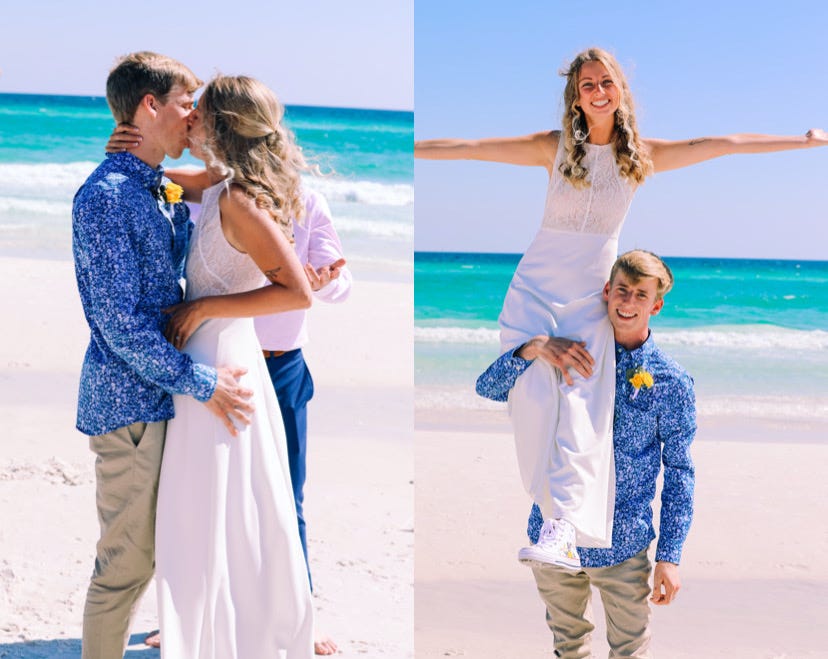
Sean and I don’t regularly wear wedding rings. (The ones we do have are cheap nontraditional bands.) Our ceremony was short and, to be candid, kind of not a big deal. He did not only see me in my dress before our vows—he actually found my dress in the first place. I kept my last name. We rarely celebrate anniversaries beyond a “hey, look at the date!” nod.I am unduly proud of the ways we eschew marriage norms—and I think I’m finally able to name why.I worried for a while that my feelings were some sort of petty self righteousness or a “look how I’m not like other girls!” desire to be special. (Which... ew.) But that doesn't track with the fact that I’ve felt truly, properly happy for all the people in my life who do embrace western relationship norms in their own ways. Like, I have never once wondered if my best friend’s relationship is any less fulfilling or progressive or meaningful than mine because her ring is fancy gorgeous. I would never dream of telling my badass feminist colleague that taking her husband’s last name makes her a slave to the patriarchy. Still, though: I loved that I wasn’t doing these things.What gives?In my serious relationship before Sean, I relied on any and every surface-level signal that we were a couple. I needed evidence—traditional, obvious evidence—that our love was real. It wasn’t just the big things like my fancy engagement ring (come to think of it, my ex spent more time talking about how he chose the diamond on the day he proposed than why he loved me) or our over-the-top anniversary presents. We also needed constant nicknames and good morning texts and social media posts. (We once had a huge fight after a road trip because I captioned an Instagram of us—just one of many from those two weeks—something simple instead of using it to profess my love.) We were that couple. You’d hate seeing us on your feed, using public posts to insist things we didn’t even truly feel in a flawed attempt to grease the wheels of a squeaking, falling-apart relationship. (Sidebar: This habit made our breakup even harder because I’d spent so long convincing casual acquaintances we were great!! that they couldn't believe we’d actually had a billion problems. Ugh.)Anyway: I needed so much “evidence” of our love precisely because there wasn’t, in reality, all that much love. I thought I could cover our failings with the right decor. What do you mean there’s a massive gap in the floorboards? No no, it’s nothing; we can hide it with a super fancy sofa!It’s the exact opposite with Sean. I don’t crave external signals or classic traditions to reinforce our commitment because I already know we’re real. I believe in our love more than anything else—I have never doubted it, never felt the urge to mental-gymnastics something out of nothing.Saying no thanks to nice rings and elaborate rituals isn’t a larger statement about how I think things “should” be done. (I do not believe there’s one “right” way in basically any area of life. And obviously not everyone uses traditions to mask massive relationship problems, in which case… more power to you. My past self is jealous.) No, my pride in this regard is about me, as an individual, emphasizing the juxtaposition between where I used to be and where I am now.It’s funny that the excuse I gave some family members for why our nuptials were so small (I already planned a big wedding and we didn’t work out, I want my real one to feel as different as possible) turned out to be so centrally true. I love not doing these traditional things because I love not needing these traditional things.If you want them, though? That’s a whole different story. This is a public episode. If you'd like to discuss this with other subscribers or get access to bonus episodes, visit www.pawsandreflect.blog/subscribe
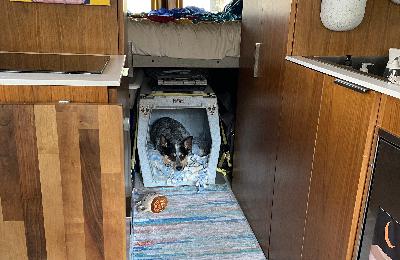
“She doesn’t require an ounce of management when people don’t expect her to be a Labrador” — summing up Scout’s ability to happily coexist with strangersWe just spent a long weekend with my brother-in-law and his girlfriend in Miami. After we bade them farewell, I found myself gushing to Sean about how perfect Scout is (“I mean, she’s the most perfect creature to ever walk the planet, right?!”) and gushing to her (not that she understood, of course, though she did like my tone of voice) the reasons she deserves a big thank you. The people we love deserve a big thank you, too.So here’s some gratitude.Scout Finch: Thank you for rolling with our chaos—for peeing in whatever random parking lot we bring you to next (and in all types of weather) and never barking at strange city sounds or passerby. Thank you for allowing us to adventure without you when needed. Thank you for boasting one of the strongest pet dog stomachs I’ve ever encountered. Thank you for, despite your intestines of steel, still not eating discarded sidewalk food. Thank you for loving our van home so much. Thank you for feeling safe and comfortable in your crate. Thank you for handling a few boring days unbelievably well for your breed’s expectations. Thank you for welcoming new friends with a quick sniff and adorable wiggle followed by complete neutrality. Thank you for gracefully allowing those new friends in your house (I know it’s not very big to share). Thank you for never demanding any sort of set routine.Friends new and old: Thank you for following instructions about interacting with our sensitive dog. Thank you for laughing when I make the (admittedly weak) joke that she’s a liar when explaining that even if she sits directly in front of you with perfect sweetness, she’d prefer you didn’t reach for her face. Thank you for humoring me when I over-analyze one of her quirks not for the first time. Thank you for understanding when we’re on a schedule dictated by her bladder. Thank you for making everything so easy. Thank you for loving her, too—the most important extension of us—even when “love” looks more like reserved respect and short ball throws than the unlimited snuggles you might have first dreamed. This is a public episode. If you'd like to discuss this with other subscribers or get access to bonus episodes, visit www.pawsandreflect.blog/subscribe
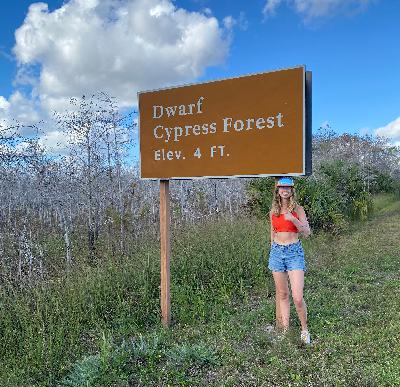
Drafted in Long Pine Key at Everglades National Park on February 12th, as a male and female cardinal danced outside the van’s open doors.Catherine Raven, a solitary biologist in the mountains of Montana, wrote about befriending a wild red canid in her memoir aptly titled Fox and I.The most magical moment in the book occurs one night when Fox brings his kits—baby foxes! I nearly squeal with delight imagining a rough version of the scene—to Raven’s cabin. While he settles for a nap, she watches his progeny tumble around and atop each other, close enough to touch. They are illuminated by the moon and awash in fresh air.Afterward she talks about assigning value to these events. Raven gives up so much—close human connection, quick access to resources, career opportunities—to live the way she does. Are the sacrifices worth it? What would she trade for another night of fox kits?Nearly everything, she answers.Me too, I think. Of course it’s presumptuous to compare my life directly to Catherine Raven’s—she is infinitely more badass than I am—but the last two years primed me to understand her calculus. We’ve given up dozens of previous staples to travel full time in a converted van. On occasion it is exhausting. But when you ask if the sacrifices are worthwhile? I do not hesitate: Yes, yes, a thousand times yes.I have never witnessed a fox-kit moon, but I have fallen asleep to wolf howls outside Yellowstone National Park. I have heard bats echolocating—rare, these clicks audible to human ears—just above my head in Utah’s desert. I have gasped at Florida tree snails, Liguus fasciatus, shining in their narrow Everglades range.I see the Milky Way so often I almost forget how precious the sight has become in our artificially lit human world. Lately I take pride in knowing, without having to think, the current phase of the moon simply because I’ve spent so many recent nights outside. This morning I stayed in bed for half an hour counting bird songs through our open back doors. Yesterday Sean and I ambled a boardwalk trail more slowly than my past self could have imagined, gasping at the smallest air plants you’ve ever seen and strangler figs’ wild acrobatics and white lichen decorating tree trunks in a pattern reminiscent of my hometown’s dairy cows.I do not always know where I am going to sleep, if we can park without disturbance, when I will next find a fully stocked grocery store. It is scary to get sick on an island in another country thousands of miles from the place you once called home and only hope the local pharmacy can help. We constantly befriend the world around us—try to, anyway, balancing our own curiosity with the removed reverence fellow creatures deserve—but always through the ache of missing our human friends, longing for the ability to call them up last minute and ask if they want to meet for a beer.I hurt, sometimes: physically, emotionally, deep in my chest.But my sense of wonder grows. Lights up with the fireflies, sprints with the deer, dives on the ospreys’ outstretched wings. It is a salve for the sacrifices’ sting—and I would trade even more for moments like this.Passages I highlighted in Fox and I* Page 22: You don’t need much imagination to see that society has bulldozed a gorge between humans and wild, unboxed animals, and it’s far too wide and deep for anyone who isn’t foolhardy to risk the crossing. As for making yourself unpopular, you might as well show up to a university lecture wearing Christopher Robin shorts and white bobby socks as be accused of anthropomorphism. Only Winne-the-Pooh would associate with you.* Page 34: I wasn’t trying to emulate normal people, but I did like knowing what they were up to.* Page 233: In the twenty-first century, everyone wants everything to be natural—with a few exceptions: medicine, transportation, energy, communication, televisions, wrinkles, cell phones, bad eyes, weak hearts, worn knees, small boobs, old hips, indoor temperature. The more we humans pamper ourselves with manmade toys and tools, dressing in polypropylene, Gore-Tex, and nylon fleece and availing ourselves of dentures, braces, statins, vaccines, diet pills, hearing aids, and pacemakers for everyone over the age of seventy-five, the more we demand that unboxed animals stay natural. Like a seesaw with humans on one side of the fulcrum and wildlife on the other, we sink further from a natural life and force wildlife closer to it. Our pursuit of the natural life is as vigorous as it is vicarious.* Page 245: Those of us who have barnacled ourselves to inhospitable places may be trying to avoid people not because we do not like people, but because we love the things that people destroyed. Wild things. Horizons. Trolls.* Page 265: Looking back, I would say that when a person thinks they are wrong for doing something that feels right, well, then, the definition of wrong needs to shift.* Page 293: lack of imagination is not a career choice, it’s a personality crisis. This is a public episode. If you'd like to discuss this with other subscribers or get access to bonus episodes, visit www.pawsandreflect.blog/subscribe
Written on February 7th in late-afternoon shade at Everglades National Park, my keyboard clicks barely audible above the rhythm of pileated woodpeckers.Reading Maybe You Should Talk to Someone makes me realize (not for the first time, but I’m terrible at internalizing this morsel) the obvious: There is no finish line. There will never be a finish line. No streamers, no cheers, no clear-cut you did it, well done (note the past tense) because until I die, I will still be doing.Sean and I used to talk about “moving the goalposts” in regards to Scout’s fear reactivity. Those first months after I realized the extent of her behavioral problems, I told every trainer we consulted with that I just wanted to take her for a walk—a boring neighborhood walk—without her freaking out and embarrassing me.Eventually we could go on walks. They weren’t seamless, but they were possible, and I yearned for more possibilities. Now I want to go on busier walks, longer hikes. Now I want to sit at a brewery, a coffee shop, the restaurant near our apartment complex. Now I want to go on outings with other dogs. Now I want trick titles. A Canine Good Citizen certificate. Engaged games of tug in distracting environments. Twenty thousand Instagram followers. A more polished narrative.Mostly, what I wanted with Scout was the same thing I want in all areas of my life: to be seen. Not just observed, but seen, and specifically seen as successful. Each time we made progress, the line for “success” moved with us because there was always someone ahead doing it better—and our past selves fell further behind, failing to remind me just how far we’d come unless I actually sat down, took out the binoculars (read: scrolled my camera roll or Instagram memories), and tracked their blurred forms.I rarely think about life with Scout feeling different now. It’s not that we crossed a finish line—we didn’t—but that I’ve come to see our journey as something beautiful and flawed and ongoing. As the end of our shared life approaches, faster each year, I run from finality and can’t believe I ever craved it. If we finish all the struggles, then eventually we will finish the joy. I never want our time to be past tense.Why is this hard to translate to the rest of my experiences? Haven’t my insights about the pet world—training and emotions and optimization and all the rest—always fit rather perfectly into my growth as a human being beyond the “dog nerd” label?I hold the knowledge itself: Be present. Life is a series of nows. Don’t burn the future to stay warm. Sometimes I act on the knowledge, relishing the sun’s warmth or Sean’s skin or the fact that I can still at 27 lose myself in a story like I did as a kid.But often I live at odds with this thing I express as a tenet. I act as if there is always a finish line, and it’s just around the next bend, and once I finally cross it I can breathe, I can sleep, I can relax without guilt—I can settle into my life, I can hold my own against the world, I can love myself.Once I leave my nine-to-five marketing agency job. Once I land regular freelance clients. Once we move into our converted van. Once I make arbitrary-number thousand dollars a month. Once I finish the first draft of my book. Once I finish the second draft of my book. Once I get published in a magazine I admire. Once I have arbitrary-number “real” bylines. Once I find an agent for my book. Once my book is published.But I know from meeting some of these milestones that I can’t hang satisfaction on the others. If I do publish a book and it’s well received? I will surely stack another goal atop its podium. If it doesn’t touch people the way I hope? I will punish myself with more hoops to jump through and the futile promise that once I clear them, then I can feel successful. Not now, though. Never now.Because I am ostensibly a minimalist—my material belongings are few—I have convinced myself I do not struggle with our society’s “more more more” mantra. I mean, I travel full time without much in a converted van! I haven’t worked a “traditional” job in three years! I watch almost every sunrise! My physical space is less than seventy square feet (and I basically never complain about that) and I know at least a few people look up to me as a model of peace and contentment.How could I have a problem with wanting?Well, goes the too-simple but too-true answer, because I am human. Because I am a creature. Because I will never carve perfect, unchanged, permanent meaning out of my life—I will never finish my own story the way I sometimes finish an essay thinking wow, that wrapped up rather nicely. My accomplishments, my wants, myself will never be wrapped up. Isn’t that the beauty of being alive?I don’t want to be done.And yet I do with so many things. I want to be done so I can be loved. Maybe the ultimate item on my checklist is separating the two. This is a public episode. If you'd like to discuss this with other subscribers or get access to bonus episodes, visit www.pawsandreflect.blog/subscribe

Comments

Download from Google Play

Download from App Store
 United States