


 Claim Ownership
True Crime with Elli Mac
Subscribed: 17Played: 784
Subscribe

© Elli Mac
Description
This is a True Crime podcast with me, Elli Mac.
118 Episodes
Reverse
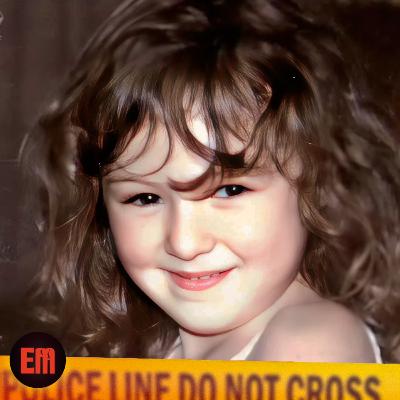
Quick favour from me—Listener’s Choice voting is now open for the True Crime Awards. If you’ve been enjoying the podcast, I’d be so grateful if you could take a few seconds to vote. Just click the link and type in True Crime with Elli Mac:https://truecrimeawards.co.uk/truecrimeawards2026/en/page/listenerschoiceIt really means a lot, thank you so much.=============================================When six-year-old Teresa Cormack didn’t return home that afternoon, it quickly became clear that something was wrong.Her mother, Kelly Pigott, soon discovered that Teresa hadn’t been at school that day at all. Panic set in.Kelly went out searching immediately, walking the route to the school, checking the streets, calling her name—hoping she would find her daughter nearby. But there was no sign of her.As the hours passed, police were called, and what began as a missing child search quickly escalated. Officers and more than 600 volunteers combed through Napier, searching streets, alleyways, and open land, desperately hoping Teresa would be found safe.But she wasn’t. Not that day. Not the next.It would be eight days later when a woman walking her dogs made a devastating discovery—Teresa’s small body, half-buried at the bottom of a bank beneath a tree on Whirinaki Beach……what had happened to Teresa, who had committed such a horrific act against a defenceless child, and how long it would take before justice was finally served.=============================================📩 For business inquiries: ellimacproductions@gmail.com

On 6 February 2018, in the Govan area of Glasgow, 47-year-old Julie Reilly was captured on CCTV inside an Aldi supermarket. Julie was a mother of four, known by those around her as a caring and trusting woman.After leaving the store, Julie disappeared. When days passed without any contact, her family reported her missing.Then, two months later, the investigation took a shocking turn. Human remains were discovered.Two thigh bones were found in different locations across Glasgow, and DNA testing confirmed they belonged to Julie Reilly.But the rest of her body was still missing. What had happened to Julie? Who had done this to her? And would investigators ever find the rest of her?=============================================📩 For business inquiries: ellimacproductions@gmail.com

On the evening of March nineteenth, 2013, Ashlee Smith was halfway through her shift at Pizza Hut when her phone rang.Just hours earlier, she had walked out the door after leaving her two young children in the care of her sixteen-year-old boyfriend, Dylan Schumaker.At that time, both boys were unharmed. There were no bruises. No signs of distress. Nothing to suggest that anything was wrong.Now, on the other end of the line, Dylan’s mother was telling Ashlee she needed to come home immediately — that an ambulance was already on the way for her toddler son.Her twenty-three-month-old son, Austin Smith, was in critical condition.By the time she reached the house, an ambulance was already pulling away, rushing Austin to hospital without her.What had unfolded during those few short hours inside the home — and would Austin survive?=============================================📩 For business inquiries: ellimacproductions@gmail.com

00:00 Case 1 - Karissa Boudreau19:50 Case 2 - Amy Hebert45:32 Case 3 - Garnett Spears01:09:37 Case 4 - Rekha Kumari-Baker01:23:23 Case 5 - Jailyn Candelario01:52:27 Case 6 - Patricia Ripley02:07:45 Case 7 - Joshlin Smith02:50:43 Case 8 - Ayesha Ali03:18:44 Case 9 - Naomi Hill=============================================📩 For business inquiries: ellimacproductions@gmail.com

When a 911 call came in at 12:34 a.m. on October 4th, 2012, from seventeen-year-old Jake Evans in Aledo, the dispatcher wasn’t met with panic. She was met with calm.On the other end of the line, Jake, speaking clearly, admitted to the unthinkable. He told her he had just shot his mother. And his sister.How could someone so young sound so composed after committing such violence? What could possibly lead a seventeen-year-old to turn a gun on his own family?=============================================📩 For business inquiries: ellimacproductions@gmail.com

When 85-year-old William and 63-year-old Patricia Wycherley vanished from their home in the quiet village of Mansfield, no one seemed to notice or question their disappearance. Their bills were being paid on time, the house appeared to be looked after, and their family continued to receive postcards signed by the couple, which assured everyone they were alive and well.Fifteen years passed without any suspicion, and eventually, the Wycherleys’ house at 2 Blenheim Close was sold to a new family, who moved in unaware of the secrets hidden beneath their feet.It wasn’t until William Wycherley’s 100th birthday that questions began to surface. When an attempt was made to organize a congratulatory telegram from the Queen—a tradition for centenarians in the UK—there was no response from William. This prompted further investigation into the couple’s whereabouts, leading to the shocking revelation that the Wycherleys had never left their home.Their bodies had been buried in their own back garden, where they remained hidden for over a decade and a half.Who had murdered this elderly couple? And who was pretending to be them, sending letters out to loved ones, saying they were alive and well?

This is a difficult case to tell. To protect the victims, no names are used, and some identifying details are withheld. Even so, it is important to tell this story carefully and truthfully, because what happened did not occur in isolation. This case exposed profound failures across child protection, healthcare, and safeguarding systems—and led to significant changes in how such cases are now handled. In its aftermath, multiple independent inquiries were launched to examine how authorities missed years of warning signs.The case became known as the Sheffield case, and was widely labelled by the media as the “British Fritzl.” The comparison was drawn to the Austrian case of Josef Fritzl, which had come to light only months earlier and shocked the world. In that case, it was revealed that Fritzl had held his own daughter, Elisabeth, captive for 24 years, resulting in the birth of seven children. The Fritzl case revealed unimaginable abuse hidden behind the façade of an ordinary family home, forcing the public to confront the reality that extreme harm can exist undetected for decades.The similarities prompted outrage, disbelief, and urgent questions: how could something like this happen again—here, in the UK?At the centre of this case was the conviction of a 54-year-old Englishman. For more than 25 years, he evaded detection by authorities. He fathered seven surviving children.What makes this case particularly harrowing is not only the scale of the abuse but the number of times it could have been stopped.This is the story of how it wasn’t.

00:00 Case 1 - Mary Bell17:40 Case 2 - Tyler Hadley38:47 Case 3 - Alex & Derek King01:03:22 Case 4 - Eric Smith01:35:38 Case 5 - Brenda Spencer02:03:49 Case 6 - Zander Lyda02:38:01 Case 7 - Noah Crooks03:03:38 Case 8 - Corey Breininger

On a quiet September afternoon in 2003, in a small New Zealand town, Jeanna stood waiting at the bus stop for her children. The doors opened, but only one child stepped off. Storm was there. Six-year-old Coral was not. Coral-Ellen Burrows had not come home from school. As it would soon emerge, she had not even made it there that morning.What followed were ten days of unanswered questions and growing dread. A town stopped everything to search. Farmland, creeks, roadsides, and bush were scoured. Helicopters circled overhead. Volunteers walked until their boots were soaked through. Then came the first chilling discovery. Coral’s backpack, found floating in a creek, had her lunch still inside.Then, ten days after Coral vanished, she was found, but not in the way anyone had prayed for.What happened to Coral-Ellen Burrows? Where had she been that day? And who took her?
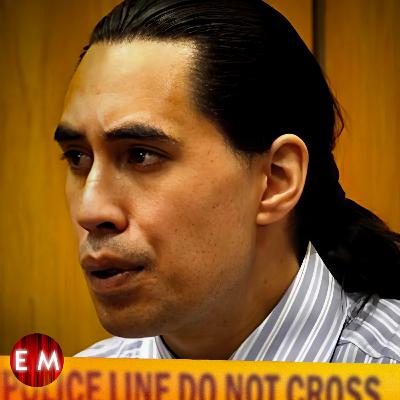
In Christchurch, on the South Island of New Zealand, 22 August 2011, 15-year-old schoolboy, Hayden Miles, disappeared after drinking with older people in the city. That night, he never came home.For 111 days, police searched while his family waited for answers. Then the tragic discovery was made.Hayden had been killed, dismembered, and sealed inside bin bags. His body parts were found buried in Christchurch cemeteries and at the very location where he had last been spending time.So how did a vulnerable teenager vanish without a trace? Who were the people he was with that night—and what really happened behind closed doors?

It was the final days of the year, that quiet stretch between Christmas and New Year’s when the city usually slowed down. Instead, Edmonton was about to face one of the worst crimes in its history.On the evening of Monday, December 29, 2014, police were called to a home in southwest Edmonton for a weapons complaint. Inside, they found a woman dead. At first, it appeared to be a single homicide.But hours later, officers were sent to a second house in north Edmonton to check on the occupants. When they entered, they found seven more bodies inside the home, including two young children.The person believed to be responsible was missing.As police worked through the night, they were left with urgent questions—where was the suspect, what had happened in the hours leading up to the killings, and why had so many lives been taken?

When David Cass arrived to collect his daughters, Ellie, three, and Isobelle, just 14 months old, it seemed like a normal custody visit. Kerrie Hughes kissed them goodbye, never imagining it would be the last time she saw them alive.The following day, he called Kerrie, out of breath, and said: “They’re sleeping.” When she asked what he meant, he replied: “They’re sleeping forever.” Moments later, he hung up.Locked in a bitter split and custody fight, David had made a devastating choice — to ensure his daughters would never return to their mother.
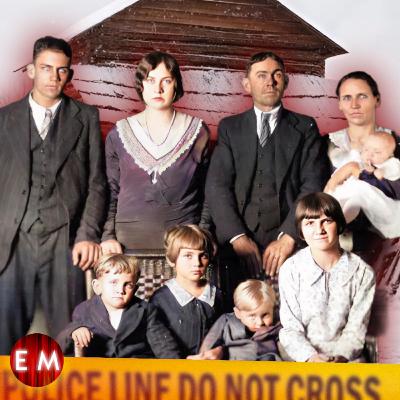
This family photograph, taken just days before Christmas, appears ordinary at first. A father stands among his children.A mother holds her baby. Everyone dressed up, wearing new dresses, and all arranged perfectly for the camera. Nothing seems out of place.On the day the picture was taken, no one except Charlie Lawson knew why he had suddenly spent money he could barely afford.Just days later, on Christmas Day, 1929, Charlie Lawson murdered his wife and six of his seven children before taking his own life—nearly erasing his entire family to protect a scandalous secret.For decades, people studied that photograph, searching for answers. For some sign of what drove him to kill. It would take sixty years before the truth emerged—when a dark family secret finally came to light.This is the story of the Lawson family murders, on Christmas Day.

Christmas in rural Oklahoma had always been a magical time for Jack and Elaine. Their little home on Iron Post Road glowed with decorations, and a small wooden manger stood proudly in the yard.Inside, on December 23rd, 2007, Elaine spent the day doing what she loved most: cooking. Fresh loaves of her holiday bread cooled on the counter, and batches of her famous peanut brittle waited to be gifted to neighbors.The couple were excited. Their daughter Sarah, her husband, and their three children were coming in just a few days to celebrate Christmas.But when that day finally came… everything was wrong.When Sarah and her family stepped through the door, they didn’t find the laughter or hugs they were expecting. Instead, they found Jack and Elaine—shot to death in their dining room. No signs of forced entry. No DNA. No fingerprints. No motive. Nothing.The case baffled investigators. And for ten long years, it would go cold.Until one witness came forward… and changed everything.
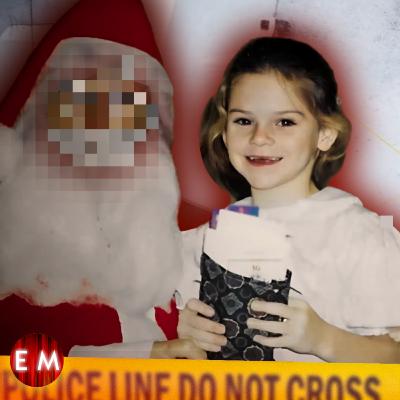
In December 1997, police arrived at the Daniels family home on Dasher Street, in the tiny Christmas-themed town of Santa Claus, Georgia.The front door was ajar. Inside, the house was pitch dark and eerily silent. Deputies called out, but no one answered.When they reached the master bedroom, the deputies froze. Forty-three-year-old Danny Daniels lay sprawled beside his thirty-three-year-old wife, Kim. Both were drenched in blood. Kim had been shot in the face; Danny in the head.Down the hallway, they found sixteen-year-old Jessica Daniels, lifeless, near the doorway of her parents’ room. In an adjoining bedroom, eight-year-old Bryant lay in bed, clutching his teddy bear — shot point-blank as he slept.Each victim had been killed execution-style with a single blast to the head. Scattered throughout the home were spent Remington 1100 shotgun shells.In a nearby closet, officers discovered two small children — four-year-old Corey and ten-month-old Gabe — huddled together, trembling but miraculously alive.But three of the children — Amber, Brooke, and Amanda — were missing.Where had the girls gone? Were they still alive?And who could have carried out such a brutal crime in this quiet, close-knit community — a place known for joy, goodwill, and Christmas spirit?This is The Santa Claus Murders.

On the morning of December 21st, 2015 — just four days before Christmas — neighbours in the quiet village of Rupperswil, a small community in the Swiss canton of Aargau, noticed smoke rising from a single-family home on Hintergasse. At first, people assumed it was just a kitchen fire or some kind of accident.But when firefighters forced their way inside, what they found shocked even the most seasoned emergency responders.Inside the home were four bodies. Bound. Stacked. Murdered. It was immediately clear: this was no accident — this was a crime scene.The victims were 48-year-old Carla Schauer-Freiburghaus, her sons Davin (13) and Dion (19), and Dion’s girlfriend Simona Fäs (21).Just hours earlier, a terrified Carla had been captured on CCTV withdrawing money from two different ATMs, her fear unmistakable on camera.So what had happened inside that house? What terror had this family endured? This peaceful village of 5,000 was about to become the center of one of the worst crimes in Swiss history…

On Christmas Eve 2001, in the quiet suburb of Pleasant Grove, Texas, Kevin Butler was getting ready to meet a friend for dinner. But he never arrived.When his friend went to his home to check on him, he walked into a nightmare—Kevin had been bound, beaten, stabbed, and brutally murdered.When police arrived, it was immediately clear that a violent struggle had taken place.Feathers were scattered across the floor. Droplets of blood marked areas they shouldn’t have. And in the kitchen lay Larry Bird, Kevin’s beloved white-crested cockatoo, dead on the tile with one leg severed.What had happened to Kevin…and to his fiercely loyal pet? This is the story of how a slain cockatoo became an unexpected witness—and ultimately helped solve his owner’s murder.
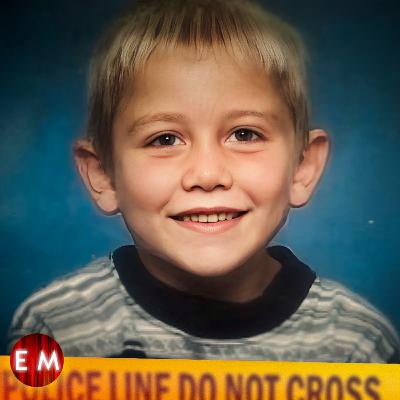
On November 3rd, 2003, a 911 call came from Mark Center in Defiance County, Ohio. The caller was 10-year-old Corey Breininger.Corey was hysterical and told the dispatcher that his father had been shot in the head after a gun went off accidentally. He said he didn’t know there was a bullet in the chamber.Corey then confirmed that his stepmother, Judith, wasn’t home and that he hadn’t contacted her yet. It was just him and his father in the house. The dispatcher then walked him through CPR.When police arrived around 4:00 PM, they found 34-year-old Robert Breininger dead in his bed from a single gunshot wound to the head.Officers spoke with Corey, who they described as broken and crying. Corey pleaded with the officers, saying, “Save my dad, he’s my best friend.”Corey explained that he and his father had been talking about hunting and gun safety. As his father was showing him how to use the gun, Corey was handing the weapon to his dad. Corey said that his finger was on the trigger and the safety was off. He claimed his father then pulled the trigger and set the gun off.But what had truly happened that day? And was Robert Breininger’s death genuinely an accident?

It was December 2020 — deep in the middle of France’s COVID lockdown — when 33-year-old Delphine Jubillar vanished from her home in the small town of Cagnac-les-Mines.Her husband, Cédric, said she had simply disappeared in the night. But investigators quickly began to suspect otherwise.But there was no body. No blood. No confession. No witness. Just a husband who insisted he was innocent.By October 2025, five years later, with still no body or trace of Delphine, Cédric Jubillar finally stood trial for his wife’s murder.But even then, with no physical evidence and no sign of Delphine ever found, two questions remained:Where was Delphine Jubillar? And how do you convict someone of murder… when there’s no proof a murder ever happened?
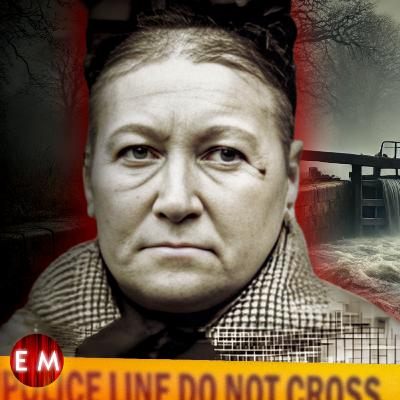
When a parcel was fished from the River Thames in the spring of 1896, no one expected what was inside.Wrapped in brown paper, tied with white tape, and weighted with a brick… was the tiny body of a baby girl.The discovery would set detectives on the trail of a woman once known as kind, gentle — even motherly.A trained nurse and midwife who dedicated her life to caring for others. Her name was Amelia Dyer.But when detectives finally stepped inside her home, they came face to face with an overpowering stench of decay. They also stumbled upon piles of baby clothes, adoption letters, and white tape. It was clear something unspeakable had happened there.Who was Amelia Dyer — a troubled woman lost to madness… or one of the most prolific murderers in British history?

Comments

Download from Google Play

Download from App Store
 United States