


 Claim Ownership
California Insider
Subscribed: 112Played: 4,577
Subscribe

© Copyright 2026 The Epoch Times
Description
California, as the wealthiest and most populated state in the nation, carries many leading roles in policy making, economic growth, cultural influences and technology development. California Insider, hosted by Siyamak Khorrami with The Epoch Times Southern California, showcases leaders and professionals across the state with inside information about trending topics and critical issues. Our mission is to inform California residents through the experiences and knowledge of our guests.
343 Episodes
Reverse

California's post-production workforce, the people who edit, score, and mix every film and show you've ever seen, has been losing work to other states and countries for years. How does an industry this embedded in a state end up competing for its own survival? In this episode, we speak with a panel of post-production professionals about the economic forces driving work elsewhere, and about the bill in Sacramento they believe could change that.Featuring:Marielle Abaunza, president of the California Post AllianceBen Urquhart, vice president of post production and integration at Universal PicturesBrian Ralston, film music composer and producerDennis Dreith, media composerAmélia Rolland, singer-songwriter, composer, and vocalist.Views expressed in this video are opinions of the host and the guests, and do not necessarily reflect the views of The Epoch Times.

LA hosted the Olympics in 1984 with 23 events. In 2028, it's committing to more than double that, and the city carrying that weight today is a fundamentally different place. In this episode, Artin Sodaify, LA County Commissioner, walks through what's actually being built and contracted right now to get the region ready. The question of whether those preparations outlast the games is one LA residents will be living with long after the torch goes out.
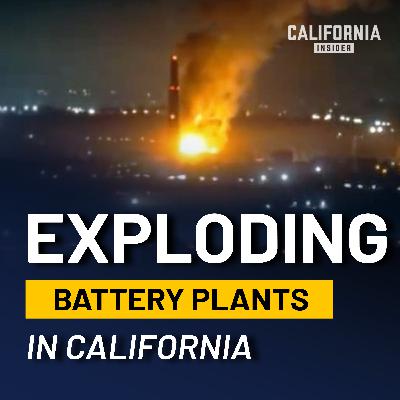
Battery storage plants have been exploding in California with a regularity that is easy to miss if you are not living near one. Eight went up last year alone, and the one in Moss Landing burned for three weeks. In this episode, physicist and Chairman of the Board of the California Arts and Sciences Institute, C. Michael Hogan explains what these facilities actually release when they go, and why the consequences for the people and the land around them outlast the event itself by a very long time.Views expressed in this video are the opinions of the host and guests and do not necessarily reflect the views of The Epoch Times.
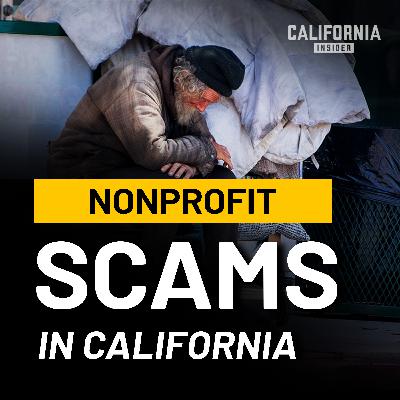
Billions of taxpayer dollars have moved through California’s homelessness system over the past decade. Yet on the streets of Los Angeles, Sacramento, and San Diego, the tents remain and the strain on local services continues. How are state and local leaders evaluating the impact of that spending?In this episode, we sit down with Alex Villanueva, Former Sheriff of Los Angeles County, Assemblymember Tri Ta, and San Diego Superviser Jim Desmond to discuss how funding moves from the state to local agencies and how those policy decisions show up on the ground in light of recent scrutiny and renewed attention to how funds are used.Views expressed in this video are the opinions of the host and guests and do not necessarily reflect the views of The Epoch Times.
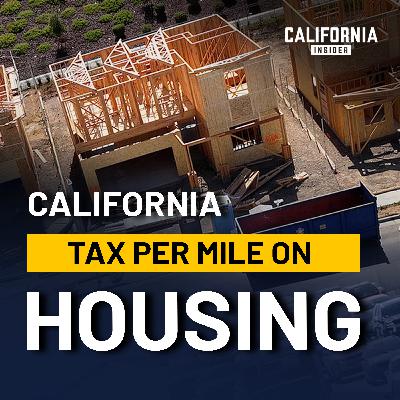
California’s housing costs are among the highest in the nation, while single-family construction continues to lag demand. If land is not the only constraint, what is driving the gap between need and supply? In this episode, we sit down with Michael Capaldi, Partner at FBT Gibbons, to examine the approval process, local fees, and state mandates that influence what gets built. We trace how those choices translate into the price of a home and the calculation families make about staying in California.Views expressed in this video are the opinions of the host and guests and do not necessarily reflect the views of The Epoch Times.
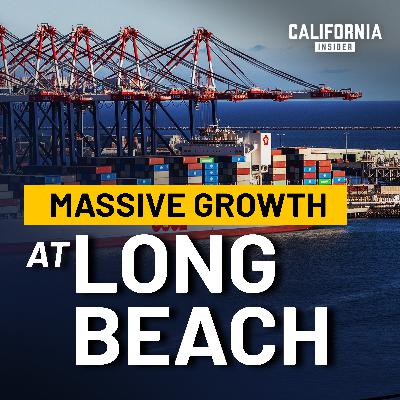
The Port of Long Beach recorded its highest cargo volume in 2025, marking a strong year for one of the nation’s most critical trade gateways. With imports surging and competition rising from other U.S. gateways, attention now turns to whether this pace can hold and what it could mean for the state’s broader economy. In this episode, we sit down with Noel Hacegaba, Chief Executive Officer of the Port of Long Beach and President of the California Association of Port Authorities, to understand what is behind the record volumes and how long term rail and infrastructure investments could determine the state’s economic footing in the years ahead.Views expressed in this video are the opinions of the host and guests and do not necessarily reflect the views of The Epoch Times.
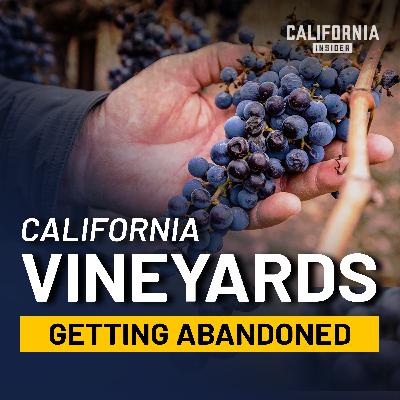
California vineyards are operating in a market where harvested grapes may not have a buyer. The reasons are not always visible from the outside, but the effects are showing up across growing regions. In this episode, Rodney Schatz, owner of Peltier Winery who manages about 1,100 acres of farmland, explains what is changing inside the business and why those changes matter beyond wine country.Views expressed in this video are the opinions of the host and guests and do not necessarily reflect the views of The Epoch Times.
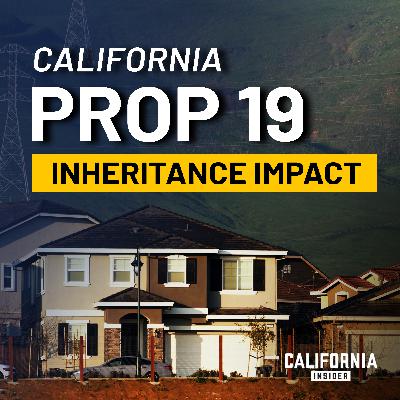
What happens to a family home after it is passed down? In California, voters approved Proposition 19 in 2020 with the promise of helping seniors and wildfire victims. For many families, the outcome has been sharply different from what they expected. We look at how Prop 19 affects family decisions around inherited homes. We also examine changes in property tax assessments and how higher ownership costs can affect rental properties with long-term tenants.In this episode, we speak with Lalit Kundani, partner at Bridge Law LLP, estate planning attorney James Burns, homeowner Robert Locke, and Susan Shelley of the Howard Jarvis Taxpayers Association, who explain how the law works, what many families missed, and what options still exist.Views expressed in this video are the opinions of the host and guests and do not necessarily reflect the views of The Epoch Times.
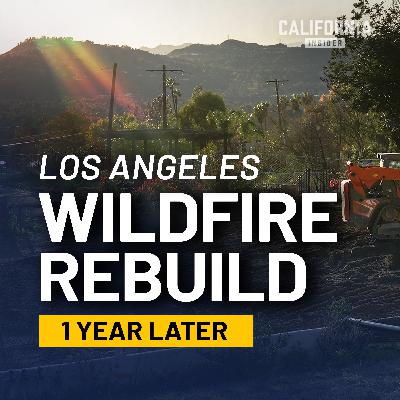
A year after the Palisades fires, signs of rebuilding are starting to appear, but progress looks uneven once you move from street to street. What decides whether a home comes back now or stays on hold? In this episode, Renzo Pali, Associate Director of Operations at SPF:a, Matt McRoskey, Head of Growth at Ghost Factory, and Dylan Hart, Partner at Village Rebuild, talk through what is happening at street level and walk through what drives those decisions, from money and time pressure to how neighbors work together.Views expressed in this video are the opinions of the host and guests and do not necessarily reflect the views of The Epoch Times.

California's fuel system is under pressure, not because demand has fallen, but because the path from oil to fuel has narrowed. What happens when pipelines shut down and oil that once flowed underground now requires nearly 100 trucks a day on Kern County roads? Steve Layton, president of E&B Natural Resources, explains how recent infrastructure changes are affecting how oil moves through the state, with consequences that tend to surface quietly before they become visible to the public.Views expressed in this video are the opinions of the host and guests and do not necessarily reflect the views of The Epoch Times.
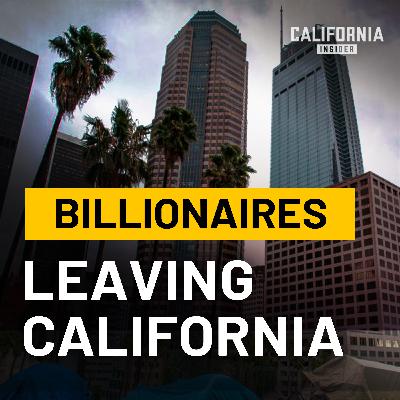
A proposed wealth tax aimed at California’s billionaires is headed for the 2026 ballot, presented as a one time measure to raise revenue for public programs. How would that one time label function once the rules are applied?In this episode, Hank Adler, Associate Professor and Burra Executive Professor of Accounting at Chapman University, walks through how the proposal would operate in practice and what its structure could mean for California’s economy after the vote.
Across parts of Northern California, law enforcement officials say investigations are revealing the ways criminal operations have evolved in response to enforcement and regulations.In this episode, Humboldt County Sheriff Bill Honsal describes how these enterprises function and why their methods are having economic and social effects that extend beyond the areas where they operate.Views expressed in this video are the opinions of the host and guests and do not necessarily reflect the views of The Epoch Times.
California has seen protests tied to events unfolding inside Iran. Inside the country, demonstrations show a level of organization and leadership absent from earlier waves, as authorities respond with force and communication shutdowns. We speak with Bijan Kian, an Iranian American activist closely following developments, about leadership linked to Prince Reza Pahlavi, the security and economic stakes for the United States, and what this moment may signal for Iran.

 1
1California’s electricity rates are far higher than most of the country, and that gap did not emerge from a single decision or moment. It developed over time as the state responded to real challenges, with effects that became clearer only years later.In this episode, we speak with James Boyd, a former California Energy Commissioner. Drawing on decades of public service, he explains how the state arrived here, and how growing pressure on the grid may shape the choices ahead.Views expressed in this video are the opinions of the host and guests and do not necessarily reflect the views of The Epoch Times.
Long term property investment in Los Angeles is becoming more uncertain for small landlords, often leaving them with little choice but to exit the rental business. But what factors are making rental housing harder to operate, and what’s the impact of these landlords leaving LA? In this episode, we discuss with Dan Yukelson, CEO of the Apartment Association of Greater Los Angeles, and Rich Kissel, a longtime property owner who exited the business, how current housing rules and operating realities are influencing rental conditions.Views expressed in this video are the opinions of the host and guests and do not necessarily reflect the views of The Epoch Times.

California’s diversion law was designed to steer some defendants away from jail and into treatment. But when the same statute produces very different outcomes across the state, what determines how much risk the public is expected to accept? In this episode, Deputy District Attorney Matt Greco and San Francisco public defender Matt SotoRosen explain how the law works in practice and where its impact holds or falls short.00:00 – Intro01:50 – Serious Crimes Committed While in Diversion05:33 – Alternatives to Diversion and the Cost of Incarceration30:03 – Effectiveness of Diversion and Judicial Discretion42:35 – Diversion and Its Impact on Public Safety
California reservoirs are above capacity after several wet years, yet water deliveries to farmers remain uncertain. High storage alone does not guarantee reliable supply, as the system for moving and allocating water continues to limit what reaches the fields. In this episode, we speak with sixth-generation California farmer Cannon Michael about how these conditions affect everyday farming and the broader future of agriculture in the state, and what direction California may need to consider to restore reliability to its water system.Views expressed in this video are the opinions of the host and guests and do not necessarily reflect the views of The Epoch Times.
Major rideshare companies are now routing more of their trips to regulated taxis in San Francisco, and that shift is changing how the city’s transportation system actually works. It comes down to cost pressure on the platform side and the steady coverage that commercial drivers provide. In this episode, we talk with Hansu Kim, longtime SF political consultant and Chairman of Flywheel. He walks us through why this move is happening and what it may set in motion for the city’s next phase.

State leaders want cities to allow far more housing near transit. Supporters see a needed shift while others question the practical outcome. In this episode we sit down with Tony Hall, former San Francisco supervisor, and Christopher Elmendorf, law professor at UC Davis. We look at what these changes could mean for San Francisco and how the policy meets the city’s real conditions.
RV encampments have become fixed parts of Los Angeles, especially in industrial areas where they sit for long stretches without intervention. What looks like a line of parked RVs carries real effects for the blocks around them, including steady waste and a growing pull on emergency crews. We discuss with Barry Coe, former Los Angeles city commissioner, about what keeps these RVs in place and how business owners stepped in when nothing changed.Views expressed in this video are the opinions of the host and guests and do not necessarily reflect the views of The Epoch Times.


Download from Google Play

Download from App Store
 United States
homeownership is no longer a part of the American dream in California