


 Claim Ownership
Jimbo Radio
Subscribed: 1Played: 3
Subscribe

© James Gomes
Description
I'm James Gomes. I go by Jimbo, and these are random topics of interest. My area of most expertise is in education, with majors in exercise sports science and literature. Most topics flow from my personal conversations, reading, listening, and or media consumption. My interests vary from running, sports, writing, economics, science, philosophy, and learning new things. My blog, https://stankrants.blogspot.com/, is more active than the podcast.
I would love any and all feedback from all listeners.
@jimbostank on Twitter
Music by EvgenyBardyuzha from Pixabay
I would love any and all feedback from all listeners.
@jimbostank on Twitter
Music by EvgenyBardyuzha from Pixabay
59 Episodes
Reverse

Transcript here.Fact check here.Boris Reitman is a software engineer, encryption technologist, and political thinker. He is the founder of Entelecheia Inc., a company specializing in encryption technology, and the creator of Crosspass, an end-to-end encrypted messaging system. Reitman founded Anthemism, the political philosophy and initiative inspired by Ayn Rand’s Objectivism, particularly Anthem. Anthemism holds that freedom cannot be achieved by reforming states that are structurally hostile to individual rights, but only by creating a new sovereign country explicitly founded on reason, individual rights, and laissez-faire capitalism. Where encryption helps individuals defend their freedom within hostile systems, Anthemism addresses the problem at its root by proposing a political order in which rights are inherent and non-negotiable.Beyond his technical and philosophical work, Reitman is also a community leader: he is the founder and president of a Toastmasters club, fostering leadership, public speaking, and civic engagement.More from Boris Reitman:Anthemism- https://anthemism.org/Crosspass App- https://crosspass.app/Entelecheia Inc.- https://entelecheia.io/Personal website- https://borisreitman.com/Anthemism Substack- https://anthemism.substack.com/Personal Blog (Medium)- https://borisreitman.medium.com/
Fact Check here.Transcript hereJimbo's ideas here (blog)Follow Rabbi Brendan Howard's Rabbi in the Field (Substack)Selfish Reasons to Have More Kids by Bryan Caplan (book), Jimbo's review here.Econtalks "Bryan Caplan on Parenting" (episode)

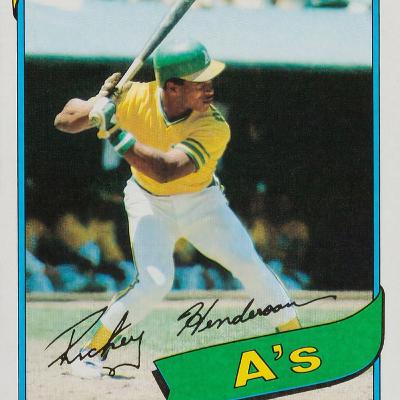
Keith, the Vintage Card Curator, joins Jimbo to discuss collecting and baseball cards.Fact check hereTranscript hereVintage Card CuratorKeith's Video on 1980 Topps Henderson RCDean’s CardsWillie Mays DiscriminationEp 51 with RichMusic by EvgenyBardyuzha from Pixabay
Fact Check and Transcript hereHogfather by Terry PratchettJimbo's Teaching Religions to Kids IdeasDefinitionsRelativism: Relativism is the view that what counts as true or right depends on a person’s or group’s standpoint—such as culture, upbringing, or historical context—rather than on a single universal standard.Pluralism: Pluralism is the idea that a society can contain multiple, differing belief systems or authorities and still function without requiring everyone to share one worldview.Indoctrinate: To indoctrinate is to teach beliefs in a way that discourages questioning and aims at acceptance rather than evaluation.Music by EvgenyBardyuzha from Pixabay
Here is the initial brainstorming I did. I think it came out better if anyone would like to read it. Here is a ore organized blog post post recording.Fact Checking here.Anyone with kids and strong opinions, I'd love to hear what you have to say. Comment, text, or email your ideas. If you don't personally know me, my blog post or Spotify are great places to share your ideas.Music by EvgenyBardyuzha from Pixabay
Professor David Enoch studies moral, legal, and political philosophy. He is affiliated with Oxford University and The Hebrew University of Jerusalem. At Oxford University, Professor Enoch is a Professor of the Philosophy of Law. At The Hebrew University of Jerusalem, he is The Rodney Blackman Chair in the Philosophy of Law and the co-director of the Center for Moral and Political Philosophy. Here is a link to Professor Enoch's paper "Why I am an Objectivist about Ethics (And Why You Are, Too)." This paper contains the Spinach Test.More from David Enoch:Taking Morality Seriously: A Defense of Robust Realism (Book)The Good Fight "David Enoch on Certainty and Compromise" (Podcast Episode)"David Enoch - Should AI Be a Moral Realist?University of Oxford Professorial Inaugural LectureHere is a transcript.Here is a fact check of the episode.Music by EvgenyBardyuzha from Pixabay
Tyler is the host of STAG. This is part two of Jimbo and Tyler’s conversation, see Ep 52 for part 1.Listen to STAG here.Sign up to be a guest on STAG here.Episode Transcript hereFact Check hereMusic by EvgenyBardyuzha from PixabayMore from Jimbo at Jimbo Rants
Tyler is the host of STAG. He tells his story about why he started STAG. Jimbo tries to sell self deception again. They discuss weak men, authenticity, and somewhat ties those ideas to STAG and self deception.Listen to STAG here.Sign up to be a guest on STAG here.Transcript here.Fact checking here.
Rich Mueller is the founder of SportsCollectorsDaily.com. Sports Collectors Daily is a sports collecting news site that publishes 20+ new pieces each week. Follow them on Twitter or Instagram.Rich's interview is somewhat of a continuation of Ep 43 1980 Topps #482.
Transcript hereFact check hereQuick-ish post recording response from Jimbo here

Transcript here.Fact checking here.Jimbo's pre recording notes and outline can be viewed here.People & groupsGnosticism — Umbrella label for diverse early Christian movements that emphasized secret/experiential knowledge (gnosis) to awaken a divine “spark” within.Proto-orthodox — Modern term for the streams of early Christianity that later became mainstream “orthodoxy.”Sethians — A Gnostic school with elaborate myths about Sophia, a false creator, and rescuing divine sparks.Valentinians — Gnostic movement from teacher Valentinus; tended to see the creator as ignorant rather than evil and blended in with church life.Basilidians (followers of Basilides) — Early 2nd-century movement; reported to teach many “heavens” and often associated with Docetism.Marcionites — Followers of Marcion of Sinope who rejected the Hebrew Scriptures’ God as distinct from the Father of Jesus.Ebionites — Torah-observant Jewish-Christian group; generally skeptical of Paul and insisted on Jewish law.Justin Martyr — 2nd-century Christian writer who mentions churches reading the “memoirs of the apostles.”Irenaeus — Late-2nd-century bishop who argued for exactly four Gospels and wrote Against Heresies.Tatian — 2nd-century Christian who created the Diatessaron, a harmony of the four Gospels.Tertullian — Early Christian author critical of various “heresies,” including Valentinian ideas.Walter Bauer — 20th-century scholar whose thesis suggested “orthodoxy” was not original everywhere (Orthodoxy and Heresy in Earliest Christianity).Ideas & vocabularyGnosis — Experiential, saving knowledge.Demiurge — The craftsman/creator of the material world; benevolent in Plato, often ignorant/hostile in Gnostic myth.Yaldabaoth / Samael — Names some Gnostic texts give the ignorant creator.Pleroma — The “fullness” of the divine realm in Gnostic cosmology.Aeons — Emanations/personae of the divine within the Pleroma.Sophia — “Wisdom”; a key figure in Gnostic myths whose fall leads to the flawed creation.Docetism — View that Christ only seemed human/suffered.Dualism — Sharp good/evil or spirit/matter split; in many Gnostic systems, matter is inferior or corrupt.Asceticism — Strict self-denial (e.g., celibacy) for spiritual aims; some groups were strongly ascetic.Allegory / allegorical — Reading stories as symbolic rather than literal history.Apocalyptic — Expectation of imminent divine intervention/kingdom.

Links to References in the EpisodeRead The Legendary Muhammad Ali” here.Read the critical analysis of the Nag Hammadi story, "How Reliable is the Story of the Nag Hammadi Discovery?" by Mark Goodacre.For more about the Nag Hammadi discovery click here, including a list of the texts discovered.Read the review related to the tales of natives burning ancient texts here.Timeline and Evolution of the Story1948 (institutional notices): Early reports emphasize that new Coptic codices have been acquired / secured for study in Cairo—no legends attached. (For a museum overview, see the Coptic Museum’s summary.) coptic-cairo.com1958/60 — Jean Doresse, The Secret Books of the Egyptian Gnostics:First book-length account by a field scholar who saw the material early. He describes a peasant digging for fertilizer, a jar buried near the cliff at Jabal al-Ṭārif, the manuscripts going to Cairo—but no jinn, no blood-feud, no page-burning, and no oversized jar. Sober, minimalist. (English ed. 1960.) Internet Archive1977 — James M. Robinson (editor), The Nag Hammadi Library in English:In prefaces and later essays Robinson popularizes a vivid discovery vignette: a ~60 cm jar, the finder hesitating lest a jinn be inside, breaking it in hope of gold, and his mother burning some leaves. This is the version that “sticks” in popular accounts. avalonlibrary.net1979 — Elaine Pagels, The Gnostic Gospels:Adds dramatic local color: seven men, a blood vendetta with limb-cutting and heart-eating, and a 1-meter jar. This retelling helped propel the story into the cultural mainstream. Squarespace1981–84 — Further embellishments & pushback:Some later versions mention eight camel riders, torn codices during division, and a six-foot jar; then leading Coptologists Rodolphe Kasser and Martin Krause publicly question these field tales (1984). SAGE Journals1987 — Channel 4 (UK) documentary The Gnostics:On-camera Muhammad ʿAlī al-Sammān (the finder) tells a different sequence: he found and smashed the pot alone, called others after the break, still mentions fear of a jinn and his mother burning leaves—but key details contradict Robinson’s popular version. Variant Readings+2NT Weblog+22013–present — Scholarly reassessment:Mark Goodacre collects contradictions across tellings, notes a lack of field documentation for the 1970s interviews, and urges caution; Brent Nongbri critiques the recurring motif of “locals burning papyri” as a self-serving trope in manuscript trade narratives. markgoodacre.org+2JSTOR+2
Click here for out pre-recording notes. Listen to Brendan's discussion with Dr. Kyra Bobinet about her book Unstoppable Brain.Here is a transcript of the episode. Here is a fact checking of the episode. For more from Brendan click here. Music by EvgenyBardyuzha from PixabayFind more from Jimbo at his blog, Jimbo Rants"These results suggest that the self's capacity for active volition is limited and that a range of seemingly different, unrelated acts share a common resource." Baumeister, R. F., Bratslavsky, E., Muraven, M., & Tice, D. M. (1998). Ego depletion: Is the active self a limited resource? Journal of Personality and Social Psychology, 74(5), 1252–1265. https:/doi.org/10.1037/0022-3514.74.5.1252
For a fact checking of our episode click here. Here is a full transcript with some minor spelling errors.Here are Mike's 12 uses of plural Gods in the Old Testament.Here is the article Mike mentioned: New Research: Belief in Jesus Rises, Fueled by Younger Adults
The book is Zen in the Martial Arts by Joe Hyams.Read a fact check by ChatGPT 5 here.Listen to Brendan's discussion with Dr. Kyra Bobinet about her book Unstoppable Brain.Here are Brendan and Jimbo's pre-recording notes. The episode doesn't not cover most of the notes.Next Episode: Brendan and Jimbo will discuss the psychology term willpower depletion. Message Jimbo with any questions or ideas about willpower depletion. For more from Brendan Howard visit his link tree here, https://linktr.ee/brendanhowardMusic by EvgenyBardyuzha from PixabayFind more from Jimbo at his blog, Jimbo Rants
The last dive into epistemology and knowing for now. And an expansion of a previous comment about evolutionary psychology. Here is a full transcript of the episode.Here is a fact check of the episode.For more from Brendan Howard visit his link tree here, https://linktr.ee/brendanhowardMusic by EvgenyBardyuzha from PixabayFind more from Jimbo at his blog, Jimbo Rants

Read transcript here.Fact checking here.In Ep 43, I analyze the 1980 Topps #482 Rickey Henderson rookie card. I give my background, some basic history, simplified economics, and some speculations about the future. Resources & LinksGem Rate DataSports Card Pro ProfileWikipedia - Rickey HendersonPSA Population Report - Rickey Henderson #482PSA Grading StandardsMusic by EvgenyBardyuzha from Pixabay
Round two of childhood with Jon and I. This time we focus on a lot more positive aspects. Music by EvgenyBardyuzha from Pixabay
In the episode, Brendan Howard and I discussed more about epistemology. Our conversation was based on a survey about epistemology I created with the assistance of GPT. We also listened and discussed an episode of Theories of Everything with Professor Jennifer Nagel.Human MemoryIn the episode, I slightly misremembered a study on memory related to the 9/11 terrorist attacks. Below are the main ideas related to my episode reference brought to you by GPT: 1. Memory decay slows after one year: Flashbulb memories (the personal context: where you were, who told you, etc.) and event memories (facts about the attack itself) both show a forgetting curve that flattens significantly after the first year.2. Emotional details fade more than factual ones: Emotional responses associated with flashbulb memories (e.g., how shocked or upset you felt) are remembered less accurately over time than non-emotional details like location or the person who told you.3. Subjective confidence remains high despite inaccuracies: By multiple follow‑up points (1 week, 11 months, 35 months), many participants recalled different details from their original reports—and yet they continued to express high confidence in their recollections. After the initial decay, both flashbulb and event memories tend to become more stable—though not necessarily more accurate—over time.Cumulative SelectionCumulative selection can explain how a small advantage can build over time through natural selection. Ronald Fisher, a relatively unknown genius and polymath, developed mathematics that explain how small mutations that increase fitness, even with a very small advantage, can survive over time. Using population genetics, a gene with a 0.1% selective advantage can dominate a population of 10,000 within 20,000 generation. For humans, hat would be about 500,000 years.In the podcast episode, I generally explained why babies should look like their fathers. In theory, if babies, who looked like their fathers, had even a very small advantage, like 0.1%, that advantage would dominate human populations after 20,000 generation, or 500,000 years. If the advantage was larger, it would dominate faster. Links https://stankrants.blogspot.com/2025/07/notes-from-episode-41-knowing-about.htmlhttps://docs.google.com/spreadsheets/d/1mrMGHtNcRD3LMFhVeiMdlrqoEv-XXe-2XHwu4VIVVwA/edit?usp=sharinghttps://open.substack.com/pub/curtjaimungal/p/why-universal-skepticism-is-philosophys?utm_campaign=post&utm_medium=webhttps://pmc.ncbi.nlm.nih.gov/articles/PMC2925254/Music by EvgenyBardyuzha from Pixabay
My brother Jon and I discuss our childhood. I really enjoyed this conversation and hope to do more. If you're interested, please reach out to suggest topics or question you have for Jon or Jimbo. Leave a comment or text Jimbo.

Comments

Download from Google Play

Download from App Store
 United States