


 Claim Ownership
Class Unity
Subscribed: 24Played: 204
Subscribe

© Copyright Class Unity
Description
We are a Marxist pole of attraction that works both within the DSA and outside of it to support the development of class struggle politics.
62 Episodes
Reverse
Prof. L. Randall Wray joined Class Unity to talk about Modern Monetary Theory, heterodox economics, and the future of economic studies.
Prof. Wray is a professor of Economics at Bard College and Senior Scholar at the Levy Economics Institute. Previously, he was a professor at the University of Missouri–Kansas City in Kansas City.
In this episode we are discussing his book, Macroeconomics; Author(s): William Mitchell, L. Randall Wray, Martin Watts; Red Globe Press, Macmillan International; February 2019; https://www.macmillanihe.com/page/detail/Macroeconomics/?K=9781137610669.
For donations, membership inquiries, or educational courses, check out our website here: https://classunity.org
We are joined by William I. Robinson for a conversation on the global implications of the recent US attack on Venezuela. The discussion will place this and other acts of US aggression within the broader crisis of world capitalism, the breakdown of the post-WWII international world order, and the emergence of a global police state.
Prof. Robinson’s area of study is in macro and comparative sociology, globalization and transnationalism, political economy, political sociology, development and social change, immigration, Latin America and the Third World, class and capitalism. He attempts to link his academic work to struggles in the United States and around the world for social justice. Among the undergraduate classes he teaches are: Globalization and Resistance, Sociology of Globalization, Global Inequalities, Development and Social Change in Latin America, and Twentieth-Century Revolutions in Theory and Practice. His publications and professional activities are discussed on his web page:http://robinson.faculty.soc.ucsb.edu/
Link to the article from the discussion:https://nacla.org/global-meaning-us-attack-venezuela/
For donations, membership inquiries and educational courses please visit: http://www.ClassUnity.org
Welcome to another Class Unity speaker event. Today we will be joined by authors Vijay Prashad and Michael Hudson to discuss hyper-imperialism, imperialism, and the state of global politics.
Michael Hudson is a professor of economics at the University of Missouri–Kansas City, a researcher at the Levy Economics Institute at Bard College, and the author of many books and papers on political economy, the history of economics, economic history, finance, and imperialism.
Vijay Prashad is an Indian author, journalist, political commentator, and Marxist. He is the executive-director of Tricontinental: Institute for Social Research, editor of LeftWord Books, Chief Correspondent at Globetrotter, and a senior non-resident fellow at Chongyang Institute for Financial Studies, Renmin University of China.
For donations, educational courses and membership inquiries, please visit us at ClassUnity.org
Members of class unity discuss recent events in domestic and geopolitics: Venezuela, Iran, Greenland, Denmark, Bulgaria, NATO, ICE, the Fed, Powell, Trump
Welcome to Episode 20 of Class Unity: Transmissions. For this episode, Nick is joined by Class Unity member Dave for a wide-ranging conversation with Philip Cunliffe on the question of the national interest. Cunliffe is Associate Professor of International Relations at University College London, author of The National Interest: Politics After Globalization, and co-founder and contributing editor of Aufhebunga Bunga.
The discussion centers on Cunliffe’s argument that the “national interest”—long treated with suspicion on both the left and the libertarian right—has returned not as a coherent doctrine, but as a symptom of the collapse of globalization and liberal internationalism. Cunliffe defends a sovereigntist, rather than nationalist, conception of politics, insisting that the national interest should be understood as a democratic process of contestation defined by citizens rather than insulated elites. Nick and Dave press Cunliffe on whether appeals to global problems and global governance have allowed ruling classes to evade democratic accountability, and whether it is possible to retain global awareness while re-anchoring politics at the level of the nation state.
The episode also digs into the book’s historical and theoretical core. Cunliffe discusses classical realism, liberal internationalism, and the Cold War transformation of the national interest into a technocratic and national security–state project. Nick and Dave challenge Cunliffe on whether realism genuinely reflected mass politics or instead replaced aristocratic judgment with expert management, and whether liberal internationalism restrained power or dissolved political responsibility by moralizing foreign policy. Throughout, the conversation returns to a central tension: how to avoid reifying the national interest while still treating it as a necessary framework for democratic struggle.
Recorded on December 15, 2025, the episode also serves as a kind of end-of-year reflection on contemporary politics. From Israel and Gaza to the advent of a second Trump administration, MAGA fragmentation, and competing claims over what counts as “America First,” the discussion explores whether renewed appeals to the national interest can meaningfully hold elites accountable—or whether they risk being captured once again by narrow sectional interests and the national security state. Cunliffe reflects on the limits of optimism, arguing that while democratic contestation offers no guarantees of good outcomes, abandoning the national interest altogether leaves politics empty, moralized, and unaccountable.
For donations, membership inquiries, and educational courses please visit ClassUnity.org
In today’s episode, we’re joined by Professor Ingo Schmidt for a wide-ranging discussion on economic theory and left politics. Dr. Schmidt is a Professor of Labour Studies at Athabasca University in British Columbia, Canada. His PhD research focused on trade unions and Keynesianism, and his work has placed him at the center of critical debates in political economy. Originally from Germany, Schmidt is a blacklisted economist there and has long been active in peace and international solidarity movements.
He has authored or edited several books and collections including:
Market populism, its right-wing offspring and left alternatives. (Policy Press, 2021)
Reading Capital Today: Marx After 150 Years (Pluto, 2017)
The Three Worlds of Social Democracy: A Global View (Pluto, 2015)
For donations, educational courses and membership inquiries visit: http://www.ClassUnity.org
In this episode, we are joined by political theorist Clyde W. Barrow to revisit the classic debates in Marxist state theory and to consider their renewed relevance in the present conjuncture. Barrow was a guest speaker in the CU “State Theory” course that ran earlier this year, and we thought we’d invite him back for a more detailed discussion—and to explore how these debates might help guide the left through its current impasse.
The conversation begins with the Poulantzas–Miliband debate of the 1960s and 1970s, situating it against the crisis of postwar Fordist–Keynesian capitalism and the broader effort by Marxists to move beyond instrumental or reductionist accounts of the capitalist state. Barrow explains why the debate remains foundational, what is often misunderstood about Miliband’s position, and why Marxist politics cannot afford to treat the state as a secondary or merely epiphenomenal problem.
From there, the discussion turns to globalization and contemporary political economy, drawing on Barrow’s book Toward a Critical Theory of States: The Poulantzas–Miliband Debate after Globalization. Rejecting the idea that globalization has rendered states powerless, Barrow emphasizes the central role played by states—particularly the U.S. state—in constructing and managing global capitalism. We then examine how Marxist state theory helps illuminate recent developments in trade policy under the Trump administration, including the structural constraints that capitalist states face when they pursue policies that run counter to dominant class interests, and what this may signal about the future of the global trade regime.
The latter part of the episode moves a bit more “into the weeds,” engaging debates over Lenin, the dictatorship of the proletariat, and the long-standing question of what a socialist theory of government might look like. Barrow reflects on the limits of romanticized models such as the Paris Commune, the enduring tensions between democracy and state power in socialist strategy, and the usefulness of Poulantzas’s concept of authoritarian statism for understanding contemporary right-wing governments. The conversation concludes with a discussion of what Marxist state theory can tell us about the challenges facing democratic socialist governance today, using the case of New York City mayor Zohran Mamdani to explore the structural and political limits confronting left projects within capitalist states.
Biographical note: In recent months, Barrow has also been a prominent public critic of managerial governance and political interference in higher education and has faced disciplinary action related to his speech and public commentary. While this episode focuses on theory rather than biography, his situation has made him an important contemporary reference point in ongoing debates over academic freedom and freedom of expression in U.S. universities.
Additional background: Clyde W. Barrow earned his Ph.D. in political science from the University of California, Los Angeles. He is currently Professor of Political Science at The University of Texas Rio Grande Valley, and previously taught for many years at the University of Massachusetts Dartmouth. Barrow is widely known for his contributions to Marxist state theory, political sociology, and the political economy of higher education. His major books include Universities and the Capitalist State: Corporate Liberalism and the Reconstruction of American Higher Education, 1894–1928; Toward a Critical Theory of States: The Poulantzas–Miliband Debate after Globalization; The Dangerous Class: The Concept of the Lumpenproletariat; and A Critique of Political Science: A History of the Caucus for a New Political Science (forthcoming), along with numerous influential articles on state power, class relations, and academic governance.
For donations, educational courses, or membership inquiries please visit: http://www.classunity.org
Benjamin Studebaker talks with Class Unity about his new book, “The Chronic Crisis of American Democracy: The Way is Shut” (2023).
You can find him here: https://benjaminstudebaker.com/about/
And his book here: https://www.amazon.com/Chronic-Crisis-American-Democracy-Shut/dp/3031282094
And you can find Class Unity here: https://classunity.org
Please consider donating or joining today!
Vivek Chibber discusses his latest book, “The Class Matrix” (2022), as well as the so-called “cultural turn”, with Class Unity.
You can find his book here: https://www.hup.harvard.edu/books/9780674245136
And you can find Class Unity here: https://classunity.org
Gary Roth talks to Class Unity about class, higher education, and consciousness. Gary teaches Sociology at Rutgers University. He is the author of “The Educated Underclass” (Pluto, 2019) and “Marxism in a Lost Century: A Biography of Paul Mattick” (Brill/Haymarket Books, 2015).
For a sample of his work, see his essay “The Overproduction of Intelligence” at the Brooklyn Rail (https://brooklynrail.org/2015/10/field-notes/the-overproduction-of-intelligence-the-reshaping-of-social-classes-in-the-united-states)
Consider making a donation to Class Unity to support original content like this here: https://www.paypal.com/donate/?hosted_button_id=74NKWLLEEJTLW
https://classunity.org
Paul Mattick Jr. talks with Class Unity about his new book, “The Return of Inflation” (2023), about money, capital, capitalism, class, politics, and inflation.
See the following interview for details about his latest book: https://brooklynrail.org/2024/02/field-notes/Understanding-Inflation-Friends-of-the-Classless-Society-speak-with-Paul-Mattick
Sarah Knuth talks to Class Unity about rentiers, the political economy of green energy, neoliberalism, and capitalism.
You can find her essay here: https://durham-repository.worktribe.com/output/1215052
And here: https://www.durham.ac.uk/research/current/thought-leadership/renewable-energy-us-tax-credits-for-wind-and-solar-mostly-benefit-big-banks/
Check out our website at: https://classunity.org
Thomas Fazi talks with Class Unity about the politics and economics as well as the problems of the European Union and issues with the contemporary left.
He is the author of:
“The Covid Consensus: The Global Assault on Democracy and the Poor: A Critique from the Left”, with Toby Green. Hurst. (2023)“Reclaiming the State: A Progressive Vision of Sovereignty for a Post-Neoliberal World”. Pluto. (2017)“The Battle for Europe: How an Elite Hijacked a Continent and How we Can Take it Back”. Pluto. (2014)
You can find his work at:https://thomasfazi.nethttps://www.thomasfazi.comhttps://www.compactmag.com/contributor/thomas-fazi/https://unherd.com/author/thomas-fazi/https://x.com/battleforeurope?lang=en
You can find Class Unity here: https://classunity.org
Please consider making a donation or joining today!
In this episode, we discuss geopolitics and the emerging age of multipolarity with Dr. Christopher Mott, Research Fellow at the Institute for Peace & Diplomacy. Dr. Mott is an international relations scholar specializing in historical geopolitics, grand strategy, and the intersection of defensive realism and sovereignty in an increasingly multipolar world.
Previously, he served as a fellow at Defense Priorities in Washington, D.C., and as a researcher at the U.S. Department of State. He holds a PhD in International Relations from the University of St Andrews and is the author of The Formless Empire: A Short History of Diplomacy and Warfare in Central Asia, which explores the rise of indigenous geopolitical strategies on the Eurasian steppe.
We discuss Dr. Mott’s analysis of contemporary geopolitics, focusing on how the American empire often cloaks its foreign policy objectives in the rhetoric of social justice—a theme he explores in his article “Woke Imperium: The Coming Confluence Between Social Justice and Neoconservatism.”
Dr. Mott’s work has appeared in The National Interest, The American Conservative, Responsible Statecraft, Agonmag, India’s World, and UnHerd.Follow him on X (Twitter) @chrisdmott and on Substack @chrismott296764.
Articles discussed in this episode:https://peacediplomacy.org/wp-content/uploads/2022/06/Woke-Imperium.pdfhttps://www.theamericanconservative.com/the-moralistic-risk-for-trumps-foreign-policy/https://indiasworld.in/the-global-ngo-complex-fades-but-do-the-missionaries-remain/https://unherd.com/2025/06/regime-change-wont-neuter-iran/?us=1https://www.agonmag.com/p/modus-vivendi-realisms-missing-link
For membership inquiries, educational programs, and donations visit: http://classunity.org
Prof. Steve Keen talks with Class Unity about the Global Financial Crisis of 2007-8, the problems with mainstream understandings of it, and the contemporary situation.
He is the author of:The New Economics. A manifesto. Polity. (2021)Can We Avoid Another Financial Crisis? Polity. (2017)Developing an economics for the post-crisis world. World Economics Association and College Publications. (2015)Debunking Economics. Zed Books. (2011)
Check out: Debunking Economics Podcast: with Phil Dobbie and Prof. Steve Keen (http://debunkingeconomics.com)
You can find his work at:https://profstevekeen.substack.comhttps://www.youtube.com/@profstevekeenhttps://profstevekeen.substack.com/p/ravel-a-thank-you-to-my-supportershttps://www.patreon.com/posts/introducing-c-tm-49053513https://www.debtdeflation.com/blogs/2009/01/31/therovingcavaliersofcredit/
See also Blaire Fix’s page: https://economicsfromthetopdown.com
You can find Class Unity here: https://classunity.org
Please consider making a donation or joining today!
Walter Benn Michaels talks about the present political moment with Class Unity.
You can find one of our favorite essays by him here: https://nonsite.org/the-political-economy-of-anti-racism/
And you can find his most recent book with Adolph Reed Jr. here: https://cup.columbia.edu/book/no-politics-but-class-politics/9781912475575
Consider joining or making a donation today: https://classunity.org
Joel Kotkin is a writer on urban affairs and a fellow in urban studies at Chapman University in Orange, California. He is a regular contributor to The Daily Beast and the conservative magazine The Spectator, as well as the author of several books. In 2020, he published The Coming of Neo-Feudalism: A Warning to the Global Middle Class, which is the topic we’ll be discussing with him today.
Reading list for the event:https://www.compactmag.com/article/the-new-green-feudalism/
https://quillette.com/2024/06/19/the-road-to-neo-feudalism
https://nypost.com/2019/12/25/how-america-is-reverting-back-to-the-feudal-age
https://firstthings.com/our-neo-feudal-future
https://www.spiked-online.com/2025/10/07/gavin-newsoms-american-dystopia/
For membership inquiries, educational programs, and donations visit: http://classunity.org
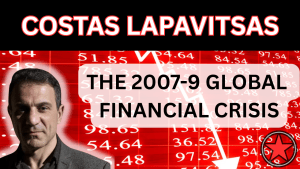
Costas Lapavitsas Joined Class Unity for a discussion about the 2007-9 Global Financial Crisis. We recently reviewed his works, which you can find here in our study group here: https://classunity.org/2024/04/25/the-2008-financial-crisis/
You can find him and his work here: https://www.soas.ac.uk/about/costas-lapavitsas
And you can find us here: https://classunity.org
Like, subscribe, join, and make a donation for class unity today!
Statement of Principles
Prof. L. Randall Wray joined Class Unity to talk about the 2007-9 GFC and politics.
Prof. Wray is a professor of Economics at Bard College and Senior Scholar at the Levy Economics Institute. Previously, he was a professor at the University of Missouri–Kansas City in Kansas City.
You can find Prof. Wray’s papers on the Crisis:
https://www.levyinstitute.org/pubs/wp_681.pdfhttps://www.levyinstitute.org/pubs/wp_661.pdfhttps://www.levyinstitute.org/pubs/wp_587.pdf
You can find recent works and discussions with him at the following links:
https://youtu.be/RnNGlMrV-8Y
https://www.nfrpp.org/2023/03/20/understanding-fiscal-policies-debt-and-entitlements
http://www.levyinstitute.org/publications/?auth=287
His latest book, Money for Beginners, is now available from Polity: https://www.politybooks.com/bookdetail?book_slug=9781509554607
His 2022 book, Making Money Work for Us, is available from Polity: https://www.politybooks.com/bookdetail?book_slug=9781509554256
His latest edited book: Modern Monetary Theory: Key Insights, Leading Thinkers: https://www.e-elgar.com/shop/usd/modern-monetary-theory-9781802208085.html
Recent Books:Handbook of Economic Stagnation (with Flavia Dantas), Academic Press, Elsevier, 2022: https://www.elsevier.com/books/handbook-of-economic-stagnation/wray/978-0-12-815898-2.
Macroeconomics; Author(s): William Mitchell, L. Randall Wray, Martin Watts; Red Globe Press, Macmillan International; February 2019; https://www.macmillanihe.com/page/detail/Macroeconomics/?K=9781137610669.
Why Minsky Matters: An Introduction to the work of a maverick economist, Princeton University Press http://press.princeton.edu/titles/10575.html
Modern Money Theory: a primer on macroeconomics for sovereign monetary systems, Palgrave Macmillan http://www.palgrave.com/page/detail/modern-money-theory-l-randall-wray/?isb=9781137539908
Check out our website here: https://classunity.org
Welcome to another Class Unity event. We are joined today by Kshama Sawant. Kshama is a socialist politician and economist who served on the Seattle City Council from 2014 to 2024. She is now running as an independent for the U.S. House of Representatives in Washington’s 9th congressional district in the 2026 election.
She was a member of Socialist Alternative (and was their only elected official) until January 2023, when she announced she would not seek re-election to the Seattle City Council to promote the “Workers Strike Back” unionization campaign. In 2024, she left Socialist Alternative to form the organization “Revolutionary Workers.”
Why We’re Launching Revolutionary Workers & Leaving Socialist Alternative:https://www.documentcloud.org/documents/25041448-why-were-launching-revolutionary-workers-leaving-socialist-alternative/
If you’d like to support Kshama Sawant’s campaign, see:NATIONAL RALLY — Send Kshama to Congress!Sunday, October 12, 20252:00 pm – 4:00 pmhttps://www.kshamasawant.org/events/3/
https://www.workersstrikeback.org
https://www.kshamasawant.org/
Twitter/X: @cmkshama
For donations, membership inquiries, and educational courses please visit http://classunity.org

Comments

Download from Google Play

Download from App Store
 United States