


 Claim Ownership
Giving Ventures
Subscribed: 6Played: 144
Subscribe

© DonorsTrust
Description
As the landscape of nonprofits continues to grow, trying to stay current on all the good work going on can be overwhelming--especially if you target your support to efforts that help reduce government's size and people's dependence on it. Giving Ventures is designed to help charitable givers discover new opportunities to change the world for the better. Twice a month, the Giving Ventures podcast will highlight several non-profit efforts, initiatives, and projects that leverage private philanthropy to solve public problems.
Hosted on Acast. See acast.com/privacy for more information.
107 Episodes
Reverse
Filmmaker and Acton Institute scholar Michael Matheson Miller joins Peter to discuss poverty in America. Back in 2014, Michael directed Poverty, Inc., an award-winning documentary that investigated and challenged the multi-billion-dollar poverty industrial complex around the world. His soon-coming film is Poverty Trap, which turns its attention to the failures of America's anti-poverty efforts.
There is a Hall of Fame for just about everything in this country. But where is the Hall of Fame celebrating the inventors, the creators, the entrepreneurs that have made America so great? Well, there isn't one yet.
However, the great social entrepreneur John Tillman is working on a $350 million project aimed at building a hall of fame for entrepreneurship and American innovation, which he is calling the Hall of Giants. John joins Giving Ventures to share his vision and provide a peek at the special soft launch it has coming up on the mall later this summer.
John is the chairman and former CEO of the Illinois Policy Institute. He's also been founding or reviving other organizations from Center Square, Bearing Tree, Iron Light. And before all that, he was a business entrepreneur himself.
Many people underestimate how fragile liberty really is and how much it relies on a vibrant global movement. Brad Lips, CEO of Atlas Network, pulls back the curtain on the strategies empowering think tanks worldwide to defend freedom, fight corruption, and lift communities out of poverty. Brad describes how Atlas Network’s "Coach, Compete, Celebrate" model accelerates achievement among liberty advocates across more than one hundred countries—and what the liberty movement in the US can learn from our international friends.
In a world where authoritarian regimes sometimes seem to have the upper hand, understanding how to nurture, fund, and scale liberty efforts is crucial. If you're you're a donor eager to deploy your resources smartly across borders to make an impact that lasts, this episode is essential listening.
In recent years, advocates of school choice have celebrated significant legislative victories. In many states, the challenge now lies in transforming these wins into tangible opportunities for families by building up new schools. This episode of Giving Ventures explores the challenges and opportunities of the implementation phase of school choice with two distinguished guests.
Tommy Schultz, CEO of the American Federation for Children, has been at the forefront of advocating for educational choice, ensuring that legislative gains translate into real-world benefits. Joining him is Ryan Delk, founder and CEO of Primer, an innovative organization that empowers educational entrepreneurs to establish micro schools, providing families with accessible and high-quality educational options.
For the past decade, one entity has become predominant in secretive giving on the left of the political spectrum: Arabella Advisors. It goes by a lot of different names, like the New Venture Fund, the Windward Fund, 1630 Fund. This panoply of organizations represents hundreds of nonprofit entities ranging from full-fledged 501(c)3s and 501(c)4s to astroturf groups that only exist as websites. Billions of dollars have flowed into and out of these Arabella entities, all working to counter free markets and conservative ideas and to advance progressive ideology.
Despite its major influence, Arabella is still pretty secretive. But one individual thoroughly understands the reach of Arabella and its tentacles: Scott Walter, the president of Capital Research Center, which focuses on the sources and influence of philanthropic dollars on the left.
America's national debt now has surpassed $38 trillion, and we're adding another $2 trillion each year with our deficit spending. The situation is even more bleak when you consider our unfunded liabilities for the future. Couple that with the cliffs we're facing on Social Security, the continued problems with Medicare and Medicaid that we're seeing play out in Congress now: It feels like an insurmountable problem.So how in the world do we get America's finances back to some orderly system? Romina Boccia is the Director of Budget and Entitlement Policy at the Cato Institute, and she spends her days analyzing problems and promoting solutions around debt, entitlement, federal spending broadly. She's the co-author of a new book, Reimagining Social Security: Global Lessons for Retirement Policy Changes. Romina also serves on the board of America's Future.
We want our doctors to treat us as individuals, not members of an identity group, and we would hope that our medical establishments would resist today's fixation on identity politics. But unfortunately, that's not the case. . We have seen identity politics creep into doctors' offices and medical schools, and we've seen its negative effects, particularly in the fight over gender-affirming care. In this episode of Giving Ventures, Dr. Stanley Goldfarb joins Peter to discuss these issues and describe the good work his organization, Do No Harm, is doing to combat progressive ideas in the medical field.
Dr. Goldfarb has a long history as a teacher, researcher, and practitioner of medicine. He's also been a keen observer of the shift that the medical profession has taken over the last couple of decades. He is the author ofTake Two Aspirin and Call Me By My Pronouns and Doing Great Harm: How DEI and Identity Politics Are Infecting American Healthcare and How We Are Fighting Back.
Here at DonorsTrust, we've mostly focused on the charitable giving provisions of the One Big Beautiful Bill Act, signed into law by President Trump earlier this year. But the big bill also brought about some significant changes to America's welfare programs. Emphasizing work requirements and accountability, this legislation has the potential to transform lives and foster economic independence.
Tarren Bragdon, founder and CEO of the Foundation for Government Accountability, joins this episode of Giving Ventures to discuss the importance of these reforms.
2026 marks 250 years since our Founding Fathers declared their independence July 4, 1776. The fireworks are sure to be bigger and many Americans will pause to reflect on the meaning of our country's founding. Many charities supported by the DonorsTrust community of givers have already begun producing materials and planning events to help us all think about the values that inspired our Founders to throw off the British yoke a quarter millennium ago.
Central to one of those efforts is Jay Lapeyre, a philanthropist who is passionate about ethical basis of America's freedoms. Jay has launched the Free Society Coalition to organize an effort to center our semiquincentennial conversations around the ideas of the Declaration of Independence. The group has produced a brochure titled "Happy Birthday, Freedom!" which introduces readers to the essential values of liberty and responsibility as seen in the Declaration. In this episode, Jay joins Peter to discuss the inspiration behind the project and what lies ahead as 2026 approaches.
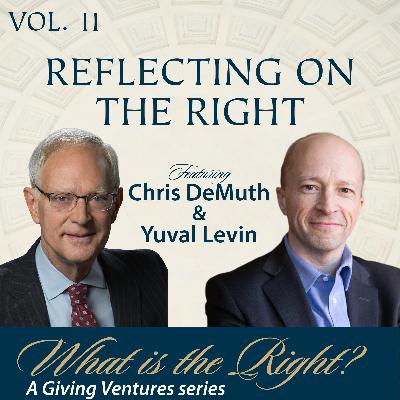
In this capstone episode of the "What Is the Right?" series, we consider the state of the Right today and where it's headed in the years to come. In this limited series, we've explored the different factions and flavors that make up what we would broadly call "the Right" in America today. We've looked at freedom conservatives and the New Right, talked to libertarians and traditionalists, explored fusionism and MAGA, and we've considered how Catholic, Jewish, and Evangelical conservatives define themselves today.
Through it all, we've heard a variety of takes on where we stand, where we're going, and how the ideological landscape has shifted. There are some clear fault lines, particularly between the New Right or National Conservative crowd and the Freedom Conservative/fusionist set, notably in how to utilize power in this current moment where it’s clear the right has power and political capital to spend. So what's next? Can these factions come together in a new fusionism? If so, what does that look like? And if not, are we bound for a fracturing of the Right unlike we've seen in our lifetimes?
To explore these questions are two luminaries of the conservative movement, Yuval Levin and Chris DeMuth. Yuval is the Director of Social, Cultural, and Constitutional Studies at the American Enterprise Institute and a deep thinker on the Constitution, institutions in American government and civics, and conservative thought. Christopher DeMuth is the former head of the American Enterprise Institute. He helped to organize the first National Conservatism conference and remains active in the NatCon world, regularly speaking at events and writing op-eds on from a national-conservative perspective.
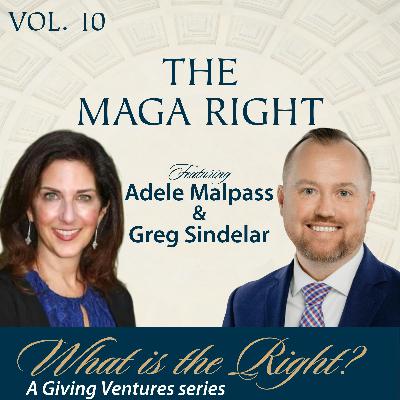
Our summer series on "What Is the Right?" has examined the factions that shape the modern conservative movement, from libertarians and traditionalists to fusionists and the New Right. Yet one force has loomed in the background throughout our conversations: Trumpism. While we have focused on ideas more than individuals, it’s impossible to take stock of today’s Right without considering the MAGA movement and the impact it has had on conservative policy and priorities.
As we look ahead to a post-Trump political era—whether in 2029 or sooner—the question isn’t just what becomes of Donald Trump the man, but what becomes of Trumpism as a set of ideas and a policy agenda. In this episode, we explore what MAGA means, how it has shaped the intellectual and institutional life of the Right, and what influence it may continue to exert in the years ahead.
Two leaders well positioned to speak to this are Greg Sindelar and Adele Malpass. Greg is the interim president of the America First Policy Institute and CEO of the Texas Public Policy Foundation, one of the nation’s most effective state-based think tanks. Adele is the president of the Daily Caller News Foundation, the nonprofit arm of the Daily Caller, a key voice for many MAGA-aligned ideas and policies.
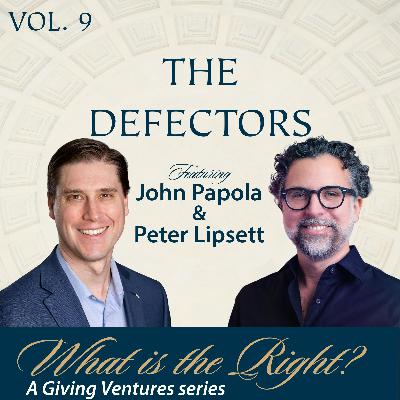
This episode of "What Is the Right?" features a conversation on the coalition of newcomers who have moved to the right in recent years. In response to the Black Lives Matter movement, the erosion of free speech on the left, and the rise of gender ideology, many who would not have formerly considered themselves conservative now feel at home on the right. Some have adopted the traditional values and policies of the conservative movement, while others appear to be temporary fellow travelers who would drift leftward again should the Democratic Party move to the center.
To help make sense of this new coalition of defectors, Peter is joined by John Papola. John is Founder and CEO of Emergent Order Foundation, a nonprofit studio dedicated to telling heroic stories of virtue that celebrate American freedom and the potential it unlocks in each of us.
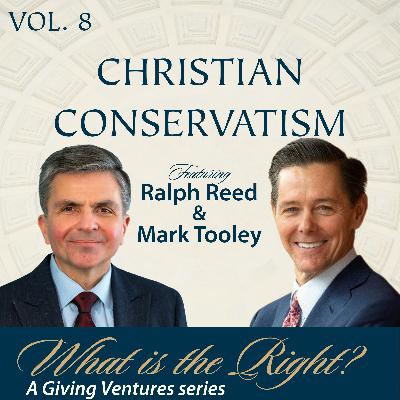
Christian thought has long been intertwined with political life in America, and churches have long played a central role in civic life and in social movements. Groups like Moral Majority and the Christian Coalition were essential to conservative victories, both at the ballot box and in policy during the '80s and the '90s. And sometimes we' even hear the term "evangelical" used synonymously to mean conservative or Republican, whether rightly or wrongly. In this episode, Peter explores where the Christian community fits on the right side of the ideological spectrum as part of the "What is the Right?" series. Joining him are Ralph Reed and Mark Tooley.
Ralph Reed leads the Faith and Freedom Coalition, formed in 2009 to educate and mobilize people of faith to advance pro-family and pro-freedom policies. Ralph is also chairman and CEO of public affairs firm Century Strategies. Mark Tooley is the president of Institute on Religion and Democracy, an ecumenical think tank that aims to rally Christians to advance biblical historical Christianity and affirm its role in democratic society.
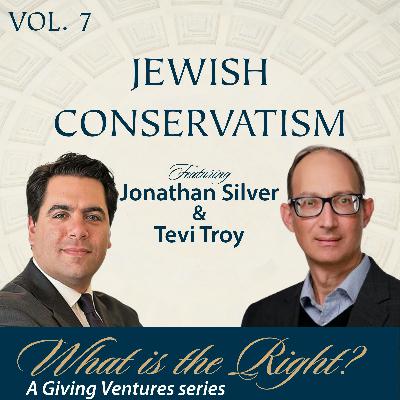
Our summer series on "What Is the Right?" has explored the many ideological camps that make up the Right today, from libertarians and traditionalists to fusionists and "FreeCons." In this episode, we explore the intersection of the Jewish faith with conservative thought. Today, antisemitism is on the rise, Israel is at war, and U.S. Republicans are thinking through what an America-First foreign policy should look like. By stepping back and getting a bird's-eye view of how the Jewish community interacts with conservative movement, the contributions of Jewish thought to Western Civilization, and the work Jewish nonprofits are doing, we hope to have a better sense of where to go from here. Two of the thinkers and leaders best positioned to speak to the Jewish conservative intersection are Tevi Troy and Jonathan Silver, who join Peter for this episode.
Tevi Troy is a senior fellow at the Ronald Reagan Institute, a Senior Scholar at Yeshiva University’s Straus Center, and a former Deputy Secretary of HHS and senior White House aide. Jonathan Silver is the Chief Programming Officer of Tikvah, the editor of Mosaic, and the Warren R. Stern Senior Fellow of Jewish Civilization.
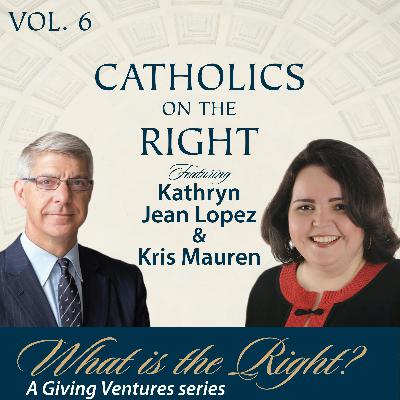
In this episode of "What Is the Right," we're turning our attention to the religious dimension at play on the American Right. From the often-talked-about, rarely-understood Evangelical voting bloc to observant Jews and everything in between, it's a confusing landscape. Religious groups add a layer of complexity to the freedom-vs.-order tension we've been exploring in this series as we think about what it means to be conservative or liberal theologically in addition to politically. Indeed, our guests in this first episode are hesitant to apply today's political labels to their own tradition.
Joining Peter to explain Catholicism in the public square and in conversation with political conservatism are Kathryn Jean Lopez and Kris Mauren. Kathryn is a Senior Fellow at the National Review Institute, where she directs the Center for Religion, Culture, and Civil Society. She is also the Religion Editor for National Review magazine and a Fellow at the Catholic University of America's Institute for Human Ecology. Kris is President and co-Founder of the Acton Institute, a think tank based on Grand Rapids, MI. Acton works to promote a freer and more virtuous society with research and resources that highlight the benefits and ethical foundations of free markets.
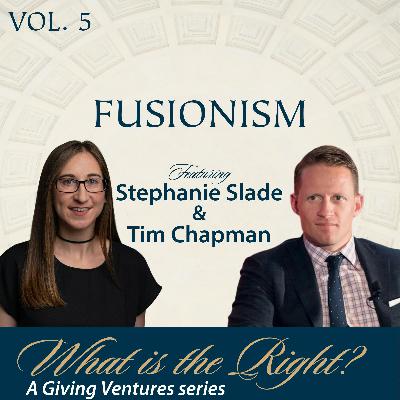
In the fifth installment of our “What is the Right?” summer series, Peter explores the philosophy of Fusionism. As the name implies, Fusionism melds together different strands of conservatism into a single winning coalition. This is often understood as the three-legged stool of conservatism, bringing together traditionalist conservatives, libertarians, and anti-communists into a coalition that ended the Cold War. But as we will hear, that isn't necessarily the right way to think about it.
This episode features two great thinkers in the Fusionist movement, Stephanie Slade and Tim Chapman. Stephanie has established herself as perhaps the foremost thinker about Fusionism today, and is careening toward a deadline on a new book exploring the subject that'll be out next year. She is a Senior Editor with Reason Magazine, as well as a fellow in liberal studies at the Acton Institute. Tim Chapman is President of Advancing American Freedom, a newer group started by Mike Pence. He also co-founded Heritage Action, the activism arm of Heritage Foundation, where he worked closely with Jim DeMint, and also ran Nikki Haley's Stand for America organization.
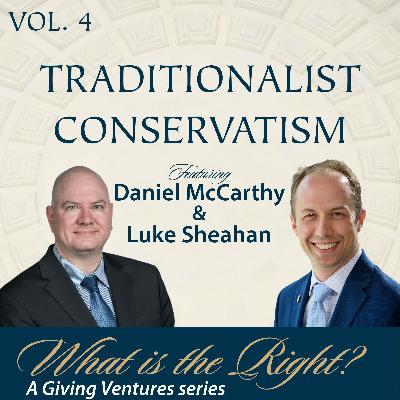
This episode is the fourth installment in our summer series on "What Is the Right?" here on Giving Ventures. Over the course of the summer months, we are looking at the different factions and flavors of what it means to be on the right side of the ideological spectrum in this unique moment we're in. So far, we've explored the Freedom Conservatives, Libertarians, and the New Right. This episode explores the traditionalist wing of conservatism.
At a quick glance, you might describe Traditionalist Conservatives as the social conservatives in the postwar coalition that culminated in the Reaganism of the '80s. But that's probably a little bit simplistic. On the landscape of the Right, the Traditionalists can be found on the opposite end of the spectrum from Libertarians. Order, virtue, and continuity with the past are of greater concern to the Traditionalists than unleashing the free market or ensuring government sticks to protecting life, liberty, and property. Conserving the principles of the American Founding is buttressed by the preservation of the Western Tradition and its tension between freedom and order.
The episode features Daniel McCarthy and Luke Sheahan. Daniel is Vice President for Publications at the Intercollegiate Studies Institute and Editor of ISI's Modern Age, which was launched by Russell Kirk and Henry Regnery in 1957 as a forum for conservatives of various stripes to debate their ideas. Luke is an assistant professor in the Department of Political Science at Duquesne University, and a nonresident scholar in the Program for Research on Religion and Urban Civil Society at the University of Pennsylvania. He is also editor of The University Bookman, the online journal of book reviews published by the Russell Kirk Center for Cultural Renewal.
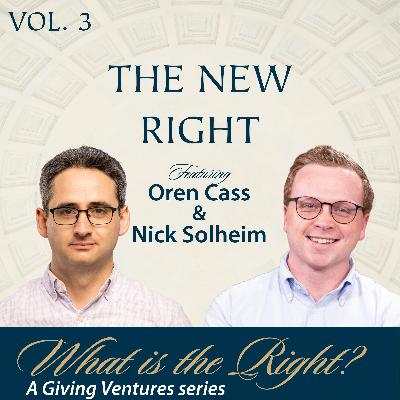
For the third installment in the "What Is the Right?" series, we're featuring the New Right. While the Freedom Conservatives and Libertarians we've spoken with in the last two episodes hold to the importance of free markets, today's guests are skeptical of what they see as too much deference to laissez-faire economics. Over the past decade, the New Right has emerged as a force to be reckoned with in Washington. Challenging the Reaganite consensus and offering a vision for the Right that's more centered on family, community, and nation, the New Right's contrast to our previous episodes provides food for thought. In this episode, Peter is joined by Oren Cass and Nick Solheim, two leaders in the New Right movement who will help us understand this ascendant faction.
Oren Cass is the founder and chief economist at American Compass, an organization focused on reorienting what productive work and economic development mean in modern society, away from growth for its own sake and more strongly factoring in family and community. His 2018 book, The Once and Future Worker: A Vision for the Renewal of Work in America, had a major impact in shifting the conversation around what economic and labor policy should be in America. He is editor of the new volume The New Conservatives: Restoring America's Commitment to Family, Community, and Industry.
Nick Solheim is co-founder and, as of earlier this year, CEO of American Moment. American Moment focuses on identifying and training young leaders toward being public policy leaders that support strong families, a sovereign nation, and prosperity for all. Nick also hosts American Moment's podcast, Moment of Truth.
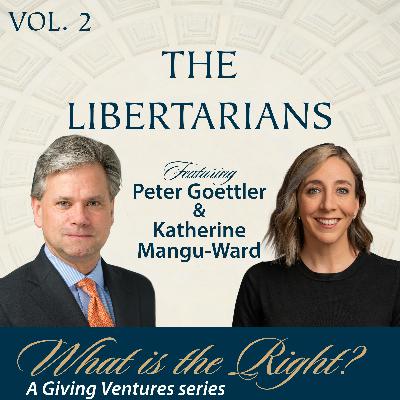
This episode is the second installment in the "What Is the Right?" summer series for Giving Ventures. In this series, we're exploring the different factions and flavors that make up the right side of the ideological spectrum here in this weird political moment we live in. Today, we're looking at a group that some say isn't even fairly categorized as "right" at all: libertarians.
How do you fairly describe what "libertarian" really means? They are the smallest of the small-government people, the most live-and-let-live of any group. It is the focus on freedom and individual liberty that means you also get a free range of ideas on what that liberty means. This episode features two great leaders in the libertarian space: Katherine Mangu-Ward and Peter Goettler.
Katherine is Editor-in-Chief of Reason Magazine, the longest running libertarian magazine. Reason is a key cog in the libertarian ecosystem, and Katherine's leadership is doing much to keep it that way. Peter Goettler is President and CEO of the Cato Institute, the foremost libertarian think tank, based in Washington, DC. For more than 40 years, Cato has been the place for sound, reasoned policy ideas from a libertarian perspective.
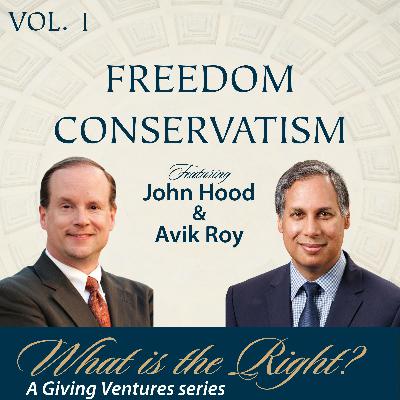
What is "the Right"? Over the next several months, Giving Ventures will be exploring this question through a series of interviews with leaders in the conservative and libertarian space. From the libertarians to the traditionalists, the national conservatives and the New Right—this series will give you a sense of the scope and diversity on the American Right.
In this inaugural episode, we're considering Freedom Conservatism. Launched in response to the increasingly popularity of nationalism and populism in conservative quarters, Freedom Conservatism aims to preserve a Reaganite understanding of classical liberalism. To help unpack what it means to be a "FreeCon," Peter is joined by Avik Roy and John Hood, who helped launch the Freedom Conservatism movement with a Statement of Principles in the summer of 2023. That statement boasts signers like former Florida Governor Jeb Bush, columnist George Will, and former Heritage Foundation President Kay Cole James.
John Hood is president of the John William Pope Foundation, based in Raleigh, and previously spent many years running North Carolina's free-market think tank, the John Locke Foundation. Avik Roy is the founder and chairman of the Foundation for Research on Equal Opportunity, a think tank focused on promoting market-based solutions to economic and social issues affecting low and middle-income Americans.

Comments

Download from Google Play

Download from App Store
 United States