


 Claim Ownership
Shrink For The Shy Guy
Subscribed: 3,801Played: 128,783
Subscribe

© 2026 2014 Dr. Aziz Gazipura
Description
Everyone has some level of fear in social situations. For you it might be meeting someone new, networking, dating, sales conversations, presenting, public speaking, or business meetings.
In order to get to the next level in your life, create better relationships, find love, earn more money, or advance in your career, you must overcome fear, social anxiety, and self-doubt. In order to be outstanding, you must have confidence.
That's where Dr. Aziz comes in. After struggling with shyness and social anxiety for 9 years, he decided to take life into his own hands and master confidence. A decade later, he is the world's leading expert on social anxiety and social confidence. He received a doctorate in clinical psychology from Stanford and Palo Alto Universities and now works as a confidence and success coach with people from all over the world.
This show contains the profound and immediately life-changing information he teaches high-paying clients every day. Learn from the best about how to overcome social fear, gain confidence in dating, public speaking, sales presentations, business meetings, and all of life.
633 Episodes
Reverse

What if the real reason you hold back, soften what you say, or carefully rehearse how you come across isn’t actually about confidence at all? What if, underneath it all, there’s a deeper fear—that if people saw the real you, they simply wouldn’t like you?
In this episode, Dr. Aziz explores the hidden fear that quietly drives people-pleasing, overthinking, and the constant effort to present yourself the “right way.” Many people live with an unspoken belief that something about them is fundamentally not enough—like they’ve been dealt a bad hand in life. From that place, it becomes natural to compensate: improving, performing, polishing a persona, and trying to become someone who will finally be accepted.
But as Dr. Aziz explains, this strategy creates a painful paradox. When approval comes, it often brings anxiety and imposter syndrome. When it doesn’t, it seems to confirm the belief that something is wrong with you. Either way, the deeper desire we all have—to feel truly seen, known, and connected—remains unfulfilled.
Drawing from years of coaching and insights from his Not Nice Live workshop, Dr. Aziz reveals how this pattern forms and why it keeps people stuck in masks and performances instead of authentic connection. He shows that the real path to belonging isn’t through perfecting yourself, but through taking the courageous risk to be more real.
You’ll discover why trying to be who you think others want can never create the belonging you crave—and how genuine confidence begins to grow when you allow yourself to be seen as the imperfect, evolving human you truly are.
Tune in to learn how small, everyday moments of authenticity—sharing a preference, setting a boundary, speaking honestly—can begin to dismantle the fear of rejection and open the door to deeper confidence, freedom, and real connection.
Most people don’t walk into conversations thinking they’re trying to win approval. They believe they’re simply being polite, agreeable, or easy to get along with. Yet beneath the surface, many people are unknowingly running a subtle pattern—constantly scanning others for signs that they’re doing well, saying the right thing, or being liked.
In this episode, Dr. Aziz explores what he calls “approval harvesting.” This is the unconscious habit of tracking other people’s reactions—looking for smiles, laughter, nods, or praise—to determine whether you’re okay. While it may seem harmless, this pattern can quietly turn conversations, social gatherings, dating, and even workplace interactions into performances where the goal becomes getting approval rather than expressing yourself. Through relatable examples—like walking into a dinner party and monitoring every reaction—Dr. Aziz shows how this internal “approval tracker” can create social anxiety, performance pressure, and a growing disconnection from your authentic self. Over time, you may start filtering, softening, or reshaping what you say just to keep yourself in the “good column” of others’ reactions.
At the root of this pattern lies a deeper equation many people unknowingly adopt: approval equals worth. When approval is present, you feel relief and validation. When it isn’t, self-doubt and anxiety surge.
This dynamic can drive people-pleasing, overthinking, and a constant effort to manage how others see you. Dr. Aziz invites you to step back and observe this pattern in your own life. Instead of criticizing yourself for it, you’ll learn how to notice when approval harvesting appears—especially in uncertain social situations—and begin asking a powerful question: What would you do if your worth wasn’t on the line?
Tune in to discover how awareness of this hidden pattern can be the first step toward greater confidence, authenticity, and a deeper connection with others.

It’s easy to believe that once we arrange our life correctly, the anxiety will quiet and the sense of lack will disappear. A little more money. A different role. A better version of ourselves. Then things will finally settle.
This conversation explores that subtle threshold—where striving turns into infatuation, where comparison erodes self-trust, and where we begin chasing a fantasy of a life that is somehow all upside. Dr. Aziz sits down with Dr. Dave Tuck to reflect on values, identity, and the illusion that fulfillment lives somewhere outside our current experience. Together they examine the tension between growth and gratitude, ambition and alignment, and what happens when we stop trying to engineer a perfect life and instead learn to see the one we’re already in.
This is not a formula for attracting more. It’s an inquiry into self-worth, clarity, and the steady ground that comes from knowing who you are.
You might find yourself looking at your own life a little differently.
Most people don’t walk around thinking, “My worth is conditional.” They just feel the tension when things aren’t going well—and the relief when they are.
This episode sits with that tension. The quiet pressure to perform, to keep up, to prove something—often without realizing that your sense of value has been hooked onto outcomes, approval, or progress. When those things rise, you feel lifted. When they fall, something inside collapses. Not because anything essential changed, but because worth was never free to begin with.
Dr. Aziz reflects on how conditional self-worth forms, how it hides in plain sight, and how it can quietly run an entire emotional life. This isn’t a strategy session or a mindset fix. It’s an invitation to notice what you’ve tied yourself to—and what happens when that grip loosens.
You may find yourself recognizing something familiar, and feeling a little more space around it.

Join Dr. Aziz live for a 3-day VIRTUAL event: Not Nice LIVE > Go here for details and tickets.
Most people don’t struggle to speak up because they lack communication skills.
They struggle because crossing that line feels dangerous.
In this episode, Dr. Aziz Gazipura explores why you may still feel stuck in passivity or half-assertiveness, even if you’ve spent years working on yourself. You understand the ideas. You know you “should” speak up. And yet, when the moment arrives, something pulls you back.
Rather than offering scripts or techniques, Dr. Aziz focuses on the real breakdown point: the guilt and fear that surface just before honesty. He examines how indirectness becomes a form of self-protection, why “gentle” assertiveness often fails to create real change, and how unspoken rules about being good, kind, or acceptable quietly limit your life.
This episode isn’t about becoming aggressive or finding better words. It’s about recognizing the internal code that says, “If I’m really honest, I’ll lose everything,” and understanding why that belief continues to run your behavior unless it’s directly confronted.
If you already know a lot about assertiveness but haven’t been able to live it consistently, this conversation names the threshold you may have been standing at for years—and what it actually takes to cross it.
---------------------------------
Many people reach a point where they realize something important: being “nice” isn’t working anymore.
For years—sometimes decades—they believed that staying flexible, not rocking the boat, and avoiding discomfort was the right way to live. They told themselves they were being considerate, kind, easygoing. They avoided pressuring people, avoided conflict, avoided making anyone uncomfortable.
And then slowly, quietly, the cost became undeniable.
Resentment started to build. Anxiety didn’t go away. Relationships felt draining or unsatisfying. Opportunities were missed. A subtle but persistent sense of frustration crept in—often accompanied by the feeling, “I’m not really being me.”
So they arrive at an insight that feels like progress:
I need to speak up for myself.
And that insight is progress. But it’s not the breakthrough.
Because knowing that you should speak up does not automatically mean that you can—or that when you do, it will actually work.
Why “Just Speak Up” Usually Fails
Many people assume assertiveness is a simple behavioral skill. Learn the right words. Use the right tone. Say the thing.
But assertiveness isn’t primarily about what you say.
It’s about the inner stance you’re coming from when you say it.
This is where things break down.
Often, people move from passivity into what looks like assertiveness on the surface—but internally, they’re still trying not to upset anyone. They soften their message. They hint. They explain excessively. They bring things up indirectly, hoping the other person will “get it” without them having to actually claim what they want.
So they say something like:
“I just wanted to mention that you said you were going to do X, and then it didn’t happen… but it’s okay, I handled it.”
Technically, they spoke up.
Emotionally, they didn’t.
Nothing meaningful changes—and then comes the conclusion:
“See? Speaking up doesn’t work.”
So they retreat back into silence, often with more resentment than before.
The Passive → Gentle → Stuck Cycle
This is one of the most common cycles I see:
First, passivity. Then, a tentative attempt to speak up. Then, disappointment when nothing changes. Then, withdrawal.
Over time, resentment accumulates—not just toward the other person, but toward yourself. Because deep down, you know you didn’t fully say what was true.
What’s most painful isn’t that the other person didn’t change. It’s that real contact never happened.
You weren’t fully there.
The Real Barrier Isn’t the Situation
People usually have a long list of reasons why they can’t be more direct:
“It’s my boss.” “It’s my parent.” “It’s my partner.” “That would be mean.” “That would be selfish.” “You can’t say that in this situation.”
These reasons feel convincing because they’re emotionally charged. But they all point away from the real issue.
The real issue isn’t the circumstance.
The real issue is that you’re operating within a very narrow internal permission structure—one designed to protect you from something that feels catastrophic.
What Are You Actually Afraid Of?
Imagine being fully honest in a situation where you usually hold back.
Not cruel. Not attacking. Just clear.
Naming the pattern. Naming the impact. Naming what does and doesn’t work for you.
Most people feel immediate discomfort just imagining this.
Tightness in the chest. A sinking feeling. An urge to pull back.
That discomfort usually isn’t about politeness.
It’s about fear and guilt.
And underneath those emotions is a deeper belief:
If I’m truly myself, I will lose everything.
Lose love. Lose approval. Lose safety. Lose belonging.
So your nervous system learned a rule long ago:
Don’t be too real.
That rule doesn’t disappear just because you intellectually understand assertiveness.
The “Hidden Code” Running Your Life
Everyone who struggles to speak up is running unconscious lines of code.
They sound like:
“If I ask for something, I’m selfish.” “If I make someone uncomfortable, I’m bad.” “If I say no, I’ll hurt them.” “If I’m direct, I’ll be rejected.”
What’s striking is that most people don’t consciously agree with these beliefs.
When you say them out loud, they sound extreme—even absurd.
And yet, they quietly govern behavior.
You don’t need more confidence tips until you start identifying these rules.
Because as long as they remain unexamined, they run the show.
Why Avoidance Keeps the Fear Alive
Avoidance feels safe in the short term. In the long term, it guarantees that the fear never resolves.
Just like a phobia, the fear only weakens when you approach what you’ve been avoiding—in a structured, supported way.
As long as you keep telling yourself, “I’ll say it later,” or “It’s not worth it,” or “They won’t change anyway,” the old code stays intact.
And life quietly shrinks.
What Actually Creates Change
Change doesn’t come from more information.
It comes from:
Becoming conscious of the rules you’re living by
Questioning whether they’re actually true
Taking real interpersonal risks—consistently
This isn’t about being aggressive. It’s about being real.
And yes—at first, the right thing often feels wrong.
Assertiveness can feel selfish. Honesty can feel dangerous. Boundaries can feel cruel.
Those feelings are not signs you’re doing something wrong.
They’re signs you’re upgrading old code.
A Simple Place to Start
Instead of trying to “be more assertive,” start here:
Notice one situation where you hold back. Notice what you feel when you imagine being direct. Ask yourself: What rule am I following right now?
Just seeing it begins to loosen its grip.
From there, real change becomes possible.
Final Thought
Knowing how to speak up isn’t enough because the problem was never a lack of knowledge.
The problem is fear of losing connection by being yourself.
And the truth—one that must be experienced, not just understood—is this:
You don’t lose everything by being real.
You lose everything by never being you.
Until we speak again, have the courage to be who you are— and know, on a deep level, that you’re awesome.

Join Dr. Aziz LIVE for a 3-day virtual event: Not Nice LIVE > Go here for details and tickets.In this episode of Shrink for the Shy Guy, Dr. Aziz exposes one of the most insidious traps keeping people stuck in anxiety, guilt, and people-pleasing: The Nice Trap.
This subtle form of self-erasure convinces you that being agreeable, self-sacrificing, and undemanding will earn you love, respect, and belonging. But in reality, it does the opposite. You feel anxious, disconnected, and unseen—because you're not showing up as you.
Dr. Aziz breaks down how this trap gets wired early in life, the invisible rules that keep you playing small, and the internal “trip wires” that trigger guilt the moment you try to break free. More importantly, you’ll learn how to spot those rules… and begin rewriting them.
Packed with insights, mindset shifts, and real-world strategies, this episode invites you to reclaim your boundaries, speak your truth, and finally stop trading authenticity for approval.
🎧 Ready to escape the Nice Trap? Tune in now and take your first step toward freedom.
------------------------------------
There is a trap that countless people fall into without even realizing it—and I know it well, because I lived inside it for many years.
It’s sticky. It’s invisible. And even when you start trying to escape it, there are hidden trip wires that snap you right back inside.
I call it the Nice Trap.
Today, I want to show you exactly what this trap is, how to recognize when you’re stuck in it, and—most importantly—how to begin freeing yourself from it in a way that actually lasts.
How You Know You’re in the Nice Trap
You might be in the Nice Trap if any of this sounds familiar:
You have a hard time saying no. When someone asks you for something, you feel compelled to say yes—even when it costs you. You struggle to ask for what you want. Disapproval or conflict feels deeply unsettling.
You might soften your words, hide your true thoughts, or reshape yourself in the moment just to avoid tension. You let situations unfold that you don’t actually want because you don’t want to “make a scene.” You feel intensely uncomfortable being direct, expressing irritation, or showing anger—and if you do, you feel like you’ve done something terribly wrong.
At first glance, this all looks like being a “good person.”
And that’s what makes the trap so dangerous.
The Story That Keeps the Trap Alive
Underneath all of these behaviors is a quiet, powerful belief:
If I’m agreeable, self-sacrificing, and undemanding, I’ll earn safety, love, and acceptance.
If you give enough… If you don’t rock the boat… If you don’t burden anyone…
Then eventually, everything will work out. You’ll be loved. You’ll belong. Life will be smooth.
That’s the promise.
And it’s also the lie.
Because the more you abandon yourself to keep the peace, the more resentment, hunger, and desperation quietly build inside you. You start erasing yourself in exchange for belonging.
And the worst part?
You don’t even get real belonging in return.
The Hollow Version of Connection
When you’re stuck in the Nice Trap, you may technically have people in your life—friends, partners, coworkers—but something still feels off.
You don’t fully relax into the connection. You don’t feel truly seen. You don’t feel known.
Because you aren’t actually there.
You’re playing a role. The nice one. The easygoing one. The reliable one.
And people can’t deeply know you if you’re performing.
This is why so many “nice” people feel lonely even when they’re not alone.
Why the Trap Is So Hard to Escape
The Nice Trap is confusing because parts of it look healthy.
Generosity is part of real relationships. Consideration does matter. Being supportive isn’t wrong.
So where’s the line?
For many people stuck in the trap, the line quietly disappears. It’s always yes. Always accommodating. Always putting yourself last—unless things become so extreme that you’re forced to push back.
And sometimes, it even “works” in the short term. Certain people love how giving and undemanding you are. They’re happy to receive without reciprocating. Over time, the dynamic becomes one-sided—and you feel more and more depleted.
This isn’t love. It’s erosion.
The Trip Wires That Pull You Back In
When you start trying to escape the Nice Trap, something interesting happens.
You might finally say no. You might express a need. You might set a boundary.
And even if the situation goes well externally… internally, you feel awful.
Guilt. Anxiety. A sense of danger.
That’s a trip wire.
Every time guilt appears, it means you’ve broken an internal rule—often one you didn’t even know you were living by.
So the question becomes: What rule did I break?
“I shouldn’t say no.” “I shouldn’t burden people.” “I shouldn’t make things harder for others.”
When you slow down and investigate these rules, you often realize they’re old—learned early in life—and deeply unfair. You may hold yourself to standards you would never expect of anyone else.
And unless these rules are examined and rewritten, they will snap you right back into the trap every time.
Why Brute Force Doesn’t Work
Many people try to escape the Nice Trap by forcing themselves to “just be more assertive.”
That rarely works.
Without understanding the internal rules, guilt and fear overwhelm you. Your nervous system interprets self-expression as danger—and the moment discomfort shows up, your mind concludes:
See? Speaking up was the problem.
And you retreat.
Real change doesn’t come from bulldozing yourself into a new behavior. It comes from understanding the internal system that made niceness feel necessary in the first place—and gently, steadily creating new experiences that teach your body it’s safe to be you.
A New Way Forward
Breaking free from the Nice Trap isn’t about becoming harsh, selfish, or uncaring.
It’s about reclaiming your right to exist fully.
Your right to say no. Your right to have needs. Your right to be honest.
And yes—this takes practice, reflection, and real-world experimentation. Not overnight transformation. Not intellectual insight alone.
But with the right awareness, support, and experiences, the trap loosens its grip.
And something extraordinary happens.
You feel more alive. More grounded. More real.
An Invitation to Reflect
As you sit with this, ask yourself:
Where in my life am I still operating under the belief that being agreeable and self-sacrificing will earn me love? What emotions show up when I try to step outside that role? What rules might be running the show behind the scenes?
This isn’t about fixing yourself. It’s about freeing yourself.
And that freedom is possible.
Until we speak again, have the courage to be who you are— and know, on a deep level, that you are already enough.
In this episode of Shrink for the Shy Guy, Dr. Aziz dives deep into one of the sneakiest traps that keep us stuck: deferring decisions. Whether it’s fear of making the wrong choice, wanting more clarity, or simply waiting for the “perfect time,” delaying decisions comes at a steep cost—and it’s often invisible until it’s too late.
Dr. Aziz unpacks how avoiding decisions drains your confidence, erodes momentum, and reinforces the illusion that you're not ready or capable. He shares a radically freeing mindset shift that allows you to make powerful choices now, even if you're scared, uncertain, or don’t feel 100% “ready.”
🎧 Tired of waiting for the stars to align before you move forward in your life, career, or relationships? Tune in now and discover how making the decision—any decision—is often the most powerful step you can take.
---------------------------------------------------
Most people don’t ruin their lives with one dramatic mistake.
They do it quietly—by waiting.
By postponing conversations. By delaying decisions. By telling themselves, “I’ll figure it out later.”
And later becomes years.
Today, I want to talk about something uncomfortable—but liberating if you really let it land: the cost of deferring decisions. Not just at the end of life, but right now, this year, this week.
Because the goal isn’t to someday look back and feel okay about your life.
The goal is to feel fully alive now.
The Regret That Wakes People Up Too Late
There’s a well-known body of work from hospice nurse Bronnie Ware, who spent years listening to people reflect on their lives as they were dying. One regret stood above all others:
“I wish I’d lived a life true to myself, not the life others expected of me.”
Let that sink in.
Not “I wish I worked harder.” Not “I wish I made more money.”
But I wish I’d been myself.
And if that’s what people realize at the end, the real question is: How many people are already living with that regret right now—just more quietly?
Whose Life Are You Actually Living?
Living “your life” sounds obvious… until you really examine it.
Are you living the life your parents wanted? Your partner expects? Your industry rewards? Your internalized image of a “good” or “nice” person demands?
Most people don’t consciously choose someone else’s life. They drift into it. Piece by piece. Decision by decision. Or more accurately—non-decision by non-decision.
And over time, you end up steering nothing… while your life still moves forward.
The Trap of Endless Information
We live in an age that promises certainty through information.
If I just read one more book… Watch one more video… Gather a little more data…
Then I’ll know what to do.
But here’s the truth most people don’t want to hear:
Information does not create action.
At best, it creates temporary motivation. At worst, it becomes a sophisticated way to avoid deciding.
Many people become incredibly informed—and quietly stuck.
Why Decisions Feel So Uncomfortable
The word decision literally means “to cut off.”
When you decide, you eliminate options. You create consequences. You step into uncertainty.
And that’s terrifying for the part of you whose job is survival, not fulfillment.
So instead, you hover in “I’m not sure yet.”
But here’s the uncomfortable reality:
Not deciding is still a decision.
If you don’t decide to leave, you decide to stay. If you don’t decide to speak up, you decide to remain silent. If you don’t decide to act, you decide to keep living exactly as you are.
Action Is the Antidote to Regret
There is no path in life that avoids discomfort.
The only real choice is which discomfort you choose:
The sharp, temporary discomfort of action
Or the dull, chronic ache of regret and self-betrayal
Living fully doesn’t require dramatic gestures or burning your life to the ground. It requires something much simpler—and much harder:
Decide. Then act. Then do it again.
Small decision. Real action. Big decision. Imperfect action.
It’s not about getting it “right.” It’s about reclaiming the steering wheel.
An Invitation—for Today
If you’ve been waiting for certainty, confidence, or clarity before acting—this is your wake-up call.
Clarity comes after movement. Confidence grows through action.
So don’t overthink this.
Pick one decision you’ve been deferring. Make it. Act on it—today, in some real, tangible way.
That’s how aliveness returns.
And that’s how regret never gets a chance to take root.
Until we speak again— have the courage to be who you are, and know, on a deep level, that you’re already enough.

🌟 In this empowering kickoff to 2026, Dr. Aziz challenges a deeply held belief: that being nice means you care more. In fact, the opposite might be true. In this episode, you’ll discover how what looks like “caring” is often fear, over-responsibility, and codependence in disguise.
If you’ve been stuck in people-pleasing, constantly saying yes when you want to say no, feeling guilt when others are upset, or believing your worth is tied to keeping everyone happy—this episode is your wake-up call. Dr. Aziz breaks down the emotional trap of chronic niceness and reveals how true caring comes not from fear, but from authenticity and healthy boundaries.
🎧 Ready to stop living for others’ approval and start living as you? Tune in now and learn how to liberate yourself from the Nice Cage—once and for all.
----------------------
A couple of weeks into a new year, a quiet question tends to surface—sometimes with excitement, sometimes with dread:
Is this year actually going to be different?
Not in the hype-driven, “crush your goals” sense. Not in the motivational-poster version of change. But in the places that matter most. In how you feel inside. In how free you feel socially. In whether you finally stop holding back, second-guessing yourself, or feeling like you’re never quite enough—no matter how much you achieve on the outside.
That’s the territory we’re stepping into here.
Not weight loss. Not business optimization. Not productivity hacks. Those matter, sure—but they’re not my wheelhouse. What I help people change is something deeper: social confidence, emotional freedom, the ability to be fully yourself without fear, apology, or chronic self-monitoring.
And the truth is, most people don’t fail to change because they lack desire.
They fail because they’re choosing comfort over truth.
Why Comfort Is the Silent Enemy of Real Change
When people say they want to change—be more confident, build deeper relationships, speak up, date, lead, or finally feel like they belong—the question isn’t what they want.
The real question is: Are they actually going to do the things required to get it?
Most people aren’t lying to others about their intentions. They’re lying to themselves.
They say they’re “working on it.”They read books.They listen to podcasts.They talk things through with therapists, coaches, or even AI.
And all of that can be valuable.
But here’s the hard truth I’ve seen over and over again:
You can work on something for years without ever transforming it.
Because working on it can still be comfortable.
Talking about change is comfortable.Understanding your patterns is comfortable.Analyzing your past is comfortable.
Transformation is not.
The Difference Between a Challenge and a Core Challenge
Some difficulties in life are seasons. Others are core challenges.
A core challenge isn’t something everyone goes through in the same way. It’s a recurring pattern that stays with you for years—sometimes decades—unless something fundamentally shifts.
For some people, that’s addiction.For others, chronic pain.For many professionals I work with, it’s social confidence, belonging, and self-worth.
If you’ve been trying to feel more confident or connected for years—and despite effort, insight, and intention, you still feel stuck—that’s a sign you’re dealing with something core.
And core challenges don’t resolve through “tending.”
They resolve through new experiences.
Why Insight Alone Isn’t Enough
Understanding why you’re anxious doesn’t cure anxiety.
Knowing where people-pleasing came from doesn’t automatically free you from it.
Because the real issue underneath social anxiety and excessive niceness isn’t tactics—it’s relationship.
Your relationship with yourself.Your relationship with other people.Your belief about whether you’re lovable, acceptable, and safe to be seen.
That belief doesn’t change through thinking.
It changes through risk.
You have to risk being more real.You have to risk saying no.You have to risk being visible, honest, imperfect, and human.
And when you do—with the right structure and support—something extraordinary happens:
You discover that you survive.You discover that people don’t leave.You discover that you can handle discomfort.
And slowly, your nervous system learns a new truth.
Looking at the map doesn’t get you across the bridge. You have to walk it.
Why Most People Stay Stuck (Even When They’re Trying)
What I see again and again is this pattern:
People avoid discomfort.Then they decide to “work on themselves.”But they choose a comfortable way to do it.
And when comfort is the priority, deep change never happens.
So they try again next year.And the year after that.And five years later, they’re still saying, “I’m working on it.”
Eventually doubt creeps in.
Maybe this can’t change.Maybe this is just who I am.Maybe I waited too long.
And that doubt becomes yet another reason to retreat back into familiarity.
The Truth Most People Don’t Want to Hear
Here it is—clearly, honestly, and without sugarcoating:
Most people will never resolve their core challenges.
Not because they’re broken.Not because it’s impossible.But because it requires a level of commitment, discomfort, and courage they never fully claim.
And if you feel something stirring as you read this—resistance, resonance, or even fear—that’s not a problem.
That’s a signal.
It’s the same signal I’ve heard in my own life.The call to liberation.
What Makes 2026 Different (If You Let It)
Radical transformation is possible.
Not perfection.Not a life without anxiety or doubt.But a life where confidence becomes your default—not something you chase.
Where you stop negotiating with yourself every time you want to speak, connect, or assert your needs.
Where belonging isn’t something you earn from others—but something you carry inside.
I know this is possible because I’ve seen it—hundreds of times—over nearly two decades of doing this work.
And the people who get there aren’t the most talented or disciplined.
They’re the ones who finally choose truth over comfort.
A Question to Sit With
As you move forward this year, don’t ask:
“What do I want?”
Ask instead:
“What am I truly willing to commit to—even when it’s uncomfortable?”
Because that answer will tell you everything you need to know about whether this year becomes another chapter of effort… or the beginning of real freedom.
Until we speak again,have the courage to be who you are—and know, on a deep level, that you belong.
Think you care too much about other people’s feelings? Think again.
In this bold kickoff to 2026, Dr. Aziz pulls back the curtain on the real reason “nice people” overextend themselves, struggle to say no, and feel constantly responsible for everyone’s emotions. Spoiler alert: it’s not because they care too much—it’s because they’re trying to stay safe. Deep down, many people-pleasing behaviors are driven by fear, guilt, and the unconscious belief that your worth hinges on making others happy.
In this eye-opening episode, you’ll learn:
Why over-functioning and “caring” often mask codependency
The hidden emotional cost of being overly responsible
How niceness traps you in an outdated identity that’s not really you
The essential difference between real care and fear-based appeasement
Why it’s time to update your inner operating system—not just tweak your habits
If you’ve ever said yes when you wanted to say no, answered texts out of anxiety, or felt guilty for simply protecting your time and energy, this episode will speak to your soul. And it will challenge you to finally liberate yourself from the nice person identity and step into the bold, authentic leader you were meant to be.
Dr. Aziz also shares a powerful invitation to make 2026 the year you fully upgrade your life—starting with your confidence. Tune in, commit, and get ready to reclaim your freedom.
--------------------------------------------
Why “caring” can be fear in disguise—and how to break free from the Nice Cage
Most people start the new year thinking about goals: relationships, health, career, money, confidence.
But underneath all of that, there’s a deeper goal.
Liberation.
Liberation from the old identity. Liberation from the old operating system. Liberation from social anxiety, people-pleasing, self-doubt… and the nice cage that keeps you small.
And today I want to challenge one of the biggest beliefs that keeps “nice” people trapped:
Nice people don’t actually care too much.
That might sound surprising—because nice people often feel like they care more than everyone else.
They feel guilty if someone’s upset. They say yes when they want to say no. They carry other people’s emotions like they’re responsible for them.
And they tell themselves:
“I care about them, so I can’t disappoint them.”
“If I say no, it means I don’t care.”
“If they’re struggling, who am I to refuse?”
“A good person should help.”
But here’s what I want you to see:
When it feels like you care too much… it often isn’t caring at all.
It’s something else masquerading as care.
The Nice Cage: When “being good” becomes self-erasure
Niceness can feel like virtue.
It can feel like love. It can feel like generosity. It can feel like being a “good person.”
But a lot of the time, niceness is actually a strategy—an unconscious survival strategy—to stay safe.
Because underneath niceness is a fear that sounds like:
“If I upset people, I’ll be rejected.”
“If I disappoint them, I’ll be abandoned.”
“If they’re angry with me, I’m not safe.”
“If I don’t keep them happy… I’m bad.”
So niceness becomes a cage: you keep trying to be acceptable, agreeable, harmless.
And the cost?
You don’t live your life. You live a managed version of yourself.
The big misunderstanding: “Caring” vs. fear
Nice people don’t actually care too much.
They often have something else running the show:
1) Codependence
Codependence is basically:
“I’m okay if you’re okay. And if you’re not okay… I’m not okay.”
So if someone is happy, you relax. If someone is disappointed, irritated, stressed, or hurt—you go into emergency mode.
Your hair is on fire.
“What do you need?” “How do I fix this?” “How do I make it right?”
And it feels like caring.
But really, it’s fear.
2) Over-responsibility
This is the core belief behind niceness:
“I am responsible for your emotional state.”
Not that you’re responsible to feed someone like a baby— but you feel responsible for whether they’re upset.
So you avoid saying no. You avoid being direct. You avoid expressing your truth. You override your own needs.
Because if they’re upset… you feel like you’ve done something wrong.
The “or else” feeling: the clearest sign it’s fear
Here’s one of the easiest ways to tell whether something is care or fear:
If it has an “or else” feeling—it’s fear.
“I have to respond right now… or else.”
“I have to say yes… or else.”
“I have to make them happy… or else.”
“I can’t disappoint them… or else.”
That “or else” is not love.
That “or else” is survival mode.
And it’s usually not about the current situation—it’s an old pattern repeating itself.
Why niceness drains your vitality
Here’s the truth that many nice people don’t want to look at:
You will not be fully alive in the nice operating system.
At best, you can build a life that looks okay on the outside… but it doesn’t feel like your life—because you’re not being you.
And eventually, the nice pattern catches up.
burnout
resentment
being taken for granted
relationships that feel one-sided
physical symptoms, stress, tension, pain
a shrinking life
No matter how much you give, the answer becomes:
“Give more.”
More helping. More fixing. More proving. More caretaking.
And that’s not a path to freedom.
The shift that changes everything
The way out is not “try harder.”
You can’t over-function your way out of this.
The way out is a deeper realization:
What you’ve been calling “care” is often fear.
And when you see that, something opens up:
Saying no becomes healthy—not cruel
Boundaries become respectful—not selfish
Truth becomes connection—not danger
You stop trying to manage people’s emotions
You start living your life again
Because this is the mature truth:
Other people are responsible for their emotions.
And you are responsible for yours.
Real emergencies vs. emotional discomfort
Sometimes people say, “But isn’t it important to show up for others?”
Yes.
There are real crises in life. There are emergencies. There are moments when love calls you to step up.
But here’s the problem:
Nice people treat everyday discomfort like an emergency.
Someone is frustrated. Someone is impatient. Someone wanted something faster. Someone admits disappointment.
And your nervous system reacts like:
“Danger. Fix it now.”
That’s the pattern.
And breaking the pattern means you stop treating emotional discomfort as an alarm bell you must obey.
Your action step: upgrade your operating system
If you want to get free, you’ll need more than a small tweak.
This isn’t “be a little more assertive.”
This is:
Commit to a deeper level of change.
A full operating system upgrade.
A decision that says:
“This year, I’m no longer living inside the nice cage.” “I’m no longer responsible for managing other people’s emotions.” “I will be honest, direct, kind, and real.” “I will live as me.”
Because liberation doesn’t happen from a wish.
It happens from commitment.
Why environment matters (and how transformation accelerates)
Personal responsibility matters.
But you don’t have to do it alone.
One of the fastest ways to change is:
Commitment + the right environment.
That’s why I’ve spent decades investing in mentors, coaching, groups, and training environments.
Because the right environment speeds up what would otherwise take years.
And if you want to do deep work on people-pleasing, niceness, social anxiety, and living with real confidence…
If you’ve been listening to this show for a while and you feel drawn to do this work deeply, you might be a fit for my Unstoppable Confidence Mastermind.
It’s a 12-month program designed to help you:
break free from social anxiety and people-pleasing
build bold, authentic confidence
speak up, set boundaries, and stop over-functioning
create real change that sticks
It’s immersive support over a full year: live calls with me, step-by-step guidance, progress tracking, quarterly check-ins, and a curated community.
If you want to explore it, you can apply using the link above.
You don’t need to become harsh. You don’t need to become selfish. You don’t need to stop caring.
You just need to stop confusing fear with care.
And when you do, you get something back that you might not have felt in a long time:
Freedom. The freedom to be fully you.
Until we speak again—have the courage to be who you are, and to know on a deep level that you’re awesome.
Quick Recap
Nice people don’t care too much. They often fear too much.
Watch for these signals:
“or else” urgency
automatic yes
guilt when someone’s disappointed
over-responsibility for emotions
The shift:
Other people manage their emotions. You manage yours.
The commitment:
Upgrade the operating system. Live outside the nice cage.
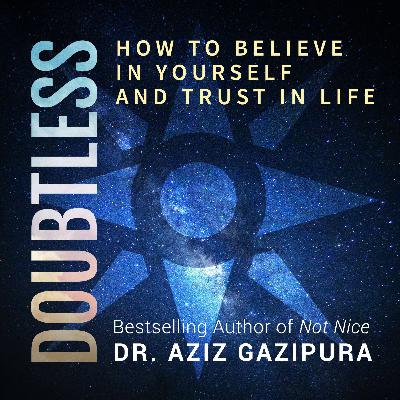
What if your self-doubt wasn’t something you had to live with? What if you could become truly doubtless—able to believe in yourself fully and trust life, no matter what? In today’s powerful episode, Dr. Aziz shares the origin story and key insights behind his brand new book Doubtless: How to Believe in Yourself and Trust in Life.
You’ll learn how self-doubt forms, why it persists even after personal growth, and how it subtly robs you of joy, freedom, and authenticity. Dr. Aziz explores the deeper armor we all build to protect ourselves—and how that same armor becomes a cage. He introduces a new way forward: a path of liberation, where you build not just unshakable self-confidence, but a living trust in life itself.
If you've ever felt like fear or inner control mechanisms are holding you back—especially after achieving outer success—this episode will speak directly to your soul. Plus, discover how to get your copy of Doubtless and join the free masterclass to start your own journey.---------------------------------------
What if the thing holding you back isn’t a lack of confidence—but a lack of trust?
Most people assume that self-doubt means you don’t believe in yourself enough. And while that’s partly true, it’s only half the story. Because even when you do believe in yourself—your skills, your intelligence, your capability—you can still feel anxious, guarded, and unsure deep down.
That’s where doubtlessness comes in.
Being doubtless isn’t about hyping yourself up or convincing yourself you’re amazing. It’s a state of being where self-doubt no longer runs the show. Where you trust yourself and trust life enough to move forward, even when you don’t have certainty, guarantees, or perfect understanding.
Self-doubt often disguises itself as being “reasonable.” It sounds cautious. Mature. Sensible.
But underneath, it’s usually a protective strategy—something you learned long ago to avoid pain, rejection, or humiliation. Maybe you were laughed at when you expressed yourself. Maybe you were judged, criticized, or shut down. And somewhere along the way, you built armor.
That armor may have helped you survive. But years later, it quietly becomes a cage.
“Self-doubt isn’t wisdom—it’s armor that’s grown too tight.”
Doubt shows up in familiar ways: questioning your instincts, dismissing your desires, postponing what matters to you, or needing to fully understand something before you allow yourself to act. It keeps you stuck in your head, trying to control outcomes, emotions, and even life itself.
And control feels safer than uncertainty—until you realize how much aliveness it costs.
Some of the most meaningful moments in life don’t come from certainty or logic. They come from letting yourself be moved. From trusting an inner pull you can’t fully explain. From allowing life to move through you without needing to justify every step.
That’s the difference between believing in yourself and trusting life.
Believing in yourself gives you courage to act. Trusting life gives you permission to let go.
And both are required to truly become doubtless.
Becoming doubtless isn’t a switch you flip or a quote you memorize. It’s something you cultivate over time—like building a muscle and tending a garden at once. You create the conditions. You learn to recognize how doubt hooks you. You stop obeying its rules. And gradually, something new grows: a quieter mind, a more grounded body, and a deeper sense of inner safety.
From that place, authenticity becomes natural. Connection feels less forced. Decisions feel clearer.
You don’t need certainty to move forward anymore—you need alignment.
And when you start living this way, life begins to feel less like a battle you must win and more like a relationship you can trust.
That’s the invitation of doubtlessness.
Not to eliminate fear entirely—but to stop letting fear decide who you get to be.
Because when doubt no longer runs your life, what opens up isn’t just confidence—it’s freedom.
And that freedom allows you to finally be 100% you.
Get the Book on Amazon Purchase Become Doubtless on Amazon (Kindle & Paperback):👉 https://a.co/d/5hdcSYXBook Bonuses & Resources Access bonus materials, masterclasses, and companion resources for the book: 👉 www.socialconfidencecenter.com/doubtlessbook
Learn more about Dr. Aziz, his work, and coaching programs: 👉 www.socialconfidencecenter.com/

🌟 In this episode of Shrink for the Shy Guy, Dr. Aziz explores a surprising truth that almost no one talks about: self-confidence alone can only take you so far. If you’ve ever worked hard to become more confident—only to still feel anxious, overwhelmed, or like the next level of life is somehow out of reach—this conversation will hit home.
Dr. Aziz breaks down what he calls the self-confidence ceiling—the invisible limit you run into once you’ve taken risks, pushed yourself, built skills, and created a good life… and yet still feel anxious, grasping, or afraid of losing what you’ve built. Through stories of his own journey and powerful metaphors (the famous red, green, and gold balls), he reveals why success can sometimes increase anxiety, and what deeper ingredient is needed to finally feel grounded, secure, and free.
You’ll discover why confidence without trust eventually collapses under its own weight, and why true liberation comes from pairing “believe in yourself” with something bigger: a lived sense of trust in life itself. This subtle shift unlocked a profound transformation in Dr. Aziz’s relationships, peace, and purpose—and it’s the core of his upcoming book Doubtless.
Packed with insight, humor, and honest personal stories, this episode invites you into a new phase of growth—beyond performance, beyond proving yourself, and into a deeper kind of freedom.
🎧 Ready to break past your self-confidence ceiling and step into something greater? Tune in now and learn the missing piece that makes confidence finally feel effortless, stable, and real.
------------------------
When Self-Confidence Isn’t Enough
There’s a moment in your growth when you look around at your life and think: “Shouldn’t I feel better than this?”
You’ve worked hard. You’ve pushed yourself. You’ve taken the risks, had the breakthroughs, improved your relationships, built your career, maybe even created a life that younger you never thought was possible.
And yet… the anxiety doesn’t fully go away. It shifts. It takes on a new shape.
That’s what this episode dives into—the surprising point where self-confidence stops being enough, and why so many high-functioning, self-aware people suddenly feel overwhelmed, afraid, or “on edge” right when life gets good.
I call this moment the Self-Confidence Ceiling.
In this episode, I share how I personally smashed into that ceiling—even after overcoming years of social anxiety, breaking free from people-pleasing, building deep relationships, and creating work I love. I thought I had “made it.” But instead of peace, I found myself more anxious than ever… not because life was bad, but because it was good. Really good.
When you’ve been pulling red balls for years—rejections, setbacks, pain—you learn how to handle the struggle. But when you start pulling green balls—love, success, connection, purpose—suddenly you have something precious to lose. And that’s where fear can explode.
“The better it gets, the more danger your nervous system predicts.”
Maybe you’ve felt that too. That tightening in your chest when things are going well. That fear that the other shoe is about to drop. That constant scanning for what might go wrong.
This isn’t a failure of confidence—this is the boundary line between self-confidence and something deeper: trust in life.
For years I could talk about trust, teach trust, write about trust. But emotionally? Physically? Nervously? I didn’t trust anything. Not the good. Not the stability. Not the love. Not the blessing of a beautiful home, two little boys, my marriage, my work, my clients, my health—none of it felt safe.
I was hypervigilant, checking for danger everywhere. And I had no idea why.
This episode walks through the moment everything shifted—when I realized I wasn’t facing a skill problem or a mindset problem. I was facing a faith problem. Not faith in a religious sense, but a faith in life, in goodness, in the unseen forces that hold us, guide us, and love us even when our minds doubt it.
It’s the journey that led to my new book, Doubtless: How to Believe in Yourself and Trust in Life, which is finally coming out next week. (We’re putting the finishing touches on it now!)
And on the release week, I’ll be teaching a free live masterclass on how to stop living in fear and finally trust the good in your life. I’ll share the link as soon as it’s ready. Make sure you’re on my email list so you don’t miss it.
If you’ve ever felt like your anxiety shouldn’t be this strong… if you’ve ever wondered why success still comes with fear… if you’ve ever sensed that self-confidence alone can’t lift the weight you’re carrying… this episode will speak directly to your heart.
Because you’re not broken. You’re not failing. You’re simply bumping into your next breakthrough.
And on the other side of that ceiling is a life of freedom, connection, gratitude, and trust that you absolutely can access.
This episode is the doorway. Let’s walk through it together.

In this episode of Shrink for the Shy Guy, Dr. Aziz dives into one of the most subtle yet powerful patterns that drives social anxiety and people-pleasing: the fear of other people’s feelings.
Ever find yourself unable to say no, worrying you’ve upset someone, or constantly trying to make sure everyone feels okay, even at your own expense? This episode exposes the hidden contract behind those patterns: the belief that you’re responsible for managing other people’s emotional states. Whether it’s guilt when someone’s sad, panic when they’re angry, or discomfort even when they admire you, this episode helps you finally break free.
You’ll learn how this core fear is rooted in outdated childhood wiring and how you can begin to rewire your system so you’re no longer held hostage by others’ moods. Through powerful examples and real-life metaphors, Dr. Aziz shows you a way out of emotional over-responsibility and into a life of greater freedom, truth, and inner peace.
You’re not here to manage everyone’s feelings. You’re here to live your life.”
🎧 Ready to stop walking on eggshells and reclaim your emotional freedom? Tune in now and learn how to stay centered even when others feel upset.-----------------------------------------------------------
Ever feel like you’re walking through life on emotional eggshells? You say yes when you want to say no. You soften your words to avoid upsetting someone. You apologize even when you haven’t done anything wrong.
If you relate to that—this message is for you. Because what’s really going on isn’t just conflict avoidance… it’s fear. Specifically, the fear of other people’s feelings.
The Hidden Fear Driving Nice People
Most “nice” people think their problem is caring too much. But beneath that is a quiet, anxious belief:
“If they feel bad, it means I’m bad.”
You might not say that out loud, but it runs the show. Someone’s disappointed in you? You feel guilt. Someone’s angry? You feel panic. Someone’s sad? You feel pressure to fix it.
It’s as if their emotions automatically become your responsibility.
But here’s the truth: you were never meant to manage other people’s feelings.
The Unspoken Contract You Never Signed
Somewhere along the way, you adopted a silent rule:
“It’s my job to make sure everyone around me feels good.”
This “emotional management contract” runs deep. It might have started in childhood—trying to keep peace in your family, soothe a stressed parent, or calm the tension in the room. Over time, your nervous system learned: Safety = everyone else is okay.
That worked back then. But as an adult, it keeps you trapped. You become hyperaware of others’ moods, scan faces for disapproval, and feel anxious any time someone around you is upset.
“You can’t live your purpose if you’re constantly managing everyone’s emotions.”
How to Break the Contract
Freedom begins with a radical new truth:
You are not responsible for anyone else’s emotional state.
That doesn’t mean you stop caring or turn cold. It means you stop trying to control how others feel.
When someone is upset, you can still be kind, compassionate, and curious—without collapsing into guilt or scrambling to fix it. You might say, “I hear that this is hard for you,” while also staying grounded in your own truth.
This is emotional adulthood. Two people. Two nervous systems. Each responsible for their own feelings.
The Practice of Emotional Freedom
Start simple. When you notice that urge to make someone feel better, pause. Take a breath and remind yourself:
“They are an adult. They can manage their own emotions. I can manage mine.”
That single thought reclaims your energy, your peace, and your presence.
Over time, you’ll stop flinching when people are upset. You’ll stop over-apologizing. You’ll stop fearing disapproval. And you’ll start showing up as the real you, grounded, open, and free.
You Can Be Loving Without Losing Yourself
Being kind doesn’t mean being controlled. Being compassionate doesn’t mean being compliant. You can love deeply and hold your center.
The next time someone around you feels disappointed, angry, or sad—let them. You don’t have to fix it. You just have to stay present.
Because when you stop fearing others’ feelings, you finally start living your own life.

In this vulnerable and revealing episode of Shrink for the Shy Guy, Dr. Aziz returns from a life-changing couples workshop with a fresh insight into what really causes social anxiety and people-pleasing and how to heal it from the inside out.
Most people try to overcome self-doubt by repeating affirmations, striving harder, or becoming their “ideal” version of themselves. But as Dr. Aziz explains, this fantasy self is actually wrapped around a much deeper wound: a core belief that we’re not enough or not lovable as we are. Drawing from powerful moments during the retreat, he unpacks how insecure attachment leads to chronic feelings of unworthiness and how our attempts to “fix” ourselves only deepen the cycle.
You’ll learn how the path to lasting confidence doesn’t come from becoming more, but from reconnecting with your authentic self, one that is already whole and worthy. Using a powerful metaphor of braided ropes, Dr. Aziz helps you see the loop you might be caught in and how to step out of it for good.
"Everything is changeable. 100%. It’s not about becoming someone else. It’s about coming home to who you already are."
Ready to heal the root of social anxiety and step into real freedom? Tune in now and rediscover your worth.
----------------------------------------------
Have you ever wondered why you still feel not enough, no matter how much you achieve, improve, or try to please? Why confidence sometimes feels like an act, and connection like a test you can fail?
What if the real issue isn’t that you’re broken but that you were never fully bonded?
In this episode, I want to take you deeper to the root of social anxiety and people pleasing. Because beneath the awkward moments, the self-doubt, and the endless striving lies something much more fundamental: a missing sense of I’m okay as I am.
The Real Source of “I’m Not Enough”
At the heart of social anxiety isn’t fear it’s disconnection.
When you were young, something subtle but powerful happened: a gap formed between the love and security you needed and what your environment could provide. It wasn’t your fault, and it doesn’t mean your parents didn’t love you. But that gap created what psychologists call insecure attachment a deep, body-level sense of I’m not safe, I’m not held, I’m not enough.
“Social anxiety and people pleasing aren’t personality flaws—they’re attachment wounds trying to feel safe.”
That unease in your body becomes the foundation of every “I’m not enough” story: “I’m not interesting enough.” “I’m not attractive enough.” “I’m not confident enough.”
We try to fix the feeling by building a better self—a “fantasy self”—that will finally be lovable. But that striving only tightens the knot.
The Fantasy Self Trap
When we feel not enough, we look for clues about who we should be. Dad liked when I was smart? Be the smart one. People admire success? Chase success. Everyone loves charm? Learn to perform.
Piece by piece, you build your fantasy self the polished, perfect version of you who finally earns love, approval, and belonging.
But here’s the painful secret: no matter how many boxes you check, the emptiness doesn’t go away. The rope of your life twists endlessly between two strands—the blue rope of not-enoughness, and the orange rope of the fantasy self. Around and around you go… striving, achieving, collapsing.
Until you realize: the problem was never you. It was never the missing strand. It was believing you needed to become someone else to be loved.
The Way Out: Relearning Love
The healing of social anxiety and people pleasing isn’t about becoming your fantasy self—it’s about coming home to your real self.
“You don’t need to earn love. You need to experience being loved as you are.”
This isn’t theory. It’s a retraining of your nervous system—a gradual, embodied relearning that you are safe, seen, and worthy exactly as you are. You don’t fix it with affirmations. You heal it through experience: letting yourself be seen, receiving care, allowing love in.
That’s the work and yes, it’s vulnerable. But it’s also freedom.
Coming Home to Yourself
This isn’t a quick fix. It’s a practice, like learning to move your body again after years of tension. You build it by showing up, by practicing openness, by letting go of the fantasy self one thread at a time.
And then one day, you wake up and realize—you don’t need to become enough. You already are.
Because confidence isn’t built on pretending to be someone else. It’s born the moment you finally allow yourself to be you.

In this episode of Shrink for the Shy Guy, Dr. Aziz offers powerful insight into what to do when you feel like giving up. Whether you're trying to build confidence, face your fears, or push through challenges, there are times when progress feels slow and resistance feels overwhelming.
Dr. Aziz unpacks the real reason we feel discouraged and why it’s often not about the actual results we’re getting. You'll discover how unrealistic expectations and unconscious comparisons can drain your motivation and how to shift back into momentum with self-compassion and clarity.
Packed with honesty, humor, and actionable tools, this episode is a reminder that you're not broken, you’re just human. And the key to long-term change isn’t forcing yourself forward, but learning how to keep going with heart.
🎧 Feeling stuck? Tune in now and reignite your courage to keep moving forward—no matter what.
-------------------------------------
Ever have one of those days where you just don’t have it in you? You’ve been working on your confidence, trying to speak up, take risks, connect more—but then something happens. You freeze in the meeting. The conversation flops. Someone says “no.” And suddenly that old voice kicks in:
“See? You’ll never change.”
That voice pulls you down fast. You stop taking action. You retreat. You tell yourself you’re “just busy” or “need a break.” But what’s really happening is something deeper—something every courageous human faces on the path to confidence.
The Doubt Storm
Whenever you stretch beyond your comfort zone, you awaken an old gravitational force I call the doubt storm.
It’s that heavy pull toward discouragement, self-criticism, and hopelessness. You start circling the drain with thoughts like:
“I’m never going to figure this out.” “Something’s wrong with me.” “It always ends this way.”
And once that story takes over, it feels impossible to fight.
But this is where real confidence begins—not in the easy wins, but in your capacity to weather the storm without giving up.
“Confidence isn’t built in your victories. It’s built in the moments you refuse to quit.”
1. Be the Mountain in the Storm
The most powerful thing you can do when discouragement hits isn’t to fix it—it’s to stop running from it.
Imagine yourself as a mountain. The storm comes, winds howl, rain lashes against you—but the mountain doesn’t move. It stays steady.
Set a timer for five minutes. Sit. Breathe. Notice what’s happening:
Breath. Feel the air move in and out.
Thinking. Name the thoughts: “thinking.”
Feeling. Name the emotion: “sadness,” “fear,” “frustration.”
Sensation. Notice where it lives in your body.
Sound. Listen to the room around you.
This practice grounds you. You don’t have to solve the storm—just outlast it. It always passes.
2. Recenter: How Am I Steering?
Once the storm quiets, you’ll see clearly again. Now ask yourself:
“How am I steering my life right now?”
Most suffering doesn’t come from circumstances—it comes from how we’re relating to them. You can’t control if someone says yes or no. You can’t control the outcome of a meeting or a date. But you can control how you show up.
“You can’t steer the storm, but you can steer yourself.”
Choose to play the long game. Choose curiosity over desperation. Choose connection over control.
3. Keep Showing Up
Your only real job is to keep showing up for your growth. Not perfectly. Not fearlessly. Just consistently.
Because every time you face a setback and keep going, you’re reprogramming the story of who you are—from “someone who can’t” to “someone who persists.”
You’ve Got This
Confidence isn’t a straight line. It’s a spiral—up, down, forward, backward. But if you stay in the process long enough, you will win.
You’ll speak freely, connect deeply, and move through life with the calm power of someone who knows their worth.
So when the next storm comes, don’t panic. Be the mountain. Breathe. And remember: this is how confidence is built—one courageous choice at a time.

In this episode of Shrink for the Shy Guy, Dr. Aziz reveals the secret to boosting confidence while dissolving anxiety and it’s not another breathing exercise or mindset hack. It’s a deeper shift in how you see yourself and how you approach life. Most people try to overcome fear by gritting their teeth and pushing through. But what if you could unlock a bold version of yourself that actually wants the challenge? Dr. Aziz introduces the powerful identity of the Bold Explorer a part of you that thrives on uncertainty, risk, and discovery. Whether you're working to speak up at work, approach someone you're attracted to, or just stop overthinking every social interaction, this episode gives you a new way to show up with strength, courage, and yes, more fun. Ready to activate the version of you that’s fearless, adventurous, and fully alive? Tune in now and start living like the bold explorer you were born to be.
---------------------------------------------
If you’ve tried all the “calm down” hacks—meditations, breathing apps, mantras—and still find anxiety waiting for you at work, on dates, or before you speak up… this is for you. There’s a faster path than soothing your nerves in the moment: change who’s showing up. When you do, confidence rises and anxiety dissolves—without white-knuckling your way through it.
“Confidence isn’t something you earn— it’s something you remember.”
The One Shift: Become the Bold Explorer
Anxiety spikes when the “stay-safe” part of you takes the wheel. Instead, step into a different identity: the Bold Explorer—the part of you that seeks growth, welcomes the unknown, and chooses meaningful risk over comfortable stagnation. Explorers don’t wait to “feel ready.” They move toward the edge on purpose.
Try this: Before a conversation, meeting, or date, pause and say (quietly or aloud), “I’m a Bold Explorer. Let’s see what’s here.” Notice how your posture, breath, and tone shift toward grounded courage.
“Boldness is always rewarded: with aliveness, with wisdom—and often with wins.”
Why This Kills Anxiety (and Builds Real Confidence)
Most people dip a toe outside their comfort zone, endure the fear, then retreat. That trains your body to associate growth with threat. The Explorer flips the script: discomfort becomes a signal of aliveness, not danger. When your brain interprets the moment as chosen adventure, your nervous system calms and capability expands.
Two guaranteed payoffs every time you act boldly:
Aliveness — You feel more awake, present, and powerful.
Wisdom — You learn faster through doing than by rehearsing in your head.
Make It Practical: An Explorer’s Daily Reps
Name the Expedition. What’s today’s “edge”? Speaking up once in a meeting? Starting a conversation? Sending the pitch? Write it down each morning: “Today’s exploration = ___.”
Use the 5% Rule. You don’t need to cliff-jump. Reveal 5% more, ask one deeper question, take one bolder step than yesterday.
Anchor the Identity (Cold Shower Primer). Tomorrow morning, take a 30–60 second cold shower. Not for biohacking bragging rights, but to train your brain: I move toward what’s uncomfortable on purpose. Then carry that energy into the first bold action of your day.
“Don’t wait to feel brave. Act—then let your feelings catch up.”
Final Word: This Is Who You Are
You’re not building a new self from scratch—you’re remembering the part of you that has always been willing to try, to learn, to live fully. When the Explorer leads, anxiety loses its grip because there’s nothing to defend—only something to discover.
You can do this. Stand a little taller. Breathe deeper. Choose one bold step today. And watch how confidence rises while anxiety quietly fades into the background.
In this episode of Shrink for the Shy Guy, Dr. Aziz issues a bold 7-day challenge that just might transform your confidence: stop apologizing. Not when you bump into someone, but the deeper, more compulsive “I’m sorry” that leaks out when you speak up, have needs, or reveal who you are.
If you’ve ever found yourself saying “Sorry to bother you” or “I’m sorry, that was probably too much…”—this episode is for you. Dr. Aziz reveals why chronic apologizing isn't just a bad habit—it's a deep, unconscious signal that says “I’m not allowed to exist as I am.” You’ll learn how these little apologies sap your power, disconnect you from others, and reinforce toxic self-doubt.
Packed with stories, humor, and a clear 7-day “apology fast” experiment, this conversation will help you ditch the reflex, reclaim your voice, and show up unapologetically real.
Ready to stop shrinking and start owning your space? Tune in now and begin your 7-day confidence reboot.----------------------------------------------
How many times did you apologize today?
If you’re like most people, it’s probably more than you realize. “I’m sorry” slips out when we bump into someone, when we speak up, when we share something personal, and when we even exist in a way that might inconvenience someone.
But here’s the truth: you’re not being polite—you’re being powerless.
For one week, I want to challenge you to stop apologizing unnecessarily. What happens next might shock you.
The Addiction You Don’t Realize You Have
Over-apologizing feels harmless—like good manners. But in reality, it’s an emotional addiction.
Every “I’m sorry” is a tiny attempt to soothe discomfort. You’re trying to make sure no one’s upset, that no one disapproves, that everyone’s okay with you.
It’s a self-soothing reflex, just like reaching for sugar or scrolling endlessly on your phone. It gives you a micro-hit of safety… at the cost of your power.
The moment you say “sorry” when you’ve done nothing wrong, you send a subconscious message to yourself:
“I’m a problem. I shouldn’t exist this way.”
And you don’t just say it once—you reinforce it dozens of times a day.
The Cost of Compulsive Apologizing
At best, this habit makes you seem uncertain. At worst, it damages your confidence and your relationships.
When you apologize for having an opinion, for asking a question, or simply for speaking up, people don’t feel more comfortable around you—they feel disconnected.
It’s like you shared a genuine moment, and then poured cold water all over it.
I’ve seen clients apologize for being seen:
“I’m sorry, I know I’m talking too much.” “I’m sorry, I didn’t mean to bother you.”
But when you say sorry for simply being human, what you’re really saying is: “I’m sorry for who I am.”
And that is the one apology you must stop making—forever.
The 7-Day Apology Fast
Let’s make this practical. For the next seven days, go on what I call an Apology Fast.
That doesn’t mean you never apologize. Real apologies—where you’ve acted outside your values or hurt someone are powerful and healing.
But all the other ones? The nervous, automatic, I just want you to like me apologies? Those go.
Here’s how:
Notice it. Catch yourself the moment you say “sorry.”
Interrupt it. Imagine the gentle but firm correction: “Ah-ah. Leave it.” (Yes, like training a puppy!)
Replace it. Instead of “sorry,” say something direct and grounded. Try “thank you for your patience,” “excuse me,” or simply say nothing at all.
Keep score. See if you can reduce your unnecessary apologies each day.
The Real Transformation
When you stop apologizing for existing, something beautiful happens: You start to take up space. You start to feel solid. You start to respect yourself.
And that shift ripples outward. People listen more closely. You speak more clearly. You move through the world as someone who knows—deeply—that they belong.
So, for seven days, no unnecessary “I’m sorry.” Just you unfiltered, unapologetic, and free.
Because confidence doesn’t come from being perfect. It comes from finally realizing you have nothing to apologize for.

 1
1In this episode of Shrink for the Shy Guy, Dr. Aziz shares the Top 3 Keys from the Extremely Confident Conversation Master Training—a powerful 3‑day virtual workshop designed to help you break free from self‑doubt, deepen real connections, and show up fully as yourself. Whether you attended the event or missed it, this episode distills the most transformative takeaways you can apply right now to create more ease, connection, and confidence in every conversation.
Discover how to reignite your natural desire for connection, rebuild your innate capacity for authentic conversation, and dissolve the illusion that you don’t belong. Dr. Aziz reveals why connection is not optional—it’s essential—and how to overcome the hidden beliefs and fears that keep your heart closed or your confidence limited.
Packed with humor, stories, and actionable insights, this episode invites you to open your heart, take bold social risks, and remember that you already belong.
🎧 Ready to unlock deeper connection and social freedom? Tune in now to Shrink for the Shy Guy and discover the 3 keys that can change how you show up in every conversation.-----------------------------------------------
What if connection isn’t something you have to earn… but something you already deserve?
Most people spend their whole lives trying to “get better” at talking to others—learning the right things to say, the right tone, and the right body language. But at the root, confidence in connection has nothing to do with perfect lines or tricks. It’s about how open your heart is, how much you trust yourself, and whether you believe you belong.
After teaching my Supremely Confident Conversation Master workshop for the seventh time, three powerful lessons stood out that will change how you relate to everyone—from strangers to soulmates.
1. You Have to Want It
You can’t create real connection if you’ve convinced yourself you don’t need it.
Maybe you’ve been hurt before. Maybe you got rejected, ghosted, or left behind. Somewhere along the line, you told yourself, “I’m fine alone.” But that story isn’t strength—it’s self-protection.
Connection is not optional. It’s essential. Just like your body needs water, your soul needs genuine human connection. When you shut that part of yourself down, you start to feel the symptoms: emptiness, numbness, endless scrolling, constant distraction.
When you wake up to that truth, something inside reignites. That quiet hunger to feel seen, heard, and loved—it’s still there. You just have to admit it’s real.
2. Your Capacity for Connection Is Innate
You don’t need to “learn” how to talk to people—you were born with the ability to connect.
If you’ve ever laughed with a friend, comforted someone in pain, or told a story that lit up a room, that’s it. That’s the real you. Somewhere along the way, fear, criticism, or trauma might’ve dimmed it—but it’s still in there.
When I see people go from isolated and anxious on Day 1 of my workshop to laughing and connecting effortlessly by Day 3, it’s not because they learned a few “social tricks.” It’s because they remembered who they were before fear took over.
Like learning to walk again, it takes a little practice. You might wobble at first, but once you remember how natural it feels, it becomes effortless. You already have everything you need.
3. You Belong Everywhere You Go
The deepest illusion of social anxiety is the belief that you don’t belong.
You can be surrounded by people who welcome you—and still feel like an outsider. But belonging isn’t something others give you. It’s something you choose.
When that voice says, “I don’t fit in,” challenge it. Ask, “What if I already do?”
At the event, we practiced a simple phrase: “I belong at every table.”
Say it until it feels less like a lie and more like a truth waiting to surface. Because when you act as if you belong, something miraculous happens—people start responding to you as if you do.
You Don’t Have to Wait to Be Ready
If you’ve been waiting to “feel confident” before taking action—stop waiting. Confidence doesn’t come before connection. Connection builds confidence.
Take one small step today. Say hi. Ask a question. Share a story. Take a risk. You might stumble—but you’ll also start to feel alive again.
Because you do belong. Everywhere you go.
In this episode of Shrink for the Shy Guy, Dr. Aziz reveals the surprising antidote to anxiety—and it’s not a breathing trick, mindset hack, or self-soothing technique. It’s something much deeper, much more powerful... and much more liberating.
If you’ve ever struggled with social anxiety, performance anxiety, or general fear about future events—this episode is for you. Dr. Aziz breaks down what actually creates anxiety (hint: it’s not the situation itself) and why so many well-meaning efforts to manage or eliminate anxiety fail. You’ll discover how attachment to specific outcomes fuels fear, and how opening to all outcomes can set you free.
Packed with stories, metaphors, and practical insights, this conversation invites you to stop clinging, start choosing, and reclaim your peace and personal power.
🎧 Ready to step into real freedom? Tune in now and learn how to live without fear holding you back.---------------------------------------
Do you get nervous before social events, presentations, or even small conversations? Do your palms sweat, your mind race, or your stomach knot up? What if I told you that anxiety isn’t actually in the event itself—and that realizing this could be the first step to freedom?
Many people assume the fear they feel is because the situation is “scary.” Public speaking terrifies them. Approaching someone attractive feels impossible. Even something as simple as paying taxes can trigger tension. And while these experiences feel real, the truth is: anxiety isn’t in the circumstance—it’s in how you relate to it.
“Pick any situation—bungee jumping, giving a presentation, meeting someone new. There’s always someone who feels terrified, and someone who feels excited. Anxiety isn’t the event—it’s in the attachment to the outcome.”
The Hidden Ingredient of Anxiety
So what creates anxiety? One word: attachment.
It’s the intense need for things to go a certain way. The desire for approval, for everything to be perfect, for no awkward pauses or mistakes. This attachment fuels your nervous system: muscles tense, your mind spins, and panic can emerge—even before you’ve begun.
Think about it. You’re anxious because you want someone to respond positively, or you need the conversation to hit a certain standard, or you fear judgment if you stumble. That clinging, that insistence that the outcome must be perfect, is the root of anxiety.
“If attachment is in your cookie recipe, it’s going to taste like poop. That’s what anxiety feels like.”
Letting Go Without Giving Up
Here’s the liberating truth: the antidote to anxiety is letting all outcomes be okay. Open to the possibility that things might not go exactly as you planned—and that you will still be okay.
This doesn’t mean being passive or careless. You still show up, do your best, and steer toward the outcomes you want. But beyond your control? It’s no longer a source of fear.
Start small: identify a situation that triggers anxiety. Notice what outcome you’re attached to—and which outcomes you consider “unacceptable.” Then, in a safe, relaxed environment, imagine those outcomes unfolding—and allow yourself to feel okay if they do.
This mental exposure gradually rewires your nervous system. You discover that you can show up fully, navigate uncertainty, and still thrive. Over time, anxiety dissolves—and you step into life more fully, whether that’s giving a talk, approaching someone new, or handling the unexpected with calm confidence.
You Can Choose Freedom
Anxiety doesn’t have to control you. Once you see it for what it is—attachment and clinging—you can begin to loosen its grip. Life becomes a playground for growth instead of a minefield of fear.
“You can show up, be seen, and be okay no matter what happens. That’s freedom. That’s courage. That’s living fully.”
The first step is noticing your attachment, letting go of the need for control, and practicing tolerance for uncertainty. The more you do it, the more anxiety dissolves—and the more you reclaim your life, moment by moment.
In today’s episode, we dive into a powerful truth: becoming more magnetic and attractive doesn’t require abs, money, or status—it starts with how you see yourself. If you’ve ever felt like you’re just not desirable enough, that something is wrong with you, or that others wouldn’t want to be close to the “real you,” this conversation will shift everything.
Dr. Aziz shares his personal journey from years of insecurity, social anxiety, and rejection to finding genuine freedom and connection. You’ll discover why your belief that you’re not attractive is the actual block—not your looks, your personality, or your past. The secret? A willingness to let yourself be seen and known. And not just intellectually, but emotionally—fully and courageously.
If you want more magnetism, more connection, and more real confidence in every area of life—from friendships to dating to your career—this episode is for you. Tune in now, and take the first step toward living life unhidden.------------------
Most people think being magnetic and attractive is about perfect abs, flawless hair, or saying all the right things. But the truth is, the biggest obstacle to your natural magnetism isn’t your appearance at all—it’s what you believe about yourself.
In this post, you’ll discover why your “fantasy self” is quietly sabotaging your confidence and how you can start becoming irresistible right now, without changing who you are.
The Biggest Block to Attraction (And It’s Not Your Looks)
When I ask clients why they hesitate to approach someone, they’ll grimace and say, “It’s not going to go well.” Underneath that is a story: I’m not magnetic, I’m not attractive, and I’m not desirable.
This story creates a trap. We tell ourselves, “I’ll finally put myself out there when I’m thinner, richer, more interesting, or more confident.” That version of you—your “fantasy self”—never gets anxious, always knows what to say, and looks amazing. Until you become that version, you stay hidden.
But here’s the cost: life passes you by. You miss out on connection, love, friendships, and opportunities that are available right now. The real obstacle isn’t that people wouldn’t be drawn to you—it’s that you’re telling yourself you’re not attractive enough to try.
The Real Secret to Being Magnetic: Willingness to Be Seen and Known
Let me give you the great secret right now: attraction begins with a willingness to let yourself be seen and known.
Being “seen and known” isn’t dumping your deepest trauma on a first date. It’s showing your aliveness—your thoughts, your feelings, your humor, your enthusiasm—in the moment. It’s being curious about someone else while allowing them to experience you.
Most people try to connect without vulnerability. They hide behind a performance, hoping to look perfect enough to earn approval. That doesn’t create magnetism; it creates distance. Real magnetism is showing up as yourself—5% more real than you were yesterday.
My Turning Point (And Why It Matters to You)
I know this because I lived it. For over a decade, from middle school into college, I believed I was unattractive and undesirable. Even when a girl clearly showed interest—like the first time someone kissed me at a sleepover—I avoided her the next morning. My story (“she’d never really want me”) was stronger than reality.
Later, I dove into pickup advice, learning how to act bold and impressive. It helped me get dates but not real relationships. Why? Because I was still hiding my true self. It wasn’t until my late 20s, when I began practicing vulnerability, that everything shifted.
You don’t need to wait as long as I did. The sooner you practice letting yourself be seen and known—even a little—the sooner you become naturally magnetic.
Your Action Step: Be 5% More Real
This week, don’t try to overhaul your whole personality. Instead, experiment with being just 5% more real. Share a genuine thought or feeling when you’d normally stay guarded. Show a little more curiosity, warmth, or enthusiasm in your next conversation.
It’s not about being perfect. It’s about gently retraining your nervous system to see that revealing yourself is safe—and often rewarding.
Closing Inspiration
You don’t have to wait until you’re flawless to be magnetic. You’re already more attractive than you think. All it takes is the courage to be a little more real, a little more open, and a lot more you.
And if you’re excited to go deeper into these skills, stay tuned: in October I’ll be leading a live, virtual workshop called Supremely Confident Conversation Master where we’ll practice these tools together in real time. Pencil in the dates—October 10th–12th—you won’t want to miss it.
Until then, remember: have the courage to be who you are. On a deep level, you’re awesome.
Do you ever say, “I just don’t like talking to people,” or “That’s not my scene,” and leave it at that? In this episode, we dig deeper into that resistance—what’s really behind the stories we tell ourselves about not wanting to socialize. Whether it’s shyness, discomfort, or old fear masked as preference, Dr. Aziz unpacks how these beliefs can limit connection, joy, and opportunity. You'll learn how to move through that inner “I don’t wanna” voice, what it takes to build real social confidence (even if you're more introverted), and how to stop shrinking your world out of fear. If you’re ready to drop the excuses, expand your comfort zone, and experience more freedom in social situations, listen now. And if you want to go further, check out the link below to join the Supremely Confident Conversation Master workshop—happening soon.------------------
"Resistance and fear only have power if you let them control your choices."
Do you dread networking events, parties, or casual social interactions? Maybe you tell yourself, “I’m not the kind of person who does this,” or “It’s just not my scene.” Over time, these stories create a version of yourself that avoids connection, missing friendships, opportunities, and growth.
The good news: talking with people can be enjoyable—and even energizing—once you understand the patterns holding you back.
The Hidden Block: Avoidance and Resistance
Most social anxiety isn’t about the people around you—it’s about your internal response. Resistance, aversion, and fear mask themselves as judgments about the environment or other people. You might think, “Everyone’s superficial, it’s going to be boring, I don’t fit in here,” when really your fear of judgment or rejection is driving the story.
Here’s the truth: naming your discomfort and recognizing it as natural is liberating. You don’t need to eliminate fear—you need to act despite it.
"The truth will set you free, man. When you name your fear, that’s an act of courage."
The Cold Plunge Principle: Embrace Discomfort
Imagine a cold plunge: it feels awful before you step in, but exhilarating afterward. Social interactions work the same way. The initial hesitation is temporary—your mind says “don’t go,” but when you act, you experience confidence, connection, and flow.
Terrible before, awesome after. That’s the reality of human interaction. The more you step into conversations, the easier and more natural they become. Over time, your nervous system rewires old patterns of avoidance.
Steps to Actually Enjoy Talking With People
Notice your fear: Identify what you’re avoiding. Is it judgment, rejection, or uncertainty?
Connect with purpose: Ask yourself, “Why does this interaction matter?” Focus on curiosity, contribution, or connection rather than performing.
Take small actions: Approach one person, start with a greeting, or ask a simple question. Each step builds confidence and reduces avoidance.
You don’t have to become an extrovert. The goal is to feel comfortable in your own skin and engage as yourself. You can enjoy meaningful interactions without forcing charisma or overthinking every word.
"Every time you step forward, whether it’s a hello, a conversation, or attending an event, you reclaim a piece of yourself."
The Invitation
Life is short, and avoidance only fuels regret. Social freedom starts with courage and intentional action. Step into the room, move toward connection, and allow yourself to be fully present. As you practice, the joy of conversation will replace fear and resistance.
"You have the courage to be who you are. Trust it, embrace it, and know on a deep level that you’re awesome."


Download from Google Play

Download from App Store
 United States
The best and most realest episode and speaking to I have ever heard.. thank you, this is really helped me ❤️🙏
So is this geared towards dudes or can a socially anxious lady feel included in this audience too ...?
have no idea what BAF stands for but I guess I'll def learn when I listen to it
I am looking for Jonathan Podcast to subscribe as well. Can you advice what it is?
had to quit listening... the stereo thing is way too distracting... shame
Great podcast! Loved the books
Nice show....