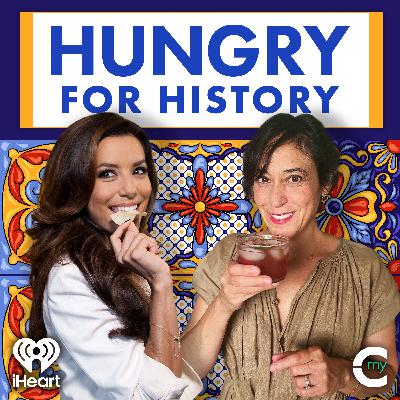
DiscoverHungry for History with Eva Longoria and Maite Gomez-Rejón
Hungry for History with Eva Longoria and Maite Gomez-Rejón
Claim Ownership

Hungry for History with Eva Longoria and Maite Gomez-Rejón

Author: My Cultura and iHeartPodcasts

Subscribed: 174Played: 2,549
Share

Description

Taste buds, Eva Longoria and Maite Gomez-Rejon, take a bite out of the most delicious food and its history. Every episode includes - family stories from Eva and Maite, fascinating facts on the yummiest ingredients from their culture, interviews with food enthusiasts, chefs, and historians plus on-location episodes that bring you closer to the hidden history of your favorite foods. Oh, and these's lots of taste testing, drink making, and recipes for you to try at home.


Listen to Hungry for History every Thursday and learn more about the dishes and drinks you grew up enjoying while discovering the origins of new favs too.

85 Episodes
Reverse
Spoiler: mushrooms aren’t plants, they’re fungi! Eva and Maite dig into the history of mushrooms and why they exist on every continent on Earth. From the sacred mushroom ceremonies of María Sabina in Oaxaca to the ritual significance of huitlacoche, the Mexican corn fungus, and the global obsession (and hunt for) truffles, they uncover how fungi have shaped food, medicine, myths, and culture.See omnystudio.com/listener for privacy information.
From its origins in Indigenous South America to its rise as a global symbol of wealth and migration, Eva and Maite explore the surprising history of the pineapple. They trace its journey across the Atlantic, where it became a prized status symbol among European aristocrats—so rare it was sometimes rented for dinner parties instead of eaten! The story then moves to Hawaii, where plantation agriculture turned the pineapple into a mass-market product and reshaped the islands’ economy and landscape. Along the way, they dig into one of the most debated foods ever: Hawaiian pizza, invented in Canada by a Greek immigrant. To bring the fruit home, Maite visits Leo’s Tacos in the heart of Hollywood with food writer and Taqueando host Bill Esparza for a tasting of tacos al pastor, where pineapple plays a crucial role in balancing spice, fat, acid, and heat. Listen to more of Bill Esparza's food adventures on his podcast, Taqueando! See omnystudio.com/listener for privacy information.
Ring in the New Year with Eva and Maite as they explore the story behind the classic “hair of the dog.” They trace where the phrase comes from, how it became a go-to hangover remedy, and why the Bloody Mary earned its place as the ultimate morning-after cocktail. From the rituals and traditions people lean on to recover from last night’s celebrations to the science of why hangovers happen (and whether “hair of the dog” actually works), join Eva and Maite in greeting 2026.See omnystudio.com/listener for privacy information.
This Christmas, Eva and Maite celebrate how bread—and the people who bake it—keep family, tradition, and community alive, even as this season looks different for many immigrant communities. They explore the bakery as a window into history, tracing the journeys of the baguette, pretzels, bagels, and pan dulce, and how immigrant communities shaped neighborhood bakeries in the U.S. Along the way, they reflect on the history of posadas, highlight bake sales as an expression of community, and uncover the roots of beloved bread idioms—from “putting bread on the table” to “breaking bread.”See omnystudio.com/listener for privacy information.
Who first decided that food deserved a critic? This week on Hungry for History, Eva and Maite dig into the origins of food criticism. From the earliest French tastemakers and the rise of the Michelin Guide to the influence of trailblazers like Duncan Hines, Barbara Hansen, and Jonathan Gold, this episode explores how food writing transformed from simple taste-testing into a rich, cultural conversation. Discover how critiques of what’s on the plate became reflections of identity, community, and the world around us. See omnystudio.com/listener for privacy information.
Restaurant history tells the story of who we are, what we value, and how culture moves. In this week’s episode of Hungry for History, Eva and Maite explore the impact the French Revolution played in the birth of restaurants and why French Cuisine became the culinary standard. They dive into the contributions of key figures like Auguste Escoffier, who organized the kitchen and standardized culinary techniques, the cultural significance of brasseries, and the role chefs play in shaping restaurant culture. We also sit down with Chef Rico Torres of Mixtli, the groundbreaking Michelin-starred restaurant in San Antonio, known for turning Mexican culinary history into an elevated, narrative-driven experience. Together, we explore how menus become archives, how tradition becomes innovation, and how the restaurant world is shifting as more diverse culinary voices take center stage. Learn more about Mixtli: https://restaurantmixtli.comSee omnystudio.com/listener for privacy information.
Tierra y Libertad: Food and the Mexican Revolution In Mexico, revolution was as much about reclaiming the land as it was about reclaiming the kitchen. Over a century after the French Revolution, the Mexican Revolution of the early 20th century drew inspiration from ideas of liberty and equality, showing how food could be political. Indigenous ingredients — dismissed as lower class during the entire Colonial period — became emblems of resistance and unity. Corn, beans, and chile spoke for the people in ways politics could not. Artists and intellectuals celebrated these humble ingredients as the foundation of Mexican identity. In this episode, Eva and Maite trace how the Mexican Revolution elevated native foods into a symbols of pride, power, and belonging, connecting the fight for justice on the battlefield with cultural identity at the table. This is part 3 of a 3 part series called, How Eating Shapes History! Haven't heard the first two episodes? Go back and listen from the beginning starting with The French Revolution. See omnystudio.com/listener for privacy information.
Revolution on the Table: The American Fight for Independence and the Birth of National Identity Before independence was won on the battlefield, it was declared in the kitchen. From boycotts of British tea to the brewing of “Liberty Tea” made from native herbs, Americans turned everyday meals into acts of protest. Taverns became centers of political debate and rebellion, while dishes prepared with local ingredients came to symbolize freedom and self-reliance, and act traced in early cookbooks. In this episode, Eva and Maite explore how the American Revolution transformed eating into an expression of resistance and how food helped shape a distinctly American identity. They discuss France’s influence on American Independence, and how Benjamin Franklin and Thomas Jefferson brought French recipes and dining customs home, forever changing the nation’s culinary culture. This is part 2 of a 3 part series called, How Eating Shapes History! See omnystudio.com/listener for privacy information.
Liberté, Égalité… Gastronomie: The French Revolution and the Birth of Modern Cuisine  The French Revolution wasn’t just fought in the streets, it was fought at the table. As bread riots shook Paris and hunger fueled rebellion, the collapse of the aristocracy also dismantled an entire culinary world. Former royal chefs opened the first public restaurants, feeding citizens instead of kings and redefining what it meant to dine in a new democracy. In this episode, Eva and Maite explore how food became a language of equality and national pride and how revolutionary ideals gave rise not only to modern dining, but also to the first democratic cookbooks. These cookbooks, written for the public rather than the palace, captured the spirit of liberty and gastronomy that would shape not only France, but the way the world eats today. This is part 1 of a 3 part series called, How Eating Shapes History! Join us next week as we explore the American Revolution. See omnystudio.com/listener for privacy information.
The Mustard Episode

The Mustard Episode

2025-11-1333:57

This week, Eva and Maite serve up the surprisingly spicy history of mustard—from ancient apothecaries to royal tables, the rise of Dijon as the mustard capital of the world, and its journey to the Americas. Along the way, they uncover the mysterious moutardier, or mustard-maker. And Maite quizzes Eva to see just how well she knows her mustards!See omnystudio.com/listener for privacy information.
What do sacred crops and chips have in common? Turns out, more than you’d think! In this episode, Eva and Maite uncover how Latin America’s native ingredients - corn and potatoes - went from offerings to the gods to the cornerstone of billion-dollar snack industries. They talk about how the Mexican American company Siete Foods is redefining what it means to “know your worth” in the snack aisle, and why honoring your roots might just be the most revolutionary business model of all.  History, culture, flavor, and empowerment… all that and a bag of chips!See omnystudio.com/listener for privacy information.
In part two, Eva and Maite dig into peanut-related idioms as they follow the legume into the modern age where it became a symbol of innovation, resilience, and identity. They talk peanut farming in the American South, George Washington Carver, and the rise of peanut butter as an American obsession. From Southern gardens to Reese’s Peanut Butter Cups, the globetrotting peanut transformed economies, culture, and the way we snack.See omnystudio.com/listener for privacy information.
In part one, Eva and Maite explore the peanut’s journey through Latin America, from its origins in Indigenous food traditions in South America to its spread into Mexico, the Caribbean, and eventually Asia and Africa. The tiny but mighty peanut became a key ingredient in local dishes wherever it landed, finally making its way to the American South and sparking a national obsession: peanut butter. Along the way, they talk Mexican snacks like crunchy Japanese peanuts and mazapán, and Maite is on a mission to convince Eva to become a full-on peanut lover.See omnystudio.com/listener for privacy information.
Eva and Maite kick off season three by cracking open the tiny but mighty oyster: a once democratic delicacy, ancient symbol, natural water filter, and cornerstone of coastal economies. They dive into food idioms and the oyster’s reputation as an aphrodisiac. Plus, they welcome actor Demián Bichir to the show. For more on oyster farming check out: https://www.billionoysterproject.org/See omnystudio.com/listener for privacy information.
Y'all, we're back! - Eva and MaiteSee omnystudio.com/listener for privacy information.
Eva and Maite wrap up the season by reflecting on some of the highlights of season two and on the importance of celebrating our stories and achievements through the lens of food. See omnystudio.com/listener for privacy information.
Ahead of Eva's show, Searching for Spain, we rewind to season one when Maite visited Eva in Spain to discuss the history of wine in Mexico!   See omnystudio.com/listener for privacy information.
Whether forced or by choice, our dishes and culinary traditions are constantly being adapted due to migration. This week, Eva and Maite discuss the Sephardic Jewish roots in some of their favorite Mexican dishes, including cabrito (roasted kid goat) and albondigas (meatballs). They welcome medieval scholar, chef and author of Matzah and Flour: Recipes from the History of the Sephardic Jews, Hélène Jawhara Piñer, to the show to talk about one of their favorite topics, tortillas!See omnystudio.com/listener for privacy information.
Popcorn!

Popcorn!

2025-03-2727:15

Who popped corn first? What early recipes used popcorn as an ingredient? Who invented the popcorn machine? Who brought popcorn to the movies? From garlands worn by young Aztec girls to honor of the rain god, Tlaloc, to a beloved movie treat around the world, Eva and Maite get into the rich history of our favorite snack… popcorn!See omnystudio.com/listener for privacy information.
Sweet as Honey

Sweet as Honey

2025-03-2035:50

With spring coming, honeybees are busy foraging nectar and pollen from blooming flowers. From ancient foraging to the modern day farmer’s market - E+M celebrate the rich symbolism of bees and the magical honey-making process in this special episode.See omnystudio.com/listener for privacy information.
loading
Comments