


 Claim Ownership
The Energy Impacts with David Blackmon
Subscribed: 9Played: 292
Subscribe

© Copyright Sandstone Media 2024
Description
Discussions are a two-way street. This podcast is for all sides to have an open forum and share their opinions on fossil, renewable, nuclear, and all things energy.
207 Episodes
Reverse
Tim Stewart stops by the Energy News Beat and Energy Impacts PodcastsDavid Blackmon kicks off this joint podcast with Tim Stewart, President of the US Oil & Gas Association, and we have a wild discussion.1. Oil and Gas Industry Volatility The speakers examine the current unstable state of the oil and gas sector, focusing on fluctuating oil prices and their impact on companies and workers. They note how the industry is adapting differently than it did during the 1970s oil crisis.2. Middle East Geopolitical Tensions A significant portion of the discussion centers on regional instability, particularly around the Strait of Hormuz, attacks on oil infrastructure, and the U.S. response. Iran’s involvement and international sanctions are also key points of discussion.3. California’s Energy Crisis The speakers address specific challenges in California’s energy sector, including refinery closures, companies relocating out of state, and how state energy policies are affecting the broader national energy landscape." So To my point is that from the national energy policy perspective, it wouldn't surprise me over the next six months if the energy department and department chairs start to become involved in California energy policy. It's going to make federalism a really interesting argument because it's a counterpoint, but it's got to be done. "Tim Stewart, President, US Oil & Gas Association4. Government and Policy Involvement There’s substantial discussion about the federal government’s role in addressing energy challenges, potential federal intervention in state policies, and the relationship between the administration and Congress on energy matters.5. U.S. Energy Dominance and Geopolitical Strategy The speakers explore how current events are reshaping global energy markets, potential shifts in international trading relationships, and America’s strategic positioning based on its energy resources and influence.6. Industry Perception and Policy Challenges The discussion includes the oil and gas industry’s efforts to engage with policymakers, changing Congressional dynamics around energy policy, and the need for improved public understanding of the industry’s role and challenges.01:41 Tim Stewart discusses the "Goldilocks zone" for oil prices21:01 Tim predicts federal intervention in California energy policy30:32 Cool Energy things32:18 New trading blocs based on Energy policies35:30 Tim Tim Stewart makes a strategic point about competing with Lloyd's of LondonCheck out my Substack: https://blackmon.substack.com/
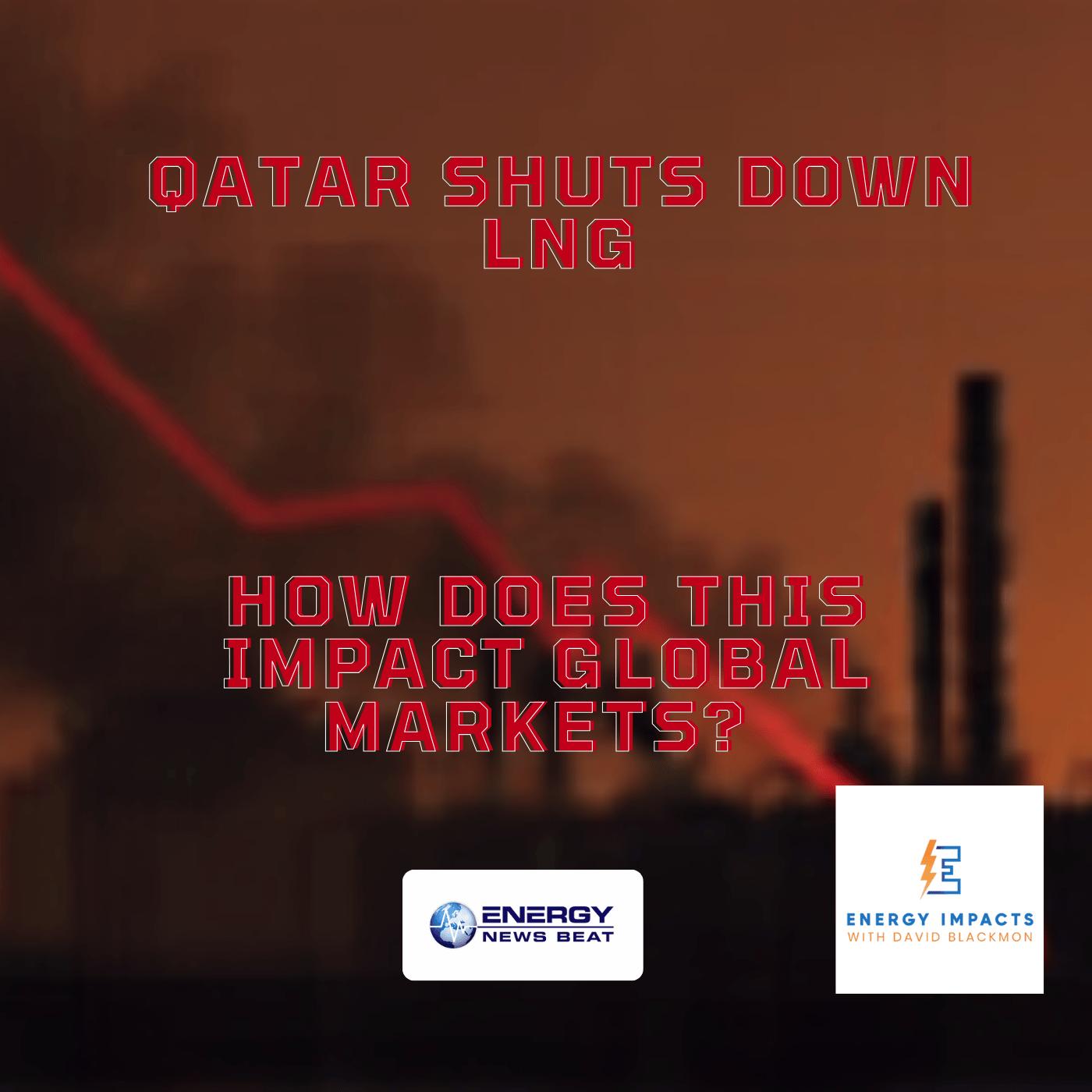
The Energy News Beat Stand up is on a roll, and we have David Blackmon stop by to cover more of the stories. This podcast is pushed out on both platforms. What a day on the news desk, Qatar shuts down LNG, and it will take a minimum of 4 to 6 weeks to fire back up to volume. The other huge story today is that Ukraine may have been the one to hit a Russian LNG tanker in the Mediterranean. Yes, you read that right - Mediterranean. 1. Cutter's LNG Shutdown and Global Energy Impact The transcript discusses a major disruption in the global LNG market following Cutter's complete shutdown of liquefied natural gas operations after a drone attack on critical infrastructure. This has created significant supply shortages and affected Europe's energy security, with implications for Russia's gas export strategy.2. Middle East Conflict and Energy Infrastructure Attacks There's substantial discussion about escalating tensions in the Middle East, including Iranian missile and drone attacks on Saudi Arabian and Qatari oil refineries and LNG terminals. These attacks have disrupted global energy supplies and raised concerns about the vulnerability of critical energy infrastructure in the region.3. Trump's New Shipping Insurance System The transcript covers President Trump's announcement of a U.S.-backed marine insurance system, which is positioned as a potential challenge to London's traditional dominance in global shipping insurance through Lloyd's of London.4. California Refinery Regulations Chevron's warning to California's Governor Newsom about proposed regulations by the California Air Resources Board is discussed, with concerns that these regulations could effectively shut down the state's remaining refineries.5. Energy Sector Stock Performance and Investment Analysis The transcript includes analysis of various energy-related stocks, including refineries, LNG companies, and oil and gas producers like Valero, Cheniere Energy, Enbridge, and Exxon Mobil, examining their earnings potential and investment timing.1.Qatar Shuts Down LNG: What Does This Mean for Global Markets? What should US Investors look for?2.Gulf Refineries and Terminals Under Fire by Iran: Escalation in the Middle East and Its Ripple Effects on Global Energy Markets3.First LNG Tanker Hit in the Mediterranean: Escalation in Shadow Fleet Warfare4.Chevron Warns of Irreversible Harm to California’s Economy and Energy Security in Letter to gov. Newsom5.Nationwide Gas Prices Jump 11 Cents; California Still Leads with the Highest Gas Prices6.California will be a national security risk for the entire country!Shout out to Reese Energy Consulting https://reeseenergyconsulting.com/Check out David's Substack at https://blackmon.substack.com/Get your CEO on the #1 Energy Podcast in the United States: https://sandstoneassetmgmt.com/media/Is oil and gas right for your portfolio? https://energynewsbeat.co/invest/
This was a wild discussion of the current global oil and gas markets with David Blackmon and Stu Turley. We covered stories from Energy News Beat and David's Substack.If you only have time for one podcast, this may be it, as we cover the markets and critical issues on how long this may last.Oil and natural gas prices:David and I discussed the recent spike in oil and diesel prices, with oil prices increasing by around 14-15% over two days. The hosts analyze the potential reasons and implications of these price increases.Geopolitical tensions in the Middle East:The discussion focuses on the Strait of Hormuz, a critical chokepoint for global oil and LNG trade, and the potential disruptions to shipping in the region due to tensions and conflicts.The transcript covers the involvement of various countries, such as Iran, Iraq, Saudi Arabia, and the UAE, in the regional dynamics and their potential impact on energy markets.Energy security and dependence:We discuss the concept of “energy security starts at home, but energy dominance starts at your exports,” highlighting the energy dependence of the European Union on Russian oil and gas.We also touch on the energy crisis in California and the challenges faced due to the shutdown of refineries and pipelines. And I am interviewing Ronald Stein on Monday to cover the latest crisis in California.U.S. foreign policy and geopolitics:The transcript delves into the Trump administration’s foreign policy actions, particularly in relation to Iran and Venezuela, and their potential impact on global energy markets and China’s influence.The hosts also discuss the shifting geopolitical alliances and the potential for Russia to improve its relationship with the United States.U.S. domestic politics and energy policy:The discussion touches on the upcoming elections in the U.S., particularly the Republican primary race in Texas, and the potential implications for energy policy and regulation.The hosts also criticize the current Republican leadership in the Senate for not taking decisive action on energy-related legislation.Electricity pricing and grid resilience:The transcript delves into the issues surrounding the pricing of electricity, particularly the need to redefine the levelized cost of electricity for renewable energy sources to include the cost of storage and grid resilience.Starmer to Trump: “You Have No Plan.” Trump Replies: “Have You Been Following Venezuela’s Story?”At What Price Will the EU Open Russian Gas and Oil Pipelines?The Price for Oil May Go Up If the Bypass Pipelines Are Hit, and If Ship Insurance Is Not ApprovedHow Long Can China Survive After Losing Venezuela and Iraq’s Discounted Oil Supplies?California will be a national security risk for the entire country!Qatar Halts LNG Production, and the European and Asia Markets RespondCheck out David's Substack at https://blackmon.substack.com/Get your CEO on the #1 Energy Podcast in the United States: https://sandstoneassetmgmt.com/media/Is oil and gas right for your portfolio? https://energynewsbeat.co/invest/
The repeal of the Climate Power Grab by the Trump Administration brings up a lot of questions, and we cover a lot of them today. This podcast went out live on X, YouTube, and LinkedIn on both the Energy News Beat and Energy Impacts Podcasts with Stu Turley and David Blackmon hosting. Dr. Matthew Wielcki has a large X reach, and his substack is fantastic; we highly recommend subscribing. The main topics discussed in this Podcast are:Throughout the conversation, the overarching theme is the critique of the scientific and policy narratives surrounding climate change, with the guest arguing that the observational data and economic realities do not support the alarmist claims and the resulting policy responses.**1. The EPA Endangerment Finding**The conversation centers on the 2009 EPA Endangerment Finding that declared greenhouse gas emissions endanger public health. The guest argues this finding was "precooked" without proper review and has become the legal foundation for numerous climate regulations under the Obama and Biden administrations. The recent rescission of this finding could undermine the legal standing of these policies.**2. Global Temperature Record Reliability**There's significant discussion about concerns regarding the accuracy and transparency of global temperature data. The guest raises allegations about data manipulation and suppression of historical heat wave data, arguing this lack of trust in temperature records undermines the scientific basis for climate policies.**3. Observed vs. Predicted Climate Impacts**They talk about examining observational data on extreme weather, hurricanes, and sea level rise, with the guest arguing that actual observed impacts don't match the dire predictions made by climate models. This discrepancy is presented as evidence questioning the validity of the underlying climate projections.**4. Economic and Social Costs of Climate Policies**A major focus is the negative impacts of climate policies, including increased energy prices, reduced affordability, and harm to developing nations. The discussion also touches on the "climate industrial complex" and how perpetuating climate crisis narratives maintains funding and business opportunities.**5. Nuclear Power as a Solution**The guest advocates for nuclear power as a key solution for reliable, low-emission baseload electricity, contrasting this with the focus on intermittent renewables and discussing regulatory and political barriers to modern nuclear development.The overarching theme is a critique of climate change narratives, arguing that observational data and economic realities don't support alarmist claims and resulting policies.On X. @MatthewWielickiCheck out the Irrational Fear on Substack: https://irrationalfear.substack.com/Check out David Blackmon's Substack https://blackmon.substack.com/

Doomberg stops by the Energy News Beat and Energy Impacts podcast with Stu Turley and David Blackmon. We are going to cover some of Doomberg's current articles, including the Energy Crisis in California, and the Global Oil and Gas market update. We will be live on X, YouTube, and LinkedInThe main topics and themes discussed in this podcast are:1. The energy crisis in California: - The transcript discusses the emerging energy crisis in California, particularly in Northern California. It highlights how the state's regulatory policies have led to the closure of major refineries, creating a fuel supply shortage. - The discussion covers the potential consequences of this crisis, including the possibility of $10 per gallon gasoline and the impact on the broader West Coast region. - The transcript also touches on the national security implications of California's energy dependence and the need for a more resilient energy infrastructure.2. Politics and policy: - The transcript delves into the political dynamics surrounding energy policy, including the potential impact of the SAVE Act on voter ID requirements and the role of the Republican and Democratic parties in Washington. - It also discusses the implications of the removal of the EPA's endangerment finding for CO2 and the potential for policy whiplash depending on the outcome of future elections. - The discussion touches on the potential presidential ambitions of California Governor Gavin Newsom and the challenges he may face in the Democratic primary.3. Energy markets and geopolitics: - The transcript explores the EU's "grid socialism" plan and its potential impact on energy prices and grid stability across Europe. - It also discusses the potential implications of the EU's proposed carbon border adjustment mechanism (CBAM) on US LNG exports and the geopolitical dynamics surrounding energy trade. - The discussion includes an analysis of the Bloomberg article on a purported Russian memo seeking to rejoin the US dollar system, which the speaker dismisses as likely false.4. Doomberg and media analysis: - The transcript provides insights into the Doomberg brand, its approach to analysis and publishing, and its plans for expansion, including a forthcoming book project. - It also touches on the challenges of being a media guest and the importance of maintaining brand consistency, particularly in relation to thumbnail images and headlines.Overall, we cover a wide range of energy-related topics, with a focus on the interplay between policy, geopolitics, and market dynamics, as well as the role of media analysis and commentary in shaping the energy discourse.## 1. **California's Energy Crisis**The transcript extensively covers an emerging energy crisis in Northern California, driven by regulatory policies that have led to refinery closures and fuel supply shortages. Key concerns include potential price spikes (up to $10 per gallon gasoline), regional impacts across the West Coast, and national security implications related to energy dependence and infrastructure resilience.## 2. **Energy Policy & Politics**The discussion examines the political landscape surrounding energy policy, including:- The SAVE Act and voter ID requirements- The EPA's endangerment finding for CO2 and its removal- Policy volatility depending on election outcomes- Governor Newsom's potential presidential ambitions and Democratic primary challenges## 3. **Energy Markets & Geopolitics**This section explores international energy dynamics:- The EU's "grid socialism" plan and its effects on energy prices and grid stability- The EU's carbon border adjustment mechanism (CBAM) and its impact on US LNG exports- Geopolitical dimensions of energy trade- Analysis of claims about Russia and the US dollar system## 4. **Doomberg Brand & Media Analysis**The transcript discusses the Doomberg media brand, including:- Its analytical approach and publishing strategy- Expansion plans and upcoming book projects- Challenges of media appearances and maintaining brand consistency- The importance of visual presentation (thumbnails, headlines) in mediaChapters: 01:32 California Energy Crisis10:21 Military Bases in California12:57 filibuster and problems with elections16:12 Endangerment of CO2 findings and its impact21:12 EU grid interconnect problems and energy crisis28:25 is the war with Ukraine about to end?31:46 publications in the EU36:00 Orban and his re-election47:46 Upcoming topics around copperCheck out Doomberg on his Substack: https://newsletter.doomberg.com/Check out for Stu Turley on The Energy News Beat Substack: https://theenergynewsbeat.substack.com/For David Blackmon https://blackmon.substack.com/
You will not want to miss this episode of the Energy Impacts Podcast with David Blackmon and his special guest, Tom Holm, Executive Director for the Energy Defense Council. We will be covering significant changes underway in the nuclear industry and how they will be implemented. The main topics discussed in this Podcast are:1. The role and work of the Energy Defense Council (EDC), an organization focused on improving energy resilience and energy dominance for the U.S. military. Tom Holm, the executive director of EDC, explains how the organization was founded and its key objectives.2. The challenges faced by military bases in terms of energy supply and reliability, including issues like rolling blackouts. Holm discusses how EDC is working to address these problems.3. The potential use of micro-nuclear reactors and small modular reactors (SMRs) to provide power for military bases. Holm explains the benefits of this technology and the efforts to accelerate its deployment on military installations.4. The need to rebuild and re-industrialize America's manufacturing capabilities, especially for critical components and materials required for energy technologies and national defense. Holm emphasizes the importance of reducing reliance on foreign suppliers.5. The changes in the current administration's approach, including executive orders and new funding mechanisms, that are enabling faster development and deployment of energy solutions for the military. Holm highlights the increased sense of urgency and willingness to take non-traditional approaches.6. The role of the Tevcon conference, organized by EDC, which brings together military leaders, government officials, and industry innovators to identify challenges and solutions related to energy, vehicles, and other technologies for the military.Connect with Tom on his LinkedIn here: https://www.linkedin.com/in/tom-holm-43a952263/Check out David's Substack here: https://blackmon.substack.com/
You won't want to miss this episode of the Energy Impacts podcast with Jim Welty, President of the Marcellus Shale Coalition, as we gear up to talk about the global Natural Gas markets. We are covering the impact on the US consumers and manufacturing growth. We will be live on LinkedIn, X, and YouTube. The main topics discussed in this Podcast are:1. The importance of natural gas in providing reliable energy during extreme winter weather conditions, particularly in the Marcellus Shale region and the PJM grid.Jim Welty discusses how natural gas generation has been crucial in ensuring electricity and heating supply during recent cold snaps, with natural gas providing around 40% of the PJM grid's generation. He contrasts this with the issues faced in the ISO New England region, where fuel switching to oil was required due to insufficient natural gas supply.2. The challenges of building energy infrastructure, particularly pipelines, in the Northeastern United States.The transcript discusses how policies and regulations have hindered the development of pipelines like the Constitution Pipeline, which would have helped supply natural gas from the Marcellus Shale to the Northeast. This has led to the region relying on more expensive and higher-emission energy sources.3. The growth of data centers and the role of natural gas in powering this new economy.The discussion covers the significant investment and development of data centers and AI facilities in Pennsylvania, and how natural gas is well-positioned to meet the growing energy demands of this sector in a reliable and cost-effective manner.4. The clean credentials of natural gas from the Marcellus Shale region, especially in comparison to other global suppliers.The transcript highlights how natural gas from the Marcellus Shale has the lowest methane intensity of any major gas-producing region, making it an attractive option for European and other international markets seeking to reduce emissions.5. The political and policy challenges faced by the natural gas industry, particularly in navigating the push for renewable energy sources.The discussion touches on the tensions between the natural gas industry and policymakers who are promoting renewable energy, even when it may not be the most practical or reliable solution in certain regions and applications.Check out Jim on LinkedIn: https://www.linkedin.com/in/jim-welty-336b77105/Check out the articles on David Blackmon's Substack. https://blackmon.substack.com/
As we roll into the midterms, the Democrats are already rolling out "Affordability" as a key battle cry. Well, the facts show that the average blue state pays an estimated 37% more for electricity than the average red state.This podcast went out on the Energy Impacts Podcast with David Blackmon and the Energy News Beat Podcast with Stu Turley. Tom Pyle, the CEO of the Institute for Energy Research, lays out the article linked below, and it is very clear. Energy Policies account for the greatest increases in energy costs.The main topics discussed in this podcast are:1. Electricity and energy prices in the United States, particularly the higher costs in "blue" (Democratic-leaning) states compared to "red" (Republican-leaning) states. The transcript discusses a report by the Institute for Energy Research called "Blue States High Rates" that analyzes this trend.2. The impact of renewable energy policies and mandates, such as renewable portfolio standards, on electricity prices. The transcript argues that these policies, combined with the forced closure of traditional baseload power sources like coal and nuclear, have driven up costs in certain states.3. The challenges faced by states like California and New York in maintaining reliable and affordable energy supplies due to their aggressive climate and renewable energy policies. The transcript discusses issues like the closure of refineries, reliance on imported energy, and the difficulties in building new natural gas pipelines.4. The role of the federal government, particularly the Trump administration, in energy policy decisions and their impact on electricity prices. This includes topics like the EPA's endangerment finding and the potential benefits of rescinding it.5. The broader political and ideological divide between "red" and "blue" states on energy and climate policy, and how this translates into differences in electricity affordability for consumers.Check out the Substack article https://blackmon.substack.com/01:25 Intro to the main topic of Blue State and High Rates02:23 Tom Pyle, breaks down the report07:16 Wind and solar in Texas08:43 Graphic on costs in blue vs. red states14:25 transmission lines and costs17:24 California and its Energy Crisis21:02 Energy Policy defines electricity rates26:54 Jones Act and LNG Tankers37:33 Carbon Taxes and Net Zero#energynewsbeat #netzero #democrats Connect with Tom on his LinkedIn here: https://www.linkedin.com/in/thomasjpyle/Check out the IER Institute for Energy Research https://www.instituteforenergyresearch.org/the-grid/blue-states-high-rates/
Time Stamps:01:57 Doomberg: Where is the oil glut06:05 China is buying oil, and are they preparing for war?12:50 Venezuela and the oil impact26:11 Canada and great subscribers41:58 Doomberg's methodologyThis was a fun podcast with our favorite Green Chicken, Doomberg, and we hit it out of the park. Buckle up and enjoy the show. Doomberg does not hold anything back, and we have some real topics rolling out. I got really tickled by Doomberg and David Blackmon making a bet on whether President Trump would invade Greenland. I would enjoy paying for a steak dinner with Doomberg and David, so it does not matter to me.Here are the key points we cover.1. The current state of the global oil and gas markets, including the “glut” or oversupply of oil and gas, and the factors contributing to this situation, such as the rise of shale production in the US.2. The potential impact of the political situation in Venezuela on the oil and gas industry, including the challenges of restoring production and the legal/financial claims against Venezuela’s oil assets.3. Speculation around potential geopolitical actions by the Trump administration, such as annexing Greenland or intervening in other countries in the Western Hemisphere to secure energy resources.4. Analysis of the political dynamics and power structures in Washington, with the discussion of the “uniparty” and the lack of meaningful ideological differences between Republicans and Democrats.5. Commentary on the energy policies and actions of political figures like Gavin Newsom and the potential impact on energy supply and prices. California poses a national security risk to the U.S., but don’t rule out Gavin, as he could be in the running if we don’t fix our elections and adopt same-day paper ballots.Thanks again to our patrons, subscribers, and readers on all of our platforms.Please reach out and subscribe to Doomberg at https://newsletter.doomberg.com/A lateral-thinking approach to energy, finance, and geopolitics | Subscribe below for free previews of new articles | Click through to our About page for pricing and FAQ.
Wasif Latif, Co-Founder, President & Chief Investment Officer at Sarmaya Partners, stops by the Energy News Beat and Energy Impacts Podcasts - With Stu Turley, and David Blackmon for an in-depth look at the global oil and gas financial markets. 1. The performance and investment strategy of the Sarmaya Partners ETF called "Lens". Wasif Latif, the co-founder and CIO of Sarmaya Partners, discusses how the Lens ETF has performed very well since its launch, up over 50%, by investing in stocks and commodities related to the "return to tangibles" investment theme.2. The outlook for the energy and commodities markets, including oil, natural gas, copper, and precious metals like gold and silver. Latif believes there is a looming supply deficit in these commodities due to underinvestment, which will lead to higher prices in the coming years.3. The challenges and limitations of the renewable energy transition, particularly the reliance on technologies like lithium-ion batteries that have significant constraints. Latif argues the transition to renewable energy will take much longer than commonly projected.4. The geopolitical tensions and supply disruptions impacting energy and commodity markets, such as the recent incidents involving tankers and oil platforms. Latif discusses how these short-term events are often "noise" that don't change the underlying supply and demand fundamentals.5. The broader macroeconomic and policy environment, including high inflation, rising interest rates, and increased government intervention, which Latif believes will be favorable for tangible assets and commodities over the long term.00:00 Intro Return to Tangibles01:11 ETF LENS is by Sarmaya Partners03:35 Is the world oversupplied with oil06:10 Geopolitical Risk to Oil07:09 Shale Boom and Break-even for Oil10:06 Companies looking for exploration locations11:38 Policy impacting prices16:58 Market Cycles20:21 Markets like Copper23:42 Global Markets and deindustrialization27:15 Grid complexities of AC vs DC28:56 Renewables impact on Energy37:30 Investing and day trading 41:45 Recycling and Copper48:20 Nuclear and AIFollow Wasif on LinkedIn https://www.linkedin.com/in/wasiflatif/Check out https://sarmayapartners.com/Check out the Substack: https://sarmayakar.substack.com/Check everything David Blackmon on Blackmon.substack.com
Doomberg stops by the Energy News Beat and the Energy Impacts Podcast with Stu Turley and David Blackmon. Doomberg is a global leader in energy and finance, and we have had several wild, fun podcasts with Doomberg. You will want to ask questions if you are paying attention to the energy and finance markets. 0:00 Intro Doomberg01:56 Doomberg on the UK and energy crisis06:28 Doomberg on the Labor Party12:01 Doomberg on the Russian-Ukrainian War14:37 Zelensky won the election, but may not be viable in peace talks25:39 California and Gov Newsom Energy Crisis31:56 Doomberg says Gov. Newsom is a talented politician; don't underestimate him.38:14 US Dollar financial system and the petro dollar43:13 Global debt45:54 Secretary Chris Wright53:41 Doomberg on data centers sitting on top of power sourcesA special thanks to Doomberg for stopping by and check out his substack on https://newsletter.doomberg.com/
In this episode of Energy Impacts, host David Blackmon sits down with David Malpass, former head of the World Bank Group, for an insightful discussion on U.S.–China trade relations, rare earth supply chains, and the global energy landscape. Malpass shares his perspective on rebuilding American manufacturing, the real costs of climate policies, and how energy independence will shape future economic growth. From Bill Gates’ shift on climate strategy to the critical role of nuclear power and data centers, this conversation dives deep into the policies and innovations driving the world’s energy future.Highlights of the Podcast00:01 - Introduction01:54 - David Malpass’ Career Journey04:18 - Trump-Xi Trade Agreement on Rare Earths08:02 - Agricultural Trade and U.S. Competitiveness10:54 - Contrasting the Trump and Biden Administrations14:14 - The U.S. Rare Earth Supply Chain Challenge19:41 - China’s Strategic Dominance in Manufacturing23:19 - Bill Gates’ Shift on Climate Change28:16 - The Real Cost of Climate Policies32:53 - Electric Vehicle Industry Pitfalls36:51 - Building U.S. Energy Independence42:22 - Competing with China’s Scale and Control45:28 - ESG Investing and Policy Shifts46:34 - The Role of Nuclear Power in Energy Security50:17 - Data Centers Driving Energy Demand53:47 - Closing Thoughts
Doomberg stops by the Energy News Beat and Energy Impacts Podcast with Stu Turley and David Blackmon. Doomberg lays out the massive topic of trade wars with China, and the global impact on the fiancial markets. What are investors and consumers thinking? Highlights of the Podcast00:01 – Introduction01:43 – China’s Rare Earth Monopoly and Trade War Signals07:17 – U.S. Response and Administrative Inaction10:40 – Reactions to Global Trade Developments14:17 – U.S. Efforts to Break Rare Earth Dependence15:53 – U.S. Manhattan Project for Supply Chains20:13 – Regulatory Hurdles and Mining Challenges22:40 – Global Bifurcation and Emerging Trade Blocks25:24 – Russia, Ukraine, and the Changing Global Order34:13 – Media Narratives and Propaganda38:31 – Drone Warfare and Shifting Military Power42:16 – Venezuela, the Monroe Doctrine, and U.S.-China Rivalry46:08 – Europe’s Energy Crisis and Deindustrialization53:17 – Alaska, Energy Development, and Infrastructure Delays55:05 – Closing Thoughts and New Project Plug
Josh Young from Bision Interests stops by, and we discuss with David Blackmon and Stu Turley. Numerous changes are currently occurring in the energy markets, and we sit down to discuss the political, geopolitical, and other significant developments that the investment community needs to be aware of.Highlights of the Podcast00:01 – Introduction 00:44 – Josh introduces Bison Interests and Bison Insights06:00 – Discussion on new oil sanctions and market effects11:30 – Trade and tariffs – U.S., Canada, Japan relations19:00 – Rare earths and China’s leverage25:30 – Economic deregulation and energy demand31:54 – OPEC, Saudi production, and spare capacity37:00 – Russia, Venezuela, and Middle East relations46:30 – U.S. defense, alliances, and America First debate52:00 – Europe’s natural gas dilemma and net zero failure59:30 – Japan’s JERA gas deal and corporate strategy1:04:30 – Energy companies shifting away from renewables1:07:00 – Canada, UK, and future of Western trade1:15:30 – Tech firms buying into gas assets and energy security1:35:33 – Episode wrap-up
Mike Umbro stops by the Energy News Beat Podcast and the Energy Impacts Podcasts with Stu Turley and David Blackmon co-hosting. This is a huge issue in California for National Security. Is opening Kern County going to be enough to keep gas prices down? Is the sudden turn from Gavin Newsom enough to save the California consumer?Highlights of the Podcast00:01 - Introduction02:25 - California’s Policy Failures Under Newsom03:41 - Drilling Permits and Production Challenges05:16 - Regulatory Red Tape and Permitting Delays07:10 - California’s Pipeline Crisis09:28 - Oil Seeps and Environmental Misconceptions11:37 - Refinery Closures and National Security Risks15:38 - Import Dependence and Foreign Control16:44 - The Best Rock, the Worst Policy17:36 - Ignoring Science for Political Agendas19:58 - Political Landscape22:02 - Shutting Down Productive Oil Fields24:58 - Hope for Change and Leadership26:31 - Mike’s Encounter with Governor Doug Burgum31:18 - The Root of California’s Crisis: Activist Control33:44 - Reforming the System: IRS and Nonprofit Abuse35:46 - The Need for Transparency and True Innovation39:04 - America’s Energy Independence vs. China’s Influence42:18 - California’s Solar Subsidy Myth45:10 - Wind and Solar: Hidden Environmental Liabilities45:59 - Lithium Battery Hazards and Waste Mismanagement47:49 - Closing Thoughts and Call to Action
Josh Young, Portfolio Manager at Bison Interests, stops by the Energy News Beat and Energy Impacts Podcasts with Stu Turley and David Blackmon for an in-depth look at the global oil and gas financial markets. In this powerful discussion, the trio dives into the latest developments shaping the energy landscape, from OPEC+ production strategies and Russia’s role in global supply, to California’s refinery challenges and the growing demand for natural gas driven by AI and data centers.Josh also shares valuable insights from his work at Bison Interests and Bison Insights Substack, exploring investment trends, ESG’s real impact on the energy sector, and what the future could hold for oil and gas prices. Whether you’re an investor, energy professional, or just someone wanting to understand the forces behind the markets, this episode offers a sharp, candid look at what’s next for the global energy economy.Highlights of the Podcast00:00 – Opening & Introductions04:08 – Bison Interests & Building Bison Insights08:04 – Global Oil Markets & Russia’s Influence13:14 – OPEC+ Spare Capacity Debate20:49 – California Energy Policy & Refinery Fires33:08 – ESG, Corporate Governance & Oil Majors41:35 – Layoffs at Imperial Oil & Corporate Culture44:57 – U.S. Industry Leadership & Historical Parallels47:17 – Methane Leakage, NGOs & Policy Critique55:01 – AI, Data Centers & Natural Gas Demand01:02:47 – Power Generation & Gas Turbine Shortages01:05:26 – Government Shutdown Impacts01:10:52 – Nuclear Energy Stocks & Market Bubble01:15:34 – Market Rally & Economic Insights
This episode takes a closer look at what’s really behind today’s energy transition. David Blackmon talks with energy analyst Ronald Stein about why oil and refineries still matter so much from powering transportation and hospitals to producing the products we use every day. They discuss how wind and solar create electricity but can’t yet replace the thousands of items built from oil derivatives.They also touch on California’s refinery closures, the shift of energy companies to other states, and what these changes could mean for the economy and national security. With a global perspective on refining and “net zero” goals, the conversation offers a grounded look at the challenges and trade-offs of moving to renewable energy.Highlights of the Podcast00:00 – Introduction & Background01:30 – Energy Literacy & Products from Oil05:40 – Refinery Closures & National Security Concerns08:30 – Newsom Policies & Lack of Backup Plans12:55 – Industry Migration & Economic Impact17:30 – Aging Refineries & Offshoring21:46 – Global Refining & Misunderstood Net Zero Goals27:43 – Closing Thoughts & Call for Conversations
Dark Money of NGOs pouring millions into climate alarm propaganda, and how are they impacting energy policy? You will not want to miss this episode of Energy Impacts with David Blackmon, as he sits down with Jason Isaac, Founder and CEO of the American Energy Institute, to discuss the substantial amount of money and its impact on consumers.Highlights of the Podcast00:11 – Introduction01:58 – Jason Isaac’s Background05:30 – Industry Leadership & Chris Wright07:02 – Dark Money in NGOs09:15 – Ceres & Energy Foundation China10:55 – Climate Judiciary Project12:17 – Biased Lawsuits12:51 – Media Propaganda Funding14:05 – UN, World Bank, and Financial Controls14:41 – Limits of Renewables & Battery Storage16:56 – Texas Grid Concerns20:51 – Industry Timidity22:42 – Pushback Against Net Zero & ESG26:15 – China Opposes Endangerment Finding Rescission27:19 – Closing & Call to Action
David Blackmon sits down with Matt Whitlock, creator of The 10-Minute Drill, to talk about making sense of today’s fast-moving news cycle. They cover topics like dark money in politics, climate-related lawsuits, foreign influence on U.S. energy, and how the media often misreads Trump. The conversation also touches on Congress, Orrin Hatch’s legacy, and what Whitlock aims to do with his daily news updates.Highlights of the Podcast00:00 - Introduction01:34 - Creating the 10-Minute Drill04:22 - Trump, Media, and Misunderstanding08:32 - The Web of Dark Money11:45 - Climate Judiciary Project16:43 - Honolulu Case & Lawfare Strategy18:39 - Foreign Influence on U.S. Energy Policy20:32 - Rumors About Trump’s Health23:11 - Congress Back in Session26:52 - Right Track/Wrong Track Numbers29:09 - Closing & Where to Find 10-Minute Drill
Critical policy and legislative action in Oil and Gas from the Independent Petroleum Association of America stops by the Energy Impacts and the Energy News Beat Podcasts with David Blackmon and Stu Turley. We have Dan Naatz and Mallori Miller from the IPAA to cover everything that is going on in the oil and gas industry, and what they are seeing rolling out, impacting investors, operators, and consumers.Highlights of the Podcast00:10 - Introduction01:35 - About IPAA05:19 - Policy Shifts Under Trump Administration 2.007:50 - Methane Tax Fight09:07 - New Leadership in Key Agencies12:03 - Senate Gridlock & Appointments14:44 - Permitting Council & Reform19:06 - EPA & Regulatory Issues21:36 - Federal vs. State Relations24:43 - Possible Reconciliation Bill26:33 - Budget Battles & Permitting Reform27:34 - Gas vs. Oil Drilling Trends29:16 - Denver Data Center Example31:12 - Scale of the Energy Challenge32:07 - Closing Remarks

Comments

Download from Google Play

Download from App Store
 United States