


 Claim Ownership
The Enneagram in a Movie
Subscribed: 10Played: 146
Subscribe

© 2022 Enneagram Arts and Entertainment
Description
The Enneagram in a Movie Podcast is a fun and informative way to take a deep dive into understanding the Enneagram.
You’ll never see movies—or the Enneagram—the same way!
You’ll never see movies—or the Enneagram—the same way!
73 Episodes
Reverse
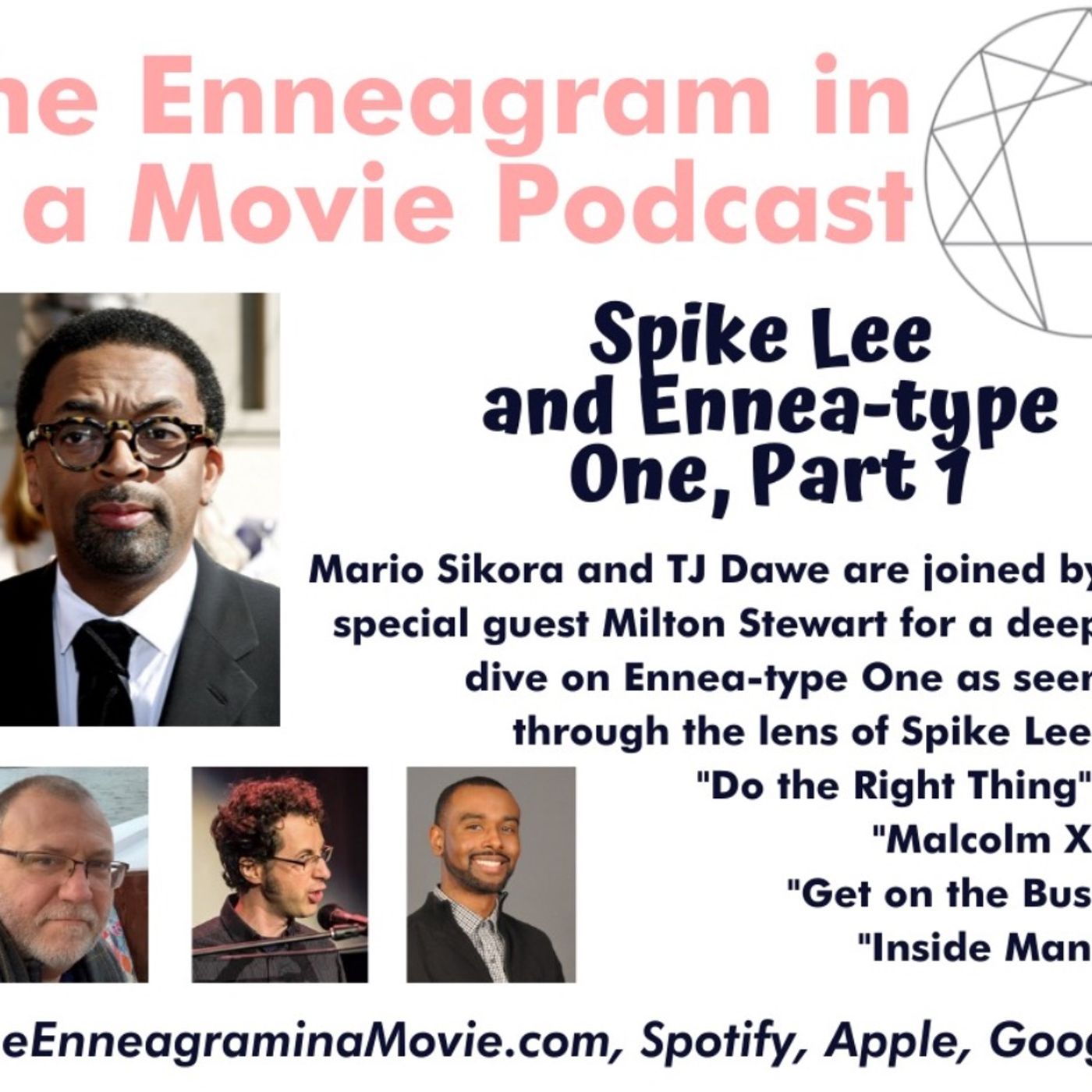
Mario, TJ are joined by special guest Milton Stewart, an Enneagram facilitator, teacher, and coach, as they explore Enneagram Type One, “Striving to Feel Perfect,” through Spike Lee’s films and the director himself. Starting with “Do the Right Thing,” they discuss the prolific director’s approach in exploring race relations, urban crime, and other political issues. “Anger is an emotion of the One, and it’s a different kind of anger than we see in the Eight.” - Mario Sikora [16:40]“It’s not something that is necessarily widely known, but he has been very consistent in making sure that there’s a lot of Black people behind the scenes in his movies as well as in front of the camera.” - TJ Dawe [31:15]“How it ends literally gives you the moral of what we should be thinking about and doing. To look at dealing with things when it comes to violence and how to actually solve problems and issues.” - Milton Stewart [44:29]TIMESTAMPS[00:04] Intro[00:57] Our special guest, Milton Stewart[02:16] The featured director: Spike Lee[04:26] The hosts’ thoughts on Spike Lee’s movies[10:52] Enneagram Type 1[15:59] Anger is an emotion of the 1[18:34] The subtypes[23:01] Seeing the world as it is[28:16] About Spike Lee[33:17] First movie: “Do the Right Thing”[37:23] Hosts’ reactions to the film[41:46] Type One themes[49:34] Trash can through the window[54:04] Buggin Out and Giancarlo Esposito[55:15] Final thoughts[1:00:44] OutroConnect with us:Awareness to ActionEnneagram on Demand The Awareness to Action Enneagram PodcastMario Sikora: IG: @mariosikoraWeb: mariosikora.comTJ Dawe:Web: tjdawe.caMilton Stewart:Web: kaizencareers.comPod: doitforthegrampodcast.comIG: @doitforthegrampodcastIG: @kaizencareers
In this episode of The Enneagram in a Movie podcast, Mario Sikora and TJ Dawe explore the Transmitting Eight through the film, The Dark Knight Rises, starring Christian Bale, Tom Hardy and Anne Hathaway. The Transmitting Eight is probably the most aggressive of the 27 subtypes as it’s the stereotype people have in their minds when they think of Type Eight, which is Striving for Feel Powerful. Transmitters are about expression and tend to be more assertive and outgoing. They also want to have an impact in the world and reshape the world in their own image. Mario and TJ explore how they see this in Bane, played by Hardy.Connect with us:Awareness to ActionEnneagram on DemandThe Awareness to Action Enneagram PodcastMario Sikora:IG: @mariosikoraTikTok: @mariosikoraWeb: mariosikora.comSubstack: mariosikora.substack.comBook: How to Think Well, and Why: The Awareness to Action Guide to Clear ThinkingTJ Dawe:Web: tjdawe.ca
In this episode of The Enneagram in a Movie podcast, Mario Sikora and TJ Dawe dive into an episode of the TV show, “The Last of Us,” starring Pedro Pascal and Bella Ramsey, This episode from the first season, “Long, Long Time,” captures the Preserving Eight as it centers around Nick Offerman’s Bill, a Doomsday prepper, and his relationship to Frank, played by Murray Barlett. Their relationship is the heart of the show as it explores some of the complexity we see in humans such as nesting and nurturing.“And we see this kind of handiness in Bill that is often very related to preservers in general, but Preserving Eights in particular. This competence. I know what the challenges are. I know what is needed to build and protect my castle and I’m going to do it.” - Mario [16:49]“Being able to provide this guy with a shower, being able to give him new clothes, being able to give him a good meal, and pour wine correctly in a nice glass and serve it on nice dishes, that’s very much a Preserver’s expression of love.” - TJ [35:16]TIMESTAMPS[00:03] Intro[00:23] This week’s topic[04:38] Thoughts on episode[06:59] Type Eight in Bill[11:46] Bill’s letter[16:02] Nesting and nurturing[21:31] Pleasure in preserving things[27:18] Scarcity begets selfishiness[30:38] The heart of the episode[36:10] Navigating Eight vs Transmitting Eight[38:42] Other characters[45:27] Other Preserving Eights[48:00] OutroConnect with us:Awareness to ActionEnneagram on DemandThe Awareness to Action Enneagram PodcastMario Sikora: IG: @mariosikoraTikTok: @mariosikoraWeb: mariosikora.comSubstack: mariosikora.substack.comBook: How to Think Well, and Why: The Awareness to Action Guide to Clear ThinkingTJ Dawe:Web: tjdawe.ca
Mario Sikora and TJ Dawe return with a new season of Enneagram in a Movie podcast, starting with a series on the subtypes. Every other week, they will focus on a subtype with a movie that captures it well. In this episode, they discuss The Godfather II, starring Al Pacino and Robert De Niro, to explore the Navigating Eight. The 1974 film features a lot of Type Eight–Striving to Feel Powerful–with different subtypes. Mario and TJ dissect how the parallel storyline and different subtypes between the two significant characters–Vito, played by De Niro and Michael, played by Pacino–come into play as they try to assert and maintain power.“This guy is all about power. He is not all about detachment. He is all about power and vengeance. This whole movie is about vengeance from the very beginning until the very end. The theme is vengeance. And that is the traditional fixation of Type Eight." - Mario [13:37]“It’s very much like a Navigating nightmare is to be exiled, to be cut off completely.” - TJ [45:38]TIMESTAMPS[00:03] Intro[00:49] This week’s movie[05:00] Which movie’s better?[09:06] Two Type Eight characters[10:17] Striving to Feel Powerful[12:34] Michael: Preserving Eight[17:17] Type Eight in Vito[23:09] The Navigating Domain[28:10] Vito and the landlord[32:52] Noticing and watching[34:29] Other examples of navigating[39:58] It’s the game that counts[44:41] The theme of isolation and exile[49:29] Mafia is very hierarchical[52:41] How this could have played differently[1:01:26] Other Navigating Eights[1:04:37] OutroConnect with us:Awareness to ActionEnneagram on DemandThe Awareness to Action Enneagram PodcastMario Sikora:IG: @mariosikoraTikTok: @mariosikoraWeb: mariosikora.comSubstack: mariosikora.substack.comBook: How to Think Well, and Why: The Awareness to Action Guide to Clear ThinkingTJ Dawe:Web: tjdawe.ca
In this episode of "The Enneagram in a Movie," Mario Sikora and TJ Dawe delve into the classic film "Get Shorty," exploring its rich themes through the lens of the Enneagram and the navigating instinctual bias. Join Mario and TJ as they discuss what makes "Get Shorty" a brilliant example of navigating dynamics, highlighting Elmore Leonard's knack for crafting intricate, character-driven narratives. They examine the standout performances of John Travolta, Rene Russo, Gene Hackman, and others, as well as how Travolta's portrayal of Chili Palmer embodies both navigating and transmitting instincts. Along the way, they touch on Elmore Leonard’s legacy in film adaptations, making this episode an insightful deep-dive for both film buffs and Enneagram enthusiasts alike! Whether you're revisiting the movie or discovering it for the first time, this engaging conversation will deepen your appreciation for its storytelling, character complexities, and more.
In this episode of "The Enneagram in a Movie," Mario Sikora and TJ Dawe turn their attention to the 2022 indie film "Emily the Criminal" starring Aubrey Plaza. As they explore the Enneagram Type 8 through Emily's journey, they highlight the film’s complex portrayal of a Navigating Type 8 woman, capturing both her grit and vulnerability as she faces the harsh realities of economic struggle, debt, and crime in modern-day Los Angeles. Mario and TJ discuss how Emily’s story embodies classic Type 8 characteristics, including a relentless drive, quick adaptation to difficult circumstances, and a fierce sense of justice and self-reliance. The conversation delves into her transformation from a gig worker drowning in debt to a criminal mastermind who owns her identity as “Emily the Criminal.” They compare Emily’s depiction to other iconic female Type 8 characters and emphasize the need for more rich, multidimensional female Type 8 roles in cinema. This discussion is a must-watch for Enneagram enthusiasts, film buffs, and anyone fascinated by powerful character studies.
"Jackie Brown" is often hailed as Quentin Tarantino's understated masterpiece, featuring a nuanced and captivating story that unfolds around Jackie Brown, played by the legendary Pam Grier. As a flight attendant entangled with Ordell Robbie, a small-time arms dealer portrayed by Samuel L. Jackson, Jackie finds herself caught between law enforcement and the criminal world. Faced with life-threatening stakes, she crafts an ingenious scheme to outwit everyone around her. Mario and TJ discuss how Enneagram Type Eight is accurately portrayed in the film. This film adaptation of Elmore Leonard’s novel showcases Tarantino's gift for character development, revitalizing the careers of Grier and Robert Forster, who portrays the compassionate bail bondsman Max Cherry. Unlike Tarantino’s typically flashy fare, "Jackie Brown" delves into the vulnerabilities and complex survival strategies of its central characters. Grier's portrayal offers a refreshing take on strength and cunning, avoiding conventional action hero tropes for a more cerebral and emotionally resonant journey. With memorable performances, sharp dialogue, and a plot full of twists, this film is a testament to Tarantino’s storytelling finesse and serves as a must-watch for those who appreciate layered character-driven narratives.
In this episode of the "The Enneagram in a Movie," hosts Mario Sikora and TJ Dawe dive deep into three powerful portrayals of female Enneagram Type 8 characters: Furiosa from "Mad Max: Fury Road" and its prequel, "Furiosa"; Jackie Brown from Quentin Tarantino’s "Jackie Brown"; and Emily from "Emily the Criminal." The discussion centers on how these strong-willed, complex women navigate a world filled with conflict, power dynamics, and challenges unique to their character arcs. In this video, we focus on how Furiosa's relentless determination to escape a dystopian patriarchy showcases the Type 8 archetype, highlighting her leadership, grit, and strategic mind. They discuss her evolution across two films, emphasizing the complexities of a female Type 8 in a cinematic world that often favors traditional male heroes. Mario and TJ also touch on the broader issue of why Type 8 women are rare in both movies and Enneagram literature, examining how society's portrayal of assertive women impacts their representation on-screen. This episode is perfect for fans of cinema, Enneagram enthusiasts, and those fascinated by strong female leads.
In this video, TJ Daw and Mario Sikora dive into the fascinating world of horror films, exploring the iconic "Final Girl" trope—where a lone female character survives against all odds. From classic characters like Laurie Strode in "Halloween" to Ripley in "Alien," they unpack how this trope challenges gender expectations and reflects deep survival impulses. The discussion delves into how horror movies tap into our psychological "preserving" instinctual bias, drawing connections to the ATA Enneagram. TJ and Mario explain how horror movies symbolize our collective anxieties, with the Final Girl's journey embodying resilience in the face of threat. They also discuss how men and women may view horror and action movies differently, with horror providing a visceral, survival-based catharsis for many female viewers. Whether you’re a horror fan or interested in psychology in general and the Enneagram in particular, this conversation provides a fresh take on why these films captivate audiences, exploring both the fear of the unknown and the thrill of survival.
Welcome to another episode in the Enneagram in a Movie series! Join hosts TJ Dawe and Mario Sikora as they explore an unexpected cinematic world—Hallmark movies! You might know Hallmark for their heartwarming holiday stories and idyllic small-town settings, but today, TJ and Mario look deeper to uncover how these films reflect the "preserving instinctual bias" of the ATA Enneagram In this episode, they discuss:• The Comfort of Familiarity: Hallmark movies offer a sense of stability, safety, and nostalgia through recurring plots, warm community vibes, and predictable romance. • The Preserving Instinctual Bias: These films embody a desire for consistency, coziness, and rootedness, a quality often overlooked in Hollywood. Mario explains how the "preserving bias" is all about feeling nurtured, secure, and connected to familiar surroundings. • Why Hallmark is Unique: Unlike the Hollywood norm, where ambition or conflict drives the story, Hallmark movies promote wholesome, slow-paced life values—no big-city hustle or gritty realism here. It’s all about coming home, reconnecting, and finding happiness in the simple things. • Hallmark's Production Style: Learn how Hallmark’s “factory-style” production—reusing actors, sets, and plot formulas—contributes to its comforting, reliable feel. Whether you're a fan of Hallmark or a curious critic, this episode offers a fresh look at what makes these movies resonate with millions. Ideal for viewers interested in psychology, film tropes, or simply seeking a cozy escape!
In this episode of the Enneagram in a Movie Video Podcast, TJ Dawe and Mario Sikora dive deep into the Enneagram Type Eight as portrayed in the classic film "No Country for Old Men." This Best Picture winner offers a rich psychological exploration through its two central characters: Llewelyn Moss and Anton Chigurh. Both are driven by the core motivations of Type Eight, but they display this in vastly different ways. TJ and Mario discuss how Moss represents a Preserving Eight, methodical and protective of his resources and loved ones, while Chigurh embodies the Navigating Eight, operating by a ruthless internal code. Together, these characters show the extremes of the Type Eight personality—power, control, and an unyielding drive to shape their environments. If you're interested in personality types, the Enneagram, or just love a deep dive into movie character analysis, this episode is for you! Watch to discover how "No Country for Old Men" is not only a thrilling crime drama but also a masterclass in understanding the dynamics of Enneagram Type Eight. Key Topics: The Enneagram Type Eight explained How No Country for Old Men showcases different facets of Type EightCharacter analysis of Llewelyn Moss and Anton ChigurhA closer look at the themes of power, control, and survival in the film
In the final episode of this season, we explore Type 2 through the films I Love You, Man and Dead Man Walking.
In this episode we discuss Type 5 through the films The Imitation Game and Annihilation. While both have some great Type 5 moments and characters, they portray very different aspects of what 5s are all about.
We discuss Type 7, "Striving to Feel Excited", through the films Beverly Hills Cop and Trainwreck. One shows the lighter, more carefree side of the 7, and one takes a more realistic look at the downside of "too much of a good thing." Join us for some fun!
In this episode we discuss Type 6, "Striving to Feel Secure," through the films Meet the Parents and Erin Brockovich.
In this episode we look at Type 9, "Striving to Feel Peaceful". Wonder Boys (the box office bomb but surprising great film) and Four Weddings and a Funeral have some great Type 9 characters (and energy) going on. Join us!
In this episode we explore Type 3, "Striving to Feel Outstanding, through the films Edge of Tomorrow and Molly's Game. Tom Cruise... the Three-est Three ever to Three... plays a different kind of Three than he normally does, and Molly Bloom pushes herself to the limit. Both films are a good example of the "growth journey" of Type 3, albeit in different ways.
In this episode we talk about those who are Striving to Feel Perfect... Type 1. Sicario and Chocolat are both great examples of the "The Journey of Type 1", although in very different ways.
In this episode we explore the depths of those striving to feel unique... Type Four. We look at the films "Withnail and I" and "Pitch Perfect" to see different sides and levels of health.
In this episode we switch from the Instinctual Biases and begin talking about the strategies. First up... Type 8 (the best Type according to Mario, although he might be biased).

Comments

Download from Google Play

Download from App Store
 United States