


 Claim Ownership
Remarkable Content with Ian Faison
Subscribed: 3Played: 5
Subscribe

© Caspian Studios
Description
Marketing lessons from Hollywood, B2C, B2B and beyond!
“A smart, goofy show that blends marketing, Hollywood, advertising and pop-culture. A must-listen for any marketer looking for fresh ideas.”
- Oprah and Tom Hanks, simultaneously
Hosted by Ian Faison and Meredith Gooderham and produced by Jess Avellino. Sound design by Scott Goodrich. Created by the team at Caspian Studios.
“A smart, goofy show that blends marketing, Hollywood, advertising and pop-culture. A must-listen for any marketer looking for fresh ideas.”
- Oprah and Tom Hanks, simultaneously
Hosted by Ian Faison and Meredith Gooderham and produced by Jess Avellino. Sound design by Scott Goodrich. Created by the team at Caspian Studios.
189 Episodes
Reverse
Some of the most powerful ideas in marketing don’t come from marketing at all. They come from stories that refuse to play it safe.That’s the lesson of Dune, the sci-fi epic once considered unfilmable and now one of the most successful franchises of the decade. In this episode, we break down its marketing lessons with the help of our special guest Madhav Bhandari, Head of Marketing at Storylane.Together, we explore what B2B marketers can learn from world-building, pattern interruptions, and betting on emerging talent.About our guest, Madhav BhandariMadhav Bhandari is the Head of Marketing at Storylane. He’s a a B2B marketer with 12+ years of experience helping startups grow from scrappy beginnings ($2M+ ARR) to category leadership ($20M+ ARR and beyond). Madhav built lean, high-performing marketing engines across both PLG / sales-led companies. His strength and philosophy is doing marketing that stands out. I focus on work that drives action and ties directly to pipeline.Madhav has helped many scale-ups grow beyond $10M ARR, either as a full-time leader or a hands-on advisor. I love taking on this challenge.What B2B Companies Can Learn From Dune:Show the product, don’t narrate it. Madhav’s first lesson from Dune is about restraint. The film works because it removes exposition and lets the audience experience the world firsthand. He draws a direct parallel to B2B marketing, saying, “ You've seen the B2B website homepages that are just full of jargon. And I think now is the time to actually show the product.” Too many B2B teams rely on jargon, stock imagery, and abstract claims, forcing buyers to imagine value. The takeaway is simple: remove the guesswork. Interactive demos, real visuals, and tangible experiences outperform explanations every time. If buyers have to imagine what your product does, you’ve already added friction.Go where the work is unpopular but important. In Dune, the most valuable resource in the universe lives in the most unremarkable place. Madhav says, “ Unpopular but important projects, that’s where the largest customer growth lies.” In marketing, that means resisting the pull of flashy homepage redesigns and brand exercises when the real leverage sits deeper, product pages, conversion paths, and messy parts of the funnel no one wants to own. If everyone wants to work on it, it’s probably already optimized. The real upside lives where attention is scarce.Bet on emerging voices, not just famous ones. Dune didn’t rely on a single A-list star to succeed, and Madhav has seen the same dynamic play out in B2B. His experience is clear: “ anytime I've gone with… a very popular influencer… that I interviewed, those episodes the way I thought they would perform, didn't really perform that well. Bu what’s funny is that the people that are relatively unpopular but have done incredible work are the episodes that did fantastic.” Big names feel safe, but they’re expensive and often underdeliver. Audiences respond more to sharp thinking and real experience than borrowed fame. In B2B, the fastest way to build trust is to help your audience discover someone worth listening to, before everyone else does.Quote“ Today, in our world, sameness is risky… The worst that could happen … is it's gonna perform the same as if you would've not done that, and the best case scenario is it’s just gonna do insanely well.” Time Stamps[01:03] Meet Madhav Bhandari, Head of Marketing at Storylane01:08 Why Dune?01:51 Role of Head of Marketing at Storylane02:37 Breaking Down Dune10:53 B2B Marketing Takeaways from Dune25:18 Influencer Campaign Strategies28:28 The Power of Brand Awareness31:12 Storylane's Marketing Strategy35:08 Creative Marketing Examples38:37 Content Strategy and Founder Branding45:25 Final Thoughts and TakeawaysLinksConnect with Madhav on LinkedInLearn more about StorylaneAbout Remarkable!Remarkable! is created by the team at Caspian Studios, the premier B2B Podcast-as-a-Service company. Caspian creates both nonfiction and fiction series for B2B companies. If you want a fiction series check out our new offering - The Business Thriller - Hollywood style storytelling for B2B. Learn more at CaspianStudios.com. In today’s episode, you heard from Ian Faison (CEO of Caspian Studios) and Meredith Gooderham (Head of Production). Remarkable was produced this week by Jess Avellino, mixed by Scott Goodrich, and our theme song is “Solomon” by FALAK. Create something remarkable. Rise above the noise. Hosted by Simplecast, an AdsWizz company. See pcm.adswizz.com for information about our collection and use of personal data for advertising.
Everybody talks about creativity, but very few are willing to measure it. The real advantage comes from combining imagination with obsession.That’s the lesson of MrBeast, the YouTube creator who turned data-driven storytelling into one of the most powerful media brands in the world. In this episode, we explore his marketing playbook with the help of our special guest Rodrigo Fontes, VP of Marketing at QuillBot.Together, we break down what B2B marketers can learn from engineering audience retention, building repeatable content formats, and investing just a little more effort to create work people can’t look away from.About our guest, Rodrigo FontesRodrigo Fonte is the VP of Marketing at QuillBot. He is a strategic marketing leader with over 15 years of experience building and scaling brands across both B2C and B2B markets. Rodrigo is currently driving growth in Generative AI and consumer tech at QuillBot (Learneo). He’s also leading the global marketing organization behind one of the world’s most widely used AI writing assistants, overseeing Brand, Media, Influencers, Social, SEO, ASO, Content, Product Marketing, and International Expansion.What B2B Companies Can Learn From MrBeast:Obsess over audience retention, not just reach. MrBeast doesn’t just aim for views, he studies exactly where attention drops and rebuilds content accordingly. Rodrigo says, “His data-driven customer obsession on every detail to make things work, I think that’s such an amazing thing for us marketers today to think [about].” B2B teams should move beyond impressions and focus on where prospects lose interest and why. Analyze content the same way you analyze funnels. Retention is the real signal of relevance.Show people something they’ve never seen before. Originality is MrBeast’s core advantage. He doesn’t just execute well, he starts with ideas audiences haven’t encountered. Rodrigo reminds us, “The fight for attention is brutal today.” If your content looks like your competitors’, it’s already invisible. Massive budgets aren’t required to execute original ideas, as MrBeast proved in his early viral videos. Novelty is a priceless strategic asset.Use culture as a creative multiplier. MrBeast often revamps formats by tapping into existing cultural moments (e.g., Squid Game, Willy Wonka). Rodrigo points out, “He can really revamp a format if he adds culture to [it].” B2B strategy doesn’t have to reinvent the wheel. Tie your ideas to what your audience already cares about instead of forcing attention from scratch.Quote“ Go deeper on what really, already has the attention of your target audience, instead of starting from scratch. What are they paying attention to already?”Time Stamps[01:03] Meet Rodrigo Fontes, VP of Marketing at QuillBot[02:13] Why MrBeast?[09:07] Why His Content Works[16:58] The Power of Effort and Originality[22:05] Repeatable Formats and Serialized Content[29:20] Lessons from Branded Content and Influencers[42:45] QuillBot’s Content Strategy[47:56] Advice for Marketing Leaders[51:12] Final Thoughts and TakeawaysLinksConnect with Rodrigo on LinkedInLearn more about QuillBotAbout Remarkable!Remarkable! is created by the team at Caspian Studios, the premier B2B Podcast-as-a-Service company. Caspian creates both nonfiction and fiction series for B2B companies. If you want a fiction series check out our new offering - The Business Thriller - Hollywood style storytelling for B2B. Learn more at CaspianStudios.com. In today’s episode, you heard from Ian Faison (CEO of Caspian Studios) and Meredith Gooderham (Head of Production). Remarkable was produced this week by Jess Avellino, mixed by Scott Goodrich, and our theme song is “Solomon” by FALAK. Create something remarkable. Rise above the noise. Hosted by Simplecast, an AdsWizz company. See pcm.adswizz.com for information about our collection and use of personal data for advertising.
Reality TV isn’t just weekend entertainment. It’s a blueprint for brand building.That’s the lesson of Summer House, Bravo’s long-running hit that turns everyday interactions into year-round engagement. In this episode, we break down its marketing lessons with the help of our special guest Kelly Cheng, Chief Marketing Officer at Goldcast.Together, we explore what B2B marketers can learn from playing the long game with their audience, making marketing more human by building in public, and creating a steady stream of content that keeps you top of mind long after the season ends.About our guest, Kelly ChengKelly Cheng is a seasoned marketing executive with over a decade of experience driving growth and leading successful marketing strategies for high-performing technology companies. As the Chief Marketing Officer at Goldcast, she is responsible for spearheading the company's global marketing initiatives, including brand development, demand generation, and digital marketing.Prior to her current role, Kelly served as the VP of Marketing at Goldcast, where she played a pivotal role in the company's successful rebrand and the implementation of a data-driven marketing approach. Before joining Goldcast, she held marketing leadership positions at Wistia and Dynatrace, where she demonstrated her expertise in growth marketing, media optimization, and digital acquisition strategies. Kelly's diverse background also includes experience in media planning and digital marketing at PagerDuty and Havas Media Group.Kelly holds a Bachelor of Arts degree in Communications from Boston University, where she graduated cum laude and was recognized for her academic excellence.What B2B Companies Can Learn From Summer House:Build long-term relationships with your audience. Reality TV wins through continuity. Keeping familiar faces and building trust season after season. Kelly explains, “The continuity piece is really important. Throughout the nine seasons, there's a lot of OGs that have been around since season one, and you really, really build that rapport with the audience, and people are super invested in what you do next.” In B2B, the same applies. Consistency and ongoing storytelling help audiences feel emotionally connected, not just informed. Your series or campaign shouldn’t end when engagement dips. It should evolve, deepen, and reward loyalty.Build in public. Kelly draws a parallel between following a cast across nine seasons and showing your brand’s journey transparently. “You’re following on for nine years, learning about their development over time... It’s kind of like building in public…I could just put up a show and say watch me learn about AI in marketing and watch me win and watch me fail.” B2B marketers can use this approach to humanize their brand: sharing learnings, experiments, and even missteps. The more your audience sees your process, the more invested they become in your success.Capture year-round mindshare through consistent content. Bravo doesn’t just rely on one show. They have built an ecosystem that keeps fans engaged across formats and seasons. Kelly notes, “They’re just really, really good at turning out content that people want to consume to keep them top of mind… There’s an extra 10 months that you have to make sure that you have got air cover so people don’t forget about you.” The lesson: don’t go dark between campaigns. Extend your reach with follow-up content, micro-clips, events, and spin-offs. Sustained storytelling turns fleeting interest into durable brand awareness.Quote“I think there’s a lot of learning in making B2B marketing a bit more human and drawing those learnings from reality TV about building in public. Because at the end of the day, you’re selling software to help an individual that will ultimately help an organization.”Time Stamps[00:55] Meet Kelly Cheng, Chief Marketing Officer at Goldcast[01:08] Why Summer House?[07:13] What is Summer House?[17:37] B2B Marketing Takeaways from Summer House[36:43] Goldcast's Approach to Marketing[42:28] Goldcasts' Upcoming Agent Launches[43:29] Advice for CMOs[44:25] Final Thoughts and TakeawaysLinksConnect with Kelly on LinkedInLearn more about GoldcastAbout Remarkable!Remarkable! is created by the team at Caspian Studios, the premier B2B Podcast-as-a-Service company. Caspian creates both nonfiction and fiction series for B2B companies. If you want a fiction series check out our new offering - The Business Thriller - Hollywood style storytelling for B2B. Learn more at CaspianStudios.com. In today’s episode, you heard from Ian Faison (CEO of Caspian Studios) and Meredith Gooderham (Head of Production). Remarkable was produced this week by Jess Avellino, mixed by Scott Goodrich, and our theme song is “Solomon” by FALAK. Create something remarkable. Rise above the noise. Hosted by Simplecast, an AdsWizz company. See pcm.adswizz.com for information about our collection and use of personal data for advertising.
Every marketer wants to create a campaign that cuts through, but most B2B brands try to do it with more spend, more channels, and more polish. The real lever is simpler: say something people actually feel.That’s the lesson of Oura Ring’s ‘Give Us a Finger,’ a campaign that nailed cultural timing, sharp copy, and product-specific boldness without losing its soul. In this episode, we explore its B2B marketing takeaways with the help of our special guest Sylvia LePoidevin, CMO & Creator of The Zero to One Marketer.Together, we break down what B2B marketers can learn from making your copy the multiplier, leading with tension, and turning cultural insight into measurable demand.About our guest, Sylvia LePoidevinSylvia LePoidevin is a B2B SaaS marketing leader who has gone from the first marketing hire to CMO at two companies now valued over $2 billion combined. Most recently, Sylvia was the CMO at Kandji. She joined as employee #4 and helped scale the company from pre-seed to an $850M valuation with global offices across the US, London, Sydney, and Tokyo. A former early hire at DataFox (acquired by Oracle’s AI group) and FloQast (now valued at $1.6B), Sylvia has spent her career building go-to-market engines from zero, often without playbooks, resources, or precedent. Her passion is helping founders and scaling teams build with the buyer first, using messaging, content, and community as multipliers for growth. Raised in remote Africa before moving to the US alone at 17, Sylvia credits her resilience and outsider perspective as her greatest assets in navigating zero-to-one challenges in both life and business.What B2B Companies Can Learn From Oura Ring’s ‘Give Us the Finger’ Campaign:Make your copy the multiplier, not the footnote. Sylvia’s first lesson from ‘Give Us a Finger; is that the words are the performance channel. She says, “You think so much about the budget and the metrics, but if you put half as much of that effort into just like what the freaking copy is saying, that can change the unit economics of your whole campaign more than anything.” Oura didn’t win because they spent more, they won because the headline is sticky, visual, and instantly understandable. In B2B, it should be the same. Before you tune targeting or add spend, pressure-test the message. One sharp line that people repeat will outperform five “optimized” versions nobody remembers.Lead with tension. What makes this campaign work, in Sylvia’s eyes, is that it taps a real, shared feeling in the market. She grounds it in one clear idea: “The whole concept of ‘Give Us the Finger’ is sort of an act of defiance against aging.” That’s why it resonates beyond the cult fans. It’s selling an attitude, not a tracker. For B2B marketers, the move is to find the tension your buyers already live in and build the campaign around that. When the audience feels seen first, the product lands as the natural weapon.Keep the wrinkles in your writing. Sylvia loves this campaign because it doesn’t feel sanded down into safe brand mush. Her takeaway is blunt: “ AI takes the wrinkles out of your writing… People are now looking for the wrinkles because it shows that it's real.” Oura’s creative has an edge, personality, and a little defiance, which is exactly why it sticks. In B2B, where everything tends to sound committee-approved, the fastest way to disappear is to over-smooth. Let your voice have texture. Keep the sharp edges that make your brand human. That’s what people notice, trust, and remember.Quote“ 95% of your buyer is not in market at any moment, only 5% is. And it's very lucrative and tempting to pour all of your resources into that 5% and try to capture the existing demand. But eventually it's going to cap out. And to really achieve that hockey stick, long-term growth, you need to invest in the 95%.”Time Stamps[00:55] Meet Sylvia LePoidevin, CMO & Creator of The Zero to One Marketer[01:26] Why Oura Ring’s “Give Us the Finger” Campaign?[04:32] Sylvia’s Career Journey in Content Marketing[05:47] Inside the Strategy Behind Oura Ring’s ‘Give Us the Finger’ [10:52] B2B Marketing Takeaways from Oura Ring’s ‘Give Us the Finger’ Campaign[26:48] A Content Marketing Playbook for First-Time CMOs[31:47] Modern Marketing Strategies That Actually Work[40:26] The Hidden Power of Internal Influencers[43:55] AI in Content Creation: What to Use, What to Avoid[49:29] Final Thoughts and TakeawaysLinksConnect with Sylvia on LinkedInAbout Remarkable!Remarkable! is created by the team at Caspian Studios, the premier B2B Podcast-as-a-Service company. Caspian creates both nonfiction and fiction series for B2B companies. If you want a fiction series check out our new offering - The Business Thriller - Hollywood style storytelling for B2B. Learn more at CaspianStudios.com. In today’s episode, you heard from Ian Faison (CEO of Caspian Studios) and Meredith Gooderham (Head of Production). Remarkable was produced this week by Jess Avellino, mixed by Scott Goodrich, and our theme song is “Solomon” by FALAK. Create something remarkable. Rise above the noise. Hosted by Simplecast, an AdsWizz company. See pcm.adswizz.com for information about our collection and use of personal data for advertising.
Emily Kramer, founder of MKT1 and a longtime voice in modern B2B marketing, joins Ian Faison to unpack how AI is reshaping marketing teams, roles, and expectations.They explore Emily’s concept of the “gen marketer”, and why traditional silos and specialist-heavy teams struggle in today’s high-velocity environment.Key TakeawaysMarketing teams need more generalists who can connect strategy, creativity, and distribution.Speed to execution matters more than perfect alignment across functions.Big marketing wins come from coordinated campaigns, not isolated tactics.AI increases the value of orchestration and taste, not specialization alone.Marketing leaders should think in portfolios of bets, not incremental activities.Quote“Every big initiative needs to have a chance to really win — not just deliver incremental results.”Episode Timestamps(03:51) What the “Gen Marketer” role actually means(10:04) Why speed matters more than perfect alignment(16:42) Escaping random acts of marketing with big bets(24:58) How CMOs should think like producers or VCs(31:37) When founder-led marketing works (and when it doesn’t)SponsorPipeline Visionaries is brought to you by Qualified.com — the pipeline generation platform for revenue teams.Turn your website into a pipeline machine with PipelineAI. Engage and convert your most valuable visitors with live chat, chatbots, meeting scheduling, and intent data.Visit Qualified.com to learn more.LinksConnect with Ian on LinkedInConnect with Emily Kramer on LinkedInDear Marketers Podcast MKT1 UnboxingLearn more about MKT1Learn more about Caspian Studios Hosted by Simplecast, an AdsWizz company. See pcm.adswizz.com for information about our collection and use of personal data for advertising.
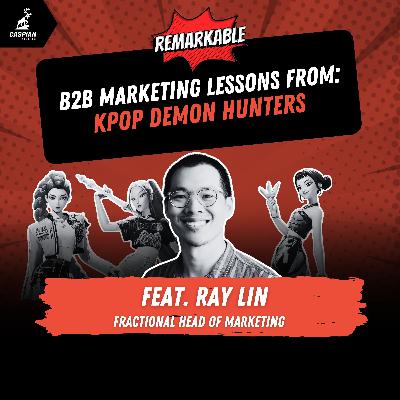
Most B2B brands think growth comes from turning everything up: more campaigns, more hustle, more competitive swagger. But the brands people actually follow know when to slow down, tune out the noise, and get real.That’s the unexpected lesson of KPop Demon Hunters, a movie that uses K-pop stardom, rivalry, and emotional honesty to show what makes an audience stay loyal. In this episode, we break down his marketing lessons with the help of our special guest Ray Lin, Fractional Head of Marketing.Together, we explore what B2B marketers can learn from pacing for quality, standing for something bigger than the rivalry, and making vulnerability a trust engine that drives demand.About our guest, Ray LinRay Lin is a mission-driven marketing leader who turns messy funnels into clean revenue. Over 13+ years across SaaS, marketplaces, and wellness tech, he’s built demand gen and ABM machines that actually align with sales—and he’s unapologetically pro-AI when it lifts both creativity and efficiency.A Bay Area native and former sports writer turned “accidental but strategic marketer,” Ray believes great marketing is H2H—human to human—before it’s ever B2B. He’s led and rolled up his sleeves across demand gen, digital, ABM, field, performance, growth, content, product marketing, and lifecycle CRM, with 8+ years inside B2B2C marketplaces like Grubhub, Wellhub and SeatGeek.If your pipeline’s leaky, your teams are siloed, or “content” isn’t moving deals, Ray’s the marketing leader who fixes the system, centers the customer, and gets momentum back on the scoreboard.What B2B Companies Can Learn From KPop Demon Hunters:Work smarter, not harder. KPop Demon Hunters shows that momentum dies when you confuse output with impact. Ray pulls a direct B2B parallel: “one of the lessons that come from Golden is working smarter, not harder… [Marketers] a lot think that extra 10 attempts at ad creative or 10 extra emails that you queue up in your CRM are gonna make all the difference. When in reality, it’s about quality, not quantity.” For B2B, this movie is your warning label: speed without intention burns out the team and blurs the story. Make fewer bets, make them sharper, and give your work room to land.Compete with conviction, not contempt. The movie’s diss track, Takedown, is a trap: when your identity becomes anti-them, you shrink your own story. Ray says it plainly: “Don’t let competitive obsession poison your well.” The point isn’t to never compete, it’s how you compete. If your positioning is mostly about your rival, you’ve already let them write your narrative. Lead with what you stand for, and you won’t need a villain to feel heroic.Let vulnerability be your differentiator. The movie’s emotional turn lands because the heroes stop performing perfection and start telling the truth. That’s the B2B move too: honesty travels farther than polish. Ray says, “ The power of vulnerability and transparency… can really skyrocket a B2B brand.” In B2B, authenticity isn’t a vibe, it’s a trust engine. Build a brand worth believing in.Quote“Always be ready. You don't know what's gonna be a hit and what's not going to. And when it does happen, know how to capitalize on it. And the multiple prongs, the octopus of this behemoth that is KPop Demon Hunters, I think, is that it has all these tentacles… [and] is what makes it so powerful. You can't plan for the success of one tentacle without thinking at least about the others.”Time Stamps[00:55] Meet Ray Lin, Fractional Head of Marketing[02:15] Why KPop Demon Hunters?[05:10] Role of a Fractional Head of Marketing[06:20] Behind the Scenes of KPop Demon Hunters[16:00] B2B Marketing Lessons from KPop Demon Hunters[27:00] High Concept Storytelling in Media[40:57] Final Thoughts and TakeawaysLinksConnect with Ray on LinkedInAbout Remarkable!Remarkable! is created by the team at Caspian Studios, the premier B2B Podcast-as-a-Service company. Caspian creates both nonfiction and fiction series for B2B companies. If you want a fiction series check out our new offering - The Business Thriller - Hollywood style storytelling for B2B. Learn more at CaspianStudios.com. In today’s episode, you heard from Ian Faison (CEO of Caspian Studios) and Meredith Gooderham (Head of Production). Remarkable was produced this week by Jess Avellino, mixed by Scott Goodrich, and our theme song is “Solomon” by FALAK. Create something remarkable. Rise above the noise. Hosted by Simplecast, an AdsWizz company. See pcm.adswizz.com for information about our collection and use of personal data for advertising.
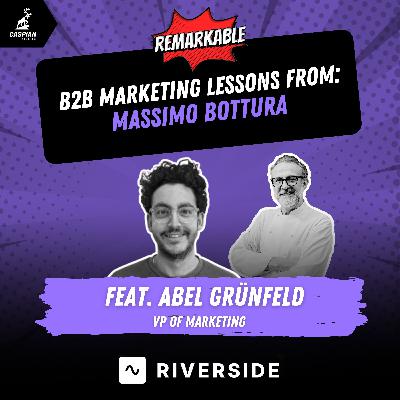
Sometimes the biggest creative breakthroughs start with a mistake, and no one proves that better than Massimo Bottura.The three-Michelin-star chef behind some of the world’s most iconic dishes built his reputation on turning accidents, constraints, and tradition itself into something entirely new. In this episode, we break down his marketing lessons with the help of our special guest Abel Grünfeld, VP of Marketing at Riverside.Together, we explore what B2B marketers can learn from transforming mistakes into memorable stories, using constraints to spark better ideas, and leading with calm adaptability when things inevitably go off script.About our guest, Abel GrünfeldAbel Grunfeld is Riverside’s VP of marketing and first employee. He is a growth strategy expert, specializing in scaling our digital presence and building an efficient marketing pipeline. What B2B Companies Can Learn From Massimo Bottura:Turn mistakes into magnetic storytelling. Massimo Bottura’s most iconic dish was born from a dropped lemon tart, which is proof that imperfections can become brand-defining moments. Abel explains, “ [It’s] very inspiring to take this high stress environment… and transform it into something that actually is unique, much more creative, much more powerful in terms of storytelling.” In B2B, the same principle applies. When a campaign breaks, a launch misfires, or a plan goes sideways, don’t hide it. Shape it into a story. Audiences connect most with brands that reveal the creative, human process behind the work. Your “oops” moment might become your most memorable asset.Use constraints to fuel creativity. In high-pressure kitchens, limitations create innovation, not less of it. Abel notes, “Your constraints are your advantage… By being very intentional and aware of what your constraints and disadvantages are, you can be really focused on how to use these to actually create some sort of playing field where you can be more successful.” B2B teams often don’t have unlimited budgets, bandwidth, or time. That’s not a disadvantage, that’s focus. Constraints sharpen your narrative, strengthen your positioning, and force bold creative choices. The boundaries become the catalyst.Plan for surprises and lead through them. Massimo Bottura thrives by embracing unpredictability, treating chaos as a space for invention. Abel shares, “You always plan, but you cannot always control the outcomes… you need to plan to be surprised… and to figure out how you make the most out of any situation.” For B2B marketers, this is the mindset shift. Markets shift. Teams change. Campaigns don’t go as expected. The brands that win are the ones that stay calm, adapt quickly, and turn the unexpected into momentum. Build flexibility into your strategy so you can transform disruption into differentiation.Quote“Real creativity, very often, it's a coincidence of different factors. There's an unintentionality behind creation that when you plan everything out, you'll never come to that result. When you allow space for exploration, for playfulness, for doing things that you never planned… sometimes they're better than what you actually can envision and visualize yourself.” Time Stamps[00:55] Meet Abel Grünfeld, VP of Marketing at Riverside [00:52] Why Massimo Bottura?[01:59 The Role of VP of Marketing at Riverside[03:02] Behind the Scenes of Massimo Bottura: The Italian Culinary Genius[14:58] Marketing Lessons from Massimo Bottura[26:19] Where are B2B Companies at with Video?[32:07] The Importance of Video Content[41:34] Content Strategy at Riverside[44:47] Simplifying Video Production[47:07] Consolidating Video Creation Tools[49:07] Final Thoughts and TakeawaysLinksConnect with Abel on LinkedInLearn more about RiversideAbout Remarkable!Remarkable! is created by the team at Caspian Studios, the premier B2B Podcast-as-a-Service company. Caspian creates both nonfiction and fiction series for B2B companies. If you want a fiction series check out our new offering - The Business Thriller - Hollywood style storytelling for B2B. Learn more at CaspianStudios.com. In today’s episode, you heard from Ian Faison (CEO of Caspian Studios) and Meredith Gooderham (Head of Production). Remarkable was produced this week by Jess Avellino, mixed by Scott Goodrich, and our theme song is “Solomon” by FALAK. Create something remarkable. Rise above the noise. Hosted by Simplecast, an AdsWizz company. See pcm.adswizz.com for information about our collection and use of personal data for advertising.
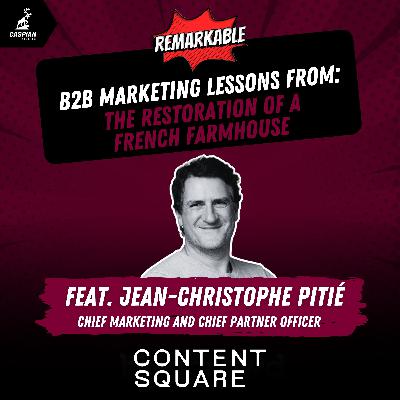
Restoring a 250-year-old farmhouse isn’t just a renovation project. It’s a blueprint for modern marketing.That’s the lesson from Jean-Christophe Pitié, Chief Marketing and Chief Partner Officer at Contentsquare, who’s spent the last five years bringing new life to a centuries-old home outside Paris. In this episode, we break down the marketing lessons hidden in his restoration journey.Together, we explore what B2B marketers can learn from blending heritage with innovation, finding creativity in constraints, and designing connected experiences where every touchpoint matters.About our guest, Jean-Christophe PitiéWith 20+ years of experience in international marketing and partner engagement, Jean-Christophe is committed to supporting companies of all sizes in their digital transformation. Passionate about technology and retail, he spent two decades at Microsoft, where he had the opportunity to contribute to the cloud transformation and to launch Microsoft 365 as well as leading Microsoft Stores. Today, as Chief Marketing and Partnerships Officer at Contentsquare, Jean-Christophe’s main mission is to drive customer demand in markets around the world, continue to grow our rich partner ecosystem, and bring holistic customer experience insights to more teams worldwide.What B2B Companies Can Learn From the restoration of a French farmhouse:Honor your legacy while modernizing for today. Great brands, like great houses, balance tradition and innovation. Jean-Christophe explains, “I had architects who came initially, and they wanted to put glass everywhere, tear down some big stone walls, and I’m like, guys, this house has had oak beams for 250 years. I’m not gonna tear them down. I’m gonna keep them.” In B2B, the same logic applies. Your legacy, your history, and your customer trust are part of your brand’s foundation. Don’t tear them down for the sake of what’s trendy. Blend your legacy with fresh, modern layers such as new tech, new storytelling, and new energy, without losing what made your brand distinct. That balance between the old and the new is what gives it lasting beauty and credibility.Constraints fuel creativity. Jean-Christophe says, “Sometimes the best projects come when… you have a constraint… either a location constraint or timing or budget, you get very creative to work around the constraints.” His farmhouse’s three-foot-thick stone walls forced him to rethink how to add modern features, and that challenge sparked originality. In B2B, the same holds true. Limited budget? Shrinking timelines? Regulatory hurdles? These are the sparks for inventive ideas. Don’t let your constraints kill creativity; let them focus it.Every touchpoint shapes the experience. When restoring a house, you have to look at the whole picture; every room, material, and detail needs to connect. Jean-Christophe shared, “It’s a bit like your marketing strategy. You need to connect across channels… every touchpoint matters.” Just like a home’s design must flow seamlessly from one room to the next, so should your brand experience, across your website, content, product, and sales. Inconsistent moments break trust. When every touchpoint feels connected and intentional, you turn friction into flow, and customers into believers.Quote“History is part of who we are, human beings… It’s beautiful… It's like a brand. When you think about brand, you want something that's unique, differentiated, [and] people can relate to, which is so beautiful.”Time Stamps[00:55] Meet Jean-Christophe Pitié, Chief Marketing and Chief Partner Officer at Contentsquare[01:04] Jean-Christophe’s French Farmhouse Restoration Project[04:38] Balancing Tradition and Innovation in Restoration Projects[13:56] Creative Solutions and Constraints in Restoration[21:30] Importance of Legacy[26:51] B2B Marketing Lessons from Restoring a French Farmhouse[38:30] Innovations at Content Square[43:33] Advice for CMOs on Investing in Brand[45:45] Final Thoughts and TakeawaysLinksConnect with Jean-Christophe on LinkedInLearn more about ContentsquareAbout Remarkable!Remarkable! is created by the team at Caspian Studios, the premier B2B Podcast-as-a-Service company. Caspian creates both nonfiction and fiction series for B2B companies. If you want a fiction series check out our new offering - The Business Thriller - Hollywood style storytelling for B2B. Learn more at CaspianStudios.com. In today’s episode, you heard from Ian Faison (CEO of Caspian Studios) and Meredith Gooderham (Head of Production). Remarkable was produced this week by Jess Avellino, mixed by Scott Goodrich, and our theme song is “Solomon” by FALAK. Create something remarkable. Rise above the noise. Hosted by Simplecast, an AdsWizz company. See pcm.adswizz.com for information about our collection and use of personal data for advertising.
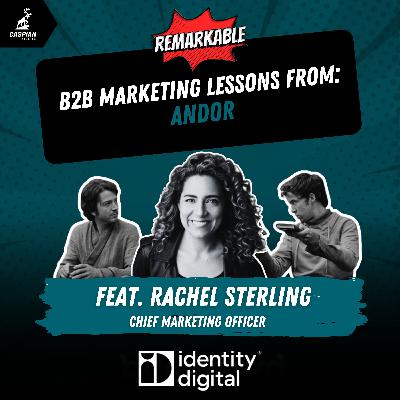
Everybody loves a good origin story, but not every story is worth retelling. The real skill is knowing when to evolve, not repeat.That’s the lesson of Andor, the Star Wars series that turned subtle storytelling into a strategy for lasting relevance. In this episode, we explore its B2B marketing takeaways with the help of our special guest Rachel Sterling, CMO of Identity Digital. Together, we break down what B2B marketers can learn from spotting product fatigue early, tailoring stories for evolving audiences, and creating content that sparks conversation, not just clicks.About our guest, Rachel SterlingRachel Sterling serves as Chief Marketing Officer where she is focused on expanding Identity Digital’s impact on driving awareness and adoption of our top level domain portfolio. Prior to joining Identity Digital, Rachel held senior leadership positions at Proximie, Instagram, Twitter, and Google where she developed impactful strategies around product, integrated, content, and event marketing.Rachel also possesses a creative background, spending the first eight years of her career working in TV production and post-production. Rachel lives in Belmont, CA with her husband and two children.What B2B Companies Can Learn From Andor:Recognize when the story has run its course. Just like Disney realized Luke Skywalker’s arc had reached its limits, Rachel ties that lesson to brand fatigue. Audiences, like customers, eventually want something new. As she puts it: “Their main characters had been exhausted… you have to consistently monitor for user sentiment.” Andor worked because it didn’t cling to nostalgia; it built from a blank slate. In B2B, that means knowing when your message or product line has hit its ceiling and having the courage to reinvent before your audience tunes out.Segment for meaning, not just demographics. Disney didn’t make Andor for everyone. It made it for the fans who grew up with A New Hope. Rachel explains: “By exploring more mature themes, you're building content specifically for the core audience that had been there since the very beginning.” The same rule applies in B2B. As your audience evolves, so should your tone, themes, and depth. Mature buyers crave nuance; new ones need accessibility. Build the right story for the right segment, and you’ll meet each generation where they are, not where they were.Make content that talks back. Rachel points out that Andor isn’t a passive show. It demands engagement long after the credits roll. As she says: “Content no longer exists in a passive experience… The sign of a good show is when you can engage in conversation beyond just a simple, ‘that was good.’” In B2B, the same holds true. The best content doesn’t just get attention; it gets people talking, sharing, and connecting around a shared idea. Don’t settle for applause, aim for conversation that keeps your brand in motion.Quote“Just because you feel affinity for the product does not mean that people will continue to share that affinity. I definitely think that marketers, from seeing the decision that Disney made to Greenlight Andor, can take away the message [to] understand when you have product fatigue.”Time Stamps[00:55] Meet Rachel Sterling, Chief Marketing Officer at Identity Digital[01:51] Why Andor?[03:36] The Role of CMO at Identity Digital[04:45] What is Andor?[22:32] B2B Marketing Lessons from Andor[42:14] Identity Digital's Brand and Content Strategy[45:52] Advice for First-Time CMOs[48:27] Final Thoughts and TakeawaysLinksConnect with Rachel on LinkedInLearn more about Identity DigitalAbout Remarkable!Remarkable! is created by the team at Caspian Studios, the premier B2B Podcast-as-a-Service company. Caspian creates both nonfiction and fiction series for B2B companies. If you want a fiction series check out our new offering - The Business Thriller - Hollywood style storytelling for B2B. Learn more at CaspianStudios.com. In today’s episode, you heard from Ian Faison (CEO of Caspian Studios) and Meredith Gooderham (Head of Production). Remarkable was produced this week by Jess Avellino, mixed by Scott Goodrich, and our theme song is “Solomon” by FALAK. Create something remarkable. Rise above the noise. Hosted by Simplecast, an AdsWizz company. See pcm.adswizz.com for information about our collection and use of personal data for advertising.
Real strength isn’t flashy. It’s earned through quiet discipline over time. The same goes for B2B marketing: sustainable growth comes from strong foundations, not sporadic wins.That’s the lesson of Dr. Peter Attia, the longevity expert who reshaped how millions think about health. In this episode, we explore his B2B marketing parallels with the help of our special guest Ashley Sturm, VP of Marketing at Opengear.Together, we uncover what B2B marketers can learn from building strong systems behind every campaign, committing to a long-term content strategy, and meeting audiences where they are with multichannel storytelling.About our guest, Ashley SturmAshley Sturm is VP of Marketing at Opengear. Ashley is a marketing and strategy leader with more than 15 years of experience developing strategic marketing initiatives to increase brand affinity, shape the customer experience, and grow market share. Before joining Opengear, she served as the Vice President of Marketing at Nautilus Data Technologies. Prior to that, she served as the Senior Director of Marketing Brand and Content for NTT Global Data Centers Americas, spearheading marketing efforts to open two out of six data center campuses.Ashley has led global marketing through the startup of Vertiv’s Global Data Center Solutions business unit, where she developed the unit’s foundational messaging and established global and regional marketing teams. Ashley’s career experience includes extensive work with the US Navy through the Clearinghouse for Military Family Readiness as well as broadcast journalism. A graduate of the University of Missouri’s School of Journalism, Ashley specializes in journalism and converged media.What B2B Companies Can Learn From Dr. Peter Attia:Focus on strength in the unseen work. Just like Dr. Attia emphasizes strength in the eccentric phase of movement (the part no one sees), Ashley connects that to B2B marketing fundamentals. Campaigns fail when the foundation is weak. As she puts it: “[It’s] not just the big flashy campaigns or the launches, it’s about the control, the discipline, and the structure behind them.” By investing in process, frameworks, and messaging systems, brands build resilience and long-term performance. The lesson: don’t obsess over launch day, obsess over what holds it all together.Commit to the slow burn strategy. Dr. Attia didn’t explode overnight. He showed up for years through podcasts, long-form content, and thought leadership before publishing his book, Outlive: The Science and Art of Longevity. Ashley calls out the power of consistency over time, saying: “He committed to the slow burn… we’re in this for the long haul.” In B2B, that translates to sticking with a point of view, consistently educating your market, and building credibility brick by brick. Thought leadership is earned, not launched, and trust compounds for brands that stay the course.Meet people on their terms. Dr. Attia doesn’t rely on one channel or format. He scales his ideas across podcasts, books, YouTube tutorials, social clips, and deep science blogs. Ashley ties that directly to B2B content strategy: “Where are they gonna be? How do they wanna consume it? Let’s make sure we’ve morphed the content to fit that medium.” Your buyers consume differently at different moments. Repurpose one core message into channel-native formats to reach them everywhere they are, not where you wish they were.Quote“Strength is built in the parts we sometimes overlook — the details, the structure, the lowering motion — that’s where you build resilience. Whether in health or in business.”Time Stamps[00:55] Meet Ashley Sturm, VP of Marketing at Opengear[01:12] Why Dr. Peter Attia?[04:02] Role of VP of Marketing at Opengear[05:03] Deep Dive into Dr. Peter Attia’s Work[11:23] B2B Marketing Lessons from Dr. Peter Attia[39:48] Building Authentic Content Strategies[45:57] Advice for Marketing Leaders[48:35] Final Thoughts and TakeawaysLinksConnect with Ashley on LinkedInLearn more about OpengearAbout Remarkable!Remarkable! is created by the team at Caspian Studios, the premier B2B Podcast-as-a-Service company. Caspian creates both nonfiction and fiction series for B2B companies. If you want a fiction series check out our new offering - The Business Thriller - Hollywood style storytelling for B2B. Learn more at CaspianStudios.com. In today’s episode, you heard from Ian Faison (CEO of Caspian Studios) and Meredith Gooderham (Head of Production). Remarkable was produced this week by Jess Avellino, mixed by Scott Goodrich, and our theme song is “Solomon” by FALAK. Create something remarkable. Rise above the noise. Hosted by Simplecast, an AdsWizz company. See pcm.adswizz.com for information about our collection and use of personal data for advertising.
A great marketing engine doesn’t run in a straight line. It spins, gathers speed, and builds momentum with every turn.That’s the lesson of the flywheel, a framework that transforms scattered marketing efforts into a self-sustaining system of growth. In this episode, we explore how to turn that theory into reality with Nataly Kelly, Chief Marketing Officer at Zappi.Together, we unpack what B2B marketers can learn from building circular strategies that connect brand to demand, removing friction where it matters most, and compounding small wins into unstoppable momentum.About our guest, Nataly KellyNataly Kelly is CMO at Zappi. She has over 20 years of experience leading remote and global teams, and previously served 7 years as VP at HubSpot. She is a frequent contributor to Harvard Business Review, a published author of four books, keynote speaker on marketing, growth, and international expansion, and an award-winning leader. She has been named among the Top 50 CMOs on LinkedIn, as Marketing Executive of the Year, in the 40 under 40, and one of the Top 25 Content Marketers in Enterprise Software, as well as among the Women Worth Watching.What B2B Companies Can Learn From the Flywheel:Marketing is a flywheel, not a funnel. Marketers love funnels because they’re measurable, but Nataly reminds us that the best marketing is circular, not linear. She says, “So often we have thought of marketing as like a linear funnel. But the flywheel’s really where you turn the funnel on the side and then connect the top to the bottom.” In her model, brand, demand, land, and expand all feed each other in an ongoing loop. Marketing shouldn’t be about one campaign that ends. It’s about creating continuous energy that connects awareness to advocacy.Friction kills momentum. Velocity doesn’t come from spending more, it comes from removing what slows you down. Nataly explains, “A general rule of thumb I’ve always used is the closer you get to someone’s wallet, the more important it is to remove friction…. Every touchpoint is a chance to delight a customer.” In B2B marketing, the same rule applies: every confusing process, clunky message, or slow response is a brake on your flywheel. Smooth the path, and speed will follow.Small improvements compound into unstoppable growth. Marketers often look for a big splash, but Nataly says momentum comes from micro progress. Nataly asks, “What are the small things we can do to create uplift today and momentum today?... And those things add up.” Each small optimization—an improved touchpoint, a clearer message, a faster follow-up—removes friction and accelerates the flywheel. Consistency, not chaos, creates compounding power.Quote“Your brand voice is really how you decide to communicate with your customer. And that is not just what we typically consider marketing communications. It touches every part of the customer experience.”Time Stamps[00:55] Meet Nataly Kelly, Chief Marketing Officer at Zappi[01:09] Why Flywheels?[05:16] Role of Chief Marketing Officer at Zappi[07:30] What are Flywheels?[20:52] Understanding Market Dynamics and Customer Segmentation[22:11] Building and Maintaining a Flywheel Strategy[26:11] Content Marketing Success Stories[33:51] Leveraging LinkedIn for Effective Content Distribution[39:22] Final Thoughts and TakeawaysLinksConnect with Nataly on LinkedInLearn more about ZappiAbout Remarkable!Remarkable! is created by the team at Caspian Studios, the premier B2B Podcast-as-a-Service company. Caspian creates both nonfiction and fiction series for B2B companies. If you want a fiction series check out our new offering - The Business Thriller - Hollywood style storytelling for B2B. Learn more at CaspianStudios.com. In today’s episode, you heard from Ian Faison (CEO of Caspian Studios) and Meredith Gooderham (Head of Production). Remarkable was produced this week by Jess Avellino, mixed by Scott Goodrich, and our theme song is “Solomon” by FALAK. Create something remarkable. Rise above the noise. Hosted by Simplecast, an AdsWizz company. See pcm.adswizz.com for information about our collection and use of personal data for advertising.

Survival isn’t just for dystopian dramas. The best B2B marketing strategies demand experimentation, curiosity, and the ability to outlast weaker ideas.That’s the lesson of Squid Game, the global phenomenon where only the strongest contestants made it through each round. In this episode, we explore its marketing parallels with the help of our special guest Scott Leatherman, Chief Marketing Officer at Aviatrix.Together, we uncover what B2B marketers can learn from gamifying campaigns to pull audiences in, running multiple “Squid Games” to see which campaigns win, and staying relentlessly curious by listening to what customers really say.About our guest, Scott LeathermanScott Leatherman is an award-winning full-stack marketing and operations executive with 25+ years of leadership and business management experience. Scott is currently the Chief Marketing Officer at Aviatrix. Prior to joining Aviatrix, he was the CMO at Veritone, an AI platform company. Scott served as COO at SAP Labs US for 5 years. Scott was a Global Vice President of Marketing and was a founding member of the SAP HANA go-to-market team that disrupted the database market and built a billion-dollar business in less than three years. Also during Scott’s tenure at SAP he was part of the Strategic Account Sales Team and created new channel programs to reduce shelfware and support new solution adoption. Prior to SAP, Scott held senior marketing and business development roles at several startups.Scott was recognized by the Silicon Valley Business Journal for his lifelong commitment to helping his local community with the 2018 Individual Community Champion Award. Both at work and in his personal life, Scott is focused on helping communities reduce food insecurities, supporting underserved children, funding cancer research and Native American educational programs.What B2B Companies Can Learn From Squid Game:Gamify campaigns to move your audience. Marketing works best when it pulls people in emotionally, just like Squid Game. Scott explains, “Anytime you want to move an audience together, gamifying it so that they have an emotional pull on the winner is gonna make you successful.” By creating campaigns that feel participatory, competitive, or playful, brands can inspire curiosity and investment from their audience. It’s not just messaging—it’s making people feel like they have a stake in the outcome.Run “Squid Games” for your campaigns. Rather than guessing which message will resonate, Scott’s team tested multiple campaign “games” at once. “We invested over 500 engagements…we had 74 one-on-one engagements…to narrow it down to what we have as eight campaigns in the Squid Games.” Each campaign has a top, middle, and bottom funnel component, and their performance is tracked side by side. Scott explains, “The gamification of Squid Games is working in our B2B marketing approach…we rolled it out to the company as Squid Games…and it’s been really fun to have engineers across the world leaning in on what they think is gonna move the audience fastest.” The lesson: treat campaigns like contestants. Test widely, kill off the weak performers quickly, and double down on what wins.Stay curious and listen to your audience. One of Scott’s biggest lessons is that marketers often assume they know what works—but data and customer feedback may prove otherwise. He notes, “It really comes back to just what are your customers saying about you? And what are your prospects saying about you?…That listening exercise, while it sounds remedial and 101, it gets lost on a lot of us ‘cause we’re all running so fast.” Just like in Squid Game, survival depends on paying close attention and adapting quickly. In B2B marketing, curiosity and active listening turn campaigns into insights, and insights into growth.Quote“The gamification of Squid Games is working in our B2B marketing approach…we rolled it out to the company as Squid Games…and it’s been really fun to have engineers across the world leaning in on what they think is gonna move the audience fastest.”Time Stamps[00:55] Meet Scott Leatherman, Chief Marketing Officer at Aviatrix[01:32] Why Squid Game?[03:08] Behind-the-Scenes of Squid Game[14:18] AI in Marketing[17:33] B2B Marketing Takeaways from Squid Game[42:39] AI Integration and Brand Evolution[46:46] Final Thoughts and TakeawaysLinksConnect with Scott on LinkedInLearn more about AviatrixAbout Remarkable!Remarkable! is created by the team at Caspian Studios, the premier B2B Podcast-as-a-Service company. Caspian creates both nonfiction and fiction series for B2B companies. If you want a fiction series check out our new offering - The Business Thriller - Hollywood style storytelling for B2B. Learn more at CaspianStudios.com. In today’s episode, you heard from Ian Faison (CEO of Caspian Studios) and Meredith Gooderham (Head of Production). Remarkable was produced this week by Jess Avellino, mixed by Scott Goodrich, and our theme song is “Solomon” by FALAK. Create something remarkable. Rise above the noise. Hosted by Simplecast, an AdsWizz company. See pcm.adswizz.com for information about our collection and use of personal data for advertising.
The New York Times isn’t just a newspaper; it’s a cultural institution, a daily habit, and a brand that has reinvented itself for every generation. That’s why in this episode, we’re taking lessons from their playbook with the help of our special guest Avery Akkineni, Chief Marketing Officer of VaynerX.Together, we explore what B2B marketers can learn from building credibility into daily routines, using gamification and surprise to drive engagement, and picking the right moments to move fast while staying relevant.About our guest, Avery AkkineniA pioneer in digital marketing and emerging tech, Avery Akkineni spearheads brand strategy, content, events, and communications as Chief Marketing Officer at VaynerX.In seven years at Vayner, Avery has catalyzed exponential growth by launching new companies and leading international expansion. She built VaynerMedia APAC from the ground up to over 150 employees in two years, opened key Asia Pacific markets like Singapore, Bangkok, Sydney, and Tokyo. During her tenure, VaynerMedia APAC was awarded Marketing Interactive's Agency of the Year. In 2021, Avery founded Vayner3, an innovation consultancy focused on emerging technologies like AI and Web3. Under her leadership, Vayner3 achieved significant industry acclaim; she was named an Ad Age Web3 Trailblazer, and an AI Thought Leader by Business Insider. Her proven ability to identify and leverage leading-edge channels to drive growth for Vayner and her brand partners has landed Avery advisory roles including Salesforce’s AI Council, Meta’s Creative Council, TikTok's #ForYouCollective, Tracer's Advisory Board, and with a weekly marketers podcast on CoinDesk (GenC).Based in Miami, FL overseeing VaynerX's local office, Avery continues to push boundaries in marketing. She is a sought-after speaker on modern marketing and digital innovation, who empowers teams and companies to embrace new opportunities. She also serves on the Board of Peace Players, an organization using the power of sport to build peaceful and thriving communities.What B2B Companies Can Learn From The New York Times:Build credibility into daily routines. The New York Times succeeds because it has become a trusted part of people’s everyday habits. For B2B brands, the lesson is to earn that same consistent place in your audience’s workflow. As Avery explains:“To me, the credibility of The New York Times is why I want to check there first and understand their point of view. What are the big stories of today.” When buyers trust your perspective enough to seek it daily, your brand moves from optional to indispensable.Use gamification and surprise to drive engagement. NYT didn’t just sell news—it made puzzles, games, and even cooking content part of its brand fabric. That levity created stickiness. Avery puts it this way: “The New York Times integration with their incredible games has really helped drive up that frequency… I play with my friends, everybody shares their scores… and I think that really drives up that frequency and user adoption and makes The New York Times even more relevant.” In B2B, “serious” brands can still add fun, surprise, or delight to deepen connection and engagement.Pick your moments and move fast. The Times doesn’t try to beat TikTok on breaking news—it chooses credibility as its edge, while still responding with speed when it matters. Avery notes:“You don’t need to have a thought on everything. You have a thought on certain things—what matters for you and, as a brand, what matters for your consumers. Either we’re part of the conversation or we’re not.” For B2B, that means defining the moments where your voice is essential, and showing up quickly with relevance and confidence.Quote“ You don’t need to have a thought on everything. You have a thought on certain things—what matters for you and as a brand, what matters for your consumers. Either we’re part of the conversation or we’re not.”Time Stamps[00:55] Meet Avery Akkineni, Chief Marketing Officer of VaynerX01:05 Why The New York Times?01:53 The Role of CMO at VaynerX02:42 Gary Vaynerchuk's Influencer09:51 Behind-the-Scenes of NYT25:58 B2B Marketing Lessons from NYT38:35 Final Thoughts and TakeawaysLinksConnect with Avery on LinkedInLearn more about VaynerXAbout Remarkable!Remarkable! is created by the team at Caspian Studios, the premier B2B Podcast-as-a-Service company. Caspian creates both nonfiction and fiction series for B2B companies. If you want a fiction series check out our new offering - The Business Thriller - Hollywood style storytelling for B2B. Learn more at CaspianStudios.com. In today’s episode, you heard from Ian Faison (CEO of Caspian Studios) and Meredith Gooderham (Head of Production). Remarkable was produced this week by Jess Avellino, mixed by Scott Goodrich, and our theme song is “Solomon” by FALAK. Create something remarkable. Rise above the noise. Hosted by Simplecast, an AdsWizz company. See pcm.adswizz.com for information about our collection and use of personal data for advertising.
Penn State Football isn’t just a sport; it’s a tradition, a community, and a way of life. That same mindset should guide how we think about B2B marketing.That’s why in this episode, we’re taking lessons from Penn State’s legacy with the help of our special guest Jill Ransome, SVP of Marketing and Communications at Unite Us.Together, we explore what B2B marketers can learn from building a brand people rally behind, leaning into differentiation, and playing the long game with consistency to drive lasting impact.About our guest, Jill RansomeJill Ransome is a seasoned marketing executive with over 20 years of experience leading brand, communications, and growth strategies for technology and software companies. Currently SVP of Marketing at Unite Us, Jill previously served as Chief Marketing Officer at Jitterbit, where she led global brand transformation and demand generation efforts. She’s spent much of her career in high-growth environments, bringing a passion for storytelling, strategic execution, and building scalable marketing engines. Jill holds a B.S. in Global Marketing from Pennsylvania State University and lives in Fairfield, Connecticut.What B2B Companies Can Learn From Penn State Football:Build a brand people rally behind. Penn State thrives on pride, emotion, and community, and Jill says B2B brands need the same. “Build a brand that your fans, your followers, your constituents really believe in and rally behind. What Penn State does really well is it’s consistent. It’s emotional and it’s human.” Even in B2B, you need advocates who feel connected enough to share, refer, and champion your story.Lean into differentiation. Just as Penn State owns its “Linebacker U” reputation, companies must find what sets them apart. “From a marketing strategy perspective, you always need to be… thinking about what is your differentiation in the market that’s going to set your brand apart.” In crowded B2B categories, leaning into your unique story is what attracts the right buyers.Play the long game with consistency. Penn State football hasn’t changed its brand for decades, and that repetition builds equity. Jill points out: “They have been the same navy, blue and white design for decades upon decades… it comes back to brand… You don’t see success overnight. It’s something that’s built over time with consistency.” Marketing results don’t happen instantly; they come from committing to your identity and showing up over time.Quote“ I think good marketers are great storytellers, but you can't be a great storyteller unless you're a good listener. You have to listen and learn from your buyers. You have to listen and learn from your frontline. You have to listen and learn from the world around you.”Time Stamps[00:55] Meet Jill Ransome, SVP of Marketing and Communications at Unite Us[01:53] Why Penn State Football?[02:50] Role of SVP of Marketing at Unite Us[03:53] Penn State Football: Tradition and Identity[19:08] B2B Marketing Lessons from Penn State Football[26:39] Brand and Marketing Strategies at Unite Us[29:47] Effective Content and Campaigns[36:24] Advice for CMOs[38:02] Final Thoughts and TakeawaysLinksConnect with Jill on LinkedInLearn more about Unite UsAbout Remarkable!Remarkable! is created by the team at Caspian Studios, the premier B2B Podcast-as-a-Service company. Caspian creates both nonfiction and fiction series for B2B companies. If you want a fiction series check out our new offering - The Business Thriller - Hollywood style storytelling for B2B. Learn more at CaspianStudios.com. In today’s episode, you heard from Ian Faison (CEO of Caspian Studios) and Meredith Gooderham (Head of Production). Remarkable was produced this week by Jess Avellino, mixed by Scott Goodrich, and our theme song is “Solomon” by FALAK. Create something remarkable. Rise above the noise. Hosted by Simplecast, an AdsWizz company. See pcm.adswizz.com for information about our collection and use of personal data for advertising.
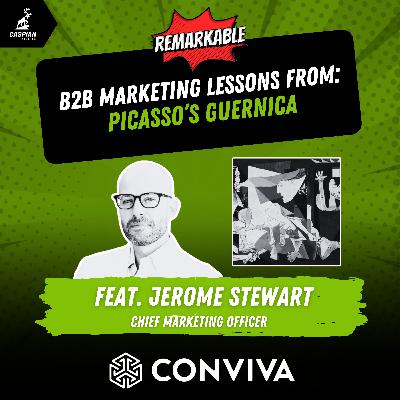
A masterpiece doesn’t have to be simple. Sometimes the most powerful stories emerge from complexity, cohesion, and staying power.That’s the lesson of Picasso’s Guernica, a chaotic painting that, when viewed as a whole, tells a timeless story. In this episode, we explore its marketing lessons with the help of our special guest Jerome Stewart, Chief Marketing Officer at Conviva.Together, we uncover what B2B marketers can learn from building campaigns with a unifying story, turning complexity into an advantage, and creating content designed to resonate long after launch.About our guest, Jerome StewartJerome Stewart is the Chief Marketing Officer at Conviva. He is a dynamic and people-driven marketing executive with a proven track record of building high-performing teams, elevating brand visibility, and driving revenue growth in early-stage and industry-leading technology companies. Jerome is an experienced global leader with six years of international business experience outside the USA, as well as an accomplished Amazon bestselling author.What B2B Companies Can Learn From Guernica:Campaigns need a unifying story. Guernica shows how fragmented, chaotic elements can form one powerful story. Jerome says, “Each one of those [individual pictures] stands out, but when you take a step back and you look at it in its entirety. Indeed, there is a cohesive story.” Marketing works the same way; every asset matters, but true impact comes when the pieces connect into a bigger, memorable narrative.Complexity can be an advantage. At first glance, Guernica looks disorganized and overwhelming. However, his chaotic canvas still communicates a clear message. Jerome points out, “Maybe some people look at a more modern artistic style… and you can say, ‘Hey, this just looks really messy.’ But as I say, dig in a little bit deeper and you see there's a very rich story.” In marketing, don’t be afraid of layered stories. Campaigns that invite discovery can spark deeper connection and longer attention.Strive for timeless content. Picasso’s painting still sparks reflection nearly a century later. Jerome connects this to marketing: “We’re trying to tell stories and we’re trying to come up with stories that stand out and that maybe stand the test of time. That will resonate into the future.” Campaigns should be built with staying power, not just to make noise at launch but to linger and influence long after.Quote“A bar to hold ourselves against is did we tell a story? Was it clear? And something else that Picasso did brilliantly well, he took something as complex as war, and he didn’t simplify it in any way. He did something cohesive. [We have to] challenge ourselves to do the best that we possibly can to tell those stories.”Time Stamps[00:55] Meet Jerome Stewart, Chief Marketing Officer at Conviva[01:34] Why Guernica?[06:57] Visiting Guernica and Its Impact[14:58] Role as CMO at Conviva[16:45] Understanding Guernica[28:08] B2B Marketing Takeaways from Guernica[35:31] Marketing Insights and Strategies[42:27] Advice for CMOs[44:53] Final Thoughts and TakeawaysLinksConnect with Jerome on LinkedInLearn more about ConvivaAbout Remarkable!Remarkable! is created by the team at Caspian Studios, the premier B2B Podcast-as-a-Service company. Caspian creates both nonfiction and fiction series for B2B companies. If you want a fiction series check out our new offering - The Business Thriller - Hollywood style storytelling for B2B. Learn more at CaspianStudios.com. In today’s episode, you heard from Ian Faison (CEO of Caspian Studios) and Meredith Gooderham (Head of Production). Remarkable was produced this week by Jess Avellino, mixed by Scott Goodrich, and our theme song is “Solomon” by FALAK. Create something remarkable. Rise above the noise. Hosted by Simplecast, an AdsWizz company. See pcm.adswizz.com for information about our collection and use of personal data for advertising.
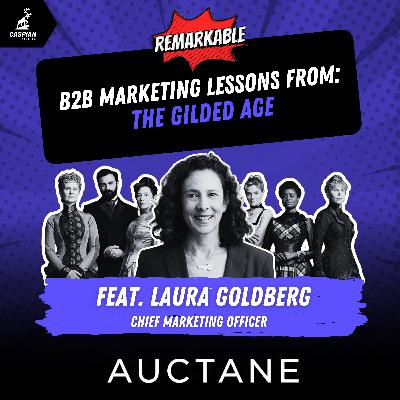
Big budgets and star power don’t guarantee success. Sometimes it takes time, refinement, and the right story to win an audience.That’s the journey of The Gilded Age, the HBO drama that overcame early skepticism to become a hit. In this episode, we dig into its marketing parallels with the help of our special guest Laura Goldberg, Chief Marketing Officer at Auctane.Together, we explore what B2B marketers can learn from practicing patience, locking in product-market fit, and doubling down when momentum builds to gain lasting growth.About our guest, Laura GoldbergLaura Goldberg is the Chief Marketing Officer at Auctane. She is a seasoned, operations-driven go-to-market executive with a proven track record of propelling software companies to new heights, particularly serving small and medium sized businesses (SMBs), a vital segment for Auctane. Goldberg excels in crafting data-driven marketing strategies that resonate with customer needs, and her expertise will be key in advancing Auctane's mission to deliver exceptional shipping and mailing experiences to businesses worldwide.Previously, Laura was the CMO at Constant Contact, a digital marketing platform trusted by millions of small businesses and nonprofits. She has also held marketing leadership positions at Kabbage, an American Express Company, and LegalZoom, where she played key roles in driving customer growth, revenue expansion, and EBITDA improvements, leading to successful exits for both companies.What B2B Companies Can Learn From The Gilded Age:Patience is essential. The Gilded Age wasn’t an overnight success—it built momentum slowly, and Laura sees the same in B2B marketing. “You got to have patience. You got to see it more than once. It has to build. You may not be a… hot [thing] out of the gate. But… it’s going to build. Nobody makes a decision… with The Gilded Age, it’s a solid hour and you got to pay attention. Like you have to make a commitment to it and it takes time.” Marketing results rarely happen instantly. Success comes from committing, nurturing, and allowing campaigns to grow into traction over time.Product-market fit is non-negotiable. The show’s elaborate sets and costumes bought it some time, but what kept audiences hooked was stronger storytelling in later seasons. Laura draws a clear B2B parallel: “You may have some stumbles outta the gate… You got to deliver the goods. The product market fit, if you will, has to be there eventually. It doesn’t have to be perfect right out of the gate, but it has to get to perfect pretty quickly.” In other words: creative campaigns and strong distribution will only get you so far—if the product doesn’t ultimately deliver, marketing can’t save itLean in when you gain traction. Once The Gilded Age started buzzing online, the promotion amplified everywhere. Laura says the same is true for B2B: “Once you get traction, lean in. When I tell you that my socials, everything I see is talking about this show… I see Mr. Russell in his flower suit all over the internet. By the way, I think it’s an interview from two years ago that I keep seeing. So recycle all that stuff. But once you feel that traction gripping, lean in, repeat, be on everything. Repost, retweet… you have to lean in when you’re doing well and really get that momentum.” Marketers should maximize momentum, recycle strong content, and make sure their presence is unavoidable when the audience is paying attention.Quote“ Customer, customer, customer. I feel like too many times it’s really easy to talk about why your product’s great and what it does… but you really have to frame it in the, what are you doing for me and me being the customer. How am I making things faster, cheaper, better for your end customer with what we’re doing, and making sure that you’re not just yelling features and functionality at people.”Time Stamps[00:55] Meet Laura Goldberg, Chief Marketing Officer at Auctane[01:14] Why The Gilded Age?[02:57] The Role of CMO at Auctane[09:50] What is The Gilded Age?[26:28] The Craft of Period Pieces[29:19] B2B Marketing Lessons from The Gilded Age[31:43] Laura's Marketing Strategy as a CMO[37:25] Winning Across Channels[49:35] Final Thoughts and TakeawaysLinksConnect with Laura on LinkedInLearn more about AuctaneAbout Remarkable!Remarkable! is created by the team at Caspian Studios, the premier B2B Podcast-as-a-Service company. Caspian creates both nonfiction and fiction series for B2B companies. If you want a fiction series check out our new offering - The Business Thriller - Hollywood style storytelling for B2B. Learn more at CaspianStudios.com. In today’s episode, you heard from Ian Faison (CEO of Caspian Studios) and Meredith Gooderham (Head of Production). Remarkable was produced this week by Jess Avellino, mixed by Scott Goodrich, and our theme song is “Solomon” by FALAK. Create something remarkable. Rise above the noise. Hosted by Simplecast, an AdsWizz company. See pcm.adswizz.com for information about our collection and use of personal data for advertising.
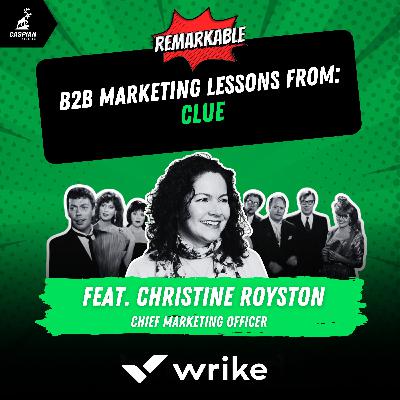
Not every launch succeeds on day one, but the brands that endure find ways to win over time.That’s why we’re turning to Clue, the 1985 murder mystery comedy with three different endings. Despite bombing at the box office, it grew into a beloved cult classic. In this episode, we break down its lessons with the help of special guest Christine Royston, Chief Marketing Officer at Wrike.Together, we explore what B2B marketers can learn from building strategy before execution, balancing brand and demand, and embracing word-of-mouth to turn audiences into passionate advocates.About our guest, Christine RoystonChristine Royston is a visionary global marketing executive with a proven track record of scaling iconic technology brands, architecting go-to-market transformation, and driving category leadership in the enterprise SaaS space. As Chief Marketing Officer at Wrike, Christine leads the company’s worldwide marketing strategy, fueling enterprise growth, brand acceleration, and customer-centric innovation at scale.With more than 20 years of experience across global B2B markets, Christine has built and led high-performing teams at some of the world’s most recognized technology companies—including Salesforce, Dropbox, and Imperva—where she helped pioneer marketing strategies during moments of hypergrowth and IPO. She most recently served as Global Head of B2B Marketing at Udemy and as Vice President of Marketing at Bitly, where she was instrumental in repositioning both brands for business adoption and long-term growth.Christine’s executive leadership spans Sales-Led and Product-Led Growth (PLG) models, across direct sales, freemium, and self-service go-to-market motions. Her ability to unify global teams, expand into new international markets, and launch cross-functional marketing engines has positioned her as a sought-after leader in growth-stage transformation and scaled enterprise performance.An expert in enterprise marketing strategy, customer lifecycle innovation, and multi-channel demand generation, Christine has driven business results across cloud computing, cybersecurity, financial services, and manufacturing verticals. She is also known for her passion for mentoring future marketing leaders and building diverse, inclusive, and impact-driven teams.Christine holds a B.A. from the University of Virginia and an International MBA in Global Marketing from the University of South Carolina’s Darla Moore School of Business. She brings a global lens to every challenge, with leadership experience spanning the U.S., Europe, Asia, and Latin America.What B2B Companies Can Learn From Clue:Strategy matters more than star power. Even the best team can’t save a weak story. Clue had an all-star cast, but without a clear throughline, it flopped at the box office. Christine draws a parallel to marketing: “Even if you have the best team in the world, without a great strategy, you’re not gonna win. You’ve got to have a really fantastic strategy and a really great team to back it up, so that you can kind of play on everybody’s strengths, but you’re all pointed in the right direction.” Don’t confuse talent or resources with strategy. Success comes from aligning everyone around a clear, shared story.Balance is everything. Clue was billed as both a mystery and a comedy, but leaned heavily into the silliness, confusing audiences who expected a tighter whodunit. Christine sees the same trap in B2B: “The movie was… touted as a mystery and a comedy, but it was definitely way more on the comedy side. And so thinking about that balance… and making sure that you’re really being clear with your intent of messaging, your intent of the brand.” Great marketing requires a balance between brand, demand, clarity, and creativity. Overweighting one side leaves your audience uncertain about what you really stand for.Word of mouth is your secret weapon. Despite its failure in theaters, Clue became a cult classic through community and conversation. For Christine, that’s a marketing playbook: “The fact that it did become this cult classic highlights the importance of word of mouth. How do you make sure you’re getting in front of people who will be interested in your product, or interested in your movie, and making sure that you’re leveraging communities [and] social as a way to get in front of people who maybe aren’t going to go to the box office.” Buzz builds longevity. Beyond paid campaigns, you need advocates, communities, and conversations that keep your brand alive long after launch.Quote“ How do you differentiate yourself and do something a little different. Bring some humor into what is normally a pretty straight-laced B2B technology type of industry. I think people like a little fun in their day-to-day.”Time Stamps[00:55] Meet Christine Royston, Chief Marketing Officer at Wrike[01:01] Why Clue?[01:24] The Role of CMO at Wrike[03:05] The Origins of Clue, The Movie[14:04] B2B Marketing Lessons from Clue[28:10] Balancing Brand vs. Demand[29:50] Wrike's Brand and Content Strategy[33:21] AI's Role in Modern Marketing[35:11] Wrike's Survey on AI's Impact[40:20] Final Thoughts and TakeawaysLinksConnect with Christine on LinkedInLearn more about WrikeAbout Remarkable!Remarkable! is created by the team at Caspian Studios, the premier B2B Podcast-as-a-Service company. Caspian creates both nonfiction and fiction series for B2B companies. If you want a fiction series check out our new offering - The Business Thriller - Hollywood style storytelling for B2B. Learn more at CaspianStudios.com. In today’s episode, you heard from Ian Faison (CEO of Caspian Studios) and Meredith Gooderham (Head of Production). Remarkable was produced this week by Jess Avellino, mixed by Scott Goodrich, and our theme song is “Solomon” by FALAK. Create something remarkable. Rise above the noise. Hosted by Simplecast, an AdsWizz company. See pcm.adswizz.com for information about our collection and use of personal data for advertising.

In comedy, the punchline only works if it lands with the audience—and B2B marketing is no different.That’s what we can learn from Hacks, a show about a legendary comedian reinventing herself with the help of a Gen Z writer. In this episode, we’re breaking down its lessons with the help of special guest Jamie Bell, Chief Marketing Officer at Workshop.Together, we explore what B2B marketers can learn from creating a “writer’s room” for fresh ideas, testing content like comedians test their sets, and embracing generational differences as a source of connection rather than division.About our guest, Jamie BellJamie Bell is the CMO at Workshop. She is a marketing leader with a passion for building brands in underestimated industries and demand engines that keep sales teams busy (in a good way!). Over the past 12+ years, Jamie has been lucky enough to work in several early- and growth-stage companies in SaaS, e-commerce, retail, and media.What B2B Companies Can Learn From Hacks:Create a “writer’s room” for marketers. Great campaigns don’t just come from formal briefs—they need a space for messy, creative riffing. Jamie explains, “We didn’t have a writer’s room, at least at Workshop, and so when I came back from maternity leave, we added a meeting. We called it the pitch deck… it’s just like an open forum for people to do like five-minute pitches, and we just creatively layer on, and it’s been a blast.” The lesson? Carve out judgment-free time for brainstorming, where small sparks can snowball into big campaigns.Test your material before scaling. Like comedians who try new jokes on the road, marketers should pilot ideas before investing heavily. Jamie notes, “She does road shows, before to test the set list. So we do some things in like our Happy Monday Club newsletter, where before we’ll like super invest in a piece of content, we’ll just see if it does better than the other content in that newsletter, and see what the reception of that is before we blow it up a bit.” The takeaway: use small, low-risk formats to gauge response, then double down on what resonates.Bridge generational divides head-on. Hacks thrives on the clash between an aging comedy legend and a Gen Z writer, two perspectives that seem at odds, but create brilliance together. Jamie ties this directly to marketing: “There’s so much about marketing and internal communications that I feel is around generational differences… and I think the idea that you take that relationship, you’re unapologetic about it and you just talk about it head on… I think it’s really great too.” In B2B marketing, don’t shy away from generational dynamics; embrace them as a rich source of storytelling and connection.Quote“ Employees are your best brand ambassadors, and you need to spend some effort rolling out things internally. Having employees connected to the mission, the vision, the values.”Time Stamps[00:55] Meet Jamie Bell, Chief Marketing Officer at Workshop[01:33] Why Hacks?[02:07] The Role of CMO at Workshop[03:07] What is the Happy Monday Club?[04:45] The Concept and Creation of Hacks[20:16] Marketing Lessons from Hacks[41:38] Importance of Community and Events[44:03] Workshops' Content Strategy[45:04] Advice for a first-time CMO[48:38] Final Thoughts and TakeawaysLinksConnect with Jamie on LinkedInLearn more about WorkshopAbout Remarkable!Remarkable! is created by the team at Caspian Studios, the premier B2B Podcast-as-a-Service company. Caspian creates both nonfiction and fiction series for B2B companies. If you want a fiction series check out our new offering - The Business Thriller - Hollywood style storytelling for B2B. Learn more at CaspianStudios.com. In today’s episode, you heard from Ian Faison (CEO of Caspian Studios) and Meredith Gooderham (Head of Production). Remarkable was produced this week by Jess Avellino, mixed by Scott Goodrich, and our theme song is “Solomon” by FALAK. Create something remarkable. Rise above the noise. Hosted by Simplecast, an AdsWizz company. See pcm.adswizz.com for information about our collection and use of personal data for advertising.
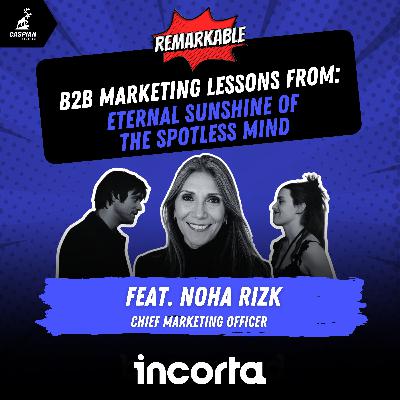
Great marketing isn’t just strategy, it’s intuition, timing, and a deep understanding of human behavior. That’s the beauty of Eternal Sunshine of the Spotless Mind, a movie about erasing your memories. In this episode, we’re breaking down its lessons with the help of special guest Noha Rizk, Chief Marketing Officer at Incorta. Together, we explore what B2B marketers can learn from putting human emotion at the center of their work, trusting intuition alongside data, and embracing mistakes as the path to growth.About our guest, Noha RizkNoha Rizk is the Chief Marketing Officer at Incorta. With deep expertise in Marketing, brand management, integrated channel management, product leadership, P&L accountability, and change management, across various industries and launching and leading partnerships, marketing and product in over 50 countries, Noha brings extensive experience and insights into how to execute for brand loyalty, growth and sustainable share of the market. Prior to Incorta, Noha led marketing for Meta AI, launching Llama, and leading other open source projects like PyTorch. She pioneered online banking for Amex and Citi, online booking and revenue optimisations and integrated channel strategies in the hotel industry with Starwood and Marriott, led partnerships and loyalty in emerging markets, launched NGO and Gov projects with US state department, launched and spun off two of her own successful businesses and helped organise PayPals enterprise, Platforms and Developer product offerings and streamline their GTM strategies.Noha loves to solve big problems and create groundbreaking products and services that inspire customers and business partners. She focuses on delivering insights and metrics driven outcomes, collaborating with cross-functional teams, and coming up with innovative solutions. She especially enjoys building and developing strong, resilient, and nimble teams that can adapt to changing market needs and customer expectations.Noha is an avid reader, developing painter and pianist, proud mother and animal lover with a passion for helping the private sector thrive in emerging markets.What B2B Companies Can Learn From Eternal Sunshine of the Spotless Mind:Lead with human emotion. Great marketing isn’t about features, it’s about people. Even in B2B, you’re dealing with human psyches, behaviors, and emotions—not faceless corporations. Noha explains, “Even as B2B marketers… you’re dealing with individuals. You’re dealing with the human psyche, you’re dealing with the buying behavior… ultimately that is the objective. The objective is to maintain a relationship with your customers.” The lesson? Build messaging that connects on a human level first, because behind every buying decision is a person making sense of their own emotions.Balance data with intuition. Metrics matter, but numbers can’t capture everything. Noha argues that some of the best insights come from being present, listening, and noticing what the data can’t show. “Some things can’t be measured…A big chunk of marketing has to be intuitive. It’s not always purely scientific.” Just as the film’s dreamlike narrative reminds us memory isn’t linear or logical, B2B marketers need to leave room for creativity, serendipity, and gut instinct, because not everything that counts can be counted.Embrace mistakes as part of growth. Trying to erase failures is as dangerous in marketing as it is in memory. Noha points out, “You can’t just erase away the pain… you won’t learn if you don’t make mistakes. A lot of marketers have to be super buttoned up, their campaigns have to work… there isn’t a lot of opportunity for marketers these days to be allowed to make mistakes.” But the best brands learn from experiments that don’t go as planned. Failure isn’t wasted, it’s the raw material for innovation, resilience, and better campaigns down the road.Quote“ As marketers…we explore the human psyche pretty much day in, day out, even if it's not explicitly said. But that's essentially what we do.”Time Stamps[00:55] Meet Noha Rizk, Chief Marketing Officer at Incorta[1:26] Why Eternal Sunshine of the Spotless Mind?[5:51] Role of CMO at Incorta[9:07] Breaking Down Eternal Sunshine of the Spotless Mind[22:11] B2B Marketing Takeaways from Eternal Sunshine of the Spotless Mind[43:56] Final Thoughts and TakeawaysLinksConnect with Noha on LinkedInLearn more about IncortaAbout Remarkable!Remarkable! is created by the team at Caspian Studios, the premier B2B Podcast-as-a-Service company. Caspian creates both nonfiction and fiction series for B2B companies. If you want a fiction series check out our new offering - The Business Thriller - Hollywood style storytelling for B2B. Learn more at CaspianStudios.com. In today’s episode, you heard from Ian Faison (CEO of Caspian Studios) and Meredith Gooderham (Head of Production). Remarkable was produced this week by Jess Avellino, mixed by Scott Goodrich, and our theme song is “Solomon” by FALAK. Create something remarkable. Rise above the noise. Hosted by Simplecast, an AdsWizz company. See pcm.adswizz.com for information about our collection and use of personal data for advertising.
It’s not easy to keep pace with constant change. If you want to stand out, you need to pivot (yes, PIVOT!), adapt, and build real connection with your audience.That’s the genius of Friends, a cultural phenomenon built on chemistry, community, and conversations that felt timeless. In this episode, we’re decoding its lessons with the help of our special guest Lisa Cole, Chief Marketing Officer at 2X.Together, we explore what B2B marketers can learn from embracing constant pivots, building your own Central Perk with your community, and why team chemistry often matters more than individual expertise.About our guest, Lisa ColeLisa Cole is currently CMO at 2X. She's a strategic marketing leader with over 24 years of experience driving transformative growth for B2B technology and professional services. As a former CMO at Huron, FARO, and Cellebrite, she has earned industry recognition for enhancing brand positioning, optimizing demand generation, and leveraging AI to accelerate go-to-market strategies. Through her earned accolades from Sirius Decisions, Forrester, and CMO Alliance and her book The Revenue RAMP, she guides B2B leaders in achieving more with less using her proven frameworks. What B2B Companies Can Learn From Friends:Pivot, pivot, pivot. In marketing, staying still isn’t an option. New channels, new buyer behaviors, and now AI advancements mean marketers are in a constant state of change. Lisa explains, “Pivot is certainly one, especially now that, it seems like every week there’s a new advancement… marketing as a whole is pivot. We’re constantly in a period of time in between pivots is compressing.” The same way Ross couldn’t move that couch without shouting “Pivot!” every marketer today needs to be ready to shift strategy, adjust direction, and keep moving forward.Create your Central Perk. Every brand needs a place where buyers feel safe, connected, and part of something bigger than a transaction. For the Friends cast, it was Central Perk, a space where they could gather, vent, and support each other without judgment. Lisa says, “You have to create a place… where your target audience, your buyers feel safe to get together and meet and engage as a community… if you care about Central Perk for your buyers, then they’ll care about you too.” In B2B, that means investing in communities and experiences where customers can be candid, connect with peers, and build trust—with your brand quietly in the background.Build team chemistry. The Friends cast worked because the chemistry was real—something greater than the sum of its parts. Marketing teams are no different. Lisa says, “Sometimes it’s the chemistry that matters more than the expertise. It's not necessarily that I brought together six experts. It's the way that they work together, sometimes is the real magic.” Great marketing doesn’t just come from the smartest experts; it comes from teams (in-house, partners, or both) who click, collaborate, and push each other toward a shared mission.Quote“ I'm not necessarily saying to marketers that this cast needs to be a large in-house marketing team. I'm just simply saying that the people that are in the day-to-day business of executing marketing for your organization, that there is a chemistry between them and that they are working together in a unified way.”Time Stamps[00:55] Meet Lisa Cole, CMO at 2X[01:09] Why Friends?[01:52] The Role of CMO at 2X[03:34] The Creation of Friends[07:54] The Chemistry and Dynamics of Friends[21:59] Marketing Takeaways from Friends[32:17] The Humble Leader[37:36] Introducing Brand Gravity[48:11] 2X’s Content Strategy[49:46] Final Thoughts and TakeawaysLinksConnect with Lisa on LinkedInLearn more about 2XAbout Remarkable!Remarkable! is created by the team at Caspian Studios, the premier B2B Podcast-as-a-Service company. Caspian creates both nonfiction and fiction series for B2B companies. If you want a fiction series check out our new offering - The Business Thriller - Hollywood style storytelling for B2B. Learn more at CaspianStudios.com. In today’s episode, you heard from Ian Faison (CEO of Caspian Studios) and Meredith Gooderham (Head of Production). Remarkable was produced this week by Jess Avellino, mixed by Scott Goodrich, and our theme song is “Solomon” by FALAK. Create something remarkable. Rise above the noise. Hosted by Simplecast, an AdsWizz company. See pcm.adswizz.com for information about our collection and use of personal data for advertising.

Comments

Download from Google Play

Download from App Store
 United States