


 Claim Ownership
Critical Stages in Malawian Contemporary Theatre
Subscribed: 0Played: 0
Subscribe

© This work is licensed under a Creative Commons Attribution 4.0 International License.
Description
In Critical Stages in Malawian Contemporary Theatre, Fumbani Innot Phiri Jr. interviews established theatre artists from all backgrounds to explore the precarious journey of theatre in a modern world, define its problems, and find better solutions to sustain performing arts in a generation of motion pictures. Fumbani leads discussions with established performers, directors, and writers who are exploring ways to greet these challenges while their works inspire their communities.
12 Episodes
Reverse

Theatre for development, which uses theatre to foster civic dialogue in communities, is quite popular in Malawi. Fumbani Innot Phiri, Jr. sits down with theatre for development practitioner Vitu Gwambaike Zgambo find out what commercial theatremakers in Malawi’s cities and towns can learn from the community-based practitioners creating theatre in villages around the country.
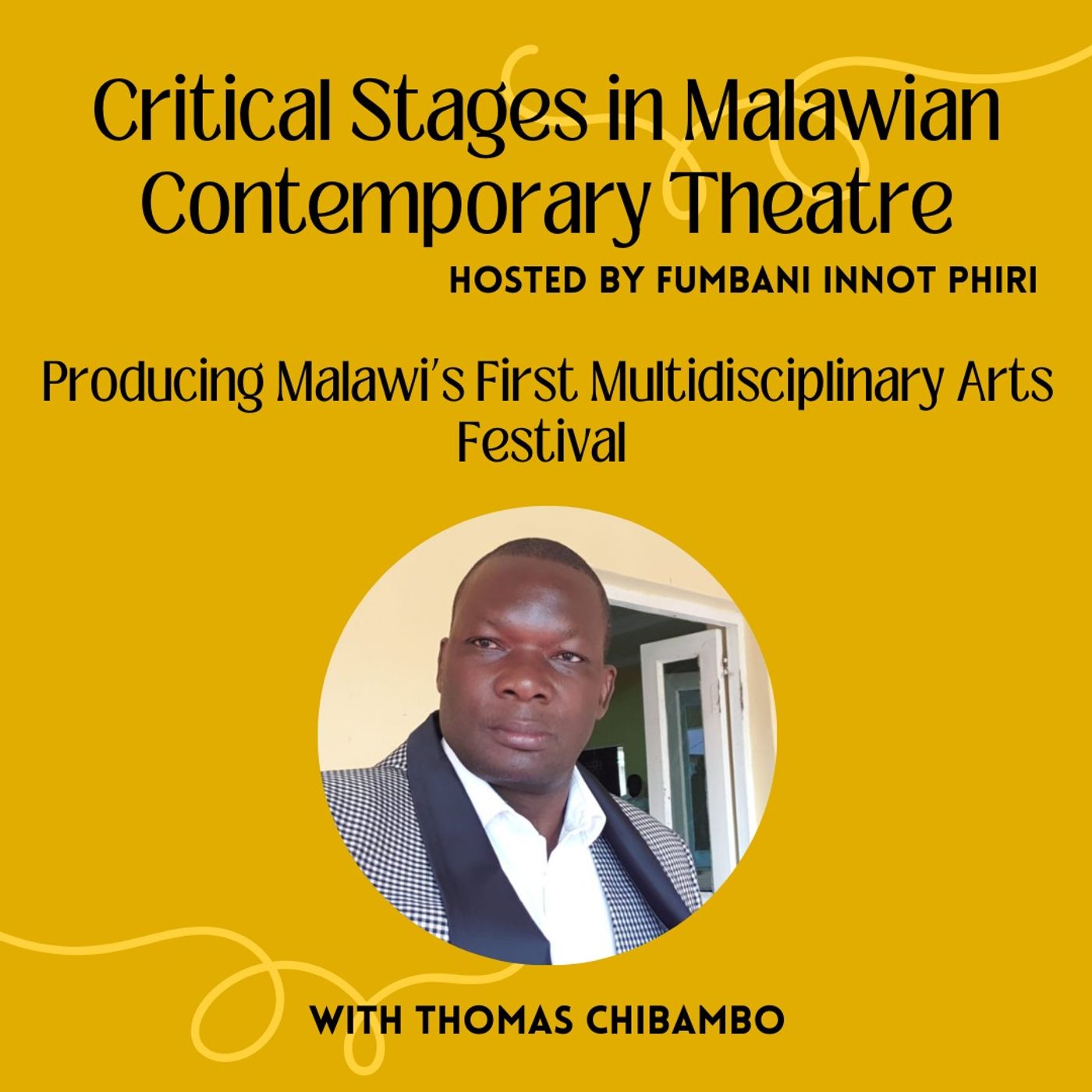
When filmmaker Thomas Chibambo founded the Blantyre Arts Festival in 2009, it was Malawi’s first multidisciplinary arts festival. He joins host Fumbani Innot Phiri, Jr. to discuss the Blantyre Arts Festival’s current plans to better support theatrical performance and his own work to establish an Arts Council in Malawi.

YDC Theatre has been producing theatre consistently in Malawi, even throughout the COVID-19 pandemic. They join Fumbani Innot Phiri, Jr. to trace the connections between the company’s consistent work centering Malawian perspectives, their efforts to build an audience, and the political and funding climate that they must navigate.

Pleasant Theodore Banda led Rise Arts to its first international performance in Zimbabwe. In this interview, he discusses his path into artistic direction as an actor and playwright with a background in accounting.

Fumbani Innot Phiri Jr. interviews his playwright and director Inno Katz about his career and his efforts to redefining Malawian theatre by focusing on local stories in both English and Chichewa.

Jack Msumba, creative director of Youth Developers Collaboration Theatre, has big ideas for the future of Malawian theatre. In this interview, he shares his plans to eventually build Malawi’s first theatre house by producing work consistently in schools, communities, and commercial settings.

Lydia Deborah Banda infuses theater into community initiatives that work toward gender equality, educate girls about menstruation, and provide leadership and support opportunities in schools and prisons. In this interview, she shares her experiences conducting these initiatives in Malawi and touring internationally to Germany.

Bright Phumayo Chayachaya’s Umunthu Theatre pulls together political theatre, poor theatre, theatre for development, and educational theatre to create productions that centralize Malawian narratives. In this interview, he discusses the company’s genesis and the need to bring audiences back to theatre.

What does the voice of this millennium sound like? In this interview, Khumbolane Chavula provides one answer to that question by splicing together theatre, poetry, and entrepreneurship as the founder of Millesimal Poetry.

Maxwell Ciphinga, better known as Max DC, has weathered massive changes in the audience, form, and funding of Malawian theatre throughout his four-decade career. In this interview, he shares his perspective on the industry and discusses his policy and producorial work as the president of Malawi’s new National Theatre Association.

As a scholar, educator, and practitioner of theatre, Roselyn Madalo Dzanja knows Malawi’s theatrical landscape well. In this interview, she discusses the challenges Malawian women face when pursuing an acting career, the need for artistic independence from international donors, possibilities for Chichewa-language drama, and more.

Robert Magasa is an experienced dancer, choreographer, and actor who trained in Zimbabwe and now runs UjeNi Dance Ensemble Theatre in Malawi. In this interview, Magasa discusses his career, the economics of producing theatre in Malawi, and his current work to bring a combination of traditional and Afro contemporary dance to schoolchildren in Malawi.
Comments

Download from Google Play

Download from App Store
 United States