


 Claim Ownership
99pages
Subscribed: 1Played: 21
Subscribe

© 99pages
Description
99pages is a show connecting passionate readers with the authors they love. In each episode, we go beyond the backflap of the most important books of our day with the authors who wrote them. Follow us on LinkedIn and Youtube for additional content on the works we're promoting. Let's make reading fun :)
51 Episodes
Reverse
Jeff Khadavi & Omid Pourmoradi are fathers, business owners, and athletes. How on earth do these guys get it done. Today, we talk all things "life hacks" to maximize the squeeze we get out of each day of life. This is Jeff's 2nd appearance on 99pages, please consider listening to episode #20. The Boring Brilliance of Index Funds--one of our most popular episodes. Jeff is a successful Entreprenuer and investor with a passion for personal development.Omid is the CEO of Faviana, a line of luxury gowns and dresses for women, he's the father of four and just became a grandfather...and he competes regularly in triathlons and other incredible endurance events.Leadership is a passion for these gentlemen, and it's an honor to pick their brains on the books, influencers, and techniques that have gotten them as far as they've gone. If you enjoy this episode, please consider rating us on Apple, Spotify, or wherever you get your podcasts.
Alec is the founder of PainFreeComeback.com, an expert in helping serious athletes overcome the chronic pain that keeps them from pursuing their passions. On 99pages, we talk a lot about health span and lifespan--it's imperative to lead an active life with exercise and sport. But part of that equation that we dont always address is pain. We'll all get injured and hurt. What do we do when that happens? How does it affect the brain? And how should think about pushing past the pain? Or throttling back.My guest today has nuanced answers to many of these questions. Alec at one point was an elite cyclist himself who unfortunately had a career ending injury. His journey to overcome that pain was nothing short of heroic, and I'm so excited to bring him onto the show to talk about his path. If you enjoy today's episode, please consider rating us on Apple, Spotify, or wherever you get your podcasts. Those help us out a ton. Thanks and enjoy the show.
Today we’re talking with a Former Diplomat and Professor and one of the most experienced foreign operators I know—Mr. Ned McMahon. Ned has had an illustrious career serving a Foreign Service Officer for the US Department of State specializing in African Affairs, He spent another 10 years as the reigional director and senior program officer for East, Central & West Africa for the National Democratic Institute for International Affairs. He’s currently a professor at both the University of Vermont, and MIddleBury college…and he just happens to be my good friend. Ned decided to channel his experiences into a profound novel called “Wisdom and the Baobab Tree”-- if you care at all about American Foreign Policy or what’s happening in contemporary development, you gotta go to amazon now and pick this read up. Ned has incredibly developed characters that really make the reader feel like they’re experiencing the life of a foreign service officer. Amazon Link to Ned's BookFurther in this episode we talk very specifically about USAID—but not with all the bloviating of political pundits. We deliberately sought to have a conversation void of noise. We aren’t picking political sides, we’re just two guys trying to understand the pros and cons of US dollars spent abroad—from a security, a commerce, and even a moral perspective. It has been the most substantive conversation I”ve had on policy since the new administration began, and I’m honored to share it with you today. If you enjoy today’s episode, please consider rating us on Apple Spotify or wherever you find your podcasts, Enjoy the conversation!
The topic today is the book Die With Zero by Bill Perkins. I did an episode back in November, Episode #42 on Money. It was a precursor to this conversation, and either before or after you listen to this episode, I hope you’ll go back and take a listen. The topic of money, and how we think about money, how we relate to money, is such a vital part to finding peace and happiness in the world. We simultaneously need to know the value of a dollar, but also its limits. We must find balances between thrift, generosity, and transcendence…knowing that the presence of money doesn’t actually solve all problems. In fact, it can cause an abundance of them. This book—Die With Zero—has played such a vital role in helping me truly understand the role money plays in my life…It’s necessary not simply to spend intentionally, but to earn intentionally. In working professional America, there is a sense of “Grind Culture” where we sometimes think that earning and producing indefinitely is somehow virtuous. But when we think about the most finite resource in our life—it’s never money—it’s time. We have a finite period on this earth, and when we die. Thats it. So yes we need to spend some of that time on earth earning money, and not enjoying our lives. But that being said, every dollar left in our bank account when we die represents a fraction of time that we could have spent achieving our goals, or spending time with our loved ones. Dying With Zero is an ethos about living and spending intentionally, accepting our mortality, and thinking of money not as an ends, but as a means to a life well lived—however you define it.
The second reason I’m excited is for today’s guest. Tal Moore is one of the most successful names in E-Commerce. He’s been the founder of multiple successful e-commerce exits including Franklin's Gourmet Popcorn, Gumballs.com, Wicker.com, and Chocolate.com. His specialty has been bringing popcorn to the e-commerce world. He’s has spent considerable Time and resources developing himself as a leader and mentor. Not only was he on the edge of the LA Fires when we recorded this conversation, but he’s back at the plate as the Founder & CEO of PopSmith, a wonderful product that allows families to easily make stovetop popcorn at home in healthy & delicious cookware. While he and I live different lives today—me a country bumpkin with a dad-bod…Tal with a fierce startup vigor in LA—we find so much common ground on how we both relate to money and I think it will be a productive listen for all our audience members.
If you do enjoy todays episode, please consider rating us on apple, spotify, or wherever you get your podcasts, they actually help us a ton to get in front of more listeners.
It was a couple weeks ago when my text messages starting getting super intense about this conversation around the H1B visa program. I personally came to the United States as a result of the H1B visa, and have some conflicting emotions around it. Eager to share them with you!
Psychadelic journeys, when used in a spiritual or therapeutic context—not a recreational one when you take them before a concert or night out—but if they’re used with the correct set and setting—meaning mindset and physical surroundings—they can lead to tremendous mental health benefits. A feeling of belonging, a surge of connectivity to the world and the communities around us. A relief of depression, addiction, and PTSD suffering.
That last category is particularly important to me…without depressing you too much, I want to tell you that my West Point class just passed a mindblowing benchmark. We now have lost twice as many classmates to suicide than we did in combat. I believe psychedelics can be part of the solution to this problem.
If you enjoy today's episode, please consider subscribing to us on Apple, Spotify, or wherever you get your podcasts.
Tom Spence is the Executive Editor of Basic Books, a newly formed conservative imprint from the Hachette Publishing Group. He's a Fellow at The Heritage Foundation and a former guest on the 99pages podcast back from our days as a YouTube stream. I brought him on so we can discuss the ways that we can think about the types of media we consume and the ways we can start bridging some of the divides in our country.
On the eve of Thanksgiving, I wanted to talk about the most taboo topic at the dinner table...money. I personally believe we don't have enough conversations about it, and I thought we could use it as a vehicle to discuss some of our more finite resources in life.
Yesterday was Election Day 2024. There's a lot of heavy hearts out there in the country right now. Regardless of where you are on the political spectrum, I wanted to share some points of hope & optimism that I think are worth noting...the best of our country is yet to come.
I can say this with 100% certainty—nothing in my life would be nearly as good had I not crushed it in the most important facet in my life…choosing the person to marry. Chelsea and I are celebrating our 8 year wedding anniversary this month. And I couldn’t be happier. Sure we have ups and downs, but my life is categorically awesome in no small part because of the way she supports me. So today we’re going to dive into the topic of Marriage with two special guests. First—Dr. Howard Markman, a professor at the University of Denver and the co-author of “Fighting For Your Marriage”, one of my favorite reads on how modern couples can enhance their communication and stay happier together for longer. Secondly—and this is a big one—you’re going to hear from Chelsea Jacobs, my wife. If I’m going to talk about marriage, I felt it only fair for you to hear from the person who has to deal with me in that journey.
 1
199pages turned 4 years old this year, and we're in our 3rd design iteration of what this show looks like...and now it's time for iteration number 4.
Here's a Quick Look at what I'm thinking. Thanks for being on the journey with me!
Near Death Experiences are among the most fascinating topics to explore. Rarely do we discuss what might be beyond our terrestrial consciousness. But after experiencing his own NDE, Sebastian Junger (The Perfect Storm, War, Tribe, Freedom) took his craft to the topic. A self-described rationalist, he takes a journalists art form to connect the pragmatic with the transcendent. This has quickly grown to become one of the most impactful books in my life, and I cannot recommend it highly enough.
ALSO-Sebastian's life was saved with 10 units of blood donated by strangers. It's free, painless, and a wonderful way to support your community. Donate blood, and send an email to 99pagesclub@gmail.com letting us know, and we'll find someone to match your donation 1:1. Thanks and enjoy the episode!

Introducing a 3-part series on GLP-1 inhibitors. The most important topic that we aren't talking enough about.
2x Trillion dollar companies have already emerged from the use of these drugs’ shift into weightloss—Eli Lily and Novo Nordisk. These pharmaceutical giants have enormous potential not only to continue growing at a rate that rivals the largest technology companies in the world, but can displace billions of top line revenue from the makers of processed foods.
As you may remember from my two episodes with Dr. Michael Greger, author of “How Not To Die”, I have a deep passion for plant based & whole food eating. Nothing angers me like the processing of wholesome ingredients…this distancing of real food from the day to day lives of everyday people.
And of course, when we talk about money, we have to talk about medicaid, medicare, the National Health Service, and the costs to the taxpayer for all of these medications.
But as Warren Buffet says, “price is what you pay, value is what you get”. If these GLP-1 drugs can reduce our caloric intake by up to 2/3…does it matter if we’re still just eating 2/3 less of mcDonalds, and not making meaningful changes in our diet?
To discuss this and other issues, I”ve invited a good friend, Fred Ginnebaugh. Fred has led a 20 year career spanning engineering, sales, marketing, and investing roles across the medical device industry. He has most recently expanded into strategy and corporate development for some up and coming medical brands and I just knew he’d have the best point of view on how these drugs are changing the economic landscape underneath our society.

To help me take on the psychological, emotional, and even spiritual echoes among this GLP-1 class of drugs, I’ve invited one of the most dynamic people I know onto the Show. Rimi Chakraborty was once a very successful working professional in the consulting space, she served high flying clients, had an MIT MBA, but one day realized that all that stress was just not serving her. Rather than close in on herself, she decided to set an example for her and her community. She moved out to the Azores in Portugal and founded Minuvida, a business that helps her clients elevate their consciousness through travel. She hosts groups and families on this beautiful island, and helps them reconnect through food and culture. Rimi is also the author of "Beyond Resilience to Rootsilience", a wonderful read on transcending externally imposed versions of success to find life's true meaning. I find her to be an incredibly grounding force, but also a great friend. We’re going to discuss the emotional and lifestyle roots that have led us to this GLP-1 breaking point. I hope you enjoy the conversation.

If you haven’t listened to the intro to this series yet, I suggest you pause, listen to thot 15min primer, and then come back. That primer explains the broad importance of these drugs and sets the stage for the series. We’re dividing this story into three parts…One on the Mind, One on The Body, and a third on The Money.
Today, we’re talking about the body. So I’ve brought on a good friend and classmate Dr. Daryn McClure to chat about what these drugs due for patients. Daryn is a family physician for Banner Health in Arizona. He’s practiced for over 20 years and has seen it all. In addition to his expertise in family medicine and health, he’s also a father himself, and a business mind in his own right making him the perfect person to discuss these drugs with.

Today we are discussing the book “Who Makes The NBA—Data driven answers to Basketball’s biggest questions”. Well, really every junior high kid’s biggest questions—what does it take to get into the NBA? The book uses incredible amounts of team and player data with sophisticated AI tools to answer these consuming questions—what are the chances of playing in the NBA if I’m short? Why do some countries produce so many more NBA players than others? Do my chances improve if my father was in the NBA? How important are coaches?
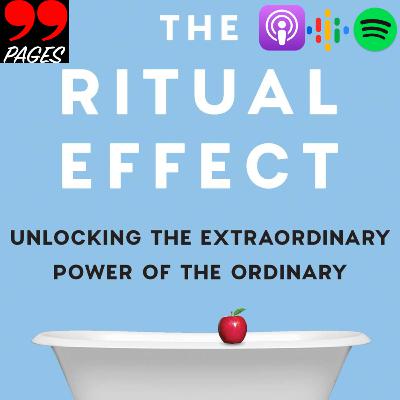
Today we’re speaking with Dr. Michael Norton. He’s the author of The Ritual Effect: From Habit to Ritual, Harness the Surprising Power of Everyday Actions. This book explains this widespread, but little understood, phenomena of rituals in everyday life. He offers practical ways to use rituals to enhance performance, foster preparedness, ease challenging situations, and enrich our lives. Michael Norton is a professor at the Harvard Business School where he’s been able to put many of these theories into practice with his community.
You know, I think about the rituals in my daily life with my family…my toddlers help me make my morning coffee, or we always do a gratitude at dinner. They help bind us together. IT was fun to talk with Dr. Norton about how these rituals are just so pervasive in our lives, and quite meaningful.
If you enjoy today’s episode please consider rating us on Spotify, iTunes, or wherever you get your podcasts. Those help us out a ton. An consider subscribing to our email list at 99pages.club. We send out emails on our latest episodes, and some book recommendations to keep your Non-fiction reading list fresh. Thanks and enjoy the show.
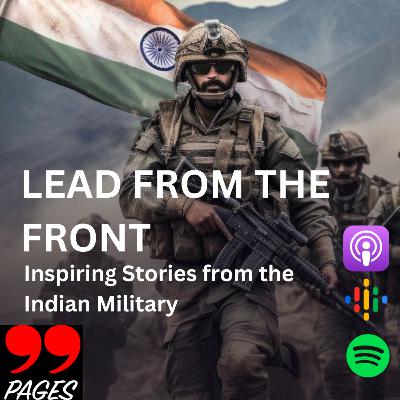
Today, I’m talking with Sudeep Krishna and Purav Gandhi, authors of “Lead From The Front: Tales of the Indian Military”. India might be the country of my birth, but I’ll be the first to say that I don’t know the place that well. But what I can tell you is that it’s a complex country with state and national struggles rooted in caste, religion, and poverty. It also is a nuclear power with decades of conflict against neighboring countries. I always thought my service in the American military would make it harder to relate to my Indian roots, but the opposite is actually true. My time in Afghanistan has made it easier to understand the country and the tremendous opportunity that the next generation of Indians has ahead of them. The book “Lead From the Front” showcases incredible acts of modern day heroism from another nation’s military in conflicts with their borders. It was a powerful read.
Today we’re speaking Eric Orton about the book Born To Run by Chris McDougall. Eric is actually featured in the book in a major way. He’s a world renowned endurance athlete and coach who was with Chris through much of his journey discovering minimalist running, and the Tarahumara tribe in Mexico: the tribe which inspired the thesis of the book: that human beings are born distance runners. And that the modern shoe industry has made our most valuable work tool—our feet—weaker and less capable. The direction of choice for the future of athletics is not more features and tools around our feet. But less. Eric recently co-authored the Sequel—Born to Run 2—with Chris McDougall, it’s a coaching guide to help athletes incorporate the lessons learned from Born to Run. He’s also the author of the Cool Impossible, an incredible book for athletic ambition.

Comments

Download from Google Play

Download from App Store
 United States