


 Claim Ownership
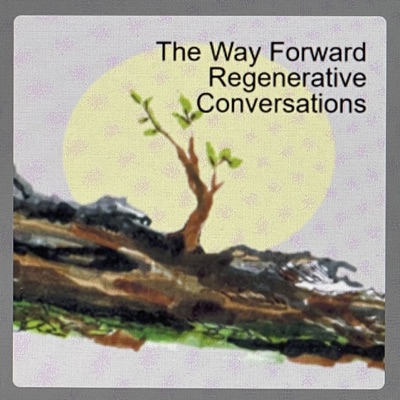
The Way Forward Regenerative Conversations
Subscribed: 10Played: 91
Subscribe

© Copyright 2022 All rights reserved.
Description
Three Elders explore how to renew the world we helped mess up
The Way Forward Podcast is dedicated to Regenerative Conversations about the future of humanity and planet. We think we need to re-think the current paradigm. Each episode explores how we can find a positive future forward for society and for ourselves. We explore the question: What is the Way Forward? We don’t have the answers, but we hope to stimulate all of us to imagine what is possible. We bring a wide variety of guests – including people at the leading edge of their field and willing to think out of the box – and engage into stimulating conversations with them, in a place of open curiosity. Topics will include a wide range of issues including environmental change, technology, governance, organizational design, sustainability, international peace, agriculture, and personal renewal.
Alain Gauthier and Dr. John Izzo (the co-hosts) and Jim Burke (the producer) offer together more than a hundred years of organizational experience in the forms of consulting, change facilitation, keynote speaking and research/teaching for a wide variety of businesses, non-profits, government, and universities both in the US and abroad.
We would like to thank our sponsors Elders Action Network “Building a movement of elders to address the environmental, governance and social issues of our time“ and Blueprint “Enhancing the well-being of men and communities.”
You can reach us at the email address [email protected]
64 Episodes
Reverse

The CEO of America's largest depolarization organization has two children who aren't speaking to each other — one conservative, one progressive. Maury Giles of Braver Angels joins Dr. John Izzo to explain why "don't talk about politics" is the wrong answer in a country built on self-government, why he has never once asked anyone to be nice, and what ten years of bringing Republicans and Democrats into the same room reveals: we share the same values and weight them differently. He lays out "courageous citizenship" — act instead of react, build across difference, own your part — and the practical tools behind it: one-on-one conversations, common-ground workshops, and citizen-led solutions that treat elected officials as "on tap, not on top."
Guest: Maury Giles — CEO of Braver Angels (https://braverangels.org · YouTube: https://www.youtube.com/@BraverAngels), the country's largest volunteer-led effort to help Americans work across political difference. A conservative based in Salt Lake City, he came to the role after a long corporate career in research and strategy and five years as a Braver Angels volunteer — and was nominated for the job by a colleague from the other side of the aisle.
🎙️ Hosted by Dr. John Izzo and Alain Gauthier · produced by Jim Burke
🤝 In collaboration with @BraverAngels
👉 SUBSCRIBE so you never miss an episode: https://www.youtube.com/@thewayforwardrc?sub_confirmation=1
🎧 Prefer audio? Listen & follow on Apple Podcasts: https://podcasts.apple.com/us/podcast/the-way-forward-regenerative-conversations/id1651941803
💬 Have you had a real conversation lately with someone who votes differently than you? What happened? Tell us below.
🔗 Mentions & Resources:
🤝 Braver Angels — sign up for a one-on-one conversation or find your local alliance: https://braverangels.org
▶️ Braver Angels on YouTube: https://www.youtube.com/@BraverAngels
📖 Jonathan Haidt, "The Righteous Mind"
📖 James Madison, The Federalist Papers
🏛️ National Civic League (database of 12,000+ civic-renewal organizations): https://www.nationalcivicleague.org
🎧 Our earlier episode in this series with Beth Noveck on rigidity, contempt, and democratic decline: [LINK]
Connect With Us:
🌐 Website: https://wayforwardpodcast.com
🔗 Linktree: https://linktr.ee/wayforwardpodcast
📧 Email: [email protected]
👉 SUBSCRIBE to The Way Forward for more conversations that matter!
💬 Drop your thoughts in the comments — we want to hear from YOU.
⚠️ Disclaimer: The views and opinions expressed in this video are those of the guest and do not necessarily reflect the official position of The Way Forward. This content is for informational and educational purposes only and should not be taken as professional advice.

Al Gore called the war with Iran "a colossal mistake... on the level of Hitler invading Russia." Veteran Iran-watcher Barbara Slavin goes further: the worst U.S. mistake in the Middle East in 60 years. Six months into the war, she returns to The Way Forward to untangle who is actually in charge in Tehran now, why the doctrine of "escalate to de-escalate" has closed the Strait of Hormuz and sent oil prices soaring, what Netanyahu promised Trump in the situation room, and what the war has meant for the people of Iran — the protests, the repression, and the economy. Most importantly: is there a way out that's good for Iranians and for the world?
Guest: Barbara Slavin — Distinguished Fellow at the Stimson Center, veteran journalist on U.S.–Iran relations, and author of "Bitter Friends, Bosom Enemies: Iran, the U.S., and the Twisted Path to Confrontation."
🎙️ Hosted by Dr. John Izzo and Alain Gauthier · produced by Jim Burke
⏱️ CHAPTERS
00:00 Cold open — "A colossal mistake"
00:57 What we cover today
01:28 Welcome & setting the stage
03:16 What Barbara underestimated six months ago
05:08 Who is really in charge in Iran now?
08:36 The IRGC and "escalate to de-escalate"
11:04 Did Trump think Iran would surrender?
13:34 Factional fights in Tehran: fiction or reality?
16:51 The nuclear file — leverage, not distraction
19:31 The unfortunate lesson about nuclear weapons
21:47 What the war means for the people of Iran
26:20 A path to real change? The 1953 Mosaddegh overthrow — and the great what-if
30:40 A quick word from us — subscribe & support the show
31:41 The limits of power: Russia, China, and Taiwan
35:27 NATO and the damage to America's alliances
39:13 The Al Gore story — "worst mistake in 60 years"
42:35 Can Europe or China broker a way out?
44:04 What a good deal would actually look like
45:33 Energy, climate, and the way off fossil fuels
48:12 Will Iran's proxy strategy ever change?
53:37 What gives Barbara hope
56:42 Closing reflections
58:14 Outro
👉 SUBSCRIBE so you never miss an episode: https://www.youtube.com/@thewayforwardrc?sub_confirmation=1
🎧 Prefer audio? Listen & follow on Apple Podcasts: https://podcasts.apple.com/us/podcast/the-way-forward-regenerative-conversations/id1651941803
💬 Do you see a way out of this war that's good for the people of Iran AND the world? Tell us below.
🔗 Mentions & Resources:
📖 Barbara's book: "Bitter Friends, Bosom Enemies: Iran, the U.S., and the Twisted Path to Confrontation"
📰 Barbara's Middle East Perspectives commentaries at the Stimson Center: https://www.stimson.org/
🤝 Support the Stimson Center: https://www.stimson.org/support/
Connect With Us:
🌐 Website: https://wayforwardpodcast.com
🔗 Linktree: https://linktr.ee/wayforwardpodcast
📧 Email: [email protected]
👉 SUBSCRIBE to The Way Forward for more conversations that matter!
💬 Drop your thoughts in the comments — we want to hear from YOU.
⚠️ Disclaimer: The views and opinions expressed in this video are those of the guest and do not necessarily reflect the official position of The Way Forward. This content is for informational and educational purposes only and should not be taken as professional advice.
#BarbaraSlavin #Iran #IranWar #MiddleEast #Geopolitics #StraitOfHormuz #ForeignPolicy #TheWayForward

What if the most important conversations we can have — about politics, faith, and family — are the ones we've stopped having out of fear?
Journalist and bridge-builder Mónica Guzmán joins hosts Dr. John Izzo and Dr. Polina Orlowski to explore why families, communities, and entire generations have stopped talking across political divides — and what it will take to rebuild understanding. Drawing from her book "I Never Thought of It That Way: How to Have Fearlessly Curious Conversations in Dangerously Divided Times," Mónica shares the personal story behind her work (a tender moment with her father on Election Day), the neuroscience of why hard conversations feel like physical threats ("our fear of social death is greater than our fear of physical death"), and the practical discipline of curiosity that anyone can develop.
Also in this episode: the role of social media and AI in deepening polarization, how to model brave conversations for children, the "productive conversation" model that distinguishes inquiry from debate, and the Trustworthy Elections Project — where regular citizens from across the political spectrum found 727 points of agreement on a single contested issue.
ABOUT OUR GUEST
Mónica Guzmán is founder and CEO of Reclaim Curiosity, Senior Fellow for Public Practice at Braver Angels, and host of the podcast A Braver Way.
Website: https://moniguzman.com
Book: https://www.simonandschuster.com/books/I-Never-Thought-of-It-That-Way/Monica-Guzman/9781637746028
Braver Angels: https://braverangels.org
YOUR HOSTS
Dr. John Izzo — bestselling author and pioneer in regenerative leadership. https://drjohnizzo.com
Dr. Polina Orlowski, DNP, RN, CNL, CPHQ — Director of Quality & Patient Safety at Ascension.
CONNECT
Linktree: https://linktr.ee/thewayforwardpodcast
Website: https://wayforwardpodcast.com
Watch on YouTube: https://www.youtube.com/@thewayforwardrc
Email: [email protected]
IF THIS EPISODE SPOKE TO YOU
Follow The Way Forward so new conversations land in your library automatically. Leave a rating or a short review on Apple Podcasts — it's the single best way to help other listeners find the show. And share this episode with someone you'd like to have a hard conversation with.

Raised in Russia. Imprinted by 9/11. Polina Orlowski watched the towers fall from an American middle-school classroom just months after immigrating from St. Petersburg — and that moment still shapes how she sees democracy, safety, and America today.
In this episode of The Way Forward: Regenerative Conversations, Dr. John Izzo (a boomer who came of age during Vietnam, Kent State, and the civil rights movement) and Polina Orlowski (a Russian-born millennial, healthcare leader, and mom) explore why generations see the big issues of our time — polarization, freedom, democracy — so differently.
Their lens: sociologist Dr. Morris Massey's famous idea, "You are where you were when" — the theory that the events we live through between roughly ages 14 and 22 imprint how we see society for the rest of our lives.
Together they trace two very different imprints: John's generation, marked by protest, assassination, and Watergate — but also the conviction that citizens can change things. Polina's generation, marked by 9/11, school shootings, the financial crisis, and COVID — a "destabilization imprint" she calls the eggshell generation, always braced for the next crisis. And they ask the question underneath it all: if we are where we were when, how do we get out of our bubbles and truly understand each other?
This is Part 1 of our series on polarization and democracy. Next episode: Mónica Guzmán on how to have brave conversations in dangerously divided times.
⏱️ CHAPTERS
00:00 – Cold open: raised in Russia, shaped by 9/11
01:14 – Welcome: a cross-generational look at polarization
02:17 – Morris Massey: "You are where you were when"
05:36 – Polina's story: leaving St. Petersburg at 13
06:52 – Watching 9/11 as a brand-new American
09:17 – "Have you ever seen a cow?" — memories of Russia
11:23 – John's imprint: Vietnam, MLK, Kent State
14:45 – Becoming a citizen: the 2013 awakening
16:43 – The millennial imprint: 9/11, shootings, crash, COVID
18:47 – The boomer contrast: 20 years of stability
23:43 – "It's all in the rowing": how John & Polina met
29:56 – Keeping Russia close: family, memory, misconceptions
38:41 – Political discourse then vs. now
42:32 – "Not talking about it is not working"
52:58 – What each generation fears — and needs from the other
56:17 – Hitting bottom: the hope in "it's not working"
58:16 – The eggshell generation: kids and shooter drills
1:00:38 – Closing: getting out of our bubbles
🎙️ ABOUT YOUR HOSTS
Dr. John Izzo — bestselling author of nine books, Distinguished Fellow at the Stimson Center, and advisor to leaders worldwide. 🌐 https://drjohnizzo.com | LinkedIn: https://linkedin.com/in/johnizzo
Dr. Polina Orlowski, DNP, RN, CNL — doctorally prepared nurse leader with 15 years in healthcare, serving as a national Program Manager for Performance Improvement in a multi-state health system. She immigrated from Russia at 13 and brings a cross-cultural, cross-generational lens to the future of democracy.
💬 JOIN THE CONVERSATION
What moment from YOUR "socialization years" (ages 14–22) still shapes how you see the world today? Tell us in the comments 👇
🔔 Subscribe so you don't miss Part 2 with Mónica Guzmán:
https://www.youtube.com/@thewayforwardrc?sub_confirmation=1
🎧 Listen on Apple Podcasts:
https://podcasts.apple.com/us/podcast/ai-vs-democracy/id1651941803
🌐 Website: https://wayforwardpodcast.com
🔗 All our links: https://linktr.ee/thewayforwardrc
📧 Reach out: [email protected]
#Polarization #GenerationalDifferences #TheWayForward
Only one in ten Americans say our democracy is working well — and most believe the model we've relied on for generations is broken. So what if the technology everyone fears could actually help fix it?
In this episode, Dr. John Izzo sits down with Beth Simone Noveck — who served in the Obama White House, advised 10 Downing Street, and wrote Reboot: AI and the Race to Save Democracy — for a genuinely hopeful conversation about the one question almost nobody at this year's TED conference was asking: not whether AI will save us or destroy us, but whether it can help us govern better, listen better, and rebuild trust between citizens and their institutions.
EPISODE SUMMARY
We've been told there are only two AI stories: the robot apocalypse that eats every job, or the trillion-dollar gold rush. Beth Noveck argues both headlines miss the one that matters most — how AI could help repair democracy itself.
Drawing on her new book Reboot: AI and the Race to Save Democracy, Beth and John explore why so many democracies feel brittle right now, and what history teaches us about institutions that bend versus institutions that break. Beth traces her own origin story — from studying the fragile, hopeful democracies of 1920s Europe that collapsed into fascism, to growing up as a child of the early internet and building one of the very first online platforms for civic dialogue. Both experiences left her asking the same question: what makes some institutions work, and others shatter?
From there, the conversation gets practical. Beth makes the case that today's core democratic problem isn't a scarcity of information but an overwhelming abundance of it — and that AI's real promise is as a powerful tool to help us cut through the noise and actually solve problems together. She shares concrete, already-working examples: the UK government using AI to analyze public consultations that once took months and millions in a matter of hours; the city of Hamburg engaging residents on real infrastructure decisions; AI cleaning up voter rolls so eligible voters don't get lost; and under-resourced candidates finally able to compete with the big political machines.
John and Beth dig into the hard parts too — political rigidity (not just polarization), the collapse of common ground, gerrymandering, and the uncomfortable truth that AI is "only as good as we are." They close on hope: Beth's "AI for Impact" fellows building free tools like GrantWell to help small towns win public funding, and the free peer-to-peer learning community InnovateUS, where people teach one another how to use AI for the public good.
The throughline, in Beth's own words: AI won't save democracy — people will. But for the first time, we may have the tools to try.
In this conversation:
Why "democracy feels broken" — and the statistics behind the feeling
What 1920s Europe teaches us about institutions that break instead of bend
Rigidity vs. polarization — and why the distinction matters
The "messy middle": getting past the save-the-world / destroy-the-world AI binary
A "moonshot for democracy" — using AI to fix governance, not just climate or wellness
Real examples: the UK consultation analyzer, Hamburg, ERIC voter rolls, leveling the field for first-time candidates
Gerrymandering and the double-edge of the same tools
What gives Beth hope: AI for Impact fellows, GrantWell, and InnovateUS
ABOUT OUR GUEST — Beth Simone Noveck
Beth Simone Noveck is one of the world's leading thinkers on technology, governance, and civic innovation. She is the author of Reboot: AI and the Race to Save Democracy (Yale University Press) and a professor at Northeastern University, where she directs The Burnes Center for Social Change and its partner project, The Governance Lab (The GovLab). Her work focuses on "Democratic AI" — applying artificial intelligence to strengthen democratic institutions and improve how government actually serves people.
Beth previously served in the Obama White House as the first United States Deputy Chief Technology Officer, where she founded the White House Open Government Initiative, and she has advised 10 Downing Street and the German Chancellery. She also served as New Jersey's first Chief Innovation Officer and Chief AI Strategist, and she leads InnovateUS, a free program training public-sector professionals in AI and innovation skills.
🔗 Connect with Beth:
Book — Reboot: AI and the Race to Save Democracy: https://rebootdemocracy.ai/book/
Reboot Democracy: https://rebootdemocracy.ai/
The GovLab: https://www.thegovlab.org/
InnovateUS: https://innovate-us.org/
ABOUT OUR HOST — Dr. John Izzo
Dr. John Izzo is a bestselling author, advisor, and speaker who has addressed more than one million people and worked with over 1,000 organizations worldwide. He is the author of nine books, including Stepping Up, The Purpose Revolution, and The Five Secrets You Must Discover Before You Die. A Distinguished Fellow at the Stimson Center in Washington, DC, his current work focuses on reimagining democracy — renewing the civic fabric, rebuilding trust, and creating institutions that work again. He is co-host of The Way Forward: Regenerative Conversations.
🔗 Connect with John:
Website: https://drjohnizzo.com/
Stimson Center: https://www.stimson.org/ppl/john-izzo/
SUBSCRIBE & FOLLOW
If this conversation gave you something to think about, here's how to stay with us:
▶ Subscribe on YouTube (and hit the bell so you never miss an episode): https://www.youtube.com/@thewayforwardrc?sub_confirmation=1
🎧 Listen on Apple Podcasts: https://podcasts.apple.com/ (paste your show's Apple Podcasts URL)
🌐 Visit our website: https://wayforwardpodcast.com 🔗 All our links in one place: https://linktr.ee/thewayforwardrc 📧 Reach out: [email protected]
JOIN THE CONVERSATION
💬 We'd love to hear from you. Where do you land — can AI actually help repair democracy, or does it put it at greater risk? Leave a comment below; John reads them, and your perspective genuinely shapes where this series goes next.
THANK YOU
Thank you for spending this time with us and for being part of The Way Forward community. Conversations like this one matter most when they're shared — if you found it valuable, pass it along to someone who's wrestling with these same questions. Onward, together.
The Way Forward: Regenerative Conversations — tackling the big issues of our time and asking how humanity and planet can have a positive way forward.

Comments

Download from Google Play

Download from App Store
 United States