


 Claim Ownership
Ajahn Brahm Podcast
Subscribed: 207Played: 7,074
Subscribe

© Copyright by the Buddhist Society of Western Australia - Creative Commons Attribution-NonCommercial-NoDerivs 4.0
Description
Remastered classic teachings of the greatest meditation master in the modern Western world - Ajahn Brahm!
172 Episodes
Reverse
As human beings, we are always searching and trying to understand our existence and emotions. It is important to encourage honesty and questioning, as these are the tools to dig deeper into the reality of life. During one of his recent talks, Ajahn Brahm discussed the purpose of life and how we need to question things and base our questions on our own experiences. He also shared stories to illustrate the importance of compassion, kindness, and generosity in life, citing examples of people who were willing to give selflessly, even in difficult situations. These acts of goodness give life a true purpose and meaning. In addition to finding purpose and fulfillment in love, there are several important meanings of life, including the act of generosity and selflessness, as well as the ability to let go and allow loved ones to be free. Acts of kindness and compassion can bring immense joy and inspire others to find meaning in their own lives. Love that is selfless and freeing is the highest form of love, and can bring immense peace and happiness even in the face of loss.
—
This dhamma talk was originally recorded in 1st March 2008. It has now been remastered and published by the Everyday Dhamma Network, and will be of interest to his many fans.
These talks by Ajahn Brahm have been recorded and made available for free distribution by the Buddhist Society of Western Australia under the Creative Commons licence. You can support the Buddhist Society of Western Australia by pledging your support via their Ko-fi page.
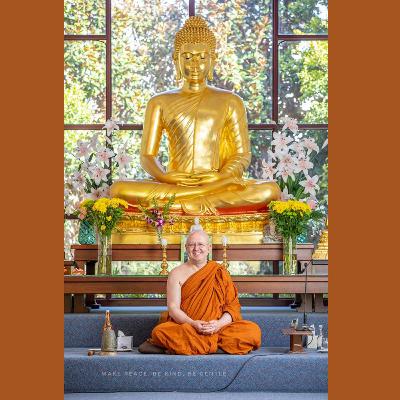
This guided meditation by Ajahn Brahm was originally recorded in 17th February 2007. It includes a talk about some aspect of meditation followed by a 45 minute guided meditation (starting at the 13 minutes mark).
This guided meditation has been remastered and published by the Everyday Dhamma Network, and will be of interest to people who have started meditation but are seeking guidance to take it deeper.
These talks by Ajahn Brahm have been recorded and made available for free distribution by the Buddhist Society of Western Australia under the Creative Commons licence. You can support the Buddhist Society of Western Australia by pledging your support via their Ko-fi page.
Death is part of life and should not be seen as a negative event. Understanding reincarnation can help us accept death. We should also let go of the negative part of our grief in order to move forward. Ajahn Brahm discusses the importance of understanding death and how it relates to the meaning of life. He share personal experiences, such as the death of his father and his work with individuals facing death or loss. Ajahn Brahm believes that death teaches us to appreciate life and to focus on spiritual values such as kindness and generosity.
—
This dhamma talk was originally recorded in 29th February 2008. It has now been remastered and published by the Everyday Dhamma Network, and will be of interest to his many fans.
These talks by Ajahn Brahm have been recorded and made available for free distribution by the Buddhist Society of Western Australia under the Creative Commons licence. You can support the Buddhist Society of Western Australia by pledging your support via their Ko-fi page.
This guided meditation by Ajahn Brahm was originally recorded in 10th Februar 2007. It includes a talk about some aspect of meditation followed by a 45 minute guided meditation (starting at the 13 minutes mark).
This guided meditation has been remastered and published by the Everyday Dhamma Network, and will be of interest to people who have started meditation but are seeking guidance to take it deeper.
These talks by Ajahn Brahm have been recorded and made available for free distribution by the Buddhist Society of Western Australia under the Creative Commons licence. You can support the Buddhist Society of Western Australia by pledging your support via their Ko-fi page.
This guided meditation by Ajahn Brahm was originally recorded in 20th January 2007. It includes a talk about some aspect of meditation followed by a 45 minute guided meditation.
This guided meditation has been remastered and published by the Everyday Dhamma Network, and will be of interest to people who have started meditation but are seeking guidance to take it deeper.
These talks by Ajahn Brahm have been recorded and made available for free distribution by the Buddhist Society of Western Australia under the Creative Commons licence. You can support the Buddhist Society of Western Australia by pledging your support via their Ko-fi page.
Ajahn Brahm talks about religious freedom and how it should be defined and protected. Many people use the term religious freedom to justify their control and indoctrination of others, but true religious freedom is the ability to make choices without fear or pressure. Governments need to enact laws that protect religious freedom in the same way that other rights are protected, and allow for open debate and inquiry without fear of violence or repercussions. We should not force our religions on others or restrict their freedom to choose their own beliefs Freedom is a fundamental concept in Buddhism, which values the freedom of inquiry and the freedom from emotional burdens such as fear and guilt. It is important to be able to question and argue without fear of rejection in the pursuit of truth. Forgiveness is also emphasized as a way to free oneself from the prison of the past and let go of emotional baggage. The freedom from fear and anxiety about the future is also valued in Buddhism. Ajahn Brahm talks about the concept of freedom in Buddhism, which is not defined by physical or political limitations, but rather by the freedom from inner burdens such as fear, anxiety, guilt, and anger.
—
This dhamma talk was originally recorded in 8th February 2008. It has now been remastered and published by the Everyday Dhamma Network, and will be of interest to his many fans.
These talks by Ajahn Brahm have been recorded and made available for free distribution by the Buddhist Society of Western Australia under the Creative Commons licence. You can support the Buddhist Society of Western Australia by pledging your support via their Ko-fi page.
Right view is an essential aspect of the Buddhist path and involves changing the way we perceive things in order to let go of suffering. Death is a natural part of life and it's important to have the right view and understanding about it. It's not an evil or something to be afraid of, but a part of the cycle of life. One way to have the right view is by remembering the story of The Falling Leaves or The Emperor's Ring, which teaches us that everything in life, whether good or bad, will pass. Ajahn Brahm explains the concept of "right view" in Buddhism, which is a way of thinking and perceiving the world that leads to happiness and peace. He gives examples and stories to illustrate this, including the story of two chicken farmers and the story of two bad bricks in a wall. Ajahn Brahm also talks about the importance of accepting and embracing our mistakes and flaws, as they make us human and can lead to laughter and connection with others. It is about focusing on the positive, letting go of the past and not worrying about the future. Living in the present is the key to happiness. Ajahn Brahm shares some stories to answer questions about good and evil in the world. He talks about how there is both good and bad in everyone and how it's important to see the good in others. Ultimately, the speaker believes that focusing on what unites us rather than what divides us can bring about healing and understanding in the world.
—
This dhamma talk was originally recorded using a low quality MP3 to save on file size on 7th December 2007. It has now been remastered and published by the Everyday Dhamma Network, and will be of interest to his many fans.
These talks by Ajahn Brahm have been recorded and made available for free distribution by the Buddhist Society of Western Australia under the Creative Commons licence. You can support the Buddhist Society of Western Australia by pledging your support via their Ko-fi page.
Ajahn Brahm tells stories from his time as a monk studying under Ajahn Chah in Thailand. He explains how the simplicity and equality of life in the monastery taught him valuable lessons about letting go of attachment and status. He also shares a story about Ajahn Chah's wisdom when he visited Ajahn Brahm while he was sick in the hospital. He reminds readers that sickness and death are natural parts of life and we shouldn't fear them. Ajahn Brahm shares his experiences with living as a monk in Thailand and how it taught him about real Buddhism.
—
This dhamma talk was originally recorded using a low quality MP3 to save on file size on 7th December 2007. It has now been remastered and published by the Everyday Dhamma Network, and will be of interest to his many fans.
These talks by Ajahn Brahm have been recorded and made available for free distribution by the Buddhist Society of Western Australia under the Creative Commons licence. You can support the Buddhist Society of Western Australia by pledging your support via their Ko-fi page.
Ajahn Brahm discusses the Buddhist perspective on fundamentalism and its negative effects on religion and society. The Buddha's teaching states that true religion and spirituality will lead to peace and harmony, not create more problems. Ultimately, the goal is to promote harmony and peace. The problem with fundamentalism in our world is that it is based on faulty reasoning and limited experience, and it often creates an "us vs. them" mentality. One way to combat fundamentalism is to share truths and show kindness to those who hold different beliefs, as this can be disarming and can present a different perspective. Buddhists, in particular, should focus onactively helping others and publicizing their good deeds to counter the misconception that they are only concerned with their own enlightenment.
—
This dhamma talk was originally recorded using a low quality MP3 to save on file size on 7th December 2007. It has now been remastered and published by the Everyday Dhamma Network, and will be of interest to his many fans.
These talks by Ajahn Brahm have been recorded and made available for free distribution by the Buddhist Society of Western Australia under the Creative Commons licence. You can support the Buddhist Society of Western Australia by pledging your support via their Ko-fi page.
In this talk, Ajahn Brahm discusses the topic of conflict and suggests that people should have compassion and understanding towards their enemies. He emphasizes that people should focus on criticizing the action rather than the person, as attacking the person will only lead to more conflict. The speaker also suggests seeing the good qualities in others, even if they are obnoxious, in order to create a bridge between enemies and promote reconciliation. He ends by mentioning the importance of this approach during the holiday season, when people come together with family. In conflicts, we only see the negative behaviors of the other person. If we can look deeper and find something to respect and value in them, we can create a bridge and have a better understanding. This can lead to forgiveness and letting go of the past.
---
—
This dhamma talk was originally recorded using a low quality MP3 to save on file size on 7th December 2007. It has now been remastered and published by the Everyday Dhamma Network, and will be of interest to his many fans.
These talks by Ajahn Brahm have been recorded and made available for free distribution by the Buddhist Society of Western Australia under the Creative Commons licence. You can support the Buddhist Society of Western Australia by pledging your support via their Ko-fi page.
Buddhism is often seen as a religion, way of life, philosophy, or practice. However, Ajahn Brahm believes that it is ultimately a practice that brings positive results in this life. The main goal of a Buddhist's spiritual life should be to cultivate kindness, patience, peace, and stopping. These qualities require effort and training, as they may not come naturally to us.
—
This dhamma talk was originally recorded using a low quality MP3 to save on file size on 7th December 2007. It has now been remastered and published by the Everyday Dhamma Network, and will be of interest to his many fans.
These talks by Ajahn Brahm have been recorded and made available for free distribution by the Buddhist Society of Western Australia under the Creative Commons licence. You can support the Buddhist Society of Western Australia by pledging your support via their Ko-fi page.
This talk explores the concept of craving and desire in Buddhist teachings, specifically how it relates to modern lifestyles. While the Buddhist teachings state that craving is the source of suffering, it is difficult to reconcile this in a world where material possessions and success are highly valued. Ajahn Brahm discusses the harm that excessive craving has caused to our planet and society, and asserts that the key to being happy is not accumulating more wealth and possessions, but rather learning to be content with what we have. He cites studies that talksabout how most people's desires for wealth and fame often lead to suffering and that these desires are often based on societal norms rather than wisdom. He gives examples of how people who live in big houses often have to work hard to maintain them and don't have time for relationships, and how being famous is actually not as great as people may think. He also shares a story about an abbot who kindly gives a burglar food and questions when he last ate. Buddhist teachings emphasize the importance of craving for the right things in life. Craving for wealth and material possessions can lead to suffering, while craving for qualities like kindness and compassion can bring true happiness.
—
This dhamma talk was originally recorded using a low quality MP3 to save on file size on 30th November 2007. It has now been remastered and published by the Everyday Dhamma Network, and will be of interest to his many fans.
These talks by Ajahn Brahm have been recorded and made available for free distribution by the Buddhist Society of Western Australia under the Creative Commons licence. You can support the Buddhist Society of Western Australia by pledging your support via their Ko-fi page.
This talk explores the topic of power, and the two different types of power – the power to control and the power of kindness. It delves into the dangers of becoming too focused on control and having a big ego, as well as the dysfunctional nature of exerting power over others. The Buddhist perspective is that true power comes from understanding and being kind to oneself and others, rather than trying to control and dominate.
—
This dhamma talk was originally recorded using a low quality MP3 to save on file size on 16th November 2007. It has now been remastered and published by the Everyday Dhamma Network, and will be of interest to his many fans.
These talks by Ajahn Brahm have been recorded and made available for free distribution by the Buddhist Society of Western Australia under the Creative Commons licence. You can support the Buddhist Society of Western Australia by pledging your support via their Ko-fi page.
Mindfulness is a natural state of mind that we can grow by being still and gentle. In our Western culture, we have an unhealthy obsession with working hard and achieving things. But in meditation, we need to learn how to rest our minds and bodies, to be able to slow down and see what is happening in the present moment. The faster we go, the less we are able to see. This talk is about how mindfulness and kindness can help us let go of the negative thoughts and emotions that clutter our minds. By being aware and compassionate towards ourselves and others, we can break negative habits and respond to situations in a more positive and effective way.
—
This dhamma talk was originally recorded using a low quality MP3 to save on file size on 9th November 2007. It has now been remastered and published by the Everyday Dhamma Network, and will be of interest to his many fans.
These talks by Ajahn Brahm have been recorded and made available for free distribution by the Buddhist Society of Western Australia under the Creative Commons licence. You can support the Buddhist Society of Western Australia by pledging your support via their Ko-fi page.
Buddhism doesn't follow a specific holy book like other religions do. The essence of Buddhism lies in the truth and wisdom that can be found within one's own mind through meditation, rather than in any written texts. In this talk, Ajahn Brahm, discusses the importance of understanding and applying the teachings of Buddhism in everyday life. He emphasizes the need for meditation and stillness as a means of developing intelligence and wisdom, and encourages individuals to think for themselves instead of blindly following religious leaders.
—
This dhamma talk was originally recorded using a low quality MP3 to save on file size on 12th October 2007. It has now been remastered and published by the Everyday Dhamma Network, and will be of interest to his many fans.
These talks by Ajahn Brahm have been recorded and made available for free distribution by the Buddhist Society of Western Australia under the Creative Commons licence. You can support the Buddhist Society of Western Australia by pledging your support via their Ko-fi page.
In this talk, Ajahn Brahm discusses the concept of tolerance. He starts by talking about how sometimes we may need to tolerate aches and pains in the body, but instead of just bearing with them, we should investigate and understand them. This can help us find solutions and can also lead to a deeper understanding of the nature of our physical discomfort. Ajahn also talks about how taking breaks and resting can actually make us more efficient, and how investigating problems can be more effective than just trying: Tolerance alone is not enough in dealing with discomfort, pain, and suffering. Instead, we should seek to understand and empathize with these experiences in order to find growth and solutions.
—
This dhamma talk was originally recorded using a low quality MP3 to save on file size on 10th August 2007. It has now been remastered and published by the Everyday Dhamma Network, and will be of interest to his many fans.
These talks by Ajahn Brahm have been recorded and made available for free distribution by the Buddhist Society of Western Australia under the Creative Commons licence. You can support the Buddhist Society of Western Australia by pledging your support via their Ko-fi page.
Ajahn Brahm shares some anecdotes about his experiences of challenging societal norms as a celibate monk, and discusses the benefits of being single or celibate. Overall, he suggests that religion should challenge us to think outside of the norm and that there is nothing wrong with living a different lifestyle. Human beings have a natural tendency to desire and be attracted to certain things, but we also have the ability to restrain ourselves from acting on those urges. This is known as "hiri otappa" or the fear of karmic consequences and a sense of conscience or shame. We must have some level of restraint in order to live a civilized life. Sometimes we may feel tempted to act in a certain way, but it is important to remember the potential negative effects and consequences of our actions.
Ajahn Brahm discusses the idea of the "happiness industry," where there is a focus on finding happiness through seminars, classes, and other means. The author argues that this industry may not always address underlying social issues and may just promote changing one's attitude instead of taking action. He also discusses the overlap and potential contradiction between science and religion, particularly in addressing the story is about two Thai sisters who came to a monastery for counseling. The first sister had problems with her husband, while the other was struggling to find one. The counselor told them that changing their situation would only lead to a different form of suffering. This applies to all aspects of life, such as wealth, fame, or even owning a mobile phone. The happiness industry may tell us that achieving certain things will make us happy, but in reality, true happiness comes from within.
—
This dhamma talk was originally recorded using a low quality MP3 to save on file size on 6th July 2007. It has now been remastered and published by the Everyday Dhamma Network, and will be of interest to his many fans.
These talks by Ajahn Brahm have been recorded and made available for free distribution by the Buddhist Society of Western Australia under the Creative Commons licence. You can support the Buddhist Society of Western Australia by pledging your support via their Ko-fi page.
Thistalk is about the responsibility of Buddhists to contribute to social issues, such as global warming and social activism, as the religion continues to grow in numbers. It compares the Buddha's rejection of becoming a world leader to the temptation of Jesus in Christianity. It emphasizes the importance of understanding and adapting to the world, rather than trying to control it. Ajahn Brahm shares personal experiences, such as delayed flights and participating in interfaith dialogue, to illustrate this point. He emphasizes the importance of active listening and understanding in order to bring about positive change in relationships, health, and the workplace.
—
This dhamma talk was originally recorded using a low quality MP3 to save on file size on 6th July 2007. It has now been remastered and published by the Everyday Dhamma Network, and will be of interest to his many fans.
These talks by Ajahn Brahm have been recorded and made available for free distribution by the Buddhist Society of Western Australia under the Creative Commons licence. You can support the Buddhist Society of Western Australia by pledging your support via their Ko-fi page.
Ajahn Brahm briefly explores multiple suggestions for the topic of the talk, including the meaning of life, the approach to dealing with sick animals, separation, and procrastination. He then goes on to discuss the idea of procrastination as a useful tool in creating stillness and peace, and shares a story about a monk who declared his building project "finished" in the midst of an unfinished state. The author brings these ideas together to remind readers to prioritize stillness and peace in their lives. In order to understand the true meaning of life, we must prioritize what is most important to us. The highest purpose should be peace, happiness, contentment, and fulfillment. We often make the mistake of putting lesser purposes, such as work or being right, above these important aspects of life.
—
This dhamma talk was originally recorded using a low quality MP3 to save on file size on 6th July 2007. It has now been remastered and published by the Everyday Dhamma Network, and will be of interest to his many fans.
These talks by Ajahn Brahm have been recorded and made available for free distribution by the Buddhist Society of Western Australia under the Creative Commons licence. You can support the Buddhist Society of Western Australia by pledging your support via their Ko-fi page.

Comments

Download from Google Play

Download from App Store
 United States