


 Claim Ownership
Sustain What?
Subscribed: 6Played: 34
Subscribe

© Andy Revkin
Description
Sustain What? is a series of conversations, seeking solutions where complexity and consequence collide on the sustainability frontier.
Revkin believes sustainability has no meaning on its own. The first step toward success is to ask: Sustain what? How? And for whom?
revkin.substack.com
Revkin believes sustainability has no meaning on its own. The first step toward success is to ask: Sustain what? How? And for whom?
revkin.substack.com
93 Episodes
Reverse
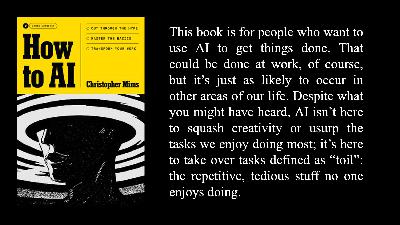
This is the post-show podcast post of my Sustain What conversation with Christopher Mims, the Wall Street Journal tech columnist and author of How to AI, and Melanie Mitchell, the Santa Fe Institute researcher deeply dug in on the thing called artificial intelligence that remains pretty unintelligent. If you want to understand where this exposively evolving technology is, and isn’t, taking us, you have to subscribe to Mitchell’s Substack blog: And if you want to make the most of the AI toolkit at work or in the rest of life - from investing to music making to…. - you really need to read Mims’ book.I loved this moment when Mims introduces the concept of “productivity theater” - when AI produces what looks like work, but the work required to make the output useful can eliminate any true productivity gains:One thing AI is good at is efficiently summarizing conversations, so here goes, thanks to the Google AI tool embedded in YouTube:* Introduction of Guests and AI Context (0:48-1:31)* Andy Revkin introduces Christopher Mims and Melanie Mitchell, setting the stage for a discussion on managing information in a world increasingly shaped by AI.* Christopher Mims’ new book is highlighted as a user’s guide to AI technologies, emphasizing both their capabilities and limitations.* Critique of AI Hype and Investment Bubble (4:25-8:18)* Melanie Mitchell expresses skepticism about the predicted societal transformation by AI, noting the “crazy” amount of money flowing into the sector (4:52).* Christopher Mims discusses the significant investment bubble in AI, predicting an “ugly” outcome when it inevitably bursts, leading to stranded assets like half-empty data centers (7:44-8:18). He introduces the term “productivity theater” to describe AI’s ability to generate “products that look like work” (6:42-6:56).The limits of simulated intelligence* Understanding AI: Simulation vs. True Intelligence (9:22-12:21)* The conversation delves into the nature of AI, explaining that these systems are “incredibly good at simulating intelligence” but lack abstract reasoning, long-term planning, and world models (9:36-10:17).* Melanie Mitchell elaborates on the ambiguous definition of “intelligence,” suggesting that AI should perhaps be viewed as “complex information processing” rather than “artificial intelligence” (10:48-12:09).* AI’s Role in the Workplace and “Jagged Frontier” (13:31-22:20)* Christopher Mims describes AI’s “jagged frontier,” where it excels at retrieving and remixing information (e.g., coding) but struggles with tasks outside its training data or in novel environments (13:31-14:57).* Melanie Mitchell discusses the misunderstanding of how AI impacts jobs, noting that AI systems often fail in real-world scenarios despite performing well on benchmarks (18:00-19:44). She emphasizes that a “job is not equal to a set of tasks” (18:37).* Christopher Mims adds that AI’s high failure rates can lead to a decrease in human productivity, as time is spent correcting AI-generated “messes” (20:29-21:20).* Regulation and Ethical Concerns (28:57-32:17)* The discussion touches on the need for AI regulation, especially in critical areas like healthcare, where AI is being considered for Medicare benefit applications (29:10-29:23).* Christopher Mims highlights intense lobbying efforts against state-level AI regulations and uses the example of Grok on X (formerly Twitter) to illustrate the “horrific ways” AI can be abused without proper oversight (29:48-31:22).AI’s energy demands will shrinkMelanie Mitchell made a fascinating and important point responding to a viewer’s question about energy and water demands. What she says parallels the shift from “baseload” power generation to distributed renewable and solar energy (not to mention from mainframe computers to your phones):* Environmental Impact and Future of AI Architecture (32:26-35:54)* The energy and water consumption of AI data centers is discussed, with Melanie Mitchell noting the push for more efficient and smaller AI models, a trend she believes will continue in the long term (33:07-35:02).* Christopher Mims agrees that efficiency drives will lead to more localized AI models, eventually running on devices like phones (35:07-35:28).* AI as a Tool vs. Superintelligence and Scientific Inquiry (37:33-46:51)* The guests discuss whether AI’s simulated intelligence is “good enough” for certain applications, like companionship, but caution about the potential for catastrophic failures and detachment from reality (38:08-40:11).* They debate the scientific and commercial pressures within the AI field, with Melanie Mitchell arguing that the focus on “making products” (43:04) hurts fundamental scientific inquiry by de-incentivizing “slower science” (44:56-45:12).* Christopher Mims contrasts AI development with other technologies (like energy), noting that AI breakthroughs have often been “kind of an accident” rather than the result of patient, long-term research (46:12-46:51).AI and the arts - music case studyI closed things out by demonstrating how Suno took my barebones guitar-and-vocal version of my song “Save Dreams for Sleeping” and generated a rousing anthem. As I explained, the downside is a lot of SLOP on Spotify etc, but also demoncratization of music making. What do you think?Sustain What is a reader-supported publication. To receive new posts and support my work, consider becoming a free or paid subscriber. This is a public episode. If you'd like to discuss this with other subscribers or get access to bonus episodes, visit revkin.substack.com/subscribe
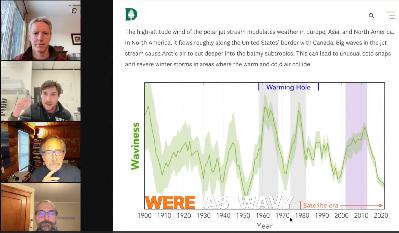
This was a deeply illuminating conversation with top-flight researchers aiming to get beyond the back-and-forth edge-driven volleys on global warming’s role in shaping severe winter weather in the United States.Watch above or watch and share on Facebook, LinkedIn, YouTube and X/Twitter.Here’s one key point from Jacob Chalif, the lead author of a 2025 study that found the recent upswing in waviness in the jet stream was matched or outmatched by earlier periods several times in previous decades back through the 20th century. This doesn’t mean global warming isn’t changing such atmospheric and weather patterns. It does mean that natural variability in the system is capable of such dynamics as well.The details and background are in the pre-show post here:Here are some of the papers we discussed:* July, 2025 - The intensification of the strongest nor’easters https://www.pnas.org/doi/10.1073/pnas.2510029122* July, 2025 - The Mid-20th Century Winter Cooling in the Eastern U.S. Explained https://eos.org/editor-highlights/the-mid-20th-century-winter-cooling-in-the-eastern-u-s-explained* May 2025 - Attributing climate and weather extremes to Northern Hemisphere sea ice and terrestrial snow: progress, challenges and ways forward https://www.nature.com/articles/s41612-025-01012-0If you like what I’m doing, consider becoming a paying supporter.We also talked about a keystone need - vulnerability reduction - and something Trump could do (that he won’t do of course):Thank you Michael Ludgate, Vivian Henry, Graham Chant, Peter van Soest, and many others for tuning into my live video! Join me for my next live video in the app.Sustain What is a reader-supported publication. To receive new posts and support my work, consider becoming a free or paid subscriber. This is a public episode. If you'd like to discuss this with other subscribers or get access to bonus episodes, visit revkin.substack.com/subscribe
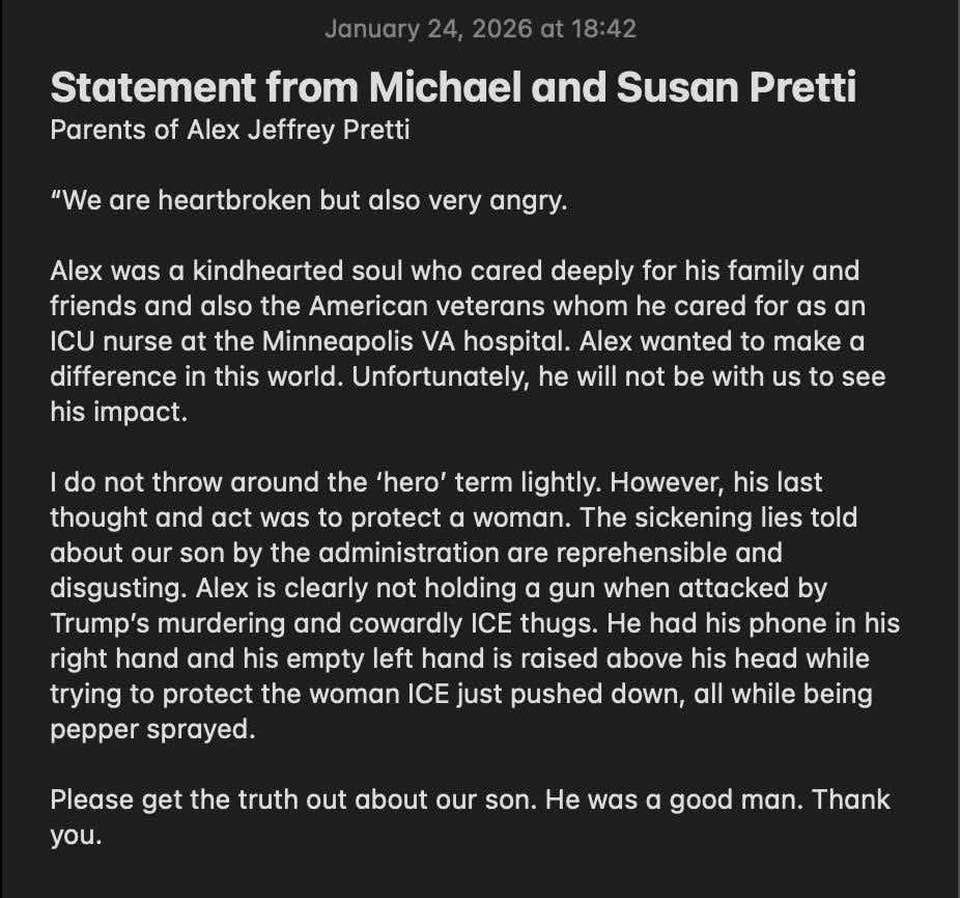
I have deeply mixed feelings about AI in music, which I’ll elaborate on soon. But as a songwriter in act three of my life, and facing the reality that it takes a lot of time and money to build full productions of songs, I’ve started using Suno to envision what my barebones guitar-and-vocal tunes can sound like on a bigger scale.I am going to pull together some of the wonderful musicians around our Downeast Maine home to record an album later this winter and spring. But given the latest atrocity in Minneapolis, and the even more atrocious spin by scum like Stephen Miller, I had to put this Suno take on my song “Save Dreams for Sleeping” out for you to hear, sing along on, and hopefully share. Here’s the rough bedroom recording of the basic song as posted here and on CD Baby last year, followed by the lyrics.Save Dreams for Sleeping© 2025, Andy Revkin, Written Feb. 4, 2025, updated August 3, 2025We all hold a dream somewhere deep in our minds,Where everything’s fair and everyone’s kind.Flowers all blooming, no smoke in the skies.No wars in the headlines, no tears in your eyes.But save dreams for sleeping. It’s time to get real.Hard workers are suffering while billionaires steal.Young women in trouble can’t find caring hands.House builders born elsewhere get bundled in vans.I’m not saying it’s easy. All good things take time.Those trying to divide us are good at their crimes.But if we stop dreaming, dive into the fray.A more perfect union is coming our way.Our country needs mending, but how to begin?With problems so tangled, no start and no end?Begin by protecting those facing the fire.Reach out by connecting through common desires.One day at a time, the trust you createWill carry us further than fighting and hate.One stitch at a time the fabric you weave,Will grow ever stronger than you can believe.So save dreams for sleeping. It’s time to get real.Hard workers are suffering while billionaires steal.Young women in trouble can’t find caring hands.House builders born elsewhere get bundled in vans.I’m not saying it’s easy. All good things take time.Those trying to divide us are good at their crime.But if we stop dreaming, dive into the frayA more perfect union is coming our way.~ ~ ~To sustain Sustain What and my music side, consider becoming a free or paid subscriber. This is a public episode. If you'd like to discuss this with other subscribers or get access to bonus episodes, visit revkin.substack.com/subscribe

There were many notable moments in my Sustain What discussion of Russian and American political propaganda, so I encourage you to watch the whole show. But here are a couple of highlights: Andrew Ryvkin, who created propaganda for the Kremlin for many years and now writes about information wars (now living in the United States), described a talk show he produced more than a decade ago, called “Honest Monday” (seriously), which would explore an issue each week (chosen by Kremlin officials) through several vantage points. It’s an illusion of a debate. People, the guests, this really is their opinion, what they’re saying. They’re not lying. Some are left, some are right, some are centrist. But the point is to align what they’re saying into a structure that would lead the viewer to realize,to realize, well, the more centrist, Kremlin, point of view is actually best.I immediately noted how that structure was echoed by Fox News’s Hannity and Colmes, back in the “fair and balanced” days at the Murdoch-owned network. Renee Hobbs, who teaches propaganda literacy at the University of Rhode Island, stressed how visual information like the flood of White House-generated memes in the past year bypasses critical thinking and spurs strong emotions.I urged viewers, and urge you, to read the Fox News op-ed posted last summer by Billy McLaughlin, who ran White House social media from inauguration through August before heading to the private sector. Here’s an excerpt:We did not build a cautious, government-style account. We built a fast, culturally fluent content machine designed to cut through the noise and win online. And it worked.In just six months, the administration’s platforms added over 16 million new followers, with the fastest growth among Americans aged 18–34. We generated billions of video views and gained more than half a million new YouTube subscribers – nearly triple the previous administration’s total growth over four years.But it was never just about numbers. Our success came from echoing the humor, passion and identity of a movement that was already alive. We did not invent the culture. We gave it a megaphone.This was not entertainment for entertainment’s sake. Our meme-heavy, content-first strategy was aligned with the president’s priorities. Digital was not a sideshow. It was a frontline tool for shaping narratives, building momentum, and applying pressure.One of the big takeaways was to try hard to avoid taking the “rage bait” he and others are creating for you. A fresh example emerged even as I was running the show, as a Trump line about cold weather and global warming prompted heaps of replies from climate-focused liberals, many of whom overstated the science on their end. That is NOT productive, I warned:The curtain raiser post has lots of relevant links and a related Sustain What chat with Hobbs:Thank you Andrei Codrescu, Michael Ludgate, Jeremy Zilar, Marshall Mermell, Tim Buxton, and many others for tuning into my live video! Join me for my next live video in the app. This is a public episode. If you'd like to discuss this with other subscribers or get access to bonus episodes, visit revkin.substack.com/subscribe

First, I hope you can find time to listen to this evergreen conversation I had with Renee Hobbs, a leading authority and educator (at the University of Rhode Island) aiming to spread propaganda literacy. Her mission, in essence, is to help us all cut through the ever-evolving superstorm of online material and widgets designed to alarm, disarm, distract, confuse or entice - in other words, to enshittify what could otherwise be a miraculous set of tools for connecting and informing society. We spoke at the 2025 Bioneers Conference.But make sure to watch below as well. On Sustain What I just introduced Hobbs live to Andrew Ryvkin, a Russian-born writer and analyst focused on propaganda, authoritarian rule and international relations with a special level of expertise: he spent many years producing propaganda inside the Kremlin’s multi-layered media system. Watch and weigh in (and share) on Facebook, LinkedIn, YouTube.As Ryvkin has been explaining in a series of “Pop Propaganda” talks (and will lay out in a forthcoming book), “Modern Russian propaganda is much more than angry talk-show hosts waving missiles on TV or troll farms flooding social media. It’s influencers, streaming platforms, and marketing campaigns that promote the Kremlin’s agenda, just as Nike advertises its sneakers….”Make sure to subscrribe to Andrew Ryvkin’s Substack letter of course. Start with his origin story: I used to work for the Kremlin…And read his articles in The Atlantic.Just for the record, despite our super similar names, we don’t seem to be related. He says his roots go back to Odessa. Mine go back to Ripky, a village in Ukraine my paternal grandfather fled around 1905 amid a peasant revolt and pogroms. Sustain What is a reader-supported publication. Consider becoming a paid subscriber.Just in case missed, here’s ANOTHER evergreen conversation I did with Hobbs in year one of the pandemic: This is a public episode. If you'd like to discuss this with other subscribers or get access to bonus episodes, visit revkin.substack.com/subscribe
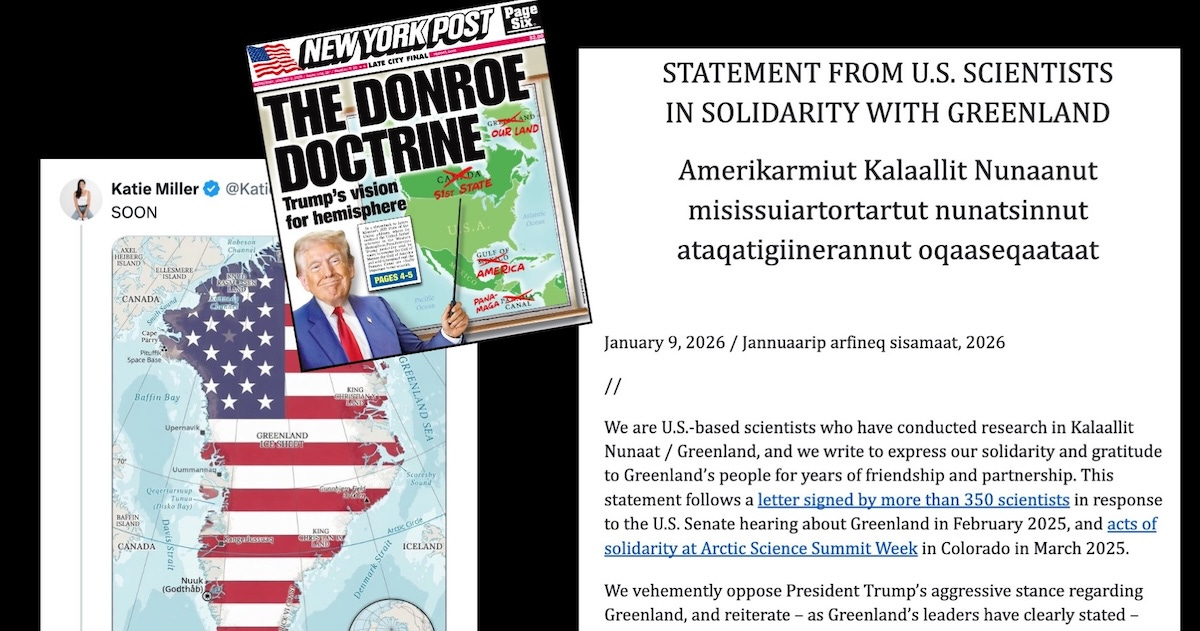
I’ll be doing another conversation about Trump’s threats to take Greenland soon - with Greenlanders. But I had to elevate the important statement made on January 9 in defense of the 57,000 citizens who inhabit Greenland’s coastal communities - signed by more than 200 American scientists who have worked on that giant ice-sheathed island. The curtain raiser post for this webcast with Greenland-focused researchers Yarrow Axford and Paul Bierman has all the relevant links:Please watch (and share!) the full show, which addresses lots of question, including why scientists feel the need to weigh in. We also explore relevant coverage and commentary, including a Wall Street Journal editorial board piece criticizing Trump’s bellicose approach. As for geopolitics, the longtime Greenland-focused scientist Paul Bierman says the national security debates so far have missed the strategic threat posed by the 20 feet of sea level rise banked in the island’s two-mile-high ice sheet. Here’s that clip and statement:Protecting Greenland’s ice is the most important piece of national security you could imagine and global security you can imagine. It’s not critical minerals. It’s not military strategy. It’s keeping that ice frozen.Bierman’s reflection resonates with Bill McKibben’s post on Trump’s aggression last week:Below I’m adding input from two of the statement signatories who couldn’t join us last night - Eric Rignot and Raymond Bradley.I do greatly appreciate the financial contributions of a small, but growing, portion of subscribers chipping in a bit of cash to help me justify the time to write and organize these Sustain What shows. Sustain What is a reader-supported publication. Even with all the paywalls, do consider becoming a paying supporter.Longtime polar scientist Eric Rignot of the University of California, Irvine, a signatory, sent this note:I have worked in Greenland for the past 33 years (first campaign was in 1993) funded by NASA and NSF on aircrafts, helicopters, ships, and on foot; I have flown all four corners during PARCA (1993-2008) and OIB (2009-2019), visited many fjords to map the bathymetry (2010-2019), and have been several times on Petermann glacier (2002, 2023), Jakovshavn glacier (2016-2017) and Zachariae Isstrom (2024).The Greenlanders have always been supportive of our work. We often hired them on boats, or we hired their boats and crew, they gave us permits to operate and collect data, and we interacted with them, although not as often as I wish. They are good people who survived 2 centuries of colonisation. They have been brave enough to form a semi autonomous government for the past 26 years, which is an amazing achievement.I am proud to say that fishermen use our bathymetry in a phone app. While they know their own fjords very well, they do not know every corner of them; our maps helped them find new fishing ground. For us scientists, to see that our work is directly useful to them, is very rewarding because we are very thankful they let us conduct science in their country.The US military in Greenland, esp. Pittufik, have been instrumental on many levels to facilitate work in Greenland as well. I would not throw a stone at them. They have been keen over the years to entertain a good relationship with Greenlanders and Danish people. I wish that this “collaboration” would continue and be encouraged and facilitated. Similarly, the Danish military has collaborated with us over the years.The threat of mining companies in Greenland is real. They will destroy the environment, pollute the fjords forever, ask fishermen to go away, and they won’t clean up. Clean mining does not exist. Greenlanders are opposed to mining because environmental regulations are weak.I won’t comment on the attempts of the US government to overtake Greenland. They already have military presence, bilateral agreements with Denmark, they do not need more than that. They are already a unique partner.A takeover by the USA could put an end to many international scientific studies in Greenland, which would be dramatic. We need to leave Greenland to the greenlanders. We need to respect them and work with them. We need to find a way to cooperate with them on the terms of their choosing. They have all the reasons in the world to be scared by the USA. The USA has not taken care of its own indigenous people, the condition of American indians is absolutely terrible. Until we show the world that we can take care of our own people, we should not pretend that we can take care of greenlanders.Greenlanders will protect the environment in Greenland, they care about it deeply, they have done so for many generations. No other nation will do that job better than them. This is their home. Leaving Greenland to greenlanders is the best way to protect Greenland and the best way to show greenlanders the respect that they so much deserve.Ray Bradley of the University of Massachusetts, Amherst, a signatory and longtime analyst of long-term Arctic climate variability and change, sent this statement:I’ve worked in different parts of Greenland and currently lead an NSF-funded project in northern Greenland (north of the ice sheet) investigating environmental conditions (don’t say CLIMATE!) when the earliest people arrived on the island ~4500 years ago. The project is a collaboration with archeologists from the Greenland National Museum in Nuuk.The whole idea of the US ‘Invading” or “occupying” Greenland is ridiculous and I’m afraid it has been hyped up by the media and egged on by Trump & his henchman Miller to distract from their other domestic problems. The media falls for it every time.Let’s just consider what an invasion or occupation means. There are only about 5 or 6 airstrips in all of Greenland where you could land a C-130. The most “strategic” location of those airstrips is at Station Nord in NE Greenland, and that dirt runway is a mud bath in the Spring and so often inaccessible. The base itself would be hard-pressed to house 100 people and the canteen can handle about 40 people at a time. So...good luck “occupying” that key location.Other sites include Kangerlussuaq, Nuuk (the capital) and Thule (now called Pittufik) on the West coast & Narsarssuaq in the south (a new runway is being prepared at nearby Qaqortoq, I believe). Minor airfields in Kulusuk & Mittarfik Nerlerit (Constable Point) on the east coast provide access to commercial flights from Iceland on Dash 8 aircraft--probably limited to other STOL aircraft. There are no hangars to repair large aircraft and very limited fuel supplies.60% of Greenland’s population live in Nuuk-the rest are scattered in small villages up and down the coast, often only accessible by helicopter (Air Greenland) or boat.There may be Russian (or Chinese) submarines operating around Greenland, just as they do around the US but I don’t think there are surface ship operation in the area--something the media has not investigated, yet it’s Trump’s main argument for taking over Greenland. I am quite sure that there are more Chinese ships approaching the West coast of the US every day than have been to Greenland in the last decade.If Trump was really concerned about N. Atlantic security, he’d pay attention to Iceland (where they do have airfields and docks for ships) or even Svalbard (where they also have coal!) and the Russians operate there already (in Barentsberg). (Not that I would encourage anybody to show the guy a map).He is obsessed with rare earth minerals, of which Greenland has an abundance. But often rare earth minerals are found along with uranium. That concerns the local people who have already rejected plans to mine in S. Greenland for fear of contamination of their land. The costs of extraction in some areas are enormous. The 2nd largest known zinc deposits (designated by the USGS as a strategic mineral--the biggest deposit is in Russia) is in NE Greenland (north of Station Nord at Citronen. An Australian mining company has explored and mapped the deposit & received full blessing of the Greenland Govt to extract the ore. The US EXIM bank put up over $600M to support the operation, but the company was unable to raise the required additional private equity and after several years of trying, they just abandoned the license. The reality is, extraction requires ships, which need to know the offshore bathymetry (rarely mapped in detail) and a reliable dock (generally missing). And then...did I mention sea-ice? How many icebreakers does the US currently have? Just a fraction of what the Russians (& even the Scandinavians) have...We’ve just seen how reluctant oil companies are to venture back into Venezuela, so I don’t think there are too many mining companies that will be ready to put up huge amounts of money to extract ore in Greenland versus other locales.Thank you Aviva Rahmani, Keith Kloor, Vivian Henry, Tracy Frisch, and many others for tuning into my live video! Join me for my next live video in the app. This is a public episode. If you'd like to discuss this with other subscribers or get access to bonus episodes, visit revkin.substack.com/subscribe
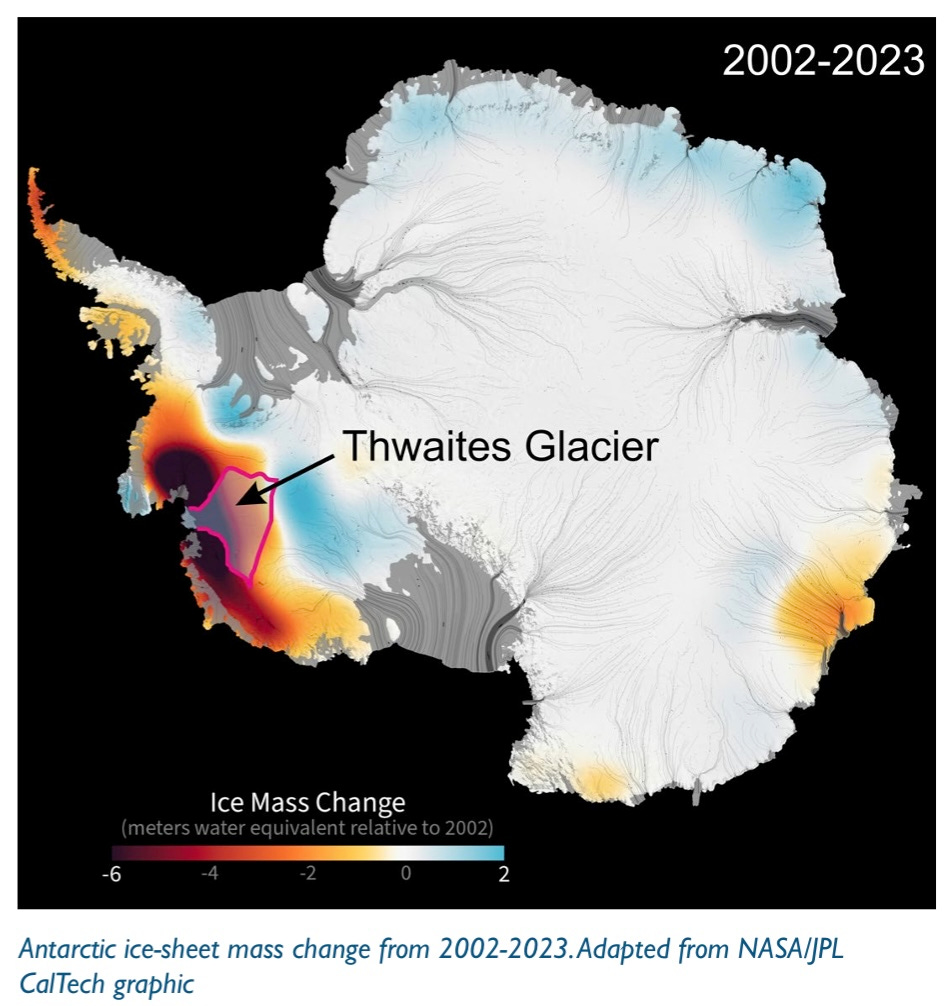
Here’s the audio/video podcast post of my live conversation with a determined duo of longtime broadcast journalists spending two months with intrepid scientists aboard the South Korean icebreaker RV Araon seeking fresh data that could show how fast Antarctica’s most vulnerable ice mass, the Thwaites Glacier, could raise sea levels. Miles O'Brien and Kate Tobin are an independent team working together through three decades at CNN and now independently, with their output seen on CNN, PBS and now Substack through O’Brien’s Miles Ahead newsletter. This map from the latest report of the International Thwaites Glacier Collaboration shows vividly why this region is so important. Here’s a relevant portion of the research collaborative’s 2025 report:Following some key studies beginning two decades ago, it was widely recognised that Thwaites Glacier posed a potential threat of rapid contributions to sea level. Prior to our research, little was known about the mechanisms controlling the retreat of this enormous glacier - one of the largest and fastest-changing glaciers in the world. If it collapsed entirely, sea level would rise by 65 cm. Thwaites Glacier spans an area equal to the island of Great Britain or the US state of Florida, and in places is almost 4000 m (13,000 ft) thick. The amount of ice flowing into the sea from Thwaites Glacier and its neighbouring glaciers more than doubled from the 1990s to the 2010s, and the Amundsen Sea region now accounts for 8% of the current rate of global sea-level rise of 4.5 mm a year.Here, O’Brien describes why this particular ice mass matters so much:From ice sheets to Main StreetWe also explored the challenge of linking Antarctic ice sheet dynamics with decisions in coastal communities around the world faced with the reality that sea levels of the past - relatively stable for centuries - are history. I noted my earlier Sustain What show on the importance of driving “managed retreat” or other policy shifts, as articulated in a great paper by Lizz Ultree et al, “From ice sheets to main streets: Intermediaries connect climate scientists to coastal adaptation.”A viewer asked about ways to stop the ice escape and warming and O’Brien mentioned that David Holland of New York University is on the research team aboard the ship. He’s part of a collection of researchers eager to test whether a “seabed curtain” - a small-scale geoengineering intervention - could hinder the melting influence of warm waters getting beneath the ice sheet.Learn more at the seabedcurtain.org website.Conveying a momentous story without hypeAnd we got into the challenges of doing accurate but effective journalism in a world fixated by, but also paralyzed by, overstatements. O’Brien makes vital points here about the challenge of balancing compelling narrative and the real complexity and time scales revealed by the science:For more on that issue, make sure to explore my post and Sustain What #Watchwords webcast on asking “by when” when you see the word COLLAPSE in the context of glacier science:Thanks for watching, weighing in AND sharing this post. I guarantee you know at least a few people who don’t know about Sustain What but could benefit from the information and ideas here. And of course chip in to help me justify the time it takes to do this work in my 69th year. :-)Sustain What is a reader-supported publication. Consider becoming a free or paid subscriber. This is a public episode. If you'd like to discuss this with other subscribers or get access to bonus episodes, visit revkin.substack.com/subscribe

I hope you’ll great Sustain What chat on the shifting nature of climate journalism and the role of culture in climate [in]action with Sammy Roth. His 14-year track on the climate and energy beat has taken him from the Desert Sun to the Los Angeles Times (where his Boiling Point newsletter became a key read for climate-concerned folks) to Substack since October, with his fast-growing Climate Colored Goggles newsletter.Here’s his foundational post explaining how he focuses his work and why culture and the industries around it - including Disneyland - matter as much as energy systems and the industries around them:We explored a heap of issues, including why he moved from the Times to Substack (freedom!):He talked about his Times coverage of the 2022 “Glaring Absence” study by the The Media Impact Project at USC’s Norman Lear Center of climate and related references in Hollywood productions: They analyzed 37,000 scripts of TV shows and films for the second half of the twenty tens, which was quite ambitious. And they found that only 2.8 percent of scripts included any mention of climate change, and they didn’t just look at climate change. They had a list of, I think, three dozen different climate keywords. They had greenhouse gas, sea level, clean energy, fossil fuel…The moral of the story, even with three dozen different keywords, only 2.8 percent said anything about climate change or anything related. They said that they found the mention of the word dog 13 times as often as all 35 climate keywords put together.There is much more, so dive in and please share this post.And do subscribe to Climate Colored Goggles and consider chipping in. At my stage of life, Sustain What is more a labor of love than a monetary project. Sammy Roth’s newsletter is his foundational source of income and young journalists need all the support they can get. I created a subscribe button for him here:Thank you to everyone who tuned into my live video. Join me for my next live video in the app. This is a public episode. If you'd like to discuss this with other subscribers or get access to bonus episodes, visit revkin.substack.com/subscribe
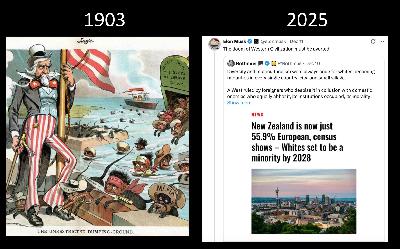
Here’s the webcast/podcast post for my Sustain What conversation with Jennifer D. Sciubba, the new president of the near-century-old Population Reference Bureau, a longtime source of unspun demographic data and analysis.The focal point was her new book (with two veteran expert coauthors), Toxic Demography - Ideology and the Politics of Population.Learn more in my “curtain raiser” post:But here are some quick takeaways and links to material we explored. We discussed long cycles of politics and fear mongering, as I noted how Elon Musk’s December 11 tweet about New Zealand losing its whiteness (so much to think about there) echoes the anti-immigrant U.S. political art of 1903.Sciubba stressed that while a core goal of the book is creating more reality-based discourse around population data, some critical sources of such data are threatened under Trump and the current Congress.I pointed to George Monbiot’s column - “The facts are stark: Europe must open the door to migrants, or face its own extinction” - and Sciubba spoke about the limits to what governments can do - even in China - to reverse fertility trends (read this related Mercator Institute article)I pointed to the latest piece by longtime demographer Joseph Chamie on fertility declines, in which he echoes Sciubba et al’s conclusions about the limits of what countries can do to change fertility trends:There’s lots more in the conversation of course. Please watch above and offer some thoughts in the comments. Or watch and share on Facebook, LinkedIn, X/Twitter, YouTube.And of course consider supporting my work if you can afford to:I hope you’ll consider becoming a free or paid subscriber or you can send a one-time donation below.Thank you Susan Spencer, Rachel of Sunchoke Falls, Bart Ziegler, Patricia Watts, and many others for tuning into my live video! Join me for my next live video in the app. This is a public episode. If you'd like to discuss this with other subscribers or get access to bonus episodes, visit revkin.substack.com/subscribe
This is the Substack Live video and audio podcast post of my Sustain What chat with journalist Tina Kelley and lawyer Eric Jepeal, who are seeking partners for Commonloop, a social media platform that would funnel revenue generated from humans’ online habits (which are unlikely to change soon) into enterprises or programs that are a boon for all of us - instead of a boon for billionaires.Here’s the curtain raiser post with lots of relevant links:Here are some relevant papers and posts we alluded to:2021 PNAS paper: Stewardship of global collective behavior https://www.pnas.org/doi/10.1073/pnas.2025764118The digital age and the rise of social media have accelerated changes to our social systems, with poorly understood functional consequences. This gap in our knowledge represents a principal challenge to scientific progress, democracy, and actions to address global crises. We argue that the study of collective behavior must rise to a “crisis discipline” just as medicine, conservation, and climate science have, with a focus on providing actionable insight to policymakers and regulators for the stewardship of social systems.2023 paper (article summarizing): Social media platforms generate billions in annual ad revenue from U.S. youth https://hsph.harvard.edu/news/social-media-platforms-generate-billions-in-annual-ad-revenue-from-u-s-youth/Social media platforms Facebook, Instagram, Snapchat, TikTok, X (formerly Twitter), and YouTube collectively derived nearly $11 billion in advertising revenue from U.S.-based users younger than 18 in 2022, according to a new study led by Harvard T.H. Chan School of Public Health. The study is the first to offer estimates of the number of youth users on these platforms and how much annual ad revenue is attributable to them. The study was published on December 27, 2023, in PLOS ONE.Ten Arguments for Deleting Your Social Media Accounts Right Now - Jaron Lanier’s manifesto:https://www.jaronlanier.com/tenarguments.htmlReversing “enshittification” of everything - my chat with Cory DoctorowBluesky’s for-profit modelhttps://bsky.social/about/blog/7-05-2023-business-planThe Conversation - a global op-ed page, in essence, largely facilitated and populated by universities.https://theconversation.com/us/partnersThe website for the philanthropy efforts of YouTube’s titan, “Mr. Beast”:https://www.beastphilanthropy.org/our-workWhen Expertise Becomes a Requirement: Lessons from China’s New Influencer Regulation https://www.ssbm.ch/when-expertise-becomes-a-requirement-lessons-from-chinas-new-influencer-regulation/Center for Humane Technology - social media in societyhttps://www.humanetech.com/social-media-societyHow to Fix the Internet podcast, Electronic Frontier Foundationhttps://www.eff.org/how-to-fix-the-internet-podcastA sobering moment from my conversation with Tristan Harris (a founder of the Center for Humane Technology) after the release of the Netlix documentary Social DilemmaSustain What is a reader-supported publication. To receive new posts and support my work, consider becoming a free or paid subscriber.Thank you Steve Chapple, Victor I. Covaleski, R Hull, and many others for tuning into my live video! Join me for my next live video in the app. This is a public episode. If you'd like to discuss this with other subscribers or get access to bonus episodes, visit revkin.substack.com/subscribe

I think you’ll love this Sustain What conversation I just had with Joe Robertson and Joe Murphy, the brilliant young playwrights behind Kyoto, the tragicomic play describing the titanic diplomatic and political tussle as climate change science threatened to bring an early end to the fossil fuel age.My “curtain raiser” post has a heap of details and related links:But much more emerged in the discussion, which also included Ben Santer, a veteran climate scientist who’s a character in the play (he writes about that here), Jean Chemnick, an E&E News/Politico reporter who wrote in depth on petrostate and industry efforts to derail climate talks, and Jenny Shalant, a Natural Resources Defense Council writer who wrote a great essay after seeing the play.If you appreciate what I’m doing curating these webcasts, please consider pausing on Giving Tuesday to chip in so I can keep at it in 2026.Here are a couple of highlights, starting with Joe and Joe’s origin story as public-minded playwrights, which involved building a performance dome in a Calais, France, migrant community.Here’s Ben Santer, who was consulted in the writing of the play and has seen it three times, describing a crucial turning point in the play and in history - the fingerprint analysis he and others did showing the human effect on climate that undercut the industry’s argument for delay:Attacks and dead ratsSanter also discussed the discomfort of watching the play describe the attacks he faced, and the fear his son faced, when a rat was left on his doorstep:The Joes described how they are working on two more plays in what they see as a series - on the Copenhagen round of climate talks in 2009 and the journey to and beyond the Paris Agreement in 2015. I’m looking forward to the next steps in their theatrical journey.Thank you to everyone who tuned into my live video. Join me for my next live video in the app. This is a public episode. If you'd like to discuss this with other subscribers or get access to bonus episodes, visit revkin.substack.com/subscribe

I needed an intervention today and reached out to my old friend from the anti-consumption wars, the Rev Billy Talen of the Church of Stop Shopping, and to Lloyd Alter, one of the great longtime guides to low-impact and low-carbon building, transportation and the rest. I hope the resulting conversation above offers a tonic during this crazy “Black Friday” week. You can also watch and share it on Facebook, LinkedIn, X/Twitter and YouTube:I needed help after reading a great piece by Alter calling out CNBC for this insanely ridiculous piece warning that people and businesses were holding onto their technology too long: “Americans are holding onto their devices longer than ever and it’s costing the economy.”Alter quotes the piece’s core warning:“While squeezing as much life out of your device as possible may save money in the short run, especially amid widespread fears about the strength of the consumer and job market, it might cost the economy in the long run, especially when device hoarding occurs at the level of corporations.”He goes on:Author Kevin Williams argues that we need the latest, fastest stuff. “Lost productivity and inefficiency are the unintended consequences of people and businesses clinging to aging technology.” The dean of a business school says, “While keeping devices longer may seem financially or environmentally responsible, the hidden cost is a quieter erosion of economic dynamism and competitiveness.”He concludes that all of this is, in essence, a call for more combustion:Basically, our economy is built on the conversion of fossil fuels into heat and carbon dioxide, with a helping of plastics on the side. There is a reason why COPs always fail, why Donald Trump kills wind and solar, and why even Mark Carney pushes pipelines; they know that fossil fuels ARE the economy.Alter kicks into higher gear:It is all about turning energy into stuff and selling as much of it as possible. And when we buy, we are contributing directly to that conversion of energy, a byproduct of which is carbon dioxide. It’s why we have been inculcated in this culture of convenience, to go through all this effort, to keep the fossil fuels flowing and the economy pumping out wealth. Please read the full piece!In our conversation, Alter goes deeper, saying:This is what we do. We extract oil, we refine it, we turn it into plastic, we make it into a spoon, we truck it to a store, we use it once.And the story doesn’t even stop there. Then we put it into piles and we have someone take it away and we go through all the pretend recycling when we really know it’s just going into a dump. And the whole process is completely insane. And all it does is mean that someone somewhere is pumping more oil.And that’s what we have to break in this economy. It all goes back to the fossil fuels. And as I said in it, that’s why, of course, Trump does what he does to promote the fossil fuel industry. It’s why COP just failed because none of the fossil fuel producing countries want to do anything.We’re all gray-haired old curmudgeons, of course, which is why I was excited to hear Talen’s “church” was going to co-host a Buy Nothing Day event in New York City’s East Village with the Lamp Club, one of a dispersed array of latter-day Luddite groups popping up around the country. Talen pointed me to a big New York Times feature on this percolating movement: They’re Trying to Ditch Their Phones. Their Methods Are Unorthodox.Here’s a snippet:The Lamp Club is part of a growing ecosystem of “neo-Luddite” groups across the country that encourage people to transform their relationship to technology. Other groups include the Luddite Club, APPstinence and Breaking the (G)Loom — organizations that, for the most part, were started not by parents wishing their teens would get off their devices but by the teens themselves, who fault phones for fraying human connections as well as accelerating inequality and climate change. There are now more than two dozen Luddite Clubs in North America, from Ithaca, N.Y., to Irvine, Calif.Please listen to the full conversation and share it with others. I need your help growing our Sustain What network. And do chip in financially if you can afford it.Sustain What is a reader-supported publication. To receive new posts and support my work, consider becoming a free or paid subscriber.I’ve been enthusiastically tracking the Buy Nothing effort since 2007. And for more on Luddites, old and new, please subscribe to Brian Merchant’s vital Blood in the Machine Substack: This is a public episode. If you'd like to discuss this with other subscribers or get access to bonus episodes, visit revkin.substack.com/subscribe
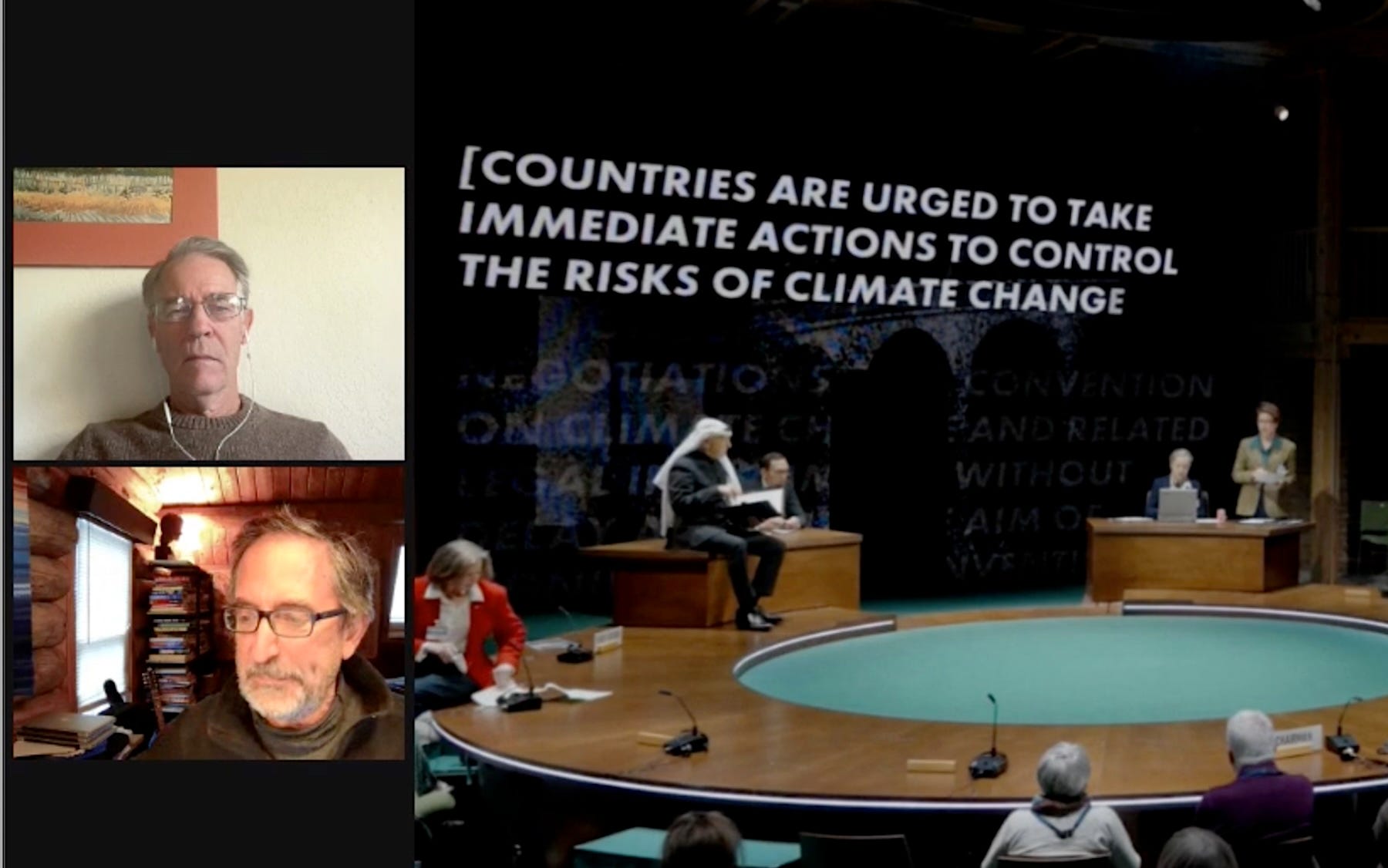
I hope you can watch and weigh in on this conversation I had on the final official day of COP30, the thirtieth round of climate treaty talks, which are wrapping up in Belém, the gateway city to Brazil’s vast portion of the Amazon River basin.First we had a pop-up update from my friend Cristiane Prizibisczki, a veteran Brazilian environmental journalist covering the meeting for the great online publication ((o))eco. A big focus of their coverage was the call for a Fossil Fuel Nonproliferation Treaty (a tough sell in the formal sessions even without the Trump administration on hand given the suffocating role of Saudi Arabia in these talks (and the entire three decade process).Around 80 countries have signed on, as Prizibisczki reported, “through the launch of a coalition – or “collective effort”, as the COP presidency has used the term – for the abandonment of the use of fossil fuels at a global level. Among the countries present were Germany, Colombia, the United Kingdom and Kenya.” A crucial qualifier is that such a process would need to be “just” - offering different paths for low-emission poor countries than wealthy fossil-fueled powers. (A related concept that I explored in a previous Sustain What show is a “takeback obligation” for fossil fuel companies to capture their CO2.)She also gave a vivid description of the dramatic evacuation triggered by a contained but smoky fire in the negotiators’ “Blue Zone.”My feature guest was Kim Stanley Robinson, the longtime climate-focused science fiction author who’s just returned to his home in Davis, Callifornia, after speaking at the COP30 climate treaty conference in Brazil.He left before the fire erupted in the Blue Zone complex Thursday, causing a mass evacuation just as countries’ delegations were in the final press of negotiations over next steps 10 years after the Paris Agreement.Here’s my curtain raiser post for the webcast, which includes info on the fire:Here’s Robinson’s description of the indigenous protests at COP30:We also talked about the importance of fiction, from Robinson’s sprawling 2020 novel to the play “Kyoto,” which had its first run in London a year ago and is currently Off Broadway at Lincoln Center Theatre in New York City through November. I played a scene from the London production that deeply resonated with my decades reporting on Saudi Arabia’s sustained role trying to prevent substantive agreements - and my personal experience with the protagonist, a lawyer and lobbist for fossil interests, Don Pearlman.Please watch and weigh in with your reactions in the comments. And do consider supporting what I’m doing here on Sustain What by sharing this post with friends and contributing financially.Sustain What is a reader-supported publication. To receive new posts and support my work, consider becoming a free or paid subscriber.Thank you Meera Subramanian, Keith Kloor, David R. Guenette, Martha Morningsong, Entropy, and many others for tuning into my live video! Join me for my next live video in the app. This is a public episode. If you'd like to discuss this with other subscribers or get access to bonus episodes, visit revkin.substack.com/subscribe

James Fahn founded the Earth Journalism Network 20 years ago. The organization has helped foster the reporting capacity of journalists around the world and helped build innovative colllaborative news networks like InfoNile and InfoAmazonia. Here I caught him in the middle of the 30th session of negotiations under the 1992 Framework Convention on Climate Change, the treaty that is the foundation for the Paris Agreement a decade ago. Share this post or do so on X, on Facebook, on LinkedIn.Fahn lays out the key points being negotiated - in the absence of United States participation under President Trump’s second term.We also discussed the enormous indigenous presence at this COP - not unxpected given that Belem sits at the mouth of the Amazon River.You can explore the stories being generated by journalists affiliated with the Earth Journalism Network here:Sustain What is mostly a labor of love. To support my work, consider becoming a financial supporter. This is a public episode. If you'd like to discuss this with other subscribers or get access to bonus episodes, visit revkin.substack.com/subscribe
I hope you’ll take time to watch and share this Sustain What conversation withCory Doctorow, a tireless champion of the best that digital technology can give society and foe of those who are enshitifying this public good for profit or power. Also please pass it around on Facebook, YouTube, LinkedIn and X/Twitter. And do subscribe to Sustain What and consider chipping in if you like what I’m doing:Doctorow has done grueling work through innumerable Pluralistic posts and his many books, including Enshittification, the main focus of this chat, and another coming soon on the impending implosion of the AI bubble. Here’s an excerpt from a recent post he wrote that captures that part of what we discussed:[T]he AI bubble is driven by monopolists who’ve conquered their markets and have no more growth potential, who are desperate to convince investors that they can continue to grow by moving into some other sector, e.g. “pivot to video,” crypto, blockchain, NFTs, AI, and now “super-intelligence.” Further: the topline growth that AI companies are selling comes from replacing most workers with AI, and re-tasking the surviving workers as AI babysitters (“humans in the loop”), which won’t work. Finally: AI cannot do your job, but an AI salesman can 100% convince your boss to fire you and replace you with an AI that can’t do your job, and when the bubble bursts, the money-hemorrhaging “foundation models” will be shut off and we’ll lose the AI that can’t do your job, and you will be long gone, retrained or retired or “discouraged” and out of the labor market, and no one will do your job. AI is the asbestos we are shoveling into the walls of our society and our descendants will be digging it out for generations…. [Read the rest, please]He has also long worked for or advised the Electronic Frontier Foundation, devoted to digital privacy and oline free speech. He suggested you might get involved by finding and joining one of the branches of the related Electronic Frontier Alliance, “a grassroots network made up of independent community organizations…across the United States work to support digital rights and empower their local communities.”Click here for the curtain raiser post that has more context:Sustain What is a reader-supported publication. To receive new posts and support my work, consider becoming a free or paid subscriber. This is a public episode. If you'd like to discuss this with other subscribers or get access to bonus episodes, visit revkin.substack.com/subscribe
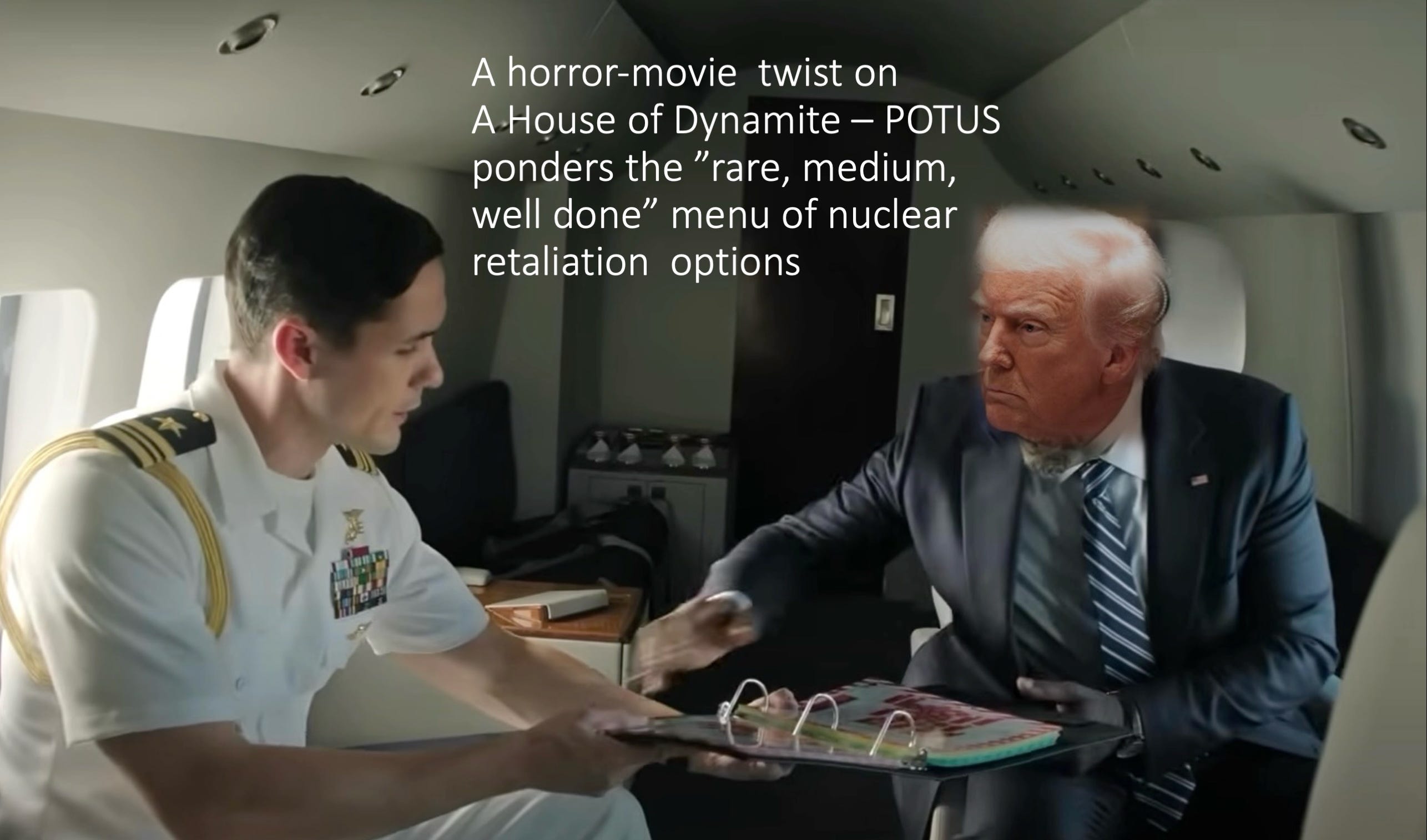
If you missed my advance post on my Sustain What conversation with Laura Grego, a longtime analyst of nuclear war risks, strategies and technologies, here’s your chance to watch and weigh in over the weekend. There’s little here that is reassuring. Grego, drawing on two decades of deep diving, says:I would argue that I think things are about as dangerous as they’ve ever been – at least since the Cuban Missile Crisis. The risks of war are higher. There’s a war in Europe that threatens to pull nuclear armed adversaries into direct conflict. All of the nuclear weapons possessing countries are either rebuilding, modernizing, or expanding their arsenals. We have very fraught relationships between the three major nuclear powers – the U.S., Russia and China – and the relationships to manage crises are always really important when things can move as fast as nuclear war…. There is nuclear brinksmanship all over… There’s this idea that nuclear threats are permissible, nuclear threats are a way to achieve political goals.Here are two more key moments. Grego described the monumental size of the problem, but stresses there are paths to defusing the “house of dynamite”:Josh Baran, who led a grassroots-focused campaign around the 1983 ABC movie The Day After, laid out how the network wanted the movie to come and go, but the campaign generated widespread focus:We discussed how that strategy might be applied to “A House of Dynamite” - brainstorming on how to build a social media campaign encouraging people around the country to fill in the blank (spoiler alert: the film ends as a cliffhanger) by creating short videos positing how it ends up. More on that soon!So please watch and offer some input. Here’s the curtain-raiser post with heaps of links to background:This Sustain What project exists in large part because of a small subset of readers and watchers who chip in financially so I can keep things open for the rest of you. Sustain What is a reader-supported publication. To receive new posts and support my work, consider becoming a free or paid subscriber.Thank you Jeff Jolley, Entropy, Dean Friedman, Vivian Henry, Victor I. Covaleski, and many others for tuning into my live video! Join me for my next live video in the app. This is a public episode. If you'd like to discuss this with other subscribers or get access to bonus episodes, visit revkin.substack.com/subscribe

I just had such a great Sunday Sanity conversation with the activist folk dynamos Cathy Fink and Marcy Marxer. Just watch and enjoy. And share!If you want to learn “No Kings Here,” the song Fink co-wrote with Tom Paxton, here’s their breakdown of the chords:The back story is in yesterday’s post here:Thank you Michael Ludgate, Peter van Soest, and many others for tuning into my live video! Join me for my next live video in the app. This is a public episode. If you'd like to discuss this with other subscribers or get access to bonus episodes, visit revkin.substack.com/subscribe

More climate and other news and analysis anon, but here we pause for a musical interlude, starting with a program note: I hope you’ll spend some time to listen to this conversation with the Grammy-winning activist folk music duo Cathy Fink and Marcy Marxer. We focused on their recent string of viral tunes confronting the Trump regime:Listen to “No Kings Here,” written and sung by Cathy Fink and Tom Paxton. And here’s “It Ain’t Gonna Go Away - Ode to the Epstein Files”:And now for my latest song, which is about the power of community - musical or otherwise.Most folks here know I’ve been a performing songwriter in the background behind my journalism for decades. Music is a fine counterpoint to reporting - giving me the ability to tackle issues, observations and questions that simply don’t fit into a “story.”Three years ago, I scribbled the line “life is a band” on a scrap of paper in a songwriting workshop at Bagaduce Music, a great hub for music making here in Downeast Maine. [Disclosure: I just joined the board.] That line has finally grown into a song, which is still being refined but is close enough to post. The lyrics and a YouTube video are below.Here’s what it’s about:I used to sing and strum up on the stage all by myself...I’d been a solo performer most of my musical life and only co-created a band for the first time around 2003 - a quartet and then quintet called Uncle Wade, centered on making “simple music for complicated times.” We avoided ego trips by each mainly playing the instruments we were least good at. For me that was fiddle and mandolin. This 2013 WFDU radio show appearance gives the story:In that band and others later, I began to appreciate the musical value of mixing personalities, instrumentation and voices, particularly when there were differences! (Lennon and McCartney were the ultimate expression of this phenomenon.) But “Life is a Band” didn’t solidify until recently. A few months back, I started frequenting a Monday evening “kitchen junket” - a potluck supper and singalong - at the Conscious Cafe in Ellsworth. This cozy eatery is tucked into a yoga center in an old house on a side road. Under chef Jesse Steiger, the mission is “to build community and connection through conscious food and living.” The regular crew ranges from octagenarians to youngsters, from tuba players to a saz player from Turkey.The junket began last January, with the music side cheered on and semi-organized by the marvelous fiddler, dancer and music educator Molly Gawler. Listen above or scan my lyrics below to see how the song relates to these sessions.And I hope you’ll consider starting a junket of your own in a living room or accommodating cafe.Here are the lyrics (which I’ve updated slightly since I made the recording!):LIFE IS A BAND - Andy Revkin, Oct 2, 2025
A D E A
I used to sing and strum up on the stage all by myself.
E A Bm7 E
Some Dylan and John Prine, Mixed with some songs of mine.
A D E A
But something was not there. Licks and lyrics were too spare.
Bm7 E
Customers drinking and scrolling and yapping, once in awhile some scattered clapping.
D E A A
Then walking home from a sleepy gig a fellow called my name..
Bm7 E A
He said I love the way you play, but there is a better game.
chorus
D A E
Life is a band, no more singing on your own.
D A E
Life is a band, grab a uke or saxophone.
D A E
Life is a band, alto, bass or baritone.
D E A
Come add your voice. Let’s make it grand. Life is a band. (twice)
A D E A
He said right down the block there is a place you have to see,
A A Bm7 E
We gather every weekend for a potluck jamboree.
A D A E
Bring some wings or a casserole, a flute or mandolin.
Bm7 E A
Choose folk or blues or an Irish tune and then we start to sing.
chorus
bridge
E E
Like a town needs a mayor and a baker and a plumber
A A
A band has a singer and a picker and a drummer
Bm7
Each, on its own, is monotone.
E
Put ‘em all together for something better….
Put ‘em all together for something better….
Put ‘em all together for something……better…
chorus
Is there anything like this where you live?Sustain What is a reader-supported publication. To receive new posts and support my work, consider becoming a free or paid subscriber. This is a public episode. If you'd like to discuss this with other subscribers or get access to bonus episodes, visit revkin.substack.com/subscribe
This is the podcast post for my special September 28th Sunday Sanity conversation with my friend Dar Williams. Here’s the updated “curtain raiser’ post with all the background on our chat and Williams’ first album on Righteous Babe Records, Hummingbird Highway:Thank you Dave Finnigan, Bart Ziegler, and many others for tuning into my live video! Join me for my next live video in the app. This is a public episode. If you'd like to discuss this with other subscribers or get access to bonus episodes, visit revkin.substack.com/subscribe

Boy this was a bracing, high-velocity and fun discussion with longtime renewable-energy analyst and evangelist Joe Romm. If you missed it live, now’s your chance to listen or skim the transcript and post questions or reactions. We explored a heap of issues related to climate, energy and online communication. We went back in time to our Dot Earth and Climate Progress tussles and moments of agreement but mostly focused on current and future events.One thing we absolutely agreed on was that our disputes back in the Bush and Obama days over the mix of clean-energy policies aimed at mass deployment or research and development were microscopic in the context of the reversals engineered by the Heritage Foundation and industry and initiated under Trump 2.0.We went through Romm’s recent mythbusting aroun carbon offsets and “green” hydrogen. I recommnd that you follow him on LinkedIn, where he does a good job highlighting relevant output from others as well as his own (the mark of a good blogger). Here’s an example - pointing to Stephen Lacey’s Open Circuit podcast:Here’s a highlight from our Sustain What conversation in which Romm explains what’s behind rising electricity bills and offers a suggested message to anyone wanting to return the U.S. to rational climate and energy policy:People’s electricity bills are going up and they are pissed and they don’t understand their bills…. First of all, we haven’t invested in the grid for 10, 20 years, and we’re blocking transmission lines, and we’re making it hard to actually deploy renewables as fast as we could. And Trump has come in and has gutted the credits for renewables. And we’re still going to build renewables and batteries because they’re still going to be the cheapest and fastest to deploy.They’re just going to be more expensive. So we have [also been] exporting our cheap natural gas in the form of liquefied natural gas - a bad idea that Biden at least put a pause on. The fossil fuel industry loves it.But guess why? This is arbitrage. Natural gas is expensive in places like Europe. It’s cheap here. What they want to do and what they are doing is taking our cheap gas, liquefying it, shipping it overseas, making a lot of money and therefore reducing our amount of gas, setting our gas prices up. It is very basic supply and demand.I do not know why our side does not message on [this]. We’re exporting our cheap gas to other nations and it’s costing us problems.There is much much more, so dig in and weigh in with questions (I’ll forward to Romm) and do SHARE this post with others.And do consider chipping in to help me justify the time it takes to develop the podcasts and post here.I’m close to an exciting threshold for paying supporters. I’d love to meet via video chat privately with the next four folks who can afford to chip in $50 to keep Sustain What going,Thank you Dann, Peter van Soest, and others for tuning into my live video! Join me for my next live video in the app. This is a public episode. If you'd like to discuss this with other subscribers or get access to bonus episodes, visit revkin.substack.com/subscribe

Comments

Download from Google Play

Download from App Store
 United States