


 Claim Ownership
PBM Reform Podcast
Subscribed: 14Played: 116
Subscribe

© 2025 Pharmacy Podcast Network
Description
Pharmacy benefit managers were created as middlemen to reduce administrative costs for insurers, validate a patient’s eligibility, administer plan benefits, and negotiate costs between pharmacies and health plans. Over time, PBMs have been allowed to operate virtually unchecked. A lack of transparency in PBM practices has led several states to implement licensure/registration, fair pharmacy audit, or generic drug pricing legislation to try to level the playing field for pharmacies and patients. by the NCPA https://www.ncpanet.org/advocacy/state-advocacy/pbm-reform This Podcast is focusing on discussions & interviews about PBM Reform & those and Business of Pharmacy professionals leading this much needed reform.
55 Episodes
Reverse
In this episode, listeners get to know the leadership of the California Pharmacists Association (CPhA), exploring their professional journeys, personal backgrounds, and the experiences that shaped their commitment to advancing the pharmacy profession.
Susan Bonilla, CEO of the California Pharmacists Association, joins Dr. Sean Kim, PharmD, Vice President of Practice & Professional Development at CPhA, to discuss California’s progress in pharmacy benefit manager (PBM) reform. As the largest state in the nation, California continues to play a significant role in shaping policies that strengthen patient access to pharmacy care and improve transparency within the prescription drug supply chain. Bonilla and Kim share insights into the reforms California has achieved, the legislative and regulatory priorities currently underway, and how these efforts may influence PBM reform conversations across the country.
The PBM Reform Podcast is sponsored by the American Pharmacy Cooperative, Inc. (APCI). APCI’s sponsorship supports the production of this program but does not imply affiliation with the individual guests, nor endorsement of the views, opinions, or insights shared by podcast hosts or guests. APCI does not endorse any statements or content discussed on the PBM Reform Podcast or across the Pharmacy Podcast Network. Please reach out to the APCI Communication's team for additional information.
How Kroger does PBM and the future of community pharmacy is clinical encounters.
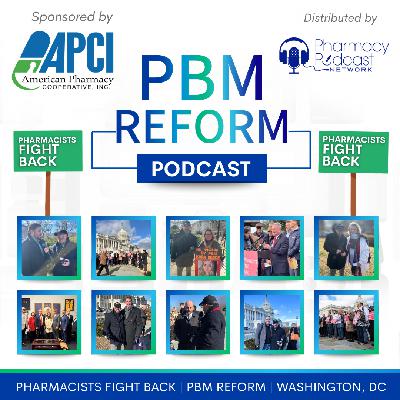
American Pharmacy Cooperative, Inc. (APCI) called on Congress on Thursday, December 11, 2025 to pass the reintroduced Pharmacists Fight Back Act, two coordinated pieces of federal legislation designed to reform pharmacy benefit manager (PBM) practices.
The Pharmacy Podcast Network provides exclusive coverage of the event held on Capitol Hill.
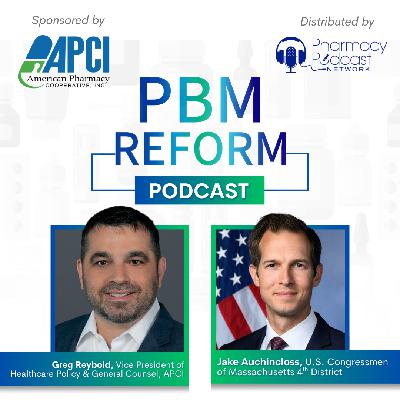
In this episode, Greg Reybold speaks with Jake Auchincloss, U.S. Congressman of Massachusetts 4th District.
This week on the PBM Reform Podcast, Breck L. Rice takes listeners inside a major new software upgrade designed to integrate directly with state-level PBM complaint and reporting systems. Breck also recounts his recent meetings with state Insurance Commissioners—where he presented this breakthrough technology while PBM lobbyists pushed back in real time, leaving community pharmacy with only one voice in the room standing up for them.
He underscores a critical issue that often goes unaddressed: while states continue to pass legislation aimed at PBM accountability, the real failures are happening in execution and enforcement. Without meaningful oversight, even the strongest laws fall short, and independent pharmacies continue to bear the consequences.
Dr. Robert Popovian is a pharmacist, and economist with a deep background in research and public policy. In this episode we have a nuanced discussion on policy impacting pharmacy including PBMs, President Trumps Most Favored Nation Executive Order, Rebates, and insurance premiums.
Links to resources referenced in discussion:
• Pioneer Institute, 340B tool: https://pioneerinstitute.org/340babuse/
• Pioneer Institute, IRA tool: https://pioneerinstitute.org/the-inflation-reduction-act-ira-overview/
• Editorial regarding TrumpRX: https://www.linkedin.com/pulse/promise-trumprx-robert-popovian-vskne/?trackingId=dtiG1P%2B%2BSDq6adLfFeEbeg%3D%3D
• Pioneer Institute, IRA report: https://pioneerinstitute.org/wp-content/uploads/Prescription-Drug-Price-Controls-06252025.pdf
• GHLF tool, Impact of Accumulators and Maximizers on Premiums: https://cutt.ly/Rr9Di7Vf
• Conquest Advisors website: https://conquestadvisors.godaddysites.com/
In this episode, we sit down with the President of the American Medical Association to discuss PBM reform and its impact on patients, physicians, and the future of healthcare. From drug pricing transparency to ensuring access to needed medications, this conversation explores why PBM reform is at the center of today’s healthcare policy debates.
Join our co-hosts Todd Eury and Greg Reybold in this exclusive interview with Conor Sheehey, who most recently served as senior health policy advisor to U.S. Senate Finance Committee Chair Mike Crapo (R-ID). In this role, he advised the Committee on a range of health care policy issues, including prescription drug pricing, telehealth, AI, provider coverage and reimbursement, fraud and abuse, medical devices, and Medicare Parts B and D. Sheehey led several bipartisan legislative efforts, including the development of comprehensive PBM reforms and bipartisan proposals on clinician payment reform and drug shortages.
In this relaunch of the PBM Reform Podcast, Greg Reybold returns with a powerful and timely conversation exploring how concentrated economic power—particularly in the form of Pharmacy Benefit Managers (PBMs)—is undermining fair access to prescription medications, driving up drug costs, and crushing independent pharmacies.
Greg is joined by Emma Freer, Senior Policy Analyst with the American Economic Liberties Project, a national non-profit and non-partisan organization dedicated to dismantling monopolistic control across critical sectors—including healthcare. Together, they dig deep into how PBMs serve as gatekeepers in the drug supply chain, extracting value at the expense of patients and providers, and how policy reform is urgently needed.
Emma outlines how Economic Liberties is driving a new wave of anti-monopoly policy momentum in healthcare by advocating for stronger antitrust enforcement, corporate accountability, and legislative transparency. She highlights how concentrated PBM power not only threatens economic fairness but undermines public health outcomes.
🧠 Key Topics Covered:
The history and unchecked growth of PBM power in the U.S. drug supply chain
Why market concentration among PBMs is a systemic risk to patient access and competition
What Economic Liberties is doing to pressure regulators and lawmakers for structural reforms
Why bipartisan PBM reform is gaining traction—and what’s at stake if we fail to act
How pharmacists, community leaders, and patients can join the movement for transparency and equity
💥 Why This Episode Matters:
PBM dominance is no longer just a pharmacy issue—it’s an economic justice issue. This episode sheds light on the structural forces keeping drug prices high and independent pharmacies on the edge. It offers a compelling call to action for healthcare professionals, lawmakers, and reform advocates to push back against monopolistic control and put patients first.
📢 Call to Action:
Visit www.economicliberties.us to explore their policy work and toolkits for reform advocates. Stay tuned to the PBM Reform Podcast as we bring together voices from across the healthcare and policy spectrum to fight for a fairer, more transparent system.
Follow, rate, and share the podcast—because real reform starts with awareness and ends with action.
Dr. William Soliman is the founder and CEO of the Accreditation Council for Medical Affairs (ACMA). The ACMA is America’s leader in life sciences accreditation, certification & training. Soliman is a former pharmaceutical executive who worked in leadership roles at Merck, Abbvie, Gilead and more. He is considered a pharma industry futurist and has been featured on NewsNation, Fox News, Newsmax, Forbes, Al Jazeera, Yahoo Business TV, ABC News Radio & more. The ACMA established the first ever certification standards in the United States and stands as a benchmark of excellence for prior authorization professionals, reimbursement professionals, pharmaceutical sales professionals, medical science liaisons and medical affairs professionals. Dr. Soliman received his PhD from Columbia University & his BA from New York University.
An insider’s look at the games PBMs play to hid fees and tack profits for community pharmacies. What a true transparent PBM should look like and why it matters.
Interview with the new CEO of the Arizona Pharmacy Association, Garet Turner

In this critical episode of the PBM Reform Podcast, we are joined by two influential voices leading the charge against abusive pharmacy benefit manager (PBM) practices:
State Representative Jake Auchincloss – Congressman from Massachusetts’ Fourth District
Greg Reybold – Vice President of Healthcare Policy & General Counsel, American Pharmacy Cooperative, Inc.
Topics Discussed:
The "Pharmacists Fight Back Act" (HB 9096):
Legislation Overview:
The bill proposes a transparent pharmacy reimbursement model based on:
Market-based pricing benchmarked to the National Average Drug Acquisition Cost (NADAC) plus a dispensing fee equivalent to each state’s Medicaid reimbursement or the lesser of 2% or $25.
Eliminating PBMs’ ability to restrict patient choice through network exclusions.
Ensuring rebate pass-throughs to patients directly at the pharmacy counter.
Prohibiting PBM practices that steer patients toward PBM-owned pharmacies, protecting community pharmacists and preserving patient choice.
Guest insights on how HB 9096 seeks to end exploitative PBM tactics and its potential impact on independent pharmacies nationwide.
The "Patients Before Monopolies Act":
Bipartisan Efforts:
Introduced by Senators Elizabeth Warren (D-MA) and Josh Hawley (R-MO) to dismantle PBMs’ monopoly power.
Co-sponsored by Representatives Jake Auchincloss (D-MA) and Diana Harshbarger (R-TN).
Key Goals:
Break up PBM ownership structures that lead to conflicts of interest.
Ensure fair reimbursement practices for all pharmacies, reducing patient drug costs and increasing healthcare access.
Discussion on the broader implications for federal programs and the pharmacy industry at large.
PBMs and Their Role in Driving Up Drug Costs:
Exploring how PBMs contribute to higher drug prices and diminished patient choice.
The detrimental effects of PBM practices on independent community pharmacies and patients enrolled in federal healthcare plans.
Call to Action:
Contact your legislators to express support for the Pharmacists Fight Back Act (HB 9096) and the Patients Before Monopolies Act.
Share this episode to spread awareness of the critical need for PBM reform.
Resources & Links:
Learn more about HB 9096 and its provisions:
https://www.congress.gov/bill/118th-congress/house-bill/9096
Support the Patients Before Monopolies Act:
https://www.drugtopics.com/view/long-awaited-pbm-reform-included-in-congress-end-of-year-spending-package
References:
Intro piece: "Senators Warren and Hawley introduce a bipartisan bill to break up pharmacy-benefit managers" via CNBC Television

An update from NDPhA and PBM Reform initiatives.

Openness. Competition. Transparency.
Unmask the twisted economics of the American health care system.
Price discovery — prior to care — allows patients to shop for care in a competitive market. It empowers them with the information they need to reduce their healthcare costs. And it encourages providers and insurers to compete for their business.
Report: Free2Care’s Rx for Reforming America’s Predatory Healthcare System A Physician-Led Roadmap to Patient-Centered Medical Care
https://free2care.org/files/report.pdf
The PBM-Insurer Mafia Comes for Community Pharmacies
UnitedHealth, CVS, and Cigna’s PBMs are using their market share and pull in Washington to drive one of the key levers to manage health care costs—independent pharmacies—out of business.
https://prospect.org/health/2024-03-21-pbm-insurer-mafia-community-pharmacies/
About David Balat:
David Balat is the founder of Healthcare Finance Specialists and has broad experience across the healthcare spectrum with special expertise in health care finance. He is a former seasoned hospital executive with over 20 years of healthcare industry leadership and executive management experience.
Balat has earned the privilege of being invited to testify before the U.S. House Committee on Oversight and Reform in Washington, D.C., and before various House committees in the Texas state Legislature. He is a published author and op-ed columnist in Newsweek, U.S. News & World Report, Real Clear Politics, and other news outlets. He is also an active speaker and commentator on matters of health policy, health care finance, and health care reform.
via decent.com
Pharmacy owner Tom DePietro, PharmD and Pennsylvania State Representative Jessica Behnam join the PBM Reform Podcast to discuss the major win for Pennsylvania tax payers and Pharmacy Care.
HB 1993 is the result of bipartisan efforts – led by state Rep. Jess Benham (D-36) – to ensure that Pennsylvanians are no longer being screwed and that access to local, independent pharmacies is maintained.
Gov. Josh Shapiro last week joined Pennsylvania Insurance Commissioner Michael Humphreys, members of the General Assembly and local pharmacists at Thompson Pharmacy in Blair County for a ceremonial bill signing of bipartisan reforms in the 2024-25 budget. The reforms aim to increase oversight of pharmacy benefit managers (PBMs), the hidden “middlemen” of the pharmaceutical supply chain who largely go unchecked and unregulated as they negotiate the price of prescription drugs, passing the costs down to Pennsylvanians.
Shapiro recently signed House Bill (HB) 1993 into law, providing stronger protections for commercially insured patients in the commonwealth and increasing regulatory oversight of PBMs.
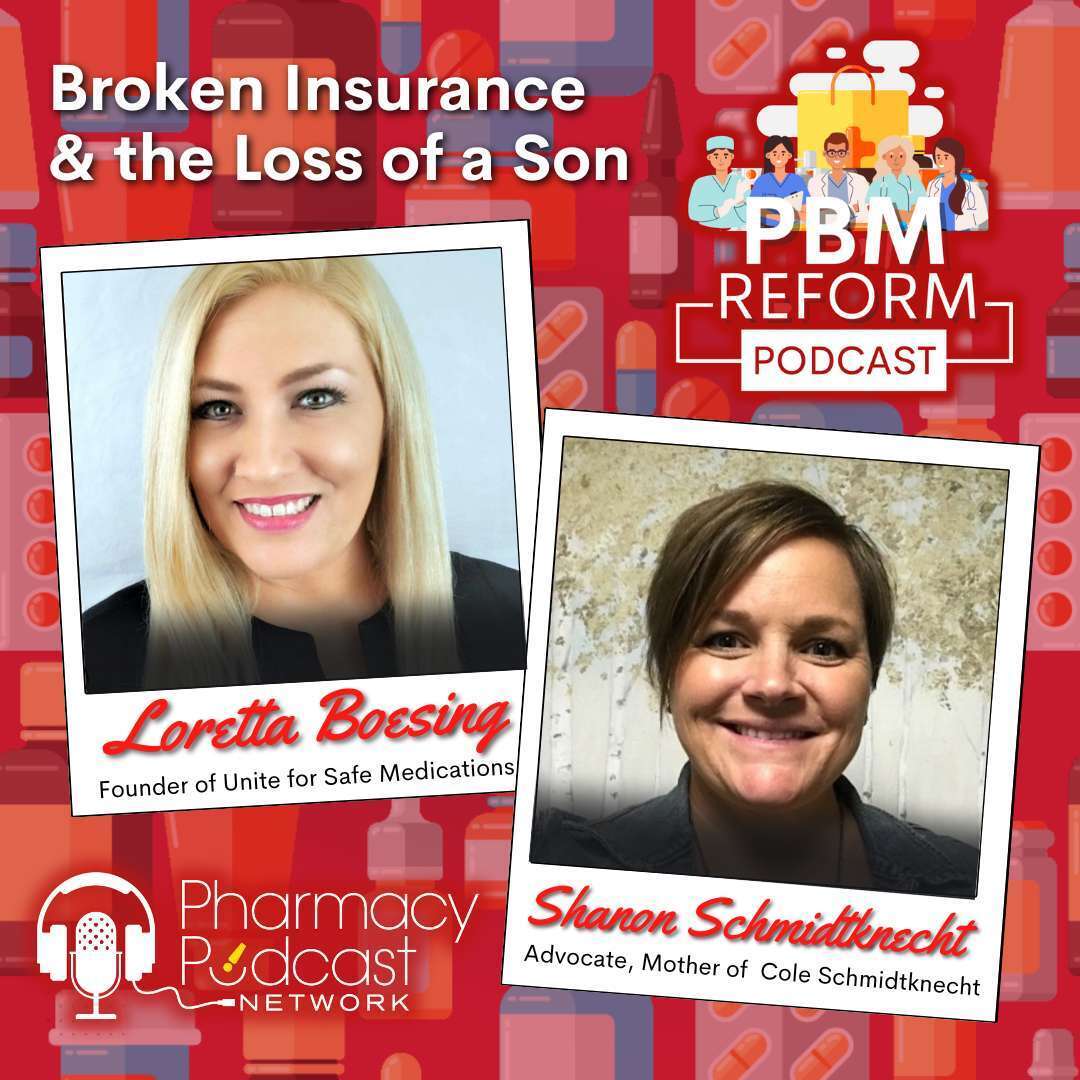
Special Guests:
Shanon Schmidtknecht & Loretta Boesing
Cole Schmidtknecht was a 22-year-old young man living in Appleton, Wisconsin who loved video games and sports. His parents Bil and Shanon described him as an inspirational free spirit with a love for being heard. Cole was diagnosed with severe asthma at only a year old. He had just recently moved out on his own with opportunities to chase his dreams, until his life was cut short earlier this year. “January 10th,, he went to the pharmacy to get his prescription and was told it was no longer covered by his insurance,” said Shanon.
He was told there was no alternative option and no generic drug would be covered. Cole didn’t know how to respond and couldn’t cover the extreme out-of-pocket cost of his Advair inhaler on a $19/hour income. An inhaler-dependent patient left the Walgreens Pharmacy with no medication. Five days later he suffered an extreme asthma attack and was taken to the hospital. He arrived at the Emergency Room lifeless and spent the next six days in the ICU on a ventilator.
“We were told he’s never going to wake up again,” said Bil.
A generic version of Advair only costs $15-$20. What happened to Cole is happening all over the country, according to Hometown Pharmacy co-founder Dan Strause.
“Unfortunately, we see even the state plan now no longer will allow for the generic, they force people into the brand. Why? It’s not hard to figure out it must be about the profit margin. Unfortunately, they’re making people decide between life-saving medicine [and paying bills, even though] the cost of the actual item is so low,” said Strause.
“We find this absolutely wrong, its infuriating we should all be angry, and we hope you tell your legislators this needs to be addressed sooner than later,” said Strause.
Hometown Pharmacy had to close a location in St. Germain partially due to the influence of PBMs. A pharmacy benefit manager acts as a middleman between drug manufacturers and pharmacies.
In the last state legislative session, the pharmacy benefit manager regulation bill wasn’t brought to a vote. The bill was designed to create transparency in the system and prohibit the PBMs’ control over the pharmaceutical industry as a whole.
“We’re very frustrated that it never got a chance to be voted upon,” said Strause.
Strause said there is a lot of speculation as to why the bill didn’t make it to the floor.
“In politics, there’s a lot of moving parts and we believe that the recent vote for Wisconsin mapping is part of it, because there’s a lot of energy and focus with what the next election is going to be and of course elections are very expensive, and you have to fund those elections.
Strause believes that money from lobbying groups associated with PBMs have a strong influence on lawmakers.
“Unfortunately, it means that money and influence is a significant factor in us passing bills especially ones that affect all of our lively hoods and our health,” said Strause.
Bil and Shanon said after learning of PBMs and the tactics that cost them their son they were angry and decided it was time to speak up.
“I don’t want you to ever have to imagine, I don’t want anyone to ever have to experience this,” said Shanon.
Their goal is to share Cole’s story and raise awareness.
“We just kind of feel like this is now our fight to fight for him. If we can prevent it for one other person just that alone would be a little solace or a little something I know we can never have our son back, he’s gone,” said Bil.
Cole’s situation is not the only one, and this could happen anyone. Everyday life saving medications are becoming inaccessible to patients who need them.
“We need our senators and our congressmen to help this process that’s why they’re there in office for our complaints, our concerns our needs and the games that are played are just costing lives,” said Bil.
From Shauna Johnson on Mar 11, 2024 via wjfw.com 3217 County G Rhinelander, WI 54501
Reference Webiste:
https://patientprotector.us/home

The PBM Reform Podcast on the Pharmacy Podcast Network, with your host, Breck Rice! Breck has had the privilege of being around and working with pharmacies for over 20 years! He loves community pharmacies and will do everything in his power to help them be successful. It’s a privilege to be involved in reforming the industry he loves. Today's guest is Kyle McCormick, owner of Blue Berry Pharmacy, in Pittsburg Aria, PA.
Kyle beats the PBMs by not joining them! He runs a cash-pay-only pharmacy, with no PBM contracts. Kyle believes that if more pharmacies would kick out the PBMs they would have to change their unfair ways and give better reimbursements.

Interview with Howard Danzig, President of Employers Committed to Control Health insurance Costs.


Comments

Download from Google Play

Download from App Store
 United States