


 Claim Ownership
Spatial Design Podcast
Subscribed: 0Played: 1
Subscribe

© Christophe Merkle
Description
Official Podcast of the BA Spatial Design from the Applied Sciences of Lucerne in Design Film Art hosted by the lecturer Christophe Merkle
15 Episodes
Reverse
Conversation with the new HSLU DFK BA Spatial Design Study Coordinator and transciplinary architectPersonal Website: https://oanas.net/Follow her on Insta: @oooooana
Hi!I hope you enjoyed the first episode. Thank you to those who sent me some feedback.For this second episode, I present to you the magazine INTRAMUROS. (It is a bilingual magazine, French/English.)I have had the issues on my desk for a few years now, and I've discovered a lot of things about many domains in design, architecture, and even mixology. Through the visions of new designers and artists, I've learned about my generation and my place in design.If you want to subscribe to Intramuros, here is the link (for students): https://shop.intramuros.fr/en/products/abonnement-etudiant-1-an?variant=47249110958422You can also buy the digital version of the January 2026 issue:https://shop.intramuros.fr/products/intramuros-n-226I hope you enjoy this new episode and that it makes you want to read the magazine and maybe subscribe to it. If you have any feedback or recommendations for the coming months, here is my Instagram: @mathil.designAnd the Spatial Design Instagram account: @hslu_spatialdesignI wish you good listening—and also a wonderful year 2026!Mathilde
Welcome to the first edition of On My Desk, the brand-new Spatial Design podcast. I’m Mathilde, your host for the show.My goal is to introduce you to new things (books, films, podcasts, etc.) that are always related to the themes of spatial design.In this first episode, I’m going to talk about a book that has been on my desk since the beginning of the year. What is a Designer: Objects, Places and Messages by Norman Potter.I have read it three times: once before my preparation class, once after, and once at the beginning of my Bachelor's degree in Spatial Design.This book covers all types of design practice (graphic design, object design and architecture).With concrete examples, it answers certain questions that I have asked myself since the beginning of my studies.Here is the link to the book on Goodreads:https://www.goodreads.com/book/show/1650837.What_Is_a_DesignerHere is the link to rent it at the library (HSLU DFK):https://rzs.swisscovery.slsp.ch/discovery/fulldisplay?docid=alma993346600105505&context=L&v…I hope you are going to enjoy this new series, and that I will make you want to read the book.And if you have any feedback… or a recommendation for the next Months, here is my Instagram:@mathil.designAnd Spatial Design’s Instagram account@hslu_spatialdesignHave a great listening and… maybe reading. Mathilde
Kelly Vero is a creative badass and disruptor in the realms of video games, storytelling, the metaverse, and beyond. With over 30 years of experience in the gaming industry, she is at the forefront of blending creativity with cutting-edge technology. As a technical founder, chief metaverse officer, and New York Times best-selling author, Kelly has contributed to legendary titles such as Tomb Raider, Final Fantasy X, X-2, and
Halo 3. She is also shaping the future of fashion with her company Nak3D. Website https://kellyvero.co.uk/
Dr.Barbara Mutzbauer is a lecturer in the BA Spatial Design of the HSLU DFK, interior architect (VSI.ASAI), scenographer and Creative Director at Aroma
Creative. Her work spans commercial events, cultural exhibitions, and immersive installations, blending form and content to create holistic, sensory rich
environments. A dedicated lecturer and mentor in Spatial Atmospheric Designs with experience across Europe and
Asia, she brings a deep understanding of how atmospheres connect perception, interpretation, and emotion.
Camille is an Art Director Designer at @noue.studio and @noue.image Blender 💛 Teacher at @domestika
www.camilleboldt.com
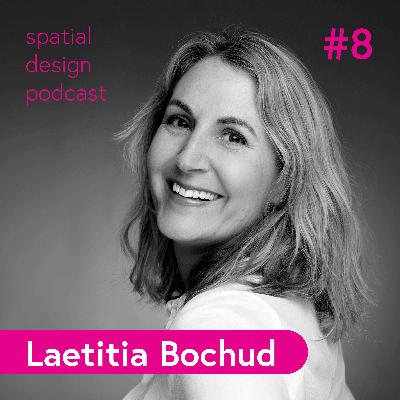
Laetitia Bochud is the president of
XR4Europe, and the lead of the IMPULSE Programme the European XR Accelerator
fostering the growth of creative and entrepreneurial projects. She currently
participates in the Sounding Board for advising the Swiss Film Fund revision, to include and raise the integration of immersive and spatial productions, from concept to distribution. She thus advocates at the Federal as much as at
cantonal levels.
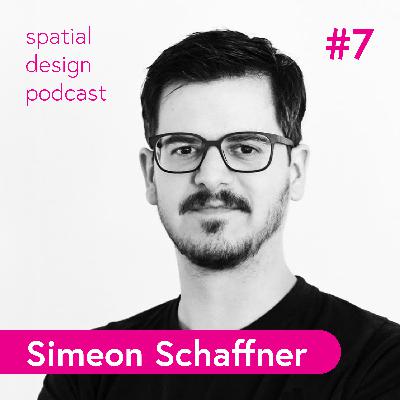
Simeon specializes in environment design, propdesign and illustration and provide the entertainment industry with concept design since 2016. His experience includes having worked on titles such as THE LAST OF US: Part II, UNCHARTED: The Lost Legacy, Call of Duty: mobile aswell as tv-series and indie-games alike. He recently worked with Axis animation studios on their cinematic trailers for Magic the Gathering and Dead Island 2.
Sonja Geier hat an der TU Graz Architektur studiert und über 10 Jahre als Architektin
in Neubau- und vorallem Sanierungsprojekten im Hochbau gearbeitet. Diese Zeit
prägte ihre methodische Haltung zu Prozessen in der Architektur sowie die
Bedeutung der Kollaboration zwischen den Disziplinen und auch zwischen den
Planenden und Ausführenden. 2008 stieg sie in die internationale Forschung ein
und setzte sich mit Themen zur Nachhaltigkeit und Energiefragen auseinander
und konkretisierte diese unter anderem in der Auseinandersetzung mit dem
Werkstoff Holz und Konzepte in der Vorfertigung im Holzbau. Die Leidenschaft
für den Entwurf blieb weiterhin bestehen und so begleitete sie weiterhin einige
Bauvorhaben in Konzeptionsphasen. 2012 erfolgte der Wechsel an die Hochschule
in Luzern an das Kompetenzzentrum Typologie& Planung in Architektur. Die Promotion
an der TU München 2018 führte ihre Themen Prozesse & Kollaboration im
Holzbau mit der Auseinandersetzung über die Komplexität in der baulichen
Umsetzung zusammen.
Aktuell ist Sonja Geier ist stv. Leiterin des Kompetenzzentrums Typologie & Planung
in Architektur (CCTP) an der Hochschule Luzern. Zudem ist sie Vorstandsmitglied
der Lignum Holzwirtschaft Zentralschweiz und Mitglied der EUSALP Action Sub
Group Wood. Sie ist in diversen Jurien tätig und hält national und
international Vorträge. Ihre Forschungsschwerpunkte an der Hochschule in Luzern
drehen sich aktuell um die Rolle Digitalisierung in der Planung, Gebäude- und
Strukturtypologien, die Umsetzung von Kreislaufwirtschaft im Bau, die
integrative Kollaboration in der Wertschöpfungskette Wald- Holz, uvm.
Wesentlich ist dabei die methodische Haltung: Innovation entsteht durch die Verbindung der
Disziplinen und deren unterschiedlichen Realitäten.
Forschungsprojekt circularWOOD am Hub Architektur
Link: https://sites.hslu.ch/architektur/circularwood/
Der Schlussbericht steht zum Download vom Hub Architektur zur Verfügung:
Schuster, Sandra; Geier, Sonja, 2023: circularWOOD:
Paradigmenwechsel für eine Kreislaufwirtschaft im Holzbau.
BBSR-Online-Publikation 15/2023, Bonn.
Weitere Basiswerke:
ARCH+, The Great Repair – Politiken der Reparaturgesellschaft. Ausgabe 250/2022. ISSN 0587-3452.
Online verfügbar unter: https://archplus.net/de/archiv/ausgabe/250/
F. Heisel & D. E. Hebel (Hrsg.), Urban Mining und kreislaufgerechtes Bauen: Die Stadt als Rohstofflager,
Fraunhofer IRB Verlag.
Hebel, D. E.,
Heisel, F. & Webster, K. (2022). Kreislaufgerechtes
Bauen und Kreislaufwirtschaft. Besser – Weniger – Anders Bauen. Birkhäuser.
https://www.degruyter.com/isbn/9783035621082
Hillebrandt, A., Riegler-Floors, P., Rosen, A. & Seggewies, J.‑K. (Hrsg.).
(2018a). Edition Detail. Atlas Recycling: Gebäude als
Materialressource. Detail Business Information GmbH.
http://shop.detail.de/de/atlas-recycling.html
Rau, T. & Oberhuber, S. (2018). Material matters: Wie wir es schaffen, die
Ressourcenverschwendung zu beenden, die Wirtschaft zu motivieren, bessere
Produkte zu erzeugen und wie Unternehmen, Verbraucher und die Umwelt davon
profitieren (I. Wilhelm, Übers.). Econ.
Stricker, E., Brandi, G., Sonderegger, A., Angst, M., Buser, B. &
Massmünster, M. (Hrsg.). (2021). Bauteile wiederverwenden: Ein Kompendium zum zirkulären
Bauen. Park Books.
Stockhammer, D. (Hrsg.). (2020). Positions. Upcycling: Reuse and repurposing as a
design principle in architecture = Upcycling : Wieder- und Weiterverwendung als
Gestaltungsprinzip in der Architektur. Triest; Institut für Architektur und
Raumentwicklung der Universität Liechtenstein.
Mond Qu is a multidisciplinary designer and the founder of United Make - a creative studio that specializes in human experiences, products and stories. Mond pushes the frontiers of design through the act of making; from deep materials research, visceral immersive experiences, interactive artworks or modular furniture, to large-scale speculations. Being an international keynote speaker from TedX, Wired For Wonder and Universities Mond challenges designers to innovate and embrace the challenges of the 21st century.
https://iart.ch
Valentin Spiess, a qualified electrical engineer, has been working in the field of new media since 1993. At first he created media installations in cooperation with artists and was the technical manager for various festivals and theatrical productions. In 2001 he set up the company iart as an engineering office for the planning and realisation of media projects. In the same year he and a small interdisciplinary team realised the media for the Museum of Communication in Berne and then created the media effects for the Mercedes Benz Museum in Stuttgart. iart's activities encompassed hardware and software development and the conception, planning and realisation of media. Today Valentin Spiess heads a team of over 40 people specialised in the conception, planning and execution of media solutions for exhibitions, museums, architectural projects and outdoor spaces.
Space Popular is a research driven architecture, design, and media studio that explores the future of spatial experience through virtual reality, film, exhibitions, speculative writing, as well as buildings and objects. Space Popular is directed by Lara Lesmes & Fredrik Hellberg.
Website: http://www.spacepopular.com/
Instagram: https://www.instagram.com/spacepopular/
References:
https://en.wikipedia.org/wiki/Marshall_McLuhan
https://en.wikipedia.org/wiki/Jane_Jacobs
https://www.amazon.com/Reality-Virtual-Worlds-Problems-Philosophy/dp/0393635805
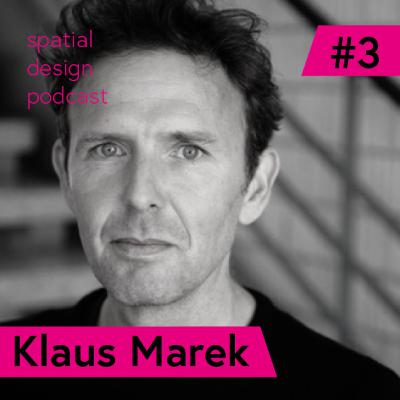
Klaus Marek studierte Produktgestaltung an der Hochschule für Gestaltung Schwäbisch Gmünd und Architektur an der Universität Stuttgart. Als Produktgestalter wirkte er im Ulmer Büro Produkt Entwicklung Roericht an verschiedenen Studien und Entwerfen-vor-Ort-Projekten mit und arbeitete im Trendbüro Hamburg bei Mathias Horx in der Trend- und Zukunftsforschung. Im eigenen Designbüro konzipierte er innerhalb verschiedener Kooperationen unter anderem neue Schreibgeräte für die Firma Stabilo oder ein Schalterprogramm der Firma Somfy mit Schwerpunkt Benutzerführung. Als Architekt arbeitete er im Basler Architekturbüro Herzog & de Meuron an Projekten unterschiedlicher Massstäbe – unter anderem als Leiter des Designteams für ein Forschungs- und Laborgebäude der Firma Roche, bei dessen Entwicklung die Bedürfnisse verschiedenster Nutzergruppen sowie komplexe technische Anforderungen integriert werden mussten. 2010 machte er sich als Architekt und Gestalter selbständig und verfolgt bei der Bearbeitung von Entwurfsaufgaben einen stark nutzerzentrierten Ansatz. Daneben lehrte er als Dozent für Produktgestaltung und Prozessgestaltung im Bachelor an der Hochschule für Gestaltung Schwäbisch Gmünd. Seit Herbst 2015 ist er Dozent für Product Design, Service Design und Design Methoden im Master Design sowie Forscher im Compentence Center Visual Narrative an der Hochschule Luzern – Design & Kunst. Seit Februar 2020 ist er Leiter des Bachelor Spatial Design
Lieblingsbücher
This is Service Design Doing - Marc Strickdorn https://www.orellfuessli.ch/shop/home/artikeldetails/A1037849895
Die Tücke des verbesserten Objekts - Adolf Muschg
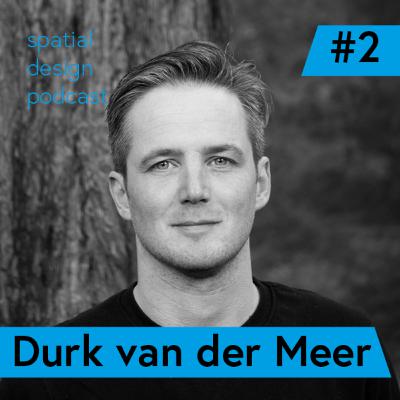
Durk van der Meer (1978) Freelance digital artist living in Curacao, an island in the caribbean.
He started out as an architectural visualizer and gradually shifted to becoming a virtual world builder, creating levels, characters and other assets for games, animations and installations.
Clients include Cannes filmfestival, TIME magazine, Sky, EDC festival, Redbull, Amazon Sumerian, Absurd:joy, GSMA, Bosbros, GravitySketch.
Currently artdirector and creator for Akudreams project and Artifex Project
Also creating cryptoart on: https://superrare.co/durkatwork
My primary tools are GravitySketch, Unity3d, Photoshop, AfterEffects, SubstancePainter, 3dsmax, Unreal, Sculptris, Ableton.
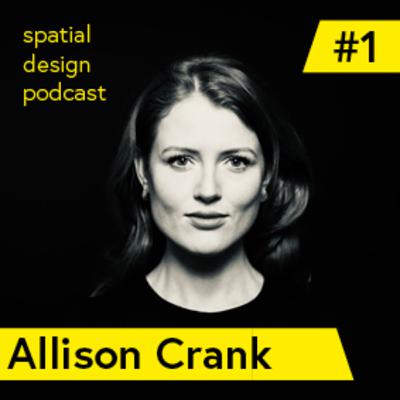
AllisonCrank is a UX Designer & Researcher exploring the intersection of art, technology, and architecture. As a designer specializing in interactive storytelling with new media such as immersive games and experiences in VR, she's worked with clients including Pix.T, Worldcrunch, Noor, Google, AtlasV, Albyon, MIT, La Biennale Venice, and the UN.
In the BA Spatial Design she's teaching Architectural Theory, UX/UI in VR, Project Management for immersive Experiences and many more topics. She has BA in Architecture, Master in Contextual Design and Masters of Advanced Studies in Design Research for Digital Innovation
Comments


Download from Google Play

Download from App Store
 United States