


 Claim Ownership
Fund Your Future with DRS
Subscribed: 16Played: 143
Subscribe

© Copyright 2022 All rights reserved.
Description
A large part of planning for the future starts with how you approach your finances today. Explore some of the basics of financial planning, tools for managing your money and ideas for sparking conversations with friends and family. Join Retirement System employees as they tackle the stigma around money and share their personal financial journeys.
85 Episodes
Reverse
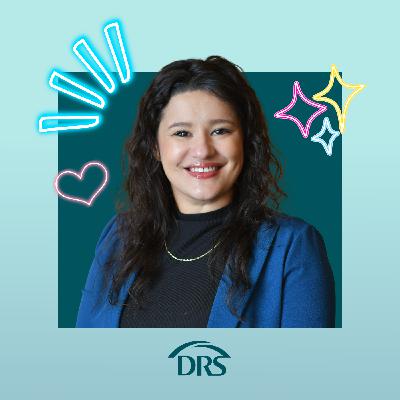
Growing up, Malia often heard a simple message about money: Don’t spend it. Over time, she’s come to see just how much more nuanced financial decisions can be. Now the DRS Defined Contribution Plan Manager, Malia reflects on a 20-year career and the lessons she’s learned from working with real people. From starting small and automating savings to prioritizing health and flexibility, she offers a thoughtful perspective on preparing for retirement.

Taking care of your health might be one of the smartest financial moves you can make. In this episode, we talk with Heather from the Washington State Health Care Authority (HCA) about preventive screenings and care available to employees enrolled in PEBB and SEBB plans. Many services including well visits, immunizations, mammograms, and colorectal cancer screenings have no out of pocket cost. We discuss when screenings are recommended as you get older and why some important ones are often forgotten.
More information: https://www.hca.wa.gov/employee-retiree-benefits

As you get older, it’s important your adult children understand your finances, so they’re not left guessing if something happens. DRS team member Adam recently had this conversation and shares important things to cover when planning your estate.

Sometimes, confidence in your future can bring peace of mind in the present. That’s been Seth’s philosophy when it comes to saving for retirement. After starting early with a Roth IRA and planning to retire in his mid-40s, Seth shares why he’s still working and why helping people at DRS is so meaningful to him. From a daily running habit, to making homemade pizza each week, he offers a thoughtful look at planning ahead.

In this special episode, the mic gets turned around. Jenny steps down from the host chair as co-worker Christine interviews her about how the conversations she’s had on the show have shaped her own habits and view of retirement. She shares what she hopes listeners take away from the show beyond dollars and cents.

Your retirement health may depend on your social life. In this episode, we unpack the Kevin Bacon Rule of Retirement: why staying connected after you leave the workforce could be one of your most powerful retirement strategies. We chat with DRS team member Mike about his plans for staying connected in retirement.
Thousands of DRS customers log in every day to manage their retirement, so keeping those accounts secure matters. We’re joined by Michael from our Contact Center to walk through recent online security updates including removing email as an MFA option and adding the ability to use authenticator apps. He shares simple steps you can take to help protect your identity online.
Want to save more for retirement in 2026? In this episode, we break down the new Deferred Compensation Program (DCP) limits: $24,500 annually, or $32,500 if you’re age 50+ and even more if you’re within 3 years of retirement. Find out how pretax and Roth contributions work together - what counts toward the limit and what doesn’t - so you can make the most of your savings next year.
What if one conversation could change your financial future? We talk with Anthony, a Yakima School District leader whose passion for retirement education stems from his family history and years in labor advocacy. He shares how his path from delivery driver to union rep to HR leader shapes his mission to help school employees understand their benefits, start meaningful conversations about saving, and navigate the unique challenges of planning for retirement.
Every two years, contribution rates for Washington’s retirement plans change and that can raise questions. When a relative asked Amber why employer rates went down, she realized it’s just as important to understand decreases as increases. In this episode, we unpack how these rates are set, why they fluctuate, and how you can feel confident that Washington’s pensions remain a reliable, guaranteed source of income.
If you have a DCP or Plan 3 investment account, you're required by the IRS to withdraw a minimum distribution (RMD) from your pretax balance when you reach age 73. We take a look at how the amount you're required to withdraw is calculated. We also look at special cases like inherited accounts and exceptions for those still working.
There are a lot of reasons people choose to convert money within their DCP account from pretax to Roth option. We discuss the process of how this is done as well as the pros and cons, including timing and tax rules.
Sometimes people get overwhelmed trying to find the “right” financial advice. But for a simple and effective method, look no further than "The Simple Path to Wealth" by JL Collins. His three core rules - spend less than you earn, invest the extra in low-cost index funds, and avoid debt - have become a strong foundation for those looking to grow financially. We discuss Collins’ approach to compound interest and simplifying your finances.
Washington state has some of the strongest-funded pensions in the nation. In this episode, we sit down with Washington State Actuary, Matt Smith, to unpack why the Law Enforcement Officers' and Fire Fighters' (LEOFF) Plan 1 has an expected surplus. Matt breaks down simple ways to measure pension health, why LEOFF 1 now looks more like an endowment, and the policy and legal questions lawmakers face when deciding how to use expected surplus pension funds.
What does it really mean to retire early? Is it about leaving work behind completely, or is it more about creating flexibility, freedom, and balance sooner rather than later? We’re joined by Christine, a DRS employee who’s been carefully planning for her future since her mid-20s. She shares how her perspective on retirement has evolved: from imagining it as “stopping work altogether” to thinking about it as a chance to downshift: maybe working part-time, pursuing a different role, or finding new ways to stay engaged without the 9-to-5 grind.
The term micro-retirement is becoming popular with people of all ages. The idea involves stepping away from the workforce for an extended period to pursue passions, travel, recharge, or learn new skills, essentially hitting the reset button on life. We look at perspectives and planning strategies to help you make micro-retirement a viable, enriching option.
If you’ve ever seen the name Voya Financial with your DCP or Plan 3 account and wondered what they do, this episode is for you. We look at the role of a record keeper: helping process transactions, maintain accounts, and support over 400,000 customers! We also look at what record keepers don’t do and how they differ from investment managers. Tune in to find out how record keepers play a key role in making your retirement accounts run smoothly.

Why do pensions sometimes go up? In this episode, we talk with Matt Smith, the state actuary, about COLAs (Cost of Living Adjustment) and how it’s tied to inflation. Matt explains how prices are tracked using the Consumer Price Index for Urban Workers (CPI-U) and why that matters for your pension. We also look at why COLAs are based on prices in the Seattle area, even if you live somewhere else. Tune in to find out how inflation and COLAs work together to shape your retirement income.
If you ever wanted a quick way to estimate how many years it’ll take for your investments to double, take 72 and divide it by the interest rate. In this episode, we explore how this a great way to think about the power of compound interest. If you’re early in your career, it may encourage you to set aside more money now. And if you’re close to retirement, it can be reassuring to know your investment could double in the next 7-10 years.
You have options when it comes to accessing your DCP funds. In this episode, we cover smart ways to manage your funds, including monthly payouts, rollovers, lump sums and annuities. Plus, find out about required minimum distributions, emergency access and managing beneficiaries.
Resources:
Withdrawals in retirement calculator
DCP Roth vs pretax calculator
DCP savings calculator

Comments

Download from Google Play

Download from App Store
 United States