


 Claim Ownership
Transformational Thinkers with Sara Sheehan
Subscribed: 3Played: 46
Subscribe

© 2026 Sara Sheehan Consulting, LLC
Description
The business world is brewing up a storm. Let's thrive in these extraordinary times together! This is a clarion call to Transformational Thinkers across the globe who are ready to rise up and successfully lead change in their teams.
Every other week, Change Consultant Sara Sheehan talks with leaders and experts to spotlight real-world stories in the change management space. You will walk away with the latest change strategies to empower your employees, enhance your creativity and communication, and establish your legacy as a leader in business.
Every other week, Change Consultant Sara Sheehan talks with leaders and experts to spotlight real-world stories in the change management space. You will walk away with the latest change strategies to empower your employees, enhance your creativity and communication, and establish your legacy as a leader in business.
61 Episodes
Reverse
In this thought-provoking episode, Sara Sheehan delivers a strategic and human-centered perspective on artificial intelligence and its impact on business, leadership, and society. She emphasizes that AI is not autonomous. It reflects the priorities and decisions of those who design and deploy it.
The Transformation of Work Requires Human Leadership
AI is reshaping how work is structured across industries. However, the true challenge is not automation. It is ensuring that humans remain in control of how work is defined and valued.
Sara highlights that leading organizations will:
Design roles where AI enhances human capability
Maintain human authority in ethical and complex decision-making
Prioritize long-term value creation through people development
As routine tasks become automated, human value shifts toward leadership, creativity, trust building, and ethical governance.
Education Must Evolve to Develop Leaders
To support this shift, education systems must prioritize:
Critical thinking and adaptability
Leadership and communication skills
Ethical reasoning and responsible AI use
Sara reinforces that developing capable, self-aware leaders is essential for navigating an AI-integrated future.
Economic Systems Require Active Human Stewardship
AI will unlock unprecedented productivity, but economic outcomes will depend on how leaders design systems around it.
Key leadership responsibilities include:
Building sustainable business models
Encouraging entrepreneurship and innovation
Strengthening the link between business success and community well-being
Healthy economies are not automatic. They are intentionally created and sustained by leaders.
Preserving Human Agency in an AI-Driven World
One of the greatest risks is over-reliance on AI systems. Sara stresses that humans must retain accountability and decision-making authority.
Organizations must:
Ensure transparency in AI systems
Develop leaders who can interpret and challenge AI outputs
Reinforce cultures that value human judgment
Agency is not preserved by default. It requires disciplined leadership and continuous awareness.
Redefining Meaning and Purpose Beyond Work
As AI reshapes traditional career structures, individuals must actively define meaning and purpose.
Sara explores how fulfillment will increasingly come from:
Relationships and community engagement
Creative and intellectual pursuits
Personal values and deeper philosophical foundations
Organizations that support the whole person will build stronger, more engaged teams.
Adapting to Rapid Change with Resilience
The pace of change is accelerating, placing new demands on individuals and organizations.
To thrive, leaders must focus on:
Continuous learning and reinvention
Mental and physical well-being
Strong community connections and support systems
Resilience is built through both individual capability and collective strength.
__
Key Moments
00:00:03 Introduction to AI Leadership and Human Responsibility
Sara Sheehan introduces the core theme of leading in an AI-driven world, outlining why human decision-making, values, and leadership will define the future of business transformation.
00:02:13 The Five Biggest Concerns in an AI-Driven World
An overview of the key challenges facing humanity, including workforce disruption, economic shifts, and the need for intentional leadership in AI integration.
00:02:50 AI and the Transformation of Work
Explore how artificial intelligence is reshaping jobs and why leaders must design roles that elevate human contribution rather than replace it.
00:03:40 The Evolving Role of Human Skills in Business
Why leadership, creativity, trust building, and ethical governance are becoming the most valuable skills in an AI-powered economy.
00:04:33 Rethinking Education for the Future of Work
How education systems must evolve to develop adaptable, self-aware leaders with critical thinking and AI integration skills.
00:05:30 Supporting Workforce Performance and Well Being
The importance of executive coaching, leadership development, and wellness programs in sustaining performance during rapid technological change.
00:06:00 Designing Economic Systems in the Age of AI
Why economic growth, entrepreneurship, and community stability depend on human stewardship and intentional system design.
00:06:56 The Role of Business Leaders in AI Integration
How CEOs and executives must take responsibility for aligning AI adoption with long-term talent development and organizational strength.
00:08:00 Preserving Human Agency and Decision Making
A critical look at maintaining human oversight, accountability, and transparency in AI-driven environments.
00:09:25 Leadership, Critical Thinking, and AI Governance
Why leaders must challenge AI outputs, reinforce organizational values, and build cultures that prioritize human judgment.
00:10:30 Redefining Meaning and Purpose Beyond Work
How individuals and organizations must cultivate purpose through community, relationships, and values in a shifting work landscape.
00:12:07 Building Resilience and Adapting to Rapid Change
Strategies for continuous learning, mental wellness, and community connection to thrive in an accelerating AI-driven world.
__
Contact Sara Sheehan | Sara Sheehan Consulting:
SaraWSheehan.com
Sara Sheehan on LinkedIn
Meet with Sara
Submit Questions or Feedback to Sara
Hosted by Simplecast, an AdsWizz company. See pcm.adswizz.com for information about our collection and use of personal data for advertising.
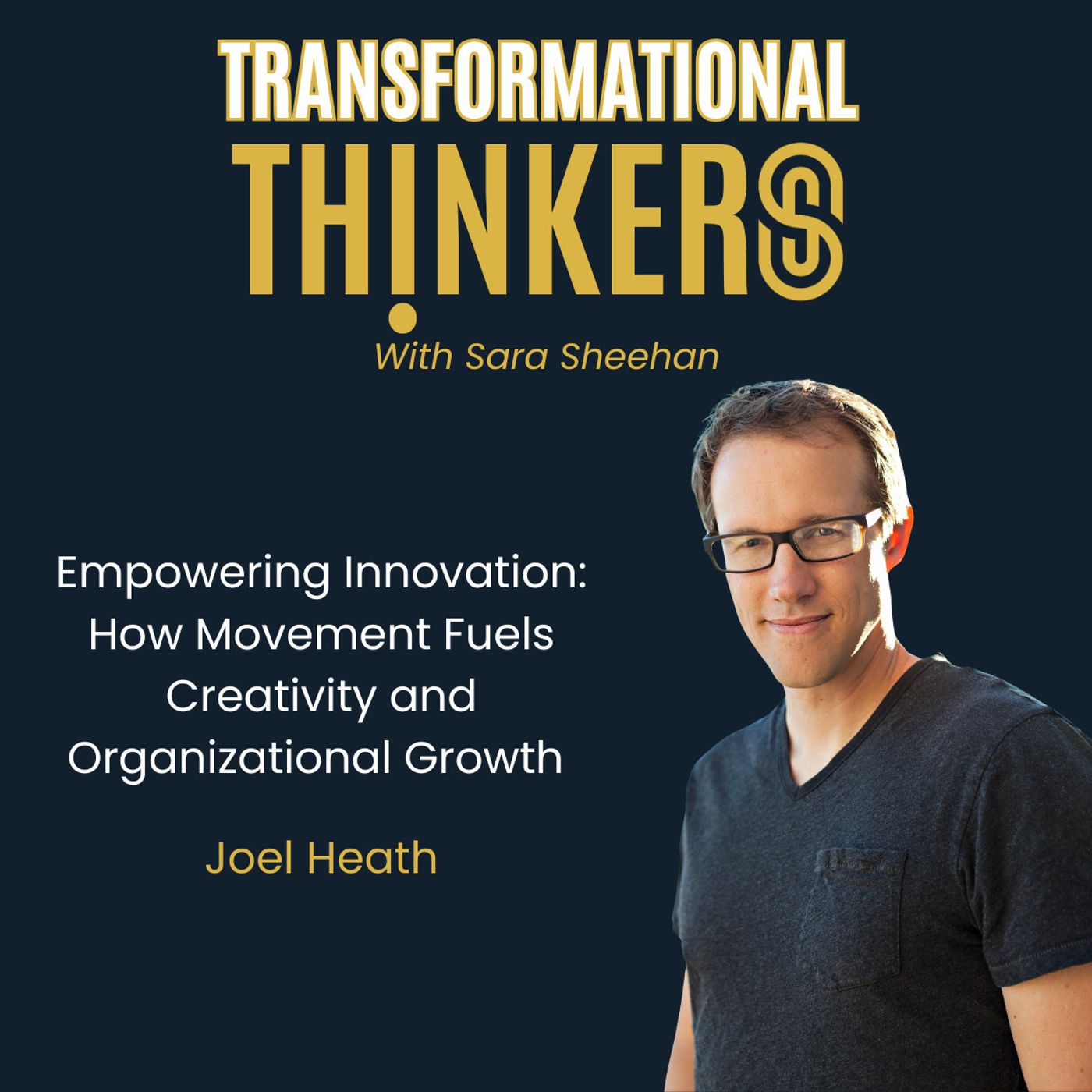
What if the key to unlocking innovation and leadership performance is as simple as movement?
In this compelling episode of Transformational Thinkers with Sara Sheehan, Sara welcomes Joel Heath, entrepreneur, innovator, and CEO of FluidStance, a company focused on creating products that bring movement into the workplace.
Joel shares his transformative journey from concept to company, illustrating how his innovative leadership is reshaping our understanding of workplace culture and education. As we explore the challenges many face in static environments, Joel candidly reflects on his experiences as a father witnessing his son’s transition from a playful preschool to a rigid kindergarten. This pivotal moment ignited his passion for creating products that promote movement and enhance creativity. Joel set out to design solutions that restore dynamic movement in modern workspaces. The result was FluidStance, a brand built on the belief that physical movement fuels cognitive performance, emotional engagement, and innovative thinking.
He highlights the critical role of innovation in fostering environments that empower employees, emphasizing how physical activity can lead to greater productivity and a thriving workplace culture. One of the most powerful frameworks he discusses is the 70-20-10 innovation model, which allocates resources across three strategic areas.
Seventy percent should focus on the core business that drives revenue today.
Twenty percent should support adjacent innovations that expand existing offerings.
Ten percent should fund transformational ideas that shape the long-term future.
Throughout our conversation, we touch on essential themes such as the delicate balance between innovation and operational stability, the importance of teamwork, and the cultivation of a culture that embraces both performance and play. Joel’s insights into leadership excellence and transformational leadership provide valuable lessons for executives and aspiring leaders alike, offering a roadmap for navigating the complexities of organizational growth and business transformation.
We also delve into the challenges of over-innovation and the necessity of emotional intelligence in leadership. Joel’s perspective on maintaining a dynamic balance in life and business serves as a clarion call for all leaders striving for real-world change. He shares actionable strategies for enhancing communication in leadership and optimizing talent, ensuring that organizations not only adapt but thrive in extraordinary times.
This episode is a treasure trove of insights for anyone interested in change management, employee empowerment, and the transformative power of creativity in the workplace. Joel emphasizes the value of what he calls the one percent rule, intentionally safeguarding a small portion of time dedicated to reflection, exploration, and renewal. This protected time often leads to breakthrough ideas and deeper clarity for leaders. Join us as we uncover the innovative leadership strategies that can help you and your organization master change management and achieve audacious goals.
This episode offers a powerful perspective for leaders embracing innovation, driving meaningful change, and facilitating business growth in a rapidly evolving business landscape.
If you are ready to rethink how leadership, creativity, and performance intersect, this episode will challenge you to move forward in new ways. Don’t miss out on this opportunity to learn from one of the brightest business executives in the world.
Key Moments:
00:00:00 – Movement Sparked the Business
A personal pain point led to FluidStance—and a new way of thinking about work and performance.
00:01:40 – The Problem with “Sit to Focus”
Why traditional environments suppress energy, creativity, and human potential.
00:03:20 – Why Movement Improves Thinking
How physical movement unlocks better ideas, clarity, and collaboration.
00:04:45 – When You Lose Your Creative Edge
Joel shares how stillness in corporate life drained his energy—and how he reclaimed it.
00:05:50 – Entrepreneur vs. Artist Mindset
Why embracing creativity changed how Joel leads, builds, and innovates.
00:08:10 – Creativity Needs Structure
The balance between big ideas and execution—and why both are essential.
00:09:10 – The Athlete Mindset in Business
Applying performance metrics and discipline to long-term business success.
00:10:25 – The Truth About Building FluidStance
Early wins, scaling challenges, and lessons from growing a product company.
00:12:40 – The Danger of Too Many Ideas
Why over-innovation creates chaos—and how focus drives real growth.
00:15:35 – The 70-20-10 Growth Framework
A proven model for balancing core operations, expansion, and future innovation.
00:20:30 – Designing Workplaces That Move
How to create environments that support physical, emotional, and intellectual flow.
00:22:35 – Avoiding Chaos or Stagnation
Finding the balance between innovation and stability without burning out.
00:24:20 – Why Play Is a Leadership Advantage
How play, movement, and shared experiences strengthen teams and ideas.
00:28:30 – The 1% That Drives Performance
Protecting energy, recovery, and meaningful moments for sustained success.
00:36:15 – Grit, Growth, and What Leaders Leave Behind
Redefining grit and embracing dynamic balance as the true legacy of leadership.
About Joel Heath:
Joel Heath is a consumer brand and product architect, front-end innovator, and CEO. He develops insight-led strategies that shape category-defining products, reposition brands, and drive growth with purpose. He is the Founder and CEO of FluidStance, and he also advises companies in the biotech and outdoor categories. FluidStance is reimagining the workplace by bringing movement, energy, and well-being into static environments. Joel is also taking on select fractional and board roles where he can contribute to brand, product, and growth strategy within his leadership role.
Previously, he helped lead the turnaround of Teva as part of the Deckers Brands (NASDAQ: DECK) leadership team. His first successful exit was an experiential brand agency in Vail, Colorado, where they created campaigns for Volkswagen, Native Eyewear, Payday Candy Bars, and Sports Illustrated. Joel conceived of and created the GoPro Mountain Games, the largest outdoor adventure event in the world, broadcast on NBC and CBS. In addition to athletic events, the GoPro Mountain Games include a mountain photography competition, adventure film school, film festival, interactive exhibition, live music, and mountain lifestyle parties.
Joel works as a strategic advisor, helping organizations clarify their why, develop disruptive product concepts, and build authentic connections with their audiences. His leadership spans startups, global brands, and purpose-driven organizations, with a focus on long-term value creation.
Beyond business, he is a founding board member of First Descents, a nonprofit that delivers life-changing outdoor experiences for young adults surviving cancer and other serious health challenges.
__
Resources discussed in this episode:
The 70-20-10 Innovation Framework
“Grit” by Angela Duckworth
__
Contact Joel Heath | FluidStance:
Website: FluidStance.com
Joel Heath on LinkedIn
Contact Sara Sheehan | Sara Sheehan Consulting:
SaraWSheehan.com
Sara Sheehan on LinkedIn
Meet with Sara
Submit Questions or Feedback to Sara
Hosted by Simplecast, an AdsWizz company. See pcm.adswizz.com for information about our collection and use of personal data for advertising.
What if the key to thriving in the age of AI lies not in reducing your workforce but in empowering it? In this solo episode of Transformational Thinkers with Sara Sheehan, host Sara Sheehan delves into the often-overlooked truth about the role of employees amidst the rise of agentic AI systems and AI oversight.
Agentic AI systems do not simply automate tasks. They reshape the economics of work, speed, scale, and consequence. While many leaders focus on cost reduction and role replacement, Sara makes a compelling case that AI transformations actually increase the strategic importance of employees.
Why? Because autonomous systems amplify whatever infrastructure they inherit. Broken workflows, poor data governance, unclear decision rights, and cultural fragmentation do not disappear with AI. They accelerate.
This episode walks through the ten highest impact contributions employees make during an agentic AI transformation. Listeners will gain insights into leadership excellence and transformational leadership, discovering how to foster a workplace culture that nurtures employee empowerment and talent optimization. Sara shares real-world change stories that highlight the transformative power of viewing AI oversight not as a workforce reduction tool but as a workforce multiplier that enhances human capabilities. This episode is packed with change management strategies and innovative leadership insights that will inspire leaders to embrace a growth mindset and cultivate creativity within their teams.
The Ten Highest Value Human Contributions in an AI Transformation
1. Conducting Rigorous Process Reviews
Before automation, employees surface hidden inefficiencies, bottlenecks, and failure points. They map how work truly happens, not how it appears in documentation. For CEOs, this is margin protection and scalability engineering.
2. Data Cleanup and Governance
AI systems are only as reliable as the data they consume. Employees safeguard decision infrastructure through data normalization, ownership definition, and governance discipline. This is enterprise risk management in action.
3. Human Oversight of Autonomous Systems
Autonomous systems introduce a new category of risk: invisible error at machine speed. Employees monitor outputs, detect anomalies, manage model drift, and intervene in high-impact decisions. Oversight enables controlled acceleration rather than uncontrolled exposure.
4. Exception Handling and Contextual Judgment
Business reality is complex and dynamic. Employees protect value at the boundaries where AI struggles, including ambiguous ethical situations, regulatory shifts, and strategic trade-offs. Automation scales the process. Humans scale judgment.
5. Training and Refining AI Agents
Employees transform generic AI into a proprietary advantage. Through feedback loops, domain corrections, and system refinement, they align AI capabilities with competitive context.
6. Cross-Functional Translation
Agentic AI transformations often stall due to silos. Employees who bridge operations, finance, legal, IT, and customer experience create coherence. They translate technical capability into business outcomes and reduce political drag.
7. Identifying High Value Automation Opportunities
Not all automation creates ROI. Employees closest to the work distinguish between high-leverage opportunities and novelty projects. Their insight strengthens capital allocation discipline.
8. Driving Change Adoption and Cultural Stability
AI adoption is psychological as much as technical. Employees stabilize performance during uncertainty by modeling new behaviors and reducing resistance through understanding.
9. Risk Detection and Ethical Safeguards
Bias, compliance conflicts, and unintended consequences can scale rapidly in AI environments. Employees serve as early detectors, integrating human values and organizational norms into governance frameworks.
10. Continuous Improvement and System Evolution
An agentic AI transformation is not a project with an end date. It is a continuous capability shift. Employees drive iterative refinement, integration expansion, and performance optimization, ensuring AI becomes a compounding advantage rather than a depreciating tool.
As you listen, consider how you can implement these innovative leadership approaches, communication strategies and change management techniques to engage your stakeholders effectively. Whether you are a CEO, CHRO, or a leader in human resources, this episode offers invaluable perspectives on navigating the future of work and driving organizational change.
Sara leaves leaders with a powerful question:
The issue is not how many roles AI will replace. The issue is how to maximize the unique value humans contribute alongside autonomous systems.
High-performing organizations treat employees as co-architects of transformation. They elevate people into roles as designers of intelligent workflows, stewards of data integrity, governors of autonomous systems, and guardians of judgment and ethics.
AI may redefine industries. But organizations that win will deliberately cultivate the human capabilities that AI cannot replicate: contextual reasoning, ethical discernment, adaptive thinking, and strategic judgment.
Technology transforms organizations. People determine whether that transformation creates enterprise value or destroys it.
If you are serious about AI-driven business transformation, AI oversight, workforce strategy, and sustainable competitive advantage, this conversation will reshape how you think about human capital in the age of autonomous systems.
__
Key Moments:
00:00:01 Introduction: Agentic AI Transformation and the Future of Workforce Strategy
00:01:36 Chapter 1: Business Process Optimization for Scalable AI Implementation
00:02:47 Chapter 2: Data Governance and Data Quality Management in Enterprise AI Systems
00:03:53 Chapter 3: AI Governance and Human Oversight in Autonomous Systems
00:04:50 Chapter 4: Human Judgment in AI Decision Making and Exception Management
00:05:38 Chapter 5: Training, Prompt Engineering, and AI System Optimization for Competitive Advantage
00:06:33 Chapter 6: Cross-Functional Leadership in Enterprise AI Transformation
00:07:26 Chapter 7: Strategic Automation Planning and High ROI AI Use Cases
00:08:16 Chapter 8: Change Management Strategy for AI Adoption and Workforce Transformation
00:08:39 Chapter 9: Ethical AI, Risk Mitigation, and Compliance in AI-Driven Organizations
00:09:40 Chapter 10: Continuous Improvement and AI System Evolution for Long-Term Business Growth
00:10:29 CEO Strategy: Human AI Collaboration as a Competitive Advantage
00:11:05 Closing: AI Workforce Transformation and Enterprise Value Creation
__
Contact Sara Sheehan | Sara Sheehan Consulting:
SaraWSheehan.com
Sara Sheehan on LinkedIn
Meet with Sara
Submit Questions or Feedback to Sara
Hosted by Simplecast, an AdsWizz company. See pcm.adswizz.com for information about our collection and use of personal data for advertising.
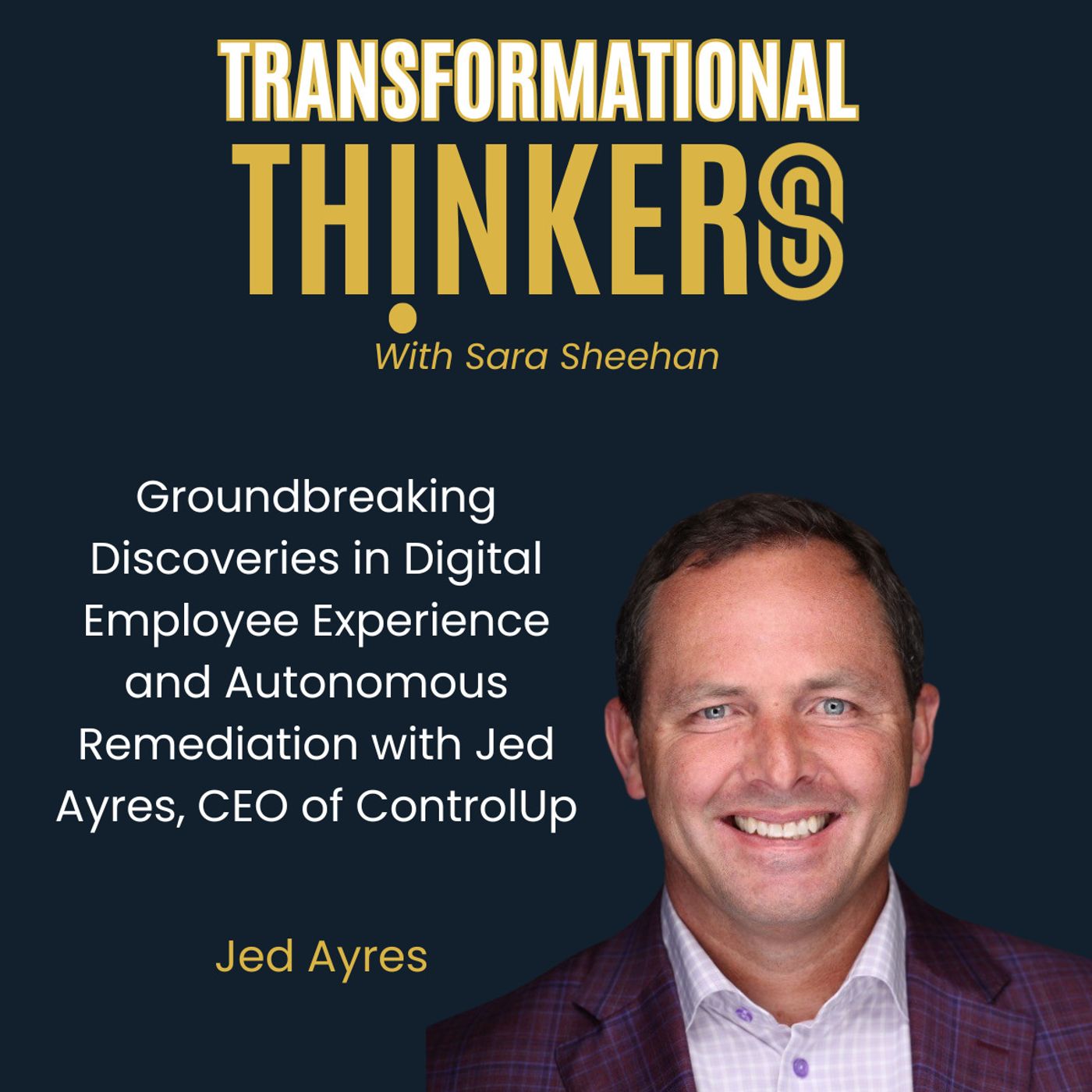
In this episode, host Sara Sheehan welcomes Jed Ayres, the visionary CEO of ControlUp, a leader at the forefront of digital employee experience and autonomous IT operations. Jed reflects on his early years owning and operating a hotel and restaurant, where performance feedback was immediate and ruthless. These formative experiences shaped his servant leadership philosophy, which emphasizes empathy, accountability, and trust as the foundation of high-performing organizations. Jed’s unique journey reveals invaluable lessons in leadership excellence and transformational leadership.Jed explains how the shift to remote and hybrid work during the pandemic revealed a critical gap in traditional IT operations. While companies spent years prioritizing customer experience, employee digital experience lagged behind. This lag created friction, anxiety, and lost productivity. From that, Jed led the evolution of ControlUp from a deep technology platform into a cutting-edge, unified digital employee experience solution. As organizations navigate the complexities of the digital employee experience, understanding the human element becomes essential. He clarifies the difference between managing technology performance and managing employee experience, highlighting how real-time telemetry, automation, and AI eliminate repetitive troubleshooting and dramatically lower ticket volumes. Gartner predictions support this shift, suggesting organizations that fail to adopt these platforms risk falling behind operationally and competitively.Sara and Jed discuss how AI transforms IT from a reactive cost center into a strategic enabler. By using real-time data contextualized around individual employees, AI can identify issues, recommend fixes, and even remediate problems. This not only reduces operational drag but also frees IT teams to focus on higher-value strategic work. Jed also addresses common misconceptions about DEX, urging organizations to prioritize core IT operational efficiencies before venturing into HR aspects. This strategic alignment is crucial for fostering an environment where talent can thrive, ultimately leading to organizational growth and innovation in leadership.From a leadership perspective, Jed emphasizes that successful digital workplace transformation requires executive sponsorship, cross-functional collaboration, and cultural readiness. Successful organizations formalize digital employee experience at the board level, invest in dedicated ownership, and commit to long-term partnerships rather than isolated tool deployments. With these accelerating changes in how we work, Jed emphasizes the urgent need for seamless technology experiences that empower employees and enhance productivity. This episode is not just a conversation; it’s a clarion call for transformational thinkers to embrace change management strategies that cultivate workplace culture and enhance communication in leadership.The episode posits a bold prediction: In the near future, manual troubleshooting will be viewed as reckless and wasteful. Autonomous IT operations powered by AI will become the standard, fundamentally reshaping how organizations operate and how leaders think about productivity and human potential. Don't miss out on this opportunity to engage with one of the industry's leading voices in business transformation. Tune in to Transformational Thinkers with Sara Sheehan and discover how to transform challenges into opportunities for growth and success. __About Jed Ayres: Jed Ayres brings vast experience in leading multinational software organizations to ControlUp, successfully executing strong organic and inorganic growth strategies, building groundbreaking leadership teams, executing strong partnerships, and expanding internationally. Most recently, Ayres served as CEO of IGEL, where he was instrumental in its acquisition by TA Associates and positioning it as a market leader. Prior to that, Ayres was responsible for the strong growth in category leader AppSense (acquired by Ivanti) and held executive leadership positions with MCPc (acquired by Logicalis), MTM Technologies, and GE Capital IT Solutions. Key Moments:00:00:01 – Welcome and Introduction to Jed Ayres00:01:30 – Hospitality Roots and the Servant Leadership Mindset00:03:00 – Why Digital Employee Experience Became a Strategic Imperative00:04:45 – The Hidden Cost of Poor Technology Experiences at Work00:06:20 – Optimization vs Monitoring in Digital Employee Experience00:08:10 – From Legacy IT Tools to Real Time Data and Automation00:10:00 – Why AI Is Perfect for Eliminating Repetitive IT Work00:12:45 – Reframing DEX as a Business Outcome for CEOs and Boards00:15:30 – Tool Consolidation and the Financial Impact of Automation00:18:00 – Cutting Through Data Noise with AI Driven Insights00:20:15 – Frontline Workers, Brand Experience, and Digital Friction00:23:20 – Common Misconceptions About Digital Employee Experience00:26:15 – DEX as the Gateway to Autonomous Endpoint Management00:29:45 – Leadership, Trust, and Empowerment in Transformation00:45:10 – A Bold Prediction for the Future of Work and IT Operations__ Contact Sara Sheehan | Sara Sheehan Consulting:SaraWSheehan.comSara Sheehan on LinkedInMeet with SaraSubmit Questions or Feedback to Sara Contact Jed Ayres | ControlUp:Website: ControlUp.comLinkedIn: JedAyres Hosted by Simplecast, an AdsWizz company. See pcm.adswizz.com for information about our collection and use of personal data for advertising.
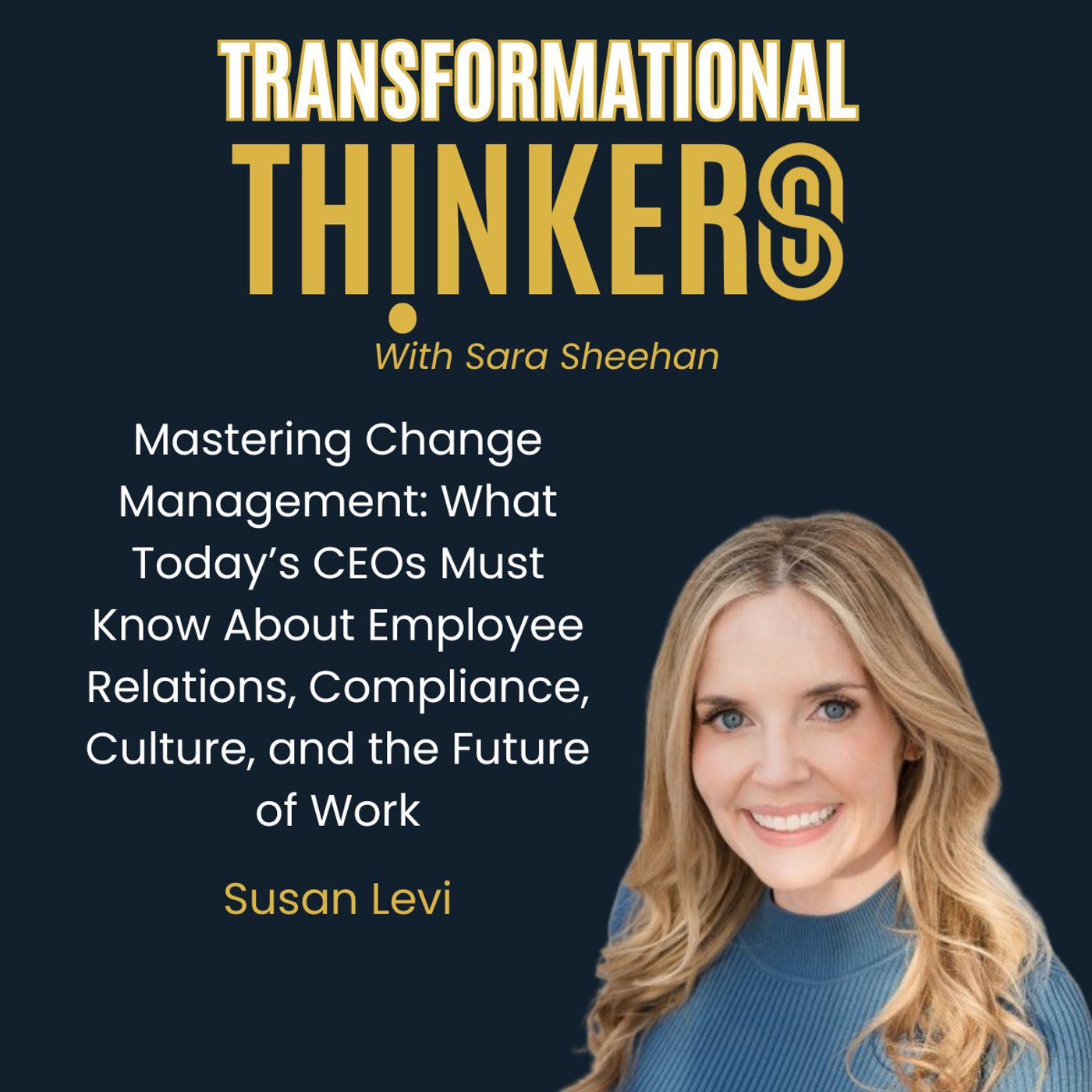
Susan brings a grounded, real-world perspective shaped by years of advising organizations through challenging employee relations, legal exposure, and leadership capability gaps. With the rise of wage and hour claims, understanding local laws has never been more crucial for companies expanding their workforce across state lines. This conversation is a clarion call for CEOs and CHROs to take proactive measures in addressing employee relations concerns, emphasizing the importance of timely action and thorough investigations when challenges arise. This episode is essential listening for executives who want to future-proof their organizations by strengthening managers and building cultures that balance performance, empathy, and accountability. Sara addresses how, as workforces have become increasingly distributed, HR complexity has accelerated. Susan Levi explains why expanding across state lines introduces significant compliance risk, particularly around wage and hour laws and leave requirements. She emphasizes that many organizations underestimate these challenges and that proactive due diligence is now a leadership requirement rather than an HR afterthought.They discuss employee relations and highlight why ignoring issues, especially when high performers are involved, creates outsized legal and cultural risk. Susan explains why leaders must investigate concerns promptly with accurate documentation and resist the temptation to just move problems elsewhere within the organization. Addressing issues directly, even when uncomfortable, is critical to protecting both people and the business.Recruiting and retention remain front-line concerns for CEOs, and Susan shares why behavioral interviewing consistently outperforms hypothetical questioning by ensuring better cultural fit and significantly reducing employee turnover. Discover how to implement these transformational insights to foster a thriving workplace culture that empowers employees and aligns with your strategic goals. To retain top performers, she dives into the significance of stay interviews, a powerful tool for retaining top talent, and stresses the need for organizations to understand what keeps their employees satisfied, engaged, and empowered.With four generations now active in the workforce, leadership expectations around flexibility, feedback, and growth are colliding. Susan explains why flexibility has shifted from a perk to a business necessity in professional roles and why output, not micromanagement, is the standard for high-performing organizations. Sara and Susan urge leaders to adapt their management styles to cultivate a growth mindset within their teams.Susan and Sara discuss why poor manager capability is one of the most common drivers of disengagement and turnover. New managers often struggle with feedback, coaching, and difficult conversations, not due to lack of intent, but lack of training. Investing in foundational management skills is one of the best moves organizations can make. Susan identifies how HR leaders can combat change fatigue through transparency and visible progress, and stresses that clear communication focused on why changes are being made is a necessity. Looking ahead, she identifies two critical shifts leaders must make to future-proof HR: moving from reactive to proactive people practices and streamlining HR systems to create more seamless employee experiences. This episode also addresses the integration of AI into HR processes, cautioning against over-reliance on technology without human oversight.Tune in for real-world change stories and innovative leadership strategies that will empower you to master change management and drive organizational growth. This episode is not just about insights; it's about transforming challenges into opportunities for thriving in extraordinary times. Join us for a journey of transformation that will elevate your understanding of employee relations, employee engagement techniques, and organizational change leadership. Don't miss out on this opportunity to enhance your leadership development and become a transformational thinker! About Susan Levi: Susan Levi is the Founder of Jinji HR, a human resources consulting firm known for navigating complex employee relations, compliance challenges, and leadership development issues. Susan partners closely with CEOs and leadership teams to reduce risk, strengthen manager capability, and modernize HR practices to support sustainable growth.Susan received her PsyD in Organizational Management and Consulting from Phillips Graduate University and received a M.A. and B.A. degree in Psychology from Pepperdine University and the University of California, Irvine, respectively. She holds her SPHR and PHR certifications from the HR Certification Institute.Susan has experience providing HR solutions to both for-profit and non-profit employers in a wide range of industries. Susan leverages this experience and understanding to develop solutions that are not only compliant but also align with industry best business practices, and help support employees with their HR needs.When Susan is not working, she enjoys attending tap class, golfing, and spending time with her family and pomeranian, Sage. Key Moments:00:00 Introduction to Today’s HR Reality00:40 Meet Susan Levi of Jinji HR01:09 The Rise of Complex HR and Compliance Cases02:51 Why Ignoring Employee Issues Creates Legal Risk03:52 High Performers and the Cost of Looking the Other Way05:35 Recruiting for Speed and Culture Fit in a Distributed Workforce06:04 Behavioral Interviewing as a Competitive Advantage08:10 Stay Interviews and Building Sticky Engagement10:11 Growth Paths Beyond the Management Track12:19 Leading Across Four Generations in the Workforce13:35 Flexibility, Feedback, and Modern Performance Expectations15:03 Preparing New Managers for Leadership Conversations18:27 Responsible AI Use in HR and Recruiting23:52 Managing Change Fatigue Through Transparency28:27 Future Proofing HR Through Proactive Strategy and Process Simplification__Contact Sara Sheehan | Sara Sheehan Consulting:SaraWSheehan.comSara Sheehan on LinkedInMeet with SaraContact Susan Levi | JinjiHR:Website: JinjiHR.comLinkedIn: SusLevi Hosted by Simplecast, an AdsWizz company. See pcm.adswizz.com for information about our collection and use of personal data for advertising.
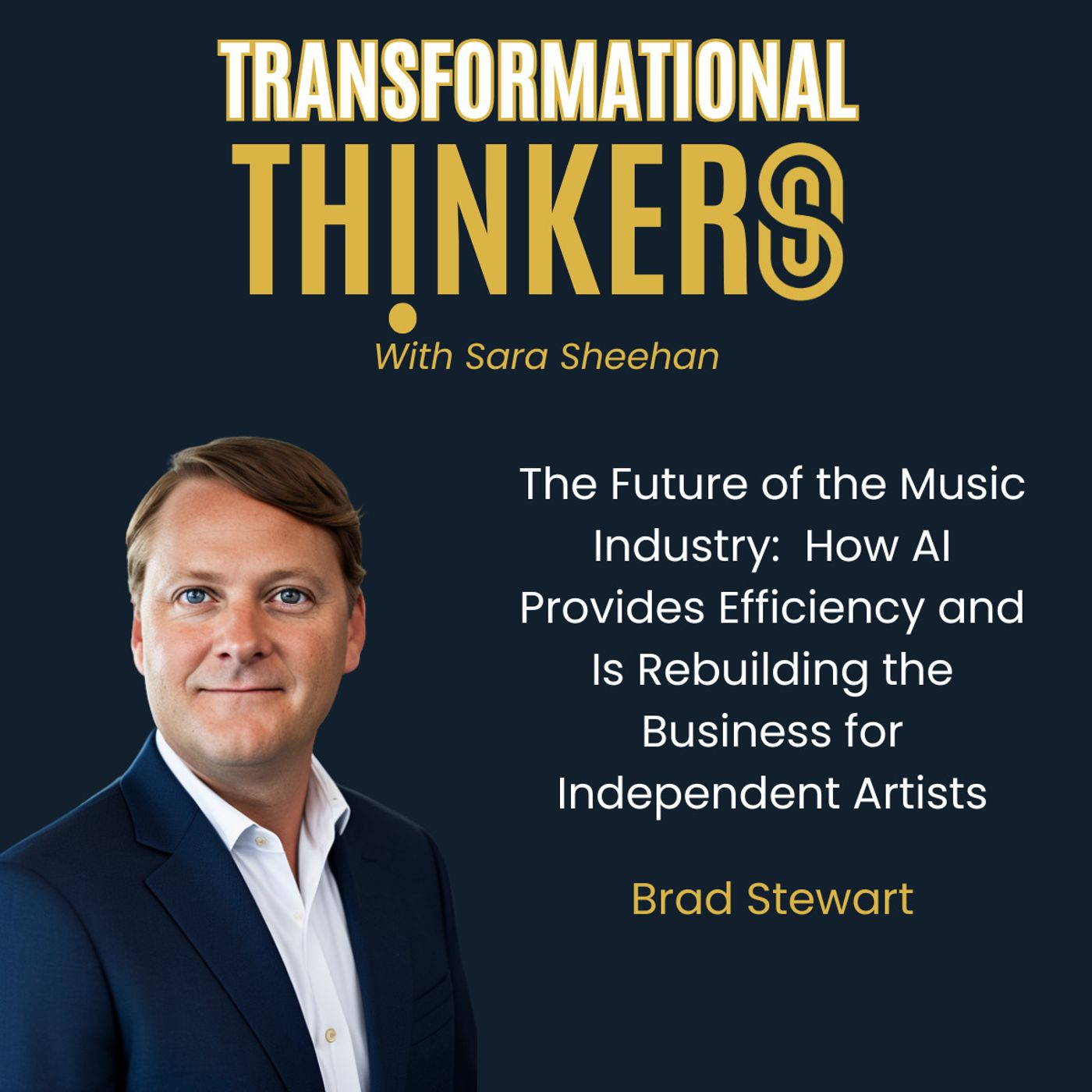
In this enlightening episode of Transformational Thinkers, host Sara Sheehan sits down with Brad Stewart, the visionary founder of Music Mogul AI and CEO of Stewart Entertainment Agency, to unpack why the traditional music industry business model is fundamentally broken and how technology is creating a more efficient, artist-first future.Throughout our conversation, we touched on the essence of transformational leadership and the importance of efficiently nurturing personal relationships within the music business. Brad emphasizes that while technology like Music Mogul AI can streamline processes, the human element remains indispensable. He shares how his platform not only provides tools for efficiency but also offers mentorship and consulting services, ensuring artists are well-equipped to navigate their careers.With over 20 years inside the music industry, Brad explains how streaming economics, agency structures that are becoming outdated, and some fragmented systems have eroded artist revenue streams while increasing workload and burnout. He shares firsthand insights into the issues that plague artist management, booking, and marketing, and why the advice on simply “working harder” is no longer a viable strategy for independent artists trying to build sustainable careers.Brad and Sara discuss Music Mogul AI, a groundbreaking software solution that revolutionizes how artists manage their bookings, marketing, and overall business operations. This innovative platform is not just about automation; it's about empowering artists to become efficient, reclaiming their time, and optimizing their revenue streams. Brad's insights into the economic challenges of the music industry highlight the critical role of data-driven decision-making in today’s landscape, making this episode a must-listen for anyone invested in business transformation. Built specifically for independent artists, bands, DJs, and agencies, the platform uses efficient AI agents to handle repetitive administrative work, streamlining touring and promotions, surfacing actionable data insights, and dramatically improving time-to-revenue. The result brings forward greater clarity and control, and long-term career management for creators navigating a fast-changing music industry.Whether you’re an artist, manager, label executive, or business leader interested in how AI in the music industry is driving real-world transformation, this conversation offers a clear, data-driven look at where music industry technology is heading, and how early adopters can gain a lasting advantage.About Brad Stewart: With nearly 2 decades of experience in booking international touring acts, Stewart has worked with many amazing talents, such as icons Leon Russell and Ten Years After; blues giants Bobby Blue Bland and Walter Trout; jam scene heroes like Marc Ford (former lead guitarist of the Black Crowes), The Heavy Pets, Yo Mama's Big Fat Booty Band, Monophonics, and the Honey Island Swamp Band.Along the way, Stewart earned a reputation as a professional with integrity, a strong work ethic, and the vision to promote a positive evolution of change in booking operations. Since Brad started as a hard-core music fan, the very foundation of Stewart Entertainment is based on his empathy for artists and his assistance for them to flourish. He was exposed to all types of roots and rock music while growing up in Mississippi and understood early on that music exerts a strong gravitational pull. Armed with a degree in marketing, he moved to Charlotte, NC, scouring the landscape for a music business position that would allow him to work with and for artists in a meaningful way. He found that at Intrepid Artists. “I took on a lot of responsibility very quickly, handling booking for a large roster of artists in the northeast United States and Canada. Ultimately, he became steeped in every aspect of the business. Nashville’s burgeoning music scene dictated Stewart’s move from Charlotte and made Music City the perfect home for Stewart Entertainment, LLC. “I see a tremendous opportunity today for artists who have trustworthy human resources in place.” Chapters:00:00:02 Why the Music Industry Is Broken00:00:56 Streaming Economics and Artist Leverage00:04:52 Challenging the Traditional Agency Model00:06:12 The True Unit Economics of Music00:07:13 Burnout and the Talent Drain00:09:20 Music Mogul AI and Time to Revenue00:11:59 Who Music Mogul AI Serves00:14:01 AI Agents for Booking and Marketing00:22:03 The Management Agent and Business Planning00:29:56 Turning Creative Data Into Signal00:32:42 Focused Product Strategy and Tradeoffs00:37:01 The Future of Music, AI, and Scale__Contact Sara Sheehan | Sara Sheehan Consulting:SaraWSheehan.comSara Sheehan on LinkedInMeet with SaraContact Brad Stewart | Music Mogul AI | Stewart Entertainment Agency:Brad Stewart personal site: BradStewart.siteStewart Entertainment Agency: StewartEntertainment.netMusic Mogul AI: MusicMogulAI.comLinkedIn: Music-Mogul-AI Hosted by Simplecast, an AdsWizz company. See pcm.adswizz.com for information about our collection and use of personal data for advertising.
What if the key to unlocking your true potential lies in setting audacious goals that stretch your capabilities beyond the ordinary? In this enlightening episode of Transformational Thinkers with Sara Sheehan, we dive deep into the transformative power of bold goal-setting and its pivotal role in driving organizational growth and business transformation. Sara Sheehan, an expert in leadership excellence and change management, shares her insights on how these ambitious targets are not merely about bravado—they are essential for fostering innovation and achieving real-world change.Sara outlines practical principles for crafting bold yet actionable goals that resonate with your core values, encouraging you to make them significant enough to inspire progress and require the development of new skills. She explains why aspirational goals serve as a North Star and are far more than simply motivational slogans. Audacious goals clarify direction, spark innovation, filter distractions, and push leaders out of mediocrity. They demand evolution from leadership to elevate their organizational performance. Discover how to break down your audacious goals into manageable milestones that not only drive employee empowerment but also cultivate a resilient mindset essential for thriving in extraordinary times. Sara emphasizes the importance of daily habits, such as visualization and gratitude, to maintain focus and motivation on your journey toward transformational success. Sara shares high-performance routines like time blocking, prioritizing high-gain tasks, and seeking executive coaching that help leaders build a culture of accountability. Embracing such routines will strengthen the organizational ecosystem and maintain momentum in leadership transformation. Sara outlines a goal decomposition blueprint that maps backwards from future outcomes and helps CEOs and founders align daily actions with long-term strategy. This approach supports sustainable business growth, strategic planning, and consistent execution. By integrating these practices into your routine, you can foster a workplace culture that embraces innovation in organizations and nurtures talent optimization.As the episode unfolds, Sara issues a clarion call for listeners to embrace the challenge of setting their own audacious goals. This is your opportunity to embark on a journey of transformation that not only enhances your leadership capabilities but also inspires those around you. Join us as we explore transformational stories and business transformation insights that illustrate the profound impact of creative leadership in action.Whether you are a CEO, CHRO, or a leader in any capacity, this episode of Transformational Thinkers with Sara Sheehan will equip you with the tools and inspiration needed to master change management and leverage your goals for maximum impact. Tune in and take the first step towards a future where you not only meet your goals but redefine what success truly means. In This Episode:[00:02]: Welcome to Transformational Thinkers[00:29]: The Case for Thinking Bigger[01:45]: Principles for Setting Audacious Goals[03:15]: The Goal Decomposition Blueprint[04:24]: Mindset Mastery for Exponential Results[06:04]: Daily Habits of Audacious Leaders[08:24]: Aligning Culture and Ecosystem[09:34]: Your Audacious Goal Challenge__Contact Sara Sheehan | Sara Sheehan Consulting:SaraWSheehan.comSara Sheehan on LinkedInMeet with Sara Hosted by Simplecast, an AdsWizz company. See pcm.adswizz.com for information about our collection and use of personal data for advertising.
In this episode of Transformational Thinkers, host Sara Sheehan breaks down the core principles from Dr. Benjamin Hardy’s new book, The Science of Scaling. In two key parts, both contained in this episode, she reveals how founders can achieve 10X growth by transforming their mindset, identity, and leadership standards. Sara explores Hardy’s Frame–Floor–Focus framework: an evidence-based playbook designed for founders and CEOs ready to think exponentially. In part one, Sara dives into the science of scaling according to Hardy, explaining why the biggest constraint in any business is the founder’s current identity. Sara details how to set impossible goals that align with your future self, eliminate low-value activities, and simplify operations. She highlights the role of Super Whos, as Hardy names them, the high-performance team members and partners who can accelerate progress and level up capability. Super Whos are critical to success because they support founders in ruthless elimination, simplification, operational excellence, as well as achieving impossible goals.In part two, Sara explores the deeper mindset transformation required to scale effectively. She talks about everything from Hardy’s future self-visualization to the 10X decision filter. We learn how to raise standards, complete a toleration audit, and adopt time compression strategies that force innovation and clarity. When auditing tolerations, it’s key to identify areas of the business that hinder the founder’s growth or impede strategic alignment. Sara emphasizes that scaling isn’t about doing more; it’s really about becoming a leader capable of building the next version of the company.Packed with actionable tools, this episode is vital for founders, CEOs, and transformational thinkers ready to scale from the inside out and create a business aligned with visionary outcomes. Tune in to discover how you can thrive together with your team and achieve the extraordinary.Don't miss this opportunity to empower your leadership journey and gain the tools needed for effective business and mindset transformation. Join us in this episode of Transformational Thinkers with Sara Sheehan, where we challenge the status quo and unlock the potential for growth and innovation in your organization. __Resources discussed in this episode:“The Science of Scaling: Grow Your Business Bigger and Faster Than You Think Possible” by Dr. Benjamin Hardy and Blake Erickson__Contact Sara Sheehan | Sara Sheehan Consulting:SaraWSheehan.comSara Sheehan on LinkedInMeet with Sara__ Hosted by Simplecast, an AdsWizz company. See pcm.adswizz.com for information about our collection and use of personal data for advertising.
Did you know that nearly 70% of large-scale transformation efforts fail? In this enlightening episode of Transformational Thinkers with Sara Sheehan, host Sara Sheehan, a seasoned change management consultant and executive coach, dives deep into the critical necessity of mastering change capability for CEOs and C-suite leaders. As the landscape of business transformation evolves, traditional models are proving to be outdated, and Sara advocates for a more agile, human-centric approach that prioritizes leadership excellence and employee empowerment.Throughout the episode, Sara emphasizes that successful change management is not merely a project; it’s a transformative mindset that requires authentic leadership involvement and a culture of adaptability. With compelling data and real-world change stories, she illustrates how organizations equipped with strong change management capabilities significantly increase their likelihood of achieving project objectives and strategic alignment.By introducing cohort-based change management training, Sara makes a clarion call for leaders to engage in tailored training programs that address specific business challenges. This innovative approach not only fosters organizational growth but also accelerates return on investment, making it an essential strategy for any CEO, CHRO, or business leader committed to thriving in today’s dynamic environment.Join us as we explore the fascinating intersection of transformational leadership and effective change management strategies. Sara shares invaluable insights from her extensive experience in executive coaching and consulting, offering listeners a chance to understand the pivotal role of education in mastering change management. With a focus on talent optimization and stakeholder engagement, this episode is a must-listen for anyone looking to enhance their leadership pipeline and drive measurable transformation.As the episode wraps up, Sara invites leaders to take the next step by scheduling a discovery call to discuss bespoke private cohorts designed to elevate their organizations. Don’t miss this opportunity to learn from the best and discover how to become a transformational thinker in your own right. Tune in to Transformational Thinkers with Sara Sheehan and unlock the secrets to successful business transformation today! __Contact Sara Sheehan | Sara Sheehan Consulting:SaraWSheehan.comSara Sheehan on LinkedInMeet with Sara Hosted by Simplecast, an AdsWizz company. See pcm.adswizz.com for information about our collection and use of personal data for advertising.
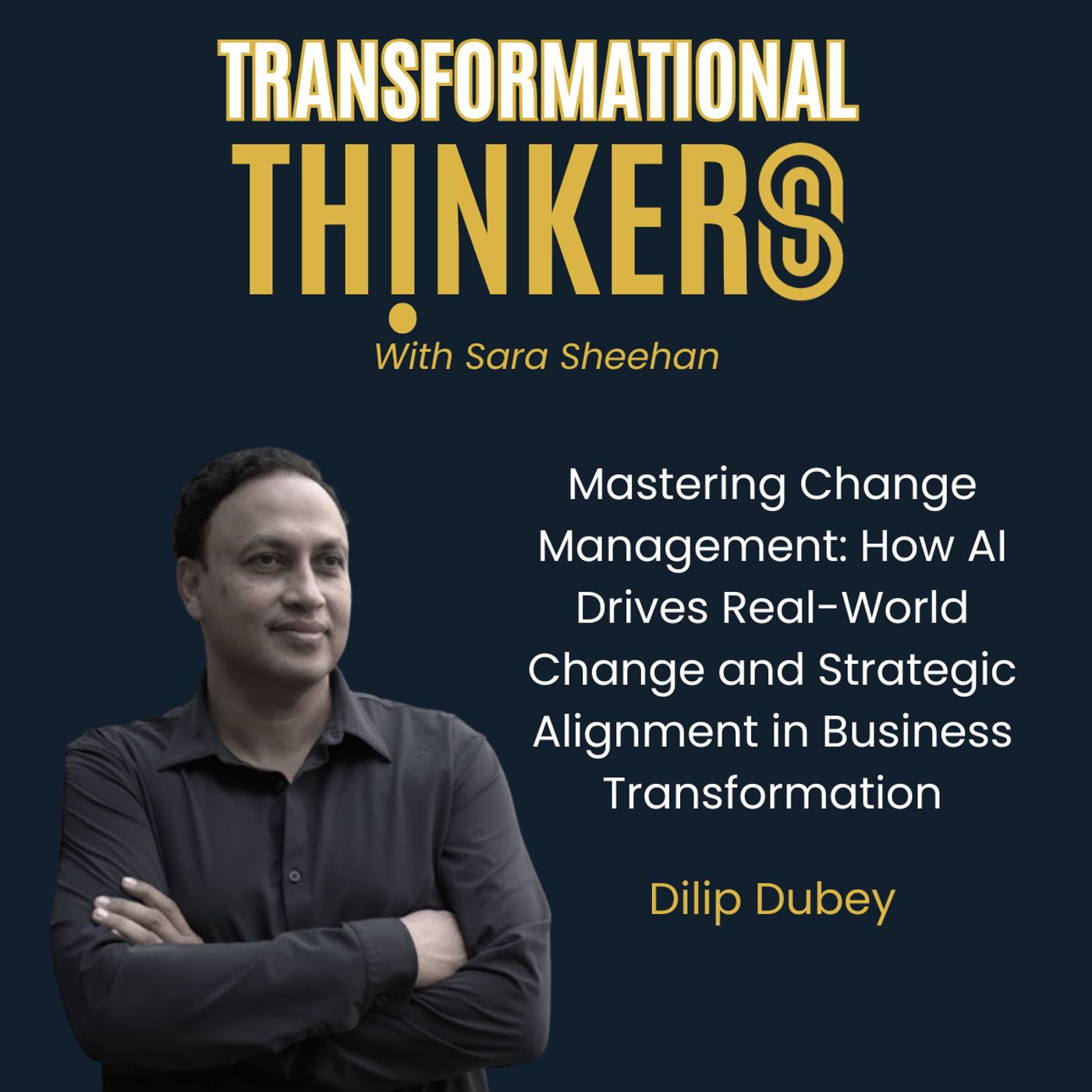
Are you ready to unlock the transformative power of artificial intelligence for your business? Join host Sara Sheehan in this enlightening episode of Transformational Thinkers with Sara Sheehan as she engages with AI expert Dilip Dubey, who unveils the profound impacts AI can have on leadership excellence and organizational growth. This episode is a must-listen for anyone navigating the complexities of business transformation in a rapidly evolving landscape.Dilip challenges the common misconceptions that surround AI, asserting that it is not merely another disruptive technology but rather a fundamental shift that can redefine how businesses operate. There are two main applications for AI that he outlines: automation and innovation. How can AI improve automation and lead innovation? That’s the question every business leader needs the answer to in order to understand why AI is the key to their business optimization. With his extensive knowledge, he shares real-world change stories highlighting how AI enhances efficiency, drives innovation, and creates measurable business value across various industries. This conversation is an invaluable resource for leaders seeking to master change management and embrace innovative leadership strategies.Throughout their discussion, Dilip emphasizes the importance of adopting a proactive mindset towards AI. He advises leaders to initiate high-value, low-complexity projects that can quickly demonstrate tangible benefits. This approach not only fosters employee empowerment but also aligns with tailored change management training that can elevate your organization’s performance. As the conversation unfolds, Dilip addresses common fears regarding job displacement, illustrating how AI can augment human capabilities rather than replace them. This perspective is crucial for organizations aiming to thrive together in a competitive market.Case studies of companies that used AI to double EBITDA, focusing on ROB (return on business) instead of ROI, and assuring employees that AI augments but does not replace humans are themes that Dilip shares. He has witnessed and spearheaded the power of AI to drive business efficiency to greater success, and he shares his extensive knowledge with Sara and listeners in this episode.While Dilip notes that ethical use and bias prevention are critical themes in AI adoption, when designed responsibly it also has the power to correct systemic inequalities. Human governance will always be required to weed out existing bias. But with oversight intact, AI has the power to redefine entire business models and create new opportunities that don’t exist today. As the episode draws to a close, Dilip provides practical advice for leaders on fostering an AI-friendly culture and leveraging data effectively. He emphasizes that embracing AI as a strategic initiative is essential for remaining competitive and relevant. This episode is packed with insights that will resonate with CEOs, CHROs, and any stakeholders looking to enhance their leadership alignment and drive organizational change through innovative solutions.Don’t miss this opportunity to gain expert insights and actionable strategies that can transform your approach to AI and business transformation. Tune in to Transformational Thinkers with Sara Sheehan and discover how to lead your organization through the complexities of change management while maximizing the potential of artificial intelligence. Listen now to equip yourself with the knowledge and tools needed for effective executive development and strategy implementation. About Dilip Dubey: Dilip Dubey is a pioneer in artificial intelligence with a deep passion for understanding its promise and complexities. As a founder, CEO, patent-holding inventor, mentor, coach, and investor, he has created and scaled multiple AI companies, generating over $500 million in shareholder value. Dilip's work spans a wide range of sectors, driving transformation and delivering AI-driven value while making a meaningful impact on society. His involvement in initiatives such as Inventrepreneur.me reflects his commitment to using AI and innovation to eradicate poverty and foster gender equality. Dilip remains dedicated to leveraging AI as a powerful tool for business evolution and societal change. __Contact Sara Sheehan | Sara Sheehan Consulting:SaraWSheehan.comSara Sheehan on LinkedInMeet with SaraContact Dilip Dubey:Website: Dubey.aiLinkedIn: Dilip-Dubey-aiEmail: dilip@dubey.ai Hosted by Simplecast, an AdsWizz company. See pcm.adswizz.com for information about our collection and use of personal data for advertising.
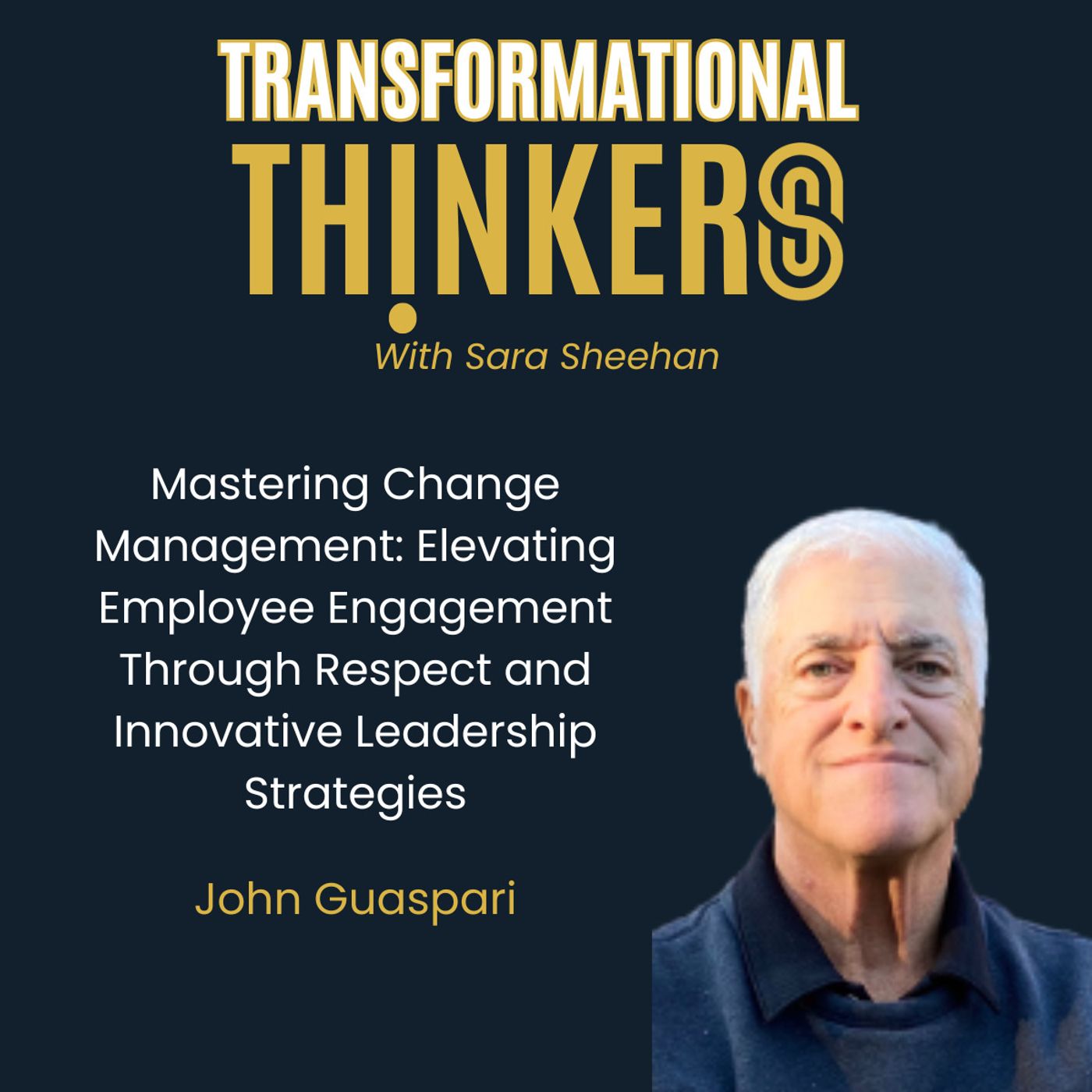
What if the secret to unlocking unparalleled employee engagement lies not in metrics, but in the profound simplicity of respect? Join host Sara Sheehan as she dives deep into this transformative idea with author John Guaspari in the latest episode of Transformational Thinkers with Sara Sheehan. In his compelling book, "If Engagement is the What, Then Respect is the How," Guaspari challenges conventional wisdom, urging leaders to rethink their approach to workplace culture.Throughout this enlightening discussion, Guaspari reveals how respect serves as the bedrock of employee engagement and organizational success. Many leaders mistakenly prioritize quantifiable metrics over the essential intangibles that shape workplace dynamics. By emphasizing the interconnectedness of respect, trust, empowerment, and engagement, he illustrates why respect is the most crucial and controllable factor in fostering a thriving organizational culture.Are you aware of the common misconceptions that CEOs hold about respect and employee engagement? Guaspari sheds light on how miscommunication can erode trust and disrupt team dynamics, leading to a disengaged workforce. This episode is a must-listen for any leader seeking to enhance their team's morale, productivity, and employee satisfaction by genuinely considering others.Guaspari shares practical insights and real-world examples from his extensive experience in leadership development, demonstrating how even small changes in leadership behavior can yield significant improvements in employee satisfaction. Discover actionable strategies to cultivate a culture of respect, ensuring that engagement becomes an ongoing process rather than a mere checkbox activity.This episode serves as a powerful reminder that authentic engagement is built on a foundation of respect, trust, and empowerment. If you're a CEO or leader looking to navigate the complexities of workplace culture, tune in to gain valuable perspectives that can transform your organization.Don't miss this opportunity to learn from one of the industry's thought leaders. Engage with us, share your thoughts, and discover how you can apply these insights to your own organization. Join the conversation and transform your leadership approach today! About John Guaspari: Since the mid-1980s, John Guaspari has helped leaders increase the level of employee engagement throughout their organizations.John is the author of six previous books on the topic, including the best-selling "I Know It When I See It" and "The Value Effect: A Murder Mystery About the Compulsive Pursuit of the Next Big Thing". His writing credits also include seven training videos (one of which is the best-selling "Time: The Next Dimension of Quality") as well as hundreds of articles and columns for a broad range of business publications. His new business book is "If Engagement is the What, Then Respect is the How".John has worked with clients in scores of industries and has delivered over a thousand engagement-related presentations, seminars, and workshops for public and client-specific audiences alike. In the process, he has gained an enviable reputation for his ability to unravel complex subject matter and communicate it in the kind of accessible and engaging way that leads to real learning. Said another way, he knows how to be engaging about engagement.Long before entering the world of consulting, John began his professional career as an aerospace engineer, after which he went on to hold senior management positions in widely varying functions such as marketing, sales support, customer support, quality, organizational effectiveness, and leadership development.__Contact Sara Sheehan | Sara Sheehan Consulting:SaraWSheehan.comSara Sheehan on LinkedInMeet with SaraContact John Guaspari:Website: JohnGuaspari.comLinkedIn: John GuaspariNew Book: “If Engagement is the What, Then Respect is the How: Hard-Learned Lessons from Dealing with Those Pesky Intangibles, a.k.a. 'The Soft Stuff’” by John Guaspari__ Hosted by Simplecast, an AdsWizz company. See pcm.adswizz.com for information about our collection and use of personal data for advertising.
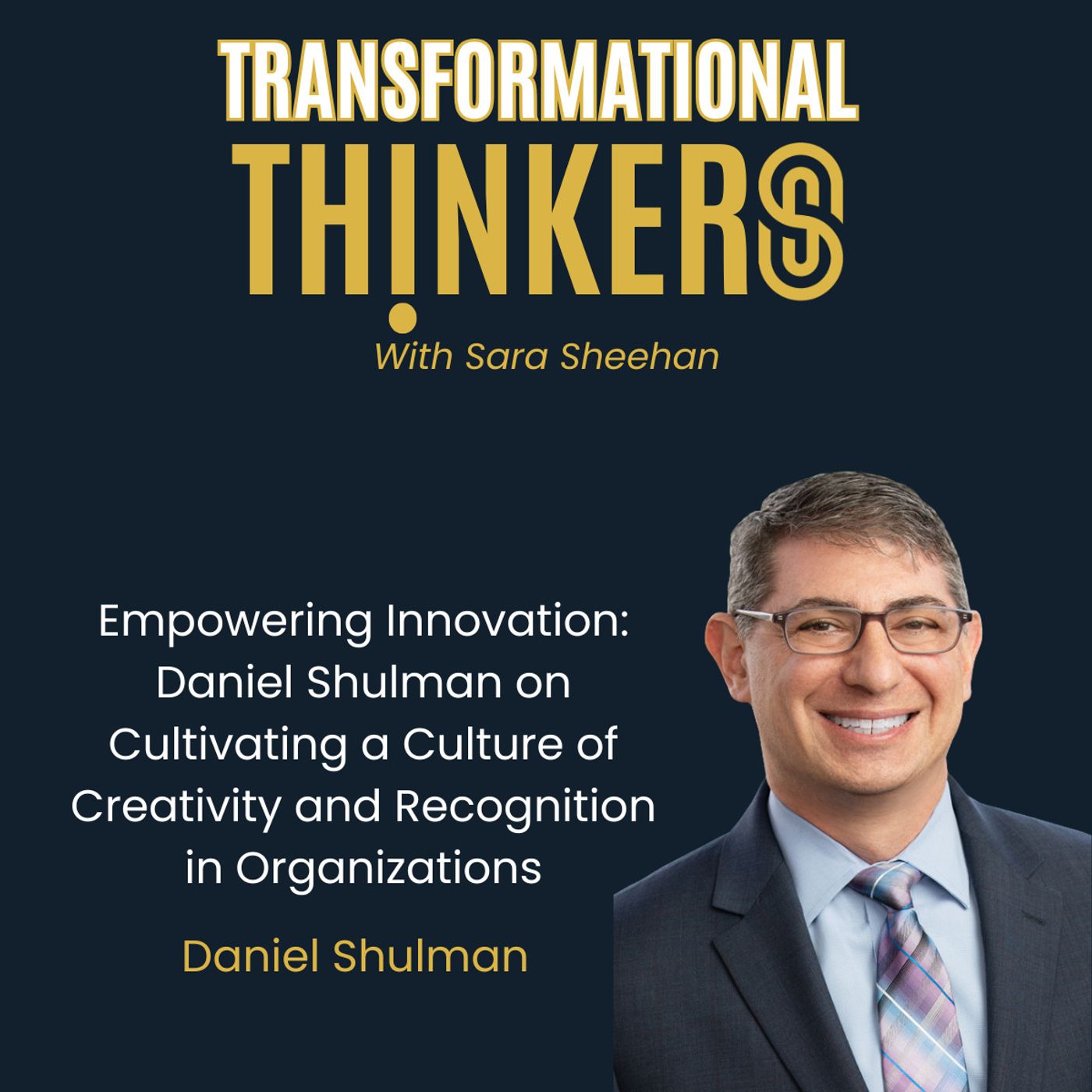
Are you ready to transform your organization's approach to innovation and intellectual property? Join host Sara Sheehan in this enlightening episode of Transformational Thinkers with Sara Sheehan, where she dives deep into the mind of Daniel Shulman, Intellectual Property (IP) Attorney at Vedder Price in Chicago, and a leading expert in intellectual property and innovation. Daniel is a former chief IP counsel for a large manufacturing company and also serves as an adjunct law school professor of legal writing. In a world where the pace of change is relentless, fostering a culture of innovation is no longer optional; it's essential for survival and growth. Shulman reveals that innovation should not just be a buzzword but a core value that permeates every level of corporate culture.Throughout their engaging conversation, Sara and Daniel explore the often-overlooked steps that leaders must take to empower their workforce and create an environment where innovative ideas flourish. Shulman emphasizes the importance of recognizing and supporting those who contribute to innovation, suggesting that organizations can leverage intellectual property not merely as a defensive tool, but as a powerful asset for competitive advantage. This shift in perspective can lead to groundbreaking solutions and significant business success.Listeners will gain practical strategies that can be implemented immediately, such as training employees on innovation methodologies, fostering open communication channels, and recognizing contributions to innovation—whether through formal programs or informal gestures of appreciation. Shulman advocates for a collaborative approach, highlighting the need for multidisciplinary teamwork to drive innovative solutions that can address complex challenges.This episode is packed with valuable insights for executives and leaders who are eager to cultivate a self-sustaining culture of innovation within their organizations. With a focus on humility and openness to new ideas, Shulman encourages leaders to step back and allow their teams to take the reins in the innovation process. The conversation serves as a crucial reminder that innovation is not a one-time effort but a continuous journey that requires commitment and vision.Don't miss this opportunity to learn from one of the foremost thinkers in the field of intellectual property and innovation. Tune in to Transformational Thinkers with Sara Sheehan and discover how you can transform your organization into a powerhouse of creativity and innovation. Your path to fostering a thriving culture of innovation starts here! About Daniel Shulman: Daniel Shulman is a Shareholder at Vedder Price and a member of the firm’s Intellectual Property group in the Chicago office.Mr. Shulman’s practice focuses on all aspects of intellectual property acquisition, monetization and enforcement, including complex patent litigation, trademark litigation, copyright litigation, trade secret litigation and all aspects of patent and trademark prosecution and portfolio management. Mr. Shulman also focuses on complex commercial matters, advertising disputes before courts and the National Advertising Division of the Better Business Bureau, products liability, antitrust matters and enforcement of restrictive covenants. Mr. Shulman brings over 12 years’ experience as Chief IP Counsel for multibillion-dollar companies holding thousands of worldwide patents and trademarks. While in-house, Mr. Shulman developed licensing strategies for the licensing in and out of next-generation technologies, managed due diligence processes for the acquisition and disposition of patents, and advised on litigation and defensive strategy relating to litigations. He managed an entire global patent and trademark portfolio for the North American operations of consumer products companies having over $12 billion in annual revenue while developing strategic technology areas to drive company innovation, directing innovation and patent filing and protecting their global patent portfolio through strategic interaction with foreign patent counsel. Mr. Shulman was named one of the Top Forty Lawyers Under 40 in Illinois in 2013 by the Law Bulletin, Managing IP Top In-House IP Star every year from 2015 through 2018, and received the First Chair Award Top In-House Intellectual Property Counsel in 2015, 2016 and 2018. Managing IP also recognized him as an “IP Star for Illinois” in the 2023 edition of individual practitioner IP Star rankings for Patents, Trademarks, Copyright, Designs and Transactions. He was also recognized in the 2024 edition of Managing IP’s List of IP stars as a Patent and Trademark star. Mr. Shulman was recognized by Best Lawyers in America in the Patent Law category for 2023 and 2024, Litigation – Intellectual Property in 2024 and Litigation – Patent in 2024. Additionally, he was ranked in all three of these categories in 2025 and 2026. Mr. Shulman was also named a Leading Lawyer in 2024 and 2025 for Advertising & Media Law, Copyright & Trademark Law, Intellectual Property Law and Trade Secrets/Unfair Compensation Law.__Contact Sara Sheehan | Sara Sheehan Consulting:SaraWSheehan.comSara Sheehan on LinkedInMeet with SaraContact Daniel Shulman:Website: VedderPrice.com/Daniel-H-ShulmanLinkedIn: Daniel-H-Shulman__ Hosted by Simplecast, an AdsWizz company. See pcm.adswizz.com for information about our collection and use of personal data for advertising.
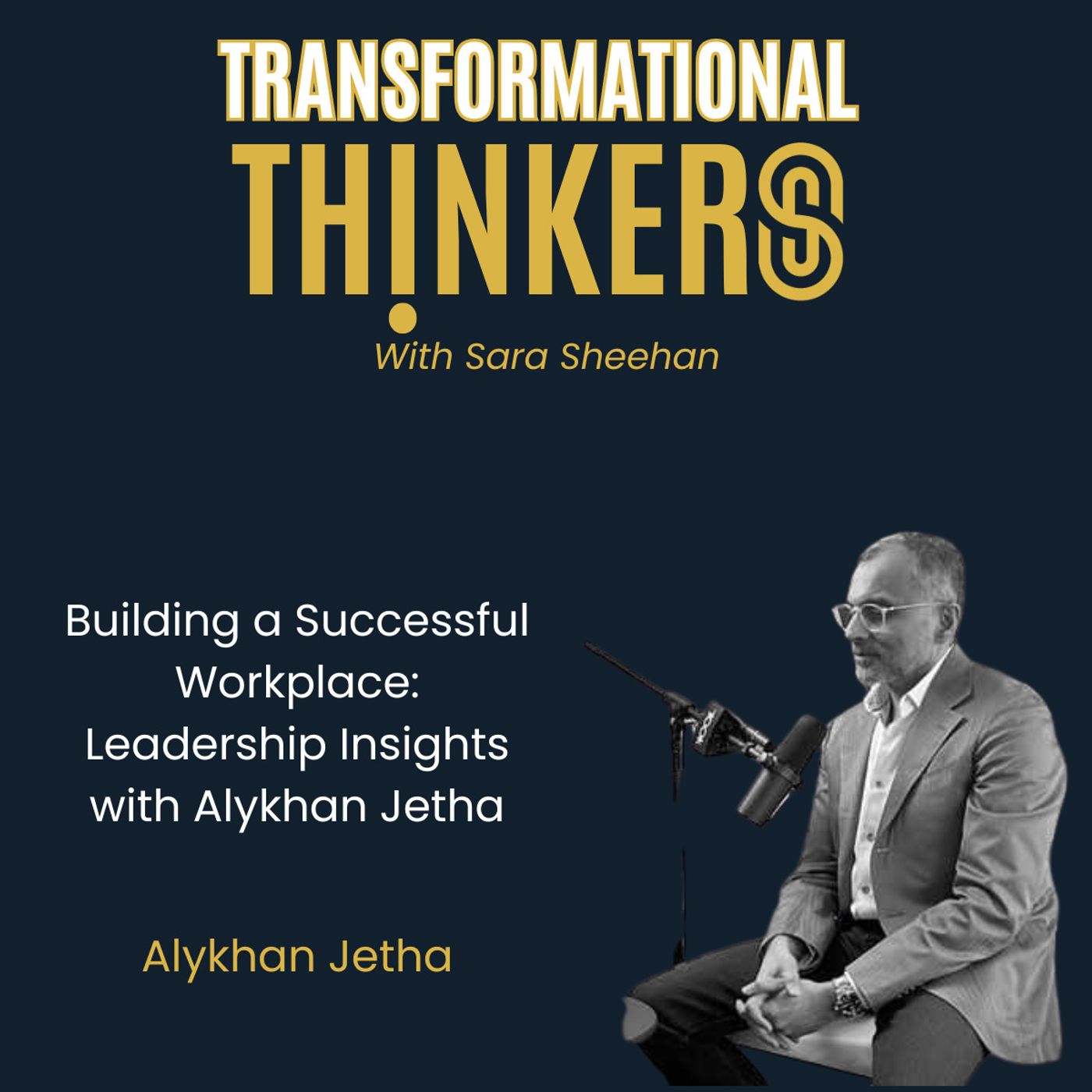
In this episode of Transformational Thinkers, Sara Sheehan welcomes Alykhan Jetha (AJ), the CEO of Marketcircle and Daylite, to the show. Daylite is a software that works in the Apple ecosystem, a productivity CRM that Alykhan is expanding to include time tracking and invoicing for a holistic package. He talks with Sara about how he funded Marketcircle, his company’s growth trajectory, and his thoughts on the necessity of adapting to growth and change.Alykhan and Sara discuss why focusing on the employees and staff who are innovative and open to change is so important for company growth. Adaptability and malleability are important assets to cultivate. Alykhan shares insights from times when conventional leadership wisdom was at odds with his own insight as CEO, and how he followed his instincts for the benefit of the company. His experiences as a leader display versatile thinking and careful consideration of his team.Clarifying the why of what he’s doing is a key step for Alykhan in making sense of fast-moving business scenarios. Sara learns how he forms a strategic roadmap for his executives and staff, the way leaders need to think ahead to understand transformation, and how he assesses future mindsets like AI in relation to his company. Alykhan is clear about his personal beliefs and habits, the ones that ground him in his organizational style, and he explains how he guides his staff and himself away from burnout with support and clear communication. About Alykhan Jetha: Alykhan Jetha (AJ) is an entrepreneur, bootstrapper, underdog, and President & CEO of Marketcircle, the company behind Daylite, an award-winning Mac CRM empowering small business owners, entrepreneurs & bootstrapping builders across the globe.Alykhan was born in the Democratic Republic of Congo (called Zaire back then) – and his family was expelled for being of East Indian descent. They left their home and spent time in Brussels before coming to Canada with nothing but the clothing on their backs.Alykhan studied computer hardware in college and found a love for programming. He founded Marketcircle, a software company developing award-winning business apps for the Mac, iPhone & iPad, after thousands of hours working late into the night. He built the original company as a dotcom, but by the time he had drawn the attention of Silicon Valley’s biggest venture capital firms, the dotcom bubble had burst. He pivoted – and eventually became the SaaS product they are today.He is humbled to have been featured in the Financial Post, Globe & Mail, Yahoo! Finance, and numerous Mac-industry media outlets. He is passionate about lean entrepreneurship and process-driven startup growth. For Alykhan, the “9 to 5” is an artificial construct. __Contact Sara Sheehan | Sara Sheehan Consulting:SaraWSheehan.comSara Sheehan on LinkedInMeet with SaraContact Alykhan Jetha:Website: daylite.appLinkedIn: AlykhanJethaInstagram: @marketcircle__ Hosted by Simplecast, an AdsWizz company. See pcm.adswizz.com for information about our collection and use of personal data for advertising.
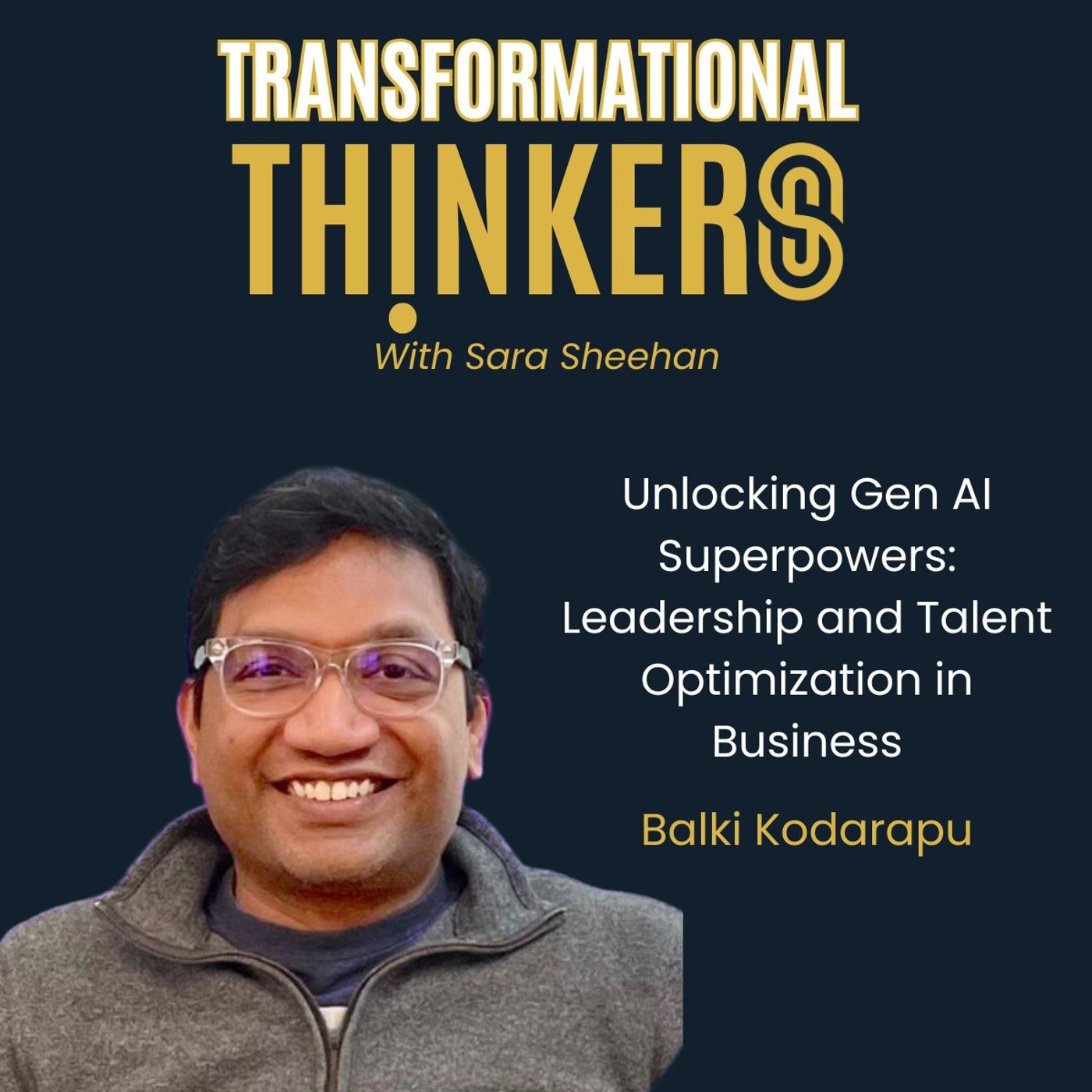
In this episode of Transformational Thinkers, Sara Sheehan welcomes Balki Kodarapu, a fractional CTO, Gen AI advisor, and SaaS scale-up expert. Balki shares how he helps startups grow from $100K to $40M ARR, avoid the “feature factory” trap, and build outcome-driven engineering teams. His specialty is creating clarity out of chaos—turning bottlenecks, missed deadlines, and organizational confusion into scalable systems and high-performing teams. He explains his strategies and insights to Sara. Balki reveals why every startup needs a clear engineering roadmap, how to use OKRs and scorecards effectively, and why focus is the most underappreciated growth lever. Balki also discusses modern hiring practices and breaks down how his four pillars of engineering excellence - modular architecture, automated testing, compliance, and observability - help teams create the necessary focus on the right things.To shift teams from a “feature factory” mindset, Balki encourages leaders to focus on impact rather than just outputs. Balki shares his leadership philosophy: first building trust with teams by working alongside them and even shipping code himself as a CTO. He sees the fractional CTO role growing in importance and advises founders to seek leaders with both hands-on technical depth and strategic understanding across multiple company stages. This episode shines a light on how to effectively lead through change.About Balki Kodarapu: Balki Kodarapu is a fractional CTO who helps SaaS and GenAI startups scale from $100k to $50M ARR—without burning through budgets or momentum. He has led six startups through hyper-growth, raised over $160M, delivered multiple exits, and built GenAI products that power pharmacists, care navigators, and Fortune 100 tech-support teams.Balki specialize in stepping into chaos—engineering bottlenecks, missed ship dates, org confusion—and turning it into clarity, velocity, and meaningful business results. Over the past 9 years, he’s led engineering at six companies (including two successful exits), often wearing every hat: hands-on EM, coach of other engineering leaders, and strategic Head of Engineering.He has a relentless focus on developer effectiveness and scalable systems, plus a firm belief that high-performance starts with human performance. He pushes every team he works with to carve out 15+ hours/week for learning, reflection, and growth. He wakes up excited about what mission-focused engineering teams can create with the right clarity, culture, and autonomy.Outside of work, Balki mentors engineers, engineering leaders, youth nonprofits, jokes around with his golden retriever Finn, and devours an unreasonable number of podcasts and books. If you care about building better teams, scaling smarter, or surviving the startup trenches— he has stories, scars, and context-rich lessons to share.__Contact Sara Sheehan | Sara Sheehan Consulting:SaraWSheehan.comSara Sheehan on LinkedInMeet with SaraContact Balki Kodarapu:Website: YourCTOin.usLinkedIn: Balki Hosted by Simplecast, an AdsWizz company. See pcm.adswizz.com for information about our collection and use of personal data for advertising.
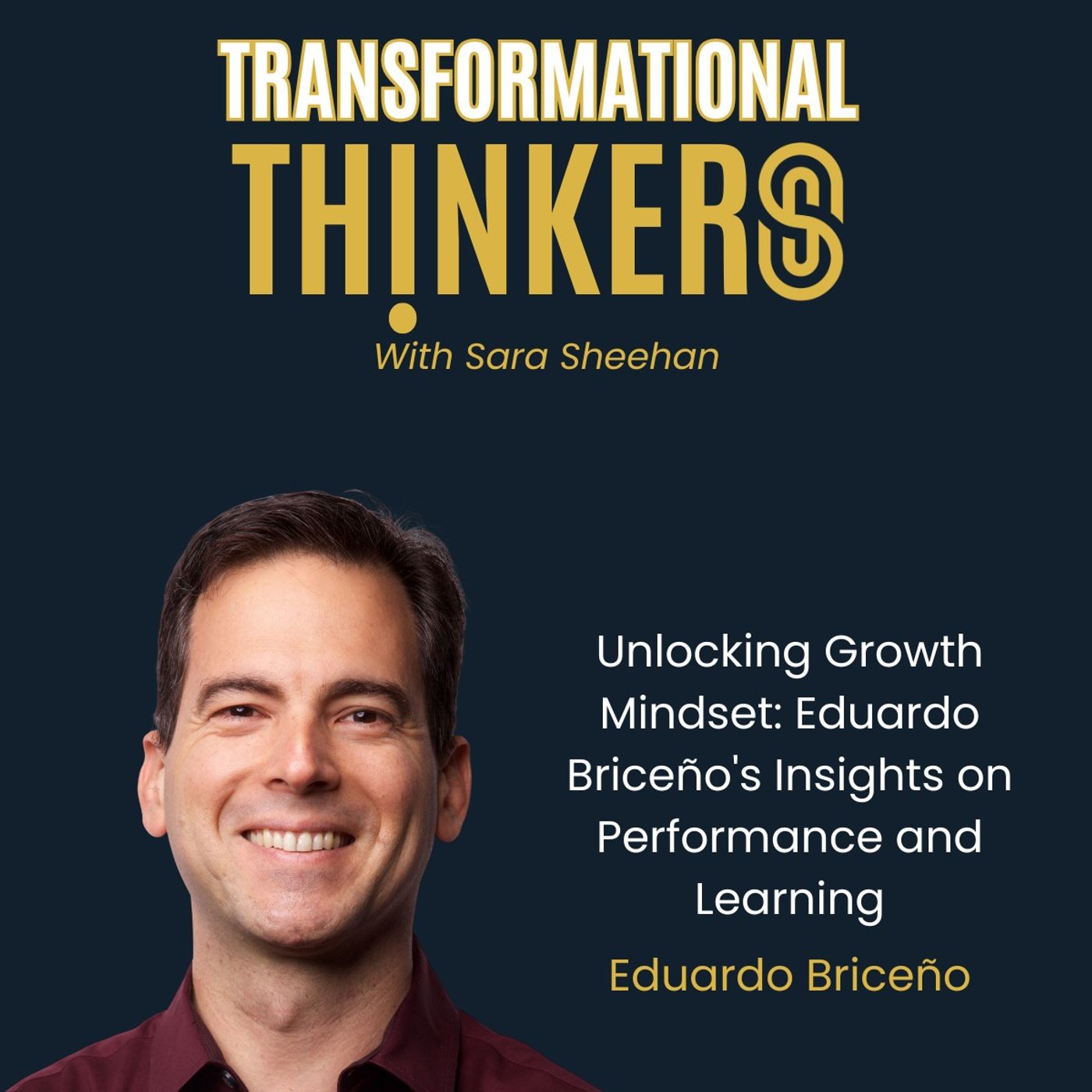
In this episode of Transformational Thinkers, Sara Sheehan welcomes Eduardo Briceño, a keynote speaker, behavior change partner, and co-founder and CEO of Mindset Works, to the show to discuss the performance paradox. Eduardo explains this as being so focused on performance that we lose sight of learning and asking questions about what makes our performance effective. He discusses his book “The Performance Paradox” and the differences between the learning zone and performance zone with Sara.Great performers, according to Eduardo, give the best performance they can on stage, but behind the curtains, they are doing hours of experimenting, trying new strategies, soliciting feedback, and learning. Performance without integration of learning leads to stagnation. Eduardo’s TED Talk “How to Get Better at the Things You Care About” highlights the need to alternate between the learning and performance zones for true improvement. Sara’s conversation with Eduardo explores many of his teachings and strategies, including creating a safe space to experiment, the value of not just preaching continuous improvement, but creating an authentic learning culture, and why there is a need to reframe mistakes and errors into essential progress steps. Eduardo uses many examples of devoted high performers like Beyonce to illustrate the benefits of re-watching one’s performance to learn from it, and explains why learning and performing are not opposing forces but ones that should be integrated. This episode will change the way we view growth and mindset as related to our performance output.About Eduardo Briceño: Eduardo Briceño is a keynote speaker, facilitator, and behavior change partner who guides many of the world’s leading companies in developing cultures of continuous improvement, innovation, and high performance. His TED talk, “How To Get Better At The Things You Care About,” and his TEDx talk, “The Power of Belief,” have been viewed more than ten million times. His book, The Performance Paradox: Turning the Power of Mindset into Action, won multiple awards. His work has been featured in Harvard Business Review, Big Think, Business Insider, Entrepreneur, Fast Company, Forbes, Inc., Quartz, and others.Earlier in his career, Eduardo was the co-founder and CEO of Mindset Works, the pioneer in growth mindset development services, which he started with Stanford professor Carol Dweck and which he led for over a decade. Prior to that, he was a venture capital investor with the Sprout Group and served on several for-profit and non-profit boards. Before that, he was an investment banking analyst with Credit Suisse. He is a Pahara-Aspen Fellow, a member of the Aspen Institute’s Global Leadership Network, and an inductee in the Happiness Hall of Fame.Originally from Caracas, Venezuela, Eduardo holds bachelor’s degrees in economics and engineering from the University of Pennsylvania, as well as an MBA and M.A. in education from Stanford University. Most importantly, he continues to enjoy lifelong learning every day.— Resources discussed in this episode:“The Performance Paradox: Turning the Power of Mindset Into Action” by Eduardo Briceño__Contact Sara Sheehan | Sara Sheehan Consulting:SaraWSheehan.comSara Sheehan on LinkedInMeet with SaraContact Eduardo BriceñoWebsite: briceno.comLinkedIn: eduardo-briceno__ Hosted by Simplecast, an AdsWizz company. See pcm.adswizz.com for information about our collection and use of personal data for advertising.
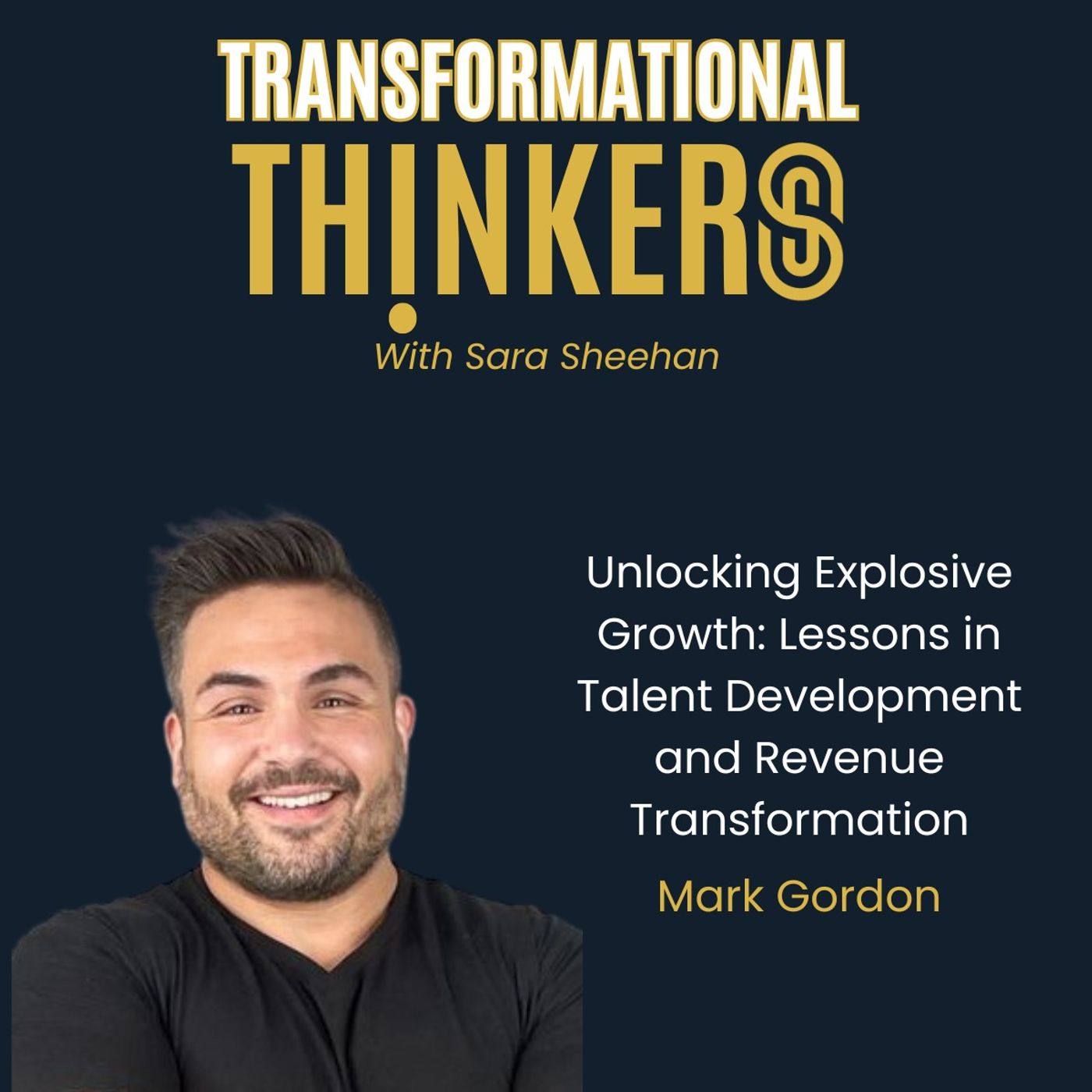
Sara Sheehan welcomes guest Mark Gordon, Founder and CEO of Integrated Go-To-Market Solutions, to the show for a conversation about blending psychology into scaling companies and how he positively re-energizes relationships with clients. Through his company, IGTMS, Mark helps startups and mid-market companies align scattered sales into one revenue-generating machine. He talks with Sara about his career journey, the challenges of entrepreneurship, and how lessons learned from playing rugby have stayed with him.What motivates people is a foundational interest of Mark’s, and that fascination with people and his college psychology major drove Mark to the philosophies that guide his company today. How can we create a place where people will do the best work they’ve ever done? Mark pulled lessons from sports and from business school in addition to psychology to answer that question. People are generally trying their best, which is a belief Mark uses in his coaching techniques. Finding people who want to get better every day and creating an environment where they can do their best is the essence of his principles. Mark’s history with rugby has informed his life in and out of work, and he shares stories that illustrate some of the lessons learned. Sports teams teach us to understand leadership, according to Mark, and people’s trust in the aptitude of their leader is what compels them to follow. Sara finds out which books inspire Mark, his thoughts on entrepreneurship, and client success stories that illustrate how he achieves significant results. He shares his Core Four foundational views and how he guides salespeople to greater revenue in this compelling episode about motivation and successful business scaling.About Mark D. Gordon: Mark Gordon is a veteran sales coach, growth strategist, and founder of Integrated Go-To-Market Solutions (IGTMS). Known for blending psychology with practical GTM strategies, Mark has helped thousands of sales professionals and scaled multiple companies into eight-figure successes. He specializes in cutting through misalignment to build high-performing, revenue-driving systems for B2B founders.— Resources discussed in this episode:Jim Collins books“Grit: The Power of Passion and Perseverance” by Angela Duckworth__Contact Sara Sheehan | Sara Sheehan Consulting:SaraWSheehan.comSara Sheehan on LinkedInMeet with SaraContact Mark GordonWebsite: igtms.comLinkedIn: MarkDouglasGordonInstagram: @MarkDGordon__ Hosted by Simplecast, an AdsWizz company. See pcm.adswizz.com for information about our collection and use of personal data for advertising.
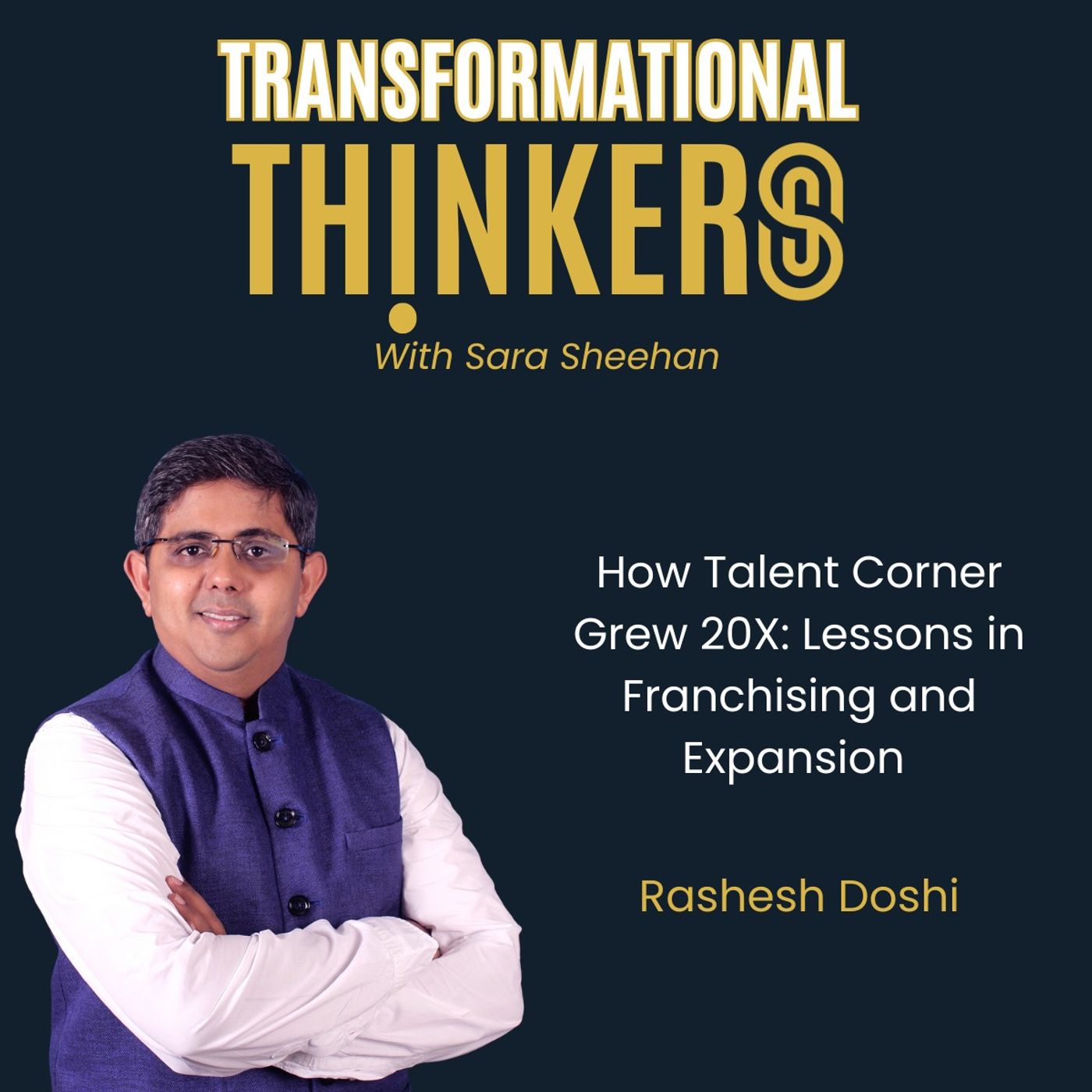
Sara Sheehan welcomes guest Rashesh Doshi, Managing Director of Talent Corner, to the podcast to explore his HR business and the fantastic growth his business has experienced. Rashesh details the growth in numbers and explains how their franchise partners add to the growth and are supported. They also discuss how the Stanford Seed Transformation Program is positively impacting Talent Corner as a team and Rashesh personally. It’s due to this reinvigoration that Rashesh is looking to expand Talent Corner out of India into nine other markets with the assistance of Stanford. Sara finds out part of the scaling plan for such an aspirational goal and talks about many of Rashesh’s guiding principles. The franchise partners Talent Corner that brings in are welcomed into a robust training program, and are supported by a 27-member in-house team. Rashesh further explains that franchise partners are focused on servicing, not generating new business, so they are taking care of existing clients, which has helped the company’s growth in referrals. The Stanford Seed Transformation Program is also a key part of Rashesh’s scaling strategy, as their support has added to the team’s understanding of their company’s capabilities and is supporting the goal of expanding into nine new areas. Sara discusses Rashesh’s transformation plan for balancing the company’s scaling goal with caring for partners and employees, and Rashesh stresses that the entire team has a part in the journey; it isn’t just him leading from the front. As he moves into this new chapter, Rashesh says he’s been learning to listen better and how that’s incorporated into the coaching within the company. His passion for networking has been a key motivator for his success as well, and the sharing of insights is something he cherishes. About Rashesh Doshi: He joined the company in 2004 and expanded the recruitment and business development teams. He came up with a Franchise Model which is extremely strong & effective. Today, Talent Corner is one of the Companies which has run the franchise business expansion plan for many years & has brought loads of success to its partners and to Talent Corner.He is focused on being responsible for the strategic growth of the company.He believes in the Philosophy of “Plan More, Think Longer & Once Decided Act Fast”.Rashesh is a Member of BNI (Business Networking International), Round Table India and Mr. Harsh Mariwala’s (Marico Industries) PSR Project – Ascent.— Contact Sara Sheehan | Sara Sheehan Consulting:SaraWSheehan.comSara Sheehan on LinkedInMeet with SaraContact Rashesh DoshiWebsite: TalentCorner.inLinkedIn: RasheshDoshiYouTube: @TalentCorner Hosted by Simplecast, an AdsWizz company. See pcm.adswizz.com for information about our collection and use of personal data for advertising.
Sara Sheehan welcomes guest Jim Carlough, a business strategist, author, and speaker with over 30 years of leadership experience, to the podcast for a conversation about how leaders are developed. Jim talks about his career journey and what makes for good leadership, highlighting insights from his book “The Six Pillars of Effective Leadership: A Roadmap to Success”. Sara and Jim focus on specifically discussing the two pillars of integrity and empathy as they relate to powerful leaders. Jim’s philosophy on empathy includes an obligation to lead employees and teams with compassion and camaraderie. Jim shares advice from his current role as a Chief Sales Officer and offers a glimpse into the future of growth he envisions for his company. His other focus is leadership and helping people become better leaders, which is the impetus for writing his book “The Six Pillars of Effective Leadership”. Sara learns that while Jim envisioned the book as being written for corporate America, he’s had a great deal of success with the book being popular among superintendents and teachers in schools. Of the six pillars, Jim claims integrity is the non-negotiable pillar because transparency and integrity are vital for building trust with teams and organizations. Better leaders are developed in part by getting in among the team being led. Jim notes that true camaraderie and integrity can’t be built “if you sit behind a closed door and sit behind a computer and just send emails to people all day”. He discusses stories from his own leadership experiences with Sara, highlighting the necessity of connection and empathy as cornerstones of effective leadership. Jim’s insights inspire thought on how leadership can be developed with people as the focus, and offer sound advice on what can be done to see greater success. About Jim Carlough: Jim is a graduate of Seton Hall University, South Orange, New Jersey, with a degree in Psychology. He is an accomplished executive with experience in the C-suite and EVP/VP with over 30 years of expertise in driving explosive growth and profitability for healthcare and healthcare technology organizations ranging from start-ups to large-scale enterprises. With a demonstrated history of success in building high-performance teams, revitalizing struggling portfolios, and leading successful M&A integrations. A strategic leader capable of energizing and transforming any organization.Jim is also a professional public speaker and published author. Speaking has been part of his professional responsibilities for a large portion of his career.__Resources discussed in this episode:“The Six Pillars of Effective Leadership: A Roadmap to Success” by Jim Carlough“Endurance: Shackleton’s Incredible Voyage” by Alfred Lansing— Contact Sara Sheehan | Sara Sheehan Consulting:SaraWSheehan.comSara Sheehan on LinkedInMeet with SaraContact Jim CarloughWebsite: JimCarlough.comLinkedIn: JimCarloughMSEmail: Jim@JimCarlough.comFacebook: JimCarloughMS__ Hosted by Simplecast, an AdsWizz company. See pcm.adswizz.com for information about our collection and use of personal data for advertising.
In this solo episode, Sara Sheehan offers a message on unlocking the power of customized change management training, a strategic investment for CEOs. Success hinges on the ability to effectively manage business change, so investing in a private, customized version of a Mastering Change Management course is a key step for leadership teams. Sara breaks down all the ways in which customized training is an essential part of a successful transformation and details exactly how a private course would work.There are six reasons, explained by Sara, on why a change management course is so essential for CEOS navigating complex projects. One, it is tailored specifically to suit the company investing in it. Two, it enhances leadership alignment and capability. Three, it builds organizational capacity for change, even in this era of constant disruption. Fourth, it speeds up change adoption and reduces employee resistance. Five, it’s scalable for long-term growth. And sixth, it cultivates a stronger organizational culture.What does such a customized course look like? How is it built? Sara breaks it down into steps: 1. Initial consultation, 2. Customized content development, 3. Interactive workshops, and 4. Ongoing support. In navigating complex projects, change, and business transformation, there’s no greater toolkit to invest in than a carefully-tailored course designed to keep the leadership and team on track and engaged while key growth happens. Sara makes a compelling case for using this long-term strategy to achieve a business advantage.About Sara Sheehan: Sara’s professional career includes working with leaders in Fortune 100 companies and top-tier firms. She offers expert change management strategies to help businesses navigate complex transformations. Through her 25+ years of experience, she supports executives in developing change capability, in developing more leaders at more levels of the organization, and in creating high-performing teams. Sara’s knowledge spans change, organization design and effectiveness, talent development, training, marketing, business building, and business development.— Resources discussed in this episode:Sara Sheehan Calendly— Contact Sara Sheehan | Sara Sheehan Consulting:SaraWSheehan.comSara Sheehan on LinkedInMeet with Sara Hosted by Simplecast, an AdsWizz company. See pcm.adswizz.com for information about our collection and use of personal data for advertising.
Sara Sheehan’s guest in this episode is R.T. Custer, co-founder and CEO of Vortic Watch Company and Colorado Watch Company. R.T. transforms antique American pocket watches into one-of-a-kind wrist watches through Vortic Watch Company, and with Colorado Watch Company, will be building the most American-made watches at scale available today. Sara talks with R.T. about how he identified his calling in converting pocket watches, surviving a crippling lawsuit early in his entrepreneurship, loyal customers, and where he’s headed next. R.T. discusses launching on Kickstarter and shipping watches to customers a year and a half later. Vortic scaled from shipping 100 watches to 200, and R.T. realized due to how the restoration of antique pocket watches works, he would face a maximum capacity of roughly 400 watches a year. This led to the formation of his Colorado Watch Company brand to address the ability to create quality American-made watches at scale. He and Sara talk about sourcing the antique watches, the market for wrist watches, and the triumph of surviving the 2017 lawsuit that he calls the hardest thing he’s ever done.The lessons R.T. has learned from his entrepreneurial ventures are many and varied. He shares how he learned that people want to invest in momentum and how he realized that momentum and being the visionary for his company can only come from him. Sara learns about R.T.’s Angel investing, plans for the Colorado Watch Company scaling, why R.T. feels such a connection to military service, and the intricacies of antique pocket watches. This episode is a fascinating glimpse into a very niche entrepreneurial venture that is being scaled through an additional brand without sacrificing the original vision. Sara takes listeners deep into R.T.’s inspirational journey. About R.T. Custer:R.T. Custer is a multi-passionate entrepreneur, speaker, and guide supporting founders through community, connection, and mentorship. As the CEO of Vortic Watch Company, the Chief Revenue Officer of Carter & Custer Agency, and the co-host of Fast Foundations Mastermind, he knows what it takes to build a successful business and drive impact. He wholeheartedly believes that you can live a life of wealth and freedom when you’re not afraid to take risks, and he uses his platform to empower founders to step into their worth.R.T. is also deeply passionate about his work as an Angel Investor and Advisor in consumer product companies through his video podcast, “Products Worth Talking About”. He is a sought-after speaker and podcast guest, especially after launching a 2nd YouTube show called “Custer & Wolfe, Building a Watch Company” with his business partner, Tyler Wolfe, to document everything that goes into building an American manufacturing company. R.T. has proven that it is possible to enjoy life to the fullest while building wealth, and he wants to share everything he’s learned so that you can enjoy the same freedom.Most importantly, R.T. is a partner to Lindsay Roselle and the father of two boys, Sawyer and Wesley. They live in Fort Collins, Colorado, where they run their collective 5 businesses, chase their kids and two dogs around, and spend their (minimal) free time golfing, working out, drinking whiskey, and hanging out with friends and family. — Contact Sara Sheehan | Sara Sheehan Consulting:SaraWSheehan.comSara Sheehan on LinkedInMeet with SaraContact R.T. Custer | Vortic Watch Company / Colorado Watch Company:Vortic Website: VorticWatches.comColorado Website: ColoradoWatchCompany.comR.T. Custer: Website: RTCuster.comLinkedIn: RTCusterInstagram: @rtcuster Hosted by Simplecast, an AdsWizz company. See pcm.adswizz.com for information about our collection and use of personal data for advertising.

Comments

Download from Google Play

Download from App Store
 United States