


 Claim Ownership
The Capitalist
Subscribed: 171Played: 6,355
Subscribe

© Attribution
Description
The Capitalist is the podcast that champions free markets, fresh ideas, and thoughtful solutions. Join sharp minds from business, politics, and beyond for intelligent debate and optimistic conversations about building a brighter, market-driven future for Britain. Brought to you by the team behind CapX's unmissable daily briefings from the heart of Westminster.
Hosted on Acast. See acast.com/privacy for more information.
301 Episodes
Reverse
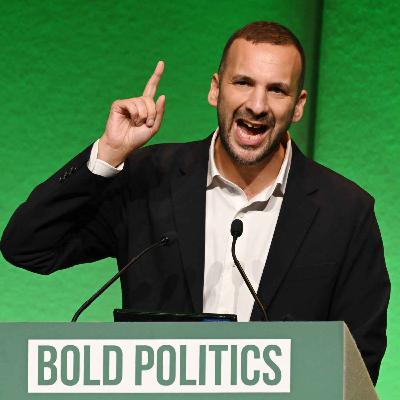
Under Zack Polanski, the Greens have quietly abandoned environmentalism in favour of something far more combustible: a coalition of economic grievance, communal tension, and calculated identity politics. And it's working.Young Britons — priced out of homes, squeezed by taxes, shut out of stable careers — are turning to a party whose solutions would make every one of their problems dramatically worse. Wealth taxes that don't raise money. Rent controls that push up rents. A Gaza foreign policy built on sentiment rather than sense.But there is a counter-example. Across the Atlantic, a conservative politician managed the seemingly impossible: he made the Right cool to young voters again. His name is Pierre Poilievre, and Britain's political class would do well to pay attention.Joseph Dinnage, Deputy Editor of CapX, makes the case for why — and how — the British Right must go Canadian before it's too late.Despatch brings you the best writing from CapX's unrivalled daily newsletter from the heart of Westminster.Stay informed with CapX's unmissable daily briefings from the heart of Westminster. Go to capx.co to subscribe. Hosted on Acast. See acast.com/privacy for more information.

Why does it feel harder than ever for young people to buy a home? According to Pierre Poilievre, the answer lies not just in planning laws or slow construction — but in the silent erosion of money itself.In this special episode of The Capitalist, recorded at the Margaret Thatcher Lecture hosted by the Centre for Policy Studies, Canada's Opposition Leader argues that decades of money printing across the Western world have inflated asset prices and widened the gap between rich and poor. If measured in gold, he suggests, housing is actually cheaper than it was half a century ago — but measured in pounds and dollars, it has skyrocketed as currencies lose purchasing power. The result is a generation locked out of ownership while asset holders benefit from inflation.Drawing on the ideas of Adam Smith and Margaret Thatcher, Poilievre lays out a broader conservative argument for the modern age: restore sound money, dismantle barriers to home building, expand free trade between allied democracies, and rebuild an economy that rewards work and enterprise rather than political connections.It’s a sweeping defence of free markets — and a call for a new alliance of free nations determined to restore opportunity for the next generation.Stay informed with CapX's unmissable daily briefings from the heart of Westminster. Go to capx.co to subscribe. Hosted on Acast. See acast.com/privacy for more information.

A Green by-election victory in Greater Manchester may once have seemed unthinkable. Now it looks like a warning shot. In this essay, William Atkinson, Assistant Content Editor at The Spectator, argues that the result signals something far deeper than a protest vote: the fragmentation of Britain’s traditional party system and the rise of sectarian, identity-driven politics. With Labour rattled, the Conservatives in retreat and insurgent forces circling, Gorton and Denton could prove a harbinger of a far more volatile political era.Despatch brings you the best articles from CapX’s unrivalled daily newsletter.Stay informed with CapX's unmissable daily briefings from the heart of Westminster. Go to capx.co to subscribe. Hosted on Acast. See acast.com/privacy for more information.

Britain is in the grip of a housing crisis. And despite the promises of successive governments, we just can’t seem to build enough new homes. But this isn’t a uniquely British problem. In his book, “Build Baby Build”, Bryan Caplan examines the forces shaping housing markets in a way that applies almost everywhere.Bryan’s core argument is disarmingly simple: cut regulation and more homes will follow. But as an economist at George Mason University, he is also acutely aware of the political and economic trade-offs – including the tension between high housing costs and the interests of those already invested in the market.He joins Marc Sidwell to discuss not only what less regulation could achieve, but how such an approach might even become politically popular.Stay informed with CapX's unmissable daily briefings from the heart of Westminster. Go to capx.co to subscribe. Hosted on Acast. See acast.com/privacy for more information.

As unemployment climbs and youth joblessness surges past 16%, ministers insist the labour market is merely adjusting. But in this essay, Andrew Griffith, Shadow Secretary of State for Business and Trade, argues the truth is far starker: Labour’s higher payroll taxes, expanded union powers and sweeping employment regulations have made hiring more expensive, riskier and less attractive. The result, he says, is a steady erosion of Britain’s once-flexible jobs market — with young people paying the highest price.Despatch brings you the best articles from CapX’s unrivalled daily newsletter.Stay informed with CapX's unmissable daily briefings from the heart of Westminster. Go to capx.co to subscribe. Hosted on Acast. See acast.com/privacy for more information.

America has long liked to see itself as the world’s dream factory – from the birth of Hollywood to the moon landings, a belief in thinking bigger has been central to the national story. But attitudes towards artificial intelligence reveal a worrying shift. Surveys show that more people are anxious about AI than excited by its spread, with around six in ten saying the technology is moving too fast.James Pethokoukis is the author of The Conservative Futurist and writes the Substack newsletter Faster, Please. He’s also a senior fellow and the DeWitt Wallace Chair at the American Enterprise Institute, where he analyses US economic policy. He joins Marc Sidwell to discuss the transformative possibilities of AI, how its risks can be managed, and why a more optimistic outlook may be warranted.Stay informed with CapX's unmissable daily briefings from the heart of Westminster. Go to capx.co to subscribe. Hosted on Acast. See acast.com/privacy for more information.

As younger voters grow disillusioned with a housing system that denies them real control over their homes, the battle over leasehold has become a test of whether capitalism still delivers on its promises. In this essay, Harry Scoffin, founder of Free Leaseholders, argues that reforming — and ultimately replacing — leasehold with commonhold is not a left-wing cause, but the logical continuation of Thatcher’s popular capitalism. From Randolph Churchill to Margaret Thatcher, Conservatives once championed mass ownership as a bulwark against socialism. Scoffin makes the case that finishing that project could restore faith in markets, revive homeownership and prevent a new generation from turning away from the system altogether.Despatch brings you the best articles from CapX’s unrivalled daily newsletter.Stay informed with CapX's unmissable daily briefings from the heart of Westminster. Go to capx.co to subscribe. Hosted on Acast. See acast.com/privacy for more information.

When the Conservative Party last entered government, in coalition with the Liberal Democrats, the UK was still finding its feet after the global financial crisis. What followed was a succession of events that quickly came to dominate political life: Brexit, the pandemic, and Russia’s invasion of Ukraine.Each of these moments demanded large, costly interventions from the state. But Britain now faces a new set of challenges: an ageing population, a fresh industrial revolution driven by AI, growing global security risks, and the pressures of a changing climate.John Penrose is the founder of the Centre for Small Conservatives. A former Conservative MP, he joins Marc Sidwell to discuss why he’s arguing for moving beyond rhetoric and towards serious, practical policy ideas — ones he believes can deliver tangible results in the real world.Guest: John Penrose, former MP and founder of the Centre for Small State ConservativesStay informed with CapX's unmissable daily briefings from the heart of Westminster. Go to capx.co to subscribe. Hosted on Acast. See acast.com/privacy for more information.

Can a Prime Minister really be on borrowed time less than two years after a landslide election victory? Benjamin Wilson speaks to ConservativeHome's Henry Hill about the mounting speculation around Sir Keir Starmer — and why Labour’s internal unrest may be less surprising than it looks.Henry argues that Starmer’s problems were baked in from the start: a low-turnout election, a deliberately cautious manifesto, and a parliamentary party that never felt bound to deliver painful choices on welfare, spending, or reform. But now the problems run even deeper: Labour’s rebellions, the structural difficulty of governing with a huge and undisciplined majority, the changing expectations placed on leaders in the age of social media, and the stagnant fiscal reality that now threatens any party in power. From Reform’s rise to the fragmentation of the electorate, Henry thinks Britain may be entering a brutal cycle in which voters punish every governing party for problems no leader can easily fix.Stay informed with CapX's unmissable daily briefings from the heart of Westminster. Go to capx.co to subscribe. Hosted on Acast. See acast.com/privacy for more information.

After decades of chronic undersupply, even modest housing reforms can feel like cause for celebration. But in this essay, John Penrose, Chair of the Conservative Policy Forum and founder and director of the Centre for Small-State Conservatives, argues that the Government’s latest plans don’t go nearly far enough. His solution is simple and radical in equal measure: give homeowners the right to build up, not out. By gently increasing density in towns and cities, Penrose says Britain could unlock millions of new homes, restore urban beauty, and finally make housing affordable for a new generation.Despatch brings you the best articles from CapX’s unrivalled daily newsletter.Stay informed with CapX's unmissable daily briefings from the heart of Westminster. Go to capx.co to subscribe. Hosted on Acast. See acast.com/privacy for more information.
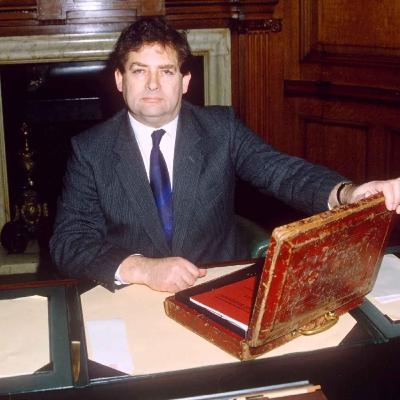
In this special live discussion, Mervyn King, Lord King of Lothbury, and Terry Burns, Lord Burns, reflect on the economics and politics of the Lawson boom, chaired by Daniel Mahoney. Drawing on their first-hand experience working with Nigel Lawson, they revisit one of the most consequential periods in modern British economic history.Presented in front of a live audience, the discussion touches on the inheritance of 1970s inflation and the controversial 1981 Budget, tax reform, monetary targeting, exchange-rate policy, and the late-1980s boom and bust. King and Burns challenge the myth that the 1988 Budget alone caused the Lawson boom, arguing instead that prolonged low interest rates, financial deregulation, data misreads, and global conditions played a decisive role.Looking forward, they connect these lessons to today’s debates on inflation after Covid, the role of money and fiscal discipline, supply-side reform, and the growing strain on central bank independence. A timely, candid exchange between two architects and critics of Britain’s modern macroeconomic framework – and a crucial reminder of how hard-won credibility must be renewed.Stay informed with CapX's unmissable daily briefings from the heart of Westminster. Go to capx.co to subscribe. Hosted on Acast. See acast.com/privacy for more information.

As calls grow louder to cap personal fortunes, a new philosophy – “limitarianism” – argues that no one should be allowed to be rich beyond a fixed limit. In this essay, Tim Worstall, Senior Fellow at the Adam Smith Institute, takes aim at the idea, arguing that it rests on a fundamental misunderstanding of how wealth, value and incentives actually work. From Mark Zuckerberg to global inequality, he makes the case that extreme riches are not a social failure, but often the by-product of innovations that benefit billions – and that banning wealth would leave society poorer, not fairer.Despatch brings you the best articles from CapX’s unrivalled daily newsletter.Stay informed with CapX's unmissable daily briefings from the heart of Westminster. Go to capx.co to subscribe. Hosted on Acast. See acast.com/privacy for more information.
As Robert Jenrick defects to Reform UK, pressure is mounting on the Conservative Party to chart a new course. In this episode of The Capitalist, Sir Jacob Rees-Mogg joins Marc Sidwell to dissect the fallout — and to make the case for a pre-election pact between Reform and the Tories.One of the party’s most recognisable figures, Rees-Mogg argues that Kemi Badenoch has emerged strengthened, but warns that division on the Right could lead to catastrophe. Drawing on the historical precedents of 1918 and 1931, he outlines how a pact might work in practice — and why, in his view, the future of the Right depends on swift, strategic unity.Stay informed with CapX's unmissable daily briefings from the heart of Westminster. Go to capx.co to subscribe. Hosted on Acast. See acast.com/privacy for more information.
Robert Jenrick’s dramatic defection to Reform UK has blown open long-simmering tensions on the British Right — and handed Kemi Badenoch a serious test as Conservative leader. In this essay, Joseph Dinnage, deputy editor of CapX, dissects the intrigue behind Jenrick’s dismissal, the risks Badenoch took in cutting him loose, and the uncertain gains for Nigel Farage’s insurgent party. It’s a story of ambition, loyalty and timing — and one that may yet reshape the balance of power on the Right.Despatch brings you the best articles from CapX’s unrivalled daily newsletter.Stay informed with CapX's unmissable daily briefings from the heart of Westminster. Go to capx.co to subscribe. Hosted on Acast. See acast.com/privacy for more information.
What happens when a regime shuts off the internet — and then turns its guns on its own people? For the IEA's Mani Basharzad, the question is deeply personal: he hasn't heard from his mother or friends in Iran for days. As the country plunges into its most violent crackdown in decades, reports of mass killings, information blackouts and nationwide protests raise a stark question: is the Islamic Republic finally losing control?In this urgent episode of The Capitalist, Joseph Dinnage speaks to Mani about what an internet shutdown really means on the ground, why this wave of protests feels fundamentally different from those that came before, and how a broad coalition of Iranians — rich and poor, secular and religious — are rallying around the prospect of regime change. Mani explains the role of Crown Prince Reza Pahlavi, the economic collapse hollowing out the state, and why this movement is less a revolution than a fight to reclaim basic normality.Stay informed with CapX's unmissable daily briefings from the heart of Westminster. Go to capx.co to subscribe. Hosted on Acast. See acast.com/privacy for more information.
As ministers insist the labour market is merely “normalising”, the numbers tell a more troubling story — especially for the young. In this essay, Damian Pudner, an independent economist specialising in monetary policy, argues that Britain is sliding into a slow-burn recession under Rachel Reeves, with youth unemployment surging and entry-level jobs disappearing. Higher payroll taxes, tighter regulation and rising business costs, he warns, are scarring a generation before their working lives have properly begun — with consequences that could haunt the economy for decades.Despatch brings you the best articles from CapX’s unrivalled daily newsletter.Stay informed with CapX's unmissable daily briefings from the heart of Westminster. Go to capx.co to subscribe. Hosted on Acast. See acast.com/privacy for more information.
Are today’s culture wars, party fractures and populist backlashes really something new — or are we simply reliving an old British story? In this episode of The Capitalist, Marc Sidwell looks three centuries into the past to understand the political turmoil of the present. From riots over immigration to furious pamphlet wars, from elite anxiety about misinformation to bitter arguments over Britain’s role in Europe, the foundations of modern politics were laid in the age of Whigs and Tories.Marc is joined by historian and author George Owers, whose book "The Rage of Party" (one of CapX's favourites of 2025) brings the birth of British party politics vividly to life. Together they explore the explosive origins of left and right, the rise of finance and global ambition, the dangers of suppressing demagogues, and why moderation — however unfashionable — has always been the hardest political art to master.Stay informed with CapX's unmissable daily briefings from the heart of Westminster. Go to capx.co to subscribe. Hosted on Acast. See acast.com/privacy for more information.
Margaret Thatcher remains one of the most consequential leaders in modern British history. Rising to power after the "Winter of Discontent," she steered the country through economic turmoil, high inflation, and widespread industrial unrest. Her bold embrace of free-market principles reshaped Britain — and left a legacy still fiercely debated today.Now, as political uncertainty returns to Westminster, Thatcher’s conviction-led leadership feels more relevant than ever.In this short interview, former Foreign Secretary Sir Malcolm Rifkind — one of only five ministers to serve throughout both the Thatcher and Major governments — reflects on his time at the heart of power. With insight and candour, he reveals what set Mrs Thatcher apart, and why her leadership style made such a lasting impact, even in the face of fierce opposition.Stay informed with CapX's unmissable daily briefings from the heart of Westminster. Go to capx.co to subscribe. Hosted on Acast. See acast.com/privacy for more information.
With local elections looming in May, Labour collapsing in the polls, and Westminster rumbling with leadership intrigue, Marc Sidwell asks whether Sir Keir Starmer is heading for a reckoning — and whether figures like Ed Miliband could seize the moment. Meanwhile, Reform UK continues to hover around the 30% mark, the Conservatives search for a bounce under Kemi Badenoch, and Britain’s politics looks increasingly like a multi-party fight.In this new year forecast, Marc is joined by Joseph Dinnage, Deputy Editor of CapX, to map the fault-lines of the next 12 months — from the battle for the right, to the economic hard choices that no party can dodge, to America’s 250th birthday under Donald Trump and the possibility of a post-Trump succession fight led by JD Vance. If 2025 was the year the centre cracked, 2026 may be the year it fully gives way.Stay informed with CapX's unmissable daily briefings from the heart of Westminster. Go to capx.co to subscribe. Hosted on Acast. See acast.com/privacy for more information.
 1
1Is Britain entering an age of permanent political fragmentation? As Labour falters despite its landslide victory, Reform UK surges, the Greens flirt with wealth taxes, and the Conservatives search for renewed purpose under Kemi Badenoch, the old certainties of British politics are unravelling. Across the Atlantic, Donald Trump’s second term has proved no less turbulent — from the collapse of his Department of Government Efficiency to a tariff regime that’s shaken the global trading order.In this end-of-year review, Marc Sidwell is joined by Joseph Dinnage, Deputy Editor of CapX, to take stock of a chaotic political year. Together they explore why reform has proved so elusive, how populism is reshaping both left and right, and what Trump’s unpredictability means for Britain, Europe and the global economy.Stay informed with CapX's unmissable daily briefings from the heart of Westminster. Go to capx.co to subscribe. Hosted on Acast. See acast.com/privacy for more information.


Download from Google Play

Download from App Store
 United States
An interesting episode it would have been nice to have heard diverse views when discussing this. The speaker has a particular view and bias especially as he was quoted in the report. I felt that there was a lot of listing of different sub sects and simplify issues such as white privilege and other concerns by saying there is more work to be done. It was one view pushed here.