


 Claim Ownership
Merryn Talks Money
Subscribed: 842Played: 63,294
Subscribe

2026 iHeartMedia, Inc. © Any use of this intellectual property for text and data mining or computational analysis including as training material for artificial intelligence systems is strictly prohibited without express written consent from iHeartMedia
Description
Merryn Talks Money with Bloomberg senior columnist Merryn Somerset Webb is your key to understanding how markets work – and how you can make them work for you. Every episode features a relaxed but in-depth conversation with a fund manager, a strategist, a Bloomberg expert or just someone Merryn finds particularly interesting in any given week. Listen in for the kind of insights and explanations everyone can use to help them make better saving and investing choices.
330 Episodes
Reverse

On this week’s markets wrap, Merryn Somerset Webb speaks with Helen Thomas of Blonde Money about how Middle East tensions are creating lasting energy disruptions despite ceasefire uncertainty. They warn this could drive persistent inflation and leave the UK particularly exposed.See omnystudio.com/listener for privacy information.
As the US-Israel war with Iran upends global energy flows, Professor Helen Thompson joins Merryn Talks Money to explain what the shock means for oil, gas, supply chains and the wider world economy. They discuss why this may mark the end of any return to “normal” in energy markets, how Asia and Europe could be hit differently, and why Britain’s energy strategy now looks dangerously exposed.See omnystudio.com/listener for privacy information.

On this week's Merryn Talks Money personal finance episode, Merryn Somerset Webb and John Stepek answer an interesting listener question surrounding the active vs passive debate. The pair look at financial data spanning the past 40 years to help a listener understand the pros and cons of active vs passive investing and why passive investing isn't truly passive. See omnystudio.com/listener for privacy information.
 1
1Why did gold fail to protect portfolios during the latest market shock? In this episode of Merryn Talks Money, Merryn Somerset Webb speaks with Evy Hambro, global head of thematic and sector investing at BlackRock, about the violent moves in gold and silver, the new energy risk premium, and why commodities may be entering a powerful new cycle. They discuss inflation, interest rates, energy security, mining valuations, AI-driven demand for materials, and why investors may need to rethink how much exposure they have to gold, energy and broader commodity equities.See omnystudio.com/listener for privacy information.

In this week’s markets wrap, John Stepek, senior reporter and author of the Money Distilled newsletter, and Bloomberg Opinion's Marcus Ashworth discuss how geopolitical uncertainty is leaving investors with few clear safe havens, as gold, bonds, and currencies all behave unpredictably while cash gains appeal.See omnystudio.com/listener for privacy information.

Merryn Somerset Webb and John Stepek speak with Paula Steele, director at John Lamb Hill Oldridge, about how to pass on an inheritance efficiently — minimising tax, managing the succession process, and avoiding unintended effects on beneficiaries’ motivation. The conversation was recorded at a live Bloomberg.com subscriber event in London on March 17.See omnystudio.com/listener for privacy information.
Cathie Wood, CEO and CIO of Ark Investment Management, joins Merryn Somerset Webb to make the bullish case for the next era of innovation. From AI, robotaxis and CRISPR to Bitcoin, Tesla and SpaceX, she lays out the technologies she believes will drive faster growth, lower costs and major market disruption.See omnystudio.com/listener for privacy information.
What makes a leader successful? Francine Lacqua interviews top CEOs and global industry leaders for candid lessons on leadership, management, and the future of work.See omnystudio.com/listener for privacy information.
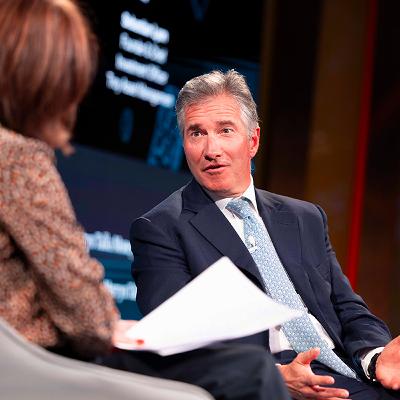
Merryn Somerset Webb sits down with Troy Asset Management founder and chief investment officer Sebastian Lyon to unpack why markets look eerily calm despite mounting geopolitical shocks—and why investors should be far more focused on protecting wealth than chasing returns. Lyon argues we’ve entered a new era of sticky inflation, fragile portfolios, and looming risks in government bonds. He talks about how he’s positioning for volatility, and offers some ideas for navigating markets when the old rules—like 60/40—no longer apply. This conversation was recorded at a live Bloomberg.com subscriber event in London on March 17.See omnystudio.com/listener for privacy information.
On this week's Merryn Talks Your Money personal finance episode, Merryn Somerset Webb and John Stepek tackle another listener question: should you invest in absolute return funds? They start by explaining what an absolute return fund actually is, the pros (aiming for absolute returns makes sense) and cons (it's not easy to achieve consistently) of such an investment, and look at what to consider when trying to pick such a fund. See omnystudio.com/listener for privacy information.
Contrarian investor Alec Cutler, manager of the Orbis Global Balanced and Cautious funds, joins Merryn Somerset Webb to discuss why global markets are shifting away from speculative growth toward the fundamentals that underpin economies—energy, infrastructure, and national security.Using his “pyramid of needs” framework, Cutler explains why investors are increasingly focusing on the resources and industries that sustain modern economies rather than the technologies built on top of them. The conversation explores opportunities in energy, AI infrastructure, global value stocks, and the changing geopolitical landscape shaping markets.See omnystudio.com/listener for privacy information.
Hosts Merryn Somerset Webb and John Stepek assess the market reaction to oil price volatity and question whether gold, bonds or even hard assets can offer capital protection in this fragmented and dangerous world. They also discuss the latest in private credit and what this uncertaintly means for investors.See omnystudio.com/listener for privacy information.
On this week's Merryn Talks Your Money personal finance episode, Merryn Somerset Webb and John Stepek tackle a listener’s question about an issue many young UK professionals face: where should retirement savings go after auto-enrollment—a SIPP, an ISA or a Lifetime ISA? With markets volatile, rules changing and political risk on the horizon, the pair break down the pros and cons of each option. Sign up to the subscriber event here: https://www.bloombergevents.com/ZZ3kna?utm_source=Podcast&utm_campaign=Podcast&utm_medium=Podcast&RefId=subSee omnystudio.com/listener for privacy information.
On this week's Merryn Talks Money podcast, host Merryn Somerset Webb speaks with financial historian Edward Chancellor about how energy constraints and geopolitical tensions could reshape markets, whether the artificial intelligence boom is a bubble and what it all means for interest rates. Chancellor argues that AI enthusiasm may be overextended, warns of rising long-term rates and sovereign debt risks and makes the case for gold, commodities, Japan and emerging markets over bonds and expensive growth stocks. Sign up to the subscriber event here: https://www.bloombergevents.com/ZZ3kna?utm_source=Podcast&utm_campaign=Podcast&utm_medium=Podcast&RefId=subSee omnystudio.com/listener for privacy information.
Markets have swung sharply as the escalating war in Iran and across the Middle East injects fresh uncertainty into oil prices, inflation, and the path of interest rates. On this week's markets wrap, Merryn Somerset Webb and John Stepek discuss how prolonged energy supply disruption could Britain from mere chronic stagnation (which is bad enough) and into stagflation. They also explore the fault lines that higher-for-longer rates are starting to open up — from private credit stresses to long-running productivity woes.Sign up to the subscriber event here: https://www.bloombergevents.com/ZZ3kna?utm_source=Podcast&utm_campaign=Podcast&utm_medium=Podcast&RefId=subSee omnystudio.com/listener for privacy information.
Hosts Merryn Somerset Webb and John Stepek react to the Spring Statement, plus Bloomberg's exclusive interview with Chancellor Rachel Reeves. She sat down with Head of Economics and Government Stephanie Flanders on Tuesday, and discussed Britain's pending trade deal with the US, why it won't affect its view on the conflict with Iran, and the UK's economic future. Read more: https://www.bloomberg.com/news/articles/2026-03-03/reeves-says-uk-won-t-make-iran-decisions-based-on-us-trade-ties?srnd=homepage-uk Sign up to the subscriber event here: https://www.bloombergevents.com/ZZ3kna?utm_source=Podcast&utm_campaign=Podcast&utm_medium=Podcast&RefId=subSee omnystudio.com/listener for privacy information.
Merryn Somerset Webb speaks with Simon Judes, chief investment officer of Winton, about how to properly understand quantitative investing. Judes attempts to demystify some of the strategies quantitative funds use to allocate capital across different portfolios. They also discuss the role artificial intelligence will play in quant fund research and capital deployment. Sign up to the subscriber event here: https://www.bloombergevents.com/ZZ3kna?utm_source=Podcast&utm_campaign=Podcast&utm_medium=Podcast&RefId=subSee omnystudio.com/listener for privacy information.
From YOLO to HALO. In this week's markets wrap, hosts Merryn Somerset Webb and John Stepek discuss why markets are ditching high multiple AI and software stocks, for "HALO" companies - heavy assets, low obsolescence - and why higher interest rates and even higher infrastructure costs may be behind the moves.To see the article Merryn references in the episode, please follow the link below.Special thanks to Joachim Klement who has allowed us to share this piece from his Klement on Investing Substack. https://klementoninvesting.substack.com/p/why-do-people-invest-in-expensiveSee omnystudio.com/listener for privacy information.
Many of the graduates whose university costs were funded with Plan 2 student loans are now in their 30s, wondering why they have no money at the end of the month, and why they still owe more student debt than they left uni with. The critical mass of graduates feeling the pinch might just have been reached - and now they're feeling angry and ripped off. On this week’s personal finance edition of Merryn Talks Money, Editor at Large for Bloomberg UK Wealth, Merryn Somerset Webb and author of the Money Distilled newsletter, John Stepek unpick how Plan 2 and the new - perhaps even worse - Plan 5 loans work, how and why graduate marginal tax rates can easily exceed 50% and what tweaks could be made to ease the burden. They also ask the overarching question: is the problem the system? Or is it the fact that the UK seems to be incapable of creating enough high paying jobs?See omnystudio.com/listener for privacy information.
Fiona Yang, portfolio manager on the Invesco Asia Dragon Trust, joins Merryn Somerset Webb to discuss why global capital rotated from US equities into emerging Asia in 2025—and what she sees happening in 2026. She explains her valuation-driven, long-term, contrarian approach to stock selection across diverse Asian markets, and shares how she weighs risks like geopolitics, demographics, currency moves, and frothy AI-linked valuations. Sign up to the subscriber event here: https://www.bloombergevents.com/ZZ3kna?utm_source=Podcast&utm_campaign=Podcast&utm_medium=Podcast&RefId=subSee omnystudio.com/listener for privacy information.


Download from Google Play

Download from App Store
 United States
Thanks for this incredibly useful and easy to comprehend discussion on how best to invest in capital markets for the long term. I was happy to see that crypto currencies had no part in the strategy. Of course this is partly due to the short timeframe in which they have existed. I look forward to reading the analysis by Jim Reid and his team at Deutsche Bank and applying it when I rebalance my portfolio in 2026.
Just as highlighting Dr. Anju Verma’s credentials builds trust in the medical field, showcasing expertise is equally important in legal services. Whether you're facing an intellectual property issue or need guidance on patents or trademarks, working with a knowledgeable attorney can make all the difference. For trusted legal representation with a focus on innovation and protection, visit: https://sherinianlaw.net/
She has been crying wolf on a UK house price crash since 2009. One day she will be right, but we may all be retired by then
Download plant vs zombie fusion, pvz fusion mod apk from https://pvz-fusion.id/