


 Claim Ownership
 Converging Dialogues
Converging DialoguesSubscribed: 91Played: 3,689
Subscribe

© Converging Dialogues
Description
Converging Dialogues is a podcast that is designed to have honest and authentic conversations with a diversity of thoughts and opinions. Wide-ranging topics include philosophy, psychology, politics, and social commentary. A spirit of civility, respect, and open-mindedness is the guiding compass.
convergingdialogues.substack.com
convergingdialogues.substack.com
485 Episodes
Reverse
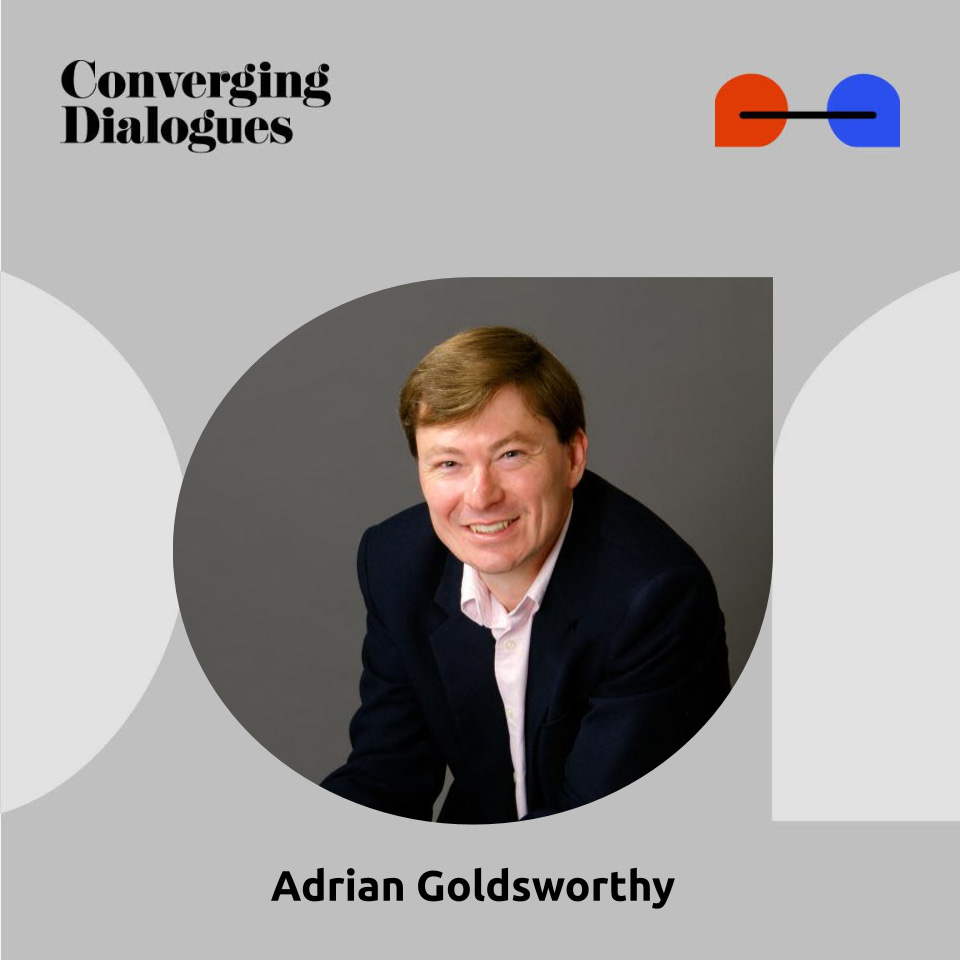
In this episode, Xavier Bonilla has a dialogue with Adrian Goldsworthy about Augustus. They provide an overview of Augustus, his upbringing, his rise to power, early rule, transition from Republic to Empire, his rule as emperor, his legacy, and many more topics. Adrian Goldsworthy is a historian and author. He has his DPhil from Oxford University and has conducted research at Cardiff University and taught at King’s College London and University of Notre Dame. He is the author of numerous books on Roman history. Get full access to Converging Dialogues at convergingdialogues.substack.com/subscribe
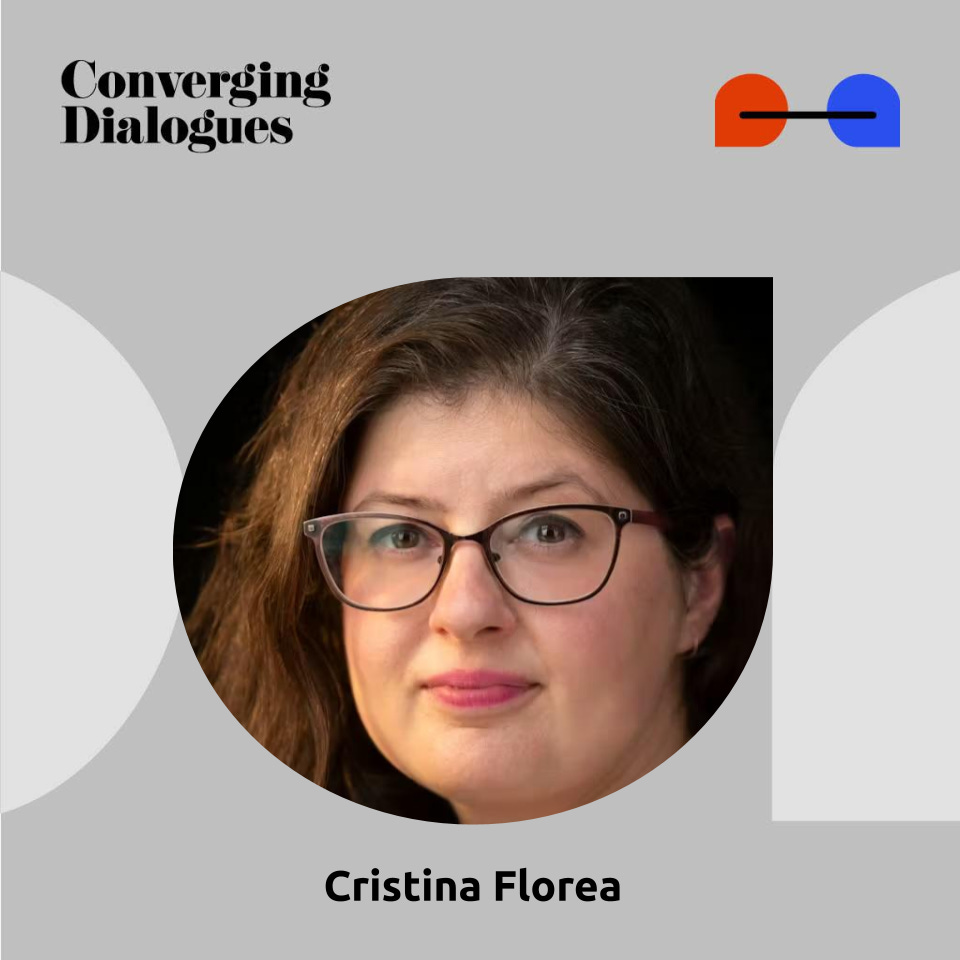
In this episode, Xavier Bonilla has a dialogue with Cristina Florea about Bukovina. they provide an overview of Bukovina, ethnic makeup, Hapsburgs and Austrian-Hungarian Empire. They also talk about Moldova, the Orthodox Church, Jewish population, identity, Romania during World War II, Communism in Romania, Bukovina in present day, and many more topics. Cristina Florea is a historian and assistant professor of history at Cornell University. Her work is on Central and Eastern Europe, with a focus on the interactions between German and Russian power (their competition for territory and influence) across this space, as well as the consequences these interactions have had for the people living in between. Her work explores questions such as the relationship between nationalism and empire, the importance of imperial legacies in modern European history, and the centrality of imperial competition to East European politics and societies. She is the author of the book, Bukovina: The Life and Death of an East European Borderland. Get full access to Converging Dialogues at convergingdialogues.substack.com/subscribe
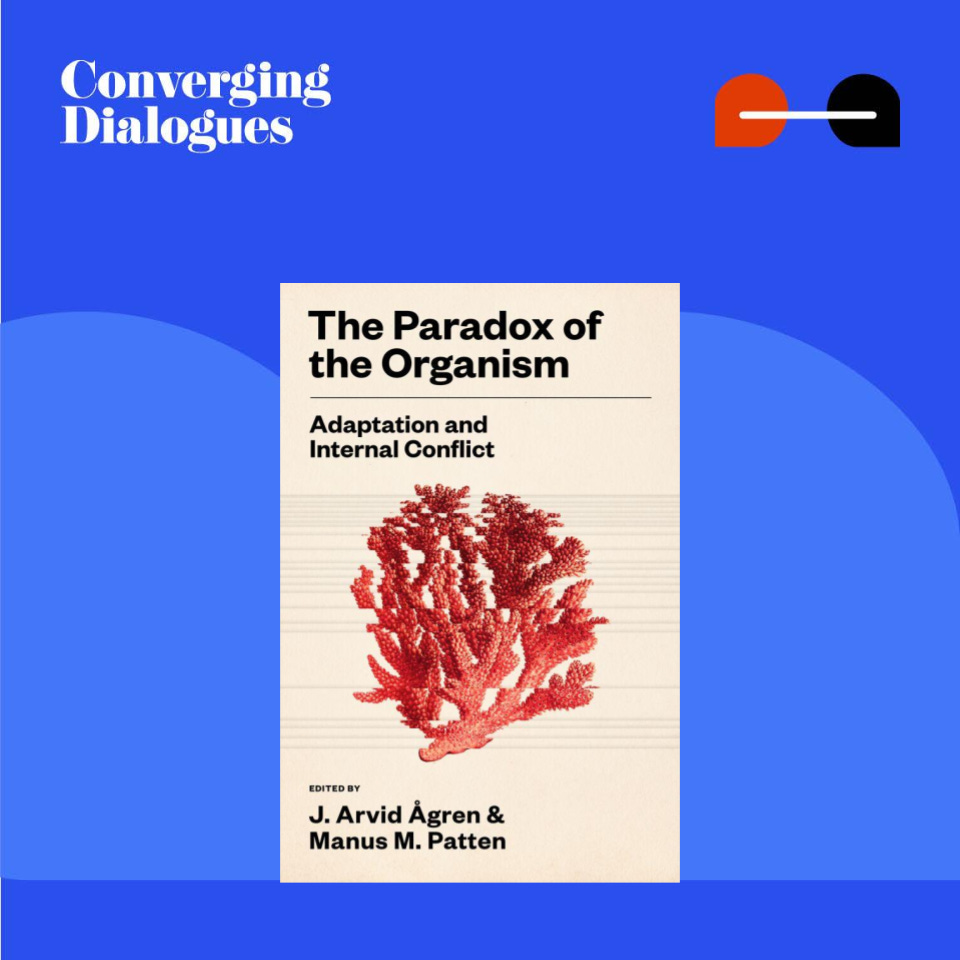
In this episode, Xavier Bonilla has a dialogue with Arvid Ågren and Manus Patten about internal conflicts within organisms. They provide an overview of the paradox of the organism, clinical examples of cancer and pregnancy, direct, indirect, and inclusive fitness. They talk about cooperation within an organism, conflict, transmission and trait distorters, price equation, conflict awareness, neo-Darwinian embryology, biology of selfhood, and many more topics. J. Arvid Ågren is Assistant Professor at the Cleveland Clinic Lerner College of Medicine of Case Western Reserve University and Affiliated Researcher at the Evolutionary Biology Centre at Uppsala University. He is the author of The Gene’s-Eye View of Evolution.Manus M. Patten is an evolutionary biologist whose research explores the consequences of conflict, both for organisms and for evolutionary theory. He is Teaching Professor in Biology at Georgetown University. They are co-editors of the book, The Paradox of the Organism: Adaptation and Internal Conflict. Get full access to Converging Dialogues at convergingdialogues.substack.com/subscribe
In this episode, Xavier Bonilla has a dialogue with Sari van Anders about gender/sex and sexual configurations theory. They talk about the sex binary and understanding a wider landscape, gender/sex, sexual configurations theory, endocrine system and hormones, neural correlates of hormones, mental health challenges, future of gender/sex research, and many more topics. Sari van Anders teaches at Queen’s University as the Canada 150 Research Chair in Social Neuroendocrinology, Sexuality, and Gender/Sex, and Professor of Psychology, Gender Studies, and Neuroscience. Her work and lab has been recognized with over 80 awards, including the Distinguished Scientific Contribution Award from the Society for the Psychology of Sexual Orientation & Gender Diversity, the APS Janet Taylor Spence Award for Transformative Early Career Contributions, as well as election to the Royal Society of Canada. Get full access to Converging Dialogues at convergingdialogues.substack.com/subscribe
In this episode, Xavier Bonilla has a dialogue with Marinos Sariyannis about the Supernatural in the Early and Middle Ottoman periods. They discuss the differences between the natural, supernatural, and preternatural, Islam and the supernatural, magic, occult, and divination. They talk about the relationship between natural science and supernatural, Lettrism, Jinn, limits of supernatural belief, Sufism, hell and purgatory, witchcraft and divination, preternatural, and many more topics. Marinos Sariyannis is Research Director at the Institute for Mediterranean Studies/FORTH in Rethymno, Greece. He has led research projects on the history of Ottoman political thought and on the Ottoman perceptions of the supernatural. He has published several books, articles and chapters on Ottoman social, cultural and intellectual history. He is the author of the recent book, Ottomans and the Supernatural: Nature and the Limits of Knowledge in the Early Modern Ottoman Empire, which you can find available for free through open access. Get full access to Converging Dialogues at convergingdialogues.substack.com/subscribe
In this episode, Xavier Bonilla has a dialogue with Megan Kate Nelson about the American West. They discuss the frontier myth, Sacajawea, shared history in the Southwest, Maria Gertrudis Barcelo and her wealth, Jim Beckwourth and shifting stories. They also talk about the 1862 Homestead Act, Ovando Hollister and his paradox, Chinese-American immigrants, Little Wolf, and many more topics. Megan Kate Nelson is a writer and historian based in Boston, Massachusetts. She has written about US western history, the Civil War, and American culture for The New York Times, The Washington Post, The Atlantic, Slate, Time, and Smithsonian Magazine. Nelson earned her BA in history and literature from Harvard University and her PhD in American studies from the University of Iowa. She is the author of many books, including her most recent, The Westerners: Mythmaking and Belonging on the American Frontier. Get full access to Converging Dialogues at convergingdialogues.substack.com/subscribe

In this episode, Xavier Bonilla has a dialogue with Chloe Drulis & Carly Trissler about the neurobiology of executive functioning in therapy. They talk about the importance of understanding executive functioning, interpersonal neurobiology framework, three system model of executive functioning, clinical use of the model, the model with ADHD, Attachment theory and styles, Gottman’s four horsemen, social media, and many other topics. Chloe Drulis is an associate marriage and family therapist practicing in Santa Monica and a writer specializing in interpersonal neurobiology.Carly Trissler is a Phoenix—based writer with expertise in Interpersonal Neurobiology. She holds an MA in psychology from Pepperdine University. Both of them (along with Louis Cozolino) are co-authors of the book, Executive Functioning and Psychotherapy: The New Neuroscience of Adaptive Intelligence. Get full access to Converging Dialogues at convergingdialogues.substack.com/subscribe

In this episode, Xavier Bonilla has a dialogue with Sam Dalrymple about the five partitions of modern Asia. They provide an overview of the five partitions, Pakistan as a Muslim state, the first partition of Burma, the 2nd partition of the Arabian Peninsula, the 3rd partition of Pakistan, the 4th partition of Princely India, India and Pakistan in the 50s and 60s, and the war of 1971 with the 5th partition of Bangladesh. Sam Dalrymple is a historian, filmmaker, and cofounder of Project Dastaan, a peace-building initiative that reconnects refugees displaced by the 1947 partition of India. He graduated from the University of Oxford as a Persian and Sanskrit scholar. He is the author of the book, Shattered lands: Five Partitions and the Making of Modern Asia. Get full access to Converging Dialogues at convergingdialogues.substack.com/subscribe
In this episode, Xavier Bonilla has a dialogue with James Traub about education and democracy. They talk about the distinctness of American education, history evolving into social studies, the Classical model, and charter schools. They discuss the 1619 Project, “Wokeness” in schools, “Anti-wokeness” in schools, Hirsch’s core model, and many more topics. James Traub is a journalist and scholar specializing in international affairs. He is a columnist and contributor to the website foreignpolicy.com. He worked as a staff writer for The New Yorker from 1993 to 1998 and as a contributing writer to The New York Times Magazine from 1998 to 2011. He has also written extensively about national politics, urban affairs, and education. He has written many books, such as, True Believer: Hubert Humphrey’s Quest For A More Just America and the most recent, The Cradle of Citizenship: How Schools can help save our Democracy. He teaches classes on American foreign policy and on the history of liberalism at NYU Abu Dhabi and at NYU. He is a fellow of the Center on International Cooperation and a member of the Council on Foreign Relations.Substack: James Traub Get full access to Converging Dialogues at convergingdialogues.substack.com/subscribe
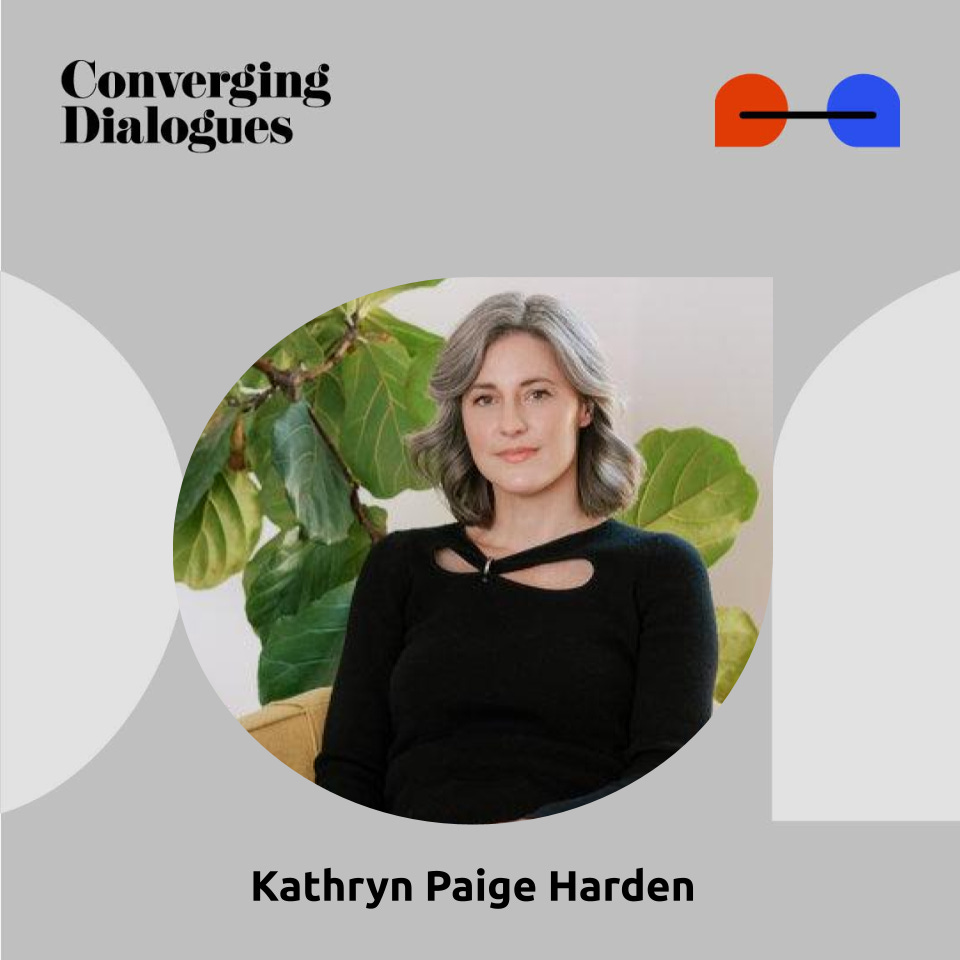
In this episode, Xavier Bonilla has a dialogue with Kathryn Paige Harden about the genetics of human behavior. They discuss how genetics research can helps us understand human behavior, responsibility, human reason and moral responsibilities, therapeutic relationships, and cooperation. They talk about Christian dogma for morals, nature and nurture, selfhood, eugenics and IVF, and many more topics. Kathryn Paige Harden is a professor in the department of psychology at the University of Texas at Austin, where she leads the Developmental Behavior Genetics lab and serves as Director of Clinical Training. Harden received her PhD in clinical psychology from the University of Virginia and completed her clinical internship at McLean Hospital/Harvard Medical School. She has been honored by the American Psychological Association for her distinguished scientific contributions to the study of genetics and human individual differences. She has published over 150 scientific papers on the nature and nurture of human behavior. She is also the author of two books: The Genetic Lottery: Why DNA Matters for Social Equality and Original Sin: On the genetics of vice, the problem of blame, and the future of forgiveness. Get full access to Converging Dialogues at convergingdialogues.substack.com/subscribe
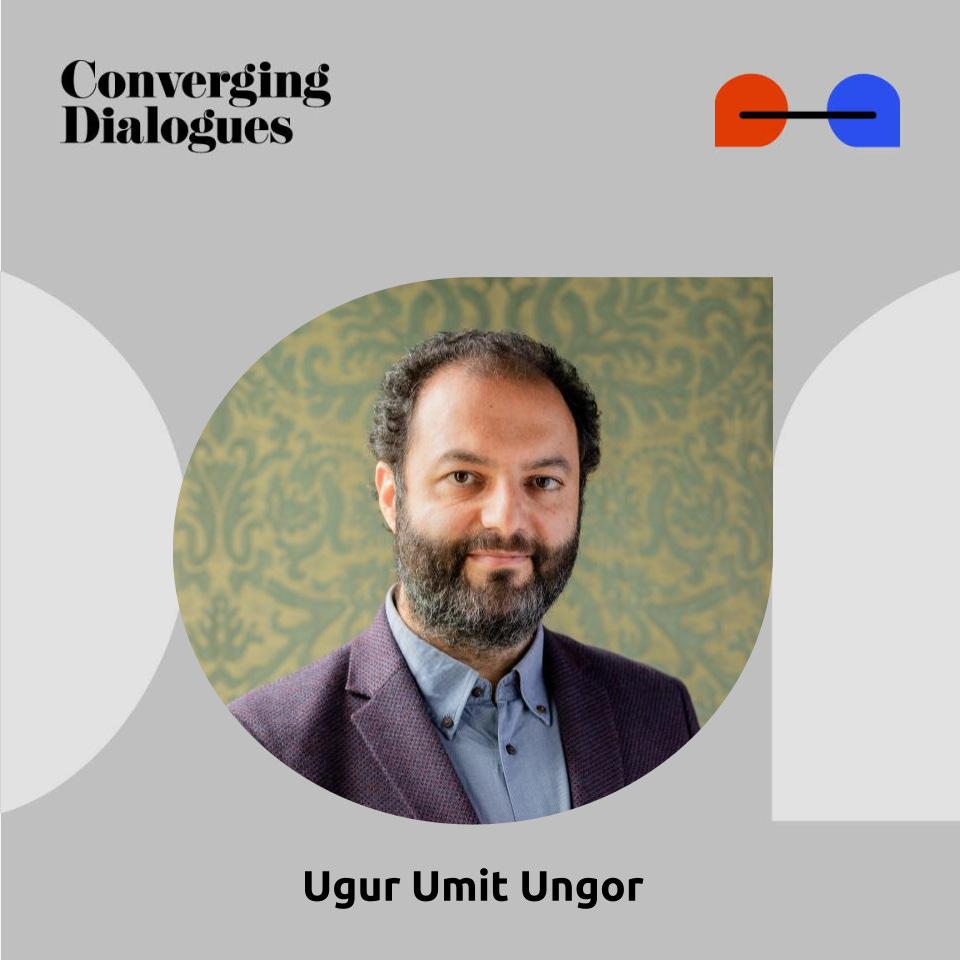
In this episode, Xavier Bonilla has a dialogue with Uğur Ümit Üngör about genocides and the recent Syrian Civil War. They define genocide, buildup to genocide, and the Armenian genocide. They also talk about the Syrian gulags, different types of Syrian intelligence agencies and prisons, Tadamon massacre, Syria’s transition government and future, and many more topics. Uğur Ümit Üngör is Professor of Holocaust and Genocide Studies at the University of Amsterdam and NIOD. His main areas of interest are the global history and sociology of genocide and mass violence, with a particular focus on the modern and contemporary Middle East. He has written many books including, Genocide: New Perspectives on its Causes, Courses, Consequences, Confiscation and Destruction: The Young Turk Seizure of Armenian Property, The Making of Modern Turkey: Nation and State in Eastern Anatolia, 1913-1950, and The Syrian Gulag. Website: https://www.ungor.nl/ Get full access to Converging Dialogues at convergingdialogues.substack.com/subscribe
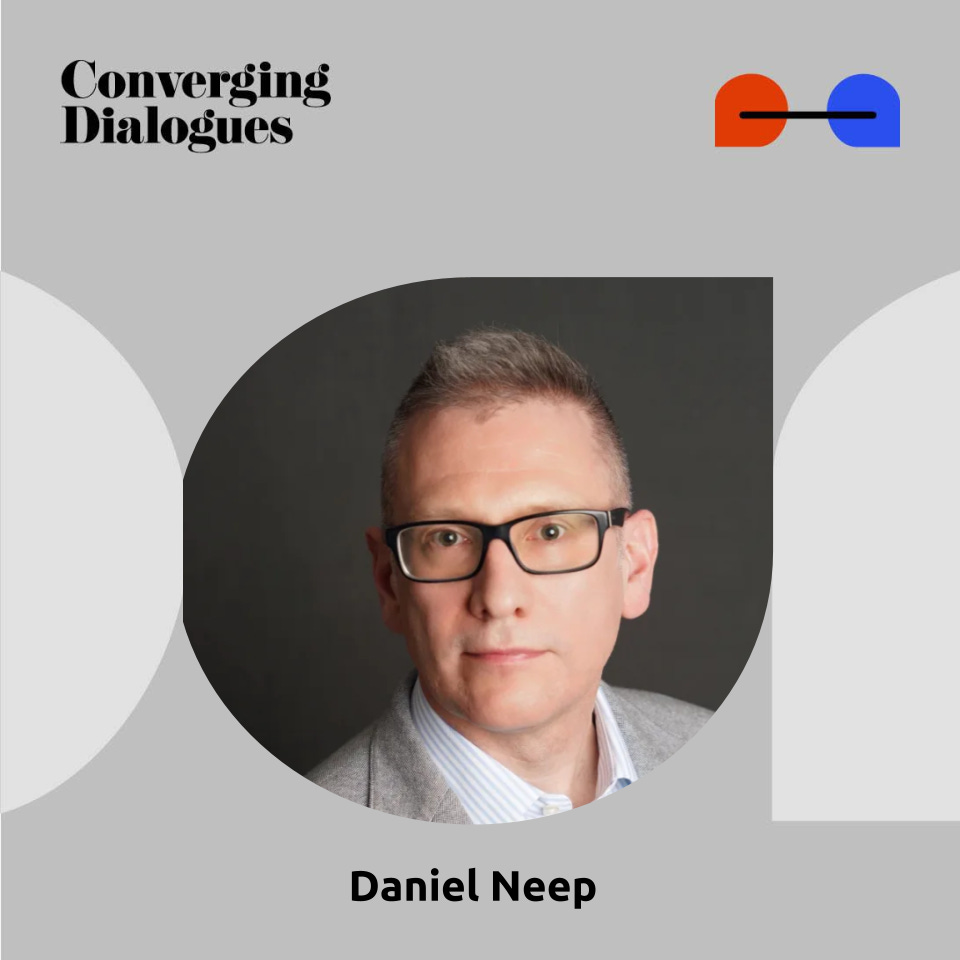
Ini this episode, Xavier Bonilla has a dialogue with Daniel Neep about a modern history of Syria. They discuss internal and external divisions in Syria, various ethnic and religious communities in Syria, Bilad al-Sham, Tanzimat reforms, Kingdom of Syria, and French rule. They discuss military rule, Ba’ath Party, Nasser and United Arab Republic, 30 years of Hafez al-Assad, 24 years of Bashar al-Assad, Syria’s future, and many more topics. Daniel Neep is Senior Editor at Arab Center Washington DC and a non-resident fellow at the Crown Center for Middle East Studies at Brandeis University. He has taught Middle East politics at George Washington University, Georgetown University, and the University of Exeter, and was previously Syria research director with the Council for British Research in the Levant. He is the author of the latest book, Syria: A Modern History. Get full access to Converging Dialogues at convergingdialogues.substack.com/subscribe
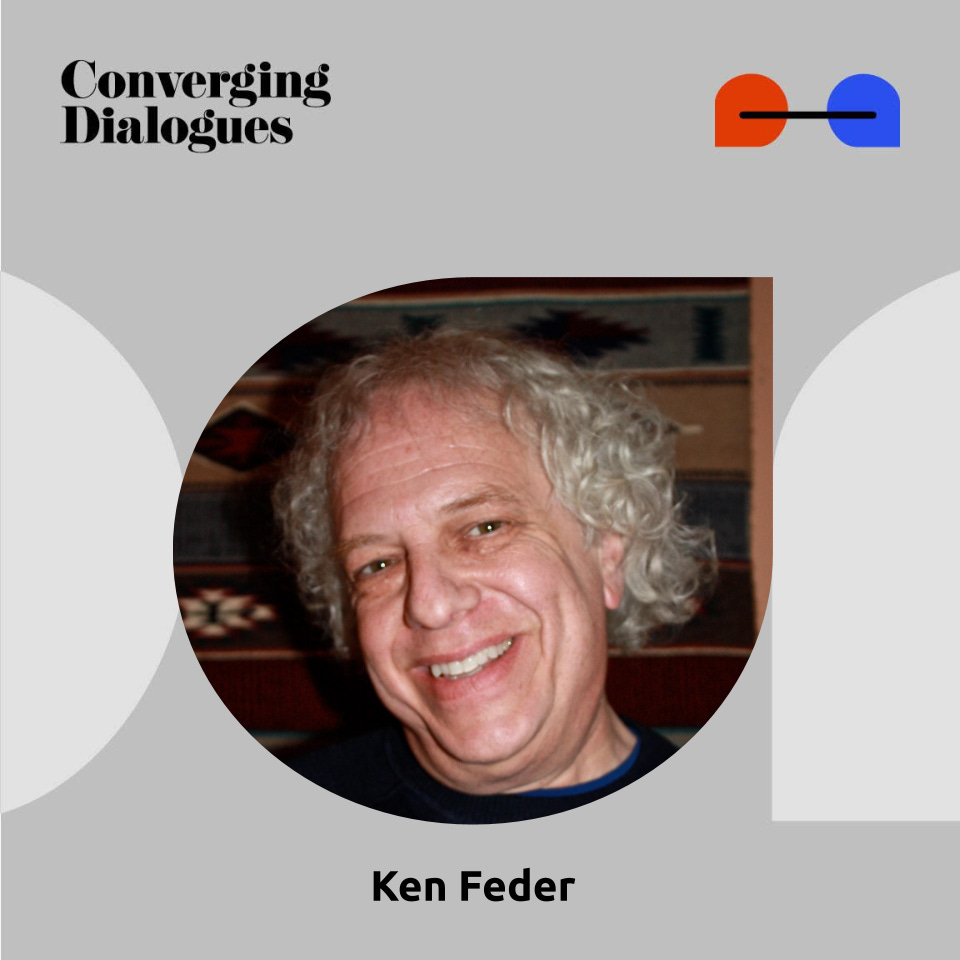
In this episode, Xavier Bonilla has a dialogue with Ken Feder about Native America and First Peoples. They talk about the various labels for Native Americans, land acknowledgements and Columbus Day. They discuss the earliest origin date for First Peoples coming to America, White Sands, human adaptations, diverse nation groups, infighting among nations, genocide and schools, and many more topics. Kenneth Feder is professor emeritus of anthropology at Central Connecticut State University. His books include Frauds, Myths, and Mysteries: Science and Pseudoscience in Archaeology, The Past in Perspective: An Introduction to Human Prehistory, Native American Archaeology in the Parks: A Guide to Native Heritage Sites in Our National Parks and Monuments, and the most recent, Native America: The Story of the First Peoples. Get full access to Converging Dialogues at convergingdialogues.substack.com/subscribe
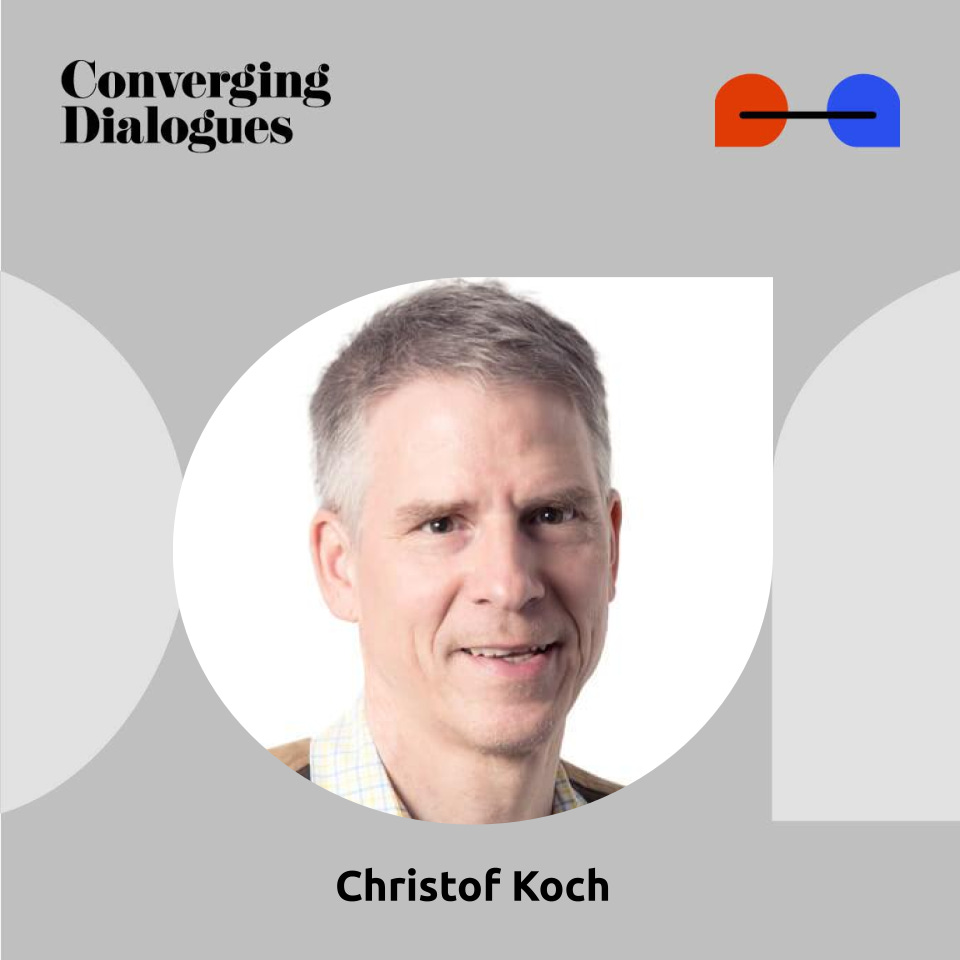
In this episode, Xavier Bonilla has a dialogue with Christof Koch on the nature of consciousness. They talk about why consciousness is important to study, differences with subjective experiences and phenomenology, selfhood, thinking beyond interoceptive perceptions, and Cartesian dualism. They discuss panpsychism, neural correlates of consciousness, vision, Integrated Information Theory (IIT), psychedelics, the future of consciousness research, and many more topics. Christof Koch is a neuroscientist at the Allen Institute, chief scientist of the Tiny Blue Dot Foundation, the former president of the Allen Institute for Brain Science, and a former professor at the California Institute of Technology. He is the author of many books, including his latest book, Then I Am Myself the World. Get full access to Converging Dialogues at convergingdialogues.substack.com/subscribe
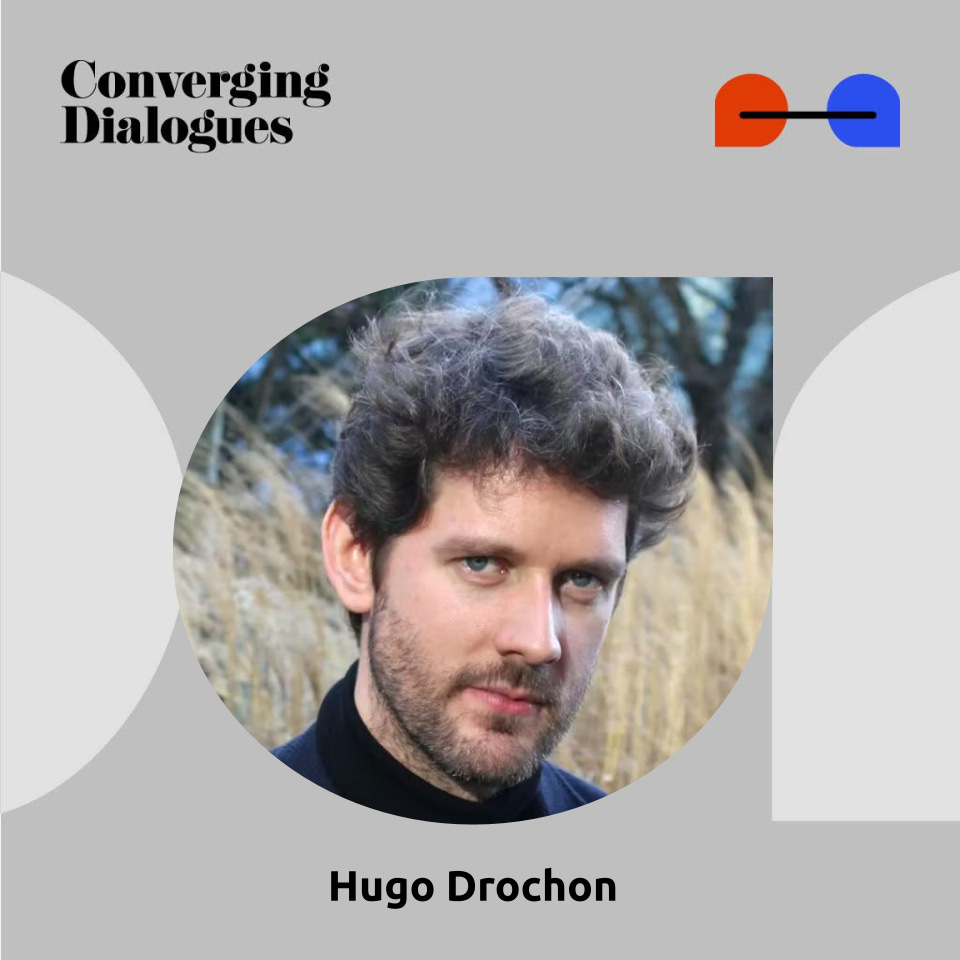
In this episode, Xavier Bonilla has a dialogue with Hugo Drochon about elites and democracy. They discuss how elites always rule in democracies, why we need elites, dynamic democracy, social movements, distrust of elites, Nietzsche’s eternal return and circulation of elites, elites in non-democratic societies, and many more topics. Hugo Drochon is a political theorist and historian. He has his PhD from Cambridge and completed his postdoctoral fellowship there as well. He has also had fellowships at Yale, Princeton, and Royal Historical Society. His main interests are in Nietzsche’s politics, democratic theory, and liberalism. He is the author of, Nietzsche’s Great Politics and the latest book, Elites and Democracy. Get full access to Converging Dialogues at convergingdialogues.substack.com/subscribe
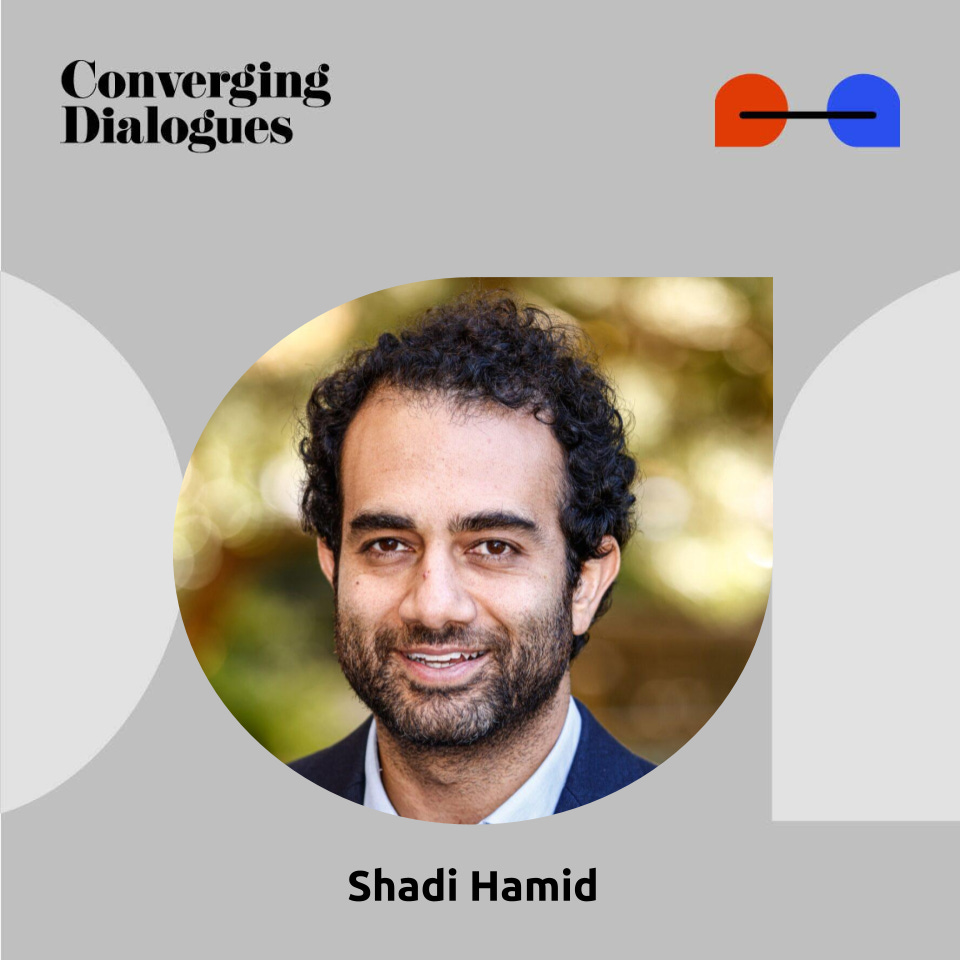
In this episode, Xavier Bonilla has a dialogue with Shadi Hamid about why American power is still needed. They discuss American power, American success globally, American idealism, democracy in the world, benevolent authoritarianism, future of American power, and many more topics. Shadi Hamid is a columnist at The Washington Post and a senior fellow at Georgetown University’s Center for Muslim-Christian Understanding. From 2023 to 2024, he served on the Post’s editorial board. Hamid is the author of several books, including The Problem of Democracy and Islamic Exceptionalism, which was shortlisted for the 2017 Lionel Gelber Prize for the best nonfiction book on foreign affairs. In 2019, he was named one of the world’s top fifty thinkers by Prospect magazine. He is also the co-host of the podcast, Wisdom of Crowds. He is the author of the latest book, The Case for American Power. Get full access to Converging Dialogues at convergingdialogues.substack.com/subscribe
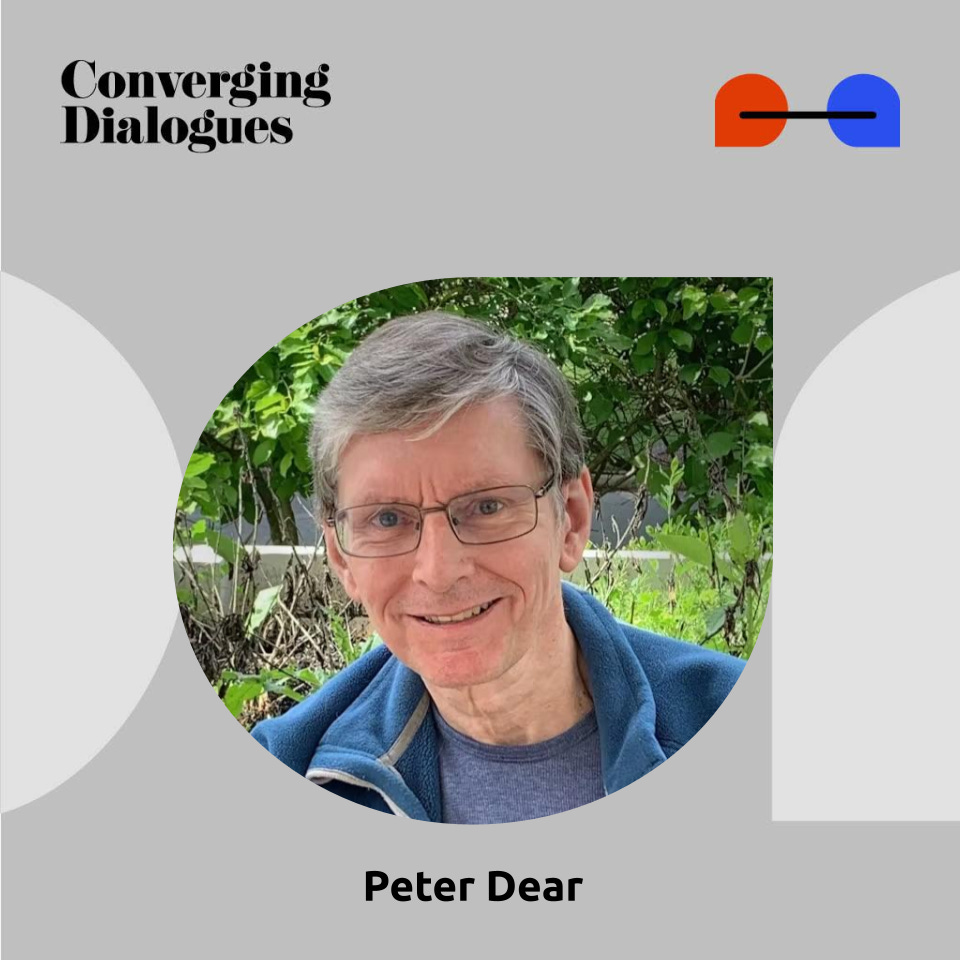
In this episode, Xavier Bonilla has a dialogue with Peter Dear about the history of modern science from natural philosophy. They discuss natural philosophy and modern science, Newton and theology, different ways of doing science, pure and mixed mathematics, Linnaeus and taxonomy, German pedagogy for modern science, physics research, Lapace and the bell curve, Faraday, Darwin, Einstein, and many more topics. Peter Dear is professor emeritus of history at Cornell University. His books include Revolutionizing the Sciences: European Knowledge in Transition, 1500–1700 (Princeton), The Intelligibility of Nature: How Science Makes Sense of the World, Discipline and Experience: The Mathematical Way in the Scientific Revolution and his latest book, The World As We Know It. Get full access to Converging Dialogues at convergingdialogues.substack.com/subscribe
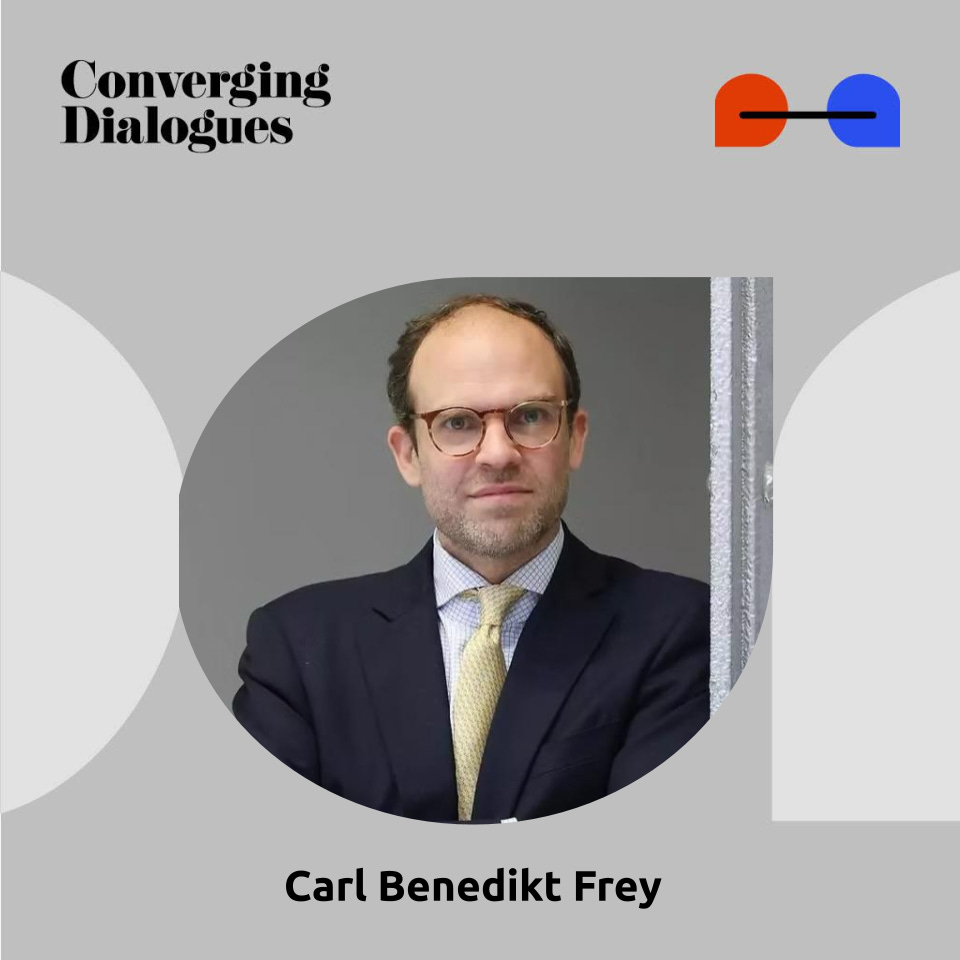
In this episode, Xavier Bonilla has a dialogue with Carl Benedikt Frey about technology and economics throughout history. They discuss why decentralized systems create an environment for innovation, Ancient China’s centralized efforts, Europe’s competitive state during the enlightenment, U.S. and decentralization, modern regulations, AI and our future, and many more topics.Carl-Benedikt Frey is the Dieter Schwarz Associate Professor of AI & Work at the Oxford Internet Institute and a Fellow of Mansfield College, University of Oxford. He also directs the Future of Work Programme at the Oxford Martin School, where he serves as Oxford Martin Citi Fellow.After studying economics, history, and management at Lund University, Frey completed his PhD at the Max Planck Institute for Innovation and Competition in 2011 and went on to found Oxford’s programme on the Future of Work. He is an Economics Associate of Nuffield College and Senior Fellow at the Institute for New Economic Thinking at Oxford, and remains an Associate Fellow in Economic History at Lund University. He is the author of the latest book, How Progress Ends: Technology, Innovation, and the Fate of Nations. Get full access to Converging Dialogues at convergingdialogues.substack.com/subscribe
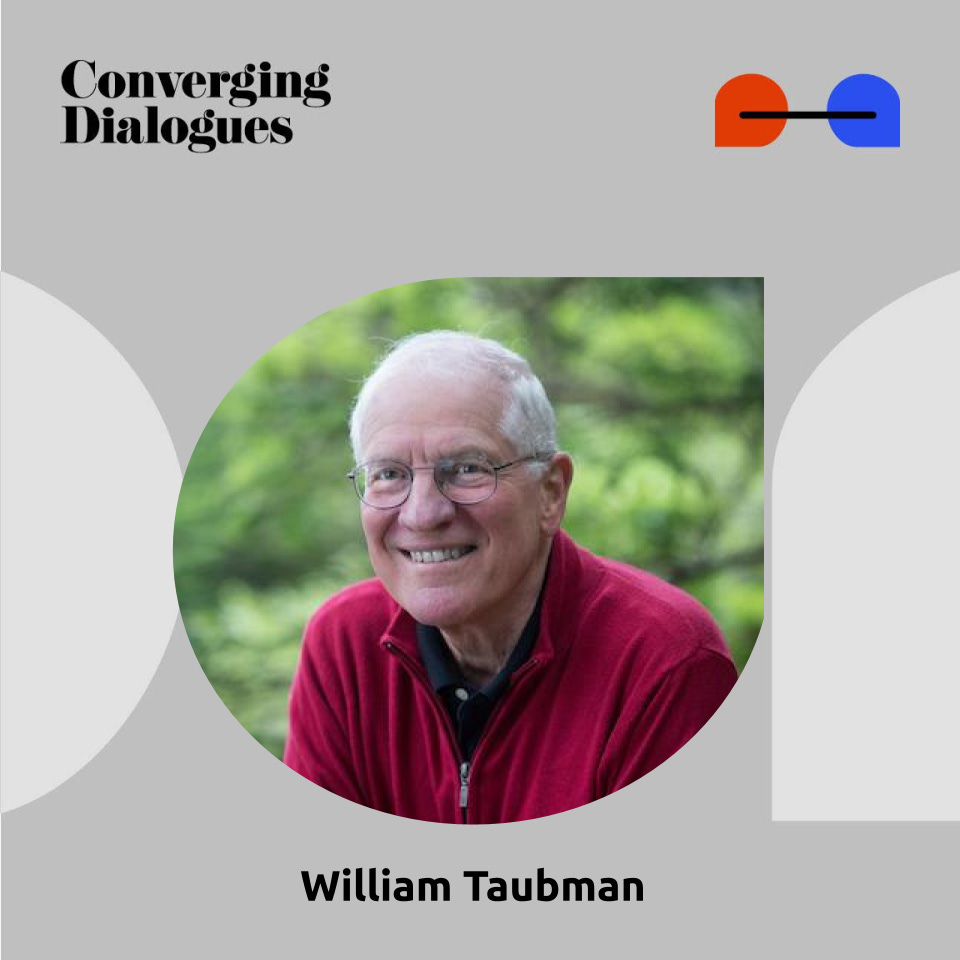
In this episode, Xavier Bonilla has a dialogue with William Taubman about the complex life and career of Robert McNamara. They provide an overview of McNamara, his upbringing, temperament, and evolution. They discuss his work with the Ford Motor Company, how he organized the Defense Department, Bay of Pigs, Vietnam, World Bank, breaking his silence on Vietnam, and many more topics. William Taubman is the Bertrand Snell Professor of Political Science Emeritus at Amherst College. His book, Khrushchev: The Man and His Era, won the Pulitzer Prize and the National Book Critics Circle Award. He is also the co-author (with Philip Taubman) of McNamara at War: A New History. Get full access to Converging Dialogues at convergingdialogues.substack.com/subscribe
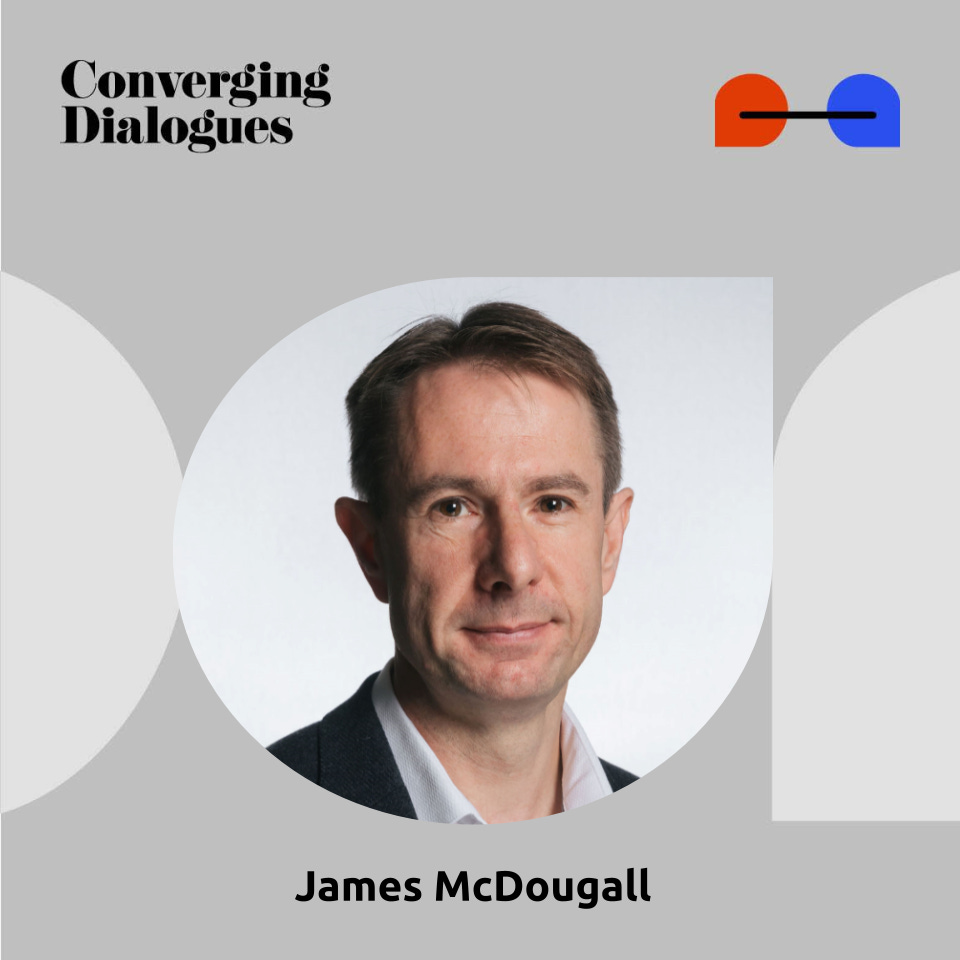
In this episode, Xavier Bonilla has a dialogue with James McDougall about a global history of Islam. They discuss the global spread and diversity of Islam, Arabia before Muhammad, succession after Muhammad, the five pillars of Islam, emphasis on law and doctrine within Islam, Hadiths, the Ottoman Empire and spread of Islam, Islamists, Islam in the 21st century, and many more topics. James McDougall has taught history at Princeton; the School of Oriental and African Studies, University of London; and Oxford, where he is a Fellow of Trinity College. He is the author of numerous books including the most recent book, Worlds of Islam: A Global History. Get full access to Converging Dialogues at convergingdialogues.substack.com/subscribe


Download from Google Play

Download from App Store
 United States
this guy says it's a pleasure to have a long nuanced conversation, this was one of the shortest episodes of this podcast. He might be used to extreme scorn from both political sides. Thanks Mr Bonilla for bringing him to us.