


 Claim Ownership
The Conspiracy Podcast
Subscribed: 303Played: 7,874
Subscribe

© The Conspiracy Podcast
Description
Three guys with three high school diplomas pick apart famous conspiracies. Sit down with Sean, Jorge and Eric as they walk you through the most famous conspiracy theories and their stories. From the most well known like the JFK Assassination, Moon Landing, 9/11, Epstein Island, OJ Simpson, The Mandela Effect, The Denver Airport, Kurt Cobain, The Bermuda Triangle, The Free Masons, MLK, RFK to the smaller ones that never seem to go away.
198 Episodes
Reverse

 1
1www.patreon.com/theconspiracypodcastOne of the greatest unsolved aviation mysteries in history. Malaysia Airlines Flight 370. 15 Added minutes to the end of the compilation.Sean, Jorge and Eric—“The Boys”—combine Part One and Part Two into a full breakdown of Malaysia Airlines Flight 370, one of the greatest unsolved aviation mysteries in history. From the moment the Boeing 777 took off from Kuala Lumpur on March 8, 2014, to the years-long search across the Indian Ocean, this episode covers the complete MH370 timeline, key evidence, and the most discussed theories behind its disappearance.The boys walk through the critical events of the flight, including the final ACARS transmission, the chilling last words from the cockpit—“All right, good night”—and the moment the transponder was switched off. They break down how MH370 vanished from radar, reappeared on military tracking systems, and ultimately disappeared again, leading investigators to rely heavily on Inmarsat satellite data and the now-famous “handshake” pings that suggested a final path deep into the southern Indian Ocean.This episode also explores the massive international search effort, one of the most expensive in aviation history, and the limited physical evidence recovered—most notably debris found years later on remote islands like Réunion. Sean, Jorge and Eric explain how ocean drift patterns helped support the southern crash theory while still leaving major questions unanswered.In the second half, the boys analyze the leading MH370 theories, including the hypoxia “ghost flight” scenario, pilot involvement, mechanical failure, cyber hijacking, and state-sponsored interception. They also touch on lesser-known and controversial theories that continue to circulate online, along with the scrutiny surrounding Captain Zaharie’s flight simulator.This MH370 full episode compilation delivers a complete, fact-driven overview of the disappearance, the investigation, and the enduring mystery that still captivates the world.
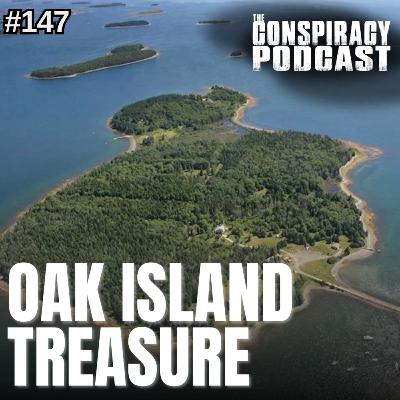
www.patreon.com/theconspiracypodcastFor over 200 years, people have been chasing one thing—the Oak Island treasure—and somehow, no one has ever been able to reach it.In this episode, we break down the full story behind the Oak Island mystery, starting with the discovery of the Money Pit in 1795 and following it all the way to today. What starts as a simple dig quickly turns into something much bigger—layered wooden platforms, engineered flood tunnels, and just enough real evidence to make you believe there actually is something buried down there.We walk through the biggest Oak Island treasure theories, including pirate gold, the Knights Templar, hidden British war treasure, and even the idea that the island is protecting something far more valuable than gold. More importantly, we explain why each of these theories exists—and what clues have kept them alive for centuries.We also get into the darker side of the island, including the infamous “seven must die” curse, the real deaths tied to the search, and why this story feels less like a treasure hunt and more like something people can’t walk away from.So what is the Oak Island treasure? Is it gold, history, or nothing at all—and why has no one ever been able to claim it?
www.patreon.com/theconspiracypodcastWhat really happened during the Phoenix Lights incident of 1997? In this episode we look into one of the most famous UFO sightings in U.S. history — a night when thousands of people across Arizona reported seeing a massive, silent V-shaped object gliding across the sky.From the first sightings over Nevada to the eerie moment the lights passed directly over Phoenix, we break down the full timeline, including real eyewitness accounts, police calls, and the now-infamous government explanation involving military flares. But does that explanation actually hold up?We get into the strange details most people don’t know — including reports of a solid craft blocking out the stars, radar anomalies, and why even Arizona Governor Fife Symington later admitted he saw something he couldn’t explain.Was it a secret military aircraft? A massive misidentification? Or something far more unexplained?If you’re into UFO sightings, government cover-ups, alien encounters, and unsolved mysteries, this is one you don’t want to miss.Because on March 13, 1997… the sky over Arizona wasn’t empty.And thousands of people saw something they’ll never forget.
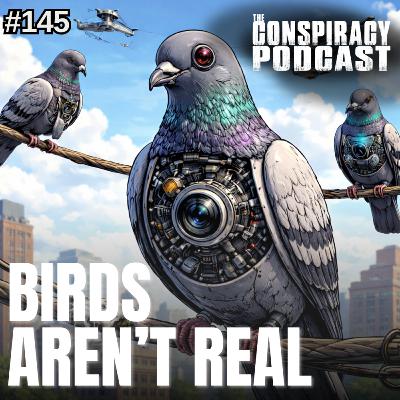
www.patreon.com/theconspiracypodcastWhat if we told you that birds don’t exist? That they’ve all been replaced by government surveillance drones recharging on power lines and pooping tracking devices on your car? Welcome to the wonderfully absurd world of Birds Aren’t Real—a satirical conspiracy movement that somehow became a cultural phenomenon.In this episode, we trace the strange and hilarious rise of a prank-turned-parody that began on a whim at a 2017 protest in Memphis, when college student Peter McIndoe held up a sign that simply read: “Birds Aren’t Real.” What followed was an elaborate, years-long performance complete with fake whistleblowers, billboard campaigns, cross-country rallies, and a dedicated fanbase of “bird truthers”—most of whom were entirely in on the joke.Through a mix of storytelling and real-world absurdity, we explore how the movement became a Gen Z coping mechanism for living in a post-truth world. From vomit stunts on live TV to NFL players parroting the slogans, this story isn’t really about birds—it’s about satire, misinformation, and laughing our way through the madness.Get ready for CIA pigeons, power-line charging ports, and a dive into one of the internet’s most brilliantly ridiculous conspiracies. Because sometimes, the only sane response to an insane world… is pretending birds aren’t real.
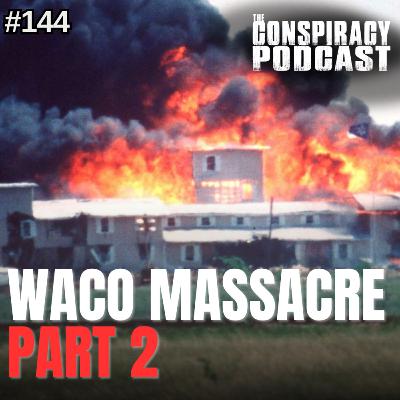
www.patreon.com/theconspiracypodcastPart Two begins at the edge of the end.After nearly seven weeks of stalemate, tension at Mount Carmel was at a breaking point. Negotiations had stalled. David Koresh claimed he was waiting for a divine sign to finish a manuscript that would reveal God’s plan. Federal authorities, running out of patience, approved a tactical endgame.In the early hours of April 19, 1993, the FBI launched its final operation.Armored vehicles breached the compound walls. Tear gas was pumped inside in an effort to force residents out. Sporadic gunfire echoed across the Texas prairie. Then, just after noon, fires ignited in multiple locations within the building. Strong winds pushed the flames fast. Within hours, the Mount Carmel compound was gone.Seventy-six Branch Davidians died, including 25 children. David Koresh was found dead inside.From that moment on, the tragedy became a battleground of narratives.Federal investigations concluded that members of the Branch Davidians set the fires themselves in a coordinated act, citing audio recordings, forensic analysis, and survivor testimony. But critics, survivors, and independent investigators challenged that conclusion. Questions surfaced about the use of tear gas, whether armored vehicles caused structural damage that worsened the blaze, and why firefighters were held back during the critical early minutes.The episode dives deep into the most persistent Waco conspiracy theories: claims of government-started fires, alleged cover-ups, disputed ballistic evidence, and debates over whether the siege violated federal law. It also explores the broader cultural fallout — including how the events at Waco became a rallying cry for anti-government extremism and influenced Timothy McVeigh, who bombed Oklahoma City exactly two years later.Part Two examines the final hours, the unanswered questions, and why Waco remains one of the most debated government operations in U.S. history.
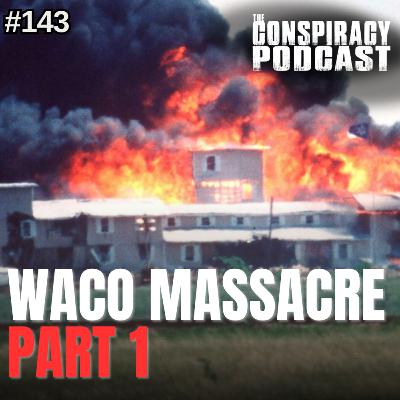
www.patreon.com/theconspiracypodcastIn 1993, on a patch of quiet Texas land outside Waco, a man who called himself the final prophet of God was preparing for the end of the world.Before the fire. Before the tanks. Before the siege became a symbol.David Koresh — born Vernon Wayne Howell — rose from obscurity to lead a small apocalyptic sect known as the Branch Davidians. Charismatic, intense, and obsessed with the Book of Revelation, Koresh convinced his followers that he alone could unlock the Seven Seals and usher in the final days. Inside the Mount Carmel compound, he claimed divine authority — not just spiritually, but personally.He took “spiritual wives.” Married couples were separated. Teenage girls were reassigned to him under the belief they were helping fulfill prophecy. Former members would later allege sexual relationships with underage girls, all justified through scripture. Parents inside the group believed they were obeying God.Meanwhile, federal agents were watching.An ATF investigation into alleged illegal weapons modifications was building. An undercover agent infiltrated the compound. A newspaper exposé titled “The Sinful Messiah” hit the stands. And on February 28, 1993, 76 federal agents rolled toward Mount Carmel in cattle trailers, expecting to serve a warrant.Within minutes, gunfire erupted.Four ATF agents would be dead. Six Davidians would die that morning. And what was meant to be a single-day operation would spiral into something far larger.In Part One, we lay the groundwork — the rise of Koresh, the psychology inside the compound, the warnings that were ignored, and the raid that changed everything.The siege has only just begun.
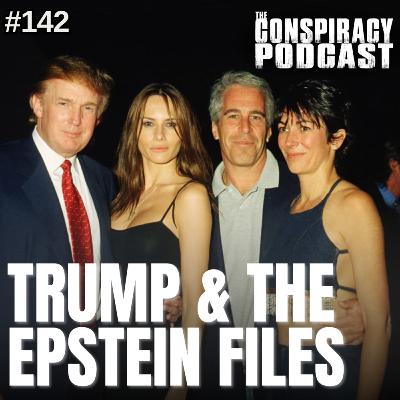
www.patreon.com/theconspiracypodcastWhat are the facts involved with Trump and Epstein. How much did he know him? we break down the documented connections between President Donald Trump and Jeffrey Epstein — from the first social overlap in the late 1980s to the flight logs, depositions, lawsuits, and DOJ file releases that followed.We start at the beginning:The Palm Beach party circuit.The 1992 Mar-a-Lago footage. The 2002 “terrific guy” quote. The 1990s flights on Epstein’s plane. The Mar-a-Lago recruitment overlap involving Virginia Giuffre. The mid-2000s falling out.The 2016 civil lawsuit naming both Trump and Epstein. The Maxwell trial. The prosecutor email about eight flights.And what actually appears in the so-called “Epstein files.”No clickbait. No partisan spin. No dramatic music pretending we uncovered something that isn’t in the record.We separate:What’s documented What’s alleged What’s denied What’s unproven And what’s never been chargedBecause in a story this big, proximity gets confused with proof — and rumors spread faster than facts.
www.patreon.com/theconspiracypodcastWith the recent release of more than three million files tied to the Epstein case, one strange word keeps appearing again and again: pizza. In this episode, the boys dig into the documents themselves and pull out over 50 of the most unusual, confusing, and eyebrow-raising references to the term scattered throughout emails, messages, and notes connected to the investigation.Rather than relying on internet rumors or second-hand summaries, Sean, Jorge, and Eric walk through the actual language found in the files and examine the context behind each reference. Some mentions seem harmless, others feel oddly worded, and a few have fueled years of speculation online. The boys sort through what’s real, what’s been misinterpreted, and what still raises questions after all these years.Is it just coincidence, coded language, or something else entirely?This episode is a deep dive into the language of the files themselves—no wild tangents, just a close look at what’s actually written and why it continues to capture people’s attention. Whether you’re familiar with the Pizzagate controversy or hearing about it for the first time, this expanded breakdown offers a clearer, more grounded look at one of the strangest details to emerge from the Epstein document releases.
www.patreon.com/theconspiracypodcastThe latest release of the Epstein files, millions of pages of emails, flight logs, photos, and interview notes were made public by the Justice Department—and suddenly the same questions everyone has had for years are back in the spotlight. Who really knew Epstein? How close were some of the most powerful people in the world to him? And what, if anything, is actually proven in these documents?In this episode, the boys walk through the biggest names and the strangest revelations from the new files. Emails show Elon Musk discussing party plans with Epstein. Bill Clinton’s flights and photos resurface, reminding everyone just how closely their paths once crossed. Donald Trump’s past social ties appear again in the records, while testimony suggests he never stayed at Epstein’s home. And across the Atlantic, Epstein connections continue to haunt members of the royal and political elite.But the real story might be in the emails themselves—bizarre, crude, and sometimes disturbing messages that reveal how Epstein talked, thought, and operated behind the scenes. This episode breaks down the Epstein files, the biggest names mentioned, and what the documents actually say—separating facts from internet mythology in one of the most talked-about scandals in modern history.
Originally recorded in 3 parts, The OKC Bombing. www.patreon.com/theconspiracypodcastOn April 19, 1995, at 9:02 a.m., a massive truck bomb detonated outside the Alfred P. Murrah Federal Building in Oklahoma City, killing 168 people—including 19 children—and injuring hundreds more. The explosion destroyed nearly half the building and left the nation stunned, marking one of the deadliest acts of domestic terrorism in American history.This episode presents a comprehensive, start-to-finish examination of the Oklahoma City bombing. It begins with a detailed reconstruction of the events leading up to the attack and the moments immediately following the blast, including the chaos, devastation, and extraordinary rescue efforts carried out by first responders and volunteers. The scale of the destruction and the human cost of the tragedy are laid out in stark detail.The episode then turns to the official investigation and prosecution of Timothy McVeigh. It explores how McVeigh was identified, arrested during a routine traffic stop just 90 minutes after the bombing, and ultimately convicted. Key evidence, witness testimony, and the broader ideological motivations behind the attack are examined, along with the role of anti-government extremism in the 1990s.From there, the discussion expands beyond the official narrative to explore the questions and controversies that have lingered for decades. The episode investigates claims of additional accomplices, unresolved inconsistencies, and the circumstances surrounding the death of Oklahoma City police officer Sergeant Terry Yeakey—a decorated hero of the rescue effort whose death was officially ruled a suicide, but remains a focal point of ongoing speculation.The episode concludes by examining how conspiracy theories surrounding the bombing developed, why they persist, and how tragedy, distrust, and unanswered questions continue to shape public perception nearly thirty years later.
Long before Antarctica was ever discovered, people already believed it existed. Ancient philosophers and mapmakers imagined a massive southern continent—Terra Australis—balancing the world, a phantom land drawn onto maps centuries before anyone laid eyes on it. But when explorers finally reached the far south in the 1800s, they found something far stranger than myth: a frozen world that seemed to distort not just navigation, but perception itself.In this episode, the boys journey through the eerie history of Antarctica—from ancient legends and early expeditions to unsettling ghost stories and modern conspiracies. They explore accounts from polar explorers who claimed to hear voices in abandoned huts, feel unseen presences in the darkness, and even encounter mysterious “third companions” during near-death journeys across the ice.The story then descends into the continent’s real-world anomalies: blood-red waterfalls pouring from glaciers, massive lakes hidden under miles of ice, and warm volcanic caves that may harbor unknown ecosystems beneath the coldest place on Earth.But Antarctica’s strangest chapter may have come after World War II. The episode examines Nazi expeditions to the continent, unexplained submarine disappearances, and the U.S. Navy’s massive Operation Highjump—led by Admiral Richard Byrd—followed by his unsettling warnings about aircraft coming from the polar regions.Finally, the episode confronts the biggest question of all: why did every major world power agree to lock away an entire continent under the Antarctic Treaty? With no military allowed, no permanent population, and strict global control, Antarctica remains the only place on Earth that truly feels off-limits.Not because of what is known.But because of what might still be buried under the ice.Support the team. Join our Patreonwww.patreon.com/theconspiracypodcast
A teaser for a new series for Patreon's onlywww.patreon.com/theconspiracypodcastThe boys take on one of the most iconic “true story” films ever made: Braveheart. From blue face paint and kilts to the legendary cry of “Freedom!”, the movie shaped how the world remembers William Wallace and Scotland’s fight for independence. But how much of it actually happened?The episode breaks down the real history behind the film, starting with who William Wallace truly was — not a poor farmer, but a minor noble — and what really sparked his rebellion. It revisits the Battle of Stirling Bridge (yes, there was an actual bridge), the myths surrounding jus primae noctis, the completely fictional romance with Princess Isabella, and the misleading portrayal of Robert the Bruce.The boys also explore Wallace’s brutal execution, what the movie surprisingly gets right, and why Hollywood altered so much of the story in the first place.Was Braveheart a historical disaster or a powerful legend built on real events? This episode separates cinematic myth from medieval reality and reveals how one man became both a national hero and one of history’s most misunderstood figures.
When 5G technology started rolling out worldwide, it promised faster speeds, better connectivity, and the foundation for everything from smart cities to self-driving cars. But instead of just excitement, something else spread alongside the signal: fear.In this episode, we explore how a faster mobile network became the subject of one of the strangest conspiracy theories in recent memory. From concerns about radiation and health risks to bizarre claims linking 5G to the COVID-19 pandemic, the rollout of 5G sparked a wave of misinformation that led to tower burnings, public protests, and viral panic.We break down what 5G actually is—how it compares to technologies like Wi-Fi and Bluetooth, what frequencies it uses, and why it’s safe. Then we dig into the history: the early protests, the rise of anti-5G groups, and how social media platforms, influencers, and even celebrities helped amplify false narratives. You’ll hear about conspiracy theories involving mind control, government surveillance, and even microchips supposedly activated by 5G networks.But this isn’t just a story about bad science—it’s about something deeper. Why do new technologies so often become targets of fear? Why were people once afraid of electricity, microwaves, and even bicycles? And what can we learn from past tech panics that might help us navigate the future?Whether you’ve heard whispers about 5G dangers or you’re just curious about how a mobile network got caught in a global misinformation storm, this episode breaks it all down—clearly, calmly, and with a little bit of historical context.Join us as we trace the rise—and fall—of the 5G conspiracy, separating fact from fiction and exploring what happens when invisible signals become symbols of something much bigger.www.patreon.com/theconspiracypodcast
Update and followup to Episode 32, The Bermuda Triangle. For decades, the Bermuda Triangle has haunted the public imagination—a cursed patch of ocean where ships vanish and planes disappear into thin air. From the chilling mystery of Flight 19 to the sudden loss of the USS Cyclops, stories of vanishing vessels have fueled theories ranging from alien abductions to time warps and lost civilizations. But what if the truth was hiding in plain sight—beneath the waves all along?In this episode, we journey beyond the legends to uncover the real science behind the Bermuda Triangle’s eerie reputation. Featuring insights from renowned science communicator Dr. Karl Kruszelnicki and oceanographer Dr. Simon Boxall, we explore how natural forces—not the supernatural—may finally explain the area’s most baffling disappearances.From violent Gulf Stream currents and unpredictable weather to compass anomalies and the deadly phenomenon of rogue waves, we unpack the evidence that rewrites everything we thought we knew. You’ll hear how a single 100-foot wave could snap a steel ship in two—and why some vessels vanish without even a distress call.Forget sea monsters and aliens. The real story is more thrilling, and far more real. Some are saying the Bermuda Triangle mystery is now solved...www.patreon.com/theconspiracypodcast
50 Cent Releases Diddy Documentary Netflix premieres Sean Combs: The Reckoning, executive produced by 50 Cent, examining the life, influence, and long-running allegations surrounding Sean Combs, and sparking renewed debate about celebrity accountability and media silence.2025 Ranked Among the Hottest Years on Record Scientists confirm 2025 as one of the three hottest years ever documented, marked by extreme heat, wildfires, droughts, and mounting warnings about accelerating climate change.Rob and Michele Reiner Murdered in Los Angeles Filmmaker Rob Reiner and his wife were found stabbed to death in their Brentwood home, a shocking crime that led to the arrest of their son and stunned Hollywood.Dan Bongino Announces FBI Resignation He revealed he will step down as FBI Deputy Director in early 2026, citing personal reasons amid ongoing controversy surrounding his tenure.Bondi Beach Massacre in Sydney A coordinated terrorist attack during a Jewish community event left 15 people dead, marking Australia’s deadliest attack in decades and prompting nationwide mourning and heightened security.Russia Launches Massive Drone Barrage on Ukraine Russia begins 2026 with over 200 drones targeting Ukrainian cities and infrastructure, intensifying the ongoing war as air defenses respond.Zohran Mamdani Sworn In as New York City Mayor Zohran Mamdani takes office as the city’s youngest mayor in generations, signaling a bold progressive shift in leadership.Erika Kirk’s Public Role After Charlie Kirk’s Death Following the assassination of Charlie Kirk, Erika Kirk steps into leadership at Turning Point USA, drawing intense attention and debate over grief, faith, and political legacy.www.patreon.com/theconspiracypodcast
Jack the Ripper: UPDATE episode, Jack the Ripper has remained history’s most infamous unknown killer — a shadow slipping through the fog of Victorian London with no name, no face, and no trial. But in recent years, that mystery has been shaken by a single object: a bloodstained shawl said to have been recovered from the murder scene of Catherine Eddowes in 1888.In this update episode, we revisit the Ripper case with fresh eyes, breaking down the controversial DNA testing performed on that shawl and the explosive claim that it finally identifies the killer. Scientists reported finding genetic material consistent with both the victim and a long-suspected suspect — Aaron Kosminski, a Polish immigrant and barber who was on police radar at the time of the murders. Headlines quickly declared the case “solved.”But is it really?We walk through how the DNA was recovered, what type of DNA was actually tested, and why that distinction matters more than most people realize. We also dig into the biggest red flags: the uncertain history of the shawl itself, the limits of mitochondrial DNA, and the serious concerns raised by geneticists and historians alike. Can DNA from a 130-year-old fabric truly hold up as proof? Or are we looking at an intriguing clue that’s being oversold as a final answer?Has Jack the Ripper finally been solved? www.patreon.com/theconspiracypodcast
Christmas , the lights, the tree, the star on top, caroling, decorations everywhere the second Thanksgiving ends. But how many of us actually know where any of that came from?In this episode, we start pulling at the threads behind some of the most familiar Christmas traditions — the ones we rarely question because they’ve become so normal. Why do we bring evergreen trees into our homes every December? Why do we cover them in lights? Why does a star almost always end up at the very top? And how did caroling become a thing in the first place?As it turns out, a lot of these traditions didn’t start together, didn’t start quietly, and didn’t always mean what they mean now. Some were once considered dangerous. Others were controversial. A few were even banned outright at different points in history. And many of them changed shape as they moved from country to country and century to century.Along the way, we look at how symbolism, religion, folklore, technology, and even marketing quietly influenced how Christmas is celebrated today — often in ways most people have never heard about. From candlelit trees to early electric light displays, from medieval winter rituals to Victorian reinventions, the holiday we recognize now is the result of a long, messy evolution.This isn’t a retelling of the Christmas story, and it’s not an attempt to ruin anyone’s holiday. It’s a look behind the curtain at how familiar traditions come to feel ancient, unquestionable, and universal — even when they aren’t.If you’ve ever wondered why Christmas looks the way it does, this episode might change how you see the season… or at least make you think twice the next time you plug in the lights.www.patreon.com/theconspiracypodcast
Part 3 — The Pearl Harbor FinaleBy the time the smoke cleared, the war was already underway—but the questions were just beginning. How did Pearl Harbor happen, and who was supposed to stop it? In the years that followed, the U.S. launched investigation after investigation, each one promising answers and delivering something closer to discomfort. Blame landed quickly on Admiral Kimmel and General Short, careers ended in silence, while other decisions stayed buried in classified files for decades.This episode walks through what those investigations actually found. Intelligence was intercepted, but not fully shared. Warnings were issued, but they were vague. Messages moved slowly, assumptions moved fast. Pearl Harbor wasn’t one failure—it was dozens of small ones stacked on top of each other. And once the records were declassified, the story didn’t clean itself up. It got messier.Then come the theories that never went away. The Henry Stimson diary. The idea of “maneuvering” Japan into firing first. The broken diplomatic codes that said war was coming but never named Pearl Harbor. Was this deliberate, or did Washington simply believe the attack would land somewhere else? We lay out what’s documented, what’s inferred, and what still lives in the gray.The series closes with what Pearl Harbor left behind: the memorials, the reconciliations, the oil still surfacing from the USS Arizona. A reminder that history doesn’t usually unfold as a plot—it unfolds as a chain reaction. Assumptions. Delays. Missed signals. And consequences that last far longer than the morning that caused them.www.patreon.com/theconspiracypodcast
Part 2 of our Pearl Harbor series opens in the days after the attack, when a different kind of shockwave rolled across the American mainland—one made of fear, suspicion, and the haunting belief that the next strike might come from within. Japanese immigrants and Japanese American citizens, many of whom had lived in the U.S. for generations, suddenly became targets of rumor and paranoia. Newspapers printed tales of coded signals flashing from fishing boats, imagined spy rings in farming communities, and sabotage plots that never occurred. In this atmosphere, fear didn’t just spread—it multiplied.That fear soon took legal shape. In February 1942, President Roosevelt signed Executive Order 9066, forcing more than 120,000 people of Japanese ancestry—most of them American citizens—to leave their homes and report to inland camps surrounded by barbed wire. Families packed what they could carry and stepped into a world built on suspicion, not evidence.But the heart of this episode lies in the question that refuses to die: did the U.S. government know more about the coming attack than it ever admitted? We step into the murky realm of broken diplomatic codes, delayed warnings, and the infamous Henry Stimson diary entry about “maneuvering Japan into firing the first shot.” We examine the intelligence intercepts that suggested war was imminent, the last-minute messages that reached Hawaii too late, and the political and strategic pressures building inside Washington in 1941.Was it conspiracy? Was it incompetence? Or was it simply the fog and friction of a world sliding toward global war?www.patreon.com/theconspiracypodcast
Pearl Harbor, the turning point in American history. Long before December 7, 1941, the collision between two Pacific powers had already begun. Manchuria had fallen to Imperial Japan in 1931, marking the start of Japan’s empire push across China. The United States, publicly neutral, watched war spread while trying to stay out of global conflict. But by 1941, diplomacy broke down. After Japan moved into French Indochina, the U.S. answered with crippling oil embargoes that threatened Japan’s military ambitions, leaving its leaders convinced war was the only path to secure resources like those in the Dutch East Indies.On November 26, 1941, a strike fleet built around six carriers under Admiral Chuichi Nagumo slipped into the Pacific Ocean under radio silence, heading toward a target few considered possible: Hawaii. In Washington, leaders knew war was imminent through broken diplomatic codes, but nothing pinpointed the exact time or place. At Pearl Harbor, defenses were relaxed, planes parked tight at airfields, and anti-aircraft crews off rotation—ready for sabotage, not annihilation.At 7:55 a.m., Commander Mitsuo Fuchida signaled the raid with “Tora! Tora! Tora!”, unleashing a two-hour nightmare. Torpedoes smashed hulls, bombs detonated steel, and Battleship Row burned. Pilots attacked at sunrise, one timing mistake putting the rising sun directly in American defenders’ view, and later claims even surfaced that the glare briefly impaired their approach. The result was devastating—and unifying. But decades later, the question remains a ghost story wrapped in cipher smoke: did the U.S. government know more than it said?Tonight, around the digital campfire, we explore the lead-up, the attack, and the theories www.patreon.com/theconspiracypodcast


Download from Google Play

Download from App Store
 United States
27:50 07 ever hear of Barney Frank and Franklin Raines. Those were two corrupt main characters in creating and furthering the catalysts that much earlier set in motion the 07 crisis. Every bailout is a strengthening of moral hazard and prolongs the severity and longevity of enivetable future resets.
18:16 While i agree the 50 year mortgage is pure folly, what you fail to account is that each spent dollar of which is first borrowed creates a new dollar which makes each existing, saved or circulated, dollar worth less. So in 50 years as your example, a home worth $1 mil. NINJA loan borrowed dollars is likely to be worth minimum $6 mil. at term given current inflation rates. However as the US debt situation becomes more precarious this inflation(dollar devaluation)rate is likely to accelerate
@ 7:44 while you are correct about 1971, the precursor was set in the 30's with FDR's gold confiscation, and his depression era prolonging policies, some of which hinder the economy even today. The final blow to initiate the 71 action, was the budgetary irresponsibility of LBJ in the mid 60s. His "great society" largesse fiasco led to the '71 US default and the implementation of the new floating fiat system. The current system rewards debtors handsomely while savers are severely beaten.
47:00 to 51:00 The same slavers from yesteryear are pushing the same recycled ideas and policies that they did during those times. It is yet another sinister attempt at ripping apart the fabric of a once peak very cohessive US society. All of this, while simultaneously endeavoring to destroy the nation economically via a well planned and executed Cloward-Piven strategy. Who wins in the demise?
hello
ah man the good ol days mischief night!! I can relate when you said felony I was a bad ass kid who needed a whuppn!!! 🤣
The least informed podcast I've ever listened to. Very little information, and what was presented was often wrong... appalling