


 Claim Ownership
Dave Does History
Subscribed: 13Played: 305
Subscribe

© Dave Bowman
Description
Dave Does History takes listeners on an engaging journey through the moments that shaped the world we live in today. Hosted by Dave, a passionate historian with a knack for storytelling, the podcast explores pivotal events, unsung heroes, and the complex forces behind historical turning points. With a conversational tone and a deep understanding of the past, Dave makes history accessible, relatable, and downright fascinating.
621 Episodes
Reverse
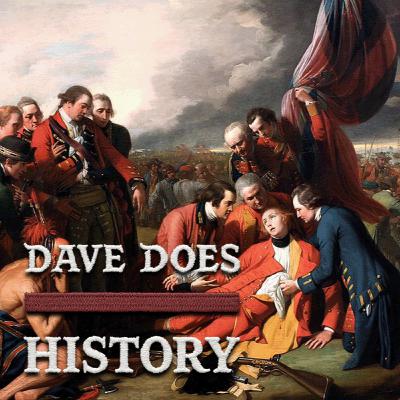
In September of 1759, two armies faced each other on a plateau outside Quebec City, on land that belonged to a farmer named Abraham Martin. History remembers it as the Battle of the Plains of Abraham.James Wolfe, the young British general already dying of illness, gambled everything on a nighttime landing and a climb up a cliff the French thought was impassable. By dawn, four thousand redcoats stood ready. Montcalm, the French commander, chose to attack immediately rather than wait for reinforcements.The French fired too soon. The British waited, then unleashed a crushing volley at close range. Within minutes the French line collapsed. Wolfe was shot three times and died hearing of his victory. Montcalm was mortally wounded and died the next day.The battle lasted less than an hour, but it ended French Canada, gave Britain control of the St. Lawrence, and set the colonies on the road toward revolution.
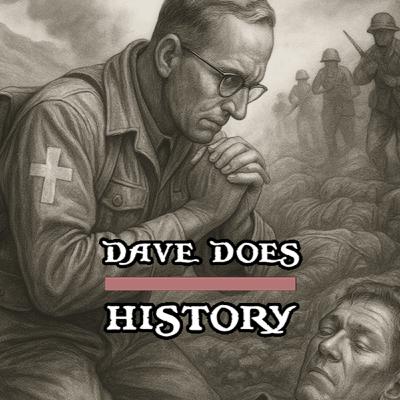
On July 16, 1950, in the early chaos of the Korean War, a Catholic chaplain named Father Herman Felhoelter made a choice that would define the very idea of sacrifice. Surrounded by wounded American soldiers who could not be moved, he stayed behind as the enemy advanced.He knelt to pray over the dying and was gunned down mid-prayer, alongside the men he refused to leave.This is the story of the Chaplain–Medic Massacre, one of the first and most horrifying atrocities of the war. It is a story of faith, courage, and the cold brutality of battle.But more than that, it is a story that reminds us what it means to stand for something greater than yourself. In this episode of Dave Does History, we remember the man who carried no weapon, wore a cross on his arm, and walked into eternity doing what he was called to do: pray.
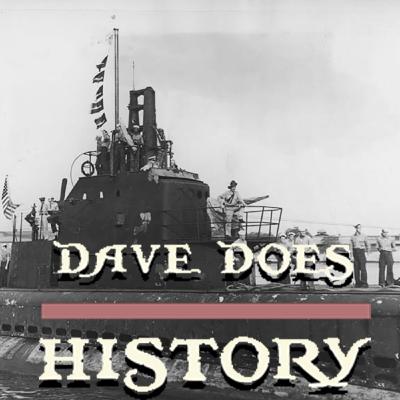
In the early months of World War II, deep beneath enemy waters, the crew of the USS Silversides faced an unimaginable challenge: an emergency appendectomy performed without a doctor, using improvised tools, and under constant threat of enemy attack.
Join us as we dive into the incredible story of Pharmacist’s Mate Thomas A. Moore, who defied the odds to save his crewmate’s life in one of the most daring medical feats in naval history. From bent spoons as surgical tools to a harrowing depth charge escape, this episode captures the ingenuity, resilience, and courage that defined the silent service during WWII.
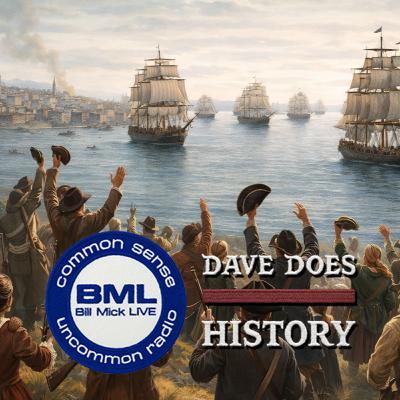
March 17, 1776. Nearly a year into open rebellion, the British still hold Boston, and the American cause hangs in that uneasy space between bold talk and hard reality. In this episode of Dave Does History, we step into a siege that should have failed, led by an army that, on paper, had no business winning.Surrounding the city, Washington’s forces are outnumbered, under-supplied, and still learning how to become an army. Inside Boston, the British wait, confident that time and discipline will break the rebellion. And yet, both sides overlook the same critical piece of ground, Dorchester Heights, as if history itself were daring someone to act.What follows is not a clash of grand armies, but a lesson in leadership, ingenuity, and timing. With Henry Knox’s artillery finally in hand, Washington makes a gamble that will redefine the war. In a single night, under cover of darkness and deception, the Americans transform the battlefield.By morning, the balance of power has shifted, and the might of the British Empire faces a truth it cannot ignore.Sometimes victory is not taken. Sometimes it is forced upon your enemy.
On this week’s segment of Dave Does History on Bill Mick Live, we take up one of the most overlooked, and most explosive, phrases in the Declaration of Independence: “He has kept among us, in times of peace, Standing Armies without the Consent of our legislatures.”It is easy to skim past those words. It is much harder to understand why they burned.Why were the American colonists so deeply unsettled by the presence of British troops? Why did red coats in Boston streets feel less like protection and more like occupation? And why did Jefferson and the other founders see a standing army not simply as a policy disagreement, but as a direct threat to liberty itself?In this episode, we trace the fear of standing armies back through English history, from Charles I to James II, and show how those lessons shaped colonial resistance. We explore the debt of the Seven Years War, the Quartering Act, the Boston Massacre, and the constitutional compromises that followed independence.This is not just a story about muskets and marches. It is a story about power, memory, and the uneasy balance between security and freedom.
Last time, we stood at Moore’s Creek Bridge and listened to Old Mother Covington speak. In three violent minutes, a Loyalist rising collapsed and Governor Josiah Martin’s promise of ten thousand men dissolved into smoke and swamp water.But that battle was only half the story.Three thousand miles away, in Cork, Ireland, the British Empire was assembling the force that was supposed to make Moore’s Creek irrelevant. Seven regiments. Artillery. Royal confidence. This was the hammer meant to fall in coordination with that uprising and split the colonies in half. On paper, it looked elegant. Cheap victory. Minimal commitment. Maximum effect.Instead, Cork became a lesson in delay, delusion, and the dangers of believing your own optimism.Recruiting faltered. Ships were scarce. Deadlines slipped from December to January to February. When the fleet finally sailed, it ran straight into the wrath of the Atlantic. Storms scattered the convoy. Transports sank. Soldiers drowned before they ever saw America.This episode is the other side of Moore’s Creek. The British side. The paper army. The missed signals. The pride that refused to turn back.Old Mother Covington did not win the war that morning.But Cork made sure Britain never had the chance.
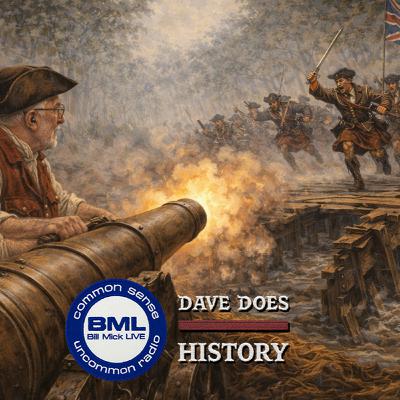
We tend to remember the American Revolution as a clean fight. Patriots in homespun. Redcoats in formation. Muskets cracking across open fields.But that is not how it felt in North Carolina in 1776.Before there was Saratoga. Before there was Yorktown. Before Jefferson put ink to parchment and accused the king of stirring up “domestic insurrections among us,” there was a swamp. A narrow bridge. And neighbors marching against neighbors.Royal Governor Josiah Martin believed he could crush the rebellion from the inside. Ten thousand loyalists would rise. Seven thousand British troops would land. The Carolinas would fall. The Revolution would choke before it ever reached full flame.Instead, in the cold darkness before dawn on February 27, 1776, Highland Scots charged across a greased bridge shouting “King George and broadswords!” What followed lasted three minutes.Three minutes that shattered a royal strategy. Three minutes that hardened a colony. Three minutes that pushed North Carolina to become the first to authorize independence.This is the story of Moore’s Creek Bridge.This is the story behind the grievance.And this is why Old Mother Covington still echoes in the dark.
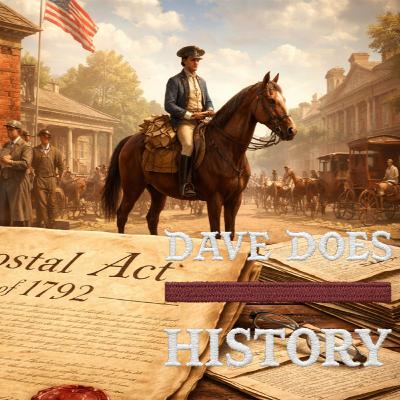
Before there was a telegraph wire humming across the plains, before railroads stitched steel across the continent, before the internet convinced us that information travels at the speed of light, there was a rider on a muddy road with a leather satchel and a republic in his saddlebag.In this episode, we are talking about the Postal Act of 1792.It sounds bureaucratic. It sounds dry. It sounds like something best left to archivists and footnotes. But here is the truth. This law built the nervous system of the United States. It answered a question that haunted the Founders after the Revolution: how do you keep a large republic from drifting apart?Washington signed it. Madison believed in it. Franklin helped lay the groundwork for it. And Congress embedded within it a bold idea that still shapes us today. Information should circulate freely. News should be affordable. Private correspondence should be protected. The government should connect its people, not spy on them.This was not about delivering parcels. It was about delivering democracy.So settle in. We are going to follow the post roads from Maine to Georgia, out to the frontier, and into the beating heart of a young nation trying to hold itself together.
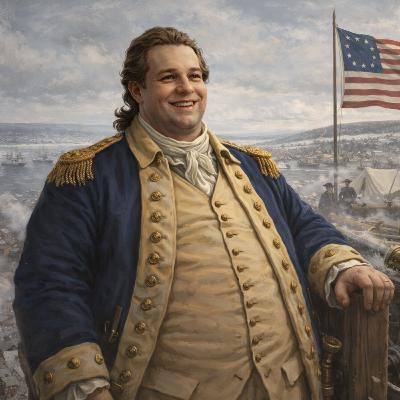
We love to talk about the giants of the American Revolution. Washington in command. Jefferson at his desk. Adams on his feet. But revolutions are not won by speeches alone. They are won by men who move iron in the dark.This week on Dave Does History, we step back into the winter of 1775 and meet a 25 year old Boston bookseller who understood something most armies still struggle to grasp. Strategy means nothing without logistics. Henry Knox had no formal military education. He left school at nine. He taught himself Greek, Latin, and the science of artillery by candlelight in his bookstore. When George Washington needed cannons to break the British grip on Boston, Knox offered a solution that sounded almost insane.Drag sixty tons of artillery three hundred miles through snow, mountains, and frozen rivers.What followed was one of the most daring logistical feats in American history, a “noble train of artillery” that changed the course of the war without firing a single decisive shot. In this episode, we explore how Knox’s grit, engineering mind, and relentless execution helped force the British out of Boston and prove that the Revolution was more than rhetoric.
A random encounter while reading a book has Dave contemplating the reason why books remain so important...
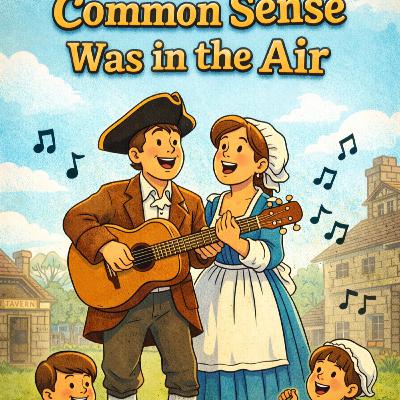
Here is the thing. Independence did not begin with a vote. It did not begin with Jefferson’s pen scratching across parchment. It began earlier, colder, louder, and far less polite.In the winter of 1776, Americans were not celebrating. They were arguing. In taverns where the ale was thin. In churches where the sermons bled into politics. In parlors where fear sat quietly beside the fire. Blood had already been spilled. Boston was occupied. Trade was strangled. And yet most Americans still clung to the King, not out of loyalty, but out of habit. Monarchy was flawed, but it was familiar.Then Common Sense arrived. Not as a book to be studied in silence, but as noise. Read aloud. Debated. Challenged. Answered. It did not give Americans facts they did not know. It gave them permission to ask questions they had avoided. Dangerous questions. Impolite ones. Questions that refused to stay inside the relationship.What follows is not the story of sudden revolution. It is the story of exhaustion. Of anxiety hardening into accusation. Of fear slowly learning the language of law. The Declaration of Independence did not create independence. It recorded it.This is the story of how winter arguments became summer law.
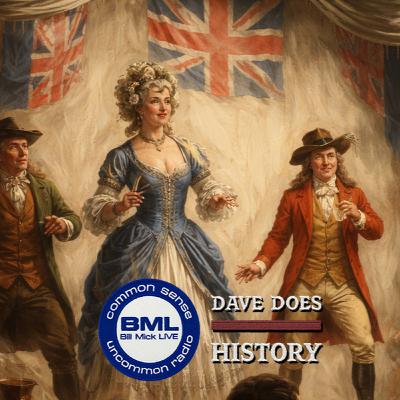
This week on Dave Does History, the American Revolution is stripped of its romance and examined where wars are actually won or lost: logistics.Picking up in the brutal winter of 1775–1776, Dave Bowman walks listeners into British-occupied Boston, a city encircled, frozen, and starving. What emerges is not a tale of grand ideology or battlefield heroics, but of an empire choking on distance, delay, and bureaucratic blindness. British troops, unable to be properly supplied or housed, turn to distraction, staging plays in the heart of a Puritan city while hunger and resentment close in around them.That misplaced confidence collapses spectacularly on January 8, 1776, when American forces exploit the moment to strike, not for victory, but for humiliation and message. From there, the story widens. Boston becomes a case study in imperial failure, revealing how the Atlantic Ocean, slow communication, and fractured governance undermine Britain’s ability to rule from afar.Through the lens of Jefferson’s grievances and Eisenhower’s warning that professionals study logistics, this episode reframes the Revolution as an autopsy of a system that could not outrun distance. It is not a story of sudden defeat, but of slow erosion, where an empire discovers too late that power cannot survive on assumptions alone.
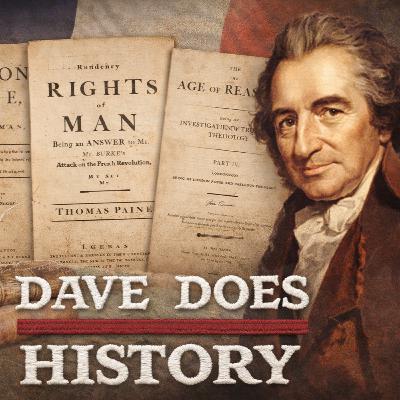
Thomas Paine did not arrive in history as a marble statue ora finished idea. He arrived tired, broke, and angry, with ink on his fingersand a habit of saying the quiet part out loud. When Americans remember theRevolution, they tend to remember generals on horseback and signatures onparchment. They forget the man hunched over scrap paper by candlelight, turningfrustration into sentences that ordinary people could understand.Paine did not command armies. He did something far moredangerous. He told people that authority had to justify itself, that traditionwas not an argument, and that liberty was not a favor granted by kings. Hewrote for farmers, laborers, and soldiers who were cold, unpaid, and uncertainwhether any of this was worth the cost. His words did not promise comfort. Theydemanded courage.This episode follows Paine from obscurity to influence andthen into exile, tracing how the same clarity that helped ignite independencelater made him unwelcome in polite company. He was celebrated when he wasuseful and discarded when he refused to stop asking questions. By the end ofhis life, the nation he helped create no longer knew what to do with him.This is not a story about a flawless founder. It is the storyof a necessary one. A man who believed that common sense was revolutionary, andwho paid the price for proving it.
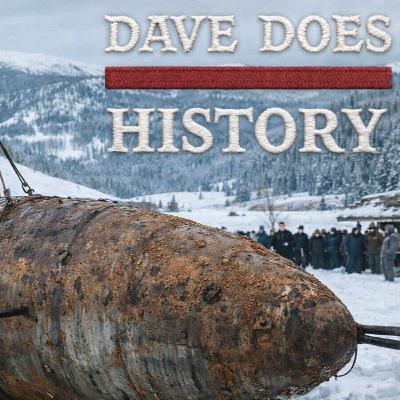
It sounds like a tall tale told too late at night. A submarine in the Rocky Mountains, sitting on a frozen lake nearly nine thousandfeet above sea level, more than a thousand miles from the nearest ocean. But this story is not folklore. It is documented, photographed, and quietly stubborn in its facts.In the winter of 1944, residents of Central City, Colorado,watched a rusted, cigar shaped vessel rise from the ice of Missouri Lake after forty-five years underwater. The band played a patriotic tune better suited to a harbor than a mining camp, and someone cracked a joke about the longest crash dive in history. They were not wrong.This is the story of the Rocky Mountain submarine, built insecret in 1898 by a skilled and eccentric engineer named Rufus T. Owens. It is a story about ambition, miscalculation, and the peculiar American habit of attempting the impossible simply because no one has proven it cannot be done.
"He is at this time transporting large Armies of foreign Mercenaries to compleat the works of death, desolation and tyranny." With these words, the Declaration of Independence transformed a political dispute into an existential struggle for survival. To the American Patriots, the arrival of 30,000 German soldiers—popularly known as "Hessians"was the ultimate betrayal by King George III.Demonized in the press as "blood-thirsty butchers" and even rumored to be cannibals, these troops were not actually independent guns-for-hire, but "auxiliaries" rented out by their princes to fund European state budgets. Their presence on American soil radicalized the colonies, serving as the "clinching argument" that reconciliation with the Crown was impossible. Yet, the story of the Hessians is also one of surprising integration. While they arrived as symbols of tyranny, thousands would eventually desert the British army to become American citizens. Join us as we uncover the "Mercenary Shadow"—the military necessity, the propaganda war, and the human story behind the German soldiers who unintentionally helped birth a new nation.
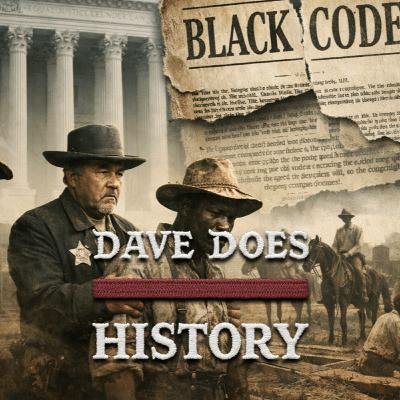
I do not usually stop what I am doing to listen to Supreme Court oral arguments. That is lawyer country. Necessary work, important work, but not usually where historians spend their time. But this week, something in one of those arguments stopped me cold. Not because of the outcome, which we do not yet know. Not because of the modern policy question involved. But because of how history was used.Or more precisely, how it was handled.During arguments over a Hawaii firearms law, attorneys defending the statute reached back into the Reconstruction era and cited the post Civil War Black Codes as historical precedent. Laws written in 1865 and 1866 to control, restrict, and terrorize newly freed Black Americans. Laws so abusive that they triggered the Civil Rights Act of 1866 and the Fourteenth Amendment itself.Those laws were presented, in the Supreme Court of the United States, as examples of acceptable historical regulation.If you are not a historian of Reconstruction, that might sound odd. If you are, it should feel deeply unsettling.This episode is not about whether Hawaii’s law is right or wrong. It is not about modern politics. It is about how history works, what it is for, and what happens when we treat the past as a collection of citations instead of a story with meaning.Because some laws are precedents.And some laws are warnings.
Before the first shots were fired, before tea hit the water,the American Revolution was already underway, quietly, methodically, and with paperwork.This episode begins in places that do not make it ontocommemorative mugs. Courtrooms. Docks. Ledger books. It begins with a simple realization that spread through the colonies like a winter chill. British authority was no longer bound by its own rules. The law, once assumed to be ashield, had started to feel like a weapon.We tend to remember rebellion when it looks dramatic. Weforget it when it looks procedural. But long before muskets cracked at Lexington, colonists were watching ships seized under cannon, neighbors dragged into courts without juries, and legal rights evaporate behind polite language and official seals. These were not accidents. They were patterns.Today on Dave Does History on Bill Mick Live, we look at twomaritime flashpoints that forced that truth into the open. The seizure of John Hancock’s ship Liberty. The burning of HMS Gaspee. On the surface, they look like local disputes. They exposed something far more dangerous. A system willing to deny juries, relocate trials, and treat distance itself aspunishment.These events did not just provoke anger. They taught alesson. When law becomes untethered from consent, resistance stops being radical and starts being rational.This is the story of how paperwork, procedure, and powerpushed America toward independence.
On January 17, 1955, there was no cheering crowd, no grand speech echoing across the harbor, and no sense that history was demanding attention. There was only a submarine easing away from a pier in Groton, Connecticut, and a short signal sent by flashing light. Underway on nuclear power. Ten words that quietly ended an era that had ruled the seas since coal smoke and canvas.This is not a story about a miracle machine or a flawless triumph. It is a story about discipline, stubbornness, risk, and a Navy willing to trust mathematics and metal more than tradition. USS Nautilus did not simply go to sea, she changed what going to sea meant. She broke the old bargains that submariners had lived with for decades, the need to surface, the tyranny of fuel, the constant negotiation between endurance and survival.In this episode, we walk through that moment and everything that made it possible. The engineers in the desert, the admiral who refused shortcuts, the crew who stepped aboard something the world had never seen before. No mythology, no inflated heroics, just the hard truth of how the Nuclear Navy began. Quietly, deliberately, and forever.
In January of 1786, a quiet vote in the Virginia General Assembly changed the way the modern world understands belief, power, and conscience. There were no parades, no ringing bells, and no sense that history had just pivoted. Yet with the passage of the Virginia Statute for Religious Freedom, something ancient finally loosened its grip. For the first time, a government walked away from controlling belief and trusted its people to carry faith, doubt, and conviction on their own.This story is not about abstract philosophy or tidy slogans. It is about jail cells and tax collectors, about preachers hauled into court, about lawmakers who feared that liberty might unravel moral order. It is about Thomas Jefferson writing a law that dared to claim the human mind was created free, and James Madison fighting to defend that idea when compromise seemed safer. It is also about ordinary Virginians, Baptists, Presbyterians, and dissenters who refused to keep paying for a church they did not belong to.The Virginia Statute for Religious Freedom did not promise harmony. It promised restraint. It did not elevate religion or suppress it. It stepped aside. In this episode, we walk through the long road to that decision, the battles that nearly derailed it, and the legacy it left behind, one that still shapes the First Amendment and the global understanding of freedom of conscience today.
January in the Green Mountains has never been gentle. It strips away comfort, soft thinking, and easy assumptions. In that kind of cold, people tend to tell the truth, or at least the version of it they are willing to live with. On January 15, 1777, a group of settlers gathered in a small courthouse in Westminster and did something the American story still struggles to categorize. They declared independence, not from a distant king alone, but from a neighboring colony that claimed ownership of their land, their labor, and their future.This is not a tale of powdered wigs and polished speeches. It is a story rooted in mud, timber, disputed deeds, and men who had already learned that law could be used as a weapon. Vermont did not drift into independence on a philosophical breeze. It fought its way there through land disputes, court orders, whippings in the woods, and blood spilled on courthouse steps. The revolution here was practical before it was idealistic.For fourteen years, Vermont existed as something awkward and unresolved, a republic without recognition, a state before it was allowed to be one. In that space, it experimented boldly, sometimes uncomfortably, with ideas of liberty, labor, and power. This video walks through that uneasy birth, not as legend, but as lived history, fingerprints still visible on the banister.

Comments

Download from Google Play

Download from App Store
 United States