


 Claim Ownership
Moneylife News Bites
Subscribed: 0Played: 2
Subscribe

© Moneylife
Description
Moneylife News Bites is a weekly podcast hosted by veteran journalists and founders of Moneylife, Sucheta Dalal and Debashis Basu. Each week a new episode analyses an important news topic, based completely on unbiased and ethically researched information that is not available anywhere else. A video version of this podcast is available on our YouTube channel - @MoneylifeNewsBites
Interested listeners and readers can follow Moneylife News on our website - https://www.moneylife.in/
Hosted on Acast. See acast.com/privacy for more information.
248 Episodes
Reverse

The government is quietly moving to give SEBI sweeping new powers through the proposed Securities Markets Code—but crucial details remain hidden from the public. There is no draft Bill, no white paper, and no clarity on how expanded authority will be balanced with accountability.In this audio, Sucheta Dalal examines why consolidating India’s securities laws may be necessary—but dangerous—if governance failures remain unaddressed. From decades-old regulatory fragmentation and the unchecked expansion of depositories like NSDL, to unresolved conflicts of interest and weak oversight within SEBI itself, the risks are systemic.The core question is simple but uncomfortable: can concentrated regulatory power work without equally strong checks and transparency? As Parliament prepares to consider the new Code, investors and citizens must ask—who will watch the watchdog? Hosted on Acast. See acast.com/privacy for more information.

India’s stock market is at record highs—but why do so many investors feel poorer? In this sharp, data-driven analysis, Debashis Basu dismantles three deeply held beliefs about Indian equities: that Nifty returns reflect investor portfolios, that economic growth automatically translates into corporate earnings, and that earnings growth guarantees strong market returns.In this audio Debashis Basu explains how government-led capex fuelled a small- and mid-cap boom that lifted retail portfolios while leaving Nifty heavyweights largely untouched—and why the slowdown in capex has reversed that trend. It also examines the long-term gap between India’s GDP growth and Nifty earnings, drawing comparisons with China, Japan, Taiwan, and South Korea to show why fast-growing economies don’t always deliver stock market wealth.Finally, it tackles the most dangerous myth of all: ignoring valuations. Using historical examples from India and global markets, he shows how high valuations can destroy returns even when growth looks strong. A must-watch for investors willing to question popular narratives and update their beliefs about India’s equity markets. Hosted on Acast. See acast.com/privacy for more information.

India’s aviation sector is facing one of its most alarming crises yet — and this time, the turbulence comes not from the skies, but from a single airline’s power over the system.In this hard-hitting analysis, Sucheta Dalal exposes how IndiGo, which controls nearly two-thirds of India’s domestic market, triggered unprecedented nationwide chaos by refusing to comply with long-pending pilot fatigue safety rules. As thousands of flights were cancelled, the DGCA and the Union government quietly bent safety regulations — for IndiGo alone. Hosted on Acast. See acast.com/privacy for more information.
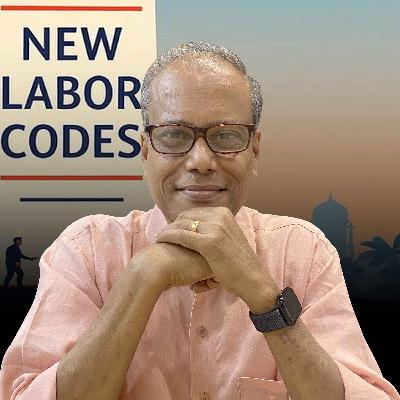
India’s new labour codes were supposed to modernise the country’s workforce regulations by replacing 29 outdated laws with four streamlined codes. On paper, they promise simpler compliance, wider social security, and more flexibility for businesses. But as Debashis Basu explains, India has a long history of great policy design collapsing at the execution stage—whether it was GST, IBC, RERA, Swachh Bharat, or Smart Cities. Hosted on Acast. See acast.com/privacy for more information.

India’s insolvency system seems to operate with two rulebooks — one for honest small borrowers who lose their livelihoods, and another for powerful defaulters who walk away with massive “one-time settlements”.In this audio, we break down Sucheta Dalal’s exposé on the shocking contrast between the treatment of a Mumbai doctor couple—driven to ruin by an ARC—and the extraordinary leniency shown to the Sandesara brothers, declared fugitive economic offenders in a ₹14,000–16,000 crore fraud. Hosted on Acast. See acast.com/privacy for more information.

India’s GDP is soaring—but corporate revenues are barely crawling. In this audio, Debashis Basu breaks down the striking disconnect between headline GDP growth and muted corporate performance. Why are top-line numbers stagnating when the economy is supposedly booming? The answer lies in the composition of GDP itself: consumption-heavy growth, government-led capex, weak private investment, and stagnant real wages. Basu explains how PFCE, public expenditure, and sluggish private capex shape this paradox, why old rules linking GDP to corporate growth have collapsed, and what it will take for corporate India to feel the impact of high GDP figures. A sharp, insightful analysis you won’t hear anywhere else. Hosted on Acast. See acast.com/privacy for more information.

A high-level committee has finally exposed what remained hidden inside SEBI for 16 long years: a weak, legally dubious and unenforceable conflict-of-interest code that conveniently protected the market regulator’s top brass. Sucheta Dalal breaks down the committee’s findings, the privileges enjoyed by SEBI’s chairperson and whole-time members, and why the regulator failed to follow even its own standards while imposing strict norms on the rest of the market. Hosted on Acast. See acast.com/privacy for more information.

Mumbai’s land belongs to its people — not to politicians, builders, or bureaucrats. Yet, across Maharashtra, public land is being quietly ‘monetised’ and handed over to private developers under the guise of redevelopment and modernisation. From the Parth Pawar land deal in Pune to the proposed monetisation of BEST depots, this video exposes how public assets are being stripped, leased, and sold for short-term fiscal gains.Sucheta Dalal explains how this unchecked land grab is turning Mumbai into a city of gated luxury towers and disappearing public spaces. It’s time citizens drew a red line and demanded transparency, accountability, and a Public Land Protection Act. Hosted on Acast. See acast.com/privacy for more information.

The U.S. stock market is riding an unprecedented wave of artificial exuberance, fuelled by hype around artificial intelligence and a handful of tech giants — the “Magnificent Seven.” But as valuations soar to levels last seen during the dotcom bubble, cracks are forming beneath the surface. In this sharp analysis, Debashis Basu dissects the dangerous web of incestuous investments in the AI ecosystem, the ballooning private-credit bubble, and the speculative frenzy spreading across global markets. Are we heading for another crash — one that could wipe out trillions in global wealth? Watch to understand why history may be about to repeat itself — and what it means for investors worldwide. Hosted on Acast. See acast.com/privacy for more information.

An explosive investigation by Sucheta Dalal uncovers how over Rs1.5 lakh crore belonging to government schemes, welfare programmes, charities, and even military funds has quietly landed in the Reserve Bank of India’s Depositor Education and Awareness Fund (DEAF) — forgotten, unclaimed, and unaccounted for.From ESIC and EPFO accounts to Gram Panchayat Yojanas, Chief Minister’s Relief Funds, and charitable trusts, Moneylife’s research reveals a massive systemic failure — where money meant for public welfare now sits locked away.This audio exposes how RBI’s UDGAM portal, meant to help recover unclaimed deposits, is riddled with flaws, making discovery nearly impossible. The question remains: Who is accountable for this vanished public wealth? Hosted on Acast. See acast.com/privacy for more information.

In this episode of Crosshairs, Sucheta Dalal traces the arc of India’s most powerful financial institution — the Life Insurance Corporation (LIC) — from the 1957 Haridas Mundhra scandal to the present-day Adani controversy.Drawing parallels between Justice M.C. Chagla’s fearless public inquiry and today’s opaque decision-making, she exposes how decades of political interference and bureaucratic secrecy have eroded LIC’s accountability.This is the story of how India’s once-transparent institutions turned into fortresses of silence — and why it matters to every policyholder. Hosted on Acast. See acast.com/privacy for more information.

India’s courtrooms are no longer hidden from public view. With live-streaming, social media coverage, and viral clips, every word and gesture of judges and lawyers is now under public scrutiny. Sucheta Dalal examines how this new transparency is reshaping judicial behaviour, exposing power dynamics, and testing the credibility of India’s justice system. From the Adani–Hindenburg hearings to heated courtroom spats, this video unpacks the growing tension between openness, accountability, and the erosion of judicial sanctity. Hosted on Acast. See acast.com/privacy for more information.

What really drives long-term economic growth? In this video, Debashis Basu talks about the idea of “useful knowledge”—a concept developed by economist Joel Mokyr—to explain why some societies continue to progress while others stagnate. He explores how countries such as China and those in the West have built strong networks connecting science, research, and industry, and why India still struggles to bridge its vast pool of talent with innovation on the ground.Debashis Basu argues that India’s path to becoming a Viksit Bharat doesn’t lie in grand policy blueprints, but in building institutions, research ecosystems, and a culture that values practical, applicable knowledge. Can India finally turn its intellectual potential into sustained prosperity? Let’s explore. Hosted on Acast. See acast.com/privacy for more information.

The Tata Group — India’s most respected business empire — is once again in the midst of a quiet storm. A power struggle between Noel Tata, the Shapoorji Pallonji (SP) Group, and Mehli Mistry has brought internal tensions to the surface, raising serious questions about the future of governance and leadership at Tata Sons.In this episode of Crosshairs, Sucheta Dalal examines the fault lines within the group, the opaque role of Tata Trusts, the sidelining of the SP Group, and the surprising move to seek government intervention in what should have been an internal matter.Will the Tata legacy of integrity and independence survive this inflection point — or will the empire built by Jamsetji, JRD, and Ratan Tata fracture under its own weight? Hosted on Acast. See acast.com/privacy for more information.

ndia is sitting on a staggering mountain of unclaimed money—bank deposits, shares, insurance, pensions, and more—yet billions of rupees remain inaccessible to their rightful owners. In this video, we explore the government’s latest campaign, “Aapki Poonji, Aapka Adhikar”, aimed at returning these funds, and examine whether it can overcome years of bureaucratic hurdles, opaque systems, and ineffective processes. From RBI incentives for banks to the ongoing Supreme Court PILs, we break down why millions of Indians are still unable to claim their own money and what reforms are truly needed to make unclaimed wealth accessible. Hosted on Acast. See acast.com/privacy for more information.
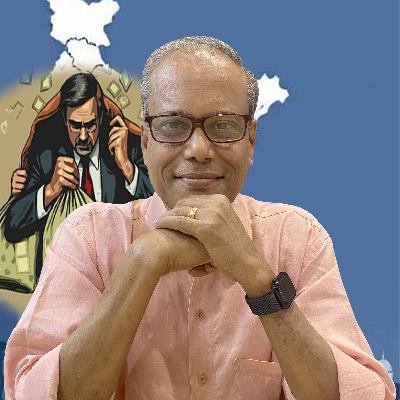
Despite record-breaking government spending on infrastructure—over Rs54 lakh crore in 11 years—the much-hoped-for private investment boom in India remains missing. In this insightful analysis, Debashis Basu examines why repeated policy pushes like bank cleanups, tax cuts, and production-linked incentives have failed to revive private capex. The real issue, he argues, isn’t about supply or credit—it’s about weak demand, stagnant wages, and uncompetitive exports. Until policy focuses on boosting incomes and consumption, India’s elusive private capex boom will remain just that—a mirage. Hosted on Acast. See acast.com/privacy for more information.

Corporate India is paying thousands of crores every year as ‘brand fees’ and royalties to parent or promoter entities — often without real justification.Sucheta Dalal examines the explosive Vedanta–Hindustan Zinc case, where ₹4,100 crore was siphoned as brand royalty, sparking probes, refunds, and a Supreme Court case. But Vedanta is not alone — from Tata to Mahindra, JSW, Nestlé, Sony, and Jubilant, brand royalties have become a shadow channel for moving cash away from minority shareholders.Will SEBI tighten its rules, or will it be left to the taxman to curb this opaque practice? Watch now to understand why brand royalties are one of the most controversial issues in Indian corporate governance. Hosted on Acast. See acast.com/privacy for more information.

SEBI has approved sweeping changes to the minimum public shareholding (MPS) norms, allowing large companies to list with significantly lower public floats. While the move is being hailed as a boost for marquee IPOs like NSE, Reliance Retail, and Jio, critics warn it could expose retail investors to higher risks of volatility, manipulation, and poor price discovery.Sucheta Dalal revisits past episodes of market excess, from the dotcom boom to the Adani controversy, to explain why robust public shareholding is critical for investor protection and market integrity. Is SEBI prioritising corporate interests over retail investors? Hosted on Acast. See acast.com/privacy for more information.
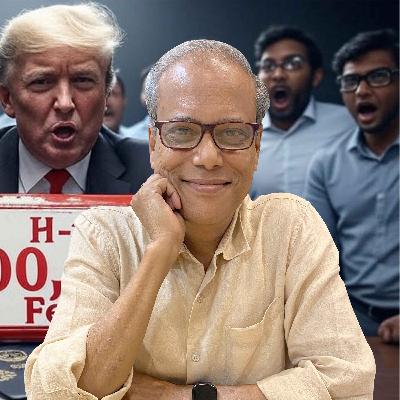
On September 19, President Donald Trump shook the tech world by introducing a $100,000 fee on new H-1B visa petitions for foreign workers. While the move seems aimed at curbing outsourcing and protecting American jobs, its consequences for India may be unexpectedly positive. With fewer engineers moving to the US, multinationals could expand global capability centers in India, retain talent locally, and create new high-value opportunities beyond coding and entry-level roles. Could Trump’s H-1B “bomb” actually accelerate India’s rise as a global tech hub? Join Debashis Basu as he unpacks the short-term disruptions and potential long-term gains of this controversial policy. Hosted on Acast. See acast.com/privacy for more information.

India’s government rushed through a ban on online gaming, citing addiction, suicides, and financial losses of ₹15,000 crore a year. But what about lotteries, stock market speculation, or predatory digital lending—each causing far bigger losses and distress?In this audio, Sucheta Dalal examines the uneven crackdown on risky behaviour:- Online gaming banned overnight- Lotteries continue under state patronage- Derivatives trading thrives despite ₹1 lakh+ crore losses a year- Easy digital loans push people into debt trapsWhy are some forms of “gambling” banned while others are protected or ignored? And what does this say about India’s approach to financial distress? Hosted on Acast. See acast.com/privacy for more information.

Comments

Download from Google Play

Download from App Store
 United States