


Rocks for Jocks
Subscribed: 1Played: 25
Subscribe


© RfJ Media
Description
Welcome to Rocks for Jocks, a Science podcast for everyday people with a focus on Climate and Natural Hazards! Each episode covers a new topic or features insights from guests, including scientists and industry professionals. Whether you're a student, a working professional, or just curious about the world, this podcast has something for you.
https://linktr.ee/RocksForJocks
https://linktr.ee/RocksForJocks
44 Episodes
Reverse
Why fund research into so many narrow questions far removed from everyday problems?Solving niche science problems expands bounds of human knowledge and makes new breakthroughs possible!In this episode, I walk listeners through a recent article I wrote on this topic posted on Substack. Read along (and subscribe) here: https://rocksforjocks.substack.com/p/want-to-solve-hard-problems-fundMusic: 368 by Dyalla
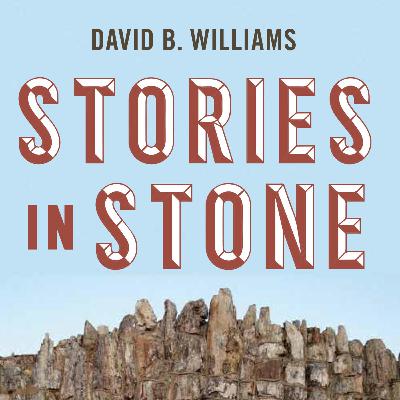
In this episode I was lucky enough to discuss the book "Stories in Stone" with the author, David B. Williams!We talk about how geology weaves its way through human history and touch on some highlights from the book, including the Bunker Hill Monument's granite and how Michelangelo got his marble!My substack: https://rocksforjocks.substack.com/?utm_campaign=profile_chipsDavid's website: http://geologywriter.comDavid's substack: https://streetsmartnaturalist.substack.com/?utm_campaign=profile_chipsMusic: 368 by Dyalla
Andy's recent paper discussed: https://www.science.org/doi/10.1126/sciadv.adx9442Substack: https://substack.com/@rocksforjocksIn this episode, I host Andy Jones, a PhD candidate in Geoscience at the University of Wisconsin Madison. We focus on Andy's recently published research in California’s Sierra Nevada, where glaciers are disappearing for the first time in 30,000 years! We cover the formation, recession, and climatic impact of glaciers. Andy also talks about glacier studies in the Tropical Andes, emphasizing the need for climate action. Listen and follow “Rocks for Jocks” on Substack!00:00 Intro04:18 Glaciers' Role in Climate Regulation06:51 California's Disappearing Glaciers08:39 Historical Context of Expansion and Retreat20:00 Climate Change and Glacial Response29:59 Future ResearchMusic: 368 by Dyalla
This month, I bring back Marshall Pontrelli, a fan-favorite former guest and graduate school coworker! We talk about Marshall's research on geotechnical engineering, site response, and earthquake hazard mapping. We also get into Marshall’s thoughts on the peer review process and the application of scientific thinking to broader contexts.Subscribe on Substack: https://rocksforjocks.substack.com00:00 Welcome and Intro02:01 Marshall's Graduate School Research08:31 Mexico City Earthquake Study16:37 Geological Mapping and Hazard Analysis28:43 Depth to Bedrock, Shear Wave Velocity, and Cone Penetration Tests 41:48 Design-Build vs. Design-Bid-Build49:29 Reflections on Scientific ThinkingMusic: 368 by Dyalla
Today’s interview is with not one, but TWO researchers from the Tufts Geohazards Research group! I host Maggie Roberts and Ellie Meyer, PhD students learning about how Earthquake shaking waves affect structures at the surface.Maggie and Ellie discuss methodologies using HVSR measurements, the limitations of traditional VS 30 models, and human-reported seismic data.Subscribe on Substack: https://rocksforjocks.substack.com00:00 Welcome Back04:44 Ground motion Geohazards Research07:43 Challenges and Progress in Earthquake Research23:45 HVSR pros and cons31:34 Human Data in Earthquake Studies36:43 Future Goals for HVSR Models40:22 Interdisciplinary Collaboration and BenefitsMusic: 368 by Dyalla
In this episode of Rocks for Jocks, I reunite with a grad school colleague, Jeremy Salerno! We talk about Jeremy's research on earthquake waves and site response during our time In the Geohazards Research Lab at Tufts University. I worked in the lab for 2 years, where I also overlapped with prior Rocks for Jocks guests, Christina Sanon and Marshall Pontrelli!Jeremy and I talk about detecting seismic activity, monitoring nuclear weapons testing, and his roles working with different companies and defense projects.Rate this podcast 5 stars, and send it to a friend!00:00 Intro03:57 Field Work and Data Collection06:21 Nuclear Monitoring and Seismic Sensors12:30 Earthquake Waves, Resonance, and Site Response20:08 Using data for Earthquake Engineering23:01 Ambient Noise & Soil Vibration Analysis23:31 Unexpected Earthquakes and Thesis work29:08 AI in Coding and Professional Use33:31 Classes and their ImpactMusic: 368 by Dyalla
This week, I host Sydney DeMets, PhD candidate at the University of Washington, to talk about her research on podcast networks! We chat about the polarization within podcasting spaces, the influence of moderate shows on bridging political divides, and the gender disparity in podcast hosts and guests. My favorite part was Sydney highlighting how guests spread across different shows in a similar way to the diffusion of viruses! Sydney also gives some podcast recommendations and reflects on potential future research directions. If like this episode, please send it to a friend, and rate it 5 stars on Spotify & Apple Podcasts!00:00 Intro04:11 The Influence of Podcasts on Public Opinion07:28 Methodology and Findings16:13 Challenges and Surprising Discoveries36:20 Concerns About Information Veracity41:26 Future of Podcast Moderation46:34 Podcast RecommendationsMusic: 368 by DyallaDisclaimer: all opinions are our own and not representative of any companies or organizations.
This week, I had the privilege to interview Professor Roger Fu from Harvard's Earth and Planetary Sciences department. We cover planet formation in our early solar system, harvesting samples from meteorites, tectonic plate motion, paleoclimate research, and science funding in Boston! Professor Fu has a really unique perspective from his time studying astronomy in Chile and also leading research projects in university settings. If you like the episode, please subscribe and rate the episode wherever you're listening, and send it to a friend!00:00 Intro01:57 Astronomy in Chile12:38 Planetary Formation15:21 Meteorites and Magnetic Fields20:34 Paleoclimate Research33:04 NASA’s Influence35:29 Engaging Students and the PublicMusic: 368 by Dyalla
I host David Zabner, 4th year PhD Candidate at Tufts University to tell me all about his research — improving Computer Science education! I start with an intro about why this subject specifically can be so challenging to teach and learn, then David tells me about his background and different research projects he’s done to improve education at different levels. He emphasizes the importance of interactive and practical learning, comparing it to learning a second language.Enjoy, thanks for listening, and send this episode to a friend!00:00 Intro & Background06:15 Learning Theories and Teaching Methods11:49 Challenges in Computer Science Education36:31 Impact of Large Language Models41:08 Future ProjectsMusic: 368 by Dyalla
In this episode, I host Amanda Calhoun, PhD candidate in the Earth and Planetary Sciences program at Harvard! In one project, Amanda uses carbon isotopes to uncover signs of ancient life. In another project, Amanda uses pyrite (fool’s gold!) to understand Earth’s oxygen history. Listen to hear about the history of both our atmosphere and life itself!00:00 Intro and Overview02:46 Research Projects Explained05:41 Fieldwork and Sample Collection12:35 Goals & Implications of projects15:27 Origins of Life, Applications, and Environmental Impact21:04 Conclusion and Final ThoughtsMusic: 368 by Dyalla
Today is a solo episode with your host, Alex Chansky! I talk about why I do this show — in addition to some personal reasons, this channel is a great opportunity to make scientific research more accessible and understandable to the public!This is especially important in recent months as research funding cuts are proposed and our country’s top research institutions are cutting people & projects. So why is science funding important? Listen to find out more!00:00 Why I do this show01:20 Why Public Understanding of Science matters05:36 Current Funding Threats08:51 Long-term Funding cut impacts15:30 Ask Some QuestionsMusic: 368 by Dyalla
In this week’s episode, I host Catherine Knox, PhD candidate at Tufts University, to discuss water diplomacy and decision-making! We talk about different ways to think about water management, especially when it stretches across multiple boundaries. Catherine goes on to discuss her work on sea-level rise adaptation in Boston and also how decisions can be made under both uncertainty and ambiguity.For example, me saying “I have no idea what to write next in this description” is uncertainty. Saying “this description is funny” is ambiguous. Listen and subscribe for more great jokes!02:55 Water Diplomacy and Transboundary Water Management04:04 Sea Level Rise Adaptation Project11:14 Regional Coordination and Stakeholder Engagement17:48 Public-Private Partnerships and Model Applications23:47 Paper 2: Decision Making under Uncertainty & Ambiguity38:27 Personal Insights and Future DirectionsMusic: 368 by Dyalla
This week, I reunite with Christina Sanon, a researcher and PhD candidate at Tufts University, to discuss her journey and recent research developments! Christina discusses a recent seminar and her ~groundbreaking~ earthquake research. We also talk about water diplomacy, a recent Maine Earthquake, and the practical applications of Christina’s projects. Subscribe to hear more scientists discuss climate and natural hazards research projects!00:00 Intro and Water Diplomacy06:00 PhD Journey and Career Aspirations16:54 Earthquake Loss Estimation Project22:40 Understanding Hazard Maps and Soil Amplification28:14 Real-World Earthquakes and Damage State Probabilities35:14 Communicating Science EffectivelyMusic: 368 by Dyalla
In this episode of Rocks for Jocks, I chat with Dr. Matt Curran, a recent doctorate in physical therapy. Together, we talk through aspects of the physical therapy field, including the differences between hospital and outpatient settings, nerve repair, and cadaver dissections. Matt shares what it’s like working with patients of different age groups, his research on post-stroke rehabilitation, and his transition into home care. If you like the episode, please subscribe and share it with a friend!00:00 Intro and Matt's Journey09:16 Cadaver Dissections and Unique Cases21:38 Clinical Experiences and Working in Hospitals26:45 Transition to Home Care35:09 Reflections and Advice for Upcoming PTs

I welcome back Aidan Bailey, a close friend and first-year MD/PhD student at Wayne State University! Aidan shares his experiences in medical school, reflecting on his study strategies, dissecting cadavers, and balancing extensive coursework. He discusses the structure and goals of the MD/PhD program, the value of both degrees, & his future research plans. Our conversation also touches on life in Detroit, highlighting its vibrant culture and sports!
00:00 Intro and Guest Background
01:20 Med School Journey Begins
08:32 Anatomy Lab and Clinical Skills
15:38 Favorite Professors & Classes
18:50 Program Structure and Classmates
30:29 Choosing the Right Advisor
32:30 Benefits of an MD-PhD
37:40 Life in Detroit
Disclaimer: all opinions are our own and not representative of any companies or organizations.
Music: 368 by Dyalla
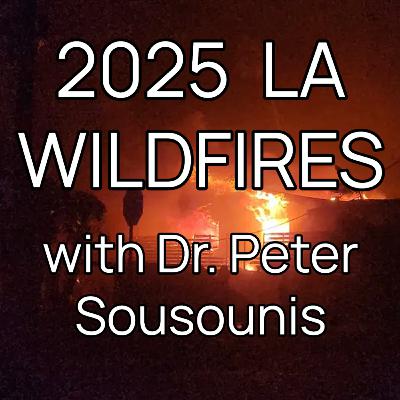
I interview Peter Sousounis, an atmospheric scientist who now works as a climate and catastrophe modeling consultant. We discuss the recent January 2025 Los Angeles, California Wildfires, global catastrophe modeling, and the rising impacts of secondary perils (like smoke damage). Peter explains the factors contributing to winter wildfires in California and highlights the broader implications on human health and insurance in the region.
00:53 Introducing Dr. Peter Sousounis
04:36 Catastrophe Modeling
08:46 Winter Wildfires
14:48 Mitigate and Prepare
22:15 Future Outlook
Blog post discussed: https://www.linkedin.com/posts/peter-sousounis-b7b19133_la-wildfires-initial-thoughts-activity-7285042301372911617-VTRP?utm_source=share&utm_medium=member_desktop
Disclaimer: all opinions are our own and not representative of any companies or organizations.
Music: 368 by Dyalla.
Photo: US Forest Service photo by Jason Benton/ Captain, SRF Engine 341. Accessed using Wikimedia.
Photo Link: https://commons.wikimedia.org/w/index.php?title=File:2025_Southern_California_fires_and_the_United_States_Forest_Service_(USFS)_-_Eaton_Fire_Initial_Attack_(54263489694).jpg&oldid=984491561
In this episode, I sit down with Dr. Danielle LeBlanc, a researcher at the Woods Hole Oceanographic Institution. Danielle and I discuss her journey from studying petroleum engineering to her PhD research on ocean sediments. Danielle explains why she studies sediment components to understand Earth's climate history, ice sheet dynamics, and ice-rafted debris. She also talks about the challenges of her research and offers advice for rising scientists. If you like this episode, please subscribe and share it with friends!04:30 Paleoclimate Research08:14 Isotopes Explained14:59 Laurentide Ice Sheet26:42 Career Reflections and advice 32:34 Opportunities for Future ScientistsNote: the cosmic flux consists of high-energy particles originating from both our sun and other sources in space. Danielle also discusses "sun rays," which she uses here to refer to ultraviolet rays. Ultraviolet rays consist of lower energy particles relative to cosmic rays (or radiation), which consist of higher energy particles.Music: 368 by DyallaDisclaimer: all opinions are our own and not representative of any companies or organizations.
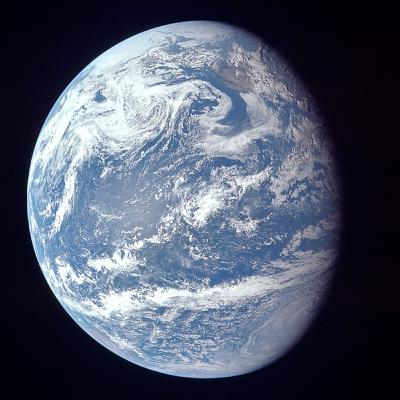
In this episode of Rocks for Jocks, I explore the frequently asked question: “isn't the climate always changing?”. I break down the components of climate change, distinguishing between natural cycles and human-caused impacts. Learn about solar radiation, greenhouse gases, airborne particles, climate feedbacks, and tipping points! Very fun!
I also go into some details about Earth's orbital patterns, using animations from NASA to help understand long-term climate trends. Listen and subscribe for an in-depth discussion on driving our planet's climate!
00:00 Intro
01:29 Climate Forcings
03:24 Feedbacks and Tipping Points
04:38 Solar Radiation
06:59 Orbital changes
12:08 Human impacts
Sources:
https://climate.nasa.gov/nasa_science/science/
https://science.nasa.gov/science-research/earth-science/milankovitch-orbital-cycles-and-their-role-in-earths-climate/
https://science.nasa.gov/science-research/earth-science/why-milankovitch-orbital-cycles-cant-explain-earths-current-warming/
http://www.climatedata.info/proxies/ice-cores/
Cover art: https://commons.wikimedia.org/w/index.php?title=File:Ocean_world_Earth.jpg&oldid=946589202
In this bonus episode of Rocks for Jocks, we leap into the world of MrBeast, the world’s most popular YouTuber. Alex and his guest, Colin Vergilio, discuss MrBeast's impressive rise, his business strategies, and the recent internal memo that reveals how his company operates. We cover his astonishing statistics, including over 50 billion views, 500 employees, and nearly $700 million in annual revenue. Wow! We also explore the ethical implications and challenges of running such a massive digital empire. Don't miss this inside scoop of one of the most influential media figures today!
00:00 Intro and Overview
07:25 MrBeast: The Phenomenon
16:14 The Leaked Memo
19:37 Metrics for YouTube Success
36:31 Engineered Randomness and Algorithm Manipulation
53:00 Philanthropy and Branding
58:42 The Risks and Rewards of Scaling
01:06:54 Final Thoughts on Mr. Beast's Impact
In this special episode of Rocks for Jocks, I discuss the recent volcanic eruptions in Iceland near the town of Grindavík! With live video streams and data from the Icelandic Meteorological Office, viewers get an in-depth look at magma flow, earthquake patterns, and the impact on local attractions like the Blue Lagoon. The video includes hazard maps, GPS data on ground deformation, and gas pollution trends. Despite massive disruptions, tourists can definitely keep visiting if they stay in the safe zones.
Perhaps more importantly, today I learned how to use a camera! While it can definitely be enjoyed with audio-only, the video should be available on Spotify and YouTube. If you’re listening on any other platforms and notice you’re able to see video as well, please let me know!
00:09 Recent Volcanic Eruptions
00:48 Impact on Iceland and the Blue Lagoon
04:11 Volcanic Defenses & Tourism
06:23 Analyzing Maps and Figures
11:01 Live Streams and Visuals
Sources:
https://en.vedur.is/about-imo/news/eruption-begins-on-the-sundhnukur-fissure-swarm
https://en.vedur.is/volcanoes/fagradalsfjall-eruption/volcanic-gases/
https://www.youtube.com/watch?v=fCph8qQK3sc
https://www.youtube.com/watch?v=k6LgRBuNNns

Comments

Download from Google Play

Download from App Store
 United States