


 Claim Ownership
How I Work
Subscribed: 2,775Played: 115,965
Subscribe

© 2026 Amantha Imber
Description
You know those annoyingly successful people who seem to have it all figured out? Time to steal their playbook. Organisational psychologist Dr Amantha Imber gets world‑class achievers to spill their secrets - the daily strategies behind their success through to life hacks and productivity hacks they’d rather keep to themselves. We’re talking practical tips for boosting your output (including clever AI tools and shortcuts that’ll make you look like a genius), managing overwhelm without losing your mind, and optimising both work and wellbeing. No motivational fluff. Just battle‑tested tactics from people who’ve cracked the code.
699 Episodes
Reverse
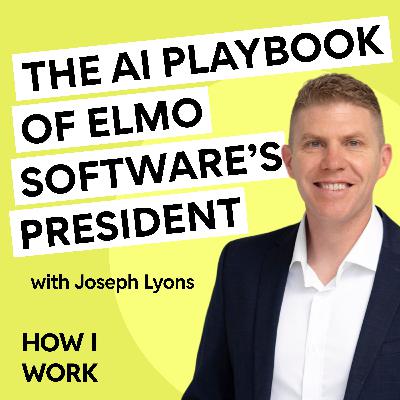
Being prepared is one of those things that sounds straightforward until you actually look at a leader's calendar. Back-to-back meetings, a constant stream of reports from different teams, and negotiations that require you to know the full history of a relationship before you've even said hello. The pressure to be across everything is massive. The time to actually get there rarely is. In this episode, I sit down with Joseph Lyons, President of ELMO Software, to talk about how he uses AI in genuinely practical, day-to-day ways. From personalised daily briefs for his exec team to turning a six-hour strategy workshop into clear, actionable outputs, Joe shares how AI is reshaping the way he prepares, thinks, and leads. We also get into how he uses AI to prepare for tough conversations, role play negotiations, and synthesise complex information across teams into something actually useful. If you’re curious about how AI can go beyond simple productivity hacks and genuinely improve the quality of your thinking, this episode is full of practical ideas you can apply straight away. Joe and I discuss: The ELT productivity agent Joe's team built, and how it delivers a personalised daily brief to each exec member every morning via Slack Why Zoom's AI summary wasn't enough for a six-hour strategy workshop, and what Joe used instead How he prepares for negotiations by feeding customer history, contract details, and commercial positions into AI to map out the game theory before the conversation begins Using Claude Voice in the car to think through difficult performance conversations and build a talk track before arriving at the office Why giving AI as much context as possible upfront is the key to getting useful output How Joe is using AI to synthesise reports from five or six different functions into a single, coherent weekly view with clear recommendations Key quotes "It's increasingly becoming my assistant in pretty much everything that I'm doing." "We were really conscious while we were in the meeting, like no one needing to take notes. We would actively talk to the AI and make sure we were clear on capturing actions." Connect with Joe Lyons on LinkedIn and check out ELMO Software at elmosoftware.com.au. Today's podcast was brought to you by ELMO Software. And they have a gift for you. If you work in HR, this free five-minute assessment is worth your time. ELMO Software's AI Maturity Assessment benchmarks you across two dimensions: whether you have the right foundations in place, and whether AI is actually delivering results. The assessment was built from research with 1,200+ HR leaders across Australia and New Zealand, so you're benchmarking against people navigating the same landscape as you. You'll get a personalised report with where you sit against ANZ peers, your biggest opportunities, and concrete next steps. Basically: it tells you whether your AI investment is paying off (or going nowhere). Take it here. My latest book The Health Habit is out now. You can order a copy here: https://www.amantha.com/the-health-habit/ Connect with me on the socials: Linkedin (https://www.linkedin.com/in/amanthaimber) Instagram (https://www.instagram.com/amanthai) If you are looking for more tips to improve the way you work and live, I write a weekly newsletter where I share practical and simple to apply tips to improve your life. You can sign up for that at https://amantha-imber.ck.page/subscribe Visit https://www.amantha.com/podcast for full show notes from all episodes. Get in touch at amantha@inventium.com.au Credits: Host: Amantha Imber Sound Engineer: The Podcast ButlerSee omnystudio.com/listener for privacy information.
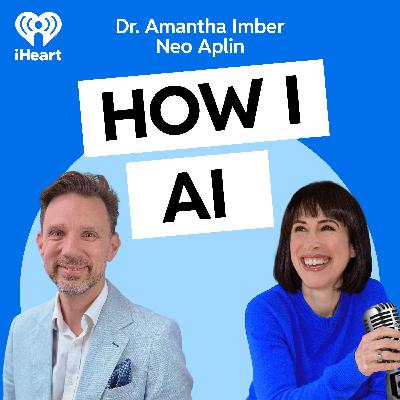
Download Inventium.ai's anti-AI slop prompt here: https://amantha-imber.kit.com/d5f746bd3e You can always tell when something's been written by AI. The LinkedIn post that opens with "in today's fast-paced world." The article that ends with "it's not about X, it's about Y." Technically fine, but somehow hollow. Like it was written by nobody in particular. The frustrating part is that this can happen even when you're doing the real thinking. You write the ideas, hand it to AI for a cleanup, and it flattens your voice, packs it with em-dashes, and strips out everything that sounded like you. In this How I AI episode, Neo and I get into the specific instructions you can give AI to keep your writing sounding human, and share some of the most overused AI words and phrases worth banning from your prompts entirely. Neo and I cover: Why sounding like AI is a credibility problem, even when you've done the actual thinking and are only using AI to refine and edit your work. The single most important instruction to give AI when asking it to clean up your writing. Why em-dashes are so hard to eliminate from AI output, and the specific phrasing (including pasting in the actual dash character) that gives you the best chance of getting rid of them. Using a ninth-grade reading level as a brief to keep language plain, accessible, and free of jargon. Why it's fine to let AI start a sentence with "and" or "but" occasionally, and which stiff transition words (like "additionally" and "moreover") to ban outright. What "corrective antithesis" is, why AI overuses it, and how to cut it down with a simple instruction and example in your prompt. Amantha's process for building a mega anti-AI slop prompt. How to build your own personal banned-words list, so AI stops using words that don't sound like you. Connect with Neo Aplin on LinkedIn (https://www.linkedin.com/in/neoaplin/) and via inventium.ai (https://inventium.ai), where he leads Inventium's AI training and upskilling work with organisations and teams. My latest book The Health Habit is out now. You can order a copy here: https://www.amantha.com/the-health-habit/ Connect with me on the socials: Linkedin (https://www.linkedin.com/in/amanthaimber) Instagram (https://www.instagram.com/amanthai) If you are looking for more tips to improve the way you work and live, I write a weekly newsletter where I share practical and simple to apply tips to improve your life. You can sign up for that at https://amantha-imber.ck.page/subscribe Visit https://www.amantha.com/podcast for full show notes from all episodes. Get in touch at amantha@inventium.com.au Credits: Host: Amantha Imber Sound Engineer: Martin ImberSee omnystudio.com/listener for privacy information.
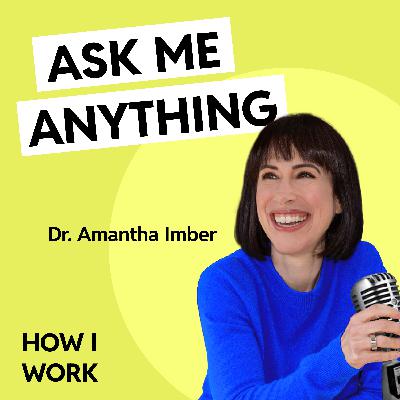
**Record a question for Amantha’s next Ask Me Anything here: https://www.speakpipe.com/howiwork ** It's Ask Me Anything time! I asked listeners of How I Work to send in the biggest challenges they’re facing at work right now: from AI overwhelm to constant meetings to feeling busy but not actually making progress. In this Ask Me Anything episode, I tackle questions like: Why AI is making some people busier, not more productive How to reclaim focus when your day is full of meetings The biggest productivity mistake I see smart people make What actually helps prevent burnout (hint: it’s not yoga at lunchtime) Plus I share practical strategies you can start using immediately — including my LiPS prioritisation strategy, ways we reduce meetings at Inventium, and how to protect your energy at work. If you’ve ever felt overwhelmed, distracted, or stuck in “busy mode”, this episode is for you. Amantha recommends: These are a few of the tools we use at Inventium to reduce meetings, communicate more effectively, and get work done faster. Loom: http://loom.com/ Our go-to for async communication. Instead of jumping on a meeting, we’ll record a quick video to share updates, feedback, or walkthroughs. Tella: https://www.tella.tv/ A more polished version of Loom. I use this a lot for client-facing communication – especially when walking through proposals or ideas in a more engaging way. If you’re looking to go beyond just “using AI” and actually start saving time with it, check out Inventium’s latest AI programs for 2026 - designed to help you use AI strategically and creatively in your work. https://www.inventium.ai/ Have a question you want me to answer in the next AMA episode? Reach out via email (amantha@inventium.com.au) or socials – I’d love to hear from you! My latest book The Health Habit is out now. You can order a copy here: https://www.amantha.com/the-health-habit/ Connect with me on the socials: Linkedin (https://www.linkedin.com/in/amanthaimber) Instagram (https://www.instagram.com/amanthai) If you are looking for more tips to improve the way you work and live, I write a weekly newsletter where I share practical and simple to apply tips to improve your life. You can sign up for that at https://amantha-imber.ck.page/subscribe Visit https://www.amantha.com/podcast for full show notes from all episodes. Get in touch at amantha@inventium.com.au Credits: Host: Amantha Imber Sound Engineer: Martin Imber See omnystudio.com/listener for privacy information.
That wall of industry newsletters in your inbox isn’t a reading list. It’s a stress list. You tell yourself you’ll get to them later. You don’t. And the pile keeps growing. In this How I AI episode, Neo and I explore how to use AI as a structured research assistant. Not just to summarise articles, but to filter signal from noise, prioritise what’s actually relevant to you, and automatically deliver regular briefings so you don’t even have to remember to run the search. Neo and I cover: How to give AI the right context so it knows exactly what “new” means to you Why vague prompts produce vague research – and how to fix that How to define trusted sources and instruct AI where to search Structuring your report so it highlights impact, availability and practical relevance How to ask AI to prioritise credible sources over hype Setting up scheduled searches in ChatGPT using “schedule this” so reports run weekly or daily How scheduling works in Copilot and what to know about current limits Creating sections like quick hits, watch lists and hype watch to make reports easier to scan Why you should always request links so you can verify and dive deeper Connect with Neo Aplin on LinkedIn and via inventium.ai, where he leads Inventium’s AI training and upskilling work with organisations and teams. My latest book The Health Habit is out now. You can order a copy here: https://www.amantha.com/the-health-habit/ Connect with me on the socials: Linkedin (https://www.linkedin.com/in/amanthaimber) Instagram (https://www.instagram.com/amanthai) If you are looking for more tips to improve the way you work and live, I write a weekly newsletter where I share practical and simple to apply tips to improve your life. You can sign up for that at https://amantha-imber.ck.page/subscribe Visit https://www.amantha.com/podcast for full show notes from all episodes. Get in touch at amantha@inventium.com.au Credits: Host: Amantha Imber Sound Engineer: Martin Imber See omnystudio.com/listener for privacy information.
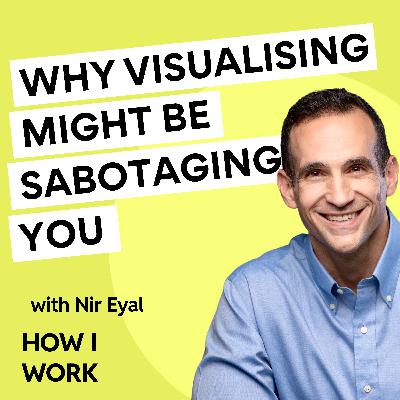
Visualising success feels productive. Vision boards, manifesting, picturing the finish line. It gives the sense that you’re moving closer to the goal. But according to the research, that mental shortcut might actually be working against you. In Part 2 of this two-parter (listen to Part 1 here), I continue my conversation with behavioural scientist and author Nir Eyal to unpack why. Nir spent six years researching how beliefs shape what we see, feel, and do, and why the stories we tell ourselves can dramatically change our behaviour. We talk about the surprising power of “failure goals”, why lucky people often manufacture their own luck, and how leaders shape behaviour through the invisible simulations they create at work. Nir also explains why framing matters more than many leaders realise, and why the way you interpret discomfort can completely change how you perform. And when it comes to visualisation, Nir shares a key insight from elite sport. High-performing athletes aren’t picturing themselves standing on the podium. They’re visualising the moment things get hard, and exactly what they’ll do next. Nir and I discuss: Why setting a failure goal can actually increase your chances of success The study that shows why some people experience themselves as “lucky” How beliefs shape what we see, feel, and do in everyday life Why leaders are effectively designing simulations through workplace culture The powerful role of framing when introducing ideas to teams The “believe, anticipate, feel, confirm” loop that shapes our experiences How expectations influence the way we experience products and brands Why visualising the finish line can reduce motivation What high-performing athletes actually visualise when preparing to succeed Key quotes “Failure without learning is a different story. But as long as you are failing and learning, that is progress.” “Athletes aren’t visualising the trophy. They’re visualising the obstacles in their way.” Connect with Nir Eyal on Instagram, X (Twitter), and LinkedIn and his website and check out his latest book Beyond Belief. My latest book The Health Habit is out now. You can order a copy here: https://www.amantha.com/the-health-habit/ Connect with me on the socials: Linkedin (https://www.linkedin.com/in/amanthaimber) Instagram (https://www.instagram.com/amanthai) If you are looking for more tips to improve the way you work and live, I write a weekly newsletter where I share practical and simple to apply tips to improve your life. You can sign up for that at https://amantha-imber.ck.page/subscribe Visit https://www.amantha.com/podcast for full show notes from all episodes. Get in touch at amantha@inventium.com.au Credits: Host: Amantha Imber Sound Engineer: The Podcast Butler See omnystudio.com/listener for privacy information.
When your to-do list feels endless and everything seems equally urgent, it’s hard to know where to start. The overwhelm doesn’t usually come from one big task. It comes from trying to hold meetings, emails, projects and life admin in your head all at once. In this How I AI episode, Neo and I walk through practical ways to use AI to help you prioritise when your week feels out of control. Not by magically deleting tasks, but by giving you a clearer structure for deciding what actually matters today. We share two different approaches – one if your AI isn’t connected to your calendar, and one if it is. Neo and I cover: How to use AI for a structured brain dump so everything on your plate is visible in one place Getting AI to interview you to separate urgent from important, and clarify what really needs attention Asking AI to estimate how long tasks will take so you can time box more realistically Using AI to identify the single task that’s causing the most stress – and tackling that first Why context matters – and how tools like Claude Projects or Copilot Notebooks can help AI understand your work Using AI to prepare for meetings, cross-reference tasks, and spot work that hasn’t been scheduled Connect with Neo Aplin on LinkedIn and via inventium.ai, where he leads Inventium’s AI training and upskilling work with organisations and teams. My latest book The Health Habit is out now. You can order a copy here: https://www.amantha.com/the-health-habit/ Connect with me on the socials: Linkedin (https://www.linkedin.com/in/amanthaimber) Instagram (https://www.instagram.com/amanthai) If you are looking for more tips to improve the way you work and live, I write a weekly newsletter where I share practical and simple to apply tips to improve your life. You can sign up for that at https://amantha-imber.ck.page/subscribe Visit https://www.amantha.com/podcast for full show notes from all episodes. Get in touch at amantha@inventium.com.au Credits: Host: Amantha Imber Sound Engineer: Martin Imber See omnystudio.com/listener for privacy information.
What if the biggest obstacle standing between you and the things you want in life isn’t your effort, your discipline, or even your circumstances? What if it’s the beliefs you didn’t realise you were holding. In Part 1 of a two-part conversation, I sit down with behavioural scientist and bestselling author Nir Eyal to unpack how our hidden beliefs shape what we see, how we feel, and what we do. Nir spent six years researching his latest book Beyond Belief, exploring the science behind how beliefs influence our behaviour and how we can change the ones that are quietly limiting us. We dive into why rumination feels productive but actually keeps us stuck, why venting about people can reinforce the very stories that make us miserable, and a practical tool called a reality log that helps you see situations more clearly. Nir also shares a powerful technique for questioning beliefs that are causing suffering, using a surprisingly relatable story about a birthday gift for his mum that didn’t go quite as planned. Nir and I discuss: The difference between facts, faith, and beliefs and why beliefs are open to change Why many of our most important life decisions come down to beliefs rather than facts How rumination feels like problem solving but often reinforces limiting beliefs The surprisingly effective technique of scheduling “worry time” How our beliefs shape what we literally perceive in the world Why venting about people can strengthen negative assumptions rather than resolve them How a reality log can help you challenge distorted perceptions A four question technique to examine beliefs that are causing suffering How collecting a “portfolio of perspectives” can help you reduce emotional reactivity Key quotes “Beliefs are tools, not truths.” “We don’t see the world as it is. We see a simulation of the world shaped by what we already believe.” Connect with Nir Eyal on Instagram, X (Twitter), and LinkedIn and his website and check out his latest book Beyond Belief. My latest book The Health Habit is out now. You can order a copy here: https://www.amantha.com/the-health-habit/ Connect with me on the socials: Linkedin (https://www.linkedin.com/in/amanthaimber) Instagram (https://www.instagram.com/amanthai) If you are looking for more tips to improve the way you work and live, I write a weekly newsletter where I share practical and simple to apply tips to improve your life. You can sign up for that at https://amantha-imber.ck.page/subscribe Visit https://www.amantha.com/podcast for full show notes from all episodes. Get in touch at amantha@inventium.com.au Credits: Host: Amantha Imber Sound Engineer: The Podcast Butler See omnystudio.com/listener for privacy information.
Rolling out Copilot or ChatGPT and hoping productivity magically improves rarely works. In fact, for many leaders, it creates more confusion, more noise and, in some cases, more work. In this How I AI episode, Neo and I unpack the single most important question leaders should be asking about AI adoption: how can I help my people be ready for AI? Because bringing AI into your organisation isn’t primarily a technology decision. It’s a people one. We talk through why simply handing out paid licenses without building capability often backfires, how poor AI use can actually reduce productivity, and the practical steps leaders need to get right from day one. Neo and I cover: Why AI adoption fails when leaders treat it as a software rollout instead of a change process How to clearly articulate the why so people don’t assume AI equals job replacement Using AI to reduce administrivia and free people up for more meaningful work Why “it’s intuitive” is a dangerous assumption when it comes to capability building How untrained use can create AI slop, longer emails and organisational “Chinese whispers” How searchable knowledge can unlock real productivity gains, and how poor permissions can create real risk Why training change leads or team leads is critical to embedding AI into real workflows Connect with Neo Aplin on LinkedIn and via inventium.ai, where he leads Inventium’s AI training and upskilling work with organisations and teams. My latest book The Health Habit is out now. You can order a copy here: https://www.amantha.com/the-health-habit/ Connect with me on the socials: Linkedin (https://www.linkedin.com/in/amanthaimber) Instagram (https://www.instagram.com/amanthai) If you are looking for more tips to improve the way you work and live, I write a weekly newsletter where I share practical and simple to apply tips to improve your life. You can sign up for that at https://amantha-imber.ck.page/subscribe Visit https://www.amantha.com/podcast for full show notes from all episodes. Get in touch at amantha@inventium.com.au Credits: Host: Amantha Imber Sound Engineer: Martin Imber See omnystudio.com/listener for privacy information.
We all have stories worth telling. Yet most of us decide ours aren’t interesting enough, important enough, or universal enough to share. In this episode, I’m joined by Daniel Coyle to explore why that instinct is usually wrong. Daniel is the bestselling author of The Talent Code, The Culture Code, and his latest book Flourish. Together, we unpack how Daniel finds and constructs stories that truly pull people in, including the ingredients that make a story compelling and the simple techniques anyone can use to tell better stories. We also dive into the small, powerful questions that move conversations beyond surface-level small talk, how to build genuine local community through what Daniel calls “yellow doors”, what leaders can learn from a makeshift building at MIT that became an innovation hotspot, and why change so often feels slow before it suddenly blooms. If you care about deeper connection, stronger culture, and asking better questions, this conversation will give you plenty to think about. Daniel and I discuss: The simple structure behind every compelling story Why great stories begin with a question and how to construct tension and mystery How to “sandpaper” your stories by removing everything that isn’t essential The reflective practice Daniel uses to zoom out and see the shape of his life The specific questions that deepen connection How to build local community through small habits, daily encounters, and noticing “yellow doors” Why annoyance is the price of community The difference between complicated and complex systems, and why that matters for navigating change What leaders can learn from Building 20 at MIT about agency and the “rule of the beautiful mess” Why change often happens slowly, then in a surprising bloom A simple 30-second “council” exercise to reconnect with meaning Key quotes “Annoyance is the price of community.” “Life is not a productivity contest. It’s a moments thing.” Connect with Daniel Coyle on X (Twitter), and LinkedIn and his website, and check out his latest book Flourish. My latest book The Health Habit is out now. You can order a copy here: https://www.amantha.com/the-health-habit/ Connect with me on the socials: Linkedin (https://www.linkedin.com/in/amanthaimber) Instagram (https://www.instagram.com/amanthai) If you are looking for more tips to improve the way you work and live, I write a weekly newsletter where I share practical and simple to apply tips to improve your life. You can sign up for that at https://amantha-imber.ck.page/subscribe Visit https://www.amantha.com/podcast for full show notes from all episodes. Get in touch at amantha@inventium.com.au Credits: Host: Amantha Imber Sound Engineer: The Podcast Butler See omnystudio.com/listener for privacy information.
Download Inventium.ai’s custom GPT instructions to create your own Personal AI Reviewer Buddy here: https://amantha-imber.kit.com/51dd2a9719 Producing high volumes of work isn’t the hard part anymore. Producing high quality is. In this How I AI episode, Neo and I walk through how to use AI as a rigorous reviewer of your work – not to replace your judgment, but to sharpen it. We go beyond a basic “please review this” prompt and share a structured way to pressure test emails, documents, slide decks and analysis before they leave your desk. Neo shares the exact system he uses, which he’s nicknamed Charles – a GPT designed to critique work properly, diagnose weaknesses and suggest stronger alternatives. And yes, we’re giving you Charles (via the link above!). Neo and I cover: How to write a simple but powerful critique prompt that goes beyond surface-level polishing What to ask AI to check for, including inaccuracies, weak support, bias, gaps, impracticality and verbosity How to customise your review criteria for specific roles, policies or stakeholders The quality gates Neo uses, including factual accuracy, logical soundness, completeness, relevance, clarity, structure, safety and practicality How AI can improve its own output if you’ve used it to draft something in the first place Why you should never treat a first AI response as gospel Connect with Neo Aplin on LinkedIn and via inventium.ai, where he leads Inventium’s AI training and upskilling work with organisations and teams. And if you’re ready to move beyond basic prompts and start using AI as a genuine thinking partner, check out inventium.ai. We help individuals, teams and organisations turn GenAI into a real work superpower – saving 10+ hours a week and staying future ready. My latest book The Health Habit is out now. You can order a copy here: https://www.amantha.com/the-health-habit/ Connect with me on the socials: Linkedin (https://www.linkedin.com/in/amanthaimber) Instagram (https://www.instagram.com/amanthai) If you are looking for more tips to improve the way you work and live, I write a weekly newsletter where I share practical and simple to apply tips to improve your life. You can sign up for that at https://amantha-imber.ck.page/subscribe Visit https://www.amantha.com/podcast for full show notes from all episodes. Get in touch at amantha@inventium.com.au Credits: Host: Amantha Imber Sound Engineer: Martin Imber See omnystudio.com/listener for privacy information.
If you’re aiming for a promotion this year, here’s a slightly awkward thought: the skills that got you here might not be the ones that get you there. Work is shifting fast. Not incrementally. Fundamentally. And according to LinkedIn data, around 70% of the skills we’ll need over the next five years are about to change. In this episode, I sit down with bestselling author of Work Backwards, Tim Duggan, to unpack the five skills that are becoming disproportionately valuable right now. Tim has identified five capabilities that are becoming increasingly valuable: judgment, storytelling, collaborative intelligence, unlearning, and conflict management. We explore what each of these really looks like in practice, why they matter more than ever in the age of AI, and how to start building at least one of them straight away. Tim and I discuss: Why judgment is becoming a critical skill as AI produces more work for us How to strengthen your judgment muscle, even without decades of experience Practical tools I use, like pre-mortems and avoiding “whether or not” decisions Why storytelling roles are on the rise and how to make your ideas stick A simple framework for better stories What collaborative intelligence really means and how to work with AI without outsourcing your brain How Tim uses AI as a research partner The true cost of workplace conflict and why avoiding it is not a strategy The one tiny word that can completely change how you handle conflict Key quotes “This is a skill that would not have existed two years ago.” “Pick one skill, try one small shift.” Connect with Tim Duggan on Instagram, X (Twitter), and LinkedIn and his website, read his column at The Sydney Morning Herald, and check out his latest book Work Backwards. My latest book The Health Habit is out now. You can order a copy here: https://www.amantha.com/the-health-habit/ Connect with me on the socials: Linkedin (https://www.linkedin.com/in/amanthaimber) Instagram (https://www.instagram.com/amanthai) If you are looking for more tips to improve the way you work and live, I write a weekly newsletter where I share practical and simple to apply tips to improve your life. You can sign up for that at https://amantha-imber.ck.page/subscribe Visit https://www.amantha.com/podcast for full show notes from all episodes. Get in touch at amantha@inventium.com.au Credits: Host: Amantha Imber Sound Engineer: The Podcast Butler See omnystudio.com/listener for privacy information.
Job hunting can feel like a full-time job in itself. Scrolling listings, second-guessing roles, and trying to stand out in a sea of applications. In this How I AI episode, we walk through how AI can quietly take some of that invisible work off your plate without doing the thinking for you. We talk through how AI can support you at each stage of the job search. From spotting roles that never make it onto LinkedIn or Seek, to getting a clearer picture of what a company is really like, and making sense of job ads that feel fuzzy or overcomplicated. We also cover how to use AI to strengthen your cover letter and CV without losing your own voice, and how it can help you prepare for interviews by practicing questions and refining your answers. Neo and I discuss How scheduled AI searches can monitor company job pages and surface hidden roles Using AI to research companies through annual reports, industry context, and social chatter What AI can and cannot realistically find on platforms like Reddit and Glassdoor How to use AI to decode job ads and understand what the role actually looks like day to day Why the strongest cover letters still start with your own words Using AI to critique and tailor your CV without rewriting your experience How AI can help you prepare for interviews by generating questions and giving feedback Practising interview answers using voice or dictation mode for extra confidence Download the Job Application Pro GPT: https://amantha-imber.kit.com/09db426fdd Connect with Neo Aplin on LinkedIn and via inventium.ai, where he leads Inventium’s AI training and upskilling work with organisations and teams. My latest book The Health Habit is out now. You can order a copy here: https://www.amantha.com/the-health-habit/ Connect with me on the socials: Linkedin (https://www.linkedin.com/in/amanthaimber) Instagram (https://www.instagram.com/amanthai) If you are looking for more tips to improve the way you work and live, I write a weekly newsletter where I share practical and simple to apply tips to improve your life. You can sign up for that at https://amantha-imber.ck.page/subscribe Visit https://www.amantha.com/podcast for full show notes from all episodes. Get in touch at amantha@inventium.com.au Credits: Host: Amantha Imber Sound Engineer: Martin Imber See omnystudio.com/listener for privacy information.
Every week there’s a new study telling us what not to eat. Coffee is bad. Eggs are dangerous. Spinach blocks nutrients. Or so we’re told. Add in cholesterol numbers, preventative scans, detox trends and a constant stream of “toxic” food warnings online, and it’s easy to start second-guessing what’s on your plate. Eating was never meant to feel this stressful. So I sat down with Dr Joanna McMillan - nutrition scientist, dietitian, author of The Fibre Factor, and one of Australia’s most trusted voices in evidence-based nutrition to cut through the noise. Joanna has spent decades translating complex research into practical advice, and she brings much-needed sanity to the way we think about food and health. If you’ve ever panicked over a blood test result, felt unsure about whether to book another scan, or wondered who to trust when it comes to nutrition advice, this conversation will steady you. Joanna and I discuss: The risk of becoming part of the “worried well” and over-testing your health The big ticket preventative checks Joanna prioritises at milestone ages What a coronary calcium score is and when it might be useful Why full body MRI scans may not be the smartest health investment The biggest nutrition myths circulating online, including anti-plant rhetoric Joanna’s core eating philosophy as a plant-rich omnivore Why diversity of fibre matters more than just soluble vs insoluble What actually happens in your gut when you suddenly double your fibre intake The supplements Joanna personally takes and how to assess supplement quality Why joy at mealtimes might be one of the most underrated health habits Key quotes “There is a risk of overdoing it. We talk about the worried well, and sometimes you can become so worried about your health, you forget about celebrating the things that are good.” “Your body, given the right tools, does detox beautifully all by itself.” Connect with Dr Joanna McMillan on Instagram, LinkedIn, and her website, and check out her latest book The Fibre Factor. My latest book The Health Habit is out now. You can order a copy here: https://www.amantha.com/the-health-habit/ Connect with me on the socials: Linkedin (https://www.linkedin.com/in/amanthaimber) Instagram (https://www.instagram.com/amanthai) If you are looking for more tips to improve the way you work and live, I write a weekly newsletter where I share practical and simple to apply tips to improve your life. You can sign up for that at https://amantha-imber.ck.page/subscribe Visit https://www.amantha.com/podcast for full show notes from all episodes. Get in touch at amantha@inventium.com.au Credits: Host: Amantha Imber Sound Engineer: The Podcast Butler See omnystudio.com/listener for privacy information.
Doctor and specialist appointments are expensive, time-limited, and often overwhelming. It’s easy to walk in underprepared and walk out wishing you’d asked better questions or understood more of what was said. We talk through how we use AI to prepare for doctor and specialist appointments so the time is spent on diagnosis and solutions, not rambling explanations or missed details. We cover how to use AI to get your medical story clear and concise, make sense of test results before an appointment, and walk in with smarter questions. We also talk about privacy considerations and the tools we use to record and transcribe appointments so nothing important gets lost. Neo and I discuss How to use AI to turn a rambling health story into a short, clear summary for your doctor Using voice and dictation tools to “talk it out” with AI before an appointment Asking AI to interview you and identify gaps in your medical story Making sense of blood test results and medical terms before you see the doctor Why AI should help you understand results, not diagnose you Using AI to prepare better, more targeted questions for your appointment Privacy tips for using AI with medical information, including de-identifying data Recording appointments so you don’t miss critical information Tools we use to record, transcribe, and review doctor consultations Connect with Neo Aplin on LinkedIn and via inventium.ai, where he leads Inventium’s AI training and upskilling work with organisations and teams. My latest book The Health Habit is out now. You can order a copy here: https://www.amantha.com/the-health-habit/ Connect with me on the socials: Linkedin (https://www.linkedin.com/in/amanthaimber) Instagram (https://www.instagram.com/amanthai) If you are looking for more tips to improve the way you work and live, I write a weekly newsletter where I share practical and simple to apply tips to improve your life. You can sign up for that at https://amantha-imber.ck.page/subscribe Visit https://www.amantha.com/podcast for full show notes from all episodes. Get in touch at amantha@inventium.com.au Credits: Host: Amantha Imber Sound Engineer: Martin Imber See omnystudio.com/listener for privacy information.
After 12 years as the Work Futurist at Atlassian, Dom Price made the decision to leave a role so intertwined with who he was that even introducing himself meant saying those two things in the same breath. In this episode, Dom and I explore the human side of change - the fog, the discomfort, the loss of structure, and the surprising freedom that comes when you finally say out loud, “I don’t know yet.” Dom walks me through the reflection process that led to this moment, how he’s sitting with uncertainty rather than trying to outrun it, and the identity untangling that comes with stepping away from a global brand. We also dive into what he’s seeing inside boardrooms right now, why so many leaders are struggling to adapt to AI, and the mindset shift that separates those who thrive from those who wait it out. Dom and I discuss: The realisation that it was time for change - even without knowing what came next How Dom uses the “five Ls” every 90 days to check in on what’s working and what’s not The emotional rollercoaster of losing structure, status, and the adrenaline of a big corporate role How trusted friends helped Dom challenge his assumptions and experiment with “trying before buying” in his next chapter What leaders are getting wrong about AI and transformation - and the three patterns Dom sees repeatedly in boardrooms The human side of tech change and why organisations must upgrade their human systems, not just their technical ones Why productivity gains don’t matter unless you know how to reinvest the time The leadership behaviours that matter most in times of rapid change KEY QUOTES “Even though it was just one word, it felt like the wrapper around my whole identity.” “I had to say out loud, I’m okay not knowing what that is — and that was the hard bit.” “When you take away those foundations, it’s like a shot of discomfort I hadn’t felt for a long time.” Connect with Dom Price on Instagram, LinkedIn and his website. My latest book The Health Habit is out now. You can order a copy here: https://www.amantha.com/the-health-habit/ Connect with me on the socials: Linkedin (https://www.linkedin.com/in/amanthaimber) Instagram (https://www.instagram.com/amanthai) If you are looking for more tips to improve the way you work and live, I write a weekly newsletter where I share practical and simple to apply tips to improve your life. You can sign up for that at https://amantha-imber.ck.page/subscribe Visit https://www.amantha.com/podcast for full show notes from all episodes. Get in touch at amantha@inventium.com.au Credits:Host: Amantha Imber Sound Engineer: The Podcast Butler See omnystudio.com/listener for privacy information.
Shopping should be simple. But for most of us, it’s turned into tabs open everywhere, conflicting reviews, and that lingering doubt that you’ve either missed a better option or paid more than you needed to. We walk through how we actually use AI tools when we’re buying something, from working out what problem we’re trying to solve, to comparing products without getting lost in specs and opinions. We also dig into some of the most frustrating parts of shopping, like finding the best price, checking historical lows, tracking price drops, and hunting down discount codes without trawling scammy websites. Neo and I discuss: How AI helps at the very start of the buying journey by clarifying what problem you’re actually trying to solve Using AI to compare products side by side, including features, pricing and versions Why AI is especially useful for complex purchases like electronics and appliances The differences between Perplexity, Google AI mode and ChatGPT when researching products How to use AI to find the best price and check historical price lows Setting up scheduled prompts to monitor prices and alert you when they drop Using AI to search for discount codes without trawling scammy or spammy websites Connect with Neo Aplin on LinkedIn and via inventium.ai, where he leads Inventium’s AI training and upskilling work with organisations and teams. My latest book The Health Habit is out now. You can order a copy here: https://www.amantha.com/the-health-habit/ Connect with me on the socials: Linkedin (https://www.linkedin.com/in/amanthaimber) Instagram (https://www.instagram.com/amanthai) If you are looking for more tips to improve the way you work and live, I write a weekly newsletter where I share practical and simple to apply tips to improve your life. You can sign up for that at https://amantha-imber.ck.page/subscribe Visit https://www.amantha.com/podcast for full show notes from all episodes. Get in touch at amantha@inventium.com.au Credits: Host: Amantha Imber Sound Engineer: Martin Imber See omnystudio.com/listener for privacy information.
Some workdays leave you tired. Others leave you completely wiped, even when you have done everything right. In this episode, I explore why that happens and what it reveals about how work is really experienced. I sat down with Cherie Clonan, founder and CEO of The Digital Picnic, to talk about neurodivergence, energy, and what happens when workplaces are not designed for the people in them. Cherie was diagnosed with Autism as an adult and has spent more than a decade building a business while quietly masking in environments that drained her nervous system. We talk about what masking actually looks like at work, why some workplaces feel exhausting even when you love your job, and how leaders can create cultures that raise energy instead of depleting it. We also go deep into Cherie's hardest year in business, the moment she was forced into action, and the non-negotiables she rebuilt from scratch to protect her energy, her team, and her company. Cherie and I discuss: What masking really looks like for autistic women at work and why it is so exhausting How sensory overload, constant social decoding, and back-to-back meetings drain energy Spoon theory as a practical way to understand energy, capacity, and recovery Why businesses do not fail when they run out of cash but when founders run out of energy The cultural non-negotiables Cherie introduced to rebuild trust, respect, and momentum How removing unnecessary demands can benefit every neurotype at work Key quotes “Businesses do not go out of business when they run out of cash. They fail when the founder runs out of energy.” “Energy loss is data. It is telling you something important about what you are tolerating.” Connect with Cherie Clonan on Instagram and LinkedIn and check out The Digital Picnic. My latest book The Health Habit is out now. You can order a copy here: https://www.amantha.com/the-health-habit/ Connect with me on the socials: Linkedin (https://www.linkedin.com/in/amanthaimber) Instagram (https://www.instagram.com/amanthai) If you are looking for more tips to improve the way you work and live, I write a weekly newsletter where I share practical and simple to apply tips to improve your life. You can sign up for that at https://amantha-imber.ck.page/subscribe Visit https://www.amantha.com/podcast for full show notes from all episodes. Get in touch at amantha@inventium.com.au Credits: Host: Amantha Imber Sound Engineer: The Podcast Butler See omnystudio.com/listener for privacy information.
LinkedIn can feel pretty soulless right now, with endless AI-generated posts and very little that actually sticks. In this bonus episode, I chat with Cherie Clonan, founder and CEO of digital agency The Digital Picnic, about a different way to think about content that doesn’t chase reach or virality. We unpack her idea of return on intimacy, how she designs LinkedIn content across the funnel, why depth and resonance matter more than volume, and how she uses AI for idea generation and hooks without losing her human voice. By the end of this episode, you’ll have a simple lens to use the next time you’re wondering what to post and why. Cherie and I discuss: What return on intimacy really means and why it changes how you create content How top, middle, and bottom of funnel content works on LinkedIn Why being someone’s saved post or screenshot matters more than impressions How to measure sentiment and depth when performance metrics fall short Using AI for idea generation and hooks without sounding generic or soulless Key quotes “Return on intimacy is what I crave, not return on investment.” “Don’t ask how many people might see it. Ask whether someone would screenshot it.” Connect with Cherie Clonan on Instagram and LinkedIn and check out The Digital Picnic. My latest book The Health Habit is out now. You can order a copy here: https://www.amantha.com/the-health-habit/ Connect with me on the socials: Linkedin (https://www.linkedin.com/in/amanthaimber) Instagram (https://www.instagram.com/amanthai) If you are looking for more tips to improve the way you work and live, I write a weekly newsletter where I share practical and simple to apply tips to improve your life. You can sign up for that at https://amantha-imber.ck.page/subscribe Visit https://www.amantha.com/podcast for full show notes from all episodes. Get in touch at amantha@inventium.com.au Credits: Host: Amantha Imber Sound Engineer: The Podcast Butler See omnystudio.com/listener for privacy information.
Coming back from a few days off work should feel refreshing. Instead, it often means opening your inbox to 200 unread emails and not knowing where to start. In this How I AI episode, we look at how AI can help you get oriented faster by scanning, sorting, and summarising what’s landed while you were away. If email is a constant source of friction in your workday, this conversation will help you approach it more strategically. We talk through practical ways to use AI to triage your inbox quickly, catch up on long email threads, and create daily or weekly digests that surface what actually needs your attention. We also cover how to use AI to write better replies in your own voice, reflect the communication style of the person you’re replying to, and schedule meetings directly from an email thread using Microsoft Copilot. Neo and I discuss: Which AI tools can access your inbox and what that depends on Using AI to summarise unread emails after time away Creating tables that show what matters, what needs action, and what can wait How to generate daily or weekly inbox digests automatically Catching up on long email threads with clients, projects, or teams Using sent items to identify emails you still need to respond to Writing better replies by analysing your own writing style Reflecting someone else’s communication style to get better responses Scheduling meetings directly from email threads using Microsoft Copilot Connect with Neo Aplin on LinkedIn and via inventium.ai, where he leads Inventium’s AI training and upskilling work with organisations and teams. My latest book The Health Habit is out now. You can order a copy here: https://www.amantha.com/the-health-habit/ Connect with me on the socials: Linkedin (https://www.linkedin.com/in/amanthaimber) Instagram (https://www.instagram.com/amanthai) If you are looking for more tips to improve the way you work and live, I write a weekly newsletter where I share practical and simple to apply tips to improve your life. You can sign up for that at https://amantha-imber.ck.page/subscribe Visit https://www.amantha.com/podcast for full show notes from all episodes. Get in touch at amantha@inventium.com.au Credits: Host: Amantha Imber Sound Engineer: Martin Imber See omnystudio.com/listener for privacy information.
Today, we are launching How I AI, a new weekly show dropping straight into your How I Work feed every Monday. Over the past few years, I’ve become deeply interested in AI – not because I’m a tech geek, but because I’ve seen what happens when the right tools are used in the right way. You get time back. You think more clearly. And the work itself gets better. I’m joined by Neo Aplin, who heads up inventium.ai, our AI training arm at Inventium. Neo spends his days testing tools, platforms and models so the rest of us don’t have to. In today’s show, Neo and I walk through the 13 AI tools we use every day. We cover: How Neo and I use different large language models for different kinds of thinking, writing and research Why Gemini has become my go-to for deep research How I capture meetings without recordings using Granola Privacy-first alternatives for note-taking and meetings Using Consensus to explore science-backed answers and academic research Why Perplexity is brilliant for product research and comparisons The podcast app I rely on to save ideas without breaking my listening flow How Wisprflow has replaced most of my typing Using NotebookLM to learn faster from long YouTube videos Turning spoken thoughts into journal entries with Letterly Running AI models locally for privacy, security and offline work Connect with Neo Aplin on LinkedIn and via inventium.ai, where he leads Inventium’s AI training and upskilling work with organisations and teams. And here are links to all the tools we spoke about: ChatGPT – best for thinking things through, research, and talking out rough ideas. Claude – the go-to when writing or editing and wanting something that actually sounds human. Gemini – strongest for deep research, especially when comparing results across tools. Microsoft Copilot – an AI EA inside Microsoft, working across emails, files, and documents. Granola – frictionless meeting notes that quietly capture transcripts and build smarter notes. Hyprnote – a privacy-first, local alternative to Granola that runs on your own computer. Otter – meeting transcripts with speaker labels, useful for in-person conversations. Consensus – science-backed answers pulled directly from academic research. Perplexity – ideal for product research, comparisons, reviews, and smarter shopping. Snipd – a podcast player that saves key moments with one tap, without breaking flow. Wispr Flow – fast, intelligent dictation that formats and corrects as you speak. NotebookLM – turns long YouTube videos into quick, searchable insights. Letterly – voice-based journalling that turns spoken thoughts into clean written entries. My latest book The Health Habit is out now. You can order a copy here: https://www.amantha.com/the-health-habit/ Connect with me on the socials: LinkedIn (https://www.linkedin.com/in/amanthaimber) Instagram (https://www.instagram.com/amanthai) If you are looking for more tips to improve the way you work and live, I write a weekly newsletter where I share practical and simple to apply tips to improve your life. You can sign up for that at https://amantha-imber.ck.page/subscribe Visit https://www.amantha.com/podcast for full show notes from all episodes. Get in touch at amantha@inventium.com.au Credits: Host: Amantha Imber and Neo Aplin Sound Engineer: Martin Imber See omnystudio.com/listener for privacy information.


Download from Google Play

Download from App Store
 United States
2:03 start of episode
I really enjoy this podcast. I find it a calming intro to my work day and listen to it on the way to work. I've learnt heaps and, as I work in HR, I've used insights to coach and support staff.
Amantha, I love your closing: 500 people listening to a bad talk is such a waste of time. That is one of the main reasons I became a speaker coach! Thanks for a great podcast series and for interviewing Nancy Duarte :)
really enjoying this podcast. very relatable topics and good sound information.