


 Claim Ownership
Stopping to Think
Subscribed: 0Played: 0
Subscribe

© Will Dole
Description
Thoughts on the Bible, theology, culture, books, and whatever else is making me think
willdole.substack.com
willdole.substack.com
87 Episodes
Reverse
This is the introduction to A Healthy Marriage, by yours truly. I plan to post the audio of the first few chapters here for all my subscribers.You can click on the following link or the picture below to buy a hard copy or ebook version. https://www.amazon.com/Healthy-Marriage-BiblicalStopping to Think is a reader-supported publication. To receive new posts and support my work, consider becoming a free or paid subscriber. This is a public episode. If you'd like to discuss this with other subscribers or get access to bonus episodes, visit willdole.substack.com/subscribe
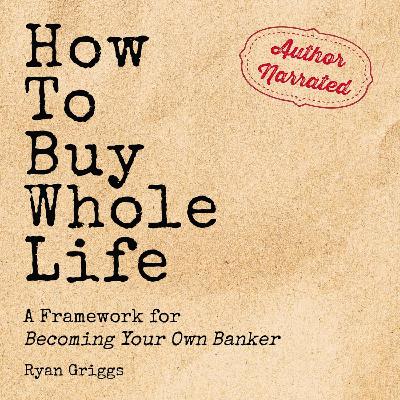
How to Buy Whole LifeRyan Griggs&Building Your Warehouse of WealthR. Nelson NashI read these two books in tandem. Nash is the brain behind the Infinite Banking Concept, a method of using cash-value whole life insurance to super-charge one’s savings and then using the accumulated access to capital as a source of financing those things in life that need financed—vehicles, homes, investments, etc. In short, it’s a system to take control of the banking function for one’s life and family.After reading Nash’s Becoming Your Own Banker it seemed natural to read Building Your Warehouse of Wealth. This was my second time reading it—and it didn’t improve. Don’t get me wrong, there are some helpful concepts here. But on the whole, this book comes across as the disorganized rambling of a grumpy old man. The contrarian streak—which I appreciate—drifts into conspiracy-adjacentness. The longest chapter is a retelling of the Israel narrative that badly misconstrues the Biblical text and its emphases. The book is worth skimming for a few more IBC ideas, but this book doesn’t merit a close read.On the other hand, Griggs’ How to Buy Whole Life is a gold mine of clear explanation about how whole life works, addressing much of ‘noise’ online that tries to turn IBC into a get-rich-quick scheme. He illustrates that for IBC to work well, you have to be committed to it for the long-term, and this reality affects how one structures their policies today. And it excludes using it with a short-term mindset. Griggs has written, quite simply, the best and most helpful book I’ve read on the subject.Here is a link to his Youtube channel: https://www.youtube.com/channel/UCUw6sumghqHg8YU_x8WPSaA This is a public episode. If you'd like to discuss this with other subscribers or get access to bonus episodes, visit willdole.substack.com/subscribe
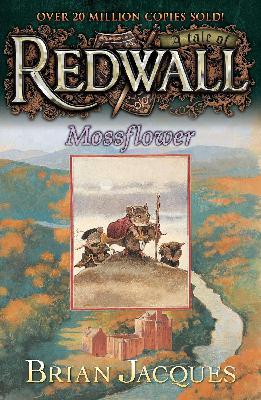
Redwall: MossflowerBrian JacquesDiscovering Redwall (via the old TV show being available on Canon+) has been one of the best things to happen to our family in the past years.In this prequel to the original Redwall book, we find the origin story of Martin the Warrior, who must face down Tsarmina the wildcat Queen, and bring an end to her reign of terror.Jacques creates endearing characters and writes in a compelling narrative style—though you are confident the good guys will win, it nonetheless feels tenuous and up in the air throughout.As a parent who cares about the literacy of my children, I also appreciate that Jacques refuses to write down to children. He uses a broad vocabulary in a way that feels natural, not pretentious. He handles difficult scenarios—great wrongdoing, death, etc.—in a manner that is factual without being gratuitous. We are looking forward to continuing to read through this series.Stopping to Think is a reader-supported publication. To receive new posts and support my work, consider becoming a free or paid subscriber.To The Church in RomeDouglas WilsonA collection of edited sermons on Paul’s longest and most famous letter. Wilson does a good job of pressing into present application, and doesn’t allow the theology of this letter to float around up in the air.Coming from a clearly Reformed perspective, I thought he did an excellent job explaining the meat of the gospel in chapters 1-8. The way he glories in God’s wisdom in chapter 11 was soul-stirring.The excurses in chapter 13 about what submission to governing authorities ‘really’ means was a mixed bag. But the word he gives on 13:8, ‘owe no one anything’ was very good. Also, the section on the weaker brother in chapter 14 was helpful.Nothing mind-blowing or new, but a solid exposition of Romans, and it was an encouraging listen at the end of 2025. This is a public episode. If you'd like to discuss this with other subscribers or get access to bonus episodes, visit willdole.substack.com/subscribe

This post is part of a series of communion mediations working through the Apostles’ Creed. You can read the creed here.The Life Everlasting. As we come to the end of our meditations on the Creed, we come to what is, in one sense, the easiest part to explain. The belief in everlasting life is, after all, the whole point of Christianity. The apostle Paul 1 Corinthians 15:19 that, If in Christ we have hope in this life only, we are of all people most to be pitied. He was not exaggerating.If there is no hope, no life, beyond this one, then the Christian gospel is not simply foolishness—it’s a damnable lie. It’s a waste of time for those who believe, and a song of wickedness on the lips of those who preach it. But Paul’s point in that chapter, and the very drumbeat of the Scriptures is that our hope is not simply tied to this life. There is everlasting life to come.This is, in fact, what we were made for as human beings. God created us in His image, and fashioned us in such a way that we can and are meant to know him, to love him, and commune with him. But our father Adam ruptured that union through disobedience. And, standing there as our representative, in Adam’s fall we sinned all. Each and every one of us is now born with a sinful human nature, by nature children of wrath and enemies of God. But, in the Lord Jesus, God was reconciling the world to himself (2 Corinthians 5:19). If you repent of your sins and trust in the sufficient work of Jesus on your behalf, God does not count your sins against, but instead clothes you in the righteous life of the Lord Jesus Himself. And in that union, you are also promised a Resurrection like his, which leads to—you guessed it—an eternal life like his. You are, as we spoke about in 1 John, knit into the Divine Life and promised an eternity of Joy in the presence of the Lord. A life more free, full, and forever than our minds are capable of comprehending. And friends, this is why we celebrate the Supper. We are reminding ourselves, once again, of the work of Christ in the past which effected our redemption. We look back to his death—and subsequent resurrection—and see it as the source of our forgiveness, our hope, our joy, and life. He came—and died—that we might have life, both abundant and eternal. This is a public episode. If you'd like to discuss this with other subscribers or get access to bonus episodes, visit willdole.substack.com/subscribe

Becoming Your Own BankerR. Nelson NashThis is the second time I’ve read Nash’s book. I first picked it up after being introduced to the infinite banking concept by a financial planner.Nelson’s work is deeply counter-intuitive, especially if your intuition is Dave Ramsey-inflected. The conventional wisdom on life insurance is to buy as much as you can for as cheap as you can, and then invest. For this strategy, term life is the only option. But Nash advocates—strongly—for cash-value whole life.His argument centers around the idea that your need for finance is far greater, over the course of your life, than the need for life insurance. And purchasing a relatively small whole life policy and overfunding it with the “over” payments going to paid-up riders basically allows you to turbo-charge your savings, creating a pool of your own money from which you can access necessary capital. Hence, you become your own bank. Need a car? Don’t take a bank loan. Take a loan against your policy, and then—here comes the key—pay it back at market interest. By doing this, you are capturing the profit of financing, rather than the finance company doing so.I find Nash’s concept compelling. The math is hard to argue—half the book is spreadsheets!—I think most of the critics I’ve read online haven’t really digested his argument. But this clearly is meant to be a long-term strategy. Which is part of what I find convincing (Prov 13:11).Devoured by CannabisDouglas WilsonA clear, succinct argument as to why Cannabis use is categorically different from alcohol use, and why society should treat the two substances differently.Wilson argues the obvious: the #1 only use for recreational pot—mind distortion and alteration—is the one use prohibited to consumers of alcohol in Scripture (drunkenness). Therefore, marijuana is biblically off-limits. He makes short work of favorite stoner verses—“every green herb” means eat your salad, not smoke a joint.The most carefully reasoned part of the book, and useful for strengthening my thought process, was his case for why society has a right to protect itself from the likely effects of drug use. Again, it’s analogous to drunkenness. Do drunk drivers make it home safely most of the time? Sure do. They’re still far more likely than a sober driver to harm themselves and others. So we censure that behavior. Why? Society has a right—a collective responsibility even—to prohibit that kind of risk-taking.Likewise, THC alters the minds of users (especially the young) in a way that increases the likelihood of mental health problems, makes it more difficult to regulate your emotions in socially healthy ways, and—to return to our drunkenness comparison—impairs motor ability. These risks are borne by society as a whole, not merely the individual. This reality means that as weed laws liberalize, we should not see it as an expansion of freedom, but of bondage, and frankly, societal disintegration.(Someone needs to write a similar book for mobile gambling.)Stopping to Think is a reader-supported publication. To receive new posts and support my work, consider becoming a free or paid subscriber. This is a public episode. If you'd like to discuss this with other subscribers or get access to bonus episodes, visit willdole.substack.com/subscribe
This post is part of a series of communion mediations working through the Apostles’ Creed. You can read the creed here. You will see in the text that this was given December 7th, 2025, which was the second Sunday of the Advent season.As we approach the end of the Creed, we come today to the resurrection of the body. Does that seem out of place in the Advent season? Today is the Second Sunday of Advent, and you may ask, do we really need an Easter topic for today’s communion meditation? But I don't think there is a more appropriate time, to address this subject. The Second Sunday of Advent is traditionally devoted to the topic of peace. What is the clearest sign that there is not peace between God and this earth, between God and humanity? It's the presence of death, the first sentence passed upon sin. Jesus, in his first advent, came to remove both the power and the penalty of sin. At the cross he absorbed the wrath of God against our sin; and for those who have trusted in him, he gives them the Holy Spirit, and they are no longer bound by its power. He removed the power and penalty of sin, and in doing so, he defanged death. Where is thy sting? Where is thy victory? Paul cries out in 1 Corinthians 15, to death and the grave. If I am in Christ, then my sins are forgiven. If I am in Christ, I do not need to fear death—nor need I fear the death of those I love, if they are in Christ. The Apostle Paul says in 1 Thessalonians 4:13, that we do not grieve as those who have no hope. So Jesus has defanged death in his first coming. But salvation for our souls, as crucial and central and foundational as that is, is not our whole hope. It’s not all that Jesus has done and is doing. No, when our Lord returns a second time, when he comes in a Second Advent, he comes to remove death completely, including the death that our bodies now experience. This, where we live now, between the two advents of Christ, is a place where we can have real salvation and real freedom from the fear of death. But we are not free from the experience of death. We are not free from its presence in our lives. Paul says, again, in 1 Corinthians 15, that it is the last enemy to be defeated. But when Jesus returns, death will be defeated finally. We won’t just be disembodied spirits. In our popular conception of heaven, we tend to hold two separate and contradictory notions, both of which are wrong. We often think of disembodied spirits, and we also think of something like babies floating on clouds with harps. Those are different things—but either one pictures a very boring, ethereal existence. And that’s not the biblical picture of life post-second coming of Christ. We often turn to Revelation 21, where we are told that the Lord God will dwell there, in the New Heavens and Earth, with his people. He will be our God, and we will be His people, and he will dwell in the midst of us. And what won’t be there? There will be no more death, no more tears, no more mourning. And we will be there, according to 1 Corinthians 15, with resurrection bodies. Spiritual bodies. Not spiritual in the sense of less real, but rather, bodies that are more real than the bodies that we have right now. A body like Christ’s. That's the Resurrection Hope that we confess when we confess the Creed. That one day, we will have bodies that are more substantial, more real than this right now. So confessing the Resurrection of the body, we remembering the death and subsequent resurrection of Jesus Christ. His makes our resurrection not merely a hope, but a certainty. And that is supremely appropriate on a day here, during advent, as we celebrate the Lord and what he did for us. This is a public episode. If you'd like to discuss this with other subscribers or get access to bonus episodes, visit willdole.substack.com/subscribe
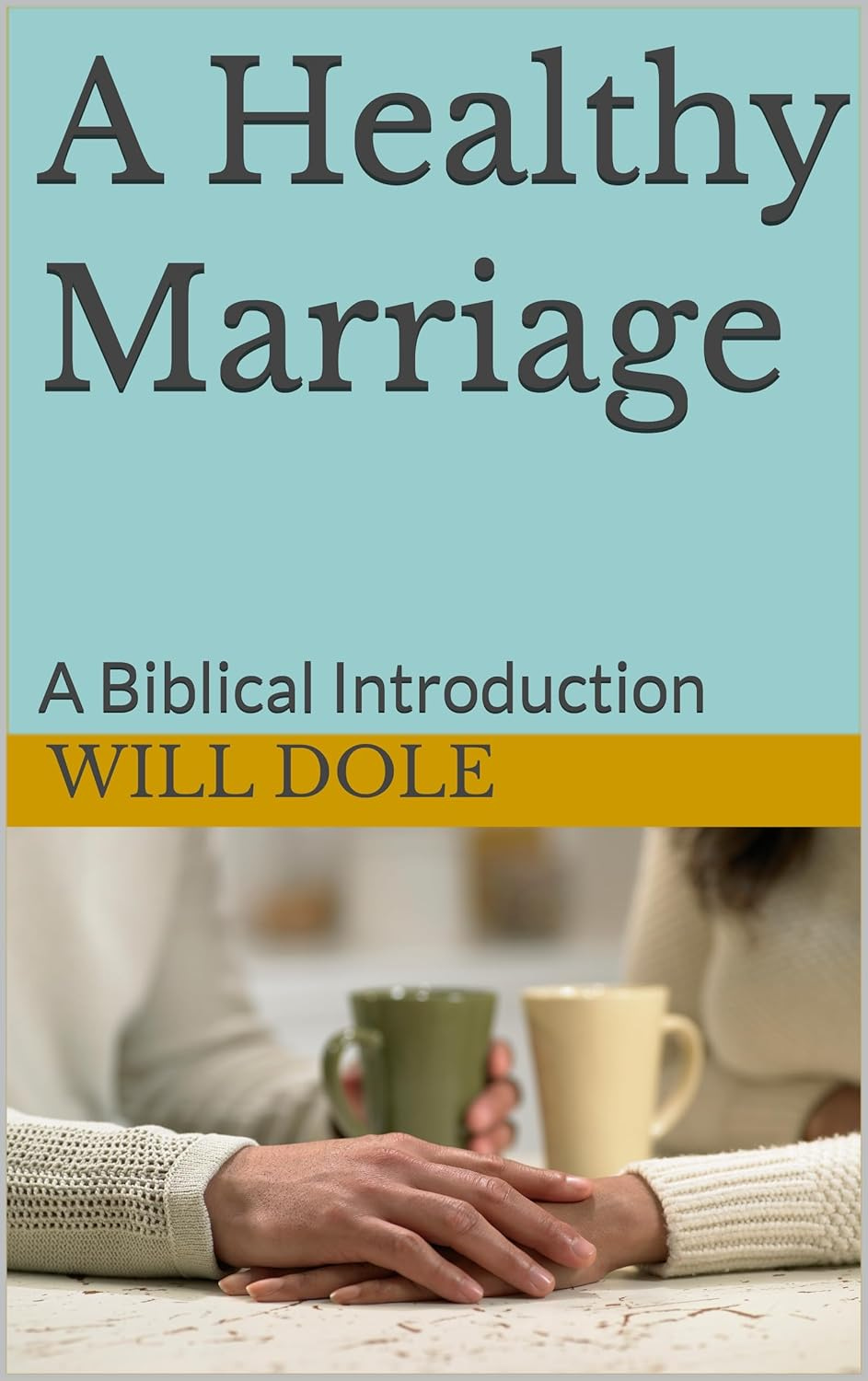
A Healthy Marriage: A Biblical IntroductionYou can buy the book in Kindle, paperback, or hardcover formats here: https://a.co/d/9SoRMOZ Thanks for reading Stopping to Think! This post is public so feel free to share it.Stopping to Think is a reader-supported publication. To receive new posts and support my work, consider becoming a free or paid subscriber. This is a public episode. If you'd like to discuss this with other subscribers or get access to bonus episodes, visit willdole.substack.com/subscribe

Most of the poems lately have taken inspiration from the chapter headings in JI Packer’s book, “Concise Theology.” This one is not different, however, the approach to the subject is heavily influenced by David Bahnsen, as well.Enterprise: The Source of Order and ProsperityOne mina, five mina, to another, tenThis is the way that the world has always beenTalents to all, in proper measure giv’nGrace poured on us from the kind God in heavenWhat will you do with this stewardship below—Store it in the ground, or a true profit show?The gifts of work and enterpriseAre oft so easy to despiseBut with what folly we discardThe source of meaning, Though its hardWe ought to see work as a gift—Through it God makes the chaos lift.Available for pre-order now:You can click on the link-above to pre-order the Kindle version of A Healthy Marriage. It will also release in paperback and hardcover on January 19th.Stopping to Think is a reader-supported publication. To receive new posts and support my work, consider becoming a free or paid subscriber. This is a public episode. If you'd like to discuss this with other subscribers or get access to bonus episodes, visit willdole.substack.com/subscribe
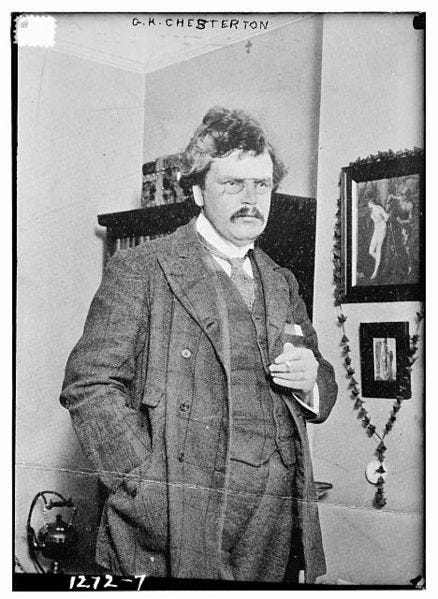
What’s Wrong With The World?G.K. Chesterton, 1910. Audiobook read by Wade StottsG.K. Chesterton wrote this book in 1910. But Dale Ahlquist quips that, “there is good evidence that it was actually written today.” I concur with that assessment.In this book, Chesterton attacks a number of the wrong-headed notions that were current in England prior to the World Wars. In a stark illustration of Ecclesiastes 1:9, we find that much of the same muddled thinking runs wild in our 21st century American streets.Of the many examples, one most worth highlighting—and remembering—is his way of dismantling feminism. Feminists old and new insist that women can and should do anything a man can do; and succeed in turning her into a third rate man while removing from her the joys of domesticity and femininity. But conveniently for the men, women still have those feminine duties which sense and custom dictate to her, given man’s ill-fit for them. This means that she is more tired and worn out and feeling torn in multiple directions than ever. But, alas, such is the price of liberation.This plays into his critique of capitalism—or, at least, crony capitalism—which wants women in the workforce not because of magnanimous public spirit (women’s advancement!), but to force down wage values. It’s similar to the protectionist critique of too much immigration today.Chesterton’s pathological hatred of Calvinism is also all over this book, which I find annoying, but I can get past that for the otherwise abundant great humor and good sense. Highly recommended. Stopping to Think is a reader-supported publication. To receive new posts and support my work, consider becoming a free or paid subscriber. This is a public episode. If you'd like to discuss this with other subscribers or get access to bonus episodes, visit willdole.substack.com/subscribe

Prayer The One in Three
approach His glory
Behold His Splendor
may my heart render
PraiseSinful heart and hands
from your Presence banned
until I’m made clean
inner truth been seen
ConfessJoy! Your mercy is more
My heart shall adore
Bless Your Name Above
give for steadfast love
ThanksWith Your word fill me
and let my speech be
A Word in season
Guard me from treason
I pray.Stopping to Think is a reader-supported publication. To receive new posts and support my work, consider becoming a free or paid subscriber. This is a public episode. If you'd like to discuss this with other subscribers or get access to bonus episodes, visit willdole.substack.com/subscribe

Our town has an annual “Olde Fashioned Christmas” celebration each year at the beginning of December. Local clergy rotate offering a prayer, leading Christmas carols, and “blessing” the tree. This year I had the blessing. I think it’s silly to bless a tree and so, when it’s my turn for the blessing, I fudge a little and usually pray for God’s blessing on the community, and offer a reminder of the Gospel, with some thoughts about how a tree might draw our minds in that direction. Anyhow, I did that in the form of a responsive reading this year, which I’ll share here for your Christmas Eve reading. May it be edifying to you, and may you experience the Lord’s blessing on you this Christmas season.Bless us the ChristmasWe are gathered tonight around our community Christmas tree. Trees play a pivotal role in the biblical story, from the opening chapters of Genesis, all the way through to the final chapter of the final book, Revelation.So in this responsive reading we will rehearse some of that history, and consider how our minds can be drawn to Christ and his work when we look at this tree. After each statement or petition I read, please respond together, “Bless us this Christmas.”Father God, who created the world out of nothing,Bless us this ChristmasCreator God, who caused the earth to bring forth life,Bless us this ChristmasLoving God, who made mankind in your own image,Bless us this ChristmasProviding God, who blessed our first parents with the fruit of every tree—save one,Bless us this ChristmasMerciful God, who judged our parents for their sin, but also promised a Redeemer,Bless us this ChristmasJealous God, who hates our sin, and desires our pure worship,Bless us this ChristmasSpeaking God, who sent your prophets with messages of judgement and salvation,Bless us this ChristmasSaving God, who sent your eternal Son into the world,Bless us this ChristmasGlad God, who sent an angelic choir to herald the Incarnation,Bless us this ChristmasHoly God, whose Son made atonement for our sin upon the Tree,Bless us this ChristmasJust God, who accepts Jesus’ work, and gave him resurrection,Bless us this ChristmasAdopting God, who gives those who trust in Jesus the status of your children,Bless us this ChristmasGracious God, who sends his Spirit and grants salvation,Bless us this ChristmasRedeeming God, who gives eternal life to those who trust your promises,Bless us this ChristmasWe ask, oh God, that as we see this tree, that we would remember the coming of Jesus, and his for us upon that tree on Calvary, where he purchased our salvation. Grant each one here the faith to trust in his finished work, and the assurance that they will one day be gathered with him around the Tree of Life. Together we pray,Bless us this Christmas.Amen.Stopping to Think is a reader-supported publication. To receive new posts and support my work, consider becoming a free or paid subscriber. This is a public episode. If you'd like to discuss this with other subscribers or get access to bonus episodes, visit willdole.substack.com/subscribe
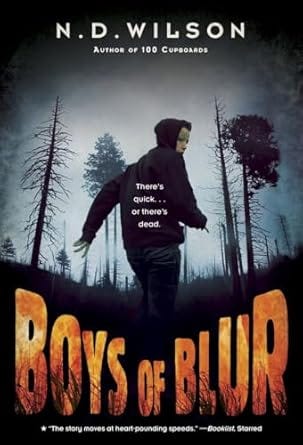
Boys of BlurN.D. Wilson, Random House Children’s, 2014. Audiobook read by Joffre SwaitThis book is a wild ride through the swamps of Florida, We meet the protagonist, Charlie, at a funeral for a man he doesn’t know. That man, Willie Wisdom, will loom large in Charlie’s story. Wilson’s retelling of the Beowulf tale in the a modern key offers exactly lovers of that epic poem want: the thud, the intensity, the visceral grip. But it doesn’t simply hit the emotional and narrative beats. You can tell that Wilson’s story is also influenced by the thinking in his father’s essay, “Beowulf: the unChrist.” Like a Viking culture that tore itself apart through greed, envy, and revenge, so too might this small Florida town. So, too, might any of our towns.The only force strong enough to fight that stank is the Love that would lay down His Life for His friends. (also, Swait’s narration is FANTASTIC.)Stopping to Think is a reader-supported publication. To receive new posts and support my work, consider becoming a free or paid subscriber. This is a public episode. If you'd like to discuss this with other subscribers or get access to bonus episodes, visit willdole.substack.com/subscribe
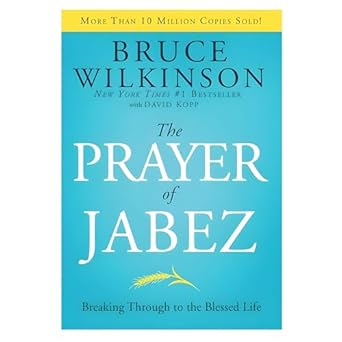
The Prayer of JabezBruce Wilkinson, Multnomah, 2000I was surprised—pleasantly—by this book. It was all the rage in popular Christianity when I was a kid. I remember seeing the book and (if memory serves) derivative products all over Christian book stores. Back when those existed. I also remember a vague connection of this book with the prosperity gospel. And so, combined with my aversion to all things popular, I never read it. But I picked up a free copy off a book table at a conference a while back, in part because it was the right size for a tree-stand book.What I found was certainly not prosperity teaching. Rather, Wilkinson gives a pretty straightforward explanation and application of 1 Chronicles 4:9-10. His discussion of blessing explicitly renounces prosperity teaching, and makes clear that God is the arbiter of what “blessing” looks like.There are times when Wilkinson’s illustrations seem to undermine his argument; but on the whole, I think his push to help Christians believe that God is good, God is for them, and God is a God of blessing is a helpful corrective. Too many folks—myself included—can be given over to a defeatist mindset and low expectation theology that needs corrected by the Bible. This is something I have been convicted of lately in pondering the early verses of Romans 2, in the shape of Psalm 8, among other places; I was glad for the reminder here from Wilkinson.Whoever would please God must believe that He exists and that He is a rewarder of those who seek Him (Hebrews 11:6). As the author ably illustrates, Jabez was such a believer. And because of this, he was more honorable than his his brothers. May we all seek such honor.Thanks for reading Stopping to Think! This post is public so feel free to share it. This is a public episode. If you'd like to discuss this with other subscribers or get access to bonus episodes, visit willdole.substack.com/subscribe
This is a public episode. If you'd like to discuss this with other subscribers or get access to bonus episodes, visit willdole.substack.com/subscribe
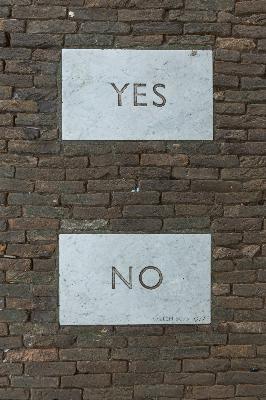
Oaths and VowsLet your yes be a yes,and your no be a no—Be full true here below,and use God’s Name to bless.The KingdomFor Thine is the Kingdom and power and the glory;
The King in His beauty is the center of the Story.
From His garden temple, which He planted and called Eden,
Adam and his line were expelled, on account of treason.
Across the years rebellion grew until it reached full measure—
God destroyed the garden-world, displaying just displeasure.
Noah was saved, and from his kin Shem would be the chosen:
Then Abraham, and Isaac's son, Israel—now in Goshen.
God's mighty arm was bared against Egypt and the nations—
all who stand against the King will feel His devastation.
But Jeshurun waxed fat and kicked, she left her Kingly Love,
though He had fed her in the desert, nourished from Above,
They bucked against the law He gave, and cast off all restraint;
Such was her rebellion that even worship felt its taint.
But then He sent a monarch true, after His very heart,
and David's throne it was established—promising to start.
But—sinful, greedy, lusting, coveting—incontinence
Passed from generations down: the kingdom departed hence.
Carried into exile—Assyria and Babylon
pressed their foot against the neck of the people who had gone
so far afield from all that God had promised and required—
O Come, Emanuel!—of being captive we are tired.
And so, fullness of all time, the Father sent the Son,
and in His Incarnation Kingdom coming has begun.
He purchased it by virtue of His sinless life and death,
sealed by His triumphant resurrection; now by His breath
He poureth out the Holy Ghost into His holy church.
And though we shame His name and by our conduct do besmirch,
He promises to use us, and display His wisdom through
Sovereign action saving sinners, and all things making new.
We see it just in glimpses now, clarity eludes us—
So until it comes in fullness, we pray, "come, Lord Jesus."
Stopping to Think is a reader-supported publication. To receive new posts and support my work, consider becoming a free or paid subscriber. This is a public episode. If you'd like to discuss this with other subscribers or get access to bonus episodes, visit willdole.substack.com/subscribe
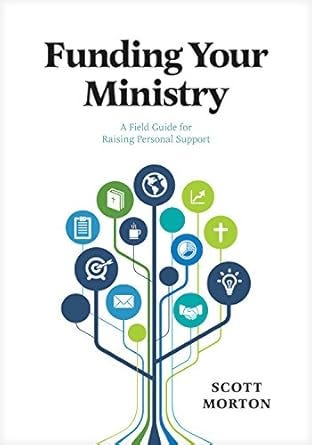
For a number of years I’ve used Goodreads to track my reading. I’m in the process of moving all of that tracking over to a spreadsheet, as I’ve found the value I used to find on Goodreads is drastically outweighed by the time I waste there. But what to do with the short reviews I also liked to write on that platform? Well, I’m moving those to handwritten form—which makes me think more clearly and helps me retain much more than dashing a few thoughts off with my thumbs—and then moving that handwritten text to here, if I feel the particular thoughts are worth sharing. Such is the case below. Atomic HabitsJames Clear, NY: Avery, 2018In this book, Clear argues for the values of making small, incremental, and intentional changes to one’s life in order to see big long-term changes.He addresses common problems to building positive habits over the long term, and spends most of the book going over his four-step process to habit forming:1. Make it obvious2. Make it attractive3. Make it easy4. Make it satisfyingThis book was at its strongest when it was focused on giving practical advice and pointing out the obvious benefits of long-term habit formation. The observations concerning the importance of environmental factors in habit formation and maintenance were helpful.This book was the weakest when Clear seemed too worried about being judgmental, or when his self-importance leads him to the ridiculous—like comparing the process of finishing his book manuscript to when Victor Hugo had a servant lock his clothes away so that he had to stay home until he finished The Hunchback of Notre Dame. I mean, come on man.I think books like this can be useful for reminding you of things you already know, or picking up some practical advice. But I wouldn’t call it life changing. And the “1% better everyday” thing annoyed me, that’s impossible to quantify.Funding Your MinistryScott Morton, Colorado Springs, CO: NavPress, 2017 (3rd Edition)In this book, Morton argues that support-raising missionary staff should seek to be fully funded. While he acknowledges that perhaps other funding models may work, he believes that ministry will be most effective when missionaries devote the proper time and attention to funding their ministry.Morton also spends a substantial amount of time helping missionaries understand the mechanics of fundraising. He dispels fundraising myths—e.g. that “praying in your support” is wise as a stand alone strategy, or that presenting to churches will lead to large amounts of funds. He also argues forcefully for his preferred funding strategy: face-to-face appeals.His focus on face-to-face appeals is driven by several factors, but two especially: it is the most effective way to raise funds, and it provides the missionary with real opportunities to build relationships and minister to givers and partners.The rest of the book turns the gaze to several particular groups—but the content in each was worthwhile. Some of the specifics related to social media don’t age well, but his emphasis that social can’t be core to your strategy was solid advice then, and is better advice now. The only part of the book that fell out of place was some over-prescription on spending—but you might expect a coffee shop owner to be defensive about the cost of a daily latte.Stopping to Think is a reader-supported publication. To receive new posts and support my work, consider becoming a free or paid subscriber. This is a public episode. If you'd like to discuss this with other subscribers or get access to bonus episodes, visit willdole.substack.com/subscribe
I’m puttering my way through a project wherein I write poems inspired by each of the 90-some headings in JI Packer’s book, Concise Theology. Here are a couple of them from the middle of the pack—LoveGod is love—Father, Son, and Holy Ghost.What doth He desire most?Return it.Give this giftto those who bear Image.Our patrilineagefrom above.HopeHelp for our endurance race,built upon the base of grace— hope.Not empty as man offers,with this the wise fill coffers— hope.Look upon his former deeds,let your forward gaze now feed— hope.Thanks for reading Stopping to Think! This post is public so feel free to share it.Stopping to Think is a reader-supported publication. To receive new posts and support my work, consider becoming a free or paid subscriber. This is a public episode. If you'd like to discuss this with other subscribers or get access to bonus episodes, visit willdole.substack.com/subscribe
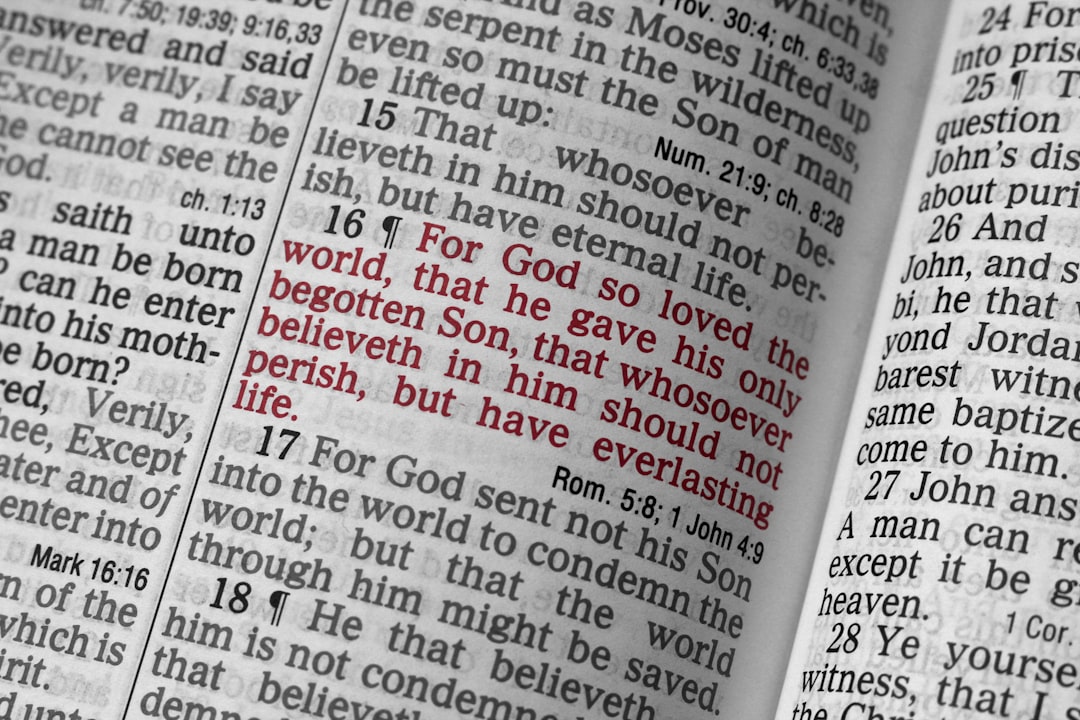
Bible Study ConversationsOver the years, I’ve had occasion to read through the Bible—in part or in whole—with several folks. And, especially for people who are new to it, one of the concerns they have is an understandable one: how can I understand this great big book? Christianity has been around for two thousand years, and people who claim to be Christian, and claim to value the Bible, disagree over all kinds of issues.And I don’t want to minimize any of that—those disagreements are present, they are real, and sometimes they’re of a sort where even as Christians we functionally can’t worship in the same church.The Plain Things Are the Main ThingsNonetheless, there is a profound level of agreement across Christianity on some really big issues. It’s worth considering here the Apostles’ Creed, the Nicene Creed, etc. But when it comes to simply reading your Bible at home and trying to understand what it’s saying, here is a simple maxim (not original to me): the main things are the plain things, and the plain things are the main things. When you’re looking at the Bible, yes, there are things that can be confusing, there are things that are hard to understand—and it all matters. God wouldn’t have recorded it for us if it didn't matter. But the most important things are really, really clear. One such verse, that very plainly and very clearly captures the message of the Bible is John chapter 3 and verse 16. It says, “For God so loved the world that he gave his only Son that whoever believes in him should not perish but have eternal life.”The Reality of GodI think one of the things that's most interesting to me is where this verse starts— it starts in the same place the whole Bible starts: the reality of God. It’s so easy in our thinking and the way that we perceive the world, even if we’re people who believe in God, to begin our thought process with our experiences. Our feelings. We start with the things that we think we know from our life and from what we have learned throughout the course of our life. But the Bible starts with the reality of God. Genesis 1:1, “In the beginning, God created in the heavens and the earth.” Before anything else exists, God exists. He is the ultimate defining reality that stands behind and over everything else that exists. The book of John itself is the same way. Speaking specifically of the second person of the Trinity, the Son, says, “In the beginning was the Word, and the Word was with God, and the Word was God. He was in the beginning with God.” And so God is the starting point of the whole Bible's message. God is assumed as the Creator and the Maker and the Ruler of every one and every thing. And as such, he also is the Judge.God's Love for the WorldBut here in our text, it says that he does something. It says, “For God so loved the world.” He loved the world. He loved the cosmos—the whole world, everyone and everything in it, the world itself, even the literal earth—dirt and rocks and trees and raindrops—is loved by God. And we know this again from the beginning of the Bible in Genesis chapter 1: God made the world and over and over again it says “and God saw that it was good.” And after he makes the man and the woman on day six of creation it says “and God saw that it was very good.” God loves his creation and he most of all loves the people, the human beings, who are the pinnacle of his creation.But I still think it’s remarkable that it says he loved the world after Genesis 1. Sure, God made the world and it was very good. Two chapters later, though, man and woman are tempted by the serpent, and they sin. And in Adam’s fall, the old children’s reader tells us, we sinned all. The Apostle Paul says in the book of Romans that the wages of sin is death. So Adam and Eve were a death sentence—and we, as their descendants, are under a death sentence because of our sin. Further, even creation, the earth itself, is condemned by God because of human sin. Adam is told by God in Genesis 3 that “cursed is the ground because of you.” Romans 8 says that “all of creation groans under the weight of our curse.” It would seem that God would be within his rights as Creator and Judge to look at the the sinful world and zap it and make it—and everyone on it—disappear. Yet it says he loved the world. Even in the Genesis narrative, there with Adam and Eve, he doesn't instantly give them death. Instead of instantly giving them death, he gives them temporary consequences that would lead up to death. There’s a pause, and with that pause there’s also a promise that One would come who would crush that serpent who had tempted them. One would come, who would take care of sin so that they could be reconciled to God. And the Bible’s story afterward is the story of God bringing reconciliation, bringing about a plan of reconciliation between sinful humanity and the Holy Creator God.God Gave His Only SonAnd here in this verse it tells us how that plan culminates. It says he so loved the world, in this way he loved the world—that he gave his only Son. His only Son. As Christians, we believe in the God of Scripture who reveals himself as a Triune God: Father, Son, and Spirit. And God the Father sent the Son into the world. The eternal Word of the Father entered the world. John 1:14 says, “He took on flesh and dwelt among us.” Back in Genesis 3, God himself offered a sacrifice for human sin. He killed an animal and from its skin clothed the man and the woman to cover their shame, their nakedness, there in the garden after they had sinned. And all through the Old Testament there were animal sacrifices which God commanded for the people to offer as an expression of faith in his forgiveness. But while that blood symbolically covers their sins, the blood of those sacrifices—according to Hebrews 10:4—could never take away sin. God allowed it as a temporary covering, an expression of faith, a recognition that sin requires death.But it couldn't actually solve the problem. For our sin to actually be atoned for someone who was actually human—and perfect—had to stand in our place. And so the eternal Son of God became Incarnate. He took on a human nature in the womb of the Virgin Mary so that there would be a man, a human being who could stand in our place, who was also God and sufficient to stand not just in the place of one person, but in the place of everyone. So God sent his Son into the world so that when Jesus Christ, the eternal Son of God, went to the cross, he could be a fitting substitute as a man and a sufficient substitute as the God-man.Salvation Through FaithAnd he did this so that whoever believes in him should not perish, but have eternal life. And the next verse for 17 says, “God did not send his son into the world to condemn the world, but in order that the world might be saved through him.” God desires to save the whole world, to save everyone who believes. This salvation is free and open to anyone. Though we deserve God's judgment, he judged his Son in our place so that if we trust in him, we could have life. And that’s the last piece here that we see: while Christ’s sacrifice is sufficient for everyone, it must be received by faith. You must believe in order to not perish, but instead have eternal life.Friends, you must repent of your sins—agree with God about your fallen condition and willful rebellion against his ways—and humbly trust in the gift of grace he has given in Christ: Jesus bore the weight of your rebellion and sin, and freely offers life if you will trust in him. Place your life—your earthly life and eternal destiny—in the nail scarred hands of Jesus Christ.The Central Message of ScriptureWhat is the plainest thing in all the Bible? Well, Jesus says in John chapter 5 that all of the Old Testament Scriptures—three -quarters of the Bible—is pointing to him. And then, in the gospels, we see four pictures of him coming. Jesus is the central point of the Book, and his work on the cross in our place is the central point of his coming. The central message of the Bible is that Christ Jesus came into the world to save sinners. This is a public episode. If you'd like to discuss this with other subscribers or get access to bonus episodes, visit willdole.substack.com/subscribe
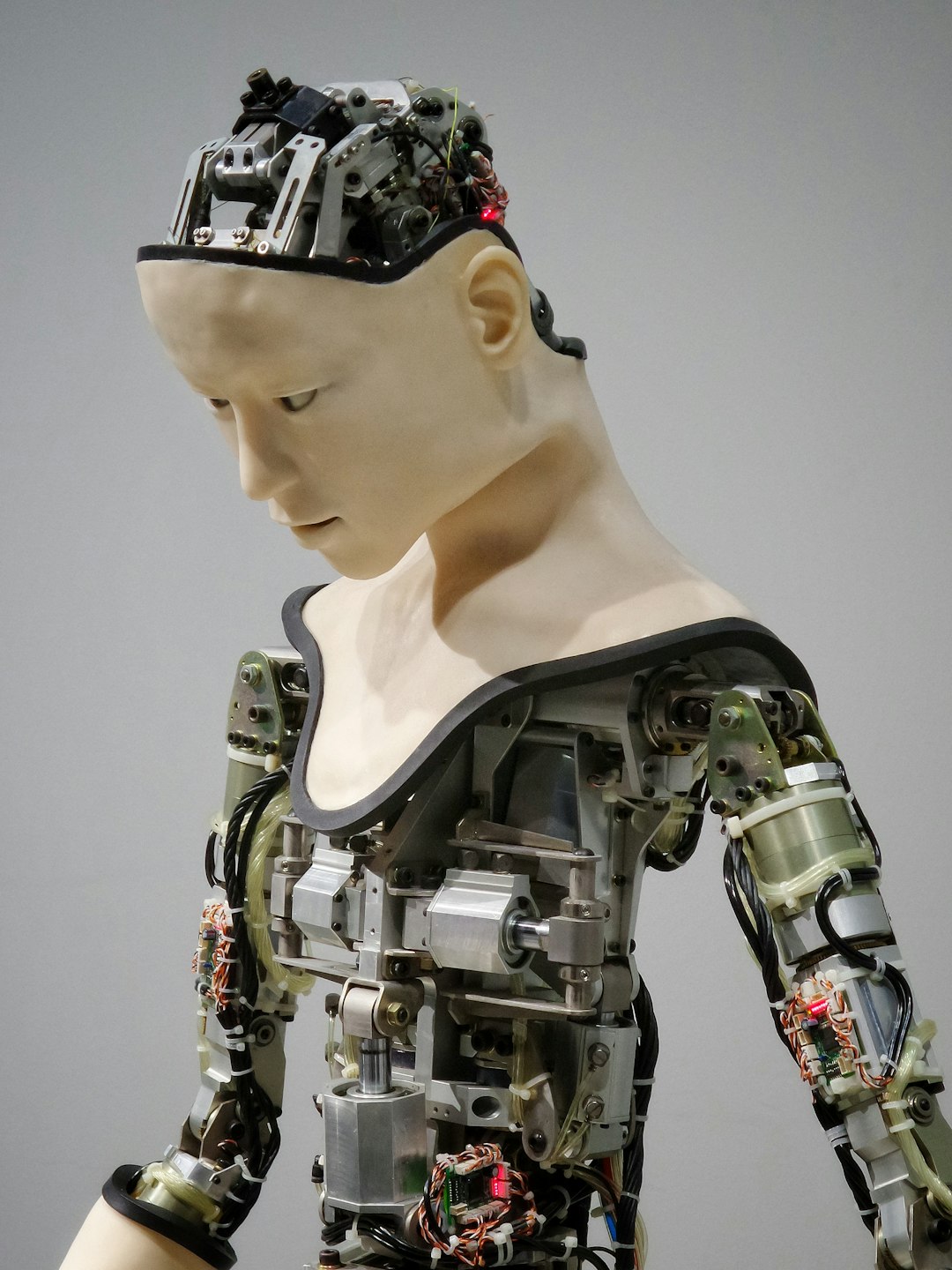
Prefer to print and read? Here is this article in pdf form.The Fakeness of the MachineThe other day I was scrolling though substack—which feels different than scrolling through other parts of the social internet, but frankly, I’m not convinced it’s any more productive—when I came across this gem of a note by Griffin Gooch:This made me laugh—because it was 1) boring, 2) insipid, and 3) very clearly not the sort of thing Griffin would write. But it did get me to thinking: what would happen if I asked it the same thing? I don’t use ChatGPT, preferring Claude, but I gave it basically the same prompt: write a substack note in the voice of Will Dole. Now, given that I don’t write for Christianity Today or have 4,000 plus substack subscribers, I had to give it a little help by providing links to this site and to our church substack, which has most of the sermons I’ve preached over the past few years. That ought to give an LLM the info it needed on my writing. It still wanted a prompt in terms of topic, and so I decided to be meta and give it the prompt of “thoughts on AI.” And after it combed through my writing and then received this prompt it proceeded to spit out not a substack note-length piece of “writing”, but a full substack article-length piece [this is not that product]. I was surprised by how well it reproduced my style, in the sense of presenting an issue, attempting to come at it from an unexpected angle, and seeking to resolve the issue with principles based on Scripture. It even did some of the Eugene Peterson-inspired allusions to Scripture that don’t directly bear on the topic but that do shed light from a slantwise angle that I try to include in my writing. That was, frankly, impressive. It even was able to predict that the guy who writes Stopping to Think would be more than a little concerned about how we might end up using AI to short circuit thinking. Again, I consider that impressive. But, this much was also clear: anyone who has read more than two pieces of my work, with any level of attention, would surely be able to tell that what Claude had churned out was not my voice. It hit the right topics. Included a lot of the same ingredients. And still felt, basically, soulless. Because it was.What is Writing For?If you asked me, “what is writing for”, my short answer would be: thinking. The use of language to move ideas, concepts, and images from one mind to another is the most human thing possible. Made in the image of the speaking God of Genesis 1, Psalm 33, Isaiah 55, and John 1, human beings are creatures who think and speak. And, though evolutionary biologists disagree, the Biblical record would indicate that, perhaps not from the very beginning, but at least very early in human existence, human beings write. Writing and reading are not natural in the same way speech is. They are skills that must by learned, honed, and developed over time. Though some folks are born with more aptitude than others (as is true with any skill), no one is born reading and writing. The capacity to communicate with words that can go beyond your presence—further than the limits of your voice and ears—is a further extension of this human gift of language. Reading and writing are uniquely human activities. This is part of what makes the outsourcing of reading and writing—be it “content” on a blog, an essay for your school paper, or the idiotic suggestion I read on substack for people to talk to ChatGPT to get summaries of classic books instead of reading them for themselves—so concerning. When the LLM summarizes the data for you, you haven’t had to think and wrestle and chew through it yourself. When you have ChatGPT write the paper, you fail to gain anything from the actual process of reading, meditating, agreeing, disagreeing, articulating, or changing your thoughts. When I’m writing, I’m exploring ideas as much as I am trying to communicate them. In the process of writing, I am gaining clarity on what I think about this subject or that. Even in my sermon writing process, though I prefer to preach without a written manuscript, I will often till write the sermon (or at least key parts of it) in order to make sure I have thought the issue or the statement or the transition through. There are an awful lot of ideas that feel great in your head, until the start coming out of your mouth. Or pouring out before you on the screen or the page. If you outsource that work—and yes, it is work—you’re also outsourcing the clarity and growth that come with it. How I Use AISo, all of that to say, I’m rabidly anti-AI, right? No, not exactly. I’m still grappling with how best to use (or not use) the various AI tools out there. Here is where I’ve landed for now, though.I’m not a Luddite—I’m not completely opposed to all technology invented after some randomly selected date. But I am deeply skeptical. It has often been noted that technologies don’t just give abilities, they actually shape us. They shape the way we think and the way we act. In the case of AI, based on what I wrote above, I would argue that the way many people are using AI is actually reducing their capacity to think clearly at all.The most important thing I do is think. If a tool is functioning to bypass or short-circuit that process, what good is it doing? If the drive to be more “impactful”, more “efficient”, or “more” whatever robs me of the opportunity to be more human, and therefore, more fully imaging my Creator, then is it really moving the ball forward for my life? Is it truly doing my congregation any good if I used ChatGPT to draft a better conclusion to a sermon if that conclusion wasn’t the result of my labor in study and thinking and growth? I would argue that, even if the paragraph is better than what I could have written on my own, we are all worse off (see 1 Timothy 4:14-16).If the whole idea of this newsletter is to ask you to stop and think—how could I, with any sense of honesty, do that if I haven’t first done so? I would rather not post than post and have it feel like a shortcut or a lie.But I still do, sometimes, utilize AI. Here is the line I have drawn: I use AI tools to capture, not create.Here are two examples of what I mean by that.* Very often I have an idea or set of thoughts which I don’t have time to work out in writing. But I want to get them spit out into some usable form or fashion. So I pull out my phone and record a voice note. I then upload that voice note into some form of (AI-powered) voice transcription software. And then, because those software (at least the free ones) often do a marginal job of formatting what they’ve transcribed, I will upload a .txt file of the transcript to an LLM—usually Claude—and give it a prompt something along these lines: “format to paragraph. remove timestamps. retain original wording.” I then treat what it gives me back as a first draft which I go over and rework, reformat, and refine until it’s where I feel comfortable publishing it.In this process, AI has not done any of the creative work for me. It has essentially served as an unpaid amanuensis. I suppose, hypothetically, that some folks would consider the use of an amanuensis to not be real writing. However, if luminaries such as Thomas Aquinas and the Apostle Paul (Romans 16:22) used such scribes in their writing, I don’t really feel out of bounds to call such speaking a form of writing. Further, when I sit down then to edit, I am not simply going over the work of a LLM-generated piece of copy. I’m working over my own thoughts, my own ideas, and—crucially—my own words.Occasionally I have written pieces for this newsletter that way.* The other way I have used AI is very similar to what I wrote above, but with something closer to a finished product. As I noted earlier in this piece, I prefer to preach with either an outline or with no notes—not always, but usually. However, one of the main drawbacks to this is the lack of a manuscript for future reference and use.So, when I upload the sermon audio here to substack (remsenbible.substack.com), I will often then follow the process I outlined above: download the .txt file from substack, upload it to Claude, and then prompt with “format to paragraph. remove timestamps. retain original wording.” If I have time to go over that manuscript and make sure everything is correct, I will post it no differently than if I had written the manuscript prior to preaching. However, I usually don’t have that time available on Sunday afternoon when I’m doing this, and so I put a little notice at the top along the lines of: “this transcript was generated by AI: please let me know if you notice any errors.”I think there is a crucial distinction to be made before an after-the-fact transcript and a before-you-preach manuscript. If my manuscript were AI generated, again, I think I would be cheating myself of growth, my church of spiritual nourishment they would receive as a result of my personal study and growth, and I would feel pretty Acts 5:1-11, Ananias and Saphhira-y about the whole thing. But to record what has already been said? And put it in a readable format? That seems, at least to me at this point, like a blessing of our current technological age.ConcernThat final point is what makes me concerned when I see posts urging places like substack to add “AI free” badges to the work of writers and artists. I agree with the motivation and thought process behind those desires—writers want it to be clear that they aren’t dependent upon machines for their ideas, that their work is, in fact, human. I’m here for that all day long.I also couldn’t put that label on all my work, for the reasons outlined above. And as a result, I think it could create confusion. In the same way that “organic” came to describe a government certification which was expensive and difficult to maintain, rather than a set of practices possible for any farmer to exercise, I worry that “AI free” could come to describe a certain set of writers whose work is subs

Psalm 77:1, I cry aloud to God, aloud to God, and he will hear me. In the day of my trouble I seek the Lord. In the night my hand is stretched out without wearying. My soul refuses to be comforted. When I remember God, I moan. When I meditate, my spirit faints. Selah.In this psalm, the author is crying out to God. He feels abandoned by the Lord. He continues in verses 7 through 9, Will the Lord spurn forever and never again be favorable? Has his steadfast love forever ceased? Are his promises at an end for all time? Has God forgotten to be gracious? Has he in anger shut up his compassion? Selah.Do you ever feel like God has forgotten about you? Like he's abandoned you? Like he doesn't know that you're even there anymore—or that he does know you're there, and he simply doesn't care?I recently had someone ask me if it’s okay to doubt. To have doubts in your faith. To question the Bible—to even question the character of God. And the response I gave is basically how I always answer those questions: look at the Psalms. Look at how the psalmists speak to and about God. They had doubts. They had questions. They had uncertainties. But they knew where to go with their uncertainties. They went to the Lord. Psalm 77:10, Then I said, I will appeal to this, to the years of the right hand of the Most High. The psalmist is going to go to God and he's going to appeal to the works of God across the years: across the decades of his own life and the centuries of his people’s existence.Is this where you go with your doubts? Do you go interior and ruminate, turning the doubts around in your head over and over and over again? Or do you fix your gaze elsewhere? Friends, the only way doubts resolve is for you to get outside your own head. You must fix your gaze outward—upon God and upon His works.Psalm 77:11, I will remember the deeds of the Lord. Yes, I will remember your wonders of old. I will ponder all your work and meditate on your mighty deeds.The psalmist resolves to think about that which is not inside his own head. He is going to remember the things that God has done. Remember his works from of old and ponder all his works.Do you ponder God’s work—his mighty deeds—in creation? Do you, like David in Psalm 8, look up at the sky and wonder, “when I look at the heavens, the work of your fingers, what is man that you are mindful of him, the son of man that you care for him?” Do you look at the butterfly and consider the God who designed that marvelous creature cares about me?I was just recently on a hiking trip in the Black Hills of South Dakota, and some of the scenery there is simply staggering. I was walking around and thinking—the God who fashioned and formed this magnificent and grandiose landscape is the same God who considers the ant. Whole feeds the fieldmouse. And who cares for me.And what about the good things that God has done in your life? The blessings he has poured your way? Have you considered those, my friend?Think of the words of the old hymn, “Count Your Blessings”, by Johnson Oatman:When upon life's billows you are tempest-tossed, when you are discouraged, thinking all is lost, count your many blessings, name them one by one, and it will surprise you what the Lord has done.Have you ever sat and counted God’s blessings when you face doubts?And what about considering the works of the Lord from of old? Do you remember his wonders? Do you consider his works in the book of Exodus: leading the people out of bondage and slavery in Egypt and into the promised land? Do you remember his deliverance of the people of Israel by the hand of a shepherd boy with a sling and a stone? Do you remember the work of Christ on the cross for you?Psalm 77:13 continues, Your way, O God, is holy. What god is great like our God?You are the God who works wonders; you have made known your might among the peoples.You with your arm redeemed your people, the children of Jacob and Joseph. SelahHe goes on to recount the way that God delivered his people from Egypt. Is it okay to have doubts? Of course it is. But do not linger in your doubts, nor should you wallow in them. Too many today glory in doubt as if it were some sort of a badge of honor. Doubt is a reality of our human weakness, frailty, and lack of sight. God does not hold these things against us—he remembers our frame, he knows that we are dust (Psalm 103:14). But he does expect us to do something with those doubts. And that something is to bring them to him.The way the psalmist regains his spiritual footing is to reestablished in his confidence in God: to remember—to meditate—on who God is and what he has done.May we go and do likewise. This is a public episode. If you'd like to discuss this with other subscribers or get access to bonus episodes, visit willdole.substack.com/subscribe

Comments

Download from Google Play

Download from App Store
 United States