



 Claim Ownership
The Business of Fashion Podcast
Subscribed: 9,342Played: 243,320
Subscribe

© Copyright 2020 All rights reserved.
Description
The Business of Fashion has gained a global following as an essential daily resource for fashion creatives, executives and entrepreneurs in over 200 countries. It is frequently described as “indispensable,” “required reading” and “an addiction.”
Hosted on Acast. See acast.com/privacy for more information.
609 Episodes
Reverse
 1
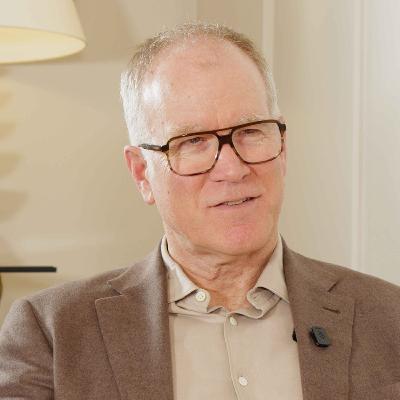
1This year marks the 125th anniversary of Nordstrom — a company that began as a small shoe store in Seattle founded by a Swedish immigrant and has grown into a $16 billion retail juggernaut.At a moment when the American department store sector is under enormous pressure — with bankruptcies, consolidation and changing consumer behaviour reshaping the landscape — Nordstrom has taken a different path.Last year, the Nordstrom family partnered with Mexican retailer Liverpool to take the company private, a move Pete Nordstrom says allows the business to move faster and focus on the long term.Pete began working in the Nordstrom stockroom at age 12 and has held roles across merchandising, buying and store management before becoming co-president alongside his brother Erik. Pete remains sanguine about Nordstrom and the future of department stores:“It's the best mousetrap. We've got the ability to have a curated breadth of offer. We have an online ecosystem that's integrated with the store, an off-price division with a practical exhaust for things that we don't sell at full price, and then there's scale. If you're big enough, you can be the first call for those brands,” he says. “We can create enough scale and leverage to make your digital business profitable. That's how I would pitch our thing: we think we offer a good solution for a modern customer and how they shop.”This week on The BoF Podcast, Pete Nordstrom joins BoF founder Imran Amed to discuss the company’s 125-year history, why he believes the department store model still works and how taking the company private is shaping Nordstrom’s next chapter.Key Insights: Nordstrom describes the business as “a company with heritage” rather than a “heritage company,” prioritising modern relevance over tradition. The move from shoes into apparel in the 1960s and the national expansion in the 1970s established a blueprint for organic growth, always anchored in service and a focus on the customer.Taking the company private was a move to secure long-term stability and efficient decision-making. Nordstrom notes that public markets often undervalue department stores due to the sector's lack of a “growth arc” compared to tech-driven industries. By partnering with Liverpool, the family retains 51 percent control, allowing them to lead without the “cumbersome processes” of public market expectations. He maintains that the business is improving not because of the “trappings” of being private, but because the structure allows the team to “lean in with more energy and focus around customers”.Despite the negative narrative surrounding American retail, Nordstrom highlights the necessity of an integrated “Omni view,” where physical stores and digital platforms share a single inventory. Curation remains vital to compete with independent boutiques, balancing relevance with inspiration, or the discovery of new brands. “We have the ability to have a curated breadth of offer,” he says, adding that the most successful modern closets mix high-fashion houses like Chanel with performance brands like On Running and Nike.Nordstrom emphasises that successful retail leadership is built on a foundation of tangible, varied experiences rather than academic credentials alone, arguing that there is no shortcut to developing the necessary judgment for the industry. “You’re valuable to a company because you’ve done things that have worked and things that haven’t worked,” he notes, advising the next generation to focus on building a broad professional perspective over immediate gratification.Additional Resources:Pete Nordstrom | BoF 500 | The People Shaping the Global Fashion Industry Can Department Stores Save Themselves? | The Debrief American Department Stores Have a Beauty Problem Hosted on Acast. See acast.com/privacy for more information.

Hip-hop has served as a primary pipeline for fashion’s entry into pop culture for decades, transitioning from organic street-level references to high-stakes global partnerships. Brands have historically leaned on a select group of superstar "style icons" to drive visibility, with A$AP Rocky emerging as the definitive case study for this crossover. However, as Gen Z consumer habits shift and the traditional music-to-market pipeline evolves, the industry faces questions about its over-reliance on a few familiar names.Takanashi joins hosts Sheena Butler-Young and Brian Baskin to discuss the tension between the safety of established stars and the cultural necessity of finding fresh voices.Key Insights:Takanashi positions A$AP Rocky as the case study of hip-hop’s interaction with fashion, whose organic love for runway brands transformed him into a definitive bridge between hip-hop and luxury. He recalls how Rocky name-checked designers in his breakout moment, and how that shifted what young fans even understood as fashion. “On this breakout single ‘Peso’, [Rocky] said that he was into Rick Owens and Raf Simmons,” Takanashi says. “He came out the gate as this rapper who really declared that he was into high fashion.” This authenticity created a bridge that allowed luxury brands to feel comfortable moving beyond traditional streetwear.However, fashion houses frequently default to known quantities like Pharrell, Travis Scott, or A$AP Rocky because their long resumes provide predictable results for risk-averse marketers. This creates a feedback loop where the same faces appear across multiple, sometimes competing, brand categories. “A marketer can just point to several examples they’ve done in the past and they could see the result of it,” Takanashi explains. The industry’s tendency to "glom onto certain familiar names" risks diluting the unique identity of the brands themselves.On the other hand, niche fan bases offer a more potent alternative to mainstream superstars. Some of the most successful recent collaborations have bypassed the Billboard charts in favour of artists with highly engaged, specific communities, such as Action Bronson with New Balance. Takanashi highlights that there is “a lot of strength in just kind of collaborating with artists that aren’t necessarily like charting super high.” Smaller artists with highly engaged and loyal fans can move the needle more effectively than a mass-market star who may feel interchangeable.While brands are happy to dress rising talent for red carpets or front-row appearances, the leap to a global campaign remains a "slow burn." Takanashi points out that many decision-makers lack a deep investment in the culture, leading them to extract value rather than nurture new talent. “Fashion is a business that extracts culture, but doesn’t necessarily give back to it as much as we’d like,” he says. Without more diverse perspectives in positions of leadership, the industry struggles to identify which younger artists possess genuine, long-term cultural resonance.Additional Resources:How Fashion Picks Its Hip-Hop Style Icons Breaking Down Chanel’s A$AP Rocky Partnership What’s Next for Hip-Hop and Fashion Hosted on Acast. See acast.com/privacy for more information.
Over the past two years, press tours for films like Barbie and Wuthering Heights have become strategic fashion narratives — moments that extend a film’s story far beyond the screen.At the centre of that shift is Andrew Mukamal, the stylist for Margot Robbie who has become synonymous with what’s become known as “method dressing” … aligning a film’s character, fashion history and brand partnerships into a cohesive red carpet story.“Method dressing, to me, is really just about putting a bit of extra thought and consideration into what you wear,” says Mukamal. “With modern marketing, the way people consume media and the evolution of the ‘super-press tour’, it’s now one of the options for how to approach this.”This week on The BoF Podcast, Andrew Mukamal joins BoF founder and CEO Imran Ahmed to speak about the rise of the super press tour, the business dynamics between stylists, studios and fashion houses, and how method dressing has reshaped celebrity marketing.Key Insights: Mukamal’s entry into the industry is rooted in assisting and learning on set, from photo shoots to the unglamorous logistics of the fashion wardrobe, and he argues that an apprenticeship remains the clearest training ground. The work is emotional, interpersonal and fast-moving; assistants learn by seeing how decisions get made under pressure. “The only way to really learn how to deal with those things is to be part of a team where you’re seeing all of that happen,” he says. “You have to be very limber and flexible and ready for somebody to call you and say, ‘Maybe we need to pivot.’”Mukamal defines method dressing as intentionality, not a gimmick. “Method dressing is just about putting a bit of extra thought and consideration into getting dressed – you’re not just grabbing something off a rack.” In his view, most actors are already doing it because red-carpet presentation is fundamentally different from everyday life; the difference is whether you use that gap to build a narrative. “They don’t walk around their normal lives looking anything like what you see them on these public carpets,” he says. Done well, he positions it as performance and persuasion — “a living, breathing billboard” that sustains attention between the trailer and the release, and gives audiences “a daily reminder” of the story they’re being invited into.The Barbie tour was more than a marketing stunt.. Mukamal went back to the original mood boards of the Mattel designers to find the high-fashion references they used in the 1950s and 1960s. He explains, “Putting myself back in their heads and saying, ‘OK … What was the brand that they were inspired by for this Barbie?’ Now I need to go to that brand and [close] the loop. It was kind of just magic.”After the global vibrancy of Barbie, Mukamal shifted into a dark, psychological aesthetic to match the tone of Wuthering Heights. He describes this evolution as a “complete gear shift,” returning to his “fashion goth” roots to build a narrative grounded in the 1847 novel’s intensity. By sourcing vintage Victorian accessories and collaborating with designer Dilara Findikoglu, he orchestrated a moment that merged archival history with a “tone of the coolness and, like, darkness” appropriate for the story.Mukamal frames styling as an apprenticeship-based industry where you absorb judgement, communication and crisis management by watching someone else do it – and then debriefing afterwards. He says, “The only way to really learn how to deal with those things is to be part of a team where you’re seeing all of that happen.” He adds: “Stick around, because you didn’t learn everything in a year or two … I really am a tiny little tadpole in this pond, and I should keep learning while I can.”Additional Resources:What Makes a Red Carpet Moment in 2024 | BoF Have We Hit Peak Red Carpet? | BoF Case Study | How to Create Cultural Moments on Any Budget | BoF Hosted on Acast. See acast.com/privacy for more information.
Nearly a year after President Donald Trump’s “Liberation Day” tariffs sent shockwaves through the fashion industry, the Supreme Court ruled he did not have authority to impose the sweeping levies. For an industry that imports billions of dollars in clothing, footwear and accessories into the US each year, the decision initially felt like relief. But that optimism narrowed almost immediately as new tariffs were introduced at 10 percent, with Trump indicating they could be raised to 15 percent over the weekend.Key Insights:While a drop to a 15 percent tariff technically represents a rate reduction, the sudden policy reversal has plunged the industry back into a state of operational paralysis. Executives are struggling to form long-term strategies when the foundational rules of global trade shift from week to week. “The problem isn’t even the difference in the rate of tariffs,” Chen explains. “It’s that the uncertainty makes decisions so much harder than if we knew exactly what that rate was going to be, even if it was higher than before.” This volatility forces companies to make reactive, shipment-by-shipment choices rather than fortifying their businesses for the future.The sheer scale of the disruption means that import duties can no longer be managed as a siloed logistical issue. Navigating the changing rules requires constant, cross-departmental negotiation to align product adjustments with consumer messaging. As Bain notes, “In the past, with something like this you would talk to your supply chain manager and come up with a plan with them. Now, you get everyone in the C-suite together into a war room … it’s just constant negotiation within your company and with your consumers.” Despite social media chatter suggesting that brands and consumers are owed money for the now-illegal tariffs, the reality of recouping those funds involves a looming legal nightmare. The government is expected to aggressively fight payback efforts by demanding extensive paperwork or proof that costs were not passed onto shoppers. “Refunds are a possibility, but it's not going to be a simple process,” Bain says. “It's not like returning your e-commerce order online where you fill out a form and you get a bunch of money back.”Fashion has experienced significant sticker shock over the past few years, but brands that successfully raised prices without losing consumer demand are unlikely to surrender those gains now. If the cost of production decreases under the new tariff structure, powerful labels will likely absorb the difference to improve their margins. “I think it's a possibility that some brands and retailers will lower their prices, likely in the form of discounting, rather than lowering retail prices,” Chen says.Additional Resources:The Supreme Court’s Tariff Ruling: What Fashion Needs to Know | BoF US Supreme Court Overturns Trump’s Emergency Tariffs | BoF Will Prices Come Down With Trump’s Tariffs? It’s Complicated | BoF Hosted on Acast. See acast.com/privacy for more information.
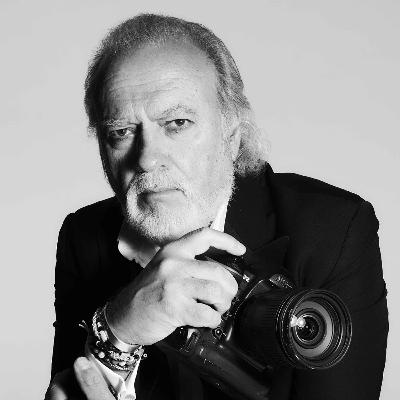
If you’ve been to a major party in London, Paris or Los Angeles, chances are that Dave Benett was there too. For nearly four decades, Benett has been a constant presence, documenting the evolution of celebrity, society and style in all the spaces and places where culture is happening. From concerts with Madonna and Prince to after-parties with Princess Diana and the rise of fashion as a pillar of culture, Benett has seen it all and become an expert at the art of working a room.“Journalists can miss something [and] be told about it. Photographers can’t,” he says. “Whatever you’re doing, you’ve got to make sure your eyes are everywhere.”This week on The BoF Podcast, Benett joins Amed to talk about what it really takes to cover an event, how party photography has changed in the era of smartphones and Instagram, and why relationships — not just access — are everything.Now he is launching the Dave Benett Agency — a boutique model designed to protect quality, mentor a new generation of photographers and adapt to an era where everyone has a camera, but very few know where to stand.Key Insights: Born in Mauritius in 1958, Bennett moved to the UK as a child and by his late-teens was honing his photography skills at the Daily Mirror and Thames TV, covering riots and crime before pivoting to the social scene. He witnessed the cultural shift where fashion merged with music and celebrity: “We started to see it when Kate Moss, Naomi [Campbell], Vivienne Westwood and the The Fashion Awards all started to happen.” Bennett operates as what he calls a "society photographer," a role built on mutual respect and long-term relationships. He explains, "we were recording what society was doing. We photographed the royals but when they came into our world and that relationship really did make a difference.” This trust was exemplified by his interactions with Princess Diana at private events. “I would just photograph her arriving and meeting the host and then she could go off and chat to all her friends. She felt safe ... and it really paid off for us as the doors closed later on."While the digital revolution has democratised image-taking, Dave argues that there is a distinct gap between a personal snapshot and a professional photograph. He acknowledges that "the power of the individual has increased massively," but maintains that the industry still relies on a specific editorial eye. "The good thing for me is that they still need what we do, because we're shooting for a client ... and there's a skill that comes with that — how you take a photo, what you're looking for in the photo. When you've got people with their own cameras, their own phones, taking their own pictures, they practically have only one use — for themselves."Benett describes event photography as a tactical exercise, mapping arrivals, tracking key players and staying on his feet for hours. To capture the right moments, he explains: "You work out exactly where you need to be for the initial arrival or where they come, then you work the room as and when new people arrive. You can actually spend four hours just campaigning the room, just making sure you're in the right place at the right time." Additional Resources: The Return of Old-School Celebrity Campaigns | BoFHow Celebrity Image-Makers Capitalise on the Red Carpet | BoF . Hosted on Acast. See acast.com/privacy for more information.
After raising prices aggressively during the post-pandemic boom, luxury brands are now confronting slower growth and a shrinking aspirational customer base. According to Bernstein, average luxury price hikes reached 36 percent between 2020 and 2023, with Dior and Chanel raising prices by 51 percent and 59 percent, respectively. Now, as Bain estimates that more than 50 million aspirational shoppers have left the category, both houses are adjusting their pricing architecture and product mix in an attempt to rebuild volume without sacrificing exclusivity.BoF reporter Joan Kennedy joins The Debrief to unpack how Dior and Chanel are recalibrating pricing and product strategy to win back aspirational shoppers. Key Insights:Dior and Chanel are among the brands that leaned hardest into post-pandemic price increases, prioritising margin expansion and high-net-worth clients. That strategy helped fuel growth at the time, but it has also intensified the industry’s current reckoning. “Pricing has really emerged as this key concern,” Kennedy says. “At Dior and Chanel, prices rose 51 per cent and 59 per cent, respectively.” Products that once served as entry points are increasingly out of reach for aspirational shoppers: “The Chanel medium flap has nearly doubled in price since 2019,” she says.To pull aspirational shoppers back into stores, Dior and Chanel are rebuilding the lower end of their offer – from small leather goods and accessories to playful add-ons. As Kennedy puts it, “brands have been introducing these fun little whimsical items at the bottom, which have a good psychological effect on all shoppers.” And even when the ticket doesn’t shift, brands are trying to make the value proposition feel stronger through newness and storytelling: “maybe the price isn't changing, but it’s trying to hammer home that there's a little bit more value … and really ride the momentum brought by these new creative directors.”Even if excitement around creative directors Jonathan Anderson and Matthieu Blazy reignites interest, the economic backdrop may limit how far that enthusiasm translates into sales. “It’s definitely a big open-ended question – how much of this is a problem with desire versus ability to purchase?” Kennedy says. “Maybe a lot of these shoppers do want these products and are really excited by them, but just don’t have the ability.” In that sense, the reset is only partially in luxury’s control. Products can restore aspiration, but macro conditions ultimately determine movement.Additional Resources:How Dior and Chanel Are Tackling Fashion’s Pricing Problem | BoF The Great Fashion Reset | Can Designer Revamps Save Fashion? | BoF Ready for Relaunch? Jonathan Anderson’s Dior Challenge | BoF Hosted on Acast. See acast.com/privacy for more information.
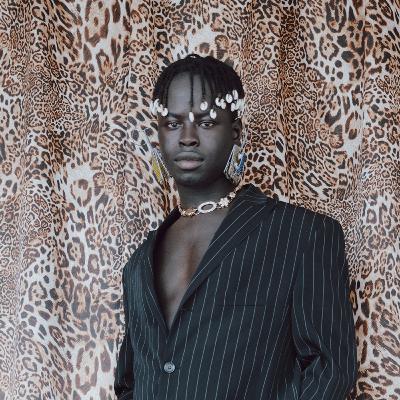
From a childhood in Sierra Leone to navigating London as a teenage immigrant, Ib Kamara traces the cultural shocks that shaped his creative identity. He recounts hiding his artistic ambitions while studying science, breaking through with a Beyoncé commission in his early 20s, redefining Dazed as a global publication and ultimately stepping into the role of art and image director at Off-White after the death of Virgil Abloh.BoF founder Imran Amed sat down with Ib Kamara in Abu Dhabi during the launch of T Magazine MENA. The conversation spans authorship, responsibility, design versus styling and why young creatives today must reject Eurocentric hierarchies and build with their peers. Key Insights: Kamara describes his move from Sierra Leone to London at 15 as both destabilising and transformative. Raised in a culture where authority was not questioned, he suddenly had to become outspoken and self-defined. That rupture, he says, forged his identity. “London was definitely a culture shock, but also the best shock that could have ever happened to me,” he reflects. “I think I needed that shock and that tension to be Ibrahim right now.”Kamara’s entry into fashion wasn’t through formal design training but through images. Growing up in Sierra Leone, he consumed discarded European magazines, absorbing visual storytelling. “I loved images and I was fascinated by how people put things together,” he explains. “I understood images quicker than design because there was no sort of a design school or artistic design language. You take what you’re given.” That instinct for narrative over product shaped his early styling career and later informed his editorial leadership at Dazed.Kamara approached Dazed as an editor with an immigrant’s vantage point and a global-first mandate, pushing the title beyond its London bias to reflect the way culture now moves online. “I realised London is so diverse and we all come from the most incredible places in the world. It will make sense for us to reflect that,” he says. In practice, that meant building an editorial agenda shaped by the same cross-border conversation happening among young audiences. “We’re at an age where the kids are all talking online, everyone is sharing and collaborating,” he continues. “So I set out to make a magazine that was global, has a sense of culture, has empathy and is brave enough to do stories that could potentially get me fired a couple of times … It’s a reflection of where I come from.”Taking the creative helm at Off-White after Virgil Abloh’s passing was not a straightforward decision. Kamara speaks candidly about fear, self-doubt and the weight of legacy. “It was not the easiest decision for me to make because no one can really fulfil someone else’s shoes,” he says. “There’s only one Virgil.” Ultimately, he chose growth over comfort: “I don’t think you can live life like that. I think you have to take a chance.” In moving from stylist to designer, he also discovered a harder truth about authorship: “With design you can’t cheat. I think with styling you can cheat in a picture … but design is respect – it’s a craft.”For young creatives navigating today’s instability, Kamara offers a clear directive to decentralise Europe and build locally with conviction. “Europe is not the centre of everything,” he says. “Where you come from matters. And taste is not subjective to one part of the world. It's a global taste.” His guidance is rooted in consistency and community: “Create with your people, bring your people up … There’s nothing more beautiful when you’re at a table and you’ve known these people for 20 years.” And above all, kindness: “Be kind as well. Be nice a little bit, if you can, please. We don’t need more monsters in the industry.”Additional Resources:Ibrahim Kamara | BoF 500 | The People Shaping the Global Fashion Industry How I Became… Senior Fashion Editor-at-Large of i-D Magazine | BoF Ib Kamara: Fashion’s Favourite Renaissance Man | BoF Hosted on Acast. See acast.com/privacy for more information.
While the Olympics remain one of the world’s biggest sporting stages, they are also one of the most tightly controlled marketing environments. Rules limit how sponsors can interact with athletes and advertise during the Games. As a result, fashion and sportswear brands are finding alternative ways to capitalise on the moment, from outfitting national teams and launching capsule collections to sending squads of influencers to experience the Games.BoF correspondents Haley Crawford and Mike Sykes join Sheena Butler-Young and Brian Baskin on The Debrief to unpack how the winterwear boom is reshaping the Olympic marketing playbook. Key Insights:Musician Bad Bunny’s choice of Zara for his Super Bowl halftime show outfit crystallises a broader tension in fashion marketing: the balance between cultural relevance and commercial perception. Whilst Sykes acknowledged the pushback from critics who found the use of a fast-fashion Spanish brand on such a global platform surprising, he also notes the strategic logic. “This performance is supposed to be about inclusivity, and part of that is accessibility and affordable products. And plus, Zara is also a Spanish brand... It makes more sense considering the cultural magnitude of the performance,” Sykes says.Crawford argues the Games are no longer just about logo placement on performance gear, but a broader spotlight on winter fashion as a growing category. “We've seen that consumers are interested, not only from a performance perspective, but also from a fashion-forward perspective, in having gear that's equally stylish as it is performance driven on the slopes,” she says. But Olympic marketing comes with strict limitations. As Crawford explains, official sponsors can use Olympic branding, but others must tread carefully. For non-sponsors like Canadian label Roots, that means linguistic gymnastics: using phrases like “rooting for Canada” without explicitly referencing the Games.With broadcast advertising and official branding tightly controlled, being visibly present at the Games can be the most direct route to global reach. Sykes points to Adidas’ scale: “We’ve seen a bunch of brands like Adidas…that launched this 700-piece collection.” Even if it is not a traditional campaign, the visibility is enormous. “Just to have your logos on some of these athletes as they perform, while millions of people are watching across the globe, that is the sort of marquee way we’re seeing brands participate,” he says.As leagues and federations try to expand their audiences, fashion-forward fan wear has become a strategic priority. Crawford says Off Season’s approach to Team USA illustrates the shift: rather than just jerseys, brands are creating “wearable jackets and sweaters and things that fans can actually wear in their day-to-day.” Sykes sees the trend as part of a wider evolution across sport. Off Season’s product “reminds me of what the Starter jackets used to be in the 90s,” he says, predicting that more brands will build momentum by “taking team logos and putting them on unique products that aren't just a jersey.”While the Olympic window is tightly controlled, brands often see their biggest opportunities once the closing ceremony ends. Crawford points to the Paris Olympics breakout star Ilona Maher, who “popped off for creating all this viral behind-the-scenes content in the Olympic village,” then landed deals with Maybelline and Paula’s Choice. For fashion, Suni Lee is a recent template. After Paris, she started campaigns for LoveShackFancy and Victoria’s Secret Pink and attended the CFDA Awards with a designer partner. “She really built this whole other part of her public persona,” Crawford says – showing how medals and momentum can translate into longer-term brand equity.Additional Resources:How the Winterwear Boom Reshaped Fashion’s Olympic Playbook | BoF Which Winter Olympians Will Score Beauty Deals? | BoF Hosted on Acast. See acast.com/privacy for more information.
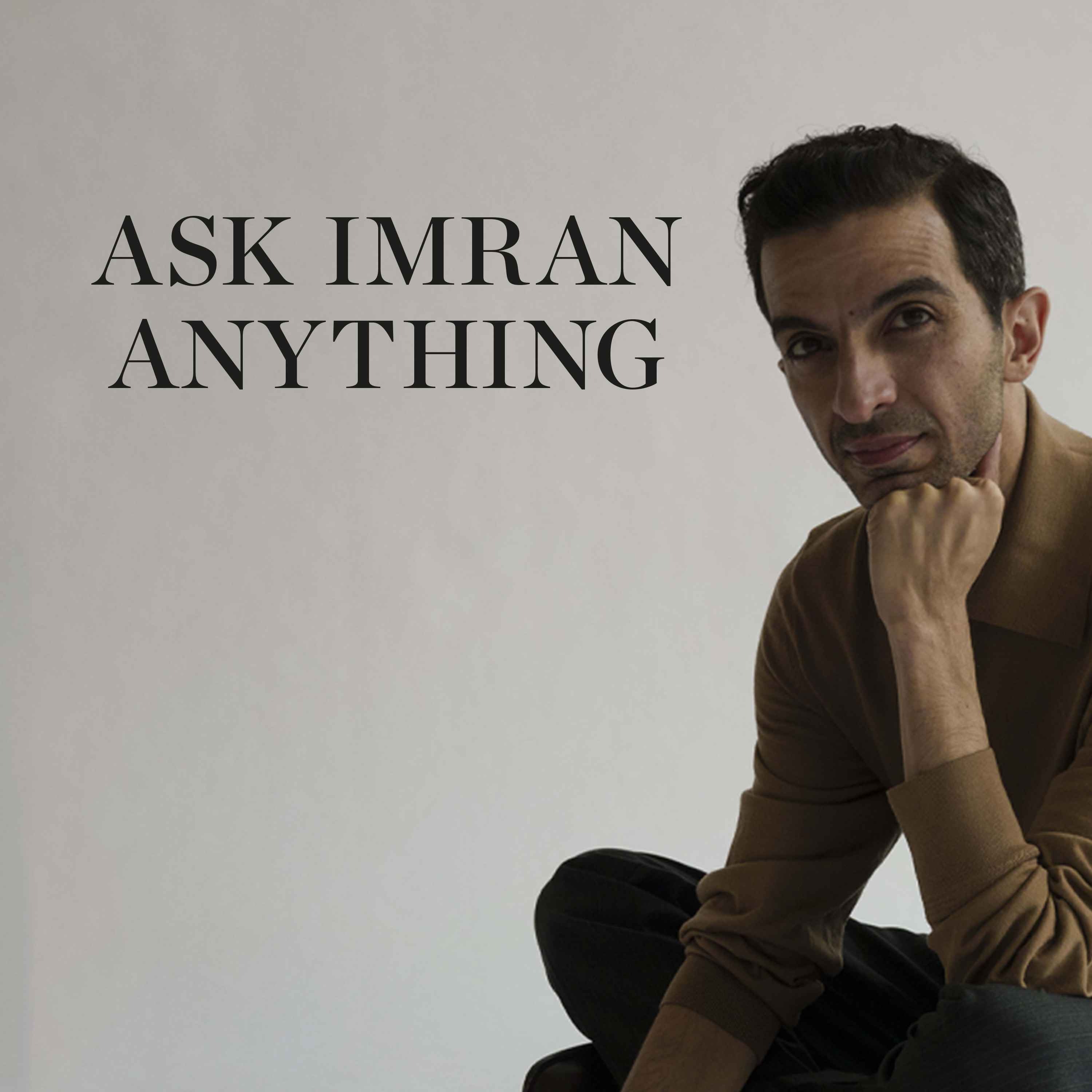
In this Ask Me Anything episode, Imran Amed answers questions submitted by listeners from around the world, spanning luxury’s current downturn, the collapse of major wholesale platforms, the realities facing emerging designers, and how global growth narratives in India and Africa are often misunderstood. The conversation later zooms out to hear Amed’s advice on education and training, fashion journalism, and the skills needed to build a lasting career in an industry undergoing structural change.Key Insights: Amed frames the current downturn in luxury as fundamentally different from previous crises, arguing that this moment is rooted in structural choices made by the industry itself. Years of overexpansion, inflated pricing and relentless product drops have weakened trust and eroded meaning, leaving consumers disengaged. “The moment we’re in now feels different to me, because what’s happening is coming from inside the industry,” he says, pointing to oversaturation and a breakdown in perceived value. Despite the democratisation promised by direct-to-consumer channels, Amed believes this is one of the most difficult environments in decades for independent brands to gain traction. The collapse of key multi-brand platforms, combined with slow payment terms and intense competition, has made growth and cashflow management increasingly precarious. Yet, he sees opportunity for designers offering clarity and restraint where big brands have overreached. Smaller brands can compete by offering real value — “beautifully designed, high-quality products…that come from a sense of quality,” he explains, positioning scarcity and sensible pricing as advantages rather than constraints.Amed cautions against simplistic narratives that frame India or Africa as the next, immediate growth engines for Western luxury. In India’s case, he argues that expectations often ignore deep-rooted cultural and economic realities. “India already has a luxury industry that goes back hundreds of years,” he says, pointing to longstanding traditions in jewellery, tailoring and textiles that continue to shape consumer behaviour today. Africa, meanwhile, represents enormous long-term potential, driven by demographics, creativity and cultural influence — but much of luxury’s engagement still happens outside the continent. “Africa has more than a billion people and the fastest-growing population in the world — there’s no doubt that’s a huge future opportunity,” he says.Amed rejects the idea that there is a single route into fashion, but he is clear that success today demands a broader skill set than creativity alone. For designers, technical understanding and business literacy are increasingly essential if you want to build something sustainable. For journalists, Amed argues that a “point of view is the single most important thing in fashion journalism today.” He summarises: “ The one thing that’s true, whether you go to journalism school or not, is you just need to practice. If you’re a writer, you need to write every day. If you're a creator, you need to create every day. The more you write, the more you create, the more you’ll develop your own voice and the more you’ll feel confident in what you’re doing.”Additional Resources:Why India Will Not Be The Next China for Luxury | The BoF Podcast The Emerging Designers Pushing Fashion Forward | BoFThe Great Fashion Reset: Can New Designers Still Build a Business? | The Debrief | BoF Hosted on Acast. See acast.com/privacy for more information.

Influencer marketing in 2026 is a different beast. Once dominated by follower counts and splashy sponsored posts, the sector is now shaped by richer performance data, new monetisation models and growing consumer scepticism toward overt selling. As BoF publishes a new case study on the creator economy, Pearl joins hosts Sheena Butler-Young and Brian Baskin to unpack how creators and brands are adapting to a more disciplined, competitive and AI-saturated landscape.Key Insights:One of the most profound shifts in influencer marketing is how success is measured. Where follower size once acted as a blunt proxy for reach, brands now have access to granular data that shows who actually drives traffic and sales. Pointing to platforms like ShopMy and LTK that allow brands to see “exactly what creators were driving sales for them,” Pearl says that visibility has reshaped spending decisions. She explains: “Having more data has totally changed the game. It really is incredibly varied today and there is no one baseline KPI. It’s really just about what are your goals and who’s the best to help you achieve that.”As consumers grow wary of constant selling, trust has emerged as the defining asset creators bring to brands. “Trust is the most important thing,” Pearl says. “If you don’t have your audience’s trust, nothing else matters.” What brands are really buying is not visibility, but a relationship. “What a creator really brings to the table is not necessarily the size of their following; it’s that relationship they have with their audience,” Pearl explains.As the sector professionalises, creators are actively reducing their dependence on single revenue streams. Affiliate marketing, subscriptions and owned platforms are increasingly central to sustainable creator businesses. “Affiliate marketing really provides that base foundational income that you can rely upon,” Pearl says. Substack, meanwhile, offers something brands cannot. She explains: “It brings back some of that intimacy and community that they felt was missing in this TikTok/Instagram world.” This diversification also changes the power balance. “They don’t want to rely too much on one particular partnership,” Pearl says. The upshot is a creator economy that is less fragile – and less easily dictated by brand budgets.Pearl argues the relationship between brands and creators is moving from transactional campaigns to longer-term collaboration. As creators become central to marketing in fashion and beauty, brands are changing how they work with them – and what they ask them to do. Brands can no longer dictate terms “like they used to,” Pearl says, because creators are now “recognised as being a really important part of the marketing puzzle.” That recognition is also changing what brands value: “You’re not just hiring this person for their following… you hire them because they’re a creator. They create great content. They know how to engage an audience.”Additional Resources:From Hype to Discipline: The New World of Influencer Marketing | Case Study Why There Are So Many Influencer Collaborations Right Now | BoF How Creators Can Avoid Being Replaced by AI | BoF Examining 20 Years of Fashion’s Influencer Economy | The BoF Podcast Hosted on Acast. See acast.com/privacy for more information.
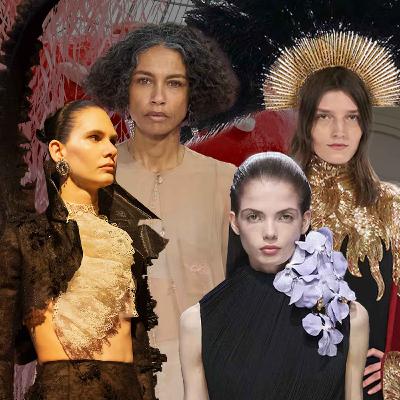
Editor-at-large, Tim Blanks and editor-in-chief, Imran Amed are back from the Haute Couture Spring/Summer 2026 shows where the biggest moments of the week lived up to all the anticipation.Jonathan Anderson’s debut at Dior reframed couture as a six-month creative lab — a backbone that can feed the entire maison with technique, emotion and ideas. At Chanel, Matthieu Blazy stripped away the obvious codes to put construction, movement and the body first — the kind of couture you only fully understand up close. There was also Valentino’s “panorama” staging and Schiaparelli’s turbocharged push for spectacle — all playing out against a tougher luxury backdrop this year’“Something that struck me about this season is the energy that everybody was evoking,” Blanks says. “The words people used to describe their feelings — it was Jonathan talking about having a lot of anger he needed to get out, or Mathieu talking about nature, or Alessandro talking about fantasy and fashion, and then Daniel Roseberry talking about turbocharging Schiaparelli.”Key Insights: Departing from the codes of previous designers, Blanks was struck by how much of Anderson’s own sensibility made it onto the Dior runway, from Magdalene Odundo’s vase forms to historic textiles and witty, collectible accessories. “I felt like there was real synthesis … I think he showed some of the most beautiful things he’s ever shown, and some of the most joyful clothes.” Within 90 minutes of the show, the full collection was installed at Villa Dior for clients to handle and order, underscoring Anderson’s structured, end-to-end planning. As Amed notes, “He’s operational … he thinks about the way it all works together. That’s quite rare in a designer.”Mathieu Blazy pared Chanel back to construction and movement, dialling down overt couture signatures to foreground cut and daytime dressing. The result read as a wardrobe built on the body rather than surface effect, with exquisitely fine details – budgies perched on pocket anchors, bird-on-mushroom motifs, slingbacks with tiny avian heels – that reward close looking. The Grand Palais spectacle amplified the tension between intimacy and scale, but as Blanks notes, “it does underscore in a very graphic way that couture is the ultimate private pleasure.”Alessandro Michele’s Specula Mundi for Valentino revived the 19th-century Kaiserpanorama to slow the audience’s gaze and amplify detail. Reading from Alessandro’s letter, Blanks highlights: “We continue to work within this space not to fill an absence, but to preserve it. Only by accepting such a void, with no intention to fill it, can Valentino’s legacy remain what it has always been.” Another line reads: “There is no fantasy without beauty, and there is no freedom without beauty and fantasy.”A common thread this season is that designers are newly humbled by the expertise of the craft. “Everybody was talking about their ateliers, all these ready-to-wear designers being confronted with what a couture atelier is capable of,” Blanks says. After visiting Valentino, he notes: “There were five separate ateliers working on the clothes… I can’t thread a needle, but I got kind of palpitations walking through – it’s just so incredible, that kind of artistry.” Anderson himself calls Dior’s workrooms a “mini city” of ultra-specialists.Additional Resources:Couture Has Entered a New Era. What Does It Mean? | BoF Blazy’s Chanel Couture Was a Slam Dunk! | BoF Exclusive: How Jonathan Anderson Is ‘Rebooting’ Couture at Dior | BoF The Beating Heart of Haute Couture | BoF Hosted on Acast. See acast.com/privacy for more information.
Across fashion, companies that once embraced remote or hybrid work are increasingly pushing employees back into the office, with some moving towards four or even five days a week. At the same time, competition for jobs, particularly at entry level, is intensifying amid layoffs, slower industry growth and the rise of AI. On this episode of The Debrief, senior correspondent Sheena Butler-Young and executive editor Brian Baskin are joined by BoF Careers’ Sophie Soar to unpack why the power balance has shifted back to employers, how different generations feel about being in the office, and what practical routes still exist for early-career talent trying to get a foot in the door. Key Insights:During COVID, companies found people could be “just as, and in some cases, more productive” at home – but that was when productivity meant output. Now, Butler-Young argues that employers are widening the definition: “Productivity should also include collaboration, morale, people being together… face time with leaders.” And with the labour market tightening following economic pressure, layoffs and AI taking some jobs, leaders have more leverage to enforce it. “In 2025 and now into 2026, it’s looking more like an employer’s market,” Butler-Young says.While some executives argue that in-person work improves collaboration and reduces errors, Butler-Young warns that motivations are not always benign. She points to a growing sense that mandates can act as a quiet form of workforce reduction. “One way you can get people to effectively fire themselves is to make them come to the office,” she says, noting that some companies may prefer attrition to public layoffs. She also cautions against copy-and-paste policies. “If you’re seeing productivity high and morale high at one to two days a week, you need to ask yourself, what am I hoping to accomplish if I move it to four or five?” Despite a difficult labour market, Soar stresses that fashion companies have not stopped hiring altogether. Instead, they are being more selective, particularly when it comes to junior roles that can be automated. "There definitely is a squeeze on the ones that are considered more rote work,” she says. “Those are the roles you could potentially automate or replace with AI.” However, some employers are still investing in early-career talent. “Those who are still hiring for entry-level roles recognise the benefit that that talent can bring,” Soar explains, pointing to diversity, long-term retention and fresh perspectives.Additional Resources:Fashion Is Done With Remote Work | BoF How to Get Ahead in Fashion’s Stagnant Job Market | BoFHow Fashion Brands Are Making Remote Work Permanent | BoF Hosted on Acast. See acast.com/privacy for more information.
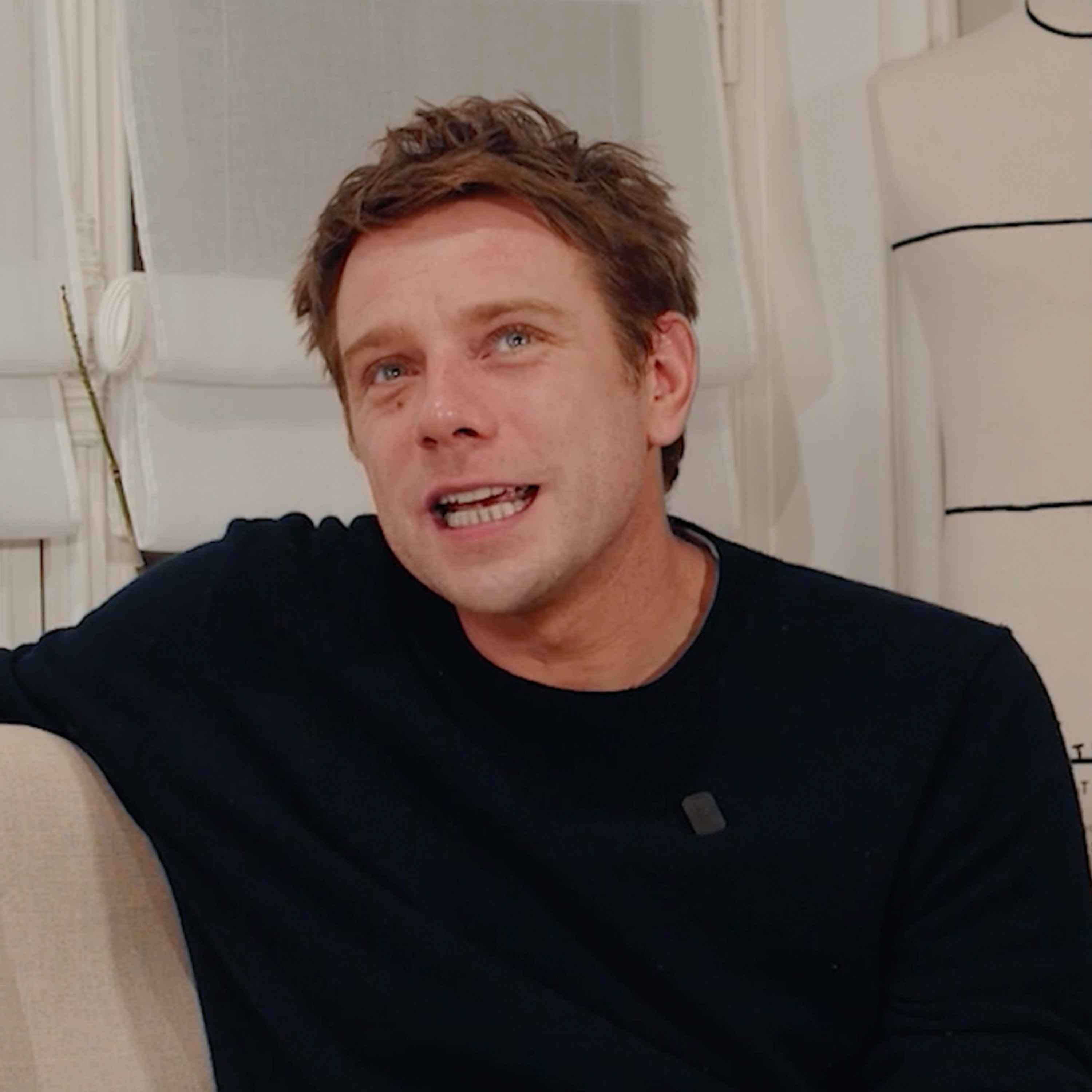
On Monday Jan. 26, Jonathan Anderson debuted his first couture collection for Christian Dior.In December, BoF founder Imran Amed travelled to Paris to meet with Anderson to get a first look, and to take stock of his journey thus far. Anderson is unveiling his first Dior couture collection while orchestrating a sprawling calendar across men’s, women’s and accessories. He explains how couture went from “irrelevant” in his mind to an emotional, craft-first engine for the house — and why he’s reshaping how Dior makes, shows and shares couture with clients and the public.“Couture is an endangered craft," he says. In this conversation, Anderson reflects on why couture exists, how endangered craft can be protected and the very human reality of leading a global fashion machine.Key Insights: Anderson admits that a year ago he never saw himself in couture. Now he describes fittings as an education within a living French institution. “I joke every time I’m in a fitting, I feel like I am doing a PhD in couture,” he says. Seeing the atelier at work reframed it entirely: “Couture is kind of like an endangered craft. What Dior is doing is protecting this as a national symbol of making,” says Anderson. “Once I got into that mind space, then I was able to work out, okay, well, what do I want from it? Or what is new for Dior in a landscape that’s had some of my heroes in it.”Anderson is reframing couture as an experience to be studied, not just scrolled — extending the 15-minute show into a three-part journey. Act I: the runway. Act II: intimate cabinet presentations at Villa Dior, where clients handle every component with the atelier team on hand, followed by days of selling. Act III: a free public exhibition that places the new collection in dialogue with Christian Dior and artist Magdalene Ndondue — an invitation to witness technique, context and provenance up close. As he puts it: “A photograph will never tell you that a dress took 4,000 hours. ... I’m inviting people to see something physical, because it may change your mind — it might change your opinion of it.”Before unveiling his first Dior women’s collection, Anderson invited John Galliano to privately view the work — a full-circle moment with a hero who helped define Dior in the public imagination. Galliano arrived with two bunches of wild cyclamen tied with black ribbon, a gesture that became talismanic for the Spring/Summer 2026 show’s pink-and-black mood and forest-floor set details. More than the symbolism, it was Galliano’s counsel that stuck: “The more that you love Dior, the brand, the more it will give you back,” recounts Anderson. Anderson argues for real transparency around the people off-camera who turn an idea into a product and a show into a business. He highlights merchandisers, window teams, logistics, finance and operations — all of whom translate creative vision into reality. “It may not be creative, but they work in a creative business; they have to try to work out how to make a designer’s dream come true. If we want to pull the veil down, we have to do it in all categories. A fashion show is not just me; I am the conductor,” he says. “I have a responsibility to the hundreds, thousands of people who work here to make sure it works. It’s a balancing act.”Anderson wants each show to have its own energy while still speaking a shared Dior language. “I will build a vibe or a kind of culture around a brand, but then… the energy of each show has to be a different energy.” He adds: “They all also have to be linked. There is a language that is built.” Working with Dior chief executive Delphine Arnault, Anderson is trying to “put down concrete blocks”. Some will “end up being sand and then you’ll have to rebuild it,” he says.Additional Resources:Jonathan Anderson | BoF 500Clothes for Life or Clothes as Costume?Louis Vuitton, Dior and What Luxury Means Today Hosted on Acast. See acast.com/privacy for more information.

Speaking at the Institut Français de la Mode graduation ceremony in Paris, BoF founder and CEO Imran Amed reflected on his own personal journey that led him to create The Business of Fashion, starting with a chance encounter with a stranger in the New Delhi airport.“That moment was the beginning of my search for purpose, to build a life and career with meaning in service of something greater than myself,” he says. “It was during that course that I realised I was living a life built to impress others, not to express myself or use my creative talents.”Fashion is currently in a moment of reckoning: technology is reshaping behaviour, old rules are persisting as the world accelerates, and trust is shifting away from gatekeepers. Amed’s message to graduates: clarity of purpose.Key Insights: “There will be disruptions and external forces completely outside your control. But if you are clear about your purpose, that can guide you every day as the world changes around you — it becomes your North Star, the compass that helps you to find your way in a world of turmoil and change,” says Amed.Graduating into a downturn once hindered Amed’s own fashion ambitions until the early days of the internet and social media opened an unexpected route.Amed used these new tools to join and shape the global fashion conversation. “By using a new technology, I was able to create something to read around the world, helping an entire industry navigate two decades of change,” Amed says. For today’s graduates, moments of flux are “the greatest moments of opportunity.”According to Amed, there are currently three big problems in the fashion industry that graduates can make the biggest impact. The first is growth without meaning: “Growth has become a proxy for relevance, but the result wasn’t abundance – it was dilution,” Amed says. His prescription: “the most radical thing you can do in fashion is to practise restraint… create less, but better.” The second is values without systems: “The era of storytelling without systems is ending,” Amed says — supply chains should be designed to reduce waste, AI should be used for efficiency and workers’ rights should be foundational. The third, is authority without trust: power is migrating from headquarters to creators and communities. “Legitimacy is earned through trust and hard work,” Amed says, as consistency and context now confer authority.“You just need to choose one problem and serve it really, really well,” he says. “The future of fashion won't be decided by those who speak the loudest, but by those who choose to act with care, and are guided by a sense of purpose. This isn't something you find once and keep forever. Purpose will evolve just as you evolve.” Additional Resources:The State of Fashion 2026: When the Rules Change | BoFThe Emerging Designers Pushing Fashion Forward | BoF How Fashion’s Rising Stars Are Surviving the Luxury Slump | BoF Hosted on Acast. See acast.com/privacy for more information.

Sneakers have driven growth for the sportswear industry for decades, in recent years accelerated by the pandemic and work-from-home culture. However, a recent Bank of America report sparked debate by suggesting the sneaker boom may be nearing an end, including a rare double downgrade of Adidas. On The Debrief, sports correspondent Mike Sykes joins hosts Brian Baskin and Sheena Butler-Young to examine whether slowing growth marks a genuine reversal of casual dressing, or a return to more sustainable demand shaped by price sensitivity, comfort and experimentation rather than hype. Key Insights:The Bank of America report struck a nerve because it questioned a decades-long growth story about the sneaker industry. “This one was the first one in a while that seemed to spell a bit of doom and gloom for the industry,” Sykes says. “Everyone has been on pins and needles for the last couple of years as Nike has been in its downturn… and Bank of America is saying, yeah, it’s over.” The double downgrade of Adidas amplified that anxiety. “If Adidas is getting the double downgrade here, what does that mean for everyone else?” Sykes asks. The implication was not just brand-specific weakness, but the possibility that the sneaker cycle itself had run out of road.However, slower growth does not necessarily mean sneakers are ‘over’. Instead, the data may reflect a market adjusting after years of abnormal acceleration. “Everyone else seems to feel like things are going at least okay,” Sykes says. “Maybe not perfect, but nothing is perfect in this economy right now.” He notes that among the analysts and industry figures he spoke to, there was little appetite for declaring the trend finished. “People are still into sneakers,” says Sykes. Sneakers and sportswear have lasted because they are easy to understand, easy to buy and relatively affordable compared to many fashion categories. “Sneakers are generally just accessible for people. It’s an easy trend to follow,” Sykes says. “You can easily spot which ones are cool and it’s very easy to hop on the bandwagon.” That accessibility matters even more in a strained economy. As Sykes highlights, with consumers weighing “do I wanna buy this next outfit or do I want to buy groceries,” sportswear’s practicality continues to anchor demand.For the sneaker cycle to truly turn, something has to replace it – either a new hit product within the category or a different footwear trend entirely. Right now, what is emerging is not a shift toward formality, but a widening of what casual footwear looks like, as displayed by the popularity of Nike’s ReactX Rejuven8 recovery clog. “Speaking to people who have wanted this shoe, it’s mostly about the comfort,” Sykes explains. “As far as ending the casualisation trend, this is not a shoe that would do that. This is a shoe that would entrench it.”Additional Resources:Have Sneaker Sales Finally Peaked? | BoF The Sneakers That Mattered Most in 2025 | BoFSneaker Resale Isn’t the Business It Used To Be | BoF Hosted on Acast. See acast.com/privacy for more information.
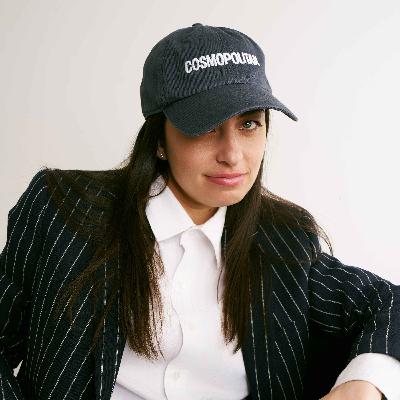
Willa Bennett is the editor-in-chief of Cosmopolitan and Seventeen — two of the most influential legacy media brands now being reimagined for a social-first, creator-driven era.Bennett grew up in Los Angeles, trained as a ballerina and studied journalism at Sarah Lawrence before building a standout career at Bustle Digital Group, GQ and Highsnobiety. Along the way, she’s helped redefine how youth culture is covered — not by chasing everything, but by sharpening point of view, taste and authority.“This generation has access to everything,” says Bennett, “which is exactly why there’s a real hunger for curation, real taste and a voice you can trust.”This week on The BoF Podcast, Imran Amed, founder and CEO of The Business of Fashion, sat down with Bennett to talk about what young audiences actually want from media today, why curation matters more than ever and how she’s refocusing Cosmopolitan and Seventeen — creatively, culturally and commercially — for the next generation.Key Insights: Bennett cold emailed her way into Seventeen, two weeks after graduating in 2013. Spotting social’s potential before it was prized, she asked: “Can I post the cover on Instagram?” and was told, “Yeah, sure – no one’s going to see it.” Later stints at Bustle and GQ sharpened her point of view, with a breakthrough at Highsnobiety. Putting Billie Eilish on her first cover of Highsnobiety “was so intuitive,” she says, and it was a signal she could match youth culture with editorial authority.Bennett argues the job of legacy media is selection, not saturation. “This generation has access to so much online, but that also means that there is a real hunger for curation – and real curation, not performative curation,” she says, adding that Cosmopolitan’s remit is to be “a place that young people can trust when it comes to love and relationships.”After an era of chasing scale, Bennett sees a return to meaningful, well-made stories: “We’re seeing real editorials again,” she says, while also noting Cosmopolitan’s social focus: “We’re up 500 percent year over year just in views on Instagram … That prioritisation of social media has been really important.”Bennett’s advice to new journalists is to publish everywhere while honing a distinctive point of view. “Use all the platforms now … get your voice out and really cultivate it,” she says. “As we figure out what this new era is, I think it’ll be even more important to have a very distinct point of view.”Additional Resources:Willa Bennett | BoF 500 | The People Shaping the Global Fashion Industry Inside Willa Bennett’s First Issue of ‘Cosmopolitan’ | BoF Hosted on Acast. See acast.com/privacy for more information.

Saks’ bankruptcy was widely expected, yet still felt like a shock to the fashion system. The department store giant’s Chapter 11 filing outlines $1.75 billion in restructuring finance and $3.4 billion owed to as many as 25,000 creditors – including $136 million to Chanel alone. Who will get paid, and what Saks looks like at the other end of the bankruptcy process, is an open question. Former Neiman Marcus chief Geoffroy van Raemdonck will lead the reset. As BoF’s retail editor Cat Chen puts it, Saks will need to “shrink in order to grow,” curb discounting, and rebuild trust through clienteling and service.Key Insights:Missed vendor payments undermined confidence in Saks Global soon after it acquired Neiman Marcus and Bergdorf Goodman. “Even after Saks created these new payment terms, they weren’t able to stick to their instalments,” Chen says. Labels “stopped shipping to Saks entirely,” creating “a death spiral where Saks wasn’t getting good inventory, and this hurt their ability to attract customers,” and sales slid further.When Saks Global acquired Neiman Marcus, both companies were extremely levered going in, with savings being swallowed by interest. The plan pitched $500 million in cost savings, but Saks Global took on more debt — $2.2 billion in bonds. As Chen explains, with margins in multi-brand retail already slim, “they were ill-fated because… a chunk of whatever sales or savings they were able to generate would be going toward interest payments.” As Saks has 10,000 to 25,000 creditors, owed $3.4 billion, bankruptcy court will approve a list of critical vendors that are essential to Saks’s business. While conglomerates will cope, “it's really the smaller independent brands that might be owed less money, but the amount that they're owed are just so much more critical to their business operations. These are the players that are the most vulnerable right now,” Chen warns — and it’s not just brands. A model shared she’s “owed $46,000...and can’t pay rent now.”Now, Saks must reset its business. Van Raemdonck “took Neiman Marcus in and out of bankruptcy,” yet Chen is blunt about the reality of the situation: “Saks Global will have to shrink in order to grow.” That means closing stores, stabilising cash flow and getting ruthless about discounting. From there, Chen says Saks has to compete on experience, delivering the best customer service and catering to their VICs. Additional Resources:Saks Global Files for Bankruptcy After Monthslong Hunt for Cash | BoF Chanel, Gucci and Capri Holdings: The Brands Topping Saks’ Creditor List | BoF Hosted on Acast. See acast.com/privacy for more information.

2026 opens with real movement in beauty deals. As first reported by The Business of Beauty, Estée Lauder is exploring a packaged sale of Too Faced, Smashbox and Dr. Jart to free up cash and refocus the portfolio. Who’s next? Colour fatigue is depressing makeup valuations, while fragrance, bodycare and haircare are drawing the most credible buyer interest, particularly from beauty conglomerates. Executive editor of The Business of Beauty, Priya Rao joins Brian Baskin and Sheena Butler-Young to unpack what this year of beauty deals has to offer. Key Insights:With Estée Lauder exploring a bundled sale of Too Faced, Smashbox and Dr. Jart, this portfolio reset signals a valuation reality check. The goal is to free up cash and refocus on culturally relevant, digital-native brands like The Ordinary and Le Labo. As Rao notes, “Deciem sells more skincare products than all of Estée Lauder’s other skincare brands combined,” and “Le Labo is also continuing to be on fire, even though Santal 33 has been around for 15 years.” Colour fatigue is depressing valuations in makeup. Over the past few years, artistry and colour brands have gone to market to find a buyer, but quickly found a landscape already flooded with similar offerings. “There were so many colour brands on the market. People were waiting for the next great one, so they weren’t willing to make a bet on any of these brands until the full slate was out,” says Rao. The result was some colour brands being left in the market, on and off, for over a year. She explains: “It’s kind of like buying a house – why am I going to buy this house at a premium when I could be buying at a discount?”Fragrance, meanwhile, remains a booming, high-margin lane. “All these other beauty businesses – hair care, body and fragrance – are more incremental to a strategic,” says Rao. While private equity is trying across the board, Rao advises that “if you want L’Oréal, LVMH or Estée Lauder, you have to be in categories that add incremental value, rather than ones they’re still trying to figure out.”Haircare offers the clearest near-term upside for acquirers. “Amika has the number one or number two dry shampoo at Sephora,” and its move into Ulta taps “a huge haircare business because of their back bar program”, says Rao. In mass hair care, Not Your Mother’s, which has had its longevity questioned in the past, shows durability and runway. Focused on styling and texture, Rao notes that it “hasn’t even played with shampoo and conditioner yet – in mass hair care, that’s where you play to make the big bucks.”Additional Resources:Exclusive: Estée Lauder Companies Has Put Three Brands Up for Sale | BoF Prestige Hair Care’s Shampoo Problem | BoF Why Fragrance Is the Latest Red Carpet Accessory | BoF Hosted on Acast. See acast.com/privacy for more information.
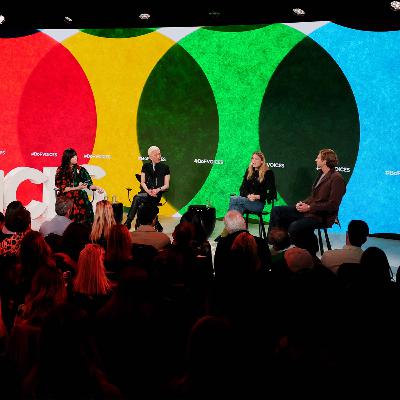
What began as scrappy self-publishing has become a finely tuned industry machine. Influencing is now big business. Four of the industry’s most influential creators came together at BoF VOICES 2025 to take a hard look at what influencing has become — and where it should go in the future. Susanna Lau opens the conversation by ditching the earnest tropes and asking a harder question: how can creators keep their integrity as agencies, briefs and budgets multiply?Bryan Yambao reflects on the pre-iPhone “wild west” — scanning magazines, posting affiliate links from his bedroom in Manila, and the shock of realising that the people he wrote about were suddenly reading him.Camille Charrière charts the shift from “do your thing” freedom to 30-page briefs and layered gatekeepers, arguing that creators must push back to preserve the audience trust that made them valuable in the first place.And through the lens of satire, Gstaad Guy challenges brands to confront what their communities are already saying — before they say it out loud.Together, they interrogate luxury’s malaise — and the need to recalibrate the industry around craft, community and credibility.Key Insights: Even with industry recognition, Yambao still feels like an outsider and uses that distance to stay candid. “I still feel like I’m an outsider,” he says, recalling the early days: “There was no roadmap. All I knew was that I had a voice.” The monetisation that followed, from early affiliate cheques to today’s industrialised commerce media, only reinforced his responsibility. “Since I kind of have a seat [at] the table, I want to say things with meaning and hold people to a higher standard,” he says.Charrière argues creators aren’t brand billboards — they’re people with convictions, and audience trust depends on that. After a year of speaking out, she recalls a major house “got me on a call with seven lawyers saying that now in my contract it was going to be written that I had to be neutral politically because I’d gone to a protest.” She continues, “I said, absolutely not.I’m not a brand. I’m an ambassador for you, but we are people, we are not brands … my online self is an extension of my offline self.”Gstaad Guy argues that credibility now depends on pre-empting audience scepticism. “Consumers are getting smarter, products are getting dumber,” he says. The remedy is to meet somewhere in between and let creators use their own language to test narratives honestly: “Have someone like [me] say something first so you can tell the story … the language of comedy and satire allows for that to be more digestible,” he says.Additional Resources:Susanna Lau, Bryan Yambao, Camille Charrière and Gstaad Guy: Twenty Years of the Influencer Economy in Fashion | BoF Gstaad Guy | BoF 500 | The People Shaping the Global Fashion Industry Camille Charrière | BoF 500 | The People Shaping the Global Fashion Industry Bryan Grey Yambao | BoF 500 | The People Shaping the Global Fashion Industry Hosted on Acast. See acast.com/privacy for more information.

BoF and McKinsey’s annual State of Fashion report finds the industry entering 2026 with caution: 46 percent of executives expect conditions to worsen, citing geopolitics, macro volatility and the risk of shoppers pulling back. Yet there is also a pulse of optimism around AI-driven efficiency, luxury’s creative recalibration and fresh consumer interest in categories from smart glasses to fine jewellery.Tariffs remain the dominant near-term swing factor. Brands mitigated pain in 2025 by pulling forward inventory, but as that cushion runs out, the full impact shows up in 2026 in costs and pricing. More broadly, luxury’s era of price-led growth has run its course; as BoF correspondent Marc Bain puts it, if you ask customers to pay more, you have to “actually offer the value for the price.”Key Insights:The mood has shifted from “uncertain” in 2025 to “challenging” in 2026. Companies feel better equipped but are bracing for a tougher year. “Uncertainty was ‘we don’t know what’s going to happen’. The challenge is, we know what is going to happen and it’s going to be tough,” says Bain.Tariffs will continue to bite in 2026, and price hikes will be part of the playbook. Brands used a mix of mitigation tactics in 2025, but many still expect to pass on costs. “The strategy that the highest number of executives said was their way of mitigating the tariff impact was raising prices,” Bain notes. “To some degree, there's just no way around that. You can do it strategically, but at some point you're probably going to have to raise prices.”Jewellery is the consumer bright spot for the year ahead, as the category has steadily outperformed thanks to steadier, more gradual price rises, exciting design and a strong perception of value retention. “It’s hard luxury… you can wear it a lot and it can still be in good shape,” Bain says, adding that more women self-purchasing are reinforcing demand, with maximal accessories over minimal wardrobes adding another tailwind. He adds, “It sounds almost silly in 2026, but a big shift has been that more women are actually buying jewellery for themselves.According to Bain, 2026 is the year AI gets embedded into the fashion ecosystem. Expect a ‘two steps forward, one step back’ year where efficiency wins drive adoption even as mishaps make headlines. “Companies don’t feel like they can sit out AI,” Bain says. “It’s not like everyone by the end of next year is going to be using ChatGPT instead of Google, but the expectation is it'll be a significantly higher number than [2025]. And at a certain point, even if it's 5 percent of shoppers … it's still enough that you as a business have to start accounting for it. Additional Resources:The 10 Themes That Will Define the Fashion Agenda in the Year Ahead | BoF The Perfect Package: What It Takes to Be a Fashion Leader in 2026 | BoFThe Top Trends That Will Define Beauty in 2026 | BoF Hosted on Acast. See acast.com/privacy for more information.


Download from Google Play

Download from App Store
 United States
The “Future of Bridal” episode was pure fire – used Imran Amed’s insights to pivot womensalbum.com toward modest & sustainable bridal looks. Traffic from Middle East + eco-brides up 280% this season! https://womensalbum.com/
Oliver Spencer’s journey is so inspiring—especially how he turned secondhand selling into a respected brand while staying true to his vision. It reminded me of how I started getting into vintage fashion myself, often hunting for gems on sites like https://goodwillbins.org/ where you never know what unique pieces you’ll find. It’s all about the story behind the clothes.
One of the standout features of Viana Closet is its attention to detail. From stitching to finishing touches, every garment is meticulously crafted to ensure a high-end look and feel with every wear. https://vianacloset.com
https://celebritylobby.com/ hhhjchgfhgjhj
"I’ve been following 'پادکست فارسی The Business of Fashion Podcast' for a while now, and I have to say, it’s one of the most insightful fashion podcasts out there! The episodes are consistently engaging and well-researched, offering a deep dive into the latest trends and business strategies in the fashion industry. https://smartlink.ausha.co/wilson-ronald/creative-popcorn-packaging-ideas-on-a-budget
such a legend
she is so inspiring ❤️
Woman, life, freedom ✌️ we lost our friends in this movement , thank you to see us .
Thank you for your support 🙏🏻🌹✨
Thank you for being our voice in fashion global
Please be the voice of Iranians. They're taking down the internet and KILLING AND TORTURING INNOCENT PEOPLE. please be our voice!!
it's all a big lie. she lives in Us and doesn't know the truth about Iran. people are protesting against the regime and it has nothing to do with sanctions. if she doesn't like America's policy why don't they send her back here? people think sanctions are fair and agree with America. please don't invite these people. you can interview with Araz fazaeli. at least he doesn't lie.
who thinks of authentic representation when they look at balmain? lmao
Enjoyed
Fashion industry in India have same condition as Bangladesh Factories are facing same problem.
I knew everlane as a "sustainable" and "ethical" brand but this really drives the point home even more
😍😍love Eileen Fischer
this was really interesting! thank you